Eoin Stephens's Blog, page 2
May 2, 2024
Charlie Haughey
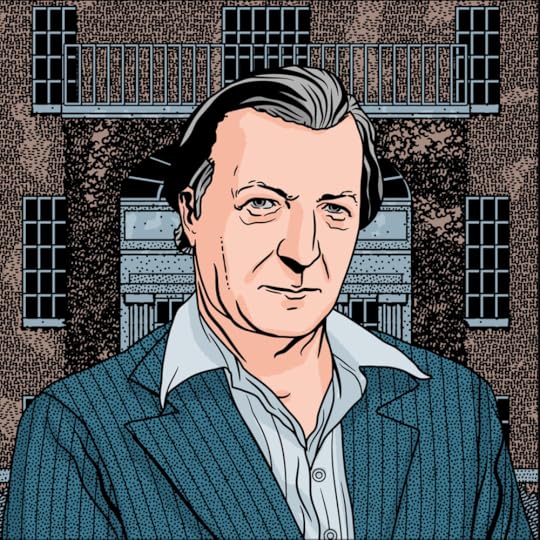
Charles Haughey, a towering figure in Irish politics, served as Taoiseach for four terms from December 1979 to February 1992. Born in Castlebar, County Mayo in 1925, Haughey was the third of seven children. His father, Seán Haughey, was an Irish Republican Army member during the War of Independence. Haughey’s political journey began when he was elected to Dáil Éireann as a Fianna Fáil TD in 1957, representing various Dublin constituencies until his retirement in 1992.
Haughey’s political ascent was swift. Known for his charisma and ambition, he held various ministerial positions, including Minister for Justice and Minister for Agriculture. However, Haughey’s tenure as Minister for Finance was not without controversy. He arranged foreign currency loans for the government and left them on deposit in foreign countries, a move deemed unconstitutional. Haughey later introduced legislation to retrospectively legalize these actions, facing little opposition in the process.
During the late 1960s, when tensions in Northern Ireland were escalating, Charles Haughey was viewed as a pragmatist within Fianna Fáil. As Minister for Justice, he took a tough stance against the IRA, using internment without trial. However, a crisis erupted when Haughey, along with ministerial colleague, Neil Blaney, was dismissed from Lynch’s cabinet amid allegations of using funds to import arms for the IRA. Lynch acted only after being informed by the Garda Special Branch, prompting Leader of the Opposition Liam Cosgrave to threaten exposure in the Dáil. Lynch requested Haughey and Blaney’s resignations, which they refused, leading to their dismissal by President de Valera. Haughey and Blaney were tried but acquitted, though doubts lingered, marking a setback in Haughey’s career.
In 1975, Haughey returned to Jack Lynch’s opposition front bench, later becoming Minister for Health and Social Welfare in 1977. He introduced progressive policies, including anti-smoking campaigns and legalizing limited access to contraception. Following Lynch’s resignation in 1979, Haughey won a close leadership contest against George Colley, becoming Taoiseach for the first time.
Facing an economic crisis, Haughey increased public spending, leading to higher borrowing and taxation. His popularity waned, and in the 1981 election, Fianna Fáil failed to secure a majority. Haughey’s government collapsed, and a Fine Gael–Labour coalition came to power.
In 1982, Haughey returned as Taoiseach after a second election. But his leadership was further challenged by controversies, including his alleged involvement in phone tapping. Despite facing multiple no-confidence votes, he managed to hold onto power. In Haughey’s final term as Taoiseach (1987–1992), he faced various scandals and challenges. He led a minority government and introduced tough economic policies in collaboration with Fine Gael. However, controversies arose regarding financial improprieties and allegations of obstruction of justice. Haughey’s involvement in the appointment of officials and his handling of the phone-tapping scandal damaged his reputation.
Following calls for his resignation and internal party conflicts, Haughey eventually stepped down as leader of Fianna Fáil in January 1992. He continued as Taoiseach until February, when he was succeeded by Albert Reynolds. Haughey retired from politics after the 1992 general election. His later years were marked by legal battles and revelations of bribe-taking and financial misconduct. In one notorious example, one of Haughey’s lifelong friends, former government minister Brian Lenihan, underwent a liver transplant which was partly paid for through fundraising by Haughey. The Moriarty tribunal found that of the £270,000 collected in donations for Brian Lenihan, no more than £70,000 ended up being spent on Lenihan’s medical care.
Haughey died in June 2006, leaving behind a legacy tainted by scandal and controversy.
Are you enjoying Stair Wars? If so, you might like some of my other products. Visit the shop here.


Ian Paisley
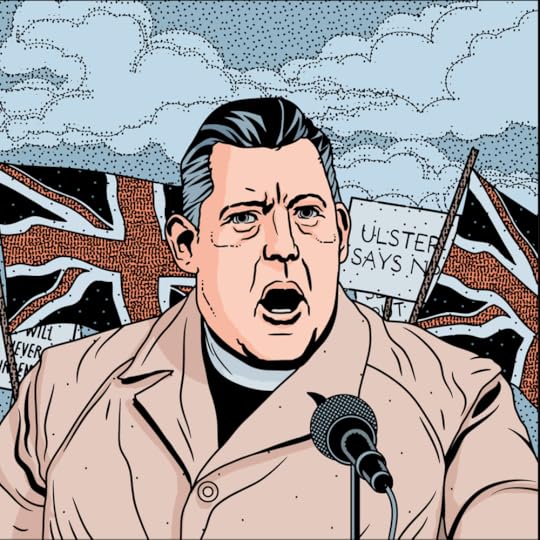
Ian Paisley was a prominent figure in Northern Ireland, serving as the leader of the Democratic Unionist Party (DUP) from 1971 to 2008 and as First Minister of Northern Ireland from 2007 to 2008.
Born in Armagh and raised in Ballymena, Paisley began his career as a Protestant evangelical minister in 1946. In 1951, he co-founded the Free Presbyterian Church of Ulster, where he served as leader until 2008. Known for his fiery sermons, Paisley preached staunchly against Catholicism, ecumenism, and homosexuality, amassing a significant following known as Paisleyites.
Entering politics in the late 1950s, Paisley played a pivotal role in opposing the Catholic civil rights movement, contributing to the eruption of the Troubles in the late 1960s. He founded the DUP in 1971 and was elected as Member of Parliament for North Antrim in 1970, later becoming a Member of the European Parliament in 1979.
Throughout the Troubles, Paisley vehemently opposed power-sharing agreements between unionists and nationalists, as well as any involvement of the Republic of Ireland in Northern Irish affairs. His opposition helped thwart the Sunningdale Agreement of 1974 and challenged the Anglo-Irish Agreement of 1985. He even attempted to establish a paramilitary movement known as Ulster Resistance.
Ian Paisley’s opposition to the civil rights movement in Northern Ireland played a pivotal role in shaping the Troubles. In the mid-1960s, as a response to growing calls for equality and an end to discrimination against Catholics, Paisley instigated loyalist opposition to civil rights initiatives and Prime Minister Terence O’Neill’s reform policies, which he perceived as too accommodating. In 1966, Paisley co-founded the Ulster Constitution Defence Committee (UCDC) and its paramilitary wing, the Ulster Protestant Volunteers (UPV). The emergence of the UCDC and UPV coincided with the 50th anniversary of the Easter Rising, and loyalist paramilitary groups like the UVF and others aligned themselves with Paisley’s initiatives.
The culmination of Paisley’s opposition efforts was the Ulster Workers’ Council (UWC) strike in 1974, aimed at bringing down the Sunningdale Agreement, which proposed power-sharing between unionists and nationalists in Northern Ireland. The strike, supported by loyalist paramilitary groups, paralyzed Northern Ireland for fourteen days and ultimately led to the collapse of the Agreement.
Paisley’s opposition to the Good Friday Agreement and his subsequent involvement in the Northern Ireland Assembly marked the dramatic twilight of his career. In 2007, he assumed the role of First Minister, sharing power with Sinn Féin’s Martin McGuinness. Paisley retired from politics in 2010, becoming a life peer as Baron Bannside, and passed away in 2014, leaving a complicated legacy of bigotry that mellowed into tolerance.
Are you enjoying Stair Wars? If so, you might like some of my other products. Visit the shop here.
Silken Thomas
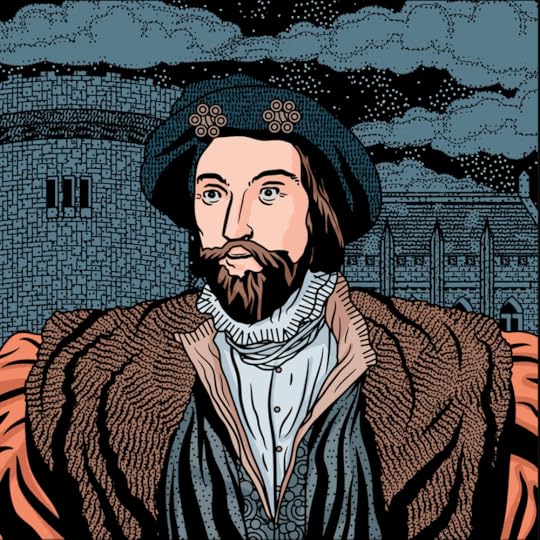
Thomas Fitzgerald, born in London in 1513, hailed from noble lineage as the son of Gerald FitzGerald, 9th Earl of Kildare, and Elizabeth Zouche, a distant cousin of Henry VII. Following his mother’s passing, Thomas was raised under the care of Janet Eustace, the wife of his father’s steward. Despite scant details about his early years, historical records shed light on significant events that shaped his life. Thomas spent a considerable period at the English court and eventually entered into matrimony with Frances, the youngest daughter of Sir Adrian Fortescue. The timing of their marriage remains unclear, whether preceding or succeeding his father’s return to Ireland in August 1530.
The turning point in Thomas’s life came in February 1534 when his father was summoned to London, leaving him as the deputy governor of Ireland. However, distressing rumours soon reached Thomas, suggesting his father’s execution at the Tower of London and hinting at similar peril for himself and his uncles at the hands of the English government.
In defiance, Thomas took a bold stand against English authority. Gathering 140 armoured gallowglasses, adorned with silk fringes on their helmets (from which Thomas derived his nickname), he marched to St. Mary’s Abbey in Dublin on 11 June 1534. There, he publicly renounced his allegiance to his cousin, King Henry VIII of Ireland.
Despite counsel from Chancellor Archbishop John Alen to reconsider his actions, Thomas remained resolute. His harper, communicating solely in Irish and sensing wavering resolve in Thomas, recited verses extolling the valour of his ancestors, urging him to act decisively. Stirred by this reminder of his lineage, Thomas cast down the sword of state and departed the hall, followed by his loyal supporters.
The rebellion escalated as Thomas seized control of strategic fortresses within the Pale and declared goods belonging to the English crown forfeited. He sought alliances, even extending a proposition to Lord Butler to share rulership of the kingdom. However, his attempt to capture Dublin Castle met with defeat, eroding support, particularly from the clergy, after his suspected involvement in the death of Archbishop Alen.
Retreating to Maynooth Castle, Thomas found himself besieged by English forces led by Sir William Skeffington in March 1535. Despite his expectation of widespread support, his cause faltered, and he eventually surrendered to Lord Leonard Grey in July of the same year. Legend has it that Thomas played a haunting melody under the boughs of the Silken Thomas Yew, Ireland’s oldest planted tree, before submitting to Grey.
Subsequently, Thomas was imprisoned in the Tower of London in October 1535. Despite earlier assurances of safety, he and his uncles were executed in 1537. The Attainder of the Earl of Kildare Act 1536 facilitated their execution and the confiscation of their property.
The repercussions of Thomas’s revolt reverberated beyond his demise. Henry VIII, compelled to address the unrest in Ireland, eventually established the Kingdom of Ireland in 1542. This marked a significant shift in governance, with measures such as curbing the powers of lords deputy and introducing policies like surrender and regrant. Additionally, the Royal Irish Army was instituted to ensure greater stability in the region.
Are you enjoying Stair Wars? If so, you might like some of my other products. Visit the shop here.
May 1, 2024
Gay Byrne
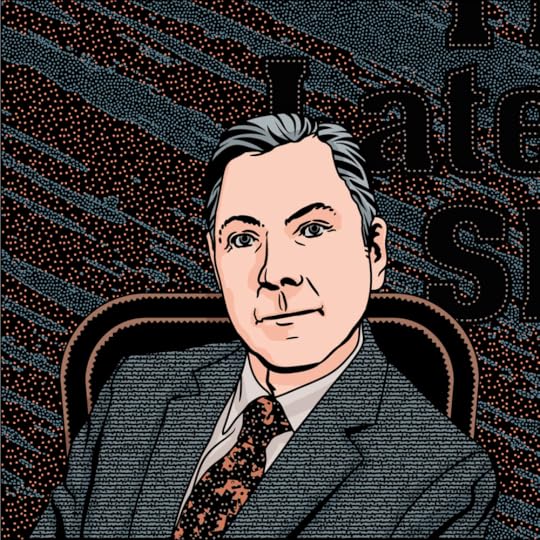
Gay Byrne was an iconic figure in Irish broadcasting. Born in 1934, Byrne became a household name as the host of The Late Late Show, which he helmed for an impressive 37-year tenure from 1962 to 1999. Affectionately known as “Uncle Gay” or “Gaybo,” he became a fixture in Irish homes, providing a platform for discussions of controversial topics like contraception, homosexuality, and divorce, thus shaping the evolving social landscape of Ireland.
Indeed, it was famously said by politician, Oliver J. Flanagan that, “there was no sex in Ireland until Teilifís Éireann went on the air”. In the 1960’s, Bishop of Galway Michael Browne called Byrne “a purveyor of filth” after he asked a woman what colour nightie she wore on her wedding night and she had replied that she believed she’d worn nothing.
Byrne is remembered for conducting a career-ending interview with politician Pádraig Flynn and a notoriously antagonistic interview with then Bishop of Galway Eamon Casey’s lover Annie Murphy.
Byrne’s career extended beyond The Late Late Show. He also hosted The Gay Byrne Hour, later expanded to The Gay Byrne Show, on RTÉ Radio 1 from 1973 to 1998. Even after retiring from his long-running radio and television roles, Byrne continued to captivate audiences with programmes like Who Wants to Be a Millionaire?, The Meaning of Life, and For One Night Only.
Despite his immense popularity, Byrne declined to run in the 2011 Irish presidential election, opting to remain in the realm of entertainment rather than politics. His decision was met with both disappointment and respect from the public. In his later years, Byrne continued to make his mark through programmes like The Meaning of Life, delving into existential questions with public figures. He also faced health challenges, including hearing loss and a battle with prostate cancer, but remained a beloved figure until his passing in 2019.
His influence was profound, earning him the title of “the most influential radio and television man in the history of the Irish State” by The Irish Times in 2010. His ability to engage with guests and tackle taboo subjects endeared him to audiences, making him a household name across Ireland.
Are you enjoying Stair Wars? If so, you might like some of my other products. Visit the shop here.
John Redmond
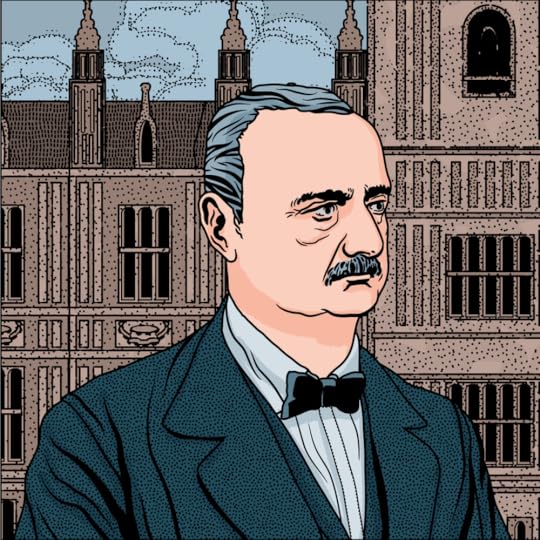
John Redmond, born in 1856, was a prominent figure in Irish nationalist politics. As leader of the Irish Parliamentary Party (IPP) from 1900 until his death in 1918, he played a pivotal role in advocating for Irish self-government within the United Kingdom.
He entered politics as a Member of Parliament, succeeding his father in representing various constituencies. Redmond’s tenure saw him navigate internal party divisions, particularly during the Parnell split, where he emerged as leader of the pro-Parnell faction.
The pivotal moment came in 1912 when, leveraging his party’s influence in Westminster, Redmond secured the introduction of the Third Home Rule Bill, promising national self-government for Ireland. This marked the zenith of his political influence and the culmination of years of advocacy.
Redmond’s opposition to votes for women drew significant criticism, leading to the defacement of his statue by suffragist protestors in 1913. Despite this, Redmond saw the Home Rule Bill as the realisation of a lifelong ambition, expressing gratitude for its passage in the House of Commons. However, the bill lacked significant concessions to Ulster Unionists, who vehemently opposed it. The implementation of Home Rule was met with staunch opposition from Irish Protestants, the Unionist Party, and Ulster’s Orange Order. Concerns over economic repercussions and fears of Catholic dominance fueled resistance, with threats of force to prevent Home Rule.
Efforts to appease Ulster Unionists with concessions, including temporary exclusion, ultimately failed. The Curragh Mutiny and the formation of the Ulster Volunteers signalled escalating tensions, prompting Redmond to take control of the Irish Volunteers to enforce Home Rule.
In 1914, with the outbreak of World War I, the implementation of Home Rule was suspended. Redmond, believing in the promise of self-government post-war, urged Irishmen to support the British war effort. His call led to the formation of the National Volunteers, with many Irishmen enlisting in the British Army.
The Easter Rising of 1916, staged by Irish republicans, shattered Redmond’s vision of constitutional change. The subsequent events, including the execution of Rising leaders, which he applauded, further polarized Irish politics.
Efforts to reintroduce Home Rule in 1916 failed, with Lloyd George’s partition proposal causing Redmond’s power to wane. His health declined, and he faced criticism for his handling of negotiations and for encouraging Irish participation in the war. His health deteriorated, and he passed away in March 1918, just before the Convention concluded. Despite his efforts, the failure of Home Rule and the rise of Sinn Féin marked the end of Redmond’s political influence. He was laid to rest in Wexford, mourned by many, but already irrelevant to a changed political landscape.
Are you enjoying Stair Wars? If so, you might like some of my other products. Visit the shop here.
Hugh O'Neill
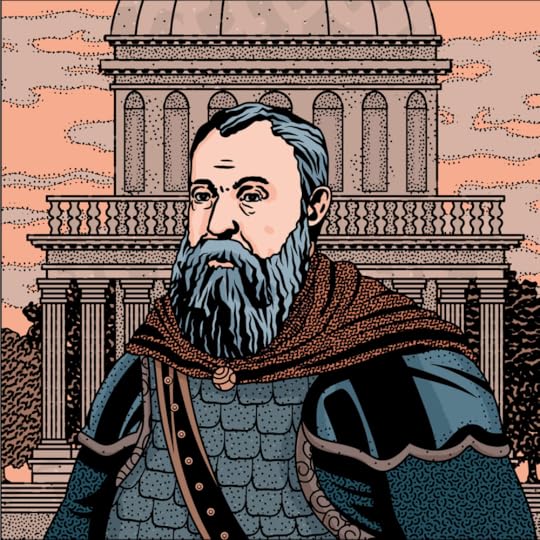
Hugh O’Neill, also known as Aodh Mór Ó Néill or simply ‘Tyrone’, was a prominent figure in Irish history, born around 1540 and passing on July 20, 1616. He hailed from the esteemed O’Neill dynasty, recognized by English authorities as legitimate successors to the Chiefs of the O’Neills and the title of Earl of Tyrone. His journey unfolded amidst the Tudor conquest of Ireland, notably leading a coalition of Irish clans during the Nine Years’ War, posing a significant challenge to Tudor rule, akin to Silken Thomas’s uprising against King Henry VIII.
Ascending to the position of Baron of Dungannon, Hugh’s trajectory shifted decisively in 1595 when he embraced his role as ‘The O’Neill,’ challenging Tudor authority. Raised in English-controlled territory, Hugh acquired knowledge of English customs and politics, fostering alliances with influential figures such as the Earls of Ormonde and Leicester.
Despite initial cooperation with English forces against various Irish rebellions, Hugh’s ambitions and growing power aroused suspicion. The English administration attempted to manipulate succession disputes within the O’Neill clan to weaken Hugh’s influence. Through astute political maneuvering and alliances, including a strategic marriage alliance with Red Hugh O’Donnell of Tír Chonaill, Hugh solidified his position, becoming the dominant force in Ulster.
His defiance culminated in the outbreak of the Nine Years’ War after seizing Blackwater Fort in 1595. Proclaimed a traitor by English authorities, Hugh led a prolonged resistance against English forces, marking a significant chapter in Ireland’s struggle against Tudor rule.
The arrival of the Earl of Essex with a sizable English force in 1599 led to a truce, much to Queen Elizabeth’s displeasure. Essex’s lenient treatment of O’Neill and his subsequent actions further aggravated the Queen. The war’s context was complicated by the succession issue and the ongoing Anglo-Spanish conflict.
O’Neill continued to rally Irish clans against English rule, even after a temporary peace was brokered. The English, reinforced by Sir Henry Docwra’s army, gained a strategic advantage, forcing O’Neill to retreat. Spain’s delayed assistance in 1601, coupled with a harsh winter, spelled disaster for O’Neill’s forces at the Battle of Kinsale.
Following the defeat, O’Neill’s ally O’Donnell went to Spain seeking aid but died soon after. O’Neill, weakened and isolated, resorted to guerrilla tactics but eventually sought peace. Negotiations ensued, with O’Neill surreptitiously making his submission after Elizabeth I’s death in 1603.
Returning to Ireland, O’Neill faced disputes over land rights and eventually fled to Spain in 1607, alongside O’Donnell and other Gaelic chiefs in an event remembered as “The Flight of the Earls.” Their hopes for military support waned due to Spain’s political and economic constraints. O’Neill died in Rome in 1616, his years in exile marked by efforts to regain Irish sovereignty, ultimately ending in thwarted aspirations and contentious legacies.
Are you enjoying Stair Wars? If so, you might like some of my other products. Visit the shop here.
April 30, 2024
Robert Boyle
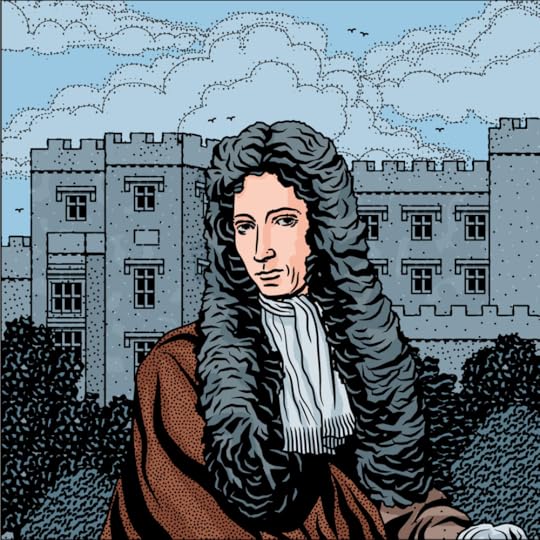
Robert Boyle, an Anglo-Irish natural philosopher and chemist, is recognised as the first modern chemist and a pioneer of experimental scientific method. Born in 1627 in Ireland, he received a comprehensive education and developed an early interest in scientific inquiry. Boyle is best known for formulating Boyle’s law, which describes the relationship between the pressure and volume of a gas.
Boyle was the youngest son of Richard Boyle, an Elizabethan planter who had amassed an enormous fortune when Irish land was forcibly redistributed in the Munster Plantation. Thanks to this family fortune, Robert Boyle attended Eton College in England, where he furthered his education, and traveled extensively, studying under prominent scholars and exploring scientific concepts. Returning to England in 1644, Boyle inherited significant estates and dedicated himself to scientific research. He established a laboratory at Stalbridge House and became involved with the “Invisible College,” a group of intellectuals focused on advancing scientific knowledge. Boyle’s experiments with an air pump led to groundbreaking discoveries about the properties of air and the formulation of Boyle’s law.
In 1654, Boyle moved to Oxford to pursue his research more effectively. There, he collaborated with Robert Hooke to improve the design of the air pump and conducted experiments on the properties of air. His work laid the foundation for modern chemistry and experimental physics.
Boyle’s contributions to science were not limited to his experimental work. He also wrote extensively on theology and philosophy, reflecting his deep religious convictions. In 1663, he was instrumental in establishing The Royal Society of London for Improving Natural Knowledge, where he served as a member of the council.
Throughout his life, Boyle remained dedicated to scientific inquiry and innovation. He made significant contributions to various fields, including chemistry, physics, and medicine. Boyle’s legacy continues to be celebrated today, with his work serving as the basis for modern scientific research and exploration.
In his later years, Boyle faced declining health but continued to pursue his research until his death in 1691. He died a week after the death of his scientist sister and collaborator, Katherine Jones. He left behind a lasting legacy of scientific discovery and innovation, including the establishment of the Boyle Lectures. Despite his passing, Boyle’s influence on the development of modern science remains profound, with his work continuing to inspire scholars and researchers around the world.
My book, Blood of the Wolf, features fictionalised versions of Boyle and his sister, Katherine. Click here to read an excerpt.
Are you enjoying Stair Wars? If so, you might like some of my other products. Visit the shop here.
Jonathan Swift
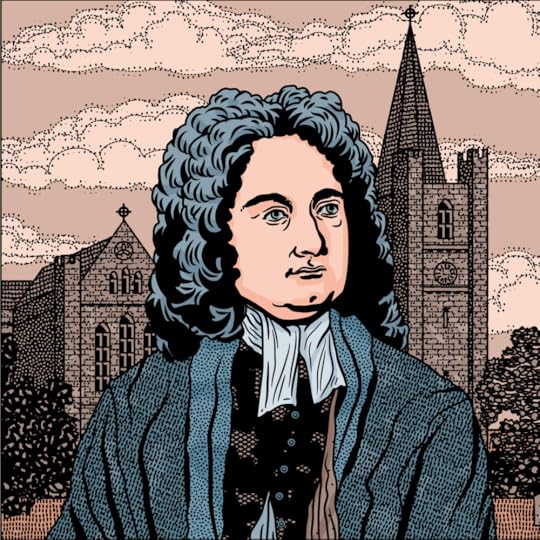
Jonathan Swift, known as the “Dean Swift,” was an influential Anglo-Irish satirist, author, essayist, and cleric who rose to prominence during the early 18th century. Born in Dublin in 1667, he became known for his biting satire and keen observations on politics and society.
Swift’s most famous works include “A Tale of a Tub,” “An Argument Against Abolishing Christianity,” “Gulliver’s Travels,” and “A Modest Proposal.” He often wrote under pseudonyms or anonymously, mastering both the Horatian and Juvenalian styles of satire. His ironic and deadpan writing style, particularly evident in “A Modest Proposal,” led to the term “Swiftian” satire.
Raised by his uncle after his father’s death and his mother’s return to England, Swift received a rigorous education. He attended Kilkenny College and later Trinity College Dublin, where he studied philosophy and logic. Despite not being exceptional, he graduated and pursued further studies, eventually obtaining his master’s degree.
Swift’s career took off when he became the secretary and assistant of Sir William Temple, an English diplomat. During this time, he met Esther Johnson, known as “Stella,” with whom he shared a close yet ambiguous relationship. Swift returned to Ireland due to health issues but later rejoined Temple until his death in 1699.
Throughout his life, Swift battled health problems, including Ménière’s disease, which caused vertigo and dizziness. Despite his struggles, he continued to write and engage in political activism, using his platform to advocate for change.
During his time in England, Swift published influential works like “A Tale of a Tub” and “The Battle of the Books” (1704), forging friendships with prominent writers like Alexander Pope and John Gay. He also became increasingly involved in politics, initially supporting the Whigs but later aligning with the Tories, especially after their rise to power in 1710.
Swift’s political activism intensified with publications like “The Conduct of the Allies” (1711), criticizing the Whig government’s handling of the War of the Spanish Succession. He played a significant role within the Tory government, acting as a mediator between key figures like Henry St John and Robert Harley.
His political writings continued to gain traction, particularly in Ireland, where he advocated for Irish causes through works like the “Proposal for Universal Use of Irish Manufacture” (1720) and “Drapier’s Letters” (1724). His unwavering support for Irish interests earned him the reputation of an Irish patriot.
Swift's hopes for a church appointment in England were dashed by Queen Anne, possibly due to his works deemed blasphemous. Her aversion led to his virtual exile in Ireland, despite efforts by friends to secure him the Deanery of St Patrick's Cathedral.
Swift’s time in Ireland allowed him to focus on his writing and engage in political commentary. He published various pamphlets, including “A Discourse on the Contests and Dissentions in Athens and Rome,” addressing political issues of the time. His biting satire and criticism of societal norms earned him both praise and criticism.
Swift’s masterpiece, “Gulliver’s Travels,” was published anonymously in 1726 and became an instant success. The novel, drawing on Swift’s political experiences, was translated into multiple languages and solidified his literary legacy.
He spent his later years in Trim, County Meath, where he penned many of his notable works. Despite his literary success, Swift faced personal tragedies, including the death of Stella in 1728. He struggled with illness and mental decline in his later years, ultimately passing away in 1745 at the age of nearly 78. His legacy endures not only through his groundbreaking writings but also through his philanthropy, as he left a significant portion of his fortune to establish a hospital for the mentally ill, known as St Patrick’s Hospital.
Are you enjoying Stair Wars? If so, you might like some of my other products. Visit the shop here.
Patrick Pearse
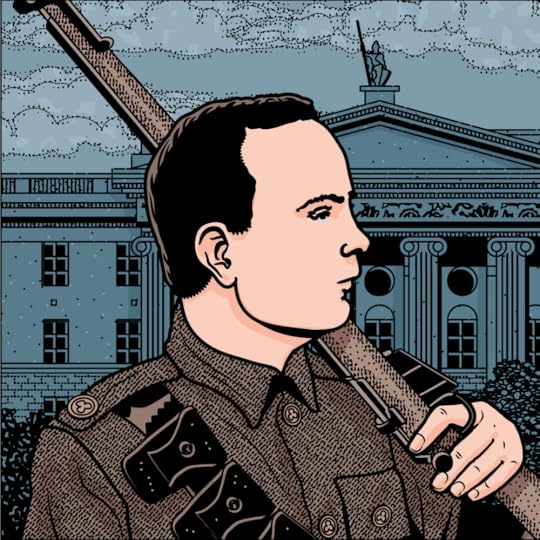
Pádraig Pearse was a prominent figure in the Irish nationalist movement and a key leader of the Easter Rising in 1916. Born in Dublin in 1879, Pearse was raised in a middle-class family with a strong nationalist background. His upbringing, surrounded by books and steeped in Irish language and culture, deeply influenced him from an early age.
Pearse’s passion for Irish nationalism led him to become involved in the Gaelic revival movement. He joined the Gaelic League at 16 and later became the editor of its newspaper, advocating for the preservation and promotion of the Irish language. His commitment to cultural nationalism extended to education, and he founded St. Enda’s School in Dublin, aiming to instill a sense of Irish identity and pride in its students.
Despite his background in law, Pearse’s true calling was in nationalist activism. He became a member of the Irish Republican Brotherhood (IRB), an organization dedicated to overthrowing British rule in Ireland. As tensions rose over Home Rule, Pearse played a significant role in the establishment of the Irish Volunteers, a paramilitary group aimed at defending Irish interests.
Pearse’s vision of an independent Ireland led to his involvement in the planning of the Easter Rising. He was instrumental in drafting the Proclamation of the Irish Republic, which he read outside the General Post Office at the start of the uprising. Following six days of intense fighting, Pearse made the decision to surrender to British forces to prevent further loss of life.
Pearse and several other leaders were subsequently court-martialed and executed by firing squad. His execution, along with the others, elevated him to the status of a martyr in the eyes of many Irish nationalists. In death, Pearse became a symbol of the Easter Rising and the broader struggle for Irish independence. His graveside oration at the funeral of Jeremiah O’Donovan Rossa and his role in drafting the Proclamation cemented his place in Irish history. Despite the suppression of his letters and poems by British authorities, Pearse’s legacy endured, fueling the flames of Irish nationalism for years to come.
Are you enjoying Stair Wars? If so, you might like some of my other products. Visit the shop here.
Charles Stewart Parnell
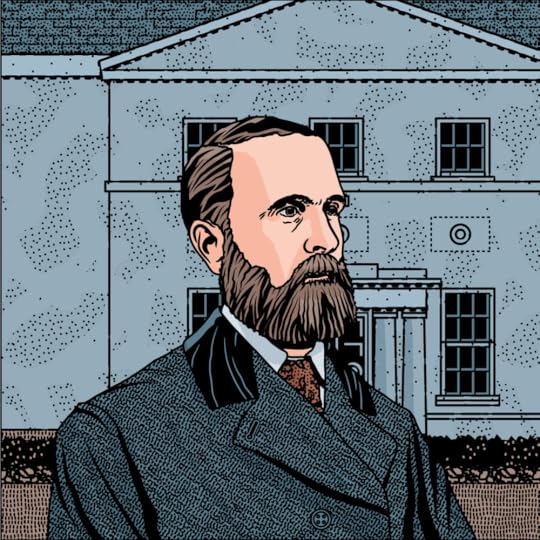
Charles Stewart Parnell, a prominent Irish nationalist politician, rose to power in the late 19th century, serving as an influential Member of Parliament (MP) for the Irish Parliamentary Party. Born into a wealthy Anglo-Irish Protestant family in County Wicklow, Parnell became known for his advocacy of land reform and his leadership in the Irish National Land League, founded in 1879. He skillfully balanced constitutional, radical, and economic issues, gaining significant influence and support.
Born into privilege, Parnell’s early life was marked by family separation and an unhappy experience at school in England. He inherited the Avondale estate and became involved in politics, joining the Home Rule League and eventually winning a seat in the House of Commons in 1875.
Parnell’s leadership style combined parliamentary tactics with engagement with the Fenian movement, leading to the formation of the Irish National Land League in 1879. He embarked on a successful fundraising tour in the United States, advocating for Irish self-government and land reform.
Upon his return, Parnell played a crucial role in the Home Rule movement, becoming leader of the Home Rule League Party and championing agrarian reform. His efforts culminated in the Land Law (Ireland) Act 1881, which addressed some grievances of Irish tenants.
By the mid-1880s, Parnell’s leadership had positioned the IPP as a powerful parliamentary force. With a hung Parliament after the 1885 general elections, the IPP held the balance of power, allowing Parnell to push for greater self-government for Ireland. Despite initial support for a Conservative government, Parnell shifted allegiance to the Liberals, eventually leading to the introduction of the First Irish Home Rule Bill by Gladstone in 1886.
Though the bill faced opposition and ultimately failed, Parnell’s strategic alliances and political maneuvers during this period marked a crucial phase in the Irish Home Rule movement, setting the stage for future developments in Irish politics.
The July 1886 general election was a pivotal moment in British politics, with Irish Home Rule as the central issue. Prime Minister William Gladstone hoped to secure a mandate similar to his triumph in 1868 for Irish Disestablishment. However, the election resulted in a Liberal defeat, with the Conservatives and the Liberal Unionist Party gaining a majority over Gladstone’s Liberals and Charles Stewart Parnell’s Irish Party.
This Liberal split made the Unionists dominant in British politics until 1906. The House of Lords, with many Whig members, further supported this dominance. Despite Gladstone’s efforts, a second Home Rule Bill passed the Commons in 1893 but was defeated in the Lords.
Parnell faced public scrutiny when accused by The Times in 1887 of involvement in the Phoenix Park murders. However, an inquiry later revealed the accusations to be based on forgeries by Richard Pigott, a disreputable journalist.
In a further blow to his reputation, Parnell became embroiled in a divorce scandal involving Captain William O’Shea’s wife, Katharine. The scandal deeply divided public opinion, especially among Catholics and Nonconformist Protestants.
Parnell’s leadership was challenged within his party, leading to a split between Parnellites and anti-Parnellites. This division tore apart the Irish nationalist movement, with Parnell losing support even in his stronghold areas.
Despite his efforts to regain political ground, Parnell’s health deteriorated rapidly. He died in 1891 at the age of 45, leaving a complicated legacy in Irish politics. Yet he is fondly remembered; many streets, sports clubs and public buildings are named after him.
Are you enjoying Stair Wars? If so, you might like some of my other products. Visit the shop here.