Joshua Palmatier's Blog, page 3
October 10, 2016
Book Review: "The Courier" by Gerald Brandt
This is Gerald Brandt's debut novel and it's a strong showing. He's definitely someone to watch. I enjoyed this take on a near future thriller.
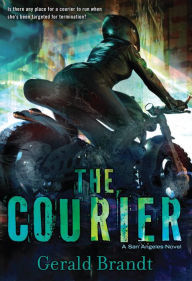
Premise: Kris is a courier, running packages back and forth on her motorcycle in the massive layered city of San Angeles. The population has become so dense that we've built upwards as well as outwards, and now cities have distinct layers, each level a distinct class, with few people ever seeing the sky. Kris originally lived in the lowest level, barely surviving after her parents died and she ran away from her aunt and uncle. But she's worked her way upwards and the courier job allows her to see the levels above her, although she's never been outside. She's happy with the life she's carved out. But then she gets a strange message to deliver a package at the end of her shift that turns exceptionally bad when she walks in on a brutal murder. Now she's on the run from a corporate assassin who wants whatever's in the package and is willing to do anything to get it. Can Kris outsmart the assassin and the multiple corporations who want the package?
This is entirely a thriller, set on a near future Earth. The sci-fi elements are intriguing, but it's the setting itself--the layered city that stratifies the class structure of this future world--that's the most interesting and compelling. San Angeles (which I assume is a massive city spanning both San Diego and Los Angeles) is dirty, dark, realistic, and gritty. And the situation in which Kris finds herself is totally believable, with corporations ruling the future, vying for our lives as if they were commodities for their own profit. Kris herself is a compelling character, one that you want to follow and want to see succeed. She's smart--street smart--because of her past, but not so smart that her situation isn't filled with tension. She doesn't know all the answers, and much of the novel is her reacting to situations as best she can, not necessarily making the wisest decisions. In other words, she's realistic.
Overall, I thought this was a strong debut novel. I had a few quibbles with things here and there, nothing major--such as the assassin, who I thought wasn't as strong a character as he could have been, and then one particular reaction from Kris that I can't talk about because it would spoil something in the novel. But again, those were quibbles. The setting and the characters are definitely worth the read, and have kept me waiting for the sequel since I finished this.
Premise: Kris is a courier, running packages back and forth on her motorcycle in the massive layered city of San Angeles. The population has become so dense that we've built upwards as well as outwards, and now cities have distinct layers, each level a distinct class, with few people ever seeing the sky. Kris originally lived in the lowest level, barely surviving after her parents died and she ran away from her aunt and uncle. But she's worked her way upwards and the courier job allows her to see the levels above her, although she's never been outside. She's happy with the life she's carved out. But then she gets a strange message to deliver a package at the end of her shift that turns exceptionally bad when she walks in on a brutal murder. Now she's on the run from a corporate assassin who wants whatever's in the package and is willing to do anything to get it. Can Kris outsmart the assassin and the multiple corporations who want the package?
This is entirely a thriller, set on a near future Earth. The sci-fi elements are intriguing, but it's the setting itself--the layered city that stratifies the class structure of this future world--that's the most interesting and compelling. San Angeles (which I assume is a massive city spanning both San Diego and Los Angeles) is dirty, dark, realistic, and gritty. And the situation in which Kris finds herself is totally believable, with corporations ruling the future, vying for our lives as if they were commodities for their own profit. Kris herself is a compelling character, one that you want to follow and want to see succeed. She's smart--street smart--because of her past, but not so smart that her situation isn't filled with tension. She doesn't know all the answers, and much of the novel is her reacting to situations as best she can, not necessarily making the wisest decisions. In other words, she's realistic.
Overall, I thought this was a strong debut novel. I had a few quibbles with things here and there, nothing major--such as the assassin, who I thought wasn't as strong a character as he could have been, and then one particular reaction from Kris that I can't talk about because it would spoil something in the novel. But again, those were quibbles. The setting and the characters are definitely worth the read, and have kept me waiting for the sequel since I finished this.


September 28, 2016
How to Create an Anthology: Step 10: Distribution
How to Create an Anthology: Step 10: Distribution
This is the tenth of a series of blog posts that I intend to do in order to show how I create the anthologies for Zombies Need Brains, the small press that I founded in order to produce anthologies. It's basically a behind-the-scenes look at the process, which will be covered in multiple parts. Obviously, this is only how I produce an anthology and there may be other roads to follow in order to produce one. Keep that in mind. For a listing to all of the posts in this series, click through here: http://jpsorrow.livejournal.com/486215.html.
At this point, you should have everything you need to send your book out into the world—a cover flat file, an interior print file, an ebook file, and a cover file (either taken from the cover flat, or designed specifically by your cover designer for the ebooks). All that’s left is the distribution.
There are many different options and outlets for distribution. Some of them allow you to distribute to many places through one portal, such as IngramSpark. Some of them let you distribute to selected places through one portal, such as CreateSpace. Most who have multiple outlets let you pick and choose where you want the anthology to be available. And then, of course, you can choose to go directly through particular places with your own account at each one, such as Kindle, Nook, Kobo, Barnes & Noble, etc. Lastly, perhaps you just want to get a set number of copies of the book printed by an offset printer and then store them and sell them yourself, either by hand or through an online store.
There are advantages and disadvantages to every option, so you really need to sit down and do the research for each one, perhaps create a spreadsheet so you can compare them all, and then you can focus on what you want for your books. Each place will have a different royalty rate, perhaps even two options for royalties at one location. For example, CreateSpace has multiple royalty options, where you trade a lower royalty rate in order to get better advertising or a larger distribution network. If you’re going to do your own advertising, then you can pick a higher royalty rate. Each usually has other options that may get your book in their newsletter, or allow your book to have a fire-sale at a low rate for a specified period of time, or allow you to make the price of your book whatever you want. (Kindle requires that your book be within a certain price range, for example, unless you give up some royalties to make it lower). All of these options at the various places are changing constantly, so you need to look into it yourself.
As you can see, it’s already gotten complicated. But the real issue is how much of the marketing for your book you’re going to do yourself, and how much you want your distributor to market it for you. How much marketing you want someone else to do depends on how wide an audience you think you can reach with your book and name alone. Someone like Seanan McGuire has a large fan base already, so she probably doesn’t need the marketing machine to get her fans to notice a book she puts out herself. My own fan base isn’t quite that large, so I may want to invest in a smaller royalty rate from the distributor in order for the distributor to help me reach people I wouldn’t be able to reach myself. It’s all a balancing act—how much of the royalties are you willing to give up in order to sell more copies of the book? Keeping all the royalties means you may sell X books, making $Y amount of money. But maybe if you give up some of the royalties you’ll sell A books (A>X), and make $B amount of money. Is B higher than Y? In some situations it will be, which means accepting a lower royalty actually increases the money you make. The REAL problem is that there’s no way to tell whether B will be higher than Y ahead of time. Absolutely no way. Because no one can predict marketing. Advertising your brains out doesn’t guarantee that you’ll make more sales. This is the most frustrating part of the business: you will never know how effective your marketing is. Even if you sell really well, you can’t pinpoint what it was that you did that made the book sell well. It just did. For some reason. None of it quantifiable.
In any case, you need to choose: distribute yourself (offset printing, ebook sales online), distribute through one agency that distribute to multiple places (IngramSpark, CreateSpace, etc.), or distribute by setting up your own account at multiple places (Kindle, Nook, B&N, CreateSpace, etc.). Distributing the books yourself means all of the work is put on your—for marketing and sales—but you’re probably going to get a much larger cut of the profits. Distributing through someone like IngramSpark, CreateSpace, etc.) allows you a wider audience reach immediately, but they’re going to take a larger cut of the profits, especially if you select the option where they do more marketing for you. But you’re getting a single check each month from one source. The last option, where you set up accounts at multiple places, usually gives you a higher cut of the profits (not as high as distributing yourself, though), but now you’re dealing with multiple checks every month from multiple sources, so it’s a little more complicated to keep track of the finances for tax purposes and such.
Zombies Need Brains does a mix of two of the options. It has accounts set up at various places so that it gets a check directly from those distributors, such as Kindle, Nook, Kobo, etc. The rest of the ebook options are handled by a single distributor, where I can select which places get to sell the ebook and which don’t. And the print versions are run through CreateSpace with a fairly wide distribution network, but not as wide as it could be. I was trying to balance the marketing a distribution options, while mitigating the amount of work I’d have to do in terms of bookkeeping.
And that’s how ZNB produces their anthologies. I didn’t cover absolutely everything. There are a few other things I could have talked about—such as advertising, marketing, etc.—but this gives everyone who might be interested in producing an anthology at least a rough framework for how it’s done. Again, you may need to alter and change and personalize this so that it works best for you. I hope you’ve learned something from this blog series! Thanks for reading!
And now a word from our sponsor:
*****************
Zombies Need Brains is currently running a Kickstarter (at https://www.kickstarter.com/projects/543968884/robots-water-and-death-anthologies?token=017aef99) to fund THREE new SF&F anthologies and we need your help! We can't produce anthologies unless we can get the funding to pay the authors, the cover artists, the print and ebook designers, and the printers. That's where the Kickstarter comes in, and you, THE FANS! We've got a ton of stunning anchor authors on board, including NY Times bestselling authors and award winners. And we've got a ton of great reward levels, such as tuckerizations, signed copies of books by your favorite authors, and more! Our themes for this current Kickstarter are:
ALL HAIL OUR ROBOT CONQUERORS!: “Danger, Will Robinson! Danger!” 50s and 60s television shows and movies were replete with clunky robots with bulbous arms and heads, blinking lights, and a staggered, ponderous walk, like Robby the Robot, GORT, and the Daleks. With a touch of nostalgia and a little tongue-in-cheek humor, this anthology will present invasions of robot conquerors—or well-meaning robot companions—rooted in those 50s and 60s ideals of the robotic vision of the future. Edited by Patricia Bray & Joshua Palmatier.
SUBMERGED: From the very earliest days of SFF, when Jules Verne wrote 20,000 Leagues Under the Sea, the depths of the oceans have always intrigued us. Three quarters of our planet teems with creatures beyond our imagining, and terrors we cannot see. Kraken, Leviathan, Cthulu – what other mysteries and monsters lurk in the currents of the wet and dark? SUBMERGED will explore the depths beneath the surface, whether it be on brand new planets yet to be explored, apocalyptic Earths, or fantasy settings from our wildest dreams. So come join us and explore unfathomable trenches, underwater volcanoes, and abyssal plains. Take the plunge . . . into the Deep End! Edited by S.C. Butler & Joshua Palmatier.
THE DEATH OF ALL THINGS: Death and taxes: the universal themes. Or, nearly. Not all cultures pay taxes, but all pay the reaper. Acknowledging that nobody will ever beat Sir Terry Pratchett for his depiction of Death, we believe there are more stories to tell, exploring the realm and character of death: tragic, humorous, and all the shades in-between. Edited by Laura Anne Gilman & Kat Richardson.
If you'd like to help fund these anthologies, swing on by the Kickstarter at https://www.kickstarter.com/projects/543968884/robots-water-and-death-anthologies?token=017aef99! And share the Kickstarter with your friends, family, and total strangers! We need more SF&F anthologies!
This is the tenth of a series of blog posts that I intend to do in order to show how I create the anthologies for Zombies Need Brains, the small press that I founded in order to produce anthologies. It's basically a behind-the-scenes look at the process, which will be covered in multiple parts. Obviously, this is only how I produce an anthology and there may be other roads to follow in order to produce one. Keep that in mind. For a listing to all of the posts in this series, click through here: http://jpsorrow.livejournal.com/486215.html.
At this point, you should have everything you need to send your book out into the world—a cover flat file, an interior print file, an ebook file, and a cover file (either taken from the cover flat, or designed specifically by your cover designer for the ebooks). All that’s left is the distribution.
There are many different options and outlets for distribution. Some of them allow you to distribute to many places through one portal, such as IngramSpark. Some of them let you distribute to selected places through one portal, such as CreateSpace. Most who have multiple outlets let you pick and choose where you want the anthology to be available. And then, of course, you can choose to go directly through particular places with your own account at each one, such as Kindle, Nook, Kobo, Barnes & Noble, etc. Lastly, perhaps you just want to get a set number of copies of the book printed by an offset printer and then store them and sell them yourself, either by hand or through an online store.
There are advantages and disadvantages to every option, so you really need to sit down and do the research for each one, perhaps create a spreadsheet so you can compare them all, and then you can focus on what you want for your books. Each place will have a different royalty rate, perhaps even two options for royalties at one location. For example, CreateSpace has multiple royalty options, where you trade a lower royalty rate in order to get better advertising or a larger distribution network. If you’re going to do your own advertising, then you can pick a higher royalty rate. Each usually has other options that may get your book in their newsletter, or allow your book to have a fire-sale at a low rate for a specified period of time, or allow you to make the price of your book whatever you want. (Kindle requires that your book be within a certain price range, for example, unless you give up some royalties to make it lower). All of these options at the various places are changing constantly, so you need to look into it yourself.
As you can see, it’s already gotten complicated. But the real issue is how much of the marketing for your book you’re going to do yourself, and how much you want your distributor to market it for you. How much marketing you want someone else to do depends on how wide an audience you think you can reach with your book and name alone. Someone like Seanan McGuire has a large fan base already, so she probably doesn’t need the marketing machine to get her fans to notice a book she puts out herself. My own fan base isn’t quite that large, so I may want to invest in a smaller royalty rate from the distributor in order for the distributor to help me reach people I wouldn’t be able to reach myself. It’s all a balancing act—how much of the royalties are you willing to give up in order to sell more copies of the book? Keeping all the royalties means you may sell X books, making $Y amount of money. But maybe if you give up some of the royalties you’ll sell A books (A>X), and make $B amount of money. Is B higher than Y? In some situations it will be, which means accepting a lower royalty actually increases the money you make. The REAL problem is that there’s no way to tell whether B will be higher than Y ahead of time. Absolutely no way. Because no one can predict marketing. Advertising your brains out doesn’t guarantee that you’ll make more sales. This is the most frustrating part of the business: you will never know how effective your marketing is. Even if you sell really well, you can’t pinpoint what it was that you did that made the book sell well. It just did. For some reason. None of it quantifiable.
In any case, you need to choose: distribute yourself (offset printing, ebook sales online), distribute through one agency that distribute to multiple places (IngramSpark, CreateSpace, etc.), or distribute by setting up your own account at multiple places (Kindle, Nook, B&N, CreateSpace, etc.). Distributing the books yourself means all of the work is put on your—for marketing and sales—but you’re probably going to get a much larger cut of the profits. Distributing through someone like IngramSpark, CreateSpace, etc.) allows you a wider audience reach immediately, but they’re going to take a larger cut of the profits, especially if you select the option where they do more marketing for you. But you’re getting a single check each month from one source. The last option, where you set up accounts at multiple places, usually gives you a higher cut of the profits (not as high as distributing yourself, though), but now you’re dealing with multiple checks every month from multiple sources, so it’s a little more complicated to keep track of the finances for tax purposes and such.
Zombies Need Brains does a mix of two of the options. It has accounts set up at various places so that it gets a check directly from those distributors, such as Kindle, Nook, Kobo, etc. The rest of the ebook options are handled by a single distributor, where I can select which places get to sell the ebook and which don’t. And the print versions are run through CreateSpace with a fairly wide distribution network, but not as wide as it could be. I was trying to balance the marketing a distribution options, while mitigating the amount of work I’d have to do in terms of bookkeeping.
And that’s how ZNB produces their anthologies. I didn’t cover absolutely everything. There are a few other things I could have talked about—such as advertising, marketing, etc.—but this gives everyone who might be interested in producing an anthology at least a rough framework for how it’s done. Again, you may need to alter and change and personalize this so that it works best for you. I hope you’ve learned something from this blog series! Thanks for reading!
And now a word from our sponsor:
*****************
Zombies Need Brains is currently running a Kickstarter (at https://www.kickstarter.com/projects/543968884/robots-water-and-death-anthologies?token=017aef99) to fund THREE new SF&F anthologies and we need your help! We can't produce anthologies unless we can get the funding to pay the authors, the cover artists, the print and ebook designers, and the printers. That's where the Kickstarter comes in, and you, THE FANS! We've got a ton of stunning anchor authors on board, including NY Times bestselling authors and award winners. And we've got a ton of great reward levels, such as tuckerizations, signed copies of books by your favorite authors, and more! Our themes for this current Kickstarter are:
ALL HAIL OUR ROBOT CONQUERORS!: “Danger, Will Robinson! Danger!” 50s and 60s television shows and movies were replete with clunky robots with bulbous arms and heads, blinking lights, and a staggered, ponderous walk, like Robby the Robot, GORT, and the Daleks. With a touch of nostalgia and a little tongue-in-cheek humor, this anthology will present invasions of robot conquerors—or well-meaning robot companions—rooted in those 50s and 60s ideals of the robotic vision of the future. Edited by Patricia Bray & Joshua Palmatier.
SUBMERGED: From the very earliest days of SFF, when Jules Verne wrote 20,000 Leagues Under the Sea, the depths of the oceans have always intrigued us. Three quarters of our planet teems with creatures beyond our imagining, and terrors we cannot see. Kraken, Leviathan, Cthulu – what other mysteries and monsters lurk in the currents of the wet and dark? SUBMERGED will explore the depths beneath the surface, whether it be on brand new planets yet to be explored, apocalyptic Earths, or fantasy settings from our wildest dreams. So come join us and explore unfathomable trenches, underwater volcanoes, and abyssal plains. Take the plunge . . . into the Deep End! Edited by S.C. Butler & Joshua Palmatier.
THE DEATH OF ALL THINGS: Death and taxes: the universal themes. Or, nearly. Not all cultures pay taxes, but all pay the reaper. Acknowledging that nobody will ever beat Sir Terry Pratchett for his depiction of Death, we believe there are more stories to tell, exploring the realm and character of death: tragic, humorous, and all the shades in-between. Edited by Laura Anne Gilman & Kat Richardson.
If you'd like to help fund these anthologies, swing on by the Kickstarter at https://www.kickstarter.com/projects/543968884/robots-water-and-death-anthologies?token=017aef99! And share the Kickstarter with your friends, family, and total strangers! We need more SF&F anthologies!
Submission Guidelines: SUBMERGED, ALL HAIL OUR ROBOT CONQUERORS!, and THE DEATH OF ALL THINGS
The SUBMERGED, ALL HAIL OUR ROBOT CONQUERORS!, and THE DEATH OF ALL THINGS anthology kickstarter has made its goal! This means that we can now open up submissions for the remaining slots in the anthology. If you have a story idea that fits one of the anthology themes, write it up, revise it, polish it, and send it in for consideration. I've posted the guidelines below. Note that the kickstarter still has a few days left and there are still some pretty awesome stretch goals we can reach, so please spread the word about the kickstarter so that we can not only add in additional authors to the anthology, but pay those authors as much as possible. Also, a special thanks to everyone who has already backed the project and gotten us funded! And now, the submission guidelines:
SUBMERGED, ALL HAIL OUR ROBOT CONQUERORS!, and THE DEATH OF ALL THINGS Submission Guidelines
Zombies Need Brains LLC is accepting submissions to its three science fiction and fantasy anthologies SUBMERGED, ALL HAIL OUR ROBOT CONQUERORS!, and THE DEATH OF ALL THINGS. Stories must be submitted in electronic form as an attachment with the title of the story as the file name in .doc or .docx format. The header of the email should include the name of the anthology the submission is for along with the title of the submission (for example: SUBMERGED: Jellyfish Gone Wild!). The content of the email should also include which anthology the manuscript is intended for. Please send multiple manuscripts in separate emails. Manuscripts should be in manuscript format, meaning double-spaced, 12pt font, standard margins on top, bottom and sides, and pages numbered. Please use New Times Roman font. The first page should include the Title of the story, Author’s name, address, and email, and Pseudonym if different from the author’s real name. Italics and bold should be in italics and bold.
Stories for this anthology must be original (no reprints or previously published material), no more than 7,500 words in length, and must satisfy the theme of the anthology.
SUBMERGED is to feature science fiction or fantasy stories that are set underwater at some point. It does not have to be set completely underwater, but at some point the events of the story must lead in a natural way to an underwater adventure. There should be a significant reason for why the action must take place underwater; this should NOT be a story where it easily be rewritten on land and maintain its cohesion. We are attempting to fill half of the anthology with science fiction stories, and half with fantasy stories. Stories featuring more interesting settings underwater and twists on the typical underwater themes will receive more attention than those that use standard underwater tropes. In other words, we don’t want to see 100 stories dealing with Atlantis. If we do, it’s likely that only one, at most, would be selected for the anthology. So be creative, choose something different, and use it in an unusual and unexpected way. We are looking for a range of tones, from humorous all the way up to dark.
ALL HAIL OUR ROBOT CONQUERORS! is to feature stories where the robots of the story somehow harken back to the 50s/60s style of robots. The story can be set in the far future, but at some point there should be a significant nod toward the robots from that era—either a significantly advanced robot that is simply housed in a 50s/60s style shell, or a robot exactly like those from the 50s/60s but used in an interesting and believable way in the story. Stories featuring more interesting takes on the 50s/60s style robots, and twists on how they are integrated into the story, will receive more attention than those with more generalized robots. So be creative and use your robot in an unusual and unexpected way. We are looking for a range of tones, from humorous all the way up to dark.
THE DEATH OF ALL THINGS is to feature stories where Death is a character in the story. The version of Death used should be unique, so consider all different types of versions of Death seen throughout history and in different cultures. Stories featuring more interesting takes on Death, and twists on how Death is integrated into the story, will receive more attention than those with more standard depictions of Death. So be creative and use Death in an unusual and unexpected way. We are looking for a range of tones, from humorous all the way up to dark.
The deadline for submissions is December 31st, 2016. Decisions on stories should be completed by the end of February 2017. Please send submissions to Joshua@zombiesneedbrains.com. You will receive a receipt email within a few days of receiving the submission and having it filed for consideration. Notices about decisions on the stories will be sent out no later than the end of March 2017.
If your story is selected for use in the anthology, you should expect a revision letter by the end of April 2017. Revisions and the final draft of the story will be expected no later than the end of May 017. These dates may change due to the editors’ work schedules. Zombies Need Brains LLC is seeking non-exclusive world anthology rights (including electronic rights) in all languages for the duration of one year after publication/release of the anthology. Your story cannot appear elsewhere during that year. Pay rate will be an advance of a minimum of 6 cents per word for the short stories. For each additional $10,000 raised above the Kickstarter minimum of $20,000, we will increase this advance pay rate by 1 cent per word. The anthology will be published as an ebook and an exclusive mass market paperback edition, distributed to the Kickstarter backers. The book would be available after that to the general public in ebook and trade paperback formats. Advances would be immediately earned out by the success of the Kickstarter. Royalties on additional sales beyond the Kickstarter will be 25% of ebook cover price and 10% of trade paperback cover price, both split evenly (not by word count) between the authors in the anthology and the editors of the anthology.
Questions regarding these submission guidelines should be sent to Joshua@zombiesneedbrains.com. Thank you.
SUBMERGED, ALL HAIL OUR ROBOT CONQUERORS!, and THE DEATH OF ALL THINGS Submission Guidelines
Zombies Need Brains LLC is accepting submissions to its three science fiction and fantasy anthologies SUBMERGED, ALL HAIL OUR ROBOT CONQUERORS!, and THE DEATH OF ALL THINGS. Stories must be submitted in electronic form as an attachment with the title of the story as the file name in .doc or .docx format. The header of the email should include the name of the anthology the submission is for along with the title of the submission (for example: SUBMERGED: Jellyfish Gone Wild!). The content of the email should also include which anthology the manuscript is intended for. Please send multiple manuscripts in separate emails. Manuscripts should be in manuscript format, meaning double-spaced, 12pt font, standard margins on top, bottom and sides, and pages numbered. Please use New Times Roman font. The first page should include the Title of the story, Author’s name, address, and email, and Pseudonym if different from the author’s real name. Italics and bold should be in italics and bold.
Stories for this anthology must be original (no reprints or previously published material), no more than 7,500 words in length, and must satisfy the theme of the anthology.
SUBMERGED is to feature science fiction or fantasy stories that are set underwater at some point. It does not have to be set completely underwater, but at some point the events of the story must lead in a natural way to an underwater adventure. There should be a significant reason for why the action must take place underwater; this should NOT be a story where it easily be rewritten on land and maintain its cohesion. We are attempting to fill half of the anthology with science fiction stories, and half with fantasy stories. Stories featuring more interesting settings underwater and twists on the typical underwater themes will receive more attention than those that use standard underwater tropes. In other words, we don’t want to see 100 stories dealing with Atlantis. If we do, it’s likely that only one, at most, would be selected for the anthology. So be creative, choose something different, and use it in an unusual and unexpected way. We are looking for a range of tones, from humorous all the way up to dark.
ALL HAIL OUR ROBOT CONQUERORS! is to feature stories where the robots of the story somehow harken back to the 50s/60s style of robots. The story can be set in the far future, but at some point there should be a significant nod toward the robots from that era—either a significantly advanced robot that is simply housed in a 50s/60s style shell, or a robot exactly like those from the 50s/60s but used in an interesting and believable way in the story. Stories featuring more interesting takes on the 50s/60s style robots, and twists on how they are integrated into the story, will receive more attention than those with more generalized robots. So be creative and use your robot in an unusual and unexpected way. We are looking for a range of tones, from humorous all the way up to dark.
THE DEATH OF ALL THINGS is to feature stories where Death is a character in the story. The version of Death used should be unique, so consider all different types of versions of Death seen throughout history and in different cultures. Stories featuring more interesting takes on Death, and twists on how Death is integrated into the story, will receive more attention than those with more standard depictions of Death. So be creative and use Death in an unusual and unexpected way. We are looking for a range of tones, from humorous all the way up to dark.
The deadline for submissions is December 31st, 2016. Decisions on stories should be completed by the end of February 2017. Please send submissions to Joshua@zombiesneedbrains.com. You will receive a receipt email within a few days of receiving the submission and having it filed for consideration. Notices about decisions on the stories will be sent out no later than the end of March 2017.
If your story is selected for use in the anthology, you should expect a revision letter by the end of April 2017. Revisions and the final draft of the story will be expected no later than the end of May 017. These dates may change due to the editors’ work schedules. Zombies Need Brains LLC is seeking non-exclusive world anthology rights (including electronic rights) in all languages for the duration of one year after publication/release of the anthology. Your story cannot appear elsewhere during that year. Pay rate will be an advance of a minimum of 6 cents per word for the short stories. For each additional $10,000 raised above the Kickstarter minimum of $20,000, we will increase this advance pay rate by 1 cent per word. The anthology will be published as an ebook and an exclusive mass market paperback edition, distributed to the Kickstarter backers. The book would be available after that to the general public in ebook and trade paperback formats. Advances would be immediately earned out by the success of the Kickstarter. Royalties on additional sales beyond the Kickstarter will be 25% of ebook cover price and 10% of trade paperback cover price, both split evenly (not by word count) between the authors in the anthology and the editors of the anthology.
Questions regarding these submission guidelines should be sent to Joshua@zombiesneedbrains.com. Thank you.
September 26, 2016
How to Create an Anthology: Step 9: Design
How to Create an Anthology: Step 9: Design
This is the ninth of a series of blog posts that I intend to do in order to show how I create the anthologies for Zombies Need Brains, the small press that I founded in order to produce anthologies. It's basically a behind-the-scenes look at the process, which will be covered in multiple parts. Obviously, this is only how I produce an anthology and there may be other roads to follow in order to produce one. Keep that in mind. Here's a link to a list of all of the previous posts in this series: http://jpsorrow.livejournal.com/486215.html.
Ok, the stories have been edited and copy edited and you’ve created a file with all of the relevant information included, essentially the contents of the complete anthology when it’s printed. Now it needs to be designed, either for ebook, print, or both. Some editors and publishers do this themselves. I hire someone who has more design experience than I do to do it for Zombies Need Brains.
I usually send the copy edited file to the print designer first. (Note: This process came about after some trial and error and a sharp learning curve with the first few anthologies we produced.) The reason is because in order to get the correct dimensions for the final cover file, you need to know how many pages the print version is going to have so that you can account for the width of the spine on the cover flat. Once the print designer gets the file for the book, they begin the interior design of the book, creating a new file. This includes choosing a good, readable font for the print, choosing an appropriate font for the title, designing the chapter headers, incorporating any graphics that you have in the book into the file (such as graphics for the chapter headers, or illustrations interspersed through the written pages, etc.), formatting the pages so that everything is justified on the left and right and that there aren’t any weird spacing issues on any individual lines , making certain things are italicizes and bolded correctly, etc. The print designer is literally creating a file of exactly what each page in the final print version of the book will look like. If there is something wrong with this file, it will be wrong in the printed version.
Once I have this print-ready version of the anthology, I do what are called page proofs. I send the file to the editors and the authors for one last look. This is the LAST CHANCE for the authors or editors to make changes, and any changes they want to make have to SMALL. They can change nothing that will affect the page count of the book, so we’re talking fixing a few last typos that were missed (because there are always some), changing a word here or there, catching any weird formatting issues that cropped up during the design phase (such has paragraphs not being indented, paragraphs being indented too far, weird issues with italics and boldface, etc.). The authors of the stories are told to look at their story closely (as well as their author bio, the copyright page, the Table of Contents, and the signature page) and make certain their name is spelled right, the title of the story is correct, and report any errors they notice, because often you’ll see typos and such as soon as the story has been put into a different font or style or is showing up differently on your computer screen. I also have the editors read through the anthology looking for the same thing.
Meanwhile, the page count has been sent to the cover designer so that they can finalize the size of the cover flat file.
Once everyone has gotten back to me with their last minute changes for the page proofs, I send the file back to the print designer to make all of those changes. This new corrected file is sent to the ebook designer, who basically does the same thing as the print designer, except of course the file they’re creating is specific to the different ebook platforms. I have my ebook designer produce three types of ebook files—epubs, mobis, and PDFs. But of course there are other ebook file types out there.
In the end, what I’ll have is a set of files that I can use to produce ebooks and print books of the anthology. At this point, the only thing left to do is figure out how I want to distribute the books to the world, which is the last part of this series and this process. At least, the last part that I intend to discuss in this series.
And now a word from our sponsor:
*****************
Zombies Need Brains is currently running a Kickstarter (at https://www.kickstarter.com/projects/543968884/robots-water-and-death-anthologies?token=017aef99) to fund THREE new SF&F anthologies and we need your help! We can't produce anthologies unless we can get the funding to pay the authors, the cover artists, the print and ebook designers, and the printers. That's where the Kickstarter comes in, and you, THE FANS! We've got a ton of stunning anchor authors on board, including NY Times bestselling authors and award winners. And we've got a ton of great reward levels, such as tuckerizations, signed copies of books by your favorite authors, and more! Our themes for this current Kickstarter are:
ALL HAIL OUR ROBOT CONQUERORS!: “Danger, Will Robinson! Danger!” 50s and 60s television shows and movies were replete with clunky robots with bulbous arms and heads, blinking lights, and a staggered, ponderous walk, like Robby the Robot, GORT, and the Daleks. With a touch of nostalgia and a little tongue-in-cheek humor, this anthology will present invasions of robot conquerors—or well-meaning robot companions—rooted in those 50s and 60s ideals of the robotic vision of the future. Edited by Patricia Bray & Joshua Palmatier.
SUBMERGED: From the very earliest days of SFF, when Jules Verne wrote 20,000 Leagues Under the Sea, the depths of the oceans have always intrigued us. Three quarters of our planet teems with creatures beyond our imagining, and terrors we cannot see. Kraken, Leviathan, Cthulu – what other mysteries and monsters lurk in the currents of the wet and dark? SUBMERGED will explore the depths beneath the surface, whether it be on brand new planets yet to be explored, apocalyptic Earths, or fantasy settings from our wildest dreams. So come join us and explore unfathomable trenches, underwater volcanoes, and abyssal plains. Take the plunge . . . into the Deep End! Edited by S.C. Butler & Joshua Palmatier.
THE DEATH OF ALL THINGS: Death and taxes: the universal themes. Or, nearly. Not all cultures pay taxes, but all pay the reaper. Acknowledging that nobody will ever beat Sir Terry Pratchett for his depiction of Death, we believe there are more stories to tell, exploring the realm and character of death: tragic, humorous, and all the shades in-between. Edited by Laura Anne Gilman & Kat Richardson.
If you'd like to help fund these anthologies, swing on by the Kickstarter at https://www.kickstarter.com/projects/543968884/robots-water-and-death-anthologies?token=017aef99! And share the Kickstarter with your friends, family, and total strangers! We need more SF&F anthologies!
This is the ninth of a series of blog posts that I intend to do in order to show how I create the anthologies for Zombies Need Brains, the small press that I founded in order to produce anthologies. It's basically a behind-the-scenes look at the process, which will be covered in multiple parts. Obviously, this is only how I produce an anthology and there may be other roads to follow in order to produce one. Keep that in mind. Here's a link to a list of all of the previous posts in this series: http://jpsorrow.livejournal.com/486215.html.
Ok, the stories have been edited and copy edited and you’ve created a file with all of the relevant information included, essentially the contents of the complete anthology when it’s printed. Now it needs to be designed, either for ebook, print, or both. Some editors and publishers do this themselves. I hire someone who has more design experience than I do to do it for Zombies Need Brains.
I usually send the copy edited file to the print designer first. (Note: This process came about after some trial and error and a sharp learning curve with the first few anthologies we produced.) The reason is because in order to get the correct dimensions for the final cover file, you need to know how many pages the print version is going to have so that you can account for the width of the spine on the cover flat. Once the print designer gets the file for the book, they begin the interior design of the book, creating a new file. This includes choosing a good, readable font for the print, choosing an appropriate font for the title, designing the chapter headers, incorporating any graphics that you have in the book into the file (such as graphics for the chapter headers, or illustrations interspersed through the written pages, etc.), formatting the pages so that everything is justified on the left and right and that there aren’t any weird spacing issues on any individual lines , making certain things are italicizes and bolded correctly, etc. The print designer is literally creating a file of exactly what each page in the final print version of the book will look like. If there is something wrong with this file, it will be wrong in the printed version.
Once I have this print-ready version of the anthology, I do what are called page proofs. I send the file to the editors and the authors for one last look. This is the LAST CHANCE for the authors or editors to make changes, and any changes they want to make have to SMALL. They can change nothing that will affect the page count of the book, so we’re talking fixing a few last typos that were missed (because there are always some), changing a word here or there, catching any weird formatting issues that cropped up during the design phase (such has paragraphs not being indented, paragraphs being indented too far, weird issues with italics and boldface, etc.). The authors of the stories are told to look at their story closely (as well as their author bio, the copyright page, the Table of Contents, and the signature page) and make certain their name is spelled right, the title of the story is correct, and report any errors they notice, because often you’ll see typos and such as soon as the story has been put into a different font or style or is showing up differently on your computer screen. I also have the editors read through the anthology looking for the same thing.
Meanwhile, the page count has been sent to the cover designer so that they can finalize the size of the cover flat file.
Once everyone has gotten back to me with their last minute changes for the page proofs, I send the file back to the print designer to make all of those changes. This new corrected file is sent to the ebook designer, who basically does the same thing as the print designer, except of course the file they’re creating is specific to the different ebook platforms. I have my ebook designer produce three types of ebook files—epubs, mobis, and PDFs. But of course there are other ebook file types out there.
In the end, what I’ll have is a set of files that I can use to produce ebooks and print books of the anthology. At this point, the only thing left to do is figure out how I want to distribute the books to the world, which is the last part of this series and this process. At least, the last part that I intend to discuss in this series.
And now a word from our sponsor:
*****************
Zombies Need Brains is currently running a Kickstarter (at https://www.kickstarter.com/projects/543968884/robots-water-and-death-anthologies?token=017aef99) to fund THREE new SF&F anthologies and we need your help! We can't produce anthologies unless we can get the funding to pay the authors, the cover artists, the print and ebook designers, and the printers. That's where the Kickstarter comes in, and you, THE FANS! We've got a ton of stunning anchor authors on board, including NY Times bestselling authors and award winners. And we've got a ton of great reward levels, such as tuckerizations, signed copies of books by your favorite authors, and more! Our themes for this current Kickstarter are:
ALL HAIL OUR ROBOT CONQUERORS!: “Danger, Will Robinson! Danger!” 50s and 60s television shows and movies were replete with clunky robots with bulbous arms and heads, blinking lights, and a staggered, ponderous walk, like Robby the Robot, GORT, and the Daleks. With a touch of nostalgia and a little tongue-in-cheek humor, this anthology will present invasions of robot conquerors—or well-meaning robot companions—rooted in those 50s and 60s ideals of the robotic vision of the future. Edited by Patricia Bray & Joshua Palmatier.
SUBMERGED: From the very earliest days of SFF, when Jules Verne wrote 20,000 Leagues Under the Sea, the depths of the oceans have always intrigued us. Three quarters of our planet teems with creatures beyond our imagining, and terrors we cannot see. Kraken, Leviathan, Cthulu – what other mysteries and monsters lurk in the currents of the wet and dark? SUBMERGED will explore the depths beneath the surface, whether it be on brand new planets yet to be explored, apocalyptic Earths, or fantasy settings from our wildest dreams. So come join us and explore unfathomable trenches, underwater volcanoes, and abyssal plains. Take the plunge . . . into the Deep End! Edited by S.C. Butler & Joshua Palmatier.
THE DEATH OF ALL THINGS: Death and taxes: the universal themes. Or, nearly. Not all cultures pay taxes, but all pay the reaper. Acknowledging that nobody will ever beat Sir Terry Pratchett for his depiction of Death, we believe there are more stories to tell, exploring the realm and character of death: tragic, humorous, and all the shades in-between. Edited by Laura Anne Gilman & Kat Richardson.
If you'd like to help fund these anthologies, swing on by the Kickstarter at https://www.kickstarter.com/projects/543968884/robots-water-and-death-anthologies?token=017aef99! And share the Kickstarter with your friends, family, and total strangers! We need more SF&F anthologies!
September 23, 2016
How to Create an Anthology: Step 8: Cover
How to Create an Anthology: Step 8: Cover
This is the eighth of a series of blog posts that I intend to do in order to show how I create the anthologies for Zombies Need Brains, the small press that I founded in order to produce anthologies. It's basically a behind-the-scenes look at the process, which will be covered in multiple parts. Obviously, this is only how I produce an anthology and there may be other roads to follow in order to produce one. Keep that in mind. Find all of the entries in this blog series here: http://jpsorrow.livejournal.com/486215.html.
While the copy editor, editors, and authors are looking through the file for errors and any changes they may want to make to make at this point, the main editor/publisher should be working on the cover. There are a few different things the editor needs to finalize.
First, of course, is the cover art itself. For a professional book, you should hire an artist to do the cover art. Readers in bookstores can spot a Photoshopped cover from across the store, and most don’t have a high opinion of any book with a Photoshopped cover. No one is supposed to judge a book by its cover, but the harsh reality is that EVERYONE judges a book by its cover. The cover is what first prompts the person to pick up a book and take a look. If the cover isn’t interesting, then no one will ever buy the book because no one will ever pick it up to check it out. So the cover must be good and look professional and the first step is great cover art.
But great cover art isn’t enough. The cover art needs to reflect the contents of the book in a meaningful way. In other words, the art on the cover should represent the book inside—the atmosphere, the feel of the story, the genre. If the reader pick up the book with the sci-fi-ish looking cover and then discovers that the book is a romance, that person’s going to be ticked. Because the person who picked up the book was expecting a sci-fi book. Giving them a romance instead isn’t going to make them happy. They WANTED sci-fi. They picked up the book thinking it was sci-fi. And now they’re reading about Lady Marcy, the squire, and his goat. In all likelihood, this read has now decided that the author and/or publisher is incompetent and won’t buy another book by this person/publisher again. So don’t just put any cover art on the book just because it looks cool; make certain it looks cool AND represents the book.
Let’s say we’ve got great cover art. You now need to come up with some back cover copy, telling the reader what the book is all about. This is probably the most important aspect of the cover aside from the art itself. This is what the reader will turn to if the cover prompts them to pick up the book in the first place. So you’ve got to make the book sound good, as in, you can’t put this down, you must own this, why are you even still reading, go to the counter and buy this now! I have to admit that I suck at this. Oh, sure, I can tell you what the book’s about, but I’m not that great at making it sound un-put-down-able. I usually write something up, then ship it off to Patricia so she can snazz it up. I’m getting better at it (I like to say to myself), but it’s much harder than it sounds. Keep in mind you’ve only got a limited amount of space to do this in, maybe 100 words, maybe 200, so it’s got to get to the point and leave an impression fast. Spend some time on this. Write something up, then let it sit for a few days and go over it again. Really ask yourself what’s special about the anthology, what makes it stand out on the shelf, what makes it different. That’s what you should focus on. And of course you should mention the authors who’ve contributed to the anthology.
There are a few other things you can add to the cover (front or back) of a book: If you’ve got some blurbs from famous people talking about the book, maybe put a few of those on there. Maybe you’ve got a really cool tagline for the cover of the book, to go along with the title and author/editors. Anything else, like awards won, bestseller taglines, etc., should also be considered.
Once you have everything you want on the cover, plus the art, you should send it to a graphic artist for design. The graphic artist should produce what’s called a cover flat—basically the back cover, spine, and front cover, all in one file. This is the “art” that will be wrapped around the book, as if the book had been unfolded and laid flat on a desk. So the back cover appears on the left, the spine in the middle, and the front over on the right. The cover design should pop, which means you need a good readable title font (again, a font pertaining to the contents of the book; you don’t want a frilly script font for a horror book) and a good readable basic font for the back cover. Remember, you want this cover to stand out on the shelves, when it’s surrounded by a hundred other books that ALSO want to stand out on the shelves. This cover design is important, so spend some time and money on it.
And now we’re nearing the end of the production cycle for creating an anthology. Only two more steps to go: Design and Distribution. Stick around! You’re almost there!
And now a word from our sponsor:
*****************
Zombies Need Brains is currently running a Kickstarter (at https://www.kickstarter.com/projects/543968884/robots-water-and-death-anthologies?token=017aef99) to fund THREE new SF&F anthologies and we need your help! We can't produce anthologies unless we can get the funding to pay the authors, the cover artists, the print and ebook designers, and the printers. That's where the Kickstarter comes in, and you, THE FANS! We've got a ton of stunning anchor authors on board, including NY Times bestselling authors and award winners. And we've got a ton of great reward levels, such as tuckerizations, signed copies of books by your favorite authors, and more! Our themes for this current Kickstarter are:
ALL HAIL OUR ROBOT CONQUERORS!: “Danger, Will Robinson! Danger!” 50s and 60s television shows and movies were replete with clunky robots with bulbous arms and heads, blinking lights, and a staggered, ponderous walk, like Robby the Robot, GORT, and the Daleks. With a touch of nostalgia and a little tongue-in-cheek humor, this anthology will present invasions of robot conquerors—or well-meaning robot companions—rooted in those 50s and 60s ideals of the robotic vision of the future. Edited by Patricia Bray & Joshua Palmatier.
SUBMERGED: From the very earliest days of SFF, when Jules Verne wrote 20,000 Leagues Under the Sea, the depths of the oceans have always intrigued us. Three quarters of our planet teems with creatures beyond our imagining, and terrors we cannot see. Kraken, Leviathan, Cthulu – what other mysteries and monsters lurk in the currents of the wet and dark? SUBMERGED will explore the depths beneath the surface, whether it be on brand new planets yet to be explored, apocalyptic Earths, or fantasy settings from our wildest dreams. So come join us and explore unfathomable trenches, underwater volcanoes, and abyssal plains. Take the plunge . . . into the Deep End! Edited by S.C. Butler & Joshua Palmatier.
THE DEATH OF ALL THINGS: Death and taxes: the universal themes. Or, nearly. Not all cultures pay taxes, but all pay the reaper. Acknowledging that nobody will ever beat Sir Terry Pratchett for his depiction of Death, we believe there are more stories to tell, exploring the realm and character of death: tragic, humorous, and all the shades in-between. Edited by Laura Anne Gilman & Kat Richardson.
If you'd like to help fund these anthologies, swing on by the Kickstarter at https://www.kickstarter.com/projects/543968884/robots-water-and-death-anthologies?token=017aef99! And share the Kickstarter with your friends, family, and total strangers! We need more SF&F anthologies!
This is the eighth of a series of blog posts that I intend to do in order to show how I create the anthologies for Zombies Need Brains, the small press that I founded in order to produce anthologies. It's basically a behind-the-scenes look at the process, which will be covered in multiple parts. Obviously, this is only how I produce an anthology and there may be other roads to follow in order to produce one. Keep that in mind. Find all of the entries in this blog series here: http://jpsorrow.livejournal.com/486215.html.
While the copy editor, editors, and authors are looking through the file for errors and any changes they may want to make to make at this point, the main editor/publisher should be working on the cover. There are a few different things the editor needs to finalize.
First, of course, is the cover art itself. For a professional book, you should hire an artist to do the cover art. Readers in bookstores can spot a Photoshopped cover from across the store, and most don’t have a high opinion of any book with a Photoshopped cover. No one is supposed to judge a book by its cover, but the harsh reality is that EVERYONE judges a book by its cover. The cover is what first prompts the person to pick up a book and take a look. If the cover isn’t interesting, then no one will ever buy the book because no one will ever pick it up to check it out. So the cover must be good and look professional and the first step is great cover art.
But great cover art isn’t enough. The cover art needs to reflect the contents of the book in a meaningful way. In other words, the art on the cover should represent the book inside—the atmosphere, the feel of the story, the genre. If the reader pick up the book with the sci-fi-ish looking cover and then discovers that the book is a romance, that person’s going to be ticked. Because the person who picked up the book was expecting a sci-fi book. Giving them a romance instead isn’t going to make them happy. They WANTED sci-fi. They picked up the book thinking it was sci-fi. And now they’re reading about Lady Marcy, the squire, and his goat. In all likelihood, this read has now decided that the author and/or publisher is incompetent and won’t buy another book by this person/publisher again. So don’t just put any cover art on the book just because it looks cool; make certain it looks cool AND represents the book.
Let’s say we’ve got great cover art. You now need to come up with some back cover copy, telling the reader what the book is all about. This is probably the most important aspect of the cover aside from the art itself. This is what the reader will turn to if the cover prompts them to pick up the book in the first place. So you’ve got to make the book sound good, as in, you can’t put this down, you must own this, why are you even still reading, go to the counter and buy this now! I have to admit that I suck at this. Oh, sure, I can tell you what the book’s about, but I’m not that great at making it sound un-put-down-able. I usually write something up, then ship it off to Patricia so she can snazz it up. I’m getting better at it (I like to say to myself), but it’s much harder than it sounds. Keep in mind you’ve only got a limited amount of space to do this in, maybe 100 words, maybe 200, so it’s got to get to the point and leave an impression fast. Spend some time on this. Write something up, then let it sit for a few days and go over it again. Really ask yourself what’s special about the anthology, what makes it stand out on the shelf, what makes it different. That’s what you should focus on. And of course you should mention the authors who’ve contributed to the anthology.
There are a few other things you can add to the cover (front or back) of a book: If you’ve got some blurbs from famous people talking about the book, maybe put a few of those on there. Maybe you’ve got a really cool tagline for the cover of the book, to go along with the title and author/editors. Anything else, like awards won, bestseller taglines, etc., should also be considered.
Once you have everything you want on the cover, plus the art, you should send it to a graphic artist for design. The graphic artist should produce what’s called a cover flat—basically the back cover, spine, and front cover, all in one file. This is the “art” that will be wrapped around the book, as if the book had been unfolded and laid flat on a desk. So the back cover appears on the left, the spine in the middle, and the front over on the right. The cover design should pop, which means you need a good readable title font (again, a font pertaining to the contents of the book; you don’t want a frilly script font for a horror book) and a good readable basic font for the back cover. Remember, you want this cover to stand out on the shelves, when it’s surrounded by a hundred other books that ALSO want to stand out on the shelves. This cover design is important, so spend some time and money on it.
And now we’re nearing the end of the production cycle for creating an anthology. Only two more steps to go: Design and Distribution. Stick around! You’re almost there!
And now a word from our sponsor:
*****************
Zombies Need Brains is currently running a Kickstarter (at https://www.kickstarter.com/projects/543968884/robots-water-and-death-anthologies?token=017aef99) to fund THREE new SF&F anthologies and we need your help! We can't produce anthologies unless we can get the funding to pay the authors, the cover artists, the print and ebook designers, and the printers. That's where the Kickstarter comes in, and you, THE FANS! We've got a ton of stunning anchor authors on board, including NY Times bestselling authors and award winners. And we've got a ton of great reward levels, such as tuckerizations, signed copies of books by your favorite authors, and more! Our themes for this current Kickstarter are:
ALL HAIL OUR ROBOT CONQUERORS!: “Danger, Will Robinson! Danger!” 50s and 60s television shows and movies were replete with clunky robots with bulbous arms and heads, blinking lights, and a staggered, ponderous walk, like Robby the Robot, GORT, and the Daleks. With a touch of nostalgia and a little tongue-in-cheek humor, this anthology will present invasions of robot conquerors—or well-meaning robot companions—rooted in those 50s and 60s ideals of the robotic vision of the future. Edited by Patricia Bray & Joshua Palmatier.
SUBMERGED: From the very earliest days of SFF, when Jules Verne wrote 20,000 Leagues Under the Sea, the depths of the oceans have always intrigued us. Three quarters of our planet teems with creatures beyond our imagining, and terrors we cannot see. Kraken, Leviathan, Cthulu – what other mysteries and monsters lurk in the currents of the wet and dark? SUBMERGED will explore the depths beneath the surface, whether it be on brand new planets yet to be explored, apocalyptic Earths, or fantasy settings from our wildest dreams. So come join us and explore unfathomable trenches, underwater volcanoes, and abyssal plains. Take the plunge . . . into the Deep End! Edited by S.C. Butler & Joshua Palmatier.
THE DEATH OF ALL THINGS: Death and taxes: the universal themes. Or, nearly. Not all cultures pay taxes, but all pay the reaper. Acknowledging that nobody will ever beat Sir Terry Pratchett for his depiction of Death, we believe there are more stories to tell, exploring the realm and character of death: tragic, humorous, and all the shades in-between. Edited by Laura Anne Gilman & Kat Richardson.
If you'd like to help fund these anthologies, swing on by the Kickstarter at https://www.kickstarter.com/projects/543968884/robots-water-and-death-anthologies?token=017aef99! And share the Kickstarter with your friends, family, and total strangers! We need more SF&F anthologies!
September 21, 2016
How to Create an Anthology: Step 7: Copy Edits
How to Create an Anthology: Step 7: Copy Edits
This is the seventh of a series of blog posts that I intend to do in order to show how I create the anthologies for Zombies Need Brains, the small press that I founded in order to produce anthologies. It's basically a behind-the-scenes look at the process, which will be covered in multiple parts. Obviously, this is only how I produce an anthology and there may be other roads to follow in order to produce one. Keep that in mind. You can find the first six entries in the series here: http://jpsorrow.livejournal.com/486215.html.
At this point, the authors have revised their stories and sent them all back in on time! Ha, ha! But seriously, let’s say you have all of the revised stories back from the authors and you’ve got the Table of Contents all figured out. It’s now time to put all of the stories into one giant file, including front matter (things like the “Also by” page, the copyright page, the title page, the dedication, the acknowledgments, the ToC, the signature page, etc). If you’ve got an “About the Authors” section or an “About the Editors” section, add that at the end, after the stories. If you’ve got a thank you page to Kickstarters or something like that, add that in there as well. Basically, you need to create the file that will represent the book when it goes to the ebook designer and/or print designer. It should have everything in it. BUT, before you send it out to be designed, there’s one more crucial phase: the copy edit.
The best thing you can do to produce a professional anthology is to hire a copy editor to go through the entire book and look for any and all typos, grammar errors, inconsistencies, basically anything that could be wrong with the book. A professional copy editor costs some money, but it’s strongly suggested and hopefully you’ve factored the cost into your funding. No one wants to read a book that has a typo every couple of paragraphs. No one wants to read a book that has some serious formatting issue that make it difficult to read. No one likes it when there are inconsistencies from page 1 to page 200. All of these are reasons that readers will put a book down and potentially give it a bad review. They certainly aren’t likely to recommend it to a friend. A copy editor can save you from all of this.
At Zombies Need Brains, I also have the editors go through the stories and find as many errors as they can and make corrections and such using track changes. All of these changes are then sent to the authors for approval. The author can either accept the suggested changes (and once again, like the revision letters, they are only suggestions), or they can propose alternative changes that fix the problems. Once the author has signed off on all of the copy edits—from the copy editor and the editors—then the book’s file is ready to be sent to the print and ebook designers.
There are some publishers where the copy edits aren’t seen by the authors and are simply implemented automatically without their approval. This is fairly common, but ZNB would rather the author be as much a part of the process as possible, and wants the authors to have the final say on anything related to their stories. So I always try to run anything being altered in a story by the author.
The anthology is off to the print and ebook designers, which may take some time depending on the complexity of the book, how many graphics it contains, etc. Again, the editor doesn’t get this time to relax. They’ve now got to start considering the cover—both the art and the back cover copy. That’s addressed in the next part of this series.
And now a word from our sponsor:
*****************
Zombies Need Brains is currently running a Kickstarter (at https://www.kickstarter.com/projects/543968884/robots-water-and-death-anthologies?token=017aef99) to fund THREE new SF&F anthologies and we need your help! We can't produce anthologies unless we can get the funding to pay the authors, the cover artists, the print and ebook designers, and the printers. That's where the Kickstarter comes in, and you, THE FANS! We've got a ton of stunning anchor authors on board, including NY Times bestselling authors and award winners. And we've got a ton of great reward levels, such as tuckerizations, signed copies of books by your favorite authors, and more! Our themes for this current Kickstarter are:
ALL HAIL OUR ROBOT CONQUERORS!: “Danger, Will Robinson! Danger!” 50s and 60s television shows and movies were replete with clunky robots with bulbous arms and heads, blinking lights, and a staggered, ponderous walk, like Robby the Robot, GORT, and the Daleks. With a touch of nostalgia and a little tongue-in-cheek humor, this anthology will present invasions of robot conquerors—or well-meaning robot companions—rooted in those 50s and 60s ideals of the robotic vision of the future. Edited by Patricia Bray & Joshua Palmatier.
SUBMERGED: From the very earliest days of SFF, when Jules Verne wrote 20,000 Leagues Under the Sea, the depths of the oceans have always intrigued us. Three quarters of our planet teems with creatures beyond our imagining, and terrors we cannot see. Kraken, Leviathan, Cthulu – what other mysteries and monsters lurk in the currents of the wet and dark? SUBMERGED will explore the depths beneath the surface, whether it be on brand new planets yet to be explored, apocalyptic Earths, or fantasy settings from our wildest dreams. So come join us and explore unfathomable trenches, underwater volcanoes, and abyssal plains. Take the plunge . . . into the Deep End! Edited by S.C. Butler & Joshua Palmatier.
THE DEATH OF ALL THINGS: Death and taxes: the universal themes. Or, nearly. Not all cultures pay taxes, but all pay the reaper. Acknowledging that nobody will ever beat Sir Terry Pratchett for his depiction of Death, we believe there are more stories to tell, exploring the realm and character of death: tragic, humorous, and all the shades in-between. Edited by Laura Anne Gilman & Kat Richardson.
If you'd like to help fund these anthologies, swing on by the Kickstarter at https://www.kickstarter.com/projects/543968884/robots-water-and-death-anthologies?token=017aef99! And share the Kickstarter with your friends, family, and total strangers! We need more SF&F anthologies!
This is the seventh of a series of blog posts that I intend to do in order to show how I create the anthologies for Zombies Need Brains, the small press that I founded in order to produce anthologies. It's basically a behind-the-scenes look at the process, which will be covered in multiple parts. Obviously, this is only how I produce an anthology and there may be other roads to follow in order to produce one. Keep that in mind. You can find the first six entries in the series here: http://jpsorrow.livejournal.com/486215.html.
At this point, the authors have revised their stories and sent them all back in on time! Ha, ha! But seriously, let’s say you have all of the revised stories back from the authors and you’ve got the Table of Contents all figured out. It’s now time to put all of the stories into one giant file, including front matter (things like the “Also by” page, the copyright page, the title page, the dedication, the acknowledgments, the ToC, the signature page, etc). If you’ve got an “About the Authors” section or an “About the Editors” section, add that at the end, after the stories. If you’ve got a thank you page to Kickstarters or something like that, add that in there as well. Basically, you need to create the file that will represent the book when it goes to the ebook designer and/or print designer. It should have everything in it. BUT, before you send it out to be designed, there’s one more crucial phase: the copy edit.
The best thing you can do to produce a professional anthology is to hire a copy editor to go through the entire book and look for any and all typos, grammar errors, inconsistencies, basically anything that could be wrong with the book. A professional copy editor costs some money, but it’s strongly suggested and hopefully you’ve factored the cost into your funding. No one wants to read a book that has a typo every couple of paragraphs. No one wants to read a book that has some serious formatting issue that make it difficult to read. No one likes it when there are inconsistencies from page 1 to page 200. All of these are reasons that readers will put a book down and potentially give it a bad review. They certainly aren’t likely to recommend it to a friend. A copy editor can save you from all of this.
At Zombies Need Brains, I also have the editors go through the stories and find as many errors as they can and make corrections and such using track changes. All of these changes are then sent to the authors for approval. The author can either accept the suggested changes (and once again, like the revision letters, they are only suggestions), or they can propose alternative changes that fix the problems. Once the author has signed off on all of the copy edits—from the copy editor and the editors—then the book’s file is ready to be sent to the print and ebook designers.
There are some publishers where the copy edits aren’t seen by the authors and are simply implemented automatically without their approval. This is fairly common, but ZNB would rather the author be as much a part of the process as possible, and wants the authors to have the final say on anything related to their stories. So I always try to run anything being altered in a story by the author.
The anthology is off to the print and ebook designers, which may take some time depending on the complexity of the book, how many graphics it contains, etc. Again, the editor doesn’t get this time to relax. They’ve now got to start considering the cover—both the art and the back cover copy. That’s addressed in the next part of this series.
And now a word from our sponsor:
*****************
Zombies Need Brains is currently running a Kickstarter (at https://www.kickstarter.com/projects/543968884/robots-water-and-death-anthologies?token=017aef99) to fund THREE new SF&F anthologies and we need your help! We can't produce anthologies unless we can get the funding to pay the authors, the cover artists, the print and ebook designers, and the printers. That's where the Kickstarter comes in, and you, THE FANS! We've got a ton of stunning anchor authors on board, including NY Times bestselling authors and award winners. And we've got a ton of great reward levels, such as tuckerizations, signed copies of books by your favorite authors, and more! Our themes for this current Kickstarter are:
ALL HAIL OUR ROBOT CONQUERORS!: “Danger, Will Robinson! Danger!” 50s and 60s television shows and movies were replete with clunky robots with bulbous arms and heads, blinking lights, and a staggered, ponderous walk, like Robby the Robot, GORT, and the Daleks. With a touch of nostalgia and a little tongue-in-cheek humor, this anthology will present invasions of robot conquerors—or well-meaning robot companions—rooted in those 50s and 60s ideals of the robotic vision of the future. Edited by Patricia Bray & Joshua Palmatier.
SUBMERGED: From the very earliest days of SFF, when Jules Verne wrote 20,000 Leagues Under the Sea, the depths of the oceans have always intrigued us. Three quarters of our planet teems with creatures beyond our imagining, and terrors we cannot see. Kraken, Leviathan, Cthulu – what other mysteries and monsters lurk in the currents of the wet and dark? SUBMERGED will explore the depths beneath the surface, whether it be on brand new planets yet to be explored, apocalyptic Earths, or fantasy settings from our wildest dreams. So come join us and explore unfathomable trenches, underwater volcanoes, and abyssal plains. Take the plunge . . . into the Deep End! Edited by S.C. Butler & Joshua Palmatier.
THE DEATH OF ALL THINGS: Death and taxes: the universal themes. Or, nearly. Not all cultures pay taxes, but all pay the reaper. Acknowledging that nobody will ever beat Sir Terry Pratchett for his depiction of Death, we believe there are more stories to tell, exploring the realm and character of death: tragic, humorous, and all the shades in-between. Edited by Laura Anne Gilman & Kat Richardson.
If you'd like to help fund these anthologies, swing on by the Kickstarter at https://www.kickstarter.com/projects/543968884/robots-water-and-death-anthologies?token=017aef99! And share the Kickstarter with your friends, family, and total strangers! We need more SF&F anthologies!
September 20, 2016
Guest Post: Freeing the Lizard Brain: WERE-
Phyllis Irene Radford (aka Irene Radford, AKA Phyllis Ames) wrote up a short little essay on what it was like to work with me and Patricia Bray as an author for one of Zombies Need Brains' anthologies. In this case, she wrote a story for the WERE- anthology, out now in trade paperback [https://smile.amazon.com/Were--Seanan-McGuire/dp/1940709105] and ebook (Kindle [https://smile.amazon.com/Were-Seanan-McGuire-ebook/dp/B01JK2QIJK], Nook[http://www.barnesandnoble.com/w/were-joshua-palmatier/1124600405?ean=2940156925445], Kobo, etc.). Here's what she had to say:
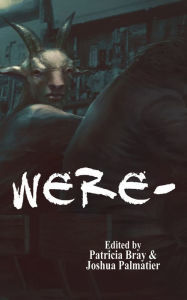
Freeing The Lizard Brain: WERE-
Short fiction is not my primary writing style. The first time I tried to come up with a short story I ended up with a four book series. But every once in a while an idea will hit me and develop into something readable.
When Joshua Palmatier and Patricia Bray asked me to contribute to their anthology WERE-, the idea for “Sniff For Your Life” had already been percolating for a few months. No trouble at all to write that story.
Writing a story is not the end of the work. It had to pass muster with the editors.
Over the years I have accumulated a fair number of pieces of short fiction—enough to fill three short collections. Very few of those stories were edited by the same person, or the same team. Each anthology theme requires a different attitude and style.
I knew that “Sniff” wasn’t perfect even after several drafts. I knew that the editors would request revisions, not only to strengthen the story but to fit their attitude and style. It happens every time. Sometimes more work, sometimes less.
What surprised me most was that Josh and Pat looked at the story and saw my vision for what it needed to be. They did not ask me to edit out passages just because they needed work. They saw how to make them work because my lizard brain knew what the story needed, just not the best way to present it.
Staying true to an author’s vision for the story is a rare commodity in fiction, even more special in short fiction because you only have a few thousand words to develop it. In a novel you have the word count to develop that vision, that character, that plot thread, etc. over time, planting tiny details in layer after layer.
Thank you Josh and Pat for believing that my lizard brain is smarter than me and finding ways to let it loose with the proper way of presenting my story, not change my story to fit your vision of the anthology.
Phyllis Irene Radford
a.k.a. Phyllis Ames
Newsletter: http://www.ireneradford.net/
*******************
And don't forget Zombies Need Brains' other recent anthology release, ALIEN ARTIFACTS! Trade paperback [https://smile.amazon.com/Alien-Artifacts-Seanan-McGuire/dp/1940709083], Kindle [https://smile.amazon.com/Alien-Artifacts-Seanan-McGuire-ebook/dp/B01JK5WB34], Nook [http://www.barnesandnoble.com/w/alien-artifacts-joshua-palmatier/1124600406?ean=2940156925452].
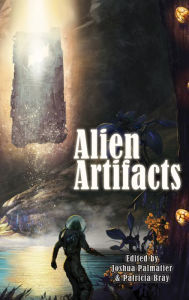
Freeing The Lizard Brain: WERE-
Short fiction is not my primary writing style. The first time I tried to come up with a short story I ended up with a four book series. But every once in a while an idea will hit me and develop into something readable.
When Joshua Palmatier and Patricia Bray asked me to contribute to their anthology WERE-, the idea for “Sniff For Your Life” had already been percolating for a few months. No trouble at all to write that story.
Writing a story is not the end of the work. It had to pass muster with the editors.
Over the years I have accumulated a fair number of pieces of short fiction—enough to fill three short collections. Very few of those stories were edited by the same person, or the same team. Each anthology theme requires a different attitude and style.
I knew that “Sniff” wasn’t perfect even after several drafts. I knew that the editors would request revisions, not only to strengthen the story but to fit their attitude and style. It happens every time. Sometimes more work, sometimes less.
What surprised me most was that Josh and Pat looked at the story and saw my vision for what it needed to be. They did not ask me to edit out passages just because they needed work. They saw how to make them work because my lizard brain knew what the story needed, just not the best way to present it.
Staying true to an author’s vision for the story is a rare commodity in fiction, even more special in short fiction because you only have a few thousand words to develop it. In a novel you have the word count to develop that vision, that character, that plot thread, etc. over time, planting tiny details in layer after layer.
Thank you Josh and Pat for believing that my lizard brain is smarter than me and finding ways to let it loose with the proper way of presenting my story, not change my story to fit your vision of the anthology.
Phyllis Irene Radford
a.k.a. Phyllis Ames
Newsletter: http://www.ireneradford.net/
*******************
And don't forget Zombies Need Brains' other recent anthology release, ALIEN ARTIFACTS! Trade paperback [https://smile.amazon.com/Alien-Artifacts-Seanan-McGuire/dp/1940709083], Kindle [https://smile.amazon.com/Alien-Artifacts-Seanan-McGuire-ebook/dp/B01JK5WB34], Nook [http://www.barnesandnoble.com/w/alien-artifacts-joshua-palmatier/1124600406?ean=2940156925452].
September 19, 2016
How to Create an Anthology: Step 6: Table of Contents
How to Create an Anthology: Step 6: Table of Contents
This is the sixth of a series of blog posts that I intend to do in order to show how I create the anthologies for Zombies Need Brains, the small press that I founded in order to produce anthologies. It's basically a behind-the-scenes look at the process, which will be covered in multiple parts. Obviously, this is only how I produce an anthology and there may be other roads to follow in order to produce one. Keep that in mind. For the first five entries, click through here: http://jpsorrow.livejournal.com/486215.html
So at this point you’ve got all of your stories back to your authors with revision notes and they’re working on revisions. Editors don’t get to sit back and relax at this point. There are other things to do, and one of those is the Table of Contents for the anthology. You might think that this is just writing down what stories are in the anthology and then you’re done. You’d be wrong.
The Table of Contents is a little more complicated than that and ends of requiring a lot more time than you’d think. Patricia and I have literally spent hours trying to figure it out, often with breaks because we both had a headache. Now, it may be that the ToC is obvious, such as with our anthology AFTER HOURS: TALES FROM THE UR-BAR, where the stories had a chronological order. But most anthologies don’t have a set-up like that. Which means you need to carefully consider what order you want the stories to appear in the book.
The first and last story in the anthology should be two of your strongest stories AND they should also be stories that epitomize the theme of the story, especially that first one. Why? Because readers who are searching the shelves at the bookstore may pick up the anthology and most people turn to the first story (or sometimes the last) in order to see what kind of stories they’ll find in the book. You need to have a good, solid introductory story to get them into the theme. And if someone does buy the anthology and reads it, you’ll want them to end the anthology on a high note, so perhaps they’ll run out and buy one of your other anthologies.
You can’t simply throw the other stories in the middle either. You should try to vary the tones and atmospheres and concepts. You don’t want to put all of your dark stories in one group, or all your humorous ones, because that becomes repetitive for the reader. You need to alternate them a little bit—perhaps a humorous story followed by a dark one, then a medium-ish story in tone, then a lighter one, etc. Do the same for the concepts, don’t group the werewolf stories together when you’ve got vampires and fae to mix it up. Basically, you don’t want the reader to be reading through the anthology and ever have the feeling or say to themselves, “I just read this story.” If you’ve designed the concept of the anthology so that it’s broad enough, then you’ll have a variety of themes and tones in the stories you accepted. You should be able to make the reading experience jump around in those themes and tones so the reader is getting different experience from story to story.
For Zombies Need Brains anthologies, where we have anchor authors and other authors pulled from the slush pile, we also try to alternate between the two types of authors, although this isn’t really necessary. But we find mixing familiar names with unfamiliar ones keeps the reader reading as well, and may even give the reader an unconscious nudge to try some of the authors they don’t recognize. Because, let’s face it, most people buy anthologies because they recognize a few names in the Table of Contents. Often, they’ll open the anthology and read the familiar authors’ stories first, no matter where they are in the anthology. Having them read some of the other stories, and perhaps find new favorite authors, is one of the best things about producing anthologies in the first place.
So think carefully about how you place the stories in an anthology’s Table of Contents. It is more important than simply listing those stories in order. Shoot for some variety, so the reading experience is a rollercoaster of a ride.
And now a word from our sponsor:
*****************
Zombies Need Brains is currently running a Kickstarter (at https://www.kickstarter.com/projects/543968884/robots-water-and-death-anthologies?token=017aef99) to fund THREE new SF&F anthologies and we need your help! We can't produce anthologies unless we can get the funding to pay the authors, the cover artists, the print and ebook designers, and the printers. That's where the Kickstarter comes in, and you, THE FANS! We've got a ton of stunning anchor authors on board, including NY Times bestselling authors and award winners. And we've got a ton of great reward levels, such as tuckerizations, signed copies of books by your favorite authors, and more! Our themes for this current Kickstarter are:
ALL HAIL OUR ROBOT CONQUERORS!: “Danger, Will Robinson! Danger!” 50s and 60s television shows and movies were replete with clunky robots with bulbous arms and heads, blinking lights, and a staggered, ponderous walk, like Robby the Robot, GORT, and the Daleks. With a touch of nostalgia and a little tongue-in-cheek humor, this anthology will present invasions of robot conquerors—or well-meaning robot companions—rooted in those 50s and 60s ideals of the robotic vision of the future. Edited by Patricia Bray & Joshua Palmatier.
SUBMERGED: From the very earliest days of SFF, when Jules Verne wrote 20,000 Leagues Under the Sea, the depths of the oceans have always intrigued us. Three quarters of our planet teems with creatures beyond our imagining, and terrors we cannot see. Kraken, Leviathan, Cthulu – what other mysteries and monsters lurk in the currents of the wet and dark? SUBMERGED will explore the depths beneath the surface, whether it be on brand new planets yet to be explored, apocalyptic Earths, or fantasy settings from our wildest dreams. So come join us and explore unfathomable trenches, underwater volcanoes, and abyssal plains. Take the plunge . . . into the Deep End! Edited by S.C. Butler & Joshua Palmatier.
THE DEATH OF ALL THINGS: Death and taxes: the universal themes. Or, nearly. Not all cultures pay taxes, but all pay the reaper. Acknowledging that nobody will ever beat Sir Terry Pratchett for his depiction of Death, we believe there are more stories to tell, exploring the realm and character of death: tragic, humorous, and all the shades in-between. Edited by Laura Anne Gilman & Kat Richardson.
If you'd like to help fund these anthologies, swing on by the Kickstarter at https://www.kickstarter.com/projects/543968884/robots-water-and-death-anthologies?token=017aef99! And share the Kickstarter with your friends, family, and total strangers! We need more SF&F anthologies!
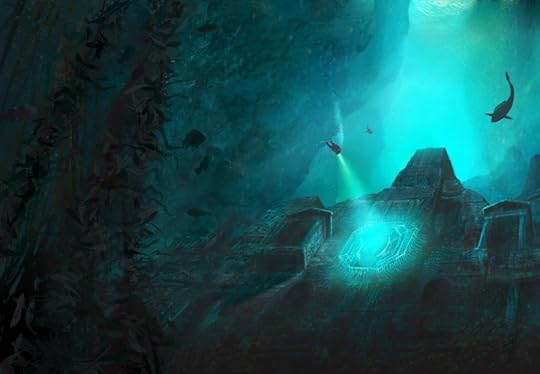
This is the sixth of a series of blog posts that I intend to do in order to show how I create the anthologies for Zombies Need Brains, the small press that I founded in order to produce anthologies. It's basically a behind-the-scenes look at the process, which will be covered in multiple parts. Obviously, this is only how I produce an anthology and there may be other roads to follow in order to produce one. Keep that in mind. For the first five entries, click through here: http://jpsorrow.livejournal.com/486215.html
So at this point you’ve got all of your stories back to your authors with revision notes and they’re working on revisions. Editors don’t get to sit back and relax at this point. There are other things to do, and one of those is the Table of Contents for the anthology. You might think that this is just writing down what stories are in the anthology and then you’re done. You’d be wrong.
The Table of Contents is a little more complicated than that and ends of requiring a lot more time than you’d think. Patricia and I have literally spent hours trying to figure it out, often with breaks because we both had a headache. Now, it may be that the ToC is obvious, such as with our anthology AFTER HOURS: TALES FROM THE UR-BAR, where the stories had a chronological order. But most anthologies don’t have a set-up like that. Which means you need to carefully consider what order you want the stories to appear in the book.
The first and last story in the anthology should be two of your strongest stories AND they should also be stories that epitomize the theme of the story, especially that first one. Why? Because readers who are searching the shelves at the bookstore may pick up the anthology and most people turn to the first story (or sometimes the last) in order to see what kind of stories they’ll find in the book. You need to have a good, solid introductory story to get them into the theme. And if someone does buy the anthology and reads it, you’ll want them to end the anthology on a high note, so perhaps they’ll run out and buy one of your other anthologies.
You can’t simply throw the other stories in the middle either. You should try to vary the tones and atmospheres and concepts. You don’t want to put all of your dark stories in one group, or all your humorous ones, because that becomes repetitive for the reader. You need to alternate them a little bit—perhaps a humorous story followed by a dark one, then a medium-ish story in tone, then a lighter one, etc. Do the same for the concepts, don’t group the werewolf stories together when you’ve got vampires and fae to mix it up. Basically, you don’t want the reader to be reading through the anthology and ever have the feeling or say to themselves, “I just read this story.” If you’ve designed the concept of the anthology so that it’s broad enough, then you’ll have a variety of themes and tones in the stories you accepted. You should be able to make the reading experience jump around in those themes and tones so the reader is getting different experience from story to story.
For Zombies Need Brains anthologies, where we have anchor authors and other authors pulled from the slush pile, we also try to alternate between the two types of authors, although this isn’t really necessary. But we find mixing familiar names with unfamiliar ones keeps the reader reading as well, and may even give the reader an unconscious nudge to try some of the authors they don’t recognize. Because, let’s face it, most people buy anthologies because they recognize a few names in the Table of Contents. Often, they’ll open the anthology and read the familiar authors’ stories first, no matter where they are in the anthology. Having them read some of the other stories, and perhaps find new favorite authors, is one of the best things about producing anthologies in the first place.
So think carefully about how you place the stories in an anthology’s Table of Contents. It is more important than simply listing those stories in order. Shoot for some variety, so the reading experience is a rollercoaster of a ride.
And now a word from our sponsor:
*****************
Zombies Need Brains is currently running a Kickstarter (at https://www.kickstarter.com/projects/543968884/robots-water-and-death-anthologies?token=017aef99) to fund THREE new SF&F anthologies and we need your help! We can't produce anthologies unless we can get the funding to pay the authors, the cover artists, the print and ebook designers, and the printers. That's where the Kickstarter comes in, and you, THE FANS! We've got a ton of stunning anchor authors on board, including NY Times bestselling authors and award winners. And we've got a ton of great reward levels, such as tuckerizations, signed copies of books by your favorite authors, and more! Our themes for this current Kickstarter are:
ALL HAIL OUR ROBOT CONQUERORS!: “Danger, Will Robinson! Danger!” 50s and 60s television shows and movies were replete with clunky robots with bulbous arms and heads, blinking lights, and a staggered, ponderous walk, like Robby the Robot, GORT, and the Daleks. With a touch of nostalgia and a little tongue-in-cheek humor, this anthology will present invasions of robot conquerors—or well-meaning robot companions—rooted in those 50s and 60s ideals of the robotic vision of the future. Edited by Patricia Bray & Joshua Palmatier.
SUBMERGED: From the very earliest days of SFF, when Jules Verne wrote 20,000 Leagues Under the Sea, the depths of the oceans have always intrigued us. Three quarters of our planet teems with creatures beyond our imagining, and terrors we cannot see. Kraken, Leviathan, Cthulu – what other mysteries and monsters lurk in the currents of the wet and dark? SUBMERGED will explore the depths beneath the surface, whether it be on brand new planets yet to be explored, apocalyptic Earths, or fantasy settings from our wildest dreams. So come join us and explore unfathomable trenches, underwater volcanoes, and abyssal plains. Take the plunge . . . into the Deep End! Edited by S.C. Butler & Joshua Palmatier.
THE DEATH OF ALL THINGS: Death and taxes: the universal themes. Or, nearly. Not all cultures pay taxes, but all pay the reaper. Acknowledging that nobody will ever beat Sir Terry Pratchett for his depiction of Death, we believe there are more stories to tell, exploring the realm and character of death: tragic, humorous, and all the shades in-between. Edited by Laura Anne Gilman & Kat Richardson.
If you'd like to help fund these anthologies, swing on by the Kickstarter at https://www.kickstarter.com/projects/543968884/robots-water-and-death-anthologies?token=017aef99! And share the Kickstarter with your friends, family, and total strangers! We need more SF&F anthologies!
September 16, 2016
How to Create an Anthology: Step 5: Editing
How to Create an Anthology: Step 5: Editing
This is the fifth of a series of blog posts that I intend to do in order to show how I create the anthologies for Zombies Need Brains, the small press that I founded in order to produce anthologies. It's basically a behind-the-scenes look at the process, which will be covered in multiple parts. Obviously, this is only how I produce an anthology and there may be other roads to follow in order to produce one. Keep that in mind.
So far, we’ve covered how to come up with a good concept (http://jpsorrow.livejournal.com/485250.html), how to find some great authors for that concept (http://jpsorrow.livejournal.com/485575.html), how to get funding for the project (http://jpsorrow.livejournal.com/485734.html), and what it’s like reading through the slush pile if you have an open call (http://jpsorrow.livejournal.com/486116.html). At this point, you now have all of the stories you intend to put into the anthology. Now comes the heart of your job: editing. It’s not as easy as it sounds.
First, of course, you need to read through all of the stories with an eye towards how you can make the story better. That’s the entire goal. And at the same time, you have to respect the integrity of the author—their style, their voice, the story that they intended to tell. You aren’t trying to rewrite their story to what YOU think it should be; you’re trying to understand the heart of the story that the author wanted to tell and figure out how to improve on what’s written on the paper. It’s rare that a story can’t be improved in some manner. Writers aren’t perfect. In fact, most writers are, in general, unhappy with the story they wrote on some level, because they had this grand vision of the story in their head, and rarely does that grand vision translate completely onto the page. (I can say this because I’ve written so much myself and it never comes out the way I imagined it in my head.) So most writers are open to suggestions for how to improve the story … as long as they recognize that you respect what they wrote in the first place.
And that’s probably the key to editing: everything you say is just a suggestion. You should phrase the revision letter that you send to each author with that in mind. What you try to do as an editor is explain where you feel there are flaws in the story—plot holes, characters acting out of character, infodumps, too much setting, too little setting, not enough worldbuilding, too much worldbuilding, etc. You need to get across to the author why you feel there is a flaw there. If they can see why you have a problem with that section, then they can figure out a way to fix it. (Note: At this stage, you are NOT looking for typos or grammar errors or small stuff that like; you’re looking for the big picture story issues—plot, structure, character, setting, worldbuilding, etc.) Sometimes I’ll offer up a few suggestions as to how I might fix it, but this is mainly an attempt to clarify what I think the issue is in that section. I don’t expect the author to use my suggestions (unless they want to). In fact, I expect them to come up with their own solution, because in the end it’s their story and they usually come up with a better fix anyway. But even then, the decision to change the story in any way is still the author’s. And they may decide that the way it’s currently written is fine and not change anything at all in that section.
Basically, you need to remember that you’re dealing with real people, who are more personally involved in the story than you are. They’ve poured their heart into the story. One of the more delicate interactions you’re going to have during the entire course of creating this anthology will be writing the revision letters for the authors. You need to get across what you think can be improved, but at the same time you can’t be completely and totally blunt about it (unless you’ve worked with the author many times already and have an understanding with them). The majority of the time, I’m dealing with authors I’ve never worked with before. I don’t know how they’d react to a short, blunt assessment of the story. So write the revision letter with the idea that you and the author are collaborators. You both have the same goal: make the story better.
Writers need to keep this in mind as well. The editor (if they’re a good editor) isn’t trying to tear your story apart. They like the story, otherwise it wouldn’t have made it to the editing stage. They simply want to polish it up, take off its sharper edges, make it shine. Yes, it’s hard to step back and try to see what the editor is trying to say, especially after you struggled to get those words down on the page in the first place, but remember that they’re trying to make the story the best it can possibly be. And also remember that, in the end, you don’t have to listen to them. A good editor simply wants you to consider what they’re saying, because they don’t have the personal attachment to the story. They have a little distance, perhaps enough to see things that you haven’t yet. The editor’s suggestions are not attacks.
Once you’ve written the revision letters, the majority of the work passes back onto the authors. You have to give them a little time to absorb your suggestions, to come to terms with them, and then come up with their own solutions. As an editor, mostly you’re just waiting for the “final” stories to come back in. But be prepared to have a few conversations with the authors as well. They may bounce ideas off of you. They may need to discuss your suggestions—either to clarify what you meant or even to disagree with you and try to explain why. Often these conversations lead to a better understanding of what the story wants to be by both the editor and the author. Throughout this process, both sides need to keep in mind that it’s a collaboration.
While the authors are working on their revisions, what the editor should be doing is considering the Table of Contents for the anthology. This is a surprisingly complicated process for most anthologies, so will be the topic of the next post in this blog series.
And now a word from our sponsor:
*****************
Zombies Need Brains is currently running a Kickstarter (at https://www.kickstarter.com/projects/543968884/robots-water-and-death-anthologies?token=017aef99) to fund THREE new SF&F anthologies and we need your help! We can't produce anthologies unless we can get the funding to pay the authors, the cover artists, the print and ebook designers, and the printers. That's where the Kickstarter comes in, and you, THE FANS! We've got a ton of stunning anchor authors on board, including NY Times bestselling authors and award winners. And we've got a ton of great reward levels, such as tuckerizations, signed copies of books by your favorite authors, and more! Our themes for this current Kickstarter are:
ALL HAIL OUR ROBOT CONQUERORS!: “Danger, Will Robinson! Danger!” 50s and 60s television shows and movies were replete with clunky robots with bulbous arms and heads, blinking lights, and a staggered, ponderous walk, like Robby the Robot, GORT, and the Daleks. With a touch of nostalgia and a little tongue-in-cheek humor, this anthology will present invasions of robot conquerors—or well-meaning robot companions—rooted in those 50s and 60s ideals of the robotic vision of the future. Edited by Patricia Bray & Joshua Palmatier.
SUBMERGED: From the very earliest days of SFF, when Jules Verne wrote 20,000 Leagues Under the Sea, the depths of the oceans have always intrigued us. Three quarters of our planet teems with creatures beyond our imagining, and terrors we cannot see. Kraken, Leviathan, Cthulu – what other mysteries and monsters lurk in the currents of the wet and dark? SUBMERGED will explore the depths beneath the surface, whether it be on brand new planets yet to be explored, apocalyptic Earths, or fantasy settings from our wildest dreams. So come join us and explore unfathomable trenches, underwater volcanoes, and abyssal plains. Take the plunge . . . into the Deep End! Edited by S.C. Butler & Joshua Palmatier.
THE DEATH OF ALL THINGS: Death and taxes: the universal themes. Or, nearly. Not all cultures pay taxes, but all pay the reaper. Acknowledging that nobody will ever beat Sir Terry Pratchett for his depiction of Death, we believe there are more stories to tell, exploring the realm and character of death: tragic, humorous, and all the shades in-between. Edited by Laura Anne Gilman & Kat Richardson.
If you'd like to help fund these anthologies, swing on by the Kickstarter at https://www.kickstarter.com/projects/543968884/robots-water-and-death-anthologies?token=017aef99! And share the Kickstarter with your friends, family, and total strangers! We need more SF&F anthologies!
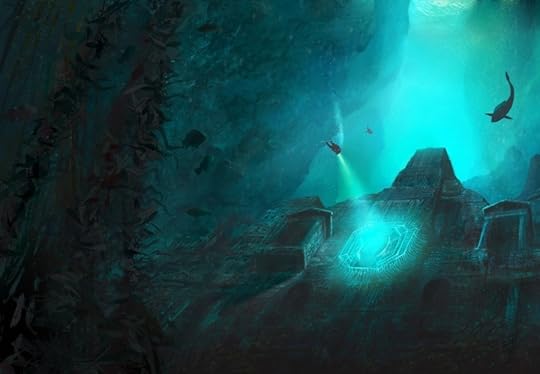
This is the fifth of a series of blog posts that I intend to do in order to show how I create the anthologies for Zombies Need Brains, the small press that I founded in order to produce anthologies. It's basically a behind-the-scenes look at the process, which will be covered in multiple parts. Obviously, this is only how I produce an anthology and there may be other roads to follow in order to produce one. Keep that in mind.
So far, we’ve covered how to come up with a good concept (http://jpsorrow.livejournal.com/485250.html), how to find some great authors for that concept (http://jpsorrow.livejournal.com/485575.html), how to get funding for the project (http://jpsorrow.livejournal.com/485734.html), and what it’s like reading through the slush pile if you have an open call (http://jpsorrow.livejournal.com/486116.html). At this point, you now have all of the stories you intend to put into the anthology. Now comes the heart of your job: editing. It’s not as easy as it sounds.
First, of course, you need to read through all of the stories with an eye towards how you can make the story better. That’s the entire goal. And at the same time, you have to respect the integrity of the author—their style, their voice, the story that they intended to tell. You aren’t trying to rewrite their story to what YOU think it should be; you’re trying to understand the heart of the story that the author wanted to tell and figure out how to improve on what’s written on the paper. It’s rare that a story can’t be improved in some manner. Writers aren’t perfect. In fact, most writers are, in general, unhappy with the story they wrote on some level, because they had this grand vision of the story in their head, and rarely does that grand vision translate completely onto the page. (I can say this because I’ve written so much myself and it never comes out the way I imagined it in my head.) So most writers are open to suggestions for how to improve the story … as long as they recognize that you respect what they wrote in the first place.
And that’s probably the key to editing: everything you say is just a suggestion. You should phrase the revision letter that you send to each author with that in mind. What you try to do as an editor is explain where you feel there are flaws in the story—plot holes, characters acting out of character, infodumps, too much setting, too little setting, not enough worldbuilding, too much worldbuilding, etc. You need to get across to the author why you feel there is a flaw there. If they can see why you have a problem with that section, then they can figure out a way to fix it. (Note: At this stage, you are NOT looking for typos or grammar errors or small stuff that like; you’re looking for the big picture story issues—plot, structure, character, setting, worldbuilding, etc.) Sometimes I’ll offer up a few suggestions as to how I might fix it, but this is mainly an attempt to clarify what I think the issue is in that section. I don’t expect the author to use my suggestions (unless they want to). In fact, I expect them to come up with their own solution, because in the end it’s their story and they usually come up with a better fix anyway. But even then, the decision to change the story in any way is still the author’s. And they may decide that the way it’s currently written is fine and not change anything at all in that section.
Basically, you need to remember that you’re dealing with real people, who are more personally involved in the story than you are. They’ve poured their heart into the story. One of the more delicate interactions you’re going to have during the entire course of creating this anthology will be writing the revision letters for the authors. You need to get across what you think can be improved, but at the same time you can’t be completely and totally blunt about it (unless you’ve worked with the author many times already and have an understanding with them). The majority of the time, I’m dealing with authors I’ve never worked with before. I don’t know how they’d react to a short, blunt assessment of the story. So write the revision letter with the idea that you and the author are collaborators. You both have the same goal: make the story better.
Writers need to keep this in mind as well. The editor (if they’re a good editor) isn’t trying to tear your story apart. They like the story, otherwise it wouldn’t have made it to the editing stage. They simply want to polish it up, take off its sharper edges, make it shine. Yes, it’s hard to step back and try to see what the editor is trying to say, especially after you struggled to get those words down on the page in the first place, but remember that they’re trying to make the story the best it can possibly be. And also remember that, in the end, you don’t have to listen to them. A good editor simply wants you to consider what they’re saying, because they don’t have the personal attachment to the story. They have a little distance, perhaps enough to see things that you haven’t yet. The editor’s suggestions are not attacks.
Once you’ve written the revision letters, the majority of the work passes back onto the authors. You have to give them a little time to absorb your suggestions, to come to terms with them, and then come up with their own solutions. As an editor, mostly you’re just waiting for the “final” stories to come back in. But be prepared to have a few conversations with the authors as well. They may bounce ideas off of you. They may need to discuss your suggestions—either to clarify what you meant or even to disagree with you and try to explain why. Often these conversations lead to a better understanding of what the story wants to be by both the editor and the author. Throughout this process, both sides need to keep in mind that it’s a collaboration.
While the authors are working on their revisions, what the editor should be doing is considering the Table of Contents for the anthology. This is a surprisingly complicated process for most anthologies, so will be the topic of the next post in this blog series.
And now a word from our sponsor:
*****************
Zombies Need Brains is currently running a Kickstarter (at https://www.kickstarter.com/projects/543968884/robots-water-and-death-anthologies?token=017aef99) to fund THREE new SF&F anthologies and we need your help! We can't produce anthologies unless we can get the funding to pay the authors, the cover artists, the print and ebook designers, and the printers. That's where the Kickstarter comes in, and you, THE FANS! We've got a ton of stunning anchor authors on board, including NY Times bestselling authors and award winners. And we've got a ton of great reward levels, such as tuckerizations, signed copies of books by your favorite authors, and more! Our themes for this current Kickstarter are:
ALL HAIL OUR ROBOT CONQUERORS!: “Danger, Will Robinson! Danger!” 50s and 60s television shows and movies were replete with clunky robots with bulbous arms and heads, blinking lights, and a staggered, ponderous walk, like Robby the Robot, GORT, and the Daleks. With a touch of nostalgia and a little tongue-in-cheek humor, this anthology will present invasions of robot conquerors—or well-meaning robot companions—rooted in those 50s and 60s ideals of the robotic vision of the future. Edited by Patricia Bray & Joshua Palmatier.
SUBMERGED: From the very earliest days of SFF, when Jules Verne wrote 20,000 Leagues Under the Sea, the depths of the oceans have always intrigued us. Three quarters of our planet teems with creatures beyond our imagining, and terrors we cannot see. Kraken, Leviathan, Cthulu – what other mysteries and monsters lurk in the currents of the wet and dark? SUBMERGED will explore the depths beneath the surface, whether it be on brand new planets yet to be explored, apocalyptic Earths, or fantasy settings from our wildest dreams. So come join us and explore unfathomable trenches, underwater volcanoes, and abyssal plains. Take the plunge . . . into the Deep End! Edited by S.C. Butler & Joshua Palmatier.
THE DEATH OF ALL THINGS: Death and taxes: the universal themes. Or, nearly. Not all cultures pay taxes, but all pay the reaper. Acknowledging that nobody will ever beat Sir Terry Pratchett for his depiction of Death, we believe there are more stories to tell, exploring the realm and character of death: tragic, humorous, and all the shades in-between. Edited by Laura Anne Gilman & Kat Richardson.
If you'd like to help fund these anthologies, swing on by the Kickstarter at https://www.kickstarter.com/projects/543968884/robots-water-and-death-anthologies?token=017aef99! And share the Kickstarter with your friends, family, and total strangers! We need more SF&F anthologies!
September 13, 2016
How to Create an Anthology: Summary So Far
A little while ago, I started up a series of blog posts called "How to Create an Anthology." The idea was inspired by SF&F author Kate Elliott, who asked me after Worldcon in August whether I'd done such a series of posts in the past that she could direct people towards, because someone had asked her about the subject. I hadn't, so she suggested maybe I spend the time creating such a blog series, since I've been working and producing anthologies for DAW Books and my own small press, Zombies Need Brains (http://www.zombitesneedbrains.com), for a while. I thought it was a great idea! I've divided the series up into parts, and so far the first four parts have been posted. I'll be posting the rest of the series as well, but thought I'd start a single blog post to keep track of them all. Here are the first four, and I'll add in link to the rest of the series here as they get posted. I hope you learn something about this process, and perhaps use it to produce your own anthologies in the future!
Step 1: Concept: http://jpsorrow.livejournal.com/485250.html
Step 2: Authors: http://jpsorrow.livejournal.com/485575.html
Step 3: Funding: http://jpsorrow.livejournal.com/485734.html
Step 4: Slush Pile: http://jpsorrow.livejournal.com/486116.html
This post brought to you by:
*************************
Zombies Need Brains is currently running a Kickstarter (at https://www.kickstarter.com/projects/543968884/robots-water-and-death-anthologies?token=017aef99) to fund THREE new SF&F anthologies and we need your help! We can't produce anthologies unless we can get the funding to pay the authors, the cover artists, the print and ebook designers, and the printers. That's where the Kickstarter comes in, and you, THE FANS! We've got a ton of stunning anchor authors on board, including NY Times bestselling authors and award winners. And we've got a ton of great reward levels, such as tuckerizations, signed copies of books by your favorite authors, and more! Our themes for this current Kickstarter are:
ALL HAIL OUR ROBOT CONQUERORS!: “Danger, Will Robinson! Danger!” 50s and 60s television shows and movies were replete with clunky robots with bulbous arms and heads, blinking lights, and a staggered, ponderous walk, like Robby the Robot, GORT, and the Daleks. With a touch of nostalgia and a little tongue-in-cheek humor, this anthology will present invasions of robot conquerors—or well-meaning robot companions—rooted in those 50s and 60s ideals of the robotic vision of the future. Edited by Patricia Bray & Joshua Palmatier.
SUBMERGED: From the very earliest days of SFF, when Jules Verne wrote 20,000 Leagues Under the Sea, the depths of the oceans have always intrigued us. Three quarters of our planet teems with creatures beyond our imagining, and terrors we cannot see. Kraken, Leviathan, Cthulu – what other mysteries and monsters lurk in the currents of the wet and dark? SUBMERGED will explore the depths beneath the surface, whether it be on brand new planets yet to be explored, apocalyptic Earths, or fantasy settings from our wildest dreams. So come join us and explore unfathomable trenches, underwater volcanoes, and abyssal plains. Take the plunge . . . into the Deep End! Edited by S.C. Butler & Joshua Palmatier.
THE DEATH OF ALL THINGS: Death and taxes: the universal themes. Or, nearly. Not all cultures pay taxes, but all pay the reaper. Acknowledging that nobody will ever beat Sir Terry Pratchett for his depiction of Death, we believe there are more stories to tell, exploring the realm and character of death: tragic, humorous, and all the shades in-between. Edited by Laura Anne Gilman & Kat Richardson.
If you'd like to help fund these anthologies, swing on by the Kickstarter at https://www.kickstarter.com/projects/543968884/robots-water-and-death-anthologies?token=017aef99! And share the Kickstarter with your friends, family, and total strangers! We need more SF&F anthologies!
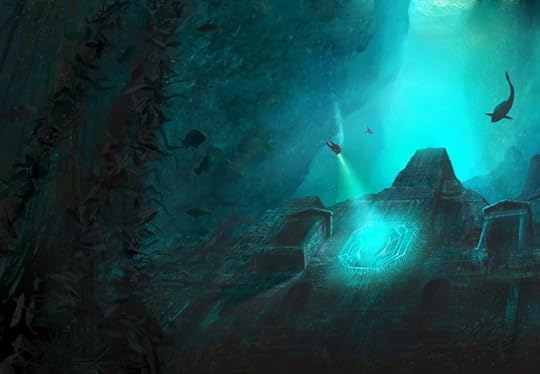
Step 1: Concept: http://jpsorrow.livejournal.com/485250.html
Step 2: Authors: http://jpsorrow.livejournal.com/485575.html
Step 3: Funding: http://jpsorrow.livejournal.com/485734.html
Step 4: Slush Pile: http://jpsorrow.livejournal.com/486116.html
This post brought to you by:
*************************
Zombies Need Brains is currently running a Kickstarter (at https://www.kickstarter.com/projects/543968884/robots-water-and-death-anthologies?token=017aef99) to fund THREE new SF&F anthologies and we need your help! We can't produce anthologies unless we can get the funding to pay the authors, the cover artists, the print and ebook designers, and the printers. That's where the Kickstarter comes in, and you, THE FANS! We've got a ton of stunning anchor authors on board, including NY Times bestselling authors and award winners. And we've got a ton of great reward levels, such as tuckerizations, signed copies of books by your favorite authors, and more! Our themes for this current Kickstarter are:
ALL HAIL OUR ROBOT CONQUERORS!: “Danger, Will Robinson! Danger!” 50s and 60s television shows and movies were replete with clunky robots with bulbous arms and heads, blinking lights, and a staggered, ponderous walk, like Robby the Robot, GORT, and the Daleks. With a touch of nostalgia and a little tongue-in-cheek humor, this anthology will present invasions of robot conquerors—or well-meaning robot companions—rooted in those 50s and 60s ideals of the robotic vision of the future. Edited by Patricia Bray & Joshua Palmatier.
SUBMERGED: From the very earliest days of SFF, when Jules Verne wrote 20,000 Leagues Under the Sea, the depths of the oceans have always intrigued us. Three quarters of our planet teems with creatures beyond our imagining, and terrors we cannot see. Kraken, Leviathan, Cthulu – what other mysteries and monsters lurk in the currents of the wet and dark? SUBMERGED will explore the depths beneath the surface, whether it be on brand new planets yet to be explored, apocalyptic Earths, or fantasy settings from our wildest dreams. So come join us and explore unfathomable trenches, underwater volcanoes, and abyssal plains. Take the plunge . . . into the Deep End! Edited by S.C. Butler & Joshua Palmatier.
THE DEATH OF ALL THINGS: Death and taxes: the universal themes. Or, nearly. Not all cultures pay taxes, but all pay the reaper. Acknowledging that nobody will ever beat Sir Terry Pratchett for his depiction of Death, we believe there are more stories to tell, exploring the realm and character of death: tragic, humorous, and all the shades in-between. Edited by Laura Anne Gilman & Kat Richardson.
If you'd like to help fund these anthologies, swing on by the Kickstarter at https://www.kickstarter.com/projects/543968884/robots-water-and-death-anthologies?token=017aef99! And share the Kickstarter with your friends, family, and total strangers! We need more SF&F anthologies!