Joshua Palmatier's Blog, page 4
September 13, 2016
How to Create an Anthology: Step 4: Slush Pile
How to Create an Anthology: Step 4: Slush Pile
This is the fourth of a series of blog posts that I intend to do in order to show how I create the anthologies for Zombies Need Brains, the small press that I founded in order to produce anthologies. It's basically a behind-the-scenes look at the process, which will be covered in multiple parts. Obviously, this is only how I produce an anthology and there may be other roads to follow in order to produce one. Keep that in mind.
This part of the series focuses on reading through the slush pile generated by the open call that Zombies Need Brains does for all of our recent anthologies. If you aren’t doing an open call for submissions, you can probably skip to the next part of the series.
ZNB firmly believes that sometimes the best stories for a particular theme will come from an unknown source and we want to support finding new and interesting voices in the SF&F field. Because of this, we run an open call for submissions for each of our anthologies, so that anyone with a story that fits the theme can submit and possibly end up in the anthology. I believe every anthology we’ve produced has contained at least one story from an unknown, unpublished author. Not because we specifically searched an unpublished author’s story out, but because they rose to the top of the slush pile on their own merits.
If you’re putting together an anthology, I strongly suggest that you have an open call for that anthology. But be aware that the slush pile has its own positives and negatives. The positive is that you’ll have a ton of stories to choose from, which means you’re going to get the best possible stories for your anthology. The negative is that you’ll have a ton of stories to choose from, which means you’re going to have to READ all of those stories to find the best possible ones for your anthology.
Depending on how many submissions you get, reading the slush pile can be time-consuming and often painful. But it’s worth it in the end. At this point, ZNB doesn’t receive so many stories with its open calls that they are impossible to get through. I personally read all of the stories, and I typically read them all the way through. Most editors reading slush piles don’t do this though. Writers have to capture the editor’s attention within the first page or two, give them a reason to keep reading to the end. I usually know within the first page or two whether or not we’ll be seriously considering the story for the anthology or not, but I keep reading (sometimes just skimming) to the end to see if there’s something there to change my mind. Only in extreme cases, where the writing is horrible or the story is obviously completely off theme, do I stop reading before I reach the end. Why do I read to the end? Because sometimes there’s a story that doesn’t really start until about halfway through, and then suddenly it clicks and gets good. If the writer just cut that first half off, maybe worked in anything relevant in that first half into the second somehow, then you’d have a stellar story. I don’t want to miss out on a good story because of that.
However, I can only do this because we aren’t being completely overwhelmed with stories. With each new anthology we produce, the number of submissions continues to grow. I expect that soon I’ll have to give up reading all stories to the end, simply because there won’t be enough time. At some point in the future, I may even have to rely on some slush pile readers to wade through it all and send me only what they feel are the best stories, so I may only end up reading part of this slush pile. As an anthologist, you may have to do this as well. You may want to do this anyway, regardless of how many submissions you get, simply so you can focus on other aspects of the process. This is simply a reality of open call submissions and it emphasizes that, when a writer submits a story, they MUST make it the best possible story you can before submission and they MUST have a strong opening.
For the writers out there: In that first page, perhaps even first paragraph, give the editor the “cool factor” of your story. Give them a strong character and strong voice. Give them a unique setting. Give them a hook to keep the editor reading. And please, please, please give them a story that actually fits the theme of the anthology! I’d estimate that at least 20% of all submissions I read for a particular anthology for ZNB don’t fit the theme—aren’t even CLOSE to the theme.
So slush piles have advantages and disadvantages, but I still strongly believe in them for finding the best stories for an anthology. If you have a story that fits, revise it, then revise it again, make it the strongest story you possibly can, and then submit it. If you’re an editor, prepare yourself for some heavy duty reading, some excruciating reading perhaps, but also prepare yourself for discovering that gem buried in the slush pile that makes your anthology shine.
At this point in the process of creating an anthology, you have all of the stories that you want to use, whether they came from invited authors or the slush pile. What’s next? Well, the actual job: editing. That’s the next focus in this series.
And now a word from our sponsor:
*****************
Zombies Need Brains is currently running a Kickstarter (at https://www.kickstarter.com/projects/543968884/robots-water-and-death-anthologies?token=017aef99) to fund THREE new SF&F anthologies and we need your help! We can't produce anthologies unless we can get the funding to pay the authors, the cover artists, the print and ebook designers, and the printers. That's where the Kickstarter comes in, and you, THE FANS! We've got a ton of stunning anchor authors on board, including NY Times bestselling authors and award winners. And we've got a ton of great reward levels, such as tuckerizations, signed copies of books by your favorite authors, and more! Our themes for this current Kickstarter are:
ALL HAIL OUR ROBOT CONQUERORS!: “Danger, Will Robinson! Danger!” 50s and 60s television shows and movies were replete with clunky robots with bulbous arms and heads, blinking lights, and a staggered, ponderous walk, like Robby the Robot, GORT, and the Daleks. With a touch of nostalgia and a little tongue-in-cheek humor, this anthology will present invasions of robot conquerors—or well-meaning robot companions—rooted in those 50s and 60s ideals of the robotic vision of the future. Edited by Patricia Bray & Joshua Palmatier.
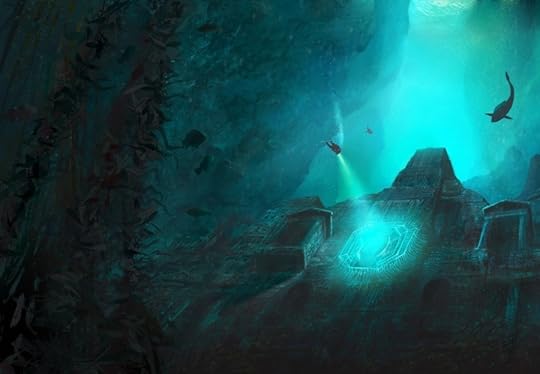
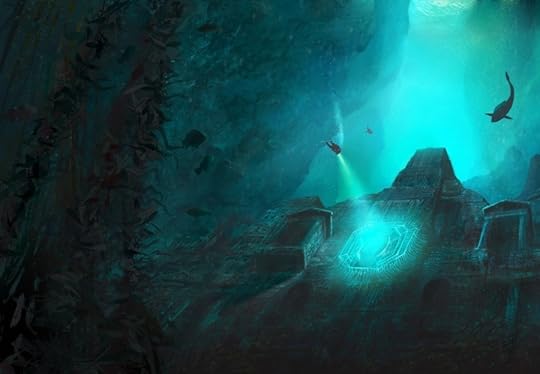
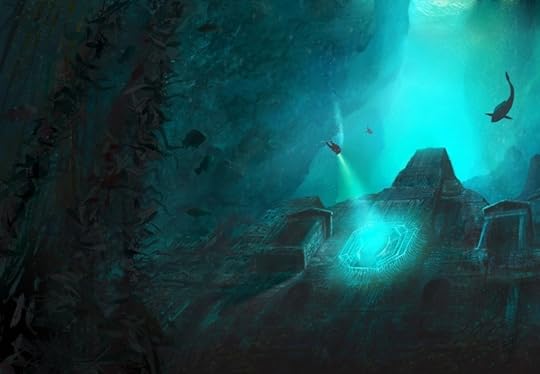
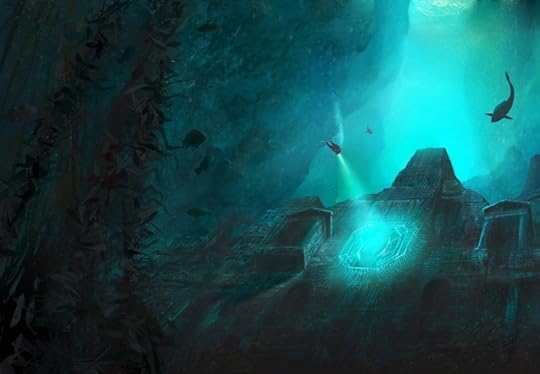
SUBMERGED: From the very earliest days of SFF, when Jules Verne wrote 20,000 Leagues Under the Sea, the depths of the oceans have always intrigued us. Three quarters of our planet teems with creatures beyond our imagining, and terrors we cannot see. Kraken, Leviathan, Cthulu – what other mysteries and monsters lurk in the currents of the wet and dark? SUBMERGED will explore the depths beneath the surface, whether it be on brand new planets yet to be explored, apocalyptic Earths, or fantasy settings from our wildest dreams. So come join us and explore unfathomable trenches, underwater volcanoes, and abyssal plains. Take the plunge . . . into the Deep End! Edited by S.C. Butler & Joshua Palmatier.
THE DEATH OF ALL THINGS: Death and taxes: the universal themes. Or, nearly. Not all cultures pay taxes, but all pay the reaper. Acknowledging that nobody will ever beat Sir Terry Pratchett for his depiction of Death, we believe there are more stories to tell, exploring the realm and character of death: tragic, humorous, and all the shades in-between. Edited by Laura Anne Gilman & Kat Richardson.
If you'd like to help fund these anthologies, swing on by the Kickstarter at https://www.kickstarter.com/projects/543968884/robots-water-and-death-anthologies?token=017aef99! And share the Kickstarter with your friends, family, and total strangers! We need more SF&F anthologies!
This is the fourth of a series of blog posts that I intend to do in order to show how I create the anthologies for Zombies Need Brains, the small press that I founded in order to produce anthologies. It's basically a behind-the-scenes look at the process, which will be covered in multiple parts. Obviously, this is only how I produce an anthology and there may be other roads to follow in order to produce one. Keep that in mind.
This part of the series focuses on reading through the slush pile generated by the open call that Zombies Need Brains does for all of our recent anthologies. If you aren’t doing an open call for submissions, you can probably skip to the next part of the series.
ZNB firmly believes that sometimes the best stories for a particular theme will come from an unknown source and we want to support finding new and interesting voices in the SF&F field. Because of this, we run an open call for submissions for each of our anthologies, so that anyone with a story that fits the theme can submit and possibly end up in the anthology. I believe every anthology we’ve produced has contained at least one story from an unknown, unpublished author. Not because we specifically searched an unpublished author’s story out, but because they rose to the top of the slush pile on their own merits.
If you’re putting together an anthology, I strongly suggest that you have an open call for that anthology. But be aware that the slush pile has its own positives and negatives. The positive is that you’ll have a ton of stories to choose from, which means you’re going to get the best possible stories for your anthology. The negative is that you’ll have a ton of stories to choose from, which means you’re going to have to READ all of those stories to find the best possible ones for your anthology.
Depending on how many submissions you get, reading the slush pile can be time-consuming and often painful. But it’s worth it in the end. At this point, ZNB doesn’t receive so many stories with its open calls that they are impossible to get through. I personally read all of the stories, and I typically read them all the way through. Most editors reading slush piles don’t do this though. Writers have to capture the editor’s attention within the first page or two, give them a reason to keep reading to the end. I usually know within the first page or two whether or not we’ll be seriously considering the story for the anthology or not, but I keep reading (sometimes just skimming) to the end to see if there’s something there to change my mind. Only in extreme cases, where the writing is horrible or the story is obviously completely off theme, do I stop reading before I reach the end. Why do I read to the end? Because sometimes there’s a story that doesn’t really start until about halfway through, and then suddenly it clicks and gets good. If the writer just cut that first half off, maybe worked in anything relevant in that first half into the second somehow, then you’d have a stellar story. I don’t want to miss out on a good story because of that.
However, I can only do this because we aren’t being completely overwhelmed with stories. With each new anthology we produce, the number of submissions continues to grow. I expect that soon I’ll have to give up reading all stories to the end, simply because there won’t be enough time. At some point in the future, I may even have to rely on some slush pile readers to wade through it all and send me only what they feel are the best stories, so I may only end up reading part of this slush pile. As an anthologist, you may have to do this as well. You may want to do this anyway, regardless of how many submissions you get, simply so you can focus on other aspects of the process. This is simply a reality of open call submissions and it emphasizes that, when a writer submits a story, they MUST make it the best possible story you can before submission and they MUST have a strong opening.
For the writers out there: In that first page, perhaps even first paragraph, give the editor the “cool factor” of your story. Give them a strong character and strong voice. Give them a unique setting. Give them a hook to keep the editor reading. And please, please, please give them a story that actually fits the theme of the anthology! I’d estimate that at least 20% of all submissions I read for a particular anthology for ZNB don’t fit the theme—aren’t even CLOSE to the theme.
So slush piles have advantages and disadvantages, but I still strongly believe in them for finding the best stories for an anthology. If you have a story that fits, revise it, then revise it again, make it the strongest story you possibly can, and then submit it. If you’re an editor, prepare yourself for some heavy duty reading, some excruciating reading perhaps, but also prepare yourself for discovering that gem buried in the slush pile that makes your anthology shine.
At this point in the process of creating an anthology, you have all of the stories that you want to use, whether they came from invited authors or the slush pile. What’s next? Well, the actual job: editing. That’s the next focus in this series.
And now a word from our sponsor:
*****************
Zombies Need Brains is currently running a Kickstarter (at https://www.kickstarter.com/projects/543968884/robots-water-and-death-anthologies?token=017aef99) to fund THREE new SF&F anthologies and we need your help! We can't produce anthologies unless we can get the funding to pay the authors, the cover artists, the print and ebook designers, and the printers. That's where the Kickstarter comes in, and you, THE FANS! We've got a ton of stunning anchor authors on board, including NY Times bestselling authors and award winners. And we've got a ton of great reward levels, such as tuckerizations, signed copies of books by your favorite authors, and more! Our themes for this current Kickstarter are:
ALL HAIL OUR ROBOT CONQUERORS!: “Danger, Will Robinson! Danger!” 50s and 60s television shows and movies were replete with clunky robots with bulbous arms and heads, blinking lights, and a staggered, ponderous walk, like Robby the Robot, GORT, and the Daleks. With a touch of nostalgia and a little tongue-in-cheek humor, this anthology will present invasions of robot conquerors—or well-meaning robot companions—rooted in those 50s and 60s ideals of the robotic vision of the future. Edited by Patricia Bray & Joshua Palmatier.
SUBMERGED: From the very earliest days of SFF, when Jules Verne wrote 20,000 Leagues Under the Sea, the depths of the oceans have always intrigued us. Three quarters of our planet teems with creatures beyond our imagining, and terrors we cannot see. Kraken, Leviathan, Cthulu – what other mysteries and monsters lurk in the currents of the wet and dark? SUBMERGED will explore the depths beneath the surface, whether it be on brand new planets yet to be explored, apocalyptic Earths, or fantasy settings from our wildest dreams. So come join us and explore unfathomable trenches, underwater volcanoes, and abyssal plains. Take the plunge . . . into the Deep End! Edited by S.C. Butler & Joshua Palmatier.
THE DEATH OF ALL THINGS: Death and taxes: the universal themes. Or, nearly. Not all cultures pay taxes, but all pay the reaper. Acknowledging that nobody will ever beat Sir Terry Pratchett for his depiction of Death, we believe there are more stories to tell, exploring the realm and character of death: tragic, humorous, and all the shades in-between. Edited by Laura Anne Gilman & Kat Richardson.
If you'd like to help fund these anthologies, swing on by the Kickstarter at https://www.kickstarter.com/projects/543968884/robots-water-and-death-anthologies?token=017aef99! And share the Kickstarter with your friends, family, and total strangers! We need more SF&F anthologies!


September 12, 2016
How to Create an Anthology: Step 3: Funding
How to Create an Anthology: Step 3: Funding
This is the third of a series of blog posts that I intend to do in order to show how I create the anthologies for Zombies Need Brains, the small press that I founded in order to produce anthologies. It's basically a behind-the-scenes look at the process, which will be covered in multiple parts. Obviously, this is only how I produce an anthology and there may be other roads to follow in order to produce one. Keep that in mind.
Once you have your theme nailed down [see http://jpsorrow.livejournal.com/485250.html], and you have some or all of the authors lined up (unless you’re doing an anthology where you find the stories purely through an open call) [here http://jpsorrow.livejournal.com/485575.html], the next question you really need to ask yourself—and it’s the most important question of all really—is how you’re going to fund the anthology. There are TONS of costs involved in an anthology. Producing one isn’t even remotely close to being cheap. Not if you want a professional-looking product in the end, anyway. And Zombies Need Brains is all about producing professional-quality books. Here are some of those costs laid out for you:
Payment of the authors: No author wants to work for nothing. If you can figure out a way to pay them something, do so. ZNB has a policy that we will always pay the authors a minimum of what SFWA (the Science Fiction Writer of America) deems professional pay. Right now, that’s 6 cents per word. If it goes up, we’ll increase what we pay. But whatever you decide to pay the authors, and whatever they agree is fair, YOU NEED TO PAY YOUR AUTHORS! On time. No excuses. ZNB is proud that we’ve been prompt with advances and royalties since we started and we intend to continue.
Payment to the cover artist: Your anthology really needs good cover art. Readers can spot Photoshopped covers from across the bookstore and the general reaction to them is, “Not a quality cover, there can’t possibly be quality stories inside.” This may or may not be true, but books are unfortunately judged by their covers. You need to invest in high quality cover art, and you need to pay your cover artist. The same principles apply here as for the authors above. And no, good cover art isn’t generally cheap. That doesn’t mean it’s going to be exorbitant either. But it’s another cost you need to factor into your funding.
Payment to the ebook and print designers: Again, what the ebook and print books look like on the inside MATTERS! It pays to pay someone to do a professional job on both. And again, this costs money and needs to be factored into your funding. Same principles as authors and artists.
Payment for a cover designer: Same principles as above. Pay for quality cover design. You want the book to stand out on the shelf, right? That doesn’t all come from the cover art. The title, back cover copy, etc. are all important as well.
Payment of editors and copy editors: This is starting to sound redundant and you probably get the point, but again, PAY FOR QUALITY SERVICE! No one wants to read a book with grammar errors and typos every two sentences. Hire someone to find and fix all of those errors! You want to put out the best product possible.
OK, enough of that, you get the idea. Quality matters. Pay for it. But HOW do you pay for it? Well, if you’re independently wealthy then this is a mote point, so you should just skip to the next step in this process. However, I’M not independently wealthy. Which means that I needed to find a way to raise the funds for these project dreams of mine. If you happen to have an “in” with a traditional publisher, perhaps you can sell the idea to one of them, or even perhaps a small press. Basically, for both of these, you’re going to have to pitch the anthology theme to them, along with any authors you have lined up, and perhaps they’ll be interested enough to offer you a contract. (This is how Patricia Bray and I sold our first two anthologies—AFTER HOURS: TALES FROM THE UR-BAR and THE MODERN FAE’S GUIDE TO SURVIVING HUMANITY--to DAW.) Another simple (HA!) way is to get a loan—from a bank, from a friend, whatever. I have no experience with this, so leave that to you to figure out. I chose not to do this because I fear debt and don’t want to “owe” anyone anything, whether it’s a bank or my mom or a friend or whatever. So if you don’t just have the money, or you’ve pitched it to a publisher with no success, and don’t want to get a loan, what’s left? Thankfully, we have this new social entrepreneurial (holy s**t I spelled that correctly on the first try) thing called crowdfunding. Seriously, ZNB would not exist without crowdfunding. Ten years ago, what I’m doing now would have been impossible. So:
Crowdfunding: This is what we’re doing right now in an attempt to fund three new anthologies. Basically, you work up a write-up of your theme and your authors (if you have some) and you post your project on one of the crowdfunding sites out there, such as Kickstarter (what we use), Indiegogo, Patreon (if the project fits), GoFundMe, etc. Then you hope your project gets funded. Trust me, this is no cakewalk. There are hundreds of factors playing into whether a crowdfunded project succeeds. One of the reasons I think ZNB has been so successful (although we haven’t succeeded with all of our projects) is that we have the anchor authors helping us reach a large number of people. And that’s key. You need to reach a large audience, and hope they’re excited enough about the theme to hand you some money to make it happen. If you’re going to rely on just your friends and family to fund your project with crowdfunding, then why aren’t you just asking them for a loan? Besides, don’t you want to reach out the fans anyway? Don’t you want the book to get into their hands so they can read it, love it, and talk about it to other fans? The only way to do that is to somehow figure out a way to go BEYOND your own friends and family. I use the help of my anchor authors and the contacts that I’ve made through attending conventions, through my own published novels, through the previous Kickstarters I’ve run, etc. I’m slowly building up an audience that knows and trusts ZNB. But that takes effort and work and a ton of stress. When you start from scratch, it’s going to be difficult and you really need to plan ahead.
How can you get word of your project out there to others? Anchor authors, of course. Write a press release and send it to your local newspapers, radio stations, etc. Join some forums online ahead of time that might be interested in your project and participate in those forums; then when the project goes live, talk it up in the forums. Same for chat rooms, groups on Facebook, Yahoo!, etc. Go to conventions and talk about the project with people you meet in a friendly, casual way. All of these things need to be worked out AHEAD OF TIME, not after you’ve started the crowdfunding. It takes preparation and planning and, again, hard work.
There are also crowdfunding companies out there that attempt to specialize in bringing backers to your projects. ZNB has not used any of these companies, so you certainly don’t NEED them, but if that’s the route you want to go, then let me just say: be careful. Many, MANY of these companies are just scams. Do your research, find out about the company, look at some of the projects they say they’ve helped, contact the people running those projects and ask them how it was working with that company. Basically, make absolutely certain that the company is legitimate. Otherwise you’re wasting your money and your time. (As an aside, as soon as you start your crowdfunding campaign, you are going to be deluged with these companies contacting you—by message, by email, by phone [yes, phone]. Prepare yourself ahead of time.)
In the end, you need to find a way to get the money to make this anthology happen, and again, this is the most difficult and stressful part of the project. If this doesn’t happen, the project is dead in the water. Treat the funding of the anthology seriously, whether it’s getting another publisher to back your project, getting a loan, or using crowdfunding. In a beautiful world, we wouldn’t have to worry about the money, but we just don’t live there.
Let’s now take a breather and say the stress of funding the project is over. You’ve got the money, you’ve got the theme, you may even have some, none, or all of the authors lined up and ready to go. What’s next? Well, this is an anthology, isn’t it? You need STORIES. The next two posts in this series will be about reading that slush pile (if you have one) and then editing those stories once you’ve got them in hand. Stay tuned!
And now a word from our sponsor:
*****************
Zombies Need Brains is currently running a Kickstarter (at https://www.kickstarter.com/projects/543968884/robots-water-and-death-anthologies?token=017aef99) to fund THREE new SF&F anthologies and we need your help! We can't produce anthologies unless we can get the funding to pay the authors, the cover artists, the print and ebook designers, and the printers. That's where the Kickstarter comes in, and you, THE FANS! We've got a ton of stunning anchor authors on board, including NY Times bestselling authors and award winners. And we've got a ton of great reward levels, such as tuckerizations, signed copies of books by your favorite authors, and more! Our themes for this current Kickstarter are:
ALL HAIL OUR ROBOT CONQUERORS!: “Danger, Will Robinson! Danger!” 50s and 60s television shows and movies were replete with clunky robots with bulbous arms and heads, blinking lights, and a staggered, ponderous walk, like Robby the Robot, GORT, and the Daleks. With a touch of nostalgia and a little tongue-in-cheek humor, this anthology will present invasions of robot conquerors—or well-meaning robot companions—rooted in those 50s and 60s ideals of the robotic vision of the future. Edited by Patricia Bray & Joshua Palmatier.
SUBMERGED: From the very earliest days of SFF, when Jules Verne wrote 20,000 Leagues Under the Sea, the depths of the oceans have always intrigued us. Three quarters of our planet teems with creatures beyond our imagining, and terrors we cannot see. Kraken, Leviathan, Cthulu – what other mysteries and monsters lurk in the currents of the wet and dark? SUBMERGED will explore the depths beneath the surface, whether it be on brand new planets yet to be explored, apocalyptic Earths, or fantasy settings from our wildest dreams. So come join us and explore unfathomable trenches, underwater volcanoes, and abyssal plains. Take the plunge . . . into the Deep End! Edited by S.C. Butler & Joshua Palmatier.
THE DEATH OF ALL THINGS: Death and taxes: the universal themes. Or, nearly. Not all cultures pay taxes, but all pay the reaper. Acknowledging that nobody will ever beat Sir Terry Pratchett for his depiction of Death, we believe there are more stories to tell, exploring the realm and character of death: tragic, humorous, and all the shades in-between. Edited by Laura Anne Gilman & Kat Richardson.
If you'd like to help fund these anthologies, swing on by the Kickstarter at https://www.kickstarter.com/projects/543968884/robots-water-and-death-anthologies?token=017aef99! And share the Kickstarter with your friends, family, and total strangers! We need more SF&F anthologies!
This is the third of a series of blog posts that I intend to do in order to show how I create the anthologies for Zombies Need Brains, the small press that I founded in order to produce anthologies. It's basically a behind-the-scenes look at the process, which will be covered in multiple parts. Obviously, this is only how I produce an anthology and there may be other roads to follow in order to produce one. Keep that in mind.
Once you have your theme nailed down [see http://jpsorrow.livejournal.com/485250.html], and you have some or all of the authors lined up (unless you’re doing an anthology where you find the stories purely through an open call) [here http://jpsorrow.livejournal.com/485575.html], the next question you really need to ask yourself—and it’s the most important question of all really—is how you’re going to fund the anthology. There are TONS of costs involved in an anthology. Producing one isn’t even remotely close to being cheap. Not if you want a professional-looking product in the end, anyway. And Zombies Need Brains is all about producing professional-quality books. Here are some of those costs laid out for you:
Payment of the authors: No author wants to work for nothing. If you can figure out a way to pay them something, do so. ZNB has a policy that we will always pay the authors a minimum of what SFWA (the Science Fiction Writer of America) deems professional pay. Right now, that’s 6 cents per word. If it goes up, we’ll increase what we pay. But whatever you decide to pay the authors, and whatever they agree is fair, YOU NEED TO PAY YOUR AUTHORS! On time. No excuses. ZNB is proud that we’ve been prompt with advances and royalties since we started and we intend to continue.
Payment to the cover artist: Your anthology really needs good cover art. Readers can spot Photoshopped covers from across the bookstore and the general reaction to them is, “Not a quality cover, there can’t possibly be quality stories inside.” This may or may not be true, but books are unfortunately judged by their covers. You need to invest in high quality cover art, and you need to pay your cover artist. The same principles apply here as for the authors above. And no, good cover art isn’t generally cheap. That doesn’t mean it’s going to be exorbitant either. But it’s another cost you need to factor into your funding.
Payment to the ebook and print designers: Again, what the ebook and print books look like on the inside MATTERS! It pays to pay someone to do a professional job on both. And again, this costs money and needs to be factored into your funding. Same principles as authors and artists.
Payment for a cover designer: Same principles as above. Pay for quality cover design. You want the book to stand out on the shelf, right? That doesn’t all come from the cover art. The title, back cover copy, etc. are all important as well.
Payment of editors and copy editors: This is starting to sound redundant and you probably get the point, but again, PAY FOR QUALITY SERVICE! No one wants to read a book with grammar errors and typos every two sentences. Hire someone to find and fix all of those errors! You want to put out the best product possible.
OK, enough of that, you get the idea. Quality matters. Pay for it. But HOW do you pay for it? Well, if you’re independently wealthy then this is a mote point, so you should just skip to the next step in this process. However, I’M not independently wealthy. Which means that I needed to find a way to raise the funds for these project dreams of mine. If you happen to have an “in” with a traditional publisher, perhaps you can sell the idea to one of them, or even perhaps a small press. Basically, for both of these, you’re going to have to pitch the anthology theme to them, along with any authors you have lined up, and perhaps they’ll be interested enough to offer you a contract. (This is how Patricia Bray and I sold our first two anthologies—AFTER HOURS: TALES FROM THE UR-BAR and THE MODERN FAE’S GUIDE TO SURVIVING HUMANITY--to DAW.) Another simple (HA!) way is to get a loan—from a bank, from a friend, whatever. I have no experience with this, so leave that to you to figure out. I chose not to do this because I fear debt and don’t want to “owe” anyone anything, whether it’s a bank or my mom or a friend or whatever. So if you don’t just have the money, or you’ve pitched it to a publisher with no success, and don’t want to get a loan, what’s left? Thankfully, we have this new social entrepreneurial (holy s**t I spelled that correctly on the first try) thing called crowdfunding. Seriously, ZNB would not exist without crowdfunding. Ten years ago, what I’m doing now would have been impossible. So:
Crowdfunding: This is what we’re doing right now in an attempt to fund three new anthologies. Basically, you work up a write-up of your theme and your authors (if you have some) and you post your project on one of the crowdfunding sites out there, such as Kickstarter (what we use), Indiegogo, Patreon (if the project fits), GoFundMe, etc. Then you hope your project gets funded. Trust me, this is no cakewalk. There are hundreds of factors playing into whether a crowdfunded project succeeds. One of the reasons I think ZNB has been so successful (although we haven’t succeeded with all of our projects) is that we have the anchor authors helping us reach a large number of people. And that’s key. You need to reach a large audience, and hope they’re excited enough about the theme to hand you some money to make it happen. If you’re going to rely on just your friends and family to fund your project with crowdfunding, then why aren’t you just asking them for a loan? Besides, don’t you want to reach out the fans anyway? Don’t you want the book to get into their hands so they can read it, love it, and talk about it to other fans? The only way to do that is to somehow figure out a way to go BEYOND your own friends and family. I use the help of my anchor authors and the contacts that I’ve made through attending conventions, through my own published novels, through the previous Kickstarters I’ve run, etc. I’m slowly building up an audience that knows and trusts ZNB. But that takes effort and work and a ton of stress. When you start from scratch, it’s going to be difficult and you really need to plan ahead.
How can you get word of your project out there to others? Anchor authors, of course. Write a press release and send it to your local newspapers, radio stations, etc. Join some forums online ahead of time that might be interested in your project and participate in those forums; then when the project goes live, talk it up in the forums. Same for chat rooms, groups on Facebook, Yahoo!, etc. Go to conventions and talk about the project with people you meet in a friendly, casual way. All of these things need to be worked out AHEAD OF TIME, not after you’ve started the crowdfunding. It takes preparation and planning and, again, hard work.
There are also crowdfunding companies out there that attempt to specialize in bringing backers to your projects. ZNB has not used any of these companies, so you certainly don’t NEED them, but if that’s the route you want to go, then let me just say: be careful. Many, MANY of these companies are just scams. Do your research, find out about the company, look at some of the projects they say they’ve helped, contact the people running those projects and ask them how it was working with that company. Basically, make absolutely certain that the company is legitimate. Otherwise you’re wasting your money and your time. (As an aside, as soon as you start your crowdfunding campaign, you are going to be deluged with these companies contacting you—by message, by email, by phone [yes, phone]. Prepare yourself ahead of time.)
In the end, you need to find a way to get the money to make this anthology happen, and again, this is the most difficult and stressful part of the project. If this doesn’t happen, the project is dead in the water. Treat the funding of the anthology seriously, whether it’s getting another publisher to back your project, getting a loan, or using crowdfunding. In a beautiful world, we wouldn’t have to worry about the money, but we just don’t live there.
Let’s now take a breather and say the stress of funding the project is over. You’ve got the money, you’ve got the theme, you may even have some, none, or all of the authors lined up and ready to go. What’s next? Well, this is an anthology, isn’t it? You need STORIES. The next two posts in this series will be about reading that slush pile (if you have one) and then editing those stories once you’ve got them in hand. Stay tuned!
And now a word from our sponsor:
*****************
Zombies Need Brains is currently running a Kickstarter (at https://www.kickstarter.com/projects/543968884/robots-water-and-death-anthologies?token=017aef99) to fund THREE new SF&F anthologies and we need your help! We can't produce anthologies unless we can get the funding to pay the authors, the cover artists, the print and ebook designers, and the printers. That's where the Kickstarter comes in, and you, THE FANS! We've got a ton of stunning anchor authors on board, including NY Times bestselling authors and award winners. And we've got a ton of great reward levels, such as tuckerizations, signed copies of books by your favorite authors, and more! Our themes for this current Kickstarter are:
ALL HAIL OUR ROBOT CONQUERORS!: “Danger, Will Robinson! Danger!” 50s and 60s television shows and movies were replete with clunky robots with bulbous arms and heads, blinking lights, and a staggered, ponderous walk, like Robby the Robot, GORT, and the Daleks. With a touch of nostalgia and a little tongue-in-cheek humor, this anthology will present invasions of robot conquerors—or well-meaning robot companions—rooted in those 50s and 60s ideals of the robotic vision of the future. Edited by Patricia Bray & Joshua Palmatier.
SUBMERGED: From the very earliest days of SFF, when Jules Verne wrote 20,000 Leagues Under the Sea, the depths of the oceans have always intrigued us. Three quarters of our planet teems with creatures beyond our imagining, and terrors we cannot see. Kraken, Leviathan, Cthulu – what other mysteries and monsters lurk in the currents of the wet and dark? SUBMERGED will explore the depths beneath the surface, whether it be on brand new planets yet to be explored, apocalyptic Earths, or fantasy settings from our wildest dreams. So come join us and explore unfathomable trenches, underwater volcanoes, and abyssal plains. Take the plunge . . . into the Deep End! Edited by S.C. Butler & Joshua Palmatier.
THE DEATH OF ALL THINGS: Death and taxes: the universal themes. Or, nearly. Not all cultures pay taxes, but all pay the reaper. Acknowledging that nobody will ever beat Sir Terry Pratchett for his depiction of Death, we believe there are more stories to tell, exploring the realm and character of death: tragic, humorous, and all the shades in-between. Edited by Laura Anne Gilman & Kat Richardson.
If you'd like to help fund these anthologies, swing on by the Kickstarter at https://www.kickstarter.com/projects/543968884/robots-water-and-death-anthologies?token=017aef99! And share the Kickstarter with your friends, family, and total strangers! We need more SF&F anthologies!
September 9, 2016
How to Create an Anthology: Step 2: Authors
How to Create an Anthology: Step 2: Authors
This is the second of a series of blog posts that I intend to do in order to show how I create the anthologies for Zombies Need Brains, the small press that I founded in order to produce anthologies. It's basically a behind-the-scenes look at the process, which will be covered in multiple parts. Obviously, this is only how I produce an anthology and there may be other roads to follow in order to produce one. Keep that in mind.
So, in Step 1 (which you can find here: http://jpsorrow.livejournal.com/485250.html) we discussed finding a good, solid concept for the anthology. If you’ve got the theme nailed down, the next thing that I consider is what authors I might want to invite to have stories in the anthology. For ZNB anthologies, I like to fill up about half of the anthology with authors that readers will recognize. The main reason is marketing: I’m going to be running a Kickstarter to fund the anthology and backers are more likely to back a project if they recognize some of the authors involved. Also, it helps to be able to call upon the fans of the authors participating. I’m realistic enough to know that my own fan base wouldn’t be a large enough pool of people to get the funding I’ll need. But it’s more than just to help get the funding. I include known authors because AFTER the anthology has been produced, readers are more likely to pick up a book and buy it if they know a few of the authors in the book. So there are multiple things to consider when I look at authors to invite to be what I call “anchor authors.”
You have to take your theme into account when inviting authors. Find authors who’s books are related to your theme, because their fans are likely to be interested in an anthology about something close to what that author writes about. This is probably the most important aspect to consider. If someone writes fantasy, but it’s a sci-fi anthology, you probably shouldn’t invite that author to participate. Their fans aren’t likely to back or buy the anthology. But if they write urban fantasy and your anthology deals with fae creatures, then add them to the invite list. Even if they’re writing about werewolves and vampires, their fans might be interested in seeing what they can do with the fae.
On a purely marketing level, you should also consider how large their fan base is, and whether or not they’re going to promote the book and/or Kickstarter once it goes out into the wild. Will they be enthusiastic about the project? Will they want their fans to know? Do they have a presence on social media so they can get the word out to their fans? Do they attend conventions and are they willing to wave around cover flats of the book when they’re there? All of these things must be taken into account when deciding who should be invited and who should not. It’s just the nature of the business.
Once you have your list of possible invites, of course you need to ask the authors if they’re interested. Be prepared for many of them to say that they can’t participate, because many authors are already extremely busy and extremely overbooked. It helps to have a personal connection to the author, of course, which is how I find and generate most of my own anchor authors. I talk to authors at cons, tell them about the small press, tell them about the anthologies we’ve already produced, and see if they’d be interested in being invited to future anthologies. If they’ve met you in person, they’re more likely to take a chance on your project. That’s not always possible of course, but it helps. Once you build up a name for yourself or your small press, then maybe you’ll have authors approaching you asking to participate (which has started to happen for ZNB), but until that point, you’ll have to do some legwork in order to find the authors that you want.
That’s how ZNB approaches finding its anchor authors. For the other half of the anthology, we do an open call for submissions and then sort through the resultant slush pile for the best stories. These can come from other known authors or from people who’ve never been published. One of the founding principles of ZNB is that we want to do an open call whenever possible, because often our best stories come from the slush pile. At this point, we’re small enough that we CAN do this, and we intend to continue this practice for as long as possible.
There are, of course, other ways to find your authors for the anthology. Perhaps you already know people who want to work with you on the anthology, such as friends, etc. Perhaps you want to do an open call for submissions for ALL of the story slots in the anthology. Or maybe you already know a bunch of professional writers who are dying to participate and you have your pick and can fill the whole book with known authors. Obviously, the model I use (half anchor authors, half open submissions) might not be the best fit for you.
However you find the authors for your anthology, you need a good strong showing of stories. But suppose you’ve got your list of authors (or anchor authors). What comes next? Funding. How do you intend to pay those authors, the cover artist, the interior designers, the cover designer, the ebook designer, etc. Creating an anthology isn’t free. That will be the next post in this blog series.
And now a word from our sponsor:
*****************
Zombies Need Brains is currently running a Kickstarter (at https://www.kickstarter.com/projects/543968884/robots-water-and-death-anthologies?token=017aef99) to fund THREE new SF&F anthologies and we need your help! We can't produce anthologies unless we can get the funding to pay the authors, the cover artists, the print and ebook designers, and the printers. That's where the Kickstarter comes in, and you, THE FANS! We've got a ton of stunning anchor authors on board, including NY Times bestselling authors and award winners. And we've got a ton of great reward levels, such as tuckerizations, signed copies of books by your favorite authors, and more! Our themes for this current Kickstarter are:
ALL HAIL OUR ROBOT CONQUERORS!: “Danger, Will Robinson! Danger!” 50s and 60s television shows and movies were replete with clunky robots with bulbous arms and heads, blinking lights, and a staggered, ponderous walk, like Robby the Robot, GORT, and the Daleks. With a touch of nostalgia and a little tongue-in-cheek humor, this anthology will present invasions of robot conquerors—or well-meaning robot companions—rooted in those 50s and 60s ideals of the robotic vision of the future. Edited by Patricia Bray & Joshua Palmatier.
SUBMERGED: From the very earliest days of SFF, when Jules Verne wrote 20,000 Leagues Under the Sea, the depths of the oceans have always intrigued us. Three quarters of our planet teems with creatures beyond our imagining, and terrors we cannot see. Kraken, Leviathan, Cthulu – what other mysteries and monsters lurk in the currents of the wet and dark? SUBMERGED will explore the depths beneath the surface, whether it be on brand new planets yet to be explored, apocalyptic Earths, or fantasy settings from our wildest dreams. So come join us and explore unfathomable trenches, underwater volcanoes, and abyssal plains. Take the plunge . . . into the Deep End! Edited by S.C. Butler & Joshua Palmatier.
THE DEATH OF ALL THINGS: Death and taxes: the universal themes. Or, nearly. Not all cultures pay taxes, but all pay the reaper. Acknowledging that nobody will ever beat Sir Terry Pratchett for his depiction of Death, we believe there are more stories to tell, exploring the realm and character of death: tragic, humorous, and all the shades in-between. Edited by Laura Anne Gilman & Kat Richardson.
If you'd like to help fund these anthologies, swing on by the Kickstarter at https://www.kickstarter.com/projects/543968884/robots-water-and-death-anthologies?token=017aef99! And share the Kickstarter with your friends, family, and total strangers! We need more SF&F anthologies!
This is the second of a series of blog posts that I intend to do in order to show how I create the anthologies for Zombies Need Brains, the small press that I founded in order to produce anthologies. It's basically a behind-the-scenes look at the process, which will be covered in multiple parts. Obviously, this is only how I produce an anthology and there may be other roads to follow in order to produce one. Keep that in mind.
So, in Step 1 (which you can find here: http://jpsorrow.livejournal.com/485250.html) we discussed finding a good, solid concept for the anthology. If you’ve got the theme nailed down, the next thing that I consider is what authors I might want to invite to have stories in the anthology. For ZNB anthologies, I like to fill up about half of the anthology with authors that readers will recognize. The main reason is marketing: I’m going to be running a Kickstarter to fund the anthology and backers are more likely to back a project if they recognize some of the authors involved. Also, it helps to be able to call upon the fans of the authors participating. I’m realistic enough to know that my own fan base wouldn’t be a large enough pool of people to get the funding I’ll need. But it’s more than just to help get the funding. I include known authors because AFTER the anthology has been produced, readers are more likely to pick up a book and buy it if they know a few of the authors in the book. So there are multiple things to consider when I look at authors to invite to be what I call “anchor authors.”
You have to take your theme into account when inviting authors. Find authors who’s books are related to your theme, because their fans are likely to be interested in an anthology about something close to what that author writes about. This is probably the most important aspect to consider. If someone writes fantasy, but it’s a sci-fi anthology, you probably shouldn’t invite that author to participate. Their fans aren’t likely to back or buy the anthology. But if they write urban fantasy and your anthology deals with fae creatures, then add them to the invite list. Even if they’re writing about werewolves and vampires, their fans might be interested in seeing what they can do with the fae.
On a purely marketing level, you should also consider how large their fan base is, and whether or not they’re going to promote the book and/or Kickstarter once it goes out into the wild. Will they be enthusiastic about the project? Will they want their fans to know? Do they have a presence on social media so they can get the word out to their fans? Do they attend conventions and are they willing to wave around cover flats of the book when they’re there? All of these things must be taken into account when deciding who should be invited and who should not. It’s just the nature of the business.
Once you have your list of possible invites, of course you need to ask the authors if they’re interested. Be prepared for many of them to say that they can’t participate, because many authors are already extremely busy and extremely overbooked. It helps to have a personal connection to the author, of course, which is how I find and generate most of my own anchor authors. I talk to authors at cons, tell them about the small press, tell them about the anthologies we’ve already produced, and see if they’d be interested in being invited to future anthologies. If they’ve met you in person, they’re more likely to take a chance on your project. That’s not always possible of course, but it helps. Once you build up a name for yourself or your small press, then maybe you’ll have authors approaching you asking to participate (which has started to happen for ZNB), but until that point, you’ll have to do some legwork in order to find the authors that you want.
That’s how ZNB approaches finding its anchor authors. For the other half of the anthology, we do an open call for submissions and then sort through the resultant slush pile for the best stories. These can come from other known authors or from people who’ve never been published. One of the founding principles of ZNB is that we want to do an open call whenever possible, because often our best stories come from the slush pile. At this point, we’re small enough that we CAN do this, and we intend to continue this practice for as long as possible.
There are, of course, other ways to find your authors for the anthology. Perhaps you already know people who want to work with you on the anthology, such as friends, etc. Perhaps you want to do an open call for submissions for ALL of the story slots in the anthology. Or maybe you already know a bunch of professional writers who are dying to participate and you have your pick and can fill the whole book with known authors. Obviously, the model I use (half anchor authors, half open submissions) might not be the best fit for you.
However you find the authors for your anthology, you need a good strong showing of stories. But suppose you’ve got your list of authors (or anchor authors). What comes next? Funding. How do you intend to pay those authors, the cover artist, the interior designers, the cover designer, the ebook designer, etc. Creating an anthology isn’t free. That will be the next post in this blog series.
And now a word from our sponsor:
*****************
Zombies Need Brains is currently running a Kickstarter (at https://www.kickstarter.com/projects/543968884/robots-water-and-death-anthologies?token=017aef99) to fund THREE new SF&F anthologies and we need your help! We can't produce anthologies unless we can get the funding to pay the authors, the cover artists, the print and ebook designers, and the printers. That's where the Kickstarter comes in, and you, THE FANS! We've got a ton of stunning anchor authors on board, including NY Times bestselling authors and award winners. And we've got a ton of great reward levels, such as tuckerizations, signed copies of books by your favorite authors, and more! Our themes for this current Kickstarter are:
ALL HAIL OUR ROBOT CONQUERORS!: “Danger, Will Robinson! Danger!” 50s and 60s television shows and movies were replete with clunky robots with bulbous arms and heads, blinking lights, and a staggered, ponderous walk, like Robby the Robot, GORT, and the Daleks. With a touch of nostalgia and a little tongue-in-cheek humor, this anthology will present invasions of robot conquerors—or well-meaning robot companions—rooted in those 50s and 60s ideals of the robotic vision of the future. Edited by Patricia Bray & Joshua Palmatier.
SUBMERGED: From the very earliest days of SFF, when Jules Verne wrote 20,000 Leagues Under the Sea, the depths of the oceans have always intrigued us. Three quarters of our planet teems with creatures beyond our imagining, and terrors we cannot see. Kraken, Leviathan, Cthulu – what other mysteries and monsters lurk in the currents of the wet and dark? SUBMERGED will explore the depths beneath the surface, whether it be on brand new planets yet to be explored, apocalyptic Earths, or fantasy settings from our wildest dreams. So come join us and explore unfathomable trenches, underwater volcanoes, and abyssal plains. Take the plunge . . . into the Deep End! Edited by S.C. Butler & Joshua Palmatier.
THE DEATH OF ALL THINGS: Death and taxes: the universal themes. Or, nearly. Not all cultures pay taxes, but all pay the reaper. Acknowledging that nobody will ever beat Sir Terry Pratchett for his depiction of Death, we believe there are more stories to tell, exploring the realm and character of death: tragic, humorous, and all the shades in-between. Edited by Laura Anne Gilman & Kat Richardson.
If you'd like to help fund these anthologies, swing on by the Kickstarter at https://www.kickstarter.com/projects/543968884/robots-water-and-death-anthologies?token=017aef99! And share the Kickstarter with your friends, family, and total strangers! We need more SF&F anthologies!
September 8, 2016
How to Create an Anthology: Step 1: Concept
This is the first of a series of blog posts that I intend to do in order to show how I create the anthologies for Zombies Need Brains, the small press that I founded in order to produce anthologies. It's basically a behind-the-scenes look at the process, which will be covered in multiple parts. Obviously, this is only how I produce an anthology and there may be other roads to follow in order to produce one. Keep that in mind.
So the first step in creating an anthology--at least a themed anthology, like the ones Zombies Need Brains creates--is to come up with a concept. This isn't as easy as it sounds. Ideas are a dime a dozen and can be found on every street corner. The problem is that not every idea will actually work as an anthology theme. There are some key aspects to the idea that need to be present in order for the anthology to work.
First, the idea has to have an immediate "cool" factor. There are two main reasons for this--it needs to appeal to writers and is needs to appeal to readers.
An anthology is, of course, composed of short stories and in order to get good short stories to fill your anthology, you need to have an idea that appeals to writers. When you give your elevator pitch for the theme to an author, their eyes need to light up and they need to say, "Oooo! That's cool! I already have an idea for it!" That initial idea they have is probably too cliche or obvious, but the key fact is that your theme must seize a writer by the throat with its awesomeness and squeeze the creative juices out of them. If you propose your theme and the writer sits back and says, "I need to think on this to see if I can come up with something, I'll get back to you," then the anthology has already failed. If you can't inspire the writers to write stunning stories, then you won't be able to pull the readers in either.
And that's the second thing about the theme's "cool" factor: it needs to draw in readers. You want people to buy the anthology, don't you? Well then, it better have a theme that makes readers sit up and say, "That rocks! I must have this anthology!" If you give the reader the elevator pitch, they need to immediately ask, "Where's the book?" Otherwise, it's never going to sell.
But a stunning "cool" factor isn't enough either. Your theme needs to be focused and broad all at the same time. It can't be too narrow, because then you'll end up getting a set of stories that are all exactly the same, and no one wants to read an anthology of story after story where they all involve exactly the same characters, set-up, setting, or outcome. There needs to be some room for variety, for the authors to interpret the theme in different and unique ways. For example, an anthology about werewolves with vampire lovers and an aversion to the night and the moon. You might get a few good stories with that theme, but once you put fifteen of them together in an anthology, they're going to start to sound repetitive.
At the same time, it can't be too broad either. If it's too broad, you'll end up with stories that are wildly different and perhaps have no cohesiveness to them at all. At that point, you may as well just say you're collecting random SF&F stories for the anthology. The themes needs to be narrowed down enough that there's some uniqueness to your anthology, something that makes it stand out on the shelves, but leave enough room for some variety between the stories. Again, this uniqueness should be part of the "cool" factor.
I think the Zombies Need Brains anthology CLOCKWORK UNIVERSE: STEAMPUNK VS ALIENS had such a theme--aliens invade a steampunk Earth. Focused but broad. As soon as Patricia Bray and I mentioned "steampunk vs aliens," most writers got all wide-eyed and you could see the idea engine spit out smoke and start churning. I don't think anyone we asked said they'd have to get back to us on whether they wanted to participate. Same for the readers. I think that's why that first Kickstarter we ran actually made its goal; readers were drawn in instantly by the concept. I see it happening again and again at the dealer's tables I set up for ZNB at cons. At the same time, the idea is broad enough that writers have some room to play with the idea. We never specify whether the aliens or the steampunk society wins. We never said what kind of aliens invade. This left a lot of leeway for the writers to get creative, which in the end gave as an extremely broad spectrum of stories. Variety is the spice of life, as they say.
So, coming up with a good, solid concept for your anthology is the first step. Once you have that idea nailed down, you're ready to move on to the next step: collecting authors and/or stories. That will be the topic of the next blog post in this series. In the meantime, here's a message from your sponsor:
*****************
Zombies Need Brains is currently running a Kickstarter (at https://www.kickstarter.com/projects/543968884/robots-water-and-death-anthologies?token=017aef99) to fund THREE new SF&F anthologies and we need your help! We can't produce anthologies unless we can get the funding to pay the authors, the cover artists, the print and ebook designers, and the printers. That's where the Kickstarter comes in, and you, THE FANS! We've got a ton of stunning anchor authors on board, including NY Times bestselling authors and award winners. And we've got a ton of great reward levels, such as tuckerizations, signed copies of books by your favorite authors, and more! Our themes for this current Kickstarter are:
ALL HAIL OUR ROBOT CONQUERORS!: “Danger, Will Robinson! Danger!” 50s and 60s television shows and movies were replete with clunky robots with bulbous arms and heads, blinking lights, and a staggered, ponderous walk, like Robby the Robot, GORT, and the Daleks. With a touch of nostalgia and a little tongue-in-cheek humor, this anthology will present invasions of robot conquerors—or well-meaning robot companions—rooted in those 50s and 60s ideals of the robotic vision of the future. Edited by Patricia Bray & Joshua Palmatier.
SUBMERGED: From the very earliest days of SFF, when Jules Verne wrote 20,000 Leagues Under the Sea, the depths of the oceans have always intrigued us. Three quarters of our planet teems with creatures beyond our imagining, and terrors we cannot see. Kraken, Leviathan, Cthulu – what other mysteries and monsters lurk in the currents of the wet and dark? SUBMERGED will explore the depths beneath the surface, whether it be on brand new planets yet to be explored, apocalyptic Earths, or fantasy settings from our wildest dreams. So come join us and explore unfathomable trenches, underwater volcanoes, and abyssal plains. Take the plunge . . . into the Deep End! Edited by S.C. Butler & Joshua Palmatier.
THE DEATH OF ALL THINGS: Death and taxes: the universal themes. Or, nearly. Not all cultures pay taxes, but all pay the reaper. Acknowledging that nobody will ever beat Sir Terry Pratchett for his depiction of Death, we believe there are more stories to tell, exploring the realm and character of death: tragic, humorous, and all the shades in-between. Edited by Laura Anne Gilman & Kat Richardson.
If you'd like to help fund these anthologies, swing on by the Kickstarter at https://www.kickstarter.com/projects/543968884/robots-water-and-death-anthologies?token=017aef99! And share the Kickstarter with your friends, family, and total strangers! We need more SF&F anthologies!
So the first step in creating an anthology--at least a themed anthology, like the ones Zombies Need Brains creates--is to come up with a concept. This isn't as easy as it sounds. Ideas are a dime a dozen and can be found on every street corner. The problem is that not every idea will actually work as an anthology theme. There are some key aspects to the idea that need to be present in order for the anthology to work.
First, the idea has to have an immediate "cool" factor. There are two main reasons for this--it needs to appeal to writers and is needs to appeal to readers.
An anthology is, of course, composed of short stories and in order to get good short stories to fill your anthology, you need to have an idea that appeals to writers. When you give your elevator pitch for the theme to an author, their eyes need to light up and they need to say, "Oooo! That's cool! I already have an idea for it!" That initial idea they have is probably too cliche or obvious, but the key fact is that your theme must seize a writer by the throat with its awesomeness and squeeze the creative juices out of them. If you propose your theme and the writer sits back and says, "I need to think on this to see if I can come up with something, I'll get back to you," then the anthology has already failed. If you can't inspire the writers to write stunning stories, then you won't be able to pull the readers in either.
And that's the second thing about the theme's "cool" factor: it needs to draw in readers. You want people to buy the anthology, don't you? Well then, it better have a theme that makes readers sit up and say, "That rocks! I must have this anthology!" If you give the reader the elevator pitch, they need to immediately ask, "Where's the book?" Otherwise, it's never going to sell.
But a stunning "cool" factor isn't enough either. Your theme needs to be focused and broad all at the same time. It can't be too narrow, because then you'll end up getting a set of stories that are all exactly the same, and no one wants to read an anthology of story after story where they all involve exactly the same characters, set-up, setting, or outcome. There needs to be some room for variety, for the authors to interpret the theme in different and unique ways. For example, an anthology about werewolves with vampire lovers and an aversion to the night and the moon. You might get a few good stories with that theme, but once you put fifteen of them together in an anthology, they're going to start to sound repetitive.
At the same time, it can't be too broad either. If it's too broad, you'll end up with stories that are wildly different and perhaps have no cohesiveness to them at all. At that point, you may as well just say you're collecting random SF&F stories for the anthology. The themes needs to be narrowed down enough that there's some uniqueness to your anthology, something that makes it stand out on the shelves, but leave enough room for some variety between the stories. Again, this uniqueness should be part of the "cool" factor.
I think the Zombies Need Brains anthology CLOCKWORK UNIVERSE: STEAMPUNK VS ALIENS had such a theme--aliens invade a steampunk Earth. Focused but broad. As soon as Patricia Bray and I mentioned "steampunk vs aliens," most writers got all wide-eyed and you could see the idea engine spit out smoke and start churning. I don't think anyone we asked said they'd have to get back to us on whether they wanted to participate. Same for the readers. I think that's why that first Kickstarter we ran actually made its goal; readers were drawn in instantly by the concept. I see it happening again and again at the dealer's tables I set up for ZNB at cons. At the same time, the idea is broad enough that writers have some room to play with the idea. We never specify whether the aliens or the steampunk society wins. We never said what kind of aliens invade. This left a lot of leeway for the writers to get creative, which in the end gave as an extremely broad spectrum of stories. Variety is the spice of life, as they say.
So, coming up with a good, solid concept for your anthology is the first step. Once you have that idea nailed down, you're ready to move on to the next step: collecting authors and/or stories. That will be the topic of the next blog post in this series. In the meantime, here's a message from your sponsor:
*****************
Zombies Need Brains is currently running a Kickstarter (at https://www.kickstarter.com/projects/543968884/robots-water-and-death-anthologies?token=017aef99) to fund THREE new SF&F anthologies and we need your help! We can't produce anthologies unless we can get the funding to pay the authors, the cover artists, the print and ebook designers, and the printers. That's where the Kickstarter comes in, and you, THE FANS! We've got a ton of stunning anchor authors on board, including NY Times bestselling authors and award winners. And we've got a ton of great reward levels, such as tuckerizations, signed copies of books by your favorite authors, and more! Our themes for this current Kickstarter are:
ALL HAIL OUR ROBOT CONQUERORS!: “Danger, Will Robinson! Danger!” 50s and 60s television shows and movies were replete with clunky robots with bulbous arms and heads, blinking lights, and a staggered, ponderous walk, like Robby the Robot, GORT, and the Daleks. With a touch of nostalgia and a little tongue-in-cheek humor, this anthology will present invasions of robot conquerors—or well-meaning robot companions—rooted in those 50s and 60s ideals of the robotic vision of the future. Edited by Patricia Bray & Joshua Palmatier.
SUBMERGED: From the very earliest days of SFF, when Jules Verne wrote 20,000 Leagues Under the Sea, the depths of the oceans have always intrigued us. Three quarters of our planet teems with creatures beyond our imagining, and terrors we cannot see. Kraken, Leviathan, Cthulu – what other mysteries and monsters lurk in the currents of the wet and dark? SUBMERGED will explore the depths beneath the surface, whether it be on brand new planets yet to be explored, apocalyptic Earths, or fantasy settings from our wildest dreams. So come join us and explore unfathomable trenches, underwater volcanoes, and abyssal plains. Take the plunge . . . into the Deep End! Edited by S.C. Butler & Joshua Palmatier.
THE DEATH OF ALL THINGS: Death and taxes: the universal themes. Or, nearly. Not all cultures pay taxes, but all pay the reaper. Acknowledging that nobody will ever beat Sir Terry Pratchett for his depiction of Death, we believe there are more stories to tell, exploring the realm and character of death: tragic, humorous, and all the shades in-between. Edited by Laura Anne Gilman & Kat Richardson.
If you'd like to help fund these anthologies, swing on by the Kickstarter at https://www.kickstarter.com/projects/543968884/robots-water-and-death-anthologies?token=017aef99! And share the Kickstarter with your friends, family, and total strangers! We need more SF&F anthologies!
September 5, 2016
Zombies Need Brains' New Kickstarter!
Zombies Need Brains is at it again! They've developed a new Kickstarter that will (hopefully) fund three (THREE!) brand new SF&F themed anthologies! But it won't happen unless we can get enough backers. Check out the Kickstarter here: https://www.kickstarter.com/projects/543968884/robots-water-and-death-anthologies?token=017aef99. Then find a pledge level that works for you and help us reach our goal! Here's a description of the three anthologies and the anchor authors participating in each:
ALL HAIL OUR ROBOT CONQUERORS!:
“Danger, Will Robinson! Danger!” 50s and 60s television shows and movies were replete with clunky robots with bulbous arms and heads, blinking lights, and a staggered, ponderous walk, like Robby the Robot, GORT, and the Daleks. With a touch of nostalgia and a little tongue-in-cheek humor, this anthology will present invasions of robot conquerors—or well-meaning robot companions—rooted in those 50s and 60s ideals of the robotic vision of the future. Edited by Patricia Bray & Joshua Palmatier, ALL HAIL OUR ROBOT CONQUERORS! will contain approximately 14 stories with an average length of 6000 words each. It will include short stories by:
Julie E. Czerneda,
Rosemary Edghill,
Tanya Huff,
Gini Koch,
Sharon Lee & Steve Miller,
Seanan McGuire, and
L.E. Modesitt, Jr.
All other slots aside from the named authors will be filled by the open call for submissions following the successful completion of the Kickstarter.
SUBMERGED:
From the very earliest days of SFF, when Jules Verne wrote 20,000 Leagues Under the Sea, the depths of the oceans have always intrigued us. Three quarters of our planet teems with creatures beyond our imagining, and terrors we cannot see. Kraken, Leviathan, Cthulu – what other mysteries and monsters lurk in the currents of the wet and dark? SUBMERGED will explore the depths beneath the surface, whether it be on brand new planets yet to be explored, apocalyptic Earths, or fantasy settings from our wildest dreams. So come join us and explore unfathomable trenches, underwater volcanoes, and abyssal plains. Take the plunge . . . into the Deep End! Edited by S.C. Butler & Joshua Palmatier, SUBMERGED will contain approximately 14 stories with an average length of 6000 words each. The anthology will include short stories by:
F. Brett Cox,
David Farland,
Esther Friesner,
Susan Jett,
Gini Koch,
Jeff Mariotte & Marsheila Rockwell,
Misty Massey,
Seanan McGuire,
Jody Lynn Nye, and
Jenna Rhodes.
All other slots aside from the named authors will be filled by the open call for submissions following the successful completion of the Kickstarter.
THE DEATH OF ALL THINGS:
Death and taxes: the universal themes. Or, nearly. Not all cultures pay taxes, but all pay the reaper. Acknowledging that nobody will ever beat Sir Terry Pratchett for his depiction of Death, we believe there are more stories to tell, exploring the realm and character of death: tragic, humorous, and all the shades in-between. Edited by Laura Anne Gilman & Kat Richardson, THE DEATH OF ALL THINGS will contain approximately 14 brand-new stories with an average length of 6000 words each. It will include short stories by multi-award winning and NYT-bestselling authors
Stephen Blackmoore,
Aliette de Bodard,
Christie Golden,
Jim C. Hines,
Jason M. Hough,
Faith Hunter,
Juliet E. McKenna, and
Fran Wilde.
All other slots aside from the named authors will be filled by the open call for submissions following the successful completion of the Kickstarter.
And here's the art by Justin Adams of Varia Studios that we'll be using as the cover art for SUBMERGED if we get funded:
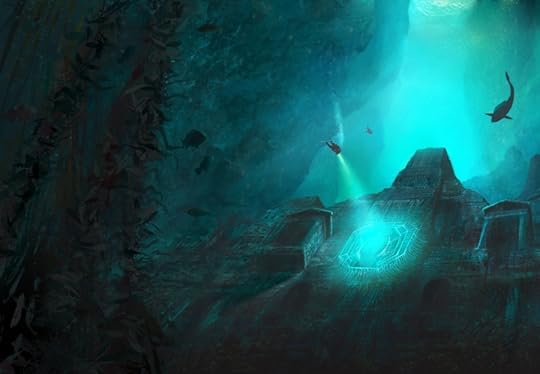
So get on over to the Kickstarter and pledge! We can't do this without you!
ALL HAIL OUR ROBOT CONQUERORS!:
“Danger, Will Robinson! Danger!” 50s and 60s television shows and movies were replete with clunky robots with bulbous arms and heads, blinking lights, and a staggered, ponderous walk, like Robby the Robot, GORT, and the Daleks. With a touch of nostalgia and a little tongue-in-cheek humor, this anthology will present invasions of robot conquerors—or well-meaning robot companions—rooted in those 50s and 60s ideals of the robotic vision of the future. Edited by Patricia Bray & Joshua Palmatier, ALL HAIL OUR ROBOT CONQUERORS! will contain approximately 14 stories with an average length of 6000 words each. It will include short stories by:
Julie E. Czerneda,
Rosemary Edghill,
Tanya Huff,
Gini Koch,
Sharon Lee & Steve Miller,
Seanan McGuire, and
L.E. Modesitt, Jr.
All other slots aside from the named authors will be filled by the open call for submissions following the successful completion of the Kickstarter.
SUBMERGED:
From the very earliest days of SFF, when Jules Verne wrote 20,000 Leagues Under the Sea, the depths of the oceans have always intrigued us. Three quarters of our planet teems with creatures beyond our imagining, and terrors we cannot see. Kraken, Leviathan, Cthulu – what other mysteries and monsters lurk in the currents of the wet and dark? SUBMERGED will explore the depths beneath the surface, whether it be on brand new planets yet to be explored, apocalyptic Earths, or fantasy settings from our wildest dreams. So come join us and explore unfathomable trenches, underwater volcanoes, and abyssal plains. Take the plunge . . . into the Deep End! Edited by S.C. Butler & Joshua Palmatier, SUBMERGED will contain approximately 14 stories with an average length of 6000 words each. The anthology will include short stories by:
F. Brett Cox,
David Farland,
Esther Friesner,
Susan Jett,
Gini Koch,
Jeff Mariotte & Marsheila Rockwell,
Misty Massey,
Seanan McGuire,
Jody Lynn Nye, and
Jenna Rhodes.
All other slots aside from the named authors will be filled by the open call for submissions following the successful completion of the Kickstarter.
THE DEATH OF ALL THINGS:
Death and taxes: the universal themes. Or, nearly. Not all cultures pay taxes, but all pay the reaper. Acknowledging that nobody will ever beat Sir Terry Pratchett for his depiction of Death, we believe there are more stories to tell, exploring the realm and character of death: tragic, humorous, and all the shades in-between. Edited by Laura Anne Gilman & Kat Richardson, THE DEATH OF ALL THINGS will contain approximately 14 brand-new stories with an average length of 6000 words each. It will include short stories by multi-award winning and NYT-bestselling authors
Stephen Blackmoore,
Aliette de Bodard,
Christie Golden,
Jim C. Hines,
Jason M. Hough,
Faith Hunter,
Juliet E. McKenna, and
Fran Wilde.
All other slots aside from the named authors will be filled by the open call for submissions following the successful completion of the Kickstarter.
And here's the art by Justin Adams of Varia Studios that we'll be using as the cover art for SUBMERGED if we get funded:
So get on over to the Kickstarter and pledge! We can't do this without you!
June 24, 2016
Schedule of Appearances: July through October
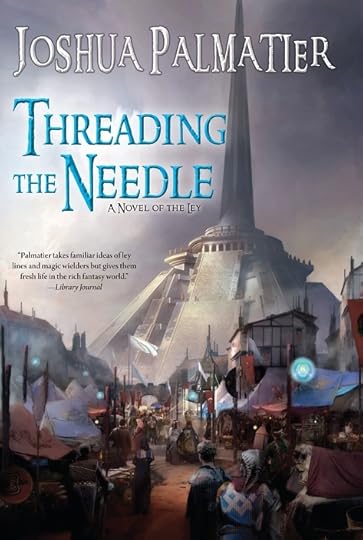
OK, so my newest novels (Breath of Heaven, Book 3 of the Well of Sorrows series, and Threading the Needle, Book 2 of The Ley series) are being released over the next few weeks and I've got a few events planned, including conventions and signings. Here's what's on the schedule right now. There will be a bunch of additional guest posts, interviews, and other events online, all of which I'll link to as they happen. Some of those include a chance to win copy of Threading the Needle! If you're near any of the cities below, or attending any of the conventions, feel free to stop by and say hi, ask to have your books signed, or buy me a drink! *grin*
Schedule:
July 5th: Signing: Vestal, NY, Barnes & Noble, 3-7pm, fundraiser for Literacy Volunteers of Broome/Tioga Counties
July 7-10th: Convention: Readercon, near Boston, MA
July 12th: Signing: Scranton, PA, Books-A-Million, 7pm
July 15-17th: Convention: Shore Leave, near Baltimore, MD
July 21st: Signing: Wilkes-Barre, PA, Barnes & Noble, 7pm
July 23rd: Signing: Elmira, NY, Barnes & Noble, 2-4pm
July 24th: Signing: Flights of Fantasy Bookstore near Albany, NY, 3pm
August 15th: Kickstarter for new anthologies begins
August 17-21st: Convention: Worldcon in Kansas City, MO
September 10th: Signing: Vestal, NY, Barnes & Noble, 2-4pm, local author event
September 24-25th: Convention: Robercon in Binghamton, NY
October 27-30th: Convention: World Fantasy in Columbus, OH
Schedule:
July 5th: Signing: Vestal, NY, Barnes & Noble, 3-7pm, fundraiser for Literacy Volunteers of Broome/Tioga Counties
July 7-10th: Convention: Readercon, near Boston, MA
July 12th: Signing: Scranton, PA, Books-A-Million, 7pm
July 15-17th: Convention: Shore Leave, near Baltimore, MD
July 21st: Signing: Wilkes-Barre, PA, Barnes & Noble, 7pm
July 23rd: Signing: Elmira, NY, Barnes & Noble, 2-4pm
July 24th: Signing: Flights of Fantasy Bookstore near Albany, NY, 3pm
August 15th: Kickstarter for new anthologies begins
August 17-21st: Convention: Worldcon in Kansas City, MO
September 10th: Signing: Vestal, NY, Barnes & Noble, 2-4pm, local author event
September 24-25th: Convention: Robercon in Binghamton, NY
October 27-30th: Convention: World Fantasy in Columbus, OH
May 13, 2016
Book Review: "Dragon * Wizard" by S. Andrew Swann
This is the third book in this series, and while it does tie up the main plot threads, I'm hoping it's not the last. I'd like to see more. I guess we'll have to wait and see. And yes, that is a blurb on the front cover of the book from me, part of the review I wrote for the second book in this series. *grin*
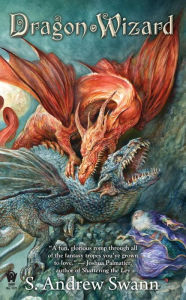
Premise: Princess Frank and Dragon Prince Lucille are celebrating their one year anniversary, with representatives from all of the known world in attendance. But during the ceremonies, a magical attack against the Dragon Prince kills the prince of Elfland, along with several other dignitaries, while forcing Lucille back into her own body. Unfortunately, Frank is still trapped in the princess' body as well, except he can't control it and he can't communicate with anyone. As far as everyone is concerned, he's switched places with Lucille and taken over the dragon's body ... except the dragon is rampaging across the lands, attacking towns and generally taking the already escalating tensions between the nations toward outright war. Not to mention the Elf-King isn't particularly happy that his son is dead. He gives Lucille 24 hours to bring him the person responsible for his son's death, or he'll unleash both the Winter Court and the Summer Court of the Elves on human lands.
I'll be the first to admit that the first few chapters of this book are a little rocky, but once we get to the body switching--the hallmark of this series--then things settle in and the writing smooths out tremendously. The initial problem of how Frank is going to be able to do anything when he's trapped in Lucille's skull with no ability to communicate or control anything is interesting and presents a whole new slew of problems, yet still remains true to the body-switching theme. And S. Andrew Swann takes that initial set-up of two souls in one body and plays with it tremendously well. I really liked how the story gets more and more complicated with the two trapped int he same body. (I'm trying not to spoil any of the surprises here, because they were all good and all made sense.) Of course, this leaves the question of who exactly is in the dragon's body. But I'll leave that to everyone to find out by reading the book.
The usual good romp through fantasyland here, with some new twists and turns that include both the dragon and the wizard featured in the first book. Nearly all of the plot threads of the first two books are wrapped up here, and everyone ends up exactly where they should be by the end. If this is the last book (and again, I hope it isn't), then it was an extremely satisfying ride. For some light, humorous, entertaining reading--with some darker points along the way--I'd definitely recommend this series.
Premise: Princess Frank and Dragon Prince Lucille are celebrating their one year anniversary, with representatives from all of the known world in attendance. But during the ceremonies, a magical attack against the Dragon Prince kills the prince of Elfland, along with several other dignitaries, while forcing Lucille back into her own body. Unfortunately, Frank is still trapped in the princess' body as well, except he can't control it and he can't communicate with anyone. As far as everyone is concerned, he's switched places with Lucille and taken over the dragon's body ... except the dragon is rampaging across the lands, attacking towns and generally taking the already escalating tensions between the nations toward outright war. Not to mention the Elf-King isn't particularly happy that his son is dead. He gives Lucille 24 hours to bring him the person responsible for his son's death, or he'll unleash both the Winter Court and the Summer Court of the Elves on human lands.
I'll be the first to admit that the first few chapters of this book are a little rocky, but once we get to the body switching--the hallmark of this series--then things settle in and the writing smooths out tremendously. The initial problem of how Frank is going to be able to do anything when he's trapped in Lucille's skull with no ability to communicate or control anything is interesting and presents a whole new slew of problems, yet still remains true to the body-switching theme. And S. Andrew Swann takes that initial set-up of two souls in one body and plays with it tremendously well. I really liked how the story gets more and more complicated with the two trapped int he same body. (I'm trying not to spoil any of the surprises here, because they were all good and all made sense.) Of course, this leaves the question of who exactly is in the dragon's body. But I'll leave that to everyone to find out by reading the book.
The usual good romp through fantasyland here, with some new twists and turns that include both the dragon and the wizard featured in the first book. Nearly all of the plot threads of the first two books are wrapped up here, and everyone ends up exactly where they should be by the end. If this is the last book (and again, I hope it isn't), then it was an extremely satisfying ride. For some light, humorous, entertaining reading--with some darker points along the way--I'd definitely recommend this series.
April 30, 2016
Book Review: "Twelve Kings in Sharakhai" by Bradley P. Beaulieu
Twelve Kinds in Sharakhai is Bradley P. Beaulieu's first novel with DAW Books and the start of a new and interesting series. I'm looking forward to seeing where he takes this.
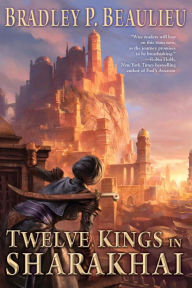
Premise: Ceda lives in Sharakhai, a city in the middle of the desert that's ruled by twelve Kings who made a pact with the gods centuries earlier in order to survive. But their rule is tyrannical, the populace kept in line by the Blade Maidens and the Silver Spears. The Kings killed Ceda's mother when she was a child and she's vowed revenge. Using the clues left to her by her mother, she hopes to complete what her mother started and bring the Kings down, one by one. But the clues are frustrating and difficult to unravel, and the Kings near impossible to get close to, protected by the Maidens. The only way to reach them may be for Ceda to become a Blade Maiden herself.
This is a great start to a fantasy epic, with all of the details that will make for a compelling story. Probably the books' strongest suit is the worldbuilding and the world itself, which is full of life, provides a unique setting, and has a compelling history. Ships that sail on the sands and the creatures that haunt the thorny forest that surrounds the city are but a few of the interesting elements that bring Sharakhai to life. The reader will want to unravel the mysteries Ceda is presented with along with her. The two main characters--Ceda and Emre--are likeable and draw you into their own personal stories, with flashbacks that show you their backstories and how their lives became so intertwined.
My only complaint is that there are obviously many more books to come in the series (at no point does the author try to hide this fact, so it's not a surprise) so only one main plot thread has been finished by the end of the book, leaving many other threads hanging. It's obvious that Emre's story has just begun, for example. But the ending is still satisfying, while still leaving the reader wanting more.
Overall, a great start to what I hope is a spectacular series. I'm interested in exploring this world further, and following Ceda and Emre on whatever paths destiny sends them.
Premise: Ceda lives in Sharakhai, a city in the middle of the desert that's ruled by twelve Kings who made a pact with the gods centuries earlier in order to survive. But their rule is tyrannical, the populace kept in line by the Blade Maidens and the Silver Spears. The Kings killed Ceda's mother when she was a child and she's vowed revenge. Using the clues left to her by her mother, she hopes to complete what her mother started and bring the Kings down, one by one. But the clues are frustrating and difficult to unravel, and the Kings near impossible to get close to, protected by the Maidens. The only way to reach them may be for Ceda to become a Blade Maiden herself.
This is a great start to a fantasy epic, with all of the details that will make for a compelling story. Probably the books' strongest suit is the worldbuilding and the world itself, which is full of life, provides a unique setting, and has a compelling history. Ships that sail on the sands and the creatures that haunt the thorny forest that surrounds the city are but a few of the interesting elements that bring Sharakhai to life. The reader will want to unravel the mysteries Ceda is presented with along with her. The two main characters--Ceda and Emre--are likeable and draw you into their own personal stories, with flashbacks that show you their backstories and how their lives became so intertwined.
My only complaint is that there are obviously many more books to come in the series (at no point does the author try to hide this fact, so it's not a surprise) so only one main plot thread has been finished by the end of the book, leaving many other threads hanging. It's obvious that Emre's story has just begun, for example. But the ending is still satisfying, while still leaving the reader wanting more.
Overall, a great start to what I hope is a spectacular series. I'm interested in exploring this world further, and following Ceda and Emre on whatever paths destiny sends them.
Book Review: "The Sagittarius Command" by R.M. Meluch
The Sagittarius Command is the third book in the Tour of the Merrimack sci-fi series from R.M. Meluch. This series is much more Star Trek-ish than hardcover sci-fi, but I've enjoyed the books in the series so far.
Premise: In this book, the Roman leader Caesar Magnus is assassinated during an ceremony in honor of the Merrimack's captain Farragut. In order to keep the tenuous peace between the Roman Empire, Farragut must travel deep into Hive territory to not only find out who ordered and orchestrated Magnus' death, but also to find out how the Hive has managed to locate and attack numerous Roman worlds, even though there are ships on watch, waiting for the Hive to approach. And throughout it all, the tensions between Farragut's crew and the Roman allies-once-enemies they are forced to work with continue to rise.
Again, this series is very Star Trek in nature, which is fine by me, since I love Star Trek. It's the reason I keep reading. And this book is much more focused in terms of plot than the last one, with the usual mystery inherent in most Star Trek plots. How is the Hive getting past the ships posted as guards and attacking the Roman planets, leaving some of them destroyed? And then there's the question of who assassinated the Roman Caesar, of course. The characters are their usual colorful selves in this one, with some advancement of some of the interpersonal plots set up in previous books, which is always nice.
Overall, this is a great addition to the series, with a much clearer, sharper plot than the past two books, although that could just be that I've settled into the characters now. (Much like a Star Trek series doesn't get good until the characters settle into their roles.) Definitely a series I'd suggest everyone check out.
Premise: In this book, the Roman leader Caesar Magnus is assassinated during an ceremony in honor of the Merrimack's captain Farragut. In order to keep the tenuous peace between the Roman Empire, Farragut must travel deep into Hive territory to not only find out who ordered and orchestrated Magnus' death, but also to find out how the Hive has managed to locate and attack numerous Roman worlds, even though there are ships on watch, waiting for the Hive to approach. And throughout it all, the tensions between Farragut's crew and the Roman allies-once-enemies they are forced to work with continue to rise.
Again, this series is very Star Trek in nature, which is fine by me, since I love Star Trek. It's the reason I keep reading. And this book is much more focused in terms of plot than the last one, with the usual mystery inherent in most Star Trek plots. How is the Hive getting past the ships posted as guards and attacking the Roman planets, leaving some of them destroyed? And then there's the question of who assassinated the Roman Caesar, of course. The characters are their usual colorful selves in this one, with some advancement of some of the interpersonal plots set up in previous books, which is always nice.
Overall, this is a great addition to the series, with a much clearer, sharper plot than the past two books, although that could just be that I've settled into the characters now. (Much like a Star Trek series doesn't get good until the characters settle into their roles.) Definitely a series I'd suggest everyone check out.
CONTEST! Win an ARC of THREADING THE NEEDLE!
Review Contest!
My next novel, THREADING THE NEEDLE, will be released on July 5th, but I’ve designed the following contest so that the lucky winners will get an ARC (Advanced Reader’s Copy) of the novel in JUNE! Nearly a full month early! That way, a few of you can enjoy it before the rest of the world. (And hopefully help spread the word about it when it does hit the shelves at local bookstores.)
So, what do you have to do in order to have a chance at one of the ARCs? Simple: Just write a review of SHATTERING THE LEY, the first book in the series, and post it on Amazon.com. It doesn’t have to be a complicated review, just let everyone know what you thought of the first book. A few sentences, that’s it (whatever the minimum requirements are for posting a review on Amazon.com). I’d like to get the reviews on Amazon.com up as high as possible (50 would be a good number) and this is one way for all of you to help, with a chance at an ARC as well.
Official Rules for Entry: Post a review on Amazon.com. Then send an email to jpalmatier@sff.net with a copy of the review in the message along with your name. That will get your name in the drawing for the ARCs to be sent out in June. If you’ve already posted a review, don’t fret, you can simply send me an email with a copy of the review and that will count as your entry. So only one review/entry per person. I’ll send everyone who emails their review entry a response, so everyone will know that they’re in the drawing. Deadline for posting a review and sending me an email is May 31st, 2016. I will not count any emails that arrive after midnight EST on May 31st, 2016.
So, get out there and post that review! Then send me an email with a copy of it, and you’re in the running for an ARC of THREADING THE NEEDLE! Good luck!
Threading the Needle Back Cover Copy:
The Nexus—the hub created by the Prime Wielders to harness the magical power of the ley lines for the city of Erenthrall, the Baronial Plains, and the world beyond—has Shattered, the resultant pulse cascading through the system and leaving Erenthrall decimated, partially encased in a massive distortion. The world has fared no better: auroral storms plague the land, transforming people into creatures beyond nightmare; silver-white lights hover over all of the major cities, the harbinger of distortions that could quicken at any moment; and quakes brought on by the unstable ley network threaten to tear the earth apart. The survivors of this apocalypse have banded together in desperate groups, both in the remains of Erenthall and without, scrounging for food and resources in an ever more dangerous world.
Having survived the initial Shattering, Wielder Kara Tremain and ex-Dog Allan Garrett have led their small group of refugees to the Hollow, a safe haven in the hills on the edge of the plains. But the ley system is not healing itself. Their only option is to repair the distortion that engulfs Erenthrall and to fix the damaged ley lines themselves. To do that, they’ll have to enter a city controlled by vicious bands of humans and non-humans alike, intent on keeping what little they’ve managed to scavenge together.
But as soon as they enter the streets of Erenthrall, they find themselves caught up in the maelstrom of violence, deception, and betrayal that the city has descended into—including the emergence of a mysterious and powerful cult calling themselves the White Cloaks, whose leader is called Father . . .
The same man who once led the terrorist group called the Kormanley and brought about the Shattering that destroyed the world.
My next novel, THREADING THE NEEDLE, will be released on July 5th, but I’ve designed the following contest so that the lucky winners will get an ARC (Advanced Reader’s Copy) of the novel in JUNE! Nearly a full month early! That way, a few of you can enjoy it before the rest of the world. (And hopefully help spread the word about it when it does hit the shelves at local bookstores.)
So, what do you have to do in order to have a chance at one of the ARCs? Simple: Just write a review of SHATTERING THE LEY, the first book in the series, and post it on Amazon.com. It doesn’t have to be a complicated review, just let everyone know what you thought of the first book. A few sentences, that’s it (whatever the minimum requirements are for posting a review on Amazon.com). I’d like to get the reviews on Amazon.com up as high as possible (50 would be a good number) and this is one way for all of you to help, with a chance at an ARC as well.
Official Rules for Entry: Post a review on Amazon.com. Then send an email to jpalmatier@sff.net with a copy of the review in the message along with your name. That will get your name in the drawing for the ARCs to be sent out in June. If you’ve already posted a review, don’t fret, you can simply send me an email with a copy of the review and that will count as your entry. So only one review/entry per person. I’ll send everyone who emails their review entry a response, so everyone will know that they’re in the drawing. Deadline for posting a review and sending me an email is May 31st, 2016. I will not count any emails that arrive after midnight EST on May 31st, 2016.
So, get out there and post that review! Then send me an email with a copy of it, and you’re in the running for an ARC of THREADING THE NEEDLE! Good luck!
Threading the Needle Back Cover Copy:
The Nexus—the hub created by the Prime Wielders to harness the magical power of the ley lines for the city of Erenthrall, the Baronial Plains, and the world beyond—has Shattered, the resultant pulse cascading through the system and leaving Erenthrall decimated, partially encased in a massive distortion. The world has fared no better: auroral storms plague the land, transforming people into creatures beyond nightmare; silver-white lights hover over all of the major cities, the harbinger of distortions that could quicken at any moment; and quakes brought on by the unstable ley network threaten to tear the earth apart. The survivors of this apocalypse have banded together in desperate groups, both in the remains of Erenthall and without, scrounging for food and resources in an ever more dangerous world.
Having survived the initial Shattering, Wielder Kara Tremain and ex-Dog Allan Garrett have led their small group of refugees to the Hollow, a safe haven in the hills on the edge of the plains. But the ley system is not healing itself. Their only option is to repair the distortion that engulfs Erenthrall and to fix the damaged ley lines themselves. To do that, they’ll have to enter a city controlled by vicious bands of humans and non-humans alike, intent on keeping what little they’ve managed to scavenge together.
But as soon as they enter the streets of Erenthrall, they find themselves caught up in the maelstrom of violence, deception, and betrayal that the city has descended into—including the emergence of a mysterious and powerful cult calling themselves the White Cloaks, whose leader is called Father . . .
The same man who once led the terrorist group called the Kormanley and brought about the Shattering that destroyed the world.