
Heidi Anne Heiner's Blog, page 149
September 18, 2012
Post 4 of 5: Brothers Grimm Story Writing Competition: Renata Hopkins
The winner of the Brothers Grimm Story Writing Competition is Renata Hopkins. It's no suprise she is a professional writer, but not usually of fairy tales, but of soap operas! See my next post today for more about her winning tale.
From ‘You really just can go anywhere you want with the story’ by Guy Somerset:
Hearing that Renata Hopkins is currently away from her job as a Shortland Street* scriptwriter looking after her eight-month-old son, Rowan, I can’t help but wonder if he was in any way responsible for some of the thoughts that went into The Cry Baby, Hopkins’s winning entry in our Brothers Grimm story-writing competition.
***
The possum – a nice touch that culminates in a terrific pay-off at the end of the story – “just arrived pretty fully formed. Because at one point I was thinking of doing a kind of version of Rumpelstiltskin and there are elements of that story I suppose in what I’ve done. Initially, there was a little man that pops up somewhere, like there is in that story. But then at some point it was suddenly a possum.”
A Grimm story is, I’d imagine, a liberating form for a writer – especially one working on Shortland Street. You can be nasty in so many different ways.
“The thing I love about those stories is they kind of dispense with cause and effect. To a great degree, things just happen and that’s just part of the story and you just take that on. I think there was a version of Rumpelstiltskin I read that starts off something like, ‘A farmer once told a king his daughter could spin straw into gold.’ And you think, ‘Well, whyyy? Was there just an awkward pause in the conversation and you thought you’d say my daughter can spin straw into gold?’ You really just can go anywhere you want with the story.”
*According to Wikipedia, for those not in the know, "Shortland Street is a New Zealand prime-time soap opera centering around the fictitious Shortland Street Hospital, first broadcast on Television New Zealand's TV2 on 25 May 1992. It is the country's longest-running drama and soap opera, being broadcast continuously for over 5000 episodes and 20 years, and is one of the most watched television programs in New Zealand."


Post 3 of 5: Brothers Grimm Story Writing Competition: Little Red Riding Hood Does Over the Big Bad Wolf by Wendy O'Malley
Little Red Riding Hood Does Over the Big Bad Wolf by Wendy O'Malley is one of the two runners-up in the New Zealand Listener's Brothers Grimm story-writing competition.
In the words of Judge Kate de Goldi:
Little Red Riding Hood Does Over the Big Bad Wolf, which I enjoyed enormously for its bogun-ish chutzpah: a young slightly macho, heftily comic motorcycle magazine editor is well gulled by a nymph in red lycra shorts while he is putting the Zumba – “the latest all-mountain bike in the Xtacy’s upcoming 2013 range” – through its paces. The story very nicely completes its modest intentions; it is well paced and structured, it invokes the comic lesson-in-humility of some Grimm stories; the narrative voice plays most amusingly with political incorrectness and ends with a little metafictional flourish: the narrator reports from A&E: “I ponder this postmodern truth: a broken leg is but a small price to pay for a twist on a classic story like this.”You can read the entire story on the site but here are the first few paragraphs to whet your interest. From Little Red Riding Hood Does Over the Big Bad Wolf by Wendy O'Malley:
Once upon a time, there was a big bad wolf that got done over by Little Red Riding Hood. That was Bonk’s headline. I am writing this editorial from the hospital waiting room where I ended up due to no virtue of my own. I’m not one to assign blame where it’s due, but this time I can squarely point my middle digit at my mates Bonk and Dare.
It started in the Man Cave where our sordid adventures usually take form out of beer-slurred boastings that morph into “frack, there’s no backing out now” scenarios. As editor of Xtreme Magazine NZ, it is my duty (in other words job) to risk my neck, recording the levels of danger and thrill on diverse adventures, for the benefit of my adrenalin-addicted readership. It is Bonk and Dare’s job as field writers to assist me in my lunacy and to come up with new insane ideas when my brain bucket is empty.
So it was on this murky morning at our editorial meeting in the Man Cave, as we combed our brains for something original and edgy that we hadn’t already written about. I was adjusting the shocks on the Zumba, the latest all-mountain bike in the Xtacy’s upcoming 2013 range. As part of their marketing strategy, the major bike companies sent us a bike to trial and review, and then pack up and send to the next magazine’s HQ.
They had us by the hairy bits, though. If we wrote a scathing review, we could kiss their advertising goodbye. So we had to sneak our true opinions in by using code words that only our hard-core readers could decipher. If we wrote that the bike was kick butt on a technical descent, that was code for “kick its butt off the cliff and save your time and money, mate”.

Post 2 of 5: Brothers Grimm Story Writing Competition: Evil Fairy Tales
Evil Fairy Tales by Alice and Pagan Tawhai is one of the two runners-up in the New Zealand Listener's Brothers Grimm story-writing competition.
In the words of Judge Kate de Goldi:
Evil Fairy Tales: this is a simple story that blends Maori and fairy-tale tropes very well. It is beautifully written, seeming somehow both economical and leisurely. It obeys a number of fairy-tale “rules” but without overt display. A distinctly sinister undertow bobs beneath the smooth sing-song surface, making the story linger unnervingly in the reader’s head.You can read the entire story on the site but here are the first few paragraphs to whet your interest. From Evil Fairy Tales by By Alice and Pagan Tawhai:
Once upon a time, there was a girl called Alice who lived with her mother in an old khaki-blue shearer’s quarters, far away from the river. There were two bedrooms, each with enough bunks to sleep six men. Alice slept in one room, and her mother slept in the other. Alice liked living a little way out of town. It meant she could sleep with the window open at night, and let the sweet dark air in, without having to worry that someone might jump the wild hedge, bursting with small starry white flowers fading to slender reddish-pink throats, and climb in her window. In town, her mother would have made her keep the window shut. Alice’s mother’s number one priority was to keep Alice safe.
The river was on the other side of the tiny town, which had more people than it had houses. Her mother was a cleaner in the next town, which was bigger. But there were lots of cleaning ladies, and sometimes there wasn’t enough work, so she didn’t get the hours. That meant less money, and sometimes there was hardly any food. Alice was a skinny pale girl, turning red when she blushed; from white to red and back again at the drop of a hat.
Her mother told Alice always to: “Keep away from old men, never accept food from strangers and don’t let anyone you don’t know take your photo.” “And always,” she said, “always keep safe.”

Post 1 of 5: Brothers Grimm Story Writing Competition: Words from Judge Kate de Goldi
Over the last few months, the New Zealand Listener sponsored a writing contest:
In May, to mark the 200th anniversary of the Brothers Grimm’s book of fairy tales, the Listener, in association with the Goethe-Institut and Victoria University of Wellington’s International Institute of Modern Letters, launched a competition inviting readers to write a Grimm tale for modern Aotearoa New Zealand.The results were announced last week and I want to devote a few posts today with content from the contest. Otherwise, I would be overwhelming a single post and this also makes it easier to categorize each post a little better for the blog and search engines, since different fairy tales are highlighted. For those of us not from New Zealand, this is an extra treat a seeing how another culture reinterprets the Grimms' fairy tales, too.
First, I wanted to share the link and an excerpt from the article by the competition's judge, From Brothers Grimm story-writing competition By Kate De Goldi:
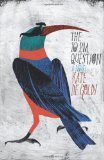
My thanks first to the Goethe-Institut, the Listener and Victoria University of Wellington’s International Institute of Modern Letters for the opportunity to take part in this imaginative story enterprise. It was very good to think again, and in some depth, about the Brothers Grimm and their marvellous stories, and equally interesting to read through the submissions.You can read the full article by following the link. Not many of de Goldi's books are readily available in the US, but you can read more about here at Kate de Goldi. One of her most lauded books is available in the US at The 10 PM Question
And what an amazing range of approaches, narrative perspectives and subject matter was pursued within the fairy-tale grid and given word limit. One thing was very apparent: participants took up their pens to address some pressing social concerns – the treatment of our landscape; the parlous position of the elderly, children in poverty, threatened species; the need to accept difference, consumerism, filial neglect, estranged birth parents, to name just some themes. Writers also marrying ti kanga with European motifs, letting loose European magic in the New Zealand landscape, and – particularly successfully – using the cadence of Maori oral tradition within the structure of old fairy tale.
 and in the UK. I have yet to find a bookseller in Australia and New Zealand that makes linking and recommending easier.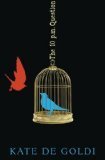


September 17, 2012
Wolfgang Mieder, Winner of the 2012 European Fairytale Prize

There is a nice, long article about Wolfgang Mieder at Fairytale classics address modern problems:
Fairytales still have the power to inspire. But because of an excessive supply of stories, the same tales are no longer shared, says researcher Wolfgang Mieder, the winner of the 2012 European Fairytale Prize.
They may have been around for a while, but fairytales are far from obsolete. They have inspired a wealth of films, books and series and the market is flooded.
"That actually leads to the fact that everybody reads different stories and we no longer know the same fairytales. The connecting element is lost," said Wolfgang Mieder, a professor of German and folklore at the University of Vermont in the US.
Nevertheless, he's an optimist who is convinced of the survival of the fairytale genre. It is just the way in which fairytales are disseminated and received that concerns him.
Mieder, the winner of the 2012 European Fairytale Prize has been researching the social significance and prevalence of fairytales for over 40 years. As a German-American, he's at home in two cultures and observes, above all, the influence of German fairytales around the world.
"German fairytales still have an enormous significance. There are very few countries in which the classic Brothers Grimm fairytales cannot be found," Mieder said.
Even though age-old stories have been adapted for contemporary times, their core remains intact.
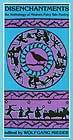
The article, as always, is much longer so you must click through to read it all. I've been a fan of Mieder's work for years and searched high and low in the early days of the internet for my own copy of his Disenchantments. Most of his published works have focused on Proverbs which isn't my own focus but his work is always interesting.

Marina Warner on why Angela Carter’s The Bloody Chamber still bites
From Marina Warner on why Angela Carter’s The Bloody Chamber still bites at The Scotsman:
Fairy tales were reviled in the first stirrings of post-war feminist liberation movements as part and parcel of the propaganda that kept women down.
The American poet Anne Sexton, in a caustic sequence of poems called Transformations (1971), scathingly evokes the corpselike helplessness of Sleeping Beauty and Snow White, and scorns, with fine irony, the Cinderella dream of bourgeois marriage and living happily ever after: boredom, torment, incest, death to the soul followed.
Literary and social theorists joined in the battle against the Disney vision of female virtue (and desirability); Cinderella became a darker villain than her sisters, and for Sandra Gilbert and Susan Gubar, in their landmark study The Madwoman in the Attic (1979), the evil stepmother in Snow White at least possesses mobility, will and power – for which she is loathed and condemned. In the late Sixties and early Seventies, it wasn’t enough to rebel, and young writers and artists were dreaming of reshaping the world in the image of their desires. Simone de Beauvoir and Betty Friedan had done the work of analysis and exposure, but action – creative energy – was as necessary to build on the demolition site of the traditional values and definitions of gender.
In this context, Angela Carter made an inspired, marvellous move, for which so many other writers as well as readers will always be indebted to her: she refused to join in rejecting or denouncing fairy tales, but instead embraced the whole stigmatised genre, its stock characters and well-known plots, and with wonderful verve and invention, perverse grace and wicked fun, soaked them in a new fiery liquor that brought them leaping back to life.
From her childhood, through her English degree at the University of Bristol where she specialised in medieval literature, and her experiences as a young woman on the folk-music circuit in the West Country, Angela Carter was steeped in English and Celtic faerie, in romances of chivalry and the grail, Chaucerian storytelling and Spenserian allegory, and she was to become fairy tale’s rescuer. Her first collection of tales, Fireworks: Nine Profane Pieces (1974), was followed, five years later, by The Bloody Chamber, which has now become a classic of English literature, far beyond the moment and historical circumstances of its origins.
The article "is an edited extract of Marina Warner’s introduction to the Folio Society edition of Angela Carter’s The Bloody Chamber and other Stories, available from foliosociety.com." I just quoted the first few paragraphs, but the article is quite long and an excellent read.
Carter's works change titles depending on the country where an edition is published. These days, in the US, it's easiest to Burning Your Boats: The Collected Short Stories
 to have a collection of her works if you want more than The Bloody Chamber.
New Release: The Twelve Dancing Princesses and Other Fairy Tales (Calla Editions)
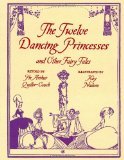
The Twelve Dancing Princesses and Other Fairy Tales (Calla Editions)
 is another new release from Calla Editions. This, my dear readers, is one of my favorite books from the Golden Age of Fairy Tale illustration. I adore Kay Nielsen's illustration work, perhaps in part because it is so unexpected for me to love it. And this book is worth owning for The Twelve Dancing Princesses alone but then you get extra French fairy tales!Illustrated! By Kay Nielsen! How many more exclamation points do you really want from me on a Monday morning?!
And if you love this one, don't miss East of the Sun and West of the Moon: Old Tales from the North (Calla Editions)
 either. Because then you get East of the Sun and West of the Moon! Illustrated by Kay Nielsen! (I could do this all day so I'll try to stop the enthusiastic punctuation now.)
Book description:
Twenty-three exotic color illustrations in the Art Nouveau style complement a noted folklorist's masterful retellings of traditional fairy tales in a splendid hardcover edition. Seven tales of enchantment include "Minon-Minette," "Felicia, or The Pot of Pinks," "Rosanie, or The Inconstant Prince," "The Man Who Never Laughed," "John and the Ghosts," "The Czarina's Violet," and the title tale.

And for all of you not already in the know: Kay Nielsen was a man. And his first name rhymes with "high" not "hay." I hear it mispronounced all the time--well, the rare times his name is said in my presence. I am a horrible name and pronunciation person, but this one I can get right!

September 16, 2012
New Release: The Fairy Tales of Charles Perrault (Calla Editions)
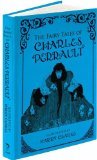
The Fairy Tales of Charles Perrault (Calla Editions)
 is one of the new Calla releases for Fall 2012. It's a great price, too, at 43% off list price. Roughly $20 for a hardcover illustrated book is wonderful these days.
I'm always torn over buying these for my library since I already own so many older editions of these Golden Age fairy tale illustrations. But I like having the facsimiles that are less fragile and more complete. I've had to buy abused editions to afford some of these, often with at least some of the color plate removed. No, the color reproductions in the Calla editions are not exceptional--they pale in comparison to the original editions with their tipped in plates--but the rest is great and it's nice to have them either way. Besides, in this case, I've always preferred Clarke's pen and ink work to his color work.

Book description:
In the late 17th century, French author Charles Perrault helped define the fairy tale genre, transforming what had previously been an oral tradition. This magnificent hardcover reproduces his captivating renditions of "Cinderella," "Sleeping Beauty," "Little Red Riding Hood," and ten other childhood favorites. Twenty-four graceful, witty illustrations by Irish artist Harry Clarke include full-color, pen-and-ink, and silhouette images. Introduction by art historian Thomas Bodkin.


Brief Sephora Update and Elizabeth Olsen for Bullett Magazine

Elizabeth Olsen is featured in the latest issue of Bullett magazine photographed by Jeff Bark. Hair: Ted Gibson at TedGibsonBeauty.com Makeup: Genevieve at Sally Harlor.Photo Credit: bullettmedia.com

Well now, I always debate posting the make-up posts on here but my Sephora Cinderella post was the most trafficked all week here on the blog. Briefly, the invitation to the special screening went out in emails this past week and probably only to those living in geographic areas of the screenings--Nashville was on the 20+ city list, so I received one. I had points to burn so I ordered passes to see the film, figuring it was a way to refresh my memory of the film while I rev up for Cinderella month here on the blog in October.

I stumbled across this Elizabeth Olsen for Bullett Magazine spread featured on Tom and Lorenzo's site and thought immediately of The Snow Queen. The fairy tale fashion influence--high fantasy--is prevalent right now. The style of this editorial reminded me of the Sephora Cinderella model images, too. Anyway, here's some pretties to enjoy--the entire spread can be seen at Bullet Magazine.
But, really, don't you see Elizabeth as a modern Gerda here? We're just missing an image of her with a reindeer.


September 15, 2012
Katy Perry's Wide Awake
I admit my knowledge of Katy Perry is extremely limited and this is old news to those who do know her work, but this video for her single, Wide Awake, obviously had some fantasy/fairy tale inspiration. The title subtly references Sleeping Beauty, too, if you want to go that route. So I am sharing it here on this sleepy Saturday morning.
From Katy Perry's VMA-Nominated 'Wide Awake' Video Welcomes Singer Back To Reality by Jocelyn Vena:
When Datis came on-board to direct Perry's video for "Wide Awake," he knew exactly what he wanted it to look like.
"Well, Katy's world is already very dreamlike, and my videos always have a fairy-tale aspect to them. Therefore, it was obvious for me to start off with this concept," the director, who has also worked with Skrillex on multiple occasions, told MTV News. "We never spoke about that beforehand. I wrote the story whilst listening to her music."
Partly autobiographical, the clip also features a little girl with a striking resemblance to Perry, who represents her childlike innocence. The two make their way through an "amazing labyrinth."
"We cast a lot of young girls, and she stood out. She was so professional, and quiet too," he said. "Katy and her got along almost instantly — they spent their time with each other on set."
The most memorable visual in the video is when Perry punches her Prince Charming, an obvious allusion to her split from Russell Brand. "That was an idea of mine. We needed a strong image to show this particular moment where Katy doesn't believe in fairy tales anymore," he said.
And from Katy Perry Enters a Fairy Tale Wonderland in ‘Wide Awake’ Video Teaser
by: Jessica Sager cause the strawberry line made me smile:
What’s in the final chapter? Apparently a “giant labyrinth” (we can only wish for David Bowie to make a cameo!), a poison strawberry (it seems the flurry of Snow White films of late monopolized all of the apples), a “curious cat” that looks nothing like Kitty Purry and one sketchy scam artist of a Prince Charming.

Heidi Anne Heiner's Blog

- Heidi Anne Heiner's profile
- 44 followers
Heidi Anne Heiner isn't a Goodreads Author
(yet),
but they
do have a blog,
so here are some recent posts imported from
their feed.

