Michael Estrin's Blog, page 7
July 28, 2024
The yogi way
On my way to yoga, I saw what happens when a Honda Civic slams into a police cruiser. Spoiler alert: the Honda Civic loses. Thankfully, everyone was OK.
I didn’t witness the accident, just the aftermath. Since the collision happened in the middle of the intersection, traffic was slow in all directions. We call this rubbernecking, but I’m not sure why. A rubberneck means turning your head to gawk, but that doesn’t mean you have to stop. I think Schadenfreude-Stopper is a better description.
The driver in front of me was a Schadenfreude-Stopper. He just sat there like he was going to take a picture, or maybe go live on social media to entertain a global audience of Schadenfreude-Stoppers.
“Move your ass, dipshit!”
Nobody heard me. I was alone in my car. The windows were up. I was rocking out to 21st Century (Digital Boy) by Bad Religion. Still, it felt good to give that Schadenfreude-Stopper a piece of my mind. Then I went to yoga.
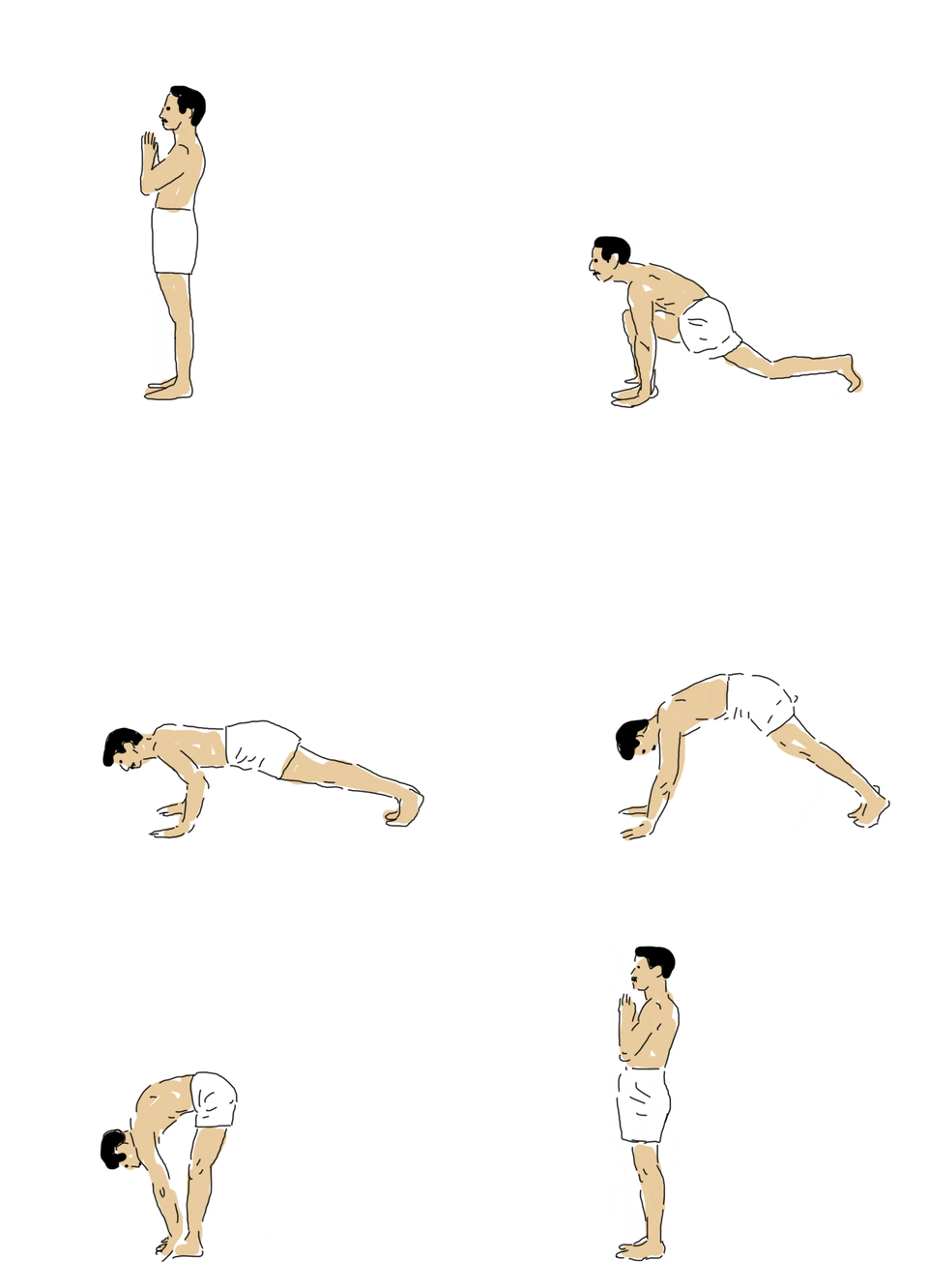
In class, my teacher, who usually opens with a spiritual quote, started things off with a story from her day.
“Guys, I had a crazy experience this morning,” she said. “I almost got in a car accident.”
My teacher explained that she lives on a narrow street where people like to park big-ass SUVs within inches of your driveway. It’s impossible to see oncoming traffic when you’re exiting your driveway. Also, motorists speed down this street like they’re auditioning to be on Drive to Survive.

“I thought it was clear, so I went for it,” she said. “But as soon as I got into the street, I heard honking and screeching tires. I cut this poor guy off.”
My teacher explained that she gave him a friendly wave and mouthed an “I’m sorry.” He flipped her the bird. At the next intersection, he pulled alongside her and screamed, “Fuck you, bitch!”
There was a gasp in the room.
“No guys, it’s OK. There’s more. And I swear I’ll bring it back to yoga. Just give me a minute to land this plane.”
After the near-miss at the driveway, and the “fuck you, bitch” at the intersection, my teacher realized something.
“We belong to the same gym.”
Another gasp.
“At first I was like, I’m just gonna ignore him. But then I thought, I almost caused an accident. And OK, he reacted poorly, but it’s not like I’ve never told another driver to go fuck themselves. So I thought, I’m gonna apologize.”
Nervous laughter.
“So I walked up to him, and I apologized. It took him a moment to place me. But then I saw it all come together in his eyes. And he started yelling at me, lecturing me about how to drive and how I’m just a dumb bitch.”
“Fuck him,” said an old lady on the mat next to mine.
The class concurred. Yogis muttered insults. But our yoga teacher held up her hands.
“I said to him, ‘you know, it takes a lot for someone to go up to a stranger and apologize. And I am sorry I almost caused an accident. But that doesn’t give you the right to lecture me, or insult me.”
“Right on!” the old woman shouted.
The class cheered. Our yoga teacher was true American hero, obviously. She had us in the palm of her hands. If she asked for our vote, we’d give it to her. If she told us to follow her to the gates of hell, we’d slather ourselves in SPF 100 sunscreen and follow her lead. If she told us to stand on our heads, some of us would, but most of us would ask for a modification because inversions aren’t in our practice.
“Here’s how this connects to yoga,” she continued. “As this guy is shouting at me, just losing his shit and turning bright red, I realized, he isn’t a yogi.”
Laughter.
“I’m serious. We do yoga for a lot of reasons. But one thing yoga teaches us is how to regulate our emotions. That doesn’t mean yogis are always chill. I’ve seen some yogis rage. I’m seen some yogis start some shit. I’ve started some shit. But yoga is a practice that teaches us how to control our emotions, instead of letting our emotions control us.”
I thought about the Schadenfreude-Stopper. He was a dipshit of the first order. But instinctively giving him a piece of my mind, whether he heard it or not, didn’t do me any favors. If anything, I let my emotions give a piece of me away, and I got nothing in return. That’s a downward dog-shit deal.
“I’m not even mad about the mansplaining, or being called a bitch. There was a point in my life where I would’ve carried that shit around. Either I would’ve yelled at him, or been mad at myself for not yelling at him. Now it’s just a thing that happened. Water off a duck’s tushy. But he’s probably still angry about it, and that’s no way to live, right?”
 In Business To Do Bagel Business
I’ve meaning to write about a place in Los Angeles called Courage Bagels. According to The New York Times, which thinks it can cover LA for some reason, bagel-challenged Angelenos are waiting an hour-plus in line for a bagel and shmear at Courage Bagels. That sounds ridiculous. And delicious. Plus, an hour in line with LA hipsters is bound to yield some slice of life humor. I want to write about this.
I will write about this… just as soon as I get my bestseller badge back.
Turns out we do need stinking badges. Situation Normal is 5 paid subscribers away from 100 and a bestseller badge. If you can help, everyone gets (to read about) bagels👇
Stick around and chat!I ask, you answer
How are you feeling? Go deep! As Obi-Wan Kenobi told Luke, “Stretch out your feelings.”


July 25, 2024
Axel F's millennial parental apology fantasy
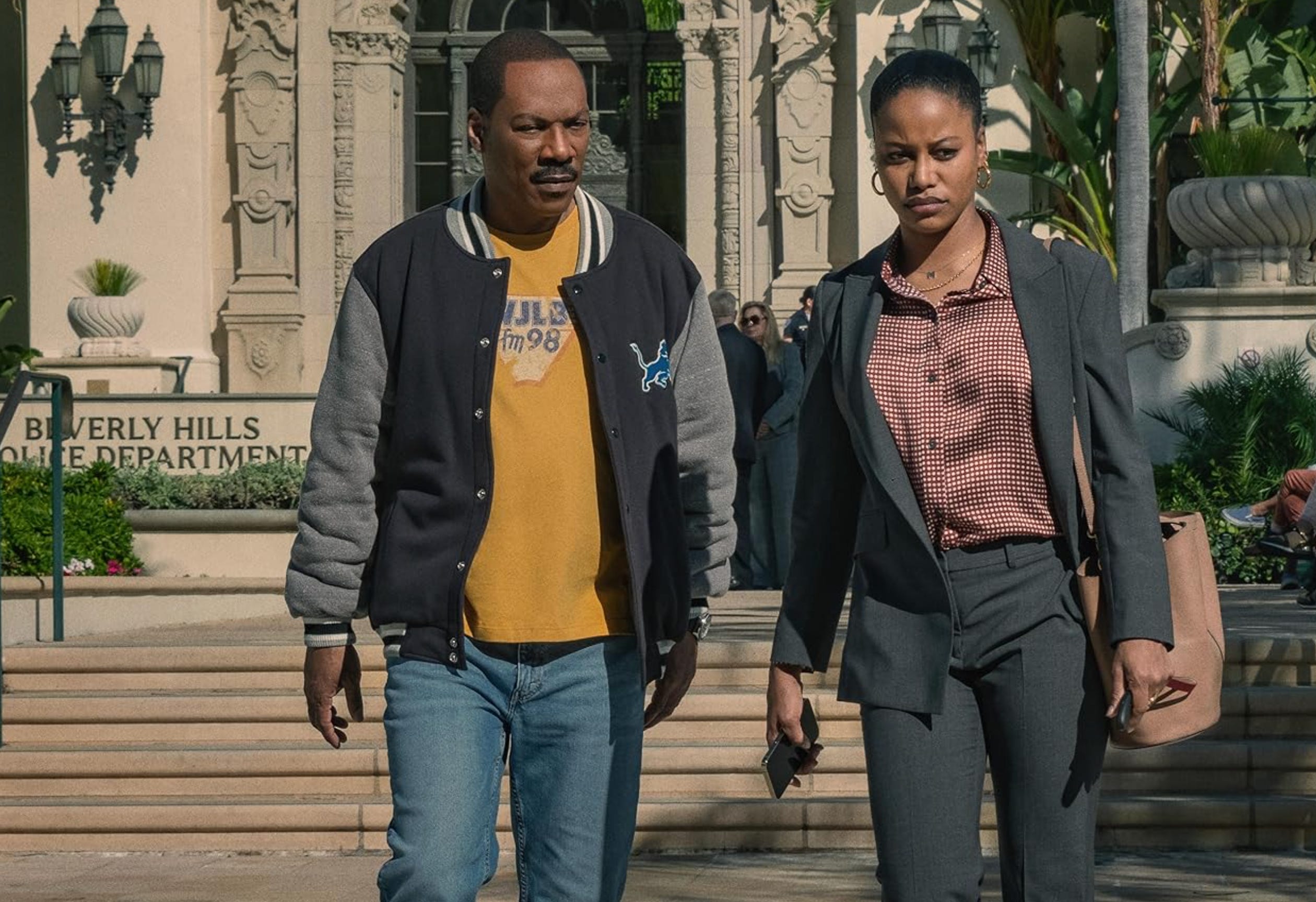 Axel F from IMDb
My father took me to see Beverly Hills Cop when it came out in 1984. I was seven. The movie has nudity, violence, and foul language. A lot of foul language. I loved every minute of Beverly Hills Cop, and I still do. It’s the film that started my love affair with crime comedies. There’s nothing better than a hero who throws punches and punchlines.
When Mom found out that Dad took their seven-year-old child to see Beverly Hills Cop, she shit a brick. It didn’t help that I declared the movie “fucking awesome.” With a straight face, Dad said, “Linda, I didn’t know that an Eddie Murphy movie would have so much cursing.” Dad was one hell of a liar.
The story about seeing Beverly Hills Cop has always been a popular anecdote in the Estrin household. It’s my go-to example of my father’s free-range parenting style and his belief that it’s better to beg forgiveness than ask for permission. Larry was a wonderful father, but he was also a character. Like Frank Sinatra, he did things his way.
Eddie Murphy’s Axel Foley also did things his way, but he was a shitty father. Actually, let me back up. In the Beverly Hills Cop franchise, Axel Foley wasn’t a father at all. In the first two movies, Axel was single and ready to mingle. In the third movie, well, we don’t talk about the third movie. I forgot that hot mess, so I have no idea if Axel was a dad in that one. But in the fourth movie, Axel F, we see a very different Axel Foley. We see him as a father.
This time around, Axel’s case has a real personal complication. His daughter is an attorney, and she’s representing someone accused of killing a cop. That’s a classic trope in the crime genre. The detective’s spouse / kid / parent / best friend / father’s nephew’s former roommate isn’t just on the other side of a case, their mission is antithetical to the hero’s raison d’etre. That’s a good way to create drama, folks!
But the tension between a cop and a daughter who represents accused criminals is the surface drama in Axel F. The real drama is generational. Axel Foley was a shitty dad who wasn’t there for his daughter, Jane.
Enter the millennial parental apology fantasy. In a piece at Vox about Everything Everywhere All At Once, Emily St. James wrote about “suddenly popular” sub-genre:
Instead of telling the time-honored story of a child learning just how much their parent has sacrificed for them, these stories tell its mirror image. Instead, they are stories where the parent has to realize how badly they’ve treated their child. The ability to heal intergenerational trauma lies at least in part with that parent, and as the film wraps up, they take real steps to doing so, usually as the child realizes that the trauma did not originate with their parent but much further up the family tree. Better able to understand each other, the parent and child end the film with a better relationship.
When Christina and I fired up Netflix to watch Axel F, we weren’t expecting a the millennial parental apology fantasy. We expected — and got — what you always expect from a sequel: the hits! And Axel F does play the hits, including a kickass chase scene set to the Neutron Dance by The Pointer Sisters, the fish out of water shenanigans of a Detroit cop in Beverly Hills, and the incredibly satisfying trio of Foley, Taggart (now the chief of the Beverly Hills PD), and Rosewood (now a PI). But Axel F is also more than the sum of those parts.
Throughout the film, I was struck by the scenes between Foley and his daughter. Murphy could’ve played Axel as a sweet, well-meaning dad who jokes and charms his way back into his daughter’s life. Instead, we get something closer to reality, something that feels like the genuine struggles of Boomers and millennials — two generations divided by a common trauma. Axel’s relationship with his daughter is raw and imperfect. It’s what makes Axel F the sequel we needed, if we didn’t know we wanted it.

I write about the crime genre AND I write crime comedies. My slacker noir novel is about a snarky reporter who risks life, limb, and dignity to solve a murder in Porn Valley. It’s more Fletch than Foley, but it’s a damn good ride. Pick up a copy of Not Safe for Work on Amazon, or all the other book places.
I want to know what you think!Are you a Beverly Hills Cop fan, or do you hate fun?
Have you seen Axel F yet? Thoughts?
We can all agree to forget about the third Beverly Hills Cop movie, right?
July 21, 2024
Lawyers, barbers, and writers
My last haircut was a doozy. Alice, my barber, told me a story about an acid trip in a parked car and a cop with bad vibes who had a face that kept melting, as if his head was made out of Velveeta cheese. Alice told me she gave up the psychedelic life for Lent. I gave her more sobering news by explaining that her student loan debt may have been forgiven.
The haircut was so-so. There were some uneven areas. Thankfully, Christina became an unlicensed barber during the pandemic, so she finished the work Alice started.
I wanted the same barber, but they told me Alice had quit. I hope Alice quit because she was now debt-free and no longer needed the money, but her decision to leave the barber life was probably inspired by a post-Lent acid trip. Maybe both are true.
My barber was Joy. She was an older Asian woman who didn’t speak much English, so after we got through the preliminaries, I eavesdropped on the conversation from the chair next to mine.
The barber was a tall man, or maybe he just looked tall because I was sitting down. He had an epic beard that was one pandemic away from going full Rick Rubin.
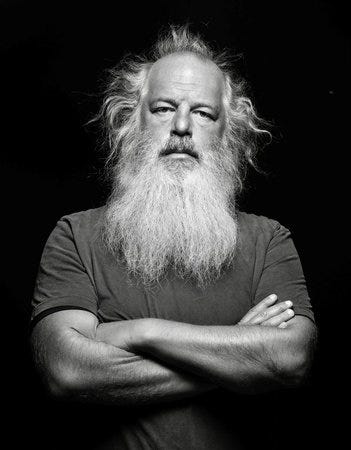 The real Rick Rubin to help you picture barber shop “Rick Rubin.”
Rick Rubin was bitching about a cop who gave him a “bullshit” speeding ticket on the 118 freeway. Rick’s customer was sympathetic. He was a middle-aged white guy who reminded me of Milton Waddams, the squirrelly, mumbling stapler-obsessed Office Space character played by Stephen Root.
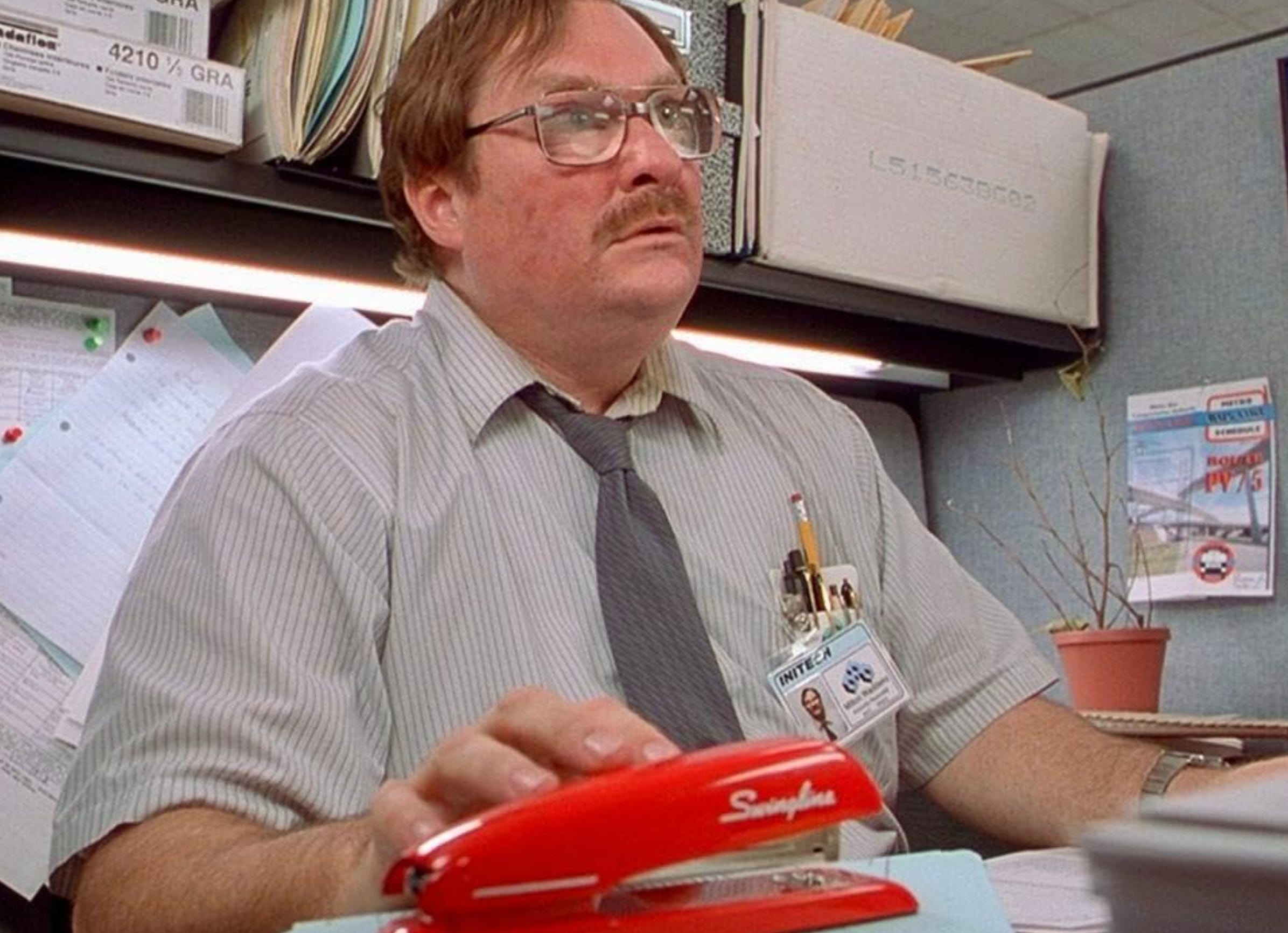 Milton Waddams played by Stephen Root in case you’ve been living under a rock and haven’t seen Office Space.
“Were you speeding?” Milton asked.
“No,” Rick Rubin said. “I mean, yeah, I was speeding.”
“How fast were you going?”
“Ninety. Maybe ninety-five. One hundred—tops.”
The speed limit on the freeway is 65mph, but Milton didn’t judge.
“What kind of car were you driving?”
“A Tesla.”
“What model?” Milton asked.
“The X.”
The Tesla X model costs about eighty grand. I drive a ten-year-old Prius that’s on its third catalytic converter. Instead of Wesleyan, law school, and a successful writing career, I should’ve gone to barber college.
“He figured this guy’s rich, he can afford it.”
“Bastard,” Rick Rubin said.
“What color is your Tesla?”
“Red.”
“Jesus man. You were asking for it.”
“I thought that was a myth that cops target red cars,” Rick Rubin said. “You know, like that myth about bulls and red.”
Clearly, Rick Rubin was an idiot, but Milton was patient.
“The bull thing is real. That’s why one side of the matador’s cape is red.”
“You think the cop went to CSUN?” Rick Rubin asked.
CSUN is a nearby college. California State University at Northridge. Home of the Matadors. Maybe there was still time to go to barber college, I thought. If Rick Rubin could do it, so could I.
“Forget the red,” Milton said. “Are you gonna fight the ticket?”
“I don’t know,” Rick Rubin said. “I had a bad experience in traffic court.”
“You represented yourself?” Milton asked.
“Yeah. The cop was lying his ass off, and I told the judge, he’s lying his ass off, but the judge yelled at me. I lost. And then the asshole judge added on court fees. Can you believe that shit?”
“Yeah, they do that if you lose. It says so in the fine print on the ticket.”
“That’s why I’m just gonna pay it. Easier that way.”
“Your insurance rates are gonna go through the roof. You might have to sell the Tesla.”
“For real? I get so much ass with that car it’s not even funny.”
Evidently, Rick Rubin was right because Milton didn’t laugh about all the ass that came with the red Tesla.
“You could hire a lawyer,” Milton suggested.
“Too expensive.”
“Actually, it’s very reasonable. And effective.”
Milton held up his hand, signaling Rick Rubin to pause the haircut. He leaned for in his chair and pulled a card out of his pocket. He handed it to Rick Rubin.
“Give my office a call. We handle all kinds of traffic issues, and we win a lot. Judges respect us, cops fear us.”
Holy shit, I thought. Milton may have looked like a timid nothing-burger of a man, but he was a smooth operator who knew his ABCs—Always Be Closing.
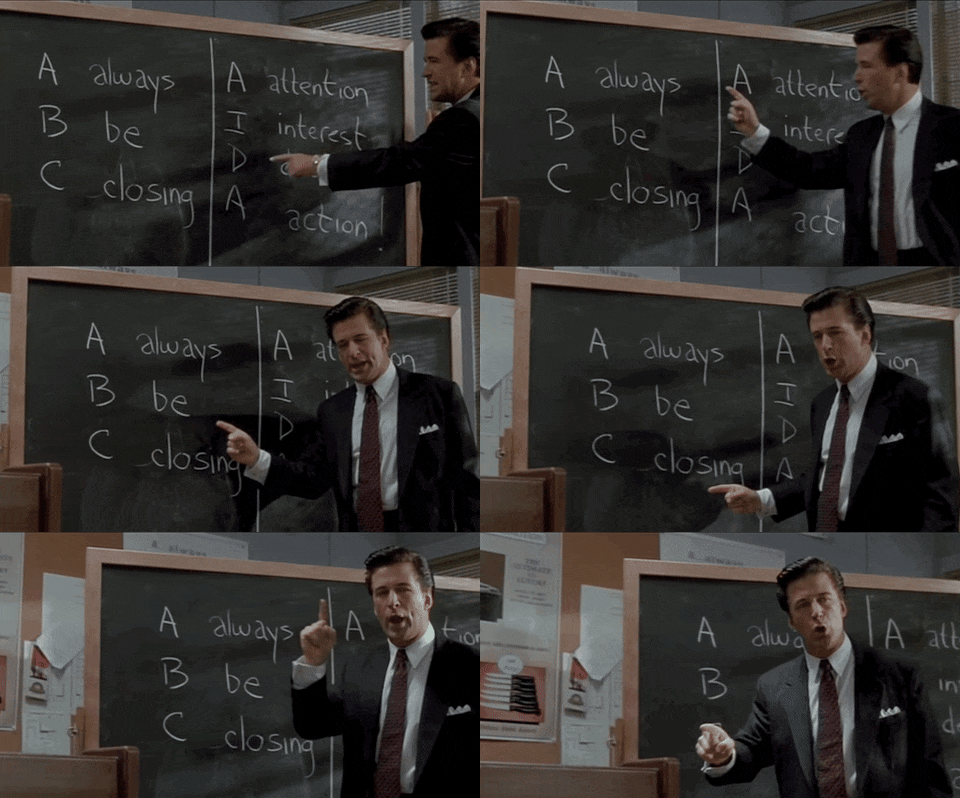
A few minutes after Milton closed Rick Rubin, Joy finished cutting my hair. It looked good. But even if the haircut was a bust, I knew Christina could fix it.
“Thanks,” I said.
“You hairy man,” Joy replied.
The comment irked me. After radio silence, calling me hairy felt like an ad hominem attack somehow. But then I thought, if Milton can play it cool, so can I. We both went to law school, after all.
“Hairy is better than the alternative,” I said. “Bald guys are bad for business.”
 A message about your support
This week, a situation normie sent me a lovely email explaining that they needed to suspend their paid subscription because money was tight. I appreciated the heads up, but it wasn’t necessary. I also comped them for life to thank them for their support and their contributions to the Situation Normal community. Note: a lifetime comp is my lifetime, not yours.
I’m mentioning this because I want everyone to understand something: Situation Normal is very special to me. Here are a few reasons why:
This is a place to share my slice of life humor stories and put out think pieces that can’t go anywhere else. Seriously, you tell me where I’m supposed to publish Bad Doppelgänger Vibes, an essay about being a PA at Richard Nixon’s funeral, and a review of my colonoscopy.
This platform helps me get my books out there. Sales are nice, but for this author there’s no better feeling than when a reader says they laughed their butt off reading Not Safe for Work.
Recently, this platform also became a place to share my love of crime fiction. That wasn’t the original plan, but like Walt Whitman, Situation Normal is large and contains multitudes.
Situation Normal gives me life when things feel bleak. Judging from the notes and comments I’ve received over the years, many of you feel the same way. I love the fact that the internet’s 57th best humor newsletter can provide shelter from the storm.
Here’s something else I want you to understand: people pay for Situation Normal because they love AND because they can afford to do so. I won’t tell anyone what to do with their money, but if you’re gonna pay for Situation Normal, I hope you meet both criteria.
But if you can’t, or won’t, pay for Situation Normal, that’s totally fine! It’s free, after all. Plus, there are other ways to show your support, like emailing a post you love to your friends, or sharing Situation Normal on social media, or leaving a comment, or sending good vibes. Seriously, any and all support is appreciated.
 Stick around and chat!
I ask, you tell.
What’s my previous barber, Alice, up to? Wrong answers only!
What’s more epic than Rick Rubin’s beard? Think outside the beard!
Office Space rules, right?
Was Joy’s comment rude, or did I misread that one?
Have you ever beaten a traffic ticket? Tell your story!
One last thingif you’re new here👇
July 14, 2024
I have a doctorate in hot takes
Following American politics makes you so much smarter. When the Supreme Court closed out its recent term, everyone was suddenly a legal scholar. Since the first Presidential debate, everyone is a neurologist, although it might be better if more people were suddenly gerontologists. Maybe next week, Joe Biden and Donald Trump will take a page from Drake and Kendrick Lamar, and a chorus of newly-minted ethnomusicologists can provide hot takes on a Biden-Trump rap battle.
This isn’t a new thing, of course. We’ve been hot-taking our way to pseudo-expertise ever since social media made talking out of your ass a viable way to chase clout and an actual business model for anyone #blessed enough to achieve society’s highest title: influencer. Lord knows I’ve been a hot-take machine ever since I created a MySpace account.
 Three of my greatest hot takes:
 Prediction for the 2008 election? No way America elects a guy named Barack Hussein Obama President. We should nominate that Edwards guy because he has zero baggage. Otherwise, it’s McCain in a landslide.
2012 Mayan Apocalypse? This is the year the world ends. My advice: don’t pay your bills, eat all the junk food, do everything on your bucket list, kiss your fat ass goodbye.
This new virus called Covid that everyone is suddenly talking about instead of making plans for 4/20/2020? Look, I do my own research, and I just Googled “pandemic,” so believe me when I say, it’s just like the flu, which didn’t kill anyone, except for that time in 1918, but only if you were in Spain. Also, a framed epidemiology degree is the ultimate Zoom background flex.
Sometimes TV talking heads say things like, “Public trust in experts is declining.” They might even back up that claim with Pew Research data. But I think the talking heads have it wrong. It’s not that our trust in experts is declining, it’s that our definition of expert is changing. An expert used to be someone who had mastered their field. Now, an expert can be anyone and everyone.

I first became aware of my newfound expertise after the Game of Thrones finale. Like everyone else, I immediately knew the writers had cocked-up the ending. At first, I was mad. Bran the Broken for King of Westeros? Fuck that noise. But then I thought, I can write the shit out of this show, even though I haven’t read the books and I keep mixing up the characters. So I tweeted my revisions at HBO. Then I got NBC on the horn to give them my take for how to end Seinfeld the right way. If anyone can put me in touch with Netflix, I know how to make Squid Game even better. Step one: change the title to Calamari Contest.

A good word to describe someone who thinks they know better than everyone else is moron. Since most of the activity on social media boils down to neophytes shouting down expertise, you could call social media moronic. But maybe a better word here is certitude. Linguistic experts who do their own research will tell you that certitude is a portmanteau of certainty and attitude.

I envy people with certitude. I think that’s always been the case, but it really hit home the week of July 4th. The news inside my political bubble was bad. Half my friends were certain that American democracy was over. The other half were certain they knew how to save it. That’s certitude.
Pushing a shopping cart through Trader Joe’s, I wasn’t even sure if we should grill hotdogs or hamburgers to honor America’s birthday. Did Thomas Jefferson say anything in the Declaration of Independence about which meat products represent freedom? Which one of the Federalist Papers included a guide to grilling? Isn’t it the 18th Amendment that prohibits the sale of alcohol, while mandating that hamburgers must be purchased in conjunction with hotdogs? I wasn’t sure about any of this, so I bought both just to be safe.
Whatever certitude I strive for online turns into a mushy porridge of hedging and equivocation IRL. Consider a recent example ripped from the headlines. On July 4th, after eating a hotdog and a hamburger, I told a friend that Joe Biden was definitely dropping out of the race. “He’s out,” I declared. “It’s a matter of hours, maybe a day or two.” On July 6th, I told the same friend that Joe Biden was definitely staying in the race. “No way he quits,” I insisted. “Even if he’s dead, his team will Weekend at Bernie’s the shit out of this election.” My friend called me out on my flip-flop, but what she didn’t know was that on July 5th I had flip-flopped at least three hundred and forty-six times. Like I said, a mushy porridge of hedging and equivocation.
If you Google Socrates, you’ll find a quote that goes something like, “the only true wisdom is knowing that you know nothing.” But that quote comes from Plato, so it’s possible Socrates never said that. Personally, I’m willing to believe that Plato made it up and attributed it to Socrates because that made him sound smart to a bunch of Athenians who were feeling mighty guilty about that hemlock snafu. Here’s why I can believe Socrates never said that: it’s very fucking hard to admit that you don’t know the answer. That’s part of the human condition. But ever since we evolved into a species called Homo Googler, we’ve gotten really good at tricking ourselves into believing we know everything. Ask Joe Rogan. He’ll ask Jamie to Google it.
Everyday, I’m tempted to go with Google, or as Johnny Utah never said to Bodhi at the end of Point Break, “Vaya con Google.”

I’m trying to fight that temptation. I’m trying to be humble. I’m trying to really hard to channel my inner Edie Brickell:
I'm not aware of too many things
I know what I know, if you know what I mean
But it’s hard out there for a Homo Googler. The sum total of human knowledge is at our fingertips, and it’s socially acceptable to get high on your own supply. Even if I’m wrong, you know I’m right.
 Shout out time!
A big thank you to the newest Situation Normal paid subscribers. Situation Normal is totally free, so their decision to pay really means a lot to me.
Thank you to Marty KC! Sending you good vibes and instructions for turning off K-Fuck Radio, Marty.

Big shout out to Lorna! Sending you good vibes in the hopes that you name your inner critic and give them their walking papers.

Big shout out to Matthew W! Matt didn’t leave a note, but that’s totally fine. Look for your good vibes in the mail, Matt.
Wanna be awesome like these three situation normies? Upgrade your subscription now
Stick around and chat!I ask, you tell.
When it comes to certitude, are you Socrates, Edie Brickell, Joe Rogan? Bonus if you contain multitudes like Walt Whitman Disney.
How should Game of Thrones or Seinfeld have ended? Wrong answers encouraged!
If MySpace is for me AND you, shouldn’t it have been called OurSpace?
What’s your real area of expertise? Right answers only.
You can totally use Weekend at Bernie’s as a verb, right?
July 8, 2024
The other kind of spy
At the end of the road, I've learned, espionage turns into a profession of ghosts. The culmination of actions taken or not taken, ends swallowed by means. A place where, even after you disappear, you can't escape.
― I.S. Berry, The Peacock and the Sparrow
My friend Dan once complained that it’s nearly impossible to find an espionage novel that isn’t a right-wing fantasy. I knew what he meant. I grew up reading Tom Clancy novels, which are entertaining and informative, but also really dumb.
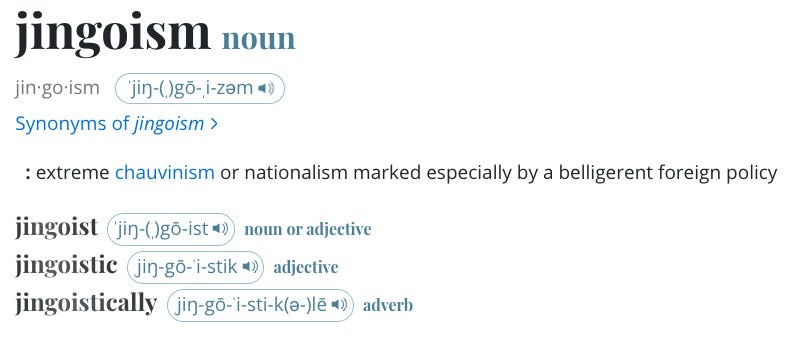
Tom Clancy wanted readers of his Jack Ryan novels to understand that the men in the intelligence community know best, and that any American politician who isn’t a hawk is as much of a threat to America as the Russians, the Chinese, the Iranians, or whatever bogeyman is cast in the villain’s role. There are several words to describe this kind of world view, but my favorite is jingoistic. (It’s just fun to say).
Clancy’s politics are woven into every book, but the fantasy reaches a fever pitch at the end of Debt of Honor, a book about a cabal of Japanese industrialists who seize power and wage war against the U.S. with the covert help of China and India. The premise doesn’t make any geopolitical sense, but that’s the point—only people like Clancy’s hero, super spy Jack Ryan, can see the threat amid the nonsense. At the end of the novel—spoiler alert—a mad man flies a jumbo jet into the Capital, killing the President, Congress, and the Supreme Court. In the following book, Executive Orders, Jack Ryan is the new President. Plot twist! Shit pops off in the Middle East, courtesy of Iran, while the Chinese and Indians look to take advantage of a weakened America. But don’t worry! Jack Ryan is on it. And just as soon as the American people send him the right kind of Congress, he can appoint the right kind of Supreme Court, and all will be right with America, even if the world is a dangerous mess. To quote George W. Bush out of context, “that was some weird shit.”
In theory, I love a good espionage thriller. There’s tension, suspense, mystery, intrigue, and action. But in practice, the espionage thriller is a crime sub-genre I tend to avoid. Bestsellers like Brad Thor (what a name!), Jack Carr, or Mark Greaney, who took over writing the Jack Ryan novels after Clancy died, all melt into the same jingoistic stew—an unchallenging dish that isn’t all that comforting for someone who has questions.
I have questions. Not so much geopolitical questions—I’ll stick to nonfiction for those. But I want to know what it’s like to be a spy. How does it feel to live a life of deception? How does one keep track of all those lies without going bonkers? How do you cultivate a relationship knowing that you intend to use that person and maybe send them to their death? What kind of sick fucks do this for a living? How do they live with themselves? But also, is each day life or death, or do spies get bored? What’s the deal with CIA office politics? Do some days feel more like The Office than, say, The Sum of All Fears? Do spies drink too much and sleep with their colleagues, or the spouses of their colleagues? Do they lead lives of quiet desperation, just like the rest of us?
The Peacock and the Sparrow by I.S. Berry speaks to these questions, not with simplistic answers, but with smart insights into human behavior. It’s the other kind of spy novel, the kind that follows in the tradition John le Carré and Viet Thanh Nguyen.
Fun fact: John le Carré and I.S. Berry were both spies before becoming authors. Maybe that’s why they pay far more attention to the human dramas of their world, while skipping the hallow rah-rah politics, the heroics, and the kinds of toys—think cufflinks that shoot poison darts, jetpacks, and cigarette rocket launchers—that play better in the movies.
Here’s the book jacket summary to give you an idea of what you’re in for with The Peacock and the Sparrow:
Shane Collins, a world-weary CIA spy, is ready to come in from the cold. Stationed in Bahrain off the coast of Saudi Arabia for his final tour, he has little use for his mission—uncovering Iranian support for the insurgency against the monarchy. Then Collins meets Almaisa, a beautiful and enigmatic artist, and his eyes are opened to a side of Bahrain most expats never experience, to questions he never thought to ask.
When his trusted informant inside the opposition becomes embroiled in a murder, Collins finds himself drawn deep into the conflict. His budding romance with Almaisa—and his loyalties—are upended; in an instant, he’s caught in the crosswinds of a revolution. Drawing on all his skills as a spymaster, he sets out to learn the truth behind the Arab Spring, win Almaisa’s love, and uncover the murky border where Bahrain’s secrets end and America’s begin.
I enjoyed The Peacock and the Sparrow in the same way that I enjoyed The Sympathizer by Viet Thanh Nguyen or John le Carré’s George Smiley series. In their own ways, these books that tell the stories of the other kind of spies are about complicated people, living complicated lives, doing complicated jobs, inside of a very complicated geopolitical context. Some readers find these kinds of espionage novels unsettling because there are no easy answers, but I find them comforting for the exact same reason.

I write crime novels in addition to humor. I call my brand of crime Slacker Noir because it draws on two genres—noir and slacker comedies. If you’re a fan of The Big Lebowski or Inherent Vice, you’re swimming in Slacker Noir waters. To keep swimming in those waters, check out my novel Not Safe for Work on Amazon, or all the other book places.
I want to know what you think!Have you read The Peacock and the Sparrow?
Are you fan of novels about the other kind of spies? Got any recommendations?
I’ve been meaning to check out the adaptation of The Sympathizer on HBO. Anyone seen the show yet? Thoughts?
Thanks for reading!I’ll be back at the usual time on Sunday with another serving of slice of life humor. In the meantime, please Share / Restack this so I can find more crime fans🕵️♂️🚬🥃🔫
If this isn’t your thing, no worries!You can unsubscribe from the “Doing Crimes” section and you’ll still continue to receive the regular Situation Normal posts every Sunday. (Simply unsubscribe FROM THE SECTION, not the whole schbang).
Finally, if you’re new here👇June 30, 2024
K-Fuck Radio: First time caller, long time listener
One of the things you learn in therapy is that your capacity to misunderstand yourself is infinite and incredibly powerful. Half the world sees Donald Trump as strong and smart, while the other half sees him as dangerous and stupid. But what does Donald see? I don’t know. I’m not inside the man’s head. I’m stuck inside my own head, where the vibes are often negative.
I used to believe that I was stuck with those negative vibes. Or, more precisely, I used to think it was impossible to escape those negative vibes because the vibes were me, and I was the vibes. Or, as Taylor Swift says, “Hi, I’m the problem, it’s me.”
Every single day, I’d hear this voice inside my head that I thought was my voice. The voice would say really terrible, negative shit:
You suck
You’re worthless
You’re gonna fail
There’s no point in even trying, so just give up
You are fucked, dude
A few years ago, I realized that some people go through life without hearing a voice like that. This epiphany came one morning when the voice inside my head was especially loud. I was sitting at my desk trying to write something, but the voice kept telling me to quit. It made a very compelling case.
Down the hall, I heard my wife on her first call of the day. She was kicking ass and taking names. I tried to imagine what the voice inside her head sounded like. The only thing I could come up with was Braveheart.
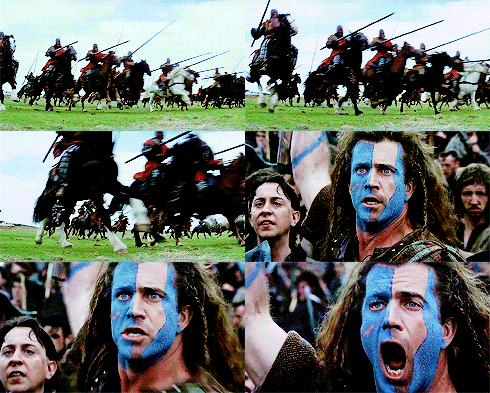
Turns out I wasn’t far off the mark. When Christina finished her call, I asked if she heard a voice inside her head. She thought about it for a moment, then said, “yeah, it’s like a Viking warrior screaming as they rush into battle.”
My voice, I explained, was closer Eeyore, the depressive donkey from the Winnie-the-Pooh books. Except, my Eeyore voice shot negativity rapid-fire, like a machine gun that never runs out of bullets.
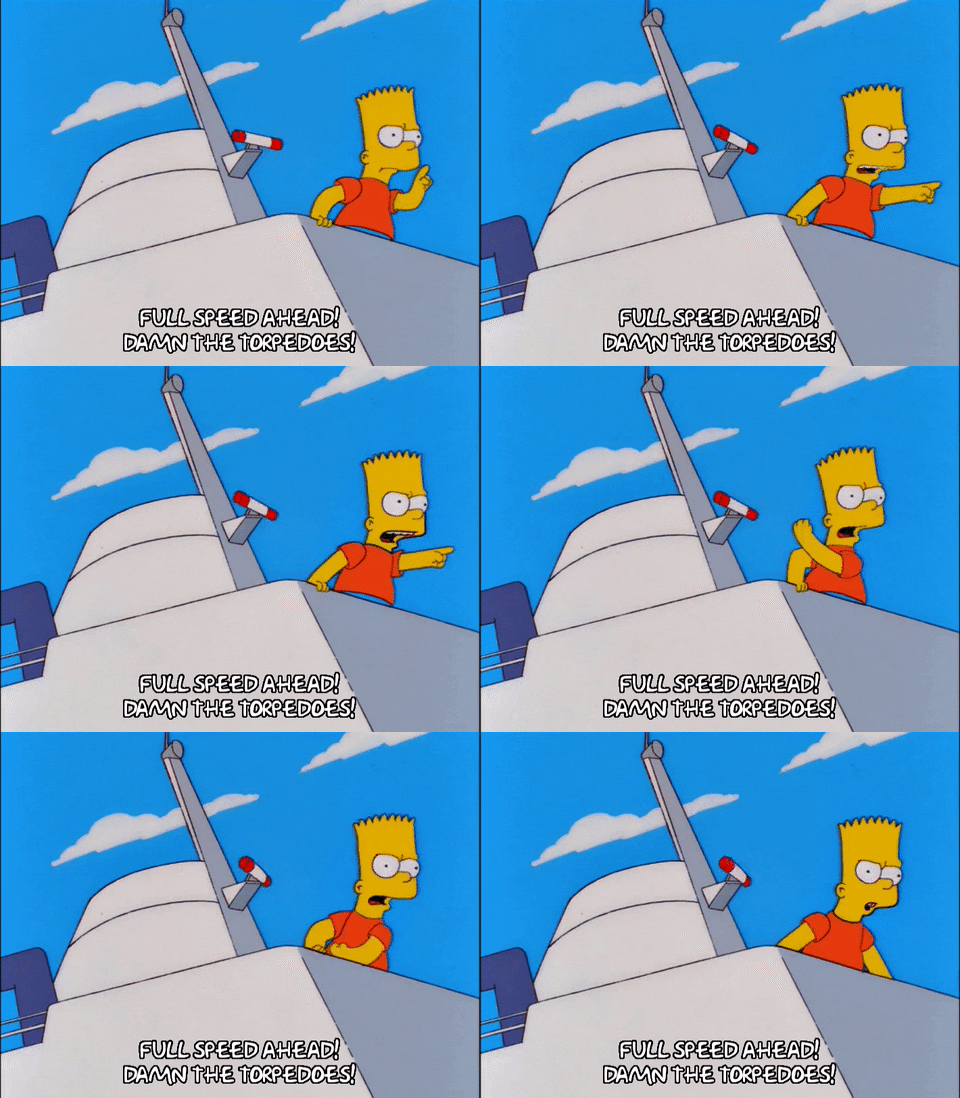
For the next few years, I envied Christina. I wanted a kick-ass inner voice, one that would say things like, “Damn the torpedoes, full speed ahead!” But I figured that when they were handing out inner voices, I must’ve gotten in the Eeyore line, instead of the David Farragut line. My mistake.
Then one day, my depression went from manageable to unmanageable. After navigating a mental health system that felt more like an obstacle course made by greed-demons, sadists, and well meaning dipshits, I landed in a good place. For me, that good place is a psychologist who isn’t covered by my insurance and a drug called Wellbutrin that is.
The great thing about Wellbutrin is that it turns the volume way down on the voice. Before Wellbutrin, the voice’s volume was 50% on my best days and 100% on my worst days. After Wellbutrin, the volume is usually at 5%. I can handle 5%.
The great thing about a psychologist is that they can help you understand the voice and develop tools for disrupting that motherfucker. They even have a name for the voice: The Inner Critic. And get this, the inner critic isn’t your voice! It’s actually some fucked up external bullshit that you internalized, probably when you were a kid, because kids don’t know any better and often believe all kinds of bullshit.
“A lot of people give the voice a name,” my psychologist said, “because it helps them remember that the voice isn’t them.”
I thought about naming the voice Eeyore, but I couldn’t get the rights. Then I heard an interview with David Lynch, where he gave a perfectly accurate and absurd description of what it’s like to live with the inner critic:
I always say we are living, like, in a suffocating rubber clown suit of negativity. We don’t want to be clowns. We don’t want to have this heavy, stinking rubber all around us of negativity.
I thought about clown names. Bozo came to mind. Then Krusty. Then my lawyer told me the rights to Krusty would be even harder to get than the rights to Eeyore. Then I remembered that I’m not really a fan of clowns anyway.
I mentioned the name problem to my friend Norm. He told me that his dad called the inner critic Radio Station K-Fuck.
“Whenever my dad heard it, he’d say, ‘change the dial, down the signal tower!’”
I liked the idea of calling my inner critic K-Fuck Radio. For one thing, it felt like a nice way to honor the memory of Norm’s dad, a man who kicked ass and took enough names to fill a phone book. An obnoxious radio station also felt like a good description of the negative bullshit booming inside my mind. Plus, the name lent itself to a metaphor I was already using.
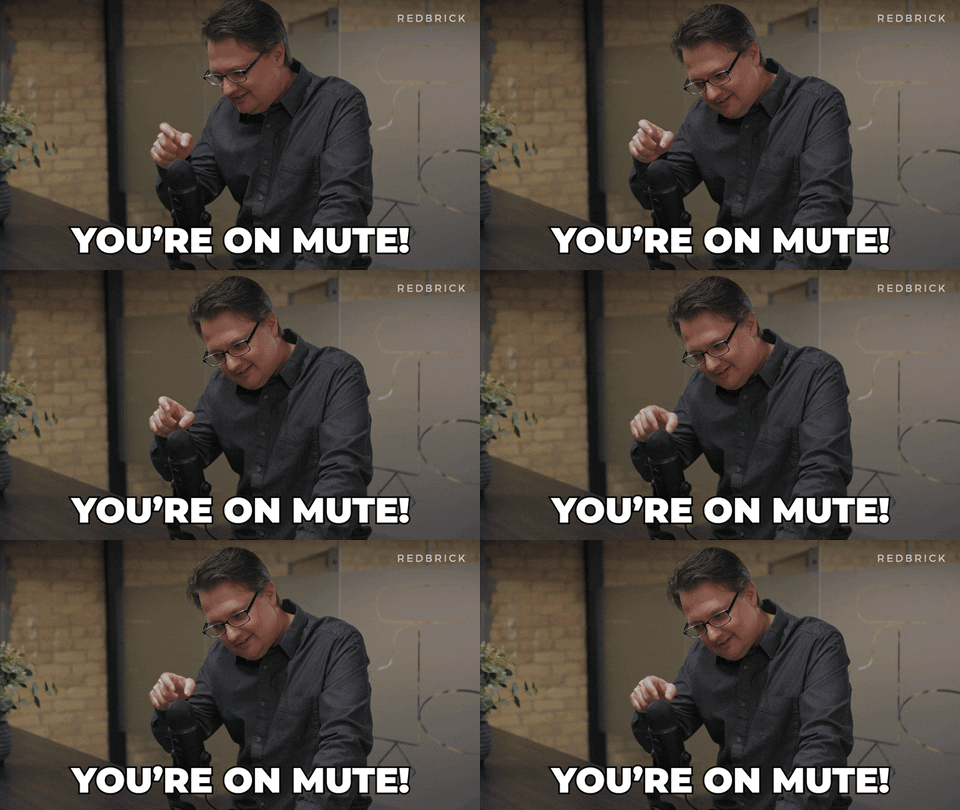
Turn down the volume of K-Fuck Radio
I asked Norm if I could use the name of his dad’s inner critic. Norm is a mensch, so there wasn’t any haggling over the rights.
“Go for it, dude.”
 Shout out time!
A big thank you goes out to Toni Brayer, the newest paid subscriber at Situation Normal! Toni, I’m sending you a metric fuck-ton of good vibes. Don’t worry, shipping & handling are included.
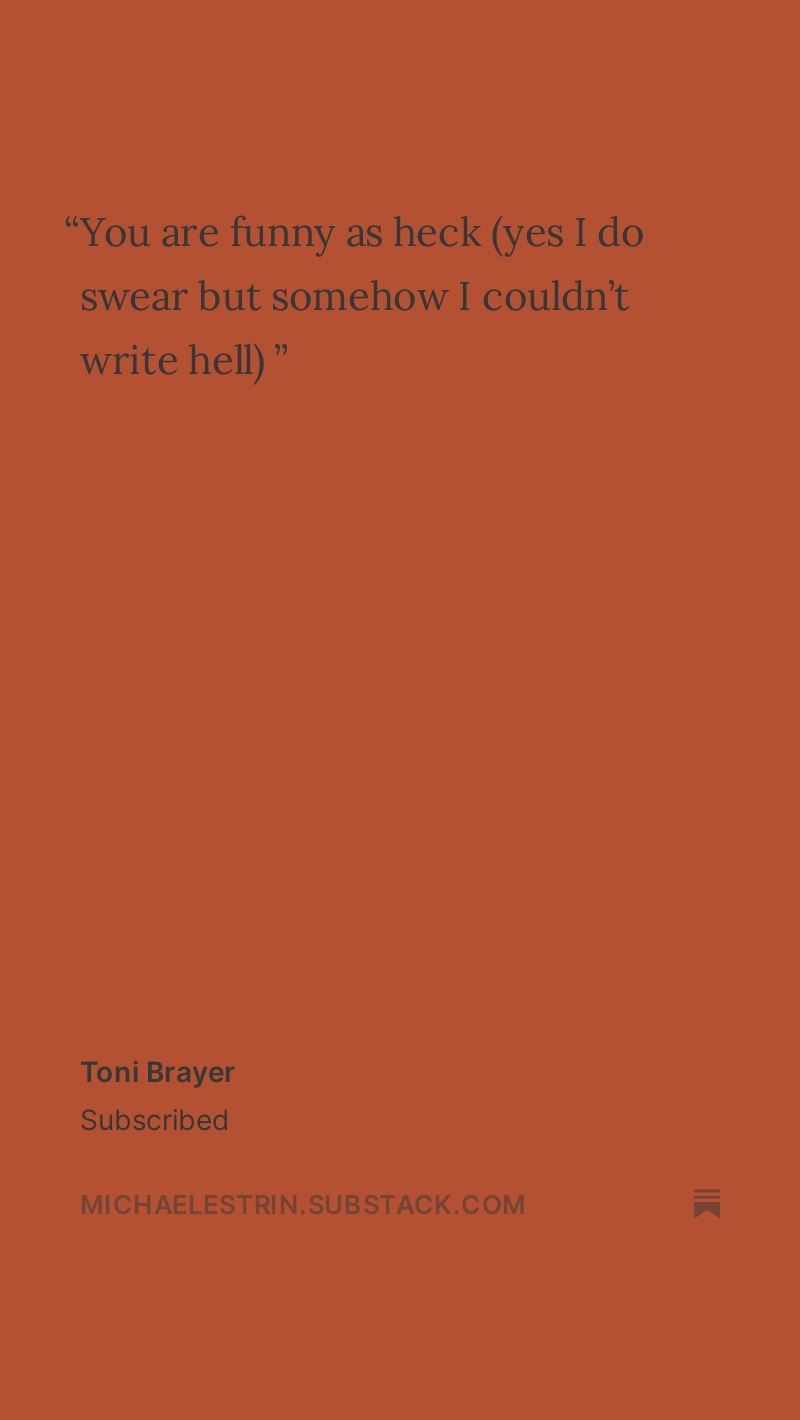
If you agree with Toni, follow her lead and upgrade your Situation Normal subscription now.
Stick around and chat!I ask, you tell
Are you a Radio K-Fuck listener?
What do you call your inner critic (assuming you have one)?
If you don’t have an inner critic, what’s your secret? I won’t tell!
Why are clowns so disturbing? Explain.
After you kick ass, what are you supposed to do with all those names? Wrong answers only!
June 23, 2024
Vegan banh mi, hold the racism
Usually, when I see a sign for a grand opening of a new restaurant my instinct is to stay away. If the food is good, I want to give them time to work out the kinks in their operation. And if the food is lousy, I’d rather some other schmuck figure that out, so they can warn the rest of us on Yelp.
Then there’s Mendocino Farms, a smallish chain I love. When we bought our house in 2018, I cried a little (OK, a lot) because we were moving forty minutes away from the nearest Mendocino Farms. I emailed Mendo corporate, urging them to open a location in our area. After six years, some data-driven market research, and hundreds of emails that, frankly, got a little weird and desperate toward the end, my prayers were answered.
“There’s a soft opening on Monday,” Christina said. “Are you going there for lunch?”
“I’m gonna soft open the shit out of that Mendo, babe.”
On Monday, I drove up the hill to Mendo, where a friendly manager told me Christina had been misinformed.
“The grand opening is tomorrow,” he said. “Scan this QR code for a free entree.”
This was a dilemma. On the one hand, I detest QR codes. For years, they were a marketing tool in search of problem, but since the pandemic they’ve become a scourge in search of your personal information, because somehow we’ve accepted the idea that you can’t see the fucking menu without handing over your name, phone number, email address, mother’s maiden name, school transcripts, credit report, and tax returns. But on the other hand, I like free stuff.
I scanned the QR code.
The next day, I returned for the grand opening. The line was out the door. At first, I just stood at the back of the line minding my own business like a total line pro. After a few minutes, a friendly Mendo employee named Sam came out to chat. He asked the elderly woman in front of me, if she had been to a Mendocino Farms before.
“No. I’m looking at your menu, and I’m clueless.”
Sam walked Mrs. Clueless through the menu.
“What do you recommend for my husband?” Mrs. Clueless asked.
She pointed to an elderly man sitting on a nearby bench.
Sam went over the menu again. After he was done, Mrs. Clueless turned around and asked what I was getting.
“The vegan banh mi.”
“You sound like a pro,” Sam said.
I thought about sharing my vegan bahn mi bona fides—how I go back to the glorious hodo bahn mi days, how I stuck with the sandwich through the hodo brand tofu shortage of 2014, how I begged Christina to consider opening up our marriage and becoming a throuple with me and the vegan bahn mi.
“Total pro,” I said, deciding that my vegan bahn mi bona fides were TMI.
Sam smiled, apologized for the wait, then moved down the line to greet the other customers.
“Are you a vegan?” Mrs. Clueless asked.
“Nope. I just like the sandwich.”
“So you eat meat?”
“Yes.”
“They have a pork belly bahn mi, too. Why don’t you get that, since you eat meat?”
“Because I like the vegan bahn mi better.”
“But you’re not a vegan?”
“No.”
Mrs. Clueless and I went around in circles a few more times, until Mr. Clueless joined us.
“He’s getting the vegan bahn mi,” Mrs. Clueless told her husband. “He’s not vegan. They have a pork belly bahn mi, too.”
“Bahn mi? No.”
Mr. Clueless seemed firm on that, but Mrs. Clueless pressed.
“Why? He comes here all the time, and that’s what he gets. It must be good.”
“Vietnamese. No!”
“Oh,” Mrs. Clueless said, realizing her error.
At this point, I noticed that Mr. Clueless was wearing a baseball cap that identified him as a veteran of the Vietnam War.
“He doesn’t eat their food because of the war,” Mrs. Clueless explained.
Their food? We were at a California-based fast casual restaurant. Sure, the sandwich was called a bahn mi, but it was about as authentically Vietnamese as a Taco Bell Doritos Crunchy Gordita is authentically Mexican. Mendo corporate could’ve named it The Best Fucking Sandwich in the World™ and I don’t think a single person would’ve confused it with an authentic bahn mi.
“I know you’re not supposed to say so,” Mrs. Clueless said, “but we don’t like the Vietnamese. Awful people.”
Yikes!
Also, this raised several issues.
Issue OneRacism is sucks. Don’t be a racist. That part isn’t complicated.
Issue TwoIf she knows she’s not supposed to say racist shit, why is she saying it?
Issue ThreeWhy is she saying racist shit to me? Do I look like a fellow traveler?
Issue FourIf I confront them now, how much longer will we have to wait in line together?
Issue FiveIs this man’s bigotry any different than my Zayde’s bigoted views about stuff from Japan? Zayde spent four years in the Pacific during World War Two. He returned with malaria; amazing photos of indigenousness people in the Pacific; GI Bill eligibility; a story about saving a mobster from murdering an officer, which turned out to be true and later got him comped at a Vegas casino; and a lifelong contempt for Japanese food and Japanese cars that somehow didn’t extend to Japanese consumer electronics.
Issue SixObviously, racism is a cudgel used to deny dignity and opportunity to people labeled as “other.” Also, racism is a cancer that rots society from the inside. But what’s the practical impact of a one-man bahn mi boycott? My Zayde’s views didn’t stop his kids and grandkids from buying cars made by Toyota, or from eating sushi, or yakitori, or ramen, or Shabu-shabu, or those chicken katsu sandos on milk bread that are all the rage these days. Same for Mr. Clueless. His bigotry hasn’t stopped the proliferation of Pho joints throughout Southern California, or American fast casual restaurants from appropriating Vietnamese cuisine.
Issue SevenIsn’t this the racist’s loss? My Zayde never knew the joys of Japanese food, or the reliability of a Toyota. Mr. Clueless is denying himself The Best Fucking Sandwich in the World™ because of a war that ended forty-nine years ago. And while historians continue to debate the origins and geopolitical impact of that war, they’ve entirely ruled out sandwiches as either a cause or result of the Vietnam War.
Issue EightThe bahn mi is actually French-Vietnamese fusion! Couldn’t he just order half a sandwich and expand his culinary palate while staying true to his bigoted views?

“You’re right,” I said, “you’re not supposed to say stuff like that because it’s wrong.”
Mr. and Mrs. Clueless seemed to accept that. Or, maybe they just realized that they needed to shut up about their bigoted views. Who knows?
It took another twenty minutes to reach the register. I didn’t want to talk to Mr. and Mrs. Clueless anymore, so I took out my phone, which is the universal signal to leave someone alone.
I scanned the news. I read stories about three ongoing wars—a fraction of the 100-plus ongoing conflicts around the world at the moment. None of the news was good, and I feared it wouldn’t get any better. Because even after the fighting stops, the hate always seems to endure.
 Shout out time!
A big thank you goes out to Eric Marcoullier, the newest paid subscriber at Situation Normal! Eric, get a ready for a shitload of good vibes headed your way.
Also, Eric wrote me a little note and agreed to let me share it with you.
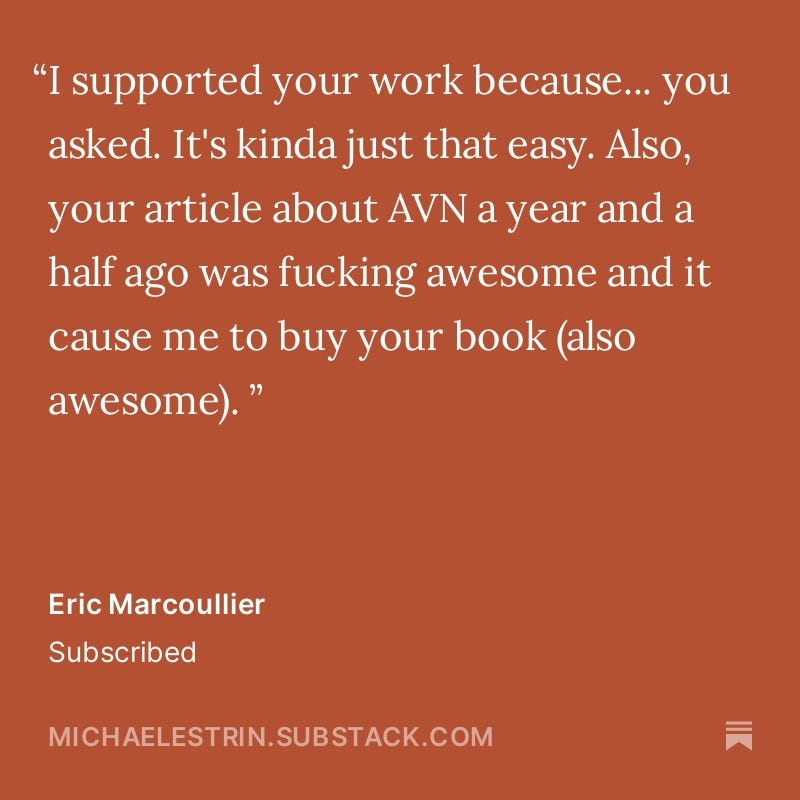
Be like Eric! Upgrade your Situation Normal subscription to support work you love.
Stick around and chat!I ask, you tell.
Clearly, I think the vegan bahn mi at Mendocino Farms is The Best Fucking Sandwich in the World™, but that’s just, like, my opinion, man. What sandwich do you think deserves that title?
Is a Taco Bell Doritos Crunchy Gordita in Mexico City more authentic than a Taco Bell Doritos Crunchy Gordita in Kansas City? Explain.
When will the QR code bullshit end? Please say soon.
Have you had the good fortune to visit a Mendocino Farms? What did you order, and did it come with a side of racism?
I took a picture of my lunch for this post. I felt silly doing that. Do you ever take pictures of your food? Be honest.
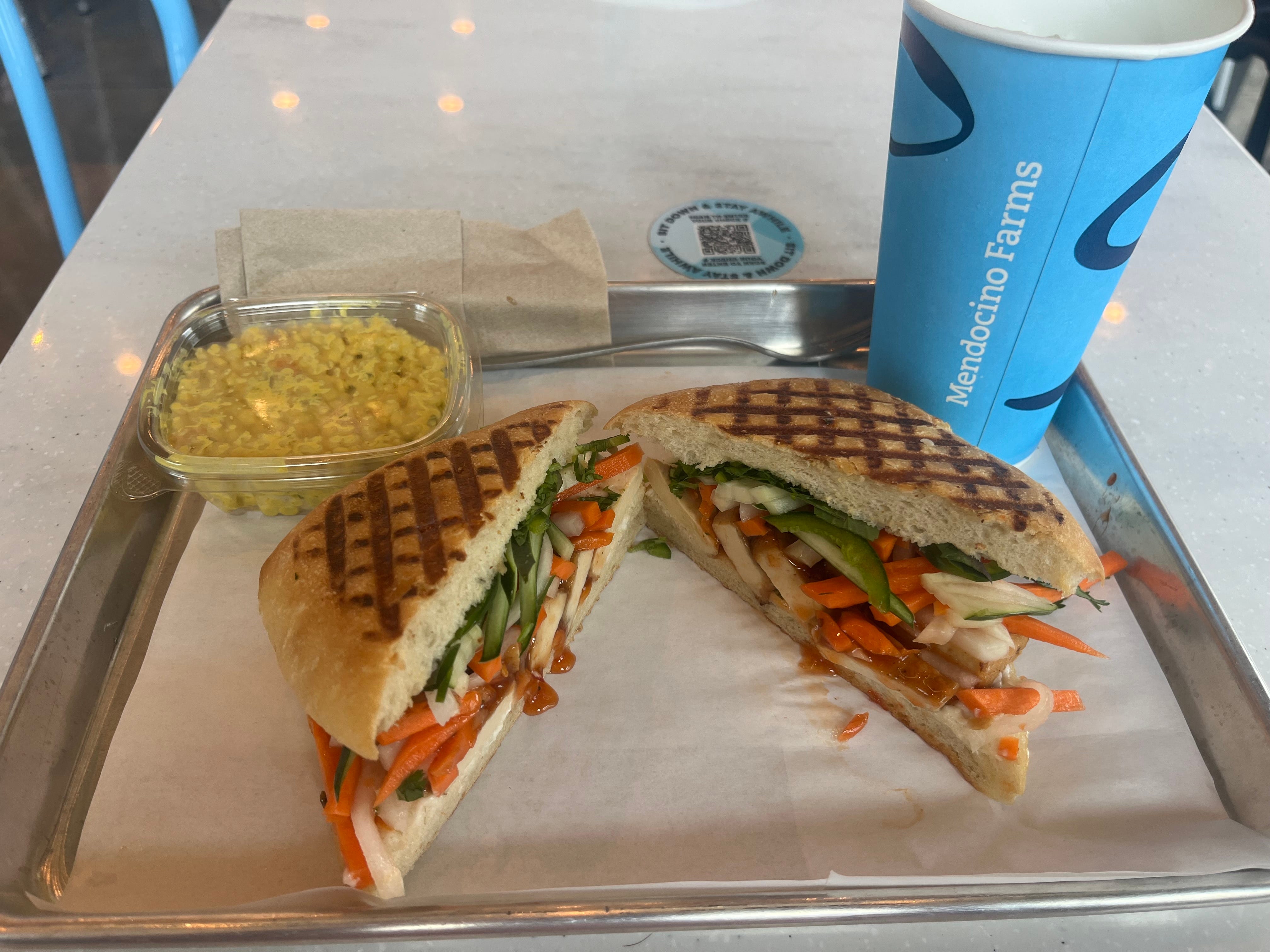 Vegan bahn mi, curry couscous with cauliflower, a pomegranate lemonade. And if you look close, another fucking QR code!
June 20, 2024
Violent Spring
Hi there! As many of you know, I write crime novels in addition to humor. I call my brand of crime Slacker Noir because it draws on two genres—noir and slacker comedies. If you’re a fan of The Big Lebowski or Inherent Vice, you’re swimming in Slacker Noir waters. To keep swimming in those waters, check out my novel Not Safe for Work on Amazon, or all the other book places.
Is this a typical Situation Normal post?
Nope.
Here’s the deal:
I enjoy writing crime fiction, but I also want to write more *about* crime fiction (books, films & TV). So that’s what this new section of my newsletter is all about. If it’s not your thing, no worries! You can unsubscribe from the “Doing Crimes” section and you’ll still continue to receive the regular Situation Normal posts every Sunday. (Simply unsubscribe FROM THE SECTION, not the whole schbang).
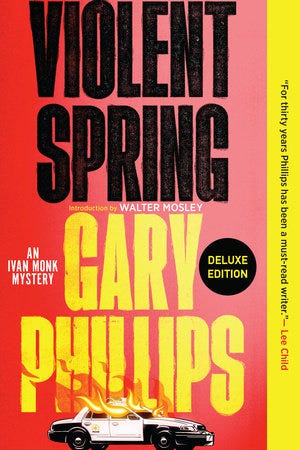
And now, I’m really happy to kickoff this new project with some thoughts about an excellent and truly underrated novel, Violent Spring by Gary Phillips.
Violent Spring by Gary PhillipsIt’s fashionable to critique capitalism at the moment. Leftists of all stripes do it. Capitalists do it too. The critique is in the air. Or maybe it’s just on social media—the frenetic digital air that oxygenates a culture obsessed with take-downs, purity tests, and re-litigating the past ad nauseam ad absurdum. But reading Violent Spring, a socially conscious novel about a Black private investigator hired to solve the murder of a Korean store owner in the wake of the 1992 Los Angeles Riots Uprising, I was reminded of just how marginal the critique of capitalism was in the early 1990s.
I was fourteen or fifteen when the events depicted in Violent Spring took place. I remember seeing the video tape of LAPD officers beating Rodney King. I remember Black friends saying things like, “now you see what we’ve been saying, now it’s on tape, now there’s no denying police brutality.” I remember white Angelenos who were horrified and outraged by what they saw on the local news. I also remember plenty of white Angelenos explaining away police brutality by pointing out that King was intoxicated, as if the usual penalty for a DUI is to be beaten to within an inch of your life. And I remember white Angelenos who were primarily embarrassed by the tape—as if the real problem was what such a tape would mean for LA’s reputation as a world class city.
I remember the verdict, too. All four officers who beat Rodney King were acquitted. Most of my classmates, the white ones anyway, were surprised. Wasn’t it obvious? How could someone look at that tape and say that what happened wasn’t a crime? But maybe those were naive questions—the kinds of things only privileged white kids would ask. I don’t remember my Black friends being surprised. Hurt, yes. Surprised, no. And I don’t remember white adults asking the same questions after the verdict, either. I remember that the adults around me knew only one thing: fear.
I remember what came next. The riots—a description I heard constantly at the time. The uprising—a term that would take decades to work its way into my consciousness. I remember the smell of smoke. I remember the TV images of fires, looting, and shooting. I remember helicopter footage of a Black crowd dragging a white truck driver out of his rig and beating him. I remember police and soldiers guarding Ventura Boulevard—a fashionable strip of shops and restaurants just down the hill from the house where I was raised—while the television broadcast images of armed Korean store owners fending for themselves. I remember a feeling that something had spun out of control, that society was at war with itself. And I remember Rodney King asking, “Can’t we all just get along?”
I have other memories of that time, but the thing that binds them together into a narrative is race. To some, the conversation was black and white. For others, there was a little more nuance: the conversation was black, white, brown, and yellow. But the consensus was, and maybe still is, that race was at the beating heart of the conflagration that nearly destroyed Los Angeles.
What I don’t remember was any discussion of capitalism. If there was an economic critique of a moment in Los Angeles history that resulted in 63 deaths, 2,383 injuries, 12,111 arrests, and roughly $1 billion in damage, it didn’t make its way into the mind of the average citizen. If it came at all, the economic critique came in the coded language of “jobs” and “opportunity” and “loans.” To the extent that we talked about capitalism’s role in what happened, it was to point out that Black Angelenos were often—perhaps systematically, although I don’t recall that word coming up a lot—excluded from the benefits of capitalism. In other words, there was nothing wrong with capitalism that a little more capitalism couldn’t fix. And so the conversation largely ignored the nature of the elephant in the room in favor of endless talk about the color of the elephant’s skin.
In a lot of ways, Violent Spring sets the record straight. But what’s so remarkable is that Phillips got it right at the time. He published Violent Spring in 1994, two years after Los Angeles exploded. He nailed the way Los Angeles talked about race in those days. He nailed the acrimony and the distrust, the yearning to heal, and skepticism that such a wound could be healed. But he also dug deep to unearth the stuff we weren’t talking about. The novel was ahead of its time.
Here’s how Booklist describes the novel:
In the wake of the Rodney King beating and the subsequent riots, Los Angeles is a racial tinderbox. When the body of a murdered Korean shop owner is discovered during the groundbreaking ceremony of what’s intended to be part of the city’s healing process, private eye Ivan Monk gets involved in the case. Given the atmosphere, everyone assumes a racial motive, but as Monk probes ever deeper into the case, greed rears its omnipresent head. Monk meets resistance from the Korean Merchants Association, the FBI, the LAPD, and an assortment of street gangs. As a hard-boiled mystery, this is routine. As an examination of L.A.’s racial strife, it’s really quite enlightening. So many of the ethnic groups outside the power structure are interdependent, yet they resent the others’ presence. Banding together would provide strength, but it’s to the empowered’s advantage to keep the groups squabbling among themselves. This is the milieu in which Monk works. Depending upon whom he is questioning, he’s perceived as either an Uncle Tom or a troublemaking black agitator. But he perseveres to a bloody conclusion in which the only color that really matters is the green of cold, hard cash.
But there’s another remarkable aspect to Violent Spring. The book is a gas! Ivan Monk isn’t a wonky leftist who spends his time stroking his goatee and critiquing capitalism between espressos. He’s a cross between Dashiell Hammett’s Continental Op and Shaft. He carries a gun (sometimes). He drinks (too much). He fights (when he has to). He loves a Japanese-American civil rights lawyer who was recently appointed to the bench. He owns a donut shop, and spends just as much time in Silver Lake as South LA—marking him as something closer to petite bourgeoisie than working class. And yet, capitalism and economic justice are foremost on his mind—not as abstract theories, but as the inescapable context for Blacks, whites, Asians, and Latinos in Los Angeles. He is complex, and yet he lives by a simple code. He is a noir detective through and through. Above all, Ivan Monk is a flawed hero who can take us into the heart of uncomfortable truths and make the journey feel like a joy ride.
Some fun factsAfter Gary Phillips lost his job as a union organizer, he took a creative writing class at UCLA. His teacher was Robert Crais.
Many of the characters in Violent Spring, including Ivan Monk, came out of a manuscript Phillips worked on while studying with Crais. That book wasn’t published, but Phillips put them into the novel that would become his first book, Violent Spring.
HBO optioned Violent Spring at one point. We’re still waiting for a show!
The first edition of Violent Spring was put out by a small publisher called West Coast Crime, a collective Phillips helped create. In effect, Violent Spring began life as a self-published novel. Today, it’s widely regarded as a classic of the genre.
If hearing about Violent Spring gives you Walter Mosley vibes, you’re on the right track. Mosley was heavily influenced by Phillips. Mosley also wrote the introduction to the deluxe edition of Violent Spring. Get the the deluxe edition!
I want to know what you think!Have you read Violent Spring?
Are you an Ivan Monk fan?
Is there a socially conscious crime novel you’re fond of?
Thanks for reading!I’ll be back at the usual time on Sunday with another serving of slice of life humor. In the meantime, please Share / Restack this so I can find more crime fans🕵️♂️🚬🥃🔫
And if you’re new here👇
June 16, 2024
I found $20. Things got weird
Whenever I go for a walk, I have this recurring fantasy about finding a large sum of cash. Sometimes I think about what the cash could do for me: pay off our mortgage, pay off the car, fully fund my retirement. Other times I think about how I could use the cash to help people: scholarships, house the unhoused, buy Facebook (and turn it off).
The larger the amount of cash in my fantasy, the more likely my mind is to wander into criminal territory. Maybe the cash is actually one of those exploding dye packs they use to catch bank robbers. Or, maybe the money is counterfeit, in which case I’m absolutely buying Facebook because turning that wretched website off and hoodwinking Mark Zuckerberg would be the ultimate win-win. Or, maybe the cash belongs to a drug cartel, and I’ll have go on the run, like Josh Brolin’s character in No Country for Old Men, which would be a bad situation, but nevertheless a great movie.
The possibilities of this fantasy / nightmare are limited only by my imagination and the duration of my walk. I’ve never found a large sum of money, but the other day I did find a picture of Andrew Jackson, which is worth exactly twenty dollars.
My first thought was that I was on one of those hidden camera shows where they tempt unsuspecting dupes by putting them in low-stakes moral quandaries.
Is he schmuck because he took the money, or is he a schmuck because he gave the money back? We’ll find out after the commercial break.
Keeping one eye on the money, I used the other eye to scan the street for hidden cameras. I didn’t see any. Either I was alone, or the show’s production crew was damn good.
I hoped for the best and prepared for the worst by dreaming up a plausible cover story to tell the television crew, if it came to that, as knelt down to pick up the money.
As it turned out, the money wasn’t part of a hidden camera show. It was just money. And as soon as I put it in my pocket, it began burning a hole in said pocket.
When I got home, I went on Notes—Substack’s peculiar social network, where charlatans promise the secrets to growing your Substack for an immodest fee and writers grumble about all the charlatans, when they’re not grumbling about the stuff writers usually grumble about: money, the broken publishing-media-Hollywood industrial complex, or the algorithmic injustice of some dude named George Saunders, who they’ve never even heard of, going viral with some bullshit piece, when not a single person has even clicked on their story about an AI that thinks its an Abyssinian cat hacks into Barnes & Noble and orders ten billion copies of a self-published novel about a vampire Bonnie and Clyde who rob blood banks so they can live (and love) forever.
Anyway, I asked the Notes community to take a break from its usual nonsense to help me figure out my nonsense.
I didn’t do a rigorous analysis of the responses, but ice cream won by a country mile, which according to a recent study, is the same length as a city mile, only twenty-eight times more boring.
Saving the money and buying lottery tickets weren’t very popular with the Notes community. But a few people wrote their own answers, which is a sure-fire way to fail a multiple choice test.
There were the people who suggested I buy crypto—a Shibboleth of sorts, because they see crypto as a can’t-miss investment, whereas I see it as a can’t-win gamble. There were the people who said I should donate the money—an unexpected response that made me feel better about the Notes community. And then my pal Sheila said I should buy tacos for everyone, which turned out to be something of a harbinger.
But I chose ice cream because I believe in democracy and because ice cream fucking rules.
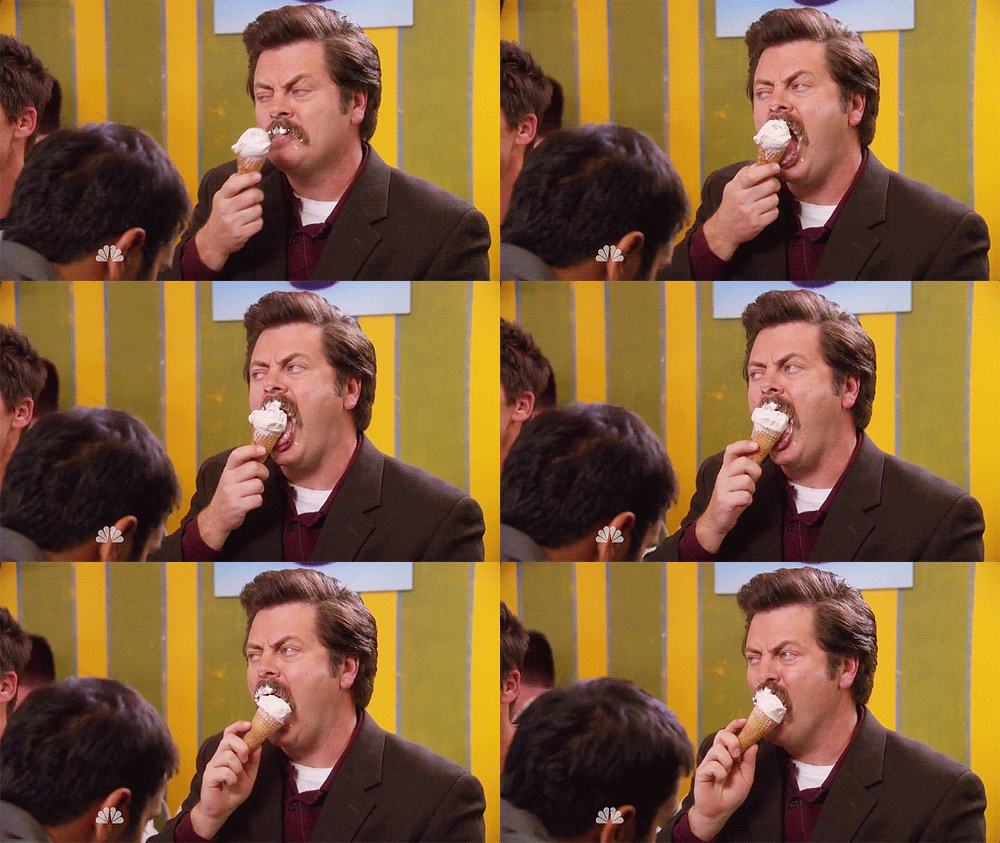
My plan was to wait for the weekend so that I could make the pilgrimage to McConnell’s, which makes the best ice cream. Sorry, Ben. Sorry, Jerry. But as the saying goes, the ice cream man plans and god laughs.
While surfing the internet, I stumbled upon an alarming headline.
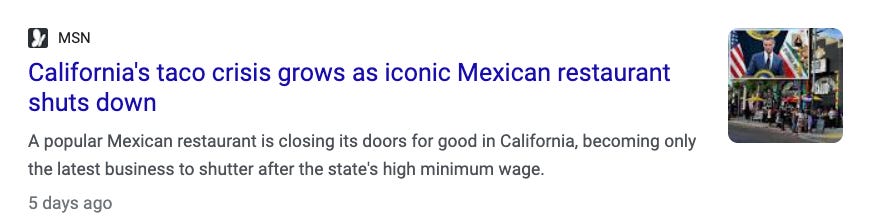
The story was classic clickbait. It wasn’t about tacos, not really. It was about California’s new minimum wage law that mandates $20 per hour for fast food workers. These stories are part of the California Apocalypse™ genre, which is one of the most popular genres on the internet, especially among people who hate California as much as they love confirmation bias.
But back to the tacos. Was there a taco crisis?
I jumped in my car and drove to the nearest Taco Bell. The over-paid socialist at the drive-thru told me that the only taco crisis was people who go to Del Taco. At Del Taco, the fat cat fast food worker at the drive-thru told me the only taco crisis was people who order tacos at Jack in the Box. I didn’t go to Jack in the Box, because I didn’t want to be part of the problem. Instead, I went to my favorite taco stand, Cactus Taquerias #3.
“Is there a taco crisis in California?” I asked the woman behind the counter.
“No.”
“Are you sure?”
“Yes.”
At that point, I could’ve stopped. I had already done more reporting than the outlets that were selling the taco crisis narrative. But I am an award-winning journalist, which means I go the extra mile, whether it’s a city mile, or a country mile.
“I’ll have four Al pastor tacos, extra cilantro.”
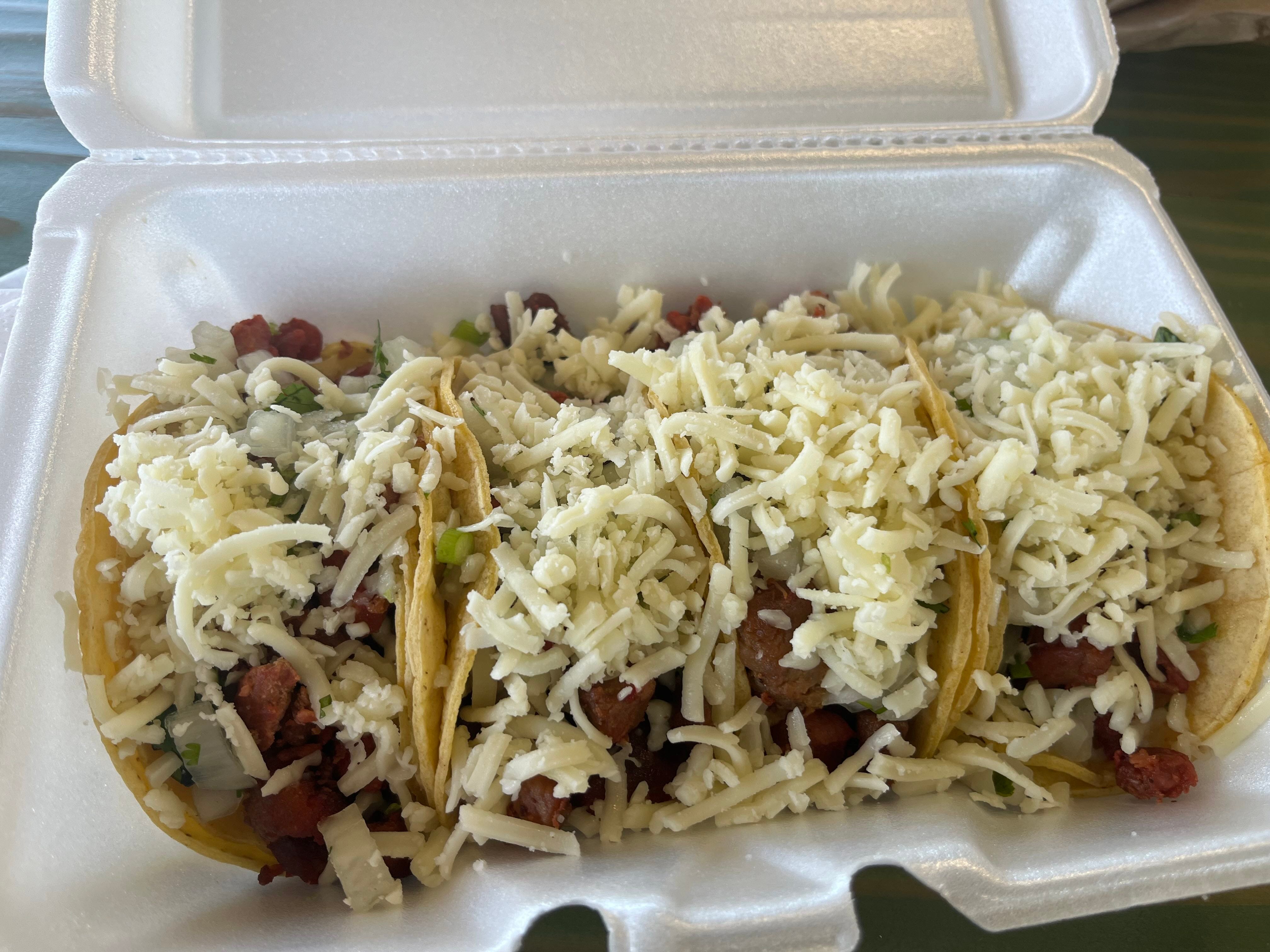 Delicious proof that Situation Normal does original reporting
I ate the tacos. They were freaking fire, as always. When I finished, I was satisfied that the so-called taco crisis was yet another manufactured media narrative.
Had the narrative been created by Texas, a state that derives its self-worth by shitting on California? Was it a product of a reckless East Coast media establishment that never misses a crisis, but wouldn’t know a taco from a torta? Or, had this “crisis” been constructed by Big Taco to cause panic and sell more tacos?
These were important questions, but I had blown my research budget on tacos, a diet coke, a generous tip, and a buck-fifty for the parking meter.
Based on my extensive reporting, I can confirm that the California taco crisis is a lie. But there is a crisis in journalism, which makes it difficult to cut through the bullshit. The truth is one obvious casualty of the journalism crisis. But as this story makes clear, democratically selected ice cream is also in peril.
 Support Loco Journalism!
Tacos ain’t cheap, and the truth is for sale. To support loco journalism, please consider upgrading your Situation Normal subscription. Or, if you prefer PayPal, send any amount here. I’ll give you a shout out, send you good vibes, and add you to the list so you receive the annual stakeholder report.
Stick around and chat!I ask, you tell.
You find $20. What would you do with it? Be honest.
You find $20 billion. What would you do with it? Be creative!
There’s a (hypothetical) ice cream crisis, and you can only save one flavor from extinction. Which one will it be? Give us the scoop!
Is it just me, or is it unAmerican to hate a particular state?
Where do you get your tacos? Dish!
June 9, 2024
Will the verdict change the election?
Hello, situation normies! Also, Kon'nichiwa!
Last Sunday, I tried to pull off the first-ever Situation Normal reader survey. It was an epic fail. I screwed up the settings in Google Forms. The settings are more complicated than they need to be, which is why I sent a strongly-worded email to Google CEO Sundar Pichai. With any luck, Google will unfuck Forms pronto, and as they say in Silicon Valley, I promise to do better. But in all seriousness, thank you for trying to fill out the survey! I’ll run the survey again in a month or so.
Meantime, a big shout out to Nancy A., Situation Normal’s newest paid subscriber! Thank you! Also, I’m sending you good vibes, Nancy, please use them in good health.


Everywhere I went this week, people asked me the same question: will the guilty verdict cost Trump the election? My friends asked. My family asked. The cashier at a burger stand asked if I wanted fries with my order, then added, “will the guilty verdict cost Trump the election?”
I tried telling people that I didn’t know the answer, but that only made things worse. They’d respond to my honest non-answer with their bullshit answers.
“I don’t think it matters,” my gardener told me. “Half the people think the verdict is weed-killer, and the other half think it’s fertilizer. It’s a wash, it won’t change anything.”
My gardener’s analysis may have leaned a little too hard on lawn care references, but his conclusion wasn’t all that different from the talking heads who get paid the big bucks to say things like, “ultimately, the voters will decide.”
No shit.
But try telling that to the lady at the donut shop, when all you want is an apple fritter, and all she wants is your hot take. You’ll get that fritter, eventually, but first you’ll get a serving of side-eye.
“Why do people keep asking me the same question?” I asked Christina. “It’s not like I can predict the future. And if I could predict the future, I wouldn’t tell them who’s going to win the election. I’d bet every penny we have on the biggest long shot I could find, then I do it again and again until we’re rich as fuck.”
“OK, Biff.”
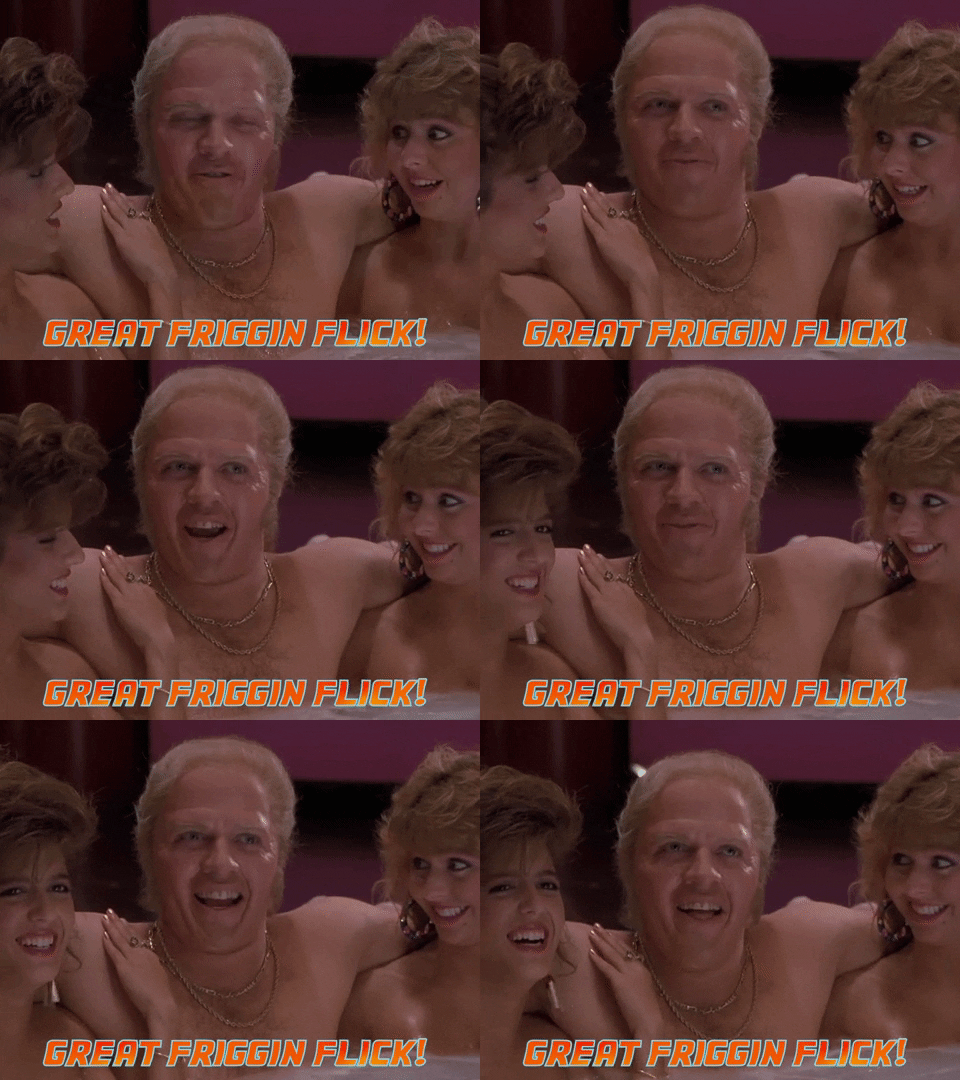
But the answer isn’t just about predicting the future. The question is actually two questions in one. First question: what will be the outcome of the election in November? Second question: what role will a court case play in determining that outcome?
Like everyone else in America, I’ll find out the answer to the first question the night of Tuesday, November 5, or maybe early Wednesday morning, or in the days and weeks that follow, depending on how close it is. Regardless, my plan is to ingest an unhealthy amount of cable news, sit at the edge of my seat, and self-medicate with cannabis and carbohydrates until every state on the big map is either red or blue. That’s just how democracy works.
The second question is one we’ll never know the answer to. Political scientists and historians will likely kick the question around for a century or more. Books will be written. Tenure will be granted. Careers will be made on this question. If I cut back on the donuts and pass on the fries, I could make it to the late 2060s. That means I’ll live long enough for some fresh-faced historian who wasn’t alive when the shit went down to tell me the real story of the shit I lived through. What a treat that will be.
Maybe one of those future historians will use an AI tool to sift through the rubble of today’s internet. They’ll find Situation Normal, and after they stop laughing, they’ll request an interview.
“What were people talking about in the weeks after the verdict?” they’ll ask me.
I’ll tell them what I remember. It’ll probably go something like, “the most important issues of the day were lawn care and apple fritters.” Let’s face it, I’ll be pushing ninety, and after all the cannabis I ingested during the 2024-25 interregnum, my memory might not be so great. But here’s what I hope I’ll say:
Everyone kept asking the same question, but most of the time, people didn’t really want to hear your answer, they just wanted to tell you their answer, even though it was perfectly obvious at that moment that the answer was unknowable.
Also:
We were pretty darn myopic. We assumed that the verdict was everything. Of course, later that summer, we were convinced that the outcome of the election would hinge on Taylor Swift’s endorsement. And then in September, we were positive that the election would be determined by who had the most zingers in the debate. But then in October, we realized that none of that mattered, because it was all about the October surprise, which the media had been hyping since Valentine’s Day.
And finally:
If you really want to know what happened, kid, go back and watch the election night coverage. I was pretty baked, so don’t quote me on this, but the minute the first polls closed, a chorus of talking heads gave us all the answers, and everything they said was on point. And OK, sure, the things they said were just, like, their opinions, man. But those opinions were also facts! It was a great time to be alive, because in those days, you didn’t have to think for yourself, or pay out of your ass for an AI subscription to do the thinking for you. Instead, there was an entire industry of people who told you what to think. For free! (With ads). Those were the good old days, kid.
 It’s a mystery!
Life is messy. History is complicated. Thankfully, there are mystery novels to satisfy us by resolving burning questions like whodunit? And whydunit? I answer both those questions, and many more, in my novel, Not Safe for Work. You should read Not Safe for Work, it’ll change your life.
Stick around and chat!I’ve got questions that can be answered,
Who did Taylor Swift endorse in the 1796 election, and what was the October surprise? Wrong answers only!
What’s the October surprise going to be this year? Get creative, and spoil it!
What do you want future historians to know about this moment?
Does my gardener have a shot at landing a cable news contract? Be honest, he can take it.
If AI is so smart, why can’t it tell us the future in a voice that sounds eerily like Scarlett Johansson?