K. Tempest Bradford's Blog, page 31
March 2, 2013
Utopias In Literature (Scholar & Feminist Conference 2013)

This year’s Scholar & Feminist Conference theme is Utopia, and I’m honored to be leading a workshop about Utopia and Literature. I’m going to discuss mainly speculative fiction novels and short stories (thus the reading list below), explore how writers have handled the idea of utopia and dystopia, and discuss the ways writers can think about utopia going forward. I’m also going to get into how fiction handles utopia affects the reader and/or culture.
In preparation for this workshop I had some great conversations with other speculative fiction authors about utopia and dystopia so that I could incorporate their viewpoints into the discussion. I want to thank Justine Larbalestier, N. K. Jemisin, Rahul Kanakia, Nisi Shawl, Eileen Gunn, and Catherynne M. Valente for helping me expand and explore my own ideas about utopia by offering their own.
The ideas I will use as a jumping off point are:
Science fiction as a genre is well suited to utopias because it “explores our world by positing another one that works a bit differently.” (Eileen Gunn)
If utopia is an ideal, is there such a thing as an objective ideal? Can a utopia ever be a utopia for everyone? Or if you create a perfect society for one group, who then becomes dominant, does that mean the non-dominant group/s must be oppressed?
Utopia is relative. The utopias we see in fiction may work for one set of people but are dystopian for another set.
Many modern stories and novels are specifically dystopian in nature or are utopias that reveal themselves as dystopias. Why is this the modern mode of exploration?
What do the types of utopias we see in fiction reveal about the authors who write them and the society or culture they come from? The ideals they include and the ones they leave out speak to their point of view and what they value and don’t.
Is it possible to show a true utopia in fiction? One view is that fiction requires conflict, so the author must show the utopia to be flawed in some way. Another view is that the conflict doesn’t have to come from within the utopia itself but from outside. The point being not to show that the utopia is flawed, but that the outside forces are.
Utopia as positive text. Creating a positive text, be it a positive feminist text, positive womanist, positive toward the idea that people are equal and should be created with respect — can this be a form of utopian writing? What affect does this have on the reader, on culture?
The workshop begins at 12:25pm Eastern (3/2). You can follow what people are saying on Twitter about the workshop and the conference by checking out the hashtags #sfutopialit and #sfutopia. This post will evolve and grow as the workshop goes on and afterward as I incorporate what the workshop participants have to say. I’ve invited all of the people in the workshop to liveblog and Tweet as well as bring the discussion to the comments on this post. Even if you’re not in the workshop physically, I hope my regular readers will also offer their thoughts on utopia.
Very Selective Reading List
I will add links to all of these works later on. During the workshop I expect we will generate more stories and novels to include in this list.
Octavia Butler
Parable of the Sower
Parable of the Talents
Steven R. Boyett
Elegy Beach
N. K. Jemisin: Takes place 20 years after Ariel. The protagonist grew up in this world where magic works and science doesn’t, and he’s excited by the world’s magic. His father remembers the world as it was. It’s a utopia for the son, not for the father.
Suzy McKee Charnas
The Holdfast Chronicles (Walk to the End of the World, Motherlines, The Furies, The Conqueror’s Child)
John Crowley
“In Blue” (short story)
Nisi Shawl: a future utopia, a socialist world. It’s hard to envision what a totally happy utopia can be. He does this, but from the point of view of someone who doesn’t get it. It’s not a perfect utopia for him but it is for everyone else.
L. Timmel Duchamp
The Marq’ssan Cycle (Alanya to Alanya, Renegade, Tsunami, Blood in the Fruit, Stretto)
Charlotte Perkins Gilman
Herland
Kathleen Ann Goonan
This Shared Dream
Eileen Gunn: This book posits an attempt at creating a utopia. Here’s the blurb I wrote for it: “What if you could travel through time to fix what is wrong with the world? The world would resist, and the very act of trying would create parallel worlds with their own problems. This wondrous book, the story of a handful of people who seek to alter the twentieth century to create a better future, acknowledges the inhumanity of war and yet celebrates the joys of music, art, friendship, and family. And it reminds us that the future is made by the children of the present. I loved this book, and I heartily recommend it.”
N. K. Jemisin
“Too Many Yesterdays, Not Enough Tomorrows” (short story)
Example of a relative utopia
Rahul Kanakia
“Next Door” (short story)
Written from the point of view of a character who sees the world as dystopian, but when flipped to the antagonist’s POV could be utopian.
Ursula K. LeGuin
The Dispossessed: An Ambiguous Utopia
Always Coming Home
“The Ones Who Walk Away from Omelas” (short story)
Kat Meads
Sleep
From the Tiptree Award website: This is a fierce, unrepentantly experimental, somewhat raw novel about motherhood in a highly gray utopia.
Marge Piercy
Woman on the Edge of Time
From the Tiptree Award website: Piercy not only creates a complex and intricate utopian vision, but tosses in a dystopia and an all too realistic real world as well. Connie Ramos is one of science fiction’s most genuine heroines. She has to be dragged, kicking and screaming, into utopia. The rest of us, at the end of the book, have to be dragged out.
Joanna Russ
The Two Of Them
Nisi Shawl: Secret agents across time go to this planet that’s been settled by people who are trying to set up a religious utopia based on Islam.
The Female Man
“When it Changed” (short story)
Takes place in the same world as The Female Man
“Houston, Houston, Do You Read”
Starhawk
The Fifth Sacred Thing
A post-apocalyptic novel depicting two societies, one a sustainable economy based on social justice, and its neighbor, a militaristic and intolerant theocracy.
Catherynne M. Valente
The Orphan’s Tales cycle (In the Night Garden, In the Cities of Coin and Spice)
Written specifically as a positive feminist text.
Connie Willis
Even the Queen (short story)
Anthologies
Diverse Energies, ed. Tobias S. Buckell and Joe Monti
SteamPowered II: More Lesbian Steampunk Stories, ed. JoSelle Vanderhooft
Utopias In Literature (Scholar & Feminist Conference 2013) is a post from: K. Tempest Bradford




February 9, 2013
Favorite Fiction from January 2013; New Related Projects; Fiction Review Contraption?
First favorite fiction post of 2013 and there is a lot to talk about besides the fic I liked! I’ll begin with business.
First, I am posting a short list of favorite fic every month over at io9 now. Click here to see January’s picks. Each month I’ll choose my top favorites, usually 5 or so, to list there. I’ll also do more with print/subscription/non-free fiction there and podcasts. That list won’t mean that these lists will go away, though. There are shorts listed here that aren’t listed there.
Second, I’m now part of the Not If You Were The Last Short Story On Earth crew, so I will contribute to the Twitter account and possibly the podcast (I’m not in Australia or anything, so I have no clue how that works). So if you want to keep up with the stories I like as I read them, follow that account. I’m not the only one who tweets, so you get bonus thoughts from other folks doing the same thing I am.
Last, ever since I started reading short fic regularly I’ve wanted to have a place where I could go to have discussions about the stories. Not just the stories I like, but the ones I don’t that I still find interesting enough to discuss. Last time I brought this up on Twitter many were interested, so I’m bringing it up again. The thing I’m unsure about is where to host this discussion. G+ communities are now live and could work. DreamWidth communities might be better since it can be a little bit (but not totally) private. I’m just worried about people who may want to join the discussion feeling like they can’t unless they join DreamWidth. Maybe that’s an unfounded concern. Anyway, I would love to hear suggestions on this.
Okay, all that taken care of, it’s now time for the favorites list!
The Advocate by Genevieve Valentine
Politics, bureaucracy, government ineptitude, the ambitions of petty little men. Too often stories with these elements end up being just as banal and annoying as dealing with them in real life. Here you get a reverse effect. The politicking leads to the result it usually does: something or someone is in danger. Valentine has a way of quietly and sneakily engaging you so that the reader is invested in the outcome as much as any of the characters, mainly because most of us know too well that these things rarely turn out well in real life.
Eleutherios by Sharon Lee and Steve Miller
This one is a freebie from Baen and takes place in the Liaden Universe. I wasn’t aware of any of this when I read the story and I’m not at all familiar with the work of Lee and Miller. I say this to point out that the story works well on its own with no need for prior knowledge of the world. The story hooked me with the early description of a damaged organ cared for by a monk who longs to hear it played again. The Abbey he resides in also serves as a detention center of sorts for criminals awaiting trial. The story takes its time weaving together the prisoner’s story with the fate of the monk and the organ, but the payoff is well worth it. A quiet but satisfying story.
Daltharee by Jeffrey Ford [reprint]
What starts out as a simple story about growing a city in a bottle takes a philosophical, then a dark turn. As you’d expect from Ford, this all flows smoothly and it’s engaging right from the start.
Selkie Stories Are for Losers by Sofia Samatar
Selkie moms are the worst. Human moms can be pretty bad, too. A story about what daughters go through when their moms let them down, and there are many ways in which a mom might let a daughter down. The tone of this piece hovers between snarky, lighthearted, longing, and despairing and balances all of that really well.
Inventory by Carmen Maria Machado
I’m a fan of stories with non-traditional structures, and this one combines that with my love of lists. The protagonists looks back across her life and the things that led to her current state by listing all the people she’s had sexual encounters with in order to stay sane. It’s an interesting lens with which to examine a life.
Goddess By Lavanya Karthik
TRIGGER WARNING: abuse and child abuse. In times of scarcity and uncertainty, there are always people ready to take advantage of the fears and desperation of others, especially in spiritual matters. That’s the world Karthik drops us into with this story, thus it’s fitting that it opens with dreams of extreme bloodshed. The story is somewhat jangly and could do with some smoothing of the structure to eliminate confusion in the beginning, but once I got past that the characters and situation ended up being very compelling.
Staying Behind by Ken Liu
In this post-Singularity story, the humans of Earth look on those who’ve decided to upload their consciousness to machines as “the Dead”, which is an interesting way to frame the issue. It’s almost a reverse ancestor worship. I liked the story, but wouldn’t say it’s one of Liu’s best. It’s a bit more straightforward than his really good fiction, but you can tell he’s going for something deeper than what’s on the surface. That reaching doesn’t mar the story in any way.
The Cambist and Lord Iron: A Fairy Tale of Economics by Daniel Abraham [reprint]
It’s said that artists often create the best works of art when under some kind of forced restriction. This story proves the point well. originally published in “Logorrhea: Good Words Make Good Stories” where each author had to craft a story around a specific word. The word in question here is Cambist, and Abraham masterfully crafts a story around a word that is unlikely to be found on most modern fiction, even fantasy fiction. And while the structure is that of a fairy tale, it’s by no means slight.
The Patrician by Tansy Rayner Roberts
A monster hunting story with all the usual trappings, but told from the perspective of a woman as she grows from a teenager living an isolated life in a tourist town to a grandmother. I like the scope of this story as well as the viewpoint.
The Message Between The Words by Grayson Bray Morris
This is the type of story where the idea is more powerful than the plot itself, yet somehow it still manages to come together well in the end. The protagonist is also engaging, which helps. Overall, this story kind of tumbles together well even though individual aspects of it don’t quite work.
Trixie and the Pandas of Dread by Eugie Foster
My love for this story is white hot and burning like the sun. Trixie is a goddess of wrath, but she wasn’t born one and still struggles to reconcile her goddess-self with her mortal brain. Oh, and she smites jerks and assholes. And I love her.
The Performance Artist by Lettie Prell
This story admittedly drew me in because I’ve seen my share of performance art, most of it ridiculous and pretentious and not worth my time. A common experience when witnessing PA was the reaction from the audience. People who tried to justify the mess in front of them by assigning it artistic merit or pretending to understand the “meaning” or the artist’s intent. There are reactions you could count on hearing no matter what the art. Prell nails that in this story, and this elements makes the ending more powerful for it.
Visit my Favorite Fiction tag to see all the other short stories I’ve liked so far this year.
Favorite Fiction from January 2013; New Related Projects; Fiction Review Contraption? is a post from: K. Tempest Bradford




January 15, 2013
Would you like to nominate me for awards? I would not object.

Earlier this month when I posted my personal Best Of list of short stories for the year, I stated that I would like to see any of those works nominated for awards. This is very true. Later on I’ll also make a post about other folks or works I think deserving of nominations, including novels and such. But this post is all about me.
Yes, it’s completely selfish, blah blah. Moving on.
I had a handful of pieces published in 2012, both fiction and non. And since it’s all the rage to mention lately, I am eligible to be nominated for the Fan Writer Hugo based on my blogging and other non-professional publications, such as this piece that went up on io9.
As far as fiction, my story “The Birth of Pegasus” in Dark Faith: Invocations is under 7,500 and eligible for the Hugo, World Fantasy, and Nebula awards. My story “Uncertainty Principle” in Diverse Energies is over 8,000 words (I believe), so counts as a novelette for the Hugo and Nebula awards.
I would also love to see Chicks Unravel Time nominated for Best Related Work in the Hugos. That’s not just about me, but about all the really amazing contributors to the book and the editors who so wisely put it together.
So there you go, my award eligibility for 2012 stuff. Act on it as you will.
Would you like to nominate me for awards? I would not object. is a post from: K. Tempest Bradford




January 1, 2013
The Best Short Fiction of 2012 (According To Me) + 2012 Fiction Stats
Now that I’ve finished reading short stories for 2012, it’s time for some lists and statistics! I know, I know, lists can be boring. But not this one. I put together a list of what I consider the best short fiction of 2012. This is culled from my Favorite fiction lists I’ve been doing all year. Keep in mind that this is pretty much limited to free fiction online, so it doesn’t include stories from print mags like F&SF, Asimov’s, and the like.
If you plan on nominating works for awards, I encourage you to consider these. All are eligible for the Hugo, and some are eligible for other awards (I marked the ones I could think of below).
I’ve listed them in chronological order from most recently published backwards.
The Wisdom of Ants by Thoraiya Dyer
Though this story is pure science fiction, it has a fantasy sensibility that I deeply love. Here again is that thing I like to read about: female empowerment mixed in with some coming of age. And comeuppance. I love me some comeuppance.
Good Hunting by Ken Liu
Yet another amazing Ken Liu story. His works aren’t always a home run, but when he’s on he’s really good, and this story is just more evidence of that. There are several layers of complexity here as he folds in colonialism, imperialism, and cultural death while addressing issues of sexism and even rape culture (there are no on-screen rapes, though). Very finely crafted story. [World Fantasy, Carl Brandon Parallax Award & Kindred Award]
Household Management by Ellen Klages
Sherlock Holmes fans who love Mrs. Hudson will love this story. And I’m not just talking people who like BBC Sherlock or the Downey/Law movies or people who’ve read the books and stories. It’s one that works across many of the different Sherlock-infused medium (at least, the ones that include this character. Sorry Elementary fans). short and fun and very on point (and feminist, too).
How to Make a Triffid by Kelly Lagor
Despite not being a huge science geek myself, I love the way this piece entwines hardcore biological science with a richly-told character exploration and doesn’t force me to feel one particular way about the protagonist in the end. Really complex and great.
One Little Room an Everywhere by K.J. Parker
This story could be read as a fun little romp, but I like the intricacies of the magic system and the protagonist. [World Fantasy]
The King’s Huntsman by Jennifer Mason-Black [novelette]
This is a novelette, so be prepared to settle in for a long read. It’s well worth it, since this story uses the space to develop the main character and the world very well. Though it seems like your standard woman passing as a man in repressive patriarchy for the sake of freedom story, Mason-Black goes beyond that basic trope. I don’t know that it quite reaches the resonance the author was going for in the end, but it comes very close. [World Fantasy]
Said the Princess by Dani Atkinson
DailySF usually doesn’t publish stuff I like, but this one caught me off guard. The quirkiness, mostly, and also the meta aspect. In the end it’s fun without being fluff, and I appreciated what the author did to solve the central problem. [World Fantasy]
The 17th Contest of Body Artistry by Alex Dally MacFarlane
Obviously, I’m a fan of stories that take some format other than a straight up narrative, so this one hits my kink in that arena. Plus, it’s just very good and once again has me thinking about aspects of my own worldbuilding. The things that can be revealed about a culture from such things as an art contest and how people react to it is many and varied. Lovity love.
Mrs. Henderson’s Cemetery Dance by Carrie Cuinn
I had no idea where this story was going when I started, but I loved where it ended up. Funny and touching.
Breaking the Frame by Kat Howard
There are a million post modern, female centric takes on fairy tales out there, but I particularly like the frame (hahaha) Howard uses for this story. At first I was not down with the cliched relationship at the beginning, then I realized the author was doing that for more than just hipster irony. Highly recommended.
The Bookmaking Habits of Select Species by Ken Liu
“Everyone makes books.” Not only do I just love this story for the glimpses into other worlds and other species, I also love that it made me start thinking about the kind of books exist in the worlds I create in fiction. Oddly, it’s not a question I generally ask myself, though you’d think it would be one of the first things to come to mind. Wouldn’t this make an excellent interview question for any writer? What kind of books do your characters create? [Carl Brandon Parallax Award]
Mantis Wives by Kij Johnson
I’m not entirely sure this is science fiction or fantasy, but it’s certainly speculative. Regardless, Johnson pulled me in with the descriptions of these intricate art pieces.
Fade to White by Catherynne M. Valente
Because I read the first paragraph of this story, got interrupted, then came back later, I didn’t remember that Cat wrote it until I got to the end and went back to read it again. I love, love, loved this and I already suggested it to the Tiptree jury. I really dug the way she played with gender roles and with the commentary on advertising and marketing slyly added in. It’s just a really good story, go read. [Sturgeon Award]
Song Of The Body Cartographer by Rochita Loenen-Ruiz
I love this story’s worldbuilding and the characters. Though I felt it wasn’t truly complete the first time I read it, the great elements stuck with me for months. [World Fantasy, Carl Brandon Parallax Award & Kindred Award]
Astrophilia by Carrie Vaughn
Post-apocalyptic stuff usually isn’t my thing, but this story manages to make that trope feel less like window dressing than most other stories I’ve read.
Winter Scheming by Brit Mandelo
[TRIGGER WARNING: Domestic Violence.] What I like best about this story is that it starts out in an unexpected way given what’s really going on (which you understand at the end). Very well structured and executed.
Daddy’s Girl by Amy Sundberg
I love the main character of this story like burning. She’s is so damn fierce!
Her Words Like Hunting Vixens Spring by Brooke Bolander
Revenge story! And it doesn’t pull punches in the end. I am a fan of that.
Recognizing Gabe: un cuento de hadas by Alberto Yáñez
This gorgeous folktale-like story is fierce and forthright, which I love. It also doesn’t go for easy sentimentality, which it could have slipped into with a lesser author. Yanez explores gender issues without being preachy or prescriptive. That’s not easy to pull off, but he does. [World Fantasy, Carl Brandon Parallax Award & Kindred Award]
Now as to stats.
There are 19 stories on my best of list, that’s out of 82 favorite stories for 2012. I don’t have an accurate count for how many stories I read in total, sadly, but I know I read a great deal. I can’t claim to have read every story published for free online. A lot of time I stuck to the magazines I know I like the most. But toward the middle of the year I did pick up some new reading and tried to dip into new-to-me markets more often.

Just taking the 19 stories on my Best Of list, it’s clear that I dig Clarkesworld and Lightspeed Magazines the most, since there are 4 stories from each. Next is Strange Horizons, with two stories that made the list. (Also keep in mind that this only represents stories published in 2012 and not reprints from other years).
This pattern pretty much holds when you look at the breakdown of all magazines that made my favorites list this year.

Lightspeed is at the top (again, this is with originals) followed closely by Clarkesworld and Strange Horizons. Apex also has a good showing. After that it drops pretty dramatically. For some magazines, this is because they publish far fewer stories in a year. Eclipse Online is new, so the percentage of stories I’ve liked from the magazine is high, relatively. However, it is telling that DailySF is only on my list once. If you include the reprints I liked (9 total) then Lightspeed gets 22 thumbs up from me for the year.
I would be interested to hear from the editors of these magazines on how many stories they published in 2012 so I can get an idea of what percentage of their offerings I liked.
Of my favorite stories, 60 were written by women and only 19 written by men. Two were written by persons of unknown (to me) gender. There are 17 authors of color on my favorites list. Most of the male authors I like are POC.
The SF/F split continues to be about even. 48 of the stories I liked are science fiction and 51 are fantasy. Only 4 horror stories and 3 I classed as Interstitial (with some overlap with SF/F).
Several authors show up in my favorites more than once: Aliette de Bodard, Rahul Kanakia, Ken Liu. This is partially a testament to how prolific they are, but also does represent my fondness for them. Liu in particular comes to mind whenever someone asks me about favorite authors or for suggestions on what to read. Should also mention here that I’m in Diverse Energies with both Liu and Kanakia — to be in this company makes me very happy. (I also really liked their stories.)
Overall, I’ve enjoyed reading all this short fiction in 2012. It’s definitely inspired me to write more. Plus, I like being able to see the growing expansion of the genre as I discover new gems. I will continue to read as much short fiction as possible in 2013. In fact, I’ll likely read way more.
The crew over at Not If You Were The Last Short Story On Earth asked me to join the blog, and I happily said yes. So more print mags are in my future. I also talked to AnnaLee Newitz and Charlie Jane Anders about possibly doing a short fiction roundup for io9. Hopefully that will happen this month.
You can see all of the short stories I liked this year by surfing the tag on my blog or over on Delicious. On Delicious you’ll see some more numbers that may interest you.
The Best Short Fiction of 2012 (According To Me) + 2012 Fiction Stats is a post from: K. Tempest Bradford




My Favorite Fiction from November and December 2012
Welcome to 2013, everyone! Since I was so abominably late with my October favorites I decided to spend my vacation time reading and thus get you my final favorites for 2012 just as we rang in the new year. In a separate post I’ll also put up my top picks for the year. The stories that I would put in a year’s best collection were I in charge of one.
There’s a nice, long list of great stories here with some new names among them.
Relic by Jeffrey Ford
This story sits on the line between SF and F and sticks out it’s tongue at anyone who wants to drag it firmly into one territory or another. It entreats you into the narrative in waves and even when you think you understand where it’s going and what it’s doing, there’s another bend and there’s that tongue again. Very well crafted and evocative.
Labyrinth by Mari Ness
Lovely and crunchy and dark, which is pretty classic Mari Ness. And you’ll hear no complaints from me about it as this story wrapped itself around me right from the start. A labyrinth!
The Wisdom of Ants by Thoraiya Dyer
Though this story is pure science fiction, it has a fantasy sensibility that I deeply love. Here again is that thing I like to read about: female empowerment mixed in with some coming of age. And comeuppance. I love me some comeuppance.
Sprig by Alex Bledsoe
This story is nice and cute and fun and I adored it. I’m more of a sucker for fairies than you’d imagine.
Firebugs by Nina Kiriki Hoffman
I found this story really moving and engaging and I don’t feel like I’ve even plumbed its depths properly. I want to sit down with it again after a few months and read it for fresh insights. As always, Hoffman piles on so many layers and is doing so many different things that it’s possible to read it in various ways and still grok the story. Excellent.
A Well-Adjusted Man by Tom Crosshill
Trigger warning on this for violence and hints of domestic violence. This dystopia isn’t so very far away from where we are now. Not in internal chronology, but culturally. Good read.
Seven Smiles and Seven Frowns by Richard Bowes
I often groan when I see fantasy authors trying to create credible myths and folk tales for their created worlds. Often, they’re bad at it because they don’t understand how mythology works and the purpose of tales told to The People. So, I say to all you fantasy authors out there, if you want to create some myths and tales, read the story first. It’s also just a really good story. (With badass women)
A Game of Rats and Dragon by Tobias S. Buckell
The comment thread in this story was the scene of a rather ridiculous flamewar which I fear may have overshadowed the story itself, which is quite good. I love the idea of people living out their lives in a real time, real life massively multiplayer game. And, of course, in a world like that you’ll have people scraping together a living taking small part in those worlds. I felt that the emotional resonance at the end didn’t satisfy me as much as I would have liked given the world Buckell builds up, but it does prime me for more stories or even a novel with this backdrop, perhaps even with these characters.
Searching for Slave Leia by Sandra McDonald
Even though this kind o story could easy be waved off as geek pandering because of how meta it is, I think McDonald manages to avoid being twee and get to something deeper and more interesting than just fan service.
As the Wheel Turns by Aliette de Bodard
It is not surprising that this story was first published in an anthology called EPIC, because that’s what it is. Cycles of reincarnation and pain plus a woman finding her power. All good stuff.
Good Hunting by Ken Liu
Yet another amazing Ken Liu story. His works aren’t always a home run, but when he’s on he’s really good, and this story is just more evidence of that. There are several layers of complexity here as he folds in colonialism, imperialism, and cultural death while addressing issues of sexism and even rape culture (there are no on-screen rapes, though). Very finely crafted story.
Household Management by Ellen Klages
Sherlock Holmes fans who love Mrs. Hudson will love this story. And I’m not just talking people who like BBC Sherlock or the Downey/Law movies or people who’ve read the books and stories. It’s one that works across many of the different Sherlock-inflused medium (at least, the ones that include this character. Sorry Elementary fans). short and fun and very on point (and feminist, too).
The Memory Eater by Holly Day
This story is very evocative and creepy, but I wish that in the end I understood better what exactly was going on. However, I kept thinking about the story for several days after I read it, which is a good sign.
How to Make a Triffid by Kelly Lagor
Despite not being a huge science geek myself, I love the way this piece entwines hardcore biological science with a richly-told character exploration and doesn’t force me to feel one particular way about the protagonist in the end. Really complex and great.
Heads Will Roll by Lish McBride
I have a dubious history with unicorn stories, but give me something about badass women raining down vengeance on the deserving and you have me hooked. While this reads clearly to me as the backstory to a fabulous novel, I think it resolves itself in a satisfying way. And again: badass women get me almost every time.
America Thief by Alter S. Reiss
A period piece that combines gangsters with magic. I like the moral ambiguity going on here as well as the evocation of the cultures roiling around with each other.
The Hateful Brilliance of His Eyes by Alec Austin
This is a fun story, though it doesn’t come off that way at first. I imagine that there are many buddy tales of Liao Jun and Yan Ming that are equally entertaining in this author’s future (or perhaps they already exist). One of the things I like about it is that even though there’s clearly a history between these two and there are clearly more adventures, this is a complete story in itself that resolves satisfyingly on both a character and plot level. Well done!
Visit my Favorite Fiction tag to see all the other short stories I’ve liked so far this year.
My Favorite Fiction from November and December 2012 is a post from: K. Tempest Bradford




December 16, 2012
My Favorite Fiction From October 2012
Yeah… so October. I realized today that the reason I’m behind on posting this list is that I just haven’t had the energy to write up a little review/summary of why I like these stories. And that continues and continues to be the case. Since we’re deep into December and I haven’t even posted November’s picks yet, I figured I would just toss the list up.
Here’s what I’ll say about them all: I liked each of these stories and loved others. If I had to pick out one that stood out, it’s Said The Princess. That one totally charmed and amused me. I think I was most surprised because Daily Science Fiction rarely publishes anything I like.
Art of War by Nancy Kress
One Little Room an Everywhere by K.J. Parker
Dancing Day by Lindsey Duncan
In the Library of Souls by Jennifer Mason-Black
Said the Princess by Dani Atkinson
Monster, Finder, Shifter by Nina Kiriki Hoffman
Spindles by L.B. Gale
The Contrary Gardener by Christopher Rowe
The King’s Huntsman by Jennifer Mason-Black
Visit my Favorite Fiction tag to see all the other short stories I’ve liked so far this year.
My Favorite Fiction From October 2012 is a post from: K. Tempest Bradford




November 9, 2012
Chicks Unravel Time Readings & Signings in Worcester, MA & New York City
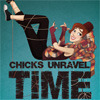
Chicks Unravel Time comes out in just a few days! Eee! I’m very excited. This book is bound to be really special. I’ve already had a sneak peek at a couple of the essays and I will predict that Doctor Who lovers will enjoy every page.
Some related events surrounding that. First, to get the bad news out of the way: I will not be attending Chicago TARDIS this year. I know, very sad! But family obligations + lack of money = no Tempest at the con. However, there will be a panel and signing and all of that with the fabulous editors, Deborah Stanish and L. M. Myles, plus many of the contributors. So if you can get to the con, go check it out!
Good news is that I will be at two more local reading/signing events!
The first is in Massachusetts near Boston, the second right here in my hometown of NYC. Details:
On Saturday, November 17th, Annie’s Bookstop of Worcester is holding an all-day Chicks Unravel Time event. I’ll be there alongside Jennifer Pelland, another of the book’s contributors, plus Katy Shuttleworth, cover artist extraordinaire. We’ll be reading, signing books, and hosting a roundtable discussion/Q&A. The store has promised us some surprises as well, and there will be tons of Doctor Who merchandise besides the book to peruse. So please do come!
Location: 65 James Street Worcester MA 01603
Time: 11/17 1PM – 6PM (come early for the reading/signings)
Next up: NYC Doctor Who shenanigans!
The Doctor Who NY group is hosting a reading/signing/book launch event at The Churchill, a pub that appears to be very fancy. This event is going to be loads of fun since both Deborah and Liz will be in town. Then Liz goes back to Scotland and we all cry.
There will also be copies and discussion of a couple of other recently published Doctor Who books that night as well. So overall it will be a big one for NYC Doctor Who fans.
Location: 45 East 28th St (near Park Avenue), New York, NY
Time: 11/28 6:30pm
Here’s a Facebook page for the event if you’d like to RSVP there.
Can’t come to either of these events? Sadness! But you know what you can do? You can pre-order your copy of Chicks Unravel Time. Yes, you can!
Chicks Unravel Time Readings & Signings in Worcester, MA & New York City is a post from: K. Tempest Bradford




October 19, 2012
Story Notes: Uncertainty Principle (from Diverse Energies)
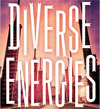
So I may have jumped the gun a bit early on the release date for Diverse Energies! However, according to the publisher, it is available now. And I’m seeing it in eBook format on Amazon and B&N, so I suspect print copies will be forthcoming very soon. Check your local, indie book sellers first!
I’m looking forward to hearing from people who read the stories to see what everyone thinks. Rachel Manija-Brown wrote a very thoughtful review here which then led into this post about dystopias and genre labels. One thing I find intriguing is that where Rahul Kanakia was told to write an SF action story, I was told to write a dystopia, yet his story is way more classic dystopia and mine has little shades of it but is more actiony.
Given the discussion on that post, I thought I’d give folks who read my story “Uncertainty Principle” a little peek into the background of it and my thinking around the whole dystopia thing.
As you might expect, these story notes are full of spoilers, so they’re going behind a cut. Don’t read unless you’ve read the story or don’t mind knowing some things about it! (also, ‘ware spoilers in the comments.)
Several people have already said: is this a novel? It should be a novel! When can I have this novel??
Pressure!
“Uncertainty Principle” was never meant to be a novel, but the world in which it exists is the world of the novel I’m currently writing which stars Viola and Sebastian. When I first came up with the idea I thought the story would just be something that happened off to the side. Now I think that Iliana will probably be the protagonist of the second book. She’s definitely destined to be an important character.
This should have been a surprise to me. The novel I’m writing started off as a very long story back when I was at Clarion West. It grew out of my interest in time travel and my frustration at how people deal with time travel in other science fiction shows and books.
The time travel aspects aren’t the main focus of this story, though. It grew out of my thinking about dystopias and what they are and mean. Like much good SF, dystopian futures are about the now expressed in a fiction about tomorrow. For me, though, dystopias are very much in the present.
Just ask anyone who lives in a low income neighborhood. Kids who grow up there see TV or advertisements or are just told about how the world is great, just look at all the technology we have now and the great media and the nice clothes with magical technology inside them. That these things are not universally available is rarely spoken about amongst the people who push this happy version of the world.
Thinking on that led to the idea that a dystopia is about perspective. Thus, I wanted to write about a character that loses the economic and social comfort she’s used to in ways that are far more obvious than less SFnal explorations would be.
Iliana’s basic experiences are actually based on something I witnessed over the course of my life in the neighborhood where my grandparents lived: Bond Hill in Cincinnati, Ohio. When they bought the house in the 60′s (I think) that area was a suburb of Cincinnati. The city expanded, thus making it just another neighborhood. One that was and is predominantly black.
When I was a kid Bond Hill was a safe place and I ran around with other kids my age freely. We had limits of how far we could go, but they were measured in blocks, not feet. By the time I reached high school things started to turn. Now there’s far more violence than I ever remembered and people on the corners and at the all night grocery dealing drugs.
Kids growing up in Bond Hill today will have a radically different experience than I did.
These were the kinds of things in my head as I wrote Uncertainty Principle. And initially it was a huge, sprawling thing all over the place. I didn’t quite know how I wanted to get from the beginning to the end I’d envisioned, so I wrote a lot of scenes and branched off in a lot of directions that eventually ended up being cut.
I felt sorry for poor Iliana as I wrote, because each time I realized that the scene I was writing or the way I’d envisioned the plot wouldn’t work and had to scrap it, I felt like I was doing to her exactly what the people messing with time were doing: constantly changing her timeline! Maybe someday I will post some of the extra scenes so you can imagine what might have happened.
I remember a few off the top of my head. There was a whole scene where she met other time walkers working with Viola and Sebastian. The longest is a version where she lived with Victor and Elena for several years and then Victor got cancer. Iliana doesn’t want to lose yet another father, and that’s when she decides to post the message that gets Viola’s attention.
Sometimes writing is like that in general. You have an idea and an outline and you write and write, then realize that something isn’t working or you have a better idea or you just need to tighten things up. It just wasn’t until writing this story that the process felt so much like messing with the character’s heads!
If you have any questions or comments about “Uncertainty Principle”, please leave them below. I love hearing from readers. Also, let me know what you think of the rest of the book!
Story Notes: Uncertainty Principle (from Diverse Energies) is a post from: K. Tempest Bradford




October 11, 2012
Fiction Favorites By The Numbers #1

I’ve been keeping track of all my favorite stories over on Delicious as well as here on the blog. Delicious is still one of the best public bookmarking tools around thanks to the tagging system, which is a little better than it was under Yahoo (finally, spaces!). Due to the way I’ve been tagging stories, I have some good data on them. Peeking in there just now revealed a few things that surprised me.
To start, if you’d asked me what my favorite online magazine is, I would have said Strange Horizons or Clarkesworld. However, a look at the numbers reveals that of the 55 stories published in 2012 that I liked, Lightspeed published most of them (14, to be exact). Clarkesworld is a close second with 11 liked stories. Then after that Strange Horizons and Apex Magazine tie at 6 with Electric Velocipede right behind them with 5. Apparently, my tastes match up with John Joseph Adams’ pretty regularly.
Here are all the magazine numbers in helpful chart format:

click to embiggen
Some magazines have lower numbers because they don’t publish as often, but I’m a little sad for Tor.com.
I also track genre data and find that I like SF and Fantasy about evenly (27 and 24 stories, respectively) with a small smattering of horror. Very small. Of the 55 stories, 44 are by women and 14 by authors of color. Obviously there’s some overlap.
I’ll crunch these numbers again at the end of the year to see if anything shifts.I may also go a bit insane and calculate, based on number of stories published total and the number I liked if Lightspeed is still a favorite based on proportion. If a magazine publishes 12 stories a year and I like 5 vs one that pubs 50 stories a year and I like 10, the first one is obviously closer to my tastes.
Any of you out there keeping track of which magazines usually publish stuff that satisfies you in any kind of empirical way?
Fiction Favorites By The Numbers #1 is a post from: K. Tempest Bradford




October 10, 2012
My Favorite Fiction from September 2012
This month, the list is rather long. This explains my lateness in putting up this post (sort of… I’m also lazy!). I discovered a cache of new magazines this month, thus adding greatly to the number of stories I read and liked.
Several weeks ago I lamented about the fact that there weren’t many markets for long stories such as novellas and novelettes. As a result, people kept suggesting markets to me. I was reminded that Electric Velocipede takes longer stuff, and introduced to GigaNotoSaurus and The Red Penny Papers, which both take novelettes. I’ll put up a post later this week with a longer list.
As always, I welcome any discussion of these stories in the comments. let me know if you liked them or not and why an feel free to tell me I’m wrong and have bad taste! Also, consider dropping a comment where the option is available on the original stories.
Breaking the Frame by Kat Howard
There are a million post modern, female centric takes on fairy tales out there, but I particularly like the frame (hahaha) Howard uses for this story. At first I was not down with the cliched relationship at the beginning, then I realized the author was doing that for more than just hipster irony. Highly recommended.
Cutting by Ken Liu
Stories that require a particular kind of layout can be difficult to do well without seeming gimmicky. No surprise that this is not the case for Ken Liu. Short and amazing.
The Last Supper by Scott Edelman
This is one of the best zombie stories I’ve ever read. I’m not that into zombies, so my view may be skewed. However, I love the POV here and how Edelman is able to bring all this tension and foster engagement with a character that should be really boring and tedious.
muo-ka’s Child by Indrapramit Das
Touching first contact story that takes a different angle than most. Again, I really like stories where the aliens are SO very alien.
Mrs. Henderson’s Cemetery Dance by Carrie Cuinn
I had no idea where this story was going when I started, but I loved where it ended up. Funny and touching.
The Harpy by Laura Heron
Another story that hits many of my kinks. Kinks include dudes who leave their wives for younger women getting what they deserve. Also: women finding their crone power.
Sexagesimal by Katharine E.K. Duckett
Duckett’s vision of the afterlife pulled me in, but the ending is what completely sold me on this story.
The 17th Contest of Body Artistry by Alex Dally MacFarlane
Obviously, I’m a fan of stories that take some format other than a straight up narrative, so this one hits my kink in that arena. Plus, it’s just very good and once again has me thinking about aspects of my own worldbuilding. The things that can be revealed about a culture from such things as an art contest and how people react to it is many and varied. Lovity love.
Night’s Slow Poison by Ann Leckie
A story about a boring 6 month trip through dead space on a small ship might be super boring itself in the hands of a less skilled author. Instead, Leckie nails it.
Secrets of the Sea by Jennifer Marie Brissett
Touching story that centers on a father/son relationship. Its all blendy with the SF and fantasy, though perhaps if you ask Jenn she would say it’s all SF.
Garlic Squash by Nicki Vardon
This one is just a lot of fun, especially for those of you tired of people falling in love with sexy vampires. They are not sexy!
On Higher Ground by Annie Bellet
Normally, I don’t care for stories about sports or where the protagonist is super interested in a sport. But, I have to admit that the author’s descriptions of skiing were so beautiful that I almost wanted to go out and learn to ski. People who are fans of high class sports and the ridiculousness corporateness of them will like this.
Je me souviens by Su J. Sokol
Trigger warning: rape and child abuse. This one got a little rambly in the middle, but really resonated with me in the end. I particularly enjoyed the relationship between the father and son. I also like that it can be read as speculative or not.
Heaven Under Earth by Aliette de Bodard
The story as a whole didn’t do it for me as much as I hoped it would in the beginning and middle bits. I am very much enamored with the worldbuilding and the gender politics at play. Would love to discuss such with other folks who read this.
The Fourth Exam by Dorothy Yarros
Political intrigue! I’m not usually a fan of that, but this pulled me in. Unfortunately, the story feels more like the backstory to a fantastic novel about a political coup and the bureaucrats caught in the middle of the struggle than a standalone. At the end I felt very much like I’d read a prologue.
Visit my Favorite Fiction tag to see all the other short stories I’ve liked so far this year.
My Favorite Fiction from September 2012 is a post from: K. Tempest Bradford