
Keris Stainton's Blog, page 27
November 9, 2012
A room of one’s own (sort of)
I thought of it when I woke up in the middle of the night and was pondering what to do with the enormous cardboard boxes our new bed came in. I thought of a den. I thought about poking some holes in it and sticking fairy lights through them. Like a treehouse, I thought. The next day, I shoved the two sofas together and “built” it.

“It’s not a treehouse,” my boys said. “Because it’s not in a tree.” They still like it, but they’ve been calling it a tent.
“We’re not leaving it up after they go to bed,” David said. I told him we could pretend we were camping and sleeping under the stars. We put the campfire [electric fire] on nearby and watched The Daily Show Election Special.
Today, I got in with my laptop and called it my writing den.

Maybe we won’t ever take it down…


November 8, 2012
Mah Na Mah Huh?
I just found this photo of the female reproductive system (for a post I’m writing)
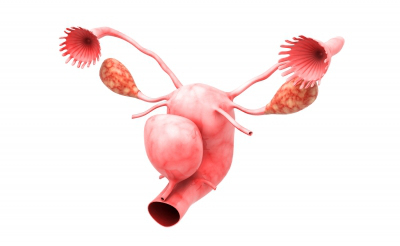
and it reminded me of something…

Top image courtesy of dream designs / FreeDigitalPhotos.net


November 7, 2012
Day 7-13: Researching your novel
 Huh. Looks like I’m going to get a week off. I’ve already done the research I need to do for the first draft. The book is set in Paris, so research has mainly consisted of watching films/TV shows set in Paris (plus the main character is the lead in a TV show, so I’ve also watched a couple of films like hers), listening to French music and eating French food.
I did the same thing for Jessie Hearts NYC, Emma Hearts LA and Milly Hearts Italy (which I wrote while waiting for my publishers to get back to me re Emma Hearts LA and ended up really loving).
In fact, research is probably the best thing about writing books set in other countries. As I’ve mentioned, actually going to LA for Emma Hearts LA was invaluable and I’m still annoyed I didn’t get to go to New York to research Jessie (I’ve been there five times, so it didn’t seem essential, but I still can’t believe I haven’t been to the area Jessie lives in – I quite often dream I’m there, looking around).
I’m lucky to have been to Paris a few times so I don’t feel I need to go at this stage. The problem I had with LA was that I barely had any mental picture of it at all and Google didn’t really help. (I wrote the first draft of Milly – most of which is set in Rome – without ever having been to Rome, but I’d definitely need to go before finishing the book.)
Actually, there is a book I need to read, a film I meant to watch (and another I want to rewatch) and, you know, I haven’t had any French wine for a while… That’ll keep me busy this week.
When do you do your research?


November 6, 2012
Day 6: miscellaneous scene notes and closing scene notes
Turned out the summary outline was pretty helpful. I don’t have anything like a full outline yet, but I do have a few more details added to the synopsis in the right order and I think I’ve got the Crusie-style turning points sorted too. Result.
Today is all about miscellaneous scene notes and closing scene notes and instantly made me feel better since it starts with “Inevitably, as you’re working on a brand-new story, you’re going to hit a snag in the summary outline, where you don’t know what should happen for many scenes in a row.” I’m glad to hear it. It was really starting to sound like Wiesner expected me to know every little detail.
All I did today was add (to the summary outline) a few images/sketches I’ve had in my head. No idea what they’re for, where they’ll go or if they’ll end up in the book at all, but at least now they’re out of my head and on paper.


November 5, 2012
Homeschooling Harry: Being wrong**
 So in my last post I wrote about Maths and how I don’t know my times tables and I gave an example of how I work them out and I got the answer wrong. I had meant to check the answer before posting, because while I’m ok with (some) mental arithmetic, I do doubt myself (um, with good reason, obviously), but I forgot. I realised I was wrong when a couple of people tweeted me and then a friend left a comment and they were all very sweet about it. I was a bit embarrassed, but not, you know, totally humiliated and it made me think about being comfortable being wrong.
When I was at school, if the teacher had shouted out 8 x 7 and asked people to answer, I wouldn’t have answered in case I’d been wrong. Because if I’d been wrong, people would’ve laughed. Or the teacher would’ve said, “Wrong!” and I’d have been mortified.
Even later, when I was at work, I’d think of something in a meeting and go over and over it in my head for possible weaknesses (“Is this too obvious?” “Is it just stupid?”) and end up not saying it only to hear someone else (usually a man) come out with it and be praised.
Recently, we were in the park and I mentioned something to the boys about the molehills everywhere. I said something about a mole popping his head out and looking around, then going back inside. Joe jumped on one (inevitably) and I said, “The mole will think someone’s knocking on his door!” David said, “That’s not the mole’s door!” I said obviously I knew it wasn’t a door – duh – but it’s where the mole goes in and out, so… David said did I really think that’s what a molehill was. I said, “Isn’t it?” He said, “You really think that?!” and rolled his eyes and sighed and basically got all dramatic. I said, “Well what is it then?” He said, “I can’t believe you don’t know!” (Seventeen years of marriage, folks!) (I think he said it’s just where they pop out to look around before going back in again, but, pfft, who cares? I much prefer to think of it as the mole’s front door.)
Later, I has a go at him for it. If one of the boys had called it the mole’s front door* would he have mocked them like that? And refused to tell them what it was really? So why is it okay to speak to me like that or expect me to know? (God knows, I thought a mole was about the size of a small rabbit until I saw one in a museum in my twenties. They’re freakin’ TINY!) Everyone can’t know everything. And if someone doesn’t know something, why not tell them – or help them learn – rather than taking the piss?
(I’m guilty of it too. I worked with a woman who one day said something about “inside the earth where we all live…” After the stunned silence and the “You… Wait… What now?” we all took the piss.)
My point is that there’s no shame (or, um, not much) in not knowing something or being wrong, but a blog post by the comedian Robin Ince expresses it so, so much better than I have. You should read the whole thing, but this is my favourite bit:
There should be no shame in being inquisitive, unless your inquisitiveness involves placing video cameras in a public toilet or being overly enthusiastic in prodding dog faeces with your bare hands, but the older we become, the more we seem embarrassed to have questions. Once our schooling is finished, so our questioning must end. It seems better to appear knowledgeable and remain ignorant, than to admit to any limitations.
And also:
Rather than constantly changing what children learn with faddy curriculum changes, it might be better to think of how they learn and what they are learning for – is it to know, or is it to understand?
One of the things I hope to achieve with homeschooling is for Harry never to be afraid to ask questions or to question the things he’s told.
* Is it just me or has that started to sound like a euphemism?
** This post was originally called ‘Being right’ because I was originally planning to write about something quite different. Heh.


November 4, 2012
Days 4 and 5: the summary outline
 So apparently I’m supposed to spend two days on the summary outline and the end of which I should have been able to “brainstorm enough to fill a few pages”. This seems unlikely.
I have got the synopsis, so I’m going to have a look at that later and see if I can expand on it at all using the notes I’ve made over the last few days, but I’d be surprised if that takes me to two pages even. (And, yes, I probably should have waited to write this post until after I’ve done that, but I’m feeling very Sundayish and if I left it until later, I probably wouldn’t manage it.)
I must admit that this is a headscratcher for me:
Don’t feel that your summary outline has to be entirely cohesive. You may realise as you’re writing that you’re not sure what the next scene really needs to include. It’s fine to write yourself a note within your summary outline – “scene here?” – and then move on with the story.
“Scene here?” in the outline? I’ve been known to write “scene here” or “something should happen here” or “WHAT THE HELL HAPPENS HERE?!” in the actual first draft (or even the second), never mind the outline. Are there really people who know what will happen in every scene of the book before they start writing it? Blimey.


52 Books: The Lover’s Dictionary by David Levithan
 On holiday last week I struggled to read. I’m not really sure why – unless it is as simple as the constant availability of Twitter/email/Facebook/Pinterest/Google Reader on the iPad has in fact destroyed my attention span – but I found myself only reading ebook samples and magazines, and starting books I found I wasn’t really that interested in after all.
I bought The Lover’s Dictionary ages ago in, I think, a Kindle sale. I’ve read and loved a few David Levithan books and this one looked particularly interesting, as it’s written as a series of dictionary definitions (in alphabetical order, so not an entirely linear narrative). The Lover’s Dictionary is adult though, not YA.
I started it on Friday evening simply because it was the next book in line on the Kindle (app) and I thought my frazzled brain could maybe manage the choppy style of the text. And then I didn’t want to put it down. I read to about halfway, but had to admit defeat and go to sleep.
At about half one, Harry woke me up because he’d been sick all over his bed. Once I’d settled him in my bed, stripped his bed, washed sick off the six toys he had in bed with him and fetched him a glass of water and a bucket in case it happened again, I found I couldn’t get back to sleep. So I read the rest of the book. And I haven’t been able to stop thinking about it since.


November 3, 2012
Day 3: plot sketches
Gah. Plot sketches. Day 3 looks at the following:
• story goal (or theme)
• subplot threads
• plot tension
• release
• downtime
• black moment (or climax)
• resolution
That makes me itch. Part of my problem is that I never really know what the theme is until I’ve finished the first draft. But that’s okay, I can start with one theme in mind but expect a totally different theme to appear later. For ‘release’ ‘downtime’ ‘black moment (or climax)’ and ‘resolution’ I read ‘blah’ ‘blah’ ‘blah’ and ‘blah’.
I made a few notes, but there really wasn’t anything I didn’t already know and I did it reluctantly. I just don’t get how you would know any of this before starting to write.
One of the things that did help me with my (very) vague attempts at plotting was Jennifer Crusie’s Turning Points advice. Crusie is very hot on the kind of writing terminology that I react to very badly (see above!) and you’ll see she mentions protagonist/antagonist right up front in that post, but skip past that (or, you know, read it if you’re more grown up than me) to the actual turning points bit and see if you find it useful. I can actually see it being particularly helpful with this book.


November 2, 2012
Day 2: Setting sketches and research strategies
This was an easy one, since I’ve already made notes on setting.
I found Rebecca’s apartment via AirBnB and followed her route to work on Google Maps. The internet is brilliant for this kind of research (how did authors do it before, I wonder…), but I learned from researching Emma Hearts LA that a research trip is essential.
I’d kind of thought beforehand that the point of the trip was checking and confirming practical details – like how Emma would get from the boardwalk to the pier, etc. – I had no idea how much the places we visited would inspire and feed into the book. Plus, it was the best fun ever, obv.


