
Ted Conover's Blog, page 5
November 21, 2011
Warm/Cold Turkey Breast
On Thanksgiving, I will be among the millions of Americans who have the somewhat unpleasant experience of handling a raw turkey, recently out of the refrigerator, relieved of its plastic coating. Somebody has to rinse the big clammy thing, pat it dry with paper towel, and otherwise prepare it for the oven. In our family, that person is me.
Every time I do, I think of Tess. Tess was a turkey that our neighbors in New Hampshire found walking down the road. She was a domestic turkey, not a wild one, and she had evidently been hit by a car, which messed up a bunch of her feathers. The neighbors nursed her to health and she lived several more months.
You could see Tess in their yard from the road, and one day we stopped for a better look. She stood near Sandy, who was gardening; Sandy explained that Tess followed her everywhere. She encouraged our kids to stroke her feathers and big soft blue-red wattle, which evidently changed colors with the turkey's mood. We noticed that Tess had a long, coarse beard–turkeys have so many interesting parts. Finally she suggested reaching down to touch the bald spot on Tess's breast. It was a round patch, about four inches wide, where the feathers had not grown back, and what I'll never forget was how warm Tess's skin felt. It was pale and stippled with feather follicles like the skin of a Thanksgiving turkey, but otherwise it was completely different: it felt good to touch.

I suppose the story could end here, with a reflection on how Tess makes me feel bad to eat turkey. That's true to some extent. But I love eating turkey, and it would be truer to say that Tess makes me appreciate my meal: behind the cold carcass that I cook was a creature that was warm already. I try to honor it by cooking it right.
* * *
The feel of Tess makes me think of something else that is both edible and unexpectedly warm.
In New York we often shop at the Fairway market's Harlem location, at West 132th Street and the West Side Highway. This is a great place, chaotic and usually crowded, but eccentric and full of thousands of good things to eat. It has a famous produce section, a large "cold room" containing meat, fish, dairy, beer, etc. (and a wall of jackets on hooks you can borrow to wear in the cold room, if you didn't bring one), a heavenly coffee section, a cheese counter, etc. Between the fresh bagels and the barrels of olives is a station where, all day long, one or two employees make fresh mozzarella cheese. It is sold in balls, salted or unsalted. As soon as a ball is ready, it is wrapped in plastic, slapped with a label, and placed on a tray in front of them, where customers can take it.
It's so warm that the plastic wrap around it blows up slightly with air, balloon-style. Until my wife brought home the first ball of fresh mozzarella, I had no idea that cheese, like turkey skin, was ever warm. She unwrapped it, put it on the cutting board, and sliced a piece for me. As she did, a bit of milk seeped out. One slice was not nearly enough. I ate another piece, and another, and another. Refrigerating what's left takes out a good deal of the glory of the cheese.

So here's what to do next time you're in that part of New York. Bring a small knife. Go to Fairway, buy the cheese and, say, a fresh baguette. Then take them outside—there's a newish park next to the Hudson River. If it's cold the cheese will warm you up; in any event it will cheer you. My son saw a big splash out there in the river one day when he was little and swore it was a whale. This is unlikely but it reminds us of an amazing fact: that the ocean is traversed by mammals, warmth where you least expect it.


September 27, 2011
The Fair Ophelia
Some of my subjects, I admit, are a bit dark. But this one is the opposite. I first came upon Ophelia Dahl in Tracy Kidder's book, Mountains Beyond Mountains: The Quest of Dr. Paul Farmer, a Man Who Would Cure the World. (I had met Farmer while researching the story of Christy Mirach in the early 90s–see my previous blog post for more.) The daughter of author Roald Dahl, Ophelia went to Haiti in the 1980s to volunteer with an eye care charity. She met Farmer, and fell in love with Haiti and with him. Together they helped found Partners in Health, the groundbreaking NGO.
Dr. Jim Yong Kim, the president of Dartmouth College, told me that Ophelia is "one of the great human beings walking the earth right now."  I thought she deserved her own piece of writing, and today I published it, as a Kindle Single. (That's the amazon store, new this year, for pieces of writing that are longer than a typical article but shorter than a book.) It's my first piece ever to have a digital debut. Please check it out–only 99¢!–and submit a review if you're moved, as I was, by Ophelia's story.
(You don't need a Kindle to read this piece. Amazon also lets you read it on the web or on your computer, iPad, or other device.)
September 13, 2011
Girl, Grown Up
In 1994 I published an article in the New York Times Magazine called "The Hand-Off." It was about the search of a young mother with AIDS, Evelyn Mirach, for someone to become guardian of her daughter, Carmen (nicknamed Christie), age 11, once Evelyn died. (This was before the advent of anti-retroviral drugs to treat the disease.)
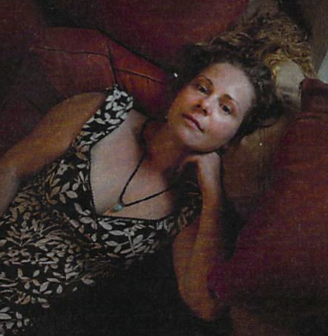
Last month the magazine did an update on Carmen, as well as on eight other people who were the subjects of iconic photos from the magazine's past. Scott Thode, the photographer I worked with on the project, took a current photo of Carmen Mirach, now 28, in her Brooklyn apartment. An accompanying narrative, in Carmen's words, brings readers up to date on her life. (See the slideshow and read about her here.)
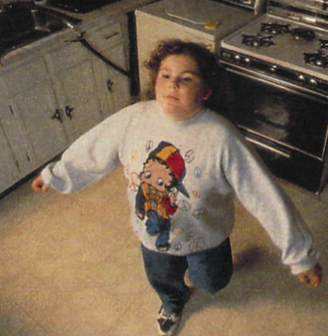
I never expected Carmen to grow up pretty. She has had so much to contend with in life. But in Scott's photo—again set at home, this one evidently comfortable, peaceful-looking— I think you'll agree, she's beautiful.
August 7, 2011
Miles-stone
Last Sunday was my friend Rick's birthday. But two weeks earlier, his car's odometer reached 200,000. Which matters more?
I know about the miles because he took a picture of the zeroes turning with his BlackBerry and sent it to me. I imagine he did that because the car used to be mine. It's a 1995 Honda Accord EX wagon; my wife and I got it new. Rick took possession at 90,000-some miles, and drove it home to North Carolina. And has driven it and driven it and driven it since.
He told me that a bit of leaking oil is the car's only real problem.
I admire him for this, in part the way I admire people like cab drivers on the West Bank who keep their old Mercedes wagons going and going and going–far beyond 200,000 miles, I would guess. I imagine that driving a car this long is a more "green" thing to do than driving a hybrid car, which I do. If I'd kept the Honda, the earth would have been spared the manufacture of my current car.

the wheels in motion
As people who drive a lot, we measure our lives in miles to some extent. Rick has had a lot of old cars. In fact, at his rehearsal dinner, I toasted him by remembering several, chief among them the AMC Gremlin. The Gremlin would not shift into reverse, and so Rick tried hard to avoid any situation that might require it, such as driveways and parallel parking–in fact, most parking–because to move the car backwards, he'd have to put it in neutral, climb out of the driver's seat, and push it backwards while trying to steer.
But Rick's ownership of the Accord is, to me, a measure of his constancy. We go back to college; he took the author photo of me for my book Coyotes. He keeps things a long time.
June 20, 2011
Of drones and dragons
Sometimes when I'm writing I get behind on my movie viewing, and so it was only recently that I got to watch "How to Train Your Dragon," a movie recommended by my son. The premise of the animated film is this: Viking-like villagers on a Norse island are plagued by visitations of flying dragons. The dragons arrive in a swarm, snatching up sheep, blowing balls of fire, and generally wreaking havoc. As the town's leading warriors resolve to attack the problem at its source–a mysterious, far-away, island lair from which the dragons originate–a boy discovers a wounded dragon by a pond. And not just any dragon: a Night Fury, the most dangerous and deadly sort. Night Furies fly faster than all the others, so fast that they are practically invisible. The boy ends up taming the dragon to a certain extent, and flying it to the Great Lair just as the warriors have arrived in their little boats …

Am I the only one to have noticed the similarities between the Night Fury dragon and the CIA's Predator drone aircraft? Drones, which have been deployed by the United States in northern Pakistan, Afghanistan, Iraq, Yemen, and Libya (and by Israel in Gaza), are the main weaponry we deploy against the Taliban and al Qaeda. A fascinating piece in today's New York Times describes the spread of portable Raven drones—which soldiers launch by hand—and the ongoing efforts to make drones that are the size of small birds, or even insects.
Despite their technical sophistication, drones kill a lot of people unintentionally. According to a 2009 report from the Brookings Institute, in Pakistan about ten civilians die for every targeted militant; a recent study lists the total number of casualties there since 2004 as somewhere between 1,459 and 2,319.

Using cameras that beam detailed images to their operators, the drones hang in the sky far above a target, sometimes for hours. Apparently they are sometimes audible on the ground, if not visible; always, they are beyond the reach of low-tech weaponry. According to an article by Jane Mayer last year in the New Yorker, the drones' operators are usually not in the Middle East at all but in cubicles back in Langley, Virginia. The technician who pushes the button that launches the missile is on the other side of the globe.
There is outrage and fear in the tribal areas that see the most drone attacks; the missile strikes have become a major point of contention between the United States and Pakistan. I'd been reading about this around the time I finally watched "How to Train Your Dragon." And at the end, when the Vikings and their boy hero triumphantly demolish the Great Lair, my mind turned to this: somebody in South Asia or the Middle East is thinking very hard about that cubicle in Langley.
April 29, 2011
A sweet new lit mag
As literature struggles to retain its place of importance in our cultural life, it's thrilling to see the birth of a new and serious magazine. The first issue of The Common, just released, is beautiful to look at, inspiring to read – and now on sale in better book stores! The Common also has an online presence, here.
The journal's title and mission come from blending the idea that literature is rightly about "finding the extraordinary in the common" with the notion of the town common as a place to gather and exchange ideas. Editor Jennifer Acker writes that they seek "a modern sense of place."
That idea is close to my heart and I am delighted to have my meditation on an abandoned route in New Hampshire, Brown Road, appear as the first piece of the new issue. I'll be reading from "Brown Road" at a launch event for The Common in Brooklyn on May 7 – drop by if you're in the area.

April 26, 2011
Sleeping soldiers
Last week Tim Hetherington was killed in Libya. Hetherington was a British photographer who lived in New York. With Sebastian Junger, he made "Restrepo," the documentary about American soldiers at a remote, harrowed post in Afghanistan which was nominated for an Oscar.
It's a huge loss, to journalism and to all of us. I thought "Restrepo" was deeply impressive but you don't need to watch it to get a sense of the artistry of Tim Hetherington.
As I write this, his web site is still up. If you have just a little time, go there and look at some of his still photos. I think my favorites are the ones of sleeping soldiers. We're all used to images of soldiers in action. Seeing them asleep, in these photos, I found very moving. (To view these, click on any of the row of dots that is second from the bottom.)

Here are two posts from New York Magazine about Hetherington's death, and the wake held at Junger's bar.
March 1, 2011
Now in paperback
My latest book, The Routes of Man, is now out in paperback, sporting a beautiful new cover and an improved subtitle: Travels in the Paved World. It is available at neighborhood and online bookstores, and also as a Kindle book and an audio book.

Now in paperback!
My latest book, The Routes of Man, is now out in paperback, sporting a beautiful new cover and a new and improved subtitle: Travels in the Paved World. It is available at neighborhood and online bookstores, and also as Kindle book and an audio book.
December 15, 2010
127 Hours, Aspen, and Me
Recently the wife and I went to see "127 Hours," Danny Boyle's film about the real-life misadventure of mountaineer Aron Ralston. Ralston, as movieogers know, was solo hiking in a canyon in Utah when his arm got trapped beneath a boulder. In order to save his life, he had to leave his arm behind.
The separation of Ralston from his arm is a grisly, existential nightmare that I might not have chosen to see had the movie not gotten good reviews — and had I not written about outdoor adventure and death in my book, Whiteout: Lost in Aspen. My chapter, "The Chances You Take," opens with my friend, Seth, returning home one lovely summer day to inform me that his hiking partner, the physicist Heinz Pagels, has fallen near the summit of 14,018-foot Pyramid Peak. The rescue team is assembling and he is to return in two hours; I drive him.
Heinz, tragically, died in the accident. So do six-to-eight other people pursuing outdoor recreation every year around Aspen, mostly young men. These are not the sort of guys who wait all week to watch a weekend ball game or tennis match on TV—they are after non-vicarious experience. The county coroner told me that Aspen's was "a weird population—the percentage of death from fatal injury to illness is skewed." In other words, more die while pursuing risky outdoor sports than would in a more ordinary kind of town.

oops
One of them was nearly Aron Ralston, who worked not in a city, as the movie suggests, but at an Aspen sporting goods shop called The Ute Mountaineer. I read his memoir, Between a Rock and a Hard Place, when it came out in 2004—another reason I thought I should see the movie.
I wish I hadn't. Boyle's "Trainspotting" had horrific scenes of heroin addicts going cold turkey, and I'm one of the few people I know who didn't make it through "Slumdog Millionaire"—the scene of the orphan being blinded by his handler was the last one I could watch. I had to look away once James Franco began to self-mutilate in earnest, but it was kind of interesting to see how many of my fellow theater-goers did the same, while others stayed glued to the screen (including the two elementary school-aged boys near the front with their dad).

I wasn't the worst, though. Right after Franco had said goodbye to ulna and radius, just when I thought it was safe to turn back toward the screen, we heard strange gurgling sounds and the young man seated directly in front of us stood up and said, "Help! Help me!" We looked: the woman next to him was arched backward over the armrest, having convulsions. I stood up and called out, "Is there a doctor here?" Nobody replied. The movie played on. I called 911. A few of minutes later, the projectionist finally stopped the movie.
While a couple of people tended to the victim and everyone waited for the paramedics, a patron a few seats away Googled "127 hours seizures fainting" on her iPhone. "Hey," she said. "This has happened to a lot of other people!"
So what do we call a film about self-injury that itself causes injury?

Ted Conover's Blog

- Ted Conover's profile
- 253 followers

