
Ted Conover's Blog, page 3
February 23, 2017
Talk & Book Signing
[words] Bookstore, 179 Maplewood Avenue, Maplewood, NJ 07040
To book an appearance, please email Jodi Solomon Speakers, or call them at (617) 266-3450.
The post Talk & Book Signing appeared first on Ted Conover.


February 20, 2017
Thinking Like a Social Scientist, Writing Like a Journalist
To book an appearance, please email Jodi Solomon Speakers, or call them at (617) 266-3450.
The post Thinking Like a Social Scientist, Writing Like a Journalist appeared first on Ted Conover.
February 8, 2017
Shane Bauer in Conversation with Ted Conover
NYU Arthur L Carter Journalism Institute, 20 Cooper Sq., 7th fl Common, New York, NY 10003
To book an appearance, please email Jodi Solomon Speakers, or call them at (617) 266-3450.
The post Shane Bauer in Conversation with Ted Conover appeared first on Ted Conover.
October 23, 2016
Getting Immersed
My new book, Immersion: A Writer’s Guide to Going Deep, is just out. It’s about the kind of writing I’m best known for, where the writer learns by placing himself in the world of his subjects for a time. I talk about gaining access, handling yourself once “inside,” turning experience into story, the special case of undercover reporting, and the ethical issues that surround this kind of longform nonfiction.
Immersion (order yours now!) is full of stories from my own books and articles and from great writers I admire. I’ll share some of these tales at book events at the Tattered Cover in Denver, Book Culture on the Upper West Side, the Meg Cohen Design Shop in Soho, and other spots in the coming weeks, on my events page. For the latest news, follow me on or Twitter.

August 13, 2016
Going Off-Assignment
For years journalists were taught to leave themselves out of the story. Often that’s still a good idea, but in other cases there is an untold story-behind-the-story that is well worth telling.
Lately I’ve been working with a web startup, Off Assignment, that wants to bring to light more of these writers’ stories. This week they published one I wrote for them. “My Guantánamo, and Theirs” tells what it’s like to report under conditions of extreme control at the prison camp, which I’ve done twice now (here and here). A bonus is an interview with a talented and feisty photographer, René Clement, who was also part of my latest group, and whose great photos accompany the story. There’s also an audio interview with me.
September 16, 2015
Creatures Great & Small
When I became a USDA meat inspector, I was puzzled that my supervisors were veterinarians. People didn’t head to vet school to oversee slaughter, did they? I started talking to vets who still worked with large animals, and one in particular who helped me to understand how changes in agriculture have changed everything for country vets.
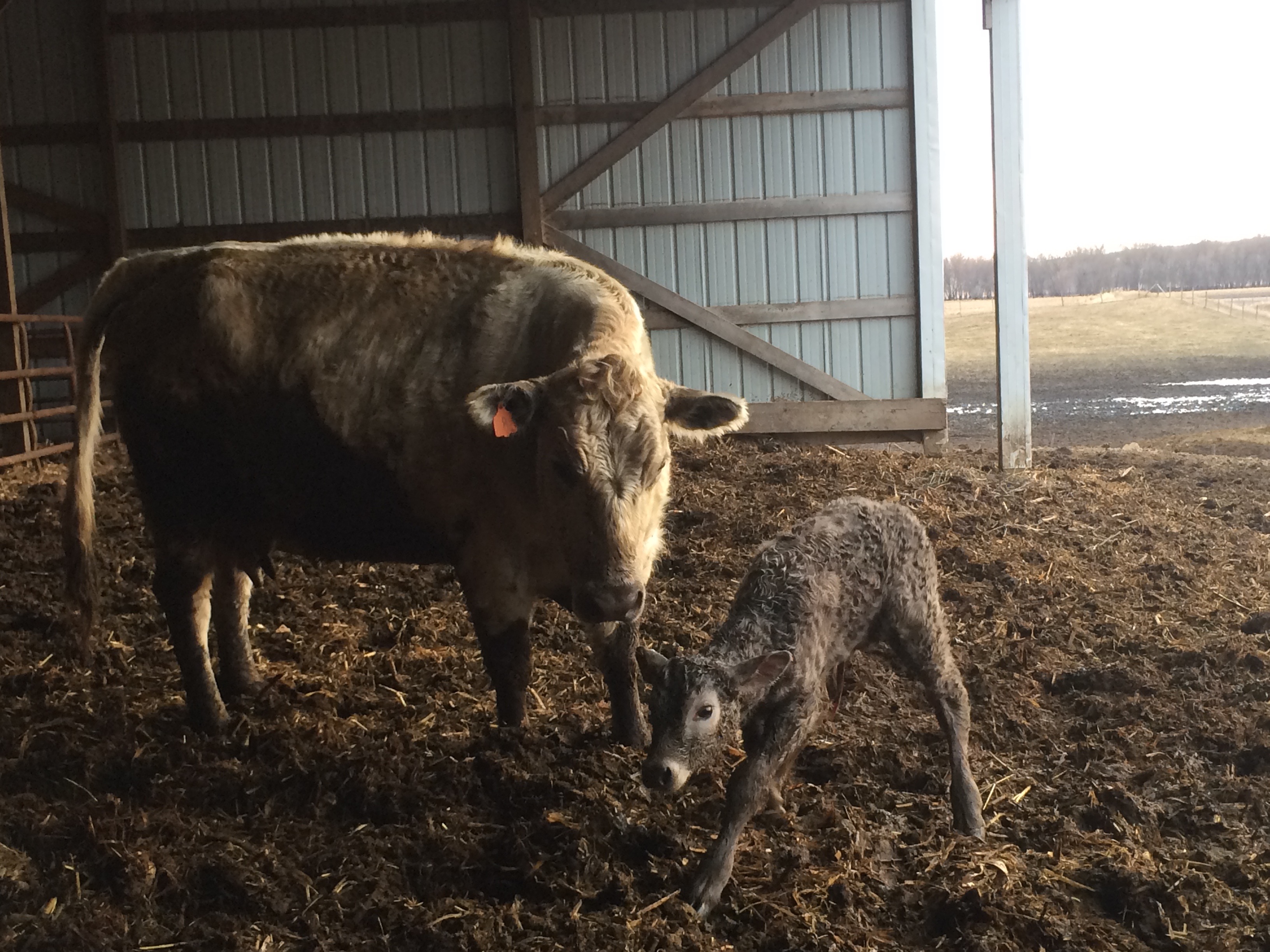
Buttercup and her new calf.
In my latest article, “Cattle Calls,” a young veterinarian in Iowa, Zach Vosburg, is trying to make a go of it the old-fashioned way. But things have changed. The pigs and chickens looked after by his mentor, for example, have left the farm for giant sheds (also known as CAFO’s, Concentrated Animal Feeding Operations), owned by corporations which employ their own specialist veterinarians. In Vosburg’s Iowa, farm traditions meet the latest ag science, and animals and people struggle to adapt.
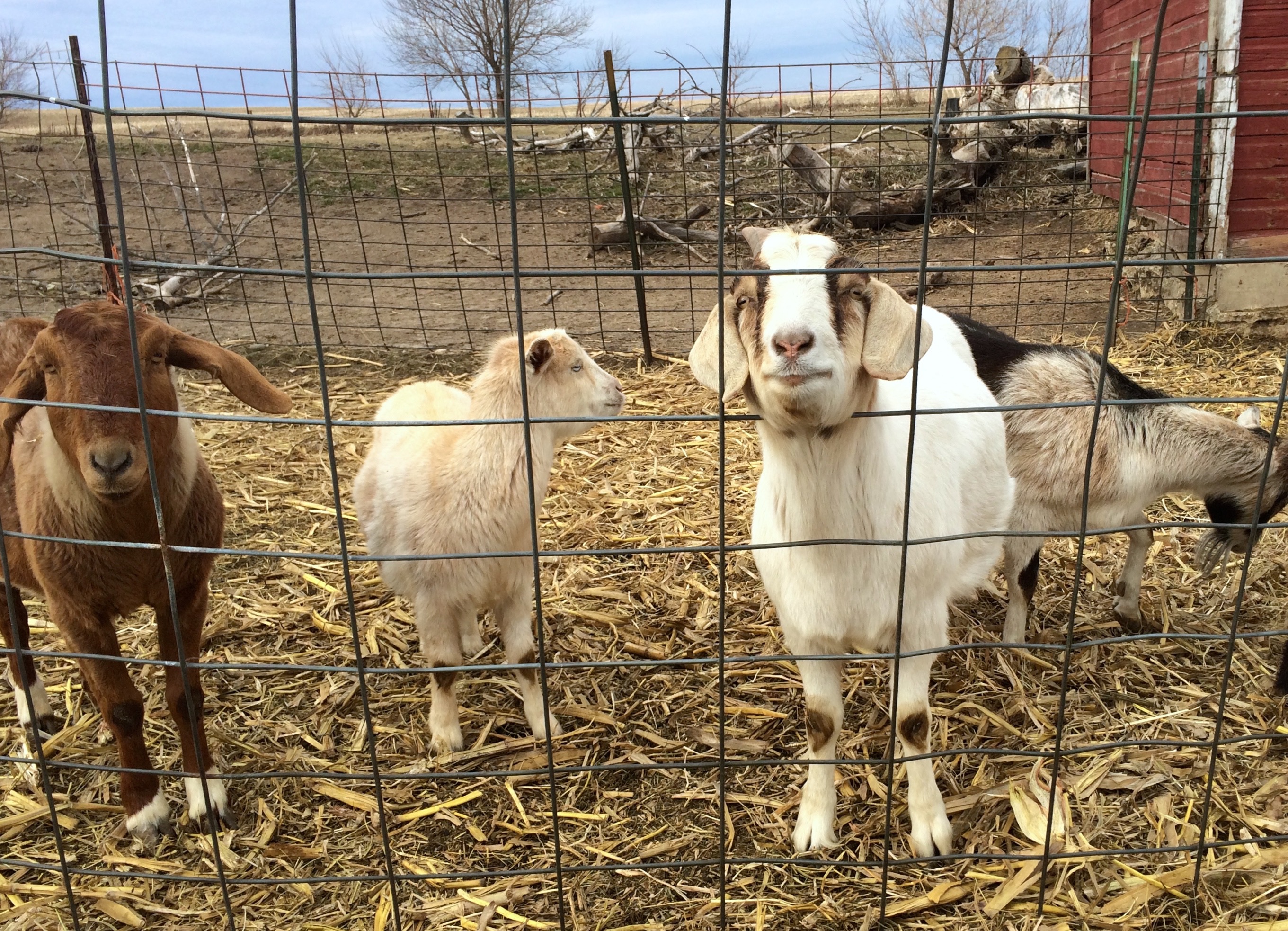
Goats on the Vosburg farm.
January 17, 2015
Defining Indefinite
Last January, at the prison camp at Guantánamo Bay, the admiral in charge tapped his chair and told me that “Twelve years ago, none of us thought that anybody would still be sitting here today.” Visiting journalists didn’t seem to think so, either. Early on the whole affair had a stopgap, seat-of-the-pants feel about it. As I write this month for Vanity Fair, Camp X-Ray, Gitmo’s first containment for prisoners of the war on terror, looked like a kennel complex for very large dogs. By 2003, when I first visited, it had already been abandoned. And today, the replacement facilities I saw then have also been abandoned. I’ve always found the sight of an abandoned prison pleasing, but unfortunately at Guantánamo, the newest prisons, known as Camp 5 and Camp 6, are solid, expensive constructions that look disturbingly early in their lifespans.

Inside Camp 5
Though President Obama has released 33 prisoners in the past year, it appears that the outflow—all of them prisoners who were cleared for release years ago—may soon be curtailed. In addition to political opposition, a core problem is that Guantánamo has at least 35 “forever” prisoners, men the U.S. deems too dangerous to release but is reluctant to try in court. As explained in this article, two dozen more “remain in legal limbo, recommended for trial by a federal task force five years ago but not yet charged.”
What I saw during my most recent trip is how Guantánamo has taken the already-extreme practices of punitive confinement on the mainland, and extended them. To get Guantánamo, you take a supermax (solitary confinement) prison, such as 44 states now have, and subtract the idea of terms and sentences — of a release date. My new article is here.
November 21, 2014
Amazing Guy, Gone But Remembered
Matthew Power was a fantastic journalist and a friend of mine. A Vermonter who graduated from Middlebury College, he got assigned to my nonfiction writing workshop at the Bread Loaf Writers’ Conference in 2004, where he was overqualified. The manuscript he brought to share was a piece he had just published in The Believer, about a possible “lost tribe” of Jews in India. It was already in great shape and I don’t know how much he got out of the workshop.
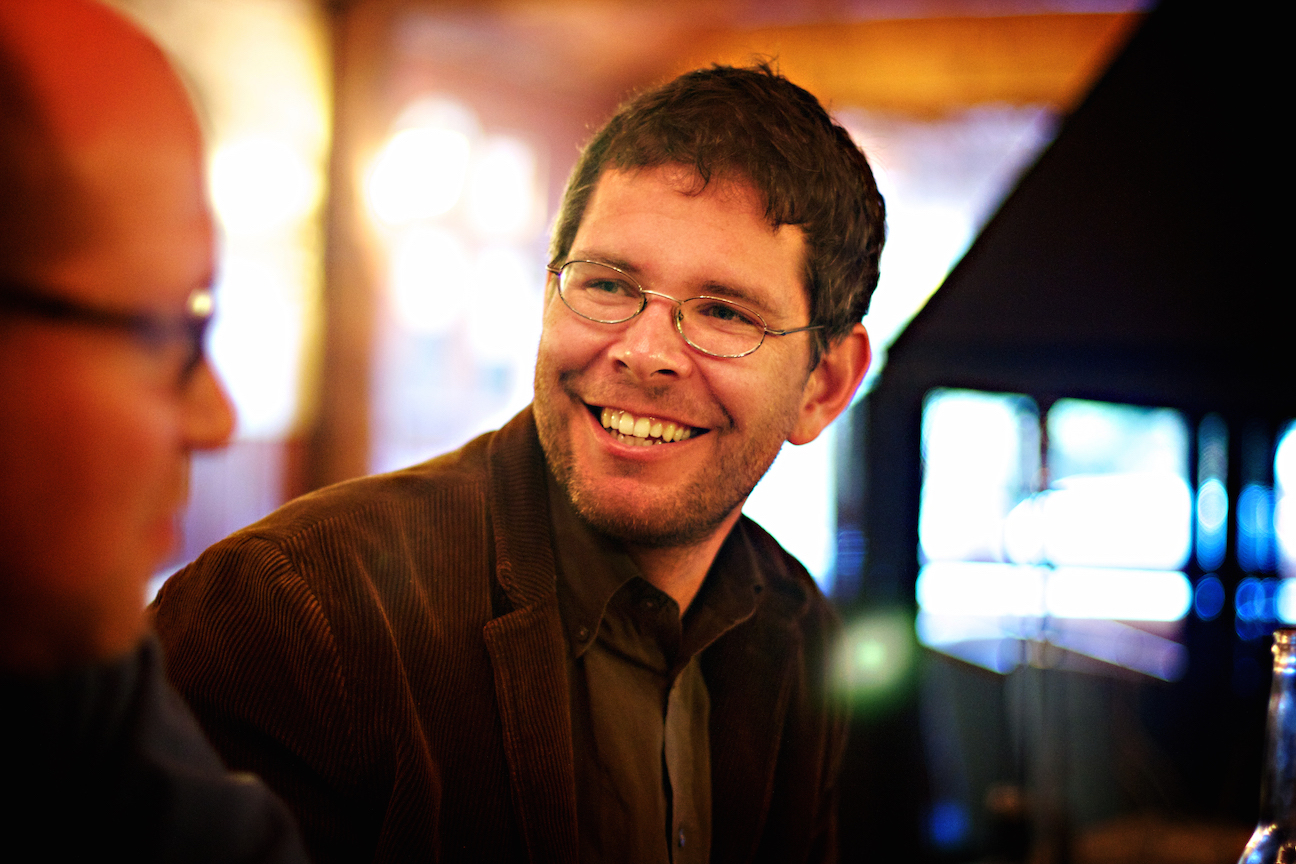
Matthew Power by Amber Hunt
But I gained a friend, one I would see in New York and also at subsequent Bread Loaf conferences, which he would return to with his wonderful wife, Jess Benko, and give talks on radio journalism and travel writing. One August he couldn’t attend but called from Minnesota to check in. He was floating down the Mississippi River with a group of punk anarchists on a crazy boat they had built, he said. The leader was a sort of punk Captain Ahab named Matt Bullard. Matt Power had met Matt Bullard seven years before in a park in Arcata, CA. As he wrote later in Harper’s, “Matt was almost exactly my age, and from that first time we talked I admired his raconteurial zest and scammer’s panache. He considered shoplifting a political act and dumpstering a civil right.” Matt had accepted Bullard’s invitation to join the group and had spent many days with them. I was excited—it sounds like a book, I told him. Matt wasn’t so sure. The raft was moving extremely slowly—about seven miles a day with 1500 miles to go, as he’d later write. Worse, Bullard was impossible to get along with and the crew was gradually abandoning him.
The experience became the basis for my favorite article of Matthew’s, “Mississippi Drift.” I like the piece because it’s so delightfully unlikely, so anti-sentimental, and also because to me the role of a punk Huck Finn suited Matt so perfectly.

photo via Facebook
Matt died while reporting a story in Uganda last spring. He had visited a class I teach the day before he left, and at lunch afterward we talked about the long cold spell we were having in New York and how nice it would be to leave it for a while. Shortly after came the news he had died, apparently of heat stroke during an arduous hike along the Nile.
Matthew had a wide network of friends, and a search of the web will turn up many fond remembrances. Among the most moving of these are recollections by three writers and editors who knew him quite well, Abe Streep, Brad Wieners, and Roger Hodge.
Matthew also had devoted family. His sister, Elizabeth Power Robison, in coordination with me and my colleagues at New York University, has worked tirelessly to establish an endowment for a new prize, the Matthew Power Literary Reporting Award. As of this writing, nearly 500 people have contributed; you can join their ranks by donating here. The first award, a grant of $12,500 to support the kind of work that made Matt special, will be given this spring. Applications are being accepted until February 16, 2015, and you can read about it here.
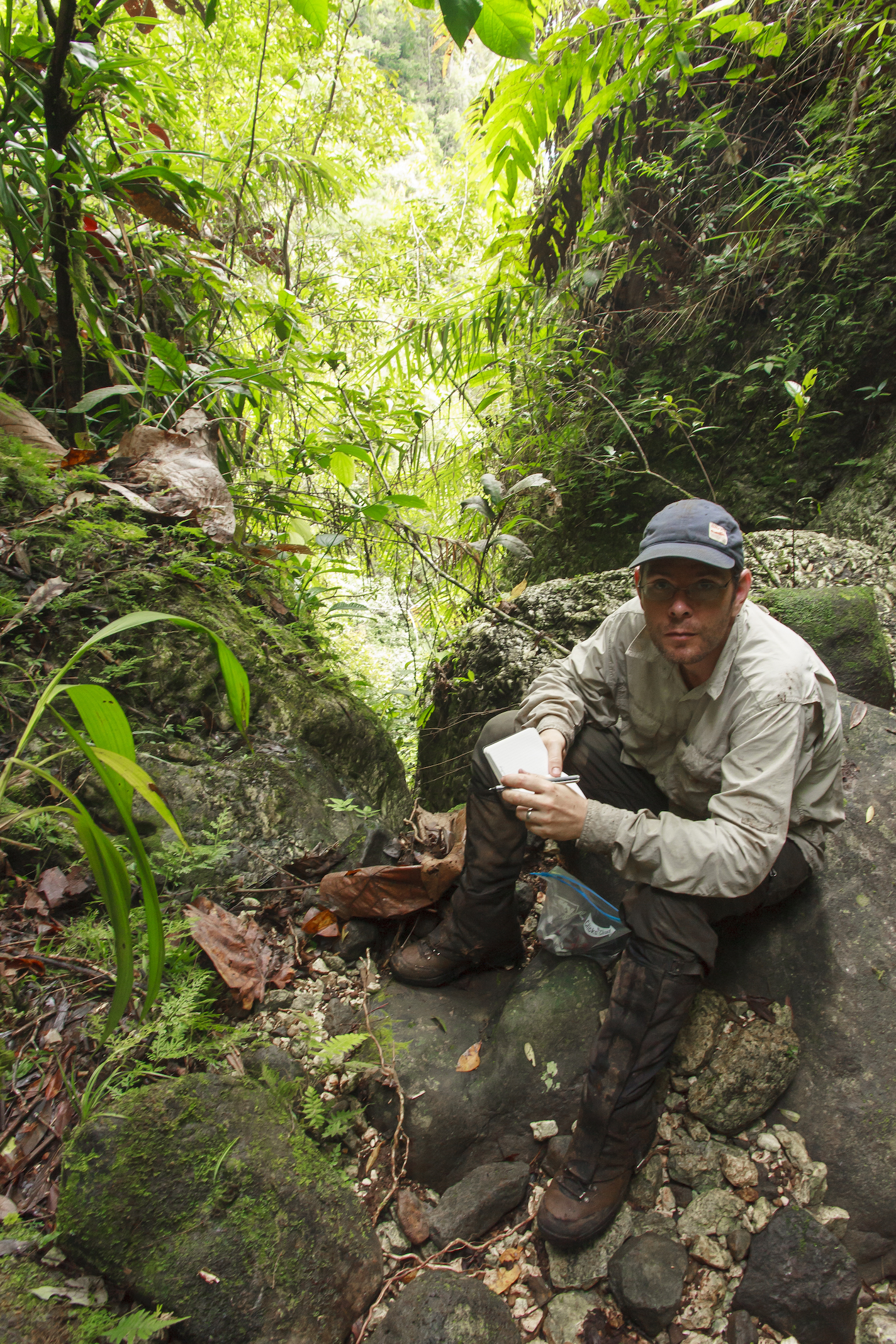
Matthew Power by Dylan Van Winkel
June 18, 2014
This Is How We Roll
Before I had kids, I used to wonder what would happen when they read my books. What kind of example was I setting with some of the chances I was taking? Early last year, my son read Rolling Nowhere, my account of riding freights with hoboes. First he said he liked it. Then a week or two later came the follow-up: “If I ever wanted to go on a trip like that, would you teach me what to do?”
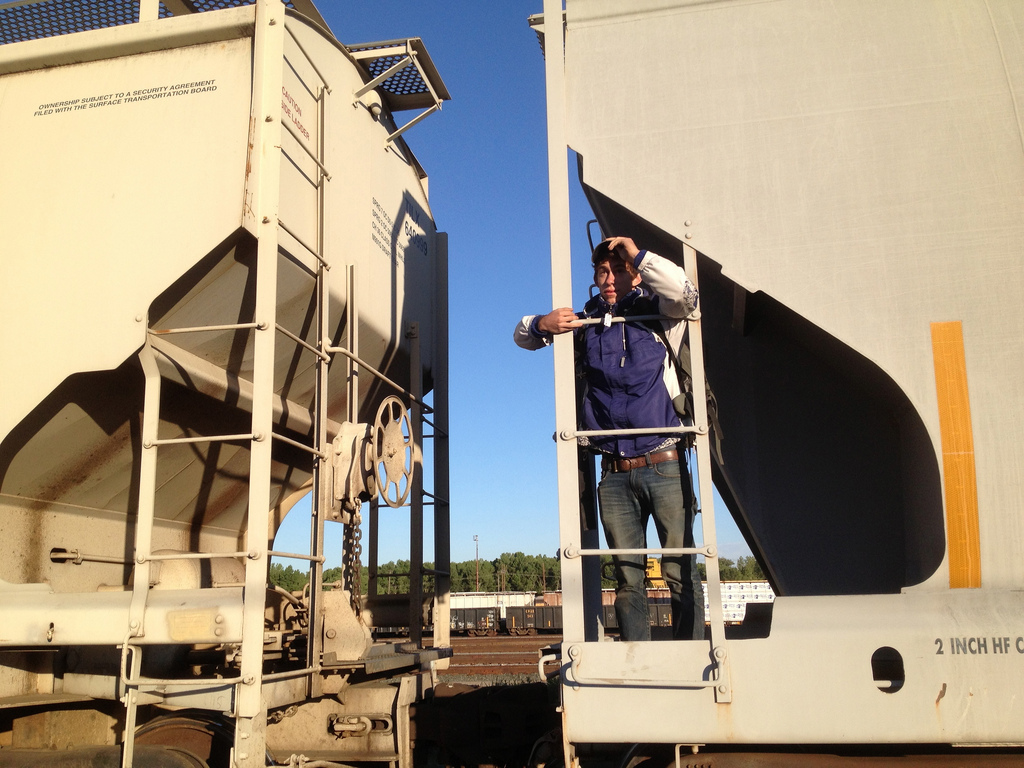
Asa, on a grainer in Ogden, Utah.
I knew I couldn’t say no. So I answered, “Well, I would if we could go together.” Last summer we did that, and “This Is How We Roll,” an account of the trip, is in the July issue of Outside magazine. It’s one of my favorites of the articles I’ve written, and the first about being a parent. Read it, share it … and see why I’m relieved that it’s over!
March 28, 2014
Have We Met?
Some years ago, when I was living in Denver, I was invited to take part in a summer writers’ conference in Aspen, Colorado. It sounded like fun and indeed it was: I led my first writing workshop ever, at a picnic table under spruce trees in Rio Grande Park, and I attended lectures and readings.
At one of these, on a sunny afternoon, I was distracted by a young woman who also appeared to be distracted by me. As I later wrote in Whiteout,
She wore a long skirt, a white oxford shirt, and a sweater vest—a stylish, grown-up, prep school kind of girl. She looked well heeled, unapologetic, somehow even proprietary over the proceedings. Her skin was olive-colored. The last words were hardly out of the lecturer’s mouth when she came up to stand practically in front of me and ask, “Are you doing anything for the next hour?”
Have we met? I wanted to say.
What Alison, as I called her in the book, had in mind for starters was to introduce me to Dr. Hunter S. Thompson. She did that, and other adventures ensued.
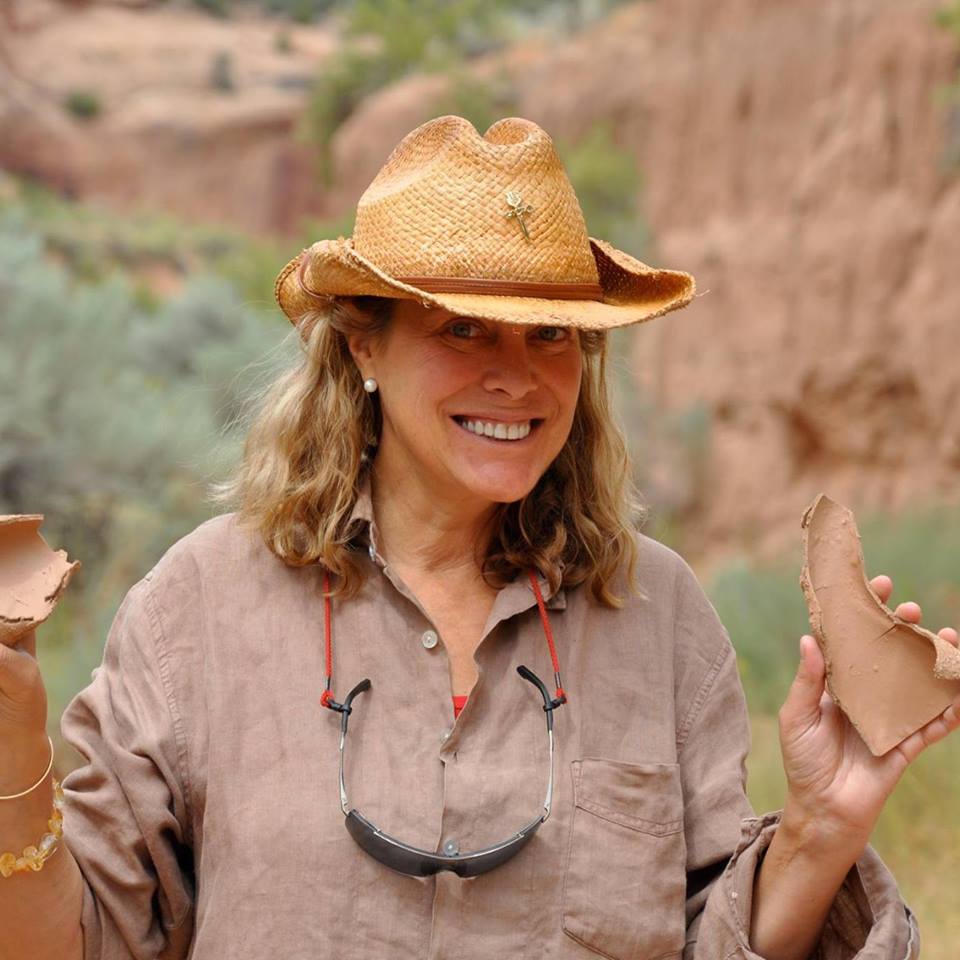
Nancy’s Facebook photo
These things happened, essentially, because Alison – whose real name was Nancy Pfister – didn’t care if you’d already been introduced. She was impulsive, in touch with her desires, and, in certain ways (such as how she approached men), fearless. Some large part of this, I believe, had to do with the fact she was a true Aspen local. She grew up there; her parents had started the Buttermilk Ski Area. Aspen was full of curious, engaged, experimenting people and felt protected from most bad things in the world.
But last month, Nancy was murdered – at home, in Aspen. Details are fuzzy; three suspects, including a bank employee and an older couple who rented from her, have been arrested (all of them people Nancy knew). When I heard I felt sick to my stomach. A memorial service at the Hotel Jerome was attended by hundreds. She left behind a daughter, two sisters, countless friends, and a rattled community.
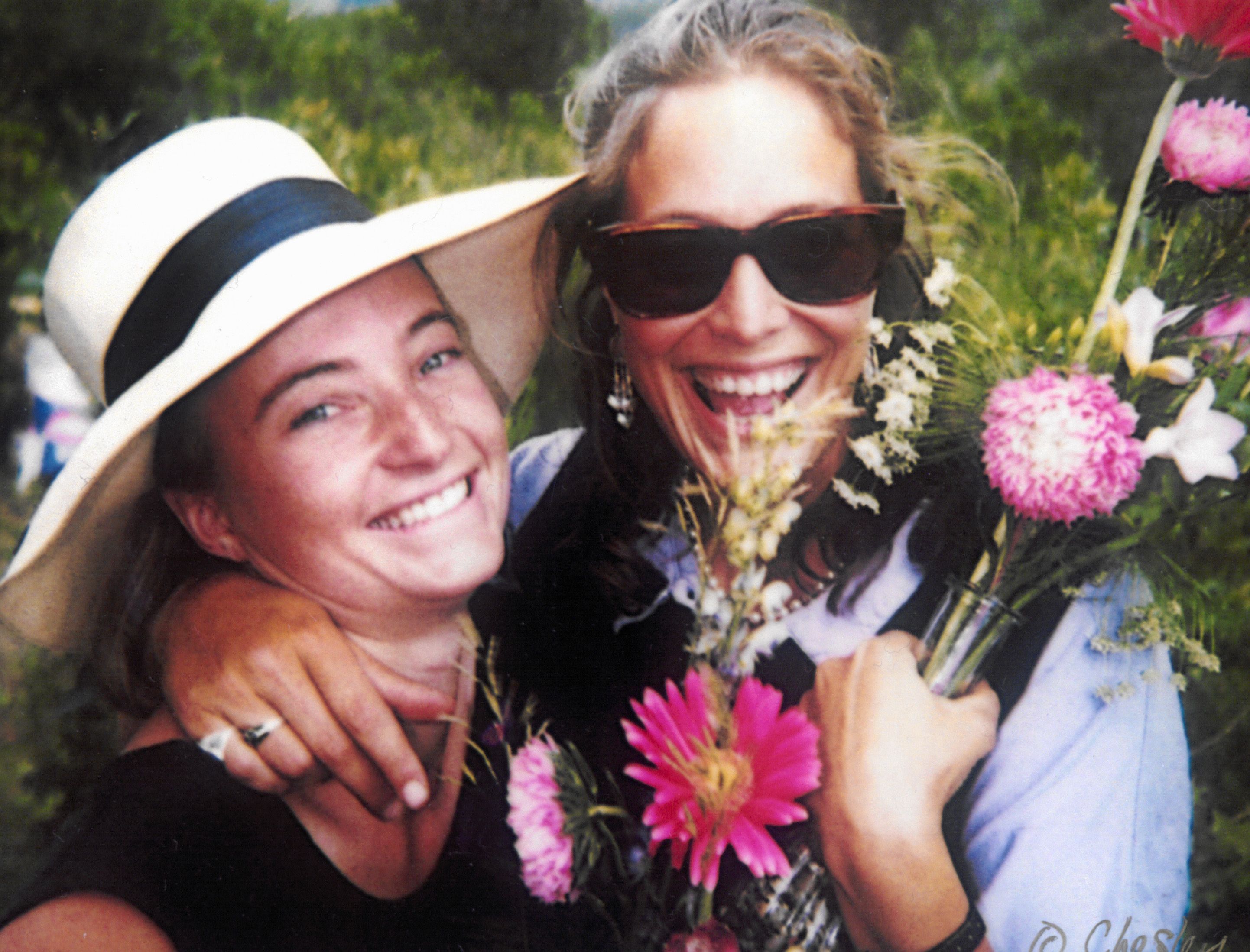
Nancy Pfister (r.) with Janie Joseland Bennett.
Photo by Paul Chesley, used with permission.
When I returned to Aspen to live in the early 90s, my friend Paul Andersen was dating Nancy. I called him up when I heard the news last month, to talk about her. I reminded him how I met her and then he reminded me how he met her – an encounter he also recalled in his recent column in The Aspen Times:
I had just moved here from Crested Butte for a reporting job … it was the off-season. Town was hushed and quiet. There was no one on the [pedestrian] mall except for this strangely appealing woman. She came sauntering toward me, casually eating with chopsticks from a Chinese carry-out carton.
I was drawn to her … Soon we were standing a foot apart, face-to-face, just looking at each other. What I noticed most was her eyes — mesmerizing and mischievous, like cat-eye marbles.
Without a word, Nancy scooped up a clump of rice with her chopsticks and pushed it toward me. I opened my mouth, accepted the morsel and knew I had arrived.
Paul agreed with the idea that a person like Nancy couldn’t have come from anywhere else – that place, that time. When I think of her now I think of native creatures on the Galápagos Islands, sea lions and sea birds so sheltered from predators during their eons of evolution that even today they have no fear of people.
Ted Conover's Blog

- Ted Conover's profile
- 253 followers

