
Ted Conover's Blog, page 4
June 4, 2013
Of Meat and Art
There’s a fair amount of fine art around meat and slaughter. Most famous might be the paintings of Francis Bacon – several friends guessed that the image Harper’s magazine used to illustrate my cover story was by him. (In fact, those hanging sides of beef are the work of Russian-born Alex Kanevsky.) I’ve never forgotten a scene in James Salter’s A Sport and a Pastime where the characters, out drinking at night, happen upon an open-air abattoir in les Halles: “It’s like coming upon a factory in the darkness. The overhead lights are blazing. The smell of carnage is everywhere, the very metal reeks with an odor denser than flowers.” Lately I’ve been reading The Cow, a collection of violent, visceral poetry by Ariana Reines; among the texts incorporated into her verse are passages from The Merck Veterinary Manual.
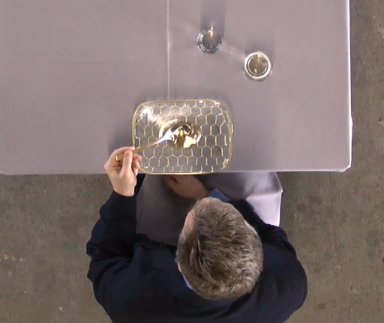
Last month Tak Cheung, an artist in NYU’s edgy Interactive Telecommunications Program, emailed to if I’d be willing to help out with his thesis project. My job would be to eat a special meal he would serve me, in a Brooklyn warehouse, while being filmed. At first I didn’t respond — it was an odd-sounding request, I didn’t know him, and I was busy, as usual. But he persisted: he had read my article, and (though he declined to say why) I was his perfect diner. I called him. We talked. There would be two diners served, at successive sittings. Australian art curator Amanda McDonald Crowley would go first. The food, prepared by two young Brooklyn chefs, would be delicious, he promised. But he wouldn’t tell me what it would be. He also intimated that how the food would be served was significant–but again, part of the project was that I couldn’t know details in advance.

I said okay. I will ruin just enough of the surprise to tell you that dessert was chicken ice cream, served inside a “sculpted chicken head made of white chocolate.” Several ingenious creations preceded that, and the whole event is a thoughtful commentary on poultry production.
Click here to open in new page.


April 13, 2013
“The Way of All Flesh”
A couple of years ago, I applied for a job as a USDA meat inspector. Most inspectors work inside slaughterhouses; I thought it would be a good way to take a closer look at that world. Last fall I finally got hired.
I was posted to a large Cargill Meat Solutions beef plant in Schuyler, Nebraska. There I joined a couple of dozen other inspectors, men and women, who work the line on the kill floor examining different components of freshly-slaughtered cattle for disease. We rotated posts throughout the shift: Heads, Livers, Pluck (hearts & lungs), and Rail (final look before the warm carcasses head into the “hot box” to cool off). If we saw something bad (and we did, on almost every shift) we could stop the line until it got corrected.
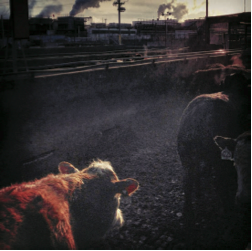
photo by Jared Moossy http://www.jaredmoossy.com
It’s hard work that involves a lot of repetitive cutting into meat with knife in one hand, hook in the other. Everyone who sticks with it learns how to manage their pain. (Five months after I quit, my wrists and elbows still hurt.) What every inspector knows and appreciates, because many of them worked for meat companies before they worked for the government, is that regular line workers have it worse—most do only one job (they don’t rotate) and take fewer breaks.
Among the surprises of the job for me: Megadoses of antibiotics take a toll on cattle health—which the inspectors see hour after hour. And Temple Grandin’s vaunted curving ramps, which cattle ascend in the minutes before they die, may make them feel a bit less good than advertised.
My article about this is in the May issue of Harper’s magazine (and currently behind a pay wall here).

March 19, 2013
Meeting a moose
I was skiing at Winter Park, Colorado, yesterday—a place I have skied for more than 40 years without seeing a moose—when I saw a moose. It was in the middle of the road in front of me and so, along with others including my father, I stopped. It was a bull moose, maybe six feet tall, and it was eating buds off the branches of what looked like a willow shrub.
Before long a snowmobile appeared. It frightened the moose, which bounded off the road. My dad and most of the other skiers soon skied on, but I stuck around and got out my camera phone. After all: 40+ years, and my first moose!
The moose soon returned to the road as I shot video. As you can see, the skier just uphill from him felt he was too close for comfort and scurried away. Then the moose looked at me and I thought, you know, I’m not in a very safe place.
I started ski-skating away. Too late! As I began to move the moose began to follow … faster and faster. The only thing the video doesn’t capture is me taking a final glimpse behind and seeing the moose closing in on me, about six feet away. Oh, and the feeling of full-blown terror as I heard his pounding hooves.
The moose easily passed me, just a few feet to one side. Whew! Then he stopped to examine two snowboarders at the side of the road. (One of them later told me he had not enjoyed the meeting.)
As the moose approached the Winter Park base area, several ski patrollers blocked his path with snowmobiles. I was uphill of the moose at this point, and as he turned around I finally got wise, and skied down into the woods. The moose eventually walked uphill into the woods. I’m glad for both of us that he’s there.
January 21, 2013
Everything E
This month my books Coyotes and Whiteout came out in eBook editions, which means that now all of my books are available in digital editions. With snazzy new cover designs. Everywhere eBooks are sold, such as the Kindle Store, the Nook Store, and Apple’s iBooks.


January 1, 2013
Every Blasted Hour
For the New Year, my wife gave me a new daypack. It was time.
The old one, by North Face, served me during the research for The Routes of Man and beyond – more than ten years. It traveled thousands of miles on planes and boats, in cars and coaches, and many trips as well on the New York City subway.
I abused it horribly – overloaded it with books, camera gear, clothing, food. It never let me down. Not a single tear or stuck zipper. Recently, though, the padding inside one of the shoulder straps began to break down and get lumpy. For the past few months, I’ve looked upon my son’s sleek new North Face knapsack with envy.
So today, with a touch of regret, I swapped the old for the new. I hadn’t really dug through the old one in some time, and was surprised by some of the things I’d been carrying: Sudafed tablets, a thumb drive, a highlighter pen, Dominican pesos, eyedrops, mint candy in cellophane, earbud splitter, earplugs, safety pin, binder clip. Most of those I’ll toss – out with the old! But two items I’ll keep.
One is a business card I was given back in high school after I stopped to help a neighbor who was having car trouble. The man’s name was Pannebaker, and his kids were at my school. All I knew about him, beyond that, was that he was a printer. He mailed me a brief thank-you note and the card. It wasn’t a business card – it was harder to throw away than that. It was pink, and said simply: I REALLY ENJOYED OUR TALK. Then below, in smaller letters, EVERY BLASTED HOUR OF IT.

I loved the curmudgeonly impulse that the printer gave expression to in this card. And I loved his nonchalance in sending it to me – for all he knew, I might have been offended. Instead I was slightly perplexed … and delighted. How anti-Dale Carnegie! I was unable to throw it away. When it made the move to my old backpack I don’t remember. Now it’s worse for wear.
The other thing I found was the twisted piece of stick my wife gave me near the beginning of my roads book research. It’s literally that, a fat twig. She picked it up off the ground when we were on a walk, declared it good luck, and handed it to me.

The lucky twig
A police chief in Lagos, Nigeria, happened to notice the stick when I visited him at home. In The Routes of Man I write about how he then told me about a road accident he had witnessed. One driver had died. The driver who survived, upon reaching into his pocket for identification, saw that the shell he carried on a string for good luck had broken. The man tossed the shell into the grass.
“You see,” the chief explained to me, “it was his good-luck charm. And because he was still alive, he gave credit to the charm. But obviously it had broken in the effort to save him, and had no power left.”
I will transfer the stick to my new bag, and knock wood.
November 10, 2012
Rolling Nowhere goes ebook
Rolling Nowhere, my account of riding the rails as a young man, was recently released as an ebook. It’s pretty cheap to download it to your screen-thingy from the Kindle Store, Barnes & Noble, Apple iBookstores in 32 countries, Sony, Kobo, WH Smith in the UK and FNAC, the Diesel eBook Store, Baker & Taylor (Blio and the Axis360 library service), Inktera.com and Versent.com.
At some of these sites no one has yet posted a review; please, dear reader, be the first!
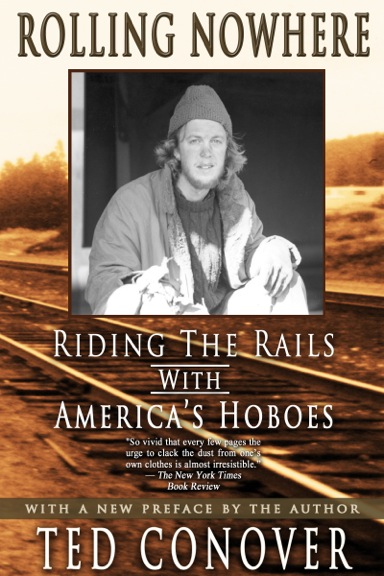
The new ebook cover
This leaves only Coyotes and Whiteout still unavailable as digital downloads. I’ll try to get those out there soon.
June 29, 2012
A Snitch’s Dilemma
This weekend the New York Times Magazine publishes my story about Alex White, a police informant in Atlanta who helped bring his handlers to justice after they tried to use him to cover up their accidental killing of a 92-year-old widow.
I became interested in informants a couple of years ago after one in the employ of the FBI led four black Muslim men from Newburgh, New York (the “Newburgh Four”) to synagogues on my street in Riverdale, where they dropped off what they thought were bombs. They were immediately arrested by the scads of policemen lying in wait, and later convicted of terror charges.
I wrote about the ethical/legal problems of the case for Slate. But what really interested me was the moral world of the informant. What was it like to lead a double life like that? What was it like to dupe the others into following him into a fictional jihad (and long prison sentences)? Some of them weren’t nice people, but none would appear to pose a real threat if he weren’t around: How did he live with himself?

Alex White, wife Antrecia, and her son
Snitches and informants, a staple of law enforcement, appear in many articles and movies. Seldom, however, does anyone explore in depth what it is like to be them. Partly I think this is because disloyalty is unattractive – in most cases, snitches are the opposite of heroic. Another reason may be that few snitches see much upside in talking to the press.
So I set out to find one who would, and I found Alex White. His breakup with the cops was dramatic – he came out on TV. And the reason for it, their killing of elderly Kathryn Johnston, horrified a city. He was free, more or less, to talk to me. This cover story in the Times Magazine is the result. It’s long, but it needed to be to do the story justice. Let me know what you think.
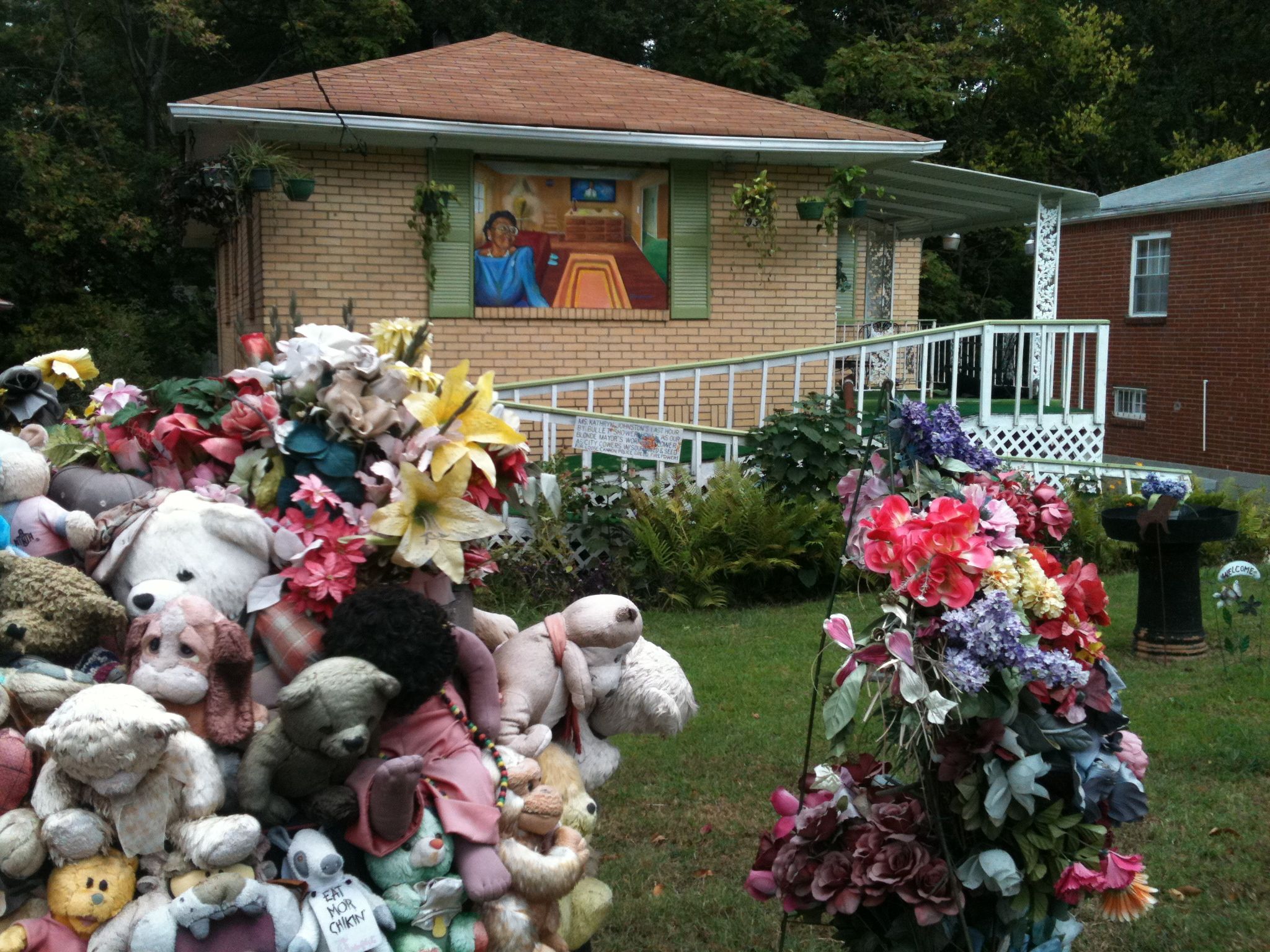
Kathryn Johnston's house today
May 22, 2012
Rehab
My book Newjack: Guarding Sing Sing is still considered contraband in New York state prisons – at least until the seven pages deemed a threat to security back in 2000 have been torn out. But though my book can’t come in whole, it appears that, as of last week, I can.
Rehabilitation Through The Arts, which helps stage a play at Sing Sing every year, invited me to see the inmate production of “A Few Good Men.” To my surprise, Sing Sing approved my visit and then Albany said okay, as well. I was rehabilitated, politically speaking – and last Friday, for the first time since I turned in my badge in 1998, I passed back through the prison gate.
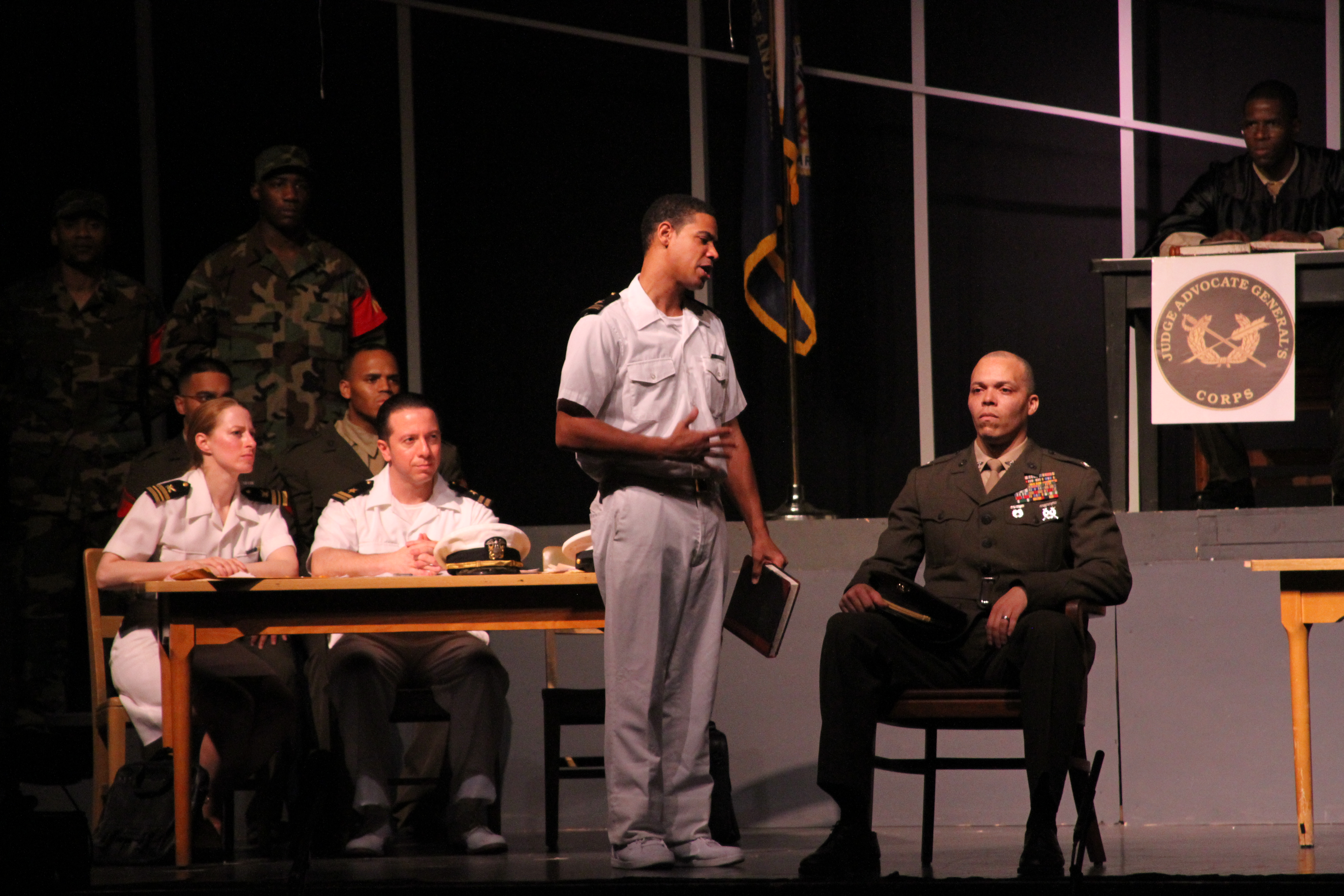
Scene from "A Few Good Men." Photo by David Kennedy, Goldcrest Films
Almost 300 civilians gathered in the prison theater – the only time all year so many outsiders are allowed inside. At least one was a professional actor from the outside world – Josie Whittlesey, who played the sole female part, a military lawyer. My wife and I pegged the male lead as another import – he had real star wattage, and we guessed maybe he came from some Westchester high school. (“This will help him get into Princeton,” Margot speculated.) After a moving performance and a thunderous ovation, the cast was allowed to shake hands and chat, from the stage, with the audience down below. Both sides were elated … and I must say, I’ve never felt more joy inside a prison.
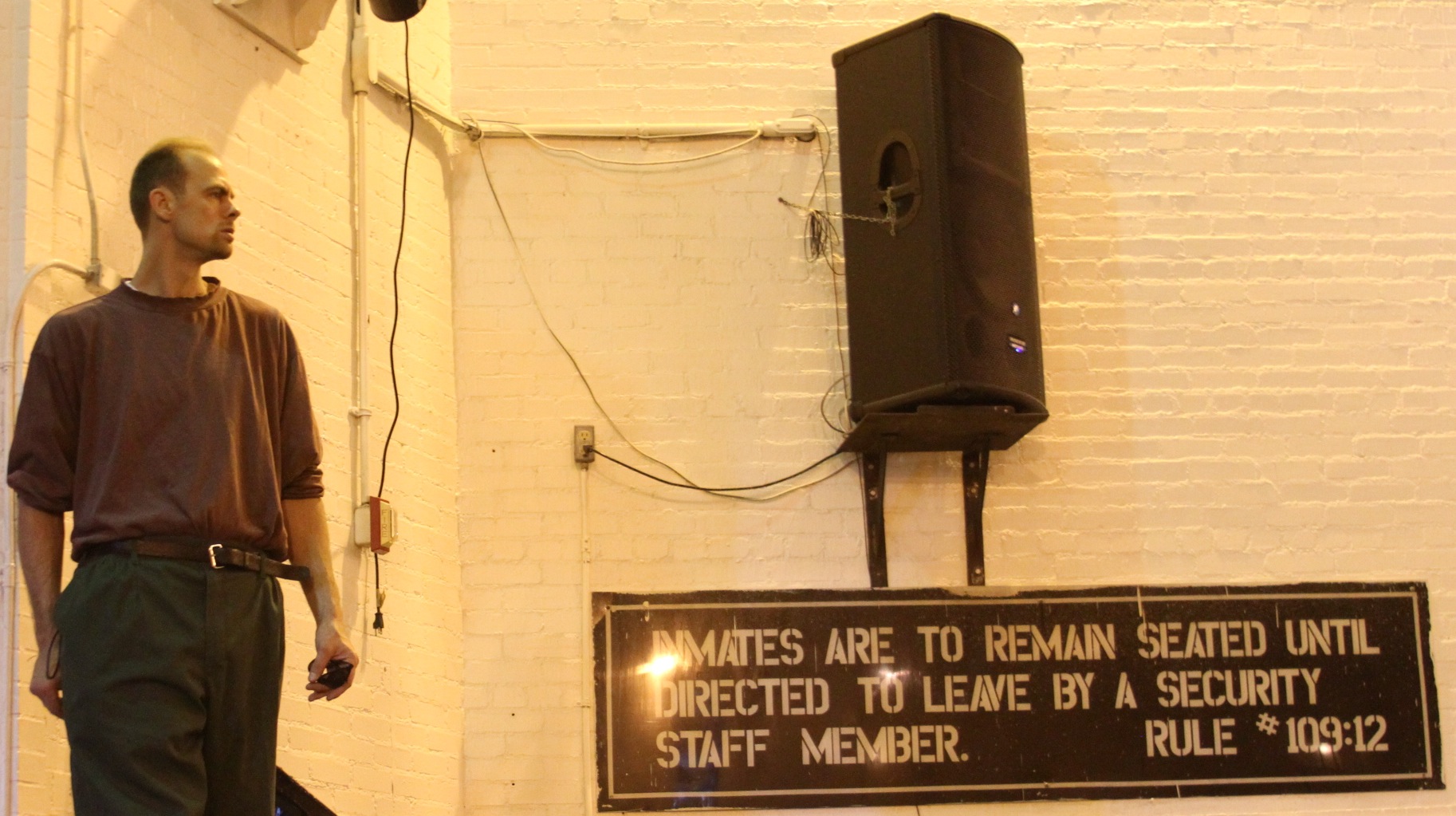
Inside Sing Sing's theater. Photo by David Kennedy, Goldcrest Films.
As vans ferried audience members back to the prison gate, passengers were saying things like what talent! and what are these men doing in prison? Margot was particularly interested to know more about certain members of the cast, including the “high school student.” At home, I cross-referenced names from the playbill with the state’s inmate lookup site. Among the actors’ crimes were RAPE 1ST, CRIM POSS WEAP 2ND, CRIMINAL SEXUAL ACT 1ST, MURDER 2ND, ROBBERY 1ST, MANSLAUGHTER 1ST, AGGRAV ASSAULT/PEACE OFF., ATT MURDER 1ST. Some of those were committed, I’m afraid, by the same guy we pictured headed to college.
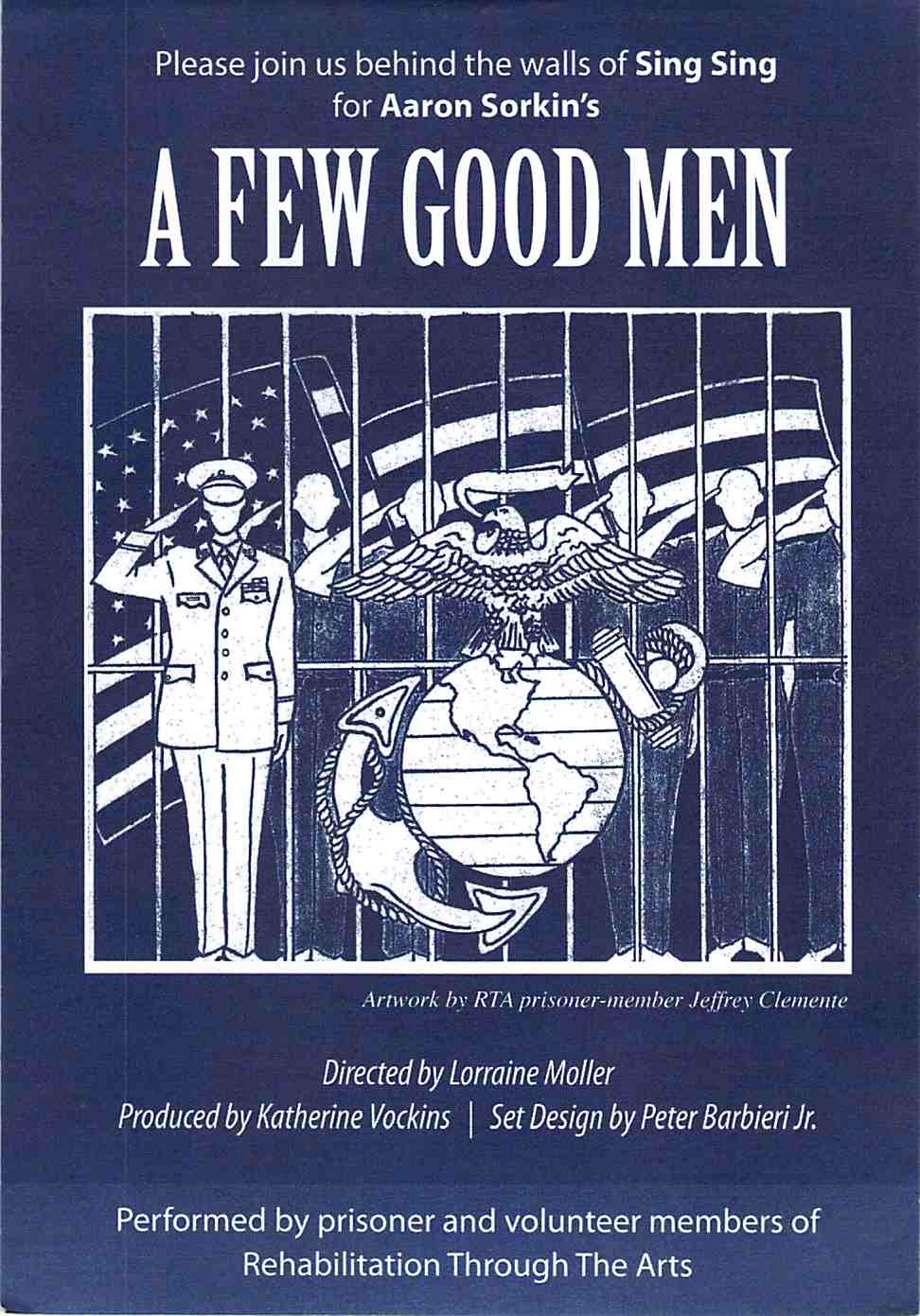
Invitation to the play, with drawing by inmate Jeffrey Clemente.
Margot was disbelieving. I didn’t have an easy answer for her, other than to remind her how many times I’d been surprised to learn the histories of men I supervised as a C.O. The costumes and the drama of the theater had made it easy for the audience to see them as somebody else. I think it probably did the same for the men themselves: for a few hours they could imagine themselves as different people, in different clothes, leading a different life. I can’t think of a better way of explaining rehabilitation – not my kind, but the truly important kind – than that.
April 16, 2012
CSI: Our Kitchen
I take sugar in my coffee, and make daily use of the diner-style dispenser in our kitchen. I like how the sugar comes out of there in a hurry.
Apparently I’m not the only one.
If you live in a household with teenagers, you know how incredibly fast a bag of cookies, a bowl of candy, or the leftovers from that pie can disappear. Often there are few signs of exactly who consumed it, or when.
A recent raid on the sugar dispenser, however, left behind the clue I hope you can see in the photo. How many teenagers in the house regularly apply lip balm? Case closed.

the telltale lip print
January 28, 2012
Yo, CO! Vinny Retires
I was lucky, when I entered corrections some years ago, that my training instructor was Vinny Nigro. He was a man of exacting standards who had a great sense of humor – mostly at his own expense. ("The inmates call me Abbott," he said, a reference to the fat member of the Abbott & Costello comedy duo of the 40s and 50s.) That humor was a welcome relief in the boot camp atmosphere of corrections academy in Albany. I wrote about Vinny in Newjack and was glad to learn he wasn't sore about it. Just the opposite, in fact – he seemed delighted.

Albany Training Academy
This week Vinny retired from the department, after 31 years of service that began when he was 18. And last night I attended his retirement party in Napanoch, New York.
Over 200 people were there – a fitting tribute to a man who was immensely popular among his fellow correction officers (CO's). Vinny's humor was in full flower: "I'm 300 pounds but tonight I feel like I'm floating," I heard him say as I walked in. I was a bit on edge—not everybody in New York corrections loves me. The second person Vinny introduced me to, as it happened, was the guy at Eastern Correctional Facility who tears the seven pages out of Newjack when a prisoner receives a copy in the mail … my censor! But the man seemed perfectly nice and after all, it's not his idea.
Vinny and his wife, Val, sat me next to Dave Miller, a respected former superintendent of Eastern who, it turns out, had a dog-eared copy of Newjack in his pocket. He teaches it in his course at the local community college, he explained. That made me feel better when the current superintendent, digressing from his roast of Vinny, mentioned that my book had upset a lot of people—a lot of people, he repeated, making me suspect that he was possibly one of them. Soon after came the first of several friendly, joking offers by various people to escort me to my car at evening's end. These were, to me, approximately 75% reassuring and 25% nervous-making, the latter percentage correlated to the alcohol being consumed and the darkness that lurks in the hearts of even the nicest people and yes, to my own paranoia.

The Legend (left) Has Retired
Fortunately, my presence was gradually forgotten as the night progressed—as it should have been, because it was Vinny's moment in the sun. Friends remembered hijinks and capers galore, one of my favorites being the wager he placed with a newjack working South Hall at Eastern. "I bet you lunch that I can make all the inmates flush their toilets at the same time," Vinny was heard to tell the rookie. "You're on," said the man. Vinny then stepped out on the flats where all the prisoners could hear him:
Could I please have everyone's attention? I need everybody to help me by not flushing their toilets for the next couple minutes. We've got a sewage problem and it's all backing up into the CO's office.
They said the roar of flushing toilets was deafening.

Ted Conover's Blog

- Ted Conover's profile
- 253 followers

