
Cora Buhlert's Blog, page 47
January 26, 2021
Fanzine Spotlight: Warp Speed Odyssey
It’s time for the next entry in my Fanzine Spotlight project. For more about the Fanzine Spotlight project, go here. You can also check out the other great fanzines featured by clicking here.
Today’s featured fanzine is Warp Speed Odyssey, a science fiction review and interview blog.
And now I’d like to welcome Steven Morrissette of Warp Speed Odyssey.
Tell us about your site or zine.
Warp Speed Odyssey is a sci-fi blog that I have started about a year ago to write some book and movie reviews. Soon enough I started meeting some authors that wanted to get involved and some also sent me their books to be reviewed. Rapidly the blog took off and now we have conducted some interviews with authors, reviewed books, and featured many guests that presented their novels.
Who are the people behind your site or zine?
I started by myself slowly but then I met Jean-Paul Garnier from Space Cowboy Books who was of tremendous help and also became the first contributing author, reviewing some books and conducting some interviews for Warp Speed Odyssey. Furthermore, Robin Rose Graves who is a friend of Jean-Paul became the second contributing author submitting book reviews and interviews as well. And Finally, there is my sister Jessica who started translating some of the articles into french.
Why did you decide to start your site or zine?
Initially, I started Warp Speed Odyssey to practice my writing skills by writing about different sci-fi themes and reviews. But soon enough the orientation of the website shifted to become a place where authors could promote their work and get interviewed about their writing journey.
What format do you use for your site or zine (blog, e-mail newsletter, PDF zine, paper zine) and why did you choose this format?
Warp Speed Odyssey is in a blog format. I chose the blog format because it is similar to a magazine but it is online and the cost is relatively low, permitting me to offer free services to authors.
The fanzine category at the Hugos is one of the oldest, but also the category which consistently gets the lowest number of votes and nominations. So why do you think fanzines and sites are important?
I think that fanzines are important because they are a good place for indie authors to promote their books and get them reviewed as well.
In the past twenty years, fanzines have increasingly moved online. What do you think the future of fanzines looks like?
The future of fanzine will probably focus on online platforms because it’s less expansive and easier to reach the audience via social media. But there will always remain those true paper lover readers like me that will buy their physical copy.
The four fan categories of the Hugos (best fanzine, fan writer, fan artist, and fancast) tend to get less attention than the fiction and dramatic presentation categories. Are there any awesome fanzines, fancasts, fan writers, and fan artists you’d like to recommend?
I would like to recommend Nathan Warner a Star Trek fan artist and writer.
http://www.blabberdock.com/home.html
Where can people find you?
You can contact me on the contact page of warpspeedodyssey.com or @OdysseyWarp on Twitter.
Thanks, Steven, for stopping by and answering my questions.
Do check out Warp Speed Odyssey, cause it’s a great blog.
***
Do you have a Hugo eligible fanzine or site and want it featured? Contact me or leave a comment.


January 24, 2021
Fanzine Spotlight: Runalong the Shelves
It’s time for the next entry in my Fanzine Spotlight project. For more about the Fanzine Spotlight project, go here. You can also check out the other great fanzines featured by clicking here.
Today’s featured fanzine is Runalong the Shelves, an SFF book blog from the UK.
And now I’d like to welcome Womble of Runalong the Shelves.
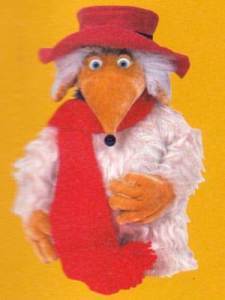 Tell us about your site or zine.
Runalong The Shelves is now in its fourth year and is very much a book blog with a big focus on reviewing science fiction and fantasy but also interested in horror and the occasional thriller. You may find me interviewing authors on recent works; answering the odd book tag and taking part in a small annual blogger jury award named Subjective Chaos Kind of Award which is a lot of fun debating books with different bloggers. I try to be diverse both in the types of books I review but also increasingly promoting the diverse voices creating them which I think is a wonderful move for our genre (and way overdue)
We joke on twitter about Book Tempting but I really really like trying to find a book for the right reader. Knowing someone enjoyed a recommendation is one the best things ever!
Who are the people behind your site or zine?
Its’s just me! Forty something British human who for complex reasons these days is better known as Womble on the internet
Why did you decide to start your site or zine?
I’ve loved reading for a long time and in the old days of forums would often see me in the Books section talking and recommending books. Another forum member Dave Probert invited me to their own website GeekPlanetOnline to join a panel of reviewers and when that went on indefinite hiatus I thought it may be time to start my own and have a bit more choice on what types of stories I could review as well.
What format do you use for your site or zine (blog, e-mail newsletter, PDF zine, paper zine) and why did you choose this format?
I went with blog – I’m most familiar with reading these as I’ve grown up and I like the way the format can change. I can add new features when I wish and these days quite easy to update not just on PCs but also phones and tablets. I also think they’re an easy way to cross the borders plus work well with social media sharing.
The fanzine category at the Hugos is one of the oldest, but also the category which consistently gets the lowest number of votes and nominations. So why do you think fanzines and sites are important?
Fifty years ago you probably could read all the SF books and short stories published in a year if you had a decent amount of time. Now that number is in the thousands each year and I think blogs help collate what is out there for readers in ways algorithms just cannot. You can find specialist blogs in your favourite sub genre be it horror or crime or 1930’s crime tales. We help show a spotlight on books and sometimes they may not be the ones with the largest marketing budgets. If you find a blogger who you know has similar tastes to yours its a useful way to find new stories that you may not see in your local bookshop’s main pages. The indie publishing system is now very established and contains some excellent material that’s easy to miss if you say just went to your local Waterstones or Barnes & Noble. Blogging can give those stories plus the wider self published market a little nudge to readers
In the past twenty years, fanzines have increasingly moved online. What do you think the future of fanzines looks like?
The format will change with the technology. Youtube and podcasts are increasingly easier and more affordable for people to use and I’m sure somewhere someone is creating an unusual TikTok. I do wonder if more collaborative efforts are the way forward as well – taking the strain off individual bloggers but also allowing a wider ethos of what a site/zine is looking for/shouting about. Possibly more like Geek Syndicate that are truly multi-media genre sites working in blog, podcast and youtube.
I also am finding increasingly more contact with authors from all over the world not just the US/UK centric ones we know and love. Over the next decade I think this could make reading experiences even more universal!
The four fan categories of the Hugos (best fanzine, fan writer, fan artist and fancast) tend to get less attention than the fiction and dramatic presentation categories. Are there any awesome fanzines, fancasts, fan writers and fan artists you’d like to recommend?
Apart from yourself!
Alasdair Stuart is one of my go to writers and their insights are brilliant. Blog wise I recommend The MiddleShelf, There’s Always Room for One More, Journey Planet, Skiffy & Fanty, Nerds of a Feather, Geek Syndicate and on Booktube Claire Rousseau, Kitty G and Kalanadi
Where can people find you?
Apart from the blog you usually can find me in twitter as @runalongwomble and on Sundays I have a thread where we all talk about what we are currently reading which is a lot of fun. Please join in.
Thanks, Womble, for stopping by and answering my questions.
Do check out Runalong the Shelves, cause it’s a great blog and also follow Womble on Twitter, so he can match you up with books you’ll love.
***
Do you have a Hugo eligible fanzine or site and want it featured? Contact me or leave a comment.
January 23, 2021
WandaVision: “Now in Color” – and with Twins
Okay, so it looks as if I am doing episode by episode reviews of WandaVision, Marvel’s new sitcom parody/Dickian faux reality paranoia. Previous installments (well, just one) may be found here. Also, may I remind you that Disney is still not paying Alan Dean Foster and others.
But before I get to the review, I also want to point out that I have another article up at Galactic Journey. This one is a double review of the 1965 Edgar Wallace movie The Sinister Monk and the 1966 sword and planet (though that term wasn’t in use yet) novel The Sword of Lankor by Howard L. Cory a.k.a. Jack Owen and Julie Ann Jardine.
Warning: Spoilers behind the cut!
When we last left our favourite mismatched superhero couple, Wanda and Vision had not only seen their black and white sitcom world suddenly become a lot more colourful – no, Wanda was also very suddenly very visibly pregnant.
By the start of episode 3, the world is still in colour – and indeed the episode title is “Now in Color” – and there has been another time jump. Cause while episode 2 (which didn’t have a title, as far as I can tell) was set in the mid 1960s (the black and white to colour TV change happened in 1965/66 in the US), episode 3 is set in the early 1970s. The main models are The Brady Bunch and The Partridge Family, which ran from 1969 and respectively 1970 to 1974. The opening sequence for episode 3 is very directly modeled on the opening sequence of The Brady Bunch. Unlike the models for the previous episodes, I have actually seen a bit of both shows, though my feelings about The Brady Bunch are strongly influenced by the less than ideal circumstances under which I saw the show.
I was fifteen and had been visiting relatives in the US. I was fairly independent and considered myself an adult, but for legal reasons, I was still classified as a child travelling alone. And so they stuck me in a dingy room at Atlanta airport with all the other kids travelling alone (who were actually kids – I was the oldest person there except for another teenage girl who spoke only Spanish, so we communicated in eyerolls). There was a single person who watched the kids and made sure we didn’t run off, but otherwise there was no effort to make our stay pleasant. There were drinks, but nothing eat for hours (and that watchdog woman wouldn’t let me go into the terminal to get myself something to eat) and there was nothing to do except watch the lone TV, which was playing nothing but Gilligan’s Island and The Brady Bunch in an endless loop. Come to think of it, the way they treated us was borderline abusive, especially considering I’ve since heard that the assistance services of other airlines and airports are much better.
The experience left me with a violent dislike for Atlanta airport, Delta Airlines, Gilligan’s Island and The Brady Bunch. I also associate The Brady Bunch with the feeling of being trapped, which is actually a very apt comparison to WandaVision. Hmm, now I wonder whether WandaVision‘s showrunner was also trapped in that dingy room at Atlanta airport and forced to watch The Brady Bunch in an endless loop.
But even though there has been a time jump of five to eight years, Wanda is still pregnant and as far as she and Vision are concerned (who neither seem to notice nor are troubled by the fact that they seem to be reliving US postwar television history on fast forward) Wanda has only been pregnant for a day at most (and indeed, the audience sort of witnessed how Wanda became pregnant, when she used her magic to push the censorship-friendly twin beds together and turned off the bedroom lights in the previous episode). But when Vision – who now sports longish floppy 1970s hair – calls in one Dr. Nielsen (who, as a commenter at Camestros Felapton’s blog points out, is named after the institute which calculates the US TV ratings), Dr. Nielsen declares that Wanda is actually four months pregnant. But how can that be?
Dr. Nielsen, an elderly man who looks like all of the doctors and psychiatrists in vintage US TV shows, also mansplains the progress of pregnancy to Wanda and Vision, using fruits as example. Keen viewers will notice the respective fruit popping up in the background throughout the episode. Though honestly, were papayas common in the US in the early 1970s? Cause I first encountered them in Singapore in the early 1980s and they didn’t come to Germany until several years later.
Dr. Nielsen takes his leave, mentioning that he and his wife are planning to go on holiday. Meanwhile, Wanda and Vision do their best to get ready for the new arrival. Vision reads pregnancy books, while Wanda prepares the nursery. They also argue about names. Wandy wants to name the baby Tommy, while Vision prefers Billy. However, there are also increasing signs that not only is the pregnancy proceding much faster than expected (Vision calculates that the baby should be born on Friday afternoon), but it’s also messing up Wanda’s powers. The first indicator is that when Wanda feels the baby moving for the first time (“a fluttering sensation”), she accidentally brings a butterfly mobile to life.
Things become more serious when Wanda experiences Braxton Hicks contractions a.k.a. false labour and causes kitchen appliances to go haywire and eventually knocks out the power for the entire suburb of Westview. Though at least she saves Norm (the darkhaired man with the moustache and the prominent nose) from having to answer his wife Dottie’s (Emma Caulfield Ford of Buffy fame) question, if those earrings make her look fat.
Shortly thereafter, Wanda experiences the first real contraction and things become even crazier. For starters, Vision’s powers go out of control as well and he levitates in panic and Wanda needs to coax him down. Then Wanda’s waters break in the most spectacular way posssible by causing a rainfall inside the house and, it is implied, the whole neighbourhood. Vision now takes off (literally, with super-speed) to fetch Dr. Nielsen before he can go on his vacation. He gets lucky and finds the Doctor, too, because the Nielsens’ car just happened to break down.
Meanwhile, Wanda is interrupted by new neighbour “Geraldine” (who we know is really Monica Rambeau) who drops by to borrow a bucket, since “Geraldine” has also been hit by the flood of amniotic fluid that Wanda unleashed upon Westview. Wanda desperately tries to hide both her condition (a nine months pregnancy developing in two days would be hard to explain), the fact that she’s in labour and her acting up powers from “Geraldine” and tries to get rid of her as quickly as possible. But unfortunately “Geraldine” wants to have a chat about her new temp job at an advertising agency, which I suspect is a reference to Teyonah Parris’ previously best known role to date as Don Draper’s secretary Dawn in Mad Men. Though Geraldine’s story of how she was promoted from temp secretary to copywriter is closer to Peggy’s than to Dawn’s.
Not that Wanda listens anyway, because she’s not just in labour and trying to hide it underneath oversized coats and finally by holding a bowl of fruit in front of her belly – which are of course some of the tactics TV executives use to hide the real life pregnancies of actresses to this day, usually with as little succees as Wanda (my Mom and I can always spot real life pregnancies in TV shows quickly and tend to point them out to each other). We could see all of those techniques at work in season 3 of Star Trek Discovery. You didn’t think that it was just coincidence that people in the 32nd century wear oversized sweaters and bulky trenchcoats, did you?
But Wanda doesn’t just have to deal with a nine month baby bump and contractions, her powers also conjure up a life stork that’s stalking about her house and no amount of magicking can make the stork go away, even as Wanda tries to make it vanish in a poof of red dust. The stork even bites Geraldine/Monica in the leg, which makes me worry about her, because at least in Germany, according to legend storks not only deliver babies, but also cause pregnancies by biting women in the leg.
Geraldine finally realises the truth when she blunders into the nursery and then turns around to ask, “Wanda, are you pregnant?”, only to realise that not only is Wanda very, very pregnant, she’s also about to give birth. Geraldine takes the revelations in stride (which confirms that she’s more than just another neighbour) and talks Wanda through the contractions, telling Wanda that she’s a strong woman. Geraldine finally delivers a baby boy who looks a lot older than newborn (about three months old, I guess, but then babies in movies and TV shows rarely look like newborns), just as Vision returns with the Doctor in tow.
Vision is crestfallen that he missed the birth of his son – but then he wouldn’t have been allowed in the delivery room anyway, since Dads in delivery rooms wasn’t yet a thing in the early 1970s. Dr. Nielsen proclaims mother and baby healthy, praises Geraldine for her help and tells her that she would make a fine nurse. I wonder whether this is a reference to Julia, a sitcom that aired from 1968 to 1971 and was the first US TV series featuring a black lead actress (Diahann Carroll) playing a nurse.
The Doctor and Geraldine go outside to give Wanda and Vision some privacy with their little boy, whom they’ve named Tommy. Wanda tells Vision that with the others gone, it’s time that Tommy got to see his Dad as he really is, namely red and with an infinity stone on his forehead. It’s a touching moment, that’s rudely interrupted when Wanda has another contraction and little Billy makes his entrance. Now by the early 1970s, surprise twins were no longer a thing, for even though ultrasound was only just beginning to come in (my Mom told me that they did an ultrasound only in the hospital, when she was about to deliver me), doctors and midwives were well able to tell, if a woman was carrying twins via the fetal heartbeat. My aunt had twins, my cousins, in 1970 and she knew beforehand. But then, nothing about Wanda’s pregnancy is even remotely normal.
Vision takes the Doctor back and wishes him a good vacation, whereupon the Doctor ominously remarks that he’s not leaving after all, because small towns are so hard to escape. Upon his return, Vision stops outside to chat with his neighbours Herb (the black guy with the afro we met last episode) and the perpetually nosy Agnes. Herb was earlier seen cutting into the fence between his and Wanda and Vision’s house with his electric hedge trimmer. It also becomes clear that Herb and Agnes both know that something is very wrong in Westview. Herb is about to spill the beans, but Agnes stops him. Though she does tell Vision to beware of Geraldine, because she’s not from around her and doesn’t have a home, at least not in Westview.
Meanwhile, Wanda and Geraldine are inside, wrangling the twins. Wanda remarks that she was a twin herself and that she had a brother named Pietro (Quicksilver, who died in Age of Ultron and has not been mentioned since). Then she begins to sing a Sarkovian lullaby to the twins, looking increasingly distant. “He was killed by Ultron, wasn’t he?” Geraldine asks, whereupon Wanda freaks out. She also notices that Geraldine is wearing a pendant with the S.W.O.R.D. logo, which Wanda has seen before on a reality breaking helicopter shortly before Geraldine arrived in Westview. “Where did you get that?” she asks and “What did you say about Pietro?” Then Wanda tells Geraldine to leave and kicks her out, quite literally, because we see Geraldine/Monica flying through some kind of energy barrier, as the screen expands from the old 4:3 to the modern 16:9 aspect ratio. Gerladine lands in a field outside Westview, as Jeeps and helicopters bearing the S.W.O.R.D. logo surround her. Cue credits.
The big question is of course, “What precisely is going on in Westview?” We already knew that it is some kind of constructed reality in which Wanda and maybe Vision (or maybe not, since he’s dead) are trapped. However, in this episode there are hints that the other inhabitants of Westview are trapped as well (the Doctor being unable to leave, Herb trying to cut through the wall and almost spilling the beans, Agnes clearly terrified) and that they are real people rather than NPCs who are part of the constructed reality.
Though we still don’t know just what precisely Westview is. Was Westview created by someone else (S.W.O.R.D, Hydra, Dormannu, Mephisto, etc…?) to entrap Wanda or did Wanda create Westview herself as a way of processing her grief over losing first her parents, then Pietro and finally Vision? Or – as the final scene seems to hint – is Westview a real place with real people whom Wanda sucked into her little sitcom fantasy and who are now forced to play along and can’t leave? Or is this some kind of Life on Mars/Ashes to Ashes/Lost* situation, where everybody is dead and Wanda is in a coma like Sam Tyler. After all, Vision was dead the last time we saw him in the real world. And just before Agnes stopped him, I could have sworn that Herb was about to blurt out, “We’re all dead.”
One thing, however, is clear: Whatever is really going on in Westview, Wanda wants the illusion to continue. Last episode, when a man in a beekeeper’s outfite emerged from a manhole, Wanda rewound the episode, so she would not have to face him. And this episode, when Vision starts wondering about what’s going on and how very unlikely everything, Wanda again rewinds reality to the point before he started asking questions. Vision quoting Shakespeare’s “All the world’s a stage” from As You Like It is also a big honking clue.
Of course, readers of the comics know that Wanda is not only very powerful, one of the most powerful characters in the Marvel universe in fact, but also highly unstable. “No more mutants”, anybody? Film/TV Wanda is not comic Wanda, her backstory is completely different. However, film/TV Wanda has been unstable from the moment she was first introduced in Age of Ultron and she’s also had more than her share of trauma. She and Pietro lost their parents at a young age and were trapped for days in a ruined house with an unexploded bomb. Later, Wanda and Pietro were given superpowers by Hydra experiments, used by Ultron for his own ends and then Wanda lost Pietro, her twin brother and only living relative. The relationship with Vision seemed to be the only thing that kept her together and then she lost Vision as well. And unlike everybody else killed in Infinity War, Vision doesn’t come back. So in short, it wouldn’t be surprise, if Wanda finally cracked and the only reason that she hasn’t cracked already is because we’ve seen very little of Wanda (and even less of Vision) since her introduction in Age of Ultron.
Which brings me to the issue of the twins. In the comics, the twins weren’t real, but created by Wanda’s magic from a splinter of Mephisto’s soul. Eventually, they vanished, because they had never existed in the first place, causing Wanda to spiral ever deeper into depression. Though apparently, the comics recently resurrected the twins as members of the Young Avengers. One twin, Tommy I think, will turn out to be gay and date the Hulkling BTW. I really hope they keep that storyline, especially since it would fit the “socially conscious” sitcoms of the 1990s and 2000s, when they suddenly realised that gay people existed and started having very stereotypically gay characters.
But most of all, I hope that they keep the twins around and don’t just let them blink out of existence. For while I normally hate the supernatural miracle pregnancy trope (explained at length here), I am willing to tolerate it here, because it’s very obvious that WandaVision is not set in the real world, so real world rules don’t apply. Plus, we have seen other normal pregnancies and children growing up in the Marvel Cinematic Universe, e.g. Cassie Lang, Morgan Stark and the three Hawkeye children, one of whom is born on screen – sort of. However, I really hope that they don’t follow the supernatural miracle pregnancy trope to the bitter end and have the twins either disappear or turn evil. Besides, a Young Avengers TV show or movie would be cool.
As before, the clothing, hairstyles and interior design is pitch-perfect for the time period. Vision looks like a stepped out of a Woody Allan movie. Wanda looks like Maureen McCormick or Susan Dey, the oldest daughters respectively of The Brady Bunch and The Partridge Family, since the mothers of both families were middle-aged. And Geraldine looks like Pam Grier in Foxy Brown, complete with fabulous afro and great period clothes. Once again, the way the episode is shot also mirrors the way that real sitcoms of the period were shot with limited stagey sets (basically just the Wanda/Vision house) and very limited outside shots, which are clearly shot on a soundstage as well. At one point, when Vision is in the driveway, talking to Herb and Agnes, it’s also very obvious that the garden behind him is really a painted backdrop. Now we know that Disney has more money than God (especially since they’re not paying Alan Dean Foster and others) and could create a perfectly rendered CGI suburb, if they wanted to. The fact that they don’t, but deliberately use old TV techniques for the Westview scenes (whereas the “real world” scenes are shot like a modern movie or TV show) further reinforces the impression that the whole world were seeing is artificial.
However, the cracks in the facade – barely present in the first episode and slowly mounting in the second – are becoming increasingly apparent. Just as WandaVision moves away from sitcom antics into horror territory. But then, typical American suburbs have been the setting for horror movies just as often as they have been the setting for sitcoms, one of the most artificial forms of entertainment there is. And WandaVision even stresses this artificiality by drawing on the most harmless, silly and artificial sitcoms of the respective area, e.g. The Brady Bunch and The Partridge Family rather than somewhat grittier fare like Till Death Do Us Part/All in the Family/Ein Herz und eine Seele. Not that I wouldn’t love to see Wanda unleash her powers on that old reactionary Archie/Alfie/Alfred.
The overall effect of the show is some king of Dickian and Lynchian meta-weirdness, which will keep at least me watching and reviewing.
*Fun fact: The series finales of Ashes to Ashes and Lost aired on the same day and had the same resolution – everybody is dead and this is the afterlife – though the series had nothing esle in common with each other.
January 21, 2021
Fanzine Spotlight: Hugo Book Club Blog
It’s time for the next entry in my Fanzine Spotlight project. For more about the Fanzine Spotlight project, go here. You can also check out the other great fanzines featured by clicking here.
Today’s featured fanzine is the Hugo Book Club Blog, which just missed the Hugo ballot last year.
So I’m thrilled to welcome Olav Rokne and Amanda Wakaruk of the Hugo Book Club Blog.
 Tell us about your site or zine.
The Hugo Book Club Blog is an Edmonton-based amateur publication that tries to offer a positive contribution to discussion of Hugo Awards, Hugo Award nominations, and other related science fiction and fantasy topics.
Although it started out as a private project with an intended audience of a small group of friends, we’ve enjoyed the feedback we’ve heard from a wide variety of members of the SFF fandom community.
Who are the people behind your site or zine?
The blog is maintained by Olav Rokne and Amanda Wakaruk, with contributions from members of the book club including Brian Gooyers, Marshall Boyd, Christy Foley, Kateryna Barnes, Dan Calder, Earl Prusak and Kennith Stasiuk. The Twitter account is mostly Olav.
Blog posts often are based on a first draft that is written collaboratively by Amanda and Olav. These drafts are then circulated to members of the group for feedback and edits. Some posts are drafted by other members of the group, but there is always an effort to build consensus before posting. When the group has strong disagreements about a book, it is our tradition that the person who enjoyed the book most writes the first draft.
Why did you decide to start your site or zine?
Approximately six years ago, a small group of us started up a book club to read all the Hugo-shortlisted novels on the ballot that year, prior to the voting deadline.
(Interestingly, the first book we read as a book club was Markos Kloos’ Lines of Departure, which was pulled from the ballot.)
The group still meets between the Hugo voting cycle to discuss SFF novels that we think might end up on the subsequent year’s ballot, or what might deserve nominations. This month, we’re discussing Susanna Clarke’s Piranesi.
The blog was originally intended for book club members, as a way to share ideas, and a place to post the schedule of book club meetings.
What format do you use for your site or zine (blog, e-mail newsletter, PDF zine, paper zine) and why did you choose this format?
We currently have the blog on a Blogger site “Hugoclub.blogspot.ca.” It was chosen because it was a simple, content-first platform. But we’re starting to outgrow it and have been tentatively looking at more versatile content-management tools.
(A recent revision to the look of the site was prompted by complaints that the old version presented legibility issues.)
The fanzine category at the Hugos is one of the oldest, but also the category which consistently gets the lowest number of votes and nominations. So why do you think fanzines and sites are important?
Because the Hugo Awards are a largely democratic institution, the quality of the awards depends on the participation of an informed and engaged voter base.
Fan sites, fan writing, and fancasts are essential to the democratic nature of these awards, in the same way that journalism that includes informed and engaged political discourse are essential to democracy writ large.
But taken from another angle, if you go back and read fanzines that were published decades ago (which are archived at the remarkable site Fanac.org), you can see how people built a community using mimeographs, letraset, and postage.
It’s a community filled with quirky traditions, but one of those traditions going back a very long way is an ethos of welcoming the square pegs that haven’t found their place in a world full of round holes.
Online content distribution has made it easier to deliver community-building content than it was in the days of physical fanzines, but the premise and the motivations remain the same. Fanzines and fan writing remain an integral part of SFF fandom as a movement.
In the past twenty years, fanzines have increasingly moved online. What do you think the future of fanzines looks like?
Our book club includes librarians and former journalists, and even we are surprised by some of the changes in publishing technology. Who knows what will happen next? Perhaps blockchain-mediated identity verification will drive a new revolution in trustworthy news sources, and we’ll end up singing kumbaya in a unified and peaceful version of fandom. Perhaps the next generation of fans will be dealing with ink-and-paper fanzines delivered by a Kevin-Costner-on-horseback-based mail system. Or perhaps the singularity will happen and every fanzine that could ever exist will be beamed straight into your neuro-cortex.
In the short term, the proliferation of online fanzines and blogging has created a golden age for fan writing, but by bringing people together, it has also created new opportunities for ostracization, cliques, and social fractures in the community. This is a global village, but villages are places of petty rivalries, rumourmongers, and internecine conflicts.
What we’d foresee is a further balkanization of fandom. Which isn’t all bad; it will mean you’re more easily able to find the genre fiction, community, and the types of discussion you are interested in, but it’s also probable that there will be accelerating animosity and strife.
In older fanzines, you see many of the same lines of conflict you see today in the science fiction community. For example in 1946, conservative fan Ben Singer and leftist Chan Davis butted heads over several of the same issues that drove some of the more recent turmoil in fandom between right and left. When these conversations took place over months, using paper fanzines as the forums, it forced the interlocutors to think a bit longer before they sent anything.
The speed of modern technology accelerates the cycle of rhetorical combat, and because modern technology is more democratic it also platforms more radical voices. This all leads to a higher level of divisiveness. Sadly, barring any changes to technology this trend seems likely to continue.
The four fan categories of the Hugos (best fanzine, fan writer, fan artist and fancast) tend to get less attention than the fiction and dramatic presentation categories. Do you have any recommendations for any of the fan categories?
One of our favourite annual traditions with the blog is that each year, we highlight a fan writer who has never appeared on the Hugo ballot that we believe deserves to be recognized. Earlier this year, we posted a profile on Adri Joy, who’s one of the key people at the fanzine Nerds Of A Feather, and has tackled some issues of social justice with nuance and insight. So she’d probably have to be our first recommendation for people to nominate in the fan categories.
In previous years, we’ve profiled Alasdair Stuart and Paul Weimer, both of whom continue to publish excellent critical essays and genre musings.
Someone who doesn’t get the attention he deserves is James W. Harris, who blogs at classicsofsciencefiction.com. He’s been building a database of “Best Science Fiction” lists, and correlating and comparing how often various titles appear, and it’s a pretty interesting project. His blog does focus on a lot of older stories, but he’s not dismissive of the current trends, or of the new crop of younger authors.
In terms of fancasts, Hugo Girl is a relatively new podcast that’s doing excellent work examining Hugo-winning novels from a feminist perspective. The hosts are funny, quippy, and they do their homework. It’s a very good listen.
We’d also recommend the podcast Métis In Space, which focuses on an Indigenous perspective to science fiction and fantasy writ large. They don’t update very often, but they’ve got a lot of great insights when they do put out an episode.
For fan artist, both Andy Everson (K’ómoks) and Aaron Paquette (Cree, Métis) bridging their respective heritages and cultural knowledges with their love for Star Wars is a big hit with us. Another person whose science fiction and fantasy fan art that we enjoy is Edinburgh-based tattoo artist Courtenay Dickson whose work varies from Pokémon, Miyazaki films, Star Wars, Mars Attacks, Animal Crossing and more.
Where can people find you?
The best place to find us is on Twitter at @Hugo_Book_Club. And of course, the blog itself! http://hugoclub.blogspot.com/
Thanks, Olav and Amanda, for stopping by and answering my questions.
Do check out the Hugo Book Club Blog, cause it’s a great site.
***
Do you have a Hugo eligible fanzine or site and want it featured? Contact me or leave a comment.
January 20, 2021
Two New Kurval Sword and Sorcery Stories Available: The Plains of Shadow and Worm Fodder
It’s the first new release announcement of 2021. This one is for two new novelettes in my Kurval sword and sorcery series.
To recap, during the 2020 July short story challenge, I had an idea for a sword and sorcery story that would not fit into my established Thurvok sword and sorcery series, so I created a new character named Kurval, barbarian usurper turned King of Azakoria. Kurval was initially intended to be a one-off character. However, I like him and he allows me to tell stories that just don’t fit Thurvok and his friends, so it was obvious that he would show up again.
Indeed, the first of the two new Kurval stories was initially supposed to be Thurvok’s origin stories (for while Thurvok’s companions Meldom, Sharenna and Lysha have origin stories, Thurvok himself doesn’t have one yet). However, there was just one problem. The tale of the young captain of the royal guard of a lecherous king who is ordered to execute a young woman, victim of said king’s lechery, and doesn’t want to do it was simply too grim for Thurvok who is a more lighthearted character. And so I thought, “Why don’t I make it Kurval’s origin story instead? After all, we know that he wasn’t born a king.”
The other spark of inspiration for what would eventually become The Plains of Shadow was a piece of fantasy art, namely this image of a warrior confronting a smoke monster by Nele Diehl. At that moment, something clicked and the story largely wrote itself after that.
So prepare to accompany Kurval, as he confronts the dark gods and meets his destiny upon the…
The Plains of Shadow Long before Kurval became King of Azakoria, he was a guard captain in service to the tyrannical King Talgat of the land Temirzhan beyond the sea.
One day, Talgat orders Kurval to escort the condemned witch Aelisia to the Plains of Shadow and behead her, so her blood may feed the dark gods who dwell there.
However, Kurval does not want to execute the sentence, once he learns that Aelisia is innocent of the crimes of which she has been accused.
But if he lets Aelisia go free, Kurval will not only have to face the wrath of Talgat, but also the fury of the dark gods who dwell upon the Plains of Shadow.
This is a novelette of 9800 words or approx. 33 print pages in the Kurval sword and sorcery series, but may be read as a standalone. Includes an introduction and afterword.
More information.
Length: 9800 words
List price: 0.99 USD, EUR or GBP
Buy it at Amazon US, Amazon UK, Amazon Germany, Amazon France, Amazon Netherlands, Amazon Spain, Amazon Italy, Amazon Canada, Amazon Australia, Amazon Brazil, Amazon Japan, Amazon India, Amazon Mexico, Kobo, Barnes & Noble, Apple iBooks, Google Play, Scribd, Smashwords, Thalia, Weltbild, Hugendubel, Buecher.de, DriveThruFiction, Casa del Libro, Vivlio, 24symbols and XinXii.
Whereas The Plains of Shadow is a prequel, Worm Fodder, the second new Kurval story, is set after King’s Justice. Several characters from King’s Justice reappear such as Kurval’s vizier and chief councillor Izgomir and the young Count Ragur Falgune. Ragur’s bride, now wife Nelaira does not appear in person, though she is mentioned. And Ragur and Nelaira have good news.
In Worm Fodder, Kurval finds himself in a situation – slay a monster and rescue the damsel-in-distress about to be sacrificed to said monster – that Thurvok and his friends repeatedly dealt with as well, most notably in most notably in The Cave of the Dragon and The Temple of the Snake God.
However, with Kurval the basic plot plays out quite differently, because Kurval can do more than just slay the monster and rescue the girl. For as King of Azakoria, Kurval also uses his authority to outlaw human sacrifice and quite literally lay down the law to those who’d sacrifice a young woman to a worm monster.
So accompany Kurval as he is about to become…
Worm Fodder After a hunt, King Kurval of Azakoria and his entourage make camp at the village of Ogwall. However, something is not right in the village. All men of fighting age are away at a mysterious ritual and the remaining villagers are clearly afraid of something.
Kurval investigates and learns that the mysterious ritual in the woods involves sacrificing the young Celisa to the dread worm Thibunoth.
Kurval is furious, for he outlawed human sacrifice in the kingdom of Azakoria. And so he sets out to save Celisa, deal with the monster and punish those who would violate the ban on human sacrifice.
This is a novelette of 9600 words or approx. 32 print pages in the Kurval sword and sorcery series, but may be read as a standalone. Includes an introduction and afterword.
More information.
Length: 9600 words
List price: 0.99 USD, EUR or GBP
Buy it at Amazon US, Amazon UK, Amazon Germany, Amazon France, Amazon Netherlands, Amazon Spain, Amazon Italy, Amazon Canada, Amazon Australia, Amazon Brazil, Amazon Japan, Amazon India, Amazon Mexico, Kobo, Barnes & Noble, Apple iBooks, Google Play, Scribd, Smashwords, Thalia, Weltbild, Hugendubel, Buecher.de, DriveThruFiction, Casa del Libro, Vivlio, 24symbols and XinXii.
I have ideas for more Kurval stories, so you’ll see him again. As for the dark gods from the Plains of Shadow – well, they’ve tasted Kurval’s blood and they’re nothing, if not persistent, so they’ll eventually turn up again as well.
January 19, 2021
Fanzine Spotlight: nerds of a feather, flock together
It’s time for the next entry in my Fanzine Spotlight project. For more about the Fanzine Spotlight project, go here. You can also check out the other great fanzines featured by clicking here.
Today’s featured fanzine is the four-time Hugo finalist for Best Fanzine nerds of a feather, flock together.
And now I’d like to welcome The G., Vance K., Joe Sherry and Adri Joy of nerds of a feather, flock together.
Tell us about your site or zine.
Nerds of a Feather, Flock Together is a review and commentary site that covers a broad array of fandom areas and topics. Although we focus mainly on SFF books, we also cover short fiction, comics, video games, TV, and contemporary SFF, horror, and cult movies.
In addition to reviews and interviews, we have recurring series, such as “6 Books with…,” in which authors share six books that are and have been meaningful to them, “New Books Spotlight,” where we highlight upcoming releases we’re excited about, and “Thursday Morning Superhero,” which looks at new and upcoming comics and comic-adjacent topics/adaptations, etc. We’ve also had the opportunity to provide our contributors a platform to publish thoughtful deep-dives into specific topic areas or works, such as ecospeculation, the superhero zeitgeist, horror, and the evergreen, ever-expanding Star Wars universe.
For the past several years, we’ve also tackled a larger, themed topic area. In 2020, we launched Nerds on Tour — a look at fiction, movies, and other content from outside the traditional United States-Canada-Western Europe focus area. Past projects include Feminist Futures, The Hugo Initiative, Dystopian Visions, and Cyberpunk Revisited.
We launched in 2012, and have had a not-inconsiderable cast of contributors in that time. Different writers cover different topic areas and interests, so types of coverage may wax or wane, but what brings us all together is a love and passion for all things nerdy, and respect for each other’s viewpoints and contributions.
Who are the people behind your site or zine?
The site’s founder The G started the site in 2012 with co-editor Vance K, and we’ve added co-editors Joe Sherry and Adri Joy in the last few years. In addition to the editors, who also contribute content, our current team of writers includes Aidan Moher, Andrea Johnson, Chloe N. Clark, Dean E. S. Richard, Mikey, Paul Weimer, Phoebe, Sean Dowie, Shana DuBois, and Spacefaring Kitten.
Why did you decide to start your site or zine?
At the time, I was reading a lot of SF/F and – being an opinionated person – felt the need to blast those opinions out into the ether. But I also didn’t think running a blog on my own sounded like as much fun as running one with other people. So I asked Vance if he wanted to start one with me (it didn’t take him long to say yes). After that we gradually added more people – some we knew personally, and others we met online. — The G, founder
G and I were next door neighbors in Los Angeles for about three years — both transplants from places with robust and storied BBQ traditions. There was a lot of grilling in our shared courtyard as a result, and over the course of many beers and cooked meats, we talked a lot of sci-fi and fantasy. After we’d both moved to new spots, he got the idea for a blog, and I think the night he reached out about it, I had just watched a deeply odd French psychological horror movie, and I was like, “I know just what to write about.” — Vance K
What format do you use for your site or zine (blog, e-mail newsletter, PDF zine, paper zine) and why did you choose this format?
It’s a blog. In the long-long ago of 2012, blogs were all the rage. And it seems like it’s still an effective medium for collaboration, shared access across our entire team, and as a way to get daily content out. We have added a newsletter, which Adri (sporadically) manages.
The fanzine category at the Hugos is one of the oldest, but also the category which consistently gets the lowest number of votes and nominations. So why do you think fanzines and sites are important?
These types of platforms — going way, way back to mimeographed zines and including things that became iconic publications like Famous Monsters of Filmland or Locus — have always been about fans being able to share things that they love, and that speak to them, and to find others like them. Beyond our team of writers and contributors, each of us involved in Nerds of a Feather have expanded our relationships online and met new people — other fans, other creators — that we never would have found without it.
Even though the form of fanzines have changed over the decades, the core purpose has remained consistent: this is a space for fans to talk to each other about science fiction and fantasy, a space where fans can shape the conversation of the genre.
Plus, it’s really nice to have a platform where smart, passionate people can share thoughtful, in-depth looks at media that you love and respond to, and shine a new light on it.
In the past twenty years, fanzines have increasingly moved online. What do you think the future of fanzines looks like?
Nerds of a Feather has always been a website and over the past few years we’ve been proud to share our community with other sites full of thoughtful, engaging analysis like Lady Business, The Book Smugglers, SF Bluestocking, Galactic Journey and Quick Sip Reviews, as well as awesome print fanzines like Journey Planet and Banana Wings. For many people – including some of our editors – the online community is the main way we engage with fandom and fan topics, and although social media has changed the blogging landscape significantly since the heyday of Livejournal and the like, it feels like there will always be a space for curated long form fan writing, and online fanzines are the natural fit to fill that gap.
That said, there’s no reason that the ease of creating and sharing digital content should mean an end to print fanzines. In fact, it’s interesting to see the ways in which online fan cultures are returning to physical products in other areas, like the popularity of zines which collect fanart and fanfiction for specific ships or topics, which are crowdfunded and volunteer-created and then shipped to fans all over the world. While that’s a different type of fanwork to the Hugo fanzine category, it’s clear that online and physical media are going to keep shaping each other when it comes to fan engagement, and fanzines are a big part of that.
The four fan categories of the Hugos (best fanzine, fan writer, fan artist and fancast) tend to get less attention than the fiction and dramatic presentation categories. Do you have any recommendations for any of the fan categories?
Adri: As well as the zines mentioned above, I always like to shout out The Quiet Pond, run by CW (https://thequietpond.com/), which is fanzine eligible. It’s a SFF and YA blog which runs lots of interesting news and reviews, and what makes it unique are the graphics and story snippets which are all about the animal residents of the Pond, including an axolotl called Xiaolong, Cuddle the otter, Sprout the sparrow and lots of others.
Fan writers I’ve been particularly impressed by this year – at least, the ones who don’t write for Nerds of a Feather – include Stitch of Stitch’s Media Mix (https://stitchmediamix.com/), who has done fantastic work on the intersection of fandom and race, and Jeannette Ng’s pieces on Medium (https://medium.com/@nettlefish), especially the ones diving into the Avatar: The Last Airbender universe, and her takes on the complexities of cultural appropriation and authenticity and how they affect writers of colour.
Also, I’m a huge fan of Booktube, which saw its first nominee in Fancast with Claire Rousseau last year, and I think there’s loads being developed in that community which deserves wider recognition. A few of my other favourite channels are Noria Reads/Chronicles of Noria (https://www.youtube.com/user/sitenoebulu), Kalanadi (https://www.youtube.com/user/kalanadi), My Name is Marines () and Onyx Pages (https://www.youtube.com/c/ONYXPages) – but there’s tons out there to discover. On the podcast front, I think The Fantasy Inn (https://thefantasyinn.com/category/podcast/) had some great content last year (as well as being a cool fanzine too!) and I’m always a fan of Skiffy and Fanty (https://skiffyandfanty.com/).
Joe: Adri mentioned a number of really great ones, but anyone interested in the history of science fiction and fantasy, and in the Hugo Awards in particular, should really check out both Hugo, Girl and Hugos There – two podcasts reading through each of the Hugo Award winners for Best Novel.
Where can people find you?
Nerds of a Feather can be found at www.nerds-feather.com. Each of us are also on twitter. Links to the twitter accounts for each of our writers can be found on the sidebar at Nerds of a Feather, but if you want quick links to the editorial twitter handles we can be found right here:
Thank you, Adri, Joe, Vance and the G., for stopping by and answering my questions.
Do check out nerds of a feather, flock together, cause it’s a great site. Also check out their 2021 eligibility post.
***
Do you have a Hugo eligible fanzine or site and want it featured? Contact me or leave a comment.
January 17, 2021
Marvel Does Pleasantville: Episodes 1 and 2 of WandaVision
Of the many Marvel and Star Wars related projects Disney (who, if I may remind you, are still not paying royalties due to Alan Dean Foster and other authors) has announced for its Disney+ streaming service, WandaVision was probably the one that I least knew what to make of.
I mean, even the whole setup – “We’re making a sitcom that’s a parody of other sitcoms, the protagonists are phasing android and a reality-bending mutant – oh yes, and it’s set in the Marvel Cinematic Universe, too” – sounds like Disney and Marvel are trolling us. But then, I already suspected that Disney/Marvel were trolling us, when they announced they were making a Guardians of the Galaxy movie and we all know how that turned out. For in the past few years, Marvel has been at the point where they could tell pretty much any story, no matter how weird or offbeat (gonzo space opera, retro spy adventure, Afrofuturist fantasy, X-Files style paranoia mixed with space opera, heist movie with superpowers, etc…), and make a success of it. So why on Earth shouldn’t Marvel make a sitcom about an android married to a reality-bending mutant? If anybody could make it work, it’s them.
That said, I was skeptical about WandaVision for a simple reason. Namely, I don’t like sitcoms. I don’t watch sitcoms, I’m not familiar with most of the shows WandaVision is apparently trying to parody and I find US suburban sitcoms with their unfunny jokes and laugh tracks (Why, of why, are laugh tracks even a thing?) about as alien as if I were watching TV from another planet. In fact, it took me a long time to realise that the sitcom was considered a separate format of TV show in the US. So watching a sitcom parody should feel about as alien to me as watching a parody of Beijing opera or Kabuki theatre. It may be the best parody ever of Beijing opera or Kabuki theatre, but I can’t tell, because I’m simply not familiar enough with what’s being parodied.
In many ways, Disney+ rolling out a parody of US sitcoms through the decades as one of its major shows to a global audience was a huge risk, simply because the kind of suburban couple and family sitcoms WandaVision is parodying are a very uniquely American form of entertainment. Yes, other countries do have comedy TV programs, some of them focus on middle class couples and families and sometimes they’re very funny. But the claustrophobic setting of the typically American suburb (which many Europeans associate mainly with horror movies), the limited sets, the laugh track, the type of humour, all that’s uniquely American.
Occasionally, such shows can successfully cross the Atlantic. I Dream of Jeannie was a big hit in West Germany and I remember adoring reruns as a kid, while All in the Family/Till Death Do Us Part/Ein Herz und eine Seele was a big hit in the UK, the US and West Germany, even though it was never even remotely funny in any country. Though All in the Family/Till Death Do Us Part/Ein Herz und eine Seele did adapt its basic situation – creepy old racist with a very stupid wife, non-entity daughter and a progressive son-in-law as well as neighbours who are other – to every country differently. And so the neighbours are black in the US version and Socialdemocrats in the German version. And a lot of the jokes in the German version are based on West German politics of the 1970s, while the US version took the occasional detour into drama. So yes, the basic premise of a random sitcom can be adapted across cultures.
One early review, which I can’t find right now, declared that WandaVision was perfect even for people not familiar with the Marvel Cinematic Universe, because it’s primarily a sitcom that doesn’t require any knowledge of comics or the Marvel Universe. Which made me wonder, “What about some like me who’s familiar with the comics that WandaVision is based upon – mainly the two Vision and the Scarlet Witch limited series from the 1980s and Tom King’s The Vision limited series from 2015/16 – but knows next to nothing about sitcoms? Will WandaVision work for me?”
The answer is, “I’m not sure yet.” I have to admit that the first few minutes of episode 1 – after a title sequence featuring newlyweds Wanda and Vision moving into their new suburban home – were actively painful with a noisy laugh track almost drowning out dialogue which simply wasn’t funny enough to justify such raucous laughter. However, then the episode got better and in the end I was actually laughing along with the canned laughter.
Warning: Spoilers below the cut!
The plot is simple enough. Wanda and Vision have just moved into a typically American house in the typically American suburb of Westview, hoping to fit in and lead typically American lives. They seem to be newlyweds, even though they neither have rings nor can they remember any anniversary. The setting is the 1950s or early 1960s, the models are the vintage sitcoms I Love Lucy (which I’m familiar with by reputation, even though I don’t think I’ve ever actually seen an episode) and The Dick Van Dyke Show (which I didn’t even know existed or rather assumed was a variety show hosted by Dick Van Dyke, because that what “The [insert name of celebrity here] Shows” were on German TV).
The late 1950s/early 1960s setting is recreated absolutely perfectly. Not only are episodes 1 and 2 shot in black and white and in the old 4:3 TV ratio, apparently the production team also used old cameras and practical effects to recreate the somewhat static look of early TV shows. Hairstyles, clothing, interior designs, etc… are also pitch perfect for the period. Guardian reviewer Lucy Mangan also praises the retro trappings of thw show. There even are fake commercials, for Stark Industries‘ latest toaster in episode one and the Strucker wristwatch (complete with Hydra logo) in episode two. This is not just a neat Easter egg, it may also be significant down the line, considering that Vision was created from Tony Stark’s computer butler Jarvis and Wanda got her mutant powers in the movie from Baron von Strucker.
No sooner have Wanda and Vision moved in that their nosy neighbour (to the right) Agnes (played by Kathryn Hahn whom I remember from Crossing Jordan almost twenty years ago, though she also was in a lot of sitcoms) drops by to deliver a potted plant and ask questions Wanda can’t answer. And then there’s also the mysterious heart on the kitchen calendar, which suggests that the day is some kind of romantic anniversary, but of what?
At any rate, Wanda enlists Agnes’ help (well, she won’t leave anyway, so you might as well put her to good use) in preparing a romantic evening for herself and Vision. Meanwhile, Vision is at his job, punching computer punchcards for a mysterious purpose that no one at the company knows. Oh yes, and his boss Mr. Hart announces that he will be coming to dinner at the Visions that night with his wife. And the Harts are very demanding guests, so Vision and Wanda will have to impress them, if Vision wants a promotion. So that’s what the heart on the calendar stood for. So I wonder why Vision is so eager for a promotion in a dead end office job, when he’s an Avenger and could probably run Stark Industries besides.
The comedy grows from there. Wanda is expecting a romantic evening by candlelight and wanders around the house in a negligé, while Vision shows up with the Harts in tow. Vision initially explains away Wanda’s behaviour with “Well, she’s an immigrant from Sarkovia.”
This was actually one of the more interesting bits of the episode, because after WWII and later the Korean War a lot of American GIs brought back brides from overseas, brides who quite often fitted just as well into a typically American suburb as Wanda and Vision. If they got to live in a typically American suburb, that is. Cause if their new husband was black, they often ended up in rundown inner city neighbourhoods or shacks in the rural south. This is a subject, which though widespread, is rarely addressed in US pop culture. An episode of Quantum Leap tackled the racism faced by an American GI and his Japanese bride more than twenty years ago, while Lovecraft Country did so more recently in the episode “Meet Me in Daegu”, which I loved, though no one else did. Unlike Quantum Leap and Lovecraft Country, WandaVision doesn’t really do much with its crosscultural marriage plot, but then it’s early yet.
Even though Vision has managed to explain away Wanda’s odd behaviour, they still have a problem, because there is no dinner, at least not for four. So Wanda enlists the help of nosy neighbour Agnes, who may be a variation of Agatha Harkness from the comics, and decides to magic up a five course dinner, including such midcentury specialties as Lobster Thermidor, Chicken a la King and Steak Diane. But of course, things don’t go smoothly, when Wanda first has problems getting rid of Agnes, then overcooks the chicken and magically turns it back into a bunch of eggs and magically throws the lobsters out of the windows. Meanwhile, Vision is having increasing problems to keep Mrs. Hart, who’s bored to death, not to mention just as nosy as Agnes, from investigating the strange noises coming from the kitchen.
It’s during the dinner party scene that I actually starting laughing along with the canned laughter. This is probably, because by this point WandaVision had morphed into a form I recognised, namely that of the boulevard theatre comedy, which was very common in Germany from the early 20th century well into the 1990s (there still are boulevard theatres, but they’re less common than they used to be). Boulevard theatre comedies were also a staple of German TV in the 1970s and 1980s and influenced a lot of postwar West German cinema comedies. And these boulevard comedies got a lot of laughs out of misunderstandings and people trying to frantically keep other people on stage from seeing something or someone, while the audience of course sees everything. I’m not sure in how far the European boulevard comedy influenced the US sitcom and or if resemblance was just the effect of the staginess of the first episode (which was actually shot with a live studio audience), but Vision’s desperate antics to keep the Harts from seeing Wanda’s magical cooking reminded me of Ohnsorg Theatre plays and Peter Alexander movies from the 1960s.
Eventually, dinner is magically on the table, but things come to a head when Mr. Hart first interrogates Wanda and Vision about how they met, how long they’ve been together and what their story is, questions which Wanda and Vision can’t answer, and then nearly chokes on a strawberry. The episode shifts away from the sitcom format at this point into a kind of strange, almost hypnotic moment of Mrs. Hart saying “Stop it” over and over again, until Wanda orders Vision to help Mr. Hart, using his phase powers to remove the offending strawberry. Mr. Hart is now so grateful that he promotes Vision, while Wanda and Vision decide to simply set an anniversary for themselves, come up with a song that will be theirs from now on, and also magic up wedding rings.
Cue beautifully retro end credits in black and white, until the camera zooms out, revealing someone watching the end credits on TV, while taking notes in a notebook embossed with the logo of S.W.O.R.D., S.H.I.E.L.D.’s sister organisation from the comics.
The second episode sees Wanda and Vision somewhat settled in Westview, though they’re still struggling to fit in. There seems to have been a time jump, because while the episode is still mostly in black and white, complete with a delightful animated title sequence, the setting now seems to be the mid 1960s, judging by hairstyles and clothing. The models for this episode are mid 1960s supernatural sitcoms like Bewitched (of which I’ve seen a few episodes) and I Dream of Jeannie (which I loved as a kid, when it was rerun on German TV), where the female half of an otherwise typical suburban couple is some kind of supernatural being and desperately tries to hide her abilities and fit in. There was always something faintly sinister about those shows, because why did the woman have to hide her awesome abilities? And why was there always a vague hint of dire disaster, if someone were to find out.
I’ve read somewhere (again I can’t find it now) that the supernatural sitcoms of the 1960s were a coded treatment of interracial marriages with one partner trying to pass as white, because the subject was too sensitive to be adressed otherwise. This would also fit in with the allusions to intercultural war marriages in episode 1.
Wanda and Vision are completely absorbed by a neighbourhood talent show, which is supposed to benefit the local elementary school (“For the children”, characters repeat almost mantra-like). Wanda and Vision have prepared a magical act as Glamour and Illusion (which interestingly were two characters in the Vision and Scarlet Witch miniseries of the 1980s). Of course, both can perform acts that look like magic with their little finger – the challenge is making it look fake. As the glamorous assistant, Wanda also gets to wear a sequin studded bathing suit that is about as close to Jack Kirby’s traditional Scarlet Witch costume that the character has come in the movies. Vision, meanwhile, wears the traditional magician’s ensemble of tailcoat and top hat.
We also get to meet more characters from Westview, as Wanda joins the organisation committee for the show, which is lorded over by Dottie (played by Emma Caulfield, best remembered as Anya from Buffy). At the committee meeting, Wanda also meets a young black woman who introduces herself as Geraldine and played by Teyonah Parris, who played Don Draper’s secretary Dawn in Mad Men and looks uncannily like a young Nichelle Nichols in Star Trek. What makes this even more interesting is that Teyonah Parris has been cast as Monica Rambeau a.k.a. the second Captain Marvel, so Geraldine is obviously not her real name.
Meanwhile, Vision goes to a meeting of the local neighbourhood watch, because he and Wanda have been woken up at night by noises outside their suburban dream home. Here he accepts a piece of chewing gum (and makes a masturbation joke, which somehow slipped through, even though WandaVision runs on the ultra-family-friendly Disney+), which he accidentally swallows – with unexpected results. The chewing gum messes up Vision’s mechanical innards and causes him to act like drunk.
And so he shows up at the talent show drunk out of his mind and promptly forgets that he’s supposed to hide his abilities. Luckily, Wanda uses her magic to make all the very real feat of super-abilities look fake. So far, I’d mainly seen Paul Bettany in dramatic roles, but he has excellent comic timing and is clearly having a lot of fun. Meanwhile, Elizabeth Olsen as Wanda mainly plays the straightman or rather straightwoman to Vision’s antics.
In the end, all is well, because the audience actually thinks that Wanda and Vision’s disastrous magical act is hilarious (well, it is) and so they promptly win the best comedy performance award. Even the hard to impress Dottie is impressed.
But once again, there are cracks in the idyllic facade and those cracks are widening. Cause what is that mysterious banging outside the window really? Why does a radio suddenly stop playing the Beach Boys and a male voice that may or may not be Captain America’s asks, “Who is doing this to you, Wanda?” Who is the mysterious figure in a beekeeper’s outfit who emerges from the sewers? And why does colour – always red as in Scarlet Witch – suddenly invade Wanda and Vision’s black and white world, first as a blinking light on a Stark Industries toaster, then as a toy helicopter with a S.W.O.R.D. logo, then as blood on Dottie’s hands, after she breaks a glass, until finally, the entire world becomes colourful. The invasion of colour is of course borrowed from the 1998 movie Pleasantville, while the voices from the radio are reminiscent of the wonderful and sadly almost completely forgotten British time travel/afterlife drama Life on Mars and its sequel Ashes to Ashes.
US suburbs have always been associated with horror movies as much as with sitcoms and so the merging of horror moments with comedy are certainly appropriate. And the end of the second episode – while certainly a reason to rejoice for Wanda and Vision, for Wanda suddenly turns out to be pregnant – will fill those familiar with the comics with apprehension, because we know that the arrival of Wanda and Vision’s twins did not turn out well there.
By the end of episode 2, there still are only hints at the bigger picture, though we can be pretty certain that Wanda and Vision are not really living in a vintage sitcom. The occasional cracks in the sitcom world are a strong hint, as is the fact that the fictional suburb of Westview is a lot more diverse than either a real 1950s/1960s American suburb or a US TV sitcom of the period. After all, US sitcoms were extremely racially segregated until very recently, either all white (pretty much every other US sitcom) or all black (The Cosby Show, The Fresh Prince of Bel Air), which is another thing that always irritated me about them.
Instead, the world of Westview is likely some kind of artificial reality, though it’s uncertain whether that reality was created by Wanda herself – maybe as a way of dealing with her grief and trauma after losing Vision, who died in Avengers: Infinity War and never came back, unlike most other characters – or by someone else, quite possible someone sinister. Though if Wanda created this fake reality herself, I wonder why she chose a sitcom universe, because – as the show actually points out – Wanda is not American and therefore shouldn’t have the same attachment to sitcoms that Americans have. Of course, it’s possible that Sarkovian TV cheaply bought a bunch of old US sitcoms and reran them ad infinitum in the afternoons, where a young Wanda watched them and developed her image of America based on the image presented in those sitcoms. Or maybe Wanda developed a sitcom habit while in the US?
In his review, Camestros Felapton notes that WandaVision has a Philip K. Dick like quality of unreality. It’s certainly appropriate, especially since the Cyberpunk trappings we know associate with Philip K. Dick originate with the movies. Dick’s actual fiction was often set in what Joanna Russ called Galactic Suburbia.
So what’s my verdict on WandaVision? Well, it’s still too early for anything definitive, but in the end I enjoyed the first two episodes more than I expected. For while I don’t really connect to sitcoms, I’m a sucker for beautifully realised retro settings and WandaVision offers that in spades. Also, it’s nice to see Wanda and Vision, two characters who were somewhat shortchanged by the movies and whose entire relationship happened mostly offscreen, finally given their due.
I’m not sure if I’ll be doing episode by episode reviews, but I’ll definitely keep watching
Fanzine Spotlight: Salon Futura
It’s time for the next entry in my Fanzine Spotlight project. For more about the Fanzine Spotlight project, go here. You can also check out the other great fanzines featured by clicking here.
Today’s featured fanzine is Salon Futura, edited by four-time Hugo winner Cheryl Morgan.
And now I’d like to welcome Cheryl Morgan of Salon Futura.
 Tell us about your site or zine.
Salon Futura is a web-based magazine that mostly publishes reviews of books, TV, films and conventions. I aim to publish 10 issues a year, taking a break in February (for the UK’s LGBT History Month) and August (for Worldcon) when I tend to be very busy.
Who are the people behind your site or zine?
It is mostly just me at the moment, though Kevin Standlee occasionally contributes an essay on WSFS issues.
Why did you decide to start your site or zine?
When I set up Wizard’s Tower Press, one of the things I wanted to do was create a semiprozine for non-fiction. It turned out that there wasn’t a market for such a thing at the time, and it closed after 9 issues. Then last year I saw Nicholas Whyte bemoaning the lack of interest in the Fanzine category of the Hugos. I’d already come to the conclusion that I needed some form of discipline to ensure I made time to read and review books, so I decided to relaunch Salon Futura as a fanzine. Thus far it has worked in that I have read a lot more books. I figure that if I ever get on the Hugo ballot again there will be a flood of new people voting in that category to stop me winning, and that will be the other objective achieved.
What format do you use for your site or zine (blog, e-mail newsletter, PDF zine, paper zine) and why did you choose this format?
It is essentially a blog format, but the entries for a particular issues are posted at the same time so it has the feel of an issue-based magazine. That’s what I did for Emerald City, so it is what I am used to. Obviously people can subscribe to it via the RSS feed. Amazingly the Feedburner list still works, so anyone who signed up for it back in the semiprozine days will still get an email when new content is posted, but officially Feedburner is deprecated so I can’t do new signups, which is a shame.
 The fanzine category at the Hugos is one of the oldest, but also the category which consistently gets the lowest number of votes and nominations. So why do you think fanzines and sites are important?
I grew up on fanzines. I started out in role-playing fandom, where fanzines were just as common as in SF fandom. And of course I ran Emerald City for 11 years, winning a Hugo for it along the way. I have always seen fanzines as an important means of communication in fan communities. But equally I’m not purist about form. If people prefer to create zines by vlogging, or podcasting or on paper, or just tweet, that’s fine by me. In fact I think having categories divided by form is silly, and I make a point of including audio and video in Salon Futura occasionally to mess with people’s heads.
In the past twenty years, fanzines have increasingly moved online. What do you think the future of fanzines looks like?
I think that increasingly people feel the need to do video, or at least audio, because fannish communication will ape what happens in real media, and the means of production and distribution of these media have become increasingly democratised of late. But I hope that there will still be room for the printed word. There’s much more space for nuance in an essay than you normally get in video or audio. And words can be beautiful. I mean, we are fans of reading books; why would we not want to write?
What I really want to see, however, is fanzines from outside of the anglophone world. The pandemic has forced conventions to go online, and we have seen the creation of new events such as FIYAHCON and FutureCon. This is helping us forge communities across national boundaries. I’d love to see more fanzines that support that process.
The four fan categories of the Hugos (best fanzine, fan writer, fan artist and fancast) tend to get less attention than the fiction and dramatic presentation categories. Are there any awesome fanzines, fancasts, fan writers and fan artists you’d like to recommend?
Well you, Cora. I’d also like to put in a good word for Rachel Cordasco’s SF in Translation blog: https://www.sfintranslation.com/. While I’m not a big short fiction reader, I’m very grateful for what Charles Payseur does to promote fiction about and by queer people.
These days I tend to be way too busy to follow much in the way of fan media, but I am hoping that this excellent new project of yours will help me find people to read, watch and listen to.
Where can people find you?
https://www.cheryl-morgan.com/
And @CherylMorgan on Twitter
Thanks, Cheryl, for stopping by and answering my questions.
Do check out Salon Futura, cause it’s a great zine.
***
Do you have a Hugo eligible fanzine or site and want it featured? Contact me or leave a comment.
January 14, 2021
Fanzine Spotlight: The Drink Tank
It’s time for the next entry in my Fanzine Spotlight project. For more about the Fanzine Spotlight project, go here. You can also check out the other great fanzines featured by clicking here.
Today’s featured fanzine is The Drink Tank, a seven-time Hugo finalist (if I’ve counted correctly) and Hugo winner for Best Fanzine in 2011.
And now I’d like to welcome Christopher J. Garcia of The Drink Tank.
 Tell us about your site or zine.
I started doing The Drink Tank is in 2005. That series ended in 2015, and I took a 3 year break and started back up with two new co-editors. The concept this time around is that we take a different theme for every issue. Some aren’t SFF, like our issues on The Tower of London or Musicals, but many are, like our look at Science Fiction Comics and Universal Monsters. Our issues range anywhere from 12 to 50-ish pages and tend to be from a wide-range of writers and artists. We’ve been lucky enough to get some amazing material from some amazing people.
Who are the people behind your site or zine?
It’s me, Chuck Serface (3 time Hugo nominee!) and Alissa McKersie (2015 Hugo Winner!) as the editorial team, and we’re lucky enough to have a batch of writers and artists like Helena Nash, Vanessa Applegate, Julian West, Kathryn Duval, Chris Duval, Doug Berry, and many more!
Why did you decide to start your site or zine?
That, sadly, is a very dull story. I wanted to have a zine to give away when the big fanzine convention, CorFlu, came to San Francisco.
 What format do you use for your site or zine (blog, e-mail newsletter, PDF zine, paper zine) and why did you choose this format?
We’re largely PDF, though that allows us to also print paper copies, which we do from time to time. I like the flexibility of PDF to act as an in between the traditional print and online format. I have also started uploading to Issuu, and their flipbook style actually works well with our stuff.
The fanzine category at the Hugos is one of the oldest, but also the category which consistently gets the lowest number of votes and nominations. So why do you think fanzines and sites are important?
I’m the worst person to ask that question. Fanzines are still a vital part of the community, though what older fanzine folks think of as fanzines are slowly fading away. All you have to do is look at eFanzines.com to see the great material that is still being pumped out.
In the past twenty years, fanzines have increasingly moved online. What do you think the future of fanzines looks like?
I think we’re seeing a lot of Fanzines are gonna look like. I think there will always be a place for a zine-like thing as opposed to the blog format, there’s something in adjacencies and layout that eZines give that no one has really managed to capture in the blog format. No doubt, online is the way it’ll be, but there’s always gonna be multiple forms.
The four fan categories of the Hugos (best fanzine, fan writer, fan artist and fancast) tend to get less attention than the fiction and dramatic presentation categories. Are there any awesome fanzines, fancasts, fan writers and fan artists you’d like to recommend?
So many. For Fanwriters, I can’t say enough about John Coxon, the great Helena Nash, Chuck Serface, and there’s Michael Carroll (and every comics fan should read Rusty Staples) and Padraig O’Mealoid. Fan Artist is so much harder, because you have people like Vanessa Applegate, who has done covers for us and interiors for LoLZine and Journey Planet, and Sara Felix, and if you haven’t seen the incredible Espana Sheriff, you really should go looking! (Technically, I guess I’m a fan artist, too!)
THere are so many amazing zines out there, but the ones I have th emost heart for are Rusty Staples, Banana Wings, The Zine Dump (Guy Lillian’s Fanzine Review Zine!) and Lolzine. Fancasts is even harder (I’m also a podcaster!) but I’ll say that the only thing I regularly listen to that would be in Octothorpe. Good folks on that one!
Where can people find you?
The Drink Tank lives at https://claimsdepartment.weebly.com/the-drink-tank—series-deaux. We’re the rare thing that ain’t got a regular social Media account, but we love to hear from folks at DrinkTankEditorial@gmail.com
Thanks, Chris, for stopping by and answering my questions.
Do check out The Drink Tank, cause it’s a great zine.
***
Do you have a Hugo eligible fanzine or site and want it featured? Contact me or leave a comment.
January 12, 2021
Fanzine Spotlight: Galactic Journey
As promised yesterday, here is the first Fanzine Spotlight. For more about the Fanzine Spotlight project, go here. You can also check out the other great fanzines featured by clicking here.
By the way, DisCon III, the 2021 Worldcon, has retracted the controversial policy to list only four people per finalist, a policy which would have disproportionately affected the fanzine, fancast and semiprozine categories, where the finalists are often produced by large teams. This is an excellent decision, because the many great people producing fanzines, fancasts and semiprozines for little to no pay deserve the recognition.
Today’s featured fanzine is Galactic Journey, three time Hugo finalist and a site that’s near and dear to my heart, since I’m one of the contributors. However, that’s not the reason why Galactic Journey is the first fanzine/site featured. Instead, they were the first to reply to the call I sent out.
And now I’d like to welcome Gideon Marcus of Galactic Journey.

Tell us about your site or zine.
Galactic Journey is more than a site or a zine. It’s a time machine.
The 20+ writers for the Journey produce an article every other day from the context of SF fans (and professionals) living exactly 55 years ago. Thus, when it turned January 1, 2021 in your world, we rang in the new year of 1966.
When we started eight years ago, in “1958”, we were just covering the three big American SF mags: Fantasy and Science Fiction, Galaxy, and Analog, as well as the space shots — Pioneer 1 had just gone halfway to the moon. Very quickly, as more people became associated with the Journey, we expanded our coverage to all the SF mags, current SF movies and TV shows (we’ve reviewed every episode of Twilight Zone, the Outer Limits, and Doctor Who), comics, fashion, art, music, politics, counter-culture…you name it!
A few years ago, we were nominated for the Hugo, and we’ve been on the ballot ever since. We are very grateful and gratified to have made such an impact!
Who are the people behind your site or zine?
The Journey is composed of some of the most varied and accomplished fans ever assembled in one place. Demographically, we range from 16 to pushing 80; roughly balanced gender-wise with a slight edge toward women, but including at least one non-binary writer; ethnically diverse; not a little queer; and geographically widespread, with correspondents from the US, the UK, West Germany, Australia, and even the Soviet Union. Two of us are professional space historians, several of us are professional authors.
The one common element that unites us is that we are all fans.
Why did you decide to start your site or zine?
There are lots of great fanzines out there, from Nerds of a Feather to Journey Planet to File 770. They necessarily cover current stuff. I wanted a site that allowed people to rediscover great works that had been forgotten, marginalized creators who had been eclipsed. Beyond that, I wanted to create an experience such that people could appreciate these works in context.
The Journey uses the past as a mirror to the current world, showing where we came from, what’s changed, and what hasn’t.
It’s also a lot of fun. I don’t think there’s anything else like it in existence.
What format do you use for your site or zine (blog, e-mail newsletter, PDF zine, paper zine) and why did you choose this format?
The Journey has a lot of facets now. We started as a blog, and that’s still the core of our effort. But we also have a Twitter feed that we keep updated with “current” events. Last year, we started The Journey Show, a live broadcast variety show set in the past with a bunch of great guests.
We chose to put our presence online to reach the most people, and because it’s the most versatile format. At the same time, we try to evoke the fanzines of yore, in our format and our writing style. We challenge anyone to catch us in an anachronism! (and a No Prize for the person who does…)
The fanzine category at the Hugos is one of the oldest, but also the category which consistently gets the lowest number of votes and nominations. So why do you think fanzines and sites are important?
Back in the day, the line between fanzine and prozine was quite hazy. A lot of pros would contribute content to the fanzines, and the path from fanzine writer to pro author was and is well worn. Over the years, as the fan to pro ratio has increased (we’re no longer a community of hundreds, or thousands, but tens of millions), I think the barrier has been nurtured. Even fan creators are deprecatory of their work (I recall a Hugo-nominated Fancaster a couple of years back reviewing the Hugo nominees of a year and then shrugging their shoulders when they got to Best Fanzine and noting they “didn’t really read those.”)
But fans love discussing their loves. That’s why we’re fans (short for “fanatics”). I’ve been on the TrekBBS for twenty years. AO3 is a second home (and a deserving Hugo winner). I get my news from File 770. I get great commentary from Cora Buhlert. A fan site/zine can cover anything they want; a professional site is limited by financial concerns. So fan-run sites are the best place to get information on a fandom, to meet other fans, and to geek out.
And, as before, fanzines offer a stepping stone for fan authors to break into the pro world. Certainly, it’s where I got my start (in fiction, anyway).
In the past twenty years, fanzines have increasingly moved online. What do you think the future of fanzines looks like?
I feel like “fanzine” is a label that doesn’t make much sense anymore. I don’t want it to disappear or be subsumed in Other Work because then a whole bunch of worthy entities will simply not make it onto the ballot anymore. But the age of paper ‘zines, except as a fun affectation, is long gone. And this from the fellow who helped make a TOS zinelet! 
The four fan categories of the Hugos (best fanzine, fan writer, fan artist and fancast) tend to get less attention than the fiction and dramatic presentation categories. Do you have any recommendations for any of the fan categories?
Well, I’m a little biased! The Journey is eligible for three out of four of these, one way or another. Also, I spend a lot of time 55 years ago, so I’ve got a better handle on ‘zines like “Yandro”, “Zenith”, and “Science Fiction Times.”
That said, the sites mentioned above are all worthy, and as for Best Fan Artist, someone I really like is Goss:
(https://goss.dreamwidth.org/ and https://archiveofourown.org/users/goss/)
James Nicoll and Alasdair Stuart are great Fan Writers, too.
Where can people find you?
The folks who do Galactic Journey
Thanks, Gideon for stopping by and answering my questions.
Do check our Galactic Journey, cause it’s a great site.
***
Do you have a Hugo eligible fanzine or site and want it featured? Contact me or leave a comment.
Cora Buhlert's Blog

- Cora Buhlert's profile
- 14 followers

