
Cora Buhlert's Blog, page 110
January 18, 2015
Guardians of the Galaxy, the Marvel Movies and Found Families
Now that Guardians of the Galaxy is out on DVD, I rewatched it with my Mom. She liked superhero movies, particularly those of the Marvel variety, but really doesn’t like movie theatres, so I keep her supplied with slightly out of date blackbusters via DVD.
Coincidentally, my Mom has been expressing her desire to watch Guardians of the Galaxy with a fervour usually reserved only for films starring Robert Downey Jr. (she’s a fan), ever since seeing Rocket Raccoon in the first trailer. She’s also eager to watch Avengers: Age of Ultron next year (but then it has Robert Downey Jr. and Chris Hemsworth), though she has zero interest in Ant-Man, because – quote – that’s a stupid name for a superhero.
Spoilers, obviously, for Guardians of the Galaxy and other Marvel movies:
One thing I noticed upon rewatching Guardians of the Galaxy for the first time since its theatrical release is that though it’s usually considered the most light-hearted and comedic of all Marvel movies, it’s not actually all that happy a story and indeed has plenty of dark and tragic moments. And indeed my Mom, who often cries at movies and still managed to make it through The Winter Soldier without a single tear*, shed plenty of tears during Guardians of the Galaxy, starting with the hospitel scene at the beginning. But then, there have been several cancer deaths on my Mom’s side of the family, so it’s obvious why that scene would resonate so deeply with her.
Nonetheless, it is striking that the most lighthearted Marvel movie to date starts off with a little boy losing his Mom to the rather mundane evil of cancer. It’s not as if the greater Marvel Universe in general and the Marvel movies in particular aren’t full of heroes/heroines who lose their parents. However, with the exception of Frigga’s death halfway through Thor: The Dark World, we never see any of it happening on screen. The opening scene of Guardians of the Galaxy is the equivalent of the first Iron Man movie opening with a young Tony Stark learning that both his parents were killed in a car crash. Not that the opening scene of the first Iron Man isn’t dark, because it is. But it’s not a tearjerker, unlike the Guardians of the Galaxy opening.
But the opening isn’t the only part of Guardians of the Galaxy that is rather dark, indeed there is plenty of darkness among the colourful anarchy that is the cosmic side of the Marvel Universe. Yondu and his crew are perfectly willing to eat little children, as Yondu is only too happy to remind Peter again and again. The Collector enslaves young women. Drax, Gamora and Rocket all have horrible traumas in their respective pasts, even if we don’t actually see them play out on screen like Peter’s story.
For all its colourful weirdness, the Kyln space prison is a very dark place, where Gamora is threatened with rape and death, where Peter is brutally beaten up (to the cheery tunes of “Hooked on a feeling”, which makes the moment even more disturbing) and where the guards do fuck all to help. And once Ronan’s people arrive at the Kyln just a little too late to apprehend the Guardians and the orb, they are ordered to slaughter every single living being in the prison in order to leave no witnesses. We don’t actually see it on screen, but that doesn’t mean that it didn’t happen.
And let’s not forget that Ronan kills a shitload of people over the course of the film, starting with the Xandarian ambassador, and that he would have been perfectly willing to wipe out the entire population of Xandar, if he hadn’t been stopped by a coalition of the Guardians, the Ravagers and the Nova pilots, most of whom likely die when Ronan’s ship breaks through their barrier.
Another thing I noticed is that while the Marvel movies in general are quite good at being perfectly comprehensible even to those who haven’t watched the previous movies or read the comics (though you get more out of them if you have), Guardians of the Galaxy has a steeper learning curve than most of them. After that brief anchoring scene on Earth, the viewer is quickly thrust into a universe of strangeness.
During the scene where Thanos first shows up, I actually paused the movie to give my Mom a quick rundown of who all of those people were, since I was pretty she didn’t remember Thanos, even though she’d seen him in mid credits sequence in The Avengers. Because at this point in the movie, we’d already met Peter, Yondu, Ronan, Korak, Thanos, Gamora, the Other and Nebula, i.e. a whole bunch of people in various shades of blue and green (plus Peter and Korak), all of whom were after the orb, so it’s easy to get confused regarding who is who.
Of course, most Marvel movies and both TV shows to date can be summed up as “Everybody is after this thing, preferably a glowing mythical thing”. In many ways, Marvel movies are the ultimate MacGuffin movies, because here we have a series of movies about people (and the occasional Norse god, raccoon or tree) chasing after a series of glowing MacGuffins which will eventually (in Avengers 3.1 and 3.2) combine into the ultimate mega massive universe destroying MacGuffin a.k.a. the Infinity Gauntlet. It absolutely shouldn’t work, because who wants to watch umpteen movies about people chasing after cosmic glowing things, yet amazingly it does. But then, no one really watches the Marvel movies for the Infinity Gems and indeed in true MacGuffin fashion, it doesn’t really matter what the cosmic glowing thing is or does.
Indeed, when watching The Avengers with my Mom, I launched into a big explanation what the Tesseract is and does (especially since she didn’t want to watch The First Avenger) only to stop and say, “You know what? It doesn’t really matter what that thing is, cause it’s only a MacGuffin. All you need to know is that it’s dangerous and that everybody in this film wants it.” I did give her a bit more explanation for Guardians of the Galaxy, namely, “You remember those glowing MacGuffins that sometimes show up in these movies? There are six of them and the big purple guy wants to collect them all and use them to destroy the universe, because he is in love with Death and wants to impress her.”
But if no one really watches the Marvel movies for the plot, then why do people watch them? A lot of critics of the snootier kind would probably say because of the effects and the general spectacle and that’s not entirely untrue. However, the true reason why the Marvel movies are so successful, while other equally spectacular and effects laden movies are not, are the characters, their arcs and interactions. And it’s not just that these are beloved comic book characters with decades of history and ten thousands of devoted fans either, because none of the characters from the Marvel movies with the possible exception of Hulk (who ironically has the least popular solo movie) were A-list superheroes before the respective movies came out. Some like the Guardians of the Galaxy were so obscure that even hardcore comic fan themselves exclaiming, “They’re filming WHAT?” upon hearing the announcement.
Now I’ve pointed out before that all of the Marvel movies and TV shows basically have the same core story – and no, it’s not the story of the quest for a glowing cosmic object of unimaginable power. Instead, we get what can broadly be called a coming of age and redemption story.
All Marvel films start with a person – usually, but not always a white man – from a problematic family background (parents who died prematurely, cold and indifferent parents or a combination of both). This person is often privileged (but not always, e.g. Steve Rogers is not), often something of a jerk (again Steve is the big exception here), often stuck in a sort of arrested development (Peter Quill is the clearest example, since he literally is a confused 10-year-old in an adult body), usually isolated, even if surrounded by others (Tony Stark is the clearest example, since he literally has no friends except those he built himself and people paid to put up with him), and more or less lives a life that’s stuck in a rut determined by others, often parent figures or surrogate parents figures. Then this person undergoes a life-changing ordeal in the wilderness and becomes a hero, usually with new superpowers (though there always is a strong message that superpowers aren’t what makes the hero and indeed not every character gets them), and vows to change their life and make up for whatever sins they committed in the past. So they fight evil and eventually discover their limitations. And so they join up with others who have undergone a similar development, bicker a lot and still find friends and eventually a surrogate family. There comes a moment of decision where they must sacrifice their own life to save their friends/the world/the universe. The arc ends with our heroes divorcing themselves from the life that parents, parent figures and families of origins have planned for them to become their own person, a better person.
It’s basically a variation on the hero’s journey, but with a strong focus on breaking away from less than ideal family structures and building your own found family. The stations I described above are most visible with Iron Man and Skye from Agents of S.H.I.E.L.D., because they had the biggest space to develop (four movies for Iron Man and one and a half seasons of TV show for Skye), but they are present in all Marvel movies or TV shows, including Guardians of the Galaxy.
We only see Peter’s family background (lost mother at an early age, abducted by aliens and raised by Yondu, who’s not anybody’s idea of a good father), but the film makes it clear that all Guardians have similarly troubled backgrounds. They undergo the ordeal in the wilderness of the Kyln, band together and escape, initially just to get back to their old lives. Eventually, they decide not to sell the orb and reject the lives that others have planned for them. This is most clearly visible with Gamora rejecting Thanos and Peter telling Yondu that he is sick of having to be grateful just for not getting eaten. They decide to defend Xandar, because it is the right thing to do. There are the requisite moments of heroic sacrifice and the story ends with our heroes taking off as a newfound family.
The found family aspect of these stories is so important that we also see various dysfunctional variations throughout the movies. Guardians of the Galaxy has one of the most notable with Thanos and his bizarre little family (Ronan, Gamora and Nebula) made up of children whose families he slaughtered. But there is also Odin’s frankly crappy parenting in the Thor films, which turns Loki into the tragic villain that he is. And in Agents of S.H.I.E.L.D., there is Grant Ward who escapes a horrible family situation (and we still don’t know for sure what really happened there) only to find himself at the mercy of John Garrett and Hydra to the point that when Ward finally lands in a good place and finds a surrogate family that is functional (Coulson’s team), he promptly betrays them, because by then Ward is so screwed up that he can’t recognise a good thing when he has it. Hell, it’s even right there in the dialogue, when Coulson yells at Ward at the end of season 1.
But even though they all have the same core story and often the same plot, the sheer variety of the Marvel movies and TV shows is stunning. We have technothrillers (the Iron Man films), we have high fantasy/portal fantasy (the Thor films), we have an alien invasion cum disaster movie (The Avengers), we have a WWII film (The First Avenger), we have a 1970s style political thriller (The Winter Soldier), we have a gonzo space opera adventure (Guardians of the Galaxy), we have an X-Files/Torchwood/Men in Black type alien object hunt crossed with espionage action (Agents of S.H.I.E.L.D.), we have a Mad Men style period piece (Agent Carter). And just to inject some more variety, the upcoming Ant-Man will apparently be a caper/heist film, while Avengers: Age of Ultron looks like a Terminator style techno-apocalypse). This variety of genres and styles is a large part of what keep the Marvel movies fresh, even though the core story is always the same.
In thirty years or so, people will probably be writing dissertations about why we liked this core story so much in the early 21st century that we were willing to watch it over and over again, retold with different characters and in different settings. If I might be allowed to psychoanalyse, I think the great appeal of this core story lies in the fact that many of us have problematic backgrounds and family structures from which we long to escape and that we all want to become better people and find friends and/or a new family who will accept us as we are without all the bullshit. Now none of us are superheroes and indeed the Marvel films quite explicitly stress time and again that superpowers aren’t what makes the hero. But what these films do is tell us that we, too, can break away from our problematic pasts and become better people, that we, too, can find friends, love and a family of our own. And this is a message that resonates with all over the world, even if the protagonists of those films are more white, more male and more American than they could be. Though even this is changing now that we have two Marvel TV shows with female leads, including a woman of colour (since Agents of S.H.I.E.L.D. turned out to be Skye’s story more than Coulson’s), and that we will be getting a Black Panther and a Captain Marvel a.k.a. Carol Danvers movie among many other goodies.
*Come to think of it, she didn’t cry at Phil Coulson’s death in The Avengers either and that one gets me every time, even though I know that I’m falling for one of Joss Whedon’s patented manipulative “kill the likable regular” tricks and I also know that Coulson comes back.
 Send to Kindle


January 13, 2015
Indie Publisher Mega Bundle
I’m a big fan of DriveThruFiction and particularly their bundling option. I already offer several series and theme e-book bundles at DriveThruFiction and also participate in multi-author/publisher bundles, if the opportunity arises.
And so Mercy Mission, the first novella in my Shattered Empire series, is now available at a drastically reduced price in the Indie Publisher Mega Bundle, together with fiction by Nicholas Andrews, T.M. Bilderback, Max Booth III, Percival Constantine, Robert Dahlen, Julie Ann Dawson, Sarah Ettrich, Edward M. Grant, Tess Mackenzie, Scott Marlowe, Landon Porter, Joe Vasicek and Misti Wolanski.
The bundle covers a broad spectrum from space opera via dystopian and post-apocalyptic science fiction via steampunk via horror via urban fantasy via epic fantasy all the way to time travel romance. The bundle has a retail value of almost 60 USD, but is available at DriveThruFiction for only 21.99 USD.
So what are you waiting for? Grab your bundle now!

Send to Kindle
Hugo Awards Debate 2015 – earlier every year
Yes, I know I already said last year that the inevitable Hugo Awards debate starts earlier every year, but it’s still true.
Indeed, it seems by now that we are having at least three big Hugo debates every year, one early in the year during the nomination period, one when the nominees are announced and one when the Hugos have been awarded.
This year’s first Hugo debate is driven by pretty much the same issues as last year’s, namely political bloc voting and whether awards consideration and eligibility posts are tacky or necessary.
Let’s start with the debate about eligibility posts:
Ian Sales comes out against awards eligibility posts, because they carry the danger of skewing the nominations. Besides, he feels authors don’t belong in fan spaces. He also believes you shouldn’t need to be reminded of work you consider awards worthy and that Hugo voters and nominators should take their responsibility seriously and nominate only works they truly consider awards worthy, which should go without saying.
On the other side, Catherine Lundoff comes out in favour of awards eligibility posts, because the playing field still isn’t level for women, POC and LGBTQ writers, especially considering how many of the “Most anticipated books of 2015″ lists were comprised mainly or entirely of straight white American and British men. What is more, Catherine Lundoff has also created the Twitter hashtag #2014awardeligsff for linking to awards eligibility lists by women, POC, LGBTQ, small press, indie or otherwise marginalised writers.
Mary Robinette Kowal also comes out on the pro-self-promotion side of the debate and points out that no one would know about an author’s works, unless the author talked about them
I tend more towards Catherine Lundoff’s and Mary Robinette Kowal’s position, because they are right: The playing field isn’t level. And writers not making awards eligibility posts will do nothing to tilt the playing field away from the big names. If anything, it will tilt it further towards them.
Besides, unlike Ian Sales, I believe it is possible to forget a work one enjoyed or at least forget which year it came out. Now in order to counter this forgetting, I keep a running list of works I enjoyed enough to consider nominating them for the Hugos. And while looking through my 2014 list, trying to wittle it down to five nominees in those categories where I have more candidates, I came across some works in the various short fiction categories where the title didn’t immediately ring a bell and I had to look up the story again to check which one it was and why I liked it.
Personally, I won’t do a separate eligibility post, because the one time I did, I felt extremely silly about it. However, I will probably post my personal list of Hugo picks (either the long- or the shortlist – not sure yet), because I don’t believe we should leave posting such lists to the biggest names and loudest voices. And while I’m at it, I will probably also add an “And here’s what I have available this year” paragraph.
Meanwhile, John Scalzi is offering his usual open awards awareness for SFF authors, editors, artists and fan creators. The Hugo eligible artists tumblr is also active again. There is also a page listing authors eligible for the Campbell Award.
Meanwhile, the loudest and most unashamed self-promoters won’t be deterred by insinuations that what they’re doing is tacky. Case in point: The Sad Puppies are wailing again, because their preferred brand of speculative fiction still isn’t very popular with Hugo voters.
This year’s puppy in chief is Brad Torgersen who posts his campaign announcement here and calls for submissions for crowdsourcing what will presumably be another fixed slate. Some of the suggestions so far are actually decent like Skin Game, Jim Butcher’s latest Harry Dresden novel.
The post contains a mix of the usual arguments we hear from that part of the SFF spectrum, namely that the works that tend to be nominated for the Hugos and other genre awards are too literary and not entertaining enough, that they don’t contain sufficient speculative elements, that authors and themes skew to the left side of the political spectrum and that a lot of authors are only nominated because they belong to the right demographic group and not because of the merits of their work.
What always strikes me about those arguments – apart from the fact that the best antidote to nominating authors because of their demographics and political views rather than the merit of their work is apparently nominating authors because of their political views rather than the merit of their work – is that the Sad Puppies genuinely seem to believe that their ideas of what makes a work good or entertaining are universal and that everybody else nominates works they don’t actually like, just because the author has the right credentials or the work ticks the right boxes. After all, it can’t possibly be that people nominate works the Sad Puppies find boring, because – gasp – they actually enjoy them.
Taste is subjective. This means that ideas of literary merit and entertainment value are subjective as well. For example, I thoroughly enjoyed Ancillary Sword by Ann Leckie and The Goblin Emperor by Katherine Addison to list two 2014 SFF novels which show up on a lot of people’s favourites lists. However, I also understand that the fact that the plots of both novels mainly involve their respective protagonists sitting in meetings, trying to find solutions to unsolvable socio-political dilemmas, does not exactly make them thrilling reading for those who prefer their SFF with lots of action and explosions. On the other hand, I found the supposedly oh-so-entertaining works from last year Sad Puppy slate that made it onto the Hugo ballot about as entertaining as a visit to the dentist, when I tried to read them. Because taste is subjective.
Besides, it is not as if the Hugo shortlist is overrun by literary fiction with very tenuous genre elements. It’s not as if names like Margaret Atwood, Cormac McCarthy, Haruki Murakami, Kazuo Ishiguro, Thomas Pynchon, Juli Zeh, Colson Whitehead, Junot Diaz or Gary Shteyngart are dominating the fiction categories. True, occasionally a more literary work with genre elements may make it onto the Hugo shortlist. Very occasionally, such as The Yiddish Policemen’s Union by Michael Chabon, which won both the Nebula and Hugo Award as well as a number of other genre awards in 2008, it may even win. But in general, the novels we’ve seen on the Hugo shortlist in recent years are core genre works published by mainstream SFF imprints. The works on the short fiction shortlist were not published in literary journals but in genre magazines. The nominated films and TV episodes are Hollywood or BBC productions, not small indie films or foreign movies. The Hugos generally reward work that is pretty mainstream.
What we are seeing is a shift in sensibilities away from so-called “big idea” stories where characterisation is optional and towards fiction which uses SFF backgrounds to tell personal, often mundane stories. Some people don’t like this (and mind you, this critic is about as far away politically from the Sad Puppies as you can get), but a whole lot of people – frequently a majority, judging by recent short fiction shortlists and winners – do. In general, these changing tastes and sensibilities as well as the increasing diversity of the nominees in the fiction and fan categories is a symptom of a demographic shift in fandom.
John C. Wright has apparently recovered sufficiently from his shock at seeing two women holding hands at the end of the Legends of Korra cartoon to endorse the sad puppies campaign. He also wishes to make the heads of the literati explode.
File 770 is rather snarky about the whole thing, but then File 770 has won more Hugos in the fanzine category (six, if I counted correctly) than Larry Correia and pals have been running Sad Puppy campaigns.
At Amazing Stories, Steve Davidson points out that the Sad Puppy campaigners don’t understand fandom very well and that sales figures and commercial success have never been the decisive factors for the Hugo Awards, even if the occasional megaseller like J.K. Rowling or Neil Gaiman has won them.
Now the tendency to use sales figures as the sole arbiter of literary merit has become quite common of late. I see it a lot in indie writing circles, where you often have people saying that unless you’ve sold X number of books or made X amounts of money, you shouldn’t even open your mouth. I also see it on the right side of the speculative fiction spectrum where the assumption is that just because Wheel of Time or Shannara or the latest media tie-in sold a gazillion copies, that automatically makes them awards worthy. Uhm, nope, it doesn’t. It simply makes them books that sold a gazillion copies. Besides, there already is an award for writers of speculative fiction that have hit a bestseller list. It’s the right to put a “New York Times and/or USA Today bestelling author” banner onto the covers of every book thereafter.
Besides, if you actually study the bestseller lists for a while – before they became all distorted by “Get 10 books for 99 cents” boxsets – you’ll notice that not a whole lot of speculative fiction in general makes it onto those lists. And that which does is usually speculative fiction which appeals to audiences beyond the core genre audience such as media tie-ins, genre hybrids like paranormal romance or romantic urban fantasy, speculative YA, speculative fiction that has been adapted for the movies or TV and entry-level SFF. It’s not necessarily the sort of speculative fiction that the core genre audience, i.e. the people who nominate and vote for the Hugos, likes best, even though they may read it.
Besides, if the Hugo shortlists were compiled based solely on sales figures, we should have seen such names as Stephenie Meyer, Nora Roberts/J.D. Robb, Suzanne Collins, Charlaine Harris, Veronica Roth, Christine Feehan, Sherrilyn Kenyon, James Patterson and some of his co-authors, Jim Butcher, Patricia Briggs, Brandon Sanderson (who has been nominated a couple of times and even won), etc… among the nominees. We might also have seen more literary writers who just happen to write speculative fiction in occasion such as Margaret Atwood, Cormac McCarthy, Justin Cronin, Colson Whitehead, Junot Diaz, etc… pop up on the Hugo shortlists, because those books usually hit the New York Times bestseller lists and stay there for weeks due to the literary fiction publicity machine behind them.
Now such a Hugo shortlist would amuse me and I’d probably find more to enjoy there than on the actual shortlist. But I doubt it’s the sort of shortlist the Sad Puppies want to see.
Comments disabled, because I don’t need the grief.
Send to Kindle
January 3, 2015
A few words on VAT and pricing
As you may or may not know, from January 1 on, the European Union has changed the way that VAT (value added tax, similar to sales tax in the US) is calculated for cross-border transactions, including online sales. Previously, VAT was charged according to the applicable rate in the seller’s country, now it’s charged according to the applicable rate in the buyer’s country.
Now this change does not affect the average consumer (and indeed this very long lists of German laws changing on January 1, 2015, never once mentions the VAT changes), but it is a big deal for online vendors, freelancers and any business trading across European borders, because it makes online sales a lot more complicated and/or not viable for smaller vendors. For more from a UK perspective, see these posts by Juliet E. McKenna and Hannah Kate as well as this article from the Telegraph. For more from a German perspective, see this post at the German e-reader news site Lesen.net.
The reactions among indies ranged from a complete lack of understanding (which wasn’t helped by the badly formulated e-mails sent out by the big vendors) via sheer panic to sputtering hatred of the European Union (one dude even claimed that a massive war would wipe out all of Europe within five years at most anyway and got huffy when I pointed out that he was rather offensive, not to mention wrong). A lot of indie authors also vowed that they would raise their prices to offset the projected income loss due to the VAT changes. And since Amazon still isn’t able to grasp the principle of VAT inclusive prices, they also randomly raised everybody’s prices in the various European Kindle stores, forcing me to waste two hours to reset all my prices to the previous level.
Because I will not raise the prices of my e-books to account for the changed VAT rates. The prices for all my books will remain the same as before, only that they are now VAT inclusive.
If you are a European customer buying via Amazon.com rather than via one of the European stores, Amazon will probably still slap the applicable VAT in your country as well as the two US-dollar international surcharge on top of the list price. Unfortunately, I cannot prevent them from doing this. In this case, I will point you to one of the many other fine retailers, where my books are available. And since my e-books do not have DRM, you can even convert them to your desired format.
*The example the VAT mess always reminds me of is how in the mid 1990s, the German government raised the taxes levied on artists, musicians, actors and other performers, who are not German residents, for performances given in Germany. The background was that some successful German entertainers had taken up residence in countries with lower tax rates, most notably one Margarethe Schreinemakers who hosted a then massively popular TV talkshow and who had a very public fight with the German tax authorities (Ms. Schreinemakers insisted that the tax authorities were after her, because she had interviewed the ex-wife of the then German secretary of finance on her show, where that lady had some rather uncomplimentary things to say about her husband). Ms. Schreinemakers’ popularity soon faded, but the law her tax antics had helped to bring into being had the unintended effect of making performing in Germany drastically more expensive for all non-German actors, artists and musicians. As a result, the big international stars stopped coming or gave fewer performance, if they did, whereas unknown artists and musicians were taxed so highly that they could barely make a living wage with their performances. In the end, the cultural scene in Germany was greatly diminished because of the quarrels of one host of a (very bad) talkshow with the German tax authorities.
Send to Kindle
January 1, 2015
A new release for the new year: Christmas Eve at the Purple Owl Café
I didn’t stay idle in the time between the years. Instead, I used the time to write and so I have a new release to announce already. Though the release is no longer quite so new. I published the story on Boxing Day and only had to wait for the slower vendors to catch up.
The background is that I find holiday stories a lot easier to write during the holiday season, when I’m actually in the holiday spirit, rather than in September or October, when you are supposed to write them in order to have them ready for a holiday season release. And as it was, I had an idea for a short and sweet lesbian holiday romance, while I was decorating the Christmas tree. So I thought, “I’ll start writing the story now, until I run out of inspiration, and then I’ve a headstart for next year.
However, I didn’t just start writing the story. I actually finished it on Christmas Day. Now I had a problem, because I found myself with a finished holiday romance at a point in time, when the holidays were almost over. So the question was: Publish the story now or wait almost an entire year?
I polled a few indie writer pals and they all said unanimously: “Don’t wait! Publish it now and get what sales you can.”
So I published Christmas Eve at the Purple Owl Café on Boxing Day. And it turned out that my writer pals had been right, because the story started selling almost immediately.
I know that traditional publishing wisdom insists that lesbian romance doesn’t sell. But in my experience, that’s wrong, because there is a small but hungry readership for lesbian romances and lesbian fiction in general out there. And that readership is seriously underserved because of the belief that lesbian romance doesn’t sell. At any rate, every lesbian story I’ve ever written has sold well.
So if you’re in the mood for a sweet holiday romance and not horified by the idea of two women holding hands, dancing or – gasp – even kissing, check out Christmas Eve at the Purple Owl Café.
 After a massive row with her parents over intolerable relatives, Katie finds herself all alone for the holidays. So she heads for the one place in town where everyone is welcome on Christmas Eve, the legendary Purple Owl Café.
The Purple Owl Café has a chequered sixty-year history. These days it’s not just a place for good music and conversation, it also happens to be a lesbian bar.
Katie doesn’t mind, though so far her life was too busy for romance of any kind. But that’s about to change when Katie meets Jess at the Christmas Eve party at the Purple Owl Café…
For more information, visit the Christmas Eve at the Purple Owl Café page.
Buy it for the low price of 0.99 USD, EUR or GBP at Amazon US, Amazon UK, Amazon Germany, Amazon France, Amazon Netherlands, Amazon Spain, Amazon Italy, Amazon Canada, Amazon Australia, Amazon Brazil, Amazon Japan, Amazon India, Amazon Mexico, Kobo, Barnes & Noble, Apple iTunes, Scribd, Smashwords, Inktera, txtr, Thalia, Weltbild, Hugendubel, Der Club, Libiro, Nook UK, DriveThruFiction, OmniLit/AllRomance e-books, Casa del Libro, Flipkart, e-Sentral, You Heart Books and XinXii.
And if you want to read all my holiday stories at a reduced price, check out the Happy Holidays Bundle at DriveThruFiction.
Send to Kindle
Happy New Year 2015
Here in Germany, the New Year is almost twelve hours old already, so time for the first post of 2015.
And if you’re looking for something to read, the good folks at OmniLit/All Romance e-books are running a New Year’s Day sale, which means you get 50% off many e-books, including all of mine.
I celebrated New Year’s Night by watching Dinner for One. Afterwards, we headed out to have dinner at our favourite local Italian restaurant. They had a special four course New Year’s Eve menu. Here are some photos:

As a starter, we had an antipasto platter.

Pasta course: Fettucine with pesto and parmesan

Main course: Rumpsteak with tomato cream sauce with capers, potatoes, mediterranean vegetables and salad.

Dessert: Panna Cotta

And an after-dinner hot chocolate.
We were home by about half past ten. I got on the computer to check my e-mail and talk to people in places where the new year had already started or where it wouldn’t start for several hours yet.
At midnight, we toasted the new year with champagne and then went outside for the fireworks. I tried to take photos and even managed to get a few decent shots – not easy with fireworks, particularly unplanned ones.

Fireworks

More fireworks

Fireworks with moon.
After the fireworks, we headed over to our neighbours for an hour and had a glass of Hugo (the cocktail, not the rocket-shaped award). After that, I was a bit tipsy and went home, checked the internet once more and went to bed.
So here’s a happy and healthy new year to all my readers and blog followers!
Send to Kindle
December 30, 2014
Indie Speculative Fiction of the Month for December 2014
 It’s that time of the month again, time for “Indie Speculative Fiction of the Month”.
So what is “Indie Speculative Fiction of the Month”? It’s a round-up of speculative fiction by indie authors newly published this month, though some November books I missed the last time around snuck in as well. The books are arranged in alphabetical order by author. So far, most links only go to Amazon.com, though I may add other retailers for future editions.
Once again, we have a broad spectrum of titles, featuring hard science fiction, science fiction romance, paranormal romance, Steampunk, dystopian fiction, post-apocalyptic fiction, epic fantasy, urban fantasy, Asian based fantasy, Native American based fantasy, Egyptian mythology, young adult fantasy, fairytales, werewolves, witches, dragons, telepaths, ghosts, healers, thieves, pirates, atomic seas, magical cupcakes, time travel and much more. Once again, we also have a broad spectrum of authors hailing from countries as diverse as the US, UK, Australia, Canada, Ireland, Trinidad, Thailand, Singapore and the Philippines.
Don’t forget that Indie Speculative Fiction of the Month is also crossposted to the Speculative Fiction Showcase, a group blog run by Jessica Rydill and myself, which features new release spotlights, guest posts, interviews and link round-ups regarding all things speculative fiction several times per week.
As always, I know the authors at least vaguely, but I haven’t read all of the books, so Caveat emptor.
And now on to the books without further ado:
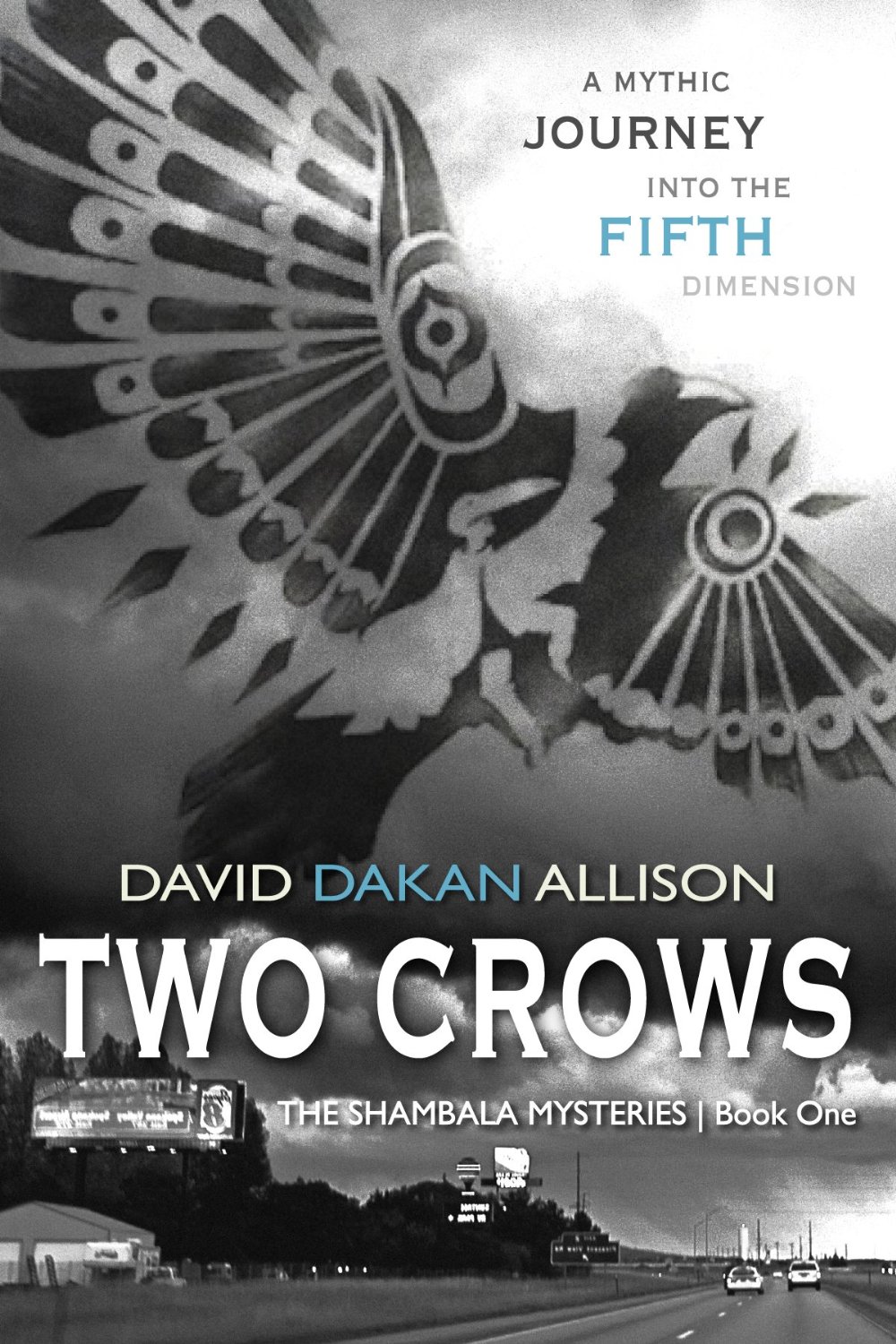 Two Crows by David Dakan Allison
Lucky Two Crows is Portland’s best, and only, Native American Private Investigator. Hired to solve an attempted murder on the Blackfeet reservation, Lucky returns to Montana, to the tribe of his birth. With the help of the mysterious millionaire Clarence Two Moons, and his beautiful daughter Summer, Lucky must confront the inheritance of poverty and loss that has cursed his people, and his own terrifying and history-altering destiny.
In 1876, Grandfather Wolf Eyes looks in to the fires of the Blackfeet tribe and sees the return of his grandson. As a child, Two Crows was taken by the Crow Indians, and grew up to serve as a scout in the 7th Calvary. Foreseeing the Battle of Little Big Horn, he deserts and returns home to his people, and to his childhood sweetheart White Feather. As visions of past and future collide, Two Crows must choose between the Way of War—and the Seventh Path, the Way of Medicine.
Across centuries of violence, two Indian warriors must save their people from military aggression and corporate greed, as they journey together in to the fifth dimension.
Look for book two of the Shambala Mysteries, High Pony, in February 2015.
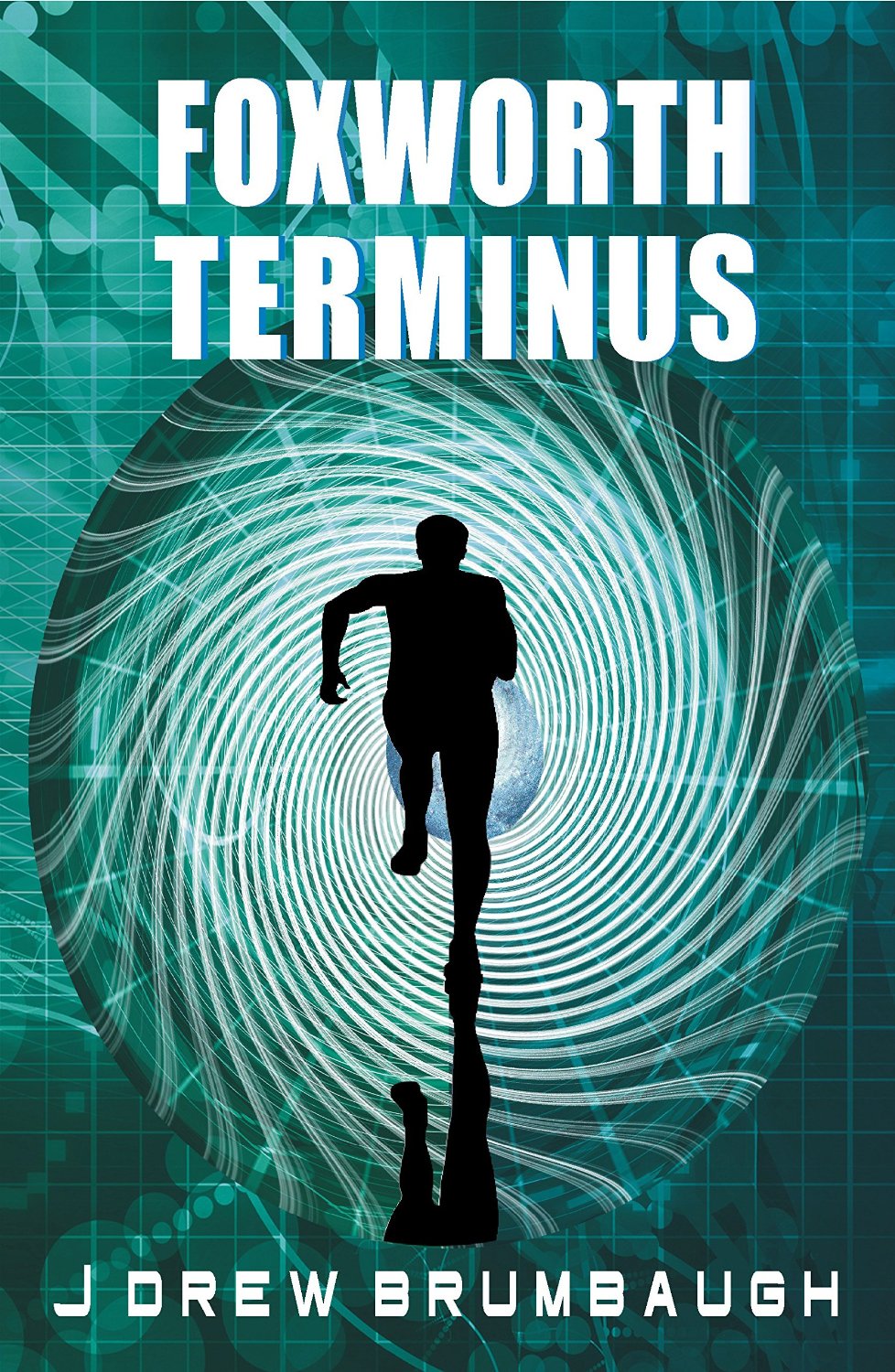 Foxworth Terminus by J. Drew Brumbaugh
Reggie Foxworth, brilliant bio-chemist, has spent the last fifteen years working on a top secret project to enhance paranormal brain function. With success in sight, the project is being cancelled. Knowing his career and future are about to be terminated and with nothing to lose, Reggie takes the mind expanding drug himself before they can destroy it.
Initially, the physical consequences are not evident but as time passes Reggie finds out just how powerful the mind can be. More like magic than science, Reggie discovers that he can do impossible things. These strange powers don’t go unnoticed and soon every government on Earth is out to steal the secret and eliminate Reggie as a threat, including his own. They send assassins, turn his friends against him, alienate his girlfriend, try anything to stop Reggie. How can he escape, end the attacks and find a way to win back the love of his life?
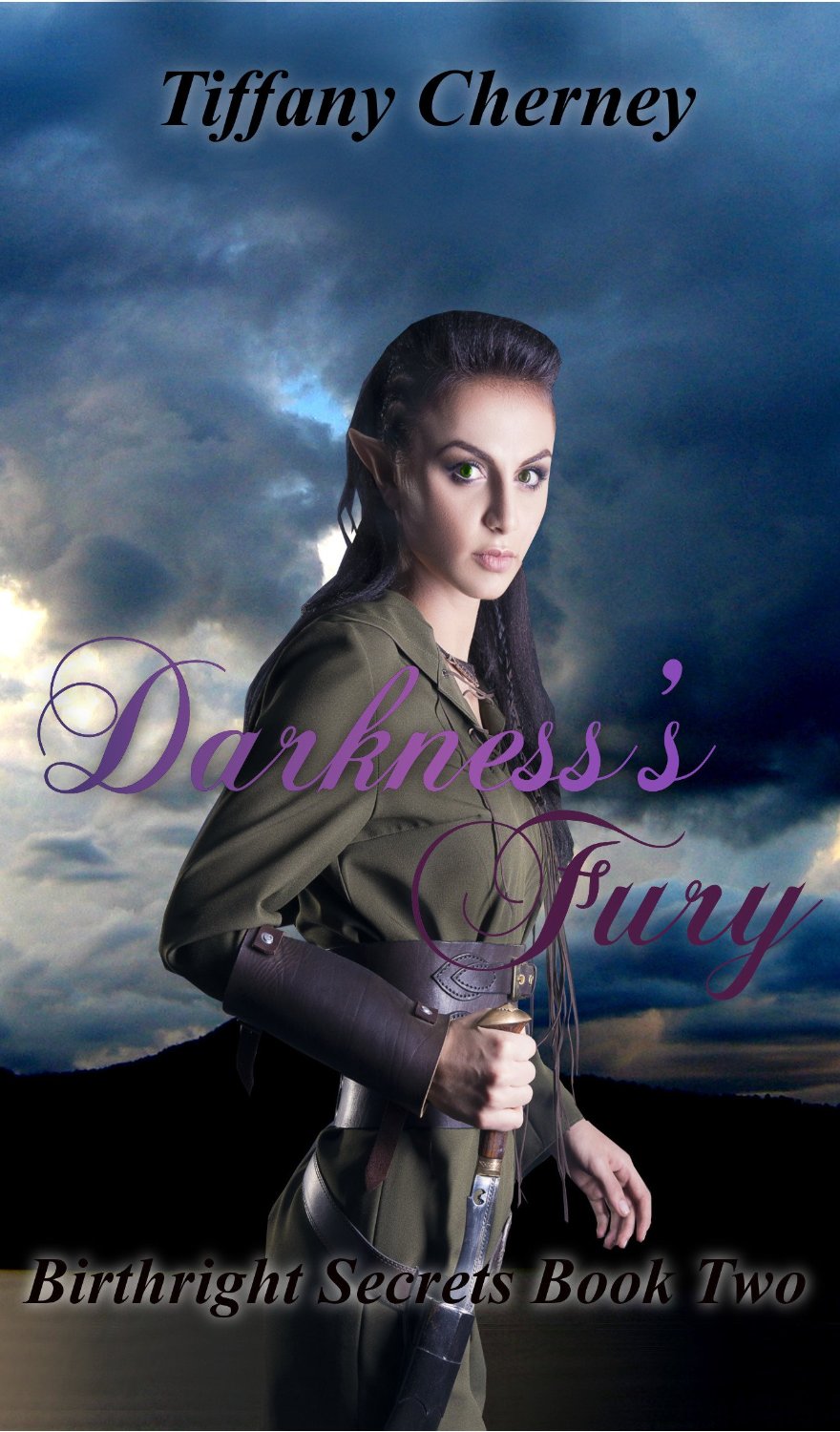 Darkness’s Fury by Tiffany Cherney
Despite the rather turbulent year, Liz and her fellow Segennyians look forward to the future as their rebuilding efforts continue. Still, whispers and shadows of plots continue to reach her ears, and those that know their unseen enemy won’t—or can’t—give the needed information to reveal them. Only one thing is certain: A storm is brewing and now it’s a matter of being able to stop it.
Even with the threat hanging over her head, Liz refuses to give into fear. Life goes on, and soon the first true holiday Segennya has celebrated openly in years is upon them. It is a time to reflect, to hope, and to make new promises as everyone gathers together once more. As the land awakens for spring the first rumblings of the storm come. The old allies are split, as magic gathers in the south near the old Uranysian capital. Regardless, all of Segennya marches to war; to hopefully force their enemy finally into the open.
This is the sequel to Vengeance of Segennya.
 Sword and Silence by Joyce Chng
With the loss of her loved ones strong in her mind, Torin, a young swordswoman, finds her life changed when the Two-Headed arrive to conquer her planet.
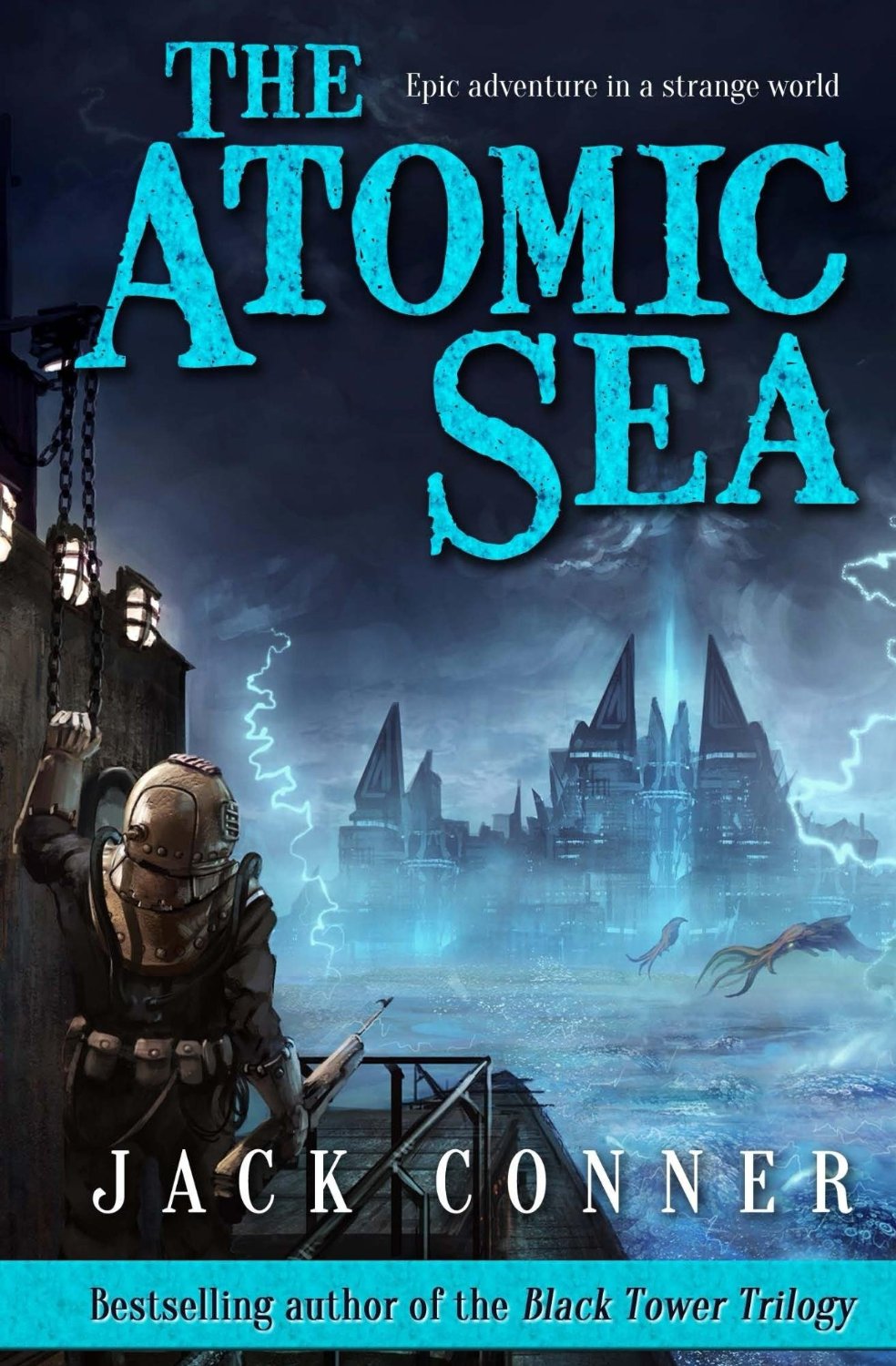
A thousand years ago, the sea began to change, and the change spread.
Now the boiling, toxic, lightning-wreathed Atomic Sea has encompassed every ocean on the planet, and the creatures that live in it have become mutated and unnatural. The sea’s taint can infect any human who comes in contact with it or with unprocessed seafood, killing them . . . or altering them. No one knows why the sea has become this way or what it portends, only that it’s irrevocably changed the world.
Meanwhile, world war has erupted, and the small country of Ghenisa, like many others, is tottering on the brink of collapse under the onslaught of the Empire of Octung. Dr. Francis Avery, a middle-aged widower, is aboard a military whaling ship far out on the Atomic Sea when a series of murders onboard propels him down the rabbit-hole of danger and terror unlike any other.
Soon he becomes aware of a spy on the ship, but that’s just the beginning. With the help of the grizzled whaler Janx and a mysterious woman named Layanna, he will embark on an epic quest to save Ghenisa from Octung and unravel the secrets of the Atomic Sea.
 The Witching Elm by C.N. Crawford
At a Boston school brimming with centuries’ worth of magical secrets, New England’s buried past rises up to grab the present by the throat.
Fiona Forzese walks the halls of prestigious Mather Academy with a deep yearning for a more exciting life. Her wish is suddenly granted when she meets an intriguing new student named Toby Corvin—who just happens to be a sorcerer. Toby soon introduces Fiona to an astonishing universe of ancient spells, talking ravens, and sinister bone wardens.
When a deadly army from Toby’s strange world descends upon Boston, he and Fiona race desperately to stop the slaughter. In the process, they face unspeakable danger while unearthing New England’s darkest secrets.
 The Dark of Twilight by Kate Danley
Aein always longed to become a member of Lord Arnkell’s army, ever since she was a child working in the stronghold’s kitchen. When that day finally comes and she is sent to patrol the border’s swamp with fellow warrior, Lars, it seems like her dream has come true. But something has followed her home. When Lord Arnkell’s wedding is interrupted by a werewolf attack, the dream shifts into a nightmare… and Aein is the only one awake.
Book One in the Twilight Shifters series.

Still grieving her beloved son, Kate O’Connor’s just going through the motions. She doesn’t care that strangers often shadow her on the unorthodox courier jobs she does for a friend. She doesn’t even care what’s in the packages until the day she returns from a special rush job with no memory of the event. But it must have been pretty wild, because now there’s a werewolf in her kitchen trying to kill her—and he’s just the first in line.
Dragged into a supernatural war of succession between the daughters of the dragon queen, Kate discovers a Sydney she never knew existed, peopled by all kinds of strange half-human creatures. To have any hope of surviving she must uncover the explosive secret hidden in her memory—but first she has to live through the night.
Twiceborn is the first book in the urban fantasy trilogy The Proving.
 The Blood of Brothers by Domino Finn
In the bucolic town of Sanctuary, a body is strung up to a tree outside the local high school. The only thing more shocking than the crime is its heinous nature: the mysterious victim has been skinned and drained of all his blood.
Detective Maxim Dwyer knows the murder is a message, but who it’s from is not so clear. The few clues he has point to his friends, the Seventh Sons Motorcycle Club. Diego de la Torre is part of that pack now, but brotherhood comes at a price when blood is spilled. Meanwhile, Kayda Garnett returns home with a college degree to find her family torn apart by the same tragedy. Only half-Yavapai, she is considered an outsider, but finding a peaceful alternative to the violence may finally win her the respect of the tribe.
Despite best laid plans, California bikers incite a gang war, the FBI undermines local police, and vigilantes take the fight to the streets. What starts out as a simple murder may soon run Sanctuary red with the blood of brothers.
This is the sequel to The Seventh Sons.

“There is a voice in my head, slithering through my mind like a serpent. It whispers dark things. Tells me to feed.” -Osiris, Egyptian Lord of the Underworld.
Were the Egyptian gods fanciful imaginings of primitive people, or something more? Some believe that they once walked the earth as mortals, that they warred and loved just as any of their worshippers.
This is their story, the tale of how Isis gained the power of shaping. How mighty Osiris died and lived again. How they discovered the fabled First Ark, a structure older than man. It is the tale of us all, the story that shaped our race from cave dwellers into the people we are today.
Are these fanciful tales? Or long lost truth wrapped in myth? Only time knows.
This is the prequel to the Deathless series.
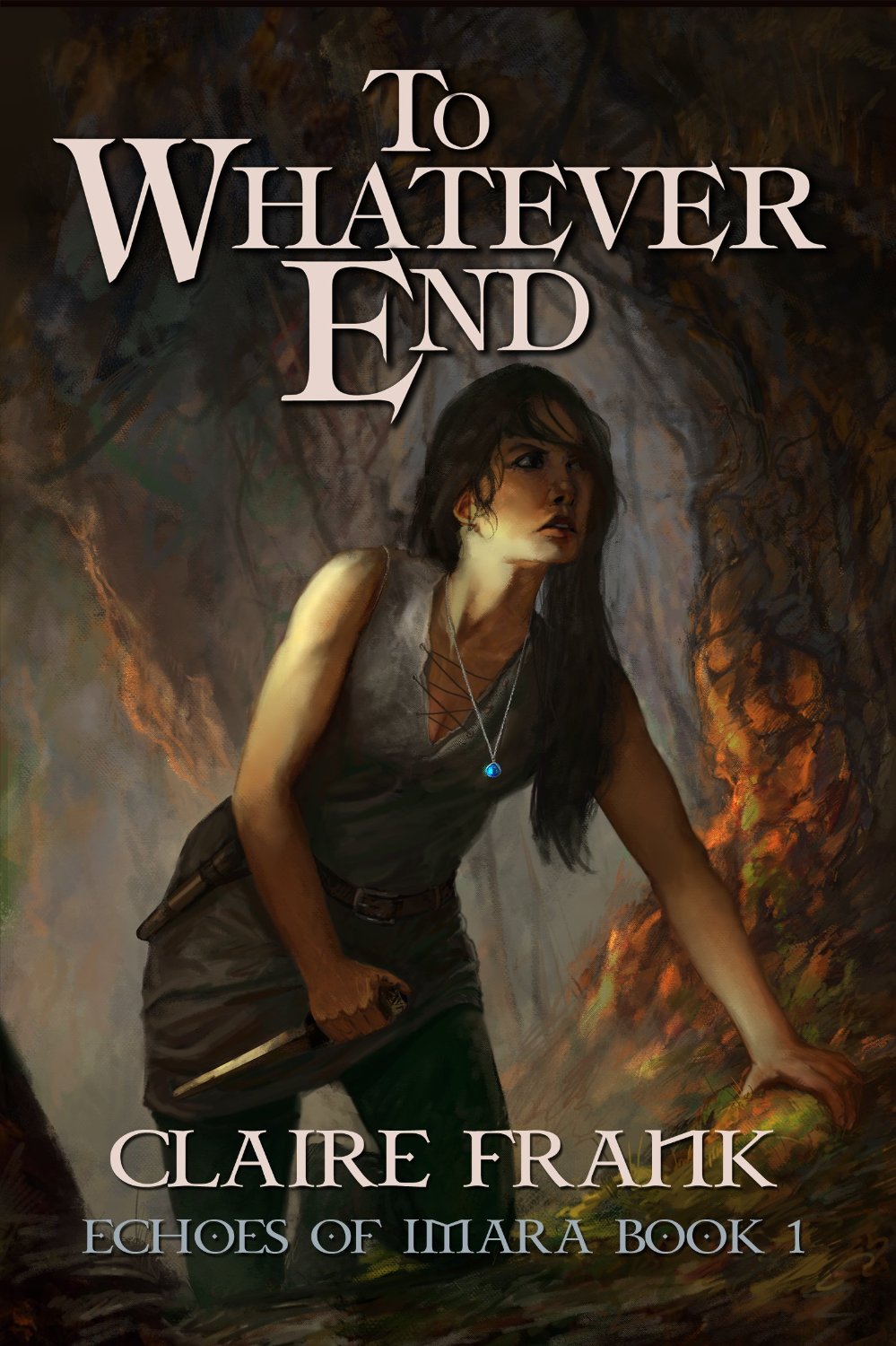 To Whatever End by Claire Frank
The thriving kingdom of Halthas was founded by Wielders and Shapers: people who can manipulate either energy or matter. Cecily’s noble birth and strong Wielding ability made her a favorite of the king, until she and her husband Daro were caught up in the war that saw him deposed. Although they were hailed as heroes and a new king sits on the throne, Cecily and Daro chose to leave the politics of the Halthain court for a peaceful life, far outside the city.
Their quiet retirement is interrupted by an unexpected attack, leaving Daro captive and Cecily injured after a narrow escape. With no trail to follow and few clues, Cecily desperately tracks rumors of a madman who is trying to bend the laws of Wielding magic. The subjects of his human experiments rarely survive with their sanity, if they survive at all.
Only their bonded soul assures Cecily that Daro is still alive – but for how much longer and in what condition, she can’t tell. Her best hope is to gather old friends, try to repair the bridges she burned when she left her old life, and muster every resource to find her husband. No sacrifice is too great to bring Daro back, if his mind isn’t already gone.
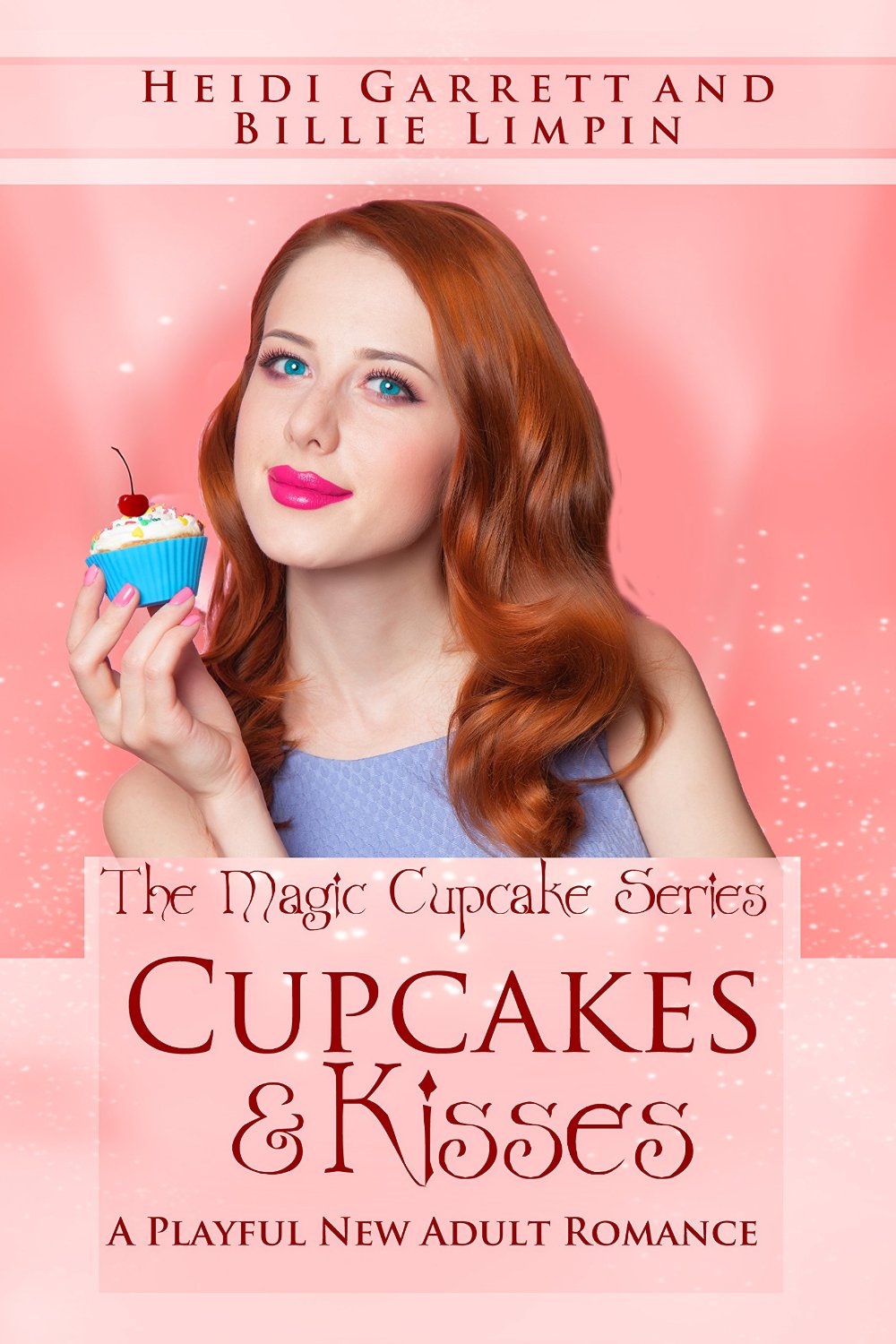 Cupcakes & Kisses by Heidi Garrett and Billie Limpin
One bite of her luscious cupcakes and you just might fall in love…
Nineteen-year-old Glynna Balcora’s super power is baking. A young witch, she’s lived her entire life tucked away in the quaint city of Spokane, WA with her domineering aunt and sweetheart of a grandmother. It’s not an ideal situation. Although Glynna loves her grandmother dearly, and treasures the special times they spend in their magical greenhouse, Glynna’s aunt keeps her niece on a tight leash using threats of vague enemies.
Since Glynna graduated from high school a few a months ago, her aunt’s be-home-before-dark curfew seems more ridiculous every day. It isn’t doing much for the young witch’s social life, either. With encouragement from her best friend, Glynna sneaks out one night to go to a bonfire party at the lake. There she has an unexpected encounter with Spokane’s most eligible bachelor, Ashton Bass. Glynna’s been crushing on Ashton since she was five years old. But when they share their first kiss, thunderstorms and lightning follow… and Glynna’s aunt realizes it’s time to tell the young witch the truth about who she really is.

Denied his usual array of hi-tech weaponry, agent David Held is sent to a backwater planet, seeking a royal baby who vanished years earlier. Now grown up, the heir is threatened by hostile agents hunting the last claimant to the throne.
In the race to find the missing heir, Held is forced to help another prince, Jeren, secure the claim to his own throne. Over time, the destinies of the two heirs become intertwined.
To accomplish his mission, Held faces a deadly enemy with no qualms about bringing hi-tech warfare to a pre-industrial world. Armed with only his sword and telepathic ability, he is reminded of advice from his old weapons master:
“Never take a sword to a gun-fight.”
 Deadly Love by Wesley Robert Lowe
I’m Jasmine Huang. Five years ago, I was murdered in Beijing when I was twenty. I gave birth eight months later. I was haunted by not knowing who the real killer was and stalked my ex for years, finally winding up in Vancouver’s Chinatown when I discovered the truth. That allowed me comfort in leaving the natural world and I was en route to the Next Place when I heard my daughter Mei-Mei call me back to earth. She’s all that’s important to me and I will not leave unless she is with me.
In the first place I look is this old Chinaman ghost. This horny lech tells me I’m beautiful and wants me to help him. Ugh! I keep looking for Mei-Mei but find nothing but a fourteen-year-old hooker and her demon pimp. Surly, obnoxious, evil.
But I need these sick, twisted creatures to help me find Mei-Mei in this dangerous spiritual netherworld. I hate it.
This is the first book in the Chinatown Haunting series. The sequels Guilty Love and Deceitful Love are available as well.
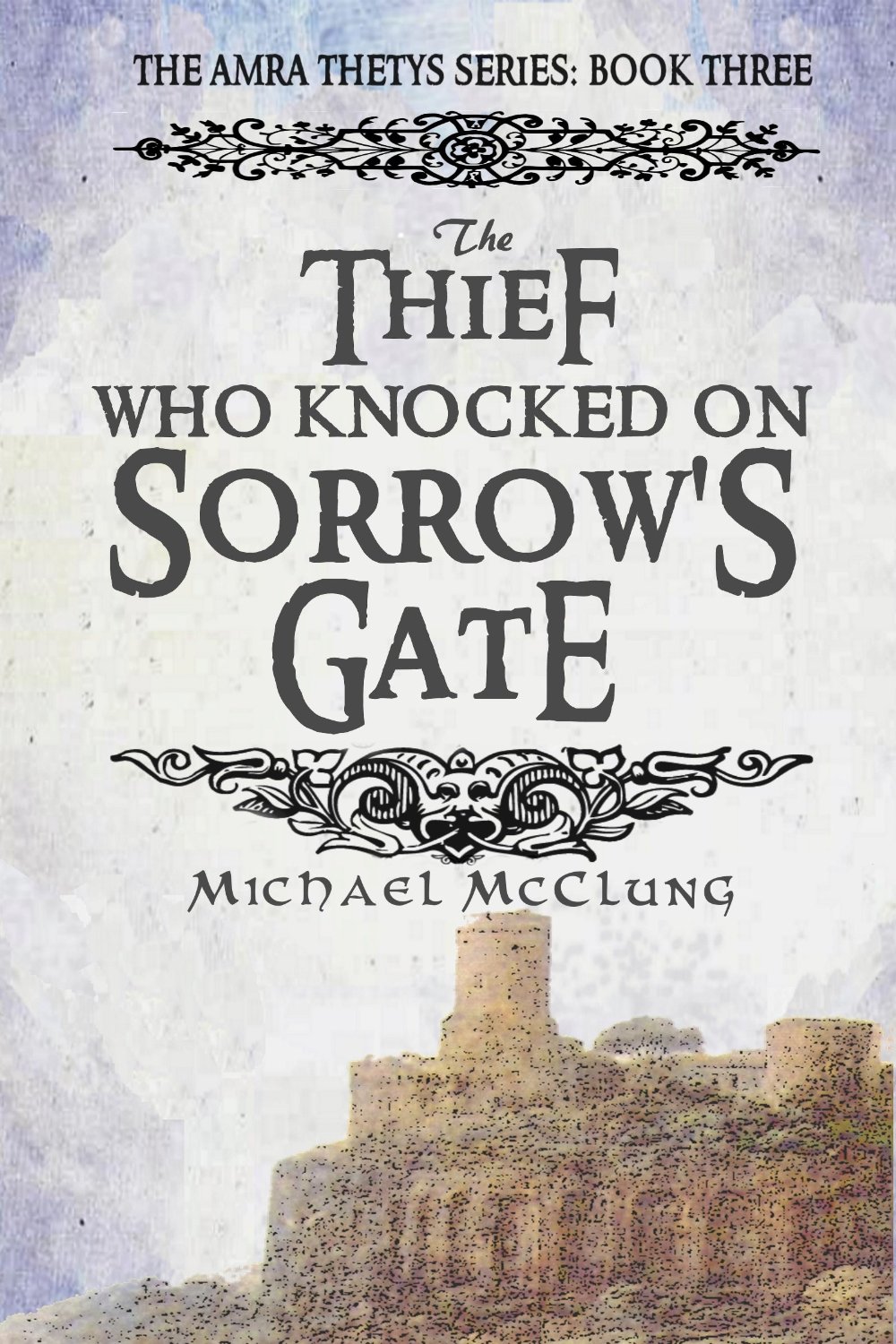 The Thief Who Knocked On Sorrow’s Gate by Michael McClung
After surviving Thagoth and returning rich to Lucernis, Amra and Holgren have settled down to a very comfortable, if decidedly unexciting life — until the night Amra receives an old enemy’s head in a box. A longstanding debt calls her back home to Bellarius, the scene of many childhood horrors she would much rather forget about.
But as bad as memories of the past might be, present-day Bellarius is rapidly becoming worse, for the Eightfold Goddess has not forgotten about Amra, and another of Her Blades, the Knife that Parts the Night, has been discovered and threatens to tear the very fabric of reality apart.
All that stands in the way of utter destruction is one small, scarred thief and her mage companion…
This is the third installment in the Amra Thetys series, following The Thief Who Pulled On Trouble’s Braids and The Thief Who Spat In Luck’s Good Eye
 Mirrorheart by Grace McDermott
Stef Mimosa died.
Struck down by a shard of mirror – a literal piece of solid potential – Agent Ryan makes a wish for her to live, and is left with a corpse whose soul is slowly finding its way home, one that he must hide at all costs.
Ryan is under scrutiny for the death of his recruit – an audit that could lead to his execution.
Within the Agency, Curt – who helped initiate the investigation – sees only life going on without Stef, and Ryan’s apparent lack of care on subject.
Following immediately from the events of Mirrorfall, wishes have consequences in Require: Cookie, Book #2 – Mirrorheart.
 Jacob’s Odyssey by Russ Melrose
For Jake, a perilous journey of survival will soon turn into a quest for redemption…
A terrible virus has struck and the world has deteriorated into chaos. And with the infected outnumbering their human counterparts, chances for survival lessen with each passing day. After running out of food in his condo, Jake must make his way across the Salt Lake Valley to reach the safety of the mountains, and he must use his wiles to avoid the packs of infected roaming the streets. But Jake is haunted by a devastating personal tragedy, and his journey of survival will soon turn into a quest for redemption. Just as he’s about to reach the safety of the mountains, a phone call changes everything. A woman and her child need help and Jake finally sees his opportunity for redemption. But will his helping them put them in harm’s way? Jake is being stalked by a brutal and sadistic alpha (by far the most dangerous of the infected). And in the end, Jake will have to decide how far he’s willing to go to keep them safe and earn the redemption he seeks.

Beth Ryder’s dangerously sexy and seemingly all-powerful boss has disappeared, leaving an increasingly desperate group of Nolanders — and one inept Second — in charge of policing other-worldly activity across much of North America. What better time for a legendary monster to emerge from the Second Emanation and make New York City its hunting ground? But little does Beth know that dealing with the voracious Thirsting Ground will pale in comparison to a shocking betrayal that threatens to destroy her new life among the Nolanders.
Solatium is the second book of the Emanations series. The first book, Nolander, is available at no cost on all platforms.

In the summer of ’92, a young girl named Isabelle disappears into a vacant building and is never seen again. She becomes another name alongside many others who have vanished when stepping through the building’s doors.
Boyd Dwyer knows a thing about missing people. At least he did when he was a cop, but that was before Morgan died, and before his ‘little drinking problem’ forced him into an early retirement. Now the only job he can get is the one no one else wants — protecting a building with a violent and disturbing history.
It’s not so bad until he starts getting phone calls late at night. It seems someone really wants to talk to Boyd and confess something awful.
Will he answer?

Tom Granger, a prisoner trapped in Kingsworth penitentiary, finds himself defending the prison against an alien invasion.
He soon discovers the situation is even worse than he’d realized when he encounters the enemy’s most terrifying weapon yet…
Back Again is a short story of 3000 words.
 The Return of the Key by Alisha Nurse
16 year old Eliza Aurelio grapples with her mixed race identity amid rising racial tensions on her little island. For their safety, Eliza’s grandfather sends her and her grandmother to a quiet town in Southwest England to stay with a relative. But this otherwise quiet town has been turned upside down by people mysteriously disappearing. Eliza eventually encounters a magical but dangerous realm accessible through a doorway in the town, and sees its connection to the abductions. She intends to put things right, only wanting to protect her family. To do this, she must return a stolen key to lock the open doorway. But Eliza has to overcome her own inner conflicts if she is to stand any chance of being successful and leaving the other realm alive.
Suspenseful and enchanting, The Return of the Key explores the power of love, sacrifice and the journey to self acceptance.

The hunt for Morray continues . . . Book three picks up in the year 2345, seventeen years after the disappearance of former city center leader, Chief Morray. There has been peace among the West Coast regions for years, but in Ojai Village there is very little peace between Ava and her sixteen-year old daughter Grace. Both have different ideas about what it takes to maintain independence. Ava spends hours inside the mainframe searching for Morray, while Grace focuses on the art of combat. Grace’s dream is to get accepted into the Silicon Valley Academy and become a soldier like her father General Joseph Strader. During tryouts for the academy Grace comes across some digital footprints inside the mainframe, convincing Ava that Morray has returned to seek revenge and reclaim control. When Ava goes missing, Grace assembles a motley crew of cadets to go on a search and rescue mission up north in Seattle to save her mother and take down Morray. Grace soon learns that independence comes at a price.
This is part 3 of the New Agenda series, following The City Centre and The New Agenda.
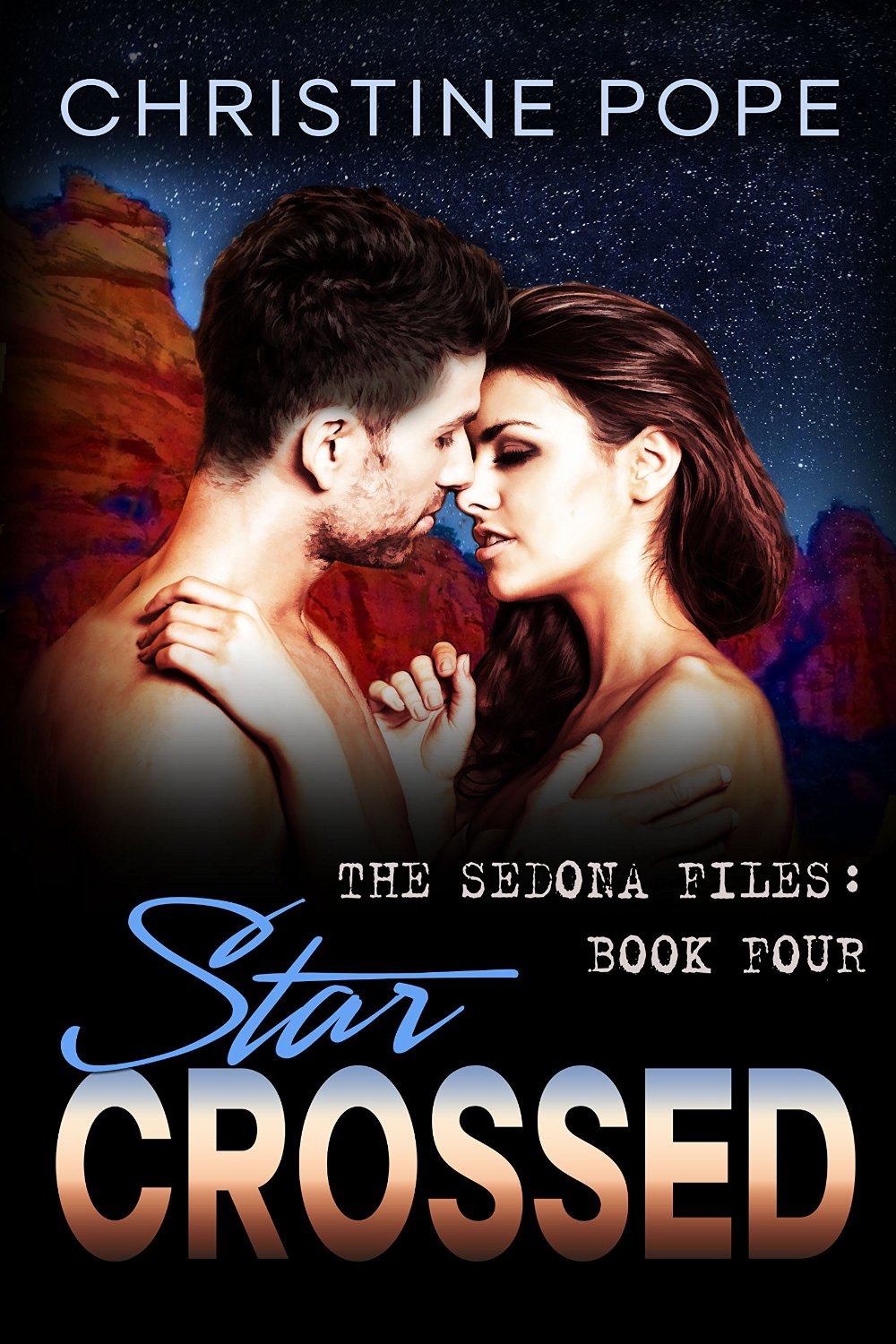 Star Crossed by Christine Pope
Grace Rinehart has known for most of her life that she isn’t quite like anyone else — her father was a human/alien hybrid, and although she might look like a normal young woman, she still carries the alien trace within her blood. Even so, she’s done her best to ignore her not-of-this-world heritage…until she returns home to Sedona and loses her heart to the one man she knows she shouldn’t love. But as more secrets are revealed, and she finds herself doubting the choices of her heart, she finds herself caught between the expectations of those around her and the deepest truths within her soul. In the end, she’ll discover that the stakes are even higher than she imagined… not just for her and the man she loves, but the entire world.
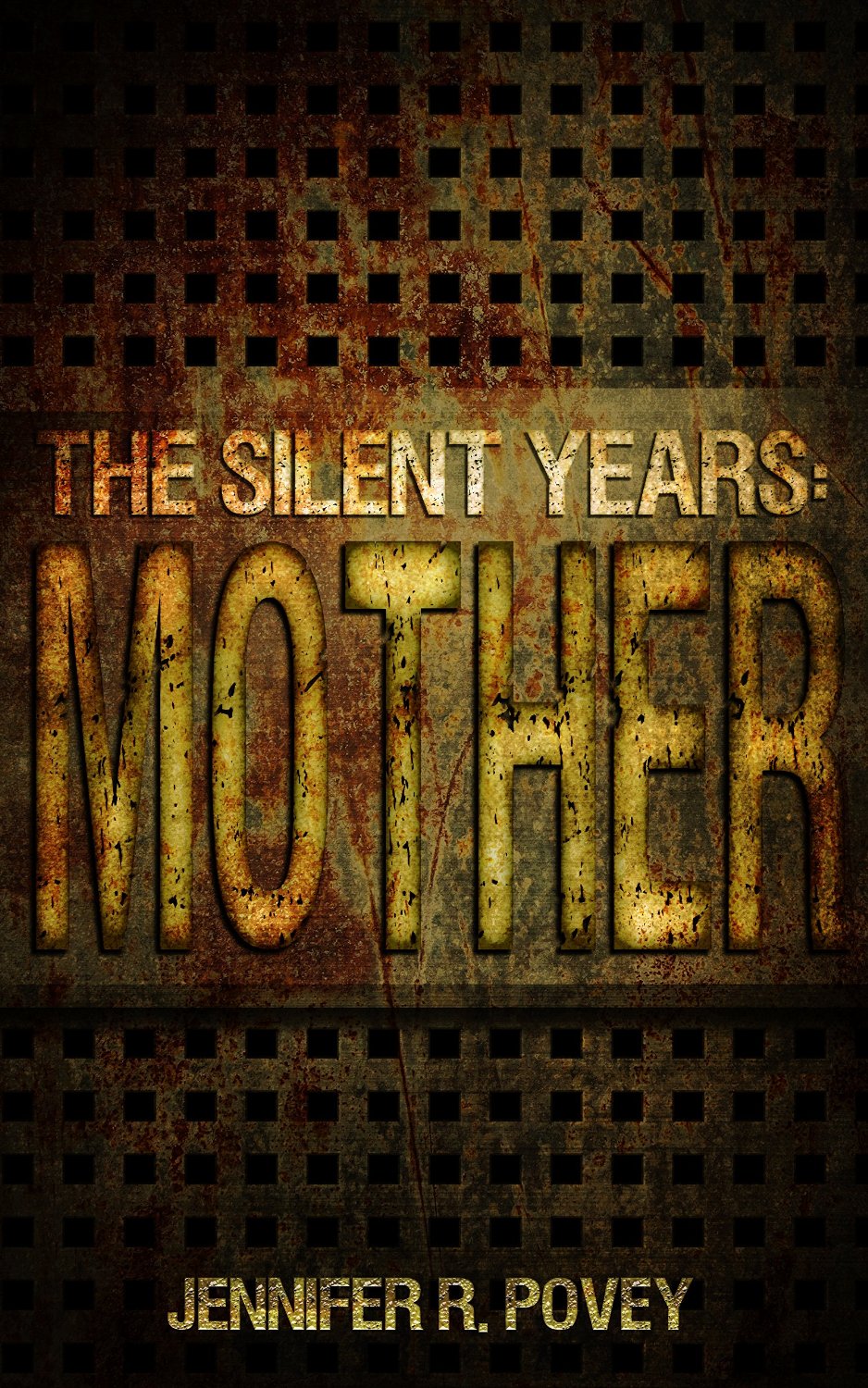 The Silent Years: Mother by Jennifer R. Povey
Dorothy Mayling thought her worst problem was the long-standing family feud over her sister’s choice of husband. Or her sons’ grades. Then the rumors started – bird flu in Seattle, SARS in Washington State? The truth is a hideous, terrible disease, one that slowly steals away the ability to speak and reason, turning people into nothing more than zombies. Worst of all, it was meant to be a weapon. Can Dorothy hold her family together as the world ends around them and people fall, one by one, to the silent plague?

“There was no way out of Centralia. The fibreglass walls and ceiling had been built with containment in mind. None of the Founders had wanted to risk an encounter with the Beasts, nor had they wanted us to be able to damage the environment, or the environment to be able to damage us. Nobody wanted a repeat of what had happened on Earth. Of course, nobody had ever wanted to leave. Until now.”
When a water shortage threatens the existence of the last humans in the known universe, Katchia and her friend Frost must go out in search of a new water supply. Nobody has left the settlement since the Founders first settled on Mars. The go in search of water, but instead find a dark secret that will change their world forever.
 Clockwork Gold by Jenny Schwartz
There’s a conspiracy in the Goldfields of Western Australia, and the money men of London don’t like it. Dirigible pilot Rebecca Jones likes it even less. She has a messenger service to run, justice to pursue in a lawless land, and she can do without Special Agent to the Crown, Nathan Burton, hijacking her dirigible—and her heart—and disrupting her carefully laid plans. The result is adventure, romance and explosions.
A Steampunk novella.
 Mystery at Skeffield Manor by Hollis Shiloh
Old friends, new friends, magic and mystery…
Join Wes and Kit, Robert and Louie, and their friends and family at Skeffield Manor. Except that there is mischief afoot here…in the beautiful country home and with a mysterious magical object.
A story told from multiple points of view.
Takes place after “Wes and Kit” and “Robert and Louie.” Other stories set in the same universe: “Like A One-Eyed Cat” and “Gear Heart.”
This story contains some magic, some steampunk elements, and has a low-medium heat rating.
Length: approx. 62,000 words

Darna shouldn’t have been born – priestesses aren’t supposed to have babies – and she most certainly shouldn’t see dragons. After all, no one else does, except in Anamat, or so the minstrels say.
She sets out for the city of Anamat. Along the way, she meets Myril, an older girl with frequent premonitions and an eerie sense of hearing.
Then there’s Iola, who is so dragon-struck that she actually wants to be a priestess. She’s blind to the corruption in the temples.
Thorat is Iola’s champion. He sees dragons as much as the girls do, but unlike them he blends easily in to a crowd.
Apart from these four, the city seems to be nearly as dragon-blind as the provinces. Darna scavenges for scraps, but apprenticeships cost more than she’s likely to earn. When she’s offered a sack of gold beads for a small bit of thieving, she takes her chances… and ends up angering the dragon herself.
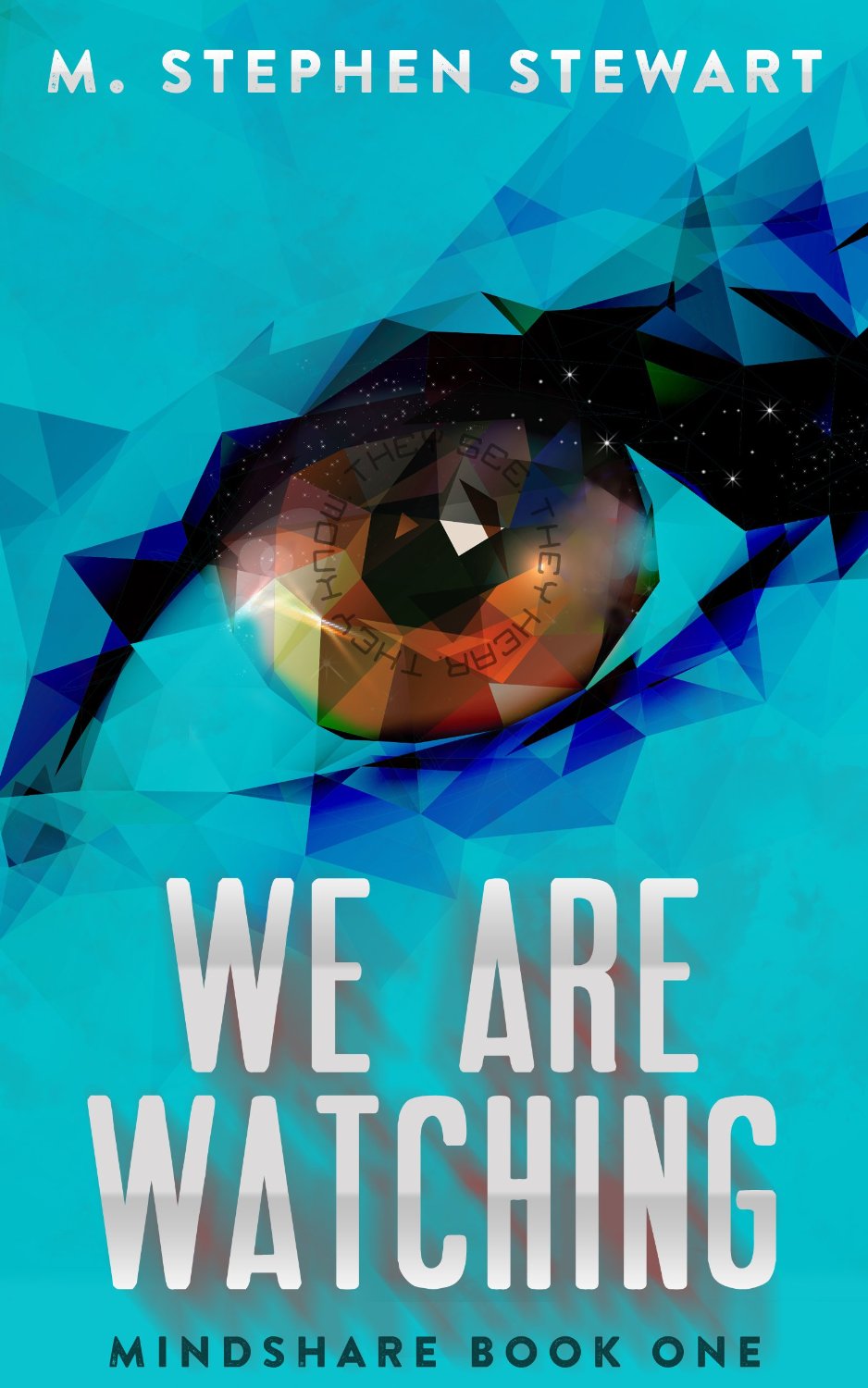 We Are Watching by M. Stephen Stewart
Seven years after his father’s death, Planetary Link Trainee Technician Henry Malone repairs the neural implant of a stranger, and finds her mind isn’t like any other. She’s in possession of illegal memories, unauthorized knowledge, and a message: speak to me later, and tell no one.
He’s thrust into the center of a growing conflict between the domineering Planetary Link Corporation and Sever, a violent organization devoted to Plink’s total destruction.
All the while, Henry begins hearing the voice of his dead father.
Using their implants, Planetary Link sees what you see, hears what you hear, and knows everything you know.
WE ARE WATCHING.
 The Highwayman Incident by Kristy Tate
Celia Quinn’s business lies in ruins at the hands of Jason West, the latest in a long line of scoundrels. As she seeks to restore her family’s livelihood, Celia stumbles upon lore about the local Witching Well, whose water is said to cause hysteria and psychosis. When a mysterious stranger slips Celia water from the well into her drink, she’s transported to Regency England. Her timeless adventure spans miles and centuries from modern-day New England to Merlin’s Cave in Cornwall, England. Only Jason West can save her.
But Celia and Jason must tread carefully, as what happens in the past can reverberate through the ages. Their lives, hearts and futures are caught in time’s slippery hands.
 The Dragons Return by J.J. Thompson
Over 3 years ago, the old Earth began to die. Technology started to break down. Electricity failed. Machines stopped working. Planes, trains and cars became useless hunks of metal. And then the dragons came. On the Night of Burning, the world’s great cities were reduced to slag and rubble by dragon fire. Civilization, as we knew it. ceased to be.
But before the end came, there were the Changlings. A few humans, children and adults alike, began to mutate into…something else. Ears became pointed, fingers fused or elongated. Their old languages were lost to them and they began to babble in unknown tongues. Perhaps one in a hundred thousand Changed. Simon O’Toole was one of them.
Back then, he was a large middle-aged man. Now he’s a skinny, awkward teenager, Simon has lost everything; his family, his friends, the world that he knew. But he has gained something as well. Through hints in dreams, he has learned magical runes that can summon elementals. He can cast fireballs and lightning. In short, Simon has become a wizard.
Slowly, carefully, he is learning to use this new power. It will take years to master his magic. Years that Simon may not have.
The dragons are still on the hunt. They search for survivors of the human race, and when they have been exterminated, the dragons will turn on the last remnants of humanity: the Changlings themselves.
 Blood in the Water by Tami Veldura
Kyros Vindex, treasure-hunter, has a problem. He’s carrying a torch for a fellow pirate with the sexual awareness of a teaspoon. Rumors say the man has killed hundreds. He’s determined to knock some sense into the work-a-holic that captains the Midnight Sun, but damned if he knows how.
Eric Deumont has more pressing concerns than the treasure-obsessed Kyros. There’s a creature inked into his chest that no witch in the seas will lay hands on for all the gold in the world. He knows it gives the Midnight Sun a cursed reputation and that doesn’t make living any easier. He has heard stories of spirits trapped for lifetimes inside spelled puzzle jars. Eric tracked down three of the pieces for such a jar with a lead number four. The fifth is still out there.
Even then, the spirit of vengeance that lives in Eric’s skin has no intention of giving up such easy access to the mortal realm. It craves blood and the light of the moon allows it to wreak unchecked havoc. Cursed is an insult. This is madness.
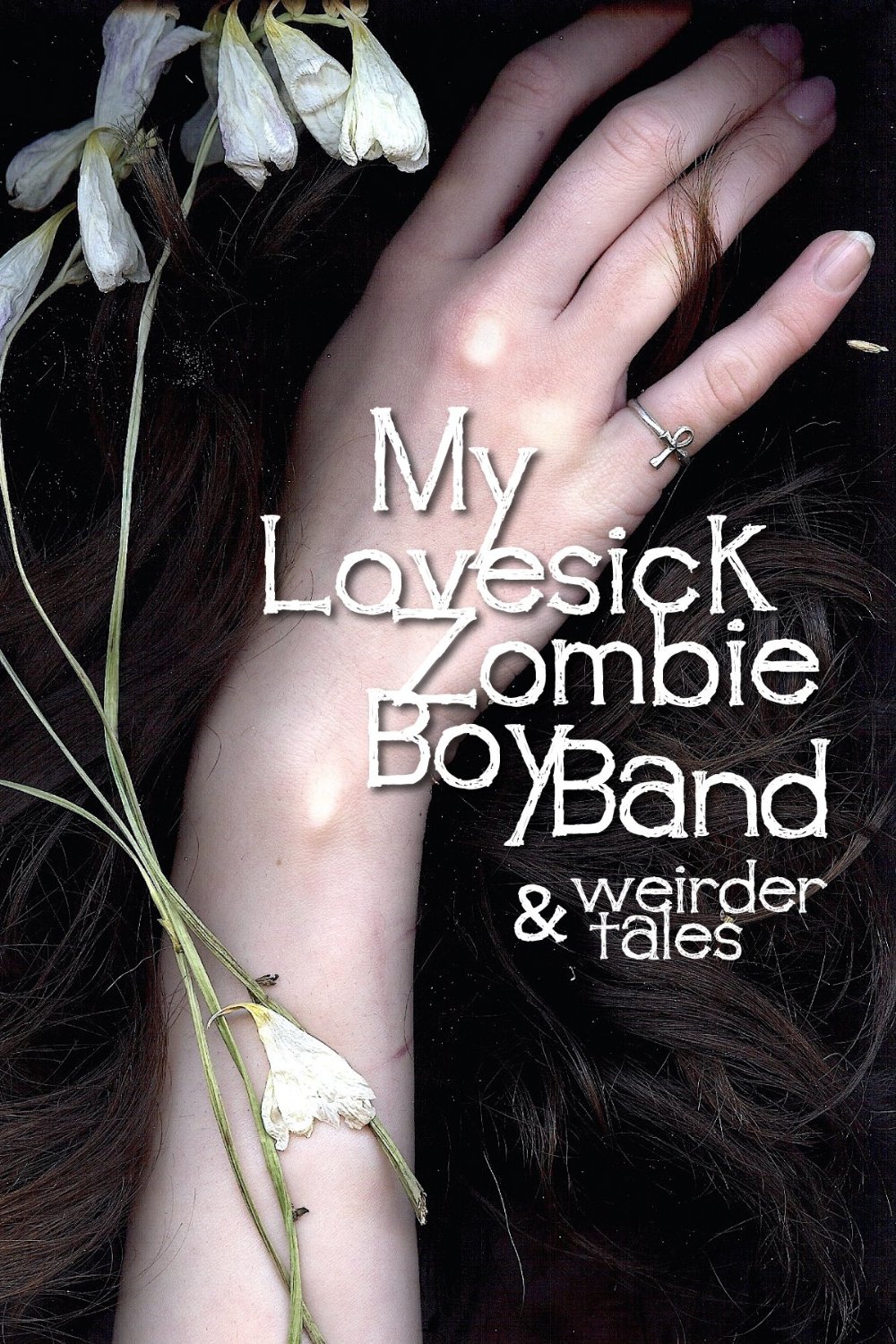 My Lovesick Zombie Boyband & Weirder Tales
Fred is a goth. A real goth, descended from a real Visigoth tribe, not one of those mopey kids in black eyeliner she ignores at school. But when her talents as a witch and her fetish for stupid boys with spikey hair get out of hand, Fred finds herself on the run from her very own lovesick zombie boy band. Nine weird tales of lost gods, demonic dating sites and dusty antique shops all in one tiny book.
A minuscule collection of teeny weeny stories by Damien Walter.
CONTAINS ADULT THEMES

In the world of Altadas, there are no more human births. The Regime is replacing the unborn with demons, while the Resistance is trying to destroy a drug called Hope that the demons need to survive.
Between these two warring factions lies Jacob, a man who profits from smuggling contraceptive amulets into the city of Blackout. He cares little about the Great Iron War, but a chance capture, and an even more accidental rescue, embroils him in a plot to starve the Regime from power.
When Hope is an enemy, Jacob finds it harder than he thought to remain indifferent. When the Resistance opts to field its experimental landship, the Hopebreaker, the world may find that one victory does not win a war.
It’s been over twenty years since Elgin and Singhal and their crowdsourced sunshield saved the world from runaway climate change. Or at least bought the world a little time.
Now, in a bold new world where the people have started to gain power over the old elites, and the first uncertain steps are being taken to move offplanet, there are alliances at work to take control of the sunshield — even if that means destroying it — and to reverse the progress that has been made.
Send to Kindle
December 29, 2014
Photos: Magical Light in the Westermark Woods
The Westermark woods near the town of Syke are my favourite local hiking spot and have been featured several times in these pages before.
Today was frosty and sunny, i.e. ideal hiking weather, so I drove out to the Westermark woods. I also took my camera along and managed to capture some truly magical light in the woods. So take a look:

My car parked at the entrance of the Westermark woods near Syke, North Germany.

Light falling through the bare trees

Light falling through the forrest.

The stump of a freshly cut tree.

A hunter’s seat in the woods.

Another hunter’s seat

Light and shadows

More light and shadows.

The sun shines through dense fir tree growth.

A rather dark path.

A tree felled by a storm a few days before Christmas blocks the path.

Panorama with hut and sun.

It’s the field at the center of Westermark forest.

In winter, the light falls along a path directly onto the field at the center of the woods in a Stonehenge like phenomenon. Maybe we should call it Westermark henge.

And here is the path in question.

A path at the edge of the woods.

The edge of the woods and the fields beyond.
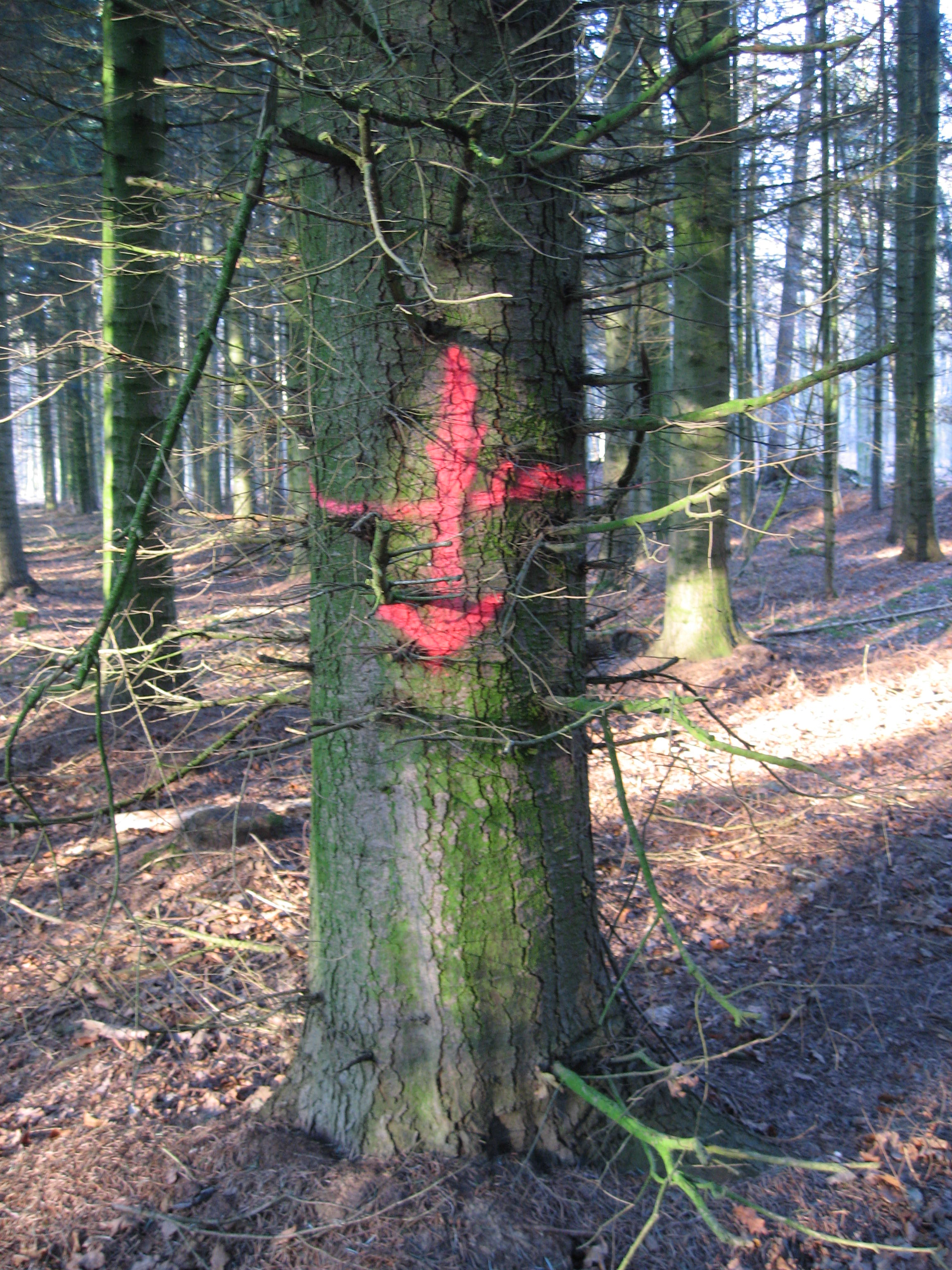
The treasure is here. Okay, so it really is just a sign sprayed onto the tree for the woodsmen.

Trees lit up by the sun.
Send to Kindle
December 27, 2014
Some Thoughts on “Snow White and the Huntsman”
The days between Christmas and New Year are traditionally the time when the TV stations trot out the Hollywood blockbusters or wannabe blockbusters from two or three years ago in what they term “German free-TV premiere”. It’s also a time to catch up on those movies which looked kind of interesting at the time, but not interesting enough to see them at the theatre or get them on DVD.
And so it was that I chanced to watch Snow White and the Huntsman from 2012 tonight, starring Kristen Stewart as Snow White, Chris Hemsworth as the Huntsman and Charlize Theron as the Evil Queen in a very loose adaptation of the fairy tale.
Now I have expressed my issues with the current vogue for updated adaptations of classic fairy tales before, namely that some of these adaptations feel like clueless cultural appropriation and that I resent the fact that these adaptations, whether good or bad, often tend to displace the original tales in the minds of many. Never mind that ideas like “I’m going to write a feminist fairy tale retelling” or “I’m going to retell a fairy tale from the antagonist’s point-of-view” often aren’t as original as their authors believe.
So where on the fairy tale retelling scale from Once upon a time and Hansel and Gretel: Witch Hunters, i.e. absolutely horrible, to Three Hazelnuts for Cinderella (Drei Haselnüsse für Aschenbrödel/Tri orísky pro Popelku) and The Fairy Tale Bride (Arabela), i.e. quite wonderful, does Snow White and the Huntsman fall? Squarely in the middle, it turns out. It’s certainly not a revelatory retelling, but a perfectly adequate and entertaining one. In short, good viewing for a holiday night.
Snow White and the Huntsman uses the fairy tale only as a very basic frame for its plot, while the rest of the story borrows from a dozen different sources. The sweeping vistas and battle scenes and dwarf songs are clearly influenced by Peter Jackson’s adaptations of Lord of the Rings and The Hobbit, while the gloomy colour palette is pretty much the look for gritty historical dramas and the grimdark end of fantasy these days. The Evil Queen’s practice to suck the lifeforce out of young women to retain her youth and beauty is clearly influenced by the legends surrounding the murderous Hungarian countess Elizabeth Báthory, while the incest vibes of the Evil Queen’s relationship with her creepy brother are straight from Game of Thrones. Snow White’s childhood love William takes up archery and guerrilla tactics borrowed from a dozen Robin Hood movies. Snow White’s horse getting stuck in the quicksand during her escape from the castle was taken from Wolfgang Petersen’s 1984 adaptation of Michael Ende’s The Neverending Story, where the very same fate befalls Atreyu’s horse. Except that Snow White and the Huntsman glosses over the horse’s fate, whereas The Neverending Story milks it for all the tears it’s worth. The dark wood into which Snow White escapes and the frightening visions it brings is reminiscent of Snow White’s scary flight through the forrest in the 1938 Disney adaptation of the fairy tale, of the Dark Side tree in the Dagobah scenes of The Empire Strikes Back, of the Swamp of Sadness from The Neverending Story and of the Darkwood from Simon R. Green’s Blue Moon Rising. Talking of which, the Evil Queen and her taste for spiky crowns is slightly reminiscent of the villainous Empress Lionstone in Green’s Deathstalker series.
So in short, the film is a hodgepodge of fantasy ideas we’ve seen before. It still works well enough and there are some moments and scenes that are reasonably original, such as the village of the scarred women, who deliberately scar themselves and their young daughters, so the Evil Queen won’t suck their beauty lifeforce out. Indeed, I would have loved to see more of the village of the scarred women and also more of the dwarves and the valley of the fairie folk.
Indeed, considering that Snow White and the Huntsman was a perfectly entertaining film, I was surprised by the amount of negative reviews on IMDB and elsewhere. Upon closer examination, it seems that the dislike for the movie was mostly due to the fact that a whole lot of people simply cannot stand Kristen Stewart.
Now I’ve never gotten the Kristen Stewart hate, but then I’ve never gotten the hate for Anne Hathaway or Keanu Reeves either. And the actors I dislike are usually not widely hated. In Kristen Stewart’s case, I suspect that much of the vitriol against her is actually displaced Twilight hate, especially since it was so very fashionable to hate Twilight for a while, combined with a good dose of slut-shaming following Ms. Stewart’s affair with Rupert Sanders, director of Snow White and the Huntsman, and her subsequent breakup with Robert Pattinson. Oddly enough, absolutely no one seems to blame Rupert Sanders for the affair, even though Sanders is almost twenty years Kristen Stewart’s senior and was a married father of two at the time.
Nonetheless, the Kristen Stewart haters may be on to something, because the character of Snow White is the weak link in Snow White and the Huntsman. Though I’m not sure if that’s really Kristen Stewart’s fault or the script’s.
Now it’s a feature of fairy tales that their characters are not very well rounded or developed. Perhaps this is also why fairy tale adaptations are so popular these days, because the characters are largely empty vessels waiting to be filled. In the version of Snow White recorded by the Brothers Grimm, no character has any sort of personality beyond good and evil. The dwarves didn’t become individual characters with individual personalities until the 1938 Walt Disney adaptation, on which most subsequent versions, including Snow White and the Huntsman, still draw.
Now Snow White and the Huntsman does actually quite well with the characterisation of the Evil Queen by giving her a motivation beyond “Well, she’s evil and terribly vain”. Because in this movie, Ravenna (yes, the Evil Queen gets a name as well) only becomes the monster she is in response to a world where her beauty is the only thing that interests men about her and allows her to wield power. One could almost consider that a feminist critique of the beauty myth, except that I don’t think the movie is that self-aware.
The Huntsman, a character who only appears very briefly in most versions of the fairy tale and is sometimes dispensed with altogether, is not just promoted to co-hero in this movie, he also gains the most characterisation and is turned into a grief and PTSD stricken widower, who slowly regains is ability to care about life. It’s not the world’s most original characterisation, but it works and Chris Hemsworth actually does quite well with what the script gives him.
Coincidentally, it’s quite interesting that knowledge about PTSD is so ubiquitous in our world today that it’s pretty much a prerequisite for fictional heroes these days. See the 2012 John Carter movie, in which John Carter is a troubled PTSD stricken widower and Civil War veteran who needs to learn to believe and love again, a characterisation which is quite far from Edgar Rice Burroughs’ original version of the characters. And even the Mighty Avengers have now become the PTSD superteam – and isn’t it interesting that Chris Hemsworth as Thor is the only Avenger to escape the Marvel PTSD epidemic unscathed only to promptly catch it in Snow White and the Huntsman?
I find the sheer amount of fictional heroes with PTSD quite fascinating, especially since the knowledge that war and other traumatic experiences are – well – traumatising isn’t exactly new. But while military service in the most recent war of note has long been a prerequisite for fictional heroes particularly in the US, it is only in the past ten years or so that those heroes have been widely portrayed as traumatised by their experiences. There is also a marked difference between the traumatised Vietnam veteran of 1980s pop culture who was not necessarily a villain, but always a loose cannon, and the modern PTSD hero who manages to find a way to live with his PTSD and still remain or become a hero.
But while Snow White and the Huntsman portrays the Evil Queen as a woman driven mad by the beauty myth and the Huntsman as a PTSD stricken warrior who’s lost his will to live, the central character is Snow White herself remains rather bland. Oh, she has her feisty moments, when she stabs the Evil Queen’s creepy brother with a nail and later leads her army into battle clad in reasonable armour. But unlike with the Evil Queen or the Huntsman, we never really get a sense of who Snow White is. All we know is that she is brave and good and noble and pure and the embodiment of life and mightily pissed off at the Evil Queen. Unlike what many believe, Kristen Stewart is not a bad actress and in fact she makes a very good Snow White physically. However, the script doesn’t give her much to work with, so her Snow White remains rather bland.
Another problem is that the love triangle the film tried to set up between Snow White, her childhood love William and the Huntsman falls flat, because there simply is no chemistry between Kristen Stewart and her co-stars Chris Hemsworth and Sam Claflin. Now Kristen Stewart clearly had chemistry with Robert Pattinson and Taylor Lautner and the Twilight films. And Chris Hemsworth clearly had chemistry with Natalie Portman and Kat Dennings in the Thor movies. But here, Kristen Stewart has more chemistry with the dwarf who dies than with Chris Hemsworth and indeed I never got the impression that Snow White was even remotely attracted to the Huntsman at all, which takes some doing because half of all heterosexual women worldwide are currently attracted to Chris Hemsworth. And though Chris Hemsworth does his best to show that his character is infatuated with Snow White, he has more chemistry with pretty much every secondary and tertiary cast member in The Avengers or Thor than he has with Kristen Stewart. We were rooting for the Huntsman to end up with Snow White (besides, he was the one who kissed her back to life), but that was because Chris Hemsworth actually gave the impression to care for Snow White.
And indeed, the movie leaves the love triangle unresolved, probably hoping for a sequel, which so far hasn’t materialised. Hence the film ends with Snow White sitting on her throne, looking down benignly at both William and the Huntsman, who are both clearly besotted with her, and choosing neither. In that, the ending is quite reminiscent of the final scene of Star Wars, where Princess Leia hands out medals to Luke Skywalker and Han Solo (and none to poor Chewie) who are both pretty much falling over each other to attract her attention. But while the Star Wars ending pretty much crackles with sexual tension, as Leia refuses, for the moment at least, to choose between the man who will turn out to be her brother and the man who will be her lover and eventually husband (and J.J. Abrams had better not delete that particular part of expanded universe continuity), Snow White and the Huntsman does none of that. Instead, the scene implies that Snow White chooses the throne and the kingdom and decides against both William and the Huntsman. It’s the equivalent of Star Wars ending with Princess Leia declaring herself married to the rebellion.
So while Snow White and the Huntsman provided perfectly adequate entertainment, the movie could have been so much better, if it had given its protagonist Snow White a bit more characterisation beyond “She is a good person”.
Finally, if you have only one character of colour in the whole movie – and there is zero reason for everybody to be white, since this is not in fact that real Middle Ages in Europe, which coincidentally weren’t 100% white either – is it too much to ask not to make him a villain? Or better yet, have more than one character of colour?
Send to Kindle
December 24, 2014
Christmas Eve 2014
First of all, a merry Christmas or other applicable seasonal holiday to all my readers and blog visitors.
Yesterday was a typically wet and mild North German Christmas Eve. I’m with my parents, as usual. Luckily, I didn’t have to leave the house again today, because we already bought all the last minute groceries yesterday.
This year, we switched the order of the food on the three Christmas days (Christmas Eve, Christmas Day and Boxing Day) around and had pork curry with all sorts of condiments for lunch on Christmas Eve. Tomorrow will be filet of hare with apple cranberry sauce and red cabbage. The reason is that my uncle is visiting us for lunch tomorrow and we have more of the hare than of the pork curry.
For dinner, we had a big bowl of red herring salad (which contains three salted herrings, three big bulbs of beetroot and about two dozen other ingredients), which will last at least till the weekend. I also made my Crab Rangoon cheese spread again, cause my parents like it.
This year’s tree, from my parents’ garden again, was rather skinny, which made it difficult to decorate. Though in the end, it turned out fine.
Of course, I took some photos as well. Unfortunately, my battery ran out, so I had to switch to a cellphone camera halfway through. Though that wasn’t necessarily a bad thing, because the cellphone camera cast a nice soft glow over everything, compared to the harsher flash of the regular camera. Besides, I could photo-livetweet Christmas Eve, which was nice as well:

Here’s this year’s Christmas tree, all decorated and lit up.

Another look at the lit up Christmas tree. The cellphone camera has somewhat softened the lights, while the candles cast a dreamy glow.

A close-up of the tree top with various ornaments and a lit beeswax candle. Some of those ornaments, e.g. the paper apples, are almost fifty years old.

Another close-up look at the Christmas tree: Among other things, you can see some wooden Erzgebirge type ornaments, a straw angel, a Wedgewood ornament, a shepherd in a poppy pod, a handblown glass bell and Bilbo Baggins. Well, not really, but the little guy looks a bit like Bilbo. The glittery heart, strawstar and poinsettia all date from the mid to late 1960s again.

Christmas tree close-up, the third: More Erzgebirge type wooden figurines, a jolly round Santa, a Scandinavian reindeer ornament, musical instruments and some rather colourful spherical ornaments again dating from the 1960s.

My Dad with the lit tree in the background. At the top of the photo, you can see painted china ornaments, which are hanging from the ceiling lamp.

This year’s Christmas card haul.

Wrapped presents (my Dad’s)

Wrapped presents (my Mom’s)

Wrapped presents (mine)

My Mom is unwrapping presents, while my Dad looks on.

My Dad is unwrapping presents.

Unwrapped presents (my Dad’s). CENSORED for obvious reasons.

Unwrapped presents (my Mom’s). The bags contain chocolate, wine and honey.

Unwrapped presents (mine). Look at all the pretty books.
This bonsai tree (with bonus dwarf) was a present as well, though it doesn’t reside in the living room, because it’s too warm in there. This is a somewhat belated replacement for a bonsai tree of mine that my Mom killed by overwatering and fertilizing it.
Send to Kindle
Cora Buhlert's Blog

- Cora Buhlert's profile
- 14 followers

