Cora Buhlert's Blog, page 108
April 3, 2015
“Heartache” has a gorgeous new cover and Cora celebrates an anniversary
There’ll be a few promotional posts this long holiday weekend, so I’ll just preemptively ask everybody to bear with me, especially since there will be other content as well.
First of all, Heartache, my collection of three short stories of broken hearts and love gone wrong, has a new cover.
I was actually supposed to make placecards for my parents’ upcoming golden wedding anniversary (no, I’m not that old. I was born several years after my parents got married) and looking at grungy vector graphics in colour schemes which happen to match the table decoration and also came across a few heart graphics, so I made a new cover for Heartache instead, especially since the old one never worked all that well. The concept is still the same, but the new cover is much better IMO. Take a look:

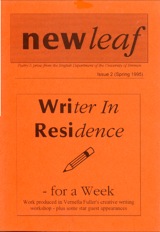
Coincidentally, the title story in Heartache also happens to be my first published piece of fiction ever. It was written for a creative writing workshop I took at university and eventually published in issue 2 of newleaf, the English language literary magazine of the University of Bremen.
The editorial of said issue is dated May 1995, though I didn’t actually see a copy until a lot later, because I was in London for a semester when the issue in question came out and later had to pester the editor for my contributors’ copies. newleaf‘s print run was very small, particularly in the early years, and so it was mostly sold out by the time I got back from London. The editor eventually scrounged up two copies from his personal stash for me.
If you take a look at the date of the editorial, this means that I’m coming up on my twentieth anniversary as a published author, which is pretty freaking amazing, if you think about it. Of course, that first publication was in a university magazine with a tiny print run and a cover that makes my early efforts look great (around issue 11, newleaf got a graphic design student on board and the covers got a lot better) and I didn’t sell anything again for another five years or so, but it’s still a reason to celebrate.
 Send to Kindle


April 1, 2015
New Charity Anthology Available: For Whom the Bell Trolls, edited by John L. Monk and Lindy Moone
April Fool’s Day is already over in my part of the world, but I still have a new release to announce, because I have a story in the charity anthology For Whom the Bell Trolls, edited by John L. Monk and Lindy Moone.
For Whom the Bell Trolls, edited by John L. Monk and Lindy Moone
 Funny, touching, suspenseful—sometimes romantic, titillating and shocking—there’s something for all adult readers in this unique illustrated anthology from 23 authors. Arranged from light to meaty fare, the antrollogy’s “menu” offers up fanciful and farcical stories, family-oriented tales, romance, mystery, high peak adventure, even magically surreal literary stories—starring all sorts of trolls, from the all-too-real Internet variety to the mythical mountain and bridge-dwelling trolls of legend. Readers will laugh nervously at Humphrey the half-breed’s unfortunate beginnings, and bite their nails on behalf of Fergus Underbridge, hard-boiled troll detective. They’ll cheer a not-so-ordinary troll-fighting girl and want to hug—or slap—a woman lost in her own neighborhood. And whatever should be done about the boy with the head of a dragon…?
Buy it at Amazon US, Amazon UK, Amazon Germany, Amazon France, Amazon Netherlands, Amazon Spain, Amazon Italy, Amazon Canada, Amazon Australia, Amazon Brazil, Amazon Japan, Amazon India and Amazon Mexico.
As the title and blurb suggest, this is an anthology or rather an antrollogy about trolls, mostly of the mythological kind. Here, editor and illustrator Lindy Moone talks about the project, while fellow contributor Victoria Leybourne talks a bit about her story here.
My story in this anthology is called “Troll Dating”. It’s the tale of Isnogrod, a very modern troll (even though he lives in a cave in Iceland), who goes looking for love on the Internet and eventually finds it much closer to home.
As mentioned above, For Whom the Bell Trolls is a charity anthology, which means that all proceeds go to Equality Now, an organisation that fights discrimnation of and violence against women worldwide.
Isnogrod, the troll, very much agrees with this, since Joss Whedon is a prominent supporter of Equality Now and Isnogrod is a huge fan of The Avengers. He even writes Loki/Hulk slash – and no, the story doesn’t include a sample.
Send to Kindle
March 30, 2015
Indie Speculative Fiction of the Month for March 2015
 It’s that time of the month again, time for “Indie Speculative Fiction of the Month”.
So what is “Indie Speculative Fiction of the Month”? It’s a round-up of speculative fiction by indie authors newly published this month, though some February books I missed the last time around snuck in as well. The books are arranged in alphabetical order by author. So far, most links only go to Amazon.com, though I may add other retailers for future editions.
Once again, we have new releases covering the whole broad spectrum of speculative fiction. We have science fiction, space opera, paranormal romance, fantasy romance, dystopian fiction, post-apocalyptic fiction, epic fantasy, urban fantasy, Norse mythology, alternate history, time travel, young adult SFF, Steampunk, vampires, witches, mermaids, dwarves, vengeful Norse gods, South African werewolves, post-apocalyptic owl queens, fox shifters, magic schools, superheroes, airships, interstellar archeologists, plucky teenaged cooks in outer space and much more. This month’s round-up also features authors from the US, the UK, Australia, Canada, South Africa and Bulgaria.
Don’t forget that Indie Speculative Fiction of the Month is also crossposted to the Speculative Fiction Showcase, a group blog run by Jessica Rydill and myself, which features new release spotlights, guest posts, interviews and link round-ups regarding all things speculative fiction several times per week.
As always, I know the authors at least vaguely, but I haven’t read all of the books, so Caveat emptor.
And now on to the books without further ado:

His invention would have changed the world…
if the world hadn’t ended first.
By accident, Dr. Ron invented a time slip, a way to travel through time. When he finds out his wife is dying of a rare cancer and the cure is five years
away, he decides to slip forward in time and bring the cure back to the present. Only, this is a one-way trip and he arrives right after an apocalypse has brought the world back to a new Stone Age.
Survival for Dr. Ron, his wife and even that of the rest of the world, just became a race against the clock.
 Elves and Escapades by Eleanor Beresford
In some disgrace after the events of the preceding term, Charley is determined to redeem herself, and resolve her complicated love life. The Christmas holidays change her life forever, but before she finds her feet again, she and her friends are drawn into dark, old magic.
A magical YA school story with a sapphic twist, the second in the Scholars and Sorcery series, following Pegasi and Prefects.
Scholars and Sorcery is a series of young adult fantasy novels set in an alternate version of 1950s England in which elves invaded in the far past, leaving magic and mythical creatures such as fairies and dragons behind them. It features lesbian heroines and a sweet dollop of romance.

A dying king. A mysterious invader. The seer’s vision was clear: find the lost shard from the Spire of Peace or the realm would drown in blood.
The problem: eight hundred years ago the elven hero Kathkalan took the shard with him into the lair of the most vicious dragon ever known to mankind…and he never returned.
Reluctantly drafted to lead the quest is the minor noble Midas, torn between his duty to the realm and the desire to protect his sons. With an unlikely band of heroes, including two elderly rangers and a young tinker’s son, Midas must risk losing everything he loves if he is to locate the shard and save the Known Lands.
 Edifice Abandoned by Scott Michael Decker
Inbound on an interstellar flight, Archeologist Nosuma Okande sees far more ancient sites to excavate on Achernar Tertius than the Institute has on record. Setting out to unearth these sites proves more of a challenge than she realizes, bringing her into conflict with local villages and ancient traditions—and with a shadowy force called the Madziva Mutupo, the Hippopotamus Totem.

After her parents are murdered by a brutal warlord, Celia makes it her ultimate mission to bring him to justice, but she can’t do it alone.
Rupert is a criminal mage whose sentenced execution is commuted if he agrees to serve as Celia’s Guardian until her mission is complete.
But what looks like the perfect opportunity for them both quickly turns into the perfect catastrophe. In the fall out, she is betrayed by those she trusted most. Now on the run, Celia and Rupert find not only their lives in jeopardy, but also their hearts.
Torn between her old vow and a new love, Celia must choose justice…or vengeance.

Never trust a werewolf. That’s Gia’s first lesson as she enters the wolf cages at Special Branch, the police force that deal with the illegal use of magic. But working with the tracker-werewolves is not the greatest danger she faces: Gia is a spy. She risks torture and death if her secret is discovered.
Then Gia receives shocking news. Her little brother has disappeared, taken out of his bed, in the middle of the night. She doesn’t want to believe that Special Branch is responsible, but who did take Nico? Could it be the magical terrorists, the Belle Gente? Or is there another, even stranger explanation?
Contemporary fantasy set in Cape Town, South Africa: Wolf Logic is the sequel to Crooks and Straights.
 Heart of the Kraken by A.W. Exley
Legend says if you consume the heart of a mermaid, you will know all of a man’s secrets
Ailin doesn’t care if the legend is true or not – she’s stuck in a crate on her way to feature as the main course at a lavish banquet. Her heart to be served while still beating for a cruel noble while the rest of her is sliced into sashimi. Unless she can escape.
Across the ocean, Fenton longs for a different release. Sold as a child by men who labelled him a mistake, a failed experiment. Except he has one valuable skill, he can summon the dreaded kraken. Bought by a pirate, he has only known life at sea, wielded as a tool by the captain.
Two lives collide when the pirates capture the vessel holding Ailin. The kraken holds the key to Ailin’s freedom but in summoning the beast one last time, Fenton must choose between losing his life or his heart…
 The Last Mermaid by Ian Fraser
The Last Mermaid is about the coming of age of a young girl in a small island community off the coast of Maine. It is set in an alternative1940’s. Hitler has conquered Europe, and the US faces an imminent invasion. A German-speaking family struggles to maintain a semblance of normality as the possibility of internment draws near.

Loki vowed Asgard would burn.
Bohdi Patel, latest incarnation of Chaos, wants nothing to do with Loki’s psychotic oath.
Stranded on the icy world of Jotunheim with Amy Lewis, his friend Steve Rogers, and an unlikely band of civilians, magical beings, and elite military, Bohdi just wants to keep himself and his friends alive … but when you’re Chaos incarnate, even the simplest goals are complicated.
If Jotunheim doesn’t kill them, Odin will, and if Odin doesn’t, the secrets they harbor might.
In the final installment of I Bring the Fire, Bohdi, Amy, Steve, and their companions learn that Chaos cannot be contained, some secrets cannot be kept, and some vows cannot be broken.
 The Fires of Yesterday by Mark R. Healy
The Earth is in ruins. Cities and nations are destroyed.
Brant is a synthetic, a machine made in the image of man who dreams of bringing humans back into the world. Close to achieving his goal, his tiny cradle of life is now threatened by ominous black clouds that roll in from the north and bring darkness to the land.
In the wasteland, the cannibalistic Marauders begin to escalate their war with the resistance fighters of Ascension. As resources dwindle, both sides become more ruthless, endangering all within the region.
Brant will be forced to once again return to the wasteland and into the midst of the battle to confront the source of the darkness in an attempt to save all that he has created.
This is book 3 of the Silent Earth series, following After the Winter and The Seeds of New Earth.
 Nestor deNeffo by R.D. Henderson
A fantasy novella that is second in a series that follows the exploits of the conniving, calculating, and corrupt black elf intelligence operative as he expands his criminal activities to the surface when he is involved in a scheme to sell weapons up there.
 The Pyramids of London by Andrea K. Höst
In a world where lightning sustained the Roman Empire, and Egypt’s vampiric god-kings spread their influence through medicine and good weather, tiny Prytennia’s fortunes are rising with the ships that have made her undisputed ruler of the air.
But the peace of recent decades is under threat. Rome’s automaton-driven wealth is waning along with the New Republic’s supply of power crystals, while Sweden uses fear of Rome to add to her Protectorates. And Prytennia is under attack from the wind itself. Relentless daily blasts destroy crops, buildings, and lives, and neither the weather vampires nor Prytennia’s Trifold Goddess have been able to find a way to stop them.
With events so grand scouring the horizon, the deaths of Eiliff and Aedric Tenning raise little interest. The official verdict is accident: two careless automaton makers, killed by their own construct.
The Tenning children and Aedric’s sister, Arianne, know this cannot be true. Nothing will stop their search for what really happened.
Not even if, to follow the first clue, Aunt Arianne must sell herself to a vampire.
 Lay of Runes: Dwarf’s Ransom by M.L. Larson
Jari, a young dwarf from an isolated kingdom, is sent out to find his trouble-making brothers. After being saved by a stranger from being trampled by a horse, Jari finds himself with a new companion in this strange land. As they search for Jari’s kin, they find more trouble made than either of them had anticipated. Soon, Jari’s missing brothers are implicated in the murder of a god, making their return home all the more urgent. But when they are finally found in a distant land, troubles only seem to get worse for Jari and the companions he’s picked up along the way.
This is book 2 of the Lay of Runes series, following Sky Treader.
 The Other Car by Paul Levinson
James Oleson is beginning to see everything in perfect duplicate – two identical models of cars which are the same down to scuff marks and license plate, two old philosophy books with the same torn pages and inscription in old ink, and twin mail men. Is he losing his mind, or experiencing the birth of a new alternate reality via binary fission?

She once was important. Now she’s considered dangerous.
In a new America where almost no one can be trusted, Caroline lies unconscious in a government hospital as others decide her fate. She is a political dissident, wanted for questioning by a brutal regime that has come to power in a shockingly easy way. As she recovers from her injuries, all she has are her memories. And once she wakes up, they may not matter anymore.
Part One of a Six Part Series. Each part is a full length novel between 60,000-120,000 words and ends in a cliffhanger. For readers 18+. This saga contains adult situations, including non-gratuitous violence, explicit (consensual) sex, psychological and physical trauma, and an oftentimes dark and gritty plot (particularly in part two).
 Back to the Viper by Antara Man
The Jackal had the chance to shoot to the top of the charts”
” until they blew their live showcase in The Viper Room.
Four misfits in a music band called The Jackal — single mother Ashley on the vocals, Hollywood stuntman Wane the guitarist, computer techie Craig banging the drums and Chad the ‘bent’ photographer doing the back vocals. And then they blew their live debut on The Viper Room. Now ten years on, the four are roiling in their own mud of guilt and regret. They’re not built to be prisoners of their own making, that’s for sure.
Then an oddball scientist turns up with an offer they can’t refuse – time travel. Can it make a difference? Will it? Who’s to say what they’re letting themselves in for?
No man is free who cannot control himself. Will time travel make any of those four anyone’s favorite person?

Chicago journalist Israel Trent and Erin Simms- a woman with a life she’d rather not have -awake in a modern day dungeon and are thrust into a world of shadowy government agencies, secret societies, and fringe sciences so far beyond understanding they might as well be magic. To survive in this secret world, they must face down a powerful doomsday cult intent on opening a gateway for their alien masters while simultaneously coming to grips with the unearthly power locked deep within their own DNA.
 Our Fair Eden by Harry Manners
Welcome to Eden, citizen. The fate of the world is in your hands. Don’t forget to wipe you feet!
Our Fair Eden is a near-future dystopian mystery, marrying technothriller with hard sci-fi against a background of climate change and spellbinding narrative.
It’s 2087, and the Earth’s climate is in wild fluctuation. The Amazon Basin is a sun-baked graveyard, the Gobi is blossoming into tropical beauty, Europe is buried beneath icy tundra, and Manhattan is a swamp of the risen Atlantic. Old paradises are becoming new wasteland, old wasteland a new breed of paradise.
Nowhere is safe. Millions flee the world’s cities. But where do they run to?
The UN has an answer: the Eden Projects, colonies drawn from all nations, leading the charge in beginning anew, and developing new technologies to help start over.
Desh can’t believe his luck when he wins the lottery to Eden Prime, most famous of all the Projects, hidden in the heart of Mongolia. But when he arrives in Eden, he finds himself caught in a struggle against a cruel autocracy, divided into gentry and peasants, all under the watchful eye of mysterious Texan matriarch, Mother Eden.
 Hidden Falls by Stephanie Marks
All that Seline Michaelson needed was some time to get away from the city to clear her head. She never expected to meet a man that could make her forget about her ex-boyfriend while staying with her cousin, until she met James.
But what started as a simple vacation in the small town of Hidden Falls, quickly became a lesson that would put everything Seline thought she knew about the world to the test. Because everything seems to grow bigger in the mountains, especially the wolves.

Caitlin McAllister has been keeping a secret. While her clan suffers for lack of a seer, she’s been hiding her gift of second sight—hiding and running away from a destiny she does not want and has done her best to escape. Unfortunately, she finds that keeping secrets carries its own price when she and two of her friends end up in the hands of three evil warlocks who seem intent on using the young witches for their own dark purposes.
Far from her clan’s territory, Caitlin turns to Alex Trujillo, whose grandmother is the prima of the de la Paz witch clan and whose own gift is the ability to cast a unique kind of protective spell, to help her with tracking down the warlocks who planned the kidnapping.
As Alex and Caitlin work together to save her friends, they find themselves falling under one another’s spell. But their combined talents may not be enough to save the kidnapped witches… or to stop a murderous conspiracy that threatens the safety of all the Arizona witch clans.
This is book 5 of the Witches of Cleopatra Hill series.
 Company Daughter by Callan Primer
A girl. A saucepan. A plan to conquer the universe.
Aleta Dinesen doesn’t see the point of hanging around home, not when she can cook a mean paella. But her plan to conquer the universe one meal at a time runs afoul of her overprotective father, commander of a tough mercenary company. And when he puts his foot down, he’s got the firepower to back it up.
Undeterred, Aleta escapes the dreadnaught she calls home one step ahead of the gorgeous, highly disapproving Lieutenant Park, the unlucky young officer tasked with hauling her back. But the universe isn’t the safe place she thought it was. Stranded in a dangerous mining community, she clings to survival by her fingernails. Only by working with someone she can’t stand will she have a chance to escape, proving to everyone that a teenage cook can be the most dangerous force in the universe.
 No Way Home, edited by Alex Roddie and Lucas Bale
Stories From Which There is No Escape.
Nothing terrifies us more than being stranded. Helpless, forsaken, cut-off. Locked in a place from which there is no escape, no way to get home.
A soldier trapped in an endless war dies over and over, only to be awakened each time to fight again – one of the last remaining few seeking to save mankind from extinction.
In rural 70s England, an RAF radio engineer returns to an abandoned military installation, but begins to suffer hallucinations, shifts in time and memories that are not his own.
A widower, one of ten thousand civilian space explorers, is sent alone to determine his assigned planet’s suitability for human colonisation, but stumbles across a woman who is part of the same programme and shouldn’t be there at all.
A suicidal woman in a poverty-stricken near-future America, where political apathy has allowed special interests to gain control of the country, takes part in a particularly unpleasant crowd-funding platform, established by the nation’s moneyed elite to engage the masses.
An assassin from the future, sent back in time to murder an insurgent, is left stranded when he fails in his mission and knows he will soon cease to exist.
These sometimes dark, sometimes heart-warming, but always insightful stories and more are to be found in No Way Home, where eight of the most exciting new voices in speculative fiction explore the mental, physical and even meta-physical boundaries that imprison us when we are lost.
 Call of Kythshire by Missy Sheldrake
The existence of the fairies of Kythshire is a secret kept for over a century…
Azaeli has trained from a young age in order to follow in her parents’ footsteps and become a Knight of His Majesty’s Elite. When she finally becomes a Squire, her name is mysteriously left off of the list for the King’s Quest. Her parents set off without her, but the simple quest goes awry leaving tragedy in its wake. With the help of her lifelong friend, Rian, a Mage apprentice, Azaeli must unravel a sinister plot that threatens both the existence of Kythshire and the peace that her people have celebrated for generations.
Call of Kythshire includes over a dozen beautifully rendered illustrations in this author-illustrator’s debut novel. Enjoy full color illustrations in the digital version and black-and-white images in the Paperback.
 Joey and the Fox by Hollis Shiloh
Asshole cop. It’s Joey’s role, and one he’s comfortable with. Joey tells gay jokes. He’s crude, tough, and thick-skinned. But now he’s got a chance to work with a fox shifter—and he doesn’t want to lose that opportunity.
Dylan is a mess: clingy and broken, cheerful but lost, seriously unpredictable…and very gay. But Joey desperately wants the partnership to succeed. He’s not willing to lose the fox shifter for any reason, even when Dyl drives him crazy.
Is there any way to make it work? And will the weird attraction he feels to the cute redhead ever go away?
57,000 words
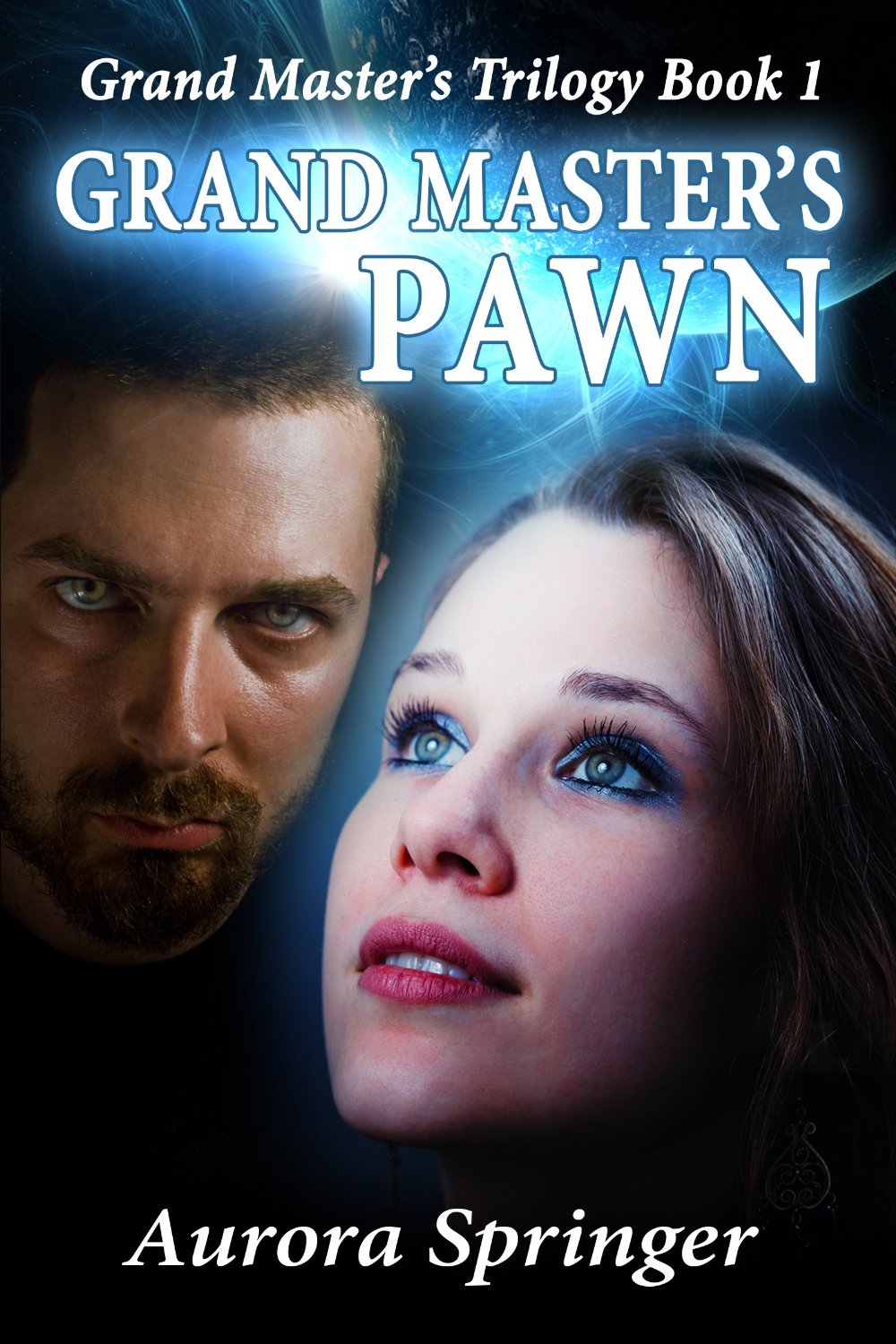 Grand Master’s Pawn by Aurora Springer
A thousand years in the future, wars and portal failures disturb the fringes of the galaxy. On Terra, twenty-two year old Violet Hunter seems an ordinary student of the Space Academy, who dreams of exploring unknown planets. She applies to serve as the pawn of one of the twelve Grand Masters, although her hidden talent of empathy makes her ineligible. Violet has defied the prohibition against psychics for half her life. Why should she stop now?
Isolation is the penalty for a Grand Master’s great power because their touch is deadly to a normal person. The Grand Master with the griffin avatar selected the girl with the star-shaped birthmark in spite of her father’s dire prophesy. He is suspicious about his disobedient pawn, yet he cannot deny the success of her missions to strange planets where she finds more than he expected.
Violet seeks the truth about the mysterious Grand Masters. Who or what are they? Do they threaten or benefit civilization? While searching for answers, Violet does the unthinkable. She makes a bargain with her obnoxious Grand Master and challenges him to meet her face to face, risking her secret to discover his purpose. She plunges into an impossible love and a world of intrigues. Can she survive the vicious conflicts?
 Acorn 666: Episode 1 by Josh St. John
The Human Apocalypse has Ended…
Within the destruction left from the fire that fell from the sky, only the animals remain. Prophesied by the Owl Queen and her loyal army for years, the Apocalypse has started a war of control between the various factions of animals left behind — revealing ancient magic passed down from generation to generation. From the noble woodland creatures led by a quiet and mysterious council, to the domesticated animals who were once companions for humankind everywhere.
The Animal Apocalypse Begins…
Outside of the warring factions of animals left behind, the owls who foretold of the Apocalypse have regrouped. With the return of magic, the war has grown into a struggle of power. Not only power over the arcane, but power over life… and death. The Owl Queen has foretold of a new prophecy. One where owls rule the land under her command. In order to grow her army, the Queen comes up with a painful curse. A curse that will transform anyone who ingests it into a bloodthirsty and frenetic owl, hellbent on destruction. A curse that will make this prophecy come true. The prophecy of Acorn 666.
Don’t eat the acorns.
 Sac’a’rith: Rebirth by Vincent Trigili
All Zah’rak wanted to do was train and work with Narcion, but now Narcion is dead, leaving Zah’rak and the others without guidance or a plan. Cyborgs, Resden, and many others are after their blood, while Phareon tries to be their puppeteer.
Before Zah’rak can get far, Raquel reappears and offers them their dream: to be real wizards and full members of the Wizard Kingdom, but Zah’rak does not trust her or the offer.
Meanwhile, the Korshalemian sorcerers are up to their old tricks again, and it is up to Zah’rak, Raquel, and the others to discover their new plan and prevent a new great war.
The Lost Tales of Power is an open-ended series of Sci-Fi/Fantasy books set in a vast multiverse featuring a mixture of traditional fantasy and science fiction elements.

127 days without sleep…
Thora Green had a life once upon a time. But that ended the day her parents enrolled her in sleep clinic prison. At the facility, her chronic months-long insomnia is observed by scads of doctors, but she is never actually treated for her dire disease. In a feat of desperation, Thora escapes and heads straight for New York City. Buried deep in the city’s underbelly, there is rumored to be a secret haven called the Insomniacs’ Café: a place where people like Thora can find relief.
As Thora joins forces with Aiden and Florence, two fellow insomniacs, their midnight quest will take them from the dusty bookshelves of The Strand, to the smokey underground clubs in the Lower East Side, to countless taxi and subway rides. Clues leading to their final destination are waiting for them at every turn. But so are Sleepers–a powerful core of sworn-enemies to all Insomniacs– who wish to see Thora and her friends destroyed at any cost.

Caia is a fresh college graduate who has the power to start a fire with the snap of her fingers. She isn’t ready to grow up and settle down in real life. But ready or not, real life is coming for her. When out-of-towner Brandt bumps into her too many times to be coincidence, Caia begins to realize that her parents might not be who they say they are. They have a secret, one they are willing to die to protect.
Ash is a Guardian, genetically enhanced to be stronger, faster, and smarter than an ordinary human. Cool, collected, and highly trained, Ash is one of the Agency’s best. But when a long time missing Guardian draws the attention of the Guild, an organization of powerful rune masters, things get personal for Ash. Very personal.
Caia is swept up into Ash’s world of super soldiers and rune masters and propelled toward an uncertain future. But one thing is always certain when playing with fire – someone is bound to get burned.
Send to Kindle
March 27, 2015
Cora engages in some Hugo kvetching – and a great George R.R. Martin interview/feature
The nominations for the 2015 Hugo Awards won’t be announced until April 4th, but the annual Hugo kvetching has already begun. Okay, so it already began back in January, but it’s currently ramping up for the second round of kvetching.
And so I’m on the 2014 Hugo-nominated podcast The Skiffy and Fanty Show this week, discussing the Hugos and particularly how the often confusing categories and nomination process could be made more transparent, with The G., Jason Snell and host Shaun Duke (who also has a great post on Jupiter Ascending, Agent Carter and character agency at his blog).
You can also download the podcast in iTunes, though I’m not sure why it is labelled as “explicit”. Okay, maybe one of us uttered a rude word or two, but with a label like “explicit” I’d expect a massive transatlantic phonesex orgy, which this most definitely wasn’t.
For more pre-nomination Hugo kvetching, check out this post at Making Light, which hints that several of the Sad Puppy nominee may have made the shortlist and not just the decent ones like Jim Butcher’s Skin Game either. Apparently, one of them broke the embargo and talked about his nomination, which shows how little in tune with the award and its policies they are.
Also related to the upcoming Hugo kvetching is this post by Kristine Kathryn Rusch in which she implores writers to just keep out of genre controversies, because that sort of thing leads to lasting feuds and might destroy careers. And besides, writers shouldn’t talk about politics and religion anyway.
Now I have a lot of respect for Kristine Kathryn Rusch and indeed I credit her and her husband Dean Wesley Smith for persuading me to give this whole indie writing thing a go. However, I’m afraid I disagree with her on this particular point. For while it may be problematic, not to mention extremely time-consuming, to engage with every single genre dust-up, I don’t think writers should remain silent on every single issue ever. Because writers are also people, people with political opinions and religious views. And expecting them never to address these views ever is rather unrealistic.
What is more, like everybody who grew up in West Germany post 1968, I was raised to speak out against things that strike me as wrong (which often caused conflicts with our parents’ generation who did not believe that speaking out against things that are wrong should include telling off the Nazi uncle at the dinner table or refusing to have dinner with him altogether). And what I’m seeing in this particular fight is not just another genre dust-up that will seem quaint to incomprehensible twenty years from now, but very real attempts to silence people on the part of those who find their position under threat. So no, I’m not going to shut up.
However, Kristine Kathryn Rusch also makes a very good point, namely that writers should let one fraction or another’s ideas what is and isn’t appropriate to write about influence their own work. Now this is a point that I heartily agree with (with the caveat that a writer should also do their best not to be blindly offensive to large swathes of people), if only because I know how liberating it was for me to throw off received ideas of what did and did not make for good SFF and simply write whatever the hell I wanted to write.
But as calls for just ignoring the whole Sad Puppy controversy and focussing on one’s own work go, I vastly prefer this series of tweets by Nebula nominee Usman T. Malik:
Regardless of SP's uncouth intervention, the Hugo is not an award of literary merit. Even if it were, as writers we can write, publish, &…
— Usman Malik (@usmantm) March 28, 2015
–especially for POCs–bring our work to people's attention, is all. Whatever the result, engineered or not, let's not make it a matter…
— Usman Malik (@usmantm) March 28, 2015
of life and death. Instead produce better art. Focus on being visionaries and game changers. Art is arduous as it is…
— Usman Malik (@usmantm) March 28, 2015
Let's not make the process worse by fretting over petty stuff. Let the SPs worry about accolades. Let's u & I focus on being better artists
— Usman Malik (@usmantm) March 28, 2015
As Rumi might say, there is another world waiting to be born in each breath of love and labor. Let us focus on our breathing.
— Usman Malik (@usmantm) March 28, 2015
Finally, for something quite different. arte, the French/German cultural TV channel has a regular feature called Durch die Nacht mit… (Into the night with…). The concept is simple. Two creative people (artists, musicians, writers, actors, etc…) meet in a given city and just talk and explore the town, while the camera follows them around.
Now the latest edition of the program features George R.R. Martin and Sibel Kekilli, the Turkish-German actress who played Shae on Game of Thrones, wandering through Santa Fe and talking about Game of Thrones, writing, acting, politics, religion, art, food and anything under the sun really. It’s a great program and entirely in English with German subtitles (there are a few German language film clips, but that’s it). I watched it on TV with someone who has never watched Game of Thrones nor read the books and yet was still charmed by Martin and Kekilli interacting.
Comments disabled, because these posts tend to bring out the trolls.
Send to Kindle
March 26, 2015
Freak you, Clean Reader, kiss my butt and darn you to heck, you freaking bottoms
If the title of this post sounds weird to you – well, that’s how it would look when read through Clean Reader, a new app which removes words deemed offensive by some (mostly swearwords and bodypart words) from e-books, so extremely sensitive readers can read without having to see words that might trouble them.
Authors are understandably furious about an app which makes random changes to their books in order to satisfy some people’s moral qualms. Thought in the comment thread at The Passive Voice, several authors also express understanding for the app, including a few who consider swearwords “verbal violence”.
Charles Stross points out that Clean Reader violates an author’s moral rights and might well be illegal for that very reason. He also points out that the app is quite easy to circumvent via equally offensive but less common words and combinations.
On the other hand, Cory Doctorow points out that he hates censorship as much as the next person, but believes that readers have the right to read in whatever way they want and if that includes censoring swearwords and skipping passages, then so so be it.
Jennifer Porter has actually tried out the app on some romance novels and reports that the results are frequently incomprehensible and often hilarious. She also offers a list of substitutions made by Clean Reader (as well as which terms are not considered offensive for some reason). The list includes a lot of religiously based swearing (Oh my God, damn, hell, Jesus Christ, etc…) which is considered offensive by some people in the US and just ordinary speech almost everywhere else.
In fact, the censoring of terms like “damn” or “hell” in certain American works was so incomprehensible to my teenaged self that I assumed the “hecks” and “darns” and “freakings” in American superhero comics were actually really cool (and probably quite dirty) American slang and promptly adopted them into my vocabulary. And of course, silver age Marvel Comics slang is really just defanged 1940s/50s US Army slang, which must have made a teen girl in the 1980s adopting those terms seem doubly weird.
More troubling is that fact that Clean Reader seems to turn every word referring to female genitalia, from the very rude to perfectly inoffensive medical terms like “vagina”, into “bottom” and many references to male genitalia into “groin”, turning sex scenes into some kind of weird “Polonäse Blankenese” (a song that is a lot dirtier than it seemed at the age of 8, but then a lot of German comedy songs of the 1970s and early 1980s were surprisingly dirty, e.g. “Der Nippel” or “Ich liebte ein Mädchen”) for two. Coincidentally, as Jennifer Porter points out, substituting “bottom” for “vagina” and its synonyms also turns perfectly vanilla romance novels into anal sex orgies and also privileges male over female sexuality.
Personally, I’m just baffled that “vagina”, which is after all an official medical term, is considered an offensive word in the US at all. Okay, so I understand that 12-year-olds will giggle at the word “vagina” and might even use baby-talk substitutes like “hoo-ha” or “vay-jay-jay”, but we’re talking about adults here.
Joanne Harris, Chuck Wendig and Michael Patrick Hicks all tell Clean Reader to go fuck themselves with various degrees of profanity from “dirty but scrubbable” to “Clean Reader explodes in horror”. Joanne Harris received an e-mail reply from Clean Reader (Chuck Wendig and Michael Patrick Hicks didn’t, probably because the Clean Reader app scrambled their blog posts beyond recognition).
Joanne Harris, Chuck Wendig and Michael Patrick Hicks all make a similar point, namely that writers choose words, including swearwords, for a reason and that to change those words without permission is a violation of the author’s intent. As an author whose works occasionally include swearing of the heavier kind, I very much agree with them. I include swearwords in my books not because I lack the vocabulary or the education to find less offensive words – an absurd accusation, if there ever was one, because some of the most educated people I know are also the heaviest swearers and knowing many swearwords, including obscure ones, actually means you have a larger vocabulary – but because this particular word is the right word for the character and situation. And if I choose to use a heavy duty swearword like “fuck” or “cunt” (I don’t worry about “shit” or “arsehole” or “damn” or “hell”, because those are either considered mild or not swearing at all, where I come from), I’m using it because it is the most suitable word to use in this particular context.
For example, in Debts to Pay, villain Darius Gilroy calls Carlotta, the protagonist, a “stupid fucking little cunt” at one point (he also drugs and blackmails her, threatens to hand her over to torture-happy officials and tries to kill her), because that’s exactly the sort of expression that an intergalactic crimelord would use. Calling Carlotta a “silly freaking little bottom” or a “silly witch” would not carry the same impact. Because Gilroy is a man who has absolutely no compulsion about threatening and hurting people and other sentient beings to get what he wants. He’s also a misogynist. People like that don’t use euphemisms, they use the harshest word possible. If anything, I censored myself slightly, because I had Gilroy only use the c-word once instead of the five or six times in a row he probably would have used it.
Coincidentally, the one time I had a story “censored” by editorial request was replacing the repeated “bullshits” at the beginning of Countdown to Death with “bull” for its original magazines publication. The editor in question was respectful about it and requested my permission for the change to comply with the guidelines of the magazine. I gave the permission, too, even though I was a bit confused that of all the possible things to complain about in Countdown to Death (violence, death penalty scenes, hints at alcohol abuse) they had to choose a few IMO rather harmless words. And as a matter of fact, the original “bullshits”, uttered by Jake Levonsky who is a rather blunt and sweary person, were the first thing I restored for the e-book edition.
If a book of mine includes heavier swearing (i.e. several instances of “fuck” or single instances of taboo words, but not “shit”, “arse” or any of the religious ones), I put a warning in the blurb as a courtesy to potential readers. Ditto for explicit sexual content, graphic violence or potentially triggering material. Because I believe that readers have the freedom to decide not to read a book, if they feel it might offend or hurt them. Of course, it’s not possible to warn for anything that might upset somebody. Indeed, I have been badly triggered by things which aren’t normally considered typical triggers. I have also read books, often books which came highly recommended, which deeply upset or offended me (e.g. Declare by Tim Powers or a romance with a surrogate pregnancy plot that wasn’t apparent from the blurb). However, in these cases the fault was mine, not the author’s.
In many ways, this whole thing reminds me of the upset when Horst Schimanski, a working class cop played by actor Götz George, used the words “Scheiße” and “Arschloch” on German prime time TV in the venerable show Tatort. Even as a child, this debate struck me as absurd, because the words deemed objectionable were words everybody around me, both adults and children, used all the time. Besides – and I didn’t know this at the time – Schimanski wasn’t the first person to utter the word “Scheiße” on German TV. It was used, albeit in adjective form, in an episode of the German SF classic Raumpatrouille Orion back in 1966, predating Schimanski by 15 years.
Rewatching Schimanski’s TV debut Duisburg Ruhrort thirty years on, I’m struck by what a marvelous bit of characterisation and scene setting the first four minutes are, from the dialogueless opening scene of Schimanski puttering around in his kitchen to the sounds of “Leader of the Pack” by the Shondells (note how the camera lingers on Götz George’s impressive body, acknowledging the female and non-straight male gaze in a way that was rare in 1980s film and TV making) to the moment he steps out into a typical working class neighbourhood in heart of the Ruhrgebiet, a mining and industrial region. The first words we hear Schimanski utter on screen are “Komm schon, du Idiot! Hör auf mit der Scheiße!” (Come on, you idiot! Stop that shit!), which immediately establishes him as a different breed of cop (though we don’t actually learn that Schimanski is a cop until approx. seven minutes into the film) than the tweed-clad gentleman inspectors investigated genteel murders in upscale suburbs which dominated crime shows on German TV until then.
To a modern viewer it is hard to imagine how revolutionary Schimanski really was back in 1981. Unlike the staid middle class gentlemen investigators of the era, Schimanski was a working class cop investigating crimes in working class neighbourhoods. Schimanski wasn’t an artificial character like the other TV inspectors of the time, he was real. He talked like real people talked (unfortunate racial slur during the bar scene included), he dressed like real people dressed and he lived in the sort of neighbourhood everybody at the time would have recognised, whether they lived there or not. Schimanski was a breath of fresh air, a bit of reality in the artificiality of early 1980s German TV. I didn’t actually see Schimanski on screen until a couple of episodes into his run (I was eight when he debuted and probably ten or so when I first watched a Schimanski episode – there only were two or three per year), but once I did, I immediately realised that I was watching was something unprecendented and new. And no, Schimanski’s swearing didn’t scar me, since I knew those words anyway.
As a matter of fact, the people behind Clean Reader claim that the inspiration for their app was concern for a fourth-grader who was upset at finding some bad words in a book. Now standards for children’s and YA books are different, particularly in the US. However, I and many other authors don’t write for children but for adults (though teens could read many of my books).
Besides, as a teacher let me assure you that those children whose tender ears you are so concerned about already know all the swearwords that Clean Reader removes and a few others besides. Indeed, parents are frequently shocked to learn (when there is some kind of disciplinary problem) that their of so innocent kid has hurled a very strong swearword at a classmate. But pretending that these words don’t exist is not the answer. Demystifying those words and telling students what they mean and why they are considered offensive is a lot better. Ditto explaining to an overly bold 6th-grader that he really shouldn’t be surprised that he got beaten up after he called a girl two years older and twice his size the German equivalent of the c-word. And yes, this really happened and it could have been averted, if the many other girls to whom he said that word (it was a habit with that kid) had actually told me what he said to them rather than vaguely saying he was rude and disrespectful.
As for Clean Reader, the issue seems to be moot by now, because Page Foundry/Inktera, from where Clean Reader was getting the e-books for its service announced on Twitter that they pulled their entire catalogue from Clean Reader.
In support of #authors #readers #books everywhere, the @Inktera bookstore system has been pulled from @CleanReader, effective immediately.
— Page Foundry (@pagefoundry) March 26, 2015
Send to Kindle
March 12, 2015
Sad News and Springtime Flowers
First of all, there was some sad news today, for Sir Terry Pratchett died aged 66. Coincidentally, it’s been almost twenty years now since I first discovered Terry Pratchett’s books as a student in London after reading an interview with him in an early issue of SFX.
Here is Chistopher Priest’s obituary of Sir Terry from the Guardian. I also have links to several other obituaries and tributes from around the web in my weekly link round-up over at the Speculative Fiction Showcase.
The Leipzig Book Fair started yesterday with the announcement of the winners of the Prize of the Leipzig Book Fair. The biggest surprise was that a poetry collection, Regentonnenvariationen (Rain water barrel variations) by Jan Wagner won in the fiction category, the first poetry collection ever to win this award. Kulturzeit has an interview with Jan Wagner as well as a video of him reading “Giersch”, one of his poems. “Giersch” is the German name of a plant known as bishop’s weed in English BTW.
Meanwhile, the non-fiction prize went to Philipp Therr for Die neue Ordnung auf dem alten Kontinent. Eine Geschichte des neoliberalen Europa (New order on the old continent: A history of neoliberal Europe). The translation award – yes, the Prize of the Leipzig Book Fair awards translators, which makes me forgive some of the more embarrassing misteps of the award in the past – went to Mirjam Pressler for translating Judas by Amos Oz from Hebrew into German.
Finally, here are some photos of pretty springtime flowers in our garden. Not bishop’s weed, but crocuses:

Pretty crocuses (croci, to be exact) in the garden.
Send to Kindle
March 9, 2015
New Helen Shepherd Mystery available: Dead Drop
Saturday’s post about the disparate reactions to Jupiter Ascending has gotten quite a bit of attention on social media and has sent my stats through the roof.
Meanwhile, I also have a new release, namely a new Helen Shepherd Mystery called Dead Drop, in which Helen investigates the disappearance of a homeless teen.
Dead Drop Homeless teen Chris certainly isn’t the most reliable of witnesses. And so no one takes her seriously when she walks into a police station and claims that her boyfriend Max, nicknamed Zorro, has been kidnapped.
Detective Inspector Helen Shepherd is initially inclined to dismiss Chris as well. But then Chris mentions a ransom demand, a mysterious phone call demanding an envelope in exchange for the safe return of Max.
Chris claims she has no idea what the kidnappers are talking about. But when Helen and her team investigate the abandoned warehouse that Max and Chris have made their home, she notices unusual activities in the area.
But what precisely do the kidnappers want? And whatever happened to Max?
More information.
Length: 8700 words
List price: 2.99 USD, EUR or 1.99 GBP
Buy it at Amazon US, Amazon UK, Amazon Germany, Amazon France, Amazon Netherlands, Amazon Spain, Amazon Italy, Amazon Canada, Amazon Australia, Amazon Brazil, Amazon Japan, Amazon India, Amazon Mexico, Kobo, Barnes & Noble, Apple iTunes, Scribd, Oyster, Smashwords, Inktera, txtr, Thalia, Weltbild, Hugendubel, Der Club, Libiro, Nook UK, DriveThruFiction, OmniLit/AllRomance e-books, Casa del Libro, Flipkart, e-Sentral, You Heart Books and XinXii.
Send to Kindle
March 7, 2015
The disparate reviews of Jupiter Ascending
The Muggle mainstream world is all agog about the Fifty Shades of Grey movie at the moment. I have zero interest in either seeing or discussing that film, so I’ll leave you with this article from the New Statesman and this blogpost by Kyoko M. instead.
Besides, in my geeky little SFF corner of the universe, the movie everybody is talking about is not Fifty Shades of Grey but Jupiter Ascending, the Wachowski siblings’ forray into the space opera genre. And if you follow the online conversation around Jupiter Ascending, you might be forgiven for thinking that there is not one but actually two very different films called Jupiter Ascending, one of which is the worst movie ever that will inevitably destroy the careers of everybody involved and the other of which is a flawed, but thoroughly enjoyable movie that is cracking good fun and even has something interesting to say.
Here is a tweet that sums it up better than I could:
Every critic ever: Jupiter Ascending is awful. Everyone on Twitter: Jupiter Ascending is brilliant. #JupiterAscending
— J. Skyler (@jskylerinc) February 15, 2015
And indeed this is exactly what happened. Officially annointed film critics wrote at length about how awful and bloated, boring and unoriginal, reactionary and faux feminist Jupiter Ascending was, how it’s one of the worst movies of 2015 and that supporting it will only encourage more bad movies, how it represents peak special effects in an analogy to the concept of peak oil, how it would cost Eddie Redmayne the Oscar (well, they were wrong on that count), ruin the career of the Wachowski siblings and spell the end to original science fiction film making for the next three decades at least.
Meanwhile, on blogs, Twitter, Tumblr and social media in general, the picture was entirely different. According to these reviews, Jupiter Ascending was great fun, plays beautifully with classic YA and fanfic tropes, is a giant gooey mess like a particularly tasty doughnut, is like a particularly cracktastic fanfic that’s so cool you don’t even notice that it’s also totally bonkers, is your every pubescent fantay become flesh on screen, is The Matrix with a female protagonist, offers a neat twist on the Cinderella myth and has some interesting things to say about class relations and the plight of illegal immigrants, is full of glitter and regency romance tropes and does not conform to the Campbellian monomyth, is an entry in the usually male dominated space opera genre which features living mothers, relationships between women and toilet cleaning and passes the Bechdel test. Oh yes, and would someone just give Eddie Redmayne that Oscar already?
Zen Cho sums it up as follows:
Just watched Jupiter Ascending. Lots of lols and explosions. It is exactly like a 14-year-old girl's idea of the perfect space opera!
— Zen Cho (@zenaldehyde) February 14, 2015
Now it’s not all that unusual that movies unanimously hated by critics are nonetheless popular with moviegoers, as e.g. the Transformers or Fast and Furious franchises prove. But this doesn’t apply to Jupiter Ascending either, since it is actually considered a box office flop. If anything, Jupiter Ascending seems to have all the characteristics of a cult movie in the making. But then film critics generally do like cult movies or at least come around to liking them in time.
Of course, we also know the phenomenon of mainstream film critics just failing to get an SFF film, even a highbrow, arty one. We’ve seen it before when critics or festival juries failed to get Twelve Monkeys or Brazil or The Fifth Element or even The Matrix. Science fiction films can be hard to decode if you haven’t internalised the respective reading/viewing protocols.
In fact, I remember watching Twelve Monkeys and The Fifth Element and The Matrix, all of which had gotten some very baffled reactions at the festivals where they premiered, with a friend back in the 1990s. After each movie, we walked out of the theatre and said, “What on Earth were those critics smoking that they didn’t understand the movie? Cause the plot is perfectly comprehensible.” I eventually lost contact with that friend, though I hope she watches Jupiter Ascending, because it’s exactly the sort of movie she would have enjoyed a lot back in the 1990s.
Actually, this phenomenon might also be the reason behind the intense dislike of those who consider themselves serious filmcritics for superhero movies. Unlike those of us who are longtime comic readers and fans, these critics lack the respective reading/viewing protocols and don’t understand the tropes. I suspect this might also account for the popularity of Christopher Nolan Dark Knight trilogy among those same critics, because it keeps the comic book tropes to a minimum and replaces them with faux relevant themes about the war on terror and necessary sacrifices and the Occupy movement instead.
However, there is something else going on than just “serious film critics fail to get science fiction movie” in the case of Jupiter Ascending. Because it’s notable that those who dislike the film are overwhelmingly male, whereas those who like or even love the film are overwhelmingly female (though at least one of the reviews on the pro-side I linked to was written by a man). Because Jupiter Ascending is a comparatively rare beast, a science fiction film that appeals primarily to women. And we all know how seriously critics take things that primarily appeal to women.
Coincidentally, this makes Jupiter Ascending an interesting companion piece to Fifty Shades of Grey, another movie widely (and IMO rightly) disliked by critics that was intended to appeal mainly to women, even though plenty of women don’t like it because of the creepy stone-age gender relations masquerading as BDSM.
So in short, we have two movies coming out within a week of each other, one of which (Fifty Shades) was quite cynically created to appeal to women and marketed respectively and the other of which (Jupiter Ascending) was probably not specifically intended to appeal to women (though only the Wachowskis know for sure) and certainly wasn’t marketed that way, but turned out to appeal to women anyway, while confusing and/or annoying both critics and male SFF viewers.
What I found particularly interesting is how many mainstream reviews negatively compared Jupiter Ascending to the Wachowskis’ breakthrough movie The Matrix. Because Jupiter Ascending and The Matrix are actually very similar. Both are the story of an ordinary person (cubicle monkey Neo and illegal Russian immigrant housecleaner Jupiter Jones respectively) who find out one day that the world is much bigger and much different than they thought it was and that they are the chosen one. They both find themselves hunted by assassins and protected by an attractive arse-kicking love interest (Trinity and Caine White respectively) and realise that they alone can save humanity from a horrible fate, a horrible fate that is remarkably similar in both movies, namely humans being harvested and exploited as a resource.
Given the thematic and plot similarities of both movies, the differences in reception are striking. Now The Matrix really tapped into late 1990s zeitgeist, mixing the legacy of Cyberpunk and the still novelty of the Internet with extremely cool visuals. In fact, the visuals of The Matrix were so cool that after leaving the theatre I said to a friend, “Damn. For the next few years it’s gonna be impossible to wear long leather coats and cool shades without being accused of ripping off The Matrix.”
What is more, this whole “The world around us isn’t real” shtick really appeals to philosophically inclined teens. In fact, my first reaction to The Matrix (beyond “Damn, I can’t wear long leather coats and shades again without making a fool of myself.”) was, “Wow! Someone made a film about all those philosophical discussions about the nature of reality we had in our religious education class in 10th grade.”
So in short, The Matrix was the filmic embodiment of the typical late 1990s white geek dude power fantasy (even though it’s notable that the cast of the Matrix movies is a lot more diverse than in many more recent movies). That’s why it was such a huge financial and critical success – because it tapped into the fantasies of a lot of young men that were floating around the zeitgeist. Indeed, it’s probably no accident that the disgruntled white dudes of the so-called Men’s Right Movement have adopted the red pill/blue pill imagery of The Matrix for themselves, an association which would probably horrify the Wachowskis.
In short, the Wachowski siblings basically managed to bottle lightning with The Matrix by making a film that perfectly embodied both the fantasies of many young geeky men and the zeitgeist of the time in which it was made. That’s an achievement that a filmmaker usually manages only once in a lifetime. In fact, most never manage it at all. However, the Wachowskis managed to create the perfect mix of adolescent power fantasies and zeitgeist not once, but twice. Because Jupiter Ascending is just as perfect a mash-up of teenage power fantasies and themes floating around the zeitgeist. However, whereas The Matrix taps into the power fantasies of geeky young men, Jupiter Ascending taps into the power fantasies of geeky young women. In fact, a lot of positive reviews of Jupiter Ascending have mentioned how the movie feels like a mash-up of their every adolescent fantasy into the coolest fanfic ever.
At its heart, Jupiter Ascending is a secret princess story, a fantasy that most young girls have entertained at some point of their lives. It’s a space opera, because we are currently experiencing something of a space opera renaissance, whereas Matrix provided a sort of tail-end to the Cyberpunk boom. The glitter and over-the-top costumes – well, lots of young women happen to like glitter and over-the-top gowns just as lots of young men happen to think that long black leather coats and shades are the epitome of cool. As for half-human, half-wolf tortured galactic mercenary Caine White, he seems to have stepped right out of a paranormal romance novel or rather a fanfic take on a paranormal romance novel.
The Wachowskis even give Jupiter a stereotypically feminine coded low-status job that consists of cleaning up the dirt of others. And it’s really telling how many male critics hate the fact the Jupiter cleans toilets for a living, just as many male critics in the past hated all those romance novels where governesses and chamber maids fall in love with and end up marrying the lord of the manor, because such literature would just give young women wrong ideas about their lives and their prospects. Those who criticise Jupiter Ascending for having a heroine who cleans toilets sound very similar to the literary critics of old who hated on romance novels for telling governesses and chamber maids that they could be more than just “the help” and might even aspire to the lord of the manor.
Let’s have another tweet:
Thing I have learned from critics re Jupiter Ascending: they believe toilet cleaning is terrible. If you clean toilets, life isn't worth it.
— Renay (@renay) February 25, 2015
So in short, the Wachowskis managed a remarkable feet by making two very different movies that managed to tap into both the zeitgeist and into the adolescent power fantasies of many young people. One of these movies, The Matrix is aimed at men and was both financially successful and critically lauded, though The Matrix has its share of flaws even before the lackluster sequels. Indeed, The Matrix is not a movie I rewatch, even though I liked it a lot at first viewing.
Meanwhile, the other movie, Jupiter Ascending, is aimed at women in a way that big budget special effects spectaculars rarely are, because women are expected to enjoy romantic comedies and Fifty Shades of Grey, not space opera spectaculars. And guess what? Overwhelmingly male critics slam the movie because they either don’t recognise the fantasies Jupiter Ascending taps into or don’t care, if they do, because women’s fantasies are not appropriate fodder for big budget Hollywood movies
Here are two more tweets that sum up the issue:
Science fiction films have historically been the domain of white cis hetero men, because of this they've defined the genre standards.
— Jeanne (@fangirlJeanne) February 15, 2015
The reality is science fiction can take all kinds of shapes. It can have romance, Space princesses, and rollerblading space werewolves.
— Jeanne (@fangirlJeanne) February 15, 2015
Send to Kindle
March 5, 2015
Cora does a podcast interview and other mixed updates
First of all, I’ve been interviewed by Señor Rolando for the podcast Büchergefahr (book danger) and talk a bit about writing, indie publishing and pulp fiction.
You can listen to the podcast here. Alas, it’s only in German.
Meanwhile, yesterday’s edition of the monthly translators’ meet-up was derailed, because our usual venue had not just messed up our reservation, it was also packed to the rafters with people looking to watch the Werder Bremen versus Arminia Bielefeld match in the round of the final 16 in the German cup. A match which Werder Bremen promptly lost 1:3 BTW and to Arminia Bielefeld at that.
The landlord of our usual venue expressed his regrets at the messed up reservation. He phoned around on our behalf and found a bar in a nearby side street that had enough empty seats for all of us (there were eight of us). So of we went to what turned out to be a gay bar with a really nice selection of cocktails. I flirted with a Planter’s Punch (which I really like in spite of the colonialist associations of the name), but decided it wouldn’t be a good idea on top of red wine, so I stuck with the wine.
The bar offered food as well, though the selection was limited to Flammkuchen, nachos and hot soup, which was a problem for the one gluten allergic in our group. I had the Flammkuchen BTW. Quite nice and filling, but then I like Flammkuchen.
Send to Kindle
March 1, 2015
Meet My Character, Richard Blakemore
“Meet my Character” is a new blog hop similar to the speculative fiction blog hop, only that it allows a writer to introduce a particular character.
I already took part in this blog hop, introducing Holly di Marco from the Shattered Empire books, back in October, but since there were no takers for this weekend, I decided to do it again.
Some previous entries may be found in this round-up post at the Speculative Fiction Showcase. But today, I’m taking over the baton from Kyra Halland who introduced her character Lainie Banfrey last week.
 So who is Kyra Halland? She is the writer of the Daughter of the Wildings weird western series and she lives in southern Arizona. Complicated, honorable heroes; heroines who are strong, smart, and all woman; magic, romance, and adventure; and excursions into the dark corners of life and human nature mixed with a dash of offbeat humor – all of these make up her worlds. She has a very patient husband, two less-patient cats, and two young adult sons. Besides writing, she enjoys scrapbooking and anime, and she wants to be a crazy cat lady when she grows up.
Visit Kyra’s website, Facebook, Twitter and Google+ to find out more about her and her work. You can also buy her books at Amazon and other major e-book stores.
And now it’s time to meet my character:
 1) What is the name of your character? Is he fictional or a historic person?
His name is Richard Blakemore and he is entirely fictional.
2) When and where is the story set?
The story is set in New York City in the 1930s.
3) What should we know about him?
Richard Blakemore is a pulp fiction writer in Depression era New York. Just why he chose this particular profession is unknown. It’s certainly not for the money, because Richard is independently wealthy. No one is quite sure where that wealth comes from. He certainly didn’t earn it by writing pulp novels, because half a cent per word doesn’t make anybody wealthy.
Like most pulp writers, Richard can write pretty much every genre (though he does feel a bit awkward about writing romance), but his main work is a series about the adventures of the Silencer, a masked crimefighter who takes on the underworld and protects the downtrodden, motivated by the urge to make up for a criminal past.
However, Richard doesn’t just write about the Silencer, he actually dons the Silencer’s cloak, steel mask, fedora and silver-plated twin .45 automatics and goes out to fight crime.
 4) What is the main conflict? What messes up his life?
The main source of conflict are obviously Richard’s nocturnal activities, because normal and well adjusted people don’t become costumed crimefighters. Plus, there is the pressure of living a double life and keeping it hidden from everybody except for those closest to him.
What is more, his nocturnal activities bring Richard to the attention of both the criminals the Silencer busts and the police who don’t take too kindly to a guy with a mask infringing upon their territory. Even worse, in his pulp writer persona Richard is close friends with Captain Justin O’Grady of the NYPD, who suspects that Richard might be the Silencer and is only too eager to prove it.
But Richard’s activities don’t just put himself at risk, but also those who are near and dear to him such as his butler/chauffeur/friend and occasional helper Neal Cassidy and his fiancé, socialite Constance Allen. Constance and Richard fell in love, after the Silencer saved her from a villain known as the Scarlet Executioner, and she is one of the very few people who know the Silencer’s true identity.
Finally, Richard is a pulp writer and trust me, deadlines in the pulp era were brutal.
At one point, Richard actually finds himself unmasked and accused of a murder he did not commit (for once, because the Silencer has few scruples about killing, if it cannot be prevented). He is even found guilty and finds himself facing the electric chair, but is saved at the last minute by… – well, you’ll have to read the book to find out.
 5) What is the personal goal of the character?
Richard wants to fight crime and injustice and protect the poor and the downtrodden whom the police cannot or will not protect.
Living in Depression era New York, Richard sees poverty and desperation around him every day. And he sees criminals preying on hardworking people who only want to make a living and provide for themselves and their families. Many people see what Richard sees, but unlike most he doesn’t want to look away.
At first, he thought that writing about what he saw and writing about it in the pulp magazines that people are actually reading instead of leatherbound tomes that few can afford would be enough. But it wasn’t, so he donned the mask and costume of the Silencer to go out and do something about it.
Richard always operates out of a sense of guilt to atone for sins of his past, which he won’t talk about, not even to Constance. There are hints that he wasn’t always fighting on the side of the angels and that he was once a criminal very much like those he is fighting now.
 6) What is the title of the novel, and where can we find out more?
It’s not a novel, but a series of novelettes, the Silencer series. The first story, in which Richard faces the electric chair for a crime he did not commit and has to clear his name is called Countdown to Death. Further stories in the series are Flying Bombs, The Spiked Death, Elevator of Doom, The Great Fraud and Mean Streets and Dead Alleys with more stories forthcoming. The next one has the working title Crossroads of the World. The books are available at all major e-book stores and there’s also a handy bundle available exclusively at DriveThruFiction.
7) When was the book published?
The first Silencer novelettes were electronically published in 2011, the last one to date came out in the summer of 2014. Some of the stories are reprints of stories published in various magazines in the early 2000s.
And next week? Actually, there is no next week at the moment, because we have no takers. If you’d like to take part in the “Meet My Character” blog hop, please contact me.
Send to Kindle
Cora Buhlert's Blog

- Cora Buhlert's profile
- 14 followers