
Gerald Everett Jones's Blog: Gerald Everett Jones - Author, page 38
July 25, 2021
Thinking About Thinking #32 – A Spool of Blue Thread – Can a house be the main character?

There’s a saying in show business: Give them a new story that’s stood the test of time. Anne Tyler, who is possibly America’s most revered living novelist, has done just that. She’s presented us with a new, fictional extended family with all their foibles and melodrama, and placed them in the setting we know well from so many of her books – in the community of Roland Park in North Baltimore and in a hand-crafted old home with varnished hardwood floors, meticulously hung pocket doors, and vaulted ceilings. The Whitshanks are a quirky, close-knit family of builders, craftsmen, and nurturers. And this house is their pride and joy. Its stately endurance through a family saga of three generations lends a sense of timelessness – but Tyler’s story is all about the passage of time and the influences our short lives have on each other.
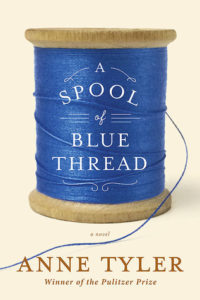 Another time-honored Hollywood maxim: The main character grows stronger as his villain opponent becomes meaner and stronger. To her credit, Tyler not only ignores this rule, she defies it. This story has no single main character – unless it’s the house. And, as in all of her books, there are no vicious opponents. The engines of conflict whir almost entirely within the family. Adversaries that seem the most obnoxious, inconsiderate, and spiteful ultimately show us their redeeming qualities.
In every Anne Tyler novel there’s a conspicuous bad boy. In A Spool of Blue Thread, Denny shows up on the first page. And throughout the story, he’s obnoxious, inconsiderate, and spiteful. And he’s the one his saintly mom loves best, and eventually, we do, too.
Authors, your Hollywood agent or your book editor will tell you to raise the stakes to life and death. The dreary result is on-screen violence – shootouts, and fiery crashes, and bloody mayhem. But Anne Tyler quietly and bravely won’t go there. She gives us a no-fault auto accident and a sibling quarrel that ends with punch in the nose.
So how does Tyler do it? How by defying the rules does she engage us? Her narrative slows down to the pace of daily life. She gives us none of her own opinions, but a stream of meticulous detail about meals, clothes, woodwork, plants, weather, money problems, idle thoughts, and petty grievances. And in focusing the marvels of the mundane, she helps us appreciate the joys of living our own ordinary and wonder-filled lives.


 When no one else seems to care, Evan Wycliff wants to know why his friend died. Behind the sleepy life of a farm town in Southern Missouri, century-old plots and schemes play out. Intrigue on the white sands of the Indian Ocean. A lonely widower makes the difficult transition from passive-observer tourist to committed resident.
The post Thinking About Thinking #32 – A Spool of Blue Thread – Can a house be the main character? appeared first on Gerald Everett Jones - Author.


July 21, 2021
Thinking About Thinking #31 – The Professor of Desire – Male-centered fiction – So yesterday?

Philip Roth is best known for his classic boychik lit coming-of-age story, Portnoy’s Complaint. Remember boychik is Yiddish for a young man with more chutzpah than brains. And, all of Roth’s novels since then seem to be about self-centered males who are thinly disguised extensions of his own fragile ego.
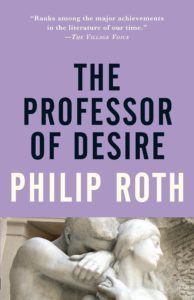 The Professor of Desire is the first-person confession of David Kepesh, an English professor like Roth himself, who obsesses, not about finding love so much as gratifying his urges without feeling too guilty.
We meet him as overprotected young man working in his family’s business. When he wins a scholarship to attend university in London, he has his first adult relationships with a pair of Swedish girls, Elisabeth and Birgitta. Ideal as the situation might seem for a man of his age and lusts, he’s miserable. Elisabeth moves out because he’s inconsiderate. Birgitta stays and is more than willing to please, but her eagerness turns him off.
Flash forward, and David falls for gorgeous supermodel Helen, who led a shadowy past life in Southeast Asia. Ignoring the fact that she must have left her heart there, he worships her, and they marry. One day, she leaves him abruptly for Singapore to take up with her former lover. And not so much because of anything David did or didn’t do, but because she simply doesn’t care enough about him.
Now entering his forties, David takes up with Claire, a sweet shiksa from New England, a caring, sensible woman, and the relationship is too good to be true. Just when David is beginning to suspect he can’t go the distance, his widowed father shows up all excited that his son will finally make a happy marriage.
We don’t get to find out. That’s where the book ends. The Professor of Desire was published in 1977, about the time activists like Germaine Greer and Gloria Steinem were redefining feminism. They were mostly successful inspiring a new generation of young women. But Roth seems to be stumbling around, muttering to himself about what it means to be a man. He really doesn’t have a clue.
I didn’t have a chance to include this comment in my radio podcast review, but revisiting this book decades later doesn’t bring any surprises about gender roles in today’s society. But what is striking is the ageism that becomes apparent in Roth’s work. At the end of the novel, David is about forty and his father is past sixty. Roth describes the older man as doddering, forgetful, and foolish. And David’s second-worst fear, after doubting his own worthiness as a companion for Claire, is that his father will die soon. If this book were written today, the portrait of the father would not be credible unless the man were in his eighties. Even then, many mature readers whose minds are still sharp would find the caricature of the senile dad distasteful.

When no one else seems to care, Evan Wycliff wants to know why his friend died. Behind the sleepy life of a farm town in Southern Missouri, century-old plots and schemes play out. Intrigue on the white sands of the Indian Ocean. A lonely widower makes the difficult transition from passive-observer tourist to committed resident.The post Thinking About Thinking #31 – The Professor of Desire – Male-centered fiction – So yesterday? appeared first on Gerald Everett Jones - Author.
July 18, 2021
Thinking About Thinking #30 – Back to Blood – In a melting pot, what melts, exactly?

In his novel Back to Blood, Tom Wolfe savages urban American morality, or lack thereof, by focusing on the melting pot of Miami.
In this city there are more recent immigrants than anywhere else. The races cohabit and wheel and deal, but they mix hardly at all. As one of his characters quips, Everybody hates everybody.
 Wolfe’s main character here is Nestor Camacho, a roguish cop of Cuban ancestry who, like so many of his neighbors in Hialeah, barely speaks a word of Spanish. In many ways, Camacho is a hero, often in spite of himself. His good heart and fierce sense of duty carry him into dangerous situations, intrigues, and trouble with his superiors. The driving force of a subplot about a colossal art forgery is preppie newspaperman John Smith, who is also a rogue, and also prone to find all kinds of trouble, much of it newsworthy. And most of the truths he uncovers are inconvenient both for his media bosses and for the mob-style rulers of the social order.
This book shows a lot of skin, as they say. Situations are weird or gross, or both. Wolfe reveals himself to be a dirty old man with a massive vocabulary who will titillate you until you have way too much information. We are self-seeking animals, he seems to say, and most of our decisions and actions are motivated by our most basic desires.
Tom Wolfe’s literary predecessor could well be the nineteenth-century French satirist Honoré de Balzac, who was so alike in his low opinion of human nature and exploitation of its foibles. At heart, Wolfe is a curmudgeonly moralist. Society, he seems to be saying, still needs cops and journalists, who can occasionally be heroes, if they dare to break the rules.

When no one else seems to care, Evan Wycliff wants to know why his friend died. Behind the sleepy life of a farm town in Southern Missouri, century-old plots and schemes play out. Intrigue on the white sands of the Indian Ocean. A lonely widower makes the difficult transition from passive-observer tourist to committed resident.The post Thinking About Thinking #30 – Back to Blood – In a melting pot, what melts, exactly? appeared first on Gerald Everett Jones - Author.
July 14, 2021
Thinking About Thinking #29 – The Art Thief – Stealing art from the rich – victimless?

In novels and movies about jewel thieves, the burglar is a lovable rogue.
Noah Charney is a professor of art history and an expert in fine art forgery and theft. And in this novel he proves himself to be a sly spinner of detective yarn. The Art Thief is a tale of brain-teasing complexity involving multiple, interconnected forgeries and thefts of historic paintings from several institutions. And its resolution necessarily involves multiple detectives and forensic experts, each as colorful and eccentric in his own way as Inspector Clouseau. The victims – museum curators and aristo collectors – are a classier bunch who tend to both snobbery and hypocrisy – not the most admirable human beings. Classiest of all are the scheming thieves and forgers. You see, in today’s genre fiction, perpetrators of these presumably victimless crimes against the upper class have the cachet of winners at Wimbledon. Well played, chaps! In a previous generation, this place of honor was held by jewel thieves who connived to execute intricately plotted heists. Remember Cary Grant – never more dashing than in his role as John Robie in Hitchcock’s To Catch a Thief? Or Melina Mercouri and her artful crew in Topkapi?
 Along the way, Prof. Charney is going to teach you a lot about art history and criticism. And that’s even if you consider yourself well versed. He’s never happier or more entertaining than when his donnish characters tear off on rants to their dunderhead students about how to study paintings.
Here’s an example. His Professor Barrow pontificates: “I speak of observation, looking in order to gather information, rather than merely looking. Look deeper. Observation followed by logical deduction leads to solution. You shall see.”
And isn’t this just what the reader of a detective story must learn to do? Observe and deduce?
The Art Thief is great fun, but my advice would be to keep a scratchpad handy. The plots, the players, the crosses and the double-crosses are so intertwined you’ll want to make a diagram to keep track.

 A century-old scandal locked in a painting. This edition of the novel includes the author’s research whitepaper published in The Journal of Art Crime. Intrigue on the white sands of the Indian Ocean. A lonely widower makes the difficult transition from passive-observer tourist to committed resident.
The post Thinking About Thinking #29 – The Art Thief – Stealing art from the rich – victimless? appeared first on Gerald Everett Jones - Author.
July 11, 2021
Thinking About Thinking #28 – Griftopia – Who Is Getting Away with What?

Griftopia by Matt Taibbi is a fascinating, ultra-hip, and more or less comprehensible explanation of the financial bubble burst of 2008. It’s a disturbing investigative report. But let’s get real. We need to understand this stuff if we ever want to think and act like a responsible adults instead of brain-dead, wage-slave entertainment addicts.
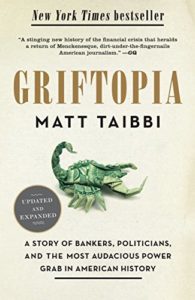 Did you know that parking meters in Chicago are now owned by offshore investors? And that other big chunks of our municipal- and state-owned infrastructure, like parks, are being auctioned or leased to foreign interests? All because our government budgets are imploding and your friendly investment bankers have the fix – just sell off the US of A in pieces while they take fat commissions on the deals.
If only chronically curious journalist Matt Tiabbi were some crack-head scribbler who made all this stuff up to sell books. If it weren’t the shameful truth, it would make a very funny movie.


Harry Harambee’s Kenyan Sundowner – Is it a scam? Harry wonders if he’s being played. Then he wonders, Do I mind?
The post Thinking About Thinking #28 – Griftopia – Who Is Getting Away with What? appeared first on Gerald Everett Jones - Author.
July 7, 2021
Thinking About Thinking #27 – A Delicate Truth – The Reader As Close Observer

Le Carré’s spy novel A Delicate Truth is the behind-the-scenes story of a small anti-terrorist black op – secretly sponsored by a Member of Parliament – that might or might not have happened. Problem is, its very existence – even as a plan – is so politically incorrect as to be a profound embarrassment if anyone involved decides to break silence and go public with the few facts they know. So the trendy topic of whistle-blowing is very much at issue.
I find two things remarkable about this novel.
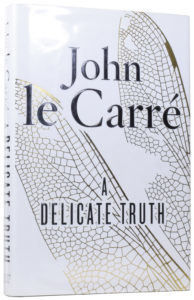 First, the dialogue is almost entirely and deliberately off-point – more than in any other Le Carré book I’ve read. The words are about everything but the topic at hand. Everyone speaks, not just in trade jargon and code, but in hints and innuendo and metaphors. It’s annoying. And real. And perhaps an angry commentary on a societal lack of not only frankness and honesty but also an unwillingness to face any real facts at all.
They might be discussing murder, but all you hear are acronyms.
Second, you won’t have a clear idea of who the main character is until fairly far along. He will grow on you, as he will become bolder in his own estimation of himself. But he’s a bureaucrat (as are most of the rest of them) and in many respects lackluster. Totally absent are the mythic proportions of James Bond. And he has nothing like the cunning wit or the cleverness of George Smiley.
He does, however, eventually realize he has a conscience and a loyalty to ideals that are both naive and reckless.
Master spy novelist Le Carré often refers to intelligence operatives as close observers. Of course, that’s just what a reader is. His narrative technique is to immerse you in detail, much of which may be irrelevant to the plot – just the way we experience reality every day, from one perception to the next.
In training you to think like a spy – like a close observer – Le Carré makes you a better reader and a more critical thinker.
A Delicate Truth is very much about today. And there is much to learn, if in those cryptic conversations you also learn to listen between the lines.

Harry Harambee’s Kenyan Sundowner – Intrigue on the white sands of East Africa for fans of Graham Greene and John Le Carré.
The post Thinking About Thinking #27 – A Delicate Truth – The Reader As Close Observer appeared first on Gerald Everett Jones - Author.
June 20, 2021
No, I’m not Marty. But I was The Playboy!

Author Gerald Everett Jones is sometimes, but not often, mistaken for movie director Martin Scorsese.
While I was on a business trip a few years ago, I was walking down the hallway of my hotel, and two young people passed by me. Moments later I heard a voice behind me as one said to the other, “That’s Martin Scorsese, you know.”
It doesn’t happen often. Of course, perhaps the people who are gaping at me across the room at a crowded restaurant might think they’ve spotted Marty – or there might literally be egg on my face.
This was not the first time I’d been recognized in public by a stranger, whether for being myself or some (other) celebrity. I was surprised and flattered the other day when after introducing myself to a young woman on a business matter and handing her my card, she replied, “I’ve heard of you.”
I was afraid to ask her how!
I once spotted novelist Paul Auster having breakfast at a nearby table at a coffee shop in Brooklyn. I knew he lived in the neighborhood. I regret I didn’t have the nerve to walk over there and tell him how much I admire his work.

Gerald played the title role (Christy Mahon) in a summer-stock production of John M. Synge’s play, Playboy of the Western World.
But the most sensational of these experiences happened decades ago, and I fear it might never be surpassed. When I was the callow age of twenty and thinking someday I’d be a professional actor, I played Christy Mahon, the lead role in J. M. Synge’s play, The Playboy of the Western World. (I should explain that playboy in the jargon of the period apparently meant something like trickster – nothing like the implication it would eventually have for Hugh Hefner or James Bond.)
I undertook this challenge – a large role for a green actor – during a summer-stock internship at the Town Meeting Playhouse in Jeffersonville, Vermont. Our acting company took on nine roles in ten weeks, performing four shows each weekend, including a matinee as well as an evening show on Saturdays. The schedule was so hectic and compressed that we’d start rehearsals and blocking of the next show every Friday, the day of the current show’s opening night.
During those four performances of Playboy, I forgot my lines a couple of times, but the generous cast helped me ad lib to cover. The applause was enthusiastic, I was told later by the director, and Vermonters are not known for public displays of affection of any kind.
The closest big town to Jeffersonville is Burlington. One afternoon following the closing of Playboy, several of us cast members took a road trip into town. It was a rare day out. And one of the highlights of our spree was stopping in a bookstore.
While I was browsing there, a teenage girl pointed eagerly at me and exclaimed, “Oh, my God! It’s the Playboy of the Western World!”
Top that, Marty!

Gerald Everett Jones is the author of the new novel, Harry Harambee’s Kenyan Sundowner, which will be released on June 29.
The post No, I’m not Marty. But I was The Playboy! appeared first on Gerald Everett Jones - Author.
June 13, 2021
Books That Make You… (cross-posts)

Gerald’s gig begins at 42:31 for about five minutes – And there are many more captivating authors on this beach!

The post Books That Make You… (cross-posts) appeared first on Gerald Everett Jones - Author.
May 29, 2021
Douglas Coleman Interviews Gerald on Trends in Publishing

In this new 15-minute episode of The Douglas Coleman Show VE (here on YouTube), Douglas and Gerald speculate about trends and recent changes in the publishing industry, along with how readers might want authors to approach their work to set it apart from 8 million other Kindle titles.
Gerald also tells how taking up residence in East Africa for two years motivated him to write his new award-winning novel Harry Harambee’s Kenyan Sundowner.
 NABE 2021 Best (and only) in Literary Fiction
Preorder for June 29, 2021 release.
The post Douglas Coleman Interviews Gerald on Trends in Publishing appeared first on Gerald Everett Jones - Author.
May 28, 2021
Book Review: An Eternal Audience of One by Rémy Ngamije (release date August 10, 2021)

Gallery / Scout Press imprint of Simon & Schuster
The book’s title The Eternal Audience of One would seem to refer to the unrepentant self-centeredness of the young male protagonist Séraphin Turihamwe. At an overview level, focusing on entertainment value, the storytelling is a familiar coming-of-age plot, a series of hookups, mostly casual and a few intense – soft-core graphic. What’s exceptional about author Rémy Ngamije’s version are the intrigues of and insights on sexual, racial, and geopolitical strife in today’s southern Africa. Séraphin was born Rwandan, but his educated family emigrates to Windhoek, Namibia in search of both safety and prosperity. As a result, the label refugee gets appended to him, when he and his family expect to be regarded as residents who deserve a place in the country’s rapidly emerging middle class. But no sooner does overachieving student Séraphin begin to adjust than he decides to attend law school at Remms in Cape Town, South Africa. There he is rapidly thrown into a sophisticated urban environment, along with the predictable pressures of trying to balance the obligations of academic achievement and serious partying.
Cocksure Séraphin, who still harbors secret doubts about his social standing, hangs with a posse of fellow students. These men call themselves the High Lords, facilitating their exploits with liberal rounds of alcohol if not drugs. He has left an Afrikaner girlfriend back home in Windhoek to stumble into a series of hookups with young women who are variously white or black. Although he and his fellows don’t discriminate racially as to their choices in partners, they do share stereotypes among themselves about the characteristics, charms, and preferences of each. For example, a group they call the Benevolent White Girls would not think of sleeping with any of them, but those are avid notetakers in class and are eager to help their black brothers crib. As with Séraphin’s chagrin at being called a refugee, many of his mates, although from indigenous ethnicities in neighboring countries, are regarded as foreigners in Cape Town.
So, it’s mostly partying and texting, along with falling in and out of bed, if not in love. Spoiler alert: chick-magnet Séraphin doesn’t quite settle down by the time the Epilogue wraps, but one can expect, if there is a sequel, it will be set in Windhoek and he will be pleading with the High Lords to stand at his side for the ceremony. Or not?
Releasing June 29, 2021 in trade paperback, Kindle, and EPUB. Audiobook in production.
The post Book Review: An Eternal Audience of One by Rémy Ngamije (release date August 10, 2021) appeared first on Gerald Everett Jones - Author.
Gerald Everett Jones - Author

- Gerald Everett Jones's profile
- 489 followers

