
Gerald Everett Jones's Blog: Gerald Everett Jones - Author, page 35
February 25, 2022
Evan Wycliff – Practicing Minister and Amateur Sleuth – Thinking About Thinking #49

Evan Wycliff is an amateur sleuth, the main character of my mysteries Preacher Finds a Corpse, Preacher Fakes a Miracle, and Preacher Raises the Dead. Amateur sleuth is a well-established subgenre of mystery, but stories about clergymen who investigate crimes are perhaps a sub-subgenre. As a reader myself, my favorites of these are the Rabbi Ben mysteries by Marvin J. Wolf, including A Scribe Dies in Brooklyn.
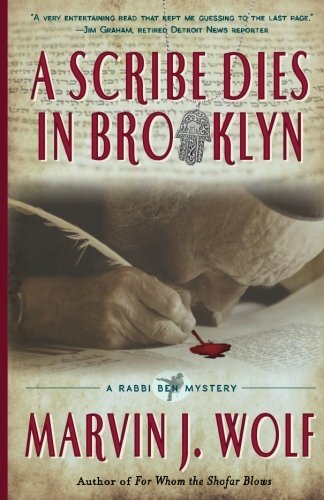 Now, putting on my writer hat, I will admit that casting an amateur sleuth in the role of investigator is one of the easier choices. If the main character were a law-enforcement official, the technical challenges for the author are much more restrictive. Those plots fall into the category of police procedural. The author must understand the protocols of criminal investigations, including crime-scene surveys and forensic analysis.
But protagonists who are amateurs needn’t follow the rules – especially because they are likely to be ignorant of them and – what’s more – they have no business poking their noses where they don’t belong.
In the Preacher novels, it isn’t Evan’s intention to do any of this. In the first book, Preacher Finds a Corpse, he happens on the body of his best friend in a cornfield. Bob Taggart is dead – apparently by suicide, which is also obvious to the cops and to the coroner. But Evan wonders – even if no one else pulled the trigger – did someone drive Bob to do it? Wouldn’t that be a sin – if not a crime?
Evan’s curse – or his blessing – is his curious mind. And, like good investigators, professional or not, he’s both a data-driller and a close observer. At the outset of the series, Evan gets only part-time gigs – as a guest preacher at the local Baptist church and as a skip tracer (bill collector) for the town’s car dealership.
And because he has some success finding the truth, false rumors circulate in this southern Missouri farm community that Evan is a faith healer. His growing reputation attracts people who need help – not just spiritual guidance but also resolutions to personal crises that no one else in town seems to have any interest in solving.
So – one might ask – are the Evan Wycliff mysteries Christian fiction? I’d think not – my sense of that genre is it’s intended to provide inspiration – to offer answers to questions.
In Evan’s world, there are always more questions than answers.

The post Evan Wycliff – Practicing Minister and Amateur Sleuth – Thinking About Thinking #49 appeared first on Gerald Everett Jones - Author.


February 18, 2022
New Interpretations of Bible Parables – Thinking About Thinking #48

If you’re having trouble with your religious faith, studying theology will only make matters worse. In my Evan Wycliff Mysteries series, the protagonist is a Baptist minister who often has serious doubts. For my background research, I delved into some recent Biblical scholarship, where I found some remarkable reinterpretations of the old stories.
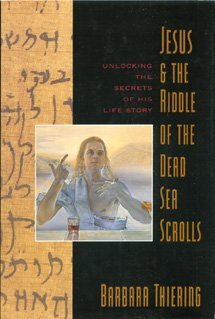
One of these latter-day sources is Jesus and the Riddle of the Dead Sea Scrolls by Barbara Thiering. This Australian scholar applied a traditional rabbinic pesher analysis – used primarily by Hebrew scholars to find hidden meanings in the Old Testament. Thiering maintains that the New Testament gospels are full of coded messages intended to be passed among rebellious Jews who sought to hide their controversial beliefs and doctrines from conservative sects such as the Scribes and the Pharisees.
For example, Thiering asserts that the parable of turning water into wine at the wedding feast was not to be taken literally. Traditional religious practice segregated women in worship services and used water as a sacramental beverage. Jesus and his rebels advocated including women and the infirm in all ceremonies, and their sacraments used wine. The parable therefore uses powerful symbolism to emphasize a doctrinal dispute.
And – which is more miraculous – a one-time chemistry trick or changing worship practices from ancient times to this to include women?
Thiering also thinks the story of the virgin birth contains an encrypted message. In the Essene community, a betrothed couple were made to live apart until the wedding, Mary was sent to live with pious women (who were like caregiving nuns), in the “House of the Virgins.” This suggests that Mary – and not necessarily Joseph – was descended from the house of David and a member of the sect aligned with the revolutionaries Jesus would eventually lead. The story of the virgin birth is therefore coded proof of the matrilineal legitimacy of Jesus to claim the throne of David.
As you might expect, Thiering’s conclusions have been shouted down by traditional theologians. She died in 2015, so these days she’s not around to defend herself. But you can be sure there is a generation of seminarians who have her on their reading lists.
I imagine many faithful churchgoers don’t delve much into theological scholarship. That’s what ministers are supposed to do at divinity school. Sunday-school teachers must certainly study the Bible, and a source they might routinely consult would be The Wycliffe Bible Commentary, a standard text in seminaries. Not coincidentally, that book was the inspiration for fictional Evan Wycliff’s family name.
Understand, I’m not endorsing or pushing such alternative views. I do find them intriguing, even at some times appealing. But these speculations figure strongly into the plotting of the mystery series because Evan is – as he admits – both perpetually curious and a habitual doubter.

The post New Interpretations of Bible Parables – Thinking About Thinking #48 appeared first on Gerald Everett Jones - Author.
February 12, 2022
Do You Love Your Own Mother This Much? Thinking About Thinking #47

Here’s my book review of The Rainbow Comes and Goes: A Mother and Son on Life, Love, and Loss by Anderson Cooper and Gloria Vanderbilt.
Memoir is perhaps the most frequently attempted book genre, but unless there’s a celebrity photo on the cover, these manuscripts rarely find a mainstream publisher, much less become bestsellers. But in this case, there are two smiling portraits on the cover and two famous brands – television journalist Anderson Cooper and his fashion designer mother Gloria Vanderbilt.
However, until recently anyway, the general public may not have been aware of the family relationship. For his part, Cooper has assiduously avoided the association. His mother, for her part, has been anything but shy about using and exploiting the name. Her signature jeans and fragrances have been her single most commercially successful venture, and other than lending cachet to the brand, this was a self-made fortune among several she has attained and lost. And without trading on the name Vanderbilt, Cooper has made his reputation on his own as a media phenomenon. He is today one of the most credible names in broadcasting, and not because he carried the famous name.

The Rainbow Comes and Goes is an exchange of intimate personal correspondence conducted via email while the 92-year-old Vanderbilt stayed mostly in her luxury apartment in Manhattan and Cooper jetted around the globe covering news assignments, mostly in locales ravaged by war or natural disaster. Cooper says he took the initiative to get closer to her, and the lessons learned in the book prove the wisdom of his intentions.
One trait these two share is a dogged ability to withstand profound loss – and not just survive, but become the stronger for it. They share two huge untimely wounds. First, her third husband and Cooper’s father Wyatt Emory Cooper died of open-heart surgery at age 50. He left two young sons, Carter and Anderson. The second blow came when Carter committed suicide at age 23.
Gloria Vanderbilt is open about the intimate and sometimes sensational details of her life story. Cooper relates these to his own personal struggles, but details of his personal relationships are not included. Vanderbilt could have owned to four surnames from a succession of celebrity husbands: Pat Dechico, presumed mobster and former husband as well as rumored murderer of actress Thelma Todd; Leopold Stokowski, brilliant orchestra conductor and then crusty older man; Cooper’s father Wyatt, a small-town boy from a poor rural family who became a Hollywood screenwriter; and legendary movie director Sidney Lumet. And we also learn from this book that had she been so inclined, she could have added other names to the list – including Howard Hughes and Frank Sinatra.
Cooper says he set out on a career as a war correspondent because he wanted to see how people who had no advantages coped with sudden and profound loss. He told the story of his early career in another book, Dispatches from the Edge: A Memoir of War, Disasters, and Survival.
A significant portion of Vanderbilt’s confession centered on her difficult and mostly estranged relationship with her mother, the glamorous widow Gloria Morgan Vanderbilt. Cooper’s mother summarizes the humiliating custody battle and trial as her aunt, Gertrude Vanderbilt Whitney, sued to make the child a ward of the court on the grounds that her mother was unfit. This story was widely publicized at the time and is a major episode in the daughter’s autobiography, Once Upon a Time: A True Story, and in Barbara Goldsmith’s biography, Little Gloria Happy at Last, which was made into a TV miniseries. Perhaps surprisingly, the sedate “Aunt Gert” – that’s Gertrude Vanderbilt – comes across in this account as the girl’s well-meaning benefactor and ardent protector, but never one who was demonstrative with her affections.
Little Gloria was cherished by her nanny and her maternal grandmother, but she never really knew her father. Reginald Claypoole Vanderbilt, who died from his alcoholism just a year before she was born.
The main takeaway from Rainbow is clear from its stated intention to have an intimate exchange with a loved one. As the generation of Boomers must face the challenges of caring for parents whose faculties may be diminishing, here’s an example that it may not be too late to talk frankly. As Cooper explains, “I know now that it’s never too late to change the relationships you have with someone important in your life – a parent, a child, a lover, a friend. All it takes is a willingness to be honest and shed your old skin. Let go of the long-standing assumptions and slights you still cling to.”
But between the lines of The Rainbow Comes and Goes is another powerful truth, one so fundamental to the national debate. The Vanderbilts were the one-percenters of yesteryear. When Cooper’s great grandfather Cornelius Vanderbilt II split the family inheritance with his brother William in the mid-19th century, between them they controlled the largest personal fortune in the world. But by the standards of today’s multibillionaires, that money and its power have all but dissipated.
As a society, we may fear the overweening influence of the rich and powerful, but in America at least, their personal empires often don’t survive more than a few generations.
Anderson Cooper and Gloria Vanderbilt both learned how to reinvent themselves. It didn’t hurt that they were both born to comfort, but their achievements and any happiness they’ve gained have come not from their presumed advantages, but from personal resilience in the face of anguish.
Update: Gloria Vanderbilt passed away after the book was published.

Drop here!

The post Do You Love Your Own Mother This Much? Thinking About Thinking #47 appeared first on Gerald Everett Jones - Author.
February 2, 2022
Evan Wycliff – Agnostic Minister? Thinking About Thinking #46

Evan Wycliff, the protagonist of Preacher Raises the Dead (latest and third in my mystery series), might not be a full-time agnostic, but there are days when he certainly has his doubts. In the first book in the series, Preacher Finds a Corpse, he’s just returned to his rural hometown, Appleton City in southern Missouri, because he’s given up on his studies. He earned a degree at Harvard Divinity, but along the way he learned way too much about the hypocritical and corrupt history of Christianity. Then, hoping to find better answers to the “big questions” in science, he undertook postgraduate work in astrophysics. He found those conclusions baffling as well.
As an unemployed college dropout, how can he make his way? He grew up on the farm, but these days it’s tough for farm owners to get by, let alone their farmhands. So he takes the occasional opportunity as guest preacher at the local Baptist church. And because he’s a skilled data-driller, he tracks down debtors who have skipped on their car loans (whom he tends to forgive more than he chastises).
In the second book, Preacher Fakes a Miracle, Evan helps a girl who is afflicted with epilepsy. Then the rumor around town alleges he’s a faith healer because, they assume, he must have cast out demons.
In the third book, Evan’s life gets a lot more complicated as he’s challenged with becoming a more responsible member of the community. The old pastor and his mentor Rev. Marcus Thurston decides to retire, and Evan reluctantly takes on the role of full-time minister, pastor of the church.
That’s when he finds out that not only preaching sermons, but also visiting the sick and the dying, along with officiating at weddings and funerals, is hard work. It’s a job – often a tedious one. And, some days, Evan just can’t find it in his heart to believe.
Fueling his doubts are the theories he’s studied of cosmologists who assert the increasingly accepted notion of a “godless universe.”
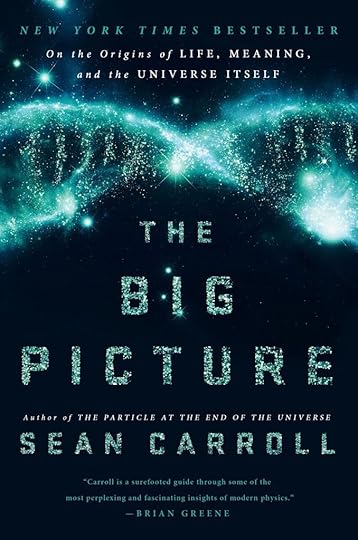 Physicist Sean Carroll of CalTech is one of the proponents of the godless-universe hypothesis. He advances his argument in his book, The Big Picture: On the Origins of Life, Meaning, and the Universe Itself. The core of his argument is naturalism – meaning that the physical universe – encompassing everything humans can sense or measure – is all that there is. In an interview with Clara Moskowitz published in Scientific American, Carroll explains: “There’s actually a movement called religious naturalism. Religion involves a whole bunch of things — practices, casts of mind, morals, etc., so you can certainly imagine calling yourself religious, reading the Bible, going to church and just not believing in God. I suspect the number of people who do that is much larger than the number of people who admit to it.”
As I discussed in my post about Brian Greene‘s book Until the End of Time, a trending consensus among cosmologists is that the dual processes of entropy (disintegration) and evolution (integration), can explain the emergence of complexity without God as creator or cause. Physicist Brian Cox, in his recent comments on the movie Don’t Look Up, implied that the most significant role of humans may be to create meaning in a meaningless universe. The philosophy of existentialism, which arose in the mid-twentieth century, possibly in response to the horrors of WWII, holds that the universe is fundamentally empty and meaningless. But as psychologists know all too well, human beings are “meaning-making machines.” We’re prone to finding meaning and purpose even in random events. This skill is a useful survival tool, making it routine for us to take lessons from our experiences to avoid future harm. An alternative view is the prevalent New Age belief is that there are no accidents in the universe.
Existentialists might say that people who find comfort in religion aren’t wrong – they’ve found useful meaning, even if that meaning is not objectively provable. But the naturalists may assert that everything that exists is simply the sum total of 14 billion years of accidents.
The post Evan Wycliff – Agnostic Minister? Thinking About Thinking #46 appeared first on Gerald Everett Jones - Author.
January 25, 2022
Physicist Says Thought Will No Longer Be Possible – Thinking About Thinking #45

Here’s my book review of Until the End of Time by astrophysicist Brian Greene.
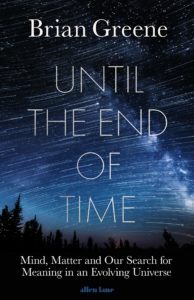 It’s the best survey of current theories in cosmology that I’ve read. But it’s also the most unsettling to someone like me who tries continually to reconcile science and theology.
Fans of my Evan Wycliff Mystery series know that Evan is similarly conflicted. A farm boy from southern Missouri from a devout Baptist family, he thought he’d go into the ministry. But then he studied at Harvard Divinity, where learning more about the history of Christianity and its hypocrisies shook his faith. Then, seeking answers to the big questions instead in science, he enrolled in postgrad astrophysics at MIT. He dropped out of that program, too. Discouraged and heartbroken for other personal reasons, Evan returned to farmland roots, where he got occasional work as a guest preacher and a credit investigator for the local car dealer.
Evan is a preacher who some days is an agnostic. And he’s an amateur sleuth because he has investigative skills. People in his community come to him with problems that no one else has any interest in solving.
So – no surprise – from the standpoint of intellectual curiosity, Evan and I are a lot alike.
Two conclusions in Greene’s book would startle us both. First, there can be no such thing as eternity. The universe is about 14 billion years old and has more than double that time before it expires. But, according to Greene, expire it will – expanding and disintegrating into cosmic dust, then expanding more until particles are so far apart they can’t form any solid mass – no galaxies, no stars, no planets.
Now, from the viewpoint of the philosopher or mystic, eternity is not simply a long, long time. Or even a timeline that has no end. It’s a state of being. Time-less – an incomprehensible notion for the human mind.
But more disturbing still is Greene’s assertion that – long before the universe expires – thought itself won’t be possible. Thought in humans is biochemically supported electrical activity in the brain. When the cosmos becomes diffuse, no such complex structures will exist.
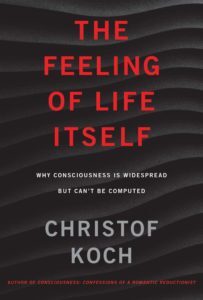 Now, unaddressed in Greene’s survey is the question of whether consciousness and thought are aspects of the same physical process. Some scientists, including Christoph Koch, have tried to explain consciousness as super-complex electrical activity in the brain. Koch has found no such explanation. He theorizes that computers, no matter how complex, can never be conscious. In his book The Feeling of Life Itself, at the conclusion he can only guess that consciousness is some as yet unmeasurable, fundamental property of the universe, a feeling shared by all living things, in various degrees depending on the complexity of their brains. For rigorous scientist Koch, it’s little more than a guess.
Where is God in all this? Our religious traditions hold that God is pervasive consciousness and eternal. Another hypothesis of Greene and his colleagues is the so-called godless universe. That is, the dual processes of entropy (diffusion) and evolution (ever-increasing complexity) are sufficient to explain everything that exists.
Which brings us to the most elusive question of all, one that philosophers have debated for centuries, which also has the scientists stumped:
Why is there something rather than nothing?
The post Physicist Says Thought Will No Longer Be Possible – Thinking About Thinking #45 appeared first on Gerald Everett Jones - Author.
January 20, 2022
Why Is James Bond Still a Thing? #MeToo – Thinking About Thinking #44

Here’s my book review of The Long Lavender Look by John D. MacDonald. I believe I’ve read all of his Travis McGee books. Each has a color in the title. Trav lives on a houseboat he won in a poker game in Fort Lauderdale. He’s a salvage expert. He goes after missing boats, money, or wives. He always keeps half of whatever he finds. The baddest guys try to stop him because they covet the same things.
 Travis is very much a Sixties hero with parallels to James Bond. Like Bond, McGee is a garbage collector of the vile detritus left behind by the world’s evil geniuses and idiotic criminals. And also like Bond, Trav treats women badly and assumes they like it. And as in the Bond stories, the beautiful women he loves too much end up dead, usually horribly so, at the hands of the elusive monster du jour. Revenge then adds to his justification for giving back as bad as his girlie got – or worse.
As an education in the underside of Florida real estate schemes and political corruption, MacDonald’s books are fascinating, unexpected discoveries. You also get a strong dose of macroeconomic theory anytime McGee engages his neighbor Meyer Meyer to help him understand the intricacies of bribing politicians or laundering money.
But what strikes me as I pick up this book again is the depth of the cruelty MacDonald conjures. It’s really ugly, voyeuristic, more shocking than the scummiest story In today’s news,
But if it thrills you to see powerful bad guys bite the dirt, Travis McGee is your man.

On sale paperback and Kindle March 1, 2022.
The post Why Is James Bond Still a Thing? #MeToo – Thinking About Thinking #44 appeared first on Gerald Everett Jones - Author.
January 16, 2022
How to Write an Award-Winning Mystery – I surprise even myself!

In writing the Evan Wycliff Mystery series, I’ve surprised myself many times over. It will therefore surprise me if readers find anything in the plots predictable. I resolved at the outset to let my subconscious self do most of the work. And after the stage was set and the characters stepped onto it, many times they told me where they wanted to go and said whatever they wanted to say. I haven’t always worked like this. Years ago, when I wrote mainly technical and business nonfiction for publishing houses, I wrote to strict outlines, and I sought approval from in-house editors if ever I chose to depart from the agreed plan.
When I set out to write Preacher Raises the Dead, I had the notion of describing both near-death experience (NDE) and coma. In the beginning, I didn’t know who would be stricken or how those subplots would turn out. Many other plot elements were likewise uncertain right up until the words flowed into the manuscript draft, including Evan’s core religious beliefs and consequences of Luke’s schizophrenia and Melissa’s epilepsy. The reappearance of Stuart Shackleton was a complete surprise until Evan saw him again that fateful day in the courtroom. He and I should have known we weren’t done with him yet!

Evan Wycliff #1 is avaialble as an audibook from Audible and booksellers worldwide.
The post How to Write an Award-Winning Mystery – I surprise even myself! appeared first on Gerald Everett Jones - Author.
January 7, 2022
Press Release: New Mystery Novel ‘Preacher Raises the Dead’ Deals with Real End-of-Life Controversies
LaPuerta Books and Media announces the anticipated March 1 release of Preacher Raises the Dead, the third novel in Gerald Everett Jones’s multiple-award-winning Evan Wycliff Mysteries. The first two books in the series, Preacher Finds a Corpse and Preacher Fakes a Miracle, won Gold and Silver respectively in the 2020 New York City Big Book Awards – grabbing the top two slots in the mystery category that year and besting entries from not only indies but also the Big Five publishing houses. As well, the series has won three other awards to date, including kudos from the National Association of Book Entrepreneurs, the Eric Hoffer Awards, and the Independent Press Awards.
When readers meet Evan Wycliff in the first book, he’s a lapsed divinity student from a devoutly Southern Baptist family, but he’s also fascinated by astrophysics. After forsaking both Harvard Divinity School and MIT, he returns to his farm roots in Southern Missouri. When he’s not serving as a guest preacher, he’s using his investigative skills to track down neighbors who have fallen way behind on their auto loans. Bachelor Wycliff lives in a modest trailer, and some evenings he thinks his only friend is Jack Daniels. Although he might not be an agnostic, he’s certainly a fretful believer who has serious doubts.
In these novels, Evan gets involved in criminal plots and intrigues as an amateur sleuth because sometimes he’s the only clever fellow in this small rural town who is willing to help after the authorities have given up.
In Preacher Raises the Dead, Evan reluctantly takes on the role of full-time minister and walks straight into more responsibility and trouble than he can handle. He attends to near-death experience (NDE), late-stage dementia, long-term coma, and consequences of the pandemic. His old nemesis investment banker Stuart Shackleton is back – and claims to be converted. Shackleton’s money sustains a critical-care medical breakthrough, the building of a new church, and a career boost for Evan as a celebrity evangelist. Are these thrilling transformations part of a divine plan, or has Evan sold his soul?
Author Gerald Everett Jones explains how his writing process generates plot twists and surprises: “In writing these mysteries, I’ve surprised myself many times over. It will therefore surprise me if readers find anything in the plots predictable. I resolved at the outset to let my subconscious self do most of the work. And after the stage was set and the characters stepped onto it, many times they told me where they wanted to go and said whatever they wanted to say. I haven’t always worked like this. Years ago, when I wrote mainly technical and business nonfiction for publishing houses, I wrote to strict outlines, and I sought approval from in-house editors if ever I chose to depart from the agreed plan.
“When I set out to write Preacher Raises the Dead, I had the notion of describing both near-death experience and coma. In the beginning, I didn’t know who would be stricken or how those subplots would turn out. Many other plot elements were likewise uncertain right up until the words flowed into the manuscript draft, including questions about some of Evan’s most basic religious beliefs. His philosophy of life is bound to be controversial. The very thought of a practicing minister who is too often an agnostic will raise eyebrows. But do churchpersons have occasional doubts? I don’t doubt it.”
Commenting on Jones’s talent for surprising the reader, novelist John Rachel, author of Blinders Keepers and The Man Who Loved Too Much, writes in his review ofPreacher Finds a Corpse: “This is an excellent read from such an engaging storyteller! It really sucked me in. That last page did cause a triple-take, quadruple-take, and whatever comes after, up to about eight. Jones is definitely one of my favorite authors.”
Likely questions from readers about Preacher Raises the Dead might be: “Should churches take views on the pandemic – or on political parties or candidates? Are near-death experiences physical or metaphysical? How do ‘right to die’ laws affect treatment of patients in long-term coma?” And, perhaps most telling of all: “Can an agnostic be a practicing minister?”
Preacher Raises the Dead is available for pre-order now in trade paperback from booksellers worldwide and in Kindle ebook format from Amazon. Book release is set for Tuesday, March 1, 2022.
CONTACT INFORMATIONLu Ann Sodano
La Puerta Productions
770-356-5030
The post Press Release: New Mystery Novel ‘Preacher Raises the Dead’ Deals with Real End-of-Life Controversies appeared first on Gerald Everett Jones - Author.
January 2, 2022
Terriers in the Jungle – Oh My!
The new novel Terriers in the Jungle is narrated by Roxie and Romeo, two small and clever California street dogs who get adopted by a wildlife conservationist. The two adore each other, their home, and their mom Kate. But Kate decides the family will move to Kenya to help save endangered elephants. The dogs must now learn to survive in the midst of wildlife, dangerous people, and challenging circumstances. Told in their own words and based on real-life experiences.
Available today in Paperback on Amazon!or Preorder Kindle for February 2

I really loved it. Roxie and Romeo are so different (just as people are so different ) and their personalities come across superbly. We also experience the care and love they have for each other. The illustrations are lovely and whimsical. – Jane Gillis, Retired Special Collections Librarian, Beinecke Library, Yale University
“What a story! Speaks to the heart of all that matters. The author has managed to capture my attention from the beginning to the end. It is only when I finished reading that I realized I had learnt so much from this story. Brilliant!” – Gabriel Dinda, Founder and Executive Director, Writers Guild-Kenya
Meet Author Georja Umano

Georja Umano is a vegan animal activist who has organized, spoken and written about animals and animal causes in the US, Italy and Kenya, especially in the fields of elephant and wildlife conservation and canine companions.
Georja is a SAG-AFTRA actress and has been seen in film, TV and theatre. She has performed around the country as a stand-up comedian and works as a feature journalist. She is a credentialed adult education teacher and a children’s nature docent.
She created, produced and cohosted with her dog the YouTube series, “The Georja and Marcello Show.”
She holds an MA degree in Educational Theatre from New York University, and a BA degree in English Literature from LeMoyne College.
For more information, please go to GeorjaUmano.com.
Terriers in the Jungle is her first novel.
The post Terriers in the Jungle – Oh My! appeared first on Gerald Everett Jones - Author.
December 20, 2021
Reflecting on Reflecting – Kind Thoughts of the Season

Here’s a link to the podcast Spirituality and Metaphysics
A few years back, when we were planning this show, my cohosts sci-fi legend Tom Page and razor-sharp journalist Cheyenne Cockrell agreed this was an unlikely topic for us to be covering. But spirited discussions around literary genres and themes had proven to be much more interesting (and popular) than how-to-break-into-print sessions.
We thought about booking a celebrity author, then we realized their point of view, however respected, might seem one-sided.
So instead of inviting an author, we invited a reader. Dennis Hutchison, co-proprietor and practitioner at Afterglow of Sedona, proved to be exceptionally widely read and engagingly articulate on topics ranging from real to seemingly unreal – experiences from near-death to mystical.
His heartfelt descriptions of hopeful discoveries in literature and life may inspire you this holiday season.
Here’s wishing us all a much less eventful and much more joyous New Year!

Releasing in March – the third novel in the award-winning Evan Wycliff Mystery series.
The post Reflecting on Reflecting – Kind Thoughts of the Season appeared first on Gerald Everett Jones - Author.
Gerald Everett Jones - Author

- Gerald Everett Jones's profile
- 489 followers

