
Gerald Everett Jones's Blog: Gerald Everett Jones - Author, page 26
December 6, 2023
Book Review 'The Pigeon Tunnel' by John Le Carré
No question, John Le Carré is an engaging storyteller of the spy-thriller genre. But, in a larger context, he is a master craftsman of literary fiction. He is a thoughtful commentator on geopolitics – and particularly on the power structure President Eisenhower named the “military-industrial complex.” And he is angry, in the tradition of British postwar novelists John Osborne and Kingsley Amis, who saw the political order and its elitist society as fundamentally corrupt.
Le Carré makes his subtle arguments in his fiction. You won’t find any political rants in this collection of autobiographical essays. His worldview is optimistic cynicism. Love, he says (in his novels, not explicitly here), is any close relationship you have not yet betrayed. Emphasis on yet. His optimism creeps in when he encounters rare acts of exceptional kindness. He includes many of those delightful surprises in these essays, including some for which he modestly takes personal responsibility.
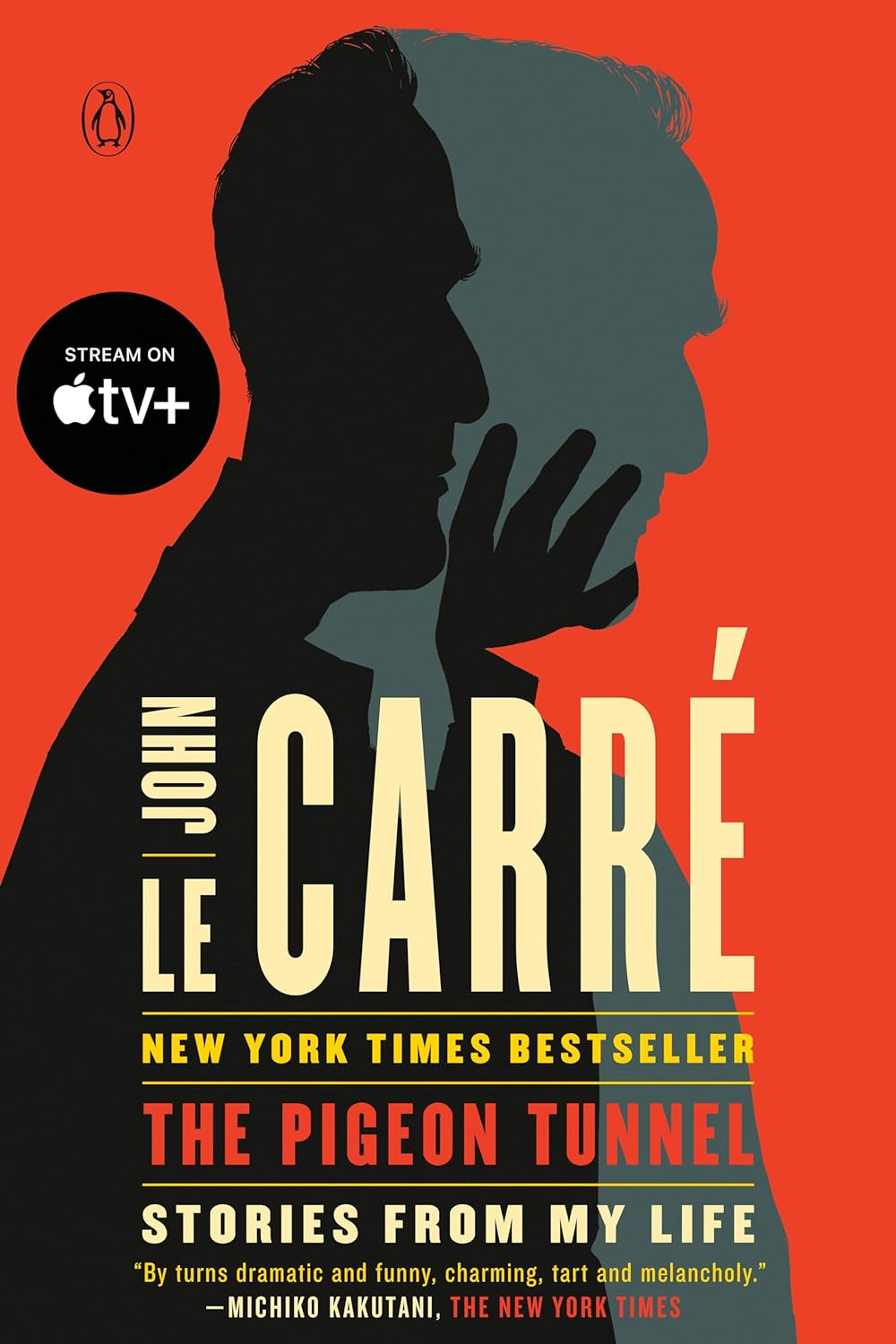
It’s a memoir, a cautionary tale. Also - career counseling? (Penguin)
The Pigeon Tunnel: Stories from My Life was billed by its publicists as John Le Carré’s first memoir. However, it would be more accurate to say that these are the journal entries of a different person – David Cornwell. Le Carré is Cornwell’s pen name and invented persona. This book is mostly about real-world episodes and people in Cornwell’s life who correspond closely to the stories and characters that the other person – the novelist – ripped off and exploited.
What’s remarkable is the apparent ease with which he has gained access and moved among aristos, politicians, celebrities, journalists, gangsters, and warlords. It’s obvious that he listens more than he talks. His occasional questions of his acquaintances and interview subjects are penetrating and often brash.
He tells us that Oxford don Vivian Green became the model for George Smiley, Yvette Pierpaoli for Tessa Quayle, and Cornwell’s own father, Ronnie, for Rick Pym. A key strategy in Ronnie’s plan for parenting was to send David away to exclusive boarding schools, despite a habitual lack of funds for tuition. One character Cornwell does not own to specifically is timid schoolboy Bill Roach of Tinker, Tailor, Soldier, Spy. Little Cornwell is likely the model for the shy, tubby Roach. Bullied by his peers and cowed by his mentors, “the unpaid Bill” learns he has talents as a “close observer.” And this is Le Carré’s central metaphor. What is a spy but a close observer? George Smiley can recite from memory the license-plate numbers of every car at the curb on the way to his house.
And what is the reader but a close observer? Thank you, Mr. Le Carré, for training me and your fans not only to read closely, but also to pay attention to seemingly mundane details, inflections of voice, nuanced sins of omission, and – most of all – the white space between the lines.
For all its revelations, The Pigeon Tunnel has a notable information gap. As I turned its pages, I was eager to get the scoop on the topic that has inspired the author’s most recent fury. Back in the Cold-War era, he was focused on the power plays between the intelligence agencies of the East and West, along with the hypocrisies of their governments and the incompetence of their bureaucrats. But a new generation of readers regards all that as old news.
What’s new is the globalized shadow government that seems to be taking over. Conspiracy theory? Hardly. Here’s what President Obama had to say about it in his last address to the General Assembly of the United Nations:
Global capital is too often unaccountable — nearly $8 trillion stashed away in tax havens, a shadow banking system that grows beyond the reach of effective oversight.
When you consider that the total world economy at that time was estimated to be something like $80 trillion annually, you begin to see the size of the monster – and it’s growing.
And if you think any politician – whether crooked or straight or bent, in any country – will ever lift a finger to prosecute big-boy money launderers, well, as one of Le Carré’s hapless espiocrats sighs, “You don’t understand anything bad.”
Errol Morris has done several other films on espionage and geopolitics. See especially his interview with Donald Rumsfeld, The Unknown Known.

Feed your curiosity with a paid subscription to this Thinking About Thinking blog. You’ll gain access to all the content that’s here, and you’ll be helping us build our worldwide community through storytelling and self-expression.
And if you’re already a subscriber…


December 3, 2023
My Mentor Cheerful Charlie
Dr. Charles Ruggles* was my freshman English teacher in high school. He had been the head of the department, but he decided his seniors were so stupid their skills might be beyond remediation. So he decided he had to be the one to brainwash the newbies, start them on the path to virtuous performance before untended laziness could ruin their chances.
* Disambiguation: Not the famous Hollywood character actor by the same name who paired in a comedy duo with Edward Everett Horton in Trouble in Paradise, perhaps my favorite movie from the pre-code era.
The good doctor taught me irony, metaphor, symbolism, expository writing, and how to read between the lines, using examples from Dickens and Twain, along with extensive descriptions of how much he loved the chocolate soufflé served at the Drake Hotel in downtown Chicago. He described its artful preparation, its different and sumptuous layers, and the delight of sneering at the disappointed diners who lacked the foresight to order it in advance—as soon as they’d been seated at their carefully reserved table—because it was concocted to order, then needed to rise and crisp in the oven for almost an hour.

If a teacher imparts, stimulates, or simply encourages curiosity, they’ve done their job.
I never dined at that restaurant, and I never saw it on any other menu. But when I was young and dating on the Near North Side (where that hotel is at the apex of the Miracle Mile on Lakeshore Drive), my favorite big-event restaurant was Jacques (French), and they had Grand Marnier soufflé. As with Charlie’s favorite, you had to order it when you sat down because it took so long to bake. I had it a few times, and the experience did match Charlie’s experience in many ways, but the chocolate would no doubt have been thicker and richer.
Oh, and here’s one of his examples of what later I realized was irony: Huckleberry Finn describes the library in a grand house where he spends the night. He is respectfully impressed with all the leather-bound books. These people must be very smart! So refined! And those volumes were arranged so neatly, in an orderly fashion, with a thin patina of dust covering all of them.
Similarly, my mother (also from Missouri) always thought that the most respectable houses had a grand piano or a harp, ideally both, preferably visible from the street behind lit parlor windows. She eventually had both. She played the piano rarely, mostly pressing the chords needed to support hymns, but she never attempted to play that harp.

This special edition of the novel appends my background research whitepaper, "Deconstructing the Scandalous Narrative of The Baptism," which appeared in the Fall 2016 issue of The Journal of Art Crime. (Hardcover gift hint for the art-history geek in your life.)
Feed your curiosity with a paid subscription to this Thinking About Thinking blog. You’ll gain access to all the content that’s here, and you’ll be helping us build our worldwide community through storytelling and self-expression.
And if you’re already a subscriber, perhaps…
November 29, 2023
Book Review - 'The Heaven & Earth Grocery Store' by James McBride
A simple definition of literary fiction might be any novel that booksellers don’t know where to shelve. It’s the “all-else” genre, the genre that is not generic. Some might say it’s literary art for the sake of the art rather than primarily for entertainment. The Heaven & Earth Grocery Store by James McBride is undoubtedly literary fiction, having not only won the National Book Award but also not obviously fitting into another genre.
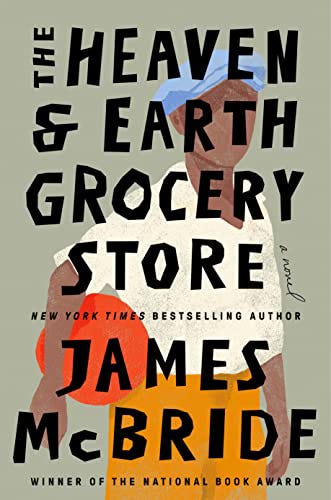
Winner of the National Book Award (Riverhead Books)
But it does share several elements of other literary novels. Although the plot begins with a corpse, it’s not a mystery story. There isn’t a crime to be solved so much as a past event to be revealed—eventually.
The store in the title is a local market and gathering place on Chicken Hill, a poor neighborhood on the outskirts of Pottstown, Pennsylvania. Historically, immigrants gravitated to Pottstown, which grew from a farming settlement to become a grimy but prosperous heavy-industry center.
The centrality of a store, a house, a school, a church, or any gathering place can encompass family and community as literary theme. A store brings people together, and their transactions and interactions trigger conflicts, kicking off the engine of drama.
Racial and cultural divides both oppose and attract in this story. The working-class Jews and the struggling blacks on Chicken Hill find common cause, clashing at times with the poorer blacks in the shanty town of Hemlock Row, who call themselves Lowgods, and, unlike the others, try to exist apart. All of these disadvantaged factions clash with the whites who run Pottsville, most of them transplanted Europeans with a sizable German contingent. The Lowgods of Hemlock Row accuse the Chicken Hill folks of not only catering to the whites but also wanting to be white.
McBride seems to say that corruption and injustice are universal and play out daily in Pottstown. But in America the scramble for resources and advantage is more fluid, mainly because here money, not birth, is the ultimate determiner of status and power. Immigrant families learn quickly how to barter, scheme, and subsist.
Two endearing characters who give of themselves and reach out to their neighbors unselfishly will pull you in. Chona is the kind-hearted Jewish woman who owns the grocery store. Nate is a hardened black man with a prison record who resides on Chicken Hill and hides the fact that he’s changed his name and was born among the Lowgods.
Intrigue surrounds concerted efforts by the Chicken Hill folk to foster an orphaned deaf-mute black boy. They scheme to hide him from authorities who want to shove him away in an infamously brutal state asylum. Once the boy is committed there despite their efforts, the plan to free him twists itself into clever knots that take some resourceful cooperation from the Lowgods to untie.
McBride’s ear for dialogue among all these ethnicities puts you there with them in the store. You may come to think of yourself as a resident of Chicken Hill, sharing their fears, proud of their courage and achievements.
McBride gives us a community saga that is all about the essential heritage of America. As the trope about democracy has it, this country is the worst—except for all the others.
Feed your curiosity with a paid subscription to this Thinking About Thinking blog. You’ll gain access to all the content that’s here, and you’ll be helping us build our worldwide community through storytelling and self-expression.
November 27, 2023
Anne Tyler's Angel-Eye View [Reprise]
To recap my observations from A Spool of Blue Thread in last week’s book review, here are some authors’ how-to rules she breaks:
A time-honored Hollywood maxim: The main character grows stronger as his villain opponent becomes meaner and stronger. To her credit, Tyler not only ignores this rule, she defies it. This story has no single main character – unless it’s the house.
Authors, your Hollywood agent or your book editor will tell you to raise the stakes to life and death. She quietly and bravely won’t go there. She gives us a no-fault auto accident and a sibling quarrel that ends with punch in the nose.
So how does Tyler do it? How by defying the rules does she engage us? Her narrative slows down to the pace of daily life. She gives us none of her own opinions, but a stream of meticulous detail about meals, clothes, woodwork, plants, weather, money problems, idle thoughts, and petty grievances. And in focusing on the marvels of the mundane, she helps us appreciate the joys of living our own ordinary and wonder-filled lives.

Podcast Book Review: A Spool of Blue ThreadMy book written for Anne Tyler fans is Christmas Karma, about a dysfunctional family coping with the holidays, narrated by an angel with a wacky sense of humor. For Thanksgiving holiday shoppers $1.99 Kindle from Amazon or EPUB from BN, iTunes, Kobo, Google...
Feed your curiosity with a paid subscription to this Thinking About Thinking blog. You’ll gain access to all the content that’s here, and you’ll be helping us build our worldwide community through storytelling and self-expression.
November 22, 2023
Book Review - 'A Spool of Blue Thread' by Anne Tyler
There’s a saying in show business: Give them a new story that’s stood the test of time. Anne Tyler, who is possibly America’s most revered living novelist, has done just that. She’s presented us with a new, fictional extended family with all their foibles and melodrama, and placed them in the setting we know well from so many of her books – in the community of Roland Park in North Baltimore and in a hand-crafted old home with varnished hardwood floors, meticulously hung pocket doors, and vaulted ceilings.
The Whitshanks are a quirky, close-knit family of builders, craftsmen, and nurturers. And this house is their pride and joy. Its stately endurance through a family saga of three generations lends a sense of timelessness – but Tyler’s story is all about the passage of time and the influences our short lives have on each other.
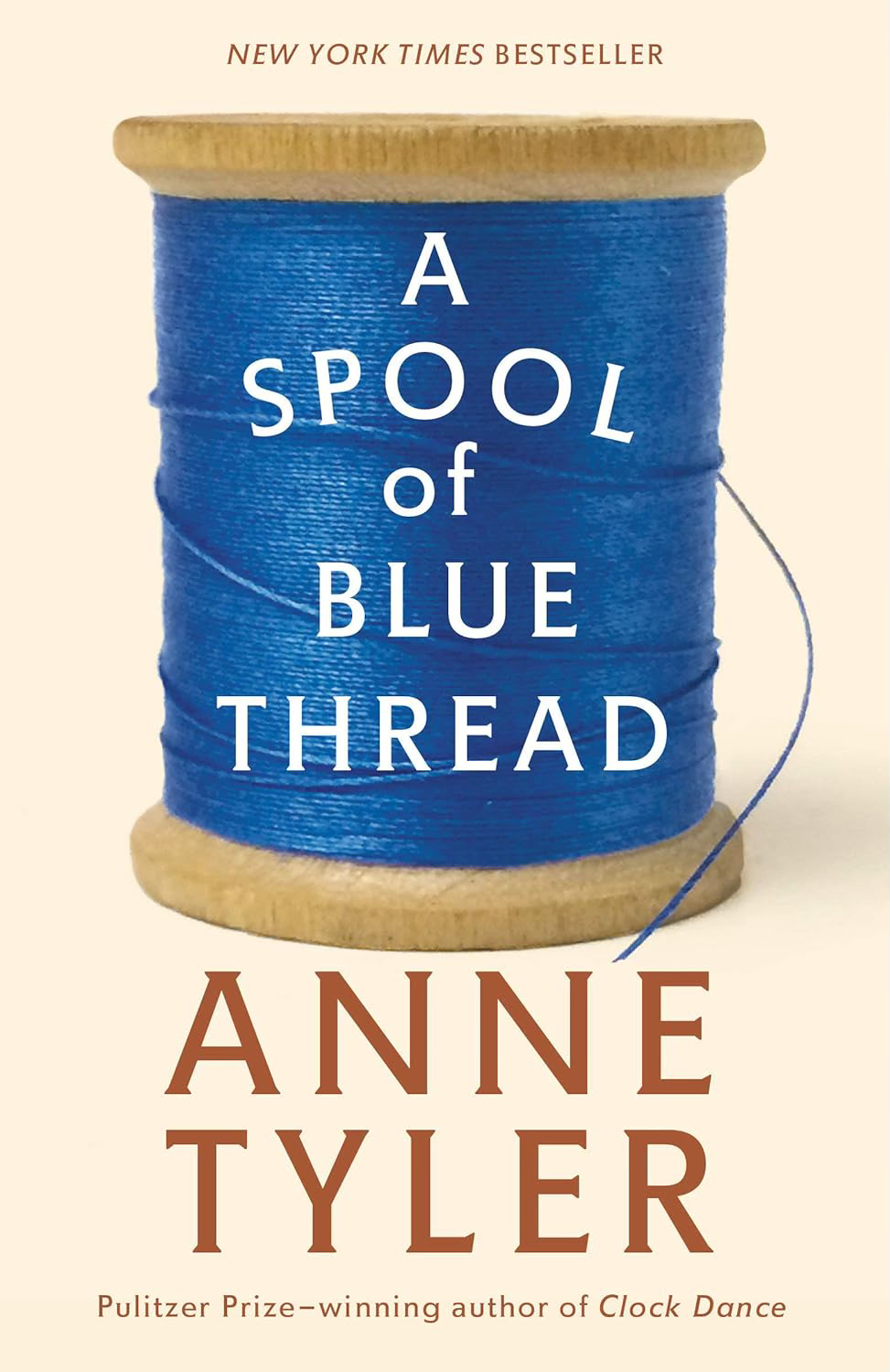
This story has no single main character – unless it’s the family’s house. (Knopf)
Another time-honored Hollywood maxim: The main character grows stronger as his villain opponent becomes meaner and stronger. To her credit, Tyler not only ignores this rule, she defies it. This story has no single main character – unless it’s the house. And, as in all of her books, there are no vicious opponents. The engines of conflict whir almost entirely within the family. Adversaries that seem the most obnoxious, inconsiderate, and spiteful ultimately show us their redeeming qualities.
In every Anne Tyler novel, there’s a conspicuous bad boy. In A Spool of Blue Thread, Denny shows up on the first page. And throughout the story, he’s obnoxious, inconsiderate, and spiteful. And he’s the one his saintly mom loves best, and eventually, we do, too.
Authors, your Hollywood agent or your book editor will tell you to raise the stakes to life and death. The dreary result is on-screen violence – shootouts and fiery crashes and bloody mayhem. But Anne Tyler quietly and bravely won’t go there. She gives us a no-fault auto accident and a sibling quarrel that ends with punch in the nose.
So how does Tyler do it? How by defying the rules does she engage us? Her narrative slows down to the pace of daily life. She gives us none of her own opinions, but a stream of meticulous detail about meals, clothes, woodwork, plants, weather, money problems, idle thoughts, and petty grievances. And in focusing on the marvels of the mundane, she helps us appreciate the joys of living our own ordinary and wonder-filled lives.
Podcast Book Review: A Spool of Blue ThreadMy book written for Anne Tyler fans is Christmas Karma, about a dysfunctional family coping with the holidays, narrated by an angel with a wacky sense of humor. For Thanksgiving holiday shoppers $1.99 Kindle from Amazon or EPUB from BN, iTunes, Kobo, Google...
Feed your curiosity with a paid subscription to this Thinking About Thinking blog. You’ll gain access to all the content that’s here, and you’ll be helping us build our worldwide community through storytelling and self-expression.
November 19, 2023
Christmas Karma: A Novel
It’s been said that Tyler writes from the “angel’s-eye view.” That is, even her nasty characters eventually manage to redeem themselves and are forgivable. Christmas Karma is the story of a dysfunctional family when long-lost loves and resentments come knocking during the holidays. Dad, for one, has been missing for years and now shows up claiming he still owns the house and wants everybody out!

Willa Nawicki did not think she was a bad mother. Nor did she think she was an ungrateful or inattentive daughter. But she was afraid you would think so. Not necessarily you personally, but anyone who didn’t know her and attended to her story. If you learned just the facts and not the mitigating circumstances, she worried you might judge her harshly. And, although she seriously doubted there could be anything like an afterlife, if it turned out that she would indeed be judged there, she was worried it might not go well for her.
But she’s not telling her story here. I am. And who am I? That’s difficult to explain, but no need to be coy.
I live – rather, I exist – in that next life.
It’s not what people think of as heaven so much as a place in between. Now, I’m no angel (I certainly wasn’t when I lived as you do), but that notion is close enough. You might say, as an adult might explain to a curious child, that I’m Willa’s guardian angel. To someone who takes a more earthly view, I’d say I’m her sage self, a wiser part of her who lives in the future in another dimension but witnesses and participates in the here and now. Here being Pasadena and now being the advent of a Christmas season in the second decade of the twenty-first century.
Oh, and to be clear, just because I describe my situation as in-between, I don’t mean to imply, much less promise, the existence of a heaven. Like you, I haven’t been there, and I have no more information than you do about it. But you might take as evidence, as I do, that the reality of my influence on the Earth-plane is a strong suggestion that there is at least one other dimension besides yours – that is, the one I’m in. I suppose the crucial question is whether there exist other dimensions, which neither of us has yet experienced.
No need to get technical here, but I don’t have much in the way of supernatural powers. However, from my dimension, I can observe events along the flow of time – see through walls, even. I can read thoughts, not just Willa’s, as if they were spoken. I can glimpse more of the future than you are able to guess, but not too much more. And I can mine the past in meticulous detail. However, since I don’t have a body on the physical plane, I can’t take action. I can’t move so much as a saucer under a teacup. The most I can do is advise. And much of the time, my advice is either not heard or is ignored. Quite often, it’s misinterpreted. Then there’s a mess I must try to get a living human like you to help me clean up.
Another way you might think of me – I’m Willa’s karma administrator. Who gave me that job? Hey, enough with the questions. You should get it already that I’m not all-knowing.
And who are you? Honestly, I have no idea. As I write this (more precisely, as I advise the author to write this), I can’t predict who, if anyone, will pick it up and invest the necessary attention span. But I do know, if you continue to read, it’s because you were drawn here at a particular time in your own earthly life, at exactly the point at which something contained in these pages will prove valuable to you – or perhaps, just amusing.
Mind you, I’m not making claims or promises here. I can’t tell you what that engaging tidbit will be. You will be the one to discover it, and it may have value only to you. You might not even know you’ve found it, until sometime later when you find it of use. Someone else might take in the same words, ignore or miss the gist, and put the book down. And to that I say, so much the worse for you if you can’t take a joke.

Or get the audiobookGet the rest of the story here.
Christmas Karma - The Angel’s Intro
Available from Audible.
Feed your curiosity with a paid subscription to this Thinking About Thinking blog. You’ll gain access to all the content that’s here, and you’ll be helping us build our worldwide community through storytelling and self-expression.
November 15, 2023
Are you enjoying The Gilded Age?
When Julius LeBlanc Stewart’s painting The Baptism hung in the gallery at LACMA, the description on the museum card was brief and puzzling. These people might be a branch of the Vanderbilts, but no one knows for sure. It took me years of research (in the pre-Google era), and with the assistance of some Episcopal church historians, I found the answer - as well as why the subjects of the painting were scandalized by its existence. I felt I had to fictionalize the story because there were some notable gaps in the historical record, and novels after all must make sense. But even today, although the circumstantial evidence is unmistakable, the response of the museum curatorial staff has been, “It’s fiction, after all.”
But when, standing in front of the painting, I presented my findings to a roomful of curious docents, no one left early.

The Baptism by Julius LeBlanc Stewart was exhibited at the World’s Columbian Exposition in Chicago in 1893, but it was never sold. Oddly, there is no existing evidence that it was a commissioned work. The painting remained in the artist’s estate until forty years after he died, then was sold to an art dealer. LACMA owns this huge canvas, but it is not currently on display.
In the fictional framework of the novel, in the present day, art historian Grace Atwood becomes obsessed with the painting and its hidden clues for reasons that have more to do with her personal ghosts. Either her doting husband is trying to make her think she’s crazy, or she really is in the early stages of dementia.

EndorsementsArt historians assumed the artist rendered an event that took place in Paris his own wealthy family. But a close study of the priest’s robe suggests an American Episcopal ceremony, and an old photograph of a Vanderbilt home that burned down in Newport, Rhode Island shows the room. If you’re curious, get the book!
“I must say, I am impressed with your sleuthing, your imagination and your ability to weave a story. Your theory is fascinating, and I personally would be quite excited if any piece of it proved true.” — Carson Joyner Clark, biographer of painter Julius Stewart
“Alva Vanderbilt Belmont would be very grateful to you for researching a Vanderbilt family painting – as will all the family. And as I do. Historians keep us alive!” — Margaret Hayden Rector, Vanderbilt biographer, author of Alva, That Vanderbilt-Belmont Woman
Want the facts and the crumb trail? For us obsessively curious types, there’s a Scholar’s Edition of the book, which contains the full text of the novel, as well as the white paper documenting my research with references, which appeared as an article in The Journal of Art Crime.
“Of the many inquiries we get, this has been the most interesting in a long time.” — The Very Rev. Harry E. Krauss (retired)
“I think you’ve done an extraordinary job of researching and speculating on the painting. You’ve certainly convinced me that this was a Vanderbilt affair!” — Mary Sudman Donovan, Historian, Episcopal Church USA, Author of A Different Call: Women’s Ministries in the Episcopal Church, 1850-1920
Feed your curiosity with a paid subscription to this Thinking About Thinking blog. You’ll gain access to all the content that’s here, and you’ll be helping us build our worldwide community through storytelling and self-expression.
November 11, 2023
Book Review - 'My Life on Tender: Arina and Cal' by A. G. Billig
A. G. Billig is a friend and colleague. Until the release today of this romantic novel, she has been perhaps best known for her philosophic and practical books on relationships: I Choose Love; 5 Steps to Ending a Toxic Relationship; and Open Your Heart, Rise in Love. She has also published Four Doors and Other Stories, and she’s founder and mistress of the Self-Publishing Mastery writers’-support blog.
I was a beta reader of another romantic comedy of hers, also tentatively titled My Life on Tender, but that was not the same story. I suspect it will be released as another title in her trilogy, but I’ll leave that for her to say. In this one, she casts Arina and Cal in a rockstar romance, and, as one might expect, Arina’s getting pulled into the magnetic thrall of Cal’s badass pretensions to celebrity is at the breaking heart of this story.
When I first picked up A. G.’s fiction, I was prepared for a pulpy, steamy, sweaty ride with loads of emotional baggage. I was pleasantly surprised that her confident style is more mature and thoughtful than I anticipated. Think Nora Ephron.

My Life on Tender: Arina and Cal - first of a series of (at least) three. Released today!
Yes, swiping right begins the story. The plot motors along like a Harley tour of SoCal beaches. Wrestling with male attraction, dominance, and control is the throbbing, purring engine. After all, as Aristotle no doubt advised his horny teenage students, conflict is drama. (Also, humor.)
The moment I recover my entire range of emotion, I’ll punch Hailey in the face for sleeping with Cal. She didn’t enjoy it, though—that’s good! Argh, it happened three times. Despite cheating on me and lying to me, Cal portrays himself as the victim and preaches about the importance of honesty. This isn’t fair! What am I supposed to do?
“Stop being a pushover,” Screech squeaks in the back of my mind.
Pushover? Me?
Shut up, Screech!
I never imagined myself as a doormat, yet my irritating alter-ego might be correct, and admitting it is uncomfortable. I feel my body temperature rising, and my hands clench into tight fists. My middle name is not perfection; yet, my slip-ups are not major. Or are they?
Is rockstar Cal a jerk? Is “bad boy” essential to Arina’s idea of a desirable mate - at least in bed, bent over the kitchen table, or getting a crack full of sand on the beach?
Do you wonder about the guardrails and mishaps of cruising and adventuring in relationships in the pre- and post-#MeToo eras? If Cal were courteous and considerate, would Arina cease to adore him?

Born in Romania, A. G. Billig writes in articulate, sophisticated English. Her distinctive, accented speaking voice might remind you of Ariana Huffington. A. G. makes her home in Sedona, where she thinks about thinking as she listens to the wind whistling through the red rocks.
Billig has been there, done that. She cautions this book is not a memoir, but it’s fair to say the story is informed by, ah, experience. In her Acknowledgments, without rancor, she thanks the anonymous contributors to her wise catalog of lessons learned.
My Life on Tender: Arina and Cal is released today, available here.
Feed your curiosity with a paid subscription to this Thinking About Thinking blog. You’ll gain access to all the content that’s here, and you’ll be helping us build our worldwide community through storytelling and self-expression.
November 8, 2023
Book Review - 'The Beginner's Goodbye' by Anne Tyler
Here’s my book review of The Beginner’s Goodbye by Anne Tyler.
It’s a story about love and sudden, tragic loss. Some fans complain it’s too short. So read it twice.

The Beginner’s Goodbye by Anne Tyler (Vintage). Read it twice.
The second time through, slow down. Marvel at Anne Tyler's spare style. And ask yourself why it's not the same as other authors who limit themselves to twenty-word sentences, no more than two clauses per.
November 6, 2023
Join me on Notes
I just published a note on Substack Notes, and would love for you to join me there. It’s a discussion thread for reactions to my posts, and from time to time I’ll show a book deal of mine or a colleague’s. And it’s focused, not flaming.
%%first_note_embed%%
Thinking About Thinking is a reader-supported publication. To receive new posts and support my work, consider becoming a free or paid subscriber.
Notes is a space on Substack for us to share links, short posts, quotes, photos, and more.
How to joinHead to substack.com/notes or find the “Notes” tab in the Substack app. As a subscriber to Thinking About Thinking, you’ll automatically see my notes. Feel free to like, reply, or share them around!

You can also share notes of your own. I hope this becomes a space where every reader of Thinking About Thinking can share thoughts, ideas, and interesting quotes from the things we're reading on Substack and beyond.
Why Substack NotesFellow writers and readers are spending time in Notes for a variety of reasons.
Ted Gioia sees Notes as a forum for dialogue.
The idea behind Notes is simple. Millions of people now participate in Substack as writers and readers—but much of this is built on long articles and essays. We now have a forum for dialoguing and sharing shorter posts.
Chris Ryan is drawn to Substack as an alternative for legacy social media.
One of my main reasons for joining Substack was to wean myself off exploitative social media platforms. I’m hoping this is going to help move us along on that journey!
Sherman Alexie wants to create a kind and creative new space in Notes.
I’m going to focus on being positive, with my own thoughts and photos and by linking to songs, stories, poems from around the web and from other Substacks.
If you encounter any issues, you can always refer to the Notes FAQ for assistance. Looking forward to seeing you there!
Thinking About Thinking is a reader-supported publication. To receive new posts and support my work, consider becoming a free or paid subscriber.
Gerald Everett Jones - Author

- Gerald Everett Jones's profile
- 489 followers

