Zora O'Neill's Blog, page 8
August 24, 2012
Astoria Bulletin: Newtown Pedestrian Plaza TOMORROW!
This one goes out to all the Queens readers:
Tomorrow, August 25, the city is setting up a temporary pedestrian plaza at Newtown and 30th Avenue, in front of the Key Food. This is meant as a trial run for a permanent plan that would block off the street where cars are always whizzing by in an unnerving way.
The pushback on this plan has been immense–Astoria’s old guard sure does love its parking spaces. Specifically, the owners of Key Food and United Brothers (among others) are loudly, obnoxiously opposed. This bugs me, because I moved to Astoria because of United Brothers and their 24-hour produce gorgeousness–I don’t want to hate them.
So if you live in Astoria, or anywhere nearby, it would be great to see you at the plaza tomorrow, to show your support for the proposal.
I’ll be out there off and on all day, with picnic foods and the paper, and maybe some games. I’ll be doing my shopping–on foot–at Key Food and United Brothers. It would be great if you did too, to show them the world won’t end when seven parking spots disappear. (Not like numbers matter to these guys, though–a DOT study showed only 8 percent of their customers come by car.)
Here are the details, straight from the NYC DOT:
Friends of Newtown Plaza is on Facebook. They could use a few more Likes. Peter Vallone Jr, our vaunted councilman, has decided to oppose the plaza proposal, based on the vocal (and irrational) business owners. He needs to hear from more rational people, like our most distinguished selves, who believe one of Astoria’s main intersections should be made safer–and just plain nicer–for pedestrians.
For the record, here’s the opposition’s Facebook page. “Open to all” sounds so good, right? But the presence of cars of course pretty much rules out everyone else.


July 31, 2012
Summer Vacation
I’m not exactly on vacation, but my writing efforts are being directed elsewhere.
I’m also eating a lot of watermelon.

You just sit in there and think about what you've done!
Back in a few. Hope you’re all enjoying your summers!

July 23, 2012
America in an Arab Mirror
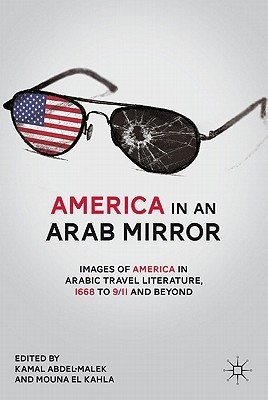 When I was in Dubai in the spring, I ran into my first-year Arabic professor, Kamal Abdel-Malek. He’s the man who had us marching around the room doing “Arabic aerobics” to learn our numbers–fun and effective and, according to his wife, still part of his teaching repertoire!
It doesn’t surprise me that he’s also put together a fun but instructive anthology of Arab travel writing, America in an Arab Mirror. It should be required reading for American travel writers, and anyone who intends to write about another culture.
Honestly, you really could read any book about America written by a foreigner and learn a lot about the pitfalls of travel writing: the broad generalizations, the hasty conclusions, the not-quite-right facts (one writer in this book mentions how famous Colorado is for its oranges!).
In a decade of work as a travel writer, I’m embarrassed to say this is the first time I’ve intentionally read a book like this. I wish I’d done it years ago–I would’ve been far more conscious of how easy it is to go off the rails. I mean, I know you’re not supposed to extrapolate a whole culture from a single conversation with your taxi driver, but it’s not clear how bad it sounds until you read a half-baked theory about your own culture based on a similar one-off chat.
This makes it sound like the writing in this book is terrible. That isn’t true. Most of the writers take great pains to say that, for instance, a rewarding talk with a Catholic priest on an airplane of course can’t represent a country as diverse or huge as America.
Some of the older excerpts, from texts from the early 1900s, however, have a broader, happy-to-generalize tone, and one of the wackiest is Sayyid Qutb’s. He’s notorious for having come to study in the U.S. and been so alienated that he went back to Egypt and rallied the Muslim Brotherhood. In the excerpts of his writing in America in an Arab Mirror, he’s shocked at how casually Americans seem to treat death–laughing at a wake, for instance, or discussing life-insurance details just days after a death. But where Qutb sees only the harshness of life here, other visitors come to entirely different, kinder conclusions.
But this book is remarkable even if you’re not a travel writer. Much of it is a sweet reminder of the image America holds in the rest of the world. Arabs are awed by America’s wilderness, diversity and kind-hearted people.
They’re also intrigued–and a pit put off–by details we barely even notice. Shafiq Jabri, a Syrian author, says Americans live a “boiled” life, similar to the boiled food we eat–cooked fast, with not much concern for flavor. Egyptian Karima Kamal, who presumably has dealt with crowds in Cairo, describes a day out at Taste of Chicago, and wonders why people would subject themselves to such a horrible mob scene. Saudi politician Ghazi Abd al-Rahman al-Qusaybi deconstructs American TV ads, pointing out how one will promote cheese-covered food and the next will tout Slim Fast.
Some of this can seem like quite heated criticism of America–but it’s also a way to see what Arabs value in their own culture by contrast. Journalist Jadhibiyya Sidqi is shocked at how Americans let their parents waste away alone in retirement homes. Reading the statement “Arabs value family” is abstract; reading Sidqi’s chagrin and sincere sadness makes it more concrete.
Not every excerpt is gripping, and occasionally the translations are stilted–shout-out to Dima Reda, a fellow CASA student, whose translations are some of the best. (In one dopier move, a writer goes to the striptease bars in a town south of Chicago called Kaloomeet. I’d laugh harder at this misspelling, if this weren’t the story of my Arabic-reading life, sounding out words that I think are Arabic, only to find out they’re some English proper noun.)
But ultimately all the pieces in the book–even the cranky and misinformed ones–work together to show an image of Arabs as well. And when we see how easy it is for a visitor to get the wrong impression when visiting the U.S., it’s wise to consider just what might be wrong with our image of the Middle East. The mirror of the title works both ways.
(Here’s a good review of the book and interview with Kamal, with a hilarious end anecdote, in the New York Times.)
Have you read travel writing about your own country? Do you have other books to recommend? I’d love to hear about them.

July 16, 2012
Dissenting Opinion: Beirut Is Not Cool
Beirut is cool! If you’ve picked up a travel magazine once in the last decade, you’ve probably read this at least once. Beirut has been the international equivalent of Portland, Ore., a subject of travel editors’ endless fascination.
After six weeks there, I appear to be the only person who thinks the opposite, and I’ve had a hard time writing this post to say so. (And I like Portland!) I don’t blame Beirut, I don’t think–I blame the hype.
I went to Beirut in 1999, and it was a haphazard mess of terrible infrastructure and jerks in armored Mercedes. According to the papers, though, Beirut’s come a long way, baby!

Cool kids in the Place d'Etoile in the rebuilt downtown
Guess what? Beirut is still a mess. Ostentatious wealth still rules, and people have to haul water–not like in rural Africa, but anyway, in 5-gallon jugs up stairs because the power is out so the elevator isn’t running.
Added misfortunes since ’99: the internet is some of the slowest (and most expensive) in the world, and crude plastic surgery has become wildly popular among a certain set. (Women look startled, strained, flotational–if you don’t want to feel like you’re having an acid flashback, don’t go anywhere near a mall!)
Sure, it would be a buzzkill to mention these details in a “Beirut nightlife is sizzling hot!” story. But it’s slightly disingenuous to ignore them altogether. All of these things (except the plastic surgery–not sure what that’s about) are indicators of a much more troubling reality, and the simple fact that Beirut is still scarred by war–and so are Beirutis.
This is not a “cool” city mainly because Beirutis do not keep their cool. They are, to generalize wildly, jumpy and aggressive and filled with road rage, and the instant there’s bad news, they retreat to their apartments with a week’s worth of food.

Beirut cool...in shades of pink
I completely understand why this is, and I would probably be pessimistic and anxious if I lived there too. But as a visitor, you have to be willfully blind to ignore the harsh truth behind the art-book stores, the Gemmayzeh pubs with their reggae-Gypsy-funk-Oriental DJs, and the massive, glittering malls.
That truth is: it takes a long time to get over the trauma of war, and it won’t be happening anytime soon in Lebanon.
Most travel stories nod to the various wars, to heighten the drama of the phoenix-like rise of the capital: “Beirutis, scarred by decades of war…”; “Beirut, once marred by civil war…” etc etc. But the implication is that’s all done–Beirutis are back to boozing and beach-lounging, and it’s all good. The checkered past just gives a little frisson to the decadent present–all the bullet holes add cachet.
But Lebanon’s 1991 Amnesty Law let the perpetrators of civil-war horrors slide back into society, even politics. Lebanon has not signed on to the international Mine Ban Treaty. And any peace in Lebanon is precarious with Syria next door, not to mention Israel–and Hizbullah’s unending “resistance” to it.
I’m not complaining about the poor infrastructure and the bad drivers per se–that I can handle. I have a harder time with partying in the face of obvious psychological trauma. I had a similar reaction to New Orleans after Katrina–a wonderful and interesting place to visit, but it’s wrong to pretend the city is “back” and hopping when a stranger on a streetcorner will, unprompted, in a shaking voice, tell you how he lost his home.

Beirut balconies, each a little theater
Beirut does actually have all the charms touted in the travel stories. It’s small, so you can crash the “scene” in a week. You’re on the Mediterranean, which is lovely. Women dress in every possible way. (Though cleavage is often deployed in the same aggressive way as the plastic surgery–ow, my eyes!) Its place on the International Hipster Circuit is established thanks to cool bars, good coffee, contemporary art and a visible gay scene.
Beirut is cosmopolitan in a way that most of the rest of the region is not. First-time visitors to the Middle East are usually happy to find the place and people so relatable, which is no small thing.
What do you think? Is it dishonest to push one aspect of tourism to a troubled place, and ignore the trouble? Is it helpful to normalize a place by touting it as a hot destination? Have you had a similar experience in another destination? Do you love Beirut because or in spite of it all? Am I cynical grump who should just shut up and go surfing in Liberia?

July 9, 2012
RG at Home: Pie Pie Pie Pie Pie Pie!
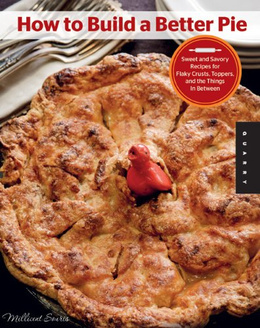 Never mind that it’s currently too hot to roll out a pie crust: I am here to tell you that Millicent Souris’s new book, How to Build a Better Pie, will save your life.
I first made Millicent’s acquaintance at the late, great Queen’s Hideaway. Dessert was pies of a couple sorts. I ordered with less than enthusiasm. Restaurant pies are uniformly bad. If it’s a fancy place, the pastry chef has always had too much French training and makes a dense and crumbly tart shell thing. If it’s a lower-end place, they rarely believe in paying for butter, and figure a prefab crust is fine.
The Hideaway was different, though, because Millicent was in charge. She understands the rustic, American charm of a pie crust, and how it should be both flavorful and flaky–not just some sturdy container for filling. A pie is really about the crust.
I myself used to make a pretty good pie crust. But this was years ago, at a higher elevation, in a drier climate. My skillz never translated to sea level, and over the years, my pie crust has been hit and miss. I tried various gimmicks (fo-pro, vodka, you name it), but posts like this and this great post by Christina always reminded me I was overthinking it. I mean, if Choire Sicha can make a freakin’ pie crust, so can I.
Millicent was the best reminder–if you knew her, it would be crystal-clear that she’s not pulling any BS, dreamed-up-in-America’s-Test-Kitchen tricks.
So to have all her collected wisdom in a book, with photos of her actually making the crust…well, it’s a dream come true. And what’s extra-great are two things:
1) Millicent taught herself to bake pies. She didn’t come into it with expectations or decades of subconscious knowledge absorbed in her upbringing. This is not a fussy book, and the photo of the empty pie shell on the back of the book is the perfect illustration: a little lumpy and irregular, and clear where bits have been patched. Anti-Martha, pro-everyman/woman.
2) Pie is many things, and Millicent covers it all. Sweet pies, traditional pies (Shaker lemon pie, apple pie), more creative pies (sweet potato with sesame praline), savory pies, white-trash pies, English fish pies, that chocolate pie with the salt that made me dizzy at the Hideaway…
And finally: jailhouse pie.*
The last recipe in the book, Jailhouse Cheesecake, seems like a throwaway gimmick, with its “whipped topping” and “‘gram’ crackers.” But in fact it’s a gesture that reflects Millicent’s whole approach: generous, proud of ingenuity and pretty realist: “They make their own pie crust in jail. For shame if you cannot muster the strength.”
Actually, that last line shows off the third thing that really makes this book. Pie seems like a slightly frivolous thing–a novelty, a special-occasion food. But we all have warm associations with it, and it’s actually not that hard. And because Millicent is a wonderful writer, with attitude and wit, she conveys all this in a way that makes you want to get up and roll out the crust (never mind the 90-degree heat).
Baking a pie represents so much about a certain kind of cooking that’s essential to survival–it requires ingenuity and making do, but it’s also a generous gesture.
We don’t have to have children or enough money to name a hospital after ourselves or find a cure for something. We can just make food, and pass it along. That might be enough.
Amen, sister.

Millicent modeling pie at a Sunday Night Dinner
Buy this book. You won’t regret it.
*The jailhouse pie reminds me of a truly wonderful story I read in Gastronomica a few years back. Here’s a rough summary, as the original article, with pics, is a pay-only PDF.

July 2, 2012
RG at Home: Greek Frappe for Coffee Snobs
I love me a Greek frappe. When I explain this drink to people, though, it often gives them pause. That’s because the secret ingredient is Nescafe.

Miss June in the 2012 Frappe-Hotties Calendar. Turn-ons: home movies, nude beaches; turn-offs: poorly preserved film, weak straws
In today’s militant-foodie climate, saying you drink Nescafe is like saying you eat Rainbo bread, and not in a guilty-pleasure-reminds-of-my-latchkey-kid-days way. Still, I take perverse joy in bending Nescafe to my will, and I thank the Greeks forever for thinking up this brilliant drink, which is nothing more than a spoonful of instant coffee furiously mixed up with a little cold water, plus optional sugar and milk; ice and straw mandatory.
But, fine, I understand some people are too good for Nescafe. Or they hear the word and can only think of the evils Nestle has perpetrated in the developing world, which is a fair point.
And it’s those people I thought of yesterday when I discovered an amazing thing: you can use regular, real, good coffee to make a frappe!
Let me first explain why this took so long. In this house, we came to coffee snobbery late. In winter, we drank Turkish coffee. In summer, we drank frappes. We were at one with our Astoria ecosystem.

Our standard frappe kit: Greek-made Nescafe, sugar and battery-operated "frappediser", available at Greek groceries everywhere
Then fancy-pants coffee crept in. Next thing you know, we’re sucking down the shade-grown-whatever, in vast quantities, making vintage thermoses full every day.
In anticipation of hot weather, I ordered the Toddy, on the recommendation of the hilarious and talented Hilah Cooking. We now had fancy-pants cold coffee concentrate in the fridge. Great iced coffee, but no foam. And where is the fun of drinking cold coffee, if there’s no reason to stick a straw in it?
Yesterday, Day 2 of Toddy Era (TE), I stirred my coffee extra vigorously, and noticed a bunch of bubbles formed. Not foam, but…bubbles. I was surprised. I’d always assumed the reason Nescafe foamed up when you shook it with cold water was due to the Nescafe itself, maybe the blood of malnourished African babies they put it in or something.
But here was very good and perfectly ethical coffee forming bubbles too. I quick pulled out our frappe whizzer and went to work.

Frappediser in action
Et voila. The foam appeared. I dropped in ice cubes, more cold water and milk…and then stuck in a straw, and all was good.

Mr. July in the 2012 Frappe-Hotties Calendar
.
The problem is, of course, it doesn’t taste like a frappe. It tastes like real coffee. Which to someone new to this whole frappe game is not a problem. But to someone weaned on the authentic Greek taste, it’s a little hard to adjust.
Today was Day 2 of the Toddy Frappe Era (TFE), and it’s getting easier. The new fancy-coffee overlords may have won.

...Or have they?!
(Don’t let me put you off real Greek frappe, with Nescafe. It’s fantastic. BUT you have to use made-in-Greece Nescafe, which tastes far better than ‘Merican recipe, or at least a Euro-brand instant espresso. It does foam up a little bit better and sturdier, so you can do it just by shaking Nescafe, sugar and cold water really hard in a jar with a lid on–no frappediser needed.)

June 18, 2012
The Mini-Mex Algorithm
In the interest of getting this blog chronology a little back on track, I’m not going to blog more than this about my time in Mexico. You all know already–it’s a wonderful place. Yes, even Cancun–maybe especially Cancun. Here are some of the odder details from Cancun, Isla Mujeres and Puerto Morelos:

Oh, so THAT's what that stands for...

Public bench/library in the park in downtown Cancun. Just register to get a key, and check out books as you like.

Coco Bongo promo dudes hiding out from photo-mad tourists in Cancun.

Genuine maid cafe in downtown Cancun. Was just opening--unclear whether staff really dress as maids.

Aw, poor little Chocomilk! Cutest dog name ever.

Genius can with screw-top lid. And always good mango juice.

Ana is ruling the market for haircuts for dogs. She has totally blanketed Isla Mujeres in signs.

Man bites shark.

How you might feel after too many days on Isla Mujeres...

This drug is available even in the Cancun airport pharmacies. Not sure if it causes or cures.

Somehow it's more existential with 'a' at the beginning.

Queens of Carnival on Isla Mujeres, on display at the cultural center

Crazy architecture in Puerto Morelos. Everyone calls the complex in the big photo "the Star Wars building."

Grown man with a Spongebob purse. Reason I Love Mexico #3438

June 11, 2012
Egypt: On the Market
Ah, just as the blog was almost happening in real time, I found this in my Drafts folder. A little treat from the winter Egypt trip. It all makes me a bit nostalgic. They have bad taxidermy here in Beirut, but not so much of the other attractions.
Downtown Cairo is one of the world’s more nonsensical shopping districts. Every other store is selling shoes. The ones that aren’t selling shoes are selling either lavishly embroidered galabiyyas or somewhat shocking lingerie. If you wander off the main streets, you wind up in an area where all the shops sell prosthetic limbs.
I didn’t want to take a picture of the lingerie, because it seemed like too much of an obvious conversation-starter for any random dude on the sidewalk, but here’s something nice for the gentlemen:

A romantic gift for your new husband!
It’s gotten a little crazier since the revolution, as the police aren’t out to keep the sidewalk vendors in line. They’ve gone nuts downtown. It makes it very hard to walk, but I have to give props to the guys who sell men’s clothing on Talaat Harb at night. I saw one stand in the middle of traffic, forcing cars to stop, while he unpacked a bale of made-in-China Versice jeans. Occupy for ad-hoc capitalism!
More prosaically, it’s easier than ever to buy a headscarf. And women are wearing them double- and triple-ply, carefully selected to match their outfits. Haven’t seen such color-coordinating since middle school. Or felt so totally uncool.

The guy next to this was selling wigs. I am not kidding.
Competition has forced shop displays to get more outlandish. Or at least that’s how I’m rationalizing something like this:

I finally escaped from that Monty Python set...only to get trapped in Cairo.
And this:

And this might be explained by the fact that it was getting close to Halloween. Or maybe not.

Totally ripped.
I read a while ago (I believe in Max Rodenbeck’s great Cairo: The City Victorious) that when Cairo was at its peak in the early 20th century, the most elite downtown shops would display, for instance, a single perfect shoe. Now the strategy is reversed. When in doubt, put as much out on display as possible.

No, you can't win these bears by shooting balloons with a BB gun.
But when a shop is so bursting with love, as this one is, how can you not love it back? Same goes for Cairo, you see.

June 4, 2012
Beirut in Books
Astute followers of this blog will know that it has gotten terribly out of step with reality. I am not currently in the Persian/Arabian Gulf at all, but in Lebanon. I’ve been reading a lot, trying to get a grip on things–Lebanon feels more foreign to me than I expected it to. So in lieu of travel stories, this week I’ll share my reading list.
Jasmine and Fire , by Salma Abdelnour
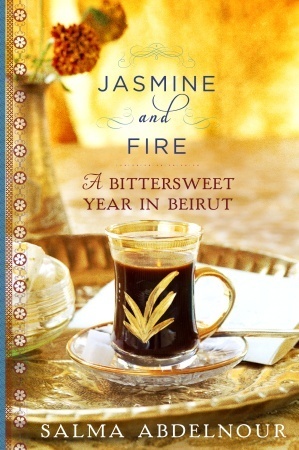 Without the subtitle (“a bittersweet year in Beirut”), it sounds a bit like a torrid romance, and I suppose I was expecting some bodice-ripping or other high drama, so it took me a little while to get into its groove.
But in the end I was glad for it not to be a high-drama book (as so much else around here is intense). Instead it’s a low-key sort of travelogue and a meditation on what it means to be at home somewhere. And the reason I jumped at reading it (the publisher offered me a copy–it’s officially released tomorrow) is because I know Abdelnour as a food writer, so I figured that angle would be good too. And in that respect especially, it has been a great introduction to the city–Abdelnour uses food to explore Beirut, by heading off on a walkabout to the famous shwarma place, for instance, or trying out the odd processed cheese (Picon) she used to like as a kid.
Abdelnour left Lebanon with her family as a child, early in the civil war, and in the book she returns to Beirut and the apartment her family has kept, to see if she feels like she fits in better here than she did back in the U.S. Each chapter covers a month, and it glides along easily, in the present tense.
What was odd about reading it is that it was eerily in sync with what I was doing at the time. Every time I cracked open the book, it was like reading my own notes: Wait, I just walked that exact same route through the city! I just went to Tell Arqa and Akkar! I just ate that eggplant fatteh at Al Balad!
So I could write a blog post about this stuff…but you could just read this lovely book. To make it a bit easier, I’m running a giveaway of Jasmine and Fire: enter on my Facebook page.
Jasmine and Fire is very much about present-day Beirut. But I’ve also read a couple of books about the past–where the picture of the city grows a lot murkier.
Bye Bye Babylon , by Lamia Ziade
 This is a short graphic novel about the good old pre-war days. Or it is at first: colorful, somewhat childish watercolor illustrations show tan ladies by the sea. But that Beirut is gone within a few pages, and the rest of the story is the author’s childhood recollections of the war–the images and the language are simple, but the story is concise and all too brutally clear.
What I found gripping was almost incidental. At one point, Ziade details all the various militias and their insignias, with slightly comical drawings of typical militia members (one machine-gun toting woman wears an oh-so-seventies rainbow T-shirt). I knew, abstractly, that many of the militias and political wings established during the war still exist in Lebanon—but seeing them laid out here, and illustrated, made me realize it concretely: Phalangists, Lebanese Forces, Amal–I’ve seen their flags in various parts of the city and around the country, marking turf. The fact that all these groups still exist—after doing such barbaric things during the war (which are detailed in this book)—is more unsettling than I’d had time to consider, especially when juxtaposed with the otherwise glossy image Beirut has now.
A World I Loved , by Wadad Makdisi Cortas
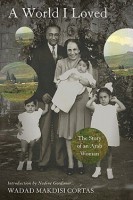 I’m only halfway through this, but I’m liking it a lot—Cortas was a passionate educator who ran a prestigious girls school in Beirut, and this is her memoir. Like Bye Bye Babylon, it’s also deeply nostalgic, but it doesn’t candy-coat anything. It also starts in an earlier era, during World War I, when the Ottoman empire was dismantled. Reading these two books in succession is not exactly comforting—I’m getting a strong sense of how deeply wrong things went in the colonial era, and how that still echoes everywhere. It’s the kind of thing you learn in grad school—colonialism is bad, sure—but it’s not until you’re actually in a place, and see that people have been working over the same problems for decades, and still are, that it really sinks in.
What I’d really be interested to read is a memoir by an active militia member during the war. So far everything I’ve seen is by innocent bystanders. But I know the war’s real participants are still around. When I was standing in front of the shell of the Holiday Inn, listening to a tour guide explain the building’s strategic significance, a man drove by and shouted out his car window, fist raised in triumph, “I fought in that building!” Where’s his story?
**Remember: Go enter the Jasmine and Fire giveaway on my Facebook page!

May 28, 2012
Doha, the Rest of the Story
For spending about 72 hours in a country, I sure managed to collect a lot of photos and deep thoughts. I think the short time in Qatar made it that much easier to distill the whole visit.
Meanwhile, all my driving around the Emirates is all loose and floppy in my head, and I’m still fiddling with what I got out of it (aside from some funny pictures).
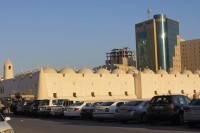
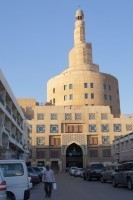
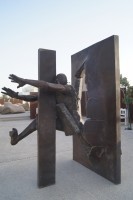
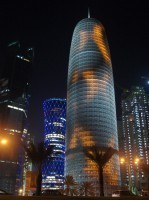
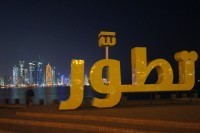
I’ll just throw a few more Doha photos at you to finish off this clutch of posts about the Persian, ahem, Arabian Gulf.