Zora O'Neill's Blog, page 6
December 26, 2012
Queens Writers Fellowship News
In late summer, I spread the word that the Queens Writers Fellowship–aka office space in my house–was opening up, and I needed a steady partner to come slave away next to me all fall while I finished a draft of my book.
Part of the treat of offering up the QWF is seeing who turns up. Every time I announce it, I get emails and tweets of support from all over. One of them was from Annia Ciezadlo, author of Day of Honey (my rave here), whom I met by buying four copies of her book and not seeming too crazy-stalker-ish in the process.
Manhattan-dwelling Annia is not, strictly speaking, a Queens writer. She did, however, write to me that she “needs more Queens in her life.” And that certainly is a bonus of coming to my joint to work: heart of Astoria, baby, with all its taco joints, halal meat and Maltese treats.
Conscientious Annia was concerned about nepotism in her application for the fellowship. I assured her that nepotism just made the whole thing Queens-ier. It also helped that her schedule was wide open, and she had two book ideas she wanted to kick-start.
So, after I got back from Morocco, and after I got my wisdom teeth out, and after Hurricane Sandy, and after the election… We finally got to work. (Hot Page Six item: Annia writes longhand!)
It has been a great stretch of writing (which is why blog updating has been spotty). Next week, Annia’s taking off to teach a class in Abu Dhabi.
I’m slogging on here. Which means: the fellowship is open again starting the week of January 7!
Please drop me an email by January 2 if you want to get some writing done. The extra desk could be yours, along with coffee, possibly a hot lunch and general camaraderie. Tell me what your schedule is like, and what you’re working on.
Queens residency preferred, but not required; no bribes necessary.


December 3, 2012
5 Good Reasons Travel Is Better When You’re Older
At some point while I was just traipsing around Morocco alone, I thought, “Man, I am so glad I’m as old as I am.”
This was not something I expected to be thinking the year I turned 40.
I know, that’s not particularly old–but I have been traveling since I was 20, and the experience has changed radically–and almost entirely for the better.
Here’s why:
1. More money.
You were thinking I was going to say something about inner peace and wisdom, right? I’ll get to that. But first: being even the tiniest bit less broke than I was just ten years ago has really taken the edge off.
I’m not saying I’m swaddling myself in luxury–I can’t afford that, and besides, it’s boring.

Pro tip: bathrooms in lobbies of luxury hotels are a great public resource. And provide flattering light for self-portraits.
The little extra travel money I have really just makes me a nicer person. I don’t have to resent the occasional scam artist so much, and I can let the cabbie win the argument over 50 cents.
Also, a tiny bit of extra money means I can take more weird risks on destinations, because spending one night in an overpriced hotel in a crummy town doesn’t seem like a crushing waste anymore. And these towns often aren’t too crummy after all.
2. More confidence…
…nd its corollary, less self-consciousness.
This is especially true for solo travel. I used to feel like everyone was staring at me when I ate at a restaurant alone. Now I know they are, but I just don’t care.
Also, when you travel alone, you’re more apt to meet locals–you look more approachable (and perhaps a little pitiful–but that’s OK, I’ll take it). Now I have the self-confidence to roll with this, and accept people’s invitations.
This is what brought me to my epiphany in Morocco–I was just saying “Sure, yes, take me there!” left and right. I had the confidence that I could extricate myself if anything went weird–but my experience has taught me that, actually, things seldom go too weird. Most people mean well, and the world is not dangerous after all.
And being less self-conscious means that I can say stupid stuff to strangers as a way to entertain us both. My language skills may still suck, but I can forge ahead better than I used to, just to get my point across.
3. Deeper self-knowledge.
I used to envy those insta-charmer travelers, the ones who read ridiculous things from the phrasebook and are the life the party.
But I am not one of them. I know this about myself now, and I’m fine with it, because I now have had a lot of good travel experiences that came from being more reserved. The people who do approach me are often more my kind of people. And I must look like someone who keeps secrets, because people tell me personal details I don’t think they’d tell a louder person.
I also know that with this introversion comes a good attention to detail–this is my strong suit, and even if I go for a couple of days without really talking to anyone, I’ve been entertained by all kinds of odd things I’ve noticed.

Just one ridiculous detail I noticed in the Emirates. Maybe I noticed too much there, actually.
4. Less hotness.
Ladies especially, don’t bemoan “losing your looks.” What you’ve really lost is a flock of grabby 25-year-olds. Hitting 40 may not guarantee sleaze-free traveling, but it does weed out the cheesiest people who might strike up conversations with you.
I realized this in Egypt in 2007. Street harassment is as bad there as it’s ever been–but I’d aged out of the worst of it. That was a huge relief, and made it much easier to enjoy the 99.9% of Egyptians who are nice. Or the 99.9% of everyone, everywhere.

Lunch in Sidon with a strange man I wouldn't have dared talk to 15 years ago. Then again, he might not have talked to me... (Sorry for the blur.)
5. Fewer parties.
Part of me of course wishes I’d done a few more drugs on a few more beaches back in the day. I met a lot of interesting people boozing it up in various places around the globe–but most of them were not people from the place I was in.
The problem is that the people who party till dawn are the people most like you–people who don’t have to go to work in the morning (except if you’re in Spain).
But the value of travel is meeting people not like you, whether that’s due to class or lifestyle or tradition or religion or whatever. Waking up a little earlier than usual gives me a better chance of meeting them.

When you're older, partying might just mean having ice cream several times a day. (Thank you, Hanna Mitri of Beirut.)
All of these things really are evidence of the same thing: After traveling for 20 years, I have a much better grasp of the big picture. I know that 50 cents to the cabbie means a lot more to him than to me. I don’t feel so personally victimized if someone scams me or tries to grab my ass. I’ve learned that I have a little responsibility to entertain people when I go to their country–and playing “the bumbling foreigner” is OK, even if it’s not cool.
Most important, I know that if I just relax and be myself, something interesting will happen… I’m typing that here to remind myself–as it’s usually the piece of wisdom I have to relearn every time.

November 21, 2012
Review: Polaroid Z2300, hands-on in Morocco
I don’t think I’ve ever owned a first-generation anything. But even though it was new and had no reviews, I jumped at the new Polaroid Z2300 digital camera because I was headed for Morocco just two weeks after its release in late August.
It promised to solve a particular travel dilemma.
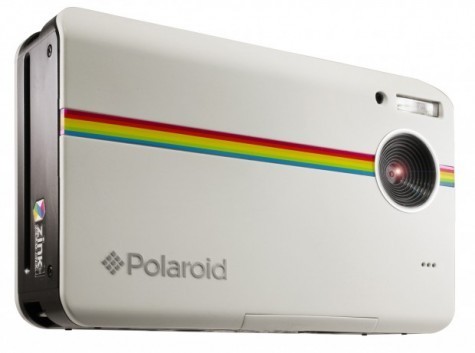
The Polaroid Z2300: the answer to all of life's problems?
You know how you take a photo of some nice kids, or a particularly sweet family, and say, “I’ll send you photos!”? You totally mean it at the time, and dutifully copy down their address. And yet, when you get home, somehow the motivation leaves you, and then five years after the fact, you’re still feeling periodic guilt about those nice people in the beehive village in Syria? I mean, for example.
So. I’d considered buying a Polaroid, the old clunky kind—but then you give away your only copy. Really, I wanted a camera where I could give the pic to the person, and keep a copy for myself.
Which is what the Zink Z2300 does! Miraculous! You take a digital photo, then, if you like the pic, you press a couple of buttons, and presto, the camera spits out a teeny-weeny print from a slot in its side.

...and you can hand that print over and say, Thank you, sir, for the best fried-fish sandwich in Rabat!
Well, not spits. More like sloooowly extends its tongue.
Anyway, I’ve road-tested the Z2300 (terrible name, by the way—why the numbers? It’s the very first one!) in Morocco, and I can tell what’s good and bad about it.
The good: it works. People are pretty impressed by it. And something I thought was a drawback—the small size of the photos—was a plus for one photo recipient. “If it were a normal size, I’d be like, enh. But it’s so cute and small!” said my friend Btissam. (Translating freely from Arabic.)
The bad: the quality of the camera is relatively basic. It boasts of 10 megapixels, but the sensor is probably only as big as a bedbug. My digital photos from it aren’t anything I want to print or use for anything substantial.
The display screen is so lo-res that it makes every photo look crappier than it is (though not as bad as I first thought–when I realized it had a protective film on it that could be peeled off).
It’s also pretty boxy, to hold the printing apparatus–though when you consider what it does, it’s impressive it’s as small as it is.
In practice, this meant I was carrying around the chunky Polaroid along with my regular, fancier camera (a Canon G12, also new on this trip). And my iPhone.
On the other (good) hand, the simplicity means it’s easy to hand to someone else and say, “Just press the big red button.” To judge from the packaging, covered in snaps of people doing zany things, it was designed for drunks in mind. This means children can also use it.

But I need to get better at taking photos myself... And that's Btissam, who loved the small format prints. Cute, like her!
In fact, it looks so simplistic that it’s misleading. This is another bad thing. I’m normally an avid manual-reader, but I was lulled into thinking this camera didn’t even call for it. For about two weeks, I thought the only thing I could adjust was flash on or off. Then one day I accidentally pressed a button, and a whole menu of shooting modes (portrait, night shot, etc) came up. Der.
The other not-immediately-logical thing is the macro-lens option: it’s a little slider on the side of the camera. I jostled it once without realizing, and then for two days couldn’t figure out why all my photos were coming out blurry.
But another good: It wasn’t too expensive. If it had cost any more, I’d have serious buyer’s remorse.
But like printers and razors, the pricey part comes from the supplies. I wasn’t using the camera left and right because I didn’t want to run through the paper—I lived in fear of being discovered by a mob of kids, all demanding their own print.

First he said I couldn't take his picture, but then he struck a pose...
Am I totally sold? Did it revolutionize my travel experience? I was going to say, Not really. But looking over just the handful of photos I took, it was well worth it–normally I don’t have any pictures of people.
I’m not a natural, outgoing, interact-with-people-to-get-the-best-shot photographer. But the Z2300 gave me a little bit of an excuse–even if there was an awkward calculus of when to use the camera, and how clumsy it would be to get it out, explain what was going on, waiting around for the photo to spit out, etc.
Near the end of my trip, I just took a random photo with it, though, rather than a portrait–and I realized I should’ve been doing more of this. It looked nice enough onscreen that I went up to the shop-owner and gave him a photo. He grinned and gave me a huge bag of olives. Aw.

Olive shop in the main market of the Tangier medina
Would I recommend it? Yes. It’s just plain fun, and I like the idea that I’ve left souvenir photos with a whole range of people.
But you shouldn’t buy the white version. Mine is already covered with schmutz. Black is much better for travel.
And, if you don’t have a trip or a wild-n-crazy party coming up, you might want to wait. The next iteration of the Zink Z2300 (will they call it the 2301? Or the 2400? The 4600? Seriously, what? It sounds like a 70s sports car) will almost certainly be smaller and lighter, and have a better screen.
And it will even cost less. Then I’ll have buyer’s remorse.
At least the photo paper will cost the same.

Travel Gear: Polaroid Z2300 Test-drive in Morocco
I don’t think I’ve ever owned a first-generation anything. But I jumped at the new Polaroid Z2300 camera because I was headed for Morocco just two weeks after the camera’s release in late August.
It promised to solve a particular travel dilemma.
The Polaroid Z2300: the answer to all of life's problems?
You know how you take a photo of some nice kids, or a particularly sweet family, and say, “I’ll send you photos!”? You totally mean it at the time, and dutifully copy down their address. And yet, when you get home, somehow the motivation leaves you, and then five years after the fact, you’re still feeling periodic guilt about those nice people in the beehive village in Syria? I mean, for example.
So. I’d considered buying a Polaroid, the old clunky kind—but then you give away your only copy. Really, I wanted a camera where I could give the pic to the person, and keep a copy for myself.
Which is what the Zink Z2300 does! Miraculous! You take a digital photo, then, if you like the pic, you press a couple of buttons, and presto, the camera spits out a teeny-weeny print from a slot in its side.
...and you can hand that print over and say, Thank you, sir, for the best fried-fish sandwich in Rabat!
Well, not spits. More like sloooowly extends its tongue.
Anyway, I’ve road-tested the Z2300 (terrible name, by the way—why the numbers? It’s the very first one!) in Morocco, and I can tell what’s good and bad about it.
The good: it works. People are pretty impressed by it. And something I thought was a drawback—the small size of the photos—was a plus for one photo recipient. “If it were a normal size, I’d be like, enh. But it’s so cute and small!” said my friend Btissam. (Translating freely from Arabic.)
The bad: the quality of the camera is relatively basic. It boasts of 10 megapixels, but the sensor is probably only as big as a bedbug. My digital photos from it aren’t anything I want to print or use for anything substantial.
The display screen is so lo-res that it makes every photo look crappier than it is (though not as bad as I first thought–when I realized it had a protective film on it that could be peeled off).
It’s also pretty boxy, to hold the printing apparatus–though when you consider what it does, it’s impressive it’s as small as it is.
In practice, this meant I was carrying around the chunky Polaroid along with my regular, fancier camera (a Canon G12, also new on this trip). And my iPhone.
On the other (good) hand, the simplicity means it’s easy to hand to someone else and say, “Just press the big red button.” To judge from the packaging, covered in snaps of people doing zany things, it was designed for drunks in mind. This means children can also use it.
But I need to get better at taking photos myself... And that's Btissam, who loved the small format prints. Cute, like her!
In fact, it looks so simplistic that it’s misleading. This is another bad thing. I’m normally an avid manual-reader, but I was lulled into thinking this camera didn’t even call for it. For about two weeks, I thought the only thing I could adjust was flash on or off. Then one day I accidentally pressed a button, and a whole menu of shooting modes (portrait, night shot, etc) came up. Der.
The other not-immediately-logical thing is the macro-lens option: it’s a little slider on the side of the camera. I jostled it once without realizing, and then for two days couldn’t figure out why all my photos were coming out blurry.
But another good: It wasn’t too expensive. If it had cost any more, I’d have serious buyer’s remorse.
But like printers and razors, the pricey part comes from the supplies. I wasn’t using the camera left and right because I didn’t want to run through the paper—I lived in fear of being discovered by a mob of kids, all demanding their own print.
First he said I couldn't take his picture, but then he struck a pose...
Am I totally sold? Did it revolutionize my travel experience? I was going to say, Not really. But looking over just the handful of photos I took, it was well worth it–normally I don’t have any pictures of people.
I’m not a natural, outgoing, interact-with-people-to-get-the-best-shot photographer. But the Z2300 gave me a little bit of an excuse–even if there was an awkward calculus of when to use the camera, and how clumsy it would be to get it out, explain what was going on, waiting around for the photo to spit out, etc.
Near the end of my trip, I just took a random photo with it, though, rather than a portrait–and I realized I should’ve been doing more of this. It looked nice enough onscreen that I went up to the shop-owner and gave him a photo. He grinned and gave me a huge bag of olives. Aw.
Olive shop in the main market of the Tangier medina
Would I recommend it? Yes. It’s just plain fun, and I like the idea that I’ve left souvenir photos with a whole range of people.
But you shouldn’t buy the white version. Mine is already covered with schmutz. Black is much better for travel.
And, if you don’t have a trip or a wild-n-crazy party coming up, you might want to wait. The next iteration of the Zink Z2300 (will they call it the 2301? Or the 2400? The 4600? Seriously, what? It sounds like a 70s sports car) will almost certainly be smaller and lighter, and have a better screen.
And it will even cost less. Then I’ll have buyer’s remorse.
At least the photo paper will cost the same.
November 17, 2012
American Museum of Natural History: Our Global Kitchen
I’ve been traveling so much, I’ve really lost the thread with New York. I mean, on Wednesday I got on an uptown train instead of a downtown train by accident. I don’t think I’ve ever made that mistake, at least not while I’ve lived here.
So what better way to feel New York-y than to go to the august American Museum of Natural History? You know, the one with all the taxidermy.
I went to the preview for the new exhibit Our Global Kitchen. It opens today, November 17, and runs through August 11, 2013. (I shouldn’t tell you that far-off end date–it’ll make you feel less urgency, and then you’ll wind up missing it. This happens to me all the time.)
In short: You should go. It’s fun, and you’ll learn something. And, since it’s the AMNH, the dioramas and models are great.

I could have stared at this model of the push-pull farming technique all day.
The details: This is a really ambitious exhibit. Where to begin when you want to cover what the whole world eats, three times a day? Oh, and it’ll cover the food-supply chain as well.
As a result, it feels a little compressed, a little rushed–each section of the show could easily be expanded into its own exhibit. Then again, I spend an awful lot of time thinking about global food, and food production, so maybe it’s a perfectly good introduction to the issues and to non-American cuisine–which everyone should get.

Let's just take a look at another one of those models, shall we? (photo courtesy AMNH)
To my taste, the food-industry section, which starts the exhibit, could’ve taken a stronger “It’s time to change this!” stance. And certainly the curators’ comments before the show were more in this vein–the word “unsustainable” came up a lot.
But there’s some progress. This same exhibit 30 years ago would’ve been sponsored by ADM and Cargill, and had a thoroughly gee-whiz-technology-is-great tone. At least now we get the cons of fish farming listed alongside the pros.

And you get square Japanese watermelon! (photo courtesy AMNH)
After all the supply-chain stuff, the rest of the exhibit feels a lot more colorful and fun. There’s a fancy show kitchen, where you can eat actual food, and there’s a mirror where you can stick out your tongue and see how many tastebuds you have. There are buttons to push to smell things, and touchscreens to learn about banana transport. You can post your food pics to Instagram with the tag #CelebrateFood, and they’ll show up on screens in the exhibit.
But the meat of the exhibit is still the actual physical stuff. There’s a whole wall of cookbooks from around the world. There’s a vaguely obscene-looking Mesoamerican popcorn popper, and beautiful molds for Korean rice cakes.

See what I mean about the popcorn popper?
And there’s a vivid diorama of a just-before-Cortes-landed market in Mexico.

Somewhere in there is a basket of grubs! (photo courtesy AMNH)
I also loved the set rooms and meals from different places and times in history: a Roman empress’s breakfast, Kublai Khan’s buffet on the hoof…
In the same room, the juxtaposition of Gandhi’s typical breakfast with Michael Phelps’s is fascinating. It struck me as the stealth message of the exhibit. If Americans learned to eat more foods from elsewhere–more vegetarian staples, more flavor and spices–we might all put a lot less stress on the world’s food systems.
And definitely settle in for the second big video presentation, at the end–all about celebrations and special foods from around the world.
I’m glad such an august institution as the American Museum of Natural History has taken on such a huge and meaningful subject as food. And I hope it sparks some thoughts in people who haven’t thought so much about food yet. There’s a lot more to taste out there…

November 12, 2012
Counterintuitive Travel Tips #7 and #8: Taxis and Sleep
Two final bits of contrariness, both terribly sensible.
Tip #7: Don’t ask the price of a taxi before you get in.
Guidebooks always say “Agree on a price before you get in a taxi.” I think I’ve even written this myself. But nothing marks you as an out-of-towner like asking a cabbie, “How much to…?” This makes the cabbie’s eyeballs flash dollar signs, just like in the cartoons.
So your one job as a visitor is to find out in advance how much a taxi should cost (ask at your hotel, or ask your Airbnb host, or whatever). Then just get in the cab, say hello in at least a loose approximation of the local language and state your destination. Pay the known fare when you get out (or, in known antagonistic-cabbie towns, get out first and hand the money through the window). This is what locals do, and it works!

I don't have any photos of evil cabbies. Instead, enjoy these perfectly sweet triciclo guys in the Yucatan. Maybe taxi drivers only turn bad when they get engines?
Even if you’re in a metered-taxi town, it’s nice to get a ballpark estimate, for peace of mind.
(Why are taxi drivers the world over so prone to unscrupulousness? They are their own strange tribe. May the honest and generous ones multiply!)
Tip #8: Sleep now, not when you’re dead.
A very concrete aspect of Tip #4 (“be lazy”). Again, you’re on vacation – why tire yourself out? Take plenty of naps. Observe the siesta culture, if there is one.
There is nothing more delicious than waking up in a strange place. (Freya Stark, by way of Matthew Teller, says it even better.)
More practically, the better rested you are, the less likely you are to have those little streetcorner meltdowns, where you’re hungry and tired and just can’t make a decision, and suddenly your travel partner is looking like the worst beast on earth, just because he/she is also hungry and tired and can’t make a decision.
One person I know calls this the Death Mope. The Death Mope is easily avoided through adequate rest. (And carrying some peanuts in your bag–another tip of mine. But there’s nothing counterintuitive about not starving.)

Me enjoying Greek culture and avoiding Death Mope. (Not-so-flattering-but-oh-well photo by Peter. I didn't realize till after the trip that my very ugly bra was always visible through the very large sleeves of that dress.)

November 7, 2012
Counterintuitive Travel Tip #6: The Water
The first five tips (#1, #2, #3, #4, #5) had a lot to do with how to plan your trip (or not plan it). Now we’re getting into the more nitty-gritty on-the-ground stuff.
Drink the water.
I had written a righteous screed about how all guidebooks are just covering their asses when they tell you not to drink the water, and of course you can drink it, if normal middle-class people drink it too.
Then I went to Fes, Morocco, where everyone drinks tap water…and I got sick.
But even so, I believe that tap water is often not so horrible. If people who could afford to buy bottled water drink from the tap, you can certainly brush your teeth with it. You can even swig a bit in the night, when you realize you’ve run out of bottled water. You can have a little ice in your drink.

Peter drinking from the (very large, public) tap in Comitan de Dominguez, Mexico. Later we drank the water in Villahermosa too, sin problemas.
It’s with cumulative exposure that your system freaks out (or mine does; yours may be different–that’s my CYA). I didn’t get sick in Fes until about a week in. My threshold for Cairo tap water is about four days.
Contrary to logic, the worse the water is, the better off you are. If all the restaurants use bottled water, this means your ice is almost certainly made from purified water. Basically, there are very few situations in which you have to do that prissy “no ice, please” thing.
The reason I’m even being so macho about tap water is that plastic bottles are the world’s third-largest evil, after plastic bags and Halliburton, and I feel like a failure every time I buy bottled water. If you’re not feeling like risking it, I really recommend a Steripen. I just got one this summer–it’s fantastic. It has cut down on my water-risk-taking and makes me feel like a magician every time I use it. (But I recommend rechargeable batteries–it was due to battery fail that I was in the unfortunate Fes situation.)

November 5, 2012
Counterintuitive Travel Tip #5: Be inefficient
On to more practical matters. Though this still relates to trip-planning.
Take the train, especially if it’s slow.
I can’t tell you how many guidebooks I’ve read recently where they’ve said, basically, “Enh, there’s a train, but you’re better off on the bus/airplane.”
C’mon—how will you ever be better off squished in a bus barreling down a highway? On a bus or a plane, you’re just waiting till you get there—that’s 100 percent wasted time.
On a train, though, the adventure starts when you get on. Fine, maybe it gets a little boring in the last hour, but it’s still at least 70 percent quality time.

OK, so maybe don't take *this* train...
Moreover, the train makes the decision for you. Overwhelmed by all the wonders a country has to offer? It’s easy to narrow down your itinerary if you just go where the train goes. After three trips to Morocco traveling almost entirely by their excellent train system, I think I’m finally ready to rent a car or hop a bus to the farther-flung parts of the country. Peter and I still haven’t run out of entertainment on the Thai train line.
Yes, you’ll be missing some things—but that would happen no matter what. Why not enjoy what you can see by train, rather than showing up cranky and poorly rested to a bunch of other places?

...but definitely this one. (Photo by Peter.)
I could expand this tip to cover all kinds of odd transport: bikes, funiculars, pickup trucks with bench seats in the back. The weirder and more novel, the better. That way, the transit time becomes an adventure too.
In fact, maybe this tip should just be: Go the least efficient way. The slower you go, the more you see.

October 31, 2012
Counterintuitive Travel Tip #4: Be lazy
Tip #3 was “Go where the tourists are”–to which I add:
…But skip the big sights.
Or, more precisely, skip anything that involves standing in line for more than, oh, 10 minutes. Also consider skipping most things that involve trudging around in the blazing sun.
By this logic, you might miss the Empire State Building. Or worse: the Pyramids in Egypt! This is pretty harsh—but going to the Pyramids in 90-degree heat, only to be chased around by camel drivers, is a recipe for hating Egypt forever.
Even after living in Egypt, I only got around to appreciating the Pyramids for the first time ever last fall, when it was a balmy 80 degrees, and thanks to everyone being scared away by the revolution, I didn’t have to push my way past mobs of underdressed Russian package tourists and squadrons of camel touts.
(Theoretically, the “hide in the mob of tourists” logic of Tip #3 should work at the Pyramids, as a way of avoiding the souvenir vendors and camel touts, but somehow the number of hustlers magically expands to match the number of tourists at what feels like a 16:1 ratio in favor of the hustlers.)

Just about the acceptable level of tourists at the Pyramids, fall 2011.
Anyway, you’re on vacation. Why would you spend it standing around waiting to see the Mona Lisa? Those mega-museums and those impressive tall buildings – they’ll be there a very long time. You’ll probably have another chance to see them, on a less-busy day. Right now – enjoy your time off, and just wander.
Unless, of course, you wake up freakishly early because of jet lag, and it’s raining. That might be a great time to go to the Louvre.
(If you’re thinking I’m a terrible cynic about the Pyramids, consider that no less a terrible cynic than Anthony Bourdain went to Cairo and skipped a trip to Giza. Instead, he had a nice boat ride with my excellent friend Hassan.
Hassan is a great guide, and he says the Pyramids drive him and all his clients crazy, and he would love to see the system improved. Here’s my post on the subject from earlier this year. Any advice?)

October 29, 2012
Counterintuitive Travel Tip #3: Go Where the Tourists Are
This tip, hot on the heels of Tip #1 and Tip #2, seems completely contradictory. Bear with me.
Go where the tourists are.
I really mean Go where the local tourists are. Plan your trip around domestic holidays or popular weekend-getaway spots, and enjoy. The most fun I’ve had in recent memory was in Chiapas in August 2009, the year swine flu scared off foreigners from Mexico.
I foolishly thought the major tourist spots would be empty. But hotels were packed with Mexican families enjoying the tail end of summer vacation. The ruins at Palenque were swarming with people. In San Cristobal de las Casas, kids were running around in souvenir Zapatista ski masks. It was great.

Peter and me posing with the winners of the Golden Age pageant in Palenque.
As travelers, we spend so much time avoiding (sniff) common tourists, but in the long run, you have to admit this can be a little wearing. When you’re the only foreigner in some village, everyone’s staring at you all the time, and you start getting antsy. Or if you’re trying to blend in in some European capital, you’re constantly worrying whether you just flubbed your coffee order and revealed your out-of-townness.
But, just as in the ugly, over-visited places I mentioned in my last post, if you go where the local tourists are going, you can enjoy the buffer of a crowd, which takes the heat off of you.
During that Chiapas trip, I went to the amazing church at San Juan Chamula. If I’d gone in a quieter time, I would’ve felt like a terrible interloper–it’s such a private-seeming place. (Er, should I really be stomping around this church while people are in the middle of intense healing rituals?) Walking into the church on the heels of a busload of Mexican tourists made me feel a little better. (Oh well—all the Mexicans are!) In fact, another Mexican tourist saw me hesitating and waved me in with a smile, like a good ambassador.
Ignore the traveler/tourist rivalry. Frankly, most tourists are fun (especially Mexican tourists!). They’re out to have a good time. So if you go where the domestic tourists are, it’s a little like crashing a party—but it’s still “counts” as a travel experience, because you’re with another culture.