Zora O'Neill's Blog, page 2
January 26, 2015
How to Read the Prune Cookbook (with downloadable index and bonus glossary!)
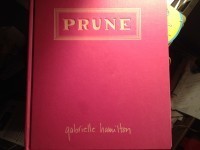 Already sporting a subtle grease stain, center left.More than a decade ago, I worked at Prune. Not for long, and not very successfully.
So of course I would say Gabrielle Hamilton’s cookbook, Prune, is brilliant in nearly every way. Because I am the very person around which its conceit is built–I, the hapless line cook who might very well ruin everything if I’m left to my own devices.
But it’s also great because, contrary to appearance, it’s a solid book for a home cook. Prune, after all, is one of those rare restaurants that combines the specialness of dining out with the immediacy and simple satisfaction of eating at home. Even if you haven’t eaten there (or worked there), I think it’s possible to appreciate this book and learn from it.
First of all, YES, it sucks, there is no index. I almost didn’t buy the book, out of spite, and vain hope that a second printing would include an index. Then I decided I’d just make one myself. Or at least a master list of recipes, organized a little bit better. HERE IS MY INDEX FILE. Download away! Pass it around! Doctor it up the way that makes sense to you and print it out and tape it in the back of your book, like I did. (Also, here is an online index of sorts; the bonus is that it’s easily searchable.)
 Print double-sided, and trim the edges of the paper. It fits in just right.
Aside from this, it’s a marvelously designed book. The “kitchen notebook” look may seem like a gimmick, but it’s not. That binder exists; I have worked from it. It is just as stained, scrawled on and taped up as the book looks. It’s also in drab old Times New Roman, just like that.
Also, the photos: Some are harsh or strange or blurry. But they’re real too, in a way that so many food photos aren’t today. Yes, the kitchen lights bounce off the stainless steel so much it strains the eyes. Yes, the range is greasy, and the steam from the roesti potatoes makes them look like some unfortunate shag carpeting. Yes, cardoons and beans look disgusting–but they taste great. That’s real life.
Which is funny, considering how cookbooks generally peddle in fantasy. Usually, they’re softer and fluffier fantasies: You host grand regional-Italian dinner parties, or you live at River Cottage and raise wholesome pigs and raspberry canes.
Prune presents a fantasy too, of course. But it’s a tougher one—you work in a restaurant. Not like in a reality show–but like in actual reality. You’re a lowly line cook, and you probably get paid $12 an hour, if you’re lucky (assuming wages have gone up in twelve years; I got $10). You don’t know half the words people are using, and you don’t know where to find the knife you need.
So, on first pass through this cookbook, give in to this fantasy. Don’t read thinking you’ll jump up and cook from it tonight. Read like you’ve just started a new job, and you are desperate to learn because you are in way over your head. (This book captures that feeling perfectly. By the time I got to the end, I was sweating and had a headache and wanted to throw the book down and run.) Read in fits and starts, grabbing what you can.
Close the book. Take a deep breath and be glad you don’t really have a job in a restaurant. That shit is hard work.
NOW you can go back and read it like a regular home cook, like you’re going to figure out what this book’s all about, and what you might cook from it.
But wait! Don’t start at the beginning. Read the “Family Meal” chapter, the last one. This is the actual introduction to the book, where Hamilton lays out the philosophy of her kitchen: thrift, creativity, clean presentation, the joy of feeding others. That’s what guides everything else in the book, and in the restaurant.
Next, give a quick skim through the “Prep Daily/Weekly” chapter. The sauces and spice mixes in here are the backbone of many of the recipes. Full recipes will cross-reference back here, and you want to have a passing familiarity with some of the more distinct combinations (Smoked Tomatoes, for instance, or Salsa Verde). This way, when you’re reading and deciding whether to cook a recipe that calls for one of these ingredients, you can imagine all the flavors in the dish.
Equally important, the “Prep Daily/Weekly” section gives you a little window into how a restaurant kitchen runs. Almost never is a dish cooked from scratch, but rather assembled from parts, many of which can be reconfigured.
I don’t normally think home cooks should mimic restaurant kitchens, because a lot of it is bullshit-fancy and inefficient. But Prune is not a bullshit-fancy restaurant–the first recipe in this book is canned sardines on Triscuits, after all, with strict instructions not to make them look too “restauranty.” And it is most definitely not inefficient. What the cookbook reveals is how a kitchen runs to keep cooking every day. You too, as a home cook, should aspire to have a system in place so you can cook every day without reinventing the wheel. Take the pan juices from one dish to spike another one; take the scraps from vegetables to bolster stock; heck, decorate with leek ends and hollow bones.
OK, NOW you can look at the recipes. It’s pretty much up to you from this point on. What you’re hungry for, what you feel up to tackling. Some dishes are easy; others are fiddly. Bite off what you can chew–and there’s plenty even for beginners to chew, especially the various stews and braises, and many of the vegetable preparations.
A lot of the reviews I’ve seen have wished this was a more user-friendly book. Really, it’s friendlier than it appears. It’s intense where it matters (Breton Butter Cake, my god). By contrast, where the instructions seem dangerously cavalier—those cases are almost always where if you wing it, you’ll probably be OK. Because in order to cook well, you, the home cook, need to do your own thing.
This isn’t the case in a restaurant, where consistency is what matters, and your job as a line cook is to perfectly reproduce the vision of the chef. But you don’t work in a restaurant, remember? Isn’t that a relief?
So this book is in fact nudging you, the non-professional, out into the world to cook better, gutsier food. Cooking is not a matter of quarter-teaspoons or simmering for precisely 12 minutes in precisely the right pan. Cooking is making do with what you have, and developing your own instinct for when vegetables will be just the right texture.
Rare for a restaurant cookbook, Prune is good at helping you develop that side of cooking. Discussing how long to cook eggs, GH warns that it can vary–are they cold from the fridge? In the roasted capon recipe, you get a great and thorough warning to keep an eye on the bird–sometimes your croutons can get too dry, or, if the bird is quite juicy, the crouton can get soggy. Paying attention to details like this and making adjustments as you go is how restaurant cooks make dishes consistently well, even with inconsistent ingredients. And this is how good home cooks succeed too. It is never due to setting a timer for exactly 48 minutes or whatever the book says.
Read the recipes for technique, and listen up when Hamilton hectors. Because what matters most of all is your attitude. Lazy, sloppy, making excuses–none of that is appreciated at Prune, or in any kitchen. “I understand the egregious lack of oven space here,” Hamilton writes in one recipe, “but let’s do things right anyway.” In that sentence is a pep talk for anyone with a too-small kitchen.
Thrift is critical too–and always key for a home cook. “Don’t throw your mistakes away” is a tip that comes along with a way to salvage cream past its sell-by date. It’s encouraging you not just to rethink your blunders, but to value ingredients. “This is how we show our respect for the people who made this,” Gabrielle once told me as she wiped a mustard jar clean with a spatula. The natural outgrowth of that attitude is the entire “Garbage” chapter, a beautiful testament to the nobility of scraps.
In this way–that is, in the way of putting you in the right mindset for running a good kitchen–the Prune cookbook is very helpful. You want the kind of rustic, tastes-like-the-home-you-never-had food that Prune serves? It’s all in here, and you can cook it.
GH’s only-in-this-restaurant-kitchen instructions actually strike me as a perverse reality check. This is how we do it, she’s saying, and you’ll never be able to do it quite this way. But that’s OK—we all know the restaurant thing is a conceit, a bit of fiction. The important, real thing is that you get in the kitchen and make it. What matters is that you care enough to make it good.
If you doubt this last part, go back and read the “Family Meal” section again.
 Not required of you, the home cook: hunkering down to eat in the crotchlike hideout that is Prune’s pasta station.
Bonus glossary!
Here’s some lingo that caught my eye, and some of the more cryptic admonitions. Feel free to ask about others in the comments.
Balsamic = In the “Family Meal” section, GH says never to use this. That’s because the good stuff is insanely expensive and should not be tossed on a salad. (There’s also crappy balsamic vinegar, the cheap stuff you get at the supermarket. Presumably you could use this in a Prune family meal, but let’s be honest, there is something a bit cheesy about a balsamic vinaigrette. Salad should not be sweet. I wrote about the various grades of balsamic vinegar here.)
Blended oil/”our oil blend” = EVOO cut with vegetable oil, 70% EVOO/30% veg, for applications where EVOO would be overwhelming or a waste. (It’s explained on p463, but of course, without the index, you have no way of knowing this until you happen across it.)
Football = A plate shaped like a…football. Regular people would probably call it an oval. Of course, how you plate things in your own home is entirely up to you.
Half sheet = A full sheet pan is the right size to fit in one those rolling bakery racks; it is too big to fit in your home oven. A half sheet pan is, obviously, half that size and will fit in your home oven. (It is somewhat bigger than a cookie sheet you’d pick up in a grocery store, though.) A Silpat (nonstick mat) fits a half sheet pan perfectly.
Hotel pan = A deep rectangular stainless pan, the kind you see in hotel buffet lines, that slots into a counter with a steam bath underneath. Of course you won’t have one at home, and you won’t need one because you’re cooking smaller quantities. A flat-bottomed pot with straight, medium-heights sides will do. Also, there are third pans and half pans. See pics here. You don’t need any of them.
Quenelle = What’s wrong with a quenelle? I’ll tell you what’s wrong with a quenelle: It’s a bullshit high-toned unnatural shape for a scoop of ice cream. Would you make a quenelle at home? No, of course you would not. Plus, it requires the garde manger person to fiddle around with two damned spoons, when she could be doing something a lot more productive with her limited time and space.
Sacramento tomato juice = The internet swears this is the proper brand for Bloody Marys. (I personally have not developed my palate much in this respect; I have no idea.) The reason GH stresses this in the book is because she’s letting you know why her Bloody Marys taste so good. Should you not make a Bloody Mary from this book if you can’t find Sacramento tomato juice? Of course not!
Sally/salamander = When God makes open-face cheese sandwiches, he uses a sally and it’s all oozy and blistered brown in about six seconds. When you, mere mortal, want to broil something, you will have to use the thing in the top of your oven, or the broil setting in your toaster oven. It’s wimpy, but what’re you gonna do? (On the plus side, you will probably not inadvertently scorch your meal by turning your back for a second too long, nor will you singe all the hair off the back of your hand from reaching into your toaster oven, as you would in a sally.)
Wax = Jargon peculiar to Prune, I think, for a freebie given to a good or familiar guest. (I think it had something to do with bikini waxes, and zipping that charge right off the bill…maybe?)
Related posts:
Stuff to read while I’m gone I leave for Syria on Wednesday, for a week of...
Prune, Glorious Prune! Eating at Prune is kind of big deal, not just...
And another thing to read I mentioned it back in the fall, but then I...


How to Read the Prune Cookbook (with downloadable index!)
Already sporting a subtle grease stain, center left.More than a decade ago, I worked at Prune. Not for long, and not very successfully.
So of course I would say Gabrielle Hamilton’s cookbook, Prune, is brilliant in nearly every way. Because I am the very person around which its conceit is built–I, the hapless line cook who might very well fuck everything up if I’m left to my own devices.
But it’s also great because, contrary to appearance, it’s a solid book for a home cook. Prune, after all, is one of those rare restaurants that combines the specialness of dining out with the immediacy and simple satisfaction of eating at home. Even if you haven’t eaten there (or worked there), I think it’s possible to appreciate this book and learn from it.
First of all, YES, it sucks, there is no index. I almost didn’t buy the book, out of spite, and vain hope that a second printing would include an index. Then I decided I’d just make one myself. Or at least a master list of recipes, organized a little bit better. HERE IS MY INDEX FILE. Download away! Pass it around! Doctor it up the way that makes sense to you and print it out and tape it in the back of your book, like I did.
Print double-sided, and trim the edges of the paper. It fits in just right.Aside from this, it’s a marvelously designed book. The “kitchen notebook” look may seem like a gimmick, but it’s not. That binder exists; I have worked from it. It is just as stained, scrawled on and taped up as the book looks. It’s also a bit sticky and flour-dusted. (I laugh to think how it must have killed the publisher’s designers to do everything in Times New Roman.)
Also, the photos: Some are harsh or strange or blurry. But they’re real too, in a way that so many food photos aren’t today. Yes, the kitchen lights bounce off the stainless steel so much it strains the eyes. Yes, the range is greasy, and the steam from the roesti potatoes makes them look like some unfortunate shag carpeting. Yes, cardoons and beans look disgusting–but they taste great. That’s real life.
Which is funny, considering how cookbooks generally peddle in fantasy. Usually, they’re softer and fluffier fantasies: You host grand regional-Italian dinner parties, or you live at River Cottage and raise wholesome pigs and raspberry canes.
Prune presents a fantasy too, of course. But it’s a tougher one—you work in a restaurant. Not like in a reality show–but like in actual reality. You’re a lowly line cook, and you probably get paid $12 an hour, if you’re lucky (assuming wages have gone up in twelve years; I got $10). You don’t know half the words people are using, and you don’t know where to find the knife you need.
So, on first pass through this cookbook, give in to this fantasy. Don’t read thinking you’ll jump up and cook from it tonight. Read like you’ve just started a new job, and you are desperate to learn because you are in way over your head. (This book captures that feeling perfectly. By the time I got to the end, I was sweating and had a headache and wanted to throw the book down and run.) Read in fits and starts, grabbing what you can.
Close the book. Take a deep breath and be glad you don’t really have a job in a restaurant. That shit is hard work.
NOW you can go back and read it like a regular home cook, like you’re going to figure out what this book’s all about, and what you might cook from it.
But wait! Don’t start at the beginning. Read the “Family Meal” chapter, the last one. This is the actual introduction to the book, where Hamilton lays out the philosophy of her kitchen: thrift, creativity, clean presentation, the joy of feeding others. That’s what guides everything else in the book, and in the restaurant.
Next, give a quick skim through the “Prep Daily/Weekly” chapter. The sauces and spice mixes in here are the backbone of many of the recipes. Full recipes will cross-reference back here, and you want to have a passing familiarity with some of the more distinct combinations (Smoked Tomatoes, for instance, or Salsa Verde). This way, when you’re reading and deciding whether to cook a recipe that calls for one of these ingredients, you can imagine all the flavors in the dish.
Equally important, the “Prep Daily/Weekly” section gives you a little window into how a restaurant kitchen runs. Almost never is a dish cooked from scratch, but rather assembled from parts, many of which can be reconfigured.
I don’t normally think home cooks should mimic restaurant kitchens, because a lot of it is bullshit-fancy and inefficient. But Prune is not a bullshit-fancy restaurant–the first recipe in this book is canned sardines on Triscuits, after all, with strict instructions not to make them look too “restauranty.” And it is most definitely not inefficient. What the cookbook reveals is how a kitchen runs to keep cooking every day. You too, as a home cook, should aspire to have a system in place so you can cook every day without reinventing the wheel. Take the pan juices from one dish to spike another one; take the scraps from vegetables to bolster stock; heck, decorate with leek ends and hollow bones.
OK, NOW you can look at the recipes. It’s pretty much up to you from this point on. What you’re hungry for, what you feel up to tackling. Some dishes are easy; others are fiddly. Bite off what you can chew–and there’s plenty even for beginners to chew, especially the various stews and braises, and many of the vegetable preparations.
A lot of the reviews I’ve seen have wished this was a more user-friendly book. Really, it’s friendlier than it appears. It’s intense where it matters (Breton Butter Cake, my god). By contrast, where the instructions seem dangerously cavalier—those cases are almost always where if you wing it, you’ll probably be OK. Because in order to cook well, you, the home cook, need to do your own thing.
This isn’t the case in a restaurant, where consistency is what matters, and your job as a line cook is to perfectly reproduce the vision of the chef. But you don’t work in a restaurant, remember? Isn’t that a relief?
So this book is in fact nudging you, the non-professional, out into the world to cook better, gutsier food. Cooking is not a matter of quarter-teaspoons or simmering for precisely 12 minutes in precisely the right pan. Cooking is making do with what you have, and developing your own instinct for when vegetables will be just the right texture.
Rare for a restaurant cookbook, Prune is good at helping you develop that side of cooking. Discussing how long to cook eggs, GH warns that it can vary–are they cold from the fridge? In the roasted capon recipe, you get a great and thorough warning to keep an eye on the bird–sometimes your croutons can get too dry, or, if the bird is quite juicy, the crouton can get soggy. Paying attention to details like this and making adjustments as you go is how restaurant cooks make dishes consistently well–and how home cooks succeed. It is never due to setting a timer for exactly 48 minutes or whatever the book says.
Read the recipes for technique, and listen up when Hamilton hectors. Because what matters most of all is your attitude. Lazy, sloppy, making excuses–none of that is appreciated at Prune, or in any kitchen. “I understand the egregious lack of oven space here,” Hamilton writes in one recipe, “but let’s do things right anyway.” In that sentence is a pep talk for anyone with a too-small kitchen.
Thrift is critical too–and always key for a home cook. “Don’t throw your mistakes away” is a tip that comes along with a way to salvage cream past its sell-by date. It’s not just encouraging you to rethink your blunders, but to respect ingredients. “This is how we show our respect for the people who made this,” Gabrielle once told me as she wiped a mustard jar clean with a spatula. The natural outgrowth of that attitude is the entire “Garbage” chapter, a beautiful testament to the nobility of scraps.
In this way—that is, in the way of putting you in the right mindset for running a good kitchen–the Prune cookbook is very helpful. You want the kind of rustic, tastes-like-the-home-you-never-had food that Prune serves? It’s all in here, and you can cook it.
GH’s only-in-this-restaurant-kitchen instructions actually strike me as a perverse reality check. This is how we do it, she’s saying, and you’ll never be able to do it quite this way. But that’s OK—we all know the restaurant thing is a conceit, a bit of fiction. The important, real thing is that you get in the kitchen and make it. What matters is that you care enough to make it good.
If you doubt this last part, go back and read the “Family Meal” section again.
Not required of you, the home cook: hunkering down to eat in the crotchlike hideout that is Prune’s pasta station.Bonus glossary!
Here’s some lingo that caught my eye, and some of the more cryptic admonitions. Feel free to ask about others in the comments.
Balsamic = In the “Family Meal” section, GH says never to use this. That’s because the good stuff is insanely expensive and should not be tossed on a salad. (There’s also crappy balsamic vinegar, the cheap stuff you get at the supermarket. Presumably you could use this in a Prune family meal, but let’s be honest, there is something a bit cheesy about a balsamic vinaigrette. Salad should not be sweet. I wrote about the various grades of balsamic vinegar here.)
Blended oil/”our oil blend” = EVOO cut with vegetable oil, 70% EVOO/30% veg, for applications where EVOO would be overwhelming or a waste. (It’s explained on p458, but of course, without the index, you have no way of knowing this until you happen across it.)
Football = A plate shaped like a…football. Regular people would probably call it an oval. Of course, how you plate things in your own home is entirely up to you.
Half sheet = A full sheet pan is the right size to fit in one those rolling bakery racks; it is too big to fit in your home oven. A half sheet pan is, obviously, half that size and will fit in your home oven. (It is somewhat bigger than a cookie sheet you’d pick up in a grocery store, though.) A Silpat (nonstick mat) fits a half sheet pan perfectly.
Hotel pan = A deep rectangular stainless pan, the kind you see in hotel buffet lines, that slots into a counter with a steam bath underneath. Of course you won’t have one at home, and you won’t need one because you’re cooking smaller quantities. A flat-bottomed pot with straight, medium-heights sides will do. Also, there are third pans and half pans. See pics here. You don’t need any of them.
Quenelle = What’s wrong with a quenelle? I’ll tell you what’s wrong with a quenelle: It’s a bullshit high-toned unnatural shape for a scoop of ice cream. Would you make a quenelle at home? No, of course you would not. Plus, it requires the garde manger person to fiddle around with two damned spoons, when she could be doing something a lot more productive with her limited time and space.
Sacramento tomato juice = The internet swears this is the proper brand for Bloody Marys. (I personally have not developed my palate much in this respect; I have no idea.) The reason GH stresses this in the book is because she’s letting you know why her Bloody Marys taste so good. Should you not make a Bloody Mary from this book if you can’t find Sacramento tomato juice? Of course not!
Sally/salamander = When God makes open-face cheese sandwiches, he uses a sally and it’s all oozy and blistered brown in about six seconds. When you, mere mortal, want to broil something, you will have to use the thing in the top of your oven, or the broil setting in your toaster oven. It’s wimpy, but what’re you gonna do? (On the plus side, you will probably not inadvertently scorch your meal by turning your back for a second too long, nor will you singe all the hair off the back of your hand from reaching into your toaster oven, as you would in a sally.)
Wax = Jargon peculiar to Prune, for a freebie given to a good or familiar guest. (I think it had something to do with bikini waxes, and zipping that charge right off the bill…maybe?)
Related posts:
Stuff to read while I’m gone I leave for Syria on Wednesday, for a week of...
Prune, Glorious Prune! Eating at Prune is kind of big deal, not just...
And another thing to read I mentioned it back in the fall, but then I...
January 1, 2015
2014: The High- and Lowlights
This whole past year, I considered officially retiring this blog, and I still am. But…it is a helpful memory bank.
See, I’ve been mentally concocting this post for a couple of weeks. And it was not positive: 2014 felt like Groundhog Year, because I had to massively overhaul my book, despite having made special efforts in 2013 and even earlier to avoid such a thing (gnash, gnash). But scrolling through this year’s blog posts, I see that some other things happened–and some of them even represented progress, of a sort.
Granted, it’s not a great sign that two of my posts were cranky rebuttals: one telling Marc Maron to lighten up on his cast iron, and another telling a New York Times reporter to lighten up in Mexico.
But then there’s something genuinely good: The new edition of my Moon New Mexico book came out–in fabulous full color! It reminded me that, in eleven years of working on these Moon books, I’ve learned a lot about photography, and I now have a body of photos that I’m proud to see printed in color. The writing ain’t bad either, if I do say so.
This reminded me of a couple of things that didn’t even make it to the blog. I wrote another story for the New York Times, “36 Hours in Santa Fe,” which turned out well. I can even call myself a published poet now, because the entry for Ten Thousand Waves includes a haiku!
And, perhaps my proudest accomplishment of the year, I wrote an article for The Art of Eating on a couple in New Mexico who are making traditional balsamic vinegar. I’ve been thinking this would make a good story since I first heard about the Darlands, at least five years ago; I learned a ton; and The Art of Eating is an excellent magazine. Writing the story was a great experience all around, especially in the editing, which reminded me how helpful and inspiring that process can be.
The majority of my 2014 posts were dedicated to my trip way back in January, when I went to Rwanda and Ethiopia (and then Thailand, for frequent-flier-mile reasons too dull to go into). It was fantastic, and I am so glad I went, but Peter and I came back fried. Too many destinations, not enough time in each and certainly not enough alone time. I still haven’t quite recharged–I have never wanted to travel less in my life, which is unsettling.
[REDACTED. There was some more blerghy complaining here, but we’re all pretty tired of that, aren’t we?]
In 2015, I am taking the advice of a thirteen-year-old friend, who recently said, with the wisdom of an eighty-year-old, “Consider it a hobby, and it will be less troublesome.” He was talking about something else entirely, but still.
Not coincidentally, this is one of my favorite photos of the year, from the Itegue Taitu Hotel in Addis Ababa.

Bad art? Refresh by rotating 90 degrees. Hello, 2015. May you be different and perspective-altering.
Related posts:
The 2013 Highlights Reel The last few years, I’ve really enjoyed doing the end-of-year...
November 14, 2014
Mexico, Supposedly Corrupt Police, and Rental Car Insurance
 Tourist police go electric in Playa del Carmen.Last weekend, the New York Times published the essay A Maddening Bargain with a Mexican Police Officer. The writer, Jeremy Peters, recounts getting scammed on his car rental, then shaken down by a cop on the highway near Tulum.
It made me sad to read this, because a) that sucks, and b) it was preventable. Oh, and c) the snide of-course-this-happened-it’s-Mexico tone–but on that topic, I drafted a rather huffy letter, which I’ll spare you.
Everyone should know some really basic facts about the law when driving around the Yucatan (and in Mexico as a whole).
tl;dr: Skip to items #4 and #6.
1. Relax. Corruption just isn’t that prevalent.
I can speak only for the Yucatan, Chiapas and Tabasco, but since 2003, I have driven tens of thousands of miles around that area, and nothing bad has happened.
I have had a grand total of two encounters with police, both positive. In one case, they very sweetly alerted me to the fact that I was going the wrong way down a one-way street. In the other, I was in a traffic accident that was probably my fault. I didn’t even get a ticket either time, much less get hassled for a cash payout.
Granted, I’m a woman, which I think makes me less of a target in this case (chivalry lives in Mexico). Also, my first instinct is to apologize rather than get angry, and I speak Spanish, if badly.
The one firsthand bad-cop story I have heard (one! in all these years) was from a man, and he got out of it by playing dumb: not speaking Spanish and not taking the cop’s hint to pay up. And he admitted he had been speeding.
2. You don’t have to pay the cop!
If you do happen to get pulled over–whether you did something wrong or not–and the cop is suggesting you can pay the fine to him directly…you don’t have to, of course.
It’s not like he’s going to shoot you or kidnap you or beat you up! He’s a traffic cop, not a cartel boss. The Mexican system is not so bad that you’ll be tossed in jail to rot. There’s a whole, functioning system for collecting traffic fines, just like in the US.
Call the dude’s bluff. Smile and apologize, and say you’d be happy to pay the ticket as required, at the police station or through your rental-car company (see #4).
Betcha anything this cop will decide he has better things to do than write you a ticket.
3. A traffic fine costs about US$50.
That’s just not very much. And maybe you were speeding. So maybe you should pay just take the ticket (if the cop bothers to write it), and pipe down.
You also get a discount if you pay within the first 24 (or maybe 48?) hours, or so I’ve read.
(Can I just note that Waters forked over US$120 in bribe money? Ouch!)
4. And you probably don’t even have to pay that fine either!
Here’s the amazing thing! Cancun, Playa del Carmen and Tulum all have laws on the books granting tourists TWO “courtesy infractions”–official warnings–before being ticketed for anything. (Links go to text of the laws; search for “infracción de cortesía.”)*
Technically, car-rental companies should advise renters of the law and provide them with a leaflet that can be shown to police–though that practice fades in and out, in my experience.
If you do burn through your two warnings and receive a ticket, then you have the option of paying it through your car rental company, when you return the car, for a small extra fee. You never even have to go to the police station.
Simply mentioning the law should deter any cop who’s trying to shake you down. Insist on a written record of the infraction, thank him for his “courtesy,” and be on your way.
5. You really, really shouldn’t pay the cop.
I know, you’re still thinking about it. Why give up any of your vacation time to police stuff? And won’t that little brush with third-world corruption make a good story later? (Jeremy Waters got his published in the NY Times!)
C’mon: corruption takes two people. Every tourist who pays up is paving the way for more cops looking to make a buck. You are part of the problem.
I was about to write “end rant,” but then I remembered: Most of the stories I read about corrupt cop situations, the driver starts by saying, “I was speeding down the highway…” or “My husband was peeing on a bush…” (seriously, that was on TripAdvisor).
Dude, they have traffic laws and laws against peeing in public in Mexico too! If you break them, you get a ticket, just like at home. It’s just douchey to think you can buy your way out of trouble.
OK, really, end rant. On to more info, after the chicken-car break.
 Alas, it’s not for rent.
6. The car-rental guys aren’t scamming you, although it can look like it.
Peters complained in his essay that a $20/day rental jumped to $40/day at pickup time. I’m almost certain it wasn’t a scam–just the boring old law. Primary liability insurance is required in Mexico, but unlike in the US, almost all of the rental-car companies pass that cost on to the renter, as a separate fee. It’s about $15/day extra, plus taxes.
Most of the major rental companies note this in fine print on the booking page. Go to alamo.com, for instance, and run a search for pickup and drop-off in Cancun–you’ll see “Primary Liability Insurance” is an option. But only if you click to read more will you see the explanation of the Mexican law, and the fact that the only way out of paying is with very good on-paper evidence that your home car insurance covers liability.**
If you rent through a third-party site, such as Kayak, it’s worse–you see only a blanket “additional fees, taxes and insurance may be required,” which is so vague, it’s easy to think it doesn’t apply to you.
FWIW, Hertz is an exception–it carries its own liability insurance and includes it in the total rate, so you will not be charged extra. (At least last I checked.)
So yes, it feels like a scam if you’re not forewarned, but the people to blame are the honchos at Alamo/Thrifty/etc. headquarters, not the Mexican guys at the car desk in Cancun.
 Why drive when you can ride a triciclo?So, that’s it. Honestly, you barely need a car in the Yucatan, because the bus and taxi (and triciclo!) system is so good. But you shouldn’t be afraid of renting a car because you’re afraid of getting shaken down by the police or car-rental companies. If you have this info before you go, you’ll be fine–just watch the speed limit and keep an eye out for topes. Have a great trip!
—————————
*Various websites refer to this law as “Article 152,” but the numbers are different for each city, and they change whenever the traffic laws get tweaked anyway. So you can’t say to the cop, “Dude: Article 152″ and expect results.
**I don’t own a car, so I don’t actually know if standard US car insurance will *ever* cover liability on rentals in a foreign country. Does anyone know?
Just to clarify, because it took me a long time to figure this out: Collision insurance is different. This covers the damage you might do to the rental car itself (liability is for damage you do to others), and it is usually covered by your home car insurance and/or a good credit card, issued in the US or Canada. So that extra fee for liability is required in Mexico, but you *can* opt out of collision insurance (refuse the CDW, in the lingo) at the rental counter. Though the agents may try to upsell you–just like they do in the U.S.
I know about insurance firsthand, from that car accident a few years ago. It was a great opportunity to find out how the rental-car-insurance system works.
Related posts:
Car Insurance in Mexico–My Experience One of the most frequent questions I get from travelers...
Mexico City #5: Color Me Impressed Last month, The New York Times published this little story...

September 26, 2014
“Old Main” Prison Tours in New Mexico
Tip of the hat to the woman I overheard talking on her mobile in the DFW airport this summer:
“And we were, like, going to go on this rilly cool tour of the prison outside Santa Fe? But it was, like, totally sold out?”
After I got over the cognitive dissonance (prisons? tours? upspeak?), I quickly googled and found…yes, the New Mexico Corrections Department runs tours of the “Old Main” prison facility outside Santa Fe. (Go check out that link now: There are two more tour dates this season.)
Which was still a little hard for me to grasp, actually, because that prison, which is no longer in use, was the site of one of the country’s worst prison riots, in 1980. Thirty-three people were killed, many in really grisly ways, and the whole facility was taken over by the prisoners for a while.
I was seven years old then; we lived about 45 minutes down the road. I happened to overhear the grownups talking about what went down, and happened to see photos (a family friend, unfortunately for her, was a paralegal with the state attorney general’s office and had to deal with all the materials). Let’s just say I learned a bit about man’s inhumanity to man, with a blowtorch, at an early age.
So…now it’s a tourist attraction? I was confused, but I booked tickets for Peter and me later in the summer.
 Main entrance to the State Pen, opened in the 1950s.
It was a really good tour. Other sites of trauma and tragedy should be so lucky to have their stories told so well.
A lot may have hinged on our particular guide, a retired guard who started work in the facility in 1981, not too long after the riots.
 Our guide in action.
His experience kept the tour from seeming morbid or voyeuristic.
The tour itself was done in interesting way, telling the hour-by-hour story of how the riot began and developed. You couldn’t really make up a worse set of unfortunate factors and bad management: recently installed but untested “bulletproof” glass; an unsecured construction site in one cell block (that’s where the blowtorches came from); prison policy that dressed “vulnerable” prisoners (pedophiles, snitches, etc) in different-color jumpsuits, and so on.
 Clocks above the cell blocks were set to the times of key turning points in the riot.
Woven in were details about how the corrections department learned and changed following the incident.
These details included not just practical things, such as the more secure way they store cell-block keys now, but also “softer” stuff, all the various programs for prisoners and the like.
One goal of these tours, I realized at the end, was perhaps to explain to people why treating prisoners well is a far better idea than treating them poorly. Even my mother, who is a pretty liberal lady, said when we were talking about the tour later, “Well, prison should be terrible.”
 Inside the Protestant chapel in the prison.
Actually, no, these tours seem to be saying. If prison is terrible, it makes people do terrible things–and then these brutal people will get out of prison and live right next door to you!
So, yes, please, teach the gang leaders how to decorate cakes that they can give to their kids when they visit. Yes, please, have prisoners grow vegetables and run a printing press and sew boxer shorts for the other inmates.
It seems to be working. The woman who spoke to us at the end of the tour said recidivism in New Mexico is only 48 percent–which sounds not so great, but the national rate is more like 75 percent.
 The view out.
So, here’s to being soft on crime, or at least on criminals. Thanks, NMCD–I certainly never thought I’d be inside that building and hear the full story I did.
Related posts:
Mexico #6: Back Roads I love that even though the Yucatan has very few...

July 2, 2014
Another Book Update: Moon New Mexico
 Hey kids–the new edition of Moon New Mexico is out! Check it out if you’re planning a trip around the Land of Enchantment. I covered thousands and thousands of miles last year, in a dinky rental car, to bring you all the news.
There’s a new section on the bootheel of New Mexico, way down in the southwest, and a lot of other nifty little finds. I love that, ten years in to working on this book, there are still new places to explore in the state.
That link above leads to Amazon, which is not the greatest, I realize, especially now that Perseus, which owns Moon, has been acquired by Hachette. Consider the link for info purposes only–hit up your local bookstore instead.
Speaking of local bookstores, I will be at Bookworks in Albuquerque on August 17, at 3 p.m., to talk about the goodness of the guidebook, show some pics from recent trips, and generally answer questions. Mark your calendars!
Related posts:
Moon New Mexico Giveaway Whoo-hoo! Free stuff! I just got a big ol’ box...
Book Update “Can’t wait till your book comes out!” “Let me know...
Book Tour Ahoy! It officially begins tomorrow. Not so auspiciously, I discovered yesterday...

June 30, 2014
Book Update
“Can’t wait till your book comes out!”
“Let me know when your book is out!”
“Hey, when’s your book coming out?”
This post is for all my friends and acquaintances and great people I met while I was traveling, to answer their ever-optimistic questions.
First, the book (working title: The Crimson Sofa) is now scheduled for publication in fall 2015.
That seems a long way off, yes? This, alas, is the way book publishing works. And, you’re not imagining it, it has gotten further off since I started this whole thing. Thanks in part to my own failure to grasp how book publishing works. Despite having worked in the industry off and on for more than fifteen years.
Two pro-tips (which, in the spirit of all pro-tips, are screamingly obvious once you write them down and look at them):
PRO-TIP #1: In your proposal, don’t just guess what your word count might be.
It’s hard, right, that you have to say how many words a book will be, before you write it? And there’s no straightforward way to find out how many words there are in other, comparable books?
I understand, the publishing people have to do their own math, according to some arcane formula which mere writers don’t know. So when I first started writing, I emailed my editor as soon as I realized my estimated word count was way too low. Because I had, yes, just guessed in my proposal. (“Let’s see…Peter wrote a book that was 60,000 words? It could be longer than that. But what if nothing happens on my trip? Better be conservative… Um, 70,000? Yeah, that’s the ticket. 70,000.”)
Turns out, that was a problem. Turns out I should’ve been more careful at that stage.
Anyway…
PRO-TIP #2: 150,000 words is way too many words.
OK, I know it’s too many words. I mean, obviously some needed to be cut. I just didn’t know it was omg-my-head’s-exploding-I-can’t-even-deal-with-this too many words.
Which is a totally inaccurate paraphrase of my editor’s reaction, but an accurate depiction of the fallout. In order for my editor to be able to deal with my book, I had to cut it massively. My pub date got bumped, from next spring to next fall.
I spent the last few months alternately gnashing my teeth and cutting every fourth word of every single sentence. (Reading this post, you can perhaps sense how that kind of cutting would be possible, yes? Buh-bye, “just,” “really,” “perhaps,” etc. Buh-bye, parenthetical asides. Buh-bye, rhetorical questions.)
I spent a fantastic week in southern Utah, with no internet. I rode a train. In the end, I emerged with 92,000-ish words, which I just submitted today.
Which is crazy to me, because I eat that many words for breakfast. The last Lonely Planet job I did, just the Cairo chapter of the Egypt guide, plus some front matter, was 82,950 words. (Maybe I should have considered this, at the proposal stage!)
So, long story short, the draft is on my editor’s desk. I have no idea if the short version is really tenable as a book. I’ve been stuck in the swamp of it so long, I hate nearly every word of it, and I can no longer remember what the point of writing it might have been.
I’m hoping a couple of months off, updating my Moon guide to Santa Fe (approximately 98,000 words), will restore some perspective. Time usually does that.
Which, I suppose, is the silver lining around book publishing taking so long–you need that time just to love your book again. And I hope you’ll all still be around, still asking about the book, when it does finally come out. Thanks for all the support, over this long haul.
Related posts:
Book Tour Ahoy! It officially begins tomorrow. Not so auspiciously, I discovered yesterday...

May 22, 2014
Kigali Genocide Memorial (and the 9/11 Museum)
A couple of days on Facebook, I posted this essay–The Worst Day of My Life Is Now New York’s Hottest Tourist Attraction–about the new 9/11 museum (excuse me, National September 11 Memorial Museum) in New York, and it got me thinking.
First, the whole museum seems icky, doesn’t it? Just twelve years after the event. $24 admission–what, it’s like the MoMA now? And a gift shop, for God’s sake. I have no interest in going.
Yet…when I went to Rwanda, one of the “tourist” things I did was visit the Kigali Genocide Memorial. Which is also a museum.
(One of the more bizarre moments on that trip was telling our host we’d gone to the memorial, and we’d liked the museum. “Wait, did you go to the memorial, or the museum?” Because of course there’s not just one memorial, or one museum. Our conversation went around in circles, like a Pizza Hut/Taco Bell situation.)
Honestly, Peter and I were thinking we would blow it off–we’re not morbid tragedy tourists. Except the people we were visiting said it was good!
It was great. It was somber without being grossly emotional. It was very informative (Herero massacre–what?). It was well lit and professional, but with no multimedia fanciness. And it was free–though of course donations are encouraged. The “gift shop,” in a little wood hut, carried a few books about the genocide, and some crafts.
The whole thing opened in 2004, on the ten-year anniversary of the genocide. Too soon? Not if you want a genuine memorial for people who died, of course not. (Though I would be curious to know how it was discussed at the time.)
The key to the genocide memorial not seeming maudlin or exploitative or generally icky was that when we arrived, a guide greeted us and took us to one of the mass graves. He briefly explained the situation, and the efforts of the memorial center, then we stood for one minute of silence.
After that, we were free to walk around however we wanted, with our audio tour or without.
I don’t envy that guide his job, but I think this human connection made all the difference in how we saw the whole museum/memorial.
Because, honestly, tourists can suck. I’ve yawned or daydreamed at some very serious places, maybe in full view of people who had been affected by the given event. It’s easy to fall out of the moment, if you’re hungry or your traveling companion has raced ahead, or whatever.
But one real, live person, talking directly to you–that’s the key to helping you focus on the place, why it exists, and what you might get out of it.
There’s plenty to learn from Rwanda, but that’s one concrete, small thing, and I’m glad I saw their model. It makes me at least not hate the idea of the 9/11 museum.

Doing the tourist thing, posing for a group photo at the genocide memorial, with Rod and our Rwandese friend Eric

May 12, 2014
Kitchen PSA: Cast Iron Care
We deviate slightly from this blog’s travel mission to deliver an essential message for home:
Cast-iron pans are cheap, sturdy, non-stick, and incredibly easy to care for.
I have to say it, because people seem to have the wrong idea about cast iron–that it’s somehow a finicky, fragile thing that needs special care. And this idea was broadcast nationwide last night in an episode of “Selected Shorts,” when someone read Marc Maron’s essay about his cast-iron pan.
In the essay, which was first published in Lucky Peach, Maron talks about buying a cast-iron pan at a yard sale and becoming obsessed with preserving the seasoning. He barely cooks in it (there’s your problem right there, bub), and instead spends all his time coating it with lard and so on. He eventually has a bit of a breakdown, strips the seasoning with oven cleaner, and starts fresh, and has more of a breakdown, and then I couldn’t really hear because I was shouting too much.
I know–the cast-iron pan is a metaphor for Maron’s psyche. It’s not really about how to care for a skillet; it’s about how to care for yourself. And it didn’t even bother me much when I first read it in Lucky Peach, because I figured LP readers knew the practicalities of cast-iron pan care already.
But now, here’s Marc Maron on a nationally syndicated radio show, essentially giving the whole country a quickie lesson in how to care for your cast-iron skillet.
Or HOW NOT TO. With all his fretting, he set back the cause of cast iron 20 years!
Dude, first: the whole thing about no soap? It’s no big deal. Cast iron that’s well seasoned–like the pan you bought from the hipster at the yard sale–can handle a little soap. The seasoning is not going to evaporate when touched with soap. (That’s why you needed to resort to oven cleaner–insanely toxic oven cleaner, on a thing you’ll eat out of?!–to strip it off.) When I’m doing the dishes, I usually wash our skillets last, with the regular kitchen sponge–sometimes it still has some soap in it, sometimes it doesn’t.
Actually, it’s water that’s not great for the skillet. Sometimes I let the skillet soak a little, if there is something crusty on it, but this, in the long run, will do in the seasoning and dull the pan. But once, for an hour, to loosen up some scrambled eggs, will not hurt the pan noticeably.
Post-washing: dry the pan immediately. Shake the excess water off, and then set the pan on a low burner to dry. (You could of course dry it with a towel, but then your towel would get a bit greasy.)
Next up, Marc Maron: the thing about coating the pan with oil and letting the oil bake on. Yes, that’s lovely, but you only have to season the pan when it’s messed up–like, when you get one from a yard sale, and it’s all dull and maybe a little rusty. Do the oil-coating treatment once or twice, cook a couple things, and then you’re good to go.
The best thing to do for your cast-iron skillet is to cook bacon in it. When you’re done cooking the bacon, wipe out the grease with a paper towel, with a little extra friction on the stuck-on bits, and your pan will look great. Next time you pre-heat it, the last bit of bacon fat will cook in to even more seasoning. If you don’t do bacon, do something else fatty. Eventually, the seasoning will naturally build up.
Peter and I own four cast-iron skillets and one Dutch oven. We have so many because they’re like puppies–you see a cute one at a store, and you just want to give it a loving home. Plus, hey, they’re useful–you can fry things, you can deep-fry things, and you can bake pies and biscuits in them. You can fry eggs in them. Truly they’re wondrous.
And I do love cast iron for the same reason Marc Maron says he does: this object has lasted potentially a hundred or more years. It’s a connection to tradition, the past, etc. The beauty of that is that these mothers are tough.
And, just as important, they can change. Sometimes your skillet looks beautiful and shiny, and your eggs practically flip themselves. Sometimes you cooked with too much wine (acid eats away at the seasoning), and your skillet gets dull. Sometimes you forget to turn the burner off after it’s dry, and your skillet gets smoking mad. But–and listen here, Marc Maron–the skillet is resilient. It can handle bad stuff, and eventually be fine again–even better. It doesn’t need babying–it just needs to keep going, to be cooked in, to be loved.

May 5, 2014
Addis Ababa Food Tour with Addis Eats
Did I mention they eat Ethiopian food in Ethiopia? I mean, of all the crazy things!
Honestly, I’m not sure why this struck Peter and me as so remarkable, except that Ethiopian restaurants I’ve been to all have very much the same aesthetic and presentation and menu. I guess I lined them up with Chinese restaurants of a certain type?
So Peter and I just sort of stared and pointed and blinked at Ethiopian restaurants that serve food exactly like what we’d been eating all along! (Any Ethiopian reading this is probably rolling their eyes. I’m sorry.) There was the injera, there was the shiro wat, etc., etc.
And then we went to a grocery store, and there were all the ingredients for these dishes!

So nice to see such huge bags of red chile…
Surely, we were missing something! We went on a food walking tour (now officially my favorite-ever kind of tour to take, anywhere) with the excellent ADDIS EATS.
I can’t recommend this tour enough! Our fantastic guide, Xavier, was up for any question, and the neighborhood we walked around was also an interesting mix of business and residence and income. We went everywhere from a really basic lunch joint to a weekend-splurge restaurant that specialized in raw beef.
In the end, the tour didn’t reveal a wildly different cuisine from what Peter and I knew (not the way, say, just walking down the street in Bangkok did the first time we went there). But it did fill in a lot of detail in the big picture we already had. It also gave me fresh respect for the Ethiopian restaurants I know, and how true to the cuisine they actually are.

Ethiopian coffee–it’s real! (Secret ingredient: rue.) These cafes are all over Addis, complete with frankincense. Note businessman in navy blazer in background–he’d just stopped in for a quick sip.

Chat, aka qat, is legal in Ethiopia, and sold all over the place. Alas, no photo of the neat little to-go bundles. In this pic, I like how it’s next door to a liquor store. Convenient!

Standard lunch place, with our guide and another tour member. Please note water served in old Stoli bottles. And platter of shiro wat on injera. Just like you expect.

Fried fish! This is something we wouldn’t have found on our own, and didn’t know about from Ethiopian restaurants already. Note the scoring into bite-size chunks–easy for eating with hands. And that was a great hot-fruity chile sauce.

Ethiopia has excellent beers–which I didn’t know. Xavier made sure we tried them all, including a freakish non-alcoholic version of Guinness (not pictured). Ambo, the water in the middle, is some of the best fizzy water I’ve had in the world.

At the splurgy raw-beef place, you get served a huge hunk of raw meat, and a knife. How bad-ass is that? These men were happy to show off their bad-ass meal.

These guys are in the restaurant, in view of everyone. They’re also sort of hammy, and loved having their picture taken. It’s their job to cut all the fat off the beef, so when it arrives at your table, it’s just a glistening ruby of flesh.

We got the pre-cut version for our table. Comes with red chile sauce and mustard, for dipping. (We also got cooked beef cubes, which were easier to compare in flavor to American beef. Guess what–Ethiopian is much better.)

Just for context, here’s the in-house butcher in a different restaurant. Right?! (Both Rod and the butcher are watching the football game on TV.)

“Special tea”: tea, ginger, lemon and pineapple juices, honey, optional ouzo. Filing with some of the best international drinks ever.