Matthew Dicks's Blog, page 27
February 27, 2025
The worst people
I’ve discovered that several companies sell high-level accounts on MMOs like World of WarCraft for players who don’t want to start at the beginning of the game and work their way up.
Some of these accounts sell for as much as $10,000.
One company — Overgear — is generating $1.6 million in sales monthly.
These companies will also pay 10 to 20 players to surround and protect an in-game item so that they can keep it for a paying client.
This essentially allows for players with enough disposable income to begin their adventure where they likely began life:
On third base.
In other words, there are probably some of the worst people.
Mind you:
I have no problem with people beginning life on third base.
If your parents paved your way in life with a debt-free college education, tutors and coaches, a position in their company, connections that allowed you to step onto the career ladder rungs ahead of most, a downpayment on a home, a car, or any other financial assistance, good for you.
As someone who hasn’t received a dime from his parents since graduating high school and has been financially independent in every possible way since he was 18, I envy you.
I only loathe these people born on third base who pretend that their achievements were derived solely from their intellect and hard work. I can’t stand these want-to-be bootstrap monsters — like Donald Trump — who attempt to minimize the impact and even the amount of money and advantages they received from parents, inheritance, and the like.
Then again, I’m a white, straight, neurotypical American man with no physical disabilities or mental illness. I am the most genetically and geographically lucky type of human being to walk the Earth. My path has been made remarkably clear simply because my gender, skin color, sexual preferences, and health have afforded me unwarranted and unearned privilege, regardless of what these whiny, good-for-nothing losers who share my same good fortune might think.
I wasn’t born on third base in terms of my economic standing in the world. I wasn’t even on the field of play when I started life. Still, many of my other unearned qualities helped me rise above what might have been expected from a teenager suddenly thrust into the world alone, with no financial assistance and no secondary education in sight.
It certainly wasn’t an easy road, but I suspect the path would’ve been even more difficult had I been a woman, a member of a minority group, disabled, neurodivergent, gay, or some combination of them. I did not suffer the struggle, bigotry, and sexism that these groups routinely face.
In many ways, I was very lucky when I found myself alone at 18.
Still, purchasing a privileged position in a video game strikes me as especially loathsome and pathetic. As a former gamer who spent many hours with his friends battling opponents in search of digital fame and fortune, I can’t imagine discovering that I might be battling someone who paid for their character’s position, strength, and wealth.
The only saving grace would be knowing that somewhere, deep down in the pit of their soul, these third-base losers must know how pathetic they are, in the same way so many people born on third-base in real life attempt to mitigate, underscore, or even lie about their privilege.
They desperately want to be seen as self-made, bootstrap success stories instead of what they really are:
People born into good fortune who enjoyed a lucky start in life.
Nothing to be ashamed of, but nothing to brag about, either.



February 26, 2025
I love good sentences.
I work in sentences.
I earn a living by speaking and writing. Whether speaking to thousands of people in a theater, a dozen in a workshop, or 25 children in a classroom, I earn my keep by communicating effectively.
As a result, I love sentences. When I find a good one, I hold onto it and use it often.
An excellent sentence is like a finely crafted weapon, always by my side, ready to cut away at the nonsense of the world.
Here’s a favorite:
When I criticize something that my school district might be doing — especially after I’ve already criticized it a dozen times or more — and I’m told that “Nothing can be done,” or “This is the direction we’ve decided is best,” or “You’ve already made your thoughts clear,” I say:
“As a public servant responsible for the safety and wellbeing of children, I am morally, ethically, and professionally required to speak up when I think we are failing to do right or best by our students, so I must and will continue to speak up until a change is made or I run out of breath.”
It’s a good sentence. Asserting my moral, ethical, and professional responsibilities requires my opposition to either tell me that I have no moral, ethical, or professional requirement as a teacher — which would be stupid and disastrous — or grudgingly accept my criticism again and again and again.
It works every time. Instead of complaining about my constant repetition, my opposition is almost always silenced.
Admittedly, I’ve sometimes needed a little more.
An administrator once told me, “I’ve heard this before from you, and I know how you feel. But why must you harp on it again and again?”
My response went something like this:
In 1986, one scientist, Allan McDonald, warned NASA that launching the space shuttle in cold temperatures could cause an explosion. He repeated this warning again and again but eventually gave up and allowed the launch to proceed despite his moral, ethical, and professional responsibilities.
Then the shuttle exploded, and people died.
Maybe NASA would’ve ignored that scientist even if he continued protesting.
I don’t know.
But I will never put myself in the position of wondering if I could have made a difference had I continued to lodge my criticism, as that scientist continues to wonder today.
That wasn’t one sentence, but it was a damn good response.
I know so because the administrator stopped complaining after that.
A sentence is a small thing—a few words adorned with a punctuation mark.
An anecdote or example is slightly larger — a collection of sentences — but it’s also pretty small in the grand scheme of things.
But when you find the right, they can be wielded like weapons and sometimes be impossible to defend against.
Whether I’m engaged in debate or verbal confrontation, trying to explain a concept to a fifth grader or a management team, or trying to convince my children or a CEO that I’m right, I’m constantly, relentlessly looking for the best sentence or sentences to do so.
When you find the right collection of words to explain an idea, deflect criticism, push back on stupidity, or make a point, hold onto them.
Their value can be enormous.

February 25, 2025
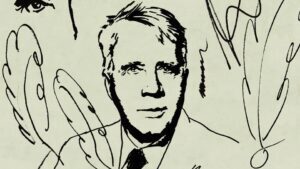
A brand new Robert Frost poem — 107 years old
“Nothing New” was written by Robert Frost in 1918 and was published for the first time in The New Yorker’s Anniversary Issue.
More than 62 years after Frost died.
It’s not my favorite Robert Frost poem, but what a delight to receive something from one of our greatest American poets long after he scribbled his last line.
I have an unpublished book of poetry — mainly because no one was clamoring for it and poetry isn’t exactly awash in money — so in the unlikely event that I die someday, please feel free to drip those poems out — one at a time — every decade or so, to keep my publishing career alive, too.
Nothing NewBy Robert Frost
Amherst 1918
One moment when the dust to-day
Against my face was turned to spray,
I dreamed the winter dream again
I dreamed when I was young at play,
Yet strangely not more sad than then—
Nothing new—
Though I am further upon my way
The same dream again.
February 24, 2025
Confidence is born from nonconformity. And conformity, too?
PsyBlog posted a roundup of research related to conformity.
It’s a topic that means a lot to me.
Conformity has never really been my thing. In fact, it could be argued that much of my success has come from my desire to be different.
The research cited in the article about social approval was especially interesting.
The authors wrote:
People use conformity to ingratiate themselves with others. Conforming also makes people feel better about themselves by bolstering self-confidence. Some people have a greater need for liking from others, so they are more likely to conform.
But have you noticed that non-conformers are less likely to care what other people think of them?
Nonconformity and self-confidence also go hand-in-hand.
As a non-conformist, I find this supremely interesting.
Confidence — in my almost never-humble opinion — is one of the most important qualities a person can possess. Students who lack self-confidence have a far more difficult time learning because their willingness to take risks, make mistakes, and experiment with new ideas is significantly reduced when they don’t feel good about themselves and their work.
I spend more time than you could possibly imagine helping kids develop more self-confidence. I think it’s one of the most important things I do as a teacher.
Possibly the most important thing I do.
The same holds for adults. Confidence can be a game changer for a person, so I also spend an enormous amount of time trying to build the confidence of the adults with whom I work, and there are a lot of them:
Storytellers, writers, corporate executives, business owners, entrepreneurs, artists, colleagues, and many more. A lack of self-confidence often prevents people from challenging themselves, trying new things, taking advantage of new opportunities, and doing things unknown, difficult, or anxiety-producing.
Confidence is a secret sauce that allows a person to be what they’ve always wanted to be long before anyone else agrees.
It allows a person to move through life with greater ease and comfort, taking risks, making mistakes, and challenging norms without concern over what others might think.
It allows a person to step boldly forward, absent the preparation that so many others require before taking the same step.
It saves time, energy, and resources.
It’s truly a superpower.
Conformity, it would seem, increases confidence, presumably by reducing friction in a person’s life. When you conform to those around you, you’re likely to experience less conflict and be far more likely to receive positive feedback from the masses, thus boosting self-confidence.
“I feel good about myself because the people around me look and act like me and feel good about me.”
But I’m not sure if this version of self-confidence is real.
If a conformist were to suddenly find themself in a state of nonconformity, would their confidence remain intact? If they were to suddenly move to a new geographic location, where the styles, attitudes, and dispositions of the locals are unlike their own, would they still possess self-confidence, or would their confidence only return once they adapt to the new surroundings and conform to the new ideals?
I’m not sure.
Conformity might make you feel confident, but are you expressing your true self? Are you feeling good about yourself or only good about how you compare to those around you?
I’m also not sure.
However, the research also shows that the willingness and ability to avoid conformity can also greatly increase self-confidence, which sounds right to me. I’ve garnered a great deal of self-confidence through my willingness and ability to swim against the stream, stake out new ground, and avoid the tug of the masses.
I was a Yankees fan in a family, town, and state dominated by rabid, insane Red Sox fans.
I was the only boy in my school who played the flute.
I was suspended during my freshman year of high school for “inciting riot upon myself” after passing out “Seniors are Wimps” flyers and buttons at the doors of my high school.
I was the first kid in my Boy Scout troop to attempt to cook a campfire pizza.
For more than a year, I read books upside down to annoy my teachers.
I didn’t drink alcohol until I was nearly 20 years old. Never smoked or used an illegal drug. Never entered a strip club. While my friends were doing many of these things, I did not. I would be mocked and teased at times, and a few of my relationships suffered as a result, but I always felt great about myself and my decisions, regardless of the peer pressure leveraged against me.
If you know me today, you know little has changed in terms of my willingness to resist conformity to traditions, expectations, and the opinions of others.
I routinely annoy and even anger authority figures with my unorthodox opinions and methods.
My clothing often fails to conform to the expectations of the moment.
I push back on conventional wisdom whenever I can.
I try to bend or break rules and traditions when I deem them counterproductive or annoying.
“Only you, Matt…” are three words I hear a lot these days—twice last week.
Nonconformity remains the fount of my self-confidence. Or perhaps the indication of it. Or both.
But here’s perhaps the most important part:
But the source of self-confidence is irrelevant. Possessing self-confidence is the goal.
For some people, knowing that they fit in appears to grow self-confidence.
For others like me, knowing that I don’t need (or even want) to do the same.
This fascinates me because my clients constantly ask me to teach them self-confidence. Industry titans — people who you would think are as self-confident as anyone on the planet — have routinely asked me to help them find self-confidence:
Develop a course.
Write a book.
Teach a workshop.
Coach me on becoming more self-confident.
Recognizing my self-confidence — through my willingness to say the hard thing, perform onstage without any nervousness, engage in storytelling improv in front of hundreds of paying customers, and always look to do the next scary thing — dozens of business people have repeatedly asked me for lessons in self-confidence.
Up until recently, I told them confidence can’t be taught.
I’m starting to think it can. Over the course of my career, I’ve helped many students become more confident.
So why not adults, too?
If you have thoughts, resources, or ideas on the subject, send them my way.
It’s why I’m reading, thinking, and writing about self-confidence. I hope to gather enough strategies and techniques to help others move through this world, feeling better about themselves and caring a lot less about others’ thoughts and opinions.
When you can ignore the opinions of others, follow your own internal compass, find balance through perspective, and enjoy the self-assurance arising from an appreciation of your own abilities, you can truly possess a superpower.

February 23, 2025
Jesse Eisenberg wisdom
In an interview, I heard actor and director Jesse Eisenberg say:
“I don’t understand why anyone with so much money doesn’t want to spend their life helping others.”
I love this thought. So simple and so true.
I met Jesse Eisenberg a few years ago at a book party. Miraculously, he knew me. “Matt the storyteller!” was how he referred to me as he struggled to get his baby into a stroller.
He had heard me on a podcast.
He was exceedingly kind and thoughtful that night, so it’s unsurprising that he would think like this.
And it’s a damn good question:
If you have a billion dollars or more—multigenerational wealth—how could you not spend your life helping others?
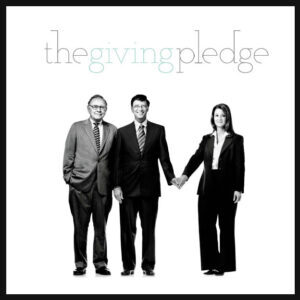
Happily, it sometimes happens. I work with two billionaires who have signed Bill Gates, Melinda Gates, and Warren Buffet’s “Giving Pledge.” This pledge asks billionaires to publicly commit to giving the majority of their wealth to philanthropy during their lifetimes or in their wills.
The two billionaires with whom I work are in the process of giving a large portion of their money away within their lifetimes. They spend much of their time and energy determining the most effective means of philanthropy.
They want to spend their money wisely.
So good people with enormous piles of money do exist. I know some of them personally. They are not unicorns.
But there are not nearly enough.
For every billionaire who has signed the Giving Pledge, many—and probably most wealthy people—are investing in accumulating even more wealth and power.
The current Trump cabinet is filled with them. Thirteen of the fifteen cabinet secretaries are billionaires—far more than any presidential cabinet in history—and many are eagerly dismantling key federal government components built to help those in need here in the United States and abroad.
Sitting atop a pile of money, they are ending the funding for critical care initiatives.
Thanks to their efforts, greater numbers of poor and sick people will die in the future. And in the process, their piles of money will grow longer.
Eisenverg’s question is a good one:
“I don’t understand why anyone with so much money doesn’t want to spend their life helping others.”
A different way of phrasing that question might sound something like this:
“What the hell is wrong with these monsters?”
February 22, 2025
How many books did you read last year?
A new survey found that 20 percent of American adults were responsible for 75 percent of the books read in 2024.
These are our greatest American heroes. As an author, reader, and patriot, I salute these cultural and intellectual warriors.
Breaking down that data:
38 percent of Americans said they read zero books in 2024.
These are likely our serial killers, bigots, con artists, humblebraggers, New York Jets fans, people who use speakerphone in public, and members of the Trump administration
28 percent said they read one to four books in 2024.
These are our underachievers. They aren’t terrible people, but they are likely spending too much time staring at small screens, playing meaningless video games, and scheduling useless meetings. They must toss aside their childish and foolish ways and make more time for books.
14 percent said they read five to nine books in 2024.
These are good, decent human beings who spend a reasonable portion of their days engaging in meaningful endeavors. These people make for excellent friends, reliable coworkers, and are often beloved by their in-laws.
10 percent of Americans read 10 to 19 books in 2024.
These are our overachievers—admirable people who understand the value of accumulating knowledge, honing their ability to focus and attend, and having interesting things to say. These people are likely high earners engaged in many charitable endeavors who make outstanding marriage material.
7 percent reading 20 to 49 books in 2024.
I fit into this category.
I read 28 books in 2024.
My fellow readers and I obviously love reading and seek to expand our understanding of our world at all times. We are the people who know that the more we know, the more likely we are to succeed.
We are almost always the best people to invite to a party.
The most likely to rescue a puppy that’s fallen through the ice.
If your pilot and copilot both suffer from simultaneous bouts of narcolepsy, we can probably land the plane.
We are always good-looking, hilarious, and insightful.
We smell great.
We also don’t make excuses about not having enough time to read because we understand that time is simply a matter of prioritization.
For example, the average American spends 2 hours and 15 minutes on social media every day.
I spend about 5-10 minutes per day at most, which gives me more time to do many things, including reading.
You have enough time to read. You simply allocate your time to other terrible, meaningless, mind-numbing endeavors.
As Freddy Mercury once said:
“We are the champions, my friends
And we’ll keep on fighting till the end
We are the champions
We are the champions
No time for losers
‘Cause we are the champions of the world.”
4 percent read 50 or more books in 2024.
I’m not quite sure what to think of these people. They are essentially reading a book per week. As someone who admittedly reads exceedingly quickly, I can’t even imagine doing this. As an English major in college, I was reading 2-3 books per week at times, but that was required reading, so it often sucked a bit of the joy from the process.
These are clearly dedicated readers, but I worry:
Are they leaving their homes?
Exercising?
Bathing?
Eating?
I hope so. But I worry that they might not be noticing the change of seasons.
Here’s some good news:
The percentage of Americans who read at least one book increased from 54 percent in 2023 to 63 percent in 2024.
I’ll admit that 63 percent is still a pathetic number, but it’s better than last year, so I’ll celebrate progress in hopes it continues.
February 21, 2025
I disagree with Shakespeare
“Abide the change of time,
Quake in the present winter’s state and wish
That warmer days would come.”
— William Shakespeare from “Cymbeline”
As much as I love Shakespeare — I’m currently reading “Measure for Measure” for pleasure — I don’t think “quaking” and “wishing” are the ways to address our “present winter state.”
And admittedly, it’s quite the “winter state” we face.
I’d advise something more active and productive.
Instead…
Do good work.
Help your friends and family.
Help those who can’t help themselves.
Speak for those who are afraid to speak.
Defend those in need of defense.
Advise those in need of advice.
Afford grace to those who have been misled.
Support those fighting the good fight.
Plan for a better future.
Find allies and rally support.
Make your enemies uncomfortable.
Resist whenever possible.
“Quaking” and “wishing” are what our enemies want you to do.
It’s far too easy to defend against quaking and wishing.
Instead, do every tiny and enormous thing you can to hold back the tide and bring forth goodness and light.
February 20, 2025
Why so many young, single people on the planet?
A recent YouGov survey found that 42 percent of adults are currently unpartnered.
No romantic entanglements of any kind.
That seems like a large number.
Almost half of adult Americans are not currently in a romantic relationship?
Even more surprising — shocking, really:
Young people are far more likely to be unpartnered than any other age demographic, with 88 percent of men ages 18 to 24 and 83 percent of women ages 18 to 24 reporting not having a partner.
That’s a hell of a lot of young, single people.
Thinking back on my life, the longest I went without a girlfriend (once I began dating in high school) was about a month.
Maybe two.
When I asked Elysha how often she was without a boyfriend once she started dating, she replied, “Never.”
Perhaps a little too quickly for my liking.
When I was 18-24, I think most of my friends probably would’ve said something similar.
So…
What the hell is going on with young people today?
I understand that some of those 18-24-year-olds in the survey were probably between relationships when they reported being unpartnered, but 88 and 83 percent are considerable numbers to all be unpartnered simultaneously.
I don’t think 88 or 83 percent of my friends were ever unpartnered when I was 18-24.
I don’t think half of my friends were unpartnered at any one time when I was 18-24.
I certainly had friends who struggled to find romantic partners, but most seemed to be romantically linked to someone most of the time.
Has dating collapsed — at least with younger people? Are romantic relationships dying? And if so, why?
What the hell is going on?

February 19, 2025
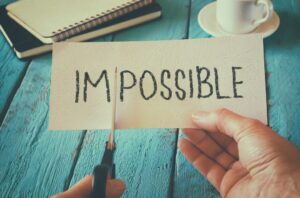
Unlikely but not impossible
“Make not impossible
that which but seems unlike.”
Shakespeare — “Measure for Measure”
I agree with Shakespeare. Wholeheartedly.
The chasm between “unlikely” and “impossible” is immense, though too many people see them as oddly adjacent.
Nearly synonymous.
As a result, dreams are abandoned. Hope is lost. Surrender is inevitable.
Understanding the enormous difference between unlikely and impossible is the difference between dreaming and dying.
It’s served me well.
It was unlikely—while all of my friends were attending college and I was scraping by as a McDonald’s manager—that my dream of someday becoming a school teacher would ever come true. It was even less likely when I was homeless, jailed, and facing trial for a crime I did not commit.
But I eventually made it to Manchester Community College at age 23.
I made it to Trinity College and St. Joseph’s University when I was 25.
I graduated with an English degree and teaching certificate when I was 28 and became a teacher that same year. I’ve taught in the same elementary school for the past 27 years and in the same classroom for 24 of those years,
In 2005, I was named Teacher of the Year in my school district and was one of three finalists for Connecticut’s Teacher of the Year.
While teaching at my school, I met Elysha and some of my closest friends.
I was seven years behind most of my friends who went straight from high school to college, and I dealt with some unexpected struggles along the way, but I never stopped believing that it might someday happen, so I never stopped trying to make my dream come true.
Unlikely but not impossible, so I never stopped trying.
It was unlikely for me to ever publish a book with a major publishing house like Doubleday, St. Martin’s Press, or New World Library. It’s unlikely for most people. Finding a literary agent and selling a book to a major publisher is the steepest of steep climbs, especially for someone who came from nothing and knew no one.
I knew it was unlikely, but I also knew it wasn’t impossible, so I never stopped trying. I’ve written every single day of my life since I was 17 years old without ever missing a day. At age 37, I finally published my first novel — “Something Missing” — with Doubleday.
My tenth book—my first middle-grade novel—will hit bookstore shelves later this year. I’ve published novels and nonfiction with all the major publishing houses listed above.
My novel “Memoirs of an Imaginary Friend” became an international bestseller and has been translated into more than 25 languages.
Unlikely but not impossible, so I never gave up. Never stopped writing.
When I began competing in Moth StorySLAMs in New York City, the record number of wins was 25. I knew how unlikely I was to match or surpass that number. I was told that 25 wins was “untouchable.”
No one had even come close to matching that total.
Last year, I won my 60th and 61st Moth StorySLAMs alongside 9 GrandSLAM championships.
I knew it was unlikely but not impossible, so I never stopped trying. Never stopped taking the stage and competing.
My new goal is 100 wins.
Also unlikely but not impossible, so I press on.
I knew it was unlikely that Elysha Green would ever date me. She was, in my estimation, a million miles out of my league.
She still is.
She was also engaged to be married when I met her.
Dating her was so unlikely that when I told our principal that we had begun dating — a full year after she had broken off her engagement — he thought it was an April Fool’s joke.
“Like Elysha Green would ever in a million years date Matthew Dicks!” he said to me and laughed as he walked away.
Thirty months later, he would officiate our wedding. In July, we will celebrate 19 years of marriage.
Unlikely but not impossible, so I never gave up hope.
This isn’t to say all of my unlikely dreams have come true.
I know it’s unlikely that one of my solo shows will end up on a Broadway or off-Broadway stage, but I continue to try to make something so undeniable that a Broadway producer can’t help but want it.
I know it’s unlikely that I will lower my golfing handicap to single digits, but I continue to take lessons and practice relentlessly.
I know it’s unlikely that an editor will agree to publish one or more of my picture books — they’ve rejected every one so far — but I keep writing and pitching them despite the rejections from shortsighted editors who fail to see my genius.
I know it’s unlikely that I will ever tour large theaters across the country with my solo show, but knowing that others have accomplished this goal, I know it’s possible.
I know it’s unlikely that any of my books or screenplays will be turned into actual movies, but it’s not impossible, so I keep writing and pitching.
I know it’s unlikely that my father will ever respond to the letters I send him, but I know it’s not impossible, so I continue to write.
Shakespeare almost certainly knew that it was unlikely but not impossible that his work would be remembered 500 years after his death.
Yet his plays are still being read and produced today, including “Measure for Measure,” which I’m reading right now just for the joy of it.
“Unlikely but not impossible” — the first ingredient in making a dream come true.
February 18, 2025
What is your favorite form of haptic nostalgia?
Haptic nostalgia: A form of sensory memory specific to touch stimuli that no longer exist in your life or on the planet.
A new term for me.So…What’s your favorite instance of haptic nostalgia—the poignant memory of the physicality of an obsolete thing—like dialing a rotary phone?For me:The shifting of a stick on my many former cars with a manual transmissionThe clunk of the channel changer on an ancient tube TVThe metallic click of the high beam button on the floor of my 1987 Chevy MalibuThe slide and gentle click of the reset button on an Atari 2600The feel of the bend and recoil of a fiberglass pole vaulting pole