Matthew Dicks's Blog, page 24
March 28, 2025
Think first. Then act.
Thinking about your goals changes how you see the world. It also dramatically increases your willingness and ability to accomplish those goals.
Case in point:
Researchers flashed circles on a screen in front of test subjects. One circle was slightly different from the others—brighter or smaller.
When asked what they saw, the subjects did not notice that one circle differed slightly from the rest. They reported seeing a field of identical circles.
But when researchers asked the subjects to prepare to point at or try to grab circles — absent of what they should look for or expect to see — something amazing happened.
If they simply thought about pointing at the circles, they became better at noticing the brighter circles.
If they were told to think about grabbing a circle, it was easier for them to identify the smaller circle.
By assigning subjects a goal — without telling them how these circles differed — subjects inherently saw the world in a better, more precise, more specific way.
This response is likely biological in nature. When humans think about goals, their brains release dopamine, which makes them feel better and more motivated about completing the task.
Just thinking about your goals dramatically increases your chances of accomplishing your goals.
Dr. Alex Korb, a neuroscientist, explains it this way:
“The goals and intentions you set in your prefrontal cortex change how your brain perceives the world. Sometimes, when you feel like everything is going wrong, and you’re not making any progress, and everything is awful, you don’t need to change the world. You can just change the way you perceive the world, and that is enough to make a positive difference.”
I couldn’t agree more.
My lifetime mantra, given to me by my fourth-grade teacher decades ago, has been, “A positive mental attitude is your key to success.”
I’ve always known this to be true, but now science confirms that belief.
Also, it seems that listing my yearly goals, posting them online, and reviewing them monthly helps a lot, too. Thinking about my goals makes it more likely that I will achieve my goals.
None of this should be surprising. So much of our lives are governed not by our circumstances but by the way we think about, approach, and address our circumstances.
Your mental framing, disposition, and attitude are critical to your success.
Every morning, I ask my students how their afternoon and evening were on a scale of 1-5, 1-10, or 1-17 by holding up numbers equal to their assessment.
Watching kids try to show me the number 17 on their fingers is always amusing.
But when a student holds up a 1, I always interrogate the nature of that single digit, and almost always, the student says something like:
“My mom served green beans for dinner last night, and I hate green beans.”
“I had to go to soccer practice in the rain.”
“My sister tattled on me.”
In these cases, I always try to teach the student to think differently about the day before:
“Yes, it wasn’t ideal, but was it really so terrible? Because a 1 represents your very worst day possible. The single digit should be reserved for things like the death of a pet, the burning down of a home, a bout of norovirus, a Celtics defeat, and the like.”
I’ll go on…
“Yes, I hate green beans, too, but I don’t let them ruin my day. I can’t stand soccer, but if I had to play or watch it in the rain, it wouldn’t be the worst thing ever. And yes, it’s super annoying when your sister tattles on you, but you have a home, a healthy family, and friends. Your dog is alive. You get to play a sport you love. You’re not hungry or sick. Maybe your day wasn’t as terrible as you once thought.”
Rather than catastrophizing green beans, I try to get kids to reframe their day more accurately.
As Dr. Alex Korb said:
“You can just change the way you perceive the world, and that is enough to make a positive difference.”
I agree.
Got goals?
Spend time thinking about them, and your chances of success will increase dramatically.
Don’t have any specific goals?
Find some. Quickly. Life is always better when you’re daring enough to dream.



Educational priorities set straight
After 27 years of teaching, I can say with absolute certainty that reading, writing, and mathematics are critical to a child’s success.
Science, social studies, and all of the other elements of the curriculum, too.
Maybe not calculus. Late 18th-century sentimentalism also kind of sucks.
But the rest is all essential and good.
But when it comes to my role as a teacher and my responsibilities to students, academics are not nearly as important as the following, in this approximate order:
Guaranteeing a child’s physical and psychological safetyGrowing self-confidenceModeling kindnessFostering a love for schoolImproving conscientiousnessEnsuring happinessIncreasing a passion for learningEncouraging tolerance and collaborationDeveloping a strong work ethicNurturing self-controlExpanding social skillsMaking kids laughAll of these come before everything else.
If necessary, instead of everything else.
Not everyone would agree with this, of course. It’s hard to imagine placing reading, writing, and math at the bottom of my list, but when it comes to being a successful, happy person in this world, the dozen things I’ve listed are more essential to learning than anything else.
None of the items on my list can be objectively tested, charted, or monitored with data and trend lines, which makes my assertion likely unpalatable to shortsighted, know-nothing, data-driven administrators and so-called experts.
Unfortunate but okay.
In my long career, most teachers and administrators feel similarly. Parents, too. Those that do not are often easily ignored.
Ultimately, a teacher’s moral and ethical imperative is to always do the right thing for students, regardless of what some adult in some office who has forgotten what it’s like to be a kid or work in a school thinks.

March 27, 2025
You never know where your words will go
I write a lot.
Ten published books and another coming out this year.
Five currently unpublished books, plus about a dozen unpublished picture books and another half dozen partially written novels and memoirs.
I’ve also been the humor columnist for Seasons magazine for 11 years and have written columns and articles for many publications over the years, including Slate, Parents magazine, the Hartford Courant, and more.
Also, of course, this blog, with a post every day without missing a day for more than 19 years.
That’s a lot of words, and it doesn’t include the hundreds of stories and speeches I have performed on stage or the things I have written for my businesses.
When you put your words into the world, you never quite know what may happen. Sometimes, I write something that I am sure is genius, and it barely gets a nod from my audience. Other times, I write something that I consider fine but not earth-shattering, but it somehow explodes on the internet.
You just never know, which is why I tell all creators to keep making stuff. Be relentless in your efforts to put as many things in the world as possible, whether those things are words, paintings, videos, podcasts, asparagus plants, songs, jokes, loaves of bread, 3-D-printed pencil boxes, wood carvings, floral arrangements, wallpaper designs, or whatever your particular jam is.
Make lots and lots and lots of stuff.
You never know what might happen.
Recently, I received an email from someone who said this:
I just wanted to let you know that I loved your article from 2017 called What Am I Thinking? It’s been hanging on our family’s fridge since 2017. My kids are now 21 and 17, I guess it time for me to take the article off the fridge!
I have no idea what that article is about, nor do I recall writing it. But I published something — probably in a magazine — that has resided on someone’s fridge for eight years.
What an honor.
Another reader recently wrote to me, telling me that a blog post I wrote may have saved his life.
It was astounding to read those words. I never write anything, thinking it might make that kind of a difference in someone’s life.
Last night, I performed at a Moth StorySLAM in Boston.
I won, by the way. Hooray.
As I was leaving the venue, a woman stopped me and said, “I loved your story. By the way, are you the author of “Memoirs of an Imaginary Friend?”
“I am,” I told her.
“I loved that book,” she said. “I read it when I was a kid, and that book made me fall in love with reading.”
I published that novel in 2012. It was initially written for adults but crossed into the young adult market, where it is still read today. Clara and Charlie’s middle school actually include it in their curriculum, not realizing that the author sends his kids to their school.
I had no idea that my adult novel would someday find its way into the hands of kids, and I never could’ve imagined that it might help a young woman fall in love with reading a decade ago.
We sold the Ukranian rights to “Memoirs of an Imaginary Friend” just this week, bringing the total number of languages in which the book has been published to 23, which was also beyond my comprehension when I wrote it.
You just never know.
So make things—lots and lots of things. Be relentless and unwavering in your efforts, even when no one is paying attention. Write your words, paint your paintings, grow your vegetables, build your things, invent your inventions, bake your muffins, knit your mittens, play your songs, and do whatever else fills the world with things that once didn’t exist.
Some will tragically be ignored.
Some will be noticed by a few.
Occasionally, you’ll make a splash.
Either way, remember that you never know what might happen, which is why you should never stop.

March 26, 2025
Eating vs. working
The next time you’re in a restaurant and a server looks at your nearly finished plate and asks, “Are you still working on that,” the correct response is this:
“I’m eating. It’s not work.”
I know it’s a small thing, but words matter, and asking me if I’m “still working” on my meal is a ridiculous question.
Let’s put an end to this madness now.

March 25, 2025
Choosing the right strategy
When determining the best strategy in a competition of any kind — sport, game, business, or a simple verbal argument — it’s often best to ask:
What strategy would my opponent be rooting against?
What would my opponent least want me to do?
Then do that.
I developed this strategy when debating in college and still use it today.
All the time.
This is why the best response to a passive-aggressive person is to be aggressive and direct. Passive-aggressive people avoid this approach because they don’t like it. It makes them uncomfortable, which is why it’s ideal for you.
If you become known to them as aggressive and direct, passive-aggressive people will often avoid you entirely.
Two people in my life are avoiding me for this very reason, and I couldn’t be more pleased.
Along similar lines:
The best response to someone yelling at you is to respond calmly, slowly, and softly. Doing so clearly illustrates that the person yelling sounds out of control and ridiculous.
Stupid, even.
Best of all, it makes them feel foolish, which drastically hinders their ability to argue effectively.
The best response to someone calling you an unkind name is to thank them for their feedback and even agree with them. Their goal is to injure you with words, damage your psyche, and cause you emotional pain. By agreeing with their insult — sincerely and wholeheartedly — you steal their power and leave them defenseless.
I teach my students to use this strategy, and it works beautifully.
Unfortunately, they frequently use it on me as well, which is both validating and annoying.
The best response to someone repeating the same thing over and over to you is to point out their use of repetition and ask them if they’re okay. The point of repetition is to drive their point home and perhaps drown you out. Instead of responding similarly, don’t argue their point at all.
Instead, point out the oddity of their repetition and ask if they need help.
They want you to draw your sword so they can beat down upon it.
Instead, offer concern and a Band-Aid.
So…
When confronted by an opponent, ask yourself what they hope to achieve and offer them the opposite.
What are they rooting against?
What would they least want you to do?
Then do all those things.
Every time.

March 24, 2025
Exercise can change your life. Excuses might kill you.
It’s been well-known for many decades that exercise benefits our health.
We knew from studies in the 1950s comparing London bus drivers and London bus conductors who lived in identical environments, except that bus drivers were sitting all day and the conductors were standing,
The heart disease rate among the drivers was twice that of the conductors.
However, recent research has revealed new insights into how profound exercise can be for the human body.
A recent study examined rats—a sedentary group and a group that underwent eight weeks of aerobic training on a treadmill.
The results?
In the words of one researcher:
“The thing that we were really surprised to find was that the rats turned into almost different beings. Exercise was that potent. Every single tissue we looked at was something completely different from before. It changed the entire molecular makeup of the individual organs of the rats in a very positive direction.”
And that was in just eight weeks.
Americans could take a lesson from these researchers and their rats.
Only 46.9% of American adults meet the recommended guidelines for regular aerobic physical activity.
Only 24.2% of adults meet the recommended guidelines for both aerobic and anaerobic exercise.Even worse, 25.3% of Americans are physically inactive on a daily basis.Knowing what we know about the benefits of exercise, these statistics are disastrous for long-term health outcomes.Someone recently told me that they didn’t have time in the day to exercise. I scoffed at this notion, knowing how people waste and abuse time.We all have more time than we think. We simply fritter it away on mindless nonsense, meaningless pursuits, poor decision-making, and a lack of planning.Exercise is far too important to fall victim to our inefficient use of time.When I suggested that 20-25 minutes per day is all you need to meet the recommended guidelines, they scoffed again. “It’s too cold to walk or jog, and there’s no way I could get to a gym every day.”“What about dancing?” I said. “You could dance to six or seven songs per day in your kitchen, and that would be enough to meet the recommended guidelines. You don’t even need to do it all at once. Maybe dance to three songs before dinner and three songs after dinner.”“Be real,” they said.I stopped arguing. I didn’t know them well enough to pursue the point, but more importantly, some people simply don’t want to exercise despite the adverse health outcomes associated with inactivity. In response to their lack of desire, they create fiction about their lives that allows them to rationalize not having the time or energy to do so.These are the “Yeah, but…” people of the world.The people who have an excuse for everything.I try to avoid these people whenever possible. They are annoying and implacable. Sadly, in this particular case, their “Yeah, buts…” will dramatically increase their chances of cardiovascular disease, type 2 diabetes, obesity, cancer, osteoporosis, depression, and anxiety.
Also premature death.
Dancing in your kitchen for 20-30 minutes per day seems like a small price to pay to avoid these adverse outcomes and perhaps live a longer, healthier life, but then again, I was apparently not being real.

March 23, 2025
Sleep and the power of positive thought
A recent study on the placebo effect of sleep-tracking devices — often called “orthodontia “— has shown that sleep trackers can influence people’s perception of sleep quality, even when the data isn’t accurate.
Participants were given false feedback about their sleep quality after undergoing a sleep-tracking session.
Those who were told they had slept well (even when they hadn’t) performed better on cognitive tests, while those who were told they had slept poorly performed worse.
Thus, believing you had a good sleep could impact mental performance positively.
For years, I’ve been inviting friends and colleagues to join me in New York City, Boston, and other locations for Moth StorySLAMs, comedy shows, concerts, sporting events, and the like. Often, these shows and games happen on weeknights, meaning we leave shortly after the work day ends and return home after midnight.
Sometimes well after midnight.
Many of my friends make these trips with me, and some of my fondest memories come from these trips into the city on a Tuesday or Thursday night. But many of my friends and colleagues have declined my offer, telling me they can’t be out late on a work night and claiming they can’t even think about going to work the next day on four or five hours of sleep.
My argument has always been this:
You’ll never remember the day you spent at work, a little groggy and a little sleepy, but you’ll likely remember the fun we had in New York or Boston or Providence or New Haven for a long, long time. Don’t let your need for a comfortable day at work ruin your chance to make a lasting memory with friends.
Don’t let a few hours of sleep keep you from fun.
That argument occasionally works, but it often falls on deaf ears.
But here is what I’ve always thought but almost never say:
Don’t focus on the loss of sleep. Let that go. Pretend that you slept enough the night before. Decide that four hours of sleep is fine every now and then, and move on.
I certainly can’t do three or four late nights in a row without feeling its effects on my mind and body, but a night on the town at the expense of a few hours of sleep?
Maybe even two?
You can do that if you simply apply the right mindset.
Think positively. Instead of four hours of sleep, you slept 240 minutes. That’s a lot of minutes! It’s half a workday!
It’s probably something you did all the time when you were younger. Are you really so old now that you can’t pull off a late night on the town?
No, you are not. You just think so. Tragically so.
People don’t grow old. They start to think they are old, and this self-fulfilling prophecy takes care of the rest.
Don’t allow that to happen to you.
Or even better, walk into your workplace the next day knowing you slept three, four, or even five hours less than your colleagues, but while they were sitting at home, watching television, climbing into bed around nine or ten o’clock, you were seated in a theater in a vibrant city amongst other adventurers, laughing at comedy, watching storytellers ply their craft, witnessing athletic greatness, or listening to a musician perform.
Maybe you even took the stage yourself.
You also spent five or six hours in a car with friends, talking about life, cracking jokes, telling stories, learning new things, and cementing bonds that could last a lifetime.
When was the last time you spent five or six hours with friends, just talking, telling stories, and enjoying one another’s company?
But I almost never make this argument because I’m almost certain it will fall on deaf ears. Responses to this argument include:
You may not need eight hours of sleep, but I do.
Your biological requirements are different than mine.
Sleep is too precious not to get enough every night.
This last argument — sleep is too precious — is nonsense.
I treat sleep more preciously than almost anyone I know, and the sleep researchers at Yale University agree. I wrote an entire chapter in my book “Someday Is Today” on the importance of sleep, and when I interviewed the foremost expert on sleep at Yale to discuss the chapter, he agreed that my sleep hygiene is perfect.
I know what it takes to sleep well.
These “sleep is too precious” people are often the same people who:
Watch television or read in bedStare at phone and computer screens an hour or less before bedEat a meal or snack three hours before bedSleep in on the weekendsUse snooze alarmsAll things proven to seriously damage the quality of your sleep.
These are the same people who toss and turn throughout the night, spend half an hour falling asleep, and lounge in their bed after waking for 15 or 30 minutes.
Yet they can’t surrender a few hours of sleep to spend time with friends.
Enjoy a show.
Witness something that will never happen exactly the same way again.
Make a memory.
I rarely make this argument because I don’t choose arguments that go nowhere, but given this new research on the power of the placebo effect on sleep, I may reconsider.
If believing that you have slept well produces the effects of sleeping well, even if you haven’t slept well at all, can’t a mindset shift produce the same results?
Believing that you can occasionally sleep a little less and enjoy life a little more might be all it takes to forgo the incessant need to sleep eight hours on a workday and get your ass out of the house and into the world again.
Not always.
Not often.
Not even occasionally.
Just from time to time.
Believing that you’ll be just fine sleeping a little less might be all it takes to join the adventurers — those who are not confined in their amusement by work the next day.

March 22, 2025
The sign of a coward
The Pentagon—under the orders of the Secretary of Defense—removed references to the military careers of Jackie Robinson, the Tuskegee Airmen, the Navajo Code Talkers, Vietnam-era Medal of Honor recipient Maj. Gen. Charles Calvin Rogers, and the Japanese American 442nd Combat Regiment from World War II.
Can you imagine how fragile and pathetic you must be to feel threatened by historical references to war heroes whose skin isn’t the same color as yours?
Can you imagine how small and frightened you must be to want to erase references to war heroes simply because they aren’t white?
It’s pretty easy to spot a coward these days:
It’s anyone who tries to erase a past that makes them feel uncomfortable about who they are or what they have or have not accomplished.
The Pentagon later restored some of these web pages after public outcry, but removing these references says it all.
Good-for-nothing cowards. Bigoted little men and women.
Mostly men.
Small, sad cretins lacking self-worth, self-love, and self-confidence who must instead use their authority to shape the world into something that makes them feel better about themselves.
Oh, the Pentagon has also restored images of the Enola Gay — the aircraft that dropped an atomic bomb on Japan during World War II — after removing images of that historic plane because of the word “gay.”
No joke.
Not only is our government being run by honest-to-goodness cowards and bigots, but they are incompetent buffoons, too.

March 21, 2025
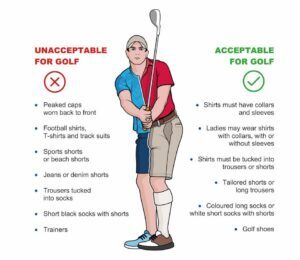
Stupid dress codes
My friend’s golf club, which I may want to join one day, has a stupid rule:
You must wear a belt and tuck in your shirt while playing golf.
Can you imagine insisting that a grown-ass adult tuck in their shirt to play a game?
I hate this nonsense.
While playing golf in Florida last month, I was asked to remove my hat while eating breakfast in the dining room before our round.
Also so stupid.
I was about to play golf. I was wearing shorts, a shirt, and golf spikes.
But someone is going to tell me — a grown-ass man — to remove my hat because it’s what?
Offensive?
Distracting?
Ruining the atmosphere of the breakfast buffet?
Degrading the reputation of the establishment?
You’ll serve me alcohol at 8:00 in the morning, but I can’t wear the hat I’ll be wearing all day?
Stupid.
I’ve heard all the arguments favoring dress codes, and I’m not implying they are all wrongheaded. Some dress codes certainly serve a purpose.
But most are very stupid.
Yes, when I arrive at a golf course, I should be wearing a shirt — preferably one that does not contain an offensive or inflammatory message. If the club requires that shirt to have a collar, so be it. It’s a stupid and purposeless requirement, but it’s a small price to pay to prevent fussy little men from throwing their little tantrums.
I’m even willing to accept that I should wear a decent pair of pants or shorts. No ripped jeans or cut-offs, though I wouldn’t mind if they were allowed, too. I wouldn’t wear them to play golf, but I wouldn’t begrudge someone else from wearing them.
Also, no flip-flops, bathing suits, or sleeveless shirts. All are fine by me. Some rules are possibly stupid but not unreasonable.
And this hat rule and belt rule most definitely are.
These are the same golf courses that allow someone to drive their cart to the first tee with a dozen beers in a cooler but require me to keep my shirt tucked in while swinging my club.
You can get legally drunk for the next 18 holes but must conceal the bottom fringe of your shirt inside your pants, damn it!
So dumb.
People in favor of these arcane rules are losing, of course. Every year, these nonsense rules erode a little more. Standards are relaxed. Nprns are softened. Greater allowances are made. Some see this as an erosion of decency and decorum, but I see it as an erosion of illogical, unnecessary, and offensive rules designed to make people feel fancy and special for no earned reason.
They serve as barriers to the masses. Walls protecting the privileged from the plebians. Structures designed to make people in a certain income bracket feel a false sense of elitism, prestige, and nobility.
It’s all so dumb and elitist and illogical.
There is nothing inherently different, for example, between denim and khaki, except that denim was initially worn by people mining gold and silver, so it’s still perceived — more than 1o0 years later — as blue-collar.
Lower class.
Counter culture.
Unfit for fancy people in fancy places doing fancy things.
So stupid.
The day may come when I decide to join my friend’s golf club because I like playing golf and like playing golf with my friend. If and when that happens, I’ll be tucking my shirt into my pants and shorts when playing golf, and I will be very annoyed.
At least until I get the stupid rule changed.
It’s hard to imagine that many club members are married to this bit of stupidity. My friend is not. He hates the rule as much as me.
Most members probably hate it as much as I do and are simply unwilling to rock the boat by speaking up.
I never mind rocking the boat. I love rocking boats. Almost as much as I love playing golf.
March 20, 2025
Kindergarten dumbness