Angela Slatter's Blog, page 75
September 1, 2015
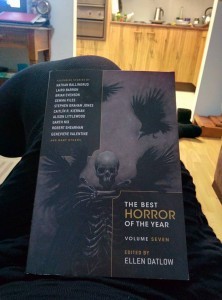
The Best Horror of the Year Volume Seven
 Last night, due to a mix-up with my postal address, I had to go over to Norman Park to the house I lived in for eight years before I moved in with the Tech Badger.
This was no hardship, because it was a chance to see the old place again and the giant jacaranda tree out the back. Both feature in my debut novel, Vigil, and the tree plays a special role in the sequel Corpselight.
It was very dark, but I shone the torch from my phone on the tree … it was a good/bad idea. It looked creepy in that light, the wind was shifting branches, making noises, another tree from next door had fallen over at some point in the past and its naked branches and twigs reached out for me. I walked back up the steep driveway backwards, keeping the torchlight trained on the tree. It wasn’t as friendly as I remembered it. But it will all feed into the new book, so: WIN!
And, back on topic, here is an excellent review of The Best Horror of the Year Volume Seven.


Skin Deep Launch
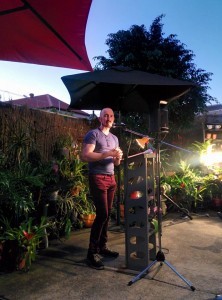
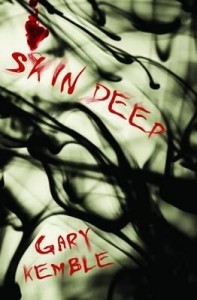 So last night, Brisneyland’s Best and Brightest (or some of them at least), headed over to Avid Reader for the launch of Gary Kemble’s debut novel Skin Deep. Ably MC’d by Master Trent Jamieson, there was much laughter, a few tears, and a lot of stuff that can be best described as “genuinely heartfelt”.
There are still some signed copies of Skin Deep left at Avid – although I warn you they were almost sold out last night. There is no truth in the rumour that those who read Skin Deep wake up with weird tattoos on their skin the next morning … no truth at all …
Kudos to Alex Adsett of AAPS and Angela Meyer of Echo Publishing for seeing the potential in this book, and mega congrats to Gary, who is a Most Excellent Author and deserves All The Su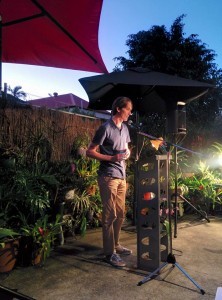 ccess.
August 31, 2015
Goodreads Giveaway: The Girl with No Hands and Other Tales
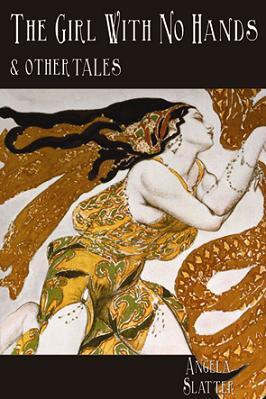 Ooops! Forgot about this in all the hustle and bustle of BWF preparation!
I’m giving away a hardcover, limited edition copy of my Aurealis Award winning collection The Girl with No Hands and Other Tales!
Go here and do the clicky thing.
Flight is done …
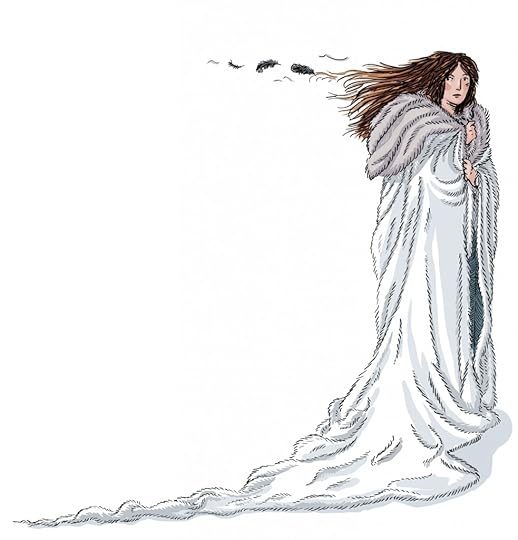
… or at least the arting side. Kathleen is now bug-eyed, twitchy, over-caffeinated and, I fear, holding more conversations than usual with inanimate objects … but she’s finished doing all the art for Flight. Now it’s off to the Most Excellent Liz and Drew at Punch Bowl Designs. Huge thanks to lovely Sue of Tiny Owl Workshop for keeping a steady hand on the tiller, and for promising cake at the launch.
I love everything about this book, but I especially love this:
The 2nd Spectral Book of Horror Stories: Robert Shearman
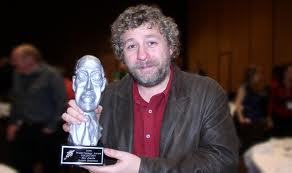 What could be better than a bonus interview from The 2nd Spectral Book of Horror Stories leading light, Mr Rob Shearman (also, coincidentally, one of my favourite people and writers)? The answer is: Nothing. Nothing could be better.
Rob’s hobbies include collecting World Fantasy Awards, Sony Awards, Shirley Jackson Awards, British Fantasy Awards, as well as multiple shortlistings. He deserves them all. He is the author of the collections Tiny Deaths, Love Songs for the Shy and Cynical, Everyone’s Just So So Special, Remember Why You Fear Me, and They Do The Same Things Different Here. He’s written for stage, radio and TV (yes, including Doctor Who) to much acclaim.
The Times Literary Supplement called him (or his work, at least): “Wildly inventive and chilling. Shearman proves himself a master at transforming our deepest fears into new and wholly unexpected forms.” Mark Gatiss called him “an addictive delight.” I just like to call him “Rob” because he answers to that.
What inspired your story “Lump in Your Throat”?
Well, not to sound too gloomy, but – there’s been a lot of death around me the last few years. Rather too much of it! In the most appalling and selfish way, a small amount of death on the periphery of your daily life can be rather helpful to a writer – you can go to funerals of distant relatives or people who were friends of friends, and observe. But it’s different when it’s close to you, of course, and different when there’s suddenly just such a lot of it. It eats away at you a bit.
My sister and I had to arrange my father’s funeral. And one of the things that struck us was that there’s this awful process in which you tidy up a person’s life for public consumption – we were answering all sorts of questions about what sort of man he was for the woman delivering the oration, and at the end of it the picture that emerged of him was so very bland and nice – a bunch of facts that had little to do with what he was like as a person. And I began to wonder why it was that death always transforms everyone into niceness – all the complexity of who we are simplified, all the rough edges smoothed over. And I thought – where do all the evil parts go? If we’re only cremating the nice bits, isn’t all the evil left over somewhere? What if the evil just carries on, somehow, surviving when all the goodness is stuck into the coffin?
That’s when I got the idea of an ordinary decent man dying, and a little homonculus version of him bursting out of the throat of the corpse – everything in him that was cruel and crass and abusive – so he could live on and tyrannise the widow forever. And the idea, too, of people sitting at funerals, all secretly knowing they have some remnant of their spouses still alive and hidden from view inside their handbags where they can be fed peanuts. It’s obvious, when you think about it.
What’s the first horror story you can remember making a big impact on you? 
I was very frightened of horror as a kid. In fact, I don’t recall ever consciously reading anything that was proper ‘horror’ until I was in my late twenties. I used to go shopping with my mother as a child, and I’d see all these lurid paperbacks in the department stores, with covers showing skeletons or women’s heads on spikes. Just the pictures would freak me. I once was so frightened by the cover of a book that was in my house my parents had to remove it from the house, because I wouldn’t sleep whilst it was under our roof. I knew there was something evil about it. It wasn’t even that horrific a cover – there was a skeleton of a Roman soldier, but his skull was several times bigger than it ought to have been. But the dissonance of the image terrified me. It’s what always gives me chills – not gore (which is unpleasant), not the threat of violence (which is exciting and dramatic); it’s the dissonance.
My earliest memory was finding Roald Dahl traumatising – because he was never marketed as horror. I saw Gene Wilder as Willy Wonka – and I knew, as every child properly knows, that the brats who get shown around the chocolate factory are being killed off one by one. To make the parents feel good we see at the end of the movie that Veruca Salt and Violet Beauregarde et al aren’t dead – but as children, we knew that was just a sop to make the adults feel better, they were dead, they were properly dead, and killed in the most disgusting of ways. For a little boy who always strayed towards plumpness, seeing Augustus Gloop get sucked up the tube from the lake of chocolate was one of the most horrifying things I have ever seen. Nothing I have ever seen since, or read – or for that matter, written – has ever been as nasty as that.
I went on to read Roald Dahl properly, of course. How could I resist? In prose form he’s even more unnerving, because his comedy is so cruel. And the Vernicious Knids from the underrated Charlie and the Great Glass Elevator were, to a seven year old, more terrifying aliens that anything Ridley Scott could dream up.
A few years ago I was staying in the house of writer Mark Morris, and I saw that he had that the book whose cover had so freaked me as a kid. He kept it in his toilet. Mark loves horror books. He keeps them everywhere. I hadn’t seen it in years, and I took it off the shelf to see what I’d found to make such a fuss about. I actually had to hold back a shriek – it still got me. And I dropped it. It fell into the toilet bowl. I had to dry it out. Don’t tell Mark.
Name your three favourite horror writers.
I’m very lucky to know and to work with a whole bunch of horror writers who are as clever, ingenious and (dare I say it) moving as anyone who’s ever written for the genre. It’s the joy of doing conventions – the world over, you meet brilliant people who inspire you. I have written introductions to three writers’ short story collections over the last few years, and they’re the three I’m going to choose. I do get asked to introduce books once in a while, and – no offence to anyone else – the trick is only to go for the writers you secretly think are actually much much better than you are. Angela Slatter, Helen Marshall and Nina Allan are so good that I not only get that wonderful thrill of awed pleasure when I read them, but I also start to question – how on earth are they able to pull that off? Their stories feel so new and bold, that you’re going into uncharted territory, and that from the moment you pick up one of their books you have to throw away the maps you own. They are absolutely astonishing, I always get so excited to read something new by them. I feel privileged not only to know each of them as a friend, but as an eager reader, wondering how they’re going to bend my imagination this time.
Is your writing generally firmly in the horror arena or do you do occasional jaunts into other areas of speculative fiction?
Honestly, I’ve always seen myself as a comedy writer. It’s where I started twenty years ago – writing these strange black comedies for the stage. Everything I write, whether it’s in prose or intended for performance, starts out with the hope I might make someone laugh. Over the years, maybe, my sense of humour has got blacker and blacker – I think the border between comedy and horror is a very narrow one. I like prodding at that border – pushing and pushing to see where the laughter stops, that point when everything breaks, and there’s nothing left but something like madness. I write all sorts of things – a lot of them aren’t speculative at all – but I think what they all have in common is I have a rather skewed look at the world. It’s a very odd world. We should celebrate it. And condemn it. And laugh at it. And be repulsed by it. Sometimes all on the same page.
What’s in your to-be-read pile at the moment?
The last half year I’ve been a judge for the World Fantasy Awards. It’s been an honour, and a fascinating experience – but there is a joy now in being set free, and being allowed to read what I want to read, at random, with no purpose! For comfort I usually retreat into nineteenth century French literature – no, really, the novels are amazing! So right now I’m hungry for a bit of Balzac and a smidgen of Zola.
The 2nd Spectral Book of Horror Stories can be pre-ordered here.
August 30, 2015
A Re-post – The Writing Life: A Really Big Echo Chamber
This is a post from a few years back, but the advice is still good and it seems like an appropriate time to re-post it given a few discussions I’ve had recently. So, read, enjoy, take note.
Here’s the thing about being a writer: we’re all terribly insecure to one degree or another. Although we’ve chosen a solitary profession, preferring largely to spend time with imaginary friends rather than flesh and blood ones, we still want some attention. Some sign that we’re not writing into a yawning void. Some sign that someone’s read our work and, just maybe, liked it … or at least didn’t hate it. We release a book and wait … and wait … and wait.
And we wait.
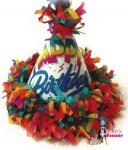
Then maybe we get despondent and we howl a little bit. Maybe throw a little pity party involving an alcohol of choice or a lot of chocolate and marshmallows, or an unwise combination of all three. We put on that crushed and crumpled party hat that we stole from a niece/nephew’s fifth birthday party, which we grumbled loudly about wearing, but secret stole away (after all the cake had been eaten and the creepy magician clown had finished his show), thinking ‘I’ve a use for this!’
 It’s one of those conical hats, with iridescent swirls of colour and no real discernible pattern; it’s got the last remnants of the multi-hued paper streamers still pouring out of the little hole in the top; and it’s got a chin elastic that has long since given up the ghost, but which you keep coz it just about holds the hat on your great melon of an adult skull.
You may even have snookered away one of those party whistles that makes a noise between a honk and a kind of baby elephant trumpeting. And you sit around the lounge room in your underwear, hat on head, whistle drooping from your mouth like an unlit cigarette, and you look at the author copies of the book you poured so much love into and you just feel sorry for yourself.
We’ve all done it, but like most experiences we actually need to learn from it and move on – otherwise we become trapped in the vicious circle of writerly wah-wah-wah. 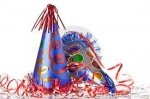
Here is the thing about books and the size of the splash they make: not all books carry the same heft and so when they get thrown into the book pond, their ripples all travel different distances.
Things that affect book reception include:
Whether you’re a Famous Author, or a Semi-Famous Author, or a Famous-In-Your-Own-Circle Author, or a Newbie Author.
Whether you’re with a big traditional trade publisher with shitloads of money to throw behind book launches, book tours, high-end ARCs, promotional packs, etc.
Whether you’re with a small independent press that simply does not have the resources to do the things that option 2 does.
Whether you, as an author, are prepared to take on some of the responsibility for promoting your book yourself – that includes activating your networks to get books reviewed, running competitions on your own website to give away copies of your book, seeking out places that will run interviews with you in print or on radio (a small indie radio program is still giving you a promotional medium you wouldn’t otherwise have had), raising your profile by writing articles about, well, anything but maybe some aspect of your writing process or something you researched for your newly released book that people might find interesting. Frankly, if you won’t work to sell yourself and your book, you’re asking for a book death knell.
Wah! I hear you say, as you gnash your teeth and beat your breast – possibly also throwing on a fetching number in sackcloth and rubbing ashes into your hair – I am not with a big publisher!
You don’t need to be.
I am with two small publishers.
I do all of 4 above.
 I also stay in contact with my publishers and we make sure the books in question are going to a whole range of awards – even if it doesn’t get shortlisted, there are still a bunch of people who’ve read the book that might not otherwise have seen it. We make sure the books go out in a regular and dignified fashion to the handy list of reviewers from around the world that we’ve pulled together – so, while there may not be a gigantic explosion of a bajillion reviews of my book all at the same time, there is a steady series of reviews over a period of time, which means at different times different audiences learn about that book. Sourdough and Other Stories and The Girl With No Hands and Other Tales were published in 2010 – they are still getting reviewed now in 2013 and still selling.
Small press is about a long game and strategy – and it involves you as the author, not just leaving everything to your publisher. Be realistic about the cycle and you will find reviews coming up at odd times, like very pleasant depth charges. And don’t just work locally – send books across the seas, into the big wide world.
Maybe one day you’ll be with a big, rich publisher who will take care of everything and all you will need to do is write your golden words and bathe in caviar whilst scoffing champagne with marshmallows in it. But until that day, as a writer your job does not stop when you write ‘The End’.
So, my friends, until that day be patient, be wise, be strategic.
And remember, you are not lost, you are not alone, you’re not writing into a vacuum – the sound of reaction hasn’t been heard because you’re writing in a really, really big echo chamber and the sound just hasn’t come back to you yet. Keep writing and keep making productive noise.
Oh, and conduct a little ceremony and burn the party hat (preferably like this). 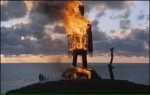
Not the whistle though, keep that – it makes noise so we know where to find you.
August 27, 2015
Fur and Feathers
Another little taster from Flight.

August 26, 2015
Brisbane Writers Festival Schedule
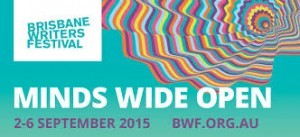 Huzzah! It’s almost time for BWF!
I’m making two appearances:
Talking Get in Trouble with the wonderful Kelly Link
Auditorium 2, SLQ
06 September
2:30pm – 3:30pm
Event #: 141
Book here.
Then we shall speed ourselves along (I will carry Kelly as she’s the special guest) to:
Ancient Myths Modern Tales
A panel which I’ll be moderating and chatting with Kelly Link, Sjón, and Holly Black about mythology, fairy tales, folk tales, and how all of those thing feed into making up new stories.
The Edge, SLQ
06 September
4:00pm – 5:00pm
Event #: 151
Book here.
Make sure you book, for there’s nothing worse than the bitter sting of disappointment that a lack of preparation and ticket brings … unless it’s the humiliation of being left behind the velvet rope.
August 25, 2015
In the mail: much excitement!
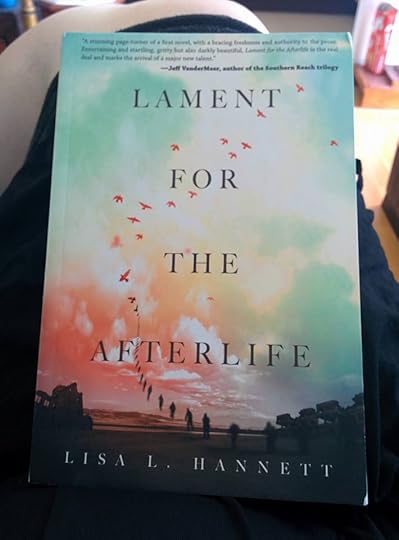
So this just arrived! Lisa Hannett’s debut novel, Lament for the Afterlife from ChiZine Publications. Trust me when I say you need this book – it is breathtaking and amazing. I beta read it, so I should know.

The Newtown Review of Books: The Bitterwood Bible

Lisa’s photo
Lou Murphy has reviewed The Bitterwood Bible and Other Recountings for The Newtown Review of Books and it is quite, quite humbling.
“The Bitterwood Bible is a masterful offering of haunting stories that traverse the bounds of myth and legend.
In this prequel to Sourdough & Other Stories (2010) Slatter proves herself to be a master storyteller, offering a compendium of bittersweet tales to be devoured with relish. Weaving reappearing characters and their journeys through a landscape as bleak and unforgiving as it is psychically familiar, the 13 stories chart juicy plotlines of misguided love, sacrifice, and revenge.
The power of the written word itself is a recurring theme of The Bitterwood Bible. Thus, it seems fitting that the physical embodiment of this limited printing – complete with its ethereal illustrations by Kathleen Jennings – is so delightful. This beautiful edition is worthy of becoming an heirloom and deserves to be handled with the white-cotton-gloved care of the bibliophile. Books feature prominently in the stories; their power to hold magical secrets passed through the ages brings bloodshed and horror to those foolish or careless enough to loosen their guard on the supernatural tomes in their care. In ‘St Dymphna’s School for Poison Girls’, a story set in an establishment dedicated to the education of select young women in mastering the art of murder, one of the students – Mercia – pursues a secret mission: to transcribe the contents of The Compendium of Contaminants, rumoured to be the first and greatest of poisoners’ bibles.
… And this is why I am here; this is my initiation task to earn my place among St Florian’s secret sisters, the Murchianii, the collectors, the recorders, the travelling scribes who gather all manner of esoteric and eldritch knowledge so it might not pass out of the world. Folktales and legends, magic and spells, bestiaries of creatures once here and now long-gone, histories and snippets of lives that have intersected with our efforts, our recordings … and books like these, the dark books, the dangerous books, the books that some would burn but which we save because knowledge, all knowledge, is too important to be lost.
Each word is selected with purposeful intent to best deliver the shocking wisdom that lies at the heart of each story.”
For the rest, go here.