Angela Slatter's Blog, page 74
September 13, 2015
Lament for the Afterlife – Brisbane Launch!
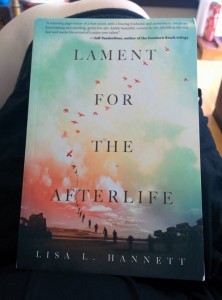 Okay, my fellow Brisneylanders: on Oct 29 at 6pm, Lisa L. Hannett will be at Avid Reader launching her new book Lament for the Afterlife. Do you want to be there?
Of course you do, you’re all folk of exquisite taste.
It’s the night before GenreCon, besides, so you’ll all be in town, right? Right!
It will be launched by the most excellent Robert Hoge.
So, go here and register.


First review of Of Sorrow and Such!
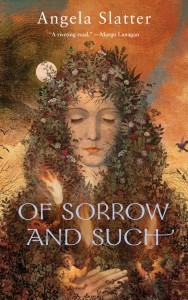 Over at Publishers Weekly, they call Of Sorrow and Such “enthralling, clever, and deliciously complex”. Huzzah!
The rest, she is here.
Horrorology Interviews: Michael Marshall Smith
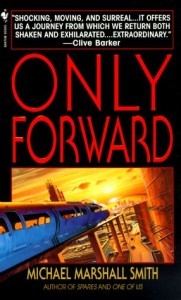
 Writing horror under the name of Michael Marshall Smith and thrillers as Michael Marshall, MMS has produced a slew of best sellers, including The Straw Men and The Lonely Dead. He’s won awards for co-writing and performing two series of BBC Radio 4’s cult show And Now, In Colour, is a five-time winner of the British Fantasy Award, and has multiple nominations for the World Fantasy Award. His first novel, Only Forward, won both the August Derleth and Philip K. Dick awards, and his short fiction has been collected in What You Make It and the winner of the International Horror Guild Award, More Tomorrow And Other Stories (2003), which, when translated into French, also won the Prix Bob Morane (2009). His second novel Spares was translated into seventeen languages and optioned by DreamWorks; The Straw Men is being released as a comic series; The Intruders became a TV series for BBC America starring John Simm and Mira Sorvino.
What was the inspiration for your Horrorology tale “Afterlife”? 
The story arrived in two parts. The first page or two dropped into my head from nowhere, prompted by re-reading ZEN AND THE ART OF MOTORCYCLE MAINTENANCE for the first time in about thirty years. I had a clear visual image of a man, and his life, but no idea What Happened Next. So I set it aside, for about two years… until I looked at it again — prompted, as so often, by a timely request for a story from Steve — and realized the answer was already there in front of me.
Can you remember the first story you read that made you think “I want to write!”?
The very first stories that interested me in the idea of writing fiction were the “Of Adventure” series written by Enid Blyton, which I loved when I was a kid. I remember starting something along those lines when I was about twelve, but quickly running out of steam. The book that really pushed me over the edge was THE TALISMAN, by Stephen King and Peter Straub. A friend of mine badgered me into reading it — I’d read nothing by King or Straub at the time, and very little ‘horror’ of any kind — and before I’d even finished the book I knew this was the kind of thing I wanted to do with my life.
 Is horror a sort of natural home for you or do you lean more towards another part of speculative fiction?
Horror is the home I keep coming back to, after time spent wandering around other types of fiction. It’s what first started me writing, and I think it’s the broadest church of all the genres — a flavour you can add, as much as a type of story.
You’re offered the chance to visit the Library of the Damned – do you accept?
Yes, obviously. How could you not?
The future of horror is … ?
The same as the past. Good stories, told well. Anything else is a fad that will pass.
Pre-order your copy of Horrorology: The Lexicon of Fear here!
September 11, 2015
Over at Simon Bestwick’s Place …
Emer in the garden, Kathleen Jennings
… I talk about my current projects, the trauma I’ve inflicted on my sister, and a few other things.
Head to the Lowdown for the full story.
Ancient Myths, Modern Tales
 I must do a BWF rundown, but I am trying to catch the tails of the deadlines that got away from me last week! In lieu, here is Joelene Pynnonen’s summary of Ancient Myths, Modern Tales, the panel I moderated – my guests were Kelly Link, Holly Black, and Sjón.
Go here!
September 10, 2015
Horrorology Interviews: Stephen Jones
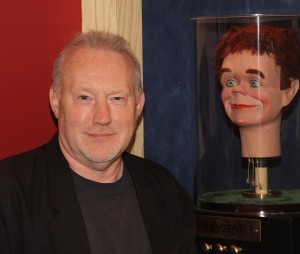
Photo copyright © Peter Coleborn. All rights reserved.
Today, we start a series of interviews with just about everyone involved in the new anthology Horrorology: The Lexicon of Fear, edited by Stephen Jones and published by Jo Fletcher Books. Please welcome our first victim!
STEPHEN JONES lives in London, England. A Hugo Award nominee, he is the winner of three World Fantasy Awards, three International Horror Guild Awards, four Bram Stoker Awards, twenty-one British Fantasy Awards and a Lifetime Achievement Award from the Horror Writers Association. One of Britain’s most acclaimed horror and dark fantasy writers and editors, he has more than 135 books to his credit, including The Art of Horror: An Illustrated History; the film books of Neil Gaiman’s Coraline and Stardust, The Illustrated Monster Movie Guide and The Hellraiser Chronicles; the non-fiction studies Horror: 100 Best Books and Horror: Another 100 Best Books (both with Kim Newman); the single-author collections Necronomicon and Eldritch Tales by H.P. Lovecraft, The Complete Chronicles of Conan and Conan’s Brethren by Robert E. Howard, and Curious Warnings: The Great Ghost Stories of M.R. James; plus such anthologies as Horrorology: The Lexicon of Fear, Fearie Tales: Stories of the Grimm and Gruesome, A Book of Horrors, The Mammoth Book of Vampires, the Zombie Apocalypse! series and twenty-six volumes of Best New Horror. You can visit his web site at www.stephenjoneseditor.com or follow him on Facebook at Stephen Jones-Editor.
What was the impetus for putting together Horrorology?
After the success of A Book of Horrors, a few years ago I pitched a couple of high-concept anthology ideas to Jo Fletcher at Jo Fletcher Books. She liked them both. So we decided to bring out Fearie Tales: Stories of the Grimm and Gruesome first, in time for the 2013 World Fantasy Convention in Brighton, and then follow it up with Horrorology: The Lexicon of Fear.
I like doing these bigger anthologies every couple of years, rather than being on an annual treadmill. It not only makes each of them more of an “event” book but, because of the more complicated nature of the JFB anthologies (a featured artist, all-original stories etc.), we actually need that amount of time to put them together and make them as classy as possible.
It also doesn’t help that I try to get some of the more – shall we say “established” – authors for these anthologies. These are writers at the top of their game, and consequently they are invariably much in demand. That’s another reason why I like the longer lead time – so that we can give the contributors space in their writing schedules to come up with something a little more “special” . . .
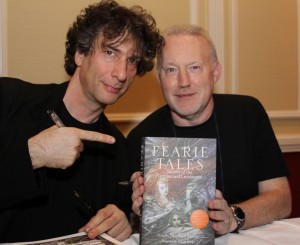
Photo by Peter Coleborn
Did you have a “wish list” of authors for this anthology?
I always have specific authors in mind for any anthology – especially one like this, which was invitation only. I went after a number of “names” and some we got and others, for various reasons, we didn’t. I was also lucky that a couple of the contributors already had finished stories that I could use in the book. This is always the way when you are compiling an anthology. The book changes, grows, as you go along, and it doesn’t always end up quite how you imagined it would when you started out.
The other thing with the JFB books is that we have now established something of a “repertory” group of writers, who I like to mix up between the various projects, while also bringing in different names where and when I can. There is a core of authors – yourself included – that I love to work with because I know that I will get exactly what I want from them for the book. I trust them, and that makes my life easier as an editor. We have a working history. And then there are the newer authors I bring to the project who might be a bit more of a wild card and surprise even me.
It is always more difficult when a writer has to work within a specific set of thematic guidelines, which all the contributors have had to do with my JFB anthologies so far. The good thing is that my concepts tend to be fluid enough that we can usually work something out in the end. I only lost one story from Horrorology, and that was because the author decided to sell it to a better-paying market, and I couldn’t compete with that. As it is, I still bought it in the end – but as a reprint for Best New Horror!
What makes Clive Barker the perfect illustrator for Horrorology? 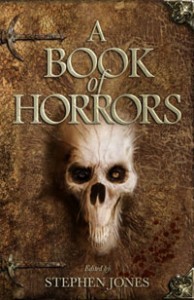
With each of the JFB anthologies we start out asking ourselves who would be the best artist to work on the project. That will also give me a clue as an editor as to how the book is going to “come together”. I have also worked as a designer all my life, so I try to be very “hands on” when it comes to the look of my books, and for the most part I think that has worked very well.
To be honest, my initial suggestion to Jo Fletcher was that we should use H.R. Giger. A number of people were surprised that he was still alive and, in fact, he sadly died while the book was being compiled. It was Jo who actually suggested Clive. I had wanted a story by him anyway, and she thought that he would be a perfect fit as an artist as well. I agreed. We made an approach, and he accepted, and that was it.
The funny thing was that as the anthology developed I realised that it was becoming a kind of homage to Clive’s classic Books of Blood. This led me to add the “wrap-around” material, putting the book in context just as Clive had done with his first set of collections. In fact, I even managed to slip a little “tribute” into the opening section. So, having Clive contribute the dust-jacket illustration and interior illustrations, along with an original short story, seemed somewhat appropriate.
Obviously, Clive and I have worked together on various projects since the mid-1980s, so we also had a bit of fun with the bio at the back of the book as well . . .
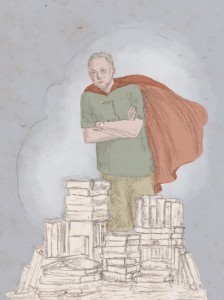
Original art by Kathleen Jennings
You’re offered the chance to visit the Library of the Damned – do you accept?
Hmm . . . given what happens to our narrator in the “wrap-around” material, I’m not so sure. But then again, who could pass up the opportunity to look at all those lost and forbidden books that have been hidden away from all but a select few for centuries . . .? No matter how horrific the ultimate consequences are . . .
The Library of the Damned material also allowed me to pay tribute to the work of H.P. Lovecraft and Clark Ashton Smith, which is never a bad thing so far as I am concerned.
The future of horror is . . .?
Ha-ha! Well it sure as hell isn’t Clive – or me – any longer! To be honest, I fear for the future of horror. Oh, there’s no lack of self-published, print-on-demand, ebook-only horror – the market is literally swamped with it. But that’s not going to support the future of horror, despite what some people may think.
We need properly paying markets – we need professional publishing imprints to include horror on their lists and to pay a fair sum for the fiction they use, otherwise there will be no professional horror writers in five years’ time. Just part-time authors, writing whenever they can between a full-time job because they can’t afford to live any other way.
Without the support of professional publishers and editors, writers are never going to learn about style, construction, spelling, punctuation, and all the other things that will help their work stand out from the rest. No matter how long you’ve been published, you always need a second opinion from somebody who knows what they are doing. With Horrorology I not only had Jo, but Nicola Budd was also my editor on the project as well. And thank god they were both there for me – they caught numerous things that I had missed or hadn’t thought about that ultimately made the book better in my opinion.
And if authors can’t earn a decent living from their work, then eventually most of them are going to go off and do something else. And then where will horror – and all the other literary genres – find its new stars? How will writers learn their craft, and develop, and become the best-sellers of the future? These are the questions that worry me as I see how dramatically the horror genre – and publishing in general – has changed in just the past few years.
But I guess my biggest concern is that we are losing the readership. I go to conventions now where people don’t care about reading in the genre any longer. Oh, they like to dress up as characters, play games, or watch film and TV adaptations, but they just are not interested in going back and reading the source material (let alone anything classic or new that they may be unfamiliar with). They don’t seem to realise that there would be no Game of Thrones TV show or tie-ins without the hard work that George R.R. Martin put into his original novels. The same is also true for so many other popular franchises that are based on literary works.
If successive generations stop reading novels and short stories then, eventually, there will be no new ideas and all we will be left with are remakes of remakes because nobody knows anything better. I’ve gone on record as describing this as the “Morlocks vs. Eloi Syndrome” – and if you don’t know what that is a reference to, then the genre is already in more trouble than even I realised . . .!
Pre-order your copy of Horrorology: The Lexicon of Fear here!
September 9, 2015
She Walks in Shadows – sample story
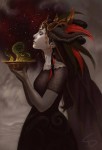
Amazing cover art by Sara Diesel
Over at Innsmouth Free Press, an excerpt of my story “Lavinia’s Wood” from She Walks in Shadows is appearing!
Go here!
September 7, 2015
Over at SF Signal …
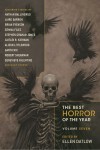 … a bunch of us talk about the inspiration behind our stories in Ellen Datlow’s The Best Horror of the Year Volume 7.
Click here to go down the rabbit hole!
September 6, 2015
Fairy Tale Friday – on Monday!
 Because of all the excitement of Brisbane Writers Festival I forgot to re-post this last week. But here it is now: my darling and very talented friend Angie Rega is running a series of Friday Fairy Tales. I’m honoured to be first cab off the rank! Go here.
September 2, 2015
New Project with Electric Dreamhouse Press
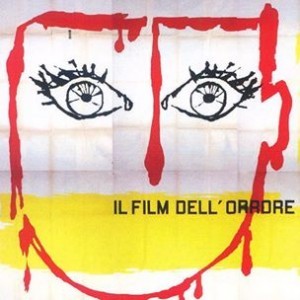 So, Electric Dreamhouse is a new Cinema imprint coming in 2016 from PS Publishing, edited by the delightful Neil Snowdon. The imprint will be producing a series of connoisseurs’ guides to Cult and Genre Cinema.
It’s something new for me, to be writing about film, but I’m game! So I’ve signed on to do The Karnstein Triology: Mere Kissing Cousins or Is Blood Thicker than Water? (taking in The Vampire Lovers, Lust for a Vampire, and Twins of Evil) and .
The very impressive roster (in which I shall stand at the back like the new kid in a bar):
EYES WITHOUT A FACE – Michael Brooke
THEATRE OF BLOOD – John Llewellyn Probert
CARNIVAL OF SOULS – Stephen Bissette
MARTYRS – Stacie Ponder
DEATHLINE – Sean Hogan
DRESSED TO KILL – Mike Sutton
THE KARNSTEIN TRILOGY – Angela Slatter
THE TENANT – Kevin Jackson
SINISTER – Mark Morris
FRANKENSTEIN MUST BE DESTROYED – Dennis Cozzalio
LET’S SCARE JESSICA TO DEATH – Lynda E. Rucker
ISLAND OF LOST SOULS – Jonathan Rigby
THE UNHOLY THREE – Johnny Mains
THE FURY – Howard S. Berger & Kevin Marr
MARTIN – Jez Winship
TWIN PEAKS: FIRE WALK WITH ME – Maura McHugh
BLOOD ON SATAN’S CLAW – Kimberly Lindbergs
ERASERHEAD – Anton Bitel
THE BRIDES OF DRACULA – Richard Harland Smith
SPIDER BABY – Stephen R. Bissette
SLUMBER PARTY MASSACRE – Stacie Ponder
BLACK SUNDAY – Angela Slatter
THE DEVIL RIDES OUT – Maura McHugh
BRING ME THE HEAD OF ALFREDO GARCIA – Mike Sutton
FROM BEYOND THE GRAVE – John Llewellyn Probert
THE HILLS HAVE EYES – Richard Harland Smith
VALERIE & HER WEEK OF WONDERS – Jez Winship
Further info:
Kicking off with MIDNIGHT MOVIE MONOGRAPHS, an ongoing series of in-depth writings about the less reputable side of the cinephile universe, and bringing together genre authors, film-makers and some of the most interesting critical voices in the field, this is passionate, incisive, entertaining film writing of the highest order. If you have a taste for Cult and Genre movies, this is for YOU.
Pre-Orders are not yet available (release dates TBA), but you can register your interest by emailing: editor@electricdreamhouse.co.uk or Liking the Facebook Page and leaving a comment.