Angela Slatter's Blog, page 60
May 8, 2016
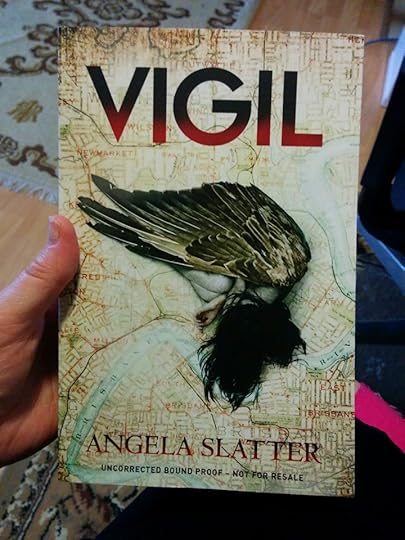
My Preciouuuuuuussss!!
In my grabby paws at last!


May 3, 2016
A Daughter of No Nation: Alyx Dellamonica
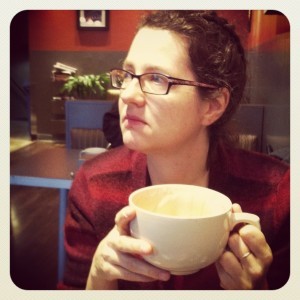
Photo by Kelly Robson, who is also excellent
I love Canadians. I would collect more of them but I always run into problems with Customs. One of my new Canadian faves is the very talented Alyx Dellamonica, author of the Most Excellent Hidden Sea Tales trilogy from Tor (a well as the duopoly Indigo Springs and Blue Magic), inventor of Stormwrack, creative writing teacher, Clarion West Borg Alum, and general delightful person. Today she talks about choosing cool books, balancing her teaching and writing lives, and inviting Miles Vorkosigan to dinner. Her latest book is Daughter of No Nation, and you need it.
1. First of all, what do new readers need to know about Alyx Dellamonica?
I am prolific! An absolute busy bee! And so there’s a lot of my writing to be had, in a number of styles and genres. My publisher, Tor, has sample chapters of all of my novels up on their website, along with a bunch of stories that are prequels to my current trilogy. But there’s also my baby werewolf has two mommies story, “The Cage, a time-travel horror piece called “The Color of Paradox,” and a story, “Wild Things,” about magical contamination in the Greater Vancouver Regional District. Or, if military SF with squid aliens is more your thing, I have Proxy War stories up at Strange Horizons and Lightspeed. You’d rather have an alternate history of Joan of Arc? I’ve got that too!
2. When did you first start writing and can you remember the first thing you finished? 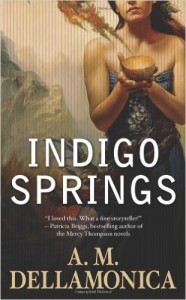
I was writing Dr. Seuss-inspired doggerel as soon as I could actually put words on a page: I made books of poetry by stapling illustrated pages of badly scrawled manuscript together as a six year old. My first novel–or so I thought–was completed when I was in fourth grade… I was inspired by a Canadian novelist named Gordon Korman, who at thirteen published a book called This Can’t Be Happening at MacDonald Hall! I finished my first real novel at some point during university and then wrote something like three more trunk books, even as I was selling my first short stories. Then Tor bought my debut novel, Indigo Springs.
3. How do you balance the life of teaching with your own creativity?
The primary challenge I face as an instructor is less with writing than with reading. I see so much beginner fiction that I occasionally have a subconscious response whereby I don’t want to read anything anymore. Partly it’s because I’m tired, and I read all day… but it’s also because most beginner fiction isn’t all that good, or fun to read, even when it shows promise. I have learned to work my way back into fiction reading after a stretch of heavy marking by rereading my favorite novels. This has a benefit, which is that when you set aside time to reread, you come to understand–on a deeper level–just why your favorite novels work and what the authors did to make them so terrific.
My other strategies for this are to keep an eye out for cool books to blurb–my editors are great at picking things I’ll love–and to review for Tor.com. I am also broadening my reading of short fiction.
 4. Where did the original idea for Child of a Hidden Sea come from?
Indigo Springs is a novel I’m really proud of, not least because it’s feminist and it has a lot of queer characters, plus it won the Sunburst Award for Canadian Literature of the Fantastic. It’s a bit of a sad novel, though, and the sequel, Blue Magic, has a massive body count as the magical/environmental disaster at its heart spreads across the world. After those books were done, I vowed to write something fun.
Having decided that, I made a long list of everything I think is fun, which included hopelessly nerdy topics like “Biodiversity!” and “The History of Fingerprinting!” and more obvious candy, like “Pirates!” and “Boys with albatross wings!” And then, rather than picking and choosing, I decided to see how many of the items on that list, which filled two pages, I could shoehorn into one book, or perhaps three.
5. When did Sophie Hansa start talking to you?
I created a sporty and outdoors-oriented protagonist who overshares her every thought–I lean to the overly tactful–and then gave her a profession I know a fair amount about, which was nature photography. We all of us give way to periodic fantasies, after all, about the people we would be if we were, let’s be face it, completely different human beings. Every now and then, we tell ourselves: “In another world, if I wasn’t asthmatic and afraid of heights, I would totally be a firefighter!” So I imagined an athletic, emotionally expressive serial camper who thinks nothing of rappelling off cliffs to get a shot of baby birds hatching, or of cave diving for the sheer exploratory thrill of it even though the real me’s feelings on that subject are “OMG, do you have any clue how dangerous that is? And also cold?”
Since Sophie’s primary motivation in any situation tends to be curiosity, all I had to do to get her talking was to present her with a puzzle. Look, Sophie, you’ve fallen into another world. What world? How do you know it’s different? Why don’t I recognize that species of shark? And…. we’re off!
6. Who were/are your literary heroes/influences? 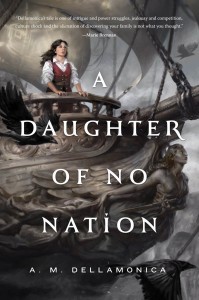
As a kid I read a lot of Ray Bradbury and Stephen King, and a fair bit of Andre Norton and Harlan Ellison. There was no censorship at home, so if Jaws was in the house, I read Peter Benchley. If Shakespeare was in the house, I read Shakespeare. (Playboy was in the house, so I read that too. They used to publish quite interesting fiction; I don’t know if they still do.) When I got to grade school, I found our library had the Foundation books and the Heinlein juveniles. A poet named Monty Reid gave me Walk to the Walls of the World by Suzy McKee Charnas, when I was sixteen. I also read–and still read–a lot of mysteries. As a first grader it was the series books, like Nancy Drew, the Hardy Boys, Tom Swift… even in a pinch the Bobbsey Twins would do. Finally, I had a series of history books that my mother had passed down, which were the biographies of famous U.S. women. A lot of these were the stories of women who rose to the blinding personal height of growing up to be a First Lady, but in the mix were Sacagawea, Julia Howe, Jane Adams, Louisa May Alcott, Clara Barton, Harriet Beecher Stowe, and a number of other suffragettes and U.S. women of letters.
7. You get to invite five fictional characters to dinner: what’s your guest list look like?
I’d like to meet Nancy Drew. I’d have to meet Frank Mackie from Tana French’s Dublin Murder Squad novels. We’d need Miles Vorkosigan, just to ensure that, y’know, shit happened. Thursday Next, I think. And to round everything out, I’d like to add Kivrin from Connie Willis’s Oxford time travel novels. In which case, can we please invite Connie, too?
 8. Which book, either fictional or otherwise, would you say taught you the most about writing?
I’m not sure there’s any one book. I used to get Writer’s Digest every month as a teen and–because I was just starting out–there was always something in it that seemed new-to-me and exciting and untried. If I’d started to slow down on churning out what we’d now call my juvenalia, that monthly sense of the writing world, out there waiting for me, would get me started again. This was before the Internet, and so was really valuable.
The fiction writers who had the strongest effect on me as a beginning author were Madeline L’Engle, Bradbury, King and especially Peter Straub. I went to Clarion West in 1995 with a list of Straub-y prose tricks I wanted to learn.
9. What can you tell us about Daughter of No Nation?
A Daughter of No Nation is the middle book in the Hidden Sea Tales trilogy. I describe these books as *Narnia for Environmentalists,* because in them Sophie Hansa discovers a world where the magic you can work in your home nation is entirely dependent on your microclimate: you write spells using the species available to you.
Sophie isn’t especially welcome on this other world, which is called Stormwrack, but she’s trying to figure out its relationship to Earth, and she’s deeply interested in this guy, Garland Parrish, who is the captain of the sailing vessel Nightjar. This would be easier to deal with if her little sister, Verena, didn’t have a raging crush on Parrish. Sophie’s also trying to figure out why everyone thinks she should stay well away from her birth father, who is essentially a duelling Supreme Court justice from one of the wealthiest nations in the world. Because, really, what better way is there to improve the concept of Supreme Court Justice than to give them the power to settle out of court disputes with a big wood-chipper of a sword?
10. What’s next for Alyx Dellamonica? 
I’m busy figuring out what my next book will be like, and writing short stories in the meantime. One will be out soon at BENEATH CEASELESS SKIES: It takes place on Stormwrack, and is called “The Boy Who Would Not Be Enchanted.”
ICYMI – St Dymphna’s School for Poison Girls …
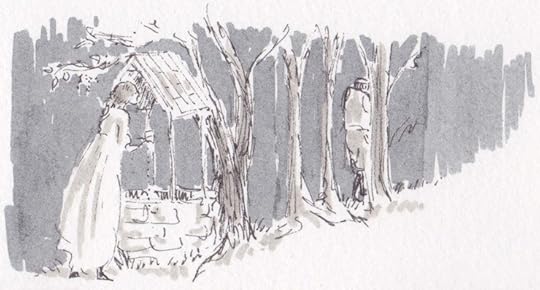 … is available to read over at Tor.com.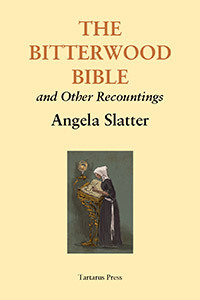
This tale won the Aurealis Award for Best Fantasy Short Story last year and is a good taster for my World Fantasy Award winning collection The Bitterwood Bible and Other Recountings.
With art by Kathleen Jennings, naturally.
May 1, 2016
The Dark meets The Jacaranda Wife
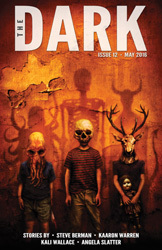 “The Jacaranda Wife” was probably my first publication in a
  high-profile, widely distributed anthology – Jack Dann’s Dreaming Again from HarperCollins – and it gives me great joy to see it getting another life over at The Dark’s May Issue. You might seriously consider sending some funds to their Patreon account.
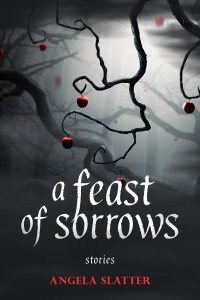
It will also be in my collection from Prime Books, A Feast of Sorrows: Stories (edited by Paula Guran), available in October this year.
And this ish already has a very positive review! Thanks, SFRevu.
New Nightmare Magazine!
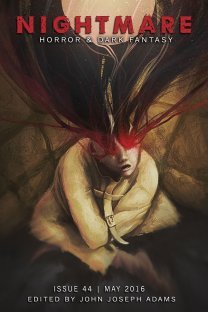 The May issue of the most excellent Nightmare has an excellent line up (as it always does, let’s face it).
This month, we have original fiction from Adam-Troy Castro (“The Old Horror Writer”) and Lisa Goldstein (“Sawing”), along with reprints by Joe Hill (“Twittering from the Circus of the Dead”) and Sarah Langan (“The Lost”). We also have the latest installment of our column on horror, “The H Word,” plus author spotlights with our authors, a showcase on our cover artist, and a feature interview with Angela Slatter.
So, yes, more talking from me – thanks for the excellent questions, Lisa Morton!.
April 30, 2016
Longform vs Shortform …
… plus carrots and sticks … and hands. All of the waving hands.
April 27, 2016
Just a little something …
… from The Very Kathleen Jennings for the Vigil launch bags.

Talking About Our Collaboration!
Over at the Tor.com Tube of You channel, Lisa and I talk about collaboration, specifically on Midnight and Moonshine.
And talk and talk and talk!
April 26, 2016
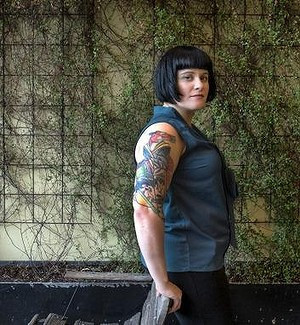
Welcome to Orphancorp: Marlee Jane Ward
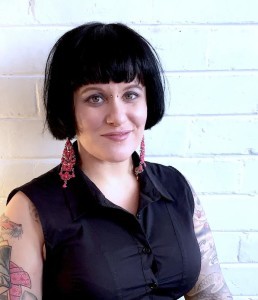 Marlee Jane Ward is a self-described writer, reader and weirdo from Melbourne, Australia. She’s a graduate of the Clarion West Writers Workshop and her debut novella, Welcome To Orphancorp, was one of three winners of Seizure’s Viva La Novella 3, and was a finalist for the Aurealis Award for Best Young Adult Fiction. It also, ahem, won the 2016 Victorian Premier’s Literary Award for Young Adult Fiction. Not too shabby.
Her short fiction has appeared in Interfictions, Terraform, Apex, Mad Scientist Journal, Slink Chunk Press and the Hear Me Roar anthology. Today she takes some time out from living in Orphancorp to chat about the writing life.
1. What do new readers need to know about Marlee Jane Ward?
That I’m a total weirdo from Melbourne, and my coffee order is a large soy latte with one sugar, iced if it’s a hot day. That I don’t write to genres or age group, they kinda just happen to me. That I write the kind of stories I want to read, and that I hope you like them too.
2. Did you always want to write and can you remember the first story you ever told?
I’ve wanted to write for a really long time. I always loved the creative writing sections in yearly tests and I’d get top marks. The first decently sized thing I wrote was a short horror novel called ‘Cracked’ as part of a creative program in year seven. It was both awful and derivative.
3. What was the inspiration for your novella Welcome to Orphancorp? 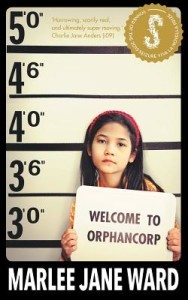
It came about as back story for a character in a different piece and I used it when I was desperate for ideas to take with me to Clarion West. It started life as a short story at CW, and I expanded it over six madcap weeks of conveniently timed unemployment for the Viva La Novella deadline. I referred back to articles I’d read on the Kids For Cash scandal in Pennsylvania and about Ceausescu’s Kids in Romanian orphanages. I’m an avid reader of longform articles and I get most of my inspiration from there. There was one bit in one of the articles about Romanian Orphanages that said kids who got any form of true loving support in their first year or few years of life, even if it was in the harshest conditions or terrible poverty, tended to be more resilient than the ones who didn’t. I thought Mirii might be like that. I needed to give her a stable base and some hope.
4. What appealed to you about the novella format? Is it a stepping stone to a novel length work?
I loved novella length as a way for me to warm up to novel-length work. I was a short story writer before this and I’m trying to learn to expand my ideas outwards into longer pieces. Short stories force you to pare everything way back and it’s been a learning curve to flesh things out. As well, I really like that if you are a fast reader like me, you can get through a whole novella in a sitting and experience it like a movie.
5. How did it feel to win the 2016 Victorian Premiers Literary Award for Young Adult Fiction?
Bizarre. Like, my book? Little Orphancorp? I’ve got a healthy balance of confidence and self-doubt, so while I knew it was a bit of alright when it came out, I just thought there was too much stacked against it for it to win. Like, it’s 26,000 words, for one. It’s genre, for two. It’s got some pretty adult themes as well. But it just goes to show that the right 26,000 words, arranged in the right way and from the heart, can do all sorts of rad things.
 6. Who were/are your literary heroes/influences?
Stephen King can tell a hell of a story, Isobelle Carmody can craft a beautiful world, Poppy Z Brite can evoke every sense with her words. They were my early influences. More recently I’ve been really into Kim Stanley Robinson’s hope-filled futures, Neal Stephenson’s complex worlds, and the short stories of writers like Kij Johnson and Karen Joy Fowler. I’m also influenced by my peers, people like Jane Rawson, Patrick Lenton and Maria Lewis who are amazing at doing their own thing, and doing it well.
7. Do you prefer to write fantasy, horror, or science fiction? Or a happy mix of all of them?
I’ll write whatever. I’m not the kind of person who sets out to do specifically this or that. I’m too much of a haphazard disaster for that. I tend to just consume a lot of books and a lot of articles and let the ideas I get from them swirl around until something pops out. Most often it’s a mix – a bit of a sciency dystopia or a bit of a horror-ish spec story.
8. What do you think was the biggest thing you got out of going to Clarion West?
An amazing group of friends. A glimpse of the life I want to lead, and the skills to get me there, if I keep at it. I’d do it again in a heartbeat, if they’d let me. Which they won’t – you can only do it once.
9. You get to invite five fictional characters for dinner: who’s on the guest list? 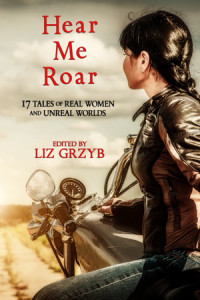
Hermione, but she’d give me pointed looks when things got to rowdy, no doubt. She’d be one of those people I think are really cool, but she’d think I was a mess, and that’s okay. Eddy Sung from Poppy Z Brite’s Drawing Blood, so we could commiserate over all the queer boys we’d loved and lost. Zinzi December from Zoo City by Lauren Buekes, because we could relate with that whole ‘being ex-addicts’ thing, and she’d have the goss – plus I’d love to pat Sloth. Eliza from Neal Stephenson’s The Baroque Cycle, ’cause she’s so sharp and could teach me a thing or two. And maybe Alice from Stephen King’s Cell. She went through a lot in a short time, and could probably use a cuddle. This is my ‘all-lady, all the time’ version of the fictional dinner, you might notice. I dig hanging out with cool ladies.
10. What’s next for Marlee Jane Ward?
I’m almost done with the second Orphancorp book, which is less about Orphancorp, and more the continuing adventures of Mirii Mahoney. I’d like the write the third one concurrently with the first in a new YA series, but we will see how that goes. Then I have a standalone adult novel that needs to get written – I’ve been thinking about it for a long time.
April 24, 2016
Over at Fantasy Scroll Magazine …
 … I talk. Constantly. Thanks, Amber Neko Meador!
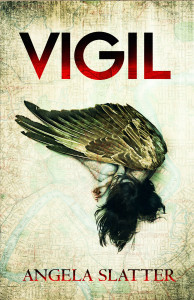
About non-writing, writing, and tips for new writers. Also fairy tales. And my forthcoming debut novel Vigil.
Amber: Thank you for taking a little time with me today. It’s always appreciated. Let’s start where most of these do. Who are you? Where did you grow up? What would you like inquiring readers to know about Angela Slatter that isn’t necessarily about your writing?
Angela: Oh, wow. Not about writing? That’s kind of a shock since I’m a full-time writer so that’s all I think about really! I grew up in a few different places because we moved around with my Dad’s job (he was a cop for 38 years), so I’ve lived in Brisbane, Ipswich, Cairns, and Longreach—none of which means much to anyone except another Australian! I’ve worked as an administrator in several universities, as an article clerk, as a print project manager, a membership services coordinator, and freelance editor among other things. I occasionally teach creative writing and do mentoring … there you go, back to writing. I have no cat, does that mean I’m not a real writer?? I like cats, my sister has many cats (possibly even my share of them), but at the moment there’s no special cat in my life. I have a husband, though, I’m very fond of him. I love reading, writing, watching movies, walking, and not having to cook my own dinner, so very fond of eating out. I cannot knit, although I can crochet. My mother taught me never to darn socks, to just buy new ones. I love caramel fudge. I drink my coffee black. I have accepted all of my writing awards while wearing evening gowns and no shoes.