Angela Slatter's Blog, page 59
May 31, 2016
Of Laments, Bluegrass Symphonies, and Deep-Minded Vikings: Lisa L. Hannett
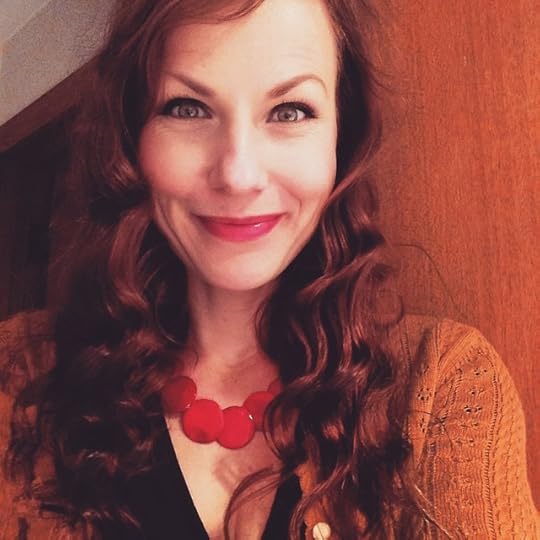 Lisa L. Hannett has had over 60 short stories appear in venues, including Clarkesworld, Fantasy, Weird Tales, Apex, the Year’s Best Australian Fantasy and Horror, and Imaginarium: Best Canadian Speculative Writing. She has won four Aurealis Awards, including Best Collection for her first book, Bluegrass Symphony, which was also nominated for a World Fantasy Award. Her first novel, Lament for the Afterlife, was published in 2015. You can find her online at http://lisahannett.com and on Twitter @LisaLHannett.
1. What do new readers need to know about Lisa L. Hannett?
Born and raised in Canada, I now live in Adelaide, South Australia — city of churches, bizarre murders and pie floaters. I write dark, weird, sometimes hard to categorise stories: fantasy, horror, magical realism all mashed together, and for reasons only my subconscious knows, lots of pieces about cowboys, Vikings, and seaside dwellers. I’ve had over 60 short stories published, some of which appeared in my first collection, Bluegrass Symphony, which was nominated for a World Fantasy Award and won the Aurealis Award for ‘Best Collection’; two other collections co-authored with a fabulous, award-winning author, Angela Slatter; and my debut novel, Lament for the Afterlife, won the Ditmar for ‘Best Novel’ this year.
Outside of writing (is there such a thing, really?) I’ve got a PhD in Old Norse-Icelandic literature, an Honours degree in medieval lit and fantasy fiction, and a Fine Arts degree in painting and photography. I’m alecturer in English and Creative Writing here in Adelaide, a gym junkie, and an Instagram devotee. I spend way too much time thinking about or taking pictures of food.
2. Did you always want to write and can you remember the first story you ever told?

Photo by Lisa!
So, here’s the thing: I didn’t start writing until I was a few months shy of turning thirty. That doesn’t mean I didn’t always want to write, only I didn’t think I could. Sure, I scribbled crappy poetry in highschool (who doesn’t) and I have clear memories of being in Grade Five, reading a story I’d composedin front of the class — it was set in Russia, and my aunt had been teaching my sister and I Russian so, basically, I’d just wanted an excuse to show off the very few words I’d learned. But as I got older, I avoided any creative writing assignments at school because I was afraid I’d suck.
Plots? Characters? Sub-plots? My own worlds? Nope, nope, nope. Couldn’t do it, I thought.
However, I loved reading with a burning passion. I devoured novels, picture books, poems, comics — stories of all lengths, all genres. I didn’t really care what I was reading, so long as I was reading, but I was most obsessed with Fantasy and Science Fiction. Reading, I know without a doubt, is what taught me how to be a writer.
Meanwhile, I was channelling this obsession with fantasy into visual modes of storytelling — I drew constantly (fairies, elves, dragons, weird woodland creatures), which evolved into painting, which led me to a Fine Arts degree. Throughout all of my schooling — elementary, high school, university — I thought I was going to be an illustrator. I was going capture fantasy worlds and characters and tales in paint and pencil and mixed media. So the first story I told — in paint — took place in a secret grove in the deep-dark woods, and a magical deer was being chased out of the shadows into a shaft of golden light… Then came my elf version of ‘The Blue Boy’ (Thomas Gainsborough) and ‘Pinkie’ (Thomas Lawrence). And dragon mosaics. And paintings of drowning, Ophelia-like girls (for which my poor little sister modelled, submerged in the bathtub with her eyes open until she was bloodshot and pruned). I did a series of photos of a reluctant bride in a junkyard. Another series based on Spenser’s Faerie Queene.
Long story short(er), life happened, and in its circuitous way, led me to writing. I kept reading but painted less, took more photographs. I moved from Canada to Taiwan to Korea to Australia. I went back to university for literature-focused degrees. And then, only once I’d started my PhD in medieval Icelandic literature, I decided I’d give creative writing a shot. After spending a couple of years doing nothing but “serious”research, I found myself desperately missing speculative fiction — and thinking for the first time,Yeah, I’ve got some stuff to say now. So I sat at my computer, looked up venues to which I might submit a story (because, foolishly, I thought writing short stories would be easier than writing novels), and told myself I’d give it a shot — in secret — so that if I failed, nobody would know but me.
The first story I told (and sold) was ‘The Evangelist’s Tale’ for Dirk Flinthart’s Canterbury 2100 anthology, and it got into print because Dirk was extremely generous with his time. He helped me narrow an 18,000 word draft into a 6,000 word piece — and in the process taught me what it meant to write short stories.
3. What was the inspiration for your debut novel Lament for the Afterlife?
Like the wordwinds whirling throughout Lament, the inspiration for this novel is a bit of a jumble. On the one hand, obviously, it’s about war: I’m fascinated and perplexed and horrified by the Vietnam War, the Gulf War, the Israeli-Palestinian conflict, the ongoing devastation in the Middle East, and elements of World War I — all of which seem so hopeless and so dire and so confusing — so I wanted to explore those feelings of helplessness in a medium over which I have some control. On the other hand, it’s about the beauty and ugliness and power of language. Also, it’s about the desire I had as a kid to see the magical world — to really see fairies and elves — while also realising I’d never, ever get to (which is so unfair!). But mostly, it’s about regular people being born into extraordinary and awful situations, and their having to cope with extremes that are pretty much out of their control. This is something I’m perpetually interested in and inspired by — I often wish I could write adventure stories with feats of derring-do and fast-talking swashbucklers, but I always seem to come back to underdogs just trying to get their heads above the pack.
 4. What kinds of research did you do for a book which has the nature and consequences of war at its heart?
Since the world and the war at the heart of Lament for the Afterlife are really reactions to many of the wars in our world, I started off by reading up on the conflicts I’ve just mentioned. Historical accounts, soldiers’ diaries, textbooks, good old Wikipedia — I soaked up whatever I could. I went to the Canadian War Museum in Ottawa, which filled many pages in my notebook. I read lots of novels set in WWI, Vietnam War, Korean War, as well as poems written by soldiers. I watched hours and hours of YouTube videos — the ones about WWI veterans with shellshock will haunt me for the rest of my life — and also watched more war movies than is probably healthy. The whole time, I wasn’t really trying to capture facts from real life about “big picture” things (as in: what started the Vietnam War? Why did it go on for so many years? Which countries were allied in WWI?) but on the individual human element. What the boys’ faces looked like in those faded photographs. What details they hid from their parents when writing letters home. What sorts of frivolous things they’d carry in their packs. What tricks of the mind, what games, what songs and stories they’d use to distract themselves from the horrors they faced, the horrors they caused.
5. Of all of your short stories, which is your favourite baby?
This is always a hard question! Not because I don’t have favourites — I always have favourites — but because I tend to favour the newest, shiniest baby. BUT, if the story retains a bit of glimmer once it’s aged, then I figure it must really be a favourite… So, in that respect, I still love ‘Down the Hollow’ from Bluegrass Symphony. Having said that, I also love ‘A Shot of Salt Water’, which was published in The Dark last year — I so want to live in that world. Or at least visit it frequently. Which is also probably why my newest, shiniest baby is my current favourite: ‘A Right Pretty Mate’, which is coming out this year in Jack Dann’s Dreaming in the Dark anthology, is also set in that strange seaside world, and when I read over the proofs the other day, I felt this yearning that was pretty much like love.
6. Who were/are your literary heroes/influences? 
Let’s go with heroes because, realistically, probably every story I’ve ever read has influenced me in some way. Even the bad ones. So, heroes: Michael Crummey (guys: read Galore. Seriously!), Margaret Atwood (almost everything, especially up to Oryx and Crake), Margaret Laurence (The Diviners and The Stone Angel especially), Timothy Findley (especially The Last of the Crazy People), Patrick DeWitt (because The Sisters Brothers is so good I can’t even), Shirley Jackson, E. Annie Proulx, David Malouf.
7. Your debut collection Bluegrass Symphony created an astonishing rural/backwoods kind of world – where did you take your inspiration from?
My first instinct when asked this question is always to say, “I’ve got no idea.” How on earth did a Canadian girl, living in Australia, with a deep interest in medieval Scandinavia, come to write about a pseudo-American South, full of cowboys and farmers and poor country folk?
To be honest, I think it’s a patchwork of interests and memories that inspire the world in Bluegrass. I see many similarities between the honour-based societies of early medieval England and Scandinavia and that of small, rural towns where folk have to look out for one another, where everyone knows and is involved in everyone else’s business, where people are beholden to one another in a way that is less obvious or important in big cities, for example — and I still haven’t gotten sick of exploring these similarities. I’m also obsessed with isolation, harsh but often beautiful environments, and what people who rely on the land have to do to survive in dire circumstances (again, I think this is an interest from the Old Norse period that has spilled into the way I see downtrodden farmers suffering due to drought in Bluegrass’s world).
But I think the seed that sprouted all of this, really, is country music. I didn’t realise how pervasive country music is in Canada until I’d been away for several years; going back home to visit, I was suddenly aware of all the country songs piped into grocery stores, used in commercials, played in malls, and regularly spun on the radio. My parents had a massive collection of country records when I was growing up, and memories of those fiddles and guitars have definitely fed into Bluegrass. I listened to country albums non-stop while writing Bluegrass Symphony (not during the actual writing of the stories, except once, when I wrote ‘Down the Hollow’; but in the car, on the bus, while making dinner, and so on, I surrounded myself with twang) and I learned a lot about the ethos behind these tunes, which inspired me to write even more stories. Also, and finally, I think the landscape inspires me: the wheat and cornfields, the barns, the woods, the lonesome houses. Even though there’s a definite American flavour to these stories, the settings (more often than not) come from my memories of growing up in Ontario and Alberta. Bluegrass is in many ways an homage to Canada — at least, to my imagined version of it. It’s a few hundred pages of homesickness.
 8. Name your five eight favourite novels.
Galore by Michael Crummey
The Handmaid’s Tale by Margaret Atwood
Mrs Dalloway by Virginia Woolf (even better if read alongside The Hours by Michael Cunningham)
Jonathan Strange & Mr Norrell by Susanna Clarke
We Have Always Lived in the Castle by Shirley Jackson
The Sisters Brothers by Patrick DeWitt
Lord of the Rings by J.R.R. Tolkien (lifelong favourite!)
9. You get to invite five fictional characters for drinks and general shenanigans: who’s on the guest list?
The Gentleman with the Thistledown Hair from Jonathan Strange & Mr Norrell because he is a tricksome, self-important, whimsical, well-dressed Faery king who will keep us entertained with his shenanigans; he can whisk the party away to other realms if he gets bored, or keep the sun from rising if we’re all having such a good time that we don’t want the night to end. Also, he’s a great dancer. Galadriel from Lord of the Rings because I LOVE HER. Plus, she’d be a good mediator if things with The Gentlemen got out of hand. The Fool from Robin Hobb’s Farseer books because s/he is mischievous and smart and sweet, and will have a trove of good stories to share with us all, even if s/he often speaks them in riddles. Tyrion Lannister because the man can talk! And drink. And will most likely be the sanest one there. Finally, since I’ve got so many fey folk at this shindig, we need a suitable venue… So instead of a fifth character, I want to nominate Tamson House as the location for the party: it’s a sprawling house in downtown Ottawa (according to several of Charles de Lint’s novels, that is), where worlds and spirit realms converge, where cool artsy people hang out, and where Magic Things Happen.
10. What’s next for Lisa L. Hannett? 
As we speak, I’m finishing up my next collection: The Homesteaders is another book of short stories set in the world of Bluegrass Symphony. Backwoods witches, immortal soothsayers, bear-shaped child-stealers, raven-shaped miners, and lots of ghosts make up some of the characters in these tales, all tinged with a down-home country twang. I’m also in the process of editing / doing rewrites on my next novel, Ketill’s Daughter, which is the first in a two-book series, The Invisible Woman. Set in Viking Age Norway, this book tells the early story of Unn the Deep-Minded — wife of one king, mother to a second, and eventually a famous Viking herself — as she struggles to find her own fame and fate in this warrior world, all while her shape-shifting time-travelling fylgja (a kind of spirit guide) keeps butting in to mess things up for her… The second book in the series (called Deep-Minded) will follow Unn out of Norway into medieval Ireland, Scotland, and finally Iceland. She was quite the world-traveller! While working on these novels, I’ll also be fleshing out another short story collection: this one is a cycle of tales set in the same seaside world as ‘A Shot of Salt Water’ and ‘A Right Pretty Mate’. Along with a few commissioned short stories, I’ll be juggling these projects with lecturing full-time, so they’ll keep me busy for a while!


May 25, 2016
May 24, 2016
Waking in Winter: Deborah Biancotti
 Deborah Biancotti is the author of A Book of Endings and Bad Power, and co-author of the New York Times bestselling novel, Zeroes. She has been shortlisted for the Shirley Jackson Award and the William L. Crawford Award for Best First Fantasy Book. Her new novella, Waking in Winter, is now available from PS Publishing. Deborah lives in Sydney, Australia. You can find her online at deborahbiancotti.com and on Twitter @deborah_b.
1. What do new readers need to know about Deborah Biancotti?
Bloody hell, these questions are hard.
See, I always admire how actors can stand up and talk about themselves like they remember who they are, after all that time pretending to be someone else. I feel like I’ve spent so long being immersed in characters I’ve made up that I’m not sure there’s a core ‘me’ anymore. I’ve continued to shrug off writerly identities as the years go by. Like taking off a stage costume and putting on something new.
I’ve been more of an instinctual than intentional writer. I never really had a plan. I just went with whatever impulse I felt at the time. I started in short stories, apparently a lot of them were horror—though actually I always thought of them as tragedies. I drifted towards contemporary stories, but often still with a fantastical element. Waking in Winter, despite being set on an icy alien planet is still intended to feel like a contemporary story. It’s a mostly realistic setting (though an extreme one, and not one most of us have experienced if we haven’t been to the Arctic or Antarctic).
I feel like I hit my stride when I began to combine crime narratives and contemporary stories with the supernatural. It took a lot of soul searching to get there, though, and already I can feel I’m moving more towards the crime side. But my favourite stories that I’ve written so far are largely these crime-supernatural stories (like the Bad Power stories, or my Ishtar novella).
2. Did you always want to write and can you remember the first story you ever told?
I did always want to write. I don’t know why. It had to do with loving reading more than anything else. Wanting to be in those imaginary worlds.
I can’t remember my first story, largely because I can’t articulate it anymore. My parents believe I was telling stories in baby language before I could speak. What gold! Stories straight from the womb. I wonder what strange, nascent tales I had to tell back then, eh? And … where did they come from?
3. What was the inspiration for your novella Waking in Winter from PS Publishing? 
It started with just one image, which I spent years trying to interpret. I could see a bunch of desperate, alienated characters digging in the ground with such obsession that they worked through the night, lit by portable lights. I also remember a dream I had decades ago about a landslide that revealed a giant butterfly trapped in the mud, pristine like it was caught in amber. I think that image contributed, too.
And as my editor, Nick Gevers, noted when he bought the manuscript, there’s a certain aspect of my story that’s a feminist re-telling of John W. Campbell’s1938 novella Who Goes There?, or John Carpenter’s 1982 filmic adaptation The Thing. In those stories, scientists are confronted with forces so alien and unknowable that they’re forced to abandon their search for knowledge in order to survive. The alien ‘thing’ they confront takes over human form, human identity and human memory. In a way, the humans become aliens. They’re reborn.
It struck me how strange it was that you’d want to tell what is effectively a creationist or birth mythology and leave out female characters. I mean, I love those stories. But I wanted my story of barrenness and birth to feature, you know. Women.
So my main character is Fuyuko Muir, named for water and sea, a woman on the run from her life on Earth. She’s travelled to an unnamed, distant planet to hide from her past. Just like everyone else in Base Station Un, where she ends up.
Muir represents a different kind of birth. Not a physical birth, but a kind of spiritual renewal. An unwanted one. An enforced one. Brought about by an alien monster. In a way, the monster is Thanatos, the death instinct. The will to destroy. She may be a goddess. But if she is, then she’s a goddess of war and destruction.
4. What appealed to you about the novella format?
I really love this size of storytelling and I hope the digital age makes it much more accessible. It gives you the breadth to deal with a whole cast of characters, and the depth to discover a character’s journey in detail. I honestly feel like most novels sag between setting up the story and cashing in on the conclusion. There’s a whole middle section the story doesn’t often need. In novellas—dare I suggest—you can just leave out all that boring stuff. Also you can work with a sustained mood that sometimes might feel forced in a longer work. It’s basically all win in novellas.
 5. You’ve been working with Margo Lanagan and Scott Westerfeld on the Zeroes series – how’s the experience of collaborating been?
Collaborating can be very tough and very rewarding. It’s exciting to have THREE minds working on a problem, it’s great to have a fellow aficionado who’s already up to date on your story and always available for brainstorming or playing sounding board. Also few ideas get lost because someone will remember the what or why of your scene, even if you’ve forgotten. Also it’s fascinating to get an early reader reaction to decisions you’ve made or characters you’ve created. Fascinating, surprising and occasionally rewarding.
Of course the pay-off is: working to other people’s timetables; having to share drafts before you want to; suffering through character developments you’d rather not write but you have to because they’re part of the overall story; watching what people do to YOUR characters when they end up in THEIR chapters, ugh!
But the gains exceed the pains. I’d love to do more collaborations.
6. Who were/are your literary heroes/influences?
I could write out a totally boring list of hundreds of names here, but instead I’m just going to share something I recently learned about Leslie Charteris. He was the British-Chinese author of The Saint books. Well, he authored the first several. Harry Harrison and several other authors also wrote The Saint books under the Charteris’ name.
Charteris was born in Singapore and raised in Britain. During his first year at college, he sold a novel and left college. His first Saint book was published before he was twenty, but he basically disowned that book and spent later years pretending the second book was first. Still with me?
There’s over fifty Saint books now, and they weave a meandering path through formats and authors. But the thing I really wanted to share was the fact that a whole bunch of those famous Saint books aren’t novels. Meet the Tiger (the disowned first book) is a novel, but the second and now more famous Enter the Saint is actually a collection of interlinked novellas.
Now. How liberating does that sound, eh?
7. Do you prefer to write fantasy, horror, or science fiction? Or a happy mix of all of them? 
I suck at drawing lines, so I end up writing all of them, and more.
8. Name your five favourite novels.
Aaargh! Only five!
Okay, let me go with the novels that most often re-cur to me for no apparent reason, and so have apparently marked me in some permanent way:
The Birthgrave, Tanith Lee
The Haunting of Hill House, Shirley Jackson
Ash: A Secret History, Mary Gentle
The Shadow of the Torturer, Gene Wolfe (don’t ask me to explain this book – I have no idea)
Mrs Frisby & the Rats of Nimh, Robert C. O’Brien (yes, this just beats The Silver Brumby by Eleyn Mitchell AND Charlotte’s Web by E.B. White).
 9. You get to invite five fictional characters for drinks and general shenanigans: who’s on the guest list?
Oooh, this is gonna be so much fun! I’m sorry, Oscar Wilde, but you’re not fictional, so even though you’re my regular literary date, you don’t get an invitation to this one. I’ll have to go with:
Shebat from Janet Morris’ deliciously perverse Dream Dancer. Yes, she’s a prostitute who exploits her trade via dreams and yes, we’ll all be AWAKE for this party so her services will not be required. But she has long fascinated me, even without the whole dream-whore thing.
The monster from Mary Shelley’s Frankenstein. Could the guy get a little love, pls?
Charlotte from Charlotte’s Web. She’s just so freaking wise. But I bet the girl knows how to have a good time.
Alex Morrow from Denise Mina’s crime series. Morrow is my favourite of the crime-fighting lasses (‘tartan noir’ they call it: Scottish crime storytelling). She’s compassionate, real, complex, screwed-up but not in a stupid or predictable way, smart and sensitive. The End of the Wasp Season stands out for me in the Alex Morrow series (Morrow is pregnant in this one, which is just nerve wracking), but they’re all excellent.
Westley from William Goldman’s The Princess Bride because omg, adorable!
10. What’s next for Deborah Biancotti?
Well, we’re wrapping up the Zeroes trilogy in 2016-17, and I’m working on a couple of solo novels. I can never just work on one thing at a time anymore, so I’m being very strict with myself and trying to finish a first draft of one before I move onto another. I now have YA and adult story ideas, and I’ll probably have to choose one or the other direction at some stage. But for now, I’m just rolling with it. We’ll see which one naturally takes the lead in the next couple of years.
May 23, 2016
Random Alex on Vigil
 Random Alex has some lovely things to say about Vigil!
A number of years ago, Angela Slatter wrote “Brisneyland by Night” for Twelfth Planet Press’ anthology Sprawl. It was excellent. Vigil is that story grown-up and turned into a novel, with at least two (I believe) more stories about Verity Fassbinder scheduled.
This novel was sent to me by the publisher, as an uncorrected bound proof. Also, I had the enormous privilege of reading it in draft form, which I just can’t tell you how awesome that was. I have re-read it now partly because I have a bad memory and I knew the details had escaped me but that I loved it; partly because it’s Angela Slatter and she always withstands re-reading; and partly because it was sent as a review copy, so of course I had to. It was mostly the first two, though.
The rest is here.
May 16, 2016
Tender Tales: Margo Lanagan

Photo by Adrian Cook
Margo Lanagan should need no introduction, but I’ll give her one anyway. Or rather, I’ll snurch this one from the Allen & Unwin website: Margo Lanagan is an internationally acclaimed writer of novels and short stories. Her collections of short stories have garnered many awards, nominations and shortlistings. Sea Hearts won the CBCA Book of the Year, WA Premier’s Literay Award, Aurealis Award and Barbara Jefferis Award, and was shortlisted for the Adelaide Festival Award for Literature, NSW Premier Literay Awards, Queensland Literary Awards among others. Black Juice was a Michael L. Printz Honor Book, won two World Fantasy Awards and the Victorian Premier’s Award for Young Adult Fiction. Red Spikes won the CBCA Book of the Year: Older Readers, was a Publishers Weekly Best Book of the Year, a Horn Book Fanfare title, was shortlisted for the Commonwealth Writer’s Prize and longlisted for the Frank O’Connor International Short Story Award. Her novel Tender Morsels won the World Fantasy Award for Best Novel and was a Michael L. Printz Honor Book for Excellence in Young Adult Literature. Margo lives in Sydney.
In short, she is awesome and she’s taken some time to chat.
1. What do new readers need to know about Margo Lanagan?
Going by the reaction of a couple of recent new readers, they need to know that Margo Lanagan stories are maybe not what you think of when you think of fantasy. (I don’t know any more if this means they have wider or narrower appeal! Probably narrower.) If you’re the sort of reader who races through a story, you might have to slow down a little. If you’re reading one of my collections first, read no more than one a day to properly enjoy them. Also, you’ll perhaps be more unsettled than enchanted.
2. How did your Zeroes collaboration with Deborah Biancotti and Scott Westerfeld come about?
Deb and Scott cooked it up, inspired by the TV writing-room model of collaboration. Then they realised that two people do not a writing-room make, so they asked me along, I’m guessing so that they could have someone to gang up on and laugh at (sob!). That’s not true, actually, the gangs constantly switch and change, and there’s more good laughter than bad. But fuelled by beer, we chewed over the teen-social-superpowers possibilities for a few months in 2013, then got seriously into writing book 1. We sent off sample chapters the following May, and we pretty much had a deal for the trilogy by the end of July.
3. Was it a strange experience switching from solo writer to an unholy trinity?
It was hugely relaxing not to be 100% responsible—I’ve tried and failed at solo series fiction before and I know for a fact that this head can’t hold an entire trilogy. It took a bit of getting used to, showing other people what were essentially first drafts, and getting back … well, the kind of critique you’d expect for a first draft. But the plotting meetings, which are 3-day away-from-home numbers, were a revelation—the ideas flow fast and furiously, there’s the aforementioned laughter (which is rare-to-nonexistent when I write on my own), and we speak almost a different language because we can assume so much about what the others know.
I actually think the solo-to-group transition has nothing on the returning-to-solo transition. What, I have to do everything myself again? So not fair.
4. What was the first story you read that made you want to be a writer?
I wouldn’t be able to tell you. I was one of a family of avid readers. Being a writer was like being a rock star; it wasn’t something an ordinary girl like me could grow up to do. I footled around at the edge of writing (i.e. wrote poetry) in my teens and twenties. Then I did some work as a freelance editor, mostly of non-fiction books. I saw the state in which some manuscripts came in. I did the work of hauling them back from the brink of incoherence. And then I realised that it might actually be more efficient for me to start writing a book myself, from scratch. Not to mention more fun. Maybe even more lucrative? So I had a go. You could say I was irritated into being a novelist.
 5. What solo projects are waiting for you to come back to them?
I’ve just told my agent that I’m looking at the twitching corpses of two novels—one is selkies related, the other is convicts-and-goddesses. They’ve both been extensively revised many times. I hate, loathe and despise them both. I’m trying to be professional and regard them as just information about what went wrong, as Toni Morrison advises. Girding my loins to go in again. Meanwhile I’m working on some short stories to go in a best-of collection that will probably come out in May 2017.
6. Who were/are your literary heroes/influences?
Alan Garner, Helen Garner, Susan Cooper, Patricia Wrightson, Mervyn Peake (Gormenghast), Jo Walton (Among Others), George Saunders, Kelly Link. So many others. So many heroes. Anyone who has a novel to the submitting stage or beyond is my hero at the moment.
7. If we could overcome the twin annoyances of tempus fugit and distance, which authors would you invite to dinner tonight?
I’d recreate a lovely Sydney-Writers-Fest-related lunch Steven and I had down at the wharfs a few years ago with Tobin (M.T.) Anderson, Nicole Griffin, the late Mal Peet and Elspeth Graham.
8. Name your five favourite leading characters in literature? 
OMG, Angela, these questions are hard. Only five? Okay.
Right now, I’m enjoying watching Karl Ove Knausgaard labour through vol. 3 of his My Struggle.
The character “Helen” in Helen Garner’s The Spare Room.
Serena, in Ron Rash’s Serena—now a movie, but ignore that and read the book.
Sabriel, in Garth Nix’s Abhorsen trilogy.
And whichever unhappy, ruminative German point of view W. G. Sebald chooses.
9. Which fairy tale/folk tale/myth/legend do you think holds the richest vein for your work?
I think I’m still trying to excavate myself from selkie stories. But also, anything Grimm, especially if it involves bleeding feet or animal transformations.
 10. What’s next for Margo Lanagan?
Well, I’d better get back to those shorts I’m working on. Oh, and there’s the third volume of Zeroes to be whipped into shape—the second one’s pretty much done and dusted and we’re working on the big finale. As for a new novel, I’m trying not to frighten myself. Maybe after the shorts I’ll raise my sights as far as a novella. But I have no inkling what it would be about yet. If you see any good ideas running loose and unclaimed, send them my way!
May 15, 2016
Happy birthday to me …
 … and I got a lovely present of an excellent review of Vigil by Dark Matter Zine.
Verity Fassbinder is a halfling: she’s half human and half Weyrd (fae). Her father was a kinderfresser, a man who killed human children to harvest them for nefarious purposes. After Verity’s father was caught, imprisoned and killed, her human grandparents raised her. The sins of the father are visited upon the children, especially when the child feels guilty; Verity keeps vigil over her hometown of Brisbane, Australia, as recompense.
Now children are going missing; another kinderfresser may be at work. Then a siren (winged woman) is murdered. Verity is called in as a consultant to the human police force in the hopes of capturing the killer and keeping the Weyrd secret.
Verity tangles with sirens, seers, Baba Yaga and many other faery creatures; Angela Slatter is, after all, a Doctor of Faery Tales. And a Master but, well, we all know who wins between the Master and the Doctor.
Many thanks, Nalini!
May 12, 2016
Talking about believable characters
 Over at the Queensland Writers Centre WQ Magazine, I talk about my Top Five Tips for Believable Characters.
Characters: we love them, we hate them, sometimes we want to be them, but the most important thing is that, no matter how we feel about them, they are our guides through the stories we read. So, how do you ensure (and when I say ‘ensure’ I mean ‘do your level best’) that your characters are ones that readers will stay with? Even better, ones that will stay with readers long after they read The End? I mean, in a good way, not a nasty, stalkery kind of way.
When I’m writing I have five touchstones to which I always turn when creating characters, and to which I return when I feel I haven’t got things quite right. ‘What are these magical top five tips for creating believable characters?’ I hear you demand?
I’m so glad you asked! *gets on soapbox*
For the rest, go here.
May 10, 2016
Dublin Ghost Story Festival
 I cannot tell you how much I’m looking forward to this!
Never been to Dublin, despite all the Flynns, Elliotts, and Hortons in my family tree.
Sure, only three days in Dublin, but hey! Dublin!
 Still talking!
The Bone Swans of C.S.E. Cooney
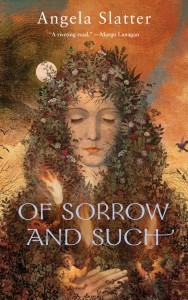
C. S. E. Cooney (A.K.A. The Glorious Claire) is the author of Bone Swans: Stories (Mythic Delirium 2015), the title story of which was nominated for the 2015 Nebula Award. Her novella The Two Paupers, the second installment of her Dark Breakers series, will shortly be appearing in Rich Horton’s Year’s Best Science Fiction and Fantasy 2016. She is an audiobook narrator for Tantor Media, the singer/songwriter Brimstone Rhine, and the Rhysling Award-winning author of the poem “The Sea King’s Second Bride.” Her short fiction can be found in Black Gate, Strange Horizons, Apex, GigaNotoSaurus, Clockwork Phoenix 3 and 5, The Mammoth Book of Steampunk, Steam-Powered II, The Book of Dead Things, Cabinet des Fées, Stone Telling, and Goblin Fruit. She lurks on Twitter as @csecooney.
1. What do new readers need to know about C. S. E. Cooney?
What I’ve noticed is reviewers often describe C. S. E. Cooney as “playful” and “lyrical.”
Now, I tend to like the former better than the latter, because “playful” draws more readers to my sandbox. Which is just where I like them! So I can play with them! Whereas “lyrical,” you know, might frighten them away again. It would intimidate me. Unless someone went on to explain, very gently and enthusiastically, “You know, lyrical. Like Dr. Seuss. Or Edward Gorey.”
(My father once described my early poetry as a cross between Shakespeare and Edward Lear. So of course I had to go and re-read “The Courtship of the Yonghy-Bonghy-Bo.” And whaddya know? He was RIGHT!)
Other adjectives that seem to pop up are “ wild” and “gleeful” and “macabre.” I feel like I should come with a warning label!
But one of my favorite things anyone has ever said about my writing came from my friend Amal El-Mohtar. In addition to being my shield-sister and sometimes-collaborator in a performance group called The Banjo Apocalypse Crinoline Troubadours, she is also one of the finest writers in my circle, and one of the first editors to publish my poetry. She told me, after reading my novella “The Big Bah-Ha,” “Your writing has such muscular velocity.”
So, I guess . . . Let new readers know that C. S. E. Cooney is the lyrical lovechild of Doctor Learspeare Goreuss. She is the abattoir where fairy tales go singing to the slaughter. She will happily flex her writerly writing muscles for you while bouncing up and down at impossible speeds. Her sandbox wants you in it. She likes to play.
Oh, and. Maybe you should drink tea before reading. PG Tips preferably. Coffee if you insist.
2. What was the inspiration for your collection Bone Swans? 
I had this novella, “The Big Bah-Ha,” that had been published by a small press that had since folded. I took it to my buddy Mike Allen, a fine poet and writer and editor himself, who’d mentioned at one point some things he might have done differently had he been editing my text. I said, “Now that it belongs to me again, can you maybe tell me some of those things? I want to re-release it as an e-book. Self-published, that kind of thing. Better than languishing.”
He said, “I’ll do you one better. Want to put together a collection?” He was doing a Kickstarter for a new Clockwork Phoenix anthology, and wanted something new to offer to his backers. I’d be that new thing.
And I was like:
SMILEY EMOJI DEVIL EMOJI EXCLAMATION POINT GOAT ICON HEAVY METAL ICON AAUGHH MIKE ALLEN AAUUGH!!!
In a nutshell.
Four of the stories were previously published. “Life on the Sun” (Black Gate Magazine) and “Martyr’s Gem” (GigoNotoSaurus) were both based on dreams.
“Milkmaid” (also GigaNotoSaurus—one of the few novella markets) came from this idea of non-beautiful characters getting beautiful love stories. Also maybe it was time to flip some old tropes upside-down and see what crawled out from beneath.
“The Big Bah-Ha” was born of a few previously mentioned characters called “The Tall Ones” demanding further stories. They’d only gotten mention in poems before—like in “Wild Over Tombs Does Grow.” The Flabberghast, in particular, insisted I devote more ink-on-page to his magnificence. His time to shine, he claimed. From that white light he swallowed, right up through his diamond teeth.
The title story was original to the collection.
The story behind “Bone Swans of Amandale” is this. So, for a few seconds, I was involved in a New York City writing group. This included Ellen Kushner, Delia Sherman, Catherynne Valente, Kat Howard, Lev Grossman, Theodora Goss and myself. One day, I was flipping through a Mercer Mayer illustration of The Pied Piper while Doctor Goss stared out the window like a Swan Princess surveying the Hudson. She remarked, apropos of nothing, that she’d love to have a rose named after her. A Mercer Mayer rat winked up at me from the page.
That was when it happened. SHA-BOOM went the cannons! Dora Rose, the rat Maurice, beautiful Nicolas. There they were, cavorting. I couldn’t write the thing fast enough.
3. What is it about folk and fairy tales, myth and legend that attracts you?
They’re like the bullet points on an outline that ends in a trilogy ten years later. The thread and buttons and length of cloth that become a gown, if you have the right machine, the template, the time.
Like items on a shopping list that, with the application of labor, a liberal hand with spices, a pre-heated oven, music to dance to, a bottle of wine to make the work of cooking a bit more giddy, turn into a feast.
They’re a place to start.
4. What was the first story you ever told?
You know those games you play on the playground where the sand is the lava and you leap from obstacle to obstacle to get to the castle, and there are pirates and a drawbridge and big spiders because you watched the movie KRULL too many times in your 80’s childhood?
I wrote something based on that, in third grade. My first chapter book. THE HALLS OF DIFFICULTY.
5. Who were/are your literary heroes/influences?
Early childhood: The Brothers Grimm. Hans Christian Anderson, Stephen Sondheim, Andrew Lloyd Webber, Rogers and Hammerstein, Gilbert and Sullivan, Stories for Free Children, Reading Rainbow.
Middle Childhood: Madeleine L’Engle, Lloyd Alexander, C. S. Lewis, J. R. R. Tolkien, Victor Hugo, Gaston Leroux, Susan Cooper, the Trixie Belden books, Mark Twain, Frances Hodgson Burnett, Louisa May Alcott, Laura Ingalls Wilder, L. M. Montgomery.
Teens: Robin McKinley, Patricia A. McKillip, Anne McCaffrey, the Brian Froud Faerielands series, Angela Carter, Tanith Lee, Mercedes Lackey, the Datlow/Windling Fairy Tale Anthologies, Jane Austen, Charlotte Brontë, Georgette Heyer, Charles De LInt.
Twenties: Octavia Butler, Neil Gaiman, Gene Wolfe, Ellen Kushner, Delia Sherman, Elizabeth Gaskell, Lois McMaster Bujold, Ursula K. Leguin, James Enge, Ysabeau Wilce, Sharon Shinn, Dorothy Dunnett, Terry Pratchett, Bulgakov, Voltaire, Peter Barnes (“Red Noses” in particular), Caryl Churchill (“The Skriker”), Tony Morrison, “Beloved”), Dostoyevsky, N. K. Jemisin.
Thirties: Kage Baker, Liz Duffy Adams, Carlos Hernandez, Nnedi Okorafor, Lin Manuel Miranda . . .
Actually, it seems now that I am surrounded by the most marvelous writers, and I have the least time to read I ever did!!! And it’s a pity. Because this is the time I’d be best at reading, maybe. The time I’d be paying closest attention. Probably also why I’ve gotten so slow. I only ever just ate books before.
 6. What was the impulse behind the very saucy and wonderful The Witch in the Almond Tree?
Hormones.
Heh heh heh.
7. You’re a writer, a poet, a singer, a narrator, an actress and all-round amazeballs talented human being – how do you manage to balance ALL OF THE EVERYTHING?
Well, I wasn’t ALL those things until last year. For a long time I worked at a used bookstore, which gave me a lot of time to read, a lot of exposure to books and authors. Didn’t pay much, and I had a long commute—but that let me read. And I wrote along the edges, deep into the night, and on weekends.
Then I moved to Rhode Island, where I sold admission tickets for three years to Mystic Aquarium. Again, the pay wasn’t much. There would be weeks wherein I only worked a day and a half. Sure, I had college debt, and did most of my grocery shopping at food pantries, but I also had plenty of time and quiet in which to write.
I was so grateful—both for having a job at all in that economy, and also for the time that poverty afforded me.
Time. It’s so beautiful. And so expensive.
When I got my audiobook narrating gig last year—the best job in the world!!!—all my time to write and read disappeared. I had a new job, new roommates, new commute, new long-distance relationship. I had no idea how tired all this would make me, how riled and restless my mind became trying to juggle it.
I no longer had hours and horizon to fill. I had trouble with my, er, “sitzfleisch,” as it were.
But my beloved Carlos Hernandez, himself A MOST EXTRAORDINARY WRITER, has this GREAT HABIT of popping awake at 3 in the morning. You know, to grade papers and stuff.
Now, I wasn’t going to pop awake at three. No way, no how. But I could just about manage 4:30 AM. (Plus, we don’t live in the same state, so it was an opportunity to Skype him and coo over his curly hair.)
And so, writing on Skype dates from about 5 AM to 6:30 every morning, writing in tiny, scratchy, flaky, teeth-to-cement amounts, I managed to finish the fourth draft of a novel. Which I didn’t think was possible under the circumstances.
So that’s about how I manage my time these days. I am very jealous of it. I covet it. I get a bit wild-eyed and sharp-tongued when it’s threatened, even by so fine a thing as an invitation to spend time with people I love.
At least this year I’m not also trying to crowdfund for two EPs. Then figuring out how to make them.
I’d never done such a thing before! My “Brimstone Rhine” project was a whim. I thought it was important. The sort of hubris that says, “Even though I’ve never written songs before, HEY, GUESS WHAT, these songs I wrote are pretty great!!! PEOPLE SHOULD HEAR THEM!!!”
And then, not knowing how, not even being able to play my own instrument, just sing a little, make an album happen. What was I thinking? But the thing is done. No regrets. I wouldn’t necessarily do it again—at least, not like that. But I don’t regret having done it.
Which is not the same as saying I WOULD have done it had I but known THEN what I know NOW.
8. You are allowed to invite five people for dinner and shenanigans – characters or writer: name them and why are they on your guest list? 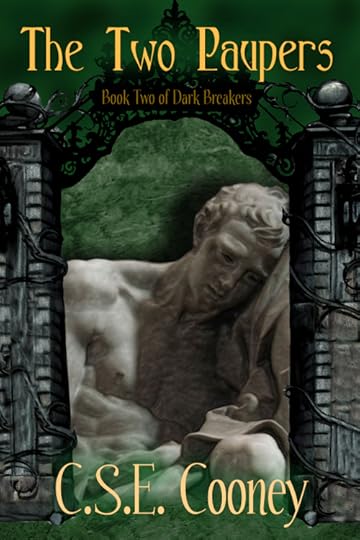
Cordelia Vorkosigan (Bujold’s Cordelia’s Honor), Gabi Réal (The Assimilated Cuban’s Guide to Quantum Santeria), Mary Griffith (Kage Baker’s Empress of Mars), Aphra Behn (particularly, in the play “Or,” by Liz Duffy Adams), and Hypatia of Alexandria.
Why?
Because I want to be a fly on their wall, dude.
9. What is your favourite story, novel or short or novella or epic poem, of all time?
Uh. That changes.
But my CURRENT favorite NOVEL of ALL TIME is Cordelia’s Honor. (It’s been on my list a while.) On that list has also been The Master and Margarita. And also the entire series known as The Lymond Chronicles, by Dorothy Dunnett.
Novella: “The Lineaments of Gratified Desire,” by Ysabeau Wilce. (Again, these are just present favorites. But once a favorite, always a favorite. But I do get to have other favorites. There just isn’t enough time to be monogamous about literature.)
Epic poem, epic poem, epic poem . . .
Well. It’s a long poem, but I’m not sure if it’s epic. “The White Road” by Neil Gaiman had a profound effect on me. When I first read it as a youngish twenties-something, I thought, “CHRISTINA ROSSETTI AND I ARE NOT THE ONLY ONES WHO WRITE STORY-POEMS, WHAT?”
I mean, not including Homer and The Highwayman. You know.
That said, every time I hear Rose Lemberg read a poem aloud, I sort of collapse into happy lava inside.
10. What’s next for C.S.E. Cooney?
I HAVE FINISHED MY NOVEL MISCELLANEOUS STONES: ASSASSIN.
First, it goes to the writing group. Then, it will find an agent. THEN, IT WILL TAKE THE WORLD BY STORM!!!
ALTERNATELY, nobody or their mother will want it, and then I WILL WEEP ALL OVER MY FACE, and then I will SELF-PUBLISH IT and write MORE. Because this is the 21st CENTURY, YO!
I want to write the third installment of my Dark Breakers novella trilogy, called “Desdemona and the Deep.” Then maybe collect all three self-published ebooks and sell it as a print book called DARK BREAKERS. To someone. Somewhere.
And I want to write the continuing adventures of a few characters from “The Bone Swans of Amandale” in two stories called “Nicolas and the Oracles” and “Silver and Bone.” Then collect all three in something called SILVER AND BONE. And try to sell it to someone. Somewhere.
And I want to write a musical. And more albums. And help design a few games. Games are fun, I’m learning. Slowly, but I learn.