Angela Slatter's Blog, page 45
March 7, 2017
Who’s Afraid Too?: Maria Lewis
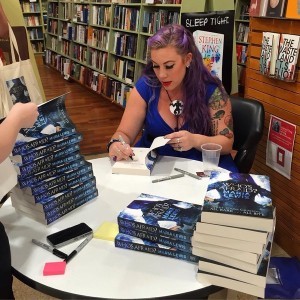
Photo by Alex Adsett
Maria Lewis got her start covering police rounds in a newsroom as a teenager and has been working as a professional journalist for the past 10 years. Making the switch from writing about murders to movie stars was not a difficult decision. A former reporter at The Daily Telegraph, she also wrote about all things film and entertainment related as the Showbusiness Reporter for The Daily Mail. Her work has appeared in the New York Post, Empire Magazine, WHO Weekly, Huffington Post, The Sunday Telegraph, Spook Magazine, Junkee, Daily Life, Penthouse, RendezView, CollegeHumor, News.com.au and SBS, to name but a few.
As a pop culture commentator she has appeared on SBS, ABC, Nine and many more, discussing everything from film feminism to queer representation on television. She is the producer and host of the Eff Yeah Film & Feminism podcast, which looks at feminism within the pop culture sphere. She contributed a story to Harper Collins’ anthology Hot Stuff: Surfing Love which was released in December, 2015.
Based in Sydney, she currently works on news program The Feed which airs on SBS 2 weeknights at 7.30pm. Maria can often be found spending much money on comics, watching horror movies at stupid hours, inhaling books on modern feminist theory (aka anything Roxane Gay touches) and holding on to the one belief she has had since she was five: that unicorns exist. She is most likely Idris Elba’s future wife. Most likely.
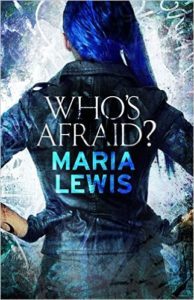
Who’s Afraid? is her debut novel and was released in Australia in January, 2016 through Hachette Australia and worldwide in July, 2016 from Piatkus/Little Brown Books. The sequel is also scheduled to hit bookshelves on January 17, 2017.
1. What do new readers need to know about Maria Lewis?
Probably nothing, to be honest J If they wanted to know anything I’d imagine it would be about the Who’s Afraid? book series as a whole rather than the weirdo who writes it.
2. So, what is Tommi Grayson up to in Who’s Afraid, Too? 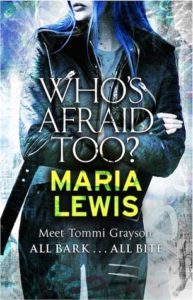
Who’s Afraid Too? picks up just a few days after the events that conclude Who’s Afraid? and Tommi is at a point of change. Unlike the first book where she was struggling to accept herself as a werewolf and all of the many things that encompasses, she’s now in a space of self-acceptance: she’s not fighting what she is anymore, she’s trying to better understand it. Events move from Scotland to Berlin and while Who’s Afraid? was very much all about Tommi and her experiences, the second book is more about the supernatural world as a whole and where she fits within it.
3. Tell me true: does Idris Elba still hold your heart?
*insert deep grunt here* Like, how can he not? What’s not to love about a hyper-intelligent, fit, British man? Also, did you see the charity Valentine’s Day campaign he has been running on social media? What. A. Babe.
4. You get to take five books and five movies with you to a desert island: name them.
Ha, I love this question! Movies: Alien, The Fifth Element, Attack The Block, Silence of the Lambs and I can’t pick between the final two so either The Phantom or An American Werewolf in London. Books: Matilda by Roald Dahl, Nobody’s Perfect by Anthony Lane, Red Dragon by Thomas Harris, Astonishing X-Men by Joss Whedon and Dead To The World by Charlaine Harris.
5. Do you think women and horror are a natural combo?
Oh most definitely, especially horror told by women. Just think of the unique perspective works by Mary Shelley, Susan Hill and Anne Rice were able to give us and how enduring those stories have been in the pantheon of horror tales. But when it comes to horror and women in general – namely female protagonists in horror tales – there’s a lot of horror women live with every day that manifests itself beautifully in the art form. For instance, I write stories about female werewolves at the moment and I was always drawn to those in pop culture because I felt like they said something unique and interesting about what it’s like to be a woman: from Ginger Snaps and Bitten, right through to Blood and Chocolate and When Animals Dream. While male werewolf stories fell into the trap of saying the same shit over and over again, women werewolves were embracing the idea of the feminine grotesque and the concept of living with duality.
 6.What kind of research did you do before you started writing a werewolf series?
It depends on what research you’re specifically interested in, as given the Who’s Afraid? series starts off in Scotland there was a lot of geographical and historical research required as well as studying the language that’s used by Scots within the age group of my characters. I’d always been obsessed with werewolf stories so I had a lot of fun creating my own mythology around that, combining aspects I liked and ditching things I didn’t. Yet there was also a lot of research required in areas that you mightn’t necessarily think, like speaking with a full moon expert from the University Of Queensland so I could describe and understand the specifics of the moon phases accurately and recruiting a doctor who I could double check everything from cancer diagnosis’ and treatment with to the placement of body parts in a grisly murder.
7. What do you look for, critically, when you review a movie?
Put simply, whether it’s good. Was it an enjoyable ride and were you entertained? Was the story fulfilling and how was that story told (i.e. cinematography, soundtrack, performances, direction)? Also, who told that story and what were the tools at their disposal? For instance, you judge a first time filmmaker on a different scale to a veteran and a $100M blockbuster differently to an indie flick.
8. Who would play Queen Tommi in the highly successful Who’s Afraid movie franchise?
Haha, I love both the use of ‘Queen’ Tommi and the assumption that if a Who’s Afraid? movie series happened it would be ‘highly successful’. So in alternate world where that would be a possibility, I don’t think there’s anyone better suited for the role of Tommi than Keisha Castle-Hughes.
9. You get to be a superhero for a day: Wonder Woman or Black Widow? 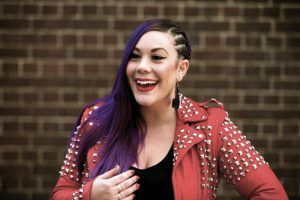
I love Black Widow as a character and her run in the comics is one of the most interesting and complex female characters BUT Wonder Woman is an Amazonian princess bad-ass WITH superpowers. You get flight, super strength and the ability to kick intergalactic assholes in the dick if you so choose – how could you not say Wonder Woman?
10. What’s next for Maria Lewis?
A nap.


March 6, 2017
THE LOVECRAFT SQUAD: WAITING
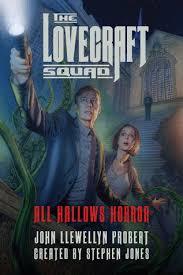 So, if you’ve noticed (and why wouldn’t you?) that the wonderful Mr John Llewellyn Probert has a new book out – The Lovecraft Squad: All Hallows Horror (that’s his cover to the left) – you might be thinking, “Well, where can I get more of this Lovecraft Squad of which you speak?”
I’m so pleased you asked.
Because, having followed the instructions of the Dark Lord/Editor Stephen Jones to the letter and returned my paperwork in a lifelike and almost convincing imitation of a well-behaved writer, I can announce that The Lovecraft Squad: Waiting is the forthcoming anthology in this world!
And I’ve got a story in it: “Howard’s Way”.
AND! these other fine folk (who constitute some of my favourite writers) also have stories in it: Peter Atkins, Stephen Baxter, Richard Gavin, Brian Hodge, Jay Russell, Kim Newman, Thana Niveau, Reggie Oliver, Michael Marshall Smith and Steve Rasnic Tem.
Yes, eleven-year-old Angela is squealing with delight. Forty-nine-year-old Angela is … also squealing with delight.
February 28, 2017
The Hidden People: Alison Littlewood
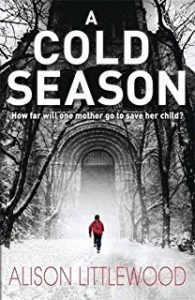
 Alison Littlewood’s latest novel is The Hidden People, set in Victorian rural society, and is about the murder of a young girl suspected of being a fairy changeling. Her other books include A Cold Season, a Richard and Judy Book Club selection; Path of Needles, a dark blend of fairy tales and crime fiction; and The Unquiet House, a ghost story set in the Yorkshire countryside. Alison’s short stories have been picked for several ‘Year’s Best’ anthologies and she won the 2014 Shirley Jackson Award for Short Fiction. She lives in a house of creaking doors and crooked walls in Yorkshire, England, and has a penchant for books on folklore and weird history, Earl Grey tea and semicolons. Visit her at www.alisonlittlewood.co.uk.
1. First of all, what do new readers need to know about Alison Littlewood?
I’m a horror/dark fantasy/just plain weird writer (take that how you will, ha har), hailing from Yorkshire, England. I had a busy year in 2016 with the launch of my sixth novel, The Hidden People, a short story collection called Quieter Paths and a book called Five Feathered Tales, which was produced in collaboration with a talented illustrator friend, Daniele Serra.
2. What was the inspiration for The Hidden People? 
I’ve been obsessed with fairy tales for a long time, and I love how the ‘little folk’ used to be represented in the older lore – sometimes benevolent and sometimes wicked, so that any encounter with them could be perilous. One aspect I keep returning to is that of changelings, where fairies steal someone away and replace them with an old worn-out fairy or stock of wood, bewitched to look like them. It’s an incredibly creepy idea, that the person sharing your house or your bed isn’t who you think they are.
There was a case in 1895 where a woman was burned to death on her own hearth because her husband accused her of being a changeling and apparently tried to scare it away. The Hidden People takes a similar murder as a starting point. A rational Victorian man of the city goes off to a little rural village to investigate what happened to his cousin, and soon comes into conflict with the old superstitions, even beginning to wonder if the ‘hidden people’ really do live in the hollow hills.
3. How does it differ from your previous novels?
It’s the first book I’ve set entirely in a historical era and the first one I’ve set in Victorian times, so the research was vital. I thought at first it would be onerous, but I rather fell in love with it. It’s also a more complex book, in that I was halfway through it when I realised there was a whole other layer of events going on in Halfoak village than I’d suspected. I chose to write it in Victorianesque prose, so the language was really important too.
 4. When you’re in the mood to read, who do you choose?
Well I’ve been reading a lot of Victorian fiction to stay immersed in that era, but I also love keeping up with contemporary writers working in the genre. Recent reads include Sarah Pinborough, Joe Hill, Kate Farrell, Paul Tremblay, Ralph Robert Moore, Simon Bestwick, Jason Arnopp and Tim Lebbon. I love all things fairy tale related, including your work Angela, and I’m currently dipping into some Swedish stories I hadn’t come across before. I also enjoyed Paula Guran’s Beyond the Woods: Fairy Tales Retold.
5. What attracts you to writing horror?
I’ve heard someone describe it as a ‘strange kind of sickness’, which probably sums it up! I didn’t particularly set out to write horror. I didn’t even used to be a major fan of the genre – I pretty much read anything and everything I got my hands on. But when I started writing I got excited by the weird and strange ideas that started popping into my head. I think it’s the mystery at the heart of it all that attracts me, the questions we just can’t answer. Horror looks at some of the fundamental questions of life (and death), so while it’s often relegated to a dusty shelf at the back of the bookshop, I see it as being central to what it means to be human.
6. What was the inspiration behind Path of Needles? 
That was really the gruesome and grotesque nature of some of the early fairy stories. They can be gloriously cruel and bloody, and yet it all seems safe because it takes place in the distant world of fairy tales. I kept thinking, ‘What if this was to happen in our world?’ And that led me to write a combination of fairy tale and crime fiction. There’s a serial killer staging crime scenes like some of the early versions of the stories we think we know, but at the same time slightly off-kilter things are happening, as if the investigator is being drawn into a fairy tale of her own.
7. Can you remember the first story you read that made you think “I want to be a writer”?
I really can’t. I think deep down, every story probably made me want to be a writer. But I thought of it as something other people did, and not really a possibility for me. Reading On Writing by Stephen King started the process of making me think otherwise. Some of the first stories I fell in love with though were Hans Christian Andersen’s fairy tales. I cried over The Little Mermaid so many times, but loved it as well. They’re just so beautiful and magical.
 8. Which five writers have been your biggest influences?
Well after the above I would definitely say Stephen King. On Writing was important to me but his were also some of the first horror stories I read, unless you count some of Andersen’s fairy tales! I love the mythic depths in Neil Gaiman’s work, as well as his capacity to write children’s fiction, adult fiction, non-fiction, graphic novels or whatever he feels like turning his hand to. Dan Simmons is the master of conjuring a sense of place. Shirley Jackson is wonderful at building a creeping sense of disquiet in subtle layers. And the late Graham Joyce was a big influence, not just because of his wonderful, magical, generous novels, but because he was a lovely person who gave me some great advice when I was starting out.
9. You can take five books to a desert island: which ones do you choose?
Only five? Argh! I’d take The Road by Cormac McCarthy, Oscar and Lucinda by Peter Carey, Wuthering Heights by Emily Brontë and Neverwhere by Neil Gaiman, as well as a huge book of folkloric short stories, The Faery Reel, edited by Ellen Datlow and Terri Windling. Of course, my list would probably be different if I wrote it tomorrow. And I’d still try and smuggle in my Kindle.
10. What’s next for Alison Littlewood? 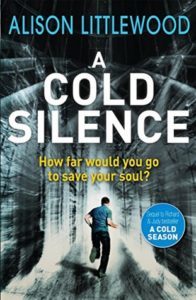
I’m currently working on the next novel, The Crow Garden, which is a journey through Victorian mesmerism, séance rooms and lunatic asylums. That’s pretty much occupying my time at the moment, as I’m not good at multi-tasking when it comes to writing! I have also been working on a novella about photographing fairies, though, which keys into the incidents at Cottingley in the early twentieth century. Some short stories are scheduled to appear in anthologies this year, the first of which is Murder Ballads from Egaeus Press, which I believe a certain A. Slatter will be appearing in too . . . What comes after that is kind of an amorphous mist which will probably evaporate if I try and put it into words too soon!
February 27, 2017
New Fears
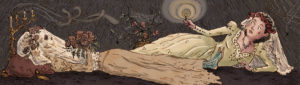 The delightful Mark Morris has announced the Table of Contents for his first Titan Books horror anthology, New Fears 1 (available in September 2017).
I’m very pleased that my story “No Good Deed” (set in the Sourdough world) is among others by some of my fave authors! The cover reveal will come later, but you might like to know that “No Good Deed” was inspired by the banner art (above) Kathleen Jennings did for my Patreon page!
THE BOGGLE HOLE – Alison Littlewood
SHEPHERDS’ BUSINESS – Stephen Gallagher
NO GOOD DEED – Angela Slatter
THE FAMILY CAR – Brady Golden
FOUR ABSTRACTS – Nina Allan
SHELTERED IN PLACE – Brian Keene
THE FOLD IN THE HEART – Chaz Brenchley
DEPARTURES – AK Benedict
THE SALTER COLLECTION – Brian Lillie
SPEAKING STILL – Ramsey Campbell
THE EYES ARE WHITE AND QUIET – Carole Johnstone
THE EMBARRASSMENT OF DEAD GRANDMOTHERS – Sarah Lotz
EUMENIDES (THE BENEVOLENT LADIES) – Adam Nevill
ROUNDABOUT – Muriel Gray
THE HOUSE OF THE HEAD – Josh Malerman
SUCCULENTS – Conrad Williams
DOLLIES – Kathryn Ptacek
THE ABDUCTION DOOR – Christopher Golden
THE SWAN DIVE – Stephen Laws
February 22, 2017
Corpselight
Little cover teaser
Well, the cover blurb’s out there, so …
Life in Brisbane is never simple for those who walk between the worlds.
Verity’s all about protecting her city, but right now that’s mostly running surveillance and handling the less exciting cases for the Weyrd Council – after all, it’s hard to chase the bad guys through the streets of Brisbane when you’re really, really pregnant.
An insurance investigation sounds pretty harmless, even if it is for ‘Unusual Happenstance’. That’s not usually a clause Normals use – it covers all-purpose hauntings, angry genii loci, ectoplasmic home invasion, demonic possession, that sort of thing – but Susan Beckett’s claimed three times in three months. Her house keeps getting inundated with mud, but she’s still insisting she doesn’t need or want help . . . until the dry-land drownings begin.
V’s first lead takes her to Chinatown, where she is confronted by kitsune assassins. But when she suddenly goes into labour, it’s clear the fox spirits are not going to be helpful . . .
Corpselight is the sequel to Vigil and the second book in the Verity Fassbinder series by award-winning author Angela Slatter.
February 21, 2017
Shadows & Tall Trees 7: Rosalie Parker
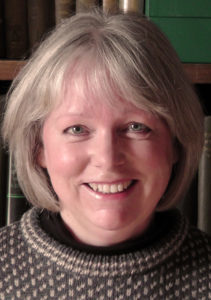 Rosalie Parker runs Tartarus Press with her partner, R.B. Russell. She has written two short story collections The Old Knowledge and Other Strange Tales (Swan River Press, 2010, reprinted 2012) and Damage (PS Publishing, 2016), and her stories have appeared in several anthologies. She is also a film maker, co-directing Robert Aickman, Author of Strange Tales and Coverdale, a Year in the Life. Rosalie lives in the Yorkshire Dales National Park in the UK.
1. What inspired your story in Shadows & Tall Trees 7?
Lacking inspiration, I asked Ray (Russell – my partner) for some ideas for a story. He came up with the idea of a lake that goes on for ever, which was the starting point for ‘The Attempt’, although the original idea was modified and turned into something else.
2. Can you recall the first story you ever read that made you think “I want to be a writer!”?
I’ve always wanted to be a writer. I can’t remember a specific story – I read loads as a child.
3. What scares you?
Just about everything! Myself more than anything.
4. You can take five books to a desert island: which ones do you choose? 
I find this question impossible to answer.
5. What’s next for you?
I’ve been writing quite a lot of short stories recently, so maybe another collection.
February 20, 2017
Conflux 2017 GoH
 First Conflux Guest of Honour has been announced and it’s me!
Squeeee! Much honoured. 
February 19, 2017
Corpselight Launch
Little cover teaser
So, the date and time for the Corpselight launch are locked in, but no bookings yet – just date save this, okay?
Brisbane Square Library – Friday 14 July 6pm
266 George Street, Brisbane City Q 4000
And I’m getting badges and bags made up again, too. Obviously, Kathleen Jennings designed.
Aurealis Awards Shortlist!
 And the shortlists for the Aurealis Awards (for 2016 works) has been released.
I’m delighted to have five nominations, and I’m extra delighted to be in such great company on these lists!
BEST HORROR SHORT STORY
“The Red Forest”, Angela Slatter (Winter Children and Other Chilling Tales, PS Publishing)
BEST FANTASY NOVELLA
“Finnegan’s Field”, Angela Slatter (Tor.com)
BEST COLLECTION
A Feast of Sorrows, Angela Slatter (Prime)
Winter Children, Angela Slatter (PS Publishing)
BEST FANTASY NOVEL
Vigil, Angela Slatter (Jo Fletcher Books)
 … is open!