Angela Slatter's Blog, page 47
February 8, 2017
Problem Daughters: Rivqa Rafael
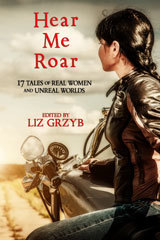
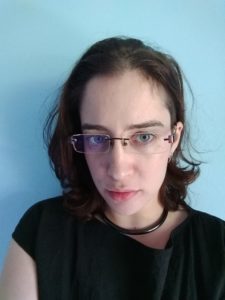 Rivqa Rafael is a writer and editor based in Sydney. She started writing speculative fiction well before earning degrees in science and writing, although they have probably helped. Her previous gig as subeditor and reviews editor for Cosmos magazine likewise fueled her imagination. Her short stories have appeared in Hear Me Roar (Ticonderoga Publications), The Never Never Land (CSFG Publishing), and Defying Doomsday (Twelfth Planet Press). In 2016, she won the Ditmar Award for Best New Talent. When she’s not working, she’s most likely child-wrangling, playing video games, or practising her Brazilian Jiujitsu moves. She can be found at rivqa.net and on Twitter as @enoughsnark.
1. First of all, what do new readers need to know about Rivqa Rafael?
Like many writers I know and love, I don’t write in a single genre. Maybe I’m still “finding my voice”, but I have no desire to settle down in this respect. Right now, I’m writing mostly cyberpunk and steampunk, with the occasional dystopia, but sometimes I write horror and fantasy. Just accidentally; it could happen to anyone. I recently flipped an urban fantasy to far-future cyberpunk, so nothing is safe. Most of my protagonists are women, many are queer, and some are Jewish (write what you know, right?). They’re usually doing something cool or brave or foolish; if that’s appealing, please check out my work.
2. What can you tell us about the new anthology, Problem Daughters?
Problem Daughters aims to provide space for the voices of marginalised women, those who aren’t accepted in mainstream feminism because of who they are. This includes, but isn’t limited to, disabled women, women of colour and religious women. We want thoughtful, beautiful stories and poems about what it means to be a woman whose very existence is deemed a “problem” by many. Our call for submissions (http://press.futurefire.net/p/problem-daughters.html) isn’t open yet, but gives more details, for anyone who’s intrigued.
It’ll be published by Futurefire.net Publishing, and I’ll be co-editing it with Nicolette Barischoff and Djibril al-Ayad. It’s my first time editing and publishing fiction, so I’m already on a steep learning curve, but I’m really enjoying the process so far. We’re hoping to be ready to give people a sneak peek at WorldCon in Helsinki, and we’re crowdfunding (http://igg.me/at/problem-daughters) until 14 February so that we can pay our authors pro rates, and produce a gorgeous book.
3. Who are your literary influences? 
It’s always hard to pinpoint the answer to this one! I often feel like my writing is the sum of everything I’ve ever read, rather than the work of one author, or even several. Plus, there are writers – Margo Lanagan and Sofia Samatar come to mind – whose style I admire, but am too intimidated by to ever try to mimic. I have the same feelings about Dan Simmons’s Hyperion and Cat Sparks’s forthcoming Lotus Blue when it comes to intricate structure.
4. What scares you?
Zombies. No matter how overdone they are, and how many times I tell myself they’re not real, something about them really gets me on a visceral level. Despite – or because of – that, I have written a zombie story (it’s flash, and out on submission at the moment). I’m proud of the story, but unfortunately it wasn’t an effective therapy.
5. Who’s your favourite fictional character?
This question is too hard. Way too hard! But if I have to pick just one, I’ll say Phèdre from Kushiel’s Dart. Sold into indentured servitude by her parents, Phèdre becomes a courtesan both because she wants to, and because it’s a useful way to politically advance her adopted house. She’s smart, loyal, brave, and uses her not inconsiderable skills gracefully and unapologetically.
6. How do you balance the day job of editing with creative writing?
It’s not so much balance as lurch wildly between one and the other. Between work and child-wrangling, writing often happens in snatches, with scenes scribbled down or tapped into my phone. On an ideal day, I get some writing in before I start editing, but I don’t (and indeed can’t) write every day. Letting ideas ferment and having space from my writing is really important for me. Plus, the medical writing I edit finds its way into my writing in sometimes unexpected ways, so there’s some synergy there.
 7. You’ve started making a name in short fiction – any plans for longer works?
Indeed, I have started referring to my current WiP as “longer work” or “novel/la”. It’s a cyberpunk thriller about corruption, secrets and family (note that the tagline is just as WiP as the manuscript). It’s been on the boil (admittedly, with lots of time off the stove) for more than ten years now. It’s either a long novella or a short novel; I keep saying “this is the last draft”, then having more ideas. I hope this is the year I work it out, though, because I always have other ideas clamouring for attention.
That said, I don’t write short fiction as practice for longer works; I write it because I love it, and I hope to continue that as well.
8. Can you recall the first thing that you read that made you think “I want to be a writer”?
Not really. I started writing at a very young age, and made my parents cry with laughter when I plagiarised Star Wars extensively in a story I wrote when I was seven (the line “only you could be so bold” definitely featured). As an adult, my drive to write has ebbed and flowed with circumstance, but as a child, it was an unquestionable part of who I was. It was the only endeavour that I was consistently encouraged in (compared with art and music, where I have battle scars from unkind teachers), and I think that has more to do with the fact that I’m here, after a couple of reboots, than any particular work I read as a child.
9. You get to take five books to a desert island: which ones do you choose? 
I only very rarely reread books these days – so many books, so little time! So, to start with, a couple of things I’ve been meaning to get to: Octavia Butler’s Xenogenesis trilogy (I can cheat and have the Lilith’s Brood omnibus, right?) and N.K. Jemisin’s The Fifth Season. A giant anthology of spec fic would be nice to have, but there are way too many good ones to choose from! I’d take Pride and Prejudice for comfort reading, and I’d need some sort of survival guide to keep me going on this desert island, as I have few of the skills I’d need to actually stay alive.
10. What’s next for Rivqa Rafael?
Problem Daughters will keep me busy for a while. I don’t expect to get much of my own writing done until the end of January, when my kids go back to school, but I’m raring to go on short and long works, as well as the anthology.


February 7, 2017
Crossroads of Canopy: Thoraiya Dyer
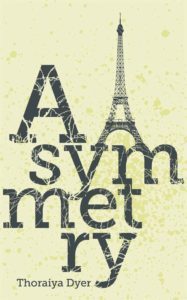
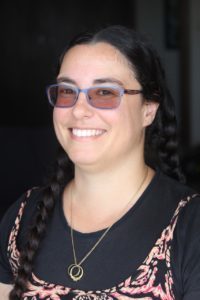 Thoraiya Dyer is an Aurealis and Ditmar award-winning, Sydney-based writer and lapsed veterinarian. Her short science fiction and fantasy has appeared in Clarkesworld, Apex, Cosmos, Analog and various Australian and US anthologies. Four of her original stories are collected in Asymmetry, available from Twelfth Planet Press. Her first novel, Crossroads of Canopy, a big fat fantasy set in a magical rainforest, is forthcoming from Tor in January 2017. She is @ThoraiyaDyer on Twitter and her website is thoraiyadyer.com.
1. First of all, what do new readers need to know about Thoraiya Dyer?
I’m Australian, write from a beachside Sydney suburb, have won awards for my short fiction (I’ve even shared them with the Slatter/Hannett team!) and am exhilarated to be bringing you my magical rainforest novel, Crossroads of Canopy, in less than a month. Eep!
2. What was the inspiration for Crossroads of Canopy specifically, and the Titans
’
Forest series in general?
I’m going to answer by quoting a previous interview: I still have the bit of scrap paper I first wrote the idea on. It reads: “Write an epic fantasy novel about a tropical rainforest where countries are not horizontal, but vertical, and defended by magic.” Even though I planned Titans’ Forest as a standalone initially, Crossroads of Canopy still fits that basic description. A pantheon of reincarnated gods and some mythically reimagined Australian fauna and flora made its way in there, too.
I started writing the book after a trip to Cairns and the rainforests up there in tropical Queensland. All the other rainforests I’d been to wanted to come to the party as well – Nepalese forests, Canadian ones, Tasmanian and Singaporean and New Zealander. I put my version of the Hanging Gardens of Babylon in there because of a book on ancient civilisations that my Dad brought back from Lebanon for me.
3. This is your debut novel – what was the process like for selling it to Tor? 
Years of fun and years of waiting. A fun year of writing, followed by a year of waiting as it leaped such hurdles as winning my agent’s approval and then actually selling to a publisher. Then two years of fun (?) edits interspersed with more waiting. I regret nothing! I am thrilled with the end result.
4. When you’re in the mood to read, who do you choose?
This week in snatched moments I’ve been switching between old faithfuls – Leckie, Pascoe and LeGuin – and some non-fiction on the Great Depression (Weevils in the Flour, Lowenstein) and native foods (Bush Tukka, Martin).
5. Is the story influenced a lot by the Australian landscape?
Yes! Several Australian ecosystems have purposefully and determinedly wangled their way into the setting. Others, not so much. There wasn’t room for deserts, oceans or tundra. Maybe next series.
6. If you weren’t a writer, what would you be?
A veterinarian! (See: http://www.tor.com/2016/11/16/wildlife-vet-not-the-worst-day-job-in-the-world/ )
 7. Can you remember the first story you read that made you think “I want to be a writer”?
Some strange combination of the BFG and Return of the Jedi? Raymond Feist’s Magician finished in a different way to the way I wanted, and probably steered me towards fantasy. The Eye of the World certainly steered me towards Tor. I answer this question differently every time I’m asked and can’t really be sure. Childhood is so nebulous, isn’t it?
8. Which five writers have been your biggest influences?
You know, I’ve watched you ask other writers this and always thought that it was cruel. I’ll say Juliet Marillier, Michael Ende, Fyodor Dostoyevsky, Pat O’Shea and Patricia Wrightson, mainly so they can form the tranquil acronym, MEDOW.
(Not unlike forming Voltron).
9. You can take five books to a desert island: which ones do you choose?
The Wheel of Time (hey, it counted as a single work for Hugo purposes), Gibran’s The Prophet, Dune, a book of Romantic poetry, and whichever survivalist guide seems applicable to the local environment. In some places you can only get water by digging up water-storing frogs, and I’d hate to start slurping on the wrong kind.
10. What’s next for Thoraiya Dyer?

Art by Marc Simonetti for Crossroads of Canopy
I’m trying to stop a ringtail possum from eating my passionfruit vine by putting tabasco sauce on the leaves, but it clearly enjoys a bit of spice. And there’s a pearling exhibition coming to the Maritime Museum. Oh, you mean writing? It’s Books #2 and #3 all the way! And launches. Many lovely launches. Please come to see me in Sydney, Newcastle, Brisbane, Canberra or Melbourne. Check my website for details, and wish me luck!
February 6, 2017
Corpselight Cover
 Nah, not really. Just messing with you.
Sorry. 
I’ve seen it, though! You’ll see it soon.
GenreCon 2017
 So, Emma Viskic and I are the Australian writer guests at GenreCon 2017! We’ll be joining international writer guests Nalini Singh and Delilah S. Dawson in being all professional-like in November.
Registration opens on 20 February.
February 1, 2017
SFRevu!
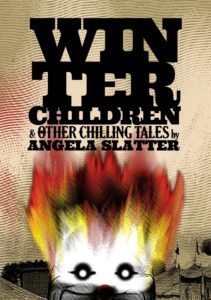 SFRevu gives some serious love to Winter Children and Other Chilling Tales!
The following stories really stand out as unforgettable masterpieces.
In the enticing novelette “Home and Hearth” a wayward teenager goes back home after being cleared from a terrible accusation. Described with cold realism, the hidden horror gets finally revealed with sudden ferocity.”The October Widow” is a spellbinding, perfectly crafted story of witchcraft and revenge apt to chill the reader to the bone.
The title story, “Winter Children”, an extremely dark and unsettling piece, tells us how a young woman troubled by the memory of her murdered sister at last meets the assassin in a final, tragic confrontation.
Highly recommended.
The rest is here.
2016 Locus Recommended Reading List
 Woohoo!
Both Vigil and A Feast of Sorrows: Stories have berths on the Locus Recommended Reading List for 2016!
And now we dance the dance of joy.
January 31, 2017
Hammers on Bone: Cassandra Khaw
 Cassandra Khaw is a London-based writer with roots buried deep in Southeast Asia where there are sometimes more ghosts than people. Her work tends to revolve around intersectional cultures, mythological mash-ups, and bizarre urban architecture.
When not embroiled in fiction, she writes about technology and video games for a variety of places including Eurogamer and Ars Technica UK. She really likes Coca Cola-flavored gummy bottles. And plushies! She loves fuzzy animals. Her best friend is a woodland bunny named Judy.
She is repped by Michael Curry of Donald Maass Literary Agency and took some time out of her busy schedule to be offended by my impertinent questions. But really, she’s one of my favourite up-and-comers – read her!
1. First of all, what do new readers need to know about
Cassandra Khaw
? 
She really, really likes plushies, and if you meet her at a convention and ask nicely, chances are she’ll introduce you to a tiny emergency bunny named Jelly. (Is this such a strange eccentricity? To an extent. But I swear there’s good reason for it. When my dad died, I became attached to a fuzzy gray bunny plush named Judy. For months, I couldn’t function if I was away from her from more than a few hours. Took towards carrying the plush in my bag. But that became ungainly. Eventually, I acquired her miniature version – who now lives in my laptop bag always.)
2. Can you remember the first story you read that made you think “I want to be a writer”?
Oh, toughie, that one. A big part of my inclination towards storytelling was my father’s influence. My earliest memories were of him weaving strange, half-mythic stories of his life and whatever he could remember of things he’d read. I grew up on the strangest things. Later, he’d start buying me books, him and my mom. Anyway. If I had to point to a single story I’d read, it is probably this … story from a fairy tale compendium that they’d bought me ages ago. Something about a princess, pale as glass, (it was illustrated) who needed to be carried across a river. She lounged on a boat, gossamer and snow, as a beautiful man steered them. I have NO idea if that was exactly the story I read, but I remember stroking my fingers across the paper, remember memorizing that picture (I was probably 4? 5?), and remember wanting to make something just like that.
 3. What was the inspiration for Hammers on Bone?
Not a happy story. Hammers on Bone is based on the particulars of a real life case, with some of the dialogue taken directly from interview transcripts. The protagonist, of course, is fictional. But the underlying themes of abuse, the fact that there were two kids at the heart of this – all that part is true. I wrote it initially in an outburst of desperation. Being only tangentially related to the situation, I couldn’t do a damn thing. I was just there. Helplessly watching. So I started to write something because I had nowhere else to channel that energy. And I wanted to give the kids a happier ending – somewhere where they wouldn’t be hurt. Slowly, though, that changed. I went from wanting to write them a different ending, to wanting to write something that could be given to them when they’re older: a reminder that you can bleed your monsters, a reminder that your monsters can hurt. I wanted to tell them it was never going to be okay the way it is for some other kids, but you can have teeth and fangs too, you can survive whatever you’re suffered.
4. One of my favourite stories of yours is “And In Our Daughters We Find A Voice”: it’s absolutely astonishing and confronting and beautiful. Where did that idea spring from? Or all of those ideas? 
I honestly don’t remember. I think I started writing that story when I was in a slump, and convinced that I had absolutely no capacity for writing and everything was a flu – no, wait. I remember now. It was college humor. They ran a comic strip about ‘how Disney princesses are as mothers’ and one involved Ariel spewing out thousands of little eggs. It made me laugh and it made me think. So, that combined with the ‘Can I even write wagh’ vibes that I was having that day, it all started to come together. I wanted a toothy, deepwater mermaid that wasn’t anything like the Disney version. As I wrote, the mermaid started adopting traits from my mother – someone who’d been quiet forever, who endured torments for her children. My mom found a bloodless exit to her troubles. (She’s happy and healthy right now, thank you very much.) But I figured she might have wanted to stab my father at some point, so this is my nod towards her hypothetical impulses.
Love you mom.
5. Cruel question: science fiction or fantasy? You can choose only one ? why do you choose what you choose?
WHY WOULD YOU DO THIS TO ME – uh. Fantasy. I grew up in Malaysia, a country of ghost stories, a place where we hold operas for the dead, keep street shrines for little gods. The idea of the supernatural is part of me, for all that I might believe in it. I grew up, breathing myth and urban legend. I can scarcely give that away for some random bits of technology. (Please don’t keep my electricity.)
 6. Even more cruel question: fairy tale or myth? You can only ever use one as a story anchor ? why do you choose what you choose?
ANGELA. Do you just hate me? Do you? DO – actually, no. That’s an easier question. Riffing on my previous answer, I grew up elbows-deep in mythologies. There’s an abundance of them out there, and I’m not talking about the Greecian or Nordic varieties. Hundreds of cultures. Hundreds of localized deities. Hundreds of possibilities. Myth would definitely be my choice here.
7. Favourite movie and favourite TV show?
I don’t think I really have a favorite movie, although I love DARK CITY deeply. If I had to pick, I’d actually say THE MATRIX. As for favorite TV show, that’s easy. We Bare Bears: https://www.youtube.com/watch?v=l3FoZelBGXU
8. You’re sent to a desert island and you can take only five books, so what are they?
Girl in the Well
The Starlit Woods
The Bitterwood Bible
City of Blades
A Face Like Glass
9. When you’re in the mood to read, who do you choose? 
What. No fair. I’m always in the mood to read but I’m also weirdly absorbent. My writing tends to get influenced by whomever I’m reading at the moment. So, if we’re talking about who I want to read while I’m busy with a project, it’d go something like this.
You or Ursula Vernon when I’m in the mood to sculpt a fairy tale.
Peter Watts or Benjanun Sriduangkaew when I’m working on science fiction.
Jonathan L. Howard when I inexplicably want to sound British.
10. What’s next for Cassandra Khaw?
HOW DARE – ohwait. God. I don’t know. This is the year where I plan to finish my novel. I’m also drafting out a picture book based on my ridiculous 100 Beauty Tips From Beyond tweet series, drafting out a nonfiction book, drafting out a Persons non Grata novelette, drafting out a silly rom-com about a girl who can’t cook who really wants to run a food truck and – what were we talking about again?
January 24, 2017
Shadows & Tall Trees 7: Michael Wehunt
 Michael Wehunt’s short fiction has appeared in Cemetery Dance, Electric Literature, The Dark, Year’s Best Weird Fiction, and The Year’s Best Dark Fantasy & Horror, among others. His debut fiction collection, Greener Pastures, was published in 2016. He lives in Atlanta with his partner and their pup. It is also said that he lives in the woods and online at www.michaelwehunt.com.
1. What inspired your story in Shadows & Tall Trees 7?
Poets. Not so much poetry itself as the people who write it, the way they see the world. How they see aging, time, and love interests me because the way they tell us about these things is so profound. But I imagine poets see the world both very differently and exactly the same as anyone else does, with the same flares and oversights. I’d been in a phase of reading Mary Oliver, James Dickey, and Louise Glück, each of whom can be very earthy poets in their own unique ways. So an earthiness lent itself to me, and the story came to me through Corrdry Smith.
2. Can you recall the first story you ever read that made you think “I want to be a writer!”
Like countless others, as a kid I’d think “I want to be a writer!” when reading Stephen King. But I don’t count that. It was when I read The Bell Jar by Sylvia Plath, when I was eighteen or nineteen, that I truly realized not just what fiction could do but the power of the words and the sentences and how their lungs were built. I wanted to do that. It would be almost as long again before I actually started writing fiction, but that novel has never left me for a single day.
3. What scares you? 
Losing the people I love and their place in the fabric of myself. I’ve been preemptively mourning them in my work for a while now, I think, and I hope that when the time comes, and the heart begins to have holes punched into it, it will have laid at least a thin foundation of coping. For now, I enjoy my time with them. Also, wasps and hornets, although not nearly as much terror is stirred in me as when I was younger.
4. You can take five books to a desert island: which ones do you choose?
Flannery O’Connor – The Complete Stories
Julian Barnes – The Sense of an Ending
Cormac McCarthy – The Road
David Mitchell – Cloud Atlas
Louise Glück – Poems 1962-2012 (Of all the poets I love, this book is the thickest and would eat up the most hours stranded on that island.)
 5. What’s next for you?
I’m writing my first novel and have recently reached the point where I can claim to be “deep into it.” Past the point of no return, certainly, at least to my mind. I’m hoping to finish it sometime in early summer, then I’ll spend the rest of the year tweaking it and seeing what its fate might be, along with writing a handful of new stories for my eventual second collection.
January 23, 2017
Revisiting old tales
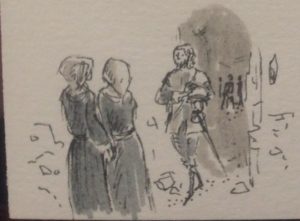
Art by Kathleen Jennings
“Terrible As An Army With Banners” was one of the hardest stories I’ve ever had to write (and can never, ever read it out loud) … now I need to find that voice again and am bracing myself.
Dearest Elswide,
This is written in haste for the last boat is departing soon and I will not be on it, although I hope this will be. I beg you keep safe these pages, for they record an end – such an end, sister! Such an end – and I would have this chronicle kept safe. If you can, have it copied and sent forth so it may be found and read, and the truth of our demise – the last days of the Citadel at Cwen’s Reach – known.
You did not agree with my decision, sister, when I left home and joined the order. I know our silences have been long and fraught, but you are my blood and that counts for much. Your children are my family, too, and they should be told what I have done. They should know who the Little Sisters of St Florian were and they should be proud, though soon some will try to erase us from the world’s memory. Elswide, I did not desert you, I did not betray our shared heritage by leaving. I followed the path that was, to me at least, obviously laid out before me, but you have ever been in my thoughts. I’ve not forgotten you.
Please know that I have never regretted my decision, not even now when the end is upon me, not even when I can hear the sound of the siege engines at the gates. Know that I did the right thing and that my place was always meant to be as part of this community. I was always meant to have a quill in my hand and my nose pressed close to a blank page that begged to be covered with words. I was always meant to be here at the end. I write this knowing that I am a thing, a final thing, an omega.
Do not despair, sister, for in all endings there are new beginnings; from fire there comes new life, and from chaos, creation.
Your sister,
Goda
From “Terrible As An Army With Banners”, The Bitterwood Bible and Other Recountings
January 20, 2017
Working on …
 … getting The Tallow-Wife and Other Tales finished by the end of January before I start on the third and final Verity Fassbinder book, Restoration.
Here’s a sample from one of the The Tallow-Wife tales, “Embers and Ash”. Keen-eyed readers will notice the name of an old friend from St Dymphna’s.
The woman shakes her head, says, ‘I shall be above.’
‘There’s nothing there,’ Lis protests.
The woman shrugs. ‘There are memories. That will be enough.’
Lis watches as the woman makes her way to the door, then as an afterthought calls, ‘Do you have a name?’
The woman smiles and Lis thinks she will not answer.
‘I am Mercia and once I trod the corridors of the Citadel.’
And she is gone before Lis can say But the Citadel fell over three centuries ago.