
Maggi Andersen's Blog, page 56
September 23, 2013
BLOG HOP! Castles, Customs, and Kings released 23rd Sept, plus a giveaway!

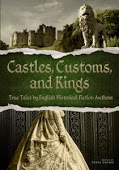
The English Historical Fiction Authors blog hop are celebrating the new release of Castles, Customs, and Kings: True Tales by English Historical Fiction Authors. A book filled with fascinating historical facts which are a joy to read.
AMAZON
A compilation of essays from the English Historical Fiction Authors blog, this book provides a wealth of historical information from Roman Britain to early twentieth century England. Over fifty different authors share hundreds of real life stories and tantalizing tidbits discovered while doing research for their own historical novels.
For the blog hop, authors are writing an article featuring a castle. I've chosen Highcliffe Castle.
Highcliffe Castle and it's fascinating owner, Charles Stuart, Lord Stuart de Rothesay, feature in the book, so I thought I'd write more about this house's sad history which mirrors so many of the wonderful English houses lost to us. Thankfully, at least the shell of Highcliffe Castle remains.
 Highcliffe Castle as it stands today
Highcliffe was built on the cliff-top site overlooking Christchurch Bay, mainly between 1831 and 1836, by Charles Stuart, Lord Stuart de Rothesay, a distinguished diplomat and philanderer, who had a deep love of the area since he was a boy. He was also a keen collector, particularly during his years as British ambassador in Paris after the Napoleonic Wars and again in 1828-31. Paintings, furniture, tapestries and books were accumulated voraciously.
 The Octagon
The Castle is one of the most important surviving houses of the Romantic and Picturesque style of architecture, which flourished at the end of the 18th century and the beginning of the 19th century. Its significance is recognized nationally by its Grade 1 status on the Statutory List of Buildings of Special Architectural and Historical Interest. It was a romantic medley of Gothic fantasy: The great hall with its soaring staircase is like a set for a Gothic novel and ornate late-eighteenth and early-nineteenth century French decoration.
 The Hall, with the grand stairs that led to only a few bedrooms.
A large amount of medieval French masonry, shipped across the Channel, was used in its construction. The Norman and Renaissance carved stone, along with the Castle’s Gothic revival features and ancient stained glass, makes it appear older than it is.
On Lord Stuart’s death in 1846, Highcliffe Castle was left to his widow, who lived there till her death in 1867. It then passed to her daughter, Lady Waterford, who, determined to keep the house in the Stuart family, left it on her death in 1891 to a distant cousin, Edward Stuart-Wortley, whom she had met only twice when she made her decision. His widow, Violet, lived on until 1953, although her last three years were spent at nearby Chewton Mill.
The Castle’s survival into the second half of the twentieth century is remarkable as it was never a landed seat and had no estate to support it. In 1950 The Estates Gazette reported its sale with 75 acres by Mrs Stuart-Wortley’s son-in-law, the Earl of Abingdon, for thirty thousand pounds, to be used as a children’s home. However, the sale failed to go through.The furniture was subsequently auctioned off and the building disposed of privately to the Congregation of the Sons of the Immaculate Heart.
 The Library
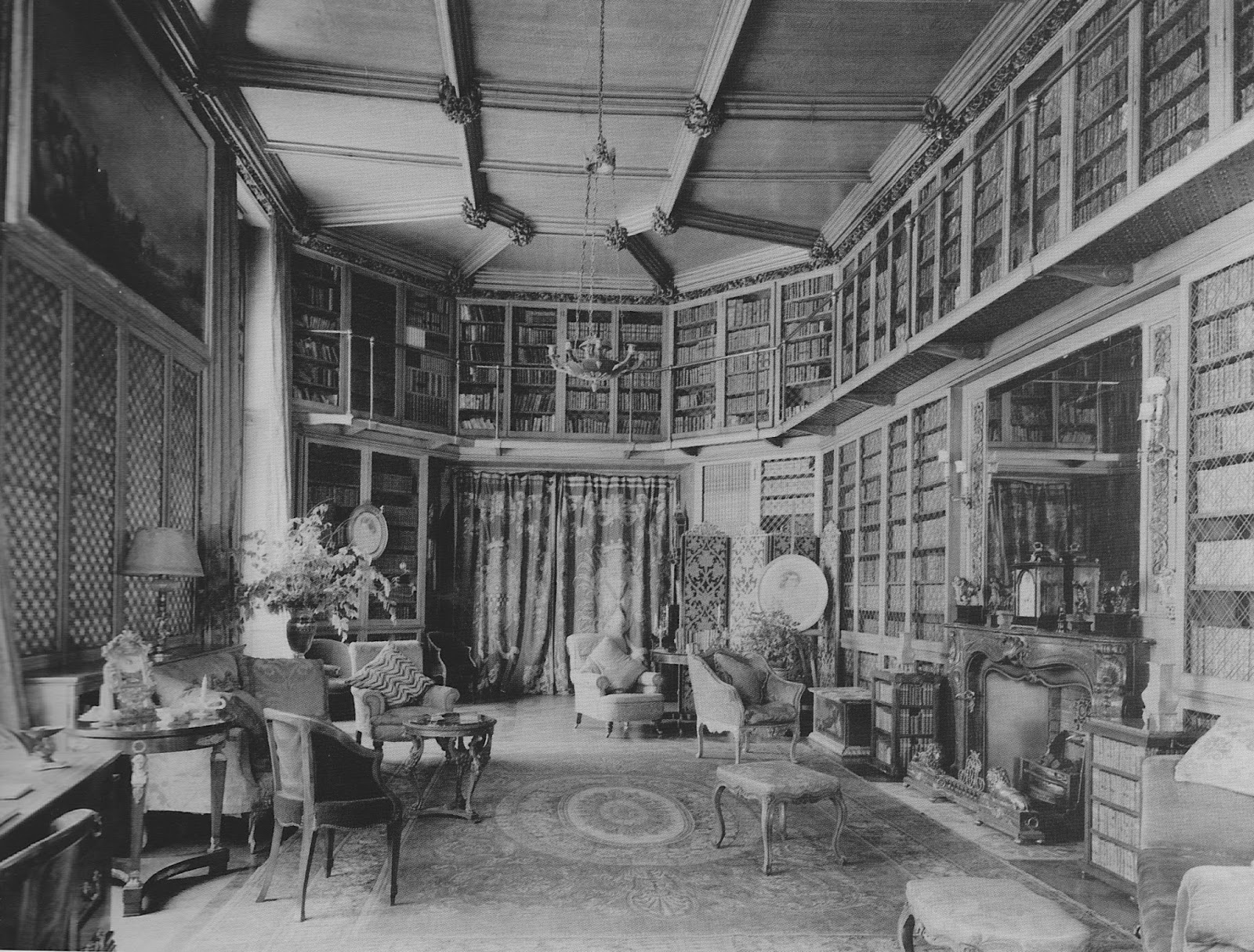
After a fire in 1967 the Castle was sold to a businessman. There followed a fight between the owners, (who wanted to demolish it and build 150 beach huts in its place), and the authorities. Shortly after the application was rejected, fire broke out in the wood-panelled anteroom, badly damaging the library and hall. The east tower was demolished in 1974 early one morning by contractors hired by the owners, pre-empting council workmen. Afterwards, fireplaces and fittings began to disappear.
The structure has since been secured and re roofed, thanks to the Heritage Lottery Fund, who are currently funding the restoration of the shell - although it is too late to save the sumptuous interiors.
The intriguing Lord Stuart de Rothesay was no ordinary diplomat, but part diplomat and part spy, using his powerful foreign postings to arrange dispatches of intelligence information to be sent back to England for the eyes of the likes of the Duke of Wellington. Headstrong, daring and never lacking personal courage or conviction, Charles Stuart's story is also the story of the British intelligence service coming of age. (Robert Franklin)
You can learn more about the fascinating life of Lord Stuart de Rothesay with the new release of:
Castles, Customs, and Kings: True Tales by English Historical Fiction Authors on Monday, September 23. This wonderful collection of historical essays will be available on Amazon and other on-line retailers.
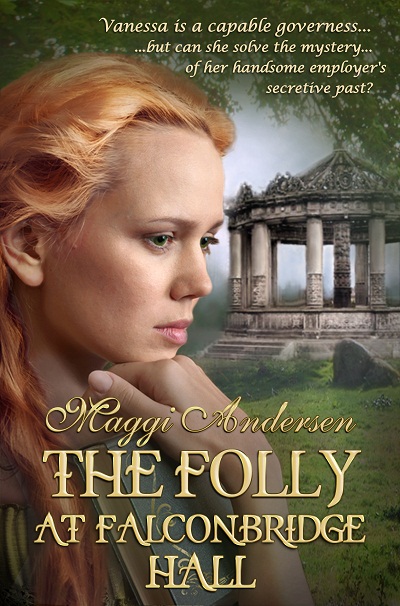
For the occasion, I'm offering a giveaway. Comment to win an e-book copy of my historical romantic mystery, The Folly at Falconbridge Hall.
 AMAZON
" type="text/javascript">
The author deserves high praise for her ability to capture the reader's attention and engage
one in both the mystery and the romance of this delightful story!
Margaret Faria
InD’Tale Magazine
Reference material:
PRIVATE AND SECRET The Clandestine Activities of a Nineteenth Century Diplomat by Robert Franklin.
ENGLAND'S LOST HOUSES From the Archives of Country Life by Giles Worsley
Wikipedia
" type="text/javascript">


September 21, 2013
Review of The Folly at Falconbridge Hall

The author's use of interspersing simple sentences and detailed description of scenery perfectly crafted the wild and mysterious setting of Falconbridge Hall and conveyed without confusion Vanessa and Julian's thoughts when they were together, and when they were apart. This indirect characterization had done much to reveal the characters' personalities and mind, which added a layer of realism and amiability to the story. I highly applaud Maggi Andersen's writing in this book, and would say that overall, this is quite a soothing, wonderful read. - See more at: http://buriedunderromance.blogspot.co... "A healthy dose of mystery and intrigue...I highly applaud Maggi Andersen's writing in this book...."
****
BURIED UNDER ROMANCE
Wednesday, September 18, 2013
Publication date: May 8, 2013
Goodreads | Amazon
This is an interesting Victorian romance mixed with healthy dose of mystery and intrigue. The heroine, Vanessa Ashley, is the impoverished niece of an earl who becomes the new governess to Blythe, the young daughter of Julian Grieve, Viscount Falconbridge. Upon her arrival, Vanessa becomes fascinated with Falconbridge Hall, and rumors of a woman who was hung in its woods. The disappearance of Blythe's previous governess was also a mystery to Vanessa, which, along with the mysterious disappearance of a painting, made up the mystery aspect of the book.The romance of the book is naturally between Vanessa and Julian, whose previous wife had left to pursue her own fun. Julian is a botanist and serious researcher of terrestrial invertebrates, in particular butterflies, which serves as an interesting motif of his previous wife's flighty nature and his own inclination to "keep things under glass." The change in his character from a highly withdrawn devotee of science to a father who learned to put his family ahead of science in his heart is slow, but believable and well done. Prior to his leaving for another botany expedition in the Amazon, he proposed a marriage-of-convenience to Vanessa, who agreed out of concern for Blythe's well-being. What follows that is the familiar trope of a marriage-of-convenience turning into a love match, but the focus of the story was never on passionate love, but on the eternal love found among couples whose compassion and kindness surpassed all other qualities of person. In a sense, I believe this book could be put into the category of a love-inspired historical.That is not to say, however, that there are no love scenes in this book. There is, but it's fitting and not induced by pure lust. Rather, the developing affection (which turns into love) and appreciation of each other's characteristics make the love scenes both intense and sensual.Lastly, the mysterious of this book was interesting, though readers are given enough hints through Vanessa's own musings to piece the past together long before the characters themselves find out. Their process of finding out had omitted some details and appeared somewhat abrupt near the end, though it did not much disturb the book's pacing, nor the author's writing.
The author's use of interspersing simple sentences and detailed description of scenery perfectly crafted the wild and mysterious setting of Falconbridge Hall and conveyed without confusion Vanessa and Julian's thoughts when they were together, and when they were apart. This indirect characterization had done much to reveal the characters' personalities and mind, which added a layer of realism and amiability to the story. I highly applaud Maggi Andersen's writing in this book, and would say that overall, this is quite a soothing, wonderful read.- See more at: http://buriedunderromance.blogspot.co..., September 18, 2013
Publication date: May 8, 2013
Goodreads | Amazon
This is an interesting Victorian romance mixed with healthy dose of mystery and intrigue. The heroine, Vanessa Ashley, is the impoverished niece of an earl who becomes the new governess to Blythe, the young daughter of Julian Grieve, Viscount Falconbridge. Upon her arrival, Vanessa becomes fascinated with Falconbridge Hall, and rumors of a woman who was hung in its woods. The disappearance of Blythe's previous governess was also a mystery to Vanessa, which, along with the mysterious disappearance of a painting, made up the mystery aspect of the book.The romance of the book is naturally between Vanessa and Julian, whose previous wife had left to pursue her own fun. Julian is a botanist and serious researcher of terrestrial invertebrates, in particular butterflies, which serves as an interesting motif of his previous wife's flighty nature and his own inclination to "keep things under glass." The change in his character from a highly withdrawn devotee of science to a father who learned to put his family ahead of science in his heart is slow, but believable and well done. Prior to his leaving for another botany expedition in the Amazon, he proposed a marriage-of-convenience to Vanessa, who agreed out of concern for Blythe's well-being. What follows that is the familiar trope of a marriage-of-convenience turning into a love match, but the focus of the story was never on passionate love, but on the eternal love found among couples whose compassion and kindness surpassed all other qualities of person. In a sense, I believe this book could be put into the category of a love-inspired historical.That is not to say, however, that there are no love scenes in this book. There is, but it's fitting and not induced by pure lust. Rather, the developing affection (which turns into love) and appreciation of each other's characteristics make the love scenes both intense and sensual.Lastly, the mysterious of this book was interesting, though readers are given enough hints through Vanessa's own musings to piece the past together long before the characters themselves find out. Their process of finding out had omitted some details and appeared somewhat abrupt near the end, though it did not much disturb the book's pacing, nor the author's writing.
The author's use of interspersing simple sentences and detailed description of scenery perfectly crafted the wild and mysterious setting of Falconbridge Hall and conveyed without confusion Vanessa and Julian's thoughts when they were together, and when they were apart. This indirect characterization had done much to reveal the characters' personalities and mind, which added a layer of realism and amiability to the story. I highly applaud Maggi Andersen's writing in this book, and would say that overall, this is quite a soothing, wonderful read.- See more at: http://buriedunderromance.blogspot.co...
Wednesday, September 18, 2013
Publication date: May 8, 2013
Goodreads | Amazon
This is an interesting Victorian romance mixed with healthy dose of mystery and intrigue. The heroine, Vanessa Ashley, is the impoverished niece of an earl who becomes the new governess to Blythe, the young daughter of Julian Grieve, Viscount Falconbridge. Upon her arrival, Vanessa becomes fascinated with Falconbridge Hall, and rumors of a woman who was hung in its woods. The disappearance of Blythe's previous governess was also a mystery to Vanessa, which, along with the mysterious disappearance of a painting, made up the mystery aspect of the book.The romance of the book is naturally between Vanessa and Julian, whose previous wife had left to pursue her own fun. Julian is a botanist and serious researcher of terrestrial invertebrates, in particular butterflies, which serves as an interesting motif of his previous wife's flighty nature and his own inclination to "keep things under glass." The change in his character from a highly withdrawn devotee of science to a father who learned to put his family ahead of science in his heart is slow, but believable and well done. Prior to his leaving for another botany expedition in the Amazon, he proposed a marriage-of-convenience to Vanessa, who agreed out of concern for Blythe's well-being. What follows that is the familiar trope of a marriage-of-convenience turning into a love match, but the focus of the story was never on passionate love, but on the eternal love found among couples whose compassion and kindness surpassed all other qualities of person. In a sense, I believe this book could be put into the category of a love-inspired historical.That is not to say, however, that there are no love scenes in this book. There is, but it's fitting and not induced by pure lust. Rather, the developing affection (which turns into love) and appreciation of each other's characteristics make the love scenes both intense and sensual.Lastly, the mysterious of this book was interesting, though readers are given enough hints through Vanessa's own musings to piece the past together long before the characters themselves find out. Their process of finding out had omitted some details and appeared somewhat abrupt near the end, though it did not much disturb the book's pacing, nor the author's writing.
The author's use of interspersing simple sentences and detailed description of scenery perfectly crafted the wild and mysterious setting of Falconbridge Hall and conveyed without confusion Vanessa and Julian's thoughts when they were together, and when they were apart. This indirect characterization had done much to reveal the characters' personalities and mind, which added a layer of realism and amiability to the story. I highly applaud Maggi Andersen's writing in this book, and would say that overall, this is quite a soothing, wonderful read.- See more at: http://buriedunderromance.blogspot.co...
Wednesday, September 18, 2013
Publication date: May 8, 2013
Goodreads | Amazon
This is an interesting Victorian romance mixed with healthy dose of mystery and intrigue. The heroine, Vanessa Ashley, is the impoverished niece of an earl who becomes the new governess to Blythe, the young daughter of Julian Grieve, Viscount Falconbridge. Upon her arrival, Vanessa becomes fascinated with Falconbridge Hall, and rumors of a woman who was hung in its woods. The disappearance of Blythe's previous governess was also a mystery to Vanessa, which, along with the mysterious disappearance of a painting, made up the mystery aspect of the book.The romance of the book is naturally between Vanessa and Julian, whose previous wife had left to pursue her own fun. Julian is a botanist and serious researcher of terrestrial invertebrates, in particular butterflies, which serves as an interesting motif of his previous wife's flighty nature and his own inclination to "keep things under glass." The change in his character from a highly withdrawn devotee of science to a father who learned to put his family ahead of science in his heart is slow, but believable and well done. Prior to his leaving for another botany expedition in the Amazon, he proposed a marriage-of-convenience to Vanessa, who agreed out of concern for Blythe's well-being. What follows that is the familiar trope of a marriage-of-convenience turning into a love match, but the focus of the story was never on passionate love, but on the eternal love found among couples whose compassion and kindness surpassed all other qualities of person. In a sense, I believe this book could be put into the category of a love-inspired historical.That is not to say, however, that there are no love scenes in this book. There is, but it's fitting and not induced by pure lust. Rather, the developing affection (which turns into love) and appreciation of each other's characteristics make the love scenes both intense and sensual.Lastly, the mysterious of this book was interesting, though readers are given enough hints through Vanessa's own musings to piece the past together long before the characters themselves find out. Their process of finding out had omitted some details and appeared somewhat abrupt near the end, though it did not much disturb the book's pacing, nor the author's writing.
The author's use of interspersing simple sentences and detailed description of scenery perfectly crafted the wild and mysterious setting of Falconbridge Hall and conveyed without confusion Vanessa and Julian's thoughts when they were together, and when they were apart. This indirect characterization had done much to reveal the characters' personalities and mind, which added a layer of realism and amiability to the story. I highly applaud Maggi Andersen's writing in this book, and would say that overall, this is quite a soothing, wonderful read.- See more at: http://buriedunderromance.blogspot.co...
Wednesday, September 18, 2013
Publication date: May 8, 2013
Goodreads | Amazon
This is an interesting Victorian romance mixed with healthy dose of mystery and intrigue. The heroine, Vanessa Ashley, is the impoverished niece of an earl who becomes the new governess to Blythe, the young daughter of Julian Grieve, Viscount Falconbridge. Upon her arrival, Vanessa becomes fascinated with Falconbridge Hall, and rumors of a woman who was hung in its woods. The disappearance of Blythe's previous governess was also a mystery to Vanessa, which, along with the mysterious disappearance of a painting, made up the mystery aspect of the book.The romance of the book is naturally between Vanessa and Julian, whose previous wife had left to pursue her own fun. Julian is a botanist and serious researcher of terrestrial invertebrates, in particular butterflies, which serves as an interesting motif of his previous wife's flighty nature and his own inclination to "keep things under glass." The change in his character from a highly withdrawn devotee of science to a father who learned to put his family ahead of science in his heart is slow, but believable and well done. Prior to his leaving for another botany expedition in the Amazon, he proposed a marriage-of-convenience to Vanessa, who agreed out of concern for Blythe's well-being. What follows that is the familiar trope of a marriage-of-convenience turning into a love match, but the focus of the story was never on passionate love, but on the eternal love found among couples whose compassion and kindness surpassed all other qualities of person. In a sense, I believe this book could be put into the category of a love-inspired historical.That is not to say, however, that there are no love scenes in this book. There is, but it's fitting and not induced by pure lust. Rather, the developing affection (which turns into love) and appreciation of each other's characteristics make the love scenes both intense and sensual.Lastly, the mysterious of this book was interesting, though readers are given enough hints through Vanessa's own musings to piece the past together long before the characters themselves find out. Their process of finding out had omitted some details and appeared somewhat abrupt near the end, though it did not much disturb the book's pacing, nor the author's writing.
The author's use of interspersing simple sentences and detailed description of scenery perfectly crafted the wild and mysterious setting of Falconbridge Hall and conveyed without confusion Vanessa and Julian's thoughts when they were together, and when they were apart. This indirect characterization had done much to reveal the characters' personalities and mind, which added a layer of realism and amiability to the story. I highly applaud Maggi Andersen's writing in this book, and would say that overall, this is quite a soothing, wonderful read.- See more at: http://buriedunderromance.blogspot.co...
September 16, 2013
Something nice to look at.
Get the Slideshow Creator Pro widget and many other great free widgets at Widgetbox! Not seeing a widget? (More info)
September 13, 2013
My Saturday Snippet is from The Folly at Falconbridge Hall
 Vanessa Ashley felt herself qualified for a position as governess, until offered the position at Falconbridge Hall. Left penniless after the deaths of her artist father and suffragette mother, Vanessa Ashley draws on her knowledge of art, politics, and history to gain employment as a governess. She discovers that Julian, Lord Falconbridge, requires a governess for his ten-year-old daughter Blyth at Falconbridge Hall, in the countryside outside London. Lord Falconbridge is a scientist and dedicated lepidopterist who is about to embark on an extended expedition to the Amazon. An enigmatic man, he takes a keen interest in his daughter's education. As she prepares her young charge, Vanessa finds the girl detached and aloof. As Vanessa learns more about Falconbridge Hall, more questions arise. Why doesn't Blythe feel safe in her own home? Why is the death of her mother, once famed society beauty Clara, never spoken of? And why did the former governess leave so suddenly without giving notice?
Excerpt:Vanessa remembered passing the library on her first day and located it without difficulty. She entered the room, finding it empty. It was designed for masculine comfort. Bookshelves filled with tomes covered all available wall space. A tan leather chesterfield and two chairs were grouped in front of the fireplace, and a tiger skin covered the floor in front of the hearth. The Times, The Daily Telegraph and the Penny Press lay on a table, and the aroma of cigars and pipe smoke lingered in the air.A variety of magazines was stacked in a rack. Vanessa sorted through The Gentleman’s Magazine, Punch, The Strand,and the London Sunday Journal. She selected Punch and the Penny Press to take back to her room. She roamed the shelves searching for suitable books and found several on botany, including one by Lord Falconbridge on Lepidoptera. She piled them onto a mahogany table, along with the books and the notes she’d fetched from her room. Searching further, she spied Plato’s Symposiumand climbed the ladder. It was just out of reach. Not wishing to climb down, she leaned across. Her fingers touched the binding, and she leaned farther. She almost had it.“You read Ancient Greek, Miss Ashley?” Lord Falconbridge asked behind her. Vanessa jumped, and her foot slipped off the rung. She lost her balance and fell into a pair of strong arms.He set her on her feet. The imprint of his touch remained as her heart beat madly. She hugged a wisp of hair from her eyes, sure her face was crimson. “Not with any degree of expertise, my lord.”
His lordship moved the ladder, climbed up, and took down the book she’d been trying to reach. He held it out to her. “Are you all right? I’m sorry I startled you.”Still thoroughly disconcerted, Vanessa took it. “I’m fine, thank you.”He moved to the table and looked through the books she’d selected. “You are interested in reading Darwin?” He looked surprised as he put aside Charles Darwin’s On the Origin of the Species. “You aren’t bothered by the religious ramifications of his evolutionary ideas?”“I have not as yet read it, my lord.” “When you do, perhaps we can discuss it further. I approve of all of these, except for this one.” He held up a favorite of her mother’s. “Frankenstein: or, The Modern Prometheus. I trust you’re not planning to turn Blythe into a suffragette?”Discomfiture flooded her face with heat. “It is for my own pleasure, my lord.” She wasn’t aware he knew about her mother.He gestured to the settee. “Please sit down, Miss Ashley.”“I thought you might like to see what I have planned.” She gathered up her notes with shaking hands. “This is a list of subjects I intend to cover and the books I brought with me.” Sitting in a chair, he took the notes and read them. Without comment, he flicked open the books. She took a deep breath. “My lord, I have to tell you I had not thought of botany. I’ll need some time to prepare.”“I gathered as much,” he said, without looking up. After several minutes, he closed the books. “These seem appropriate.” He gave a brief smile. “No need to concern yourself. I will teach my daughter botany.”Then why hadn’t he mentioned it? Did he enjoy making her feel awkward? She bit her lip before a note of outrage escaped. She’d spent hours worrying about botany lessons before falling asleep. She was sure it had caused her disturbed dream. “I would like to learn something of botany, myself. I became quite interested in the subject in Cornwall.”“You may attend the lessons if you wish.”“Thank you.” “Your choice of reading material is unusual, Miss Ashley. I too enjoy reading the Classics. Shakespeare also.”“Shakespeare is a favorite.”“Which of his works particularly?”“Henry V.”His brows rose. “I would have thought some of Shakespeare’s more romantic plays, As You Like It or Twelfth Night, would better suit your taste.”“History interests me more than comedy.”“Indeed.” His blue eyes studied her as he rose. “I think we’ve covered everything. What do you plan for Blythe this afternoon?” “I understand that Blythe has been under a doctor’s care. I thought a walk in the fresh air would build up her strength.”“An excellent notion. But please refrain from entering the wood.”“Poachers, my lord?” “We have had a poacher or two setting traps in the past, but I’m afraid it’s more serious than that. Some months ago, a young woman from a nearby village went missing. Her body was found in Falconbridge Wood. She had killed herself.”Vanessa drew in a sharp breath. “How tragic.” “A very sad matter. It is not spoken of because I’d prefer Blythe not know.” He turned away to the door.It shut behind him, leaving Vanessa alone. She was horrified. What would cause a woman to do such a thing?
September 12, 2013
My review of THE SHEIK RETOLD by Victoria Vane

Amazon:
ISBN-13:978-1492169956 ISBN-10:1492169951
THE DESERT WAS NEVER HOTTER!Pride and passion vie for supremacy between a haughty young heiress and a savage son of the Sahara in this steamy retelling of E.M. Hull's romance classic.A haughty young heiress for whom the world is a playground… A savage son of the Sahara who knows no law but his own…"There will be inquiries." I choked out. "I am not such a nonentity that nothing will be done when I am missed. You will pay dearly for what you have done.""Pay?" His amused look sent a cold feeling of dread through me. "I have already paid… in gold that matches your hair, my gazelle. Besides," he continued, "the French have no jurisdiction over me. There is no law here above my own." My trepidation was growing by the minute. "Why have you done this? Why have you brought me here?" "Why?" He repeated with a slow and heated appraisal that made me acutely, almost painfully, conscious of my sex. "Bon Dieu! Are you not woman enough to know?"When pride and passion vie for supremacy, blistering desert days are nothing compared to sizzling Sahara nights…Publisher and Release Date: Vane Publishing, September 2013
RHL Classifications:
Time and Setting: 1920s French Algiers and the Sahara
Heat Level: 3
Genre: Historical Romance/Desert Fantasy
Reviewer Rating: 5 Stars Review by MaggiI’m a fan of Victoria Vane’s stories because they bring something different to the romance genre. The Sheik Retold is no exception. This desert fantasy is set in French Algiers in 1920, where men are rugged alpha males and women adore and obey them. This story scooped me up and transplanted me into the sweeping desert sands of the Sahara, where the perfumed breeze is uplifting and the tents have enough modern conveniences for supreme comfort: opulent decor, valuable artifacts, silk curtains and carpets, exotic food, deep low Turkish divans and rich coffee. And of course, the Sheik himself.E.M. Hull wrote The Sheik, a haunting desert romance in 1919. The book caused women to swoon in droves. A movie was then made which launched actor Rudolph Valentino’s career as a great romantic hero. Some women committed suicide when he passed away.Victoria Vane has modernized and vastly improved on Hull’s book. She builds on the characters, showing more of their thoughts and feelings, and takes readers through the veiled curtain into the bedroom where we begin to understand what drives Ahmed Ben Hassan. We witness the pride and the fierce passion: Ahmed’s struggle to control Diana, and Diana’s refusal to be bowed. Her fight for freedom drives them on to ever more danger, until I thought that death could be the only release from so complex a relationship. Fortunately, this is a romance.The golden-haired heroine, Diana Spencer, is a restless globetrotter. Traveling with her massive steamer trunks, she sees the world as her playground. She appears at first to be rather unlikeable. She is spoilt, heartless and willful, believing no one would dare cross her and at times stubborn to the point of childishness. She has recently come into her inheritance, a vast fortune, and is finally her own woman. Her stepbrother Aubrey can no longer tell her what to do. With a disciplined body, she prefers to dress in jodhpurs and boots and is a fearless rider. She intends to enjoy the same freedoms a man enjoys and never to marry. The French authorities warn her not to travel into the desert with just a guide and a few of his men, but she ignores them. As she comes to note, her stubborn pride and willful arrogance become her downfall.No man has ever stirred Diana’s heart. In her opinion, she has no heart. Her redeeming feature at this point, is her honesty; with herself and with others. She is not pretentious, and when we learn of her past life with Aubrey, it does in some way help us understand why she is the way she is. Beyond her acceptance of her beauty, she exhibits little interest in her appearance.The handsome sheik, Ahmed Ben Hassan, is a law unto himself...the French have no jurisdiction over him. He answers to no one. He is a ruthless, but fair ruler of his people and they are fiercely loyal. There are harsh rules in this world, which must be obeyed. Death is never far away. When Ahmed sees Diana, he decides to take her to his bed.
“I wanted you from the moment I saw you, my golden one…And now,” the backs of his long brown fingers brushed my hair, “you are mine.”She will remain with him until he tires of her. If she tries to escape there will be violent repercussions. Do we hate him for his belief that as a brutal ruler of his world, he can take whomever he wants? He proves too fascinating to hate. But he is a man you do not cross:
His expression grew grim. His eyes shone cold, hard, and black as onyx. He came close behind me, placing his hands on my shoulders and then slowly slid them up to rest around my neck, where his thumbs caressed my pulse. His voice was low and soft. “Were you a man, I would slice your throat for such calumny. Do not ever disparage my character again.”Diana discovers he is capable of exquisite gentleness, while he refuses to love any woman. He is an angry and complex man with a sad past. As we get to know him and understand him as Diana does, there are quite a few surprises. And more than a few surprises for Ahmed too, for Diana grows and changes and proves to be his equal: clever, resourceful and brave, refusing to cower and become subservient, while he awakens her to passion with his skilled lovemaking. And she discovers she does indeed have a heart. Ms. Vane has done a wonderful job of turning Hull’s novel, The Sheik (which could be viewed in a modern world as a violent and rather distasteful story), into a stirring love story. I enjoyed The Sheik Retold very much.
Here's a taste:
Restless, I moved about the tent, listlessly examining objects that I already knew by heart, and flirting over the pages of some French magazines. I should have been elated at his unexpected absence, yet in my perversity, I was strangely unstrung with anticipation of his return. Now the utter silence only oppressed me. Where was Gaston? Even the servant's company would be preferable to my own. I guessed he must have gone with his master or perhaps he was long retired. I went to the flap of the tent and gazed out into the night. The camp, large and spread out was covered mostly in a blanket of blackness, broken by the occasional glimmer of a sparking fire.I had dreamt for years of this experience, of a month spent in the desert and now here I was. I had longed for adventure. It is what I had sought, so why could I not turn this tragedy to my advantage? I had food and shelter that was far superior to any I could have provided for myself. And I was surrounded by hundreds of armed men. Whether I viewed them as my captors or my protectors was only a matter of perception—a matter of choice.I knew I was safe. I had seen the depths of deference, the authority of the Sheik's command. Any man outside of himself who dared to touch me would suffer death. Of that I had no doubt. The only thing stopping me from enjoying my adventure in this vast oasis and my freedom in the Sheik's camp, was my own desperate desire to cling to a state of chastity I truly cared nothing about. It was only my pride that stood in the way of my pleasure, and my refusal to allow him to take it from me.I chewed my lip as I gazed up upon the stars glimmering in the heaven like countless brilliant diamonds shimmering against a backdrop of black velvet. I wondered if in the great scheme of things, my pride was a bit over-rated.This entire evening I had bucked with resentment against the pretense that I was a willing guest here, but had I met this same Sheik in Biskrah, in more conventional circumstances, if I had only been properly introduced, would I not have willing, even gratefully accepted an invitation to his camp? Only a week ago I would have jumped at the chance. What now prevented me from embracing that role? From enjoying that status— for as long as I had planned? I smiled to myself. Yes, it was all just a matter of perception—except for the bartering of my body— the Sheik's expectation in return for his hospitality. My smiled dimmed. I could enjoy my month of holiday as planned, as long as I would willing serve his needs—and all that implied— in his bed.
AUTHOR BIOVictoria Vane is an award-winning romance novelist, cowboy addict and history junkie whose collective works of fiction range from wildly comedic romps to emotionally compelling erotic romance. Victoria also writes historical fiction as Emery Lee and is the founder of Goodreads Romantic Historical Fiction Lovers and the Romantic Historical Lovers book review blog. Look for Victoria's Contemporary Cowboy Series coming summer 2014 from Sourcebooks
CONTACT: victoria.vane@hotmail.comWeb:http://www.victoriavane.comBlog: http://victoriavane.wordpress.comTwitter: @authorvictoriavFacebook: Author Victoria Vane
September 6, 2013
Taming a Gentleman Spy is available on Amazon for pre-order in print!
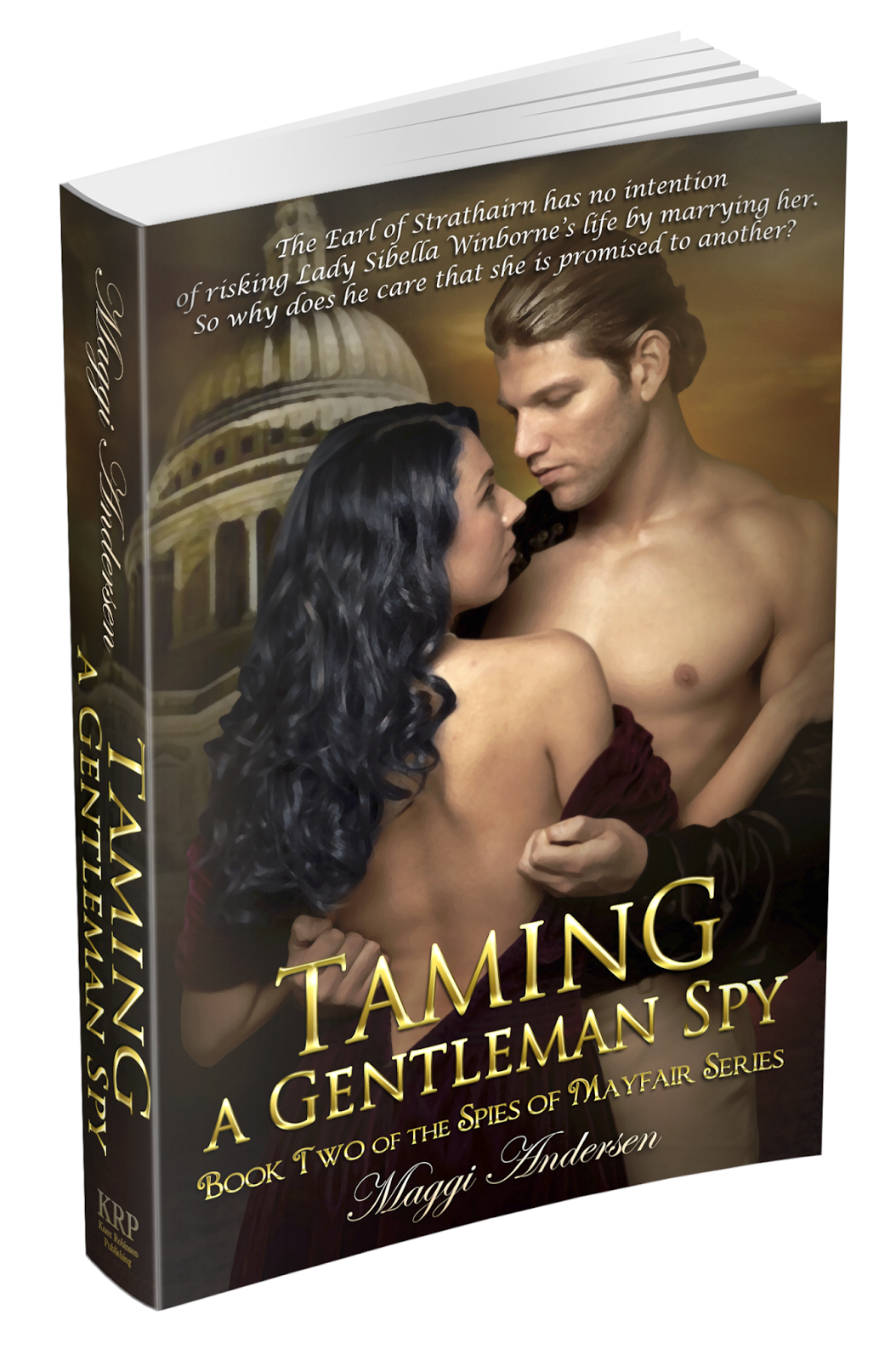 Released December 7th!Amazon
Saturday Snippet.
Sibella has just met Lord Coombe a prospective suitor her brother has found. She turns to her sister for her opinion.
After running around the gardens with the children until they flagged, Sibella returned them to their mother and sought out Maria, finding her in her chamber. “I subjected Lord Henry Coombe to the usual close inspection,” Maria said, winding a piece of pine-green velvet ribbon around her finger. “As I do all of your beaus.” “He’s hardly a beau. But what did you make of him?” “I don’t know,” Maria said thoughtfully. “He’s polite and well-mannered, of course, but he gives very little of himself away.” “Dark brown eyes are so inscrutable, aren’t they?” “You didn’t warm to him then.” Sibella shrugged. “I neither disliked him nor felt a strong attraction to him.” “Well we know why that is, do we not?” The name Strathairn hovered unsaid between them. As Maria rummaged in her jewelry box, Sibella was tempted to tell her about the kiss. They shared everything, and it felt disloyal not to, but for some reason she wanted to hold the heady, sensory details of John’s kiss in the moonlight close for a while, not wishing the experience pulled apart in the cold light of day. When Edward returned to the house, Sibella waylaid him in the front hall. “I’ll thank you not to help mother find me a husband,” she said in a waspish tone. For once Edward didn’t laugh. He grabbed her hand and pulled her down the corridor and into the library. She spun as he shut the door behind him. “What is it?” “You need to forget Strathairn.” “I—” He held up a finger. “There’s a very good reason for it.” “I know. He doesn’t wish to marry. At least me, anyway,” she said ruefully. “A spy cannot marry. That is, a spy with any integrity who doesn’t wish to place those he loves in danger.” “A spy?” Sibella’s pulse banged in her throat. “Are you sure you’re not embellishing, Edward?” It did make sense now that she thought of it. “I did not want to tell you. I trust you’ll be discreet. And for heaven’s sake don’t tell Maria! She’s the worst at keeping secrets.” Edward folded his arms and leaned against the door. “He works for the military.” So that was why such mystery surrounded him! “But what if a woman was prepared to marry him anyway and face those risks with him?” “And subject yourself to a life of fear and heartbreak? You don’t know what you’re saying. Forget him, Sib, please. Strathairn appears on the surface of things to be an earl with a passion for breeding horses. But he also inhabits another dark, dangerous world, which is beyond your dreams. He resists drawing you into that world and exposing you to possible danger. If you wage a war of seduction, his resolve may well crumble. I’ve seen how he looks at you. Leave the man alone. There are other more suitable men in the world.” He leaned forward and brushed a kiss onto her cheek. “Do you understand?” She nodded mutely as she fought to grasp the truth, the certainty that she and Strathairn would never marry. Edward opened the library door to find a footman standing in the corridor, trying his best not to look intrigued.
August 31, 2013
Sunday snippet: The Reluctant Marquess
My snippet today is from The Reluctant Marquess:
 AMAZON
KOBO
BARNES & NOBLE
OverviewCharity Barlow wished to marry for love. She and Lord Robert have been forced by circumstances to marry, and she feels sure she is not the woman he would have selected given a choice. The Marquess of St. Malin makes it plain to her that their marriage is merely for the procreation of an heir, and once that is achieved, he intends to continue living the life he enjoyed before he met her. While he takes up his life in London once more, Charity is left to wander the echoing corridors of St. Malin House, when she isn’t thrown into the midst of the mocking Haute Ton. Charity is not at all sure she likes her new social equals, and she’s not at all sure she likes her new husband either, except for his striking appearance, which sends her pulses racing. Lord Robert is a rake and does not deserve her love, but neither does she wish to live alone. Might he be suffering from a sad past?
Editorial Reviews
"Readers will love the delightful tale of love in an arranged marriage. As troubles buffet the new couple and their love is tested, readers will be rooting for them to make it through."
—Romantic Times Book Reviews, May 2011
Brigitte had just begun the finishing touches to Charity’s toilette, when a knock sounded at the door. Charity gave a nervous start. “That must be Robert.” Had he come to inspect her and see if she looked regal enough?
She swallowed as feelings of inadequacy consumed her.
A footman bowed. “Lord Southmore is below, my lady. He wishes to attend while you dress.”
“Watch me dress?” Appalled, Charity frowned into the mirror and pulled her wrap over her bosom. “What can he mean?”
“He asks to come to your boudoir, my lady,” Brigitte said, “to assist with the placing of your patches, jewelry and hair adornment. It is often done.”
“Indeed?” Charity thought this a most deplorable fashion.
“You would insult him should you refuse, my lady.”
Charity remembered Robert’s warning about his friend, but it only served to make her rebellious. Would Robert be just a little jealous to find he’d been here? “This is the way of things?”
“Oh yes, my lady. I have seen it many times.”
She was sure that Lord Southmore didn’t wish her to look regal. “Have him come up,” she said.
Shortly afterward, the elegant man, dressed in peach satin, entered the room and came to kiss her hand. “Lady St Malin.”
How civil he was. And quite attractive, she hadn’t noticed that before. She felt sure that a man such as he would never give a woman a moment’s heartache. “Lord Southmore.”
He settled on a chair beside her as Brigitte opened the box containing patches. “Now let me see. One here, I think.” He traced her cheekbone with a feather light touch. “And one at the very corner of your mouth, to highlight one of your best features.” He brushed her bottom lip with the tips of his fingers before withdrawing his hand.
Charity wanted to giggle, but as Lord Southmore appeared quite serious, she said, “Thank you, my lord. I appreciate your assistance.”
His gaze moved over her, the warm light in his eyes failing to match his impersonal tone. “Now for the hair.” He turned to study her waiting gown. “An excellent choice. That lovely shade of green will pay homage to your eyes. For your hair, those silk gardenias are perfect.”
Brigitte began to tuck the flowers into Charity’s hair. “Superb,” Lord Southmore said. “Now, I recommend — “
“Emeralds,” a sharp voice came from the doorway.
Charity turned to find her husband entering the room, a muscle clenching in his jaw. She trembled at his steely expression, but raised her chin and held his gaze.
Lord Southmore rose and bowed. “St Malin. You are just in time for the gown.”
“So I see,” Robert said through his teeth.
Charity hurried behind the painted screen. She slipped off the wrap. Brigitte helped her step into the gown, then her deft fingers worked at the hooks.
Brigitte smoothed a silk ruffle. “There, my lady.” Charity stepped out to face the two men.
“Perfect. I was right about the color enhancing your eyes,” Lord Southmore said, a mocking smile playing at the corners of his mouth. “Wouldn’t you say, St Malin?”
Robert’s eyes narrowed, and he didn’t answer. He opened a velvet box. She expected the diamonds, but he drew from it an exquisite emerald necklace. The deep green stones, set in a bed of diamonds, looked like pretty spring flowers. He tossed the box to the maid and clasped the necklace around Charity’s throat.
Charity felt his fingers at the nape of her neck. She anxiously watched his face in the mirror. He looked as if he would prefer to throttle her rather than adorn her with jewels. She would not allow him to spoil the evening.
“Thank you, St Malin.” The use of his title felt strange on her tongue, and she saw by the surprise in his eyes that she’d scored a hit. “Another beautiful necklace. I declare you spoil me.” She turned to Lord Southmore. “And my thanks to you, my lord, for your skillful artistry.”
Lord Southmore bowed. “A pleasure.”
She took her cloak and gloves from Brigitte. “Shall we go, gentlemen?”
 AMAZON
KOBO
BARNES & NOBLE
OverviewCharity Barlow wished to marry for love. She and Lord Robert have been forced by circumstances to marry, and she feels sure she is not the woman he would have selected given a choice. The Marquess of St. Malin makes it plain to her that their marriage is merely for the procreation of an heir, and once that is achieved, he intends to continue living the life he enjoyed before he met her. While he takes up his life in London once more, Charity is left to wander the echoing corridors of St. Malin House, when she isn’t thrown into the midst of the mocking Haute Ton. Charity is not at all sure she likes her new social equals, and she’s not at all sure she likes her new husband either, except for his striking appearance, which sends her pulses racing. Lord Robert is a rake and does not deserve her love, but neither does she wish to live alone. Might he be suffering from a sad past?
Editorial Reviews
"Readers will love the delightful tale of love in an arranged marriage. As troubles buffet the new couple and their love is tested, readers will be rooting for them to make it through."
—Romantic Times Book Reviews, May 2011
Brigitte had just begun the finishing touches to Charity’s toilette, when a knock sounded at the door. Charity gave a nervous start. “That must be Robert.” Had he come to inspect her and see if she looked regal enough?
She swallowed as feelings of inadequacy consumed her.
A footman bowed. “Lord Southmore is below, my lady. He wishes to attend while you dress.”
“Watch me dress?” Appalled, Charity frowned into the mirror and pulled her wrap over her bosom. “What can he mean?”
“He asks to come to your boudoir, my lady,” Brigitte said, “to assist with the placing of your patches, jewelry and hair adornment. It is often done.”
“Indeed?” Charity thought this a most deplorable fashion.
“You would insult him should you refuse, my lady.”
Charity remembered Robert’s warning about his friend, but it only served to make her rebellious. Would Robert be just a little jealous to find he’d been here? “This is the way of things?”
“Oh yes, my lady. I have seen it many times.”
She was sure that Lord Southmore didn’t wish her to look regal. “Have him come up,” she said.
Shortly afterward, the elegant man, dressed in peach satin, entered the room and came to kiss her hand. “Lady St Malin.”
How civil he was. And quite attractive, she hadn’t noticed that before. She felt sure that a man such as he would never give a woman a moment’s heartache. “Lord Southmore.”
He settled on a chair beside her as Brigitte opened the box containing patches. “Now let me see. One here, I think.” He traced her cheekbone with a feather light touch. “And one at the very corner of your mouth, to highlight one of your best features.” He brushed her bottom lip with the tips of his fingers before withdrawing his hand.
Charity wanted to giggle, but as Lord Southmore appeared quite serious, she said, “Thank you, my lord. I appreciate your assistance.”
His gaze moved over her, the warm light in his eyes failing to match his impersonal tone. “Now for the hair.” He turned to study her waiting gown. “An excellent choice. That lovely shade of green will pay homage to your eyes. For your hair, those silk gardenias are perfect.”
Brigitte began to tuck the flowers into Charity’s hair. “Superb,” Lord Southmore said. “Now, I recommend — “
“Emeralds,” a sharp voice came from the doorway.
Charity turned to find her husband entering the room, a muscle clenching in his jaw. She trembled at his steely expression, but raised her chin and held his gaze.
Lord Southmore rose and bowed. “St Malin. You are just in time for the gown.”
“So I see,” Robert said through his teeth.
Charity hurried behind the painted screen. She slipped off the wrap. Brigitte helped her step into the gown, then her deft fingers worked at the hooks.
Brigitte smoothed a silk ruffle. “There, my lady.” Charity stepped out to face the two men.
“Perfect. I was right about the color enhancing your eyes,” Lord Southmore said, a mocking smile playing at the corners of his mouth. “Wouldn’t you say, St Malin?”
Robert’s eyes narrowed, and he didn’t answer. He opened a velvet box. She expected the diamonds, but he drew from it an exquisite emerald necklace. The deep green stones, set in a bed of diamonds, looked like pretty spring flowers. He tossed the box to the maid and clasped the necklace around Charity’s throat.
Charity felt his fingers at the nape of her neck. She anxiously watched his face in the mirror. He looked as if he would prefer to throttle her rather than adorn her with jewels. She would not allow him to spoil the evening.
“Thank you, St Malin.” The use of his title felt strange on her tongue, and she saw by the surprise in his eyes that she’d scored a hit. “Another beautiful necklace. I declare you spoil me.” She turned to Lord Southmore. “And my thanks to you, my lord, for your skillful artistry.”
Lord Southmore bowed. “A pleasure.”
She took her cloak and gloves from Brigitte. “Shall we go, gentlemen?”
August 30, 2013
I love to revisit my favorite books. So every Saturday I'll discuss one. Today, it's a children's novel: THE LION, THE WITCH AND THE WARDROBE from THE CHRONICLES OF NANIA
We can escape our troubles for a little, or just bring joy into our lives while between the pages of a book. A great children's book can offer that and more.

If you haven't read The Lion, The Witch and the Wardrobe, you're never too old to begin!
 The first book published (1950) of C.S. Lewis’s The Chronicles of Narnia. Apart from being a great tale, it's a story about faith, the possibility of the impossible, redemption and rebirth.
C. S. Lewis describes the writing of it in his essay It All Began with a Picture:
Resource: Wikipedia

If you haven't read The Lion, The Witch and the Wardrobe, you're never too old to begin!
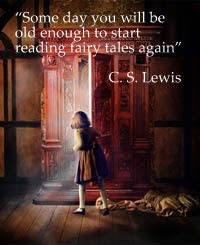 The first book published (1950) of C.S. Lewis’s The Chronicles of Narnia. Apart from being a great tale, it's a story about faith, the possibility of the impossible, redemption and rebirth.
C. S. Lewis describes the writing of it in his essay It All Began with a Picture:
The Lion all began with a picture of a Faun carrying an umbrella and parcels in a snowy wood. This picture had been in my mind since I was about sixteen. Then one day, when I was about forty, I said to myself: 'Let's try to make a story about it.'Shortly before the start of World War II, many children were evacuated to the English countryside in anticipation of attacks on London and other major urban areas by Nazi Germany. As a result, on 2 September 1939, three school girls, Margaret, Mary and Katherine, came to live at The Kilns in Risinghurst, Lewis' home three miles east of Oxford city centre. Lewis later suggested that the experience gave him a new appreciation of children and in late September he began a children's story on an odd sheet of paper which has survived as part of another manuscript:
This book is about four children whose names were Ann, Martin, Rose and Peter. But it is most about Peter who was the youngest. They all had to go away from London suddenly because of Air Raids, and because Father, who was in the Army, had gone off to the War and Mother was doing some kind of war work. They were sent to stay with a kind of relation of Mother's who was a very old professor who lived all by himself in the country.In It All Began With a Picture C. S. Lewis continues:
At first I had very little idea how the story would go. But then suddenly Aslan came bounding into it. I think I had been having a good many dreams of lions about that time. Apart from that, I don't know where the Lion came from or why he came. But once he was there, he pulled the whole story together, and soon he pulled the six other Narnian stories in after him.
Resource: Wikipedia
August 24, 2013
“Books are the quietest and most constant of friends; th...
“Books are the quietest and most constant of friends;
they are the most accessible and wisest of counselors,
and the most patient of teachers.”
― Charles William Eliot

they are the most accessible and wisest of counselors,
and the most patient of teachers.”
― Charles William Eliot

August 11, 2013
A snipped from Taming a Gentleman Spy - The Spies of Mayfair Series, Book #2
Released December 2013.
 Prologue
Haldane Hall, Yorkshire, 1818“I trust we’ll bag a few birds on the moor tomorrow, Chaloner.” John Haldane, the 4th Earl of Strathairn, glanced at the guests enjoying the Hunt Ball in his ballroom. Bright chatter rose in the warm smoky air as decorative ladies mingled with the more soberly dressed gentlemen. “My chef plans a grouse dish flavored with juniper berries for our dinner.” “Excellent.” The Marquess of Brandreth raised his glass. “We will be out at the crack of dawn, I daresay.” He took Strathairn’s arm and drew him into a quiet corner. “I don’t wish to strain a friendship I value, John, but I must offer a word of advice.”“Oh?” Strathairn eyed him warily. He had liked Chaloner better before his father died. The man seemed to lose his sense of humor after inheriting the title. “You are often seen in Sibella’s company. Don’t get too fond of her.” Strathairn moved his shoulders in a shrug of anger. He glanced over at Sibella in her white muslin, talking earnestly to Mrs. Bickerstaff. “Your sister is intelligent and good company. I enjoy our conversations. Nothing strange about that.”“I struggle to believe it is just that. I may not be privy to the details of the work you perform for the military, but rumors do float about the House of Lords. You must admit that due to those circumstances alone, you would not make her a good husband.” Chaloner’s determination put him in mind of a robin with a worm. Useless to argue. With a sigh, Strathairn acknowledged that he only strove to protect his sister from possible hurt. “No need for concern,” he said. “I have no wish to marry your sister, or anyone else for that matter. I do intend to ask Lady Sibella to dance though. Unless you think my waltzing with her will ruin her reputation.”Chaloner huffed out a laugh and rubbed the back of his neck. “Don’t be ridiculous. I don’t enjoy having to say this to you, John, but it befalls me as head of the family. Sib has a love of home and hearth. She looks for a husband who will sit by the fire with her at night. That isn’t you, is it?”“She deserves the best, and no, it isn’t me, Chaloner.”
Prologue
Haldane Hall, Yorkshire, 1818“I trust we’ll bag a few birds on the moor tomorrow, Chaloner.” John Haldane, the 4th Earl of Strathairn, glanced at the guests enjoying the Hunt Ball in his ballroom. Bright chatter rose in the warm smoky air as decorative ladies mingled with the more soberly dressed gentlemen. “My chef plans a grouse dish flavored with juniper berries for our dinner.” “Excellent.” The Marquess of Brandreth raised his glass. “We will be out at the crack of dawn, I daresay.” He took Strathairn’s arm and drew him into a quiet corner. “I don’t wish to strain a friendship I value, John, but I must offer a word of advice.”“Oh?” Strathairn eyed him warily. He had liked Chaloner better before his father died. The man seemed to lose his sense of humor after inheriting the title. “You are often seen in Sibella’s company. Don’t get too fond of her.” Strathairn moved his shoulders in a shrug of anger. He glanced over at Sibella in her white muslin, talking earnestly to Mrs. Bickerstaff. “Your sister is intelligent and good company. I enjoy our conversations. Nothing strange about that.”“I struggle to believe it is just that. I may not be privy to the details of the work you perform for the military, but rumors do float about the House of Lords. You must admit that due to those circumstances alone, you would not make her a good husband.” Chaloner’s determination put him in mind of a robin with a worm. Useless to argue. With a sigh, Strathairn acknowledged that he only strove to protect his sister from possible hurt. “No need for concern,” he said. “I have no wish to marry your sister, or anyone else for that matter. I do intend to ask Lady Sibella to dance though. Unless you think my waltzing with her will ruin her reputation.”Chaloner huffed out a laugh and rubbed the back of his neck. “Don’t be ridiculous. I don’t enjoy having to say this to you, John, but it befalls me as head of the family. Sib has a love of home and hearth. She looks for a husband who will sit by the fire with her at night. That isn’t you, is it?”“She deserves the best, and no, it isn’t me, Chaloner.”The following afternoon, after a fruitful day in the fields shooting grouse, the men made their way over the lawns to the Hall. The gamekeeper, beaters and handlers departed for the stables with the hounds while servants came to take the birds away.Lady Sibella, in a gown the color of lilacs, sat playing cards and drinking tea with the other women in the late afternoon sun. Strathairn went to greet them before entering the house to bathe and change. He mounted the terrace, still carrying his shotgun over his shoulder, intent on returning it to the gunroom. “I trust you ladies enjoyed your day?” he enquired. “We did, my lord.” Lady Sibella’s sister, Viscountess Bathe, smiled. “Or at least those of us who have not lost our pin money at whist.” “I see you had a successful day, my lord.” Lady Sibella eyed his gun with a faint shudder. “I saw your kill on its way to the kitchens.” He smiled. “I hope you’ll enjoy our efforts once they are served in a tasty sauce my chef has concocted with mushrooms and whiskey.” “I expect I shall. It’s very contrary of me, isn’t it?” Lady Sibella frowned up at him. “But please don’t suggest that all women are so.” He eyed the expectant faces of the other ladies and held up his hands with a laugh. “I wouldn’t dream of it.” “Perhaps you would like a cup of tea, Lord Strathairn.” Lady Sibella gestured to the teapot a servant was refilling with hot water. “You must be thirsty after your arduous day.” She well knew how much he hated tea, for he’d been forced to drink it at a morning call at their house in Eaton Place. She had naughtily offered to pour it into a potted plant when her mother was distracted by another guest. Her playful smile was delicious, and he couldn’t help grinning back. Aware of the sharp-eyes on him from around the table, he shook his head. “I’m afraid I must decline for I’m not fit for company. But, thank you, Lady Sibella.” He bowed and entered the house leaving them to resume their card game. He cleaned his gun and left it on the rack in the gunroom. Damn Chaloner, he was such a stickler for convention. Strathairn enjoyed Lady Sibella’s friendship like no other lady of his acquaintance. Her humor seemed so in tune with his and he often found she understood his thoughts before he expressed them. But he ensured their relationship never went beyond the bounds of friendship. It wasn’t easy, for he was strongly drawn to her, but friendship was all it could ever be.


