Bernadette Simpson's Blog, page 16
September 3, 2009
B: Bet-tow
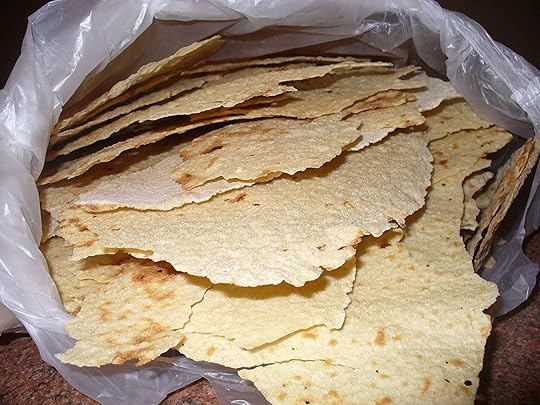
B is for Bet-tow
Another tasty Egyptian bread! I'll have to suggest this word to my husband for his Arabic Audio recordings because you have to hear this word, I think, to know how to pronounce it. (The 'ow' sounds like 'now'.) You may also see it spelled bettaw, bettai, and bettawa. Made with corn and fenugreek, bet-tow is a staple for the fellaheen (peasants) in rural areas. Every time I have had this bread, it has been unleavened and crispy – which is why I like it so much – but in the recipes


August 23, 2009
L: Lanterns and F: Fanooss

Another Arabic Audio Post!
The Egyptian Arabic word for one lantern is fanooss and for many lanterns, it is fa-wa-neess (not fanoosses, as I saw this morning in one children's book about Ramadan). These audio files are also available on my website so some of you may have already listened to them. (The Arabic Audio website is still under construction. Patience, please, as we attempt to make it as user-friendly as possible.)
August 21, 2009
L: Lanterns
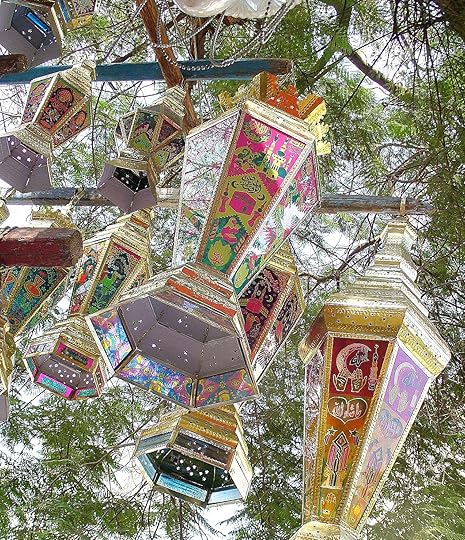
L is for Lanterns
Yes, another lantern post – to celebrate the first day of the Muslim holy month of Ramadan. These lanterns were on sale on Road 9 in Ma'adi, a city south of Cairo. Interested in learning more about these colorful lanterns? Read Saudi Aramco's article Ramadan's Lanterns to learn about the history of lanterns in Egypt (or read my book, of course). And Ramadan Kareem, everyone!



August 16, 2009
H: Henna
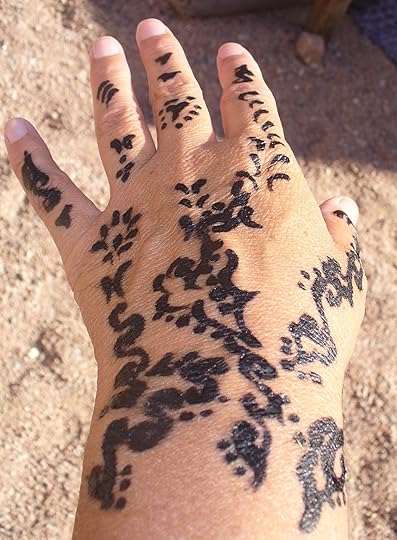
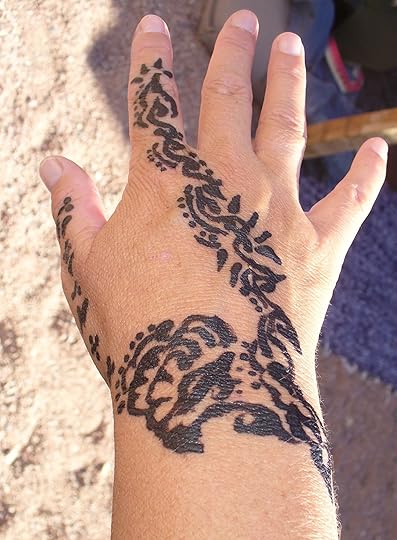
H is for Henna
These henna-ed hands belong to a friend who was visiting us here in Dahab. Henna is the Arabic word for the plant Lawsonia inermis, which has been used since ancient times for medicinal and decorative purposes. The temporary body tattoos are made from a henna paste. In Egypt, before the wedding night, the bride-to-be and her female friends and family will gather for the "henna night" – a night of music, dancing, eating, and just generally celebrating. The bride and her guests will
August 12, 2009
K: Konafa
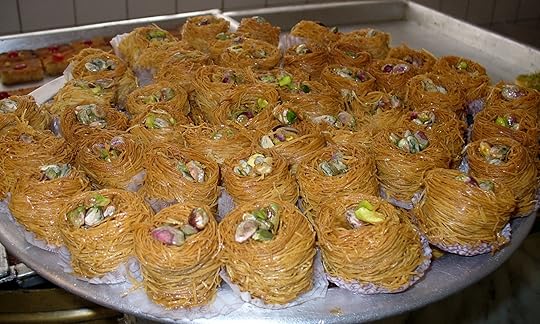
K is for Konafa
And with Ramadan just around the corner, there's sure to be lots of konafa-eating soon! Konafa is one of my favorite Egyptian sweets, especially when crunchy and filled with nuts. You can learn more about konafa in my book, An ABC Escapade through Egypt, or find some other images and recipes on my website.


August 6, 2009
T: Tourists
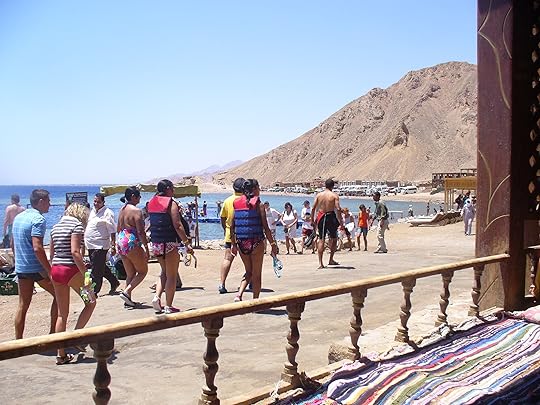 T is for Tourists
My first post for the letter T! With visitors here recently, I spent a lot of time snorkeling in the sea with the rest of the summer tourists. This shot was taken from a cafeteria at the Blue Hole, an infamous dive site just north of Dahab. I've never seen it this busy before (notice all the 4×4s and minivans parked in the distance), but I am usually just passing through on the way to Ras Abu Galum. Excellent snorkeling though, despite all the traffic. 



July 30, 2009
N: Nuweiba
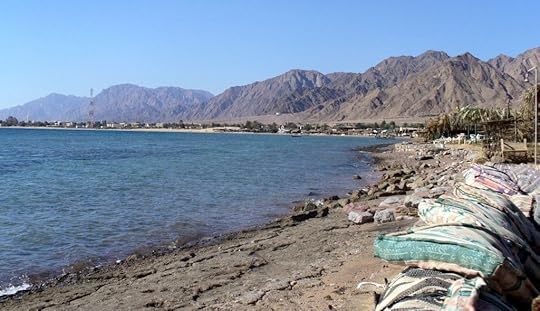
N is for Nuweiba
This is a view of the coast of Nuweiba Tarabeen taken from the cafeteria at Sababa Camp. Nuweiba Tarabeen (or Tarabin) is located between the beautiful mountains of Sinai and the Gulf of Aqaba and lays north of the port and town of Nuweiba. The many Bedouin-style camps along the coast have been pretty quiet in recent years with the decline of Israeli tourists, but they are still operational, making for a very peaceful and relaxing stay along the sea.


July 21, 2009
S: Stork
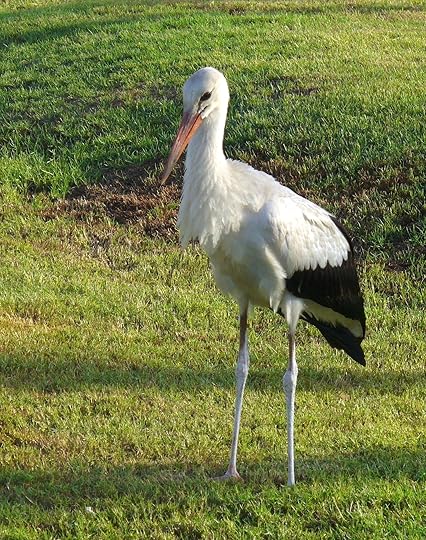 S is for Stork
The White Stork, or Ciconia ciconia, does not live or nest in Egypt, but they do pass through by the thousands during their migration. Their route, similar to the White Pelicans, passes through the Nile Valley and along the Gulf of Suez, which includes the western side of the Sinai Peninsula. On their last fall migration, the storks seemed to hang around for quite some time, especially in Sharm el Sheikh on the southern tip of the peninsula. This stork was quite content to spend so
July 16, 2009
M: Mashrabeyya
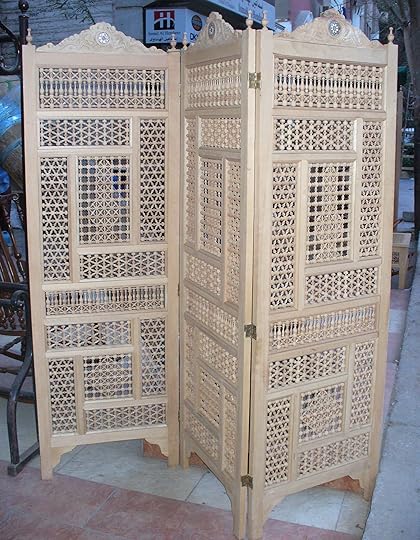 M is for Mashrabeyya
Mashrabeyya, a latticework of intricately carved wood, has been crafted in Egypt for hundreds of years.
"The word 'mashrabiya' comes from an Arabic root meaning the 'place of drinking,' which was adapted to accommodate the first function of the screen: 'the place to cool the drinking water.'" (Read this Saudi Aramco article The Magic of Mashrabiyas to learn more about the history of mashrabeyya and how it evolved from cooling water to cooling people and houses to decorating m
July 13, 2009
F: Flame Tree or R: Royal Poinciana
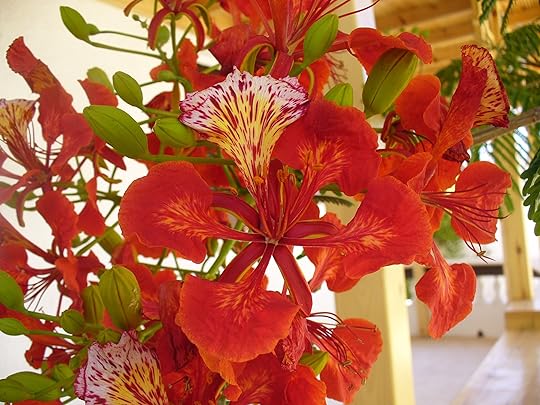
F is for Flame Tree…or R, this time, for Royal Poinciana [image error]
Yes, it's another flame tree post - this time up close. These beautiful flowers are growing in Dahab, South Sinai. Apparently, there is a myriad of common names in English for this tree. Here's what I learned about it's scientific name, Delonix regia, from the World Agroforestry Centre:
"The generic name, 'Delonix', is derived from a Greek delos (visible), and onyx (claw), in allusion to the conspicuously clawed petals. The specific name,