
Rita Charbonnier's Blog: Non solo Mozart, page 16
January 7, 2010
Mozart's Piano Concerto No. 9 K 271, "Jeunehomme"
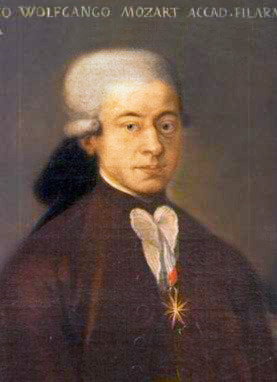
Mozart in 1777, the year of the Concerto. The portrait was painted in Bologna, by an anonymous artist.
I mention various pieces by Mozart in my novel, Mozart's Sister, but only two of them have any real bearing on the story: one is the Fantasia in D minor K 397, the other is the Piano Concerto No. 9 in E flat major K 271, 'Jeunehomme'.
The term in French means 'young man' but it actually refers to a woman, because that was the name of the famous French pianist who arrived in Salzburg in 1777...


December 8, 2009
Sicily – a mix of ancient and modern

The Fountain of Arethusa, in the Ortygia island. Photo by Leandro's World Tour.
It was twenty years ago that I first set foot in Sicily. I had passed the auditions and managed to get into the School of Classic Theatre which is in Syracuse. My idea of what Ortygia might be like was a bit far-fetched: people had told me that it was like a little island joined to the city by a bridge which, for some reason, I had pictured as a wooden drawbridge. Young and defenceless, with a rather bizarre...
November 2, 2009
Mozart’s sister and Shakespeare’s sister
You may read this article on Rita Charbonnier online also.
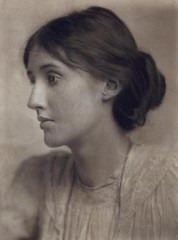
Portrait of Virginia Woolf by George C. Beresford (1864- 1938), Victorian photographer.
Virginia Woolf wrote her famous essay, A Room of One’s Own in 1928 / 1929, reworking ideas from two lectures she had given to her students at Cambridge on the subject of women and literature. One of the most interesting aspects for me was the part about William Shakespeare’s imaginary sister-poetess.
Woolf states that there is a very close link between any artistic creation and the artist’s everyday life. The creative process is fed by sentiment much more than any mathematical or logical process. A scientist can work and get results regardless of his / her state of mind, whereas a work of art clings like a spider’s web to what its creator does – what time they get up, what their preoccupations or problems are – and the way they feel while working on the piece.
Woolf uses this to explain why there are fewer women artists than men, and far fewer women writers. She takes as her example the poet and playwright William Shakespeare and an imaginary sister of his who she decides to call Judith.
She analyses the family, social and cultural context that this sister, who was born with the same talent and the same creative desire as him, would have found herself living in. In England, in the second half of the XVI century, women were not given any kind of education and very few women knew how to read or write. They were more or less the property of their husbands, and were not legally allowed to have, or to earn, money of their own.
They spent their lives having children and often died during childbirth or of infections post-delivery. They would certainly not have been able to live a life of freedom in London like the one enjoyed by William Shakespeare when he abandoned Stratford and his wife – without earning himself the title of faithless husband or adulterer. And women were obviously not allowed to perform on stage. It would have been impossible for this sister to express herself. Woolf reckons that Judith’s levels of frustration would have been great enough to make her commit suicide.
As we know, when Woolf was alive, there was heated debate on the subject. There were people who believed that women were of inferior intelligence compared to men; people who openly declared that it would be impossible for a woman to create a work of genius like those of William Shakespeare. And some years ago, reading her wonderful, impassioned, unmissable and still current work, it made me want to talk about Mozart’s sister Nannerl… But that’s another story.
Posted in Mozart's Sister Tagged: Behind the Story, Inspiration, Virginia Woolf, Womanhood, Writing


Mozart's sister and Shakespeare's sister
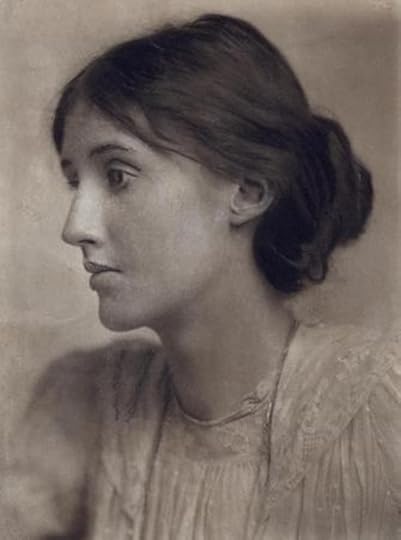
Portrait of Virginia Woolf by George Charles Beresford (1864-1938), Victorian studio photographer.
Virginia Woolf wrote her famous essay, A Room of One's Own in 1928 / 1929, reworking ideas from two lectures she had given to her students at Cambridge on the subject of women and literature. One of the most interesting aspects for me was the part about William Shakespeare's imaginary sister-poetess.
Woolf states that there is a very close link between any artistic creation and the artist's...
October 13, 2009
Italian Historical Fiction
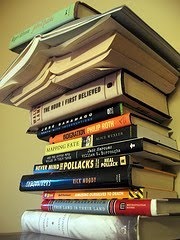
Photo by Sapphireblue.
On her blog A World of Words, Lucinda Byatt writes:
Thanks to Rita Charbonnier for drawing my attention to this great discussion among fans of Italian historical novels and four authors – at the moment of writing this, there have been a total of 428 comments!
[At the moment of publishing this post, there have a been a total of 607 comments!:]
It was a real eye-opener to discover the buzz of excitement created by Massimo Maugeri on his blog Letteratitudine when a few days...
September 18, 2009
Book Signing

This was quite an unusual book signing for my new historical novel Alexandre Dumas' Strange Day – published only in Italian, for the moment. I was wearing an 18th century costume! It was during the 2009 Turin International Book Fair and it was so funny to stop passers-by, talking to them in an old-fashioned Italian!… Oh, don't be afraid: there's no Italian dialogue in this video. Just funny pics and great music.
Check out Rita Charbonnier's YouTube Channel!
Posted in Historical Fiction Tagged: ...August 29, 2009
The Mozart Forum
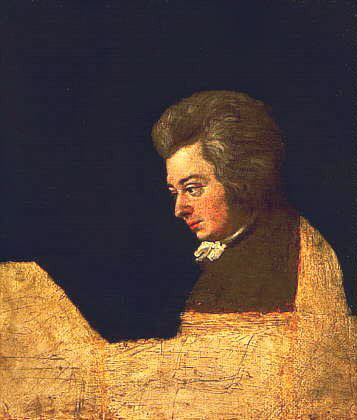
Unfinished portrait of Mozart.
If you are a lover of Wolfgang Amadeus Mozart's music then you will probably be familiar with the Mozart Forum, a wonderful site dealing with the life and works of the great master. You can exchange information and make contact with experts in the field and ask them questions. You will find the link on my website and I recommend any Mozart fan to go and have a look.
Since 12th July there has been ongoing debate about which is the best Mozart biography available on th
July 20, 2009
A special rapport between brother and sister
— Rita Charbonnier, from the volume Perti, Martini e Mozart published in Italy by Pàtron Editore, R. Accademia Filarmonica di Bologna, 2008
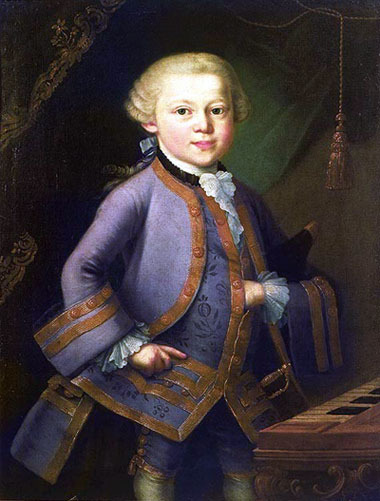
Portrait of Mozart as a child.
When they were children, Wolfgang and Maria Anna "Nannerl" Mozart were a successful duo, a pair of enfants prodiges who shared exhilarating experiences, such as performing for the kings of Europe, and dramatic ones such as an illness that took both of them to the brink of death. In 1765, in The Hague, Nannerl became ill first wit
June 10, 2009
Mozart's Sister on the phone: scene from an Italian book launch
[image error]
Arezzo, Piazza Grande. Photo by Monica Arellano-Ongpin.
Venue: Italy, Tuscany, Arezzo (a
May 9, 2009
Alexander Dumas' Strange Day
I am very happy to announce that my second historical novel is out in Italy: La strana giornata di Alexandre Dumas (Alexander Dumas' Strange Day). Isn't the cover beautiful?
A young writer who could make a masterpiece out of every story he heard
A scandal that shocked the French court in the 19th centuryAlexander Dumas' Strange Day[image error]
Non solo Mozart

- Rita Charbonnier's profile
- 145 followers

