
Janice Hanna's Blog, page 11
May 5, 2024
Unlock Your Potential: Dive into the World of Free Writing Lessons!
Are you ready to embark on a journey of creativity and self-expression? Look no further! Welcome to Free Writing Lessons, your gateway to honing your writing skills across various genres and styles.

Whether you’re a seasoned wordsmith or just starting to dip your toes into the writing pool, our free courses are designed to cater to all skill levels and interests. From crafting captivating fiction narratives to penning thought-provoking non-fiction pieces, from mastering the art of magazine article writing to creating compelling scripts, devotions, and beyond, we’ve got you covered.

What sets us apart? It’s simple – our commitment to providing quality education at absolutely no cost to you. Yes, you read that right. Our courses are completely free of charge, because we believe that everyone should have access to the tools and resources needed to nurture their passion for writing.
Free is Nice.But it’s not just about affordability; it’s about empowerment. We’re here to empower you to unleash your creativity, overcome writer’s block, and discover your unique voice. Our lessons are not just about teaching you the technical aspects of writing; they’re about inspiring you to think outside the box, experiment with different styles, and embrace the joy of storytelling.
 Words. . .Spring to Life!
Imagine the satisfaction of seeing your ideas come to life on the page, of captivating readers with your words, of leaving a lasting impact with your stories. It’s all within reach, and it all starts with taking that first step – following the drop-down menu to all of our free lessons.
So what are you waiting for? The world is waiting to hear your story. Join us at Free Writing Lessons and unlock your full potential as a writer. Let your creativity soar!
Check out the drop-down menu. Explore our range of free writing courses. Your journey to becoming a master wordsmith begins here.
Happy writing!
The post Unlock Your Potential: Dive into the World of Free Writing Lessons! appeared first on Janice Thompson, Author.


April 6, 2024
Sing a New Song!
I’m a huge lover of Christian music. We all have our own preferences, of course, but when it comes to worship (in my private time at home, or at church) I love any song that pulls me into the throne room and quiets my heart from outside noise. I love the songs that are horizontal (songs about Him) and vertical (songs to Him). I just love it all.

Recently I had a conversation with a friend about modern worship music. There’s been a lot of critique over the style, substance (or seeming lack thereof), and repetitive nature of many of the songs we sing on Sunday mornings. One common critique going around is that worship leaders manipulate congregations with crescendos. They know just when to add the rise and fall of a song to get people emotionally invested.

My question is. . .”And?” Every writer worth his weight in salt knows how to plot. I teach writers how to plot their novels. Songwriters have always known how to add highs and lows to a song to gain an emotional response.
Don’t believe me?Head on over to page 287 of your hymnal and check out the chorus of “How Great Thou Art.” Crescendo, crescendo, crescendo. . .plummet to a soft response, then crescendo again. This is how it’s done. Think back to all of your favorite hymns. They build. They fall. They ebb. They flow. And (gasp) many of them are repetitive, as well. And they were written by people who, in their own generations, probably weren’t well received, either.

Speaking of generations, I’m currently leading a small group made up mostly of teens and our topic is biblical creativity. From week to week we’ve talked about all of the various art forms. I’ve got some talented artists, singers, writers, etc. in our group. But on the week when we covered music in depth, I kept stumbling across the same scripture: “Sing a new song.” This phrase appears dozens of times in the Bible.
So, why does God ask us to sing a new song?What’s the point of it? I shared with the group that when we go through seasons of renewal He puts a new song in our hearts because He wants us to sing out of that new place, filled with joy over the work He’s done in our hearts.

So, consider this: IF it’s true that God says (repeatedly) to sing a new song and IF this current generation is genuinely hearing from God, penning the songs He’s giving them, do we really want to interrupt that process with our opinions, however right we think we might be?
Their songs might not be our cup of tea, but shouldn’t we be grateful that God is still speaking and 21st century musicians are still listening and writing what they hear by the Holy Spirit? I have four very musical daughters and several grandchildren who are musical, as well. If any one of them wrote a worship song I didn’t care for it, would I roll my eyes or weep tears of joy that they were listening to God and responding to His call?

This generation has been tasked with singing their new song. And the generation that comes next? They will do the same. I, for one, want a heart SO filled with gratitude for those who are using their gifts that I spend more time encouraging and training than critiquing.
Colossians 3:16: Sing the psalms, compose hymns and songs inspired by the Spirit, and keep on singing—sing to God from hearts full and spilling over with thankfulness.
Psalm 40:3: He put a new song in my mouth, a song of praise to our God!
The post Sing a New Song! appeared first on Janice Thompson, Author.
March 25, 2024
Some Thoughts on Holy Week

I’m 65 years old now, which means I’ve been to 65 Palm Sunday services in my life. But today, as I sat in my 65th, something occurred to me that I’d never noticed before. We were told our sermon was going to be from the book of Matthew, so I instinctively flipped to the (near) end of the book, thinking I would find the triumphal entry scene near the end.
Only, it’s not.I kept flipping backwards–from 28 to 27, 26, 25, 24, 23, 22. . .no triumphal entry scene. Then our pastor said, “Let’s read from the 21st chapter of Matthew. . .”
And that’s when it hit me. One quarter of the gospel of Matthew is dedicated to the week that we often call Jesus’s worst/hardest week. His ministry lasted 3.5 years, so the first 3/4 of the gospel of Matthew covers this huge span of time, but then the clock slows. Everything comes to a crawl so that the story can be concluded with great depth and caring.
As I pondered that, I got to thinking, “Wait a minute. What actually happened during the hardest week of his life–outside of the crucifixion and the awful events leading up to it? What type of ministry did Jesus do, after arriving in Jerusalem?”
And here’s what I found:
CHAPTER 21:1). Jesus went straight to the Temple and threw out everyone who had set up shop, buying and selling. He chewed out the people for turning his house into a den of iniquity.
2). Once there was room for the blind and crippled to get in, he healed them.
3). The religious leaders flipped out on him, so he left.
4). The following morning, he caused a fig tree to wither.
5). He went back to the temple to teach but the leaders asked for his credentials.
6). Jesus put the leaders in their place.
7). Jesus then shares the parable of the vineyard.
8. Jesus reveals Himself as the stone the builders rejected.
9). The pharisees want to arrest Jesus, but they’re afraid of the reaction of the people.
CHAPTER 22:10). Jesus shares the parable of the wedding feast.
11). The Pharisees plot to arrest Jesus. They try to trap him with a question about Caesar.
12). The Saducees try to set Jesus up with a question they think He can’t answer.
13). Jesus flips the script on the Saducees.
14). Jesus is asked, “What is the greatest commandment?” and responds: “You shall love the Lord your God with all your heart, and with all your soul, and with all your mind.”
CHAPTER 23:15). Jesus shares an interesting truth: But the greatest of you shall be your servant. Whoever exalts himself shall be humbled, and whoever humbles himself shall be exalted.
16). Jesus gives a warning to the scribes and Pharisees, that they not make disciples, only to lead them down a hellish path.
17). He calls the spiritual leaders blind men.
18). He uses the phrase: “Woe to you, scribes and Pharisees, hypocrites” several times.
19). He tells the people that he longs to gather them as a hen gathers her chicks.
CHAPTER 24:20). The disciples point to the temples and Jesus responds: “Do you not see all these things? Truly I say to you, not one stone here will be left upon another, which will not be torn down.”
21). Jesus goes to the Mt. of Olives and the disciples ask when these things will happen, what signs will mark the end of the age.
22). Jesus responds: “See to it that no one misleads you. For many will come in My name, saying, ‘I am the Christ,’ and they will mislead many people. And you will be hearing of wars and rumors of wars. See that you are not alarmed, for those things must take place, but that is not yet the end. For nation will rise against nation, and kingdom against kingdom, and there will be famines and earthquakes in various places. But all these things are merely the beginning of birth pains.
23). Jesus warns that believers will be hated on his account. He explains that many will fall away and betray one another and that many false prophets will rise up.
24). Jesus says that the one who endures to the end will be saved.
25). He references the book of Daniel (a prophetic book) and says, “When you see these things happening, flee to the mountains.”
26). He references the tribulation and explains that very hard times are coming.
27). Jesus says: But immediately after the tribulation of those days the sun will be darkened, and the moon will not give its light, and the stars will fall from the sky, and the powers of the heavens will be shaken.
29). Jesus says: And then the sign of the Son of Man will appear in the sky, and then all the tribes of the earth will mourn, and they will see the Son of Man coming on the clouds of the sky with power and great glory. And He will send forth His angels with a great trumpet blast, and they will gather together His elect from the four winds, from one end of the sky to the other.
30). He shares the parable of the fig tree.
31). He explains that no one (not even the angels or himself) knows the day or the hour when these things will take place, but that (just like the days of Noah), people will be going about, living their lives, oblivious.
32). Jesus cautions them to be alert.
33). Jesus says: For this reason you must be ready as well; for the Son of Man is coming at an hour when you do not think He will.
CHAPTER 25:34). Jesus shares the parable of the 10 virgins, urging them to keep their lamps lit.
35). Jesus shares the parable of the talents, encouraging us to use what he has given us to be most effective.
36). Jesus shares the story about the sheep and goats, encouraging us to choose the path of the sheep, not the goats. Sheep will care for those in need.
37). Jesus speaks of a terrible demise for the goats, the ones who don’t take care of others.
CHAPTER 2638). Jesus tells his followers that after the upcoming passover, he will be crucified.
39). The chief priests and elders plot to kill Jesus.
40). A woman with an alabaster box anoints Jesus with oil. His followers are incensed that she wasted expensive oil, but he chastens them by saying: “Why are you bothering the woman? For she has done a good deed for Me. For you always have the poor with you; but you do not always have Me.”
41). Jesus goes on to say that the woman was preparing Him for burial with the anointing of the oil.
42). Judas betrays Jesus for 30 pieces of silver.
43). Passover is prepared.
44). The Last Supper takes place.
45). Jesus explains the bread and the wine.
46). After singing a hymn, Jesus and his followers went to the Mt. of Olives.
47). Jesus tells Peter that he will soon deny Him. Peter refuses to believe such a thing possible.
48). They go to the Garden of Gethsemane.
49). Jesus’ soul is deeply grieved, almost to the point of death.
50). Jesus wants some alone time so he tells his disciples to go away and pray.
49). He prays, ““My Father, if it is possible, let this cup pass from Me; yet not as I will, but as You will.”
50). He finds His disciples sleeping. Jesus says to Peter, “So, you men could not keep watch with Me for one hour? Keep watching and praying, so that you do not come into temptation; the spirit is willing, but the flesh is weak.”
51). He goes back for more alone time. Once again Jesus prays, “My Father, if this cup cannot pass away unless I drink from it, Your will be done.”
52). Once again He finds his disciples sleeping.
53). A third time, He prays. A third time He finds them sleeping. Then Jesus says: “Behold, the hour is at hand and the Son of Man is being betrayed into the hands of sinners.”
God’s Timetable is Remarkable!And this, friends, is where the “Easter story” USUALLY picks up, about the time Jesus is betrayed into the hands of the religious leaders. But when you think about the week He just had, what was on his heart for much of it?
Us. His creation. His people. He wanted us to love one other, help one another, and remain faithful. Not to be caught up in deception or false belief systems, but to stay true to what He taught. Not to be puffed up with pride or convinced we have all the answers, (like the Pharisees and Saducees) but to remember that the least would be the greatest, and the greatest, the least.
Most of all, to keep our eyes wide open, because perilous times will come. Things will get rough. We will have to be brave. Strong. True to Him.
And, (I can’t help but notice), He wants us fully awake as troubles get closer and closer. THREE times He had to tell his own disciples to wake up. THREE times, they dozed off.
So, stay awake. Stay diligent. Stay in the Word. Stay humble. Keep your lamps lit. Keep that oil flowing. Spend time with Him. And love people. Deeply.
The post Some Thoughts on Holy Week appeared first on Janice Thompson, Author.
March 22, 2024
You Can Write the Great American Novel
I wrote my first novel in the sixth grade.
Okay, so I didn’t finish it. And, to be honest, the plotline made no sense at all. I even stole the characters from my then-favorite series, The Bobbsey Twins. Still, no one could question the motives of my heart as I hid in my closet and scribbled, scribbled, scribbled the hours away.
What did I come up with, you ask? A story unlike any other before it. Or any thereafter, for that matter. In short, my first work of fiction was a hot mess. Still, I’d done it. I’d written my imaginative tale down for all the world to see.
Don’t Hide Your Talents Under a Bushel!
Only, no one saw it. Not a single, solitary soul. I buried my light—er, novel— under a proverbial bushel and told no one about my story or my desire to write. Normal people didn’t come up with make-believe tales, after all. They didn’t daydream the hours away with fictional worlds unfolding before them. They made good grades in school and grew up to have normal, sensible jobs. Jobs that paid money.
Still, I couldn’t quite shake the feeling that I’d been put on this earth to accomplish something different. Something uniquely me. I was born to write and no amount of denying it would make it un-so.
I might never be a John Steinbeck, Herman Melville, Mark Twain, or Harper Lee. I might never write a book as good as Uncle Tom’s Cabin or the Adventures of Huckleberry Finn. But I would try. And I wouldn’t give up until I made progress.
What About You?Do you dream of the Great American Novel?

When did you first get the itch to write? Are you hoping to impact current and future generations?
If you’re like most author-types, you came out of the womb with stories leaking out of you. Perhaps your creativity got you into trouble in school. Maybe you attempted to pen your off-the-wall tales as a child, only to have your dreams squelched. Perhaps some non-dreaming-types rained on your parade and encouraged you to take up something less grueling. . .like brain surgery.
Well, look up, discouraged author. There has never been a better time to write and sell your novel. The world is hungry for excellent stories, and, unlike what you might have believed, there’s even money to be made. Not fictional money, but the kind you can spend at your local Super Center.
You just have to understand the concept of the Great American novel before you can write it. And that’s where these lessons come in. I hope that you can glean some advice to help you on your way.
Writing is a JourneyMy journey toward publication didn’t end in the sixth grade, thank goodness. It took many years and a lot of tenacity, but I eventually scribbled my way into the elusive world of publication. I joined the ranks of other dreamers who dared to create heady fictional worlds where ordinary characters do extraordinary things.
To date, I’ve penned over 167 books, about half of which are novels. I didn’t achieve overnight success. In fact, I didn’t stumble into the world of publication at all. I worked my way there. Perhaps, if you read and follow the advice in these posts, you can work your way there, as well. I want you to practice saying the following words aloud:
“I love my life as a novelist.”
“I’m so privileged to do what I love.”
“Earning money with my writing is such a bonus.”
Doesn’t that feel great? Have I re-ignited a spark of hope inside of you, friend? If so, then turn the pages. Get ready. A new world awaits. You can set the literary world on fire. It only takes a spark!
Let me leave you with a list of some great American writers who actually did the hard work. Those wrote those novels, and we’re still reading them today!
Harper Lee: To Kill a MockingbirdJohn Steinbeck: The Grapes of WrathHerman Melville: Moby DickHarriet Beecher Stowe: Uncle Tom’s CabinNathaniel Hawthorne: The Scarlet LetterErnest Hemingway: The Old Man and the SeaThe post You Can Write the Great American Novel appeared first on Janice Thompson, Author.
In the Beginning, the Writer Set Goals

You must have long-range goals to keep you from being frustrated by short- range failures.
Charles C. Noble
When you think about the word goals, what comes to mind? Daily word count? Number of chapters completed in a month? A completion date? As I pondered this word, I found myself thinking about the goals for my career as a novelist. I came up with an acronym (G.O.A.L.S.), which I hope you will find helpful. Goal setting for novelists doesn’t have to be hard. In fact, it can be fun!
G: Grab Hold of the DreamNovelists are usually dreamers. We have all sorts of grandiose plans. There’s nothing wrong with being a dreamer. Dreamers are achievers. And trust me when I say that most novelists are hard-working people, some of the hardest working folks I’ve ever met, in fact. Author success mindset will take you far!
So, what about you? Do you have dreams that keep you up at night? Do you long to see your novel on bookstore shelves? Are you hoping to garner the acclaim of national reviewers? Are you aspiring to earn “the big bucks” with your writing, speaking or teaching skills? Are you hoping to get your story out on the page, even if you’re not sure what’s coming next?
You are not alone. Thousands—if not millions—have walked this road before you. If you could poll them all, the resounding message would likely be this: “Acknowledge the dream. Go for it!”
I would suggest you make it real by writing it down. Journal about it. Latch onto it and don’t let go. Don’t give room to the dream-snatchers. You have nothing to apologize for. Most successful entrepreneurs started out as starry-eyed dreamers.
O: Own the ResponsibilitiesWriting is a business and you have to think like a businessperson if you’re going to succeed. As with all new businesses, there will be risks. However, there’s also money to be made, and the desire/need to earn that extra income often outweighs any risks.
If you’re thinking about diving in, recognize that you’ve got to be strategic, and you’ve got to work with your personality, your body clock and your financial needs. Don’t lock yourself into a deadline or pace that doesn’t suit you. Move forward with direction and purpose. Don’t let anything catch you off-guard.
A: Accept the ChallengesSome writers have a skewed idea of what their life will be like as a writer. They anticipate glorious days of pouring out imaginative and life-changing stories, and fantastically large paychecks arriving in the mail. There really will be amazing moments, but you’re likely to face some challenging days, as well. Maybe you’ve blocked out four hours to write, and your daughter gets sick and has to go to the doctor. Or maybe you’ve spent the morning working on a particular chapter, only to find out your characters want to move in a completely different direction.
Things don’t always go as planned, my friend. So many of life’s complicated situations are beyond our control. One thing we can control is how we react to the challenges we face. We can curl up under the covers or we can lift our heads and plow forward. Choose to lift your head and your heart.
L: Listen Up!As a novelist, you’re going to come to many forks in the road. How will you know which way to turn? Perhaps you’re offered a book deal that seems out of this world. . .but something about it doesn’t feel right. Do you follow the trail toward possible fortune and fame, or follow that nudging from within?
Maybe you want to “brand” yourself, but can’t figure out which way to go. How do you decide? If you label yourself now, can you change it up later? Will your readers forgive you? When you reach those inevitable forks in the road, quiet the voices around you and tune in to that still, small voice inside.
S: Stay the CourseWriters tend to be a little schizophrenic. They’re always changing their minds. One day they want to write a historical, the next they’re off on a tangent, writing a cozy mystery. One day they’re determined to earn a living with their writing, the next they’re in a funk, ready to toss the laptop out the window.
A few “don’ts” to consider as you set out to “do” what you’ve been called to do.
Don’t give up! Don’t toss that novel idea just yet. Don’t get distressed when things don’t go your way. Don’t eat yourself up with worry when you can’t figure out what’s around the bend. Just stay the course. Keep on keepin’ on. Set those G.O.A.L.S., writers. Strategize. Oh, what a ride this is going to be!
The post In the Beginning, the Writer Set Goals appeared first on Janice Thompson, Author.
Themes, Style, and Voice
Welcome to another lesson from Free Writing Lessons.com. In this post we’re going to address three separate but equal topics, all key to your book’s success: Themes, Style, and Voice.
You’ve set your goals and you’re ready to get busy. With a thousand ideas rolling through your head, you’re having trouble fine-tuning. You need to get it down to one killer idea, one guaranteed to captivate an editor or agent. But, how do you know which way to go? Maybe it’s time to think about a fitting theme, one that makes sense to you, the writer.
 THEMES
What is a literary theme?
Your story’s theme is its central idea. Your theme should raise a question about human nature and should shed light on some of the primary character’s responses to conflict.
How do I, as an author, identify writing themes?
Fiction themes are either stated or implied through the actions of the characters. You will also pick up on the theme by examining the POV, tone, setting and more. Identifying themes in writing probably comes naturally to you. No doubt you’re theming your stories without even realizing it.
COMMON THEMES IN FICTIONBiblical Themes in LiteratureIt’s great fun to use biblical themes. Francine Rivers did a fantastic job with this in her book Redeeming Love – a fictionalized retelling of the story of Hosea and Gomer. In a story such as this you would take a strong biblical theme (such as redemption, restoration, etc.) and use new/unique characters and setting. In other words, you can (gently) recreate the Bible story (setting it in a different era, with a different cast of characters). However, you don’t want it to be so obvious that the reader gets it at first glance.
Here are some great biblical themes to consider for your next novel or short story. No matter the genre, these themes will ring through to your reader.
Noah: Man against nature, persevering through the storm, second chances Moses: The unlikely leader called out of his comfort zoneThe Israelites: Deliverance and redemptionHannah: Sacrifice and love for familyDavid: Facing your GoliathsGoliath: Pride goes before a fallEsther: Justice and courageDaniel in the lion’s den: Courage and boldness in the face of adversity Jonah: Running from your calling and paying the priceJesus: Concern for the poor, redemption, forgiveness, laying down your life for those you loveFamous fictional stories and their themes:Moby Dick: Man against nature, facing your goliathsRobinson Crusoe: The unlikely leader called out of his comfort zoneRoots: DeliveranceThe Gift of the Magi: Sacrifice and love for familyThe Red Badge of Courage: Facing your goliathsPride and Prejudice: Pride goes before a fallTo Kill a Mockingbird: Justice and courageThe Last Leaf: Trusting in impossible situationsAll Quiet on the Western Front: Courage and boldness in the face of adversity The Pearl: Choices/paying a priceThe Grapes of Wrath: Concern for the poorThe Scarlet Letter: Hidden shame, inner healingA Tale of Two Cities: Laying down your life for others Gone with the Wind: Hope for the futureLittle Women: Stirring up your creative gifts, love of familySTYLEWe all have our own style. It’s reflected in our clothing choices, our hairstyle and even the home we live in. It shows up in the car we drive, the people we hang out with and the music we listen to. Why, then, would we think that style wouldn’t be important in our writing? It’s time for a writing style show.
So, what is style?Your writing style is the specific “way” something is spoken or written. Your style has to be completely natural to who you are. You can’t pretend to be something you’re not. So, let’s talk about what comes naturally to you as a writer. Your fiction will be stronger if you work with your own strengths.
The following things say a lot about your writing style:Formal or informal writingBalance of narrative against dialogueSentence structure and lengthTone/heavy or lightPOV (point of view) preferencesAddition of sensory elementsLiterary (or non-literary) proseThe use of (or lack of) clichésFragmented sentencesThe use of interior monologue/thoughts (stream of consciousness writing)Your style will label you!Think about the writers of the classics once again. Hundreds of years later, they are still known, not just for their great stories, but their style. They did what came naturally, and made a name for themselves. Can you imagine anyone other than Margaret Mitchell writing Gone with the Wind? And who but Louisa May Alcott could have penned Little Women? Each of these writers had their own style. They were true to themselves, and the result was lasting success.
AUTHOR’S VOICEImagine your telephone rings. You don’t take the time to glance at the Caller ID, so you’re completely unaware of who’s on the other end of the phone. You answer and hear your mother’s voice, which you recognize right away. You don’t need to see her to know it’s Mom.
Now imagine you answer the phone and hear your kid brother’s voice. He’s laughing about some joke he just told. You don’t have to ask, “Who is this?” You know it’s your kid brother. Or maybe you answer the phone and hear your elderly grandfather, his voice shaking and frail, on the other end of the line.
Each of us has a unique voice. No one talks like you. No one has your intonations, your lilt, or your cadence. In short, only you are you. And only Mom is Mom. Only Grandpa is Grandpa. . .and so on. The same is true with your writing voice. No one can write like you. So, don’t be afraid to be yourself.
A lot of people can’t figure out what writer’s voice really is, so let’s take a close look at the topic. When you’re not afraid to be yourself on the written page, your voice will come shining through. Your personality is clear.
Here’s a great rule of thumb that I use in my own writing. If I want to know if I’m being true to my writing voice, I pay attention to what folks are saying. If a good friend reads your book and says, “Yes! That’s Janice. No one else on the planet could have written this scene like she did!” then I’ve been true to my voice. In short, being true to your voice means you’re maintaining your individuality, setting yourself apart from others around you.
Your voice is uniquely you. When you’re true to yourself, your voice is honest. Readers won’t stumble through a scene you’ve written and say, “Man, it sounds like she’s trying to be someone she’s not.” No, they’ll just say, “Wow. Unique voice. No one else could’ve written it like that.”
Your enthusiasm and passion for your story will shine through if you’re true to yourself. You won’t be able to hide it.
A writer who’s true to himself comes across as authentic. When you’re authentic, your story won’t be phony, stilted or awkward. Readers will feel like they’re getting to know you through your tone and voice. By the time they get to the end of the book, they’ll think you’re old friends.
One final thought on voice: it’s appropriate to both the audience and the genre. For example, you wouldn’t write a silly note to someone who was dying. Instead, you would write it in the correct tone, the correct voice. If you were writing a letter to the editor of a newspaper, you wouldn’t write it like a casual email to a friend. If you were writing a suspense thriller, you’d leave the light-hearted tone off. And if you were writing a comedy, you wouldn’t use dark images to convey the story.
No one can say it like you, so be true to yourself!
The post Themes, Style, and Voice appeared first on Janice Thompson, Author.
Understanding the Genres
By way of introduction, the word “genre” just means category. All novels are divided into one category or another. If you pick up a cozy mystery, for example, you know what you’re going to get. Same with romantic comedy. If you know the genre, you know the “type/kind” of book you’re about to read.

If you’re a new writer, just setting off on your journey, you might want to consider creating a tagline for yourself that hints at the genres you plan to write in. For instance, my tagline: “Love, Laughter and Happily Ever Afters” lets people know that I write (mostly) light-hearted romantic comedies. Books with happy endings.
What genres are you drawn to? Spend some time studying that particular one and then write in the genre that most appeals to you.
Here are some of the most common fiction categories:HISTORICAL FICTIONThe term “historical fiction” most often refers to books that are set prior to 1950. My book Hurricane is a “true” historical, meaning it’s more historical than romance. When writing a historical, you have to pay particular attention to the little things— what items were called, the way buildings were built, transportation, phrases, dialect, etc. Sometimes the research for a historical is so much fun that you get caught up in it and almost forget to write. Here’s a great quote from best-selling historical author, Kathleen Y’Barbo: “The best historicals are those that can only be set in that time and told by those characters. If you can remove your characters and story from the current setting and time period, then your plot’s not ready. You need to refine it.”
CONTEMPORARY FICTIONA contemporary novel is one that takes place sometime in the last twenty to thirty years. The term “contemporary” often appears as an adjective. For example, you might see, Contemporary Romantic Comedy or Contemporary Women’s Fiction. In either case, you can expect the action to take place in modern-day times, certainly no further back than the ‘70s or ‘80s. My Weddings by Bella books are contemporaries.
ROMANCERomances (both historical and contemporary) will always be popular with readers. They are always among the top sellers. I particularly enjoy writing in this genre. Maybe you’re interested in it too, but don’t know how far you want to go with it. Steamy or sweet? If you’ve been following my career for any length of time you know that I write for the inspirational market, so mine are tame. One of the blissful things about romance novels is that you’re not limited to contemporary or historical. Romances transcend time, so, write your historical romance. . .or write a contemporary. You’ll find publishers interested in both.
Here are some “standard” things true of all romances:The hero and heroine each appear as POV (point of view) characters. There’s a “he said/she said” feel to the book, because it goes back and forth between the hero and the heroine.
The two love interests usually meet by chapter two and there’s a continual potential relationship blooming from that point on. Romantic tension between hero and heroine lasts from beginning till end, even if they don’t get along at first. And by the way, the more tension, the better.
The hero and heroine are usually the least likely match or pair.
If you’re writing for the inspirational market (as I do) there are no sexual encounters, even between married couples. (In the case of married couples, an inference to an off-stage love scene can be made, but it must be done tastefully.)
If you’re not writing for the inspirational market, check with the publisher you’re targeting to understand their various lines. (Yes, there are multiple sub-genres!)
You’ll want to write to the line. For instance, teen romance is completely different from the “blaze” (hot) line. Keep your reader in mind.
In a romance, there’s always a point where the reader thinks things couldn’t possibly work out.
The hero and heroine both have to be flawed, and yet (eventually) endearing— both to the reader and each other.
WOMEN’S FICTIONWomen’s fiction is a popular genre. Most women’s fiction pieces address heartfelt issues women of today can relate to: Marriage, friendships, raising kids, working outside the home, depression, temptation, unforgiveness, release from childhood abuse, etc. These books are more poignant than, say, chick-lit. This is not to say that women’s fiction has to be serious. However, these novels do tend to run more on the thought-provoking side. I’ve only dabbled in this genre on one occasion, with my novel Fill These Empty Arms.
CHICK-LITThe movie Bridget Jones’s Diary ushered in the age of the chick lit novel. These stories are intended for women, and are usually light-hearted and a bit off-kilter at times. Most are written in first-person and are “chatty” in style, tone and voice. The primary character is usually in her late 20’s or early 30’s and still single. (Mom-Lit, a similar genre, would feature a middle-aged heroine). The major issues of a chick lit novel might not seem like real “issues” to some, but they’re important to the character: “Will I ever get married?” “Can I really find fulfillment in my career?” “Do these shoes match my purse?”
You can see why chick-lit would appeal to some and not others. The “voice” in chick- lit novels is usually lighthearted and quirky, and the story might contain “mental notes” that take the reader inside the head/thoughts of the heroine. Here’s a list of some of my favorite chick-lit/mom-lit authors: Kristin Billerbeck, Rachel Hauck and Robin Jones Gunn (author of the Sister Chicks books). My Weddings by Bella books are contemporary, as I mentioned above, but they are chick-lit in nature. They focus on a 20-something wedding planner from an eccentric Italian family.
Here’s a great quote about the genre from chicklitbooks.com:Chick lit is a genre comprised of books that are mainly written by women for women. The books range from having main characters in their early 20’s to their late 60’s. There is usually a personal, light, and humorous tone to the books. Sometimes they are written in first-person narrative; other times they are written from multiple viewpoints. The plots usually consist of women experiencing usual life issues, such as love, marriage, dating, relationships, friendships, roommates, corporate environments, weight issues, addiction, and much more. So how does that differ from regular women’s fiction, you might be wondering? Well, it’s all in the tone. Chick lit is told in a more confiding, personal tone. It’s like having a best friend tell you about her life. Or watching various characters go through things that you have gone through yourself, or witnessed others going through. Humor is a strong point in chick lit, too.
SOURCE: http://chicklitbooks.com/what-is-chic...
The juvenile fiction genre is primarily for ages eight through twelve, (basically, second through sixth grade). Before you set out to write for kids, it’s important to know the issues they’re facing in today’s world. Then, if you do write for them, guard your vocabulary. This will give your age away quicker than almost anything. Write about issues that are important to today’s eight to twelve-year-olds, and be careful not to write about childhood like it was when you were a kid. Times, they are a’changin! To make sure you’ve got it right, have a youngster read your manuscript before sending it to an editor.
YOUNG ADULT (Y.A.)Fiction for teens would be called Y.A. (Young Adult) fiction. As mentioned in the section on juvenile fiction, it’s vital to know the real issues contemporary teens are facing. Write in a way that appeals to a modern teen, addressing issues they face in the real world: temptation, jealousy, love, school issues, friendship, authority issues, spiritual growth and so on.
SUSPENSE/THRILLERSuspense/thrillers will always be popular. There’s something about an “edge of the seat” story that keeps folks turning pages. Perhaps it has something to do with the ever-tightening coil, the tight writing of the story, or the intensity of the characters. After all, the key to a well-written suspense is tension, tension, tension. The stakes get higher as the story moves forward. My first novel, Duty to Die, is a suspense thriller based on the premise that the so-called “right” to die could (very well) become the “duty” to die. I thoroughly enjoyed writing it, even though suspense writing is tough work!
ACTION/ADVENTUREAction/Adventure stories are much like thriller/suspense, but don’t always include suspense elements. Readers can appreciate a hero on a mission. So, take that hero to an exotic place. The jungle. A mountaintop. A major crime scene at the top of the Empire State Building. Throw in a few weapons, a fast-paced story, a huge amount of conflict, then continue to up the ante throughout. Voila! You’ve got an action/adventure story!
CRIME NOVELSCrime novels and action/adventure novels are often lumped together. I won’t spend a lot of time differentiating between the two, except to say that crime novels are specifically about crime solving and usually involve detectives/police/attorneys, etc.
COZY MYSTERIESCozies involve an off-stage crime that usually happens near the beginning of the story. By off-stage, I mean that the reader doesn’t see it. There’s no blood and gore. After all, this is a “cozy.” You don’t want to upset your reader—not really.
Cozies often have a “small town” feel about them, meaning the folks in the story usually know one another fairly well. These books often involve the least-likely type of sleuth—someone who is not qualified to solve a crime, but feels “called,” regardless. There are usually a host of suspects (four or more) and plenty of red herrings (false leads/rabbit trails) along the way.
Writing a cozy mystery is tough stuff. I enjoyed writing The Wedding Caper and Gone with the Groom, my first two cozies. Here’s a special note about writing cozies: Your suspects have to be logical to the plotline you’ve chosen, and you have to play fair with the ending of the story. No cheating the readers! And trust me, if they feel cheated, they won’t read your next story.
WESTERNAs the name implies, westerns are novels that take place in the “Old West,” and are usually set back in time with strong heroes and anti-heroes (good guy vs. bad guy/white hat vs. black hat).
SCI-FI/SPECULATIVEThis genre includes near-future fiction, and “what if” fiction. For example, “If this (imagine an unusual scenario) happened, how would the world respond? Would people live or die? Would planet earth—as we know it—go on?” Often in these novels, the writer projects into the future. Sci-fi actually traces its roots back to Mary Shelley’s book, Frankenstein. You can see that Shelley took a “what if” scenario and played it out—all the way out. “What if science could create a human being. . .what would happen—to the people, to the community, to the world?” Scary stuff, eh? In this classic sci-fi novel, she raises the question: “Is it possible that science might turn on us, becoming evil and oppressive?” The reader is called on to speculate, and, in doing so, to think outside the box. Sci-Fi is unique, both in approach and design, and it often sends a little shiver down the spine!
ALLEGORYAh, the allegory—the story buried within the story. I’ve loved these, ever since I read Franz Kafka’s book Metamorphosis in college. I’m always looking for the story inside the story. Many inspirational authors use allegorical elements in their mainstream novels, but a “true” allegory is a clear “story inside the story.” The best example would be John Bunyan’s Pilgrim’s Progress, the classic tale of a man on a journey (representing a person of faith walking toward heaven). You don’t have to stretch very far to find the story in a true allegory. Movies are often allegorical in nature, as well, (especially animated ones). A few examples of allegorical movies: Babe, the Gallant Pig, The Matrix, Monsters, Inc. and The Lion King. The next time you watch a children’s movie, look for the story inside the story. (I should add that selling an allegory is tough in today’s market.)
FANTASYFantasies traditionally rely on magic or other supernatural events to move the story forward. Here’s an interesting thing about this genre, too: fantasy novels often pull from other stories, merging myths, fables, and other well-known tales to create an out-of-this world type experience for the reader. It isn’t necessarily believable, but it’s still quite a ride.
LITERARY FICTIONLiterary fiction is the antithesis of genre fiction. It is what many would call “high- brow fiction” in that the style, tone and vocabulary are usually a cut above, from a pure literary standpoint. These books contain beautiful flowing sentences, and breath- taking word choices. Many literary novels make the writer feel like a poetic thread has been woven throughout the story. Clearly, not everyone is called to write literary fiction. To put out words/paragraphs/scenes of such great beauty is truly an art. If you
find yourself drawn to the deeper things (richer word choices, etc.) ask someone to read your story to see if it might be literary in nature.
You’re a genre genius!That’s it, folks! You’ve just been thoroughly introduced to the world of fiction genres. The list is growing, too. Who knows what the future holds for fiction writers!
The post Understanding the Genres appeared first on Janice Thompson, Author.
Characterization: An Introduction
When you walk away from a really excellent book, what you remember is the POV (point of view) character. If you’re seeing the story through Katie’s eyes, you’ll probably grow to love (or hate) Katie. You’ll connect with her, one way or the other.
 About Those Characters…
Your characters shouldn’t be picture perfect. In fact, they should have the usual number of flaws. You, the author, must share their weaknesses as well as strengths. Creating real/believable characters is key to writing awesome books and short stories. And it’s possible to use the same creative approach we’ve talked about in other lessons.
You have to think of your character (primary or otherwise) like an onion. He has multiple layers.

What the reader sees on the outside isn’t necessarily what he gets. For example, a female character might look practically perfect in every way on the outside, but once that outer layer is peeled off, you see that she’s in a difficult marriage, or abuses prescription drugs or alcohol because she’s secretly dealing with unresolved issues going back to her childhood.
If you dig a bit deeper, you might find that she’s struggling to maintain her status among her friends/peers, always feeling she has to put the best foot forward. In other words, she doesn’t know how to just “be herself” so she puts forth an image—a false image. To further complicate the matter, she’s just been thrust into a situation where she’s most vulnerable.
Dig a little deeper and you might find that she grew up with a perfectionist mother and/or an absent father. Everything in her little world had to be perfect—at least in the eyes of her parents. And nothing she ever did was good enough. So, why, as an adult, does she keep trying? Well, that’s another layer of characterization.
Examine her motives, her thought processes, her trials and errors. Let her make mistakes—big ones. In front of people who don’t realize she’s flawed. Then take her to a place where she receives healing for the things in the past—and the present. Let the “real” her come out.
Let’s start by looking at characters you love.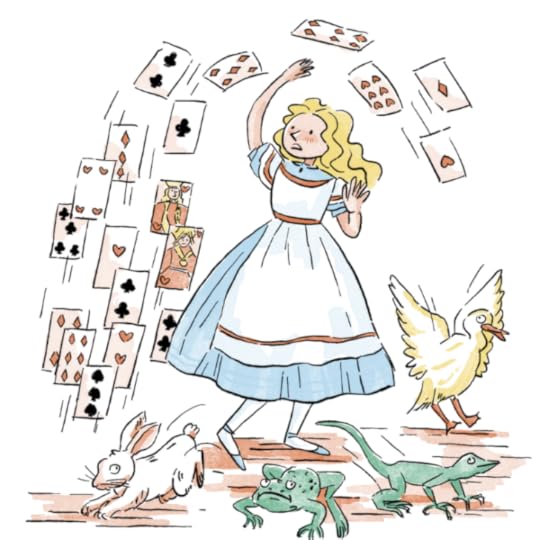
Name a favorite character from a movie. What’s so endearing about him/her? Can you think of a particular movie where the entire story seemed to hinge on one unforgettable character (Example: Gone with the Wind/Scarlet O’Hara) Was this a “complex” character? How many layers are we talking?
Do you appreciate him/her more because of the complexity?
There’s much to learn about characterization. Editors will sit up and take notice when you give them characters with depth. So, let’s get busy creating POV characters worthy of loving. . .or hating.
Forge ahead with more lessons from Free Writing Lessons.com to learn more about how to develop characters your readers won’t forget.
The post Characterization: An Introduction appeared first on Janice Thompson, Author.
Characterization: The Four Personalities

One way to approach characterization—to fully develop both your POV and secondary characters—is to take an intensive look at the four different temperaments/personalities. Understanding what makes us tick helps in the crafting of memorable characters. We all have our own distinct personalities, but each of us will usually fit into one of the following four categories: Sanguine, Phlegmatic, Melancholy and Choleric.
Here’s a quick look at the definitions of the four temperaments. CHOLERICCholerics make good leaders.Cholerics know how to get the job done. Cholerics are usually hard workers. Cholerics like to be the boss. Cholerics can be a little stubborn. Cholerics can be bad-tempered at times. Cholerics are easily angered at times. Cholerics have a tendency to think they are always right.
  SANGUINEMost Sanguines are very outgoing.Sanguines seem to do well in crowds.Sanguines have the uncanny ability to make friends with absolute strangers. Sanguines are fun, fun loving, and great to be around – most of the time. Sanguines often like to be the center of attention.Sanguines often dominate conversations.
 MELANCHOLYMelancholies make good leaders.Melancholies know how to get the job done.Melancholies are often very hard workers.Melancholies like to be the boss.Melancholies can be a little stubborn.Melancholies can be bad-tempered at times.are easily angered.Melancholies have a tendency to think that they are always right.Melancholies are very sensitive to the needs of others. Melancholies are deep thinkers.Melancholies are often organized, making lists. Melancholies tend to be a little withdrawn at times. Melancholies often worry about things.
 PHLEGMATICLike “phlegm,” phlegmatics need to be forced up or down. Phlegmatics are often easy going/laid back.Phlegmatics don’t mind not being the center of attention. Phlegmatics don’t mind working to help others. Phlegmatics often go along with the crowd.Phlegmatics are more followers than leaders.
What can I do with this information?
The four personalities can work for each other or against, depending on the situation. Take a look at Pandora’s box lesson for a thorough look at how you might use these volatile personalities to create characters your readers will never forget.
The post Characterization: The Four Personalities appeared first on Janice Thompson, Author.
March 15, 2024
Stone on Stone

The book of Nehemiah begins with Nehemiah, cup-bearer to the King, asking about the state of affairs in Jerusalem. He was told that the walls around the city were still broken down and many of the people, who had been taken into captivity by the nation’s enemies many years prior, were in affliction. From his reaction and from further happenings in the book of Nehemiah I believe that the Lord had placed a burden for the people and for the city of Jerusalem on Nehemiah’s heart. Nehemiah was greatly upset when he heard the news.
We Need Modern-ay NehemiahsRUBBLEHave you ever looked at the rubble of the life/career/project and think there’s no way out? Hang on! Nehemiah has the answer! Your project/career/personal life can be rebuilt.
FOUR LESSONS FROM NEHEMIAH’S RUBBLENehemiah wept over the condition of the people. Nehemiah repented on behalf of the peopleI questioned them about the Jewish remnant that survived the exile, and also about Jerusalem. They said to me, “Those who survived the exile and are back in the province are in great trouble and disgrace. The wall of Jerusalem is broken down, and its gates have been burned with fire.” When I heard these things, I sat down and wept. For some days I mourned and fasted and prayed before the God of heaven. Neh. 1:2-4AS CHRISTIAN WRITERS, WE HAVE TO KNOW OUR AUDIENCE, TO SEE THEIR FLAWS, THE GAPS IN THE WALLS OF THEIR LIVES. OTHERWISE, HOW WILL WE MINISTER TO THEM? LIKEWISE, WE HAVE TO CONFRONT THE SEASONS OF RUBBLE IN OUR OWN LIVES. Weeping over the devastation (of my situation & those hurting around me). Start the writing experience with prayer, asking for God’s will before you pen one word. Nehemiah took risks. He approached the King on behalf of the people. I was very much afraid, but I said to the king, “May the king live forever! Why should my face not look sad when the city where my fathers are buried lies in ruins, and its gates have been destroyed by fire?” Neh. 2:3WRITERS FACE RISKS EVERY DAY – BEING VULNERABLE; PLACING THEIR GIFT OUT THERE; FACING EDITORS, AGENTS, CRITICS, AMAZONNehemiah carefully examined the damage in all of its detail so he could know exactly what he was dealing with By night I went out through the Valley Gate toward the Jackal Well and the Dung Gate, examining the walls of Jerusalem, which had been broken down, and its gates, which had been destroyed by fire. Then I moved on toward the Fountain Gate and the King’s Pool, but there was not enough room for my mount to get through; so I went up the valley by night, examining the wall. Finally, I turned back and reentered through the Valley Gate. 16 The officials did not know where I had gone or what I was doing, because as yet I had said nothing to the Jews or the priests or nobles or officials or any others who would be doing the work. Neh. 2:13-16WE ALL FACE RUBBLE: Personal life AND writing (2006 – 2007, giving up) OUR BOOKS/WRITINGS NEED TO BE CAREFULLY EXAMINED SO THAT THE “LOOSE PARTS” (RUBBLE) CAN BE PROPERLY REPAIRED. Nehemiah PLANNED for a successful rebuildingMAKE A PLAN FOR YOUR WRITING. IS IT A CAREER OR HOBBY?RebuildingNehemiah rallied the troops and encouraged them before the work began, letting them know about God’s favor on him thus-far. He defied the opposition of Judah’s enemies on all sides—Samaritans, Ammonites, Arabs and PhilistinesThen I said to them, “You see the trouble we are in: Jerusalem lies in ruins, and its gates have been burned with fire. Come, let us rebuild the wall of Jerusalem, and we will no longer be in disgrace.” I also told them about the gracious hand of my God upon me and what the king had said to me. They replied, “Let us start rebuilding.” So they began this good work. Neh. 2:17 – 18WRITERS RALLY AROUND ONE ANOTHER; LIFTING HANDS/HEARTS. It takes a village to rebuildGod always works through a committed minority. Only a few thousand Jews lived in Jerusalem, yet look what they accomplished. The Twelve turned the world upside down.People swept in around me when I was in rubble and they said “I’ll roll up my sleeves and help”
Same with books/career: Look for people who will sweep in around you and help you build that book or career into a thing of beauty. Don’t go to the nay-sayers. Go to the fellow builders, folks with muscle (spiritual, craft, etc.)
2. Nehemiah created a practical plan, dividing the workload and not putting too much emphasis on any one person or group. 52 days!
JUST ONE MORE REASON WHY WE NEED A PLAN OF ACTION.
RECOVERY TAKES CALCULATED TIME. (TALK ABOUT MY GOALS WORKSHEET.) WE CAN NEVER TRY TO GUESS HOW LONG (OR SHORT!) We can’t expect to get published (etc) in a short time. On the other hand, we might have a 52-days experience. Point is, BEAUTY CAN RISE FROM ASHES!
3. Nehemiah was ready when the enemy reared his head mid-way through the re-building. He used careful strategy so as not to fall into the enemy’s hands in the middle of the project.
WE NEED TO BE PREPARED IN ADVANCE FOR ATTACKS. SOME PEOPLE WON’T LIKE WHAT WE’RE DOING AND THE ENEMY CERTAINLY DOESN’T LIKE IT!
4. When the workers grew weary, (and it looked as if the rubble was too great), Nehemiah encouraged them. When they grew afraid of the enemy, Nehemiah stationed guards behind the lowest points of the exposedplaces.
You are either one or the other here today: you need your arms lifted OR you’re God is calling you to lift another writer’s arms. We’re not motivated by our “feelings.” If we are, then we’re going to be crushed in this business.
Fortified CityAs the work finished up, Nehemiah made sure there were no gaps in the wallAs soon as a situation seems “healed” check and double-check to make sure there are no gaps – that the enemy has no more room for entranceThe first thing Nehemiah did when the wall was rebuilt was to set doors in place with gatekeepers. He also appointed the Levites and singers Nehemiah registered the people (gave them a credibility)Give the testimony of what God has done in your midst – how He carried you out of tragedy. Give your story credibilityNehemiah called Ezra the scribe to bring the Word (the law of Moses) and it was read before the people, who wept (overwhelmed). He called the people to lay aside their tears and to celebrate, to live in booths and proclaim the wordStay in the Word/Have a heart of praise/Hang out with likeminded people/whatever you do, “proclaim the word” (don’t give up!)When you’re a fortified city, the enemy can come in like a flood, but God will raise the standard (or the wall) of His blood. You will still go through it, but you’re fortified, you’re not turning back/Equate this to career. We are in constant need of being fortified, not just as writers, but as believers.
“GOD LONGS TO TAKE THE RUBBLE OF YOUR LIFE, YOUR CAREER,
AND, STONE ON STONE, BEGIN THE PROCESS OF REBUILDING.
HE WILL USE OTHERS WITH SKILL AND TENACITY TO FILL IN THE GAPS.
IF YOU ALLOW HIM TO DO THIS WORK, NO MATTER HOW LONG IT TAKES YOU WILL BECOME A FORTIFIED CITY, UNSTOPPABLE WHEN THINGS AROUND YOU CRUMBLE.”
Consider it pure joy, my brothers, whenever you face trials of many kinds, because you know that the testing of your faith develops perseverance. Perseverance must finish its work so that you may be mature and complete, not lacking anything. James 1:2-4
Every block of stone has a statue inside it and it is the task of the sculptor to discover it.
The post Stone on Stone appeared first on Janice Thompson, Author.
Janice Hanna's Blog

- Janice Hanna's profile
- 75 followers

