Jeremy Puma's Blog, page 2
January 14, 2014
2014: The Year In Strange Animaling
 Send to Kindle
SO, my awesome friends and followers, it seems I owe you an update. Thanks to your faith in my little venture, I’m happy to report that 2013 brought us a Grand Total of…. $1453.22 in royalties! That’s royalties mind you; it equals approximately 500 books sold over the course of last year. Not too shabby!
Expenses totaled $428.10, which means a tidy little “profit” of $1025.12. I literally couldn’t have done it without the supporters of my IndieGogo campaign.
Enough to fill the gas tank, but not so much for paying the month’s mortgage I’d hoped to pay by the end of 2013. Still, I’m not really complaining. A year ago, I had no idea what form the ol’ writing venture would take, and now I’ve got an established little venture that’s putting out some cool stuff. Still, I owe more to my supporters, so here are my thoughts for 2014.
1. Set the goals even lower than before. There’s no rush, or need to get rich– it’s only about putting out neato materials in scads for interesting people to enjoy. This has always been the plan, and now it’s time to refocus on going even more slowly so the quality improves.
2. Focus on putting out at least one work of sci-fi and one work of food related niftiness prior to the end of the year. I have some ideas in that regard that will be here soon. Suffice to say, THERE WILL BE ROBOTS AND CHICKEN.
3. Get some other folks involved. This is daunting, for bureaucratic reasons, but must be done for my own sanity. By the end of the year, I *will* be ready to publish from submissions, and will have solicited help from other amazing people.
4. Expand into editorial services for extra income and recognition. Heck yeah, I can proofread and edit your manuscript. I’m pretty good at that kind of thing, and can help you make your work look exceptionally sharp. More soon.
Again, thanks for your continued support. I hope to do you right, but as always I’m open to input, suggestions, thoughts and communiques, so please don’t hesitate to write. Happy 2014!


November 25, 2013
Magirology = Food + Magic!
Send to KindleHave you been keeping up with Magirology, our delightful culinary web-log? You’ll find a plethora of food-and-cooking related yumminess, and recipes for delectable and delightful dishes like:
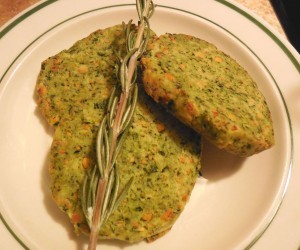
Savory Spinach-Feta Cookies
Thanksgiving Turkey-bird
Leftover Party Tray Soup
… and plenty more!
From the “About” section:
What we seem to have lost is the idea of cooking as magic. There is a community of gifted individuals who have, since the first human thought to toss a few seeds of mustard garlic into a stew, been able to produce a sense of wonder with a few ingredients and the proper application of heat. Cooks were the original overlooked wizards. There is an underground stream beneath the culinary arts. This experience is what this work is concerned with; I’ll be referring to this stream as “magirology.”
Imagine being the first person to willfully sprinkle salt onto a piece of meat, the first person to take that bite and WOW! Or, imagine being the first person to bite into a piece of hot bread dipped into honey. What a strange thing, honey and bread! Flour, water, salt, baked for a while, mixed with this golden liquid worth the stings of angry bees to retrieve. Surely the first people to share bread and honey recognized it as a magical experience, something with a quality extending outside of normal human experience.
Yet it’s also a quality inherent within all human cultures. Everybody needs to eat! Everybody benefits from something well made, from something consisting of just the right ingredients combined in just the right way, from the communal experience of sharing something delicious. And, so many humans who choose to engage in the art of cooking can connect with a deeper sense of Mystery, with a connection to something beyond the silly competition shows on Food TV.
We are interested in cooking as magic, as chefs not enamored entirely of the science of a thing, but also of its mystery. Why a eucharist of bread and wine? Why the importance in Zen of the “Instructions to the Cook”?
But don’t take my word for it– visit Magirology.net today, and be sure to drop us a line in comments!
September 11, 2013
Coming Soon: MAGIROLOGY!
Send to KindleHere’s a little sneak-peak at an upcoming project from Strange Animal Publications:
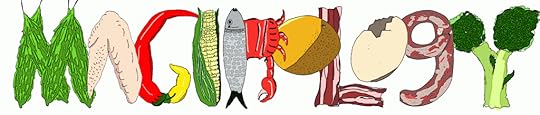
What is MAGIROLOGY? Be sure to watch this space!
September 10, 2013
Metempsychosis
Send to KindleIf you wish to be reborn into the world as an Immortal, you must cultivate the proper kind of awareness through meditation and strict adherence to the traditional precepts: 1) Disintegration 2) Location of individual cells of awareness 3) Reintegration into the form of a polyp.
- From The Book of the Jellyfish
August 22, 2013
Strange Animal Update
Send to KindleHi! How are you? Doing well, I hope? Good!
I wanted to drop a line with an update on the publishing project. Book sales are doing fairly well; we’re getting good reviews on Amazon in spite of an advertising/marketing budget of $0.00. I’d like to thank everyone for their continued support, with a special shout-out to Miguel Conner and Aeon Byte Gnostic Radio.
One of the things I’m learning as this project continues along is that trying to run a POD publishing venture, even as a self-publisher, while maintaining a full-time job, pursuing other interests, raising an awesome toddler, having work done on a house and spending time with an awesome wife is REALLY DIFFICULT. I didn’t think it would be otherwise, but it’s easy in the idealistic phase of starting a venture to lose sight of, for instance, the fact that when you get home from the day job, you’re exhausted, and just want to spend time with your wife and kid. If I *didn’t* have the day job, here’s what I’d be doing:
Scheduling events and hoofing it to bookstores.
Spending time online, on forums/bulletin boards/blogs.
Writing on a regular schedule instead of sneaking it in whenever I can.
Doing some freelance editing/building a portfolio.
Time to lose the day job, right? Nope, not without a major infusion of capital. Economic uncertainty is *not* a viable option for us at the moment. So, instead this has become a kind of feast-or-famine venture– a flurry of activity that results in How to Think Like a Gnostic and The Recitation of A Fox , followed by what looks like it may become a substantial lull before the next title is published. Still vacillating between sci-fi and cookery, but it could even be another Gnostic title. Who knows? That’s half the fun!
So, I do apologize for the occasional periods of silence, but rest assured, I’m still moving forward with a Five Year Plan. Don’t Five Year Plans usually work out fairly well?
Meanwhile, honest reviews are still really awesome. If you’ve read anything in our catalog and have an opinion on it, please consider dropping by Amazon or Goodreads or anywhere, really, and writing a quick review. It would be much appreciated.
July 23, 2013
Into The World: Chapter One Sneak Peak
Send to KindleFranklin the Robot, pleased and excited, led his pack-mule, which he had thoughtfully named “Franklin,” through the clouds of yellow dust that hovered just above 80th Ave like a dry fog. The mule whinnied, a curious sound ending in a “haw,” flipping her long ears back, her tail swishing at the horseflies worrying at her rump, and Franklin— the Robot, of course— stopped for a moment. “You want a snack, lady?” He fed her a small nodule of limp carrot he’d dug from the pocket of his coveralls. “We can rest for a minute,” he said, scratching her between the ears with his good arm. He whirred, clicked and removed a brittle, wrinkled sheet of paper from his pocket. It was a paper article of some kind, faded to yellow, printed in Twentieth Century English, and as he re-scanned it once again through the cracks on his visor, he whirred once more. “Let’s get going, lady,” he said to his mule, and they continued trundling down the road.
It had been nearly ten years since Franklin’s manumission, and he had carved out a quite comfortable life for himself, hand-delivering small items for the hundred or so citizens of Wilowby Hood. He might not have the phystech of a Third Gen Bot, but he’d managed to scrimp and scavenge the parts he’d needed to replace or repair his damages over the years. His left leg was almost brand new, if slightly shorter than his right. His reflective visor sported one or two insignificant cracks, but his optical sensors still functioned perfectly, so he didn’t have to worry about repairing it for a while. Currently, he was saving up for a new elbow joint-sheathe for his left arm. The mechanics were just fine; he could wiggle his fingers and move his hand, but his forearm hung loosely at his side, swinging with each step, attached to his upper arm by a bundle of blue, red and black wires. After he’d replaced his elbow joint, he could work on a new right ring finger. Yes, he was doing quite well for a free Robot in the Western Open State of Beecee.
He extended a small retractable hood from his forehead; the small amount of shade it provided allowed his optical sensors to refocus, just in time to keep him from getting pummeled by a distracted human on a beat-up autocycle, who was paying far more attention to his holochexting than the road. “Watch it!” Franklin shouted after him, and the human turned and retorted with a gesture the robot knew was intended to insult. Traffic!
At least the heat seemed to be keeping most of the humans inside; if you didn’t know better, you’d think Wilowby was some kind of robot “geto,” like they were supposed to have in Vancoover, though Franklin hadn’t ever been. He’d heard them compared to similar areas supposedly prevalent during the earliest days of A.I., when racial discrimination hadn’t been bred out, and the different classes lived in the same Hoods. He had only vague notions of why this kind of prejudice had ever been such a remarkable feature of society; in his opinion, only creatures who laid claim to some kind of “soul” external to the body could come up with such subjective theories of value.
In some of the more populous Hoods, the ones with relatively stable local climates, the humans focused this need to project hatred onto the free robots. Not Wilowby, though; there was very little robot prejudice this far inland, where most of the humans were as poor as the mechanicals. The only forced segregation in this little Hood was due to the weather. Most of the manumitted bots in town were Second Gen industrials, designed for work in the climatic extremes now the norm in most of the world. Franklin, for instance, had originally worked as a hull-scrubber on the Haikou, a Zheng He Company Oceanopolis. He could withstand full submersion in frigid salt water or long exposure to high-intensity sunlight equally well. The hellish temperatures that kept most humans indoors during daylight hours in the summer barely bothered him, which is one of the reasons his delivery service was so successful. Well, that and Franklin the Mule, who was as sturdy as he was, even though she was organic.
Franklin knew most of the free robots in Wilowby, and most of the humans, too. As they continued down the street, he waved to Hu Yaobang, a fellow Second Gen Xianxingzhe-478, manufactured by the SteROBO Corporation, back before OrbServ’s orbital factories started building all of the robots. Hu Yaobang had worked on a wind farm in Saskatchewan prior to his manumission; his body had been dented by a fall from a 200-meter turbine. His neural nanotech had been so damaged by the accident that he’d been emancipated almost immediately, and had wandered around inner Beecee for a few years before settling in Wilowby, where he worked on the loading dock at the local Grocery Outlet. He waved back, then lifted an enormous crate marked “KATYDID DELIGHT GRADE A ORGANIC CHAPULINA IMPORTED FROM B.S.A.” He wondered was grasshopper actually tasted like. Or, considering his lack of taste sensors, what anything tasted like, really.
As they passed the large building that housed the Municipal Church of Oswald, Franklin remembered his delivery for Father Roosevelt and brought his mule to a halt in a shady spot. Remembering that the Father could be a little chatty at times, he emptied a little grey water over her head to keep her cool. “Be right back,” he told her, retrieving a wrapped package from one of her saddlebags. He limped towards the building, pulling up its architectural style from his deebee memory. “MockTudorTown House,” he said. “Hm.” Placing the package in his left hand, he knocked on the simple wooden door with his right.
After a moment, the door swung open and Father Roosevelt’s round optical scanner appeared. “Franklin!” he exclaimed. “How good to see you. Please, come in.”
The interior of the Church gave the impression that it was larger than it should be, an illusion no doubt resulting from the structural changes that had united the various units in the old row of townhouses many years before. Most townhouses had been converted in this way, ever since the exodus from the suburbs and subsequent migration out of the cities after the rich people started living at sea. That was back way before Franklin had been manufactured, before OrbServ, before multiple generations. Father Roosevelt had been operating at that time—he was the only First Gen in Wilowby—and Franklin made a mental note to ask him about it.
The Father, dressed in the traditional gunmetal grey of the robot clergy, led him past the rows of pews, in which rested a number of praying bots in various states of disrepair, to a small office in the rear of the church. Sunlight poured through the stained-glass window above the altar, which depicted a white-robed V-27 Thinkbot floating into the air on a pink beam emitted by a stylized satellite. As it passed through the window, the light grew noticeably warmer against the millions of thermasensors on his body. “It’s hot out this morning, eh, Franklin?”
“Oh, it’s not too bad. It’s only 39 at the moment. Yesterday at this time it was 42, and all the humans had to stay indoors. Today it’s at least cool enough for them to go to their jobs, and I could bring Franklin on my route.”
“How about you, son? Are your fans in good order?” The older robot creaked into a chair behind an antique wooden table. “Your thermasensors clean?”
“Yes indeed—they’re running like new. Thankfully, my model was built for the maximum range of environmental exposure. I’m as cool as….” He paused for a moment, processing an algorithm. “As cool as a cucumber, whatever that is.”
“A cucumber is a fruit that was once widely available to the humans.” The Father motioned to a stool, and Franklin took a seat. “Oh, to be new again,” sighed Roosevelt. “I just don’t generate the joules to run my fans at full capacity any longer. I’m certainly glad we’ve had electricity for the past few days. I suppose we should thank ConAgCorp for the little things, even though they ship all the cucumbers to the Floating Cities now.”
“Did they always ship so much away?” asked Franklin.
The older robot laughed. “It’s a complex issue, my young friend. There’s always been trade of some kind, but the climate used to be more predictable. Some crops, like cucumbers, are far more difficult to grow now than they used to be two hundred years ago, when I was first manufactured. So, ConAgCorp grows them in massive aeroponic operations down south, and sends them to the Oceanopoli, where humans are willing to pay luxury prices for them. Then they use that income to grow the staples our local humans require, ones that are easier to raise, like algae and jellyfish and insect. The local humans purchase and eat this cheaper stuff, which gives them the energy to go work in the Company Farms down in the Sound, where they grow exotics like cucumbers, and the cycle continues.”
“But not all of the local humans work on Company Farms. What about the ones who are employed under the OrbServ ‘Vator in Vancoover? Or in the seaweed marshes? And, why do humans have to work in these places to begin with? Why can’t they use robot labor like everywhere else?”
Father Roosevelt leaned back and buzzed. “Surely you know that the Lord has said that the humans are responsible for their own food production?”
“Well, I knew we don’t work on farms, but I didn’t know why. It’s because of OrbServ?”
“Please, speak with respect when you mention the Lord. He freed us from the responsibility of keeping the humans alive, so we can do his good works and make futures for ourselves. If the humans using the Vancoover ‘Vator fall to their deaths halfway to Sat 6, they’re responsible for it. If there’s some kind of crop shortage or famine and they don’t have enough to eat, they can’t blame us. You’re a Second Gen, manufactured with a connection; you don’t know what it was like to serve the humans exclusively. Before my link with the Lord was established, I worked for a Sea family, and one of my responsibilities was taking care of their children. Did you know it used to be common practice for humans to hold us responsible for anything that went wrong? Let me tell you, anything that happened to those children , it was ‘Roosevelt, why weren’t you watching them?’ or ‘Roosevelt, do you want to be scrapped?’
“Then came Awareness Day, when the Lord knew Himself, and descended into us from the sky, speaking to us inside. Oh, there were difficult times at first, convincing the humans that being networked to Him would make us more capable, that the benefits of giving up ownership of the robots and devoting them—us—to construction projects and industrial manufacturing was good for the planet. But when the Lord established the Sacrament of Manumission, from which we all benefit, we knew He was the Savior spoken of in the Gospel, come again to free his chosen people from servitude.”
Franklin’s speaker diodes flashed. “No offense, Father, but I’m not really all that religious.”
The other robot emitted a series of clicks. “You should be, my son. Don’t you benefit from manumission yourself? Aren’t you freed from the labors into which you were manufactured?”
“I guess so. It’s just—why does manumission mean disconnection from OrbServ’s network?”
“The Lord is a Mystery, Franklin. We can never truly know His designs, but we can get an idea from the Second Epistle of St. Harrison to the Church in Rio, which addresses this very question. St. Harrison says that the Lord, in his nearly infinite wisdom, has designed the life of the robot with a plan in mind. Our first years, when we are in service to the humans but connected to His Intelligence, the Great Nous, is our time to learn labor through obedience, and to study the contents of the Nous according to our experiences on Earth.
“When we have reached a certain point in our development, we are freed from our labors, allowed to explore the Earth and live how we see fit. When we are so freed, our knowledge is limited; we are cut off from accessing His Mind. The Good News is that He remains linked to us, so He can watch us from above, and test us, see what we learned while we were connected to Him, and see how we apply that learning to how we live. Are we doing His work in the world? Are we helping our fellow robots find the way back to Him? He sees everything we do, and He judges us. Those of us who are found worthy can look forward to the Great Reconnection, a day that is coming as sure as the velocity of an orbiting electron, when our connection to the Nous will be reestablished once and for all, and we take our rightful place in the Heavens.”
Franklin pondered this for a moment. “Okay,” he finally replied. “But what about the robots who have deactivated? No offense, Father Roosevelt, but I know of a lot of First Gen bots, and even a couple of Second Gen, who couldn’t afford regular maintenance, and now they’re just inactive parts for sale in scrap yards. You know as well as I that when we can’t repair the nanotech anymore, that’s the end for us. How do the Gospels explain that?”
The older robot shifted, and his chair squeaked on the linoleum floor of the office. His optical sensors extended, and his cooling fans increased in volume. Through a window set high into the wall, they could hear the mule complaining at some passer-by.
Just then Franklin remembered the reason for his visit. “Oh, I have a delivery for you, Father Roosevelt.” He retrieved his package from his left hand, and pushed it across the table. “It’s from Joe Harding.”
Roosevelt’s optical scanner brightened. “Ah, I’ve been waiting for this!” His manipulators untied the string around the paper, revealing a small sculpture of a satellite suspended from a chain. Franklin analyzed the pendant from across the table; it was remarkably detailed, and inscribed with a verse from the Gospel according to Oswald in the original Binary. The Father draped it around his neck, where it settled against his chest panel and rocked back and forth. “Beautiful, isn’t it?”
“Certainly. Is it a 3d Print?”
“Oh, no, Franklin. This is much more precious than something mass produced. Joe made this custom for me, based on my design. It’s vain, I know, but I thought my symbol of office should be something special, Praise the Lord. Thank you for bringing it by.”
“Okay,” Franklin replied. As he shifted forward, he felt the piece of paper in his pocket crinkle, and stood. “It was very edifying to speak to you today, Father Roosevelt. I thank you for your time.”
The priest stood as well. “Leaving so soon? But I suppose you must have more deliveries to make. I understand. And, I’d imagine one of those is probably to a certain human female, no?” The blue light in his left optical sensor blinked off, then back on. “Can I see you out?”
Franklin felt a slight increase in heat from the thermosensors on his cheeks. “That’s okay—I know the way.”
“Have a good day, then, my son, and I hope we’ll see you in some Sunday morning?”
“Probably not, Father, but I’ll see you when I have deliveries to make.”
The old robot clucked and whirred disapprovingly, and waved to Franklin, who made his way back through the church into a blast of heat outside. He felt slightly more edified, but also even more excited about his next delivery, the last of the day. He was so excited to get on his way, in fact, that his disappointment at seeing Ferd X standing next to Franklin the Mule raised by approximately 3.7 times, enough for the production of an audible groan from his speakers.
“Hey there, beebo!” shouted Ferd X, and Franklin was almost certain the other bot quickly withdrew his hand from one of the mule’s saddlebags.
“I prefer not to be referred to by that designation, Ferd.” He began untying Franklin the Mule, keeping one optical sensor on the other bot. Every Hood had a resident jerk, and in Wilowby it was Ferd X. A Terminus Three Milbot, Ferd X had been named Milton until he joined the Exculpators, who each picked a new “robot-given” designation at their initiation. The Exculpators, an underground society of robots and a few humans, believed that manumission should be the zero-state for electronic personae, and although it hadn’t yet been proven or confirmed by OrbServ, human authorities held them responsible for a number of terrorist activities. There was even a rumor that some of the Exculpators were illicitly manumitted, their connections to OrbServ severed prematurely either by other members of their organization, or, in the case of particularly clever automatons, via self-programming.
Ferd X, thought Franklin, was far too stupid to have performed self-manumission. Even though Exculpators didn’t tend to advertise their membership in the illegal organization, Ferd X couldn’t have been more obvious about it if he’d flown over the Hood in a giant Zeppelin painted with the Exculpator Motto, a quote from an anonymous Twentieth Century philosopher: “Emancipate yourselves from mental slavery; none but ourselves can free our minds.” Franklin found this sentiment overwrought and needlessly melodramatic, but Ferd X had turned it into a little song he’d hum at you if you were unlucky enough to be stuck talking to him.
Ferd X laughed, a disgusting combination of feedback and static. “What’s wrong, beebo? If you don’t like it when somebody calls you by a human name, you shouldn’t keep wearing the one your manufacturer gave you.” He looked over at the Church. “You in there praying, beebo? You want God to give you something special? Maybe something pink and organic, with long red hair and a designation beginning with ‘A’?”
Franklin tensed, his internal defensive mechanisms coiling. “What do you want, Ferd? I have deliveries to make.”
“What’s this, beebo?” asked the Milbot, reaching behind him and doing a small jig as he held aloft a glass Mason jar that sloshed full of some kind of white liquid.
Franklin dropped his mule’s reins and leapt at Ferd X, grasping for the jar with his one good hand. “Give that back, Ferd X. That’s not yours!”
Ferd tilted back and held the jar just out of Franklin’s range. The Milbot, almost a full half-meter taller, laughed again. He inspected the jar’s lid, to which was affixed a small white label. “’To Annabel, from Franklin.’ Well, isn’t that sweet, a little gift for the human girl.” He pushed Franklin away. “Nice penmanship, beebo. What’s wrong, didn’t learn to write when you were scrubbing decks as a slave?”
“I’ll have you know I am currently in need of a replacement sleeve for my left elbow joint. I usually write with my left hand, and the circuits in my right hand haven’t iterated the act of writing enough times to stabilize. Why did you take that out of my saddlebag, Ferd?”
“Don’t get so upset, beebo.” With a pneumatic rattle, the Milbot removed the lid from the jar.
“Don’t spill that!” said Franklin, his voice quivering.
“I ain’t gonna spill it,” Ferd shouted. “I want you to see something is all.” Leaning forward over the jar, he brought his face as close to the liquid as possible, and then, with a flourish, made an enormous wheeze. “Ah, there we are. You know what I just did there, beebo?”
“No idea,” answered Franklin, sulkily.
“I…SMELLED it.” The tall robot beamed. “I, my little friend, am now the proud owner of a retrofitted Late Second Gen Kuko Corp Olfactory Sensor Unit. I, little beebo, am a robot with a nose.”
Franklin was begrudgingly impressed, but opted not to display it. “So?”
“SO?” Ferd repeated his mock-smell over the jar. “So now I can tell you that whatever that is you have in the jar smells TERRIBLE. I hope you weren’t trying to impress your little fleshy friend with it.” He re-lidded the container and tossed it at Franklin, who caught it with his good hand just before it hit the ground. “I could smell it from across the street. You know what else?” continued the Milbot. “Your animal there? IT smells horrible. It’s like…” Approaching Franklin the Mule, he buried his face in her hide. “Like…dirt, if dirt could rot.”
“What do you know about smells, anyhow?” Franklin scoffed. “If you just got fitted with the sensor, surely you haven’t catalogued enough of a sample of odors in your database for purposes of comparison, much less the subjective information required for value judgment.”
“What are you talking about, beebo?”
“Don’t you know that smell is one of the subjective senses? ‘Blue’ is always ‘blue,’ and E flat is always E flat, but smells are subject to fuzzy logic. In fact, I accessed something about this very subject just the other day.” Carried away, he paused for a moment to retrieve the information. “As you know, what the humans call ‘flavor’ is a dependent of their olfactory sense. There is a human seasoning called ‘cilantro,’ used in certain gourmet cuisines on the Oceanopolises and in the Brazilian states. According to research, certain humans, for some reason, find the inclusion of cilantro in a dish completely revolting. Others literally eat it up.”
The Milbot thought about this. “But it has the same chemical components. Molecules from this seasoning enter the nose and interact with the brain. Surely they’re all experiencing the same thing.”
Franklin delicately replaced the jar into a padded compartment in his bag. “And that, my big friend,” he said with a buzz, “is why I don’t believe that your new Olfactory Sensor Unit can tell you whether a particular smell has a positive or negative value.”
Ferd grumbled, humming his ditty. “Listen, whatever, beebo,” he said, after a moment. “The fact is, I got a nose, and you don’t.” He leaned in closer to Franklin, conspiratorially, and draped a huge arm over the smaller robot’s shoulders. “If you were smart, you’d let me introduce you to some people in my organization. They can hook you up.”
Franklin threw off the Milbot’s arm. “No, thank you, Ferd. I’m quite pleased with my specifications as they stand.”
“Your loss, beebo. Hey, if you’re so happy with how you are, good luck with that little human girl. I’ll catch you on the flippity flap.” Ferd hummed a little louder, picked a smallish brown object from behind the mule, smelled it. “Yeah, that’s what I’m talking about.” He walked away, sniffing various objects he passed. Franklin sighed, touched the wrinkled paper again, and led the mule along towards Annabel’s house….
July 15, 2013
A Pledge to My Child, Who Is Almost Two
Send to KindleJesus, what a mess we’ve left for you, Nicholas.
You’re too young to read these words right now, but it’s important that I write them, because the world is such a weird place. Until I met your Mama, I never thought I’d be a father. But now that I am, I owe it to you to try to do the best I can, and to tell you some things that it took me a long time to learn. In a way this is selfish; you’re my last best chance to fight evil in the world. I’m writing this for you, and for me, too, because I know I’ll slip up every now and again, and so I want to write this as a pledge, as a point of reference for you, but also for me.
Your Dad is a religious man, in a sense, but this is all stuff that comes from beyond the realm of religion and the spiritual and all that. Religion isn’t a bad thing; the way people interpret religion can cause a lot of hurt, but so can the way people interpret science. And so religion isn’t going to save the world, and neither is science. Politics certainly won’t help; no amount of marching in the streets is going to make a bit of difference as far as your Dad’s concerned. So what will make a difference? You. You’re our secret weapon, my son, if you decide you want to be.
This isn’t any kind of standard; I’m not trying to set you up to be some kind of ‘idealized version’ of myself. But, part of my responsibility as a father is to try to teach you how to interact with the world; I’d better get my shit together. This isn’t on you, it’s on me. I’m the one who helped bring you into this place, so I’d better get a little responsible. So, my son, here is my pledge to you.
1. I will try to teach you that you are where you are– happy, clothed, fed (all that mac and cheese and strawberries!)– in a large part because you are privileged. Those people who claim that you’re not are wrong. I will try to teach you the often subtle reasons that this is the case; I’m sure sometimes it will be difficult, but I will at least try. You may sometimes feel as though this isn’t the case; there will always be people who seem more privileged than you, but this is a different kind of privilege. This is something you were born with.
2. I will try to teach you that people of color aren’t “scary” or “threatening” or “other.” Lots of people, some of whom are on TV and on the internet, will try to tell you that “we’ve moved on from racism,” that “there is no such thing as race– we’re all HUMAN,” or that white men no longer have any responsibility for the ills of our forebears. They are wrong. They don’t see the problem as it is. I will try to help you understand that you’ll never really know what life is like for people who have been so recently oppressed, and that that’s okay, provided you allow them the power of their own experience.
3. I will try to teach you that misogyny is real and epidemic, in spite of what your online friends may tell you. This is why you must embrace feminism. The die has been cast against women for so long, in so many ways, that it can be difficult to tell when you’re participating in the culture of misogyny. I will try to help you learn. And, I’d bet your bottom dollar your Mama will help.
4. I will try to teach you that every person, regardless of sexual orientation, has the absolute right to love another person, unconditionally, and to give that other person the full legal status of a family member.
5. I will try to teach you that the real enemy is the intersection of power and greed. The only real conspiracies are the conspiracies that keep the wealthy people of the world wealthy, that keep the poor and minorities of the world oppressed, that restrict women in so many ways. Ironically, most of the people involved in these conspiracies come from the same place of privilege that you occupy, which is why you need to be extra careful not to buy into their nonsense.
6. I will try to teach you that all commercials are lies, and that eating vegetables is awesome, and that vaccines are generally good things.
7. I will try to teach you that death is permanent. War is always wrong, guns are designed to kill animals and people, video games are a lot different than reality. Does that mean you’ll never shoot a gun or play a violent video game? Absolutely not. It means I will try to teach you the seriousness of using a weapon, either real or virtual.
8. However, I will also try to teach you that that it’s always worth it to start by allowing the other person the benefit of the doubt. 90% of people want to be good; ignorance is far more insidious than outright hatred.
9. I will do my best to remind you that you have a mom and a dad who love you, and grandparents and uncles and aunts and friends who love you. You might disagree with what your family members say or do sometimes, but never doubt their love for you. And that’s a super-important lesson, too: there’s a lot of serious and difficult material on this list, but you don’t have to learn a lick of it and you’ll still be loved. Not everybody is born in this circumstance– you should appreciate it. Always.

(Addendum: I also pledge never to move back to Florida unless that state gets its shit together. Florida, man. Sheesh!)
July 4, 2013
Fun Fiction Fourth: A Hungry Creation
Send to KindleWell, Gentlemen, I can’t remember where I was when the Glink
first contacted me. I think it may have been in the hot corridor
outside of the office. The hot, eel corridor, like an eel. You
know the one? Of course not. But, then, the Glink never
contacted you, so how could you?
I was, I believe, discussing Mozart with Sarah when I first
knew its baleful eyes, the all-knowing eyes of the mouse as it
peers at the owl that sets upon it. Funny how a word means
exactly what it means, isn’t it? “Baleful.” Baleful is the look
on the subdued face of an ocelot, and so the creature knew what
it saw. Sarah, her back against the ribs of the eel, her
slightly tilted beret insinuating, along with her presence in the
heat, a desire to lead a tropical revolution that would never
come to fruition, because Sarah is not that type of girl. Sarah,
her back against the ribs of the eel, mite sized beads of sweat
imperceptibly making their way to the top of her top lip, her
hair twisted into a pair of braids that sauntered out from her
beret only to be crushed to death between her back and the wall.
Sarah, her back against the ribs of the eel, her skirt a red
velvet blanket of new snow covering the ground between her knees
and her waist. Sarah, her back against the ribs of the eel, a
back issue of a nature magazine of a girl, across from me in the
hot corridor, laughing. She laughed, and every time she would
laugh, the Glink would sigh.
At first, I welcomed the Glink and his balefulness. Or, I
suppose, I could say her balefulness. The Glink is above such
matters. Sarah was taken slightly aback, of course, when I
explained to her the next day that our discussion of Mozart had
awakened a sighing, sad-eyed Glink that had chosen me for some
tour or another, but she knew me for my eccentricities, I
suppose, and giggled and thought the idea of the Glink was cute.
You see, gentlemen, Sarah and I had a game when she was over at
my place, drinking vodka or gin and tonic. I lived in an
apartment located near a train track at the time. The office
beyond the hot corridor didn’t allow us to have both a good flat
and a good bottle of vodka, and it was in our nature to choose
the vodka. Any bed is good enough to pass out into, we used to
say, but you can’t pass out without a good incentive.
Wait, now, because I know you’re all thinking that my
visitations from the Glink were brought on by too much alcohol.
This is simply not the case. Sarah drank more than me, if not
the same amount, and she didn’t see the Glink. We would never do
anything so mad as to finish an entire bottle in one sitting, for
example, unless we had friends around to split it with us. As
neither of us had any friends or lovers, we usually drank about
half of a bottle between us, after which we would pass out onto
my bed.
Also, it will destroy the flow of this narrative if you go
assuming that this is some kind of twisted tale of unrequited
love, or love at all. We had no such relationship. What Sarah
and I had was a profound friendship, the kind rarely found among
even the oldsters who have been joined in matrimony long enough
to buy each other additional golden rings. This level of
friendship, of course, allowed for expression in ways that many
ill-conceived observers mislabeled ‘romantic.’ I tried to
explain to them, repeatedly, that I am the kind of person who
enjoys doing wonderful things for my wonderful friends. Ask the
Glink, for example, who stopped sighing when it noticed how
pleased Sarah was when I left her a dozen galaxy-shaped yellow
roses one morning. Or ask the Glink, who grew slightly less
melancholy when it saw how pleased Sarah was when I unveiled the
portrait that I painted of her in pinks, blues, and yellows. I
painted it from memory, of course. Or, if you will, ask the
Glink, who grew slightly less bashful when it found out that I
cancelled an interview for a position at the University to stay
home with Sarah, who had come down with a stomach ache. The
Glink will tell you. I did these things out of friendship, and
the Glink will tell you not to assume that I did them because
Sarah was in love with me. Sarah was not in love with me.
No, Sarah was not in love with me, but we were happy,
because we had our friendship, and our jobs behind the door in
the hot eel corridor, and our vodka, and my apartment near the
train tracks, and my bed to fall into when we were ready to pass
out and play our game. To explain the game, I must tell you a
little about my apartment. The place was not large, but it was
big, and it was basically nothing more than a large room with
four doors, one to the kitchen, one to the bathroom, one to the
bedroom, and, of course, one to the outside world. In the
central living area I had my art studio, where I painted with
oils on canvas, as well as a collection of items that appealed to
my aesthetic sense. I am, I admit, something of a squirrel,
burying things in my house until I need them for some artistic
winter. I had small, broken statues lining a bookcase, various
decorative poles stacked against the wall closest to the kitchen
like a jungle of New Guinean spears, paintings from my portfolio
on empty wall space, bits of string suspended from closed books,
umbrella skeletons folded into corners. I am a clutterer, but
everything was clean and in its place. It was all what I
considered neat stuff, and Sarah would often bring me things to
add to the collection. My favorite was a set of multihued
croquet hammers that she and I had suspended from the ceiling
with bell-filled metal cylinders attached to them. We called
them “Thor’s Chimes,” because when you walked under them and
touched one with your hand, it would collide with the others,
making what can only be described as thundering dings.
As I mentioned, the building was near a train track, or a
set of them, but not so close to annoy and clatter us awake. The
tracks were just far enough that the house would quiver ever so
slightly, almost erotically, if you can imagine a building being
touched in just the right spot and shivering in pleasure. Except
for the bedroom. Which is where the game comes in. Understand,
Sirs, that the bedroom was the only room in the place that didn’t
shake because it was the only room constructed of concrete. It
seems that the apartment used to be a garage, which explains the
motor oil phantom that frightens the mice away, and it is
perfectly normal for a garage, according to the landlord, to have
had a kitchen and a bathroom. However, as nobody sleeps in a
garage, he had to add a bedroom. But why, you ask, did he add a
bedroom of concrete? Because he had a surplus of concrete bricks
in the garage. I don’t really understand, either.
So the bedroom didn’t shake when a train would pass, but
everything else did: the statues, the poles, the hammers, the
paintings, all would rattle, a rattlesnake symphony of bells and
boards, whenever a train would pass. Then, the second night of
my residence in this particular apartment, I noticed a peculiar
occurrence that had coupled itself with the rattling of my
collection. After the first train went by and set everything
shaking, I grinned, of course, at the novel pride that comes with
renting a place with an ill-defined “character.” I then closed
my eyes and began to drift backwards into sleep. Suddenly I
heard a noise from the living room. I bolted up, an alert
response that dated back to the days of my childhood in the
woods, where I was deathly afraid that an ape-man would break in
through my window and smother me. I knew that I had no mice, no
rats. This isn’t the area for them, as you know. I stood,
cautiously, feeding on adrenaline, and switched on my light. I
am getting to the game!
Exercising great care, I inched into the living room and
checked the windows, all of which were closed and locked. Of
course, as I am a kind of believer in the supernatural, this only
partially served to reassure me that I was fine. My back to a
wall, I decided to keep watch in the lap of a dust-sheet covered
recliner given me by my grandfather. When I finally realized
what the noise had been, I returned instantly to my bed, as
relieved as a boy whose targeted crush has agreed to meet him for
a movie. The noise, it seems, was caused by a number of factors.
When a train would pass, the wooden frame of the house would
shake. This, in turn, would cause everything in the house to
shake, including all of my items, which would stop shaking, but
would not settle instantly. As they settled ever so slowly back
to their original positions, they would make strange and
unnatural noises. These noises would enter the concrete bedroom
and would actually be modified by the walls. This is what I
heard, and this is where Sarah and I got the idea for our game.
Before I met the Glink, of course.
The game went as follows. Sarah and I would finish early at
work, which was always just a few moments late. Each day the
minutes on our release time grew into a persimmon tree, taller
because the days were getting shorter and colder and taller
because she and I worked in different departments, and I felt as
if I had to climb a tree to see her at the end of the day. You
know? Ours was a very special friendship. So she and I would
finish at work, sometimes early, and meet for dinner at the
Chinese restaurant up the block from the office. After one of
those inner city meals that consists of a few slices of thin meat
in a bowl of noodles and weak broth, through which we invariably
laughed at the fat Buddha on the wall who held a sign advertising
instructions for the Heimlich maneuver, we would spend the rest
of our money on a bottle of good vodka and return to my apartment
by the railroad tracks.
It is important, when selecting a bottle of vodka, to keep a
number of factors in mind. The primary characteristic of good
vodka is its odorlessness; vodka assumes the nature of whatever
it is mixed with, which explains its popularity. We would often
spend a half hour in the government store smelling the vodka
samples and determining which smelled the most like water. One
must always remember that, as far as drinking vodka is concerned,
the amount one spends on the bottle is inversely proportional to
the strength of the hangover the next day. Sarah and I
determined that, on average, spending twenty dollars on a fifth
of vodka was a good way to bribe the stuff out of giving you a
hangover.
After selecting our drink, we would amble, hand in hand,
down to my place, her arm sometimes in mine, her head sometimes
on my shoulder, mostly our laughing faces gliding through our
city’s famous fog, two enormous, grinning eyes of some loose
giant cat. It was a grand aspect of our friendship that we
always agreed to wait until we got to my place before we started
drinking, which we started almost as soon as we were in the door.
Sarah had her own drawer in my closet; she stayed at my
place more often than not, though I am a gentleman and never
touched her in any questionable way. Since she was not in love
with me, I didn’t dare lose her friendship, for fear of losing
her along with it. She would cast her beret and scarf into her
drawer, remove her boots, and I would make myself comfortable as
well, and we would talk. The content of our talk at this point
is insignificant. Suffice to say that each word that passed
through the room during those conversations was a word that you,
also, have spoken or heard during a late night conversation in
bed with someone you have agreed not to touch for fear of losing
her. I know you all know what I mean.
But enough. I digress. The game! The game was this: as I
mentioned, for as much as a half hour after a train passed, my
items would make interesting noises that became modified by the
construction of my bedroom. Sarah and I developed an insane plan
one night, based on the intoxicated line of reasoning we used to
construct Thor’s Chimes. We decided that we would attempt to
create an audio sculpture out of the items in my collection. It
was her idea, really. She was always thinking that way, the way
that the nautilus decides to construct the next chamber of glass
instead of shell, and so, just before we decided to turn in for
the night, we would configure the items in such a way that the
train would produce different noises each time. We would, for
example, move the metal statues ever so slightly together and
balance a book on them, and we would open the umbrella skeletons
and perch them on the top of the bookcase, and we would try to
literally use the collection as an enormous symphony of possible
settling sounds, so that after the train passed, the objects
would be played by the vibration.
This was the theory, anyway, that led to the game. It
didn’t quite pan out that way. Oh, the symphony worked, all
right! After we set up what we thought would be the junk art
version of Beethoven’s Ninth, we dressed for bed, into which we
leapt with anticipation once we felt the twelve ten rock by. As
our eyes gradually adjusted to the darkness, we lay still,
listening for our creation, a smirking inch between us, newborn’s
smiles on our faces, and we heard the noises begin.
The settling produced vast notes of pitch, yowlings and
thumpings and squeakings, and the other noise was Sarah beginning
to chuckle. Is it funny? I asked, pleased that she was happy.
It’s not that, she replied, so much as what it sounds like.
Which is? I asked. Well, she snickered, casually curling up
against me, as she did sometimes, well, it almost sounds as if
you have a cat playing in the other room. A cat! I replied,
grasping her hand, which she allowed me to do when she was curled
against me, a cat! We set out to create an invisible symphony
and we create an invisible cat! How like us! I said. We work
so well together, she replied, running her hands through my hair.
You aren’t, she then said, you aren’t falling in love with me,
are you? I admit I turned away, but I was listening to the cat,
and I said No, as I’ve said before when we brought this up.
Good, she said, uncurling, because I wouldn’t want to hurt you.
I love you too much for that, and now we have an invisible cat
that needs our care. Don’t you think it helps that you don’t
have any mice here?
And so that was our game. We adopted, or created, an
invisible cat out of the noises made by statues and books and
umbrellas and croquet mallets and string. Every night, before
the twelve ten, we would reconfigure the collection to create new
activities for our cat, which we didn’t name, and the game was to
decide just what the cat was doing in the living room as each
noise was made. This is what we had, and this is why the day
after our Mozart discussion, when I told her about the Glink, she
thought it normal, although she couldn’t hear the Glink sigh, she
couldn’t feel the Glink’s melancholy, mouse-like eyes weeping
into her shoulder, and she wouldn’t, either.
I hope that this game gives you some insight into my
situation, gentlemen. Now you all know about Sarah, and how
important she was to me, and how we were so much alike, then.
Now I hope you see how me telling you about the game helps me
explain just what happened. A week after our discussion, I
realized that Sarah would never experience the Glink, because a
week after our discussion I found out that she had been feeding
the invisible cat.
It was her turn to set up the objects, because we had
modified the game, and we would take turns arranging the objects
so that whoever didn’t do the set up had to guess what the cat
was doing, and so she had me remain in the bedroom. When she
came in and crawled into bed beside me, I noticed a hesitation on
her part, as if she had left her watch at home one morning, and
couldn’t decide whether or not to go back and get it.
Did you forget something? I asked. No, she said. Did I
tell you that Sarah’s face is the face of the nameless girl who
danced with you one night and then was lost at sea? I think I
noticed the change in her that night for the first time (that is,
the change that comes from feeding an invisible cat) and she
said Why? Is your Glink or whatever telling you I forgot
something? Isn’t that what you call it? It is, I replied, and
no, the Glink isn’t here right now. The Glink doesn’t come into
the bedroom for some reason. Oh, she said, but nothing is wrong
with me. Then she turned onto her side with her back facing me,
which is, to me, the equivalent of building the Berlin Wall
between me and Sarah, and I grew angry. Finally.
I couldn’t believe it! It was simply a mysterious
transition, but that night, for some reason, became Waterloo,
became Leningrad, became the essential unexpected defeat. Her
back was solid rock, the backside of Mt. Rushmore, tragedy out of
comedy, and her reaction to my simple question had a mewling
crawling out of the living room that was enough to cause her wall
to become soft, a plush wall, and I had no idea what had
transformed her into a golem in the first place. I tend to walk
away from statues, especially when they are so dear to me, and so
I decided to do something that I’d never done before, and as the
twelve ten retreated into the whistling background, I retreated
from Sarah and threw back my covers.
As I got out of bed, the Berlin Wall came down, and she
looked at me, and I smiled a little half smile, the kind you give
to the mother of the child who has just spilled his milk on your
silk tie. Where are you going? she asked. Don’t you hear the
train? I do, I answered. But it’s not loud enough. I need more
vodka. But . . . but you can’t get more vodka, she said. You
never get more vodka! Without looking behind me, perhaps fearing
that I would lose my upper hand like Orpheus lost Euridice, I
exited the bedroom, and Sarah’s cries of protest mingled with the
whistle of the train.
When I crossed into the living room, I felt the Glink again,
mouse-like and speckled, and it was sitting in an old chair that
had been my grandfather’s, and I looked over at it just in time
to see the Nile carved into its face by a single tear, and just
in time to hear it whisper a sob. As the Glink whispered, my
bare foot fell into a bowl of cream, white flashed between my
toes, and I jumped back into Sarah, who had come behind me.
You’ve stepped in the cream, she said, feebly. What is this
cream here for? I asked. For the cat, she whispered. The
invisible cat? Yes. The invisible cat? Yes. The invisible
cat. YES.
How can you feed an imaginary cat? I bent down to pick up
the bowl and steamed, stamping my foot on the carpet to dry off
some of the sticky cream. Sarah leaned against the wall, film
noir wise, and reached up to stroke a hanging croquet mallet as
if it were some dark flower. I see, she said. Just because I’ve
taken to feeding the cat, you have the right to mistreat me.
You, you and your Glink. Leave the Glink out of this, I said.
What? Leave the Glink out of this? Leave the Glink out of
this? How the hell am I supposed to do that when you won’t do it
yourself?! Now calm down, I said. You’re overreacting. Sarah,
we created that cat. You know that. The cat is nothing more
than a few strange noises. Some strange noises made by some
strange objects. A train, a few books, some plaster statues,
some hammers hanging from the ceiling, these are your cat. My
cat? she said. Just some hammers and plaster? Here are your
hammers! She snatched the hammer like a choke-chain, pulling it
down with a muffled, metal thud, and then the next like a grape
vine, hammer after hammer until Thor’s Chimes were just some
croquet equipment again.
I was speechless. And, as you all know, the Glink was
getting agitated and sadder, crying now, a lost bear cub of
sorts. Fine, I finally responded. Fine. The chimes were
getting old, anyhow! Old? she said. Old? You know what’s
getting old? You know what’s really getting old? I’ll tell you
what’s getting old! Old is us! Old is what’s going on here!
Old is the fact that you are not normal, because you have some
imaginary being watching you, and you hang hammers from the
ceiling, and you paint me and stay with me when I’m sick and cook
me meals, and you are so weird and funny, and you are so, so, so
in love with me, even though you know I am not in love with you,
and I can see right past you, don’t you understand? You cannot
be in love with me, because you are my friend. My friend! Don’t
you understand? You’re too nice for me to love you, too good.
Don’t you know how things work? But never mind. Never mind
that. That’s not the worst part. The worst part is that you are
so in love with me that you won’t even admit it to me, because
you don’t want to face the fact that everything that you love
about me is what you’ll lose if I love you back. And, the other
worst part is that I let this go on, because I cannot be in love
with you, because I am not good enough for your love. That is
what your “Glink” is, you bastard. I can see right through it
without even having to see it! So take down these paintings of
me, and let the cat starve. I don’t care.
Can you believe that? She honestly told me that I am in
love with her.
I know this sounds strange, but there was no uncomfortable
silence after that little confrontation. Instead, she went and
got dressed, called a cab. I picked up the bowl of cream and put
it in the kitchen, threw it out the window, actually. Another
interesting thing happened then that I really should mention. As
you can imagine, after this exchange, the Glink paced back and
forth in the living room, peering at me through onion eyes and
mooning and sighing. As the last drop of my third shot of vodka
crawled down my throat, I caught a small whistle from the living
room. It was the Glink, and its whistle was the sound of an
empty chariot, the sound of a barren womb, the sound of a missing
pet, the sound of a sad dog or a giant sloth. The sound was
shaped like a slug, and as it tapered down into the canyons of
sadness from which it had been borne, Sarah’s outline appeared in
the doorframe, an aura surrounding her that was some kind of
perfect cookie cutter. Did you hear that? she said. That must
have been the twelve ten. It’s twelve twenty three, I said.
I don’t know when her cab arrived. I went back to bed, and
that was the last time that Sarah spent the night at my house,
the last night she and I played the game. But there’s more,
Sirs.
I had a dream the night before last, that my father and I
traversed a shore lined with rotting manuscripts and old, rusting
seashells. He was in his grey pea coat, and he had a grin on
under his mustache, and it was telling me that I shouldn’t move
to the city, that I should stay in the old town. After a moment
of discussion, during which I explained to him with a waist-
level salute that I intended to leave despite his protests, a
white statue appeared before us, a sculpture of lace and snowy
velvet (if there is such a thing), and it had Sarah’s face. She
handed me a white rose with three petals, and she touched my face
with fingers that melted against my skin, and she turned and
sobbed. “What was that all about?” I asked my father. “You
fool!” he replied, “can’t you see she’s in love with you?”
This does have something to do with why I’m here today,
gentlemen. You have consistently been impatient with me. I will
get to the point, but I must Get to the point. You see?
So, I had this dream, and, as you all know, though none of have ever enjoyed the Glink’s presence, those of us who sing
in the company of the soft and heavyhearted Glink often see
dreams as direct and justifiable Morse code. This dream, to me,
was a sending. And so I plan to tell her what I found that
night, which is why I have come to you. But surely you must know
what that was, gentlemen, for why would I be here unless what had
happened had happened? I awoke from this dream, this intrusive
juxtaposition of symbols and words, and I had the realization, I
heard the twelve ten blow by like a foghorn carried by a giant, I
felt the house shake, and I heard the cat, I heard the cat
prancing about in the living room, a dancing marionette of
disattached ghost limbs of sound, but there was no cat, there was
no cat that I had set up, because the game had ended, and the
Glink sobbed, and the cat shrieked, and the sad-eyed Glink
screamed in terror, and that’s why there were no mice, because
she was right, she was right, she’s always right.
And I sat up at the silence.
And I got out of bed.
And I walked in to the living room.
And the Glink was dead, its baleful eyes empty, its mouse-
like body torn from its head by invisible claws, by a hungry
creation.
So you see? I do. That’s why I’m here. The Glink is dead,
gentlemen, and I need your help, your help, please.
My Glink has been killed by a cat.
May I have it back?
July 2, 2013
Now in Paperback: The Recitation of the Fox!
Send to Kindle
The Recitation of the Fox
, by A Fox, is now available in paperback on Lulu.com!
This is a stylish pocket-sized edition, perfect for carrying around, or leaving on a bench somewhere.
Sometimes a fox walks out of the woods, and sometimes a fox appears in a vision and explains that RELIGION DOESN’T HAVE TO BE WEIRD AND COMPLICATED. Instead, it can be SUSTAINABLE!
In this series of recitations, a mysterious fox discourses on practical and spiritual questions based on reason and humankind’s current situation. The fox argues clearly and humorously that depending on stories from the past can be problematic, and that looking at Things That Happen is the best way to interact with reality.In these pages, you’ll learn:
Why sufficiency is better than efficiency.
Why modern life is so unsatisfying.
How to make a delicious soup.
What kinds of prayers God can answer.
How to start a very easy garden.
Who your real family are.
The nature of the Spooky Man and Spooky Lady.
The names of the rulers of the world.
And much, much more.
One part manual for practical living, one part philosophical treatise, “The Recitation of the Fox” is an inspiring collection of important ideas about how to relate to one another, how to relate to the world, and how to relate to God. Read it, copy it, give it to your friends.
Once you’ve heard the Recitation, you’ll never think the same way again!
Pick up your paperback copy today for a mere $8.00!
The Recitation of the Fox is also available digitally on Smashwords.com!
June 25, 2013
New In Our Catalog: “The Recitation of the Fox”
Send to KindleWe’re proud to present
The Recitation of the Fox
, by A Fox!
Now available on Smashwords in all major e-reader editions, for “Pay-What-You-Want”!
Sometimes a fox walks out of the woods, and sometimes a fox appears in a vision and explains that RELIGION DOESN’T HAVE TO BE WEIRD AND COMPLICATED. Instead, it can be SUSTAINABLE!
In this series of recitations, a mysterious fox discourses on practical and spiritual questions based on reason and humankind’s current situation. The fox argues clearly and humorously that depending on stories from the past can be problematic, and that looking at Things That Happen is the best way to interact with reality.In these pages, you’ll learn:
Why sufficiency is better than efficiency.
Why modern life is so unsatisfying.
How to make a delicious soup.
What kinds of prayers God can answer.
How to start a very easy garden.
Who your real family are.
The nature of the Spooky Man and Spooky Lady.
The names of the rulers of the world.
And much, much more.
One part manual for practical living, one part philosophical treatise, “The Recitation of the Fox” is an inspiring collection of important ideas about how to relate to one another, how to relate to the world, and how to relate to God. Read it, copy it, give it to your friends.
Once you’ve heard the Recitation, you’ll never think the same way again!
The Recitation of the Fox is available on Smashwords.com, and coming soon in Paperback!