
Christine Valters Paintner's Blog, page 51
September 25, 2021
The Refreshment of Sabbath ~ A Love Note from Your Online Abbess
Dearest monks, artists, and pilgrims,
When I moved to Seattle in 2003 one of the first people I met was Rabbi Zari Weiss through a mutual friend who introduced us. Zari quickly became a dear friend, especially when my mother died soon after moving, and she was one of the few people I knew at the time who had also lost both parents. She shared with me the tremendous wisdom of the Jewish mourning process where the person who loses someone significant goes into special status for a year and nothing additional is asked of them during this time to allow for the demanding work of grief.
I had already loved Jewish spirituality, while in graduate school for my PhD in Christian spirituality, we had to study one outside tradition and I chose Judaism with a focus on feminist midrash which are stories that are told about the gaps and cracks in scripture. It is a beautiful and creative way to reclaim women’s voices in particular, which are often absent.
Zari often invited John and me over for various Jewish celebrations including an interfaith Shabbat service where Buddhists, Christians, and Jews gathered together to recite the Hebrew prayers together, light the candles, break the Challah bread, and share about what Sabbath calls us to.
She also hosted wonderful Passover Seders where we came dressed up as a character in the Exodus story and retold the stories from our perspective and reflect on inner and outer liberation. For Sukkot, the festival of booths, we’d gather in her backyard in a tent to share a meal together and reflect on the vulnerability and transitoriness of our lives. My life and spirituality have been deeply enriched by my friendship with her and one of the things I miss most in the west of Ireland is not having a Jewish community where I can join some of these practices.
Sabbath is one of the practices I write about in my book Sacred Time: Embracing an Intentional Way of Life. I consider it to be one of the most essential contemplative practices in my life, perhaps because it is also one of the most challenging. To make time every week to pause, to stop the continual demands of work, and to prioritize the pleasure and delight of rest that the divine calls so very good in the first creation story of Genesis is an act of resistance in a world that values perpetual productivity. The gift of refreshment from Sabbath is profound. It is a practice that continues to teach me new things about releasing my striving and yielding to the powerful invitation to simply be for a while.
When we had our last Wisdom Council meeting in the spring, the topic came up of hosting some mini-retreats in interspirituality since our community tends to be a diverse and eclectic group open to conversation and being enriched by the wisdom of other traditions. Zari was the first person I thought of and how I’d love to share her presence with all of you. Please join us next Saturday, October 2nd for a mini-retreat on Sabbath/Shabbat as a contemplative practice led by Rabbi Zari Weiss on Zoom. The retreat will be recorded for later viewing if you aren’t able to join us during the live session.
From the retreat description: “Shabbat is a day to find within ourselves once again the life-energy that makes us human. It is not simply a day to refrain from doing work; rather, it is a time to remember our place in Creation and to honor the Source of that creation. In this retreat, we will learn more about the tradition of Shabbat, and explore what it might mean to build into our own lives Sabbath time, in ways that are nurturing and renewing.”
This is also your last chance to join our Sustainers Circle! If you are financially able, please consider supporting our free programs like the prayer cycles and scholarships while receiving bonus content for the year (through June 2022) and gifts in the mail!
With great and growing love,
Christine
Christine Valters Paintner, PhD, REACE
Image © Christine Valters Paintner
The post The Refreshment of Sabbath ~ A Love Note from Your Online Abbess appeared first on Abbey of the Arts.


September 21, 2021
Monk in the World Guest Post: Shelagh Huston
I am delighted to share another beautiful submission to the Monk in the World guest post series from the community. Read on for Shelagh Huston’s reflection on the power of rest.
Last spring, with dozens of daffodil plants in my front garden, I was looking forward to seeing the host of golden daffodils arising with Easter and the lengthening days. In my neighbours’ yards, and along the roadsides, they were everywhere. I waited – but in my garden, only one daffodil bloomed.
A lonely flower, maybe drooping a little with melancholy for her missing companions. Something like I was feeling as we entered the second year of covid isolation. It’s hard to sing alleluia all by yourself, without your heavenly host.
Thinking of daffodils, I recalled an old memory, from when I was six. It was daffodils that inspired me to write my very first song:
Spring is coming, spring is coming,
Birds are singing in the air!
Spring is coming, spring is coming,
Daffodils are everywhere!
Flowers are springing, bells are ringing,
All the world for joy is singing,
Spring is coming, spring is coming,
Daffodils are everywhere!
Although the words, as well as the tune, were trite, they were heart-felt. I remember the joyful sense in my body of participation in the spring – that wholly unselfconscious, innocent, cheerful rejoicing, the feeling that makes the lamb wriggle and leap. My child-being was rooted in knowing that ‘all manner of thing is well’, and songs sprang from me as readily as daffodils spring from the green earth.
But now, I am old, tired, and finding it harder to rejoice. Despite all the bulbs and green leaves in my garden this spring, the golden daffodils did not sprung forth. Why did the daffodils fail to flower? What shadow fell between the planting and the blooming?
As I sat at my desk, sad and even resentful at my lack of output, I saw a pattern repeating. So many thoughts and ideas about what to write, so many projects started and not finished, so meagre a harvest of completed work, so little shared with the world. Despite the ponderous trudging, the effortful work, I continued to feel like a worthless gardener with a poor harvest.
But then, it’s not fair to say there were no daffodils. There was a small forest of daffodil plants. The leaves were there – it’s the flowers that were missing. And there are thousands of words, paragraphs, documents, on my computer – it’s the beautiful completions, the golden gifts to the world, that are missing.
Why? It’s something of a mystery still. But maybe the roots needed feeding. Although those daffodil plants can manage to survive on the little that happens to drift in, they had been there a long time, and may have worked hard for many years to produce flowers each spring. Perhaps they were just worn down. Perhaps they too were old, tired, and finding it hard to rejoice.
I bought my daffodils a box of bulb food. And slowly I’m recognizing that my own underground sources from which the joy springs forth also need feeding. They can’t be just taken for granted, and expected to produce endlessly. They too need nurturing.
After a year of living without my host of companions around me, it’s not surprising that my alleluias were feeble and few. But beyond that, there’s always a need for the food and drink of the soul, to fatten up and enrich the bulbs that can flower. You can’t know exactly what’s going on in the darkness underground, but somehow, to once again rejoice and create as easily as wriggling and breathing, I need to fasten to the deep roots that nurtured that small singing child.
Last winter, having been deeply depleted from too much work and way too much world stress, I became ill from exhaustion, and could do almost nothing for a couple of months. Into that emptied space came a sustaining flood of love and care from others, and some divinely-inspired insights which I’m still processing. One part of what I learned was the absolute necessity of caring better for myself. Learned, I say – learned in principle, but I’m still struggling to integrate fully into practice. I need to remember the inexorable requirement for healing power of time.
Feeding my daffodils did not produce any more flowers this past spring. Those bulbs needed to rest, fatten up, drink in sun and rain for a while. Maybe the daffodils and I even need to accept that old bulbs don’t flower as vigorously as they once did. But in the fullness of Kairos time, God’s time, there will be another spring, and a singing host of golden daffodils.
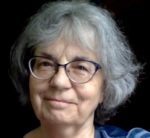
After retiring from work as an Anglican deacon, a World Bank economist in Africa, and a community activist, Shelagh Huston lives with her husband on an island in BC. To help respond to the earth crisis, she is currently writing a book on finding a deeper perspective on meaning-making.
The post Monk in the World Guest Post: Shelagh Huston appeared first on Abbey of the Arts.
September 18, 2021
Honoring the Equinox (Join us for Yoga & a Writing Retreat) ~ A Love Note from Your Online Abbess
Dearest monks, artists, and pilgrims,
The autumn equinox falls officially on Wednesday in the northern hemisphere, a time when the sun rests above the equator, and day and night are divided equally. It heralds a season filled with change, celebrates the harvest, and ushers in the brilliant beauty of death. Autumn is a season of transition, of continual movement.
At the heart of autumn’s gifts are these twin energies of relinquishing and harvesting. It is a season of paradox that invites us to consider what we are called to release and surrender, and at the same time it invites us to gather in the harvest, to name and celebrate the fruits of the seeds we planted months ago. In holding these two in tension we are reminded that in our letting go we also find abundance.
In the seas of the Northwest U.S. where I used to live, the salmon are responding to an ancient and ancestral call. They are returning from the oceans and making the hard and often battering journey up the rivers, to return to their birthplaces to lay eggs offering the gift of new life. This journey always ends in their own death. It is an amazing mystery as I imagine this deep longing for home the salmon must feel and the ultimate surrender they welcome while also offering a harvest of blessing for the next generation of salmon.
I love the beauty of autumn leaves releasing their hold. I have walked close to death many times in my life now, journeying with my own mother the last few days of her life in the ICU after a massive infection ravaged her body, then with John’s mother who let go after a very long journey with Alzheimer’s and the great unravelling it causes. Fall thrusts us into the messiness of life and challenges us not to turn away. The season of autumn calls me to honor the full spectrum of human experience, to not push away the sorrow and grief, to not fill the waiting with distractions. I rest into the unknown, I stay present to the great sadness I sometimes feel.
As I walk each day, fall offers solace with her unbearable beauty. But some days, the wind gusts through and the trees are stripped bare. I weep at the ache I feel when I consider how everything I love in this world will one day die. The season calls me to let go of false assumptions, wrests my too-small images of God from me as I enter the Mystery of dying and rising. Autumn demands that I release what I think is important to do and returns me to the only thing which matters that I remember—to love and to allow love to sculpt me, even as it breaks my heart.
But equally, this season calls us to the harvest. Seeds planted long ago create a bounty and fullness in our lives. Autumn invites me to remember the places in my life where I had a dream that once felt tiny and has now grown and ripened into fullness. I savor these places where my life feels abundant. I relish the experience of being nourished by dreams into my own growing wholeness.
The poet Rilke writes of autumn: “Command the last fruits to be full; / give them just two more southern days, / urge them on to completion and chase / the last sweetness into the heavy wine.” We move toward our own ripening and in that journey we let go of what no longer serves us. Fall urges us on to our own completion and sweetness.
We live in times when it often feels like everything is coming undone. This season reminds us that the journey of relinquishing all we hold dear is also the journey of harvesting. Somehow these two come together year after year. We are invited to rest into its mystery.
What are you releasing that no longer energizes you?
What dreams do you want to harvest this season?
Join us on the equinox for a yoga class (a new monthly series led by Melinda Thomas) to embody this threshold time and I will be leading a Writing Into Autumn mini-retreat on Saturday (hosted by St. Placid Priory) where we will be letting autumn’s invitations guide us into the creative process.
With great and growing love,
Christine
Christine Valters Paintner, PhD, REACE
Photo © Christine Valters Paintner
The post Honoring the Equinox (Join us for Yoga & a Writing Retreat) ~ A Love Note from Your Online Abbess appeared first on Abbey of the Arts.
September 14, 2021
Monk in the World Guest Post: Justin Coutts
I am delighted to share another beautiful submission to our Monk in the World guest post series from the community. Read on for Justin Coutts’ reflection, “A Monk with a Family.”
One of the greatest of the ancient monastic teachers, at least in my own reckoning, is the Celtic monk Pelagius. His monastic style was to live in the world. His disciples, to whom he wrote letters of instruction, were people living within society but with a radical Chrisitan lifestyle. He wrote a letter to Celantia, a woman who had found her call to the monastic life after getting married. She asked Pelagius to write a rule for her to live by that would allow her to deepen her Christian vocation in the manner of the Celtic monks while also allowing her to live at home with her husband and children. His letter to her (which he described as a personal rule of life) included the following instructions:
“Let your home be the object of your concern in such a way that you can still allot a period of respite to your soul. Choose a convenient place, a little removed from the noise of the household, to which you can betake yourself as if to a harbour out of a great storm of cares and there, in the peace of inner seclusion, calm the turbulent waves of thoughts outside. There let your study of divine readings be so constant, your alternations in prayers so frequent, your meditation on the future world so steadfast and deliberate, that you have no trouble in making up for all the employments of your remaining time by this spell of freedom from them. Nor do we say this with the purpose of detaching you from your family; rather our intention is that in that place you may learn and meditate as to what kind of person you ought to show yourself to your own kin.”
This instruction has become the foundation of my daily monastic practice. I am a monk living in the world with a family just like Celantia. Much like her, I also stay at home and care for my family – you might say I’m a stay-at-home monk. My wife is the primary breadwinner in our home and I divide my time between household chores, caring for our son, and spiritual practice. This instruction which Pelagius gave to Celantia was one he gave to many people. In his letter to Demetrias, a young teenage girl still living with her parents, he adds to this reflection that the time she should set aside for solitude, study, and prayer should be the best hours of the day, which he says are in the morning when the mind is still fresh. In my own work as an anamchara (the Celtic term for spiritual director) I often encourage people to find the best hours of the day and dedicate them to God.
For me, the best hours of the day are the morning, not the very first thing, but after I have checked my phone and had my shower. This is when my mind is the most fresh and alert and therefore it is the best time to give to God. By giving God our best hours we offer the first fruit of our harvest. If we try to fit our practice in at times when we are exhausted after work or when our mind is flustered in the middle of the day, we may find that our practice does not bear the fruit we would like it to. Knowing your own natural rhythms and following them is a wise thing to do.
As Pelagius noted in his letter to Celantia, the purpose of solitude is not to detach ourselves from our family or to renounce them in any way, but rather to be a time in which we grow in holiness so that we may be the best person we can for the sake of those around us. Right now in Covid we are doing schooling from home and it requires a great deal of patience for everyone in the house. My 9 year old son is beautiful and brilliant and compassionate, but he is also extremely high energy and he is struggling like we all are. His struggles are my struggles because we are family. By taking the best hours of the day and dedicating them to meditation, fasting, and study I become a better father and a better husband, I am better able to support everyone else in the house. My solitude creates a sacred space which gives life to our entire home. I like to think even the dogs benefit from my time alone.
What I do during this time of solitude varies according to my own spiritual condition and the needs of my soul, always with the advice of my spiritual director. One of the great pieces of wisdom the Celtic monks give us is that each person in each moment has unique needs and therefore, there are a variety of spiritual practices which may be useful at different times. Having an anamchara is essential because they can help us determine what practices will be the most life giving to us in the moment we find ourselves in. Here are some practices which I use during this time of solitude:
Meditation
There are many kinds of meditation. The one I use most at the moment is breath prayer, which I do while walking in the woods. You can read more about that here. In the past (and I have no doubt again in the future) I have found that apophatic prayer is quite life giving and beautiful. The Cloud of Unknowing is perhaps the best manual for this kind of meditation which can be found. Lectio Divina is another great practice which is best described in The Ladder of the Monks by Guigo II. I don’t have any published articles on that at the moment, though they are in the works :)
Both lectio divina and breath prayer are made more fruitful by using the approach called Talking Back to Demons. This is a practice that comes from the desert monks, particularly Evagrius and Cassian. They used the imagery of demons to describe unhealthy spiritual states like pride, sadness, or anger. Evagrius put together a list of scripture verses to be used either in lectio divina or breath prayer which are focused particularly on the demon the monk is facing in that moment. I have written about the practice of talking back in this article and how it was carried over into the Celtic tradition in this article. I have also written specifically on the demons of acedia, sadness, anger, and shame.
Fasting
The Celtic and desert monks who are my inspiration were definitely all about fasting. It is also a practice which I was reared in. I was raised going to indigenous ceremony from the time I was little and fasting was an essential part of our spiritual practice. It is a way of praying not only in our minds, but also with our bodies. I still fast regularly and I help people find healthy ways to express this ancient art in my work as an anamchara. Each person has unique needs, but I personally do daily intermittent fasting and only eat between the hours of 12 pm and 8 pm. That way I am hungry, and therefore my mind is sharp, in the morning when I focus on my spiritual practices. I intensify my fasting during Lent, but the rest of the year this simple practice of fasting is very fruitful in my inner life. You can read more about fasting in general, here, here, and here. I also have a practice of intense fasting for three days by myself in the wilderness each summer which you can read more about here.
Study
Learning is such an important part of the monastic life. Study doesn’t have to be intensely academic, though there’s nothing wrong with that. It can also be discussions with wise people, hearing a good sermon, reading an article like this one, or watching meaningful youtube videos. Anything which helps us to gain wisdom is a form of study. The primary text for study in the Christian monastic tradition is, of course, the Bible. Origen of Alexandria gave a beautiful system for understanding scripture which you can read more about here. You can also read about how the Cloud of Unknowing describes the path of reading, reflection, and prayer here. Being a lifelong learner is an essential part of monastic life. There is much wisdom to be found and we never come to a place where we need not learn anything new. So, in your time of solitude, be sure to learn something new everyday.
I hope these thoughts have been helpful for you. May God continue to bless you in everything you do and may your spiritual practices bring hope, patience, and compassion to you, your family, and the whole world. Amen
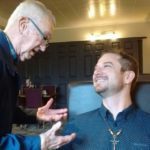
Justin Coutts is a Celtic monk living on Manitoulin Island in Canada. He grew up in a traditional rural Quaker meeting but was also involved in indigenous ceremony from his youth. He trained as an apprentice to an Ojibwe elder for the better part of a decade before finding his way into Celtic Christianity. He now hosts an online community of Celtic contemplative spiritual seekers. You can learn more about the New Eden community by following this link.
The post Monk in the World Guest Post: Justin Coutts appeared first on Abbey of the Arts.
September 11, 2021
Creative Flourishing with Hildegard of Bingen ~ A Love Note from Your Online Abbess
Fire of the Holy Spirit,
life of the life of every creature,
holy are you in giving life to forms.
Rivers spring forth from the waters
earth wears her green vigor.
–Hildegard of Bingen
Dearest monks, artists, and pilgrims,
I am delighted to be offering a mini-retreat with Betsey Beckman celebrating St. Hildegard of Bingen on her feast day this coming Friday, September 17th. We were supposed to have been traveling to the Rhine Valley this year with a group of pilgrims, but due to the pandemic have had to postpone until next year. This means we can invite a much larger group of pilgrims to honor Hildegard’s gifts for us online. The following reflection is excerpted from my book Illuminating the Way: Embracing the Wisdom of Monks and Mystics.
Hildegard of Bingen was a 12th century Benedictine Abbess and in 2012 was canonized as a Saint and made a Doctor of the Catholic Church (one of only four women). She was a visionary leader of extraordinary creative power: monk, herbal healer, visual artist, musician and composer of chant, preacher, spiritual director, prophet, poet, the list goes on and on. She lived for eighty-one years with ongoing chronic health conditions and still left us with a tremendous legacy.
One of her great gifts was insight into what she called viriditas, or the greening power of God, the life force at work in all of creation. This central creative principle was key for Hildegard in understanding the vibrancy of her soul and her work. Viriditas is the force sustaining life each moment, bringing newness to birth. It is a marvelous image of the divine power continuously at work in the world, juicy and fecund.
We often experience our life as a kind of wandering through the desert, experiencing the spareness of the landscape. But there is another side to the desert. The prophet Isaiah writes that “The wilderness and the dry land shall be glad, the desert shall rejoice and blossom; like the crocus it shall blossom abundantly, and rejoice with joy and singing.” (35:1-2)
This abundant blossoming is the provenance of viriditas. We are called to wander through the desert tending to the abundant gifts of viriditas, the creative life-giving force at the heart of everything alive. Hildegard’s wisdom is for living a life that is fruitful and green and overflowing with verdancy. She calls us to look for fecundity in barren places.
She was my doorway into the Benedictine life. While in graduate school I was studying for my “History of Christian Spirituality” comprehensive examination and actually had a slight disdain for those ancient monks. My spirituality up until that point had been quite infused by the Ignatian vision of service and working for justice. I was turned off by the body-denying practices of monasticism (at least in some of its earlier forms) and wondered how those who chose a cloistered life could truly be engaged with the suffering of the world.
Of course, I hadn’t yet seen how my own life and spiritual practice up until that point had actually been thoroughly monastic already with my love of silence, my longing for sacred rhythms, my love of books and art, my ability to see God pulsing in all of Creation and through the seasons. Art and Nature had been my two primary places of revelation for most of my life. Then I began reading Hildegard. I had to read her for those exams I mentioned, but I was captivated by her because of the sheer brilliance and expansiveness of her life. Here was a 12th century woman who was a visionary, musician, artist, spiritual director, Abbess, writer, herbalist, and more. She challenged the hierarchy of the church of her day, telling them if God had to send a woman to deliver his message things must have gotten really bad. My feminist heart cringed, but I could see the rhetorical device between the lines and the way she was able to shame those in power using their own stereotypes and limited vision against them. I don’t believe for a minute Hildegard thought she was any less capable because she was a woman. Her letters demonstrate all the fierce ways she fought passionately for the things she believed in.
What I grew to love about her was her complexity. Certainly I felt a kinship to her because of her love of the arts – she believed that singing chant was the most important practice of her community – and her ability to see God in nature.
I also loved that while I identified fully with her vision of art and creation as essential sources of revelation of the Divine Nature, I found myself challenged by her apocalyptic mindset. She believed in the end times and the fiery wrath of God. She had powerful visions which showed what was to come. She lived in a very different age when elements of her theology made me entirely uncomfortable. And I grew to love that she was complex enough for me to discover in her a kindred spirit and a strange bedfellow all at once.
The more I studied her, the more I wanted to know about this Benedictine tradition she was so steeped in. I consider her in many ways the patron saint of my journey toward becoming a Benedictine Oblate (a lay person who makes a commitment to live out this spirituality in my daily life). Her complexity calls me to wrestle with the things I both love and hate. For me, one of the hallmarks of the Benedictine journey is in what I call “radical hospitality”– the welcoming in of all that is uncomfortable (especially within ourselves) as a primary place of God’s revelation.
In early autumn 2013, I had the great privilege of leading a pilgrimage to the landscape of Hildegard of Bingen with my dear teaching partner Betsey Beckman and the wonderful folks at Spiritual Directors International.
I had been to that place of lush greenness once before the previous autumn, and on that pilgrimage I discovered viriditas in a new way. While I expected to see this greening power alive in the vineyards draping the hills, in the beauty of the Rhine river flowing through the valley like a glorious vein of life, and in the forested hill of Disibodenberg where Hildegard spent much of her early life, what I received as gift was the greening that came alive for me in the community gathered.
The “greening” of the area where she lived is powerful. She was a landscape mystic, meaning that the geography of her world was a means of ongoing revelation into the nature of God. Gazing out over the shimmering autumn gold of the vineyards beyond Saint Hildegard’s monastery in Rudesheim, Germany, I felt this sense of deep surrender where that porous line between me and the earth seemed to fade. I let that green energy of the earth rise up and embrace me in ways I hadn’t previously experienced. I imagined Hildegard breathing this vision in and out. I felt the pulsing of God’s creative power through me in new ways. The sacred is the quickening force animating and enlivening the whole world, include our own beings. The flourishing of the world around Hildegard was the impetus for her to embrace her inner flourishing.
I consider Hildegard one of my spiritual directors, her voice providing guidance to me across the centuries. We know much about her practical wisdom through the letters she wrote to a variety of people in response to their requests for care. I like to think of this as an early form of epistolary spiritual direction. In her advice to another abbess she writes:
“A person who toils more than her body can bear is rendered useless in her spirit by ill-judged roil and abstinence. Living hopelessly and joylessly, that person’s sense often fails.”
The key to creative flourishing for Hildegard is cultivating moderation and balance. The virtue of discretio is about discerning the right path and not being overburdened or overworked so that we are stretched too thin and joy is lost. Our greening is lost when we lose sight of the call to stillness and presence.
With great and growing love,
Christine
Hildegard of Bingen dancing monk icon © Marcy Hall at Rabbit Room Arts
The post Creative Flourishing with Hildegard of Bingen ~ A Love Note from Your Online Abbess appeared first on Abbey of the Arts.
September 7, 2021
Monk in the World Guest Post: Rita Simon
I am delighted to share another beautiful submission to the Monk in the World guest post series from the community. Read on for Rita Simon’s reflection “This is My Home, and These are My People.”
We are not two seagulls separated by 6 feet of water; we are two seagulls connected by 6 feet of water. – John Bell
There is no difference between healing your body, healing the Earth,or helping another to heal. It is all the same body. — Alla Renee Bozarth
What do you see? Two seagulls are bobbing on a lake a few feet apart with the water surrounding them. You point them out saying, “Look at the two seagulls sitting on the water.” Do you see the seagulls as two separate creatures separated from each other by the water between them, or do you see them as being connected to each other by the water? This question was posed at an online retreat I recently attended, and I will admit that the idea that the birds were connected rather than separated really pulled me up short. A ‘light bulb’ turned on in my brain. Huh! Wow! I guess I have never thought of it that way before!
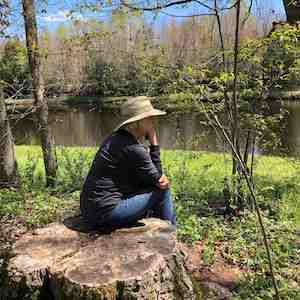
Probably the greatest delusion we human beings have about reality is that everything we sense, what we see, hear, touch, etc., is a solid and separate entity. We particularly see ourselves as separate solid beings that are not connected to anyone or anything else, yet it is impossible to be separate! We are connected with everyone and everything everywhere in ways we don’t even know! All creation, from the farthest reaches of the Cosmos to the smallest particle within our bodies, is part of the body of the Cosmic Christ. Everything exists in an unbroken wholeness in flowing movement.
“No man is an island, entire of itself; every man is a piece of the continent, a part of the main. Any man’s death diminishes me because I am involved in mankind.” –John Donne
I am sure we have all heard, or even said to ourselves or others, “No man is an island,” knowing in our inmost, deepest selves that none of us survives nor stands alone, ever. We are all emanations of the forces of life. Where do we begin and where do we end? What is the separation between me and the breath and the houseplant and the Amazon River and the ocean plankton? We are all connected. Without one there is none.
This last year has been exceedingly difficult for human beings in every corner of the Earth. We have all experienced the tragedies and challenges of the COVID pandemic, climate disasters, violence, and hatred in different ways and to different degrees. The truth of our inter-connection is that an injury to one of us is an injury to all of us. If any one of us is hurting, we are all hurting. None of us is free if not all of us are free. “You are a part of me that I do not yet know!” So, who or what can be excluded?
We can begin to become aware of our habits and thoughts of separating, of how we mentally and verbally separate things, ideas, and people into categories of less than or better than, of worthy or unworthy, of belonging or not belonging, etc. As we become more aware of the ways we separate in our minds, speech, and actions, we can begin to counter our own delusions of separateness. We can vow to awaken from the delusion of separation and help build a strong community of connection around us, beginning right here, where we are, as we are. Healing even one small part will be healing the whole world.
Contemplate your connection with everything you experience when you are in nature, whether watching the sun rise or set, or looking at the stars or moon, or noticing the trees beginning to bud in the spring. Stop, breathe, look deeply. Feel your connection and say to yourself, “This is my home, and we are all one body.”
Contemplate your connection with others when you are with family or friends, or in the grocery store, or airport, or doctor’s office, or wherever you are with other people. Stop, breathe, look deeply. Feel your connection and say to yourself, “This is my home, and these are my people.”
“This is my home, and we are all one body.”
“This is my home, and these are my people.”

Rita Simon, a retired family physician, is a member of St. Anthony Spirituality Center’s lay preaching team. They plan and present annual themed retreat weekends for a wide range of spiritual seekers. Rita practices embodied spirituality through vocal and instrumental music, yoga and dance, and the enjoyment of nature’s beauty. Rita lives in Chippewa Falls, WI, USA.
The post Monk in the World Guest Post: Rita Simon appeared first on Abbey of the Arts.
September 4, 2021
Joy Unspeakable ~ A Love Note from Your Online Abbess
Dearest monks, artists, and pilgrims,
We have a new featured book for September in our Lift Every Voice Book Club – Joy Unspeakable: Contemplative Practices of the Black Church by Dr. Barbara Holmes. You can listen to the conversation Claudia Love Mair and I had about the book at this link. (And you can join us for a community conversation on September 24th).
This quote on page 111 of Joy Unspeakable especially touched me:
“Today’s wilderness can be found in bustling suburban and urban centers, on death row, in homeless shelters in the middle of the night, in the eyes of a hospice patient, and in the desperation of AIDS orphans in Africa and around the world. Perhaps these are the postmodern desert mothers and fathers. Perhaps contemplative spaces can be found wherever people skirt the margins of inclusion. Perhaps those whom we value least have the most to teach.”
Many years ago I read The Solace of Fierce Landscapes by Belden Lane, easily one of my favorite theological books ever written. In it Dr. Lane describes desert and wilderness spirituality and weaves in the story of his own mother dying. There at the bedside of a loved one slowly deteriorating and journeying to the final breath of this life, he encountered the way wilderness breaks us open.
I love the desert tradition, where those ancient monks sought out edge places to have a radical encounter with the God who was beyond their categories and understanding. They opened themselves to radical humility because they knew that the divine was not contained in their images. These desert monks were a significant inspiration to the Celtic monks who then followed in their footsteps, seeking out wild edge places to connect with the sacred in the midst of the beauty of creation.
We live in a time when the news reveals to us many things and people we’d rather not see – refugees fleeing from Afghanistan, people digging out from the rubble of another earthquake in Haiti, the face of another Black man or woman shot senselessly by the police, and of course our continual companion over the last 18+ months, the images of people in hospital beds dying from Covid-19.
We may prefer to avert our eyes and cast our gaze on things we find more inspiring or comforting. Sometimes we need to immerse ourselves in beauty to nourish ourselves and remind us that the world is more than suffering.
But those other, more difficult images are holy icons as well. They are invitations to cultivate compassion and expand our hearts. We can often feel helpless in these moments as the need is so great and our impact so small.
Dr. Holmes continues:
“The world is the cloister of the contemplative. There is no escape. Always the quest for justice draws one deeply into the heart of God. In this sacred interiority, contemplation becomes the language of prayer and the impetus for prophetic proclamation and action.”
We are called to make regular time to turn inward to this “sacred interiority” – the cave of the heart the desert mystics described or the poustinia as the orthodox tradition describes. In this place of refuge and sanctuary – the place where we are reminded that the foundation of everything is Love – we can be and listen and attune to our heart’s longings. Instead of rushing to do and exhausting ourselves, we can choose another path that often feels more difficult because it demands letting go of our agendas and abiding in the space of darkness and mystery.
What I am learning again and again is that while my actions are so small, we each have a seed planted within us that when allowed to unfold in a holy direction, we live into what we are most called to be. When many of us do this, the garden of sacred delight blooms and grows in our midst.
The only choice I can make right now that makes any sense is to seek the wilderness like the ancient monks did, even if that place is somewhere difficult and challenging. There in the wilderness, I turn inward, I allow time and space to release my need to do and I listen. I wait. I allow myself to be met by the infinite divine and be held in that interior space. In that nourishment I can then hear the seed breaking open in me and choose the next right step for me, in this season of my life, on behalf of Love. And I trust that this is my offering to the world. I ask that this situation I hold in prayer change me, transform my heart, so that it impacts how I act in the world.
With great and growing love,
Christine
Christine Valters Paintner, PhD, REACE
PS – My book Eyes of the Heart was featured in one of the daily emails for the Center for Action and Contemplation and my book Sacred Time was reviewed in Presence, the journal of Spiritual Directors International. Also save the date for the virtual launch of my forthcoming book Breath Prayer (details at the link) on October 25th!
Photo © Christine Valters Paintner
The post Joy Unspeakable ~ A Love Note from Your Online Abbess appeared first on Abbey of the Arts.
August 31, 2021
Lift Every Voice: Contemplative Writers of Color – September Video Discussion and Book Group Materials Now Available
Join Abbey of the Arts for a monthly conversation on how increasing our diversity of perspectives on contemplative practice can enrich our understanding and experience of the Christian mystical tradition.
Christine Valters Paintner is joined by author Claudia Love Mair for a series of video conversations. Each month they take up a new book by or about a voice of color. The community is invited to purchase and read the books in advance and participate actively in this journey of deepening, discovery, and transformation.
Click here to view this month’s video discussion along with questions for reflection.
Join us on September 24th for a mid-month community conversation on Zoom.
Joy Unspeakable by Barbara Holmes focuses on the aspects of the Black church that point beyond particular congregational gatherings toward a mystical and communal spirituality not within the exclusive domain of any denomination. This mystical aspect of the black church is deeply implicated in the well-being of African American people but is not the focus of their intentional reflection. Moreover, its traditions are deeply ensconced within the historical memory of the wider society and can be found in Coltrane’s riffs, Malcolm’s exhortations, the social activism of the Black Lives Matter Movement and the presidency of Barack Hussein Obama.
The research in this book-through oral histories, church records, and written accounts–details not only ways in which contemplative experience is built into African American collective worship but also the legacy of African monasticism, a history of spiritual exemplars, and unique meditative worship practices. A groundbreaking work in its original edition, Joy Unspeakable now appears in a new, revised edition to address the effects of this contemplative tradition on activism and politics and to speak to a new generation of readers and scholars.
Join our Lift Every Voice Facebook Group for more engagement and discussion.
The post Lift Every Voice: Contemplative Writers of Color – September Video Discussion and Book Group Materials Now Available appeared first on Abbey of the Arts.
Monk in the World Guest Post: Colette Lafia
I am delighted to share another beautiful submission to our Monk in the World guest post series from the community. Read on for Colette Lafia’s reflection “Love is Our Anchor.”
This past Spring, when wildflowers and poppies were blooming everywhere in Northern California, I felt my heart sing every time I saw a display of color and exuberance. Yet in the midst of this joy, I found myself facing the anxiety and uncertainty of returning to in-person instruction in my role as a part-time public-school librarian.
As I sat in a Zoom meeting with 30 other staff members, trying to absorb the complex logistics of schedules and COVID protocols, I felt myself sinking under a wave of fear, both within myself and among my colleagues. Yet, from years of engaging in contemplative practices, I knew this was a time to pause and draw on inner quiet and strength.
As a monk in the world, I knew I needed to anchor myself in love. The powerful words from St. Teresa’s bookmark prayer came to me with conviction: “Let nothing disturb you…God never changes.”
St. Teresa teaches that our soul is a castle with many rooms, and in the center of the castle, which she calls the seventh mansion, God dwells – at home within us – unflinching, and abounding in mercy and love. It is here in the Divine heart within each of us that we can find our anchor of love.
Alone by myself, I knew I couldn’t withstand the fear, worry, and uncertainty we were facing, but being anchored in the benevolent spirit of Divine love, I found a way to move forward and face the challenges in front of me.
In my new book, The Divine Heart: Seven Ways to Live in God’s Love, (Monkfish Publishing, May 2021) I share reflections, prayers, and practices to help cultivate greater awareness of Divine Love that permeates our hearts, our lives and the world around us.
“As we are called to integrate so much paradox and pain, we need love to help heal, strengthen, and restore ourselves…Each of us has a Divine heart, an identity we share. We not only align ourselves with love and connect to love, but we also recognize that we are love. Listen to the longing in your heart and allow yourself to embark on a spiritual renewal, a journey into the Divine heart, into unity, connection and belonging… Born of love is hope. In the depth and breadth of our sadness, we will find grace, love, and a way forward.”
–Prologue, The Divine Heart, Colette Lafia
In The Divine Heart, I unfold seven qualities of living in God’s love: Receptivity, Delight, Expansiveness, Acceptance, Vulnerability, Mystery and Gratitude. I reflect on my own experience cultivating these practices, and show how each quality can help us anchor ourselves in love.
As we continue to live in times of great uncertainty and anxiety, it is essential to remember that we are capable of growing in love, both in the love we receive and the love we can offer the world.
My hope is that as a monk in the world, I can offer inspiration and encouragement for the journey from fear to love, from anxiety to peace, from doubt to trust. Hope is knocking on our door. God’s love is waiting. Let us welcome it in and rebuild our sense of togetherness.
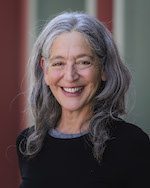
Colette Lafia is a San Francisco-based writer, spiritual director, and retreat leader. Her new book, The Divine Heart, Seven Ways to Live in God’s Love is now available. Colette has a passion for helping people connect more deeply with the presence of the sacred in daily life. She designs and facilitates retreats for an international audience and has an active practice as a spiritual director. Learn more about Colette at ColetteLafia.com.
The post Monk in the World Guest Post: Colette Lafia appeared first on Abbey of the Arts.
August 28, 2021
The Holy One is Breathing in Us ~ A Love Note from Your Online Abbess
Dearest monks, artists, and pilgrims,
Recently in a podcast I was listening to between Alexander Shaia and Mirabai Starr, Shaia was talking about the passage which begins John’s gospel:
“This text is not about something that happened back then but is about the eternal now that is happening in us. That we are here in this moment because the Holy One is breathing us. And the Holy One is breathing, every cell in the cosmos, there’s one source . . . therefore we’re already brother and sister, not only to each person, but to every tree, every ounce of water, every cell in the cosmos.”
What a stunning image – the Holy One is breathing in us and in all creation and that breath connects us intimately to one another.
When Broadleaf Books invited me to write a book about the practice of Breath Prayer I replied with an enthusiastic yes. Breath has long been a profound ally for me in becoming more fully present to myself and for easing anxiety in difficult moments. Much of what I had learned came from yoga tradition, but breath prayer has a rich and deep history in monastic tradition as well. The desert monks would bring their full attention to each moment by praying with each breath until the prayer was praying them.
My yes to this project came just before the pandemic began and so my days of lockdown and compassionate retreat were guided by this practice. The long days of staying close to home in so much uncertainty were eased by this invitation to grow more intimate with the sacred ordinariness of my life. Showering became an opportunity for grace and gratitude, as did preparing meals, snuggling with my dog Sourney, and the simple act of awakening each day. All of these holy moments became sanctified by my attention to them. Breath prayer became a way for me to see the beauty and holiness more deeply. Being forced to stay at home meant I could not run or distract myself in the usual ways.
Out of this furnace of a challenging time also came the blessings of renewed practice. There was also the profound gift of knowing I was exploring this on behalf of our community as well. I listened for what kinds of moments and situations people would long to find prayers for. As a result I created forty breath prayers in the book to also include moments of awakening in the middle of the night or being overcome by climate anxiety.
There is also a section at the end inviting the reader to create their own breath prayers. Ultimately that is my hope for this book, that those reading will be empowered to listen to the prayers rising up from their hearts in quiet moments and letting those words sustain them.
I invite you to experiment with breath prayers this week. The traditional prayer the desert monks prayer was “Lord Jesus Christ, Son of God (inhale), have mercy on me a sinner (exhale).” The idea was to gently repeat this prayer throughout the day as a way of anchoring your awareness in the divine presence.
You might prefer to pray different words. For example, you can repeat this simple prayer: “breathe in love, breathe out love.” Or take a much-loved scripture passage and merge with your breath: “be still and know (inhale) that I am God (exhale).”
The idea is to rest into the prayer and the breath until you know that it is not you breathing, but the Holy One in you. It is not you praying, but the Holy One within your heart.
(Your last chance to order a completion pack for our dancing monk icon cards. Sales end August 31st. A new complete set with larger cards and custom box and booklet will be available to order later in September).
With great and growing love,
Christine
Christine Valters Paintner, PhD, REACE
Image © Christine Valters Paintner
The post The Holy One is Breathing in Us ~ A Love Note from Your Online Abbess appeared first on Abbey of the Arts.


