
Christine Valters Paintner's Blog, page 139
February 4, 2015
Earth Monastery Project: Sensory Peace Labyrinth
 Abbey of the Arts sponsors a small grant program called the Earth Monastery Project. We began the program in 2014 and so far we have funded six wonderful projects which nourish an earth-cherishing consciousness in our world.
It is exciting to us to see the creativity at work in the world and how dancing monks are offering their gifts on behalf of the earth. Our second round of grants have just completed their cycle so for the next three weeks we are featuring each of their final reports to share with you and inspire you to creative action in your own communities.
Our first project is the Sensory Peace Labyrinth, shepherded by Stephanie Bell. Here is an excerpt of her reflection (you can see the whole report below):
The objective of this project was to create an inviting space for contemplative awareness and prayer at Garfield Community Farm (GCF), an urban farm nestled within an otherwise neglected corner of the city of Pittsburgh. The farm’s existing herb garden was converted into an organic Sensory Peace Labyrinth with a permanent mosaic sign to welcome community members. In keeping with the GCF’s original mission, the Peace Labyrinth will help its visitors to cultivate passageways to themselves, God, His creation and each other.
I am thankful and deeply grateful for the ways God’s abundant provision is greater, more creative, exactly what I need, and in those rare moments his provision becomes a space to share life together. I really thought I understood the ways God provides…a roof over my head, food at the table, money to pay the bills, companionship. Although these are all gifts from God which I do not take for granted…I have been wondering about his abundant provision in the midst of nothing, loss, limits, loneliness, transition, and the unexpected.
Living in a chaotic city, with gun fire around the street, schools on lock-down, rushing from one activity to another, sickness; I noticed the concrete jungle around me was growing. I sensed a nudge to get away, to spend time in creation and with the Creator. I also sensed that traveling outside the city was not the answer for me, only because I could sense a desire to escape and run from the realities of our broken city and my broken life. I realized I needed to find solitude in the midst of my mind racing, in light of the brokenness that seemed unamendable. I found myself trekking up to a local quiet green space where I could rest, this seemed ideal. The herb garden at GCF was a sacred space for me to sit and bask in God’s presence. In the midst of the noisy city, the sounds soon disappeared, the air was filled with herbal aromas, sunflowers in full bloom, and bees buzzing all around, I experienced God, my spirit was touched. From that deep place of abundance in an unlikely “monastery” I was compelled to create and dream. About a year and half ago I wrote a grant that would transform the already placed herb garden at GCF into a sensory peace labyrinth.
Three months ago as I planned how I would take the ideas in the grant proposal to reality two things were true 1) I would have amazing freedom to create, 2) And I would need to work pretty hard to accomplish such as task. I was thankful for the support of Abbey of the Arts, GCF and knew my husband would help me accomplish this task (since we enjoy working together in this way). Then I found out I was pregnant… Of course my emotions were all over the place. Wanting to be joyful (wasn’t this an abundant provision?) yet I couldn’t help but feel a sense of loss of present dreams, realities, energies that I thought were the path and God’s abundant provision… All around me I was experiencing loss– of work, loss of friendships, loss of energy, loss of co-workers, and loss of community. I thought this was supposed to be a time of abundance …we are having a baby…right???? And then in the midst of the yelling and crying to God, in the midst of the questions, and struggles to understand why…abundance came…from a text from a friend and another text and then a sincere presence of compassion, from my son Ethan telling me to rest and desiring to care for me, to my husband taking care of the everyday family things I do.
This has been one of the most humbling times in my life. I am so grateful for the past month in the midst of sleeping a lot, and leaning into my limits I saw the vision of the labyrinth not only sit in my heart and my mind but in a community’s life and desire. I’m thankful that the fruition of the labyrinth was not created by hands of two, but of many. That the amazing freedom I had to create became a space for many to create. That incredible hours of labor we filled not by my hands, but by a neighborhood—students, partners in ministry and people from the Open Door. That the once thought one ton of gravel that was moved by hand was actually 4 tons. The abundance was in the midst of my place of limits—I was free to be, free to trust God, free to hear why this space is so important to so many.


Click here to read the full report of the project>>
Click here to read more about the Earth Monastery Project and make a donation>>


January 31, 2015
Invitation to Lectio Divina: Community – Who is your tribe?
 With February we offer a new invitation for contemplation. We are continuing our monthly exploration of each theme of the Monk Manifesto. Our focus for this month is Community – Who is your tribe? The third principle reads:
I commit to cultivating community by finding kindred spirits along the path, soul friends with whom I can share my deepest longings, and mentors who can offer guidance and wisdom for the journey.
We invite you into a lectio divina practice below with some words from Thomas Merton. January 31st was his 100th birthday, so there are lots of celebrations honoring his legacy, and certainly for monks in the world he has a treasure of wisdom to offer:
The beginning of love is the will to let those we love be perfectly themselves, the resolution no to twist them to fit our own image. If in loving them we do not love what they are, but only their potential likeness to ourselves, then we do not love them: we only love the reflection of ourselves we find in them.
— Thomas Merton, No Man is an Island
How Community Lectio Divina works:
Each month there will be a passage selected from scripture, poetry, or other sacred texts (and occasionally visio and audio divina as well with art and music).
How amazing it would be to discern together the movements of the Spirit at work in the hearts of monks around the world.
I invite you to set aside some time this week to pray with the text above. Here is a handout with a brief overview (feel free to reproduce this handout and share with others as long as you leave in the attribution at the bottom – thank you!)
Lean into silence, pray the text, listen to what shimmers, allow the images and memories to unfold, tend to the invitation, and then sit in stillness.
After you have prayed with the text (and feel free to pray with it more than once – St. Ignatius wrote about the deep value of repetition in prayer, especially when something feels particularly rich) spend some time journaling what insights arise for you.
How is this text calling to your dancing monk heart in this moment of your life?
What does this text have to offer to your discernment journey of listening moment by moment to the invitation from the Holy?
What wisdom emerged that may be just for you, but may also be for the wider community?
Sharing Your Responses
Please share the fruits of your lectio divina practice in the comments below (at the bottom of the page) or at our Holy Disorder of Dancing Monks Facebook group which you can join here. There are over 2800 members and it is a wonderful place to find connection and community with others on this path.
You might share the word or phrase that shimmered, the invitation that arose from your prayer, or artwork you created in response. There is something powerful about naming your experience in community and then seeing what threads are woven between all of our responses.
Join the Holy Disorder of Dancing Monks Facebook group here>>
*Note: If this is your first time posting, or includes a link, your comment will need to be moderated before it appears. This is to prevent spam and should be approved within 24 hours.
January 28, 2015
Monk in the World guest post: Robert Walk
I am delighted to share another beautiful submission for the Monk in the World guest post series from the community. Read on for Robert Walk's wisdom on living as a monk in the world through praying the Hours:
One Monk's Approach to the Office
My initial contact with the life of the monk occurred more then two decades ago when I visited the Benedictine monks of Weston Priory in Vermont. In a way that was hard to put into words I was deeply moved by the rhythm of their day — the daily office, work, rest, play, etc. In the late 1990's I spent a week on personal retreat at the Priory during a time of personal, vocational, and faith crisis. Again I was deeply moved by the rituals and rhythms of Priory life. Shortly thereafter I made a career move within ministry, transitioning from being a pastor in an American Baptist church to becoming a chaplain in a continuing care retirement community where I continue to work today in the world of God's aging people. It is a diverse community in regards to ethnicity, worldview and religious affiliation. Initially and presently I was faced with the issue of how to minister to a diverse community via pastoral care, spiritual formation, and sacramental ministries.
In the summer of 2011 I decided to begin an almost daily Keeping of the Hours/Community Prayer Time in the Chapel where I work. My intention was to provide a holy space where residents could gather in the chapel or, if because of a lack of mobility, remain in their apartment and participate through our in house cable channel. While I had heard of the Daily Office before, the concept was new to me. Was it a spin off of the television show, The Office, or did it have something to do with the work done in an office or study? Of course the Daily Office is, at its roots, the ancient tradition of hours of fixed prayer, reading from sacred texts, and reflection. So I started out trying different approaches to using this almost daily 11 am Keeping of the Hours, ultimately settling on using the Daily Lectionary from the Book of Common Prayer and supplementing the readings with silent and spoken prayers and written meditations from a variety of sources. In an attempt to be inclusive I varied the approach praying openly in the name of Christ on two of the days (recognizing my own and the facility's Christian tradition roots) and on the other days purposely praying in the name of the Great Spirit, God, and often including readings from Jewish rabbis and authors and other world religions.
In keeping with the sixth monk in the world manifesto statement: “I commit to rhythms of rest and renewal through the regular practice of Sabbath and resist a culture of busyness that measures my worth by what I do,” I have introduced the community where I work to the almost daily practice of the ancient practice of the Daily Office. In particular I read three readings from the Daily Lectionary, one from the Hebrew Scriptures, and the Epistle and Gospel readings from the Christian New Testament. Doing so has challenged my own resistance to reading Scriptures that don’t inspire me, either because they are difficult to understand, provide little in the way of meaning for living in the present from my point of view, or violate my view of God. In order to lead the community in the readings I had to get myself in gear by becoming a more serious student of the sacred text of the Jewish and Christian scriptures. I’ve done that and do that by dipping into commentaries I trust, using meditations written by those I trust that focus on the readings, and by utilizing the ancient practice of “lectio divina,” a thoughtful, patient reading and response to the scriptures.
I use a modified form of "lectio divina." I provide type written copies of the daily lectionary Bible readings for those in the group and I type in bold print one of the verses or a couple of verses that engage my thoughts or feelings, words that "shimmer" with meaning, beauty or even cause confusion. Following the verbal reading of the passage I provide personal commentary either from remarks prepared earlier or spontaneously as the spirit/Spirit moves me. Following are Scripture passages, one from the Book of Judges and the other from the Gospel of John followed by my meditations on those verses:
And Samson said,
‘With the jawbone of a donkey,
heaps upon heaps,
with the jawbone of a donkey
I have slain a thousand men.’
When he had finished speaking, he threw away the jawbone;
(From Judges Chapter 14)
This is a jaw dropping passage. It continues our encounter with
the violent conflicts that are described and portrayed in
the Book of Judges during an increasing period
of rebellion, conflict, and conquest. It brings into our
consciousness the reality that almost any object
can be used as a weapon for defensive purposes
or to inflict injury and death on others.
Recalling my childhood Sunday School years, Samson
was exalted for his strength and this miraculous
and "super hero" like slaying of so many.
As my life and faith have matured over the years, and
as we continue to see so many violent conflicts between
nations and individuals it remains past time to elevate non-violent
images from the Scriptures and from those past and present
who incarnate non-violence and meaningful, albeit difficult
communication, to deal with our differences. Yes,
our jaws drop at the reading of Samson's escapades and upon viewing
or reading about some of the extrememly painful and violent
events of the day, but our jaws can also be used in the
service of communicating a deeper understanding of what
it means to strive for a deeper peace in the human community.
And then there are Jesus words as he tried to calm the fears of a royal official whose son lay deathly ill.
Jesus said to him, ‘Go; your son will live.’
(From the Gospel of John, chapter 4)
Our hunger for healing and health remain powerful in our lives.
Jesus reputation for caring and healing had attracted attention
and he was almost the "9-1-1" responder of his day.
What provides curiosity about this passage is that Jesus doesn't
go to the place where the boy lay ill
He offers words of life, instructing the man to return
to his son and to go with the words "your son will live."
Wonderful words of life was the title of a gospel hymn
that we often sang in the growing up years of my life.
I wonder what impact these words and this action had on the
father whose anxiety and worry was full blown?
The arsenal of healing resources in our day and age is abundant–
medicine, therapies of all sorts, surgery when necessary, transplants,
electronic devices, and yet the caring words and touch of humans from one
to another remain perhaps the most important resource for healing,
whether that healing is full blown or the ability to cope
with ongoing suffering and illness.
The use of the Daily Office as a resource for daily sabbath has been a challenge for me from the stand point of studious preparation, soulful contemplation, and the discipline to follow through with the practice. The reality that I've chosen to lead the Office in community with others has motivated me to meet the challenge. In addition, as I use supplemental non-Scriptural writings as a part of the Office, I have come to affirm that the "living Word"of the Great Spirit, God, constantly needs creative contemporary expression, thus adding to the corpus of "lectio divina." As the life of the monk continues to take root in our growing Holy Disorder of Dancing Monks in the world, may our daily tasks be inspired by the sabbath practice of the Daily Office. The Lord be with you.
Some of the resources I use in leading the Daily Office:
Let Us Bless the Lord…Meditations on the Daily Office, authored by Episcopalian clergyperson, the Rev. Barbara Cawthorne Crafton.
A Book of Wonders: Daily Reflections for Awakened Living by Father Edward Hays
Life's Daily Blessings: Inspiring Reflections on Gratitude and Joy for Every Day, Based on Jewish Wisdom by Rabbi Kerry M. Olitzky
The Book of Common Prayer
Robert Walk is a Chaplain at Simpson House Continuing Care Retirement Community (Philadelphia, Pennsylvania, USA) and a proud/joyful member of the Holy Disorder of Dancing Monks.
Click here to read all the guest posts in the Monk in the World series>>
Free Gift for Imbolc and the Feast of St. Brigid
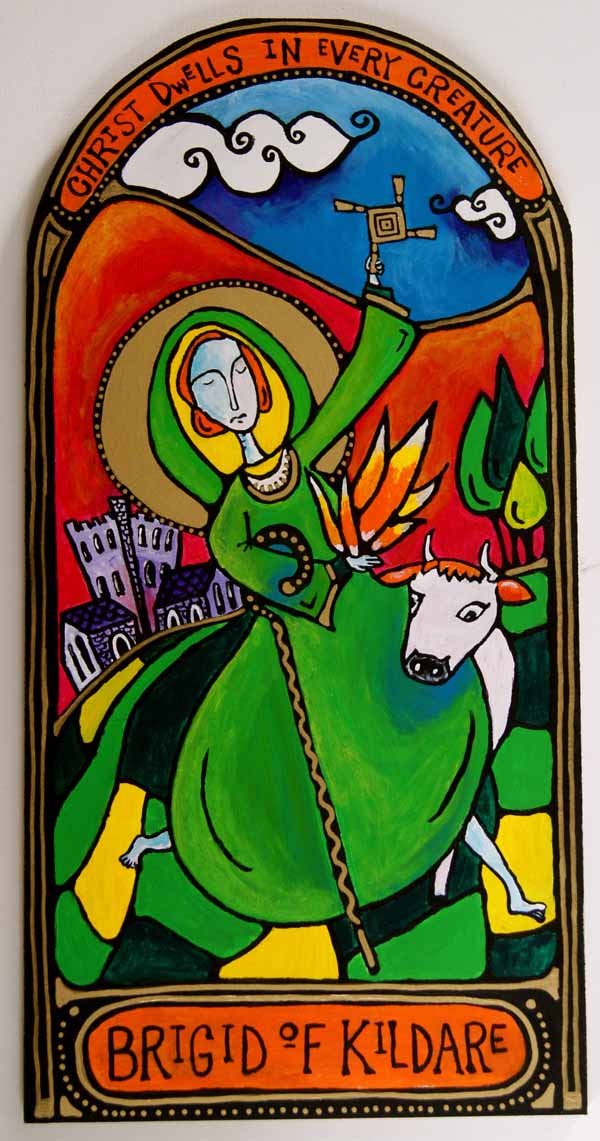 We are delighted to offer you the gift of a mini-retreat called Stirring in the Belly to help celebrate the feasts of Imbolc and St. Brigid.
We have offered this mini-retreat in the past as a free gift, but this year it has been expanded to include new reflections on Brigid by Christine, reflections on the Presentation in the Temple by John (February 2nd is the Feast of the Presentation), as well as the gift of a new video of a song on Brigid we had especially commissioned for the Abbey by Laura Ash, and Betsey Beckman teaches you a beautiful movement prayer based on this music. This is in addition to the previous resources of poetry, a guided lectio practice (with audio recording by Christine if you desire), and suggestions for a contemplative walk and creative expression.
If this resource excites you, please consider joining us for Sacred Seasons, a new yearlong program through the Celtic wheel of the year we are offering. Discounts for early registration and combined registration with Lent's online retreat The Soul's Slow Ripening: Monastic Wisdom for Discernment.
Feel free to share this free Imbolc resource with others you think might enjoy it!
Click here to download the Stirring in the Belly mini-retreat>>
Upcoming Feast Days (love note from your online Abbess)
After Thomas Merton
The single eye of the sun long shut,
world deep asleep like a sunken ship loaded with treasures,
full moon’s fierce shadows illumine the way for miles,
stars glint like coins dropped to the well’s black bottom,
last apple fallen from the tree
in a slush of honey and crimson.
I walk barefoot across wet grass,
night’s questions relentlessly wrestling
in my mind’s knotted weave.
I look for answers written by salmon in the stream,
or a snail’s slither of streaming silver.
I prostrate myself at the gnarled foot of the ash tree.
River softly murmurs her secrets.
Then the wind departs, taking words with it.
Hush cracks open, and
only Silence
blankets my moss-covered dreams
under the mute howl of night.
The long slow leaving of voices reveals
the ancient song of repose.
I awaken covered with dew,
stillness shaken by a single robin.
No longer full of my own echoing emptiness,
I am able to hear at last.
—Christine Valters Paintner
Dearest dancing monks,
 Saturday is the 100th birthday of Thomas Merton. Above is a poem I wrote for our icon series inspired by Merton and his love of Silence. The quote on the icon is adapted from the beautiful words he wrote at the end of his book New Seeds of Contemplation in which he invites us to "hear God's call and follow God in God's mysterious, cosmic dance."
This weekend also brings us to the Celtic feast of Imbolc and the feast of St. Brigid. It is a beautiful time to seek silence and listen for the very early stirrings of new life.I know some of you in the Northeast U.S. have had a blizzard these last couple of days, so perhaps the promise that spring is coming soon is a welcome dream to hold onto.
Here in Ireland, I can feel the seeds of spring as the earth continues to turn toward more light in a very visible way since the Winter Solstice. I have noticed birds starting to sing again in the mornings just the last day or two.
John and I will be heading to Kildare for an evening ritual on Saturday in celebration of Brigid, and then on to Glendalough for a couple of days of retreat and planning for our upcoming young adult pilgrimage in March (there is one space for a male participant if you know of someone in their 20s or 30s who might like to be immersed in Celtic wisdom and a beautiful place).
Inspired by this sacred turning of the seasons we are delighted to be bringing you a brand new program called Sacred Seasons 2015: A Yearlong Journey through the Celtic Wheel of the Year. I have wanted to offer something like this for a long time and finally the season feels ripe. You can read more details below, and sample the first mini-retreat for Imbolc for free! Feel free to share this gift with others and consider joining us for a soulful journey through the year together. When you register by February 16th you receive a discount and can join our secret Facebook group to share signs of Imbolc around you and within you.
We have been slowly preparing for the upcoming Lenten online retreat and I am getting very excited about it, with all new material on some of my favorite themes, weaving them together in new ways, and new stories of desert and Celtic monks. Join John and myself for a heart-centered journey through Lent in a community of fellow dancing monks. Whether you choose to participate in the online discussion or not, there is always a lively and heartfelt exchange happening there, and it is a gift to feel yourself connected to it. We do also offer some partial scholarships and group discounts, so gather some friends and move through the retreat together.
With great and growing love,
Christine
Christine Valters Paintner, PhD, REACE
www.AbbeyoftheArts.com
Photo top: Sacred Seasons – Christine Valters Paintner
PS – if you have wanted to join me for a live retreat in 2015, one space in a single room has opened up in our Coming Home to Your Body Retreat April 17-21, 2015 in the Pacific Northwest!
January 24, 2015
Invitation to Dance: Hospitality – What will you welcome in?
 We continue our theme this month of "Hospitality" which arose from our Community Visio Divina practice with the image of a threshold and continued with this month's Photo Party and Poetry Party where we asked what we wanted to welcome into our lives in this new year, perhaps inspired by your word for the year.
I invite you into a movement practice. Allow yourself just 5 minutes this day to pause and listen and savor what arises.
Begin with a full minute of slow and deep breathing. Let your breath bring your awareness down into your body. When thoughts come up, just let them go and return to your breath. Hold your word and this image of "Hospitality" as the gentlest of intentions, planting a seed as you prepare to step into the dance.
Play the piece of music below ("Nearer My God to Thee" by The Piano Guys) let your body move in response, without needing to guide the movements. Listen to how your body wants to move through space in response to your breath. Remember that this is a prayer, an act of deep listening. Pause at any time and rest in stillness again.
After the music has finished, sit for another minute in silence, connecting again to your breath. Just notice your energy and any images rising up.
Is there a word or image that could express what you encountered in this time? (You can share about your experience, or even just a single word in the comments section below or join our Holy Disorder of Dancing Monks Facebook group and post there.)
If you have time, spend another five minutes journaling in a free-writing form, just to give some space for what you are discovering.
To extend this practice, sit longer in the silence before and after and feel free to play the song through a second time. Often repetition brings a new depth.
January 21, 2015
Monk in the World guest post: Valerie Holt
I am delighted to share another beautiful submission for the Monk in the World guest post series from the community. Read on for Valerie Holt's wisdom on encountering her inner monk on the labyrinth:
A few years ago, I was on a sales trip to San Francisco, working at a convention center across the street from Grace Cathedral. I was exhausted from my work and searching for a few moments of peace and quiet. On the second day I stepped out of the convention center for some fresh air and caught sight of the cathedral set up on a hill, beckoning me to cross the street and clear my head. A posted sign read there was an organ and choir performance that day, the perfect opportunity to decompress.
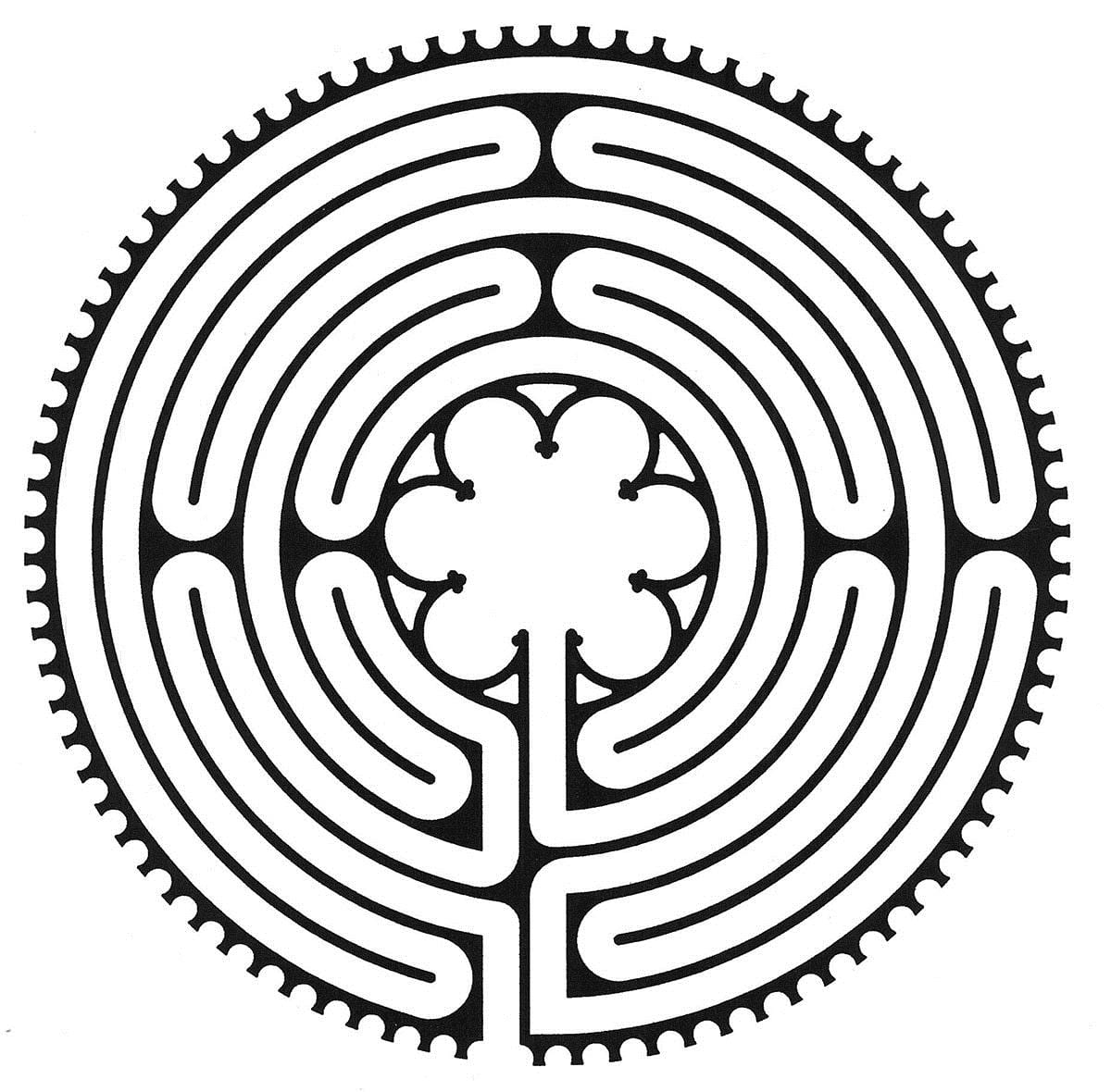
As I entered the cathedral, I realized I was too early for the performance and heard the organist practicing. The space was cool and dimly lit from nearby stained glass windows. I quietly circled the main space and returned to the entry when I finally looked down. There at my feet, woven in simple variations of woolen dove grey was a huge labyrinth. A nearby sign stated it was patterned after the labyrinth at Chartres Cathedral in France, which I had been to years earlier. The sign further described the labyrinth as a meditation tool. It hinted at secrets of the walk and how levels of awareness were available to the devout practitioner.
I decided to take a ‘crash course’. I mean how hard could it be to discover the secrets of this walk, it really was only a spiral into the center and right back out. All I had to do was watch my feet. It didn’t have walls, I couldn’t get lost—what could be so secret? I slipped off my shoes, symbolic cares and worries of the outside world, and stepped barefoot onto the soft woolen carpet. Quietly, rhythmically I walked the patterned path paying attention to any secret wisdom I might perceive. My breath slowed, I forgot everything else. I noticed the tiniest things, the dust mites floating in angelic beams from the light of the windows, the now too many passers-by threatening my quietude, even the lilting notes of the organ and how I began to step in time to the music. After several minutes of focused walking I made it to the center and got even quieter, I was waiting, waiting for the floods of insight, the secrets of the walk to pour forth—and nothing! Not even a pin dropping. My cynical self was like, ‘whatever, this is such a marketing trick to get people in here!” and quickly wound my way back out—noticing much less and turning my attention to the work I had already been too long away from. (you’ll notice I still walked the path on the way out, not quite ready to give up on it, but not for one minute tricked by the promise of such easy magic) But I was hooked, the puzzle-solver in me—or maybe even the ‘seeker’ had been awakened.
My spiraling journey to center woke something up in me, and my focus shifted with the subtlety of Mary Poppin’s wind from the west. Without even knowing it I had started a quest to unearth what had been buried deep in me for what felt like my whole lifetime. I started to dig, to awaken the secrets promised, whispered, hinted at on that labyrinth walk. I had no clue where they might lead; I just felt a constant tugging to seek the answer.
I went about the business of life and encountered labyrinth experiences everywhere. I returned to San Francisco and Grace Cathedral, took some workshops including a labyrinth walk, a friend of mine built one on her property, and I would go there often to get ‘lost’ in the walk. I even got some friends of mine to tear out the weeds in the field behind my house and lay down a huge labyrinth I could walk whenever I wanted.
Here is what I learned from the slow and concerted effort to become an expert at the labyrinth—I know hilarious really, an expert walker, but let my mea culpa at my own ignorance assuage your harsh judgment of me, let’s laugh together at my silly self shall we? I learned while inside the circle, slowly winding my way ever more into center, all I did was pay attention to that moment. I noticed an ant hill rebuilt every time I came back around one of the turns, the way I stepped over the thistle pricklies rather than rip them out because the flowers were so pretty, the way I always stopped at the upper end of the curve to stare at the aspen trees, they were growing almost like a runway heading straight up to heaven. I noticed if I had my headphones on all my self-consciousness floated away, and I was in a world all by myself dancing, rocking, floating my way from turn to turn.
I noticed the patterns of behavior I defaulted to in life, my choices in stepping, circling, engaging, passing, avoiding I would rather take and challenged myself to do something differently. OK, I won’t wipe the anthill out again, they aren’t hurting anyone really are they? I will rip just one thistle out from the roots because darn it if I haven’t gotten a major sliver in my heel more times than I can remember because I stepped too eagerly over the rock behind it. I will now lose myself in silence as much as I will in the isolation of the earphones and give up my self-conscious walk because I love how my feet beat on the earth as much as I love how they keep time to the beating of my music’s drum. …And just like that, secrets are revealed.
It was practicing the walk, not thinking I was an expert, just a walker that set me free from the expectation of the heavens opening and choirs of angels revealing truths, and I started to learn the secrets of me.
 Valerie Holt lives in Salt Lake City as a decidedly non-denominational practitioner of spirit, facilitator and author mentoring her clients at The Lama Farm where her mantra is The soul of the seeker rises from the ground we break, Dig on Purpose™.
Click here to read all the guest posts in the Monk in the World series>>
January 20, 2015
The Soul's Slow Ripening (a love note from your online Abbess)
To receive this love note straight to your in-box, subscribe here (and also receive gifts!)
Dearest dancing monks,
I have had the great pleasure of exploring several new (to us) monastic sites over the last couple of months. We are in the process of creating a second pilgrimage itinerary out of Galway in 2016, as so many of our Ireland pilgrims have told us they want to come back again (we hope to have our 2016 dates confirmed soon!). The abundance of these sites is incredible, so much richness of history and tradition, prayers saturating the landscape. It gives us such a visceral sense of how much the landscape was blanketed by monks. The bells calling them to prayer echoing across the hills and fields. The prayers carried on the wind. Again and again, I feel gratitude for being called to this place.
We are nearing the Lenten season and I am thrilled to be offering a brand new online retreat on monastic wisdom for discernment, called The Soul's Slow Ripening. The desert, Celtic, and Benedictine monks knew that the life journey was more akin to a fruit ripening on the branch, rather than a direct flight from point A to point B.
They shared their wisdom through stories and teachings. Stories like St. Kevin who yielded to the divine unfolding and stood while a bird nested in his palm, laying her eggs. Or St. Brigid who sails her boat to Scotland and when the wind dies down, the oystercatchers come to flap their wings and guide her safely to shore (and the old Gaelic name for the bird is giollabride which means Brigid's servant.)
The Irish monks, in particular, relished the space of threshold, the in-between spaces where we let go of the old and incubate the new, we wait and attend, not wanting to pluck the fruit before its time. The monastic tradition is filled with stories of wisdom coming through night dreams, through embracing mystery, stepping out onto the wild edges of the world, and through connection with creation.
How do we discover this rhythm of "no forcing and no holding back" which the poet Rilke describes thousands of years later in one of his poems? In which he pleads "may what I do flow from me like a river."
Deepening into the wisdom of contemplative practice rooted in these monastic traditions makes my heart sing. I am grateful beyond measure to share it with a community who is hungry for this kind of nourishment. Through reflections from myself and John (who will be exploring the weekly scriptures), lectio divina, contemplative photography, and writing invitations, you will be offered a variety of portals into the experience.
Are you in a threshold space of anticipation or discernment? Is there a call slowly ripening in your heart and you would love practices rooted in ancient wisdom and a community of kindred souls with whom to the journey? Or do you simply long for a meaningful Lenten season?
Join John and myself for a heart-centered journey through Lent in a community of fellow dancing monks. Whether you choose to participate in the online discussion or not, there is always a lively and heartfelt exchange happening there, and it is a gift to feel yourself connected to it. We do also offer some partial scholarships and group discounts, so gather some friends and move through the retreat together.
With great and growing love,
Christine
Christine Valters Paintner, PhD, REACE
www.AbbeyoftheArts.com
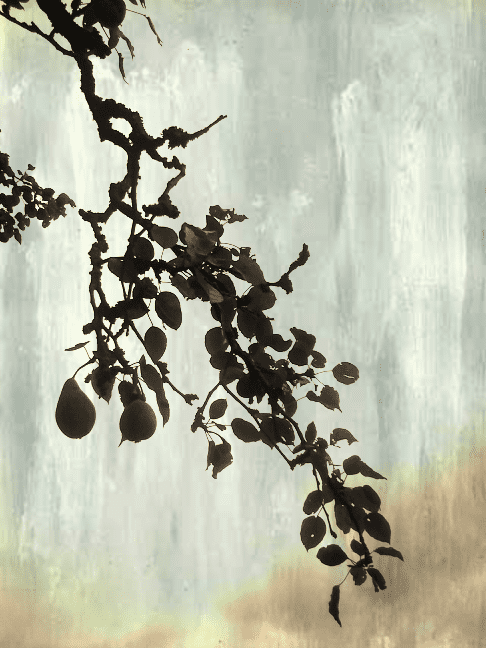
Photo top: Pear tree branch
January 17, 2015
Invitation to Poetry: Hospitality – What will you welcome in?
 Welcome to Poetry Party #83!
Instead of selecting an image this month, we ask you to consider your Word for the Year as your poetry muse. We began this month with a Community Visio Divina practice with an image of a threshold and the theme of hospitality, asking what you will welcome in this year and followed up with our Photo Party. (You are most welcome to still participate). We continue this theme in our Poetry Party this month. What qualities or practices does your Word for the Year ask you to invite in as we continue to welcome in the new year?
Feel free to take your poem in any direction and then post the invitation on your blog (if you have one), Facebook, or Twitter, and encourage others to come join the party!
You can post your poem either in the comment section below*or you can join our Holy Disorder of Dancing Monks Facebook group (with more than 2700 members!) and post there.
*Note: If this is your first time posting, or includes a link, your comment will need to be moderated before it appears. This is to prevent spam and should be approved within 24 hours.
January 14, 2015
Monk in the World guest post: Edith Ó Nualláin
I am delighted to share another beautiful submission for the Monk in the World guest post series from the community. Read on for Edith Ó Nualláin's reflections about mindful writing as spiritual practice:
Mindful Writing as a Spiritual Practice
Like many seekers who set out on a spiritual pilgrimage, I discovered that journaling as a spiritual practice took me to places only the written word could go. It was as if the word, my word, was the way, like a finger pointing to the moon. Falling in love first with those writers who penned their spiritual autobiographies, sharing the tales of their voyages through uncharted spiritual terrains, I then progressed to a plethora of books brim full of suggestions on how to approach writing from a spiritual perspective, suggesting that the process of writing itself could be used as a tool to dig in sacred gardens. It wasn’t long until I happened to come across the concept of mindful writing. Straightaway I was intrigued about the intersections between mindfulness and writing.
Mindful writing is rather different from other kinds of writing we might do. To begin with, it carries no meaning or aim beyond the intention we bring to the practice itself. We’ll get back to this vitally important point in a minute.
In mindful writing we adopt the stance of ‘beginner’s mind’. It is as if each writing session is an instance of Benedict’s exhortation to “Always we begin again.” Every time we sit down at our desk, pick up our pen, holding it above the white, virginal page, we bless the emptiness which reflects our inner openness to whatever might emerge from this days practice.
But probably the most important element of all is hidden within our blessings. For beneath the words we utter in prayerful praise, lies our intention to open ourselves to receiving the grace of the Divine. Without this intention, conscious or unconscious, our mindful writing cannot hope to be spiritual writing.
Ideally mindful writing involves a combination of reading, meditating, and writing practice, all experienced within the sacred cocoon of silence and solitude. Writing in this way has the ability to carry us back home. Hence we have the capacity to trace our own unique pathways towards our deepest centres, to that point inside, what Merton called his ‘point de vierge’, where we open ourselves to the transformative experience of meeting our Beloved face to face, as it were. Our words can carry us all the way to that space where words are left behind. Words are the very vehicle which have the ability to take us to the space where we no longer need them. Our mindful writing is like a finger pointing to the moon.
There are probably as many approaches to mindful writing as there are writers who practice it. Given that the majority of those who write about it tend to have links with Zen Buddhism, while allowing for the fact that Buddhists do not adhere to any belief in God per se, I believe there is room for a God centred approach to mindful writing. While loving every one of their books, I have yearned for an approach that makes room for my unfulfilled longings for the ineffable, and recognizes the depth of my spiritual hunger which refuses to be assuaged by the Buddhist assurances that it is entirely up to me to find my way home. Where lies grace within this scenario? Quite frankly, this isn’t enough; it doesn’t quench my thirst for the Divine.
Not until I read and re-read Christine Valters Paintner’s marvellous book The Artist’s Rule did I finally understand what was missing in my practice – the link between the creative and the spiritual. Up until that point my mindful writing could only have been termed spiritual writing in the broadest possible terms. But it lacked that felt sense of something ineffable, a Presence which I recognized from my practice of lectio divina, but which never quite seemed to touch my mindful writing. I was desperately hungry for something more from my writing. It wasn’t until I began to engage with some of the practices suggested by Christine in her book, that my writing truly became mindful and meaningful to me.
Over time my writing has developed into both a spiritual and a meditation practice. If you would like to try this approach as part of your own spiritual practice, I offer some suggestions below.
*You might like to begin developing some simple preparatory ritual/s which you engage in every time you sit down to practice mindful writing. Apart from serving as definite markers separating your solitary silent mindful writing practice from the rest of your hectic day, such rituals serve as bells of a sort, like those in a monastery calling the monks to prayer. Your writing ritual will be your call to write mindfully. They can be as simple or as complex as you like, eg light a stick of incense, or a small candle, or perhaps burn some aromatherapy oil in a burner, or drink a cup of herbal tea while pondering and observing the world.
Choose to write either with a pen and paper, or on your lap top. If on your computer, then set up a special folder for your mindful writing exercises. Personally I prefer to use a pen and notebook, even though I can keep up with my thoughts more easily on the computer. The beauty of a simple method is that it can be used anytime, anywhere.
Finally, I would strongly recommend that you consider making some sort of personal commitment to your mindful writing practice. Make room for writing every day, or every second day, or three times a week, or whatever you decide will work for you. But whatever you decide commit to it. Make your writing practice a priority in your life.
A Suggested Practice
Begin by lighting a candle, and take some time to centre yourself in your heart. Don’t rush this step. Breathe deeply and slowly. When you feel ready, call upon your own sacred guides and witnesses. I offer you the following prayer to my Wisdom Sisters, a group of wise women who I call upon to come to my aid throughout the day.
Call upon these wise women, or whoever your guides happen to be, slowly, quietly, repeatedly, until you begin to sense their presence around you.
Invocation and Prayer
Teresa of Avila, be with me.
Julian of Norwich, be with me.
Clare of Assisi, be with me.
Hildegard of Bingen, be with me.
Come my sisters and my friends. Pour balm upon my wounded spirit. Fill my words with your blazing love, and through your joy-filled light illuminate the dark shadows of my being.
Teresa of Avila, be with me.
Julian of Norwich, be with me.
Clare of Assisi, be with me.
Hildegard of Bingen, be with me.
Be with me now as I pick up my pen; help me find the sacred in my words; teach me how to dance with the Divine. Envelop me in your love so that I may feel your warm breath upon my skin, and sense your presence nearby. Be with me now, and do not leave me to walk this path alone.
I come to you with open heart and hands, to write my way into your Presence.
Teresa of Avila, be with me.
Julian of Norwich, be with me.
Clare of Assisi, be with me.
Hildegard of Bingen, come to me.
Be with me now, and always.
Edith Ó Nualláin lives with her family in a small village on the east coast of Ireland, snuggled between the mountains and the sea, where she reads, writes occasional reviews,
and spins exotic fibres into yarn. Some day she hopes to learn how to spin straw into the gold.
Click here to read all the guest posts in the Monk in the World series>>


