Beth Tabler's Blog, page 219
August 21, 2021
#SPFBO Review and Cut – The Dividing by Devin Downing
 By Steve Caldwell
  "To secure her crown, Rose must acquire the power and prestige associated with the guard. Only guardsmen have access to the amulets—powerful weapons that grant dominion over the elements." The Dividing by Devin Downing
 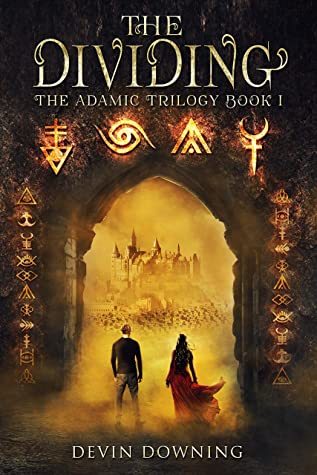 the dividing by devin downing Buy A Copy Here What is it about?
 Adamic is the language of the Gods. When spoken, it has the power to create worlds, to raise the dead, to make man as God.
Fortunately, no one has spoken it in thousands of years. The only remnants are the written spells.
The people of Cavernum depend on these spells. They’re etched into the city walls, fending off the feeders—deadly creatures with a thirst for human blood.
They kill and consume any caught beyond the walls. Yet for the lower class, Cavernum isn’t much safer. Children starve, and illness runs rampant. I
n an effort to maintain order, all children turning 18 are subject to The Dividing—a city-wide competition for the highest paying guilds. Those who aren’t accepted are sent to the fields, condemned to a life of slave-labor.
Princess Roselyn Malik has trained her entire life for The Dividing. She’s guaranteed a spot in the royal orchestra, but equalist rebels threaten her throne.
To secure her crown, Rose must acquire the power and prestige associated with the guard. Only guardsmen have access to the amulets—powerful weapons that grant dominion over the elements.
Meanwhile, in Colorado, Matt will do anything to help his terminally-ill adoptive mother. For now, that means poaching to pay the bills. Until one day, Matt is attacked by a feeder and plunged into the world of Cavernum.
There too, Matt is drawn to the guard, in search of a magic strong enough to save his mother.
But danger lurks beyond the walls, and Cavernum won’t be safe for long.
Steve's ReviewI got The Dividing in my grouping of review books for SPFBO7, so had no idea what the book was about aside from being fantasy in some way. It turns out this is in the Portal fantasy category, which is one of my favorite sub-genres, so that wasn’t a bad thing at all. And now, the review.
The story starts with a prologue, which I always enjoy, with a city being attacked by a magical force that somehow overcomes the defenses. A woman with a baby is on the run from some sort of creatures, and her husband lays down his life using powerful magic to let her escape. I have to say, this is definitely a solid opening for a story. Magic, family on the run, cities falling to monsters. It’s a solid foundation.
With a solid foundation, I expected the story to take off. I was surprised at the pacing, though. It’s pretty slow going for a while. We are introduced to the two main characters early on, Matt in the mundane world and Princess Roselyn in Cavernum, which is a city hidden on the other side of one of the portals.
Matt has a mysterious past, having been a foundling on a doorstep, and raised by the people he’s left with. Kind of an old trope, but it can be effective. Roselyn, on the other hand, is a princess, and the heir to the throne, who’s path is guaranteed, but of course, she doesn’t want it.
She wants to join the guard, who have access to the magical amulets that let certain people control elements. Of course, she is the best at everything she does, and is overconfident in every decision, leading to some truly heinous problems as the social order breaks down. I just found her to be the typical YA kind of character, better than everyone else.
Why? Don’t know, she just is. Matt just kind of blunders along into the portal. Why? Because the story needed him to just wander into a potentially dangerous area to advance the plot, that’s why. I won’t spoiler it, but Matt’s decision making is typical of a lot of YA books, and just left me kind of cold. A lot of the character’s decision making was like that. Just done to move the plot, whether it made sense or not.
While the story does have promise, this contest is about showcasing the best of indie fantasy and though this book has appeal and should appeal to fans of YA, it’s a middle-of-the-road story with some head-scratching moments for me. While not bad, it’s merely solid, not the kind of special that I would move on to the next round, so its journey in SPFBO7 will not continue past this round.
Rating: 6.5/10
Check Out SOME OF OUR OTHER REVIEWS#SPFBO Review and Cut – The Deathless One by Niranjan K.
#SPFBO Review and Cut – The Hand of Fire by Roland O’Leary
If You Liked This - Please Share the Love Steve Caldwell
I have literally been a fan of fantasy/magic my whole life, with some of the earliest memories I have being my mother stories of brujas and spirits in the town in Puerto Rico where she was born.
What really flipped the fantasy switch on full, though, was discovering a battered copy of the Sword of Shannara that cost me 25 cents at the local used book store when I was 11.
Its been a long journey since that day almost 40 years ago, and thousands of books later, here we are. Living with my wife, our two non-adult kids, four cats and a vicious attack beast Chihuahua about an hour south of Seattle, I’m glad to be able to share my love of fantasy and science fiction, especially Indie and small press, with anyone who’s interested.
Where to Find Him

August 20, 2021
#SPFBO Review and Cut – A Drowned Kingdom by P.L. Stuart
By Steve Caldwell  "When one kingdom drowns, a new one must rise in its place. So begins the saga of that kingdom, and the man who would rule it all." A Drowned Kingdom by P.L. Stuart
 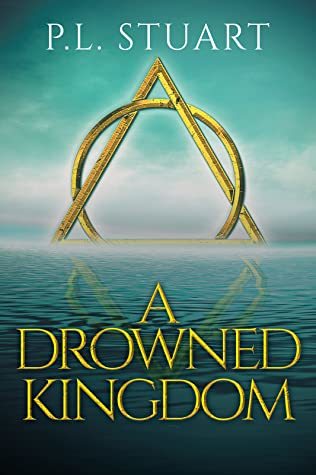 A Drowned Kingdom by p.l. stuart Buy A Copy Here What is it about?
 Once Second Prince of the mightiest kingdom in the known world, Othrun now leads the last survivors of his exiled people into an uncertain future far across the Shimmering Sea from their ancestral home, now lost beneath the waves.
With his Single God binding his knights to chivalric oaths, intent on wiping out idolatry and pagan worship, they will have to carve out a new kingdom on this mysterious continent
a continent that has for centuries been ravaged by warlords competing for supremacy and mages channeling the mystic powers of the elements―and unite the continent under godly rule.
With a troubled past, a cursed sword, and a mysterious spirit guiding him, Othrun means to be that ruler, and conquer all.
But with kingdoms fated on the edge of spears, alliances and pagan magic, betrayal, doubt, and dangers await him at every turn. Othrun will be forced to confront the truths of all he believes in on his journey to become a king, and a legend.
When one kingdom drowns, a new one must rise in its place. So begins the saga of that kingdom, and the man who would rule it all.
steve's ReviewI went into A Drowned Kingdom knowing nothing about it, just having it in my grouping for SPFBO7. I’m not used to being particularly hard on books in my reviews, especially indie books, but the nature of SPFBO means I will have to be brutally honest so we can narrow down the field to just the chosen few.
I did like the world building with this book. The idea of an advanced empire centered on Atlantis, which has a military and economic empire spread across the island, as well as in large parts of another continent, is very appealing as a reader.
The fact the Atlanteans are more technologically advanced is also intriguing, as well as having the military power to enforce their will making them seem quite daunting. Their monarchy is stable, and looks to be in no danger of being overthrown as well, so that lends an air of stability to this powerful nation.
I did have issues with a few things, though, mostly in regards to characters and some over-reliance on fantasy tropes. The first issue has to deal with the Atlanteans being religious fanatics, tolerating no dissent from their worship of the One God, and that bigotry coloring their view of any other people they deal with. It tended to make the characters of the princes unlikable.
The overused trope of the two prince’s rivalry, with the older prince being petty and vindictive is just a bit overused, and this book is no exception.
The other trope I just didn’t want to see again was the heathen foreign princess seducing the Crown Prince, causing dissension for the princes and the Kingdom in general, because obviously the prince bought it hook line and sinker, never thinking about anything but his lust. Again, a tired trope that just seems played out.
Things change drastically once the cataclysm occurs, but there’s just a bit too much hand wavium and plot armor used to move the story along later to advance the cause of the Atlantean remnants. This doesn’t kill the story by any means, but it just keeps it from being in that top echelon of books that will advance to the final round.
I will give A Drowned Kingdom a recommend to read, but I will not be advancing it on to the next round.
Rating: 7/10
*Beth Note: P.L. Stuart will be joining BEFORE WE GO as a reviewer, but not as an SPFBO team member. Those are two separate teams. This came to pass after the review was given to me to post and neither reviewer nor author has had any contact. His joining us is a very new thing and we are extremely glad to have him on board. There is no conflict of interest
Check Out SOME OF OUR OTHER REVIEWS
#SPFBO Review and Cut – The Deathless One by Niranjan K.
#SPFBO Review and Cut – The Hand of Fire by Roland O’Leary
If You Liked This - Please Share the Love Steve Caldwell I have literally been a fan of fantasy/magic my whole life, with some of the earliest memories I have being my mother stories of brujas and spirits in the town in Puerto Rico where she was born.
What really flipped the fantasy switch on full, though, was discovering a battered copy of the Sword of Shannara that cost me 25 cents at the local used book store when I was 11.
Its been a long journey since that day almost 40 years ago, and thousands of books later, here we are.
Living with my wife, our two non-adult kids, four cats and a vicious attack beast Chihuahua about an hour south of Seattle, I’m glad to be able to share my love of fantasy and science fiction, especially Indie and small press, with anyone who’s interested.
Where to Find Him
August 18, 2021
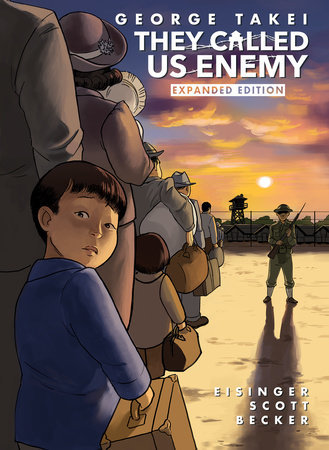
Graphic Novel Review – They Called Us Enemy by George Takei, Justin Eisinger, Steven Scott, Harmony Becker
 check it out here
 COMIC REVIEW
THEY CALLED US ENEMY by George Takei, Justin Eisinger, Steven Scott, Harmony Becker August 18, 2021 10:00 am 5 Comments Facebook Twitter WordPress“Years later, the trauma of those experiences continued to haunt me. Most Japanese Americans from my parents’ generation didn’t like to talk about the internment with their children. As with many traumatic experiences, they were anguished by their memories and haunted by shame for something that wasn’t their fault. Shame is a cruel thing. It should rest on the perpetrators but they don’t carry it the way the victims do.”

 MY THOUGHTS
You never know the journey someone has walked until you hear their story. At best, you can empathize with their journey, but you will honestly never know what someone has felt or gone through unless you have walked in their shoes. This story comes as close as one could get to walking in someone’s shoes. That someone is George Takai of Star Trek fame. Here are the superficial things you know about George Takai. Firstly, George stared in Star Trek as ensign turned captain in Gene Roddenberry’s Star Trek franchise. You also probably know that George Takai has a wicked sense of humor, having turned the phrase “oh my” into an art form. You may even know that George is a massive defender of LGTBQI rights. Takei currently serves as a spokesperson for the Human Rights Campaign “Coming Out Project.” What you probably don’t know is that George was an internee of the Japanese internment camps during world war 2. A dark stain on America’s history. And this is the crux of George’s very personal memoir; They Called us Enemy.
When reading a story with the gravitas of Japanese internment, the holocaust, or something of the same ilk, there are two ways a story could go. Both are equally accurate, but they have very different effects on the audience. Firstly, a writer can present facts and tragedies, much like a history book. Some historical graphic novels do this. Or, you can offer the history and story with a personal twist to it. A la Maus and now, They Called Us Enemy. I find the historical graphic memoir a very personal way to present someone’s history and a much more engaging read when paired with the graphic novel format.
They Called Us Enemy is the story of how a young George Takai and his family were given no notice, nor judicial recourse and taken and put into mandatory custody in Arkansas based on the color of their skin. George was locked in multiple detainment camps in Arkansas. All of their parent’s assets, including a home and dry cleaning business, were unduly ceased, and their bank accounts were frozen. They were isolated from society, told that they could not be loyal to anyone but the Emporer because of their racial bias. They were put into a small barrack in the hot Arkansas swampland and told to live. George recounts his early memories of him and his brother and young baby sister playing in the dirt. Of how his mother had tried to make this barrack a home and keep their family together and healthy. The thing I was taken within this story was that a story such as this could get maudlin. This is not at all. It is a truthful accounting of events as George lived them and how those events affected who he was then and who he became. It is hard to read because we as a country were so blind then, but George always tinges the story with hope. There is still hope. Hope for better things and by the better angels of man’s nature. It was uplifting, and I couldn’t put it down once I started it.
Graphically, this is simple. The pictures help tell a story but are not there to completely distract you from the importance and gravity of the words, much like icing on a cake.
I recommend this for a multitude of reasons. It is one of the best graphic novels I have read this year. It is on a topic that is seldom talked about but should be and because I am a fan of George Takai, and I want to know more about the exciting life that he has lived.
 ABOUT THE AUTHOR
 George Hosato Takei is an American actor best known for his role in the TV series “Star Trek,” in which he played the helmsman Hikaru Sulu on the USS Enterprise. His baritone earned Takei recurring appearances as the announcer for “The Howard Stern Show” starting on January 9, 2006, after that show’s move to satellite radio.
August 17, 2021
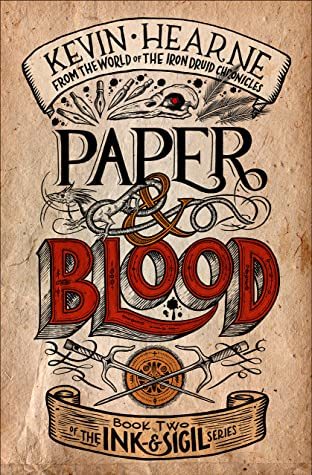
Interview with Author Kevin Hearne
 Kevin Hearne "... Tyromancers are folks who can detect the patterns of the future in the formation of cheese curds. Pattern recognition is the basis of many forms of seerage—whether it’s augury, reading tea leaves or palms, or tarot cards. I don’t recall exactly how I came across it, but once I did, I knew I wanted to create an anthology based on cheese wizards. It was just a mountain I needed to climb. So that’s how Three Slices came to be: I asked Chuck and Delilah to write a novella that included tyromancy, wrote one myself, and kablam: summit achieved. You can buy the world’s first tyromancy anthology in ebook or audio today, so cheez, don’t wait!..."
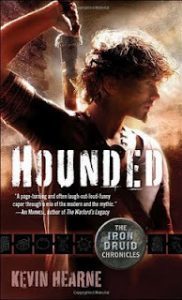
 Today we are talking to New York Times bestselling author, Kevin Herne. Herne is the author of multiple fantasy series, The Iron Druid Chronicles, The Seven Kennings, and Ink & Sigil. He also often works in collaboration with Delilah S. Dawson for their The Tales of Pell series. Herne chats with us about the power of the written word, tyromancers, and much more.
BWG: I read that Ken Kesey’s One Flew Over the Cuckoo’s Nest was a big inspiration for you as a writer. Why is that, and how has it influenced your writing?
First, I have to acknowledge that rereading it today, there are a lot of problematic bits. But what interested me at the time I read it (in the early nineties) was the narrator’s voice and how his language changed as his mental health improved. It illustrated how vital language use is to a character’s personality, and that observation has really stuck with me and influenced how I approach building a character. What’s their vocabulary, their manner of expression, their favorite stock phrases? It signals quite a bit about who they are.
 BWG: I watched an interview where you called science fiction and fantasy’s current state a golden age. I couldn’t agree more. Who are some outstanding authors that you are following right now?
Andrea Stewart! Read The Bone Shard Daughter, y’all. And The Ten Thousand Doors of January by Alix Harrow. Any or all of The Murderbot Diaries by Martha Wells.
BWG: In an interview I had read from years ago, you had mentioned reading Chew and Revival. Two great graphic novel series. As much as we live in a golden age of SFF, I think the same can be true of graphic novels and comics. Would you agree, and have you read any lately that you thought were fantastic?
I think there’s a lot of great stuff going on, absolutely. However, I confess I haven’t read many comics or graphic novels in recent years. I used to rely on recommendations from people at the comic shop, but I haven’t gone to one in, uh…eek, four years now? Excuse me, I’m just gonna go park my butt in the Oubliette of Shame and think about what I’ve done.
BWG: Chuck Wendig occasionally speaks pretty passionately on twitter about things like apples and sandwiches. What is something you are passionate about, aside from books, reading, and writing? I hear you enjoy a good whiskey sour.
Yeah, I’m into nature photography these days and share plenty of photos on my Instagram, and I follow a lot of nature accounts there. Wombats and quokkas and stuff. I also tend to share good food and drink, and I even started a hobby account called @chipstandsofcanada where I go by the name Chippy McChipface. It’s all chip stands and chip wagons, their menus, and sometimes (but not always) their food. It’s kind of a Canadian thing—in the US you have food trucks, but up here they’re all chip wagons because they always offer fries and poutine no matter what else they offer. Some of them specialize in something—grilled cheese sandwiches, chicken wings, or gourmet sausages, perhaps—but you can always get a basket of fries covered in gravy and cheese curds. I enjoy the names of these small businesses and their bright paint jobs, because the name of the game is grabbing attention. So far my favorite is a wagon named Cheesus Murphy and the Grateful Bread.
 BWG: Can you tell me about tyromancers? How did you discover that was a real thing?
Sure! Tyromancers are folks who can detect the patterns of the future in the formation of cheese curds. Pattern recognition is the basis of many forms of seerage—whether it’s augury, reading tea leaves or palms, or tarot cards. I don’t recall exactly how I came across it, but once I did, I knew I wanted to create an anthology based on cheese wizards. It was just a mountain I needed to climb. So that’s how Three Slices came to be: I asked Chuck and Delilah to write a novella that included tyromancy, wrote one myself, and kablam: summit achieved. You can buy the world’s first tyromancy anthology in ebook or audio today, so cheez, don’t wait!
BWG: What is #shakespuck and #spicepuck? Have you thought of branching out into other things such as #bladerunnerpuck, #Labyrinthpuck, or #ROUSpuck? Because the world needs all of these.
Ha! Well, it was a way to goof around on Twitter by juxtaposing hockey with Shakespeare. I’d share screencaps of a Shakespeare movie, quoting lines or appreciating a performance as I watched it on my laptop, and interrupt it to celebrate goals of a playoff game that was broadcasting on TV. So you might see “But soft? What light through yonder breaks?” followed by “TKACHUK GOES FIVE-HOLE! YEAAAAH BABY!” I did it with several Shakespeare movies and also did a couple of Jane Austen adaptations and the David Lynch version of Dune. I could certainly do some other stuff next time hockey season rolls around.
BWG: How do you write the different voices for your story and keep them all on track? I have heard that you use Scrivener tabs. Could you explain that process? It seems like you do a ton of prep work on every character before sitting down to write because they are all so very unique.
This recalls the earlier question about Cuckoo’s Nest. I definitely think about how characters speak and how that reveals who they are. And that Scrivener tabs thing—I use that specifically for the Seven Kennings trilogy, where I’m weaving together eleven or twelve different first-person narratives and they all need to sound like people who aren’t me. Part of it is what they love and therefore what they notice. Hanima, for example, wants to lift people up, so she’s always noticing the highlights of being alive and declaring that they’re “the best.” Gondel Vedd loves language, his husband, and mustard, so he talks about these things almost to the exclusion of all else. Daryck du Löngren is a hunter so he’s constantly noticing ambient noises and his surroundings, yet he depends on others for smells since he broke his nose too many times in fights and suffered nerve damage.
Once I have an idea of who they are, it necessarily colors how they take input, process it, and deliver output. There are some subtleties of language I pay attention to as well, some dry syntax stuff that might bore people to tears if I broke it down, but which I hope pays off on the page. The tabs allow me to write all of a single character’s chapters in sequence to keep myself in that headspace, and thereby (hopefully) keep their language consistent.
 BWG: You have worked with audible hall of famer Luke Daniels on the entire Iron Druid series for audio narration. Do you adjust your storytelling for his voice, knowing that he will be recording it for a listening audience?
The only adjustments I make now are to insert something in there to mess with him a little bit. For example, at one point Granuaile had to run across part of Poland and had to stop somewhere for a break. I could have picked any city on the map, but I picked the one with the most consonants: Bydgoszcz. And yes, I laughed maniacally while I typed that out. Luke is simply outstanding and can handle anything.
BWG: You have a writing partner for the Kill the Farm Boy series in the great Delilah S. Dawson. What was your writing schedule like when working with a partner? Did you split up the story into specific sections or come together to write it in the same space?
Both! We would meet (in New Orleans or Seattle) to kind of sketch out characters and a broad plot outline, then we would trade writing chapters without worrying who the point-of-view character was. All characters were our characters, in other words, and none belonged to only one of us. The entire process was delightful. I’d write a chapter, email it, and work on something else until a new chapter arrived in my inbox. That chapter would make me laugh and then it was my turn again. Super fun—and, I hope, fun for readers.
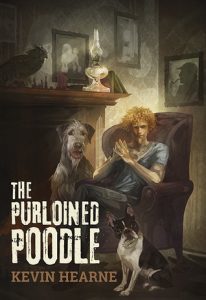
BWG: Tell me about Oberon. How much fun did you have writing him? He is about the best animal character I have ever read and brings me joy just thinking about him. Was he always an Irish Wolfhound? Or was that a no-brainer due to the Irish folklore connection in Iron Druid/Ink & Sigil world?
He was always a wolfhound, yeah, because the early version of the breed—warhounds—are mentioned in the old stories about Cú Chulainn. I figured an Irish Druid would want one as a friend, especially if he himself could shapeshift into one. But Oberon’s character and behavior were modeled on a couple of smaller dogs with expressive faces, a pug and a Boston terrier who gave me much joy for many years. They unfortunately have moved on to another plane now, but I’m glad their spirit lives on in Oberon. He was (and is) an absolute blast to write.
 BWG: Your new series, Ink & Sigil, takes place in the same world as the Iron Druid but is very much its own thing with its own distinct voice. What made you decide to come back to this world?
Well, I love the world and didn’t want to leave—it’s just that Atticus told his story the way he wanted to tell it. So a different narrator was needed, and Al MacBharrais presented himself as an interesting contrast—aging instead of eternally youthful.
BWG: Could you tell me a bit about Al MacBharrais as a character?
He’s a sixty-three-year-old sigil agent who’d like to retire but can’t because his apprentices keep dying in freak accidents. He discovers, however, that they might not be accidents after all; he’s been cursed, perhaps doubly so, and until those curses are lifted he’ll be unable to train a successor. As a sigil agent who writes and enforces contracts with otherworldly entities, using magical inks and sigils invented by Brighid, First among the Fae, he runs into many of the same deities that Atticus and Oberon did, so there’s plenty of continuity with the Iron Druid books without requiring people to have read them first. He’s been widowed for more than a decade and feels lonely, so he’s trying to do something about that, albeit slowly.
BWG: Buck Foi is a hilarious foil to Al MacBharrais. Where did you get the idea for his character? Are all hobgoblins as mischievous as he is?
Answering the second part first: Hobgoblins see themselves as fulfilling the role that court jesters used to fill in monarchies. They exist to speak truth to power and poke a needle in someone’s swelled head when it gets too big. That being said, some are far more mischievous than others and some struggle with whether they want to act as a check on power or actually overthrow it. Lots of that gets explored in the second book, Paper & Blood (more on that below).
As for the idea, I’d point to A Midsummer Night’s Dream by William Shakespeare. Robin Goodfellow (or Puck) is a hobgoblin in service to Oberon, the king of the fairies, and he tends to screw things up rather comically.
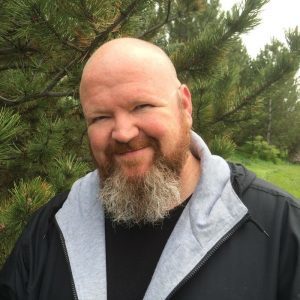
BWG: Your newest book in this series, Paper & Blood, releases this month. Could you tell us a bit about where we are in the story and what we might have in store for this book?
There are only five sigil agents in the world, and when two of them disappear in Australia, Al has to go there with Buck to discover what happened. There he teams up with Atticus, Oberon, and Starbuck, and eventually they are joined by Nadia and Gladys Who Has Seen Some Shite (Yes, that whole thing is her name). Because there’s something in the Australian bush spawning some deadly chimeras, and Al wants to know why as much as he wants to stop it. Both Atticus and Al are surprised by who’s behind it and their motivation for doing it.
BWG: Lastly, the Iron Druid was a nine-book series. Are there long-term plans for Ink & Sigil?
I know how it’s going to end, but when exactly that comes depends a bit on demand. If folks want more, I can certainly write more adventures and would be delighted to do so. But I can also wrap things up in the next book, so spreading the word about these first two and getting folks to read them now would help tremendously in ensuring more to come. So have fun and tell your friends!
Interview originally appeared in Grimdark Magazine
Check Out Some Of Our Other interviewsInterview; Kristyn Merbeth Author of the Nova Vita Protocol
Interview; Author Grady Hendrix
August 16, 2021
Review – Behind Blue Eyes by Anna Mocikat

C.T. Phipps
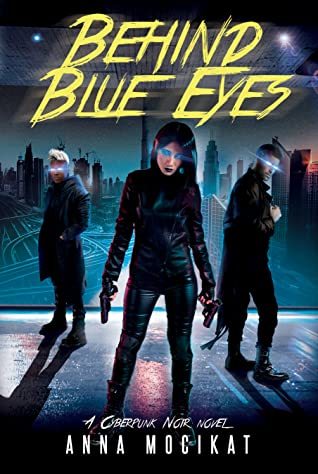 behind blue eyes by anna mocikat Purchase Here About
 They are the perfect hybrid between human and machine. They are the next step in the evolution of mankind. And when they come after you, nothing in the world will save you…
Welcome to the year 2095.
Society has overcome everything that made human life miserable. It has become perfect — so perfect that it needs killer cyborgs to hunt down anyone who disagrees with it.
Nephilim isn’t just any elite death squad member, she is the best. Genetically and cybernetically enhanced, she and others like her strike terror wherever they go. Knowing nothing besides this lifestyle, Nephilim believes that she’s part of a righteous cause.
But everything changes for her after a hostile EMP attack.
She suffers a severe system glitch. Disconnected from the grid, for the first time in her life, she begins doubting the system.
Shortly after the attack, she meets Jake, a 100% biological human, and she falls in love with him. Jake helps her discover that everything she had believed in was a lie.
But there is no walking away from the system. And soon, Nephilim finds herself hunted by members of her own death squad.
In an era of deception, who can she trust? And in this brave new world, is there a place for love between a human and a cyborg?
Behind Blue Eyes is a fast-paced, cinematic action story in a dystopian setting. It’s a modern-day version of 1984 – on steroids.
My ThoughtsBEHIND BLUE EYES is a cyberpunk action adventure by newcomer Anna Mocikat who states in her interviews that she is a lifelong fan of the genre, George Orwell, Ghost in the Shell, and The Matrix. These influences are very obvious and help make the novel a wonderful homage to numerous classic works of cyberpunk. It’s also an entertaining story that involves beautiful cyborg super soldiers tearing through armies of goons like Underworld’s Selene crossed with Wolverine (the X-23 version).
The premise is that the future has fallen prey to a series of conglomerates that have replaced the world’s governments. The largest of these is the Olympias Corporation that rules the remains of the Americas. The Olympias Corporation maintains its control via the use of cybernetically enhanced agents called Guardian Angels. The most dangerous of these agents is Nephilim, a beautiful Eurasian woman who was raised to be a killer like all members of her angel-themed team. After a harrowing execution of dissidents, Nephilim is starting to have doubts about her purpose.
Nephilim only manages to keep her doubts, though, due to damage done to her cybernetics by a EMP weapon that leaves her able to question things without having her mind immediately erased. Taking advantage of this brief interlude and the affections of a smitten technician, Nephilim manages to permanently protect herself from brainwashing. This shows her the Olympias Corporation and its arcologies are not the utopian paradises but bread and circus dystopias where the rich prey on the poor for literal sport. Seriously, there’s actually a “Most Dangerous Game” hunt where the participants can kill their victims for money.
I’m a big fan of cyberpunk that gets into the nitty-gritty of the methods that society uses to control us in the future. Anna Mocikat uses references to Animal Farm, 1984, and other literary references to get to the heart of what her dystopia is all about. On the surface, it’s much nicer than any of Orwell’s worlds but the seeming riches of the populace comes with a complete lack of rights. You can be killed at any time for any reason and your lives are completely under their control ranging from families to education to sexual rights.
There’s a romance between Nephilim and a seemingly enlightened “normal” citizen but this proves to be deceptive and I enjoyed the twists that accompanied it. Nephilim is also the object of affection of other characters with technician Finwick being a seeming parody of the kind of drooling nerds that are more in love with the idea of a woman than the actual thing. We also have Metatron, the leader of the Guardian Angels who revels in his power over his associates while flouting the power of conventional society even as it enforces its darkest deeds.
The book is fantastic and I really love its amazingly written action sequences. Anna Mocikat has a real gift for describing energetic emotionally-charged battles that take full advantage of the fact our heroine (as well as her opponents) are cybernetic superbeings. I really recommend it to people who want to give a fun little cyberpunk adventure a try and support an indie author. The ending is pretty dark but just caused me to immediately pick up the sequel rather than turned me off.
Check Out My Other ReviewsReview Psycho Killers In Love by C.T. Phipps
BookTrack Psycho Killers in Love by C.T. Phipps
If You Liked This - Please Share the Love C.T. Phipps

C.T Phipps is a lifelong student of horror, science fiction, and fantasy. An avid tabletop gamer, he discovered this passion led him to write and turned him into a lifelong geek. He is a regular blogger on “The United Federation of Charles”.
He’s written Agent G, Cthulhu Armageddon, Lucifer’s Star, and The Supervillainy Saga.
Website: https://ctphipps.wordpress.com/
#Musicmonday – Eyes on Fire (Zed’s Dead Mix) by Blue Foundation and Zed’s Dead
 #musicmonday Music That Speaks to Me
 Sometimes a song, is more than a song.
Blue Foundation - Eyes On Fire (Official Music Video)Lyrics I’ll seek you out
Flay you alive
One more word and you won’t survive
And I’m not scared
Of your stolen powerI see right through you any hourI won’t soothe your pain
I won’t ease your strain
You’ll be waiting in vain.
I got nothing for you to gainI’m taking it slow
Feeding my flame
Shuffling the cards of your game
And just in timeIn the right place
Suddenly I will play my aceI won’t soothe your pain
I won’t ease your strain
You’ll be waiting in vain
I got nothing for you to gainEyes on fire
Your spine is ablaze Felling any foe with my gaze
And just in time
In the right place
Steadily emerging with grace Ahh, felling any foe with my gaze
Ahh, steadily emerging with grace
Ahh, felling any foe with my gaze
Ahh, steadily emerging with grace
To Purchase This Song Click Here
Check Out Some Other Great Songs Below#MusicMonday Ivar;s Revenge by Danheim
#musicmonday Eyes on Fire – Zeds Dead Remix by Blue Foundation
August 15, 2021
Review – Crossover Volume 1 + Crossover #7
 check it out here
 COMIC REVIEW
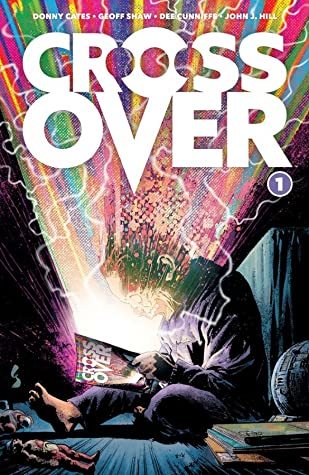
Crossover, Vol. 1: Kids Love Chains + CRossover issue #7 by Donny Cates, Geoff Shaw (Contributor), Dee Cunniffe (Contributor), John J Hill (Contributor) August 15, 2021 10:00 am No Comments Facebook Twitter WordPress "imagine everything you thought was fantasy...was real. And now join us, in a world where reality is dead...and anything is possible...”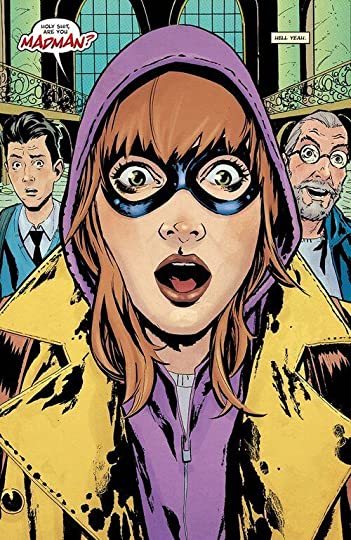 Donny Cates’ and Geoff Shaw’s Crossover, as you would expect from the synopsis, is a comic book for comic fans. But not just fans of superhero books from “the Big Two”, fans of the very concept of a comic book. Crossover is very much a love letter to the very medium of sequential storytelling.
The story starts a few years after a catastrophe releases every character from every comic book into the real world in one gigantic, frenetic battle. And while the majority of these characters are trapped in a protective bubble (of energy and licensing issues), several move around freely in the real world but are being hunted by forces who wish to see them destroyed.
It’s kind of like what Ready Player One was to the 80s, except less overt and obnoxious about it (and I liked Ready Player One). What follows is the sort of weird meta-storytelling that I love peppered with references to comic books that you may or may not have heard of (I didn’t even know about some of them). Obviously, the real heavy hitters you’re seeing on the big screen don’t make appearances, due to the licensing issues I mentioned earlier, but frankly, I think the story is better for it, as it allows the narrative to twist in different directions while still offering some great cameos for fans of the wider genre and also being relatively accessible for people who want to enjoy the story.
If you like comic books, pick up this book. If you don’t like comic books, still pick up this book, because the story is fantastic, and it might even turn you on to some other comic books you didn’t know existed.
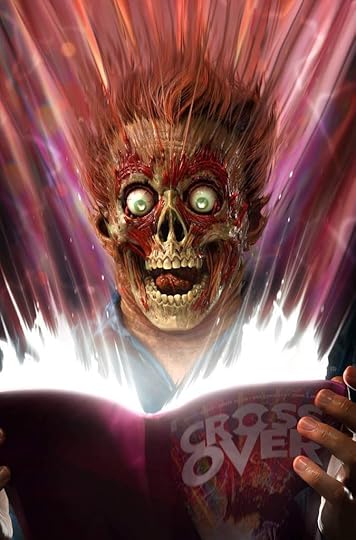 Crossover Volume 1 collects Crossover Issues #1-6, but I also picked up #7 because it’s written by and features one of my favorite modern comic writers and my 2nd favorite Handsome Boy Modelling Agency Graduate: Chip Zdarsky. Zdarsky writes himself into a side story, where he’s forced to go on the run from the law, since he once wrote and drew himself into an issue of Sex Criminals, and that particular instance of him has also come to life. It’s an incredibly, weird, dark, meta story that manages to be both figuratively and literally self-indulgent.
And that exactly the kind of weird bullshit that I love. Man, am I glad I picked this one up.
Check Out some of our other reviewsReview – The Final Girl Support Group by Grady Hendrix
Graphic Novel Review – Johnny Cash: I See a Darkness by Reinhard Kleist
If You Liked This - Please Share the Love G.M Nair
G.M. Nair is a crazy person who should never be taken seriously. Despite possessing both a Bachelor’s and Master’s Degree in Aerospace Engineering and a job as an Aviation and Aerospace Consultant, he writes comedy for the stage and screen, and maintains the blog MakeMomMarvel.Com. Now he is making the leap into the highly un-lucrative field of independent book publishing.
G.M. Nair lives in New York City and in a constant state of delusion.
August 14, 2021
Review – The Children God forgot by Graham Masterton
BOOK REVIEW
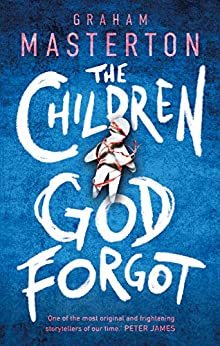
THE CHILDREN GOD FORGOT by graham mastertonREVIEW BY BETH TABLER
August 14, 2021 10:00 am No Comments Facebook Twitter WordPress “How much worse could her life become, if she wasn’t even allowed to die?”The Children God Forgot starts with pain, visceral stabbing pain in a woman’s belly. The woman in question wakes up in the hospital, completely confused. She finds out she is pregnant, which is impossible. There is no way that she could be pregnant: she had an abortion three months ago. The doctors perform an emergency c-section and deliver a horrifically malformed fetus.
One that could not possibly be alive, but it is. This idea of the impossible being possible has a very Lovecraftian feel to it and permeates every page of The Children God Forgot. Then as the story progresses there is a rash of strange births and pregnancies that sweeps through London.
 Simultaneously, while London experiences strange births of malformed fetuses, a sewage engineer named Gemma, the owner of the sewage company she works for, and the cameraman make a routine check-in a section of London’s sewers. As they travel through the engulfing and claustrophobic darkness of the London underground, they discover a fatberg.
A stony mound of toilet paper, and grease that has solidified into a substance, not unlike concrete clogging the sewer flow. They also find a women’s severed hand floating in the refuse.
Immediately upon discovery of the severed appendage, chaos happens, lights flash, electricity arcs around them in the oppressive dark, and the three workers are thrown into utter and complete darkness while waist-deep trudging through human waste. To say that the moment is something of nightmares would be an understatement.
Up ahead around the pipe bend, the three workers can see child-like figures glowing amongst the waste. These child-like figures are made of claws and are horribly and inhumanly disfigured. They move with lightning speed. The group makes a run for it, and all make it out except for Gemma’s boss, who disappears only to be found later with his legs amputated and his eyes ripped from the sockets.
This alerts DC Jerry Pardoe and DS Jamila Patel of the supernatural squad team up once again to delve into what is lurking in London’s sewers with the help of the above-mentioned sewer team. Will there be more bodies, more disfigurement, and horror? Of course, there will be more. Because Masterton will be Masterton. He is the author that pokes at all those uncomfortable psychological places in his reader’s minds.
And much like other books in his catalog, it won’t be just one type of horror. He makes you squirm and scream internally. You wonder just how far he can go.
I think that you could have a solid horror story of just the sewer section of the book. The claustrophobic feeling he evokes is terrifying. But, there is a robust supernatural angle to The Children God Forgot. What are these things that look like malformed children, and who is the woman with the knives that keeps appearing?
Unfortunately, I will have to stop the description there because it will give it away if I say anymore. Imagine something like The Strain, but with occult vibes taking place in a sewer. Now top it all off with a police procedural, and you won’t be far off because at this story’s heart is a solid case that needs solving.
The supernatural squad is a competent duo. There is no flash with them, aside from wanting to get to the heart of the case. They appear together in the novel Ghost Virus; if you have read that, you will be familiar with the pair. However, reading the previous novel in no way affects your enjoyment of this one.
The Children God Forgot will not be for everyone because this is some deep body horror. It is terrifying. I’d put some trigger warnings, flaying, abortion, claustrophobic spaces; there is a lot. If you can’t make it through the first three chapters of this book, you would not like what is in store later on. It only gets scarier, darker with a lot more gore.
I love horror, and even I had to put the e-reader down now and then. Because, wow, some of these scenes are dark as hell. A particular scene included one of these monstrous fetus-creatures eating a cat and tearing it apart with a cracking sound of a broken rib cage—bits of fur flying everywhere. You get the point.
If you love horror of all sorts and want to be scared, The Children God Forgot is for you. Masterton is a master of writing horror. If you are new to his books, congratulations, you are in for a hell of a ride! Some of these scenes will be burned on your brain as if Masterton used an actual branding iron, but I promise you will recover from the cat scene and a few others soon.
Originally published in GdM#27
Check Out some of our other reviewsAugust 13, 2021
Interview With Author Graham Masterton
Graham Masterton "I thought long and hard before writing The Children God Forgot because of its controversial subject matter, and to be honest I wasn’t sure that any publisher would touch it. In the end, though, I knew I had to write it even if it never saw the light of day." Graham Masterton, known to be one of the lions of the horror genre and one of its most celebrated novelists, is also one of its most prolific writers, with over 40 novels spanning multiple genres.
I had the immense honor of having a chat with the horror legend about his writing, sex-help novels, what he is working on now, and the horror genre in general.
[BWG] Before becoming a novelist, you were a journalist for a few years. Journalism requires a different type of approach to presenting the reader with an idea or situation. There is also a lot of overlap between the two. Could you tell me a bit about what you learned as a reporter and how that has affected your writing later in your career?
 [GM] Most of my education was at Whitgift School in Croydon which was an all-boys school. My parents moved and I was supposed to complete my sixth-form education at a mixed grammar school in Crawley. Unfortunately (or fortunately as it turned out in terms of my career) I lost all interest in Shakespeare and Byron and Wordsworth and concentrated all my studies on Jane and Jill and Charmienne. After two terms I was asked to leave. After a short spell as a greengrocer I was offered a job as a junior reporter on the Crawley Observer newspaper. I was lucky that in those days local papers were staffed by semi-retired Fleet Street reporters who really knew their stuff, and so I was taught all the rudiments of writing a good news story, as well as layout and typography. The most important lesson I learned as a news reporter, though, I learned on my very first day. I was sent to interview a woman about her husband’s cycling trophies (not exactly front-page news) but after she had told me all about them and I was about to leave, she said, ‘He beats me.’ I went back into her living-room with her and for an hour she poured out the whole story of her husband’s abuse… how he hit her if she argued with him, how he threw his dinner onto the kitchen floor if it wasn’t what he wanted to eat, how he would rape her in the middle of the night when she was asleep. She had told her mother and her sisters, but they had simply told her that it was her fault for marrying him. There was little that I could do for her except to suggest that she go to her doctor and social services. But as I cycled away that day, I felt like Saul on the way to Damascus. I had learned in that one morning that everybody is bursting to tell you their story, especially if they are caught in a distressing situation from which they feel they can’t escape, and if you listen sympathetically they will tell you everything… right down to the most intimate details. Obviously my horror novels are based on fantasy and mythology, but I still base my characters on real people in ordinary situations… characters who have their own mundane problems like abusive marriages or debt or stress in their careers, apart from having to face up to demons and obnoxious spirits and other mythological perils. I believe that helps to make my novels more realistic and more frightening. The other important thing I learned as a reporter was how to join two contrasting or even conflicting ideas together to come up with an interesting story. As a reporter, if you witness a car crash, you don’t just describe the crash and any injuries that might result, you ask how and why did it happen, and who were the people involved.
[BWG] You are a sex instruction manual writer, 29 so far. I read that you got into that through writing a column for Mayfair, then through Penthouse magazine. I would love to know how you got from Mayfair to Penthouse and then on to writing the instruction manuals. And what continued to draw you to write on different topics in the genre?
[GM] After four years training on the Crawley Observer I wrote a very arrogant letter to the newly-launched Mayfair magazine, and they were so impressed by my arrogance that they gave me the job of deputy editor. The staff included the publisher, the editor, me, the secretary, and the publisher’s dog. Our office was the size of a wardrobe. But I was given free rein to write features and to organize fashion shoots and I also had the arduous job of going to the photographers’ studios and interviewing the girls who appeared in the centre-spread every month. Most men who casually visited the studios would simply gawp at the girls, but I always got to talk to them in the same way that I had talked to that woman whose husband had abused her. They told me just as much: about their boyfriends, about their ambitions, about why they had decided to pose nude, about their sex lives. I just listened and nodded and took it all in. At that time Penthouse was outselling Mayfair by a considerable number of copies and one of its most attractive features was the famous Penthouse readers’ letters, which were all very frank accounts of sexual encounters. I suggested that we start a regular column of verbatim interviews with girls about their sex lives… what they wanted and how they went about getting it. I called it ‘Quest.’ Of course I wrote all the girls’ responses myself, but they were based very closely on the personal stories that had been given to me by our models, so they were realistic and not misleading, and hopefully quite informative too. After three years at Mayfair I had an argument with the editor and simply walked out. I phoned the editor of Penthouse, and he gave me a job as deputy editor the following week, for twice the pay. At that time, Penthouse had just started publishing an American edition, and so I was sent to New York fairly regularly to help out. While I was there I met Howard Kaminsky from Warner Paperback Library (who happened to be the cousin of Mel Brooks, whose real name is Mel Kaminsky). He suggested I write an anecdotal sex instruction book and so he commissioned me to write How A Woman Loves To Be Loved. I wrote it under the nom-de-plume ‘Angel Smith’ and there was a photograph of Angel on the cover in a wet T-shirt. It was hugely successful, since most sex books those days were very medical. The only trouble was that Angel received a lot of fan mail. One letter included a condom which the sender said he had rolled on and off himself as a tribute to Angel. After that I insisted on writing sex books under my own name. The first was How To Drive Your Man Wild In Bed, published by Signet, and it sold half a million copies in six months. For various personal reasons I eventually resigned from Penthouse but my sex books were easily making enough money for me to live on. Sex is a varied and interesting subject, and I got to know many of its most famous (or notorious) practitioners. I became friends with Xaviera Hollander, the Happy Hooker, and with the late Monique von Cleef, the dominatrix, and I learned a lot from them about what men wanted and how women could give it to them, and vice versa. Eventually, though, the market became flooded with similar books, and it was time to move on.
[BWG You have had a hand in writing many types of novels. You have an extensive repertoire of horror stories. But you are also a prolific crime novelist and an author of non-fiction sex instruction manuals. Is the creative process different for each of these types of books?
 [GM] Obviously the research is very different for each type of book. I try to make the characters and the background as believable as possible, which is why I usually set my stories in real locations, rather than invented ones. You can visit almost all of the locations that you read about in my books, including pubs and restaurants. I don’t have a ‘Castle Rock’ for example, although I have no criticism of Stephen King. My horror novel The Children God Forgot is set in Peckham, East London, which I know well; and my crime series featuring Detective Superintendent Katie Maguire of the Cork Gardai was based closely on my experience of living in Cork for a few years. In the same way my horror novels set in various American cities are all based on personal observation—like The Manitou in New York and Walkers in Milwaukee and a new horror novel I have just finished, The Soul Stealer, set in Hollywood. Essentially, though, the creative process is much the same. The story has to grab the reader from the very first line, the writing has to be tight and clear, and the dialogue has to be believable. It is important for the characters to sound as if they know what they’re talking about, and in the case of the Katie Maguire novels I used a certain amount of Cork slang, although not as much as the real Corkonians use, or nobody would have understood a word of it. ‘That langer would break your melt’ (that dick would test your patience to breaking point); or ‘That’s the berries’ (that’s excellent.)
[BWG] As a reader, which type of horror resonates the most with you? Has there ever been a horror novel that you have had to put down for a bit because it was just too intense? And if so, why?
[GM] I don’t read horror fiction. In fact I read almost no fiction at all. I regret it, because I used to enjoy it a great deal, and I learned a lot about developing a direct and involving style from American writers like Herman Wouk (The Caine Mutiny, for example) and Nelson Algren (The Man With The Golden Arm). One of the reasons I don’t read fiction is because I am severely critical of my own writing, and I am too quick to pick holes in other authors’ fiction. I think the day I stopped reading fiction was when I was reading a Len Deighton novel and realized that I knew he was hungry and was rushing to finish the chapter so that he could go for his lunch.
[BWG] When you create a horror scene, how do you know where the tipping point is when a scene’s horror is too much? Or does such a place exist?
[GM] I thought long and hard before writing The Children God Forgot because of its controversial subject matter, and to be honest I wasn’t sure that any publisher would touch it. In the end, though, I knew I had to write it even if it never saw the light of day. But times have changed, and my publishers Head of Zeus are open-minded and advanced in their thinking and they got behind it regardless. When you consider the atrocities that are committed in real life, there is nothing that you could possibly write in fiction that could come close. I regularly visit towns in Poland where, during the war, scores of innocent children were taken away and gassed. You can’t write anything worse than that. I know that some people prefer ‘cosy crime’ like Agatha Christie stories in which the most dreadful thing that happens is that the bishop gets beaten to death with a badger in the bathroom. But in reality people get raped and tortured and chopped into bits, and left in builders’ bags in a forest somewhere. These killings affect detectives, too, deeply. They don’t sit calmly puffing a pipe in Baker Street or putting on a hairnet when they go to bed like Hercule Poirot. They suffer terrible PTSD. Obviously I try to write entertaining stories, but I believe in representing the horrors of this world as they really are.
[BWG] How has the release pacing of horror novels changed since the introduction of ebooks?
[GM] Ebooks have changed my whole career as a horror writer. They have made it possible for almost my entire backlist to be made available, whereas it is very doubtful that so many of them would have been re-issued if it had been necessary to reprint them on paper and store them in warehouses. I seem to be writing horror novels at a fair lick now. I sometimes think that readers don’t appreciate that a book that takes them three days to read can take three months or more to write. Their appetites are voracious!
[BWG] Can you tell me a bit about the Graham Masterton Written In Prison Award (Nagroda Grahama Mastertona W Wiezieniu Pisane). How did that come about, and how did you end up working with Polish writer Joanna Opiat-Bojarska?
[GM] I first had the idea for the Graham Masterton Written In Prison Award five years ago when I was taken to Wołow maximum security prison near Wrocław to talk to the inmates. They were plainly so interested in writing and reading that when I was having lunch with the prison director, Robert Kuchera, afterwards I suggested that it might be therapeutic for them to write short stories for a small prize. Robert is very enthusiastic about rehabilitation and he got behind the idea immediately. In the first year we received more than 120 entries and even last year with Covid we received nearly 100. It is open to the inmates of every penal institution in Poland and the prizes (DVD players) are now financed by the Polish Prison Service although I used to pay for them myself. Some of the stories are crime thrillers, some are fantasies, but at their core almost all of them have some element of personal experience… pain, and regret, and sadness. I was unable to go to Poland last year to present the prizes in person but I am hoping to go back in October. Joanna Opiat-Bojarska I have yet to meet, because of Covid. She volunteered to help by selecting the best 20 stories, which are then translated and sent to me to pick the 10 winners. The best story receives a brass plaque, and the runners-up receive certificates, as well as prizes. I write a personal letter to every entrant and every entrant receives a souvenir pen.
[BWG] Your first horror novel, The Manitou, came out in 1976, and most recently, The Children God Forgot in 2021. How have things changed in the horror industry?
[GM] Things have changed enormously, especially in the horror writing business. When I published The Manitou there were very few horror novels on offer on the mass market, but these days there is a regular flood. It is partly because the internet has made communication so much simpler, and partly because social attitudes towards horror have become much more relaxed.
[BWG] Can you tell me a bit about your newest novel, The Children God Forgot? For me, it was a book that is difficult to categorize in any subset of the horror genre. It has a bit of everything in it.
[GM] The Children God Forgot is a novel that examines different attitudes towards abortion. On one hand there are people who believe that every life is sacred, from the moment of conception. On the other hand there are people who believe that a woman is entitled to seek a termination if she has become pregnant through rape or incest, or whose foetus has such defects that it is non-viable. It is a book about the conflict between religion and superstition and progressive feminism. I think you can understand why I ummed and aahhed a bit before I wrote it. Not to mention the fact that it describes blocked-up sewers.
[BWG] The Children God Forgot, is a follow-up to Ghost Virus, which follows DC Jerry Pardoe and DS Jamila Patel on a case and combines crime and horror. What important aspects do you think a book needs to straddle the line between the two genres? There seem to be aspects of each genre that compliment each other.
[GM] To me, horror and crime go pretty much hand-in-gory-hand. If somebody gets horribly killed, the police are naturally going to get involved. Apart from which, I enjoy writing about the reaction of ordinary, run-of-the-mill coppers to the appearance of some ghastly demonic apparition. When I started writing horror novels, I had no idea that there was such a thing as a ‘genre.’ To me, a story is a story, and what makes it come to life is the contrast between fantasy and reality. On more than one occasion I have started writing a book that was going to be a straightforward thriller and then found out that it worked better as a horror novel. Blind Panic was one of those… it was going to be a disaster novel about a pandemic of blindness in the United States, but then I found out that it was being caused by vengeful Native American spirits. A similar thing has happened with the novel that I have just completed, The Soul Stealer.
[BWG] Do you tend to model aspects of characters after real-life people? I am especially interested in Jamila Patel. She seems like a powerful and capable character, one that bucks the many female character tropes of the horror genre. Can you tell me a bit about her creation?
[GM] All of my closest friends all my life have been women. When I was 17 I became friends with a young woman reporter on the rival newspaper in Crawley, and we still meet and talk for hours. I had a Burmese girlfriend, too, and she had the kind of inner strength that Jamila Patel has. In fact so many women are strong and clever and capable but do not allow themselves (or are not allowed) to challenge men. I have a woman friend now who is highly qualified but finds it desperately hard to have her abilities recognized. And I am close friends with the brilliant writer Dawn G Harris. We have co-authored two horror stories together and published them in five different countries and we are writing more. Jamila is a combination of several of those women.
[BWG] I think the first thing I googled when I started The Children God Forgot was “What is a Fatberg?” From there, I went down a terrifying rabbit hole. Yes, they are very much real things. How did you come across that this was a thing?
[GM] Fatbergs were shown on the TV news, and it occurred to me that they would make a fairly stomach-churning feature in a horror novel. This is another example of mixing two contrasting stories together (sewers and abortions) to make the whole novel take on an extra sense of reality. Not to mention making editors of horror magazines throw up.
[BWG] Now that The Children God Forgot has released, what do you have in the hopper?
[GM] A new horror novel featuring Det Sgt Jamila Patel and Det Con Jerry Pardoe will be coming out in December—The Shadow People. Following that, The Soul Stealer. I have been writing some new short stories, too, and I hope to have a new collection out sometime next year. Thank you for your interest.
The interview originally appeared in Grimdark Magazine
Check Out Some Of Our Other interviewsInterview With Kristyn Merbeth Author of the Nova Vita Protocol
Interview With Author Grady Hendrix
August 12, 2021
Review – Guardians of Porthaven by Shane Arbuthnot
 By Ryan Howse
 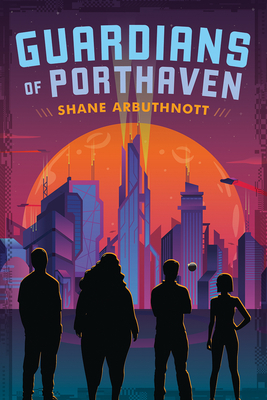 guardians of porthaven by shane arbuthnott Purchase Here About On his fiteenth birthday, Malcolm Gravenhurst is preparing to take on the mantle of Guardian, like many Gravenhursts before him. The Guardians are tasked with defending the city of Porthaven, and his family is the only one to possess the superpowers necessary to battle the frequent alien invasions of robotic klek. But power has brought the Gravenhursts more than just responsibility–it has also brought them fame and wealth. When Malcolm meets some teens living and working in secret, he learns that underneath their heroic facade, the Gravenhurst family is hiding some very dark secrets. With the threat of annihilation on the horizon, soon Malcolm must choose between family loyalty and doing the right thing. My Thoughts
 Disclaimer: I am friends with Shane Arbuthnott. He plays The Best Alien in my weekly RPG campaign.
Guardians of Porthaven by Shane Arbuthnott is a middle-grade/Young Adult superhero story. It follows Malcolm Gravenhurst, the youngest member of a family who all have superpowers. They call themselves Guardians and disdain the term superhero, viewing that as ‘childish entertainment.’
By Malcolm’s understanding, his family are the only ones who gained these powers. An alien gateway crash-landed in Porthaven decades ago, releasing numerous robotic invaders called the klek. The Gravenhurst family, with their new powers, managed to defeat the klek, and become heroes to the town, complete with fawning media and tower. The klek keep coming, appearing at random through the city every few weeks, but they never seem specifically dangerous unless they’re attacked first (even if by accident.) And the town continues to love the Gravenhursts.
Porthaven itself seems like a science fictional city, but none of the inventions that work there can work outside the city. This is a neat bit of worldbuilding that hits the slightly futuristic vibe in many mainstream superhero comics without changing the entire world. These comic books come up a few times, as Malcolm clearly loves them and has taken inspiration from them, but it’s never overwhelming or a replacement for the rest of his personality.
They were his own collection–Squirrel Girl, Ms. Marvel, the classic Claremont and Davis run of Excalibur that he’d worked hard to collect. Ones about heroes who didn’t just do it as a job and tried to do every ounce of good they could in the world.
Malcolm is socially awkward, as he’s never been around many people besides his family and their employees before. He was tutored rather than going to school, and has no friends to speak of. He talks too much and misses social cues. He has to take classes on managing public relations. He is consistently called out as a child of privilege, and that’s true, but it’s also clear that that same upbringing had a lot of its own difficulties, mostly due to his isolation and how his family would stamp down on him for his suggestions.
“Well, um, I’m responsible for keeping the city safe, and that’s where I’d like to focus. I’ve only ever fought the klek in simulations before now, right? So I’ll have to get used to the real thing, I guess. And I have this idea about—”
Felix’s hand came down hard on Malcolm’s shoulder.
When Malcolm first experiences life outside the tower, he meets another youth who also has superpowers. That simple fact alone rattles him. He’s been told all his life that only members of the Gravenhurst family get these powers. Then he meets a couple others, and they’re doing what he wanted to do—using their powers not just against the klek, but to keep the city safe from regular crime as well.
Malcolm’s power is defensive. He can form a powerful set of armor around himself, almost like a force field, to keep himself safe. This lets him take damage and defend others, which is extremely fitting given his role.
Now that he knows what he’s looking for, Malcolm starts seeing plenty of small cracks in his family’s stories. The conflict is organic, clever, and driven by the personalities of the main characters. The pacing is like clockwork, and just when you think a major plot is wrapping up, another twist comes in. The action and mystery complement each other perfectly. A lot of books provide a more thorough status quo before everything gets taken apart, but Guardians of Porthaven hits the ground running.
The ending is excellent as well. If it had had a more traditional ending, it would have been reinforcing Malcolm’s privilege. Instead, it finds its own path and is far stronger for it.
Overall, Guardians of Porthaven is a great, fast-paced book, an examination of privilege, and a love letter to superheroes.
Check Out Ryan's Other ReviewsBooks Are Awesome-Article by Ryan Howse
Review – To Be or Not To Be: A Chooseable-Path Adventure by Ryan North
Ryan Howse I’m funnier without context.
Okay, you want context.
I’m a mid-30s nerd, married, with two kids. Also two cats–Cathulhu and Necronomicat.
I like, in no particular order, tabletop gaming, board games, arguing over books, ancient history and religion, and puns.
I’m unconundrum on reddit.