Beth Tabler's Blog, page 183
June 11, 2022
#SPFBO8 Review and Cut – The Library by Casey White
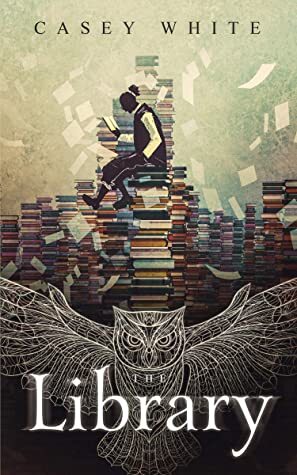 What is The Library About?
With eternity ahead and all of man’s knowledge at his fingertips, Daniel just wants out.
He was too young to have any expectations when he was dragged into the grand Library of Alexandria – a massive, magical catalog of all human knowledge. Too young to understand the responsibilities being foisted on him. Too young to know that he was to become the next Librarian.
He knows now.
As the boy named Daniel grows into the Librarian named Owl, he realizes the truth; the cage he’s caught in is beautiful, and filled with knowledge, but a cage nonetheless. With that realization is born a longing for freedom he can’t push aside.
Such longings can be used, though – and there are many who would seek power over the Librarian and Alexandria.
But how can he tell friend from foe when all he’s ever had was himself?
My Thoughts
Daniel, an eight-year old boy, meets a stranger in a park. Soon after, he becomes feverish and ends up in a strange library filled with magic.
Now, at the beginning of all of this, he asks for his mother, but that fades soon. Instead, he has Jean, or Crow, the Librarian of Alexandria.
Their relationship is the core of the book, and it’s a fairly standard mentor-apprentice one. I would have liked to have seen more disorientation or more excitement or more reaction from Daniel as he’s drawn into this world. After the initial scene he took too much in stride. I also feel like his age was a stumbling block. I don’t think the book intended to be middle-grade but eight’s young even for YA.
Libraries are one of the best places in our world. You can take out whatever books you want, for free, and get lost in whatever book you choose. So I admit, I was hoping there’d be a bit more fun with the library aspect of the book. What kinds of deep lore would be in such a place? How are books organized? Are there secure vaults for the more dangerous grimoires? While the Library of Alexandria is a fun, interesting setting, (and I liked how it seemed to be responsive and somewhat aware) it’s more focused on the magical aspect and didn’t incorporate enough of the library aspect.
The writing was quick, clear, and smooth, and the book reads fast. The Library is part of a vaster series of interlinked novels, but it is the first in its subseries, The Librarian of Alexandria. It takes place after a timeline gap from White’s Spark of Divinity series and before Remnants of Magic.
Even with the positives of clear writing, and an interesting plot, this is a cut for me. Please check out this novel and the next one in the series, The Librarian.
Read The Library by Casey White#SPFBO8 Review and Cut -; Way of Thieves by Craig A. Prince Jr.
#SPFBO8 Review and Cut-; There’s Magic between Us by Jillian Maria
The post #SPFBO8 Review and Cut – The Library by Casey White appeared first on BEFOREWEGOBLOG.


#Bookcook A.D New Orleans After the Deluge by Josh Neufeld
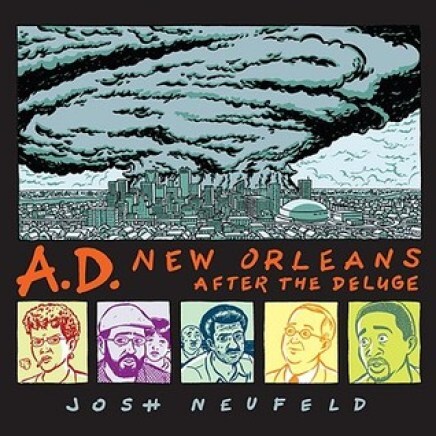
About
A stunning graphic novel that makes plain the undeniable horrors and humanity triggered by Hurricane Katrina in the true stories of six New Orleanians who survived the storm.
A.D. follows each of the six from the hours before Katrina struck to its horrific aftermath. Here is Denise, a sixth-generation New Orleanian who will experience the chaos of the Superdome; the Doctor, whose unscathed French Quarter home becomes a refuge for those not so lucky; Abbas and his friend Mansell, who face the storm from the roof of Abbas’s family-run market; Kwame, a pastor’s son whose young life will remain wildly unsettled well into the future; and Leo, a comic-book fan, and his girlfriend, Michelle, who will lose everything but each other. We watch as they make the wrenching decision between staying and evacuating. And we see them coping not only with the outcome of their own decisions but also with those made by politicians, police, and others like themselves–decisions that drastically affect their lives, but over which they have no control.
Overwhelming demand has propelled A.D. from its widely-read early Internet installments to this complete hardcover edition. Scheduled for publication on the fourth anniversary of the hurricane, it shines an uncanny light on the devastating truths and human triumphs of New Orleans after the deluge.
My Thoughts
I think much like those who lived through 9/11 can remember where they were or what they were doing the moment the plane hit The World Trade Center, those who saw the heartbreaking images coming out of New Orleans and Biloxi also remember the time and place. I know I did. Both are significant watershed moments in American culture and history. For 9/11 it was the start of what has been deemed fear culture. For Katrina, it was a stark look at race and poverty relations in the US as well as knowing that American relief efforts can fail you. Despite best efforts to the contrary. It is hard things to talk about, and hard things to convey on paper. But as they say, a picture can tell a thousand words…This graphic novel certainly did.
“Seeing my books and comics was the hardest, it made me think that it would have been easier if a tornado simply hit the house and flung it to another city. At least then we wouldn’t have to walk atop the things I cared most about. “
A.D depicts seven different stories from seven different people and perspectives. Each experienced the hurricane firsthand in one way or another. Some stayed, some fled, some went to the Silverdome, and some rode it out on top of a convenience store. A single-story couldn’t tell a true tale about the people of New Orleans, but taken in aggregate, the reader definitely achieves a good understanding of what the city went through. It is both powerful and visceral and a tad unsettling.
I chose this story for this week’s #bookcook as an homage to New Orleans food and culture. New Orleans is a magical place and not the Disney version of magical. More like the dark side of magic. It is hot, overgrown, and mystical. The drums and jazz of the nightly music cause a constant throb that you feel not only in your bones, but in your soul. When you are there, you want to become a part of the culture and get swept away by it: Food, dancing, music, passion, and everything that whispers in a sultry tone of voice, “I am the south.”
To Read A.D New Orleans After the Deluge by Josh Neufeld
There is nothing that says, New Orleans, like a good gumbo. This recipe was taken from Big Oven
INGREDIENTS
2 ounces Margarine
3 cups onion ; small dice
1 1/2 cups celery ; small dice
1 1/2 cups green bell pepper ; small dice
1 pound chicken breast ; medium dice
1 pound smoked sausage or andouille sausage ; sliced
8 ounces shrimp pieces
2 qts Chicken broth
1 cup canned tomatoes ; diced
1 each Bay leaf
1/2 teaspoon Thyme
1 1/2 tsp salt
1/2 teaspoon Black pepper
1/4 teaspoon Cayenne pepper
1/2 teaspoon tobasco
2 tablespoons Worcestershire Sauce
1 teaspoon Garlic powder
6 ounces Butter
6 ounces Flour
9 ounces okra fresh or frozen ; sliced
gumbo filet powder
1/2 cup Water
INSTRUCTIONS
Melt 2 ounces of margarine in a large soup pot. Add chicken and saute until cooked halfway. Add sausage and vegetables and cook until vegetables are tender. Add chicken broth and seasonings and bring to a simmer. Make a black roux in a separate pan. Heat butter very hot and add flour. Turn heat down to medium. Stir frequently until the roux becomes very dark, almost black in color but not burnt. (This takes practice) Slowly alternate soup into roux and roux into soup whipping until thickened and smooth. Simmer for 30 minutes. Add shrimp and okra. Simmer until shrimp is cooked about 2 minutes. Remove from heat. Dissolve Gumbo file powder in water. Slowly stir into soup. Serve plain or with white rice
#BookCook Sweeney Todd -More hot pies! More hot pies!
The post #Bookcook A.D New Orleans After the Deluge by Josh Neufeld appeared first on BEFOREWEGOBLOG.
June 10, 2022
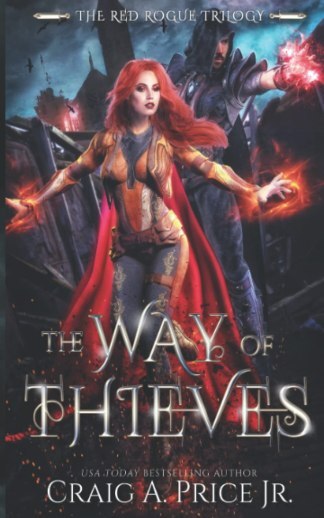
#SPFBO8 Review and Cut – Way of Thieves by Craig A. Prince Jr.

A magical scepter can destroy the world …
… a band of thieves plan to steal it.
Siblings, Brendan and Kiera are in for the assignment of their lives. As descendants of dragons, magic is in their blood, and such a skill is almost as valuable as gold to their guild of thieves. Without any memory of life before becoming orphans, the two are tasked with stealing the revered Revarium Scepter from the Sorcerer’s Guild.
It’s time to grab their dragon powder, prepare for dangerous quests, and discover the truth of their heritage before the entire world is destroyed.
Ocean’s Eleven meets Game of Thrones in this gritty epic fantasy that you’ll love, because everyone loves a magical heist.
My Thoughts
 I LOVE thieves and assassins so within the first few chapters when I found out that this world operated on a ‘guild’ system with a Nobles Guild, a Sorcerers Guild, a Thieves Guild and an Assassin’s Guild among others, I was instantly hooked. The prologue really hooked me and really prompted me to continue on.
The downside is that there were simply too many POVs to tell an effective story. It didn’t feel like each POV was introduced sufficiently before the story jumped somewhere else only to come back when convenient. The chapters were also quite short so the POV not only hopped characters frequently but consequently the narrative then hopped around. In addition to a choppy narrative, and numerous POVS there were also some editing and typo errors including a character’s name that switched between Mirabelle and Mirabella several times in a matter of a few pages.
Overall, I really wanted to love this but it just didn’t work for me, this is a cut of The Way of Thieves.
Read The Way of Thieves
Review – Dreadnaught by April Daniels
The post #SPFBO8 Review and Cut – Way of Thieves by Craig A. Prince Jr. appeared first on BEFOREWEGOBLOG.
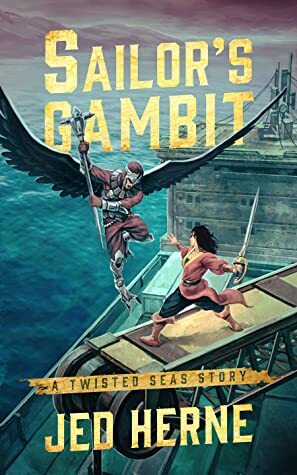
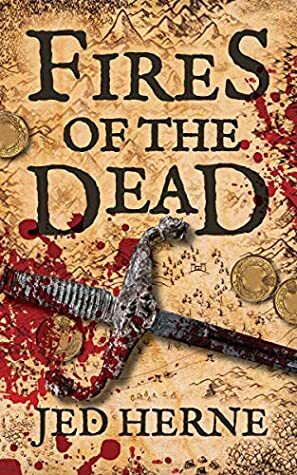
Interview with Jed Herne, Author of Siege of Treboulain
We are excited to share an interview with author Jed Herne about his latest endeavor, the game Siege of Treboulain. Check it out!
 Siege of Treboulain could also have been a great fantasy novel. What made you decide to tell that story through the medium of a game?
Writing an interactive novel is fundamentally different from a regular book. You have to keep all the storytelling quality of a novel – the complex characters who grow and change, the twists and the suspense, a cool magic system, and interesting ideas to make the reader grapple with. But because it’s a game, you have to consider other things.
The biggest consideration is the nature of choice. The best games force players to make hard choices with no obvious right answer. It’s in these crisis moments that players get to see who they truly are.
That’s why creating a siege game interested me. You can’t get much harder choices than the ones you’ll face as the ruler of a city under attack.
I felt a strong sense of responsibility and attachment to the characters almost right away – it was as though instead of playing to “beat the game,” I was playing to “save the people of Treboulain.” What did you do to create and foster that sense of connection?Thank you! Right from the start, the goal was to create an experience where it wasn’t about reaching the end and finding out whether you ‘won’ or ‘lost’. That would be boring. Instead, I wanted the focus to be on the journey – on the characters you meet along the way, the challenges you overcome, and the things you discover about yourself. I’m really pleased with the ending, of course – but this is fundamentally a story that’s all about relishing the middle.
 The interactive nature of the game certainly helps with the connection to other characters. When you’re in control of the story, you feel a much deeper sense of ownership. These peoples’ lives are directly affected by your decisions (sometimes in great ways, sometimes in horrible ways). I’ve found this leads to almost instant immersion from just about everyone who’s played the game.
And then in terms of the characters themselves – there’s four main non-player characters in the game (NPCs). I tried to make each of them interesting and complicated enough such that any one of them could be someone’s favourite. I think that approach paid off. My favourite always tended to be whoever I was writing at the time! When you find yourself having that reaction to your own story, it tends to translate well for readers.
 Sometimes a choosable-path game will leave out important details and nuances from a list of choices: for example, “take the crown” might mean “jealously snatch the crown” or it might mean “humbly and reverently pick up the crown.” One thing I appreciated very much about Siege of Treboulain is that I never felt like the game did something I didn’t mean. How did you avoid that pitfall?
I’m glad you felt that way, because in early drafts, that wasn’t always the case!
Mostly, I avoided this issue thanks to feedback from my excellent editor, Abby Trevor, along with lots of playtesting. We had probably about 20 people go through an early version of the game to pick up issues exactly like this.
All this feedback and testing made me feel extremely confident in the story when it released. At this stage, I’ve pretty much seen almost every possible response and reaction that a player could have.
It’s got me thinking that I’d love to create a similarly sized early-reader team for my own self-published novels. I’ve got a few people who read later-stage drafts, but it would be awesome to grow the team even more. Feedback is so ridiculously useful for improving a story. Especially with something as interactive as a game, you just can’t predict how everyone will react ahead of time.
It’s impossible to see everything in the game with a single play-through, since certain choices will necessarily close off branches of the story. Some players will play the game again and again in order to see all of its content, and others will play through it once or twice and be content with the version of the Siege of Treboulain story they experienced. Would you say the game is designed to cater to one style of play more than the other?In early drafts, it was certainly harder to succeed if you choose to boost some stats but not others. However, this wasn’t something I wanted. I wanted a game where it didn’t matter whether you played as a magic-wielding scholar or a warrior who relied on brute force – you could be guaranteed of a good time no matter what build you used.
To achieve this, we ran a bunch of simulations and tests to make sure that this was the case. Initially, it wasn’t. If you’d created a character with high agility, agility tended to be less useful than other stats. However, this testing allowed us to balance things out. Now it’s at the point where you don’t get penalised for picking certain attributes.
 One thing that’s still not clear to me is whether RNG is involved in the game logic anywhere – in other words, does an event say “any score of X or higher will win,” or is there some dice rolling happening in the background?
There’s no random number generation involved in the game – all choices are resolved by testing your stats against certain thresholds. If they pass the threshold, they pass the choice.
Can you tell me a little bit about the process by which you wrote the story? I’m particularly curious whether you worked on one chapter at a time, or if you moved around from chapter to chapter in order to work on the longer narrative threads?First, I spent about 3-4 months developing a detailed outline, which had key plot points for each chapter. The final document (which went through 5 rounds of revision with my publisher) was about 40 pages long.
From there, I wrote the story one chapter at a time. I generally had a rough, big-picture idea of what I wanted to do with each chapter. For example, chapter one starts with a festival, and ends with an army approaching your city.
The space between? That was usually a lot less structured. For some chapters, I had a very clear idea of these interstitial plot points. Then for other chapters, I let myself discovery-write through, following whatever paths seemed the most interesting.
 At the end of each chapter, I’d send it to my editor. She’d read through, provide a bunch of feedback, and then I’d incorporate it. I’d send it back to her again, and the cycle repeated. Once we were both happy, I’d move onto the next chapter.
Occasionally, I’d sometime start the next chapter before the previous one was given the stamp of approval. But for the most part, I tried to take it one chapter at a time.
Having this fast feedback loop – of spending an average of 3-5 weeks writing a chapter, then getting feedback right away – was a lovely way to work. It sped up my game writing skills immensely.
This genre of game is very appealing to amateur game developers because of its low technical barriers to entry (no graphics, no music, pretty straightforward code). But of course that doesn’t mean making a game like this is easy: if someone were to try their hand at making their own choosable-path adventure, what words of advice (or warning) would you want to share with them?It’s definitely a very accessible way to ship a game. Most people can’t single-handedly create the next Elden Ring. But writing something like Siege of Treboulain is something you can do.
In terms of advice:
Listen to (or read) interviews with people who’ve written what you want to write. You can also try to interview them yourself if you have a platform. For me, it was incredibly helpful to use my Novel Analyst podcast to interview Kate Heartfield and Andrew Swann. Both these authors wrote well-received stories for Choice of Games, so they gave amazing advice. Kate even looked over my pitch and gave me feedback before I sent it through to Choice of Games! She certainly played a part in helping me get a contract with Choice of Games, who went on to publish my story.Focus on impossible choices. Choosing between helping a character or doing nothing is not that interesting. Being forced to choose between helping one character or helping another – now we’re cooking. In moments of crisis, a player learns who they truly are. So put them into crisis.Remember that you’re not a good representative of all players. Different people want different things from a story. You don’t have to appeal to everyone, but it is worthwhile asking yourself: how might this scene be someone’s favourite scene?Have a cohesive theme and arc to unify the story. In an interactive novel, it’s easy to end up with a jumbled, disparate narrative. One way to counter that is to have a clear idea of what the story is about. What moral question are you exploring? In the case of Siege of Treboulain, that question was: what is the right way to lead? Once you know what your story is about (at a big-picture level), it makes all the smaller-picture details easier to create.Keep it simple. Every extra stat, character, and choice multiplies the amount of scenes, editing, and issues you have to deal with. Case in point: once I’ve written an outline, I’m usually excellent at knowing how long my novels will be. But with Siege of Treboulain, I was expecting a 200,000-word story … and ended up with a 280,000-word beast instead. There’s absolutely nothing wrong with length, or scale. If anything, the game’s length may be a reason why it’s sold so well (more words = better immersion and value for players, in a lot of cases). Still, just remember that there’s no need to add complexity. The complexity will find it’s own way in.Lastly, if you’re interested in the promotion/marketing side of things, I broke down my launch strategy in more detail in a recent podcast episode (Video link | Audio link). The game sold about 3,300 copies in the first week, so I think we did something reasonably smart with our promotion.
I thought it was incredibly clever to change the gender of certain characters depending on how the player describes their own romantic inclinations.Thanks! I can’t really take credit: this is one of the things Choice of Games suggests for writers to do. From my perspective, it makes a lot of sense. I want as many readers as possible to have awesome, full experiences of the game. An easy way to do that is by making adjustable romance options.
 Are you planning to make more games (or stories) in the Treboulain universe?
Technically, I already have!
If you’ve read The Thunder Heist, you’ll notice a character who also appears in Siege of Treboulain, even though the stories are set on different worlds.
Depending on which pathway you take in the game, you might also see mention of the Solscape – which is an interconnected universe of worlds and stories that I plan to develop more in the future.
In terms of direct Siege of Treboulain sequels, lots of readers have asked about those, which is incredibly flattering. I won’t rule out the possibility. But for now, I’m happy with it as a standalone. It was always intended to be a self-contained story, so I’m unsure if a sequel would work.
But, saying that, I always have ideas floating around in the back of my mind. If I came up with the right concept, it could be a possibility.
More likely, though, I think if I was to write another interactive fiction game, it would be a fresh concept altogether. Still epic fantasy, probably. But something that takes advantage of everything I learned from Siege of Treboulain to produce an even better experience.
For now, though, I’m focussed on writing my next novel, Kingdom of Dragons (which will hopefully be the start of a new series).
Does the game have any cheat codes / debugging commands you’d like to share with us? (Never hurts to ask! )
)I could tell you, but then I’d have to kill you…
No, unfortunately – there’s no cheat codes built into the game. To me, not having fully-maxed-out stats, and sometimes having no option but to fail at achieving things – that’s where the game becomes interesting. When you can’t always achieve everything, the few things that you can achieve feel more meaningful.
Having said that, it is entirely possible to succeed at every single choice you face in the game. But it does take a bit of skill to get there.
Check Out Jed Herne’s WorkThe post Interview with Jed Herne, Author of Siege of Treboulain appeared first on BEFOREWEGOBLOG.
Review – Book of Night by Holly Black
Holly Black’s foray into the adult market with Book of Night did not strictly come off with a bang as die-hard fans of her YA series’ had hoped, but more with a tentative hand raise of “Present.” This isn’t bad; Book of Night, the story of a thief turned bartender named Charlie Hall and her dealing with the world of murder most foul, robbery, and mystical shadows, was entertaining.
 At least most of the time.
The premise is thus, “In Charlie Hall’s world, shadows can be altered, for entertainment and cosmetic preferences—but also to increase power and influence. You can alter someone’s feelings—and memories—but manipulating shadows has a cost, with the potential to take hours or days from your life. Your shadow holds all the parts of you that you want to keep hidden—a second self, standing just to your left, walking behind you into lit rooms. And sometimes, it has a life of its own.”
“If she couldn’t be responsible or careful or good or loved, if she was doomed to be a lit match, then Charlie might as well go back to finding stuff to burn.”
As far as positives for the novel, there are quite a few. Holly Black does well with dialog and characterization. A quality that she has carried on from her Folk of Air and Modern FairyTale series. Charlie is an interesting character, not specifically likable. She is a little too thorny to be likable, but she is certainly interesting. This is the start of issues for me. Charlie is enjoyable but not memorable. I wish she were, and maybe in future books, she will find her footing and start to crystalize into who she is meant to be. But right now, she has a little pluck, a little moxy, low self-esteem, bad luck with people, and a large heart for those she loves.
Vince, her love interest, was pleasant, but while I have a relatively clear picture of Charlie and a feel for her character, I don’t have that with Vince. He was a nice guy; that’s about all I got. This might be why the story did not connect with me as much as I wish it had. Vince is a critical person in Charlie’s life.
The premise is a fantastic concept, But I would have killed for more info about the world of magic. I love the idea of shadows taking on a life of their own for the select few who achieve the skill. But the magic part of the world came in drips and drops throughout the story, leaving me unsatisfied. The cost of shadow use is blood; if it is blood, let the story be dark. Blood as fuel is a dark concept, and I wish it were explored. Maybe it is because I tend to like my stories on the dark side of things, but I was aching to hear more about this dark magic.
“Never met a bad decision she wasn’t willing to double down on. Had fingers made for picking pockets, a tongue for lying, and a shriveled cherry pit for a heart.”
The pacing of the book is very uneven. The beginning is on the slow side. There is a lot of world-building and background info that Black is explaining, and I don’t mind that. I think that some readers may have an issue with that, though. The last half of the book was so jammed-packed with action that I got lost here and there.
Overall, this isn’t a bad book. I don’t think it is Black’s best work by any metric, but I look forward to seeing where this series goes once it finds its footing and Charlie solidifies a bit as a protagonist.
Read Book Of Night
The post Review – Book of Night by Holly Black appeared first on BEFOREWEGOBLOG.
June 9, 2022
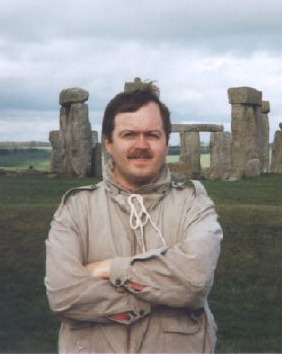
Interview With Richard A. Knaack
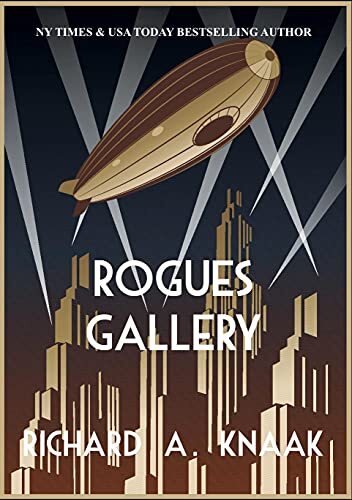
 1. So tell us about Rogues Gallery.
ROGUES GALLERY is a pulp-style urban fantasy taking place in an alternate 1930 Chicago where the city’s champion, the Legionary, appears to have vanished. This means that the costumed villains that have risen up after the World War I — called “rogues’ by the headline-hungry press — pretty much have free rein. This is obviously bad for the city, but when the various rogues start colliding, things take unexpected turns.
2. What separates Rogues Gallery from other similar fiction?A unique setting and characters, with a look at the repercussions desperate situations bring.
3. Why write a superhero novel set in the 1930s?It’s a fascinating time period, plus one that was influenced by pulp heroes like the Shadow and Doc Savage. It’s a period where the previous century still lingers, but the future is just over the horizon.
4. What fascinates you about the 1930s Chicago era? You wrote another of your series, Black City Saint, there as well.I grew up in the area and often heard the stories about the Roaring Twenties and just after. I became fascinated with the period and the unique, if unsavory at times, society that was birthed in it. Chicago has a particularly interesting reputation at that time that lends a lot of flavor to the stories I write. The clothing, the cars, the decorations…there’s just so much that snares the attention.
4. Tell us about the protagonists.The protagonists, if the term can be used for them, are all rogues with the exception of Inspector Franklin Merrett, a black detective who worked with the Legionary and still hopes for his return. The rogues who have some interest in not seeing their city brought entirely into chaos are the Plunderer (who is an art thief with an autogyro, not to mention a scarred veteran of the Great War), Doctor Arcanum (a female rogue obsessed with finding true magic and willing to steal anything that will aid in her quest. In the meantime, she uses stage tricks), the Shadow Master (a veteran rogue with the ability to create artificial darkness and who is a seasoned manipulator), Mirror (a female rogue seeking revenge for those who caused the death of her lover and whose reflective mask can both hypnotize and drive one mad), the Roach (a murderous dweller of the sewers), and, maybe, the Fourth Horseman (who rides a clockwork steed and hides more than one terrible secret).
5. Tell us about the antagonists.That’s easier. There’s Bloodwyrm (a gas mask-wearing pyromaniac obsessed with locating the Legionary, even if the entire city has to pay in the process). Lady Cain (a beautiful blonde woman wearing a top hat and what seems a dancer’s version of a tuxedo. She is sadistic, certifiable, and has deadly little weapons like her cigarette holder and lapel flower. She and Bloodwyrm are lovers, of course.) The Wolf Pack (a specialized group of henchmen willing to work for anyone at the right price. Faceless with their wolf emblem masks. If the current alpha of a pack perishes, the next in seniority simply replaces him. They have large numbers, all working for Bloodwyrm right now). Behemoth (a huge Irish thug, more of a henchman, so long as you pay him right and don’t betray him. Extremely strong and so dense of muscle it’s hard to stop him).
 6. What do Pulp heroes mean to you?
A time of pure adventure, with heroes who will face all odds to do right. Heroes that will confront evil without hesitation and do what must be done.
7. Do you have a favorite character among them?Well, likely the Plunderer. I just found myself enjoying his character most of all.
8. Is this meant to be a standalone or part of a series?It’s a standalone for now (with one short story in the back and two more for those who order the ultra limited edition hardcover from me). However, I would like to return. There’s more to tell about some of these characters, plus, I have some additional rogues in mind. Then, of course, there’s the question of the Legionary…or is there?
9. How has the reception been for the novel so far?Excellent. Those who have read it appear to have overwhelmingly enjoyed it. It was self-published and word seems to be spreading. I’m pleased.
10. What can we expect from you next?I’m working on my REX DRACONIS saga, both the next novel — War of the Dragon Moon — and a series of novellas concerning the minotaur empire there (stories of honor and loyalty). After that, a new Dragonrealm novel, followed by Black City Angel, 4th in my series.
Read Books by Richard A. KnaackInterview with Author Josh Winning
Interview with Author Rachel Aaron
The post Interview With Richard A. Knaack appeared first on BEFOREWEGOBLOG.
Review – Dreadnaught by April Daniels
DREADNOUGHT is the first novel of the Nemesis series. The premise is Danny Tozer, young transgender girl, is there when Dreadnought the world’s greatest superhero is killed. Danny inherits the power of Dreadnought but also becomes her idealized self (effectively Supergirl). This is problematic since Danny is still hiding her trans identity from her transphobic parents as well as schoolmates. She is, after all, only fifteen. But there’s more to her life than dealing with them. There’s an entire army of evil she needs to defeat as the other superheroes have nothing on Dreadnought–and the world needs a Dreadnought.
 I really liked this book and have to say that April Daniels did an excellent story of superheroics and a Spiderman “coming of age” origin while also telling a tale of a trans teen coming to terms with their new identity. Danielle is completely aware of who she is and what gender she is meant to be but is hiding it from her father.
Danny wants to be a hero, at least a little, but is mostly happy that she’s been blessed with teenage supermodel looks that reflect how she wishes she had been born. Danielle doesn’t jump into superheroism automatically but deals with a lot of conflicting emotions regarding the process. The older superheroes of the setting are clear that it is a demanding and sometimes traumatizing life.
There are some people who will ask whether this is more a transgender awakening book or a superhero book. It’s definitely both and the two don’t conflict too much. There’s perhaps a bit too much time spent on the father (who is, sadly, a one-dimensional piece of crap–but that’s just how some parents are) but it is about Danny coming to terms with fact they don’t have to be afraid anymore. They are the most powerful girl in the world and that liberation is a universal escapist fantasy that I think will appeal to all readers.
I like the supporting cast and appreciate virtually every character except Danny’s family. Graywytch is an ugly bigot but is at least interesting in her reasoning (it offends her witchcraft-based religion), Valkyrja is very entertaining in her attempts to be supportive to Danny, and Doctor Impossible (no, not the one from Soon I will be Invincible) is highly entertaining. I think I loved the character of Calamity, a black teenage cowgirl vigilante, the most.
If I had one complaint, it is the fact that Danny does have to deal with such ugly and vile transphobia throughout the book. It’s not that it isn’t important for the book but that it is an unfortunate thing that makes the book uncomfortable. That it is something we have to deal with in the real world so often and that it must sadly also be confronted in our escapism. So a warning on the content as it doesn’t shy away from the slurs thrown at many trans teens in RL.
The highlight of the book for me was the easy friendship between Calamity and Danny. I don’t know if Danny and Calamity are going to have a romance (Danny being a gay woman) but I think they’d make a cute couple if they were. I also appreciate how Danny, who is going to inherit the “whitecape” (noble paladin type) of Dreadnought, has ended up befriending a “graycape” (vigilante) as their friend as well as a mentor.
So, did I like it? Oh yes. I picked up the sequel immediately. I should note that April Daniels is also writing from her own experiences with Danny’s trans experience and this is something that made me more interested in checking out the book. This doesn’t break the mold of superhero literature but that isn’t necessary for someone who is looking for something that homages all the classic tropes as well as tells a deeply personal story.
Read DreadnoughtThe post Review – Dreadnaught by April Daniels appeared first on BEFOREWEGOBLOG.
Graphic Novel Review – Two Brothers by Fábio Moon, Gabriel Bá

About
From the publisher, “Twin brothers Omar and Yaqub may share the same features, but they could not be more different from one another. And the possessive love of their mother, Zana, stirs the troubled waters between them even more. After a brutally violent exchange between the young boys, Yaqub, “the good son,” is sent from his home in Brazil to live with relatives in Lebanon, only to return five years later as a virtual stranger to the parents who bore him, his tensions with Omar unchanged. Family secrets engage the reader in this profoundly resonant story about identity, love, loss, deception, and the dissolution of blood ties.
Set in the port city of Manaus on the riverbanks of the Amazon, Two Brothers celebrates the vibrant life and diversity of Brazil. Based on a work by acclaimed novelist Milton Hatoum, Two Brothers is stunningly reimagined by the award-winning graphic novelists Fábio Moon and Gabriel Bá.”

My Thoughts
Two Brothers is a graphic novel written by famed Brazilian brothers Fábio Moon and Gabriel Bá, of Daytripper fame, loosely based on Brazilian novelist Milton Hatoum’s 2000 novel Brothers. The story is generally about two brothers, one dark in spirit and the other light all set in the Brazillian port of Manaus during the rubber boom in the late nineteenth century and early twentieth century. The story is multi-generational with the twin’s mother being the story’s central focus and, at times, the narrator.
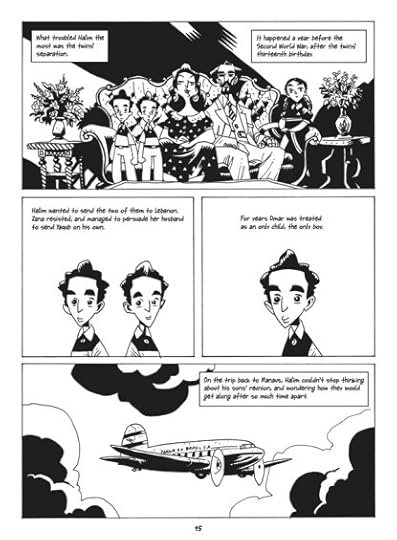
The central theme of the story is jealousy: jealousy of brother versus brother, or father jealous of the attention his wife bestows on their children. As the characters in the story age, their perspectives change as well. Some of the jealousy and passions displayed earlier as a younger person that was destructive, are put to higher uses and channeled into something much more positive as an adult. Aside from that, the plot of the story is a meandering labyrinth of story and perspective, to sum up. It is best read to be understood.
As much of a fan of the authors, this story left me cold. It has an overly complicated plot, made even more so by the shifting time frames. The art, of course, was well done. The authors are master artists, but even with such great art, it was too convoluted for me to get the full meaning out of the characters and stories. I found myself not caring after a while.
There are many great works put out by Fábio Moon and Gabriel Bá, and I would skip this one and read one of their other great ones such as Daytripper, or How to Talk to Girls at Parties which they wrote with Neil Gaimon.
Check Out Two Brothers
Graphic Novel Review – Revival, Vol. 1: You’re Among Friends by Tim Seeley
The post Graphic Novel Review – Two Brothers by Fábio Moon, Gabriel Bá appeared first on BEFOREWEGOBLOG.
June 8, 2022
Review – Ordinary Monsters by J.M. Miro
With a premise that is reminiscent of Miss Peregrine’s Home for Peculiar Children, with a hint of X-Men thrown in for good measure, Ordinary Monsters could have easily gotten lost in a crowd of similar books. Instead, its evocative writing sets it apart from so many other “extraordinary children” storylines, while author J.M. Miro confidently subverts expectations.
 The plotline seems simple enough: there are two kids with special abilities referred to as Talents, being hunted by a mysterious being. At the same time, there is a duo of detectives (ish) who have been given the task of finding these children and taking them to a special school for those like them (seems pretty similar to Professor X’s school, right?).
Where the book differs from other stories in this vein is its execution. Ordinary Monsters is darkly beautiful, grimy, and gothic with an ugly underbelly that rears its head when least expected. It’s unsettling and thought provoking. I was engrossed and almost repulsed, in equal measure. There’s an undercurrent of hope, even among the bleakest parts of the book.
Ordinary Monsters uses multiple points of view, but it is never confusing or distracting. There are Marlowe and Charlie, two children with Talents. Charlie can glow. Marlowe can heal himself of any physical hurt. Unfortunately for him, the emotional pain isn’t also healed. His introduction was heartbreaking, to say the least. Then there are several other characters who play roles of varying importance. What I loved about this was how even the smallest of interactions could have a profound impact on the personality or choices of a main character.
I definitely had some niggles. The plot could be a little convoluted at times, and there were subjects touched upon that I prefer to avoid (description of rape being the main one that most bothered me). If there was a content warning section in the book, I missed it. However, these unsavory topics were not used for “shock value”, and they weren’t dwelled upon. Take from that what you will.
As in life, things were complex and messy. There was no absolute good or absolute bad. Each character had their own drive and motivation, and many characters were morally conflicted at best. The story went far past surface level, examining what makes people tick.
While the book wasn’t perfect, it was a fascinating read. It impresses with its immersive, gothic atmosphere and its nuanced characters. Ordinary Monsters will worm its way into your head and keep you thinking. Pick this one up if you like exploring the dark corners of the human psyche and are drawn to the mysterious and unknown.
Read Ordinary MonstersInterview with Author Josh Winning
The post Review – Ordinary Monsters by J.M. Miro appeared first on BEFOREWEGOBLOG.
Review – The Citrine Key by L.L. MacRae, L.L. McNeil
Further to diversifying my fantasy and sci-fi reading, I have been dipping into some novellas, a medium of books I haven’t really given a chance in the past. Novellas that precede a full-length book, or series of books, have really begun to interest me. The chance to enter a new world, to get a taster of the mood and tone of the author is a wonderful thing and novellas are the perfect way to do that for me.
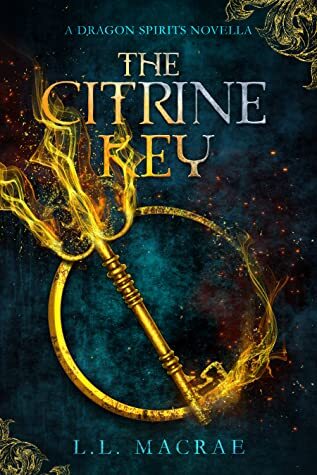 After the February She Wrote event, I came across L .L. MacRae’s novella, The Citrine Key, and knowing there was a series of books to follow, I dove straight in and devoured it over a morning.
Following the characters of Apollo, a life-long thief, Malora, his loyal friend and Yorik, an inmate that Apollo barely knows, they are charged under threat of execution, by the mage-queen Surayo, to deliver a mysterious gift to a powerful dragon spirit known as Paragos.
L. L. MacRae immediately captured my imagination and I was drawn into this world from page one. The enticing nuggets of information on the world’s races, cultures, beliefs, and magic system overlay a wealth and depth of world-building I am dying to find out about in the novels. That anticipation is more than enough for me to want to read more from MacRae.
The character of Apollo really intrigued me. Again, L. L. MacRae, dropped in enough history through conversations and well-placed exposition, to hint at a character who has undergone a lot. He has been deeply affected by what has gone before, his motivations and emotions are very much entrenched in his past. His sense of humour and tenacity were very appealing qualities and I quickly came to like him.
Malora, who shares a lot of history with Apollo, is also very well fleshed out, her personality shines through and I wanted to get to know her more! She has also lost much, particularly her magical heritage and if we are given the opportunity to look deeper into that, I am all in.
The environment of the world, the characters themselves, and their religion are all inextricably entwined with this universe’s magic system. Magic permeates through this novella like a heart pumps blood through the body and this feels as though its important to the author to get that across. You don’t just read that. You feel that.
Finally, MacRae’s approach to dragons, a creature that has been reimagined and done many times over in the fantasy genre, feels completely new and refreshing to me. Taking this fantasy trope and moulding it into her own invention, really excites and intrigues me. I am sure the spirit dragons will play a large part in the novels and its an aspect I very much look forward to revisiting. Again, the depth of world-building that hides beneath this novella is what excites me the most.
You can be 100% sure I will be reading The Iron Crown as soon as I can, because as soon as I finished this novella, I wanted the next book. That’s a win for L. L. MacRae right there.
5/5
Read The Citrine KeyReview – Ordinary Monsters by J.M. Miro
The post Review – The Citrine Key by L.L. MacRae, L.L. McNeil appeared first on BEFOREWEGOBLOG.