Beth Tabler's Blog, page 182
June 17, 2022
#SPFBO8 Review and Cut – Empire Under a Dying Sun by Joseph O. Doran

The ideas in Empire Under a Dying Sun are unique and fascinating
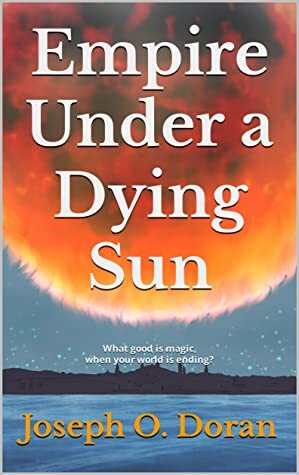 The world is ending in Empire Under a Dying Sun. Cataclysmic lashes of fire emerge from the sun and wipe out anything in their path. Fissures emerge out of nowhere. The empress Anyosa realizes they have one chance at staving off pure doom, and that is to unite three magestones, ancient magical artifacts. The magestones can put up defenses to ward off the worst of the skyfires, and if all three are put together, it might well save the empire. Unfortunately, while they have one in their empire, the other two belong to their neighbouring empires.
She sends her loyal count Sethes as general for one of her three armies. One of the neighbouring kingdoms has already been seriously damaged by the skyfires and they hope to liberate that one easily.
There’s a lot to like in this book. The world-building, in particular, is strong and Doran uses specific word choices to really reinforce that sense of place. The titles generally have a Roman-style to them, but not consistently, because it’s a massive enough empire that other countries and their customs have been swept up into it. That the three empires generally respected each other even as they warred for land and had constant border skirmishes worked.
That at the end of the world, the empress organized a major sporting event worked—of course people need distractions, and it’s always nice when fantasy writers remember sports in their world-building. Even better, the sporting event and the public relations that went along with it ended up having an important role in the plot.
Religion, too, at the end of the world. I really enjoyed when the people started praying to their old, dead gods, and brief ghostly fragments of those gods appeared, just as helpless against the skyfires as the mortals.
The witches were eerie and I loved that even after centuries of living next to their kingdom, no one had a clue how any of their magic worked. Their creation of Shriekers—monsters formed from dark magic—felt like standard fantasy fare, but a scene near the end had these monsters just swaying and dancing in a way that made them feel both more human and inhuman at the same time.
The primary characters were well-sketched—Count Sethes as the loyal general who’s also a secret drunkard, Anyosa the empress still testing herself against her mercurial court, and for my money the standout Nthanda, the foreign soldier Sethes trusts most. They’re all principled and want what’s best but at the end of the world, principles fall by the wayside.
The downside of this worldbuilding is that it could be wide in scope, but not always in depth. This could be the case with both places and characters. We only found out that certain places even existed in the tale of their destruction. Dealing with such a global catastrophe, it’s a hard balance.
This happened with characters too, in both Anyosa’s plotline and Sethes. For instance, Anyosa had to deal with a conniving noble who had kept important information from her, but that entire sequence was all in one scene. Had we known and hated him before, it would have felt much more cathartic when Anyosa dealt with him. And Sethes had to deal with a new general in the back half of the book who seemed to be given some narrative weight and again, was only in one chapter.
The ideas in Empire Under a Dying Sun are unique and fascinating. I’ve read plenty of fantasy that staves off apocalypse, and some that’s post-apocalyptic, but living through an apocalypse was new. The panic of people living through the end of days and what they did to survive was well-done.
This book has one rating on Amazon and Goodreads, and that’s not reasonable. It really does deserve more love than that. If the rest of this review makes you think you might like to try it out, please do.
Read Empire Under a Dying Sun#SPFBO8 Review and Cut – The Killer and the Dead by Roderick T. MacDonald
The post #SPFBO8 Review and Cut – Empire Under a Dying Sun by Joseph O. Doran appeared first on BEFOREWEGOBLOG.


June 16, 2022
#SPFBO8 Review and Cut – The Killer and the Dead by Roderick T. MacDonald
vicious and fascinating
What is The Killer and the Dead about?
“My name is Stahl. I kill people. I’m not proud of it, but I’m not ashamed, either.”
Strapped in a chair, compelled to tell his tale to unknown tormentors, Stahl recounts his life in the Mire, a filth-choked slum shivering in the shadow of an ancient necropolis where the dead hunger for living flesh. He tells how secrets led to blackmail and death, how vengeance led to guilt and paranoia, and how an unholy bargain taught him that it is your enemies, not your friends, who define your life.
But in a slum where everyone lies, what kind of truth can be expected from a killer?
My Thoughts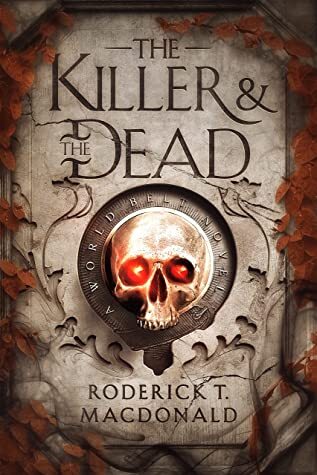 The world in The Killer & the Dead is vicious and fascinating, and the narrative style is very unique. We follow the story of Stahl – a serial killer who lives in the worst slums his city has to offer – as he is forced to share his secrets by his captors. The Mire (aforementioned slum) is a truly horrific place to live with the dead picking off people at their leisure and a cut-throat culture of gangs fighting for dominance. Stahl has carved out his own place in this harsh reality, but things start to fall apart when those in power suddenly show an interest in him.
While the world-building was vivid, and the plight of those on the pages heartbreakingly portrayed, the focus was a bit too narrow. The broader context of the world (exactly why those who are powerful hold those positions, the lore behind how some dead come back to life and others do not, etc.) is either too long coming in the reveal or nonexistent. This left me feeling quite unbalanced in the story and often unable to follow the plot points as they moved forward. Naturally a first-person POV requires a narrow scope for the narrative, but I think it would have benefitted from a broader lens at times.
The character of Stahl and the society that he inhabits is a very good basis for the story, and the series has the potential to paint a unique world for readers to get lost in. If you don’t mind on-page graphic violence and enjoy grimdark fantasy with walking dead, this book may be for you.
However, this is a cut of The Killer and The Dead for SPFBO 8.
Read The Killer and the Dead by Roderick T. MacDonald#SPFBO8 Review and Cut – Way of Thieves by Craig A. Prince Jr.
The post #SPFBO8 Review and Cut – The Killer and the Dead by Roderick T. MacDonald appeared first on BEFOREWEGOBLOG.
June 15, 2022
5 LGBTQIA+ Novels To Read Right Now
Read with pride.
“I think… if it is true that
there are as many minds as there
are heads, then there are as many
kinds of love as there are hearts.
Leo Tolstoy

The rainbow flag looks like one of those glittering jeweled kaleidoscopes you looked through as a child. Held up to the light, the bits and baubles of semi-precious gems and broken glass glittered and twinkled in the light fracturing its beams into 1000 individual rays. Each ray is colored differently and made of unique pieces of light. The rays were beautiful, but held as a community of light; their shine is blinding and breathtaking.
This is how I view the LGBTQIA+ movement.
As people read, we become broader, and our minds swell, with adventures and stories. We can make connections and perspectives that weren’t there before.
I have included some of the best books I have read recently that include a well-written and respected LGTBQIA+ character or are written by a person of the community.
Tell me what you think.
The selections below either were written by a queer author or have a queer main character in them.
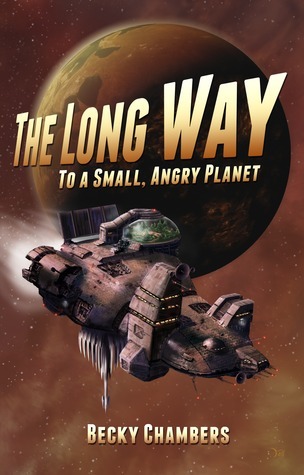 The Long Way To A Small Angry Planet by Becky Chambers
Follow a motley crew on an exciting journey through space-and one adventurous young explorer who discovers the meaning of family in the far reaches of the universe-in this light-hearted debut space opera from a rising sci-fi star.
Rosemary Harper doesn’t expect much when she joins the crew of the aging Wayfarer. While the patched-up ship has seen better days, it offers her a bed, a chance to explore the far-off corners of the galaxy, and most importantly, some distance from her past. An introspective young woman who learned early to keep to herself, she’s never met anyone remotely like the ship’s diverse crew, including Sissix, the exotic reptilian pilot, chatty engineers Kizzy and Jenks who keep the ship running, and Ashby, their noble captain.
Life aboard the Wayfarer is chaotic and crazy—exactly what Rosemary wants. It’s also about to get extremely dangerous when the crew is offered the job of a lifetime. Tunneling wormholes through space to a distant planet is definitely lucrative and will keep them comfortable for years. But risking her life wasn’t part of the plan. In the far reaches of deep space, the tiny Wayfarer crew will confront a host of unexpected mishaps and thrilling adventures that force them to depend on each other. To survive, Rosemary’s got to learn how to rely on this assortment of oddballs—an experience that teaches her about love and trust, and that having a family isn’t necessarily the worst thing in the universe.
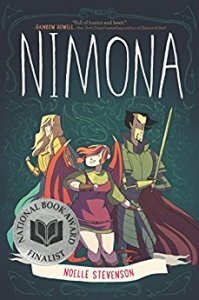 Nimona by Noelle Stevenson
The graphic novel debut from rising star Noelle Stevenson, based on her beloved and critically acclaimed web comic, which Slate awarded its Cartoonist Studio Prize, calling it “a deadpan epic.”
Nemeses! Dragons! Science! Symbolism! All these and more await in this brilliantly subversive, sharply irreverent epic from Noelle Stevenson. Featuring an exclusive epilogue not seen in the web comic, along with bonus conceptual sketches and revised pages throughout, this gorgeous full-color graphic novel is perfect for the legions of fans of the web comic and is sure to win Noelle many new ones.
Nimona is an impulsive young shapeshifter with a knack for villainy. Lord Ballister Blackheart is a villain with a vendetta. As sidekick and supervillain, Nimona and Lord Blackheart are about to wreak some serious havoc. Their mission: prove to the kingdom that Sir Ambrosius Goldenloin and his buddies at the Institution of Law Enforcement and Heroics aren’t the heroes everyone thinks they are.
But as small acts of mischief escalate into a vicious battle, Lord Blackheart realizes that Nimona’s powers are as murky and mysterious as her past. And her unpredictable wild side might be more dangerous than he is willing to admit.

Lushly written with rich and vivid characters, SANTA OLIVIA is Jacqueline Carey’s take on comic book superheroes and the classic werewolf myth.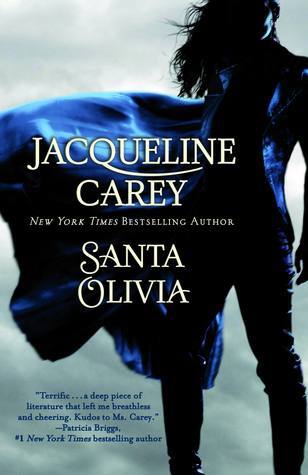
Loup Garron was born and raised in Santa Olivia, an isolated, disenfranchised town next to a US military base inside a DMZ buffer zone between Texas and Mexico. A fugitive “Wolf-Man” who had a love affair with a local woman, Loup’s father was one of a group of men genetically-manipulated and used by the US government as a weapon. The “Wolf-Men” were engineered to have superhuman strength, speed, sensory capability, stamina, and a total lack of fear, and Loup, named for and sharing her father’s wolf-like qualities, is marked as an outsider.
After her mother dies, Loup goes to live among the misfit orphans at the parish church, where they seethe from the injustices visited upon the locals by the soldiers. Eventually, the orphans find an outlet for their frustrations: They form a vigilante group to support Loup Garron who, costumed as their patron saint, Santa Olivia, uses her special abilities to avenge the town.
Aware that she could lose her freedom, and possibly her life, Loup is determined to fight to redress the wrongs her community has suffered. And like the reincarnation of their patron saint, she will bring hope to all of Santa Olivia.
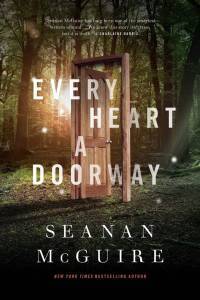 Every Heart A Doorway – Seanan McGuire
“Children have always disappeared under the right conditions; slipping through the shadows under a bed or at the back of a wardrobe, tumbling down rabbit holes and into old wells, and emerging somewhere…else. Nancy tumbled once, but now she’s back. The other children under Miss West’s care understand all too well. But Nancy’s arrival marks a change at the Home. There’s a darkness just around each corner, and when tragedy strikes, it’s up to Nancy and her new-found schoolmates to get to the heart of the matter.”
Review – Come Tumbling Down by Seanan McGuire
REVIEW – Where the Drowned Girls Go by Seanan McGuire
Review – Across the Green Grass Fields by Seanan McGuire

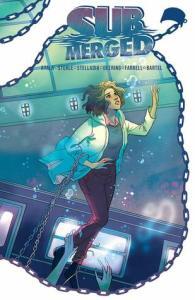 Submerged Vol. 1 by Vita Ayala
On the night of the biggest storm in New York City history, Elysia Puente gets a call from her estranged little brother Angel, terrified, begging for help. When the call cuts out suddenly, despite the bad feelings between them, Ellie rushes into the night. Finding his broken phone in front of a barricaded subway station, Ellie follows echoes of her brother into the sinister darkness of the underground, desperate to find him before it’s too late.
I could have this list go on for quite a while, but here are some of my more recent favorites! Check them out!
Review of Submerged Vol. 1 by Vita Ayala, Lisa Sterle (Artist)
The post 5 LGBTQIA+ Novels To Read Right Now appeared first on BEFOREWEGOBLOG.
Review – Heroic Hearts Edited by Jim Butcher and Kerrie L. Hughes
Picking up Jim Butcher and Kerrie Hughes’s new story collection Heroic Hearts, you learn that heroism comes in many forms, whether flying, furry or four-legged. Harry Dresden may be a battle-hardened Chicogoan wizard, but Harry would have gotten nowhere if it were not for Toot Toot. Likewise, in Kevin Hearne’s Iron Druid series, we all know that it isn’t Atticus that is the main character but his four-legged Irish Wolfhound Oberon.
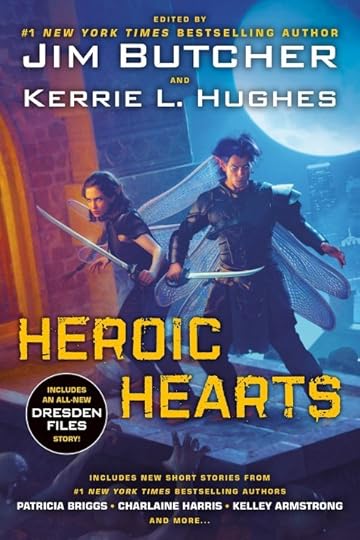 Heroic Hearts is an absolute feast of stories for lovers of Urban Fantasy. Many of the biggest names in the sub-genre are a part of the collection. If you are longing for that little bit of extra information about some of your favorite characters, Heroic Hearts does a great job alleviating that desire.
Not every story is a hit; doing that in a short story collection is practically unheard of. You get this many authors together, and not everyone’s writing style is for every reader. However, Heroic Hearts is solid the entire way through; even when the stories did not personally hit me as a reader, they still were all decent stories. There are some notable ones that sung to me as a reader.
Firstly, the story that starts the collection is Jim Butcher’s Little Things, read on the audiobook by James Marsters of Buffy the Vampire fame. Marster’s has done all of the Dresden books, and as a long-time audio listener, I can now not separate the two. The voice of Dresden’s world is James Marsters. Little Things is about the battle of Pixie General Toot Toot, never underestimate the tenacity of creatures in Dresden’s world, whether they big or small. They will surprise you.
When an enemy attacks the defenses and breaches the castle walls, Toot Toot and his army of wee people go to battle. They protect Dresden for once instead of the other way around, and Dresden gets some quiet moments to rest and recuperate after the events of the last novel. It is a truly delightful novel. Toot Toot is as sparkly and lively as Pixies should be while being downright bloodthirsty and unforgiving.
Train to Last Hope by Annie Bellet, read by Maggi-Meg Reed, was excellent as well, but in an entirely different way than Butcher’s story. Train to Lost Hope is about love and loss. Ten years ago, the two women said goodbye to their bright and bubbly daughter and never heard from her again.
Drowning in their grief, one felt that she was dead, and the other thought she was still alive; it tore their love asunder. The wife, who did not believe her daughter had died, gets some new information. She picks up her ex-wife to see if they will have luck getting the townsfolk to talk to them. It is painful. It is the type of story that sticks in your teeth, and you find yourself chewing on it for a few hours after you read it. It also was an excellent counterpoint to the bubbliness of the other stories. Courage and heroism come in all shapes, even if it is the courage to let go.
Fire Hazard by Kevin Hearne is a lovely story where we get to have Oberon, one of my favorite dogs in all of fiction, center stage. A wildfire is burning in the Australian brush, and Atticus and his family (two dogs) go down to the fire to see if they can assist the earth deity in stopping the fires. He gets more than he bargained for. It is so much fun; pretty much any story equating sausage to courage is a solid win for me.
Grave Gambles by R.R. Virdi, read by Travis Baldree. This is a standalone story, but it needs to be a series as soon as possible. (*I just found out that this is in fact a series called The Grave Report) It reminded me of a slightly weird supernatural take on Quantum Leap. The protagonist wakes up in the bodies of the dead with a number on his arm. That number is how many hours he has to solve the crime of the person’s death. This often leads to more extensive and more complicated crimes. When the protagonist wakes up with a number 1 tattooed on his arm and in a dumpster smelling of rot. He knows that he needs to work fast. Using some of his detective skills, he can piece together a crime.
Troll Life by Kerrie L. Hughes, read by Sean Patrick Hopkins, is easily my favorite story of this collection. Our protagonist troll works at a train station, has a barghest as a pet, and speaks to trains. They respect him. This already had my interest peaked. Trains that communicate telepathically sound rather cool. He does his job daily, hoping to move up a little in the world. When other supernatural creatures chase some runaway kids onto his platform, his protective tendencies emerge. Trolls aren’t flashy, but they are immune to magic, calm, and loyal. The way this story was written, I had no problem building a mental picture of the troll protagonist in my head.
If you are looking to discover some great new authors or catch up with some old friends from a solid tried and true urban fantasy series, Heroic Hearts is an excellent collection.
The post Review – Heroic Hearts Edited by Jim Butcher and Kerrie L. Hughes appeared first on BEFOREWEGOBLOG.
Review – You Can Be A Cyborg When You Are Older by Richard Roberts
I’ll admit that it took a bit to fully immerse myself in the world but by the time I did, I absolutely loved it and declare this my favorite of his books.
 YOU CAN BE A CYBORG WHEN YOU’RE OLDER is a Young Adult affectionate parody of Eighties cyberpunk. It’s an interesting twist, implementing a lot of tropes that only adult readers will get and not necessarily all of them but also a great way of introducing the genre to people who wouldn’t normally be familiar with it. It also takes a number of pot shots at the sillier ideas in the world of neon, rain, androids, and street samurai. As a fan of both cyberpunk and Richard Roberts’ PLEASE DONT TELL MY PARENTS I’M A SUPERVILLAIN series, I was very excited to get into this book.
The premise is that an orphanage in the most run-down part of a decaying urban hellscape is run by a malfunctioning but benevolent gynoid named Ms. Understanding. Vanity Rose is the 14-year-old antiheroine of the book that is cursed with machine telepathy (a disability in her world) and fears the orphanage shutting down at any time. Vanity decides to raise some money for her home and the best way to do that turns out to be organized crime for corporate thugs. However, this turns out to be harder than it sounds (and it sounds quite difficult). Vanity soon finds herself on the run from several shady characters and reliant on her fellow oddball orphans to get out of the mess she’s gotten herself into.
Richard Roberts has an immense love of cyberpunk and it shows with every page, making frequent homages to everything from literature to anime to video games. I also think I spotted a few tabletop RPG references as well. That doesn’t mean his world is unoriginal, though. Indeed, there’s several surreal and satirical elements that make it quite fascinating. For instance, one of the largest religions in West Angel City is the Enchanted. People who use bio-modding, cybernetics, and costume jewelry to live their lives in a perpetual World of Warcraft LARP. Except the elves and necromancers are actually willing to kill each other.
There’s a couple of gratuitous references as well, like when Vanity spends a chapter as a teenage mecha pilot but these things are likely to bring a smile to your face if you’re familiar with the sources the author is drawing from. However, I actually came to really like the garish and strange world that the book depicts. There’s even a decent description of a robotic society created from those cast-offs that have been left behind to carry out their tasks long after their masters have abandoned them.
Vanity is a good lead character even if I think that making her sixteen years old would have probably fit the storyline better. She does a little too many roof jumping and hacking things for me to buy her as a preteen. Still, it’s nice to have a well-adjusted cyberpunk heroine and the fact that the only reason she doesn’t swear up a storm is because of a literal profanity filter built into her brain. That was a clever way of acknowledging her “punkness” would never fly in a typical YA book.
I also give props to this book for creating the greatest literary villain of all time: Fry Smiley! A Mr. Potatohead-esque ap mascot equivalent to Amazon’s Siri or Microsoft’s Clippy. Hated by every single consumer, the AI is slowly simmering in its anger and resentment. I love how Vanity considered him her archnemesis even before the all-powerful program became obsessed with her. He’s such a ridiculous and enjoyable character that he makes a wonderful antagonist and one of the more memorable ones I’ve read this year.
The weird juxtaposition of fairy tale and Eighties cyberpunk is really the heart of this strange brew as you have a technologically created Old Mother Hubbard, elves, undead, and magic combined with all the trappings of Neuromancer as well as Snow Crash. Really, it’s surprising it’s not MORE like Shadowrun given how crazy it all is. I’ll admit that it took a bit to fully immerse myself in the world but by the time I did, I absolutely loved it and declare this my favorite of his books. I recommend between text and audiobook that fans check out the Arielle Delisle narrated version as she does a fantastic job bringing the characters to life.
Read You Can Be a Cyborg When You’re Older by Richard RobertsThe post Review – You Can Be A Cyborg When You Are Older by Richard Roberts appeared first on BEFOREWEGOBLOG.
June 14, 2022
SIX ELEMENTALS INTERVIEW WITH NATANIA BARRON
Six Elementals Author Interviews will introduce prospective readers to some of the best writers in their genre you may, or may not, have heard of, via a series of six questions. I encourage you to check out the work of these phenomenal creatives! Links to their websites and purchase links will always appear, accompanying the interview. Check them out!
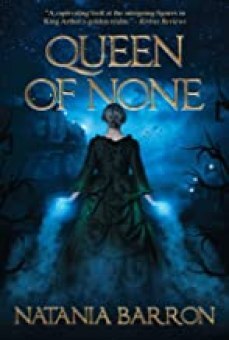
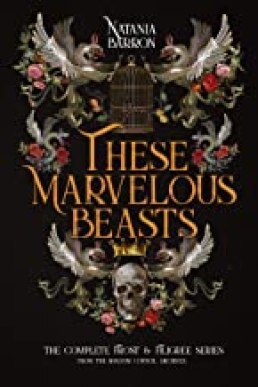
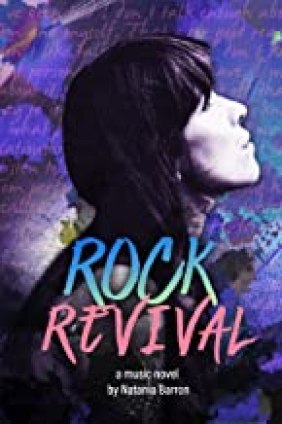
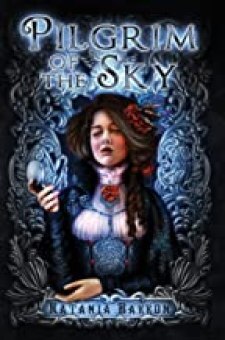
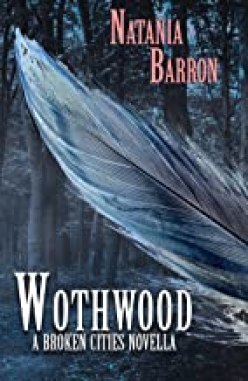
This is a distinct pleasure, in that I have the award-winning dark fantasy author, and creator of #Threadtalks, joining me: the amazing Natania Barron! Natania has published novels, novellas, collections, short stories, articles, and more. Her currently published novels include: Pilgrim of the Sky, Rock Revival, These Marvellous Beasts: The Complete Frost and Filigree Series, Queen of None, and Wothwood: A Broken Cities Novella
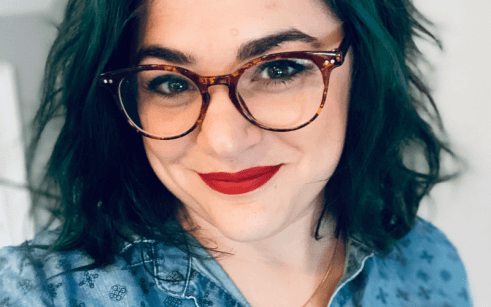
P.L.: Huge fan-boy moment for me here, to be able to interview you Natania! I admire your work so much! Thanks again for joining Six Elementals Interviews! You are a multi talented artist, who paints, in addition to your writing.
You are also an influencer, and your #Threadtalks is immensely popular, gaining you a lot of recognition beyond authorship. To quote you, the purpose of #Threadtalks is to take “a deep dive on patterns, textiles, and fabrics that have made our world go ’round so that hopefully you won’t ever look at a cushion the same way again.” Can you please explain a bit more about #Threadtalk, what inspired you to do it, and what impact you think the world of such fashion has had on literature, and culture in general?
Natania: You know, #Threadtalk took me by surprise, too! I’ve been into fashion history since I was a kid. In the third grade, I was in the gifted kid class (haha, ADHD gifted kid, of course) and I did a retrospective on the fashion of the 1910s-1940s. At the time I didn’t think anything of it, but now I’m like… okay, my brain has always been a little extra specially tuned toward fashion. I see the patterns shifting, the hemlines and fabrics, and my brain makes these connections.
So I writ e a lot of historical fantasy–and even when it’s not specifically historical, I want to make sure I’m rooting even speculative fabric culture in the realm of plausibi lity. That means a ton of research. I’m always doing research. It’s my favorite thing.
 About a year ago I got my ADHD diagnosis, and I had this moment where I just decided to start sharing my extra brain overflow. Why keep all this stuff to myself? So I started keeping track of the research I was doing for my writing on Twitter–in this case, it was for Netherford Hall, which is a fantasy take on Pride & Prejudice. So I was deep in fabric culture, especially muslin.
The thread on muslin went more viral than anything I’ve ever written. It’s a heartbreaking story, deeply rooted in Imperialism, genocide, classism, colonialism, and literary history–all while still having repercussions today. And that’s part of my thesis, really. Fabric is power and wealth. Our current culture is sadly separated from that, but I feel like it’s my job to make sure people don’t forget the past. I can’t fix what happened, but I can help people question beauty. High fashion has only ever been available to a very select few, and yet it has literally determined the rise and fall of nations.
P.L.: I can tell you that those themes you have touched upon, through #Threadtalk, are important and compelling, and #Threadtalk has definitely had a great impact on me, and others. You are a Medievalist, and you possess a Bachelor’s Degree in English and Writing, and Master’s Degree in English, specializing in Medieval Literature. You are also a King Arthur scholar. I too am a huge fan of Arthurian legend. What do you think makes the legend surrounding King Arthur and his court so timeless, and such a recurring topic in literature? What makes you love the mythology surrounding the Once and Future King, and those associated with him?
Natania: The magic of Arthuriana is that it’s so adaptable. I’ve often compared it to an amoeba. We don’t quite know exactly where it started–there are so many theories on who Arthur might have been–but once the story crystallized a round his myth, the stories just popped up everywhere. Over the centuries, the tales essentially became local fanfiction: wherever the Arthur stories went, new knights popped up and joined in on the fun. Nearby legendary forests, beasts, monsters, and even remnants of gods and goddess, absorbed into the story. You get knights from as far as the Holy Land, Moorish knights, kni ghts with lion pets–plus powerful women, fearless kids, and Questing beasts.
It’s also about loss and deterioration. That may sound depressing, but to me, I like that the Arthurian story is about falling apart. It’s not a happy ending. The Golden Age of Arthur isn’t about him: while his knights are running around finding the grail, his marriage is falling apart. His son is plotting against him. He ends up alone. T.H. White does such an incredible job of this in his book, The Once and Future King . You see the cost of the Might vs. Right debate, you understand that Arthur came to change the world, but not to live in the world he changed.
All that said, it’s made for adaptation. People criticize retellings all the time, but personally I love them. I think re-telling and adapting stories for our current time is part of the human experience.
 P.L.: I completely agree that the tragedy of Arthur, and the realism, is one of the things that truly draws people to the mythology, generation after generation! It certainly did for me! Of all your novels, do you have a personal favourite, and why?
Natania: My favorite novel is always the one I’m writing. I kind of fall in love with it while I’m writing it, and it’s only gotten worse the more books I write. I just finished Queen of Fury , which is the successor to Queen of None , and it follows Hwyfar and Sir Gawain and their relationship. It’s a dual first-person narrative, and the first time I’ve attempted such a thing. For that reason, I think I was more emotionally invested in this book than I ever have been before. I wept while editing and writing it; I dreamed about them. I put together playlists for them. It’s like I was living in a fever dream of their consciousnesses. Super intense.
But if you’d have asked me back a year ago, I would have said that my personal favorite was Netherford Hall , because when I was writing that book I was so joyful. Edith and Poppy’s story is just full of such whimsy. Because it’s Regency fantasy and it has that breathless, fanciful quality, th eir biggest issues are like, misunderstandings. Poor Hwyfar and Gawain are doomed, and that’s a totally different kind of emotional investment.
P.L.: I love Regency books, so I will surely be reading Netherford Hall (and all your other books)! Can you speak a little bit about your writing journey please? How long have you been writing, what inspired you to write, and what made you elect to publish with small presses instead of completely self-publishing or going for a “Big Five” traditional house?
 Natania: So, I started writing when I was about 11. I was an avid reader before I was even in school, and books, quite literally, saved me. I was a very introv
erted kid with an unconventional family (my dad is chronically ill, and my mother was the breadwinner, and we had lots of financial struggles). Storytelling was the nat
ural extension of that.
Natania: So, I started writing when I was about 11. I was an avid reader before I was even in school, and books, quite literally, saved me. I was a very introv
erted kid with an unconventional family (my dad is chronically ill, and my mother was the breadwinner, and we had lots of financial struggles). Storytelling was the nat
ural extension of that.
Initially, I thought I was going to be an academic, but that turned out less than ideal. I wanted to be a researcher and lecturer, but I wasn’t interested in teaching English 101. I was a medievalist, and I wanted to live in manuscript libraries! I also had a child, and fell in love with North Carolina. The life of an academic meant likely leaving. It also turned out my son was autistic.
Long story short, I just kept at it. I had so me very dry years where raising my son and working was all I could do. But then, small presses helped me get my feet back under me. I’ll forever be grateful to John Hartness for inviting me to write Frost & Filigree. I rediscovered myself in that story.
In the last ten years, I’ve published a mix of small presses and big presses, and hoping that my next book is with a larger, more traditional house–it’s out on submission now through my agent. My focus is always on just writing the next book, pushing myself, making it better. Queen of None languished on my hard drive for almost a decade before Joe McDermott at Vernacular reached out to me, and it’s gone on to win awards and be critically acclaimed.
What matters most is connecting with readers and growing as a writer.
P.L.: Queen of None was fantastic, and I can attest that the awards are well-deserved! Congratulations! As you can imagine, I am very excited to hear that Queen of Fury, the follow-up to Queen of None (one of my favourite books) is nearing completion! Can you please tell us about Queen of Fury? What’s it all about?
Natania: I touched on it a little before, but essentially it’s Hwyfar’s story. Hwyfar appears in Queen of Fury as Gweynevere’s sister. She’s a bit of a libertine, entertains minstrels in her apartments in Carelon, and has quite the reputation around court. Not a good one. Everyone writes her off.
But the book begins with her arriving home in Avillion, where her father, King Leodegraunce, has descended into illness and madness. With her other sister, Mawra, now married to Arthur, she’s the only one left to make decisions. Of course, she has no desire to have a shred of responsibility, but she’s also deeply unhappy, a drunkard, and grieving the death of her sister Gweyn in ways she cannot express.
 When Avillion comes under threat from a usurper, she convinces Art
hur to send troops to aid her–including Sir Gawain and his brother Gareth–and declares herself Queen Regent. In the process, she finds out that she’s got a lot more to inherit regarding Avillion than just a title.
When Avillion comes under threat from a usurper, she convinces Art
hur to send troops to aid her–including Sir Gawain and his brother Gareth–and declares herself Queen Regent. In the process, she finds out that she’s got a lot more to inherit regarding Avillion than just a title.
The book is a doomed romance, of sorts, but it’s also about magic. You’ll see many stories from the Arthurian canon, including the Green Knight, Yvain and his Lion, the magic forest of Brocéliande and many others. Gawain’s story runs in and around hers, as he faces the reality that he can no longer fight–and what is a giant of a man to do if he can no longer bash skulls? You get a whole new side to him, though, as in the first book, it’s a very limited view through his mother Anna’s side.
A ton more magic, more castles, more fighting! And it’s a far longer book!
P.L.: I will be clicking “buy” immediately when Queen of Fury is out! Can’t wait! Some of the top fantasy writers in the world are part of the LGBTQQIP2SAA+ community, such as Tamsyn Muir, Tessa Gratton (a personal favourite of mine), and Samantha Shannon. You identify as queer as well. We obviously have a long way to go, despite many positive changes, in terms of embracing marginalized writers, despite the successes of the authors I’ve mentioned, and writers such as yourself. What do you think needs to happen to make more progression in this regard?
Natania:
 There’s a deep line of “traditional” conservatism that runs through fantasy. I grew up in an Evangelical church, and fantasy was one of the only genres you were allowed to read. Especially the sort that love the reinforce the “men are men, women are women” narratives. And unfortunately, that’s still a lot of what we see selling and a lot of what’s still read.
But I know it’s changing because I have a daughter, and I know her friends. They aren’t just living more inclusive lives, they’re demanding more inclusive stories. It’ll take time. It can feel very frustrating and demoralizing sometimes. I lost it a few weeks ago on a Facebook forum, because someone shared a picture of their fantasy bookshelf that was all white male writers and asked if anyone knew “any female fantasy writers.” I just… it just reminded me that we still haven’t even gone over that hurdle yet.
My daughter’s favorite show in the world is The O wl House which doesn’t just feature a teen lesbian couple, but also has trans representation. She and her friends introduce each other by their names and their pronouns. The next generation is fierce. I’m just happy to do what I can to help pave the way for them.
P.L.: I agree, we do have a long way to go in that regard, but we are making progress, and the next generation will ensure we get there! But thank you for all you do in the present, to help move the needle forward, with your wonderful, inclusive writing! It was a joy to speak with you Natania, and thanks so much for taking the time to be interviewed.
Read Natania Barron’s BooksBuy Queen of None on Amazon here.
Buy These Marvelous Beasts: The Complete Frost and Filigree Series on Amazon here.
Buy Pilgrim of the Skyon Amazon here.
Buy Rock Revival: A Music Novel on Amazon here.
Buy Wothwood: A Broken Cities Novella on Amazon here.
Twitter: @NataniaBarron
Wesbite: www.nataniabarron.com
Goodreads: www.goodreads.com/author/show/3446570.Natania_Barron
The post SIX ELEMENTALS INTERVIEW WITH NATANIA BARRON appeared first on BEFOREWEGOBLOG.
June 13, 2022
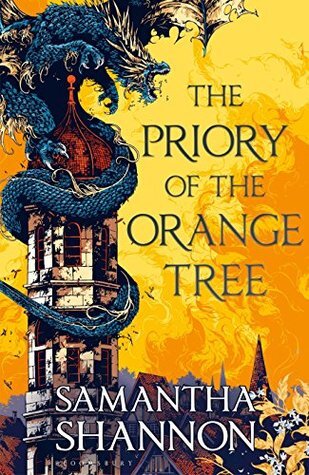
Review – The Prior of the Orange Tree by Samantha Shannon
 About
AboutA world divided. A queendom without an heir. An ancient enemy awakens.
The House of Berethnet has ruled Inys for a thousand years. Still unwed, Queen Sabran the Ninth must conceive a daughter to protect her realm from destruction – but assassins are getting closer to her door.
Ead Duryan is an outsider at court. Though she has risen to the position of lady-in-waiting, she is loyal to a hidden society of mages. Ead keeps a watchful eye on Sabran, secretly protecting her with forbidden magic.
Across the dark sea, Tané has trained to be a dragonrider since she was a child, but is forced to make a choice that could see her life unravel.
Meanwhile, the divided East and West refuse to parley, and forces of chaos are rising from their sleep.
My ThoughtsI’m not exactly sure where to start with this review of The Priory of the Orange Tree. I have mixed feelings on this one. It caught my eye based on the highly positive reaction that the bookish community has had to this novel, as well as my appreciation for the gorgeous cover. I started to read it about a year back and found myself putting it on pause because I struggled to get past a slow-feeling beginning. More recently, I participated in two challenges run by the co-hosts of On Wednesdays We Read Podcast, Hannah and Laura: “Mega May” (i.e., read 500+ page books) and “MAYbe This Time” (i.e., read books you previously DNF’d). At 800+ pages, Priory was the perfect candidate to kill two birds with one stone. So, I braved a second crack at this book.
Let’s start with the prose, as it is one of the aspects that I consider to be a strength of this novel. Samantha Shannon’s writing style is a pleasure to read, especially if you enjoy an epic storytelling experience. Shannon’s phrasing is often poetic, and she wrote numerous poignant quotes. One character’s statement that “when the heart grows too full, it overflows. And mine, inevitably, overflows on to a page” stuck with me, given I enjoy using writing as an emotional outlet. It is likely that any reader can find at least a few memorable lines that personally resonate with them. For me, the downside of her writing style was that it was often descriptive to the point of being prolix. Samantha Shannon does a solid job of setting scenes, but to me it felt extraneous to give so much information (e.g., it seemed like the reader is told what every character was wearing in excruciating detail). Others might enjoy this feature of her writing more than I did, particularly if they gravitate toward prose that elicits a very clear picture in the reader’s head.
The worldbuilding of the Priory of the Orange Tree is impressive and expansive. You can tell that Shannon poured her heart and soul into the creation of this world, and I’d be interested in seeing more stories told within it. Those who enjoy deep-dives into highly fleshed out in-world mythology, history, and culture will find a lot to love about this novel. For my own subjective tastes, though, worldbuilding is the least important aspect of fantasy storytelling. When it feels like a writer is worldbuilding solely for the sake of worldbuilding, rather than using it to serve characters or the plot, I usually lose interest. In the Priory of the Orange Tree, it seemed like every time a character referenced some historical, mythological, or religious event, they shortly followed it up with a relatively long story describing the event. I know this would work well for a lot of readers—it just doesn’t align well with my personal tastes. That being said, Shannon breathes life into her world with a diverse set of magnificent creatures, thoroughly developed cultures, and intricate belief systems. The setting is unique, which may partially account for why a greater book length was necessary. When you choose to create entirely new concepts in lieu of replicating well-established tropes that readers understand without preamble, then you have to provide more explanation (e.g., including elves evokes a clear picture for seasoned fantasy readers, while adding unique beings requires further explication).
I’m ambivalent about the characters in this novel. I enjoyed reading about Queen Sabran the Ninth, and I think she has a strong character arc, especially considering that she isn’t a point of view (POV) character. She has a complex blend of fragility and ferocity that reminds me of Daenerys Targaryen in the early books of George RR Martin’s A Song of Ice and Fire series. Ead (a lady-in-waiting at court who is concealing a secret identity) and Tané (an aspiring dragonrider in a culture that worships dragons) have some memorable moments as well, but their growth feels less natural than Sabran’s. The other two POVs were less interesting to me. Niclays Roos, a disgraced doctor living in exile, didn’t have enough personality to keep me consistently engaged with his plight. Still, Shannon did evoke some strong emotions from me regarding a few of his actions. The final POV character is Loth, a nobleman who has been sent away on a quest that is presumably a death sentence. He was a bland character for me. He appeared to have one note to him—he’s noble both as a noun and an adjective. Although he does eventually become somewhat less rigid, I don’t view him as a particularly dynamic character.
I also had a difficult time tracking who all of the different characters were in this book. I’m far from a newcomer to epic fantasy that has a plethora of characters, as I’ve read books from series like Malazan Book of the Fallen, the Stormlight Archive, the Wheel of Time, and more. However, I found it more arduous to consistently identify who was whom in Priory than I did in any of the aforementioned books, including the notoriously abstruse Malazan novels. I attribute my struggle with this aspect of the book to the minor characters typically not having many distinguishing or memorable traits about them. Luckily, there is a list of characters and their descriptions in the back of the book, which alleviates the issue regarding remembering characters to some extent.
I appreciated the feminist elements of this book. The novel has multiple well-written female characters, and I liked that many of the minor characters that populate the world happened to be women as well. I frequently find that even authors who try to write strong women as main characters in their books still default to writing every other guard, merchant, soldier, etc. as being men. Indeed, our heroes in Priory are almost all women, and Shannon finds a way to give each of them varied characteristics among both those commonly associated with masculinity and those associated with femininity. By doing this, Shannon avoids falling into the pitfall that many authors do when attempting to write “strong” female characters by making them solely embody masculinely coded traits. The book also deserves credit for its LGBT representation, making it a great choice to read during the presently ongoing Pride Month. The romance is well-written, too, though there is a moment where two characters get together that felt oddly-timed based on immediately previous events.
The plot of this book was interesting enough, but the pacing took away from my enjoyment of it. To me, it felt like the story could have been told in about 500 pages. Ead’s POV, which takes up much of the book, is heavily filled with court intrigue, so if that floats your proverbial boat, then you may not find the beginning of the book as slow as I did. The book does pick up toward the end, and I enjoyed the climax; although, it felt as though we could’ve gotten more time dedicated to the conclusion (that’s about as detailed as I can be without spoilers).
After finishing Priory, I took some time to sit with my reactions before writing this. It’s a nuanced book, and it deserves a nuanced review. I hope to have provided that in my perhaps overly lengthy review of a perhaps overly lengthy novel. For what it’s worth, if you struggled with the length of this review, then that might be a good sign that Priory might not be for you. When mulling over my thoughts on this book, I considered the question of if (and to whom) I’d be likely to recommend it. It was a tough read for me, so I hesitate to suggest this behemoth of a book when there are so many amazing shorter books out there. But if you are okay with lengthy novels and looking for a feminist epic fantasy with strong prose and comprehensive worldbuilding, then I can comfortably suggest that you check out the Priory of the Orange Tree.
Read The Priory of the Orange TreeReview – Book of Night by Holly Black
The post Review – The Prior of the Orange Tree by Samantha Shannon appeared first on BEFOREWEGOBLOG.
#MusicMonday – Diva Dance from the Fifth Element

This is an iconic song. As much as “Anyone else want to negotiate?” Or, “Multi-pass.” Which I still say in exactly Leelu’s tone of voice when it comes up. It is sad because only people about my age or older get the joke, which is hilarious because I am damn funny even if it is the 200th time I have said it during my mawage (oops switching movies), and people under my age don’t seem to be watching this iconic movie. This is a shame because it is space opera at its finest.
The original singer
The woman singing it in the movie.
The Diva Dance in Italian
Il dolce suono mi colpì di sua voce!
Ah, quella voce
M’è qui nel cor discesa!
Edgardo! Io ti son resa.
Edgardo!Ah! Edgardo, mio!
Si, ti son resa fuggita io son da’ tuoi nemici.
Ah nemici!
Un gelo mi serpeggia nel sen!
Trema ogni fibra!
Vacilla il piè!
Presso la fonte meco t’assidi alquanto.
Si, presso la fonte meco t’assidi.
The Diva Dance in English
The sweet sound of his voice has caught me!
Oh that voice
is down here in my heart!
Edgardo! I am yours.
Edgardo!Oh my Edgardo!
Yes, I am yours, I ran away from your enemies.
Oh enemies!
A froze is whirling in my breast!
Every fibre is trembling!
my feet are shaking!
I will stick to the source a while
Yes, close to the source I’ll be for a while.
The post #MusicMonday – Diva Dance from the Fifth Element appeared first on BEFOREWEGOBLOG.
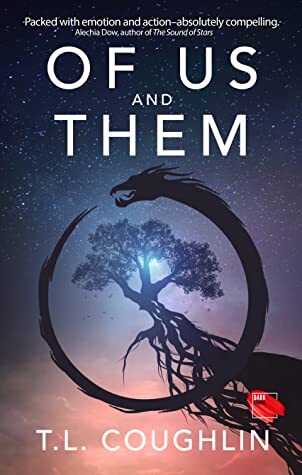
REVIEW – OF US AND THEM BY T.L. COUGHLIN
I received a free ARC of this book in exchange for an honest review, which in no way influenced my opinion of the book.
“Of Us and Them” is a spectacular YA sci-fi debut by T.L. Coughlin.
 I love first-person writing in general, but I find it lends itself particularly well to YA books because of the sense of immediacy and clarity. This particular first-person story focuses on Evren, a teenager who lives an almost ascetic life, alone, with the exception of her stern, dominant, and unwavering mother, Ignis.
Evren and Ignis reside in a reclusive, high-tech hideout, in still-picturesque 22nd century British Colombia. Ignis is also her daughter’s combat trainer. Evren has a thirst for knowledge, a sense of curiosity and wonder, a warrior’s spirit, and typical adolescent insecurities, exacerbated by her unique situation, and the restrictions imposed on her by a silently disapproving parent.
Evren must prepare to be a superior fighter, as she is destined to become a Paladin for the elite and clandestine organization, Nexum (which Ignis leads). According to legend, Paladins are knights of King Charlemagne’s court, a parallel to the Knights of the Round Table in the court of King Arthur. Similarly, in the context of “Of Us and Them”, the Paladins are the protectors and vessels of the Leviathans, an alien species, reminiscent of dragons.
Leviathans are supposed to be the saviours of humankind. The Leviathans are prophesied to prevent humans from further destroying the natural environment, which by the 22nd century, has become severely compromised.
Unfortunately, the arrival of the Leviathans is delayed, and the cause of the delay is apparently Evren herself. Evren is frustrated and guilty that she is the last of the Paladins to have her ouroboros mature. Once this maturity reaches fruition, it will signify Evren is ready to become a full-fledged Paladin, worthy of hosting and guarding the Leviathans.
Yet, until Evren’s ouroboros matures, as the final remaining among a group of male and female Paladins, the ceremony to summon Leviathans to earth cannot take place. This fact weighs heavily on Evren, as she is anxious to fulfill her destiny, and find meaning to her young life.
Coughlin has composed a wonderfully detailed futuristic earth, replete with the cool gadgetry one expects to see in a sci-fi entry. With savoury descriptions and backstory that are never overdone, but tantalizing enough to give you the feeling of being with Evren, the action in the novel is poignant and the stakes are high.
Coughlin keeps the reader highly engaged, as Evren ramps up her combat training, fights off assassins, and shows courage and fortitude in confronting danger at every turn. The story adds a bit of a murder-mystery to the compelling plot, where Evren, the likeable protagonist, must also use her wits.
“Right now, I liked what I saw in the mirror, for she was formidable. Born in strife, molded through friction and the fires of purpose, and then cooled in the sweet notion of saving our world we wrought with fear and neglect. The drakonum sung to the playing of my heartstrings and I was a work of art. If this was to be my last memory, so be it. But I hoped it wouldn’t. That I would be there, to deliver a world anew. I was to be a new empress, a leader, a prophet, a deliverer, a queen of the new era. But for now, I was Evren, a daughter, a fighter, and now a friend.”
Well fleshed out characters, salient reflections on broader themes, a dash of humour, burgeoning young romances, great diversity and LGBTQ + representation, make for an awesome YA novel. “Of Us and Them” has all these components, and much more.
Yet, like the best of the genre, “Of Us and Them” is not a great novel merely because it is awash with teenagers as characters. The skill of Coughlin is that she is able to write, as an adult, so seamlessly from the perspective of a teenager. Coughlin is appropriately vigilant in not sounding too “adult”, writing from the first-person perspective.
This author knows how to capture the emotional truth of teenagers with conciseness, but still heart and realism, including all the sometimes immature and inexperienced thought-processes, frustrating choices and inexplicable decisions, and requisite pop-culture references.
Of course, none of this implies Coughlin’s writing is anything other than sophisticated. Her prose is engaging, her overall writing superb. Be warned: the novel ends on a cliff-hanger, and the reader will be left salivating for the next installment.
This is a highly impressive first book by an up-and-coming author, who is bound to make a huge splash on the sci-fi YA scene with the release of “Of Us and Them”. Coughlin is a writer to watch, and I am fascinated to see where Evren’s story goes next.
Read Of Us and ThemReview- The Last Stand of Mary Good Crow by Rachel Aaron
The post REVIEW – OF US AND THEM BY T.L. COUGHLIN appeared first on BEFOREWEGOBLOG.
June 12, 2022
Review – The Last Stand of Mary Good Crow by Rachel Aaron
fans of the Weird West and urban fantasy both will enjoy this novel
THE LAST STAND OF MARY GOOD CROW is a fantasy Western by Rachel Aaron (Minimum Wage Magic). As anyone who knows me can attest, I am a huge fan of Weird Westerns. In addition to writing my own, I’m a huge fan of R.S. Belcher’s Golgotha series and the indie Bulletproof Witch series by Francis James Blair.
 Honestly, after finishing it, I think it is better than all of those books.
The premise is it is an alternate history version of Earth during the Wild West expansion. Rather than gold, the most valuable substance is the mysterious “crystal” that possesses many mystical properties that amount to allowing magic to be used. It is, understandably, sought by many-many prospectors. The town of Medicine Rocks, which is a name none of the settlers understand, is full of fortune hunters willing to do anything to get more of it. Despite the name, the book is actually about three separate women who share the narrative.
The first is the titular Mary Good Crow, a young half-Lakota woman raised by Catholic Nuns and subject to all the racism you would suspect. Mary is capable of “hearing” crystal and serves as a guide through the labyrinthine mines beneath Medicine Rocks. This is despite the fact the prospectors are as inclined to cheat or assault her as pay her for her time. Mary is a really nice young woman but a bit too demure and polite, which may be a literal survival mechanism in her case. Those expecting a spitfire with her will be sadly disappointed but the other two more than makeup for that.
In addition to Mary, there’s also Josie the (seeming) rich girl from back East who is coming to revive her uncle’s failing mining business. She wants to become a rich mining baroness and achieve independence but has found the majority of her inheritance has already been stolen by the crooked forces inhabiting this town. Finally, there’s Ren, who has allied herself with those corrupt forces but is Josie’s only friend. Ren would do anything to find out who killed her family and that includes betray a childhood companion who wants to go into business with her. She’s also got haunted crystal pistols containing the ghost of her insane evil wizard father. That’s a thing, apparently, yeah.
It is not a romanticized view of the West since much is made of the US cavalry’s terrifying effect on Mary Good Crow as well as the fact they fully endorse Custer’s cowardly attempt to take the Sioux nation’s women and children hostage. That particular event is happening simultaneously with the book and threatens to upend the plot about locating a mother load of crystal. Some people will love the tie-in to actual history while others may feel it’s in poor taste. I am more of the former than the latter.
Oddly, in addition to the Wild West, the book strongly reminds me of Final Fantasy VII. The harvesting of the crystal is analogous to harvesting mako. Humans and their greed want to rip it from the Earth no matter the cost with devastating consequences. However, it is so useful and powerful that you understand why they’re doing it. Certainly, it’s the only thing that might help the Sioux stop the genocide of their people. Nevertheless, the book gives a kind of environmentally friendly Aesop of, “Don’t take the Lifestream crystals from the Earth.”
I very much enjoyed the twists and turns throughout this book and strongly recommend it.
No one’s allegiances are entirely set and the only genuinely good person in the story is Mary Good Crow. Even she has a dark side that she struggles to keep suppressed as a matter of sheer survival. I think fans of the Weird West and urban fantasy both will enjoy this novel.
Read our interview with Rachel Aaron
Read The Last Stand of Mary Good CrowThe post Review – The Last Stand of Mary Good Crow by Rachel Aaron appeared first on BEFOREWEGOBLOG.