Beth Tabler's Blog, page 166
September 13, 2022
That Battle That Was Lost by Michael S. Jackson Cover Reveal
Ringlander: The Path and the Way
by Michael S. Jackson
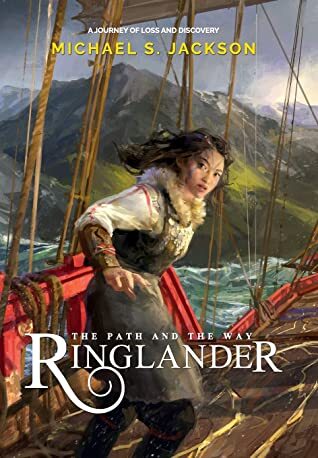 The first book in the Ringlander Series, and the debut of Scottish author Michael S. Jackson, THE PATH AND THE WAY is a fast-paced, epic fantasy adventure full of games, grit and magic. THE PATH AND THE WAY is a coming-of-age, original fantasy adventure with LBGT relationships and a largely female lead cast. It is a journey of loss and discovery.
Holes between worlds are tearing through Rengas. Firestorms are raging as multiple realities battle for control of the elements. Even the Way, the turbulent channel that separates Nord, Határ and Kemen, the lifeblood of the city of Tyr, has turned.
Kyira’s search for her missing brother draws her away from the familiar frozen lines of Nord and south into the chaotic streets of Tyr where games are played & battles fought. As reality tears Kyira must choose between her family or her path before the worlds catch up with her.
The world of Rengas is tearing, but it’s the people below who will suffer – the wars of the Forbringrs care not for the misgivings of the beings below.
Kyira, a Nordun Pathwatcher, returns from a fight on the ice but her father and brother are missing. As she searches frantically to reunite her family she is drawn into a war between the humans and the Bohr, leaving the cold familiar lines of her frozen home to venture the narrow, winding streets of Tyr, where games are played and battles fought. The stories of Kyira, Fia (a companion like Inara in Firefly), Jagar (a deadly assassin), Captain Laeb (the foreign tactician who against all the odds keeps besting the Bohr in combat), and even the Forbringr herself converge in an explosive ending.
“Ringlander: The Path and the Way is a wonderfully detailed and exceptionally well-done fantasy story that stands out as one of the best titles I have read this year. “
Ringlander: The Path and the WayGet eBook for 99p | Broken Binding | WaterstonesSPFBO7 semi-finalist, and r/fantasy Stabby Nominated RINGLANDER: THE PATH AND THE WAY is a fast-paced, Epic Fantasy Adventure full of games, grit and magic.
Michael S. Jackson Michael S. Jackson Michael S. Jackson Michael S. Jackson Michael S. Jackson Michael S. Jackson

Now without further adieu

Preorder Here from Broken Binding!
The post That Battle That Was Lost by Michael S. Jackson Cover Reveal appeared first on BEFOREWEGOBLOG.


The Books That Made Me – The First Law by John Palladino
”His character work enlightened me, but the grim and dark realities of his world enraptured me.
 Fifteen years ago, it was 2007. I was nineteen years old and living in a college dorm with my best friend from high school. We both had a tremendous love for fantasy novels.
As long as I’ve existed, I’ve been a voracious reader. Before I could read myself, my mother read to me and I ate that up. And somewhere along the line, I fell in love with fantasy. I consumed as much of it as I could—the earliest books I can remember that might’ve contributed to this were Blade of the Poisoner by Douglas Adams and the Dragonlance series by Margaret Weiss and Tracy Hickman. I’m sure there were others, but I can’t remember them. In any case, I consumed a lot of books, basically living in libraries.
The problem? I quickly learned all the typical tropes and cliches in regular epic fantasy. It got to where I was reading a lot of these novels and getting increasingly bored—I knew the end before it had even happened. Just before leaving for college, I started reading a series I’d yet to try, which I’ll leave unnamed (I’m not trying to insult the author here). I predicted the end of the book halfway through, and, when I got to the ending, it unraveled in exactly the way I figured. I laughed out loud for a long time. My disappointment was indescribable. In that moment, I had forsaken fantasy. I vowed not to return (I quit reading the only genre I read now).
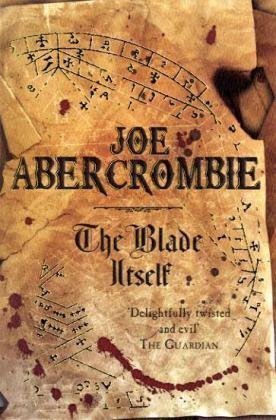
My friend I was rooming with in college knew about my disgust for the predictable and “normal” epic fantasy novels out there. I hated the idea that the main characters were untouchable and invincible, that you would know how everything was going to play out. He recommended a book to me: The Blade Itself by Joe Abercrombie.
Eager to read a fantasy novel I couldn’t predict, I read the first chapter and promptly through the book at my friend. “Are you serious?” I asked him, “What could possibly be more cliche than a barbarian who falls off a cliff and lives?”
“Try one more chapter,” he’d said.
So I did. And boy am I glad I did because I have purchased every single Abercrombie book since. His character work enlightened me, but the grim and dark realities of his world enraptured me. I hadn’t known about some of the other big names in this genre at the time: GRRM and Glen Cook being two of them. I immediately fell in love with Jezal dan Luther and Sand dan Glokta (controversially, I’m still not a fan of the barbarian). And when I’d finished the First Law trilogy and the ending actually landed? It didn’t make me laugh, and I didn’t predict it? I was stupefied. I was so happy.
Without The Blade Itself, I don’t know that I would have returned to reading (and now writing) fantasy. So, thank you, Joe. You made me believe again.
Buy from Amazon
THE BLADE ITSELF•THE BLADE ITSELF•THE BLADE ITSELF•THE BLADE ITSELF•THE BLADE ITSELF•THE BLADE ITSELF•THE BLADE ITSELF•THE BLADE ITSELF•
The post The Books That Made Me – The First Law by John Palladino appeared first on BEFOREWEGOBLOG.
September 12, 2022
Television Review – House of the Dragon Season 1 Episode 4 “King of the Narrow Sea”
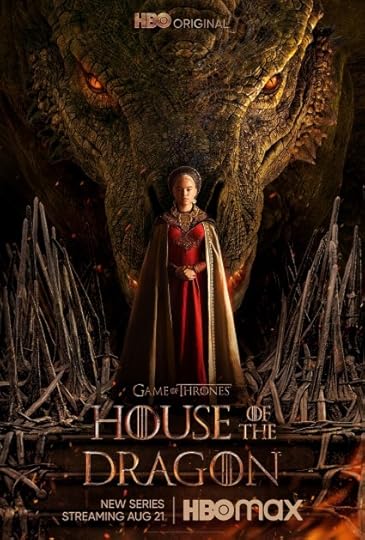 “KING OF THE NARROW SEA” is the fourth episode of House of the Dragon and when things get SPICY. Unfortunately, for those who love hot and steamy Game of Thrones sex, it is sex that is frequently made unappealing due to the fact it shows the power imbalances as well as grosser element to Westeros. After all, one of the scenes is between an uncle and his niece, another between a gangrenous old man and his young bride, and the third is between a man who can’t say no to his superior. Oh there’s also an orgy but that’s just background noise on HBO by now.
The premise is Rhaenyra Targaryen is taking her quest for a husband less than seriously. She is hosting whole hosts of noble lords and insulting them while treating it as an episode of The Bachlorette, Westerosi edition. Unfortunately, for the nobles, she has no interest in getting married and this is all a game. A game that turns deadly serious in a conflict between a Bracken and Blackwood suitor. Mind you, as a fan of the books, I’m well and truly sick of the Blackwood bias and wish the Brackens would go Red Wedding on them.
Daemon Targaryen has returned as “King of the Narrow Seas” but turns around the perception he is an upstart by laying his ground before his brother’s feet. Unfortunately, whatever good will he gets from that is something that he quickly squanders by taking Rhaenyra on a tour of the city’s taverns as well as brothels. A scene that results in her having what may or may not have been consummated sex with Daemon but does lead to actual sex with Criston Cole. This gets her spied upon by what is implied to be Daemon’s mistress, Mysaria, who reports it to Otto Hightower. What follows is a show of the double standard between men and women in Westeros regarding consensual sex.
This is an episode without much in the way of dragons or violence but does a lot to forward the characters’ arcs. I’m glad there’s no real time skip this time and we can follow up on the events of previous episodes. Time skips were inevitable but I felt like they were harming our connection to the protagonists. That’s rectified and we have some much-needed focus on the relationships between Alicent-Rhaenyra, Rhaenyra-Daemon, Rhaenyra-Criston, Viserys-Alicent, and Viserys-Otto. They are a very-very twisted bunch and a tangled web of allegiances that finally reach their breaking point.
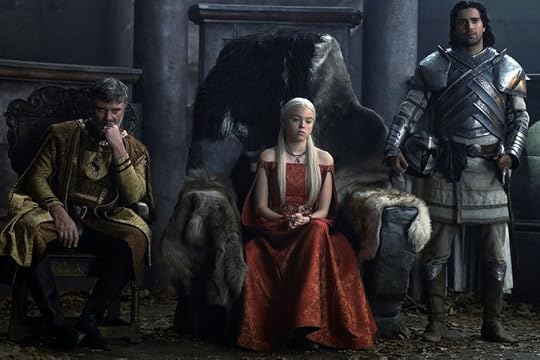 The subtext that Rhaenyra’s fear of marriage and intimacy is due to her mother’s horrific death is made text and Daemon helps educate her that sex can be pleasurable. However, it is also muddled by the fact that he’s planning to ruin her reputation in hopes of being able to marry her. Daemon pulls back (or perhaps “out”) at the last second, though, because he realizes it’s wrong. This just leaves Rhaenyra horny as all get out and sends her into her favorite Kingsguard’s arms. Ser Cole, who is only there by Rhaenyra’s patronage, doesn’t exactly have the opportunity to say no either.
Meanwhile, Alient Hightower’s marriage is shown from her perspective and it is an utterly miserable horror show. Viserys is slowly rotting away from the inside and out but his sexual urges are undiminished. Alicent also reacts with visible jealousy to Rhaenyra’s dismissive attitude to her suitors. She also spends a good deal of time drinking wine and becoming ever more Cersei like in her attitudes. Plus, when given a choice between her father and best friend, she of course chooses her father.
Otto Hightower also badly misjudges his position with Viserys as he gets what he believes is the perfect bit of news to get Rhaenyra disinherited, only to find himself under attack for spying on the royal family. The fact Rhaenyra knows that Ser Otto is plotting against her results in her first victory in the game of thrones by getting him thrown out of his position. It, sadly, comes at the cost of agreeing to an advantageous marriage.
Solid episode, lots of good character-building and plot advancement.
9/10
House of the Dragon•House of the Dragon•House of the Dragon•House of the Dragon•House of the Dragon•House of the Dragon•House of the Dragon•House of the Dragon•
The post Television Review – House of the Dragon Season 1 Episode 4 “King of the Narrow Sea” appeared first on BEFOREWEGOBLOG.
The Books that Made Me: The Fog by James Herbert
 When I was a kid I was an avid reader, but I grew up in a small English village. No nearby bookshop or library or anything. BUT! There was a travelling library – basically a big old bus full of shelves instead of seats – that would tour the area. Every second Tuesday it would park at the end of my road. After school, I would rush up there and see what they had. I was hugely into fantasy at the time, and the driver/librarian guy got to know me and got to know what I was into. He had similar tastes and would always have something put aside for me. He got me the science-fiction that erred more to fantasy than science. He introduced me to Ursula K Le Guin and Anne McCaffrey and David Eddings among many others.One day I selected a few books and among them was an old Dorchester or Leisure Books or Zebra (I forget now) horror title. I wasn’t sure about it, but the cover appealed. I don’t even remember which particular book this was, but we’re talking early 1980s, right in the paperback horror boom of the age. The driver/librarian raised an eyebrow and said, “You sure about that?” Bear in mind, I was probably about 12 or 13 at this point.I said, “Sure, I’ll give it a go. I can stop reading if I don’t like it.”He said, “Okay. Let me know what you think.”Little did I realise that he was a mad horror fan as much as he was into fantasy and sci-fi.Two weeks later I went back and he asked how I liked it. I said, “I kinda enjoyed parts of it, but it was also pretty ridiculous and not really all that well written.” What a pretentious little prick I was. I honestly don’t remember the book, but something about ghouls or zombies maybe.He smiled and said, “I thought you might think that. But, if you like that kind of thing, read this.” And he handed me a copy of James Herbert’s “The Fog”. I read it right away that night and it blew my mind. I realised just what horror could be. I realised what amazing descriptive writing and character development was possible. I realised how far you could take a wild idea if you didn’t shy away from the terrible possibilities. I was enthralled and appalled by the things people did to each other and the degree to which this amazing novel drew out all those possibilities.Two weeks later I went back and told him, “This was amazing!”He smiled and said, “You’ve only just begun.”Following that, every two weeks he’d have some fantasy for me like always, but every time he also had at least one horror novel for me too. “The Fog” is the one that started it, the one that made me fall in love with the genre. James Herbert is still one of my favourite authors. And I’ve quite happily never been the same since.
 Buy from Amazon
The Fog•The Fog•The Fog•The Fog•The Fog•The Fog•The Fog•The Fog•
The post The Books that Made Me: The Fog by James Herbert appeared first on BEFOREWEGOBLOG.
September 11, 2022
Romantasy Roundtable (Part one)
Fantasy romance and romantic fantasy are among the hottest genres in SFF right now, and for good reason: they’re awesome. They are two ends in a continuum; romance books with a fantasy setting are classified as fantasy romance, and fantasy books with a strong romantic subplot are called romantic fantasy, but there’s a lot of gray area. We’re here to celebrate the continuum and hear from authors and readers in the genres.
We’ve invited six authors and two avid readers of the genres to talk about what it means to them, and we hope you’ll find your next romantasy reads right here! I’ve read them all and they’re fantastic!
We’ve asked a handful of questions to all the participants, and some more specific questions to each of them. You’ll read their responses, and some discussion among them. We hope you enjoy the conversation, and feel free to hop in with questions and comments on the blog!
Here are the questions:
Introductions
What does romance bring to fantasy that it sorely needs? Or if you prefer, what does fantasy bring to romance that it sorely needs? Feel free to answer either or both questions.
What is the role of tropes in fantasy romance, and in your books in particular? Feel free to touch on romance tropes, fantasy tropes, or both.
How do you deal with gender roles and expectations in your fantasy romance? (for the readers, I asked: How do you see gender roles and expectations dealt with in fantasy romance, and is it different from other romance subgenres?)
Links to the participants’ books, socials, websites, etc
The rest of the questions will be coming in part 2, in a week or so!
Introductions
 Carissa Broadbent: My name is Carissa and I write, as I usually like to put it, magic and kissing books — stories with lots of epic fantasy, big stakes, big plots, lots of romance, and capital A-Angst. Right now most people know me from The War of Lost Hearts trilogy, which is an epic romantic fantasy that just concluded in February.
Nisha: Hi Carissa, I’m really looking forward to your new series!
 Kimberly Lemming: Hello! I’m Kimberly Lemming and I write diverse fantasy romcoms.
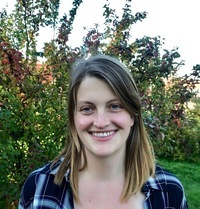 J.D. Evans: I’m Jenn, I write epic fantasy romance under J. D. Evans.
 Lionel Hart: I’m Lionel Hart, and I write MM fantasy romance!
 Nisha Tuli: I’m Nisha and I write romance, primarily in the fantasy and romcom genres. I mostly write adult, though I’ve dabbled in some YA, too. I published my first fantasy romance novella in April and have the first of a duet coming in August. I’ve got a YA fantasy romance book and an adult romcom on submission.
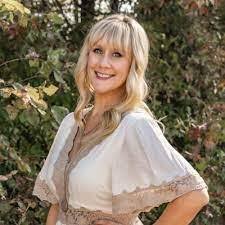 Rosalyn Briar: Hi! I’m Rosalyn and I enjoy writing dark fantasy fairy tale retellings that are heavy on romance!
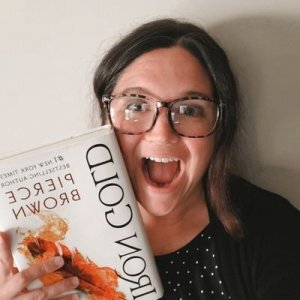 Ashley: Hi there! I’m Ashley– so glad to have been invited to join everyone for this fantasy romance roundtable discussion. I’m a contributor to the blog, FanFiAddict. I would characterize myself as a huge mood reader. I always have three books going at once (physical, ebook, audiobook) for different moments of the day- whether it’s at night before bed, folding laundry, commuting to work, etc. I have two young kids, and not a lot of time to read during the daytime hours so most of my reading comes late at night on my ereader or audiobook. I primarily read Sci-Fi/Fantasy, with the bulk of my reading falling within the subgenres of dark fantasy, romance, first contact, time travel, and epic. I prefer multi-pov, character driven stories. Being as this a fantasy romance discussion, I’ll focus on this genre of my reading habits. The romances that I love to read do ebb and flow with the seasons. My heart lies within dark romances, and I am continually cycling through dark fantasy romance, contemporary dark romance, and monster romances. I prefer New Adult/Adult; however, I do enjoy YAs that bring a unique and different style to the genre.
 Kristen: My name is Kristen, and I go by that or Star usually, online. I’m originally from Toronto, Canada, and currently live in Houston, Texas. I blog at superstardrifter.com and do the tweets from @suprstardrifter
What does romance bring to fantasy that it sorely needs? Or if you prefer, what does fantasy bring to romance that it sorely needs? Feel free to answer either or both questions.
Carissa: I think we all know that mainstream SFF has, for a very long time, kinda looked down upon romance and romance-adjacent genres like romantic fantasy. I’m not here to judge anyone for what they do or don’t like, and that includes people who dislike romance plots in their fantasy books — we all like what we like and that is fine! — but the superiority attitude was always very perplexing to me, because romances are master classes in character work. The elements that make a romance ‘work’ — whether that be in a contemporary novel, a classic Harlequin, or a high fantasy romance like what many folks here write — are the bones of what make any moving character relationship arc work. And I think that any author can agree that writing characters is hard. Writing moving arcs is hard. Writing emotional relationships (friendships, familial relationships, any and all!) is hard. Romance novels are distilling all of those things. That’s why I encourage all authors, whether you write romance or not, to read at least a couple of romance novels to learn from them — just as, for example, we can all learn a lot from thrillers for pacing, mysteries for reveals, classic literature for prose, etc. I think that micro focus on character and character relationships is really invaluable, no matter what genre we’re talking about.
Lionel: Wow, this is so true. Romance is such a deep dive into a character, and when it’s done well… *chef’s kiss* To each their own, but personally, I really find the extra emotional depth from a well-written romance brings SO much to fantasy.
Nisha: Agree so much. Writing a romance requires at least three ARCs. It’s an art form.
Kimberly: I’ve always loved romance novels. However, most contemporary romance is too boring for me and often relies on too much inner conflict like the miscommunication troupe. Not that there’s anything wrong with a little inner conflict, but I’m greedy and like a bunch of different seasonings to my dishes. This is where fantasy plays a role. Sprinkle in some world eating giant wolves and a quest on top of the classic ‘Will They Or Won’t They’ and I’ll be on the edge of my seat for the entire book. I love watching a couple learn to work out their feelings for each other while also dealing with a problem outside of themselves. When there’s a Big Bad on the horizon you really get to see not only how the characters react to each other, but also the world around them.
Nisha: This too is why I totally gravitate to fantasy. That extra layer adds so much.
Jenn: Romance and fantasy come in so many flavors, it’s hard to make a broad statement that’s true for all of them. But, one of these reasons I like pairing romance and fantasy is that the scope of the story can be so big. In a fantasy setting, love really can save the world. One of the things I have always enjoyed in fantasy was exploring how small people, small decisions, things we might otherwise say are inconsequential become VERY consequential. And I think love in real life and in fantasy is often dismissed as silly, or unrealistic. But in fantasy, you can explore how interpersonal relationships can change the world, the course of events.
Nisha: YES YES YES
Carissa: Yes, this is so true! Romantic fantasy takes those huge stakes and boils them down to its most personal – that’s a great way of putting it. This is also what resonates most with me in the subgenre.
Lionel: I think romance brings a very “human” element to fantasy. (even if the romance doesn’t exactly involve humans  ) Wanting to love and be loved is a nearly universal thing that just about anyone can relate to, so in a fantasy backdrop where everything else might be unfamiliar, it helps the reader focus on the things that they can relate to, and it helps make characters feel more real where they otherwise might feel too different for readers to really relate to.
Carissa: I definitely agree with this – the human-ness is what I love most about romantic fantasy, too.
Nisha: Hmm, I love the combination of high stakes and lush worldbuilding that fantasy brings to romance. I think it’s a little easier for love to transcend all and be this big huge thing when you’re in a fantasy setting than you get in a more realistic one. Or for your morally grey love interest to tear down the world for his love. Also some of the things I love in fantasy books i.e. kidnapping and over possessive men are not things I’d ever tolerate in real life, but in a fantasy setting, somehow it all seems okay? Maybe that says something about me.
Carissa: Oh, I’m right there with you. It lets us explore things that we definitely cannot in real life, haha.
Rosalyn: Oh, this is an interesting question. I typically won’t read a fantasy book if there isn’t romance, to be honest. I think romance brings a “closeness” to the character that I personally crave. I don’t usually love epic or high fantasy because often those stories are about large-scale conflicts and use the characters as pawns. Again, it is just a personal preference, but I like to really feel close to the character. Stakes that deal with the heart are about as close as you can get!
Nisha: Girl, same.
Ashley: I love how the addition of romance to fantasy adds a layer to the characters that can be built up in phases. It allows the author the opportunity to be creative with character arcs and plotting, moving the plot forward and getting their characters into key positions for that unforgettable moment when they meet. There is a sort of vulnerability that is touched upon. Flawed relationships are very realistic to me and I enjoy stories that explore things on a deeper level, where I find the mind and soul to be one of the sexiest aspects of a person. Within these new and imaginative fantastical worlds, romance– especially queer romances– have been derailing traditional stereotypes. Fantasy, in turn, brings to life a world that is quite different from ours– at least the ones I read are darker, grittier, filled with magic, and dangerous creatures. It’s often in a fantasy romance where I find my favorite trope being delivered (enemies to lovers)– true enemies to lovers and not a “you’re mildly irritating.”
I love when I’m sitting there wondering if they are about to kiss or unalive each other. I know, I know but what can I say… I like my romance darker. Authors pose questions dealing with fantastical elements and tropes such as magic, ancient lore, magical creatures and artifacts, and then have the creative freedom to explore the endless possibilities, breaking through formulalic constraints, such as what if the supposed chosen one (fantasy trope) was your fated mate (romance trope); however, the chosen one thinks they are on the hero of their story, but they are actually more of the villian.. toss in some ancient lore, a gripping quest to collect ancient artifacts from a lost civilization…. and now let’s pose some questions… will the love interest of the chosen one be reluctant and fight against the bond or will they allow the darkness to consume them becoming its mistress.. is the chosen one actually the hero but deemed villainous in their current world… it will also pose the question of can bonds be broken and what are the consequences if they are.. Sorry, I got a little sidetracked there!
Nisha: Unalive–You are clearly on TikTok, lol.
Kristen: Fantasy doesn’t always need Romance, and Romance doesn’t always need Fantasy, but Fantasy elements only serve to get me more interested in the plot outside of the Romance. So, for me, a lot of the time fantasy brings to romance more and more elements that I find interesting to read about. I love Romance and Fantasy separately, but putting both together makes it all the better. I’m much more likely to love a fantasy book if there is a well written romance in it, and vice versa.
What is the role of tropes in fantasy romance? Feel free to touch on romance tropes, fantasy tropes, or both.
Carissa: Ah ha, I love that we’re talking about tropes because they’re often wielded as a bit of a bludgeon against romance and romance-adjacent genres. I appreciate that romance has started to reclaim tropes as a positive thing rather than a negative, because they really do do a good job of distilling a book in a few words to someone who has never heard of it before. What I really like about the romance community in general is that people have (mostly) abandoned pretension and just unabashedly like what they like. I think reclaiming “trope” as a positive or descriptive term is a big part of that — because yeah, cliches exist because people like them. They’re the spices in your cooking dish. You don’t want to serve someone a bowl of garlic, but it sure does make an entree taste good. They don’t define the dish — they spice them up. There are a million different dishes with lots of garlic just like there are a million very very different stories that include, for example, an “only one bed” moment or are retellings of beauty and the beast, or whatever. Tropes give us a shorthand to describe and talk about that “zing.”
Nisha: I love this aspect too (reclaiming tropes) and it does work a lot of the time.
Kimberly: I feel like tropes are important in every genre of writing. Not just fantasy and romance. To put it simply, every story has already been done. Tropes are just the names we gave to plot points we all know and love. Let’s take the Only 1 Bed trope for example. We all know it’s far fetched. If you’re on a business trip, chances are the hotel isn’t going to suddenly have a fire on the left side of the building, cutting their available rooms in half and forcing you to share a room with that suspiciously hot coworker you hate. But isn’t it fun to think about? All the budding anger board lining on sexual tension suddenly builds up into a confined space where you can’t help but deal with each other. It’s hot. It just is.
Nisha: There was a great viral tweet from a hotel manager that said this was actually more common than one would expect 
Jenn: I think tropes bring comfort. If you look at it from a marketing angle, it can help to identify your books to the readers that would most enjoy them. But, from the other angle, for readers, it’s flavors. Today, I am in a sour cream and onion mood, so I don’t want BBQ chips. If you are in an enemies to lovers mood, then you don’t want someone to hand you a best friends to lovers book and say “here, you’ll like this better”. Chosen one is your fantasy pepperoni? But maybe you want to try out some mushrooms on there by adding a bit of found family? You know what you’re getting. Some people like surprises, and some people don’t. Tropes are like specs on a gadget you’re purchasing, so you know exactly what to expect.
On a larger scale, the HEA requirement in romance sometimes gets eyerolls. I’ve seen a number of readers who have experienced trauma, or who struggle with anxiety say that one of the reasons they read romance is because they know that no matter what the characters go through, they will get an HEA or an HFN, and that gives them safety to read and enjoy. I think that’s a very powerful concept, especially in fantasy, where things can get quite dire. These readers go through these hard times with your characters, perhaps (This is a lofty goal) dealing with or releasing a bit of their own traumas, because they know they will be safe on the other side.
Lionel: I love the idea of tropes as flavors! Sometimes all I want is a good sour cream and onion chip, and sometimes I could demolish a bag of BBQ chips. Doesn’t make either better than the other, just what I’m in the mood for at the time — and I can think of so many tropes that I feel the exact same way about.
Nisha: Totally stealing the phrase ‘fantasy pepperoni’
Lionel: Tropes are ultimately a way to promise the reader a particular experience. I have some favored tropes, and I think most people do too, so making those clear helps new readers decide if a book is something they might like or not. While books can certainly be overtly too tropey, all books contain tropes to some degree, and that’s a good thing — people want to know what kind of content they’re going to be consuming! I love the particular flavor of romance tropes that work well in fantasy settings, as you can probably tell from my books (size differences, arranged marriages, and variations on “the power of love saves the world”) so fantasy romance was the first genre I gravitated toward when I first made the decision I was going to pursue a career as an MM romance author.
Nisha: I love tropes and live and die by them. Enemies to lovers is my favourite and what I write most often. I also am a sucker for one bed/horse scenarios, touch her and you die, who did that to you, etc. All the goodies. I recently learned a fun plotting technique that ‘layers’ tropes and I think it really helps bring the plot to life. And let’s face it, in the world of TikTok and tropes marketing, it’s hard to get any traction without them these days. But I’m fine with that–I love them.
Nisha: Adding on that I do notice a lot of people have different perceptions of what enemies to lovers means.. some seem to think it’s only holding a knife to each other’s throats while others are fine with them just being on opposing sides.. I think all varieties are good.
Rosalyn: I think tropes in fantasy romance, as in any other genre, can be fun for the author to play with as well as for readers to enjoy. I know many readers look for certain tropes when purchasing books. It can be a fun way to bring a Romance reader into the Fantasy genre by playing with tropes they already enjoy.
Ashley: I think a large role that tropes play in fantasy romance is through the marketing of the books. I know I am guilty of specifically seeking out certain tropes that I am in the mood to read whether it’s forbidden love, arranged marriage, friends to lovers, found family, etc. Tropes do help to provide some expectation for what a reader can expect from the story. I think that there are some fantasy tropes that perform better when its intended audience is reached. What I mean is, some tropes such as fated mates, often have the “falling in love” occurring quicker and if you’re a reader who may not enjoy this trope, your enjoyment may be affected. There is a fine line to walk here because some tropes may be deeply rooted in the plot and possibly end up being a twist– and knowing beforehand may spoil things i.e. fantasy tropes such as the evil overlord, the secret heir, fated mates. There are some romance tropes that I adore when used in fantasy romance such as the meet cute (how does my fae prince from that lost world come across xyz), forced proximity (because yes!).
Kristen: Well, like in any media, tropes in fantasy romance are just commonly used ideas used for artistic effect. Some of them I find a little tired, like the Alpha/Omega dynamic (which can get really weird in some cases). I don’t dislike Werewolf or Shifter romance but some of the very Alpha Boyfriend stuff makes my eyes roll. Some I absolutely love, like the Only One Bed trope, which I will 100% go for every time. I also love a well written Enemies to Lovers, or Friends to Lovers trope. Romance writers often love to play with the Love Triangle trope, and unless it’s subverted or written really well, I’ll usually bounce off of it. I’ve been surprised a few times! I won’t avoid it completely because of those surprises.
How do you deal with gender roles and expectations in your fantasy romance?
Carissa: I really enjoy using fantasy worlds and situations as extreme lenses to examine issues that face our world. Sexism is a topic that I keep coming back to in that respect because there are so many complexities of it— Tisaanah struggles with that a lot, for sure, because her gender and appearance has both “saved” her (because it made her appealing to her abuser), but also led her to really, really horrible abuse (because… it made her really appealing to her abuser). She’s really reckoning with that, especially through book 1. I think that most women, even those who have never experienced abuse at the level Tisaanah has, can relate to that strange dichotomy on some level. I keep coming back to it in almost all my books, including my new one.
Kimberly: I don’t think about gender roles too much in my fantasy romance. My fantasy world doesn’t really follow any particular roles and I kinda just made up the world exactly as I wanted it without concern of following conventions. Some of my women are very girly and like to wear cute dresses and cook lots of food. Some of them walk around with axes and their skirts. It’s whatever the character wants at the moment that I feel it’s best. People come in all shapes and sizes as well as feminine and masculine characteristics.
Jenn: When I began writing Reign & Ruin I was recently out of the military. I had experienced what you might expect of a woman in the military– sexism, harassment, etc. I think I was, in designing what Naime was dealing with as a woman trying to rule, excising some of my frustration. But I also set out to highlight strength in its many, varied forms. Not just the traits that western society associates with the masculine, but things like social and emotional intelligence. The ability to grieve and carry on, the ability to be kind, to mediate, to be supportive. How these traits are in fact, strength, and how vital they are to a functioning society. I will probably move away from writing my misogyny into my books in the future, just because it’s, you know, old news.
Lionel: This is a complicated question for me since I write MM romance, so women are always going to be supporting characters just by the nature of the genre. But, I try to keep my fantasy worlds overall free from sexism and homophobia — after all, it’s a fantasy world of my own design, and so I’m definitely not going to put these very real struggles into my fantasy escapism, haha. Kudos to those who tackle these issues in their writing, but that’s just not what I’m trying to do.
Carissa: Kudos to you for that! I think we need that kind of escapism wherever we can get it.
Nisha: Ooh, good question. Like I mentioned above, there are definitely things in a traditional M/F dynamic that I love in a book that I’d never be okay with in real life… but that’s why I read and write. To escape reality and just because I enjoy reading something, doesn’t mean I endorse it. I do tend to write what some might term as ‘bitchy’ female characters and I can see in comments when people’s internalized misogyny is showing but I’m not changing them to suit anyone’s expectations of what female characters ‘should’ be. Ultimately, I only write female MCs (and maybe another POV from a male character) and they’re going to kick ass.
Rosalyn: One of my biggest pet peeves is what I call the “Virgin Mary falls for Casanova” trope. I hate when the FMC’s are required to remain “pure” and are something to be conquered by the MMC. I have often flipped this trope and tend to write about an experienced woman falling for a less (or non) experienced man just out of spite. I also love to write about the woman saving the man as much as he saves her!
Nisha: Re: purity: ugh, agree. I’ve only written one ‘virgin’ character, but there was a specific reason and it wasn’t because she had to be innocent.
Nisha: Re: less experienced man: I’m writing one where the dude is a virgin and it’s so much fun!
Slight twist on the question for the readers in the group: How do you see gender roles and expectations dealt with in fantasy romance, and is it different from other romance subgenres?
Ashley: Falling into trope characterizations sometimes result in paper thin characters of the more traditional route– females having to fight against a barrier due to gender as if there are no other qualities, the male hero with a tragic past, or the girl who is “not like other people.” I think falling into gender stereotypes can happen regardless of subgenre because it may feel natural leaning into the traditional. I have recently finished two queer fantasy romances with characters defying gender expectations. A Strange and Stubborn Endurance by Foz Meadows and Jack of Thorns by A.K. Faulkner both have characters that defy male stereotypes — and move past roles of gaining social power. Jack of Thorns, for example, features a male character that is a florist and helps his mom run a flower shop. I think an author can break out of stereotypes when they deconstruct/subvert tropes because now they are not relying on what is traditionally done. Focusing on character traits beyond gender and appearance such as kindness, empathy, skillset, honor, drive, compassion, etc would be great to see more of as a reader.
Kristen: It can be different across subgenres. Especially so if the romance takes place in a historical setting. In an alternate universe, one can mess with the idea of gender roles without it taking away any of the realism of the setting. In a Regency Romance, for example, there are only so many ways that you can make gender roles more flexible without losing the realism of the setting. But if you make it Regency-But-There’s-Magic, it’s already outside of reality by its very nature. So at that point, what else about that world could then be different than ours?
How explicit are the sex scenes in your books, and why?
The answers to this question will be coming in part 2, along with questions specific to each author’s book, as well as recommendations from all the participants for other romantasy books to discover!
Find out more about these amazing romantasy authors, and most importantly, buy their books, at the links below!
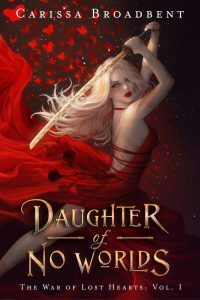 Carissa Broadbent: Books, socials, and more are on her website.
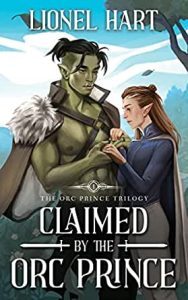 Lionel Hart: Books, socials, and more are on his Linktree.
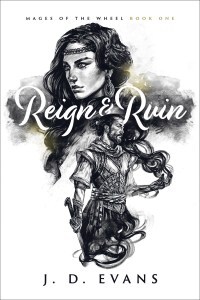 J.D. Evans: Books, socials, and more are on her website.
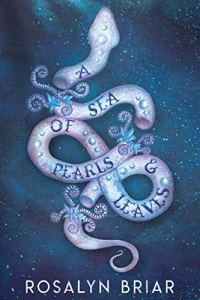 Rosalyn Briar: Books, socials, and more are on her Linktree.
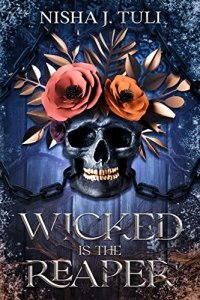 Nisha Tuli: Books, socials, and more are on her Linktree.
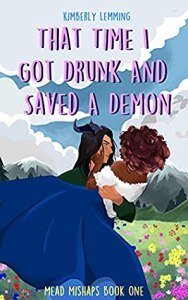 Kimberly Lemming: Books, socials, and more are on her Linktree.
Ash blogs on FanFiAddict and on Twitter @sffreads.
Kristen blogs at superstardrifter.com and does the tweets from @suprstardrifter.
Read my review of Daughter of No Worlds here
The post Romantasy Roundtable (Part one) appeared first on BEFOREWEGOBLOG.
September 9, 2022
Review – WARHOST OF VASTMARK by Janny Wurts
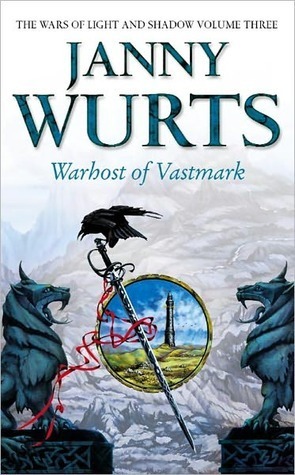 Always the most difficult but enjoyable of books to review, as they are some of the most challenging but glorious books to read, here is my review of the next novel (third) in the iconic “Wars of Light and Shadow” series by the incomparable Janny Wurts, “Warhost of Vastmark”.
The book picks up immediately following what transpired in “Ships of Merior”. With the Korani enchantresses, emboldened by the discovery of a long-lost talisman of their power, and their rival Fellowship Sorcerers trying to steer the two Princes from destruction, the magical influences in the background continue their behind-the-scenes struggle for influence and domination.
Caught in the middle are Princes Lysaer and Arithon, the half-brothers, now sworn enemies, who are coping with the fallout of the events at Minderl Bay. Arithon is on the run, and Lysaer is still in dogged pursuit.
Despite experiencing horrible troop losses at the cunning hands of the so-called Master of Shadow, Arithon, Lysaer is determined to destroy his half-brother, and will not rest until he does. Pressed by Lysaer’s persistence and ability to inspire loyalty and troops to risk everything in the Prince of the West’s cause, Arithon takes to the unforgiving mountain range of Vastmark, to elude, or perhaps to entrap Lysaer’s forces.
Arithon keeps his plans close to the vest, stymying even some of his closest allies. But the rash actions of Lysaer’s wife will throw well-made plans into disarray, and potentially alter the course of the brother’s conflict in unforeseen ways. The entire world is at stake, because should the brothers’ considerable magical power ever clash completely head-on, everything on earth could be ripped apart.
Arithon and Lysaer, and their enduring enmity, are still of course what drives this story. But for me, this book really had some of the secondary players stand up and demand additional notice, more so than previous installments in the series.
Wurts’ secondary characters have been amazing throughout the first two books, but for whatever reasons, in this book they absolutely came to the forefront for me. The three auxiliary characters that will leave a distinct, and unforgettable impression on the reader, I believe, in this book are the Dakar the Mad Prophet, Princess Talith, and Tharrick.
Dakar, the first, has become one of my all-time favourite characters in any fantasy series, rivalling Joe Abercrombie’s Sand Dan Glokta. If you thought you knew Dakar, all I can say is, think again, after this book. He is incredibly well-drawn, and the pathos of his magic-bound despising of Arithon and love for Lysaer, and his glimmers of nobility through an otherwise detestable character will delightfully frustrate the reader. Moreover, he still provides much of the book’s humour, though we spend most of our time laughing at him, rather than with him. But what happens to him in this book will have you completely broken for this otherwise unlikeable character, trust me.
Talith did not appear, at first, to be of great significance, but she certainly was a mover and shaker in this book. Outwardly, she appeared vain, manipulative, willful, spoiled, and a horrible decision maker, who did nothing save compromise her husband’s position. The worst part was that she did this with the opposite intent. But by the end of the book we see some more depth to dispel perhaps initial impressions of her being a more vapid, pretty, impulsive liability to Lysaer, despite Lysaer’s love for her.
Meanwhile the laconic Tharrick, and his softening wherever Jinesse is concerned, was heartfelt to watch. His suspicion of, yet grudging respect for Arithon, courage, and pragmatism was very realistic and well portrayed. He has earned my appreciation as a great fictional character.
The moral posturing of the Fellowship and the Korani, both believing they are on the side of the greater good, the same way Arithon and Lysaer do, seem incredibly devious, often misguided, and ultimately vulnerable to the individual agendas and human frailties of the specific magic wielders. Still, there is an effort to do good…but what KIND of good? The brothers seem to be as much pawns in the schemes of the two sorcery factions, as they are captive to the Mistwraith’s malice. At times both sides appear benevolent, and at times extremely sinister. The truth is likely somewhere in between.
By this book, third in the series, it becomes evident that for all his intelligence, political savvy, charisma, and strong if not flawed sense of justice, Lysaer has not proven to be the equal of Arithon as a strategist. But you wonder if at some point Arithon’s cunning won’t be enough, because Lysaer is so dogged in his approach, he seems due for a big triumph.
It has also become evident to me, that despite their obvious differences, the two enemies share a lot in common. The half-brothers’ opposing philosophies, at first glance appear diametrically at odds. And, as a result, Arithon (the “underdog”) it would seem, has the “right” stance. The reader can be led to believe this, potentially, because things seem to be favouring Arithon at every turn, though with arguably greater cost to the psyche of Arithon than that of Lysaer.
But in the end, Lysaer’s “win by any means necessary, which must unfortunately include bloodshed to prevent eve more bloodshed”, versus Arithon’s “avoid bloodshed as much as possible, but and win to prevent more bloodsheed, at all costs” seem identical, just phrased differently. Yet the mentalities of the brother’s and their motivations feel very different, irrespective of the evil spell they are under, and even if the end goals end up sounding somewhat similar.
Wurts always strategically reminds the reader, however, that both half-brothers, of course, as still driven to hatred, bewitched by the inescapable curse of the Mistwraith. This curse affects their judgement, emotions, and every move they make, driving them to see one another as an antithesis. Both are tortured by their own morality, and both are more than willing to accept responsibility for their action, yet still find a way to blame the other for the ills of the world, and force them to make the decisions they make.
The parallels are fascinating, and make this series utterly compelling.
Some of the moments in this series continue to shock and disturb, as the human cost to both sides escalates, and those closest to the princes will not be spared. Wurts’ ability to show both sides of the conflict and make us care about the opponents on both sides is nothing short of brilliant. The reader’s heart will be broken a few times in this book, for characters one may not have even particularly liked. But the tragic circumstances of their passing, the futility and cost of war, will be prevalent in the reader’s mind, when some important characters meet their fate.
Bloody, thrilling large-scale battles, betrayals, revenge, utter ruthlessness, political machinations, and unforgettable moments of quiet, philosophizing, and reflection, combined with lovely, moving passages make this book one that will stay with you long after its finished.
The world building is flawless. From grandiose courts, to humble countryside, rough terrains, the open waters, and more, the landscape and settings are meticulously described, but done so organically throughout the novel one will absorb them completely before you realize what’s happened.
The various realms, clans, feudal allegiances, militaries, customs, histories, and intrigues are all part of a fully realized world, with a backstory dating back thousands of years. A stunning achievement. The spectre of magic creatures from the past continue to loom, monsters roam and ancient fantastic evil beasts threaten present characters.
Captivating magical confrontations, and subtle manipulations of the Fellowship and Korani, as we are treated to a taste of their powers, adds to the fascination the reader will feel with what is possible and what COULD be possible in the future. It is apparent only the surface is being scratched here in terms of the supernatural elements that might come to bear in this series.
It takes reading exactly one of her books to realize that you will have likely never read anything like Wurts’ writing before. Her incredibly diverse vocabulary, with longer, flowing sentence structure, maximizing the meaning of every single word, is fabulously nuanced and complex. It is methodical, precise, and can be exacting on the reader.
It requires patience, perseverance, and investment. It is also absolutely, sumptuous, and beautiful. Wurts’ ability to squeeze every last drop of poignancy and impact out of a sentence is, in my opinion, unparalleled. This is the kind of writing many writers would give anything to be able to emulate.
It is also not a style of writing that will be for everyone, but it is definitely for me. It is so rich and luxurious that after I finish one of her books I struggle to get into what I read next, because I go through withdrawal, missing Wurts’ style.
“The spellbinder set his teeth and glared at rain-chiselled stone, that would endure through long ages, indifferent to the trails of mortal suffering. He measured himself in unprecedented cold logic, and understood, should he shy from the choice, the courage of a boy and a little girl’s brown eye, beseeching, were going to haunt him forever. He bitterly dreaded to face their contempt in the dregs of every beer keg, to the ruin of his irresponsible pleasures.”
Just marvellous.
It is rare that one can honestly say that with each book a series just gets better and better. That is assuredly the case with “The Wars of Light and Shadow”. As I have noted previously, this series has easily become my favourite fantasy series of all time, and “Warhost of Vastmark” has only served to cement my enduring love for this epic saga. I am completely hooked, and I feel that for many a fantasy reader, if you give this phenomenal series, and this astounding writer a chance, you will be too.
Now three books in the series, I know that I have not comprehended everything in a series of such incredible depth and breadth, and that there is much more to be revealed as I draw a bit closer to the halfway point of “The Wars of Light and Shadow”, but that’s just fine.
To reiterate from my review of the previous book, “Ships of Merior”, I am more determined than ever to focus on enjoying the ride, and being content to have all things revealed to me, in good time, rather than trying to solve all the mysteries at once.
I suggest if you read this book, to consider doing the same, to enhance the pleasure of your reading experience. Discard preconceived notions and expectations, and just love the read, because I will guess many assumptions about this series will be incorrect. Many of mine certainly have been, with all the unforeseen twists, turns, and surprises in the narrative.
There is more than enough outstanding prose, breathtaking worldbuilding, captivating themes, and masterclass storytelling and plot for me to be able to focus on the glory of the book itself, as opposed to the need to understand everything all at once.
Wurts is one of the most distinguished fantasy writers of her generation. When one mentions the iconic writers and series of all time, such as the Erikcson’s and “Malazan”, the Martin’s and “A Song of Ice and Fire”, the Jordan’s and “Wheel of Time”, we need to be mentioning Wurts and “Wars of Light and Shadow” in the same breath. While this does happen in many reading circles, I do not believe it happens nearly enough.
I already have the next book, “Fugitive Prince” on my shelf, and will be counting the days until I can re-immerse myself in the world of Light and Shadow.
Buy from Amazon
Warhost of Vastmark•Warhost of Vastmark•Warhost of Vastmark•Warhost of Vastmark•Warhost of Vastmark•Warhost of Vastmark•Warhost of Vastmark•Warhost of Vastmark•
The post Review – WARHOST OF VASTMARK by Janny Wurts appeared first on BEFOREWEGOBLOG.
September 8, 2022
7 SFF Books That You May Not Have Heard Of But Should Read
If you are new to fantasy and science fiction or have been reading SFF for years, it is easy to forget the books that have fallen out of the popular zeitgeist. Books constantly flash on various internet sites, “Buy me. Read me.” Stories move in and out of brick-and-mortar stores in weeks. Your favorite authors are dropping books every month; keeping up with the changing landscape of fiction is challenging.
It isn’t fair, and it can feel overwhelming to readers like myself, and I would assume many of you are reading this. I want to read everything because so many incredible books are coming out, and I don’t want to miss them. But I lack the time; life intrudes.
I was discussing this issue with the great author Janny Wurts. As a side note, if you have time, please check out her extensive writing and artwork catalog. It is the stuff in which dreams are made. She has had the fortune of being on the forefront, the cutting edge of science fiction and fantasy since the 80s, and is a fount of information on great novels that have dissapeared. With her help, we will do a series on books that have come before.
Maybe a book from a decade ago will become your new favorite. Either way, I am about to smash your TBR.
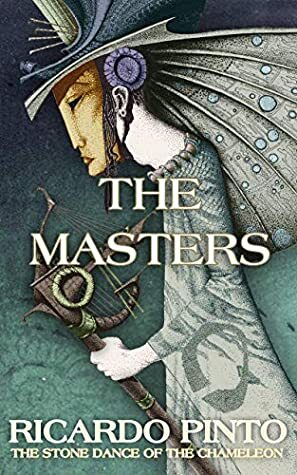
1. (released 2020)The MastersBy Ricardo Pinto
“THE MASTERS hooks you right from the first page as the mystery of the visiting black ship begins to take center stage. As the story progresses, we see Carnelian go from his protected life of exile in his island homeland to a very uncertain future that awaits as he travels back to turbulent Osrakum, a place that he has no real connection to anymore. ” – Nick Borelli
About The Masters
The Masters is volume one of seven of The Stone Dance of the Chameleon—a coming of age story—a saga of love and war—an apocalyptic epic fantasy about power and redemption.
A black ship defies winter gales, bringing to young Carnelian’s remote island of exile three masked Lords of the Chosen—a cruel ruling caste. These Masters beg his father to return with them to oversee the election of a new God Emperor. To repair their ship, they pillage and destroy Carnelian’s home—the only world he’s ever known—condemning his people to starve. He and his father embark with the visitors on a long and perilous journey—against deadly opposition—to Osrakum, the heart and wonder of the world and seat of absolute power.
Buy from Amazon
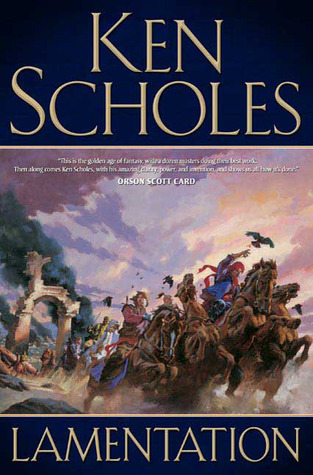
2. (released 2009)LamentationBy Ken Scholes About Lamentation
An ancient weapon has destroyed the Androfrancine city of Windwir. From many miles away, Rudolfo, Lord of the Ninefold Forest Houses, sees the horrifying column of smoke rising. Nearer to the Desolation, a young apprentice is the only survivor of the city — Nebios sat waiting for his father outside the walls and was transformed as he watched everyone he knew die in an instant.
And within sight of Windwir sits Sethbert, the Overseer the Entrolusian City States, gloating in triumph. At his side Lady Jin Li Tam — her father’s pawn in the game of statecraft, but destined to become her own Queen on the board.
Soon all the Kingdoms of the Named Lands will be at another’s throats, as alliances are challenged and hidden plots are uncovered.
AwardsLocus Award Nominee for Best First Novel (2010)
Grand Prix de l’Imaginaire for Roman étranger (2011)
David Gemmell Morningstar Award Nominee for Best Fantasy Newcomer (2010)
Buy from Amazon
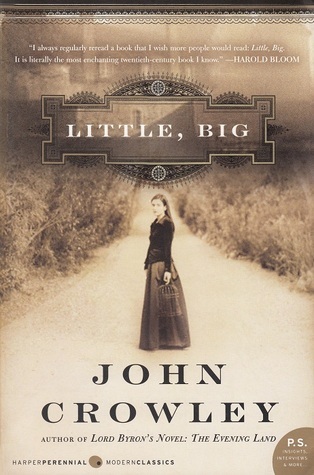
3. (released 1981)Little, Bigby John Crowley
“Love is a myth.’
‘Love is a myth,’ Grandfather Trout said. ‘Like summer.’
‘What?’
‘In winter,’Grandfather Trout said, ‘summer is a myth. A report, a rumor. Not to be believed in. Get it? Love is a myth. So is summer.”
About Little, Big
John Crowley’s masterful Little, Big is the epic story of Smoky Barnable, an anonymous young man who travels by foot from the City to a place called Edgewood—not found on any map—to marry Daily Alice Drinkwater, as was prophesied. It is the story of four generations of a singular family, living in a house that is many houses on the magical border of an otherworld. It is a story of fantastic love and heartrending loss; of impossible things and unshakable destinies; and of the great Tale that envelops us all. It is a wonder.
AwardsHugo Award Nominee for Best Novel (1982)
Nebula Award Nominee for Best Novel (1981)
Locus Award Nominee for Best Fantasy Novel (1982)
World Fantasy Award for Best Novel (1982)
Mythopoeic Fantasy Award (1982)
British Science Fiction Association Award Nominee for Best Novel (1982)
Seiun Award 星雲賞 Nominee for Best Foreign Novel (1998)
Buy from Amazon
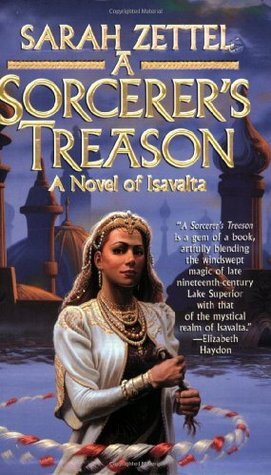
4. (released 2003)A Sorcerer's Treasonby Sarah Zettel About A Sorcerer's Treason
A World of Magic and Peril
1899, Sand Island, Wisconsin: Bridget Lederle is a lighthouse keeper on this stormy, windswept shore of Lake Superior. One cold night she sees a boat foundering near the island’s shoals, and rescues its lone occupant. The strangely dressed sailor tells her a fantastic tale, of Isavalta, a world where magic reigns, and where she is-incredibly-destined to play a key role in a power struggle between the Dowager Empress and her foes.
Isavalta, where magic can be found in the pattern of knots on a string, the colors of a dress, or even smoke in the air, beckons to her. Bridget has the second sight of her family, but the magical land where she will go with the sailor holds far greater marvels, and terrible perils that even she cannot see. For she carries secrets within her that even she doesn’t know, secrets that could change the fate of the fabulous magical world that calls her home . . .
Buy from Amazon
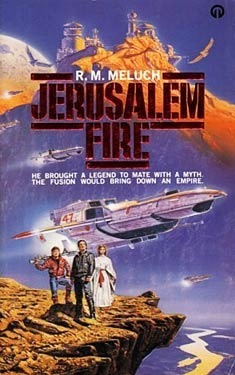
5. (released 1985)Jerusalem Fireby R.M. Meluch
A Wizard’s Forge is a fantastically subversive fantasy that starts with the plucky bookish heroine on an island that knows the truth of a planet’s lost origins being kidnapped then sold into slavery where absolutely none of those qualities matter. She struggles with brainwashing from a charismatic ruler and even escape provides little recourse from her PTSD. It is a book that deals with difficult subjects but has a lot of charm regardless.
About Jerusalem Fire
To most of the galaxy he was a legend without a face, and to the rest a face without a name. He was Alihahd: the word meant simply ‘He left’. And so he always had. Until his luck ran out. And with it the stability, the very existence of the Na’id Empire which had ruled the known worlds since the onset of the human Dark Age. For it was on the semi-mythical planet of Iry that Alihahd at last found his destiny.
Iry, the world of the Irin warrior-priests, of witches and warlocks attended by familiars in wondrous shapes. Iry, where ‘men’ flew on wings with the eagles, and journeyed through the stars on enigmatic quests, armed only with their magical double-curved swords, and the strange powers they nurtured with such dedication. Iry, a culture awaiting a catalyst: Alihahd. It needed only his presence to cause a jihad to boil out across the universe.
Buy from Amazon
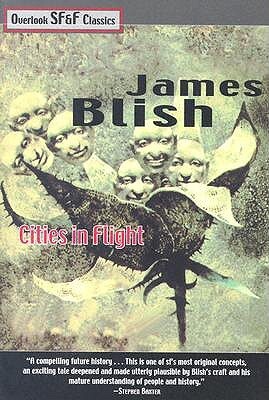
6. (re-released 2005, original 1970)Cities in Flightby James Blish
Hands down one of my favorite series ever written. Cities becoming spaceships, living forever, this story has it all.
“There is wanting the unobtainable, and there is the obtaining of desire, and the greatest of these is the wanting, especially since the object of desire usually exists only in some alternate reality, to be mocked by actuality.”
About Cities in Flight
Originally published in four volumes nearly fifty years ago, Cities in Flight brings together the famed “Okie novels” of science fiction master James Blish. Named after the migrant workers of America’s Dust Bowl, these novels convey Blish’s “history of the future,” a brilliant and bleak look at a world where cities roam the Galaxy looking for work and a sustainable way of life.
In the first novel, They Shall Have Stars, man has thoroughly explored the Solar System, yet the dream of going even further seems to have died in all but one man. His battle to realize his dream results in two momentous discoveries anti-gravity and the secret of immortality. In A Life for the Stars, it is centuries later and anti-gravity generations have enabled whole cities to lift off the surface of the earth to become galactic wanderers. In Earthman, Come Home, the nomadic cities revert to barbarism and marauding rogue cities begin to pose a threat to all civilized worlds. In the final novel, The Triumph of Time, history repeats itself as the cities once again journey back in to space making a terrifying discovery which could destroy the entire Universe. A serious and haunting vision of our world and its limits, Cities in Flight marks the return to print of one of science fiction’s most inimitable writers.
A Selection of the Science Fiction Book Club
Buy from Amazon
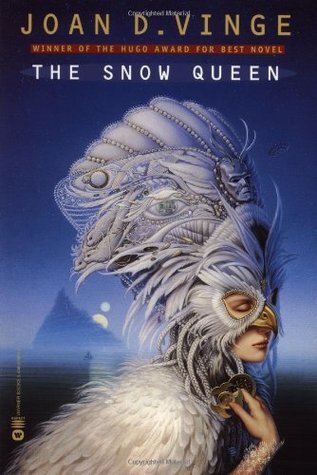
7. (released 1980)The Snow Queenby Joan D. Vinge
“Indifference.” Jerusha surprised herself with the answer. “Indifference, Gundhalinu, is the strongest force in the universe. It makes everything it touches meaningless. Love and hate don’t stand a chance against it. It lets neglect and decay and monstrous injustice go unchecked. It doesn’t act, it allows. And that’s what gives it so much power.”
About The Snow Queen
This reissue of a modern classic of science fiction, the Hugo and Locus Award-winning and Nebula-nominated The Snow Queen, marks the first time the book has been reprinted in fifteen years.
The imperious Winter colonists have ruled the planet Tiamat for 150 years, deriving wealth from the slaughter of the sea mers. But soon the galactic stargate will close, isolating Tiamat, and the 150-year reign of the Summer primitives will begin. Their only chance at surviving the change is if Arienrhod, the ageless, corrupt Snow Queen, can destroy destiny with an act of genocide. Arienrhod is not without competition as Moon, a young Summer-tribe sibyl, and the nemesis of the Snow Queen, battles to break a conspiracy that spans space. Interstellar politics, a millennia-long secret conspiracy, and a civilization whose hidden machineries might still control the fate of worlds all form the background to this spectacular hard science fiction novel from Joan D. Vinge.
AwardsHugo Award for Best Novel (1981)
Nebula Award Nominee for Best Novel (1980)
Locus Award for Best SF Novel (1981)
Ditmar Award Nominee for Best International Long Fiction (1981)
Balrog Award Nominee for Best Novel (1981)
Buy from Amazon
The post 7 SFF Books That You May Not Have Heard Of But Should Read appeared first on BEFOREWEGOBLOG.
September 7, 2022
Review – Sky Breaker: Tales of the Wanderer
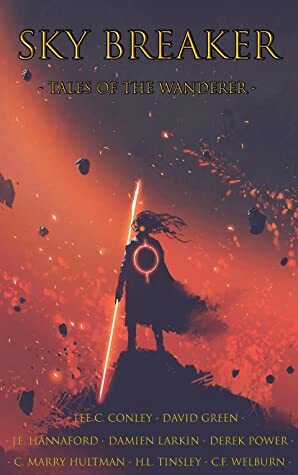
“I would highly recommend this collection of stories to anyone looking for a uniquely cohesive anthology experience and those who have an interest in cosmic horror.
Taylor from Maed Between the Pages
“
It’s quite rare that I give an anthology five stars as the nature of story collections is that some will work for you and others won’t; and while I do have favorites in Sky Breaker, none of the stories felt like a weak link.
All of the authors in this collection are given a premise: that portals have opened up all over the planet and there is some malevolent force behind that desires to be free that people call The Wanderer. The plethora of different tales that come from this one base idea is fascinating. Some are dark and vicious or mournful, some take place in the raging sea on the backs of whales or in desolate wastelands, while others get you to chuckle when someone throws a shoe. I was filled with excitement with each new story…what world would I get to visit this time?
“He raised his gaze skyward. Instead of the flickering red and purple aurora that decorated spring skies like sparkling gems, a rent in the fabric of the sky yawned across the horizon.” – Darkwhale by J.E. Hannaford
Some standouts for me:
Swampers by C.F. Welburn.
The first story in the collection and it still stuck with me until the end. The world building contained within these few pages is masterfully done and I found myself wanting to read more about this place despite the bitter story told. We learn of secrets long kept, betrayals, and the inevitability of human nature as we enter a universe where the portals have been harnessed for trade between nations.
Topher the World by Derek Power.
A much needed chuckle in the midst of many other serious stories. Sometimes it’s a joy to read from a main character who doesn’t take themselves too seriously and that is done beautifully here. But don’t let that tone fool you, there is also a fantastically written battle scene in the installment as well…I felt like I was watching an anime.
Stormchild by Lee C. Conley.
Everyone who watches my booktube channel knows that I have a morbid fascination with the sea- you won’t find me anywhere near it in person, but I’m obsessed with all forms of media about it. So when I learned that this story dealt with a captain at war with a leviathan at sea, I knew I would be hooked. Themes of obsession and revenge give this tale a dark tinge that lingers. I was also very impressed with the descriptive writing. I felt I was on the ship witnessing the battle for myself.
I would highly recommend this collection of stories to anyone looking for a uniquely cohesive anthology experience and those who have an interest in cosmic horror. Will definitely be purchasing a physical copy for myself!
Check Out Some of Our Other ReviewsReview – A Psalm for the Wild Built by Becky Chambers
Reviewv- Across the Green Grass Fields by Seanan McGuire
Share Tweet Pin
The post Review – Sky Breaker: Tales of the Wanderer appeared first on BEFOREWEGOBLOG.
Review – Light from Uncommon Stars by Ryka Aoki
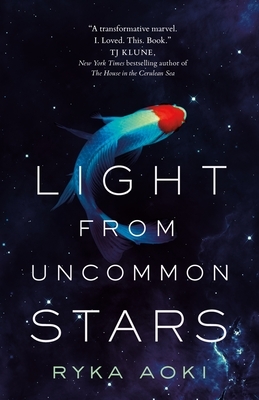 Light from Uncommon Stars by Ryka Aoki is a collection of discordant elements: California’s San Gabriel Valley, cursed violins, Faustian bargains, and queer alien courtship with a deep love and fascination for fresh-made donuts. However, instead of Light From Uncommon Stars feeling overly jangly like a tin can full of pennies…this book comes together like a bit of sugar-dusted magic.
The premise involves three women, Shizuka Satomi, Katrina Nguyen, and Lan Tran. All are women running from something and grasping for something that will, in the most literal sense, save them.
Shizuka, long ago, made a deal with the devil. To escape damnation, she must entice seven other violin prodigies to trade their souls for success. She has already delivered six. Enter Katrina, a young transgender runaway that catches Shizuka’s ear with her wild talent; Shizuka can almost feel the curse lifting. She’s found her final candidate.
But where does a donut shop fit into all of this?
“Shizuka meets Lan Tran, retired starship captain, interstellar refugee, and mother of four. Shizuka doesn’t have time for crushes or coffee dates, what with her very soul on the line, but Lan’s kind smile and eyes like stars might just redefine a soul’s worth. And maybe something as small as a warm donut is powerful enough to break a curse as vast as the California coastline.”
“As the lives of these three women become entangled by chance and fate, a story of magic, identity, curses, and hope begins, and a family worth crossing the universe for is found.”
The first thing you notice when reading this story is that humanity is laid bare. The good, the bad, and the deplorable are brought into the light for all to see. Maybe it is because it involves Faustian bargains. Ultimately, who you are will shine through because it has to. The music and the devil know what is in your heart. I think that is why one of the main characters is transgender. Aside from the beautiful queer representation, they are being their most authentic self. Who they really are, is brought out to the forefront in a very emotional and unflinchingly raw way.
And I am here for it.
The book also touches on the importance of the concept of a found family. Who we are born to is not necessarily whom we end up with as our nearest and dearest. Sometimes, our family is a bunch of alien space refugees running from a galactic war who run a donut shop.
Light from Uncommon Stars is also a sensual experience. Music and food can be luscious and evocative of memories of bygone times. Aoki uses them as mute characters. When speaking of music, “What would happen if someone played their existence not only to its inevitable end, but also to its inevitable beginning? What if someone played their music to its inevitable everything?” Or, when talking about bread, “A good bread tastes like home.”
My only caveat to this lovely story is a point brought up by the amazing reviewer Gautam Bhatia: this story is heavily steeped in American culture. This might make this story difficult to connect to if you are unaware of some of the minutiae of American culture.
If you have an opportunity to read this book, you should. It is an entertaining, heartwarming experience that speaks to the heart of what makes us both human and who we are inside. It takes absolute courage to be your most authentic self, and these three female protagonists, each on their own path, show that courage in different ways.
Buy from Amazon
Light from uncommon stars•Light from uncommon stars•Light from uncommon stars•Light from uncommon stars•Light from uncommon stars•Light from uncommon stars•Light from uncommon stars•Light from uncommon stars•
The post Review – Light from Uncommon Stars by Ryka Aoki appeared first on BEFOREWEGOBLOG.
September 6, 2022
Review – Across the Green Grass Fields by Seanan McGuire
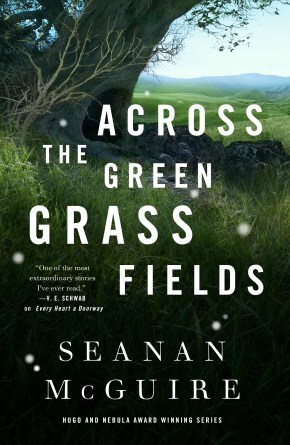
A young girl discovers a portal to a land filled with centaurs and unicorns in Seanan McGuire’s Across the Green Grass Fields, a standalone tale in the Hugo and Nebula Award-wining Wayward Children series.
“Welcome to the Hooflands. We’re happy to have you, even if you being here means something’s coming.”
Regan loves, and is loved, though her school-friend situation has become complicated, of late.
When she suddenly finds herself thrust through a doorway that asks her to “Be Sure” before swallowing her whole, Regan must learn to live in a world filled with centaurs, kelpies, and other magical equines―a world that expects its human visitors to step up and be heroes.
But after embracing her time with the herd, Regan discovers that not all forms of heroism are equal, and not all quests are as they seem…
My Thoughts“She knew better now. The world was bigger now. She was bigger now, and that made all the difference.”― Seanan McGuire, Across the Green Grass Fields
Across the Green Grass Fields, Seanan McGuire’s newest addition to the Wayward Children series is bringing us a touching and verdant tale that takes place amongst centaurs and unicorns.
Seanan McGuire, author of countless novels, novellas, comics, short stories, and songs, has an inborn connection to myths and legends. In reading her stories, it seems like McGuire takes tales of old and twists them, turns them on their head, and serves them to her readers like an exquisite delicacy. I have gorged myself on her stories in the past. I can say that I have enjoyed what Seanan has written for her full catalog in one way or another. Even the stories that don’t 100% connect with me as a reader, I can appreciate her mastery as a writer. Luckily for me, she is a prolific writer, and I have many choices in stories.
All that being said, I enjoyed Across the Green Grass Fields, as I have enjoyed or loved the other books in her Wayward Children series, but this one was not my favorite. I came out of the story almost ambivalent to the plot.
The story starts with the main character, a little girl named Regan. Regan is different than other girls in the story. You see how Regan is kind and empathetic and how she stumbles in personal relationships as McGuire details the intricacies of those relationships with her peers. Girls can be mean, the mean girl stereotype is there for a reason, and she is getting the full force of it due to her “best friend.” While Regan is ten at the start of this story, that is only in years as Regan is far wiser in some ways than your average ten-year-old girl.
Regan has one passion, and that is a love of horses. According to Regan, this is an acceptable passion for a young girl. Had she had a passion, for say, bugs, she knows that she would be ostracized and shunned as some of her classmates had been. She keeps most of this love to herself and does not share it with her schoolmates. This self-awareness plays a significant role in Regan’s character’s development as the story moves onwards.
As the story continues, Regan ages, and her schoolmates physically develop. But, Regan seems stalled in her childlike stage. She is standing on the precipice of starting that terrible transition to adulthood but not quite getting there.
She goes to her parents with the question, “Why?” Why is she different than the other girls? Her parents let her know that she is intersex. I am delighted that McGuire took such a real and pertinent issue and gave it the treatment it deserves. Regan is an example of one of McGuire’s strengths, in that she treats and creates children as real human beings. They feel fear, panic, and emotional turmoil and are not treated with, pardon the pun, kid gloves.
Regan reaches out to a “friend” and explains to her friend what being intersex is. She wants to talk about a momentous thing in her life so she reaches out to a “friend.” The “friend” reacts as I can imagine some children reacting and starts yelling at her, calling her a boy and telling the school. What should be an intimate moment between friends turns into taunting and jeers from uninformed and cruel kids. Regan runs out of her school.
At this point, Regan finds a door.
If you are familiar with any of the Wayward Children books, you understand the significance of a door and what it means for the child. The door is to a place, unlike your home. In previous books, a door led children to a land of mad science and death, a goblin market, or lands made of candy. Each land changes the child.
In this child’s case, the land that Regan walked into is one called Hooflands. A land of centaurs, unicorns, and other creatures of the same ilk. Perfect land for one who loves all creatures equine. It is said when a human child comes through a door into the Hooflands; it portends to change. By the act of her coming to The Hooflands, her human nature wills a destiny into effect. One that will affect the citizens of The Hooflands and change the world they know. Regan does not believe in destiny.
“Welcome to the Hooflands. We’re happy to have you, even if you being here means something’s coming.”
The second and third part of Across the Grass Green Fields details the land of centaurs and unicorns. It is an unusual lake on the mythos behind these creatures. McGuire’s Worldbuilding is lush and verdant. Like any of her other stories across multiple genres, there is always a slightly dark edge to everything. What may be green and gorgeous with towering trees and emerald green moss will likely be housing monsters.
This speaks to McGuire’s familiarity with folk tales and legends. Before Disney, stories such as The Little Mermaid and Hansel and Gretel were tales of fancy as much as cautionary. Good does not always conquer evil. Sometimes the witch does eat the children, and the mermaid might not get the prince. And, of course, everything has teeth.
Regan spends years living amongst the creatures of The Hooflands. She becomes a wild girl, probably who she was always meant to be. She also learns self-reliance, kindness, strength of will, and character. I like who Regan becomes; it feels like a proper extension and growth for her as a character. But, as a human is an omen for significant change in the Hooflands, Regan has a destiny that will be fulfilled. Even if she doesn’t believe in fate and wants to be left alone with her found family.
“She still didn’t believe in destiny. Clay shaped into a cup was not always destined to become a drinking vessel’ it was simply shaped by someone too large to be resisted. She was not clay, but she had been shaped by her circumstances all the same, not directed by any destiny.”
The fourth and final act of the story is where Across the Green Grass Fields lost me a little bit. This book has beautiful writing, a great explanation of centaurs’ matriarchal society, and touching descriptions of the real friendships Regan makes. But, beyond the lush details, the actual plot and final crescendo of the story fell flat for me. It felt anti-climatic in the face of such excellent writing. However, I have to say that Regan’s very practical nature is entertaining to read. The vital thing to note about the ending, even though I found it anti-climatic; it is in line with Regan’s character.
One of the major themes of Across the Green Grass Fields has to do with destiny or lack thereof. Regan believes in her future, her own path. It will not be defined by what and who thinks it should. That idea starts slow when dealing with her peers’ preconceived notions and eventually crescendos at the end of the story. Regan becomes more comfortable in her shoes and does not care if that bothers anyone.
Overall, I enjoyed this addition to The Wayward Children series, great characters, and a lush world. It is solid, but I think it lacks the same oomph that other books in the series have. I will continue reading the Wayward Books, taken as a whole series; they are lovely and some of McGuires best writing.
Check Out My Other ReviewsReview – A Killing Frost (October Daye #14) by Seanan Mcguire
Review – The Unkindest Tide (October Daye #13) by Seanan Mcguire
Review – Night and Silence (October Daye #12) by Seanan McGuire
Read the Wayward Children Series and Across Grass the Green FieldsThe post Review – Across the Green Grass Fields by Seanan McGuire appeared first on BEFOREWEGOBLOG.