
Matthew Carr's Blog, page 4
May 30, 2025
Darwin’s Savages

Good evening everyone. There are times when self-promotion isn’t just an indulgence, but an obligation. And given that yesterday was the publication day for my book Darwin’s Savages: Science, Race and the Conquest of Patagonia , I hope you will indulge me.
Because this is the result of more than two years of thinking, writing and travelling…sometimes simultaneously. And I would be doing myself an injustice if I didn’t bring it to your attention, in the hope that the blurb and some endorsements might persuade you to buy it here
Thanks for reading Matt Carr’s Infernal Machine! Subscribe for free to receive new posts and support my work.
In December 1832, Charles Darwin sailed into Tierra del Fuego, at the tip of South America, where he first encountered ‘Indians’. ‘I would not have believed how entire the difference between savage and civilised man is,’ he wrote. ‘It is greater than between a wild and [a] domesticated animal.’ But he was shocked by the ‘war of extermination’ he witnessed in northern Patagonia, waged by the colonising army of Buenos Aires.
Matthew Carr explores how these experiences influenced Darwin’s writings, and the theories of scientific racism that others drew from his work. In a sweeping account of soldiers, missionaries, anthropologists and skull-collecting scientists, he traces the connections between colonial expansionism and the tragic ‘extinction’ of South America’s conquered peoples.
From Indigenous graveyards and military memorials to archaeological sites and natural history museums, this is a compelling journey through Patagonia past and present. Amid global battles for historical memory, culture wars over race and empire, and ongoing struggles for Indigenous rights, Carr chronicles the subjugation of Argentina’s First Peoples—and the ideas that made it possible.
Reviews‘Powerful, illuminating and perceptive, Darwin’s Savages cuts through the mythologisation and misrepresentation around the brutal subjugation of Patagonia’s Indigenous peoples. Carr deftly examines the legacy of Darwin in this hard-hitting story of colonisation, science, racism and resistance, while weaving in vivid first-hand descriptions and contemporary reportage.’ — Shafik Meghji, author of Crossed Off the Map and Small Earthquakes
‘With graceful, incisive prose and corroborative historical research, Carr walks the reader through the brutal colonisation of the Indigenous peoples of Patagonia, a story too long hidden from history and at the same time heartbreakingly familiar to First Peoples everywhere.’ — Michelle Good, author of Five Little Indians and Truth Telling
‘Blending correspondences, history and lived experiences, this engaging narrative crosses times and places to illuminate the entanglement of Darwin’s ideas with colonialism and racism, and their impact on the Indigenous peoples of Patagonia, then and now.’ — Agustín Fuentes, Professor of Anthropology, Princeton University, and author of Race, Monogamy, and Other Lies They Told You and Sex is a Spectrum
Thanks for reading Matt Carr’s Infernal Machine! Subscribe for free to receive new posts and support my work.


May 27, 2025
Riefenstahl
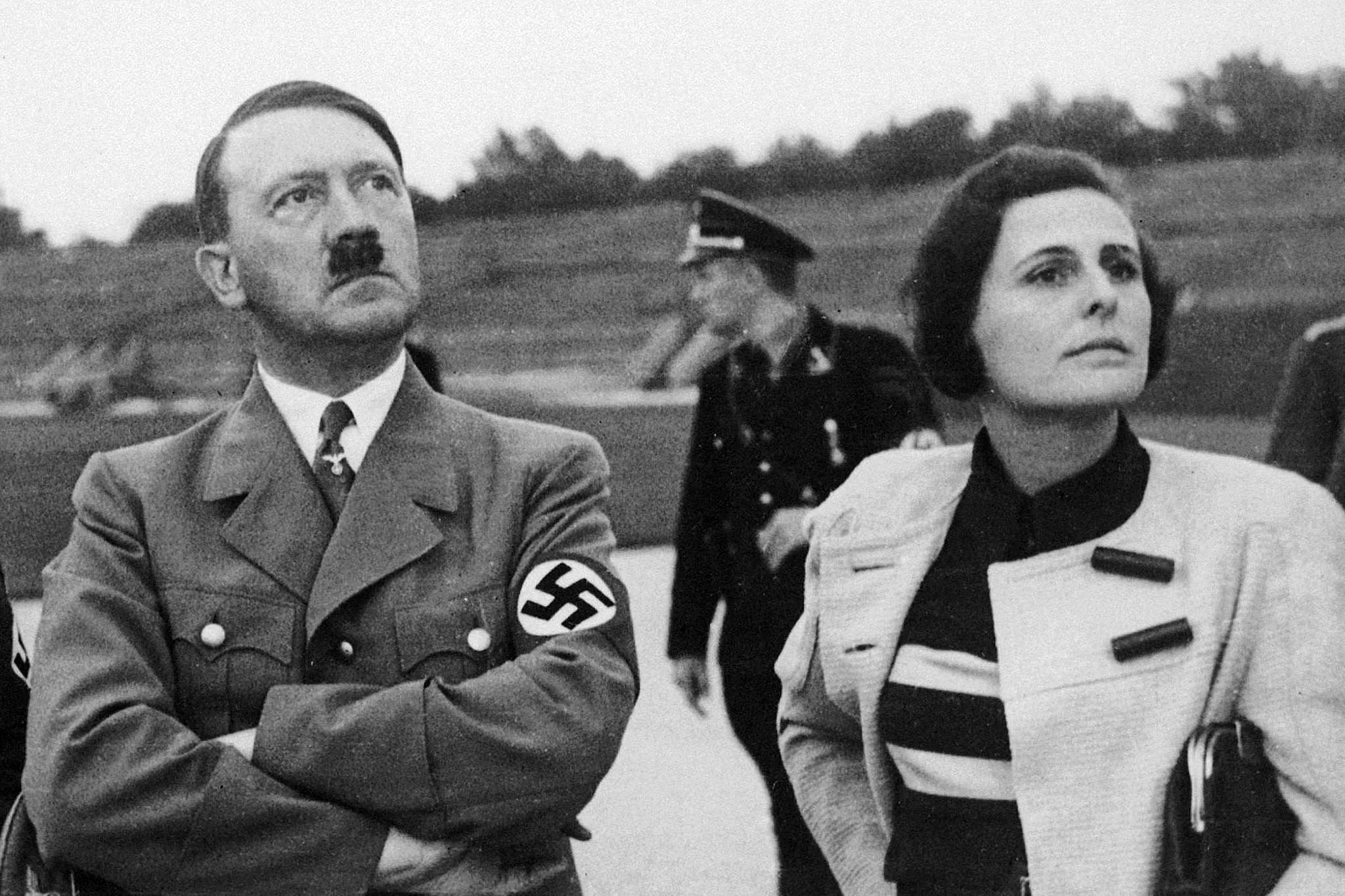
Many people will be familiar with the debate about artists and their moral failings and/or their political choices. It’s a debate that tends to return to the same themes: Can even the greatest works of art be considered in isolation from the politics of their creators, even when their politics are actually despicable? To what extent do - or should - the political and moral failings of the artist influence our judgements of their artistic achievements?
Few artists lend themselves more easily to these discussions than Adolf Hitler’s favourite film director, the German dancer, actress, filmmaker and photographer Helene Bertha Amalie ‘Leni’ Riefenstahl. And few artists have personally intervened in these debates with the tenacity that Riefenstahl demonstrated, from her re-emergence into public life after World War II until her death in 2003 at the age of 101.
These were years in which the undisputed queen of Nazi propaganda re-invented herself as a photographer with the same ferocious creative energy that she had once displayed during the Nazi era. She took pictures of Sudanese tribes and sub-aquatic oceanic life that became bestselling coffee table books. She photographed Mick and Bianca Jagger’s wedding, and got a heads up from Michael Jackson. She was a guest of honour at the 1976 Montreal Olympics and also at Time magazine’s seventy-fifth anniversary in 1998, and received plaudits from Quentin Tarantino and Francis Ford Coppola
Throughout those years, Riefenstahl stubbornly proclaimed an aggrieved innocence regarding her Nazi past. She was a serial litigator, frequently taking people to court who raised troubling episodes about her Nazi past, while she set out to construct a more salubrious legacy for herself, as an apolitical artist drawn unwittingly into the Nazi orbit.
To make this case, she appeared repeatedly on talk shows, and in films and interviews. She wrote and re-wrote her memoirs, and forgot or re-remembered episodes that contradicted her claims to art-for-art’s sake innocence.
All these efforts are thoroughly dissected in the compelling documentary Riefenstahl, directed by Andres Veiel and produced by the German journalist Sandra Maischberger. In addition to publicly-available interviews, Veiel and his team had access to more than 700 boxes of previously-unseen materials from Riefenstahl’s personal archives, including recorded phonecalls, video footage, letters and other documents.
The result is an engrossing and complex portrait of a brilliant, extraordinary woman whose genuine artistic achievements were indelibly tarnished by her Nazi past. Although Riefenstahl acknowledges its subject’s multiple gifts, the film painstakingly strips away its subject’s layers of deceit and self-deception, to reveal an intellectually-dishonest and amoral narcissist who could not understand why the rest of the world did not admire her as much as she admired herself.
Watching it reminded me of the journalist Martha Gelhorn - a fearless journalist who did have empathy - who once wrote in 1964 of ‘the adults of Germany, who knew Nazism and in their millions cheered and adored Hitler until he started losing, [who]have performed a nation-wide act of amnesia; no one individually had a thing to do with the Hitlerian regime and its horrors.’
Riefenstahl was one of those amnesiac Germans, but her claims to innocence have even less credibility than those of her peers. Many Germans admired Hitler from afar, but not many had the kind of access to his inner circle granted to Riefenstahl. Veiel’s film meticulously unpicks the historical evasions that made her very specific amnesia possible. It shows how Riefenstahl constantly revised her retrospective explanations and justifications throughout her life, in an attempt to cover her tracks.
In one interview, she claims - ludicrously - that no one used the term ‘Nazism’ in the early 1930s, and then expresses surprise when her interlocutor points out that it was. Elsewhere she claims that her notorious film Triumph of the Will was merely a ‘commission’, and jokingly suggests that she would have done the same for Roosevelt or Stalin - not nearly the resounding apologia she seems to think it is.
In various interviews, she denies having any close relationship with Hitler and his circle, despite persistent photographic and documentary evidence to the contrary. At one point, she shouts at an interviewer from a previous film about her who had the temerity to raise these connections. In another clip, she mockingly asks an interviewer whether she should have become a resistance fighter, even though there were ‘very few.’
There may have been very few, but there were some. And there were also artists, most notably Marlene Dietrich, who the Nazis tried and failed to recruit, and who used her fame to fight them. No such efforts were required with Riefenstahl, who embraced the cause without any hesitations or reservations, and she did not like to be reminded of the fact. In one telling episode, she appears in a 1970s German talk show, bristling with anger and contempt towards another female guest of her own age, who did resist the Nazis, and rejects Riefenstahl’s claims that no one knew what was going on at the time.
Veiel also tracked down a 1934 interview with the Daily Express, in which Riefenstahl describes how she read Mein Kampf (‘the book of Hitler, the Bible of Hitler’) in 1931, and ‘after reading the first page, I became an enthusiastic National Socialist.’ These clips are interspersed with her own written recollections of the near orgasmic physical sensations that she experienced on first hearing Hitler speak, and her letters pleading with the Fuhrer to stage the premiere of her film Olympia and reminding him of the ‘great joy’ he brought to so many millions.
Indeed he did, even if many Germans subsequently chose to forget it. It was not for nothing that Hitler acceded to her request and arranged for Olympia to be premiered on his birthday. Because no one captured that joy more memorably than Riefenstahl herself; the relationship between Riefenstahl and Nazism was almost entirely dependent on her artistry and her role as an artist.
This convergence was most obvious in Triumph of the Will, the portrait of the 1934 6th Nazi Party Congress at Nuremberg. From its opening sequence of Hitler descending on the city like a Wagnerian warrior-god, to the joyous crowds, night rallies, precision-choreographed assemblies and artfully-framed images of Hitler, Hess, Himmer and other members of the Nazi ruling clique - this film is a rhapsodic hymn of praise to Nazi power.
Where the Confederacy and the Ku Klux Klan found their filmmaker in D.W. Griffith’s Birth of a Nation, Nazism found in Leni Riefenstahl an artist who knew exactly what was required of her, and understood the propaganda potential of the relatively new medium of cinema. Through pitch-perfect combination of images, music, lighting, and orchestrated crowd-spectacle, she glorified a regime that was then at the height of its power.
There is no hint in Riefenstahl’s film of the beginnings of the concentration camp system, the ongoing sterilisation of the mentally and physically ‘unfit’, the elimination of German democracy, the recent Night of the Long Knives, and the brute power of a terrorist police-state.
Triumph of the Will transformed the sordid and brutal history of fascist tyranny into an epic tale of Germany’s national resurrection and redemption. It made Nazi criminals like Hitler, Goering, Hess, and Streicher into noble statesmen.
Riefenstahl often said that she did nothing in her films to propagate hate. But if you make a film about a regime like that, without knowing anything of the history behind it, you are at best a credulous fool, whose art lacks even the most elementary grounding in morality or even in reality. And if Riefenstahl knew - or even suspected- what was happening in Germany at that time, then she was precisely the fascist fellow-traveller and accomplice that she subsequently claimed not to be.
Thanks for reading Matt Carr’s Infernal Machine! Subscribe for free to receive new posts and support my work.
Was Riefenstahl a naive aesthete infatuated with the images she created? Or was she an ideological fascist filmmaker, besotted with Nazism and its leader?

On one level the distinction is irrelevant. Because whatever Riefenstahl personally believed, she understood the kind of stories she was expected to tell, and saw in Nazism what Hitler and his cohorts wanted the world to see. Consider Olympia, ‘the greatest sports movie every made’ - her documentary on the 1936 Olympic Games which has left its mark on sports coverage and advertising ever since. Despite the funding and backing this film received from the Nazis, this film was less obviously political and propagandist than its predecessor. Though Hitler and Nazism feature in it, the film was ostensibly a celebration of the purity of the Olympian ideal and a paean to a certain notion of physical beauty and perfection.
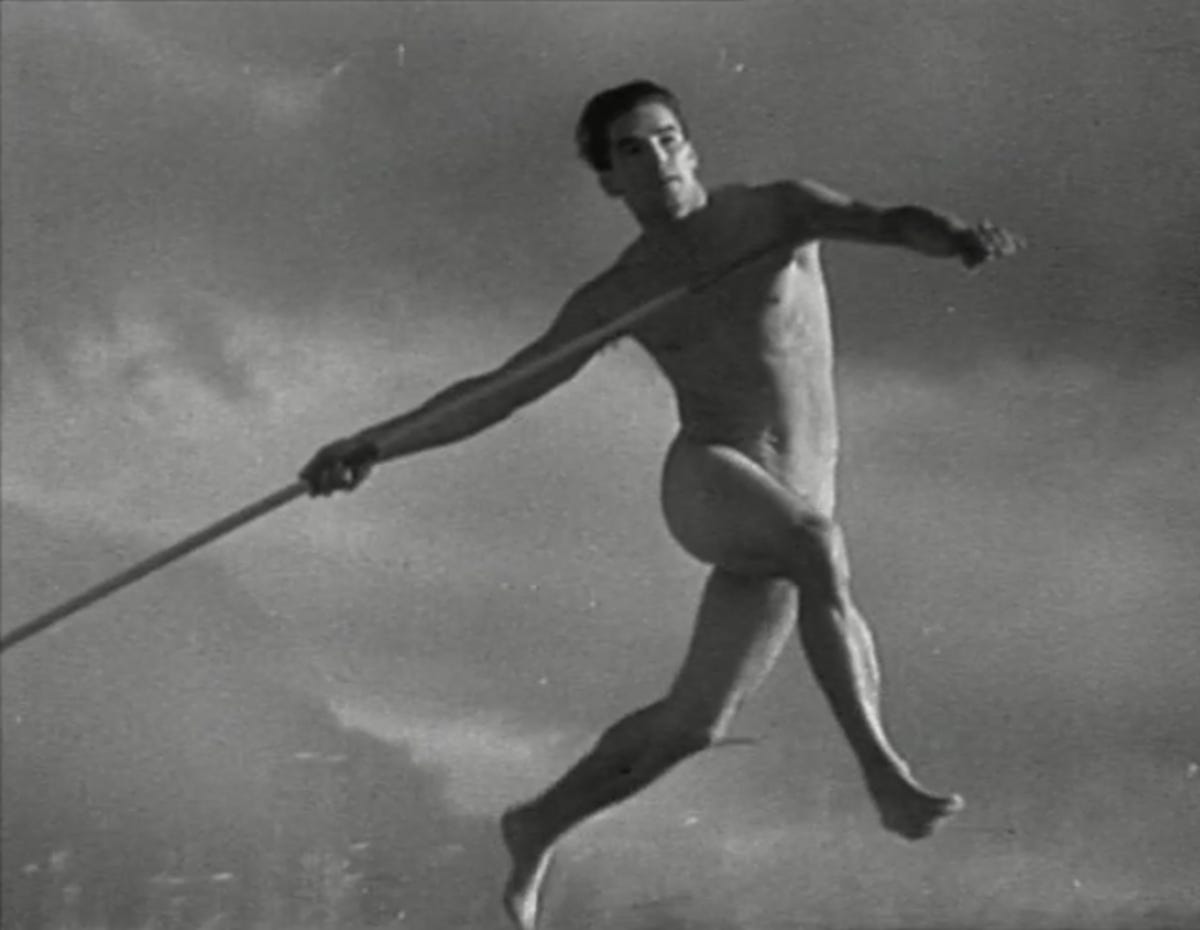
Some of these images were seductive and astounding at the time, and still are. Riefenstahl even appeared to depart from Nazi standards of ‘Caucasian’ or ‘Nordic’ standards of beauty, by including scenes of Jesse Owens’s famous victory. But the fact that a black body could meet Riefenstahl’s aesthetic standards hardly makes her an anti-fascist or an artist-subversive. On the contrary, as Veiel pointed out in an interview about his film, even Riefenstahl’s supposedly apolitical art always had an underlying ideological purpose, in which ‘this celebration of the strongest is always the contempt of the weak.’
Within a few years of Riefenstahl’s Olympiad, this ‘contempt’ would find expression in the morbid antisemitic caricatures of Jud Suss, the Warsaw Ghetto and the Holocaust, and the Aktion T4 euthanasia programs. Riefenstahl did not celebrate or advocate such actions, and may not have been aware of their full extent. But nor was she as innocent as she later claimed to be.
Veiel’s team found a letter in which she asked her ex-husband - a major in a Nazi paramilitary unit - to remove a group of Jews from a marketplace in south-central Poland where she was filming in 1939. This request resulted in their execution. Veiel also revisits the filming of Riefenstahl’s film Lowlands in 1944, in which she handpicked a group of Roma and Sinti extras from a concentration camp. Though Riefenstahl later claimed that these extras all survived the war, 100 of them died in Auschwitz.
These revelations are not entirely new. In 1984 the late German journalist Nina Gladitz was once sued by Riefenstahl for a film making the same allegations, and her film has never been shown. If the retelling of these episodes confirms Riefenstahl’s duplicity, they are only elements in a broader indictment that goes beyond Riefenstahl herself. Veiel goes to some lengths to demonstrate the support that she received throughout her life, from Germans who never ceased to admire her.
At one point in the film Riefenstahl describes herself as an artist in search of ‘outer and inner beauty’, but her ideal of beauty was always associated with a certain notion of physical perfection and purity that could be realised on film. She even seemed to see herself as an image rather than a real person. Filmed preparing for an interview on her 100th birthday, she still acts like the director, checking the lighting and camera angles, and asking the director to conceal a wrinkle on her face.

Even at the age of 100, the fascist Norma Desmond could not stand to see an imperfection in herself. Vain and narcissistic to the last, she continued to portray herself as a victim, unfairly tarnished by her association with the regime that she served so well. At a time when the descendants of fascism and Nazism are more powerful and more brazen now than at any time since the war, Riefenstahl reminds us of the seductive power of the regime that seduced her and so many others - a seduction that Riefenstahl also facilitated through her films.
Today’s far-right movements operate in a social media-saturated world where the line between reality and fakery is even harder to determine than it was in Riefenstahl’s time, and propaganda has become an artesanal process, that can generated by anyone with a modicum of technical expertise through memes and deep fakes, Twitter/X videos and dodgy Facebook ads.
The movements that rely on these techniques may never find a chronicler to equal this brilliant but repellent egomaniacal artist, who fell in love with Nazism and then spent the rest of her life denying it. But Veiel’s troubling film suggests that we are not as far removed from the world that she belonged to as we might like to think.
In one of Riefenstahl’s recorded phone calls, a fan praises ‘the little lady who filmed the beautiful bodies, not the cripples’ and predicts that one day, the German people will recover ‘morality, decency and virtue’, to which Riefenstahl responds, ‘Yes, the German people are predestined for that.’
This powerful but disturbing film makes it clear that it was Riefenstahl who lacked morality, decency and virtue, and the praise and adulation heaped upon her by her compatriots throughout her life suggests that she was not the only one devoid of these qualities.
May 20, 2025
Stranger Danger
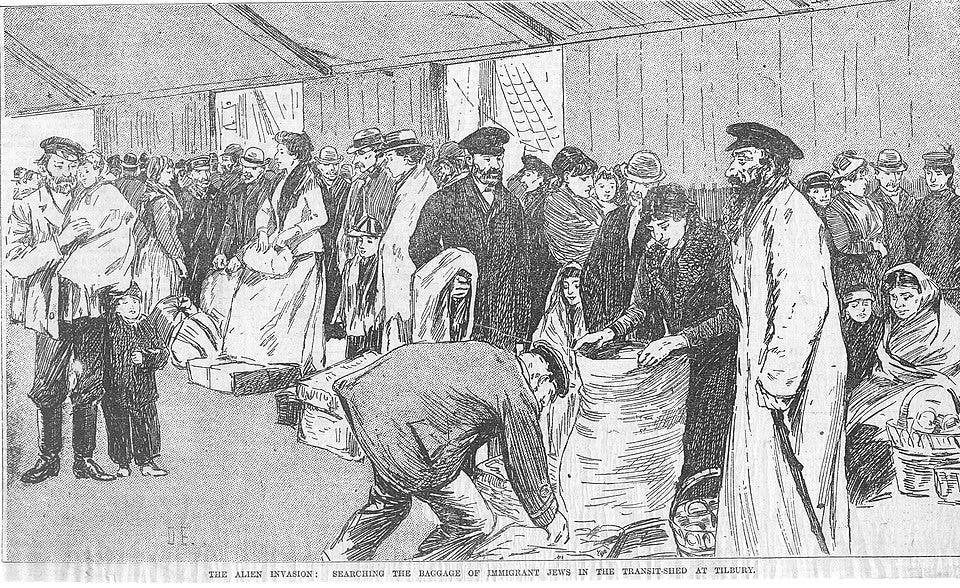
It’s a truth, universally unacknowledged, that whenever a British government finds itself in difficulties, and needs a distraction or a scapegoat, or just some immediate political advantage, it will seek headlines on immigration.
These efforts tend to recycle the same wearyingly familiar themes. Governments will blame their predecessors for letting too many people in or losing control of ‘our borders.’ They will announce new and harsher measures for keeping them out. They will say that Britain is generous but too many immigrants are taking advantage of our generosity. That Britain is a welcoming country but too many immigrants are refusing to integrate, learn English and adapt to our values. They will refer darkly to ‘social cohesion’ and ‘public concerns’.
Some politicians will go further, and warn that the country is being flooded by people of an alien culture or citizens of nowhere. In a country whose leaders are always more comfortable punching down than punching up, immigrants and immigration are soft targets - convenient explanations for every social and economic problem.
Why are your wages not going up? Because immigrants are undercutting you. Why can’t you find a job? Because immigrants are taking them. Why can’t you see a doctor or buy a house? Because immigrants have used up the housing stock and monopolised your GP surgery. Why are public services crumbling? You know the answer.
And now Keir Starmer has lent his voice to that grubby tradition. In a 2020 Labour leadership hustings, Starmer once declared:
Conservatives have created this hostile environment…we should welcome people wherever they come from…The whole UK is better because of immigration. If I’m honest, the Labour Party has been a bit scared of making the positive case for immigration for quite a number of years and I think we need to turn that round and broaden it out and make sure that people feel absolutely welcome here. Of course, back in 2020, Sir Keir
I do think, when we get into power, and we will get into power, that will require some changes at the Home Office to change that culture.
Noble, courageous words - or so they seemed - spoken at a time when Starmer was still trying to get the left to vote for him. But now he is in power, and as he never ceases to remind us, the world has changed. Earlier this year, the Home Office announced that refugees and asylum seekers who come to the UK via irregular routes will not normally be granted citizenship, because people who come by boat fail to meet the citizenship requirement of ‘good character.’
So much for changing the culture.
And last week, Starmer delivered one of the most contemptible speeches that any Labour politician has ever given, when he announced the government’s White Paper on immigration. Borrowing from the stalest of all Brexit clichés, the man who once called for a second referendum promised to ‘finally take back control of our borders and close the book on a squalid chapter for our politics, our economy, and our country.
This ‘squalid chapter’ consisted of the ‘chaos’ unleashed by Labour’s Conservative predecessors, who had promised to get immigration down, only for net migration to quadruple. And this outcome was not due to Tory incompetence, over-promising or necessity, or the arrival of refugees from Ukraine and Hong Kong, but the result of
A one-nation experiment in open borders conducted on a country that voted for control. Well, no more. Today, this Government is shutting down the lab. The experiment is over. We will deliver what you have asked for – time and again – and we will take back control of our borders.
It’s impossible to overstate how cynical, dishonest, and downright nonsensical these observations are. Some readers may remember when Tory politicians and the rightwing press once accused the Blair and Brown governments of deliberately flooding the country with Eastern European immigrants in order to ‘rub the right’s nose in diversity.’
Yet here was the man who once opposed Brexit, using the slogans of Brexit to accuse his predecessors of deliberately sneaking immigrants into the country for the last fifteen years. And what to make of this:
Nations depend on rules – fair rules. Sometimes they’re written down, often they’re not, but either way, they give shape to our values. They guide us towards our rights, of course, but also our responsibilities, the obligations we owe to one another. Now, in a diverse nation like ours, and I celebrate that, these rules become even more important. Without them, we risk becoming an island of strangers, not a nation that walks forward together.
Some critics have pointed out the similarity between this framing and Enoch Powell’s ‘Rivers of Blood’ speech. It may indeed be that Starmer’s speechwriters made this reference intentionally, but it’s equally likely that it was the unconscious product of the shallow opportunism and political obtuseness of Starmer’s team - coupled with a resolute refusal to challenge the shopworn nostrums of the great British immigration debate.
Certainly, few people will be unfamiliar with the picture of the generic immigrant that Starmer presented to his listeners - the privileged foreigner without responsibilities or obligations who sneaks through our porous borders and refuses to take part in the life of the nation.
Thanks for reading Matt Carr’s Infernal Machine! Subscribe for free to receive new posts and support my work.
As Starmer put it: ‘when people come to our country, they should also commit to integration, to learning our language, and our system should actively distinguish between those that do and those that don’t’ so that ‘settlement becomes a privilege that is earned, not a right…if you make a contribution, if you work, pay in, and help rebuild our country.’
Though Starmer paid grudging lip service to the immigrants who had contributed to the country after World War II, his speech was not intended to celebrate immigrants, but to condemn the ‘incalculable’ damage inflicted on British society by Britain’s ‘addiction’ to immigration. As he put it:
when you have an immigration system that seems almost designed to permit abuse, that encourages some businesses to bring in lower-paid workers rather than invest in our young people, or simply one that is sold by politicians to the British people on an entirely false premise, then you’re not championing growth, you’re not championing justice, or however else people defend the status quo. You’re actually contributing to the forces that are slowly pulling our country apart.
This simplistic either/or formulation completely ignores the fact that much of the ‘unskilled’ immigrant labour in the UK is a response to labour shortages in social care, construction, the NHS, agriculture and other sectors. But why bother with such details, when you can make comparisons like this?
Sectors like engineering, where visas have rocketed while apprenticeships have plummeted. Is that fair to Britain? Is it fair to young people weighing up their future to miss out on those apprenticeships, to see colleges in their community almost entirely dedicated to one-year courses for overseas students?
Are engineering apprenticeships plummeting? Apprenticeships in general certainly have, but there is no clear causal connection between this outcome and the fact that visas have ‘rocketed’. Nor is it easy to find communities where young people are missing out on apprenticeships because overseas students have taken over their local community college.
I haven’t found any evidence for this, but as Trump, Farage and so many others have shown again and again, something doesn’t have to be true to be politically useful. This seems to be the route that Starmer and his advisors - whoever they are - have decided to go down - the better to promote messages like this:
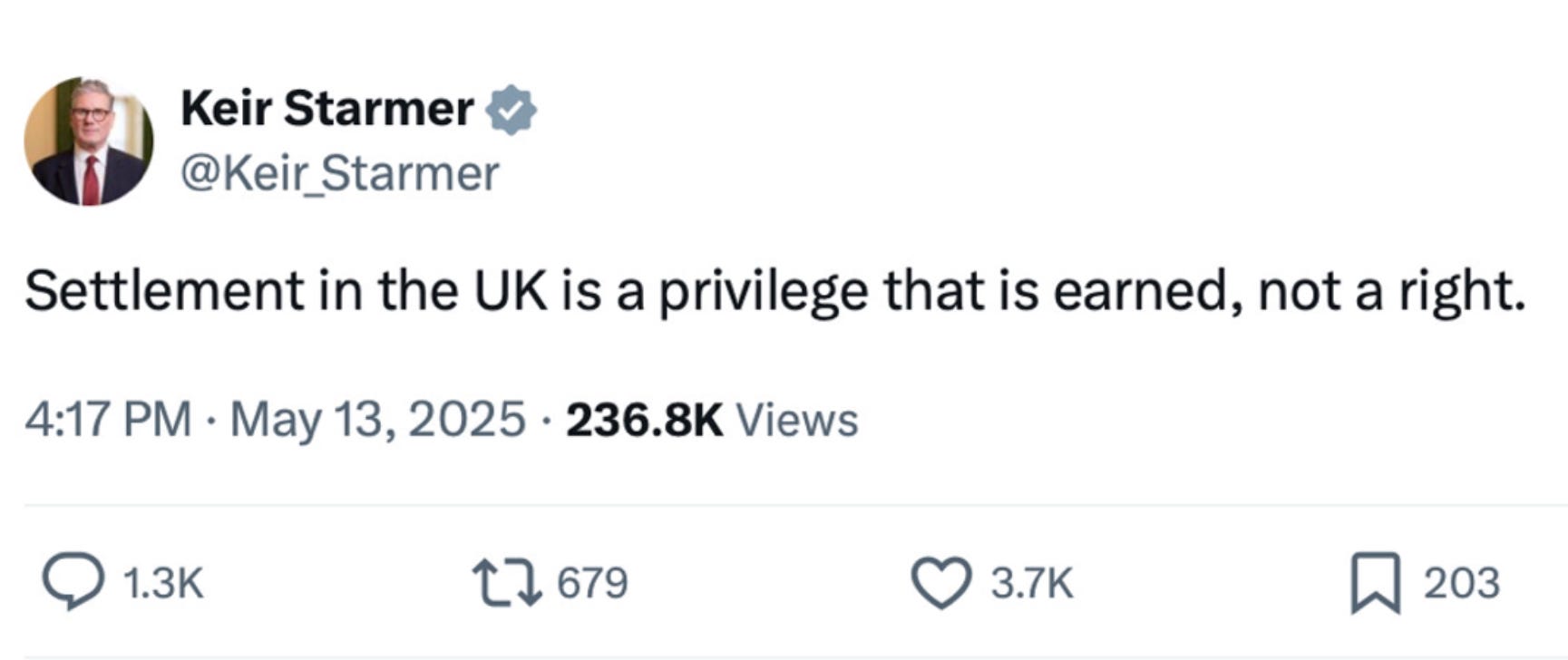
And this…

It’s not for nothing that Nigel Farage and Robert Jenrick have congratulated the government, and that George Osborne has pointed out that Labour’s immigration policy was ‘very consistent’ with Conservative policy in the past. Abroad, Starmer’s speech earned plaudits from Viktor Orban and the AfD.
These are not compliments that a Labour government should normally welcome, and some Labour supporters have criticised Starmer for encouraging them. Some Starmer loyalists have tried to defend the indefensible. Pat McFadden described criticisms of his speech as ‘overblown.’ Justice Secretary Shabana Mahmood claimed that the speech represented the ‘values of the Labour Party’ and the Prime Minister’s desire to ‘see this country as a nation of neighbours’.
Such claims are not worthy of serious consideration.
It is difficult to avoid the conclusion that Starmer’s speech - along with the White Paper and the visit to Albania with GB News in tow to look into ‘ return hubs’ for failed asylum seekers - is part of a political package intended to advance the interests of the Labour government and no one else’s. Unnerved by its shallow majority and by the electoral rise of Reform, Starmer is making the same mistake that Cameron once made, and inventing policy in an attempt to co-opt Farage’s politics and slogans.
It didn’t work then, and it won’t work now. Because the evidence of the last fifteen years is that the more politicians concede to Farageism, the more they reinforce Farage’s image as the authentic truth-teller, and the more they are likely to take decisions contrary to the national interest and even their own.
Starmer’s nativist turn belongs to the same dismal trajectory. Incredibly, the White Paper is planning to impose a ‘levy’ on British universities that recruit international students, in order to ensure that the ‘benefits’ these students bring to universities are ‘shared.’ In his determination to please Reform voters, Starmer seems to have forgotten that these benefits are already shared, not only in the essential financial contributions that international students make to their universities, but the cities where they live.
Such are the crass and self-defeating policies that governments will adopt in an attempt to cater to the most reactionary, insular and downright xenophobic sectors of the population. And these sectors will never be pleased or satisfied, because they are the product of a deeper political and social malaise that goes beyond this timid, unimaginative and clueless government.
Like its predecessors, Labour is unable or unwilling to challenge ‘the vampiric nature of extreme wealth, which is completely incompatible with the health and wellbeing of the nation,’ as Priya Sahni-Nicholas, co-executive director of the Equality Trust described Britain’s grotesque levels of inequality.
Instead it prefers to present immigrants and immigration as the ur-problem that explains all the others, and pander to a ‘small island’ mentality in which immigration is viewed through a prism of perpetual grievance and perpetual victimhood, reinforced by politicians who benefit from performative demonstrations of toughness.
Who will look after an ageing population if care workers cannot be recruited from abroad? How will the 225,000 shortage of construction workers be filled? How will the NHS remain viable? Who will pick fruit and work in food production? How will British universities finance themselves without the contributions of international students?
Where are the politicians who will explain the trade offs and the advantages of immigration, instead of repeating the same stale tropes that have done so much harm?
They certainly aren’t present in this (Blue) Labour government, and if they are, they don’t dare speak up. Starmer and his supporters may think he is being politically astute, but Labour is not likely to benefit from any of this.
Rightwing voters will always go for what they see as the real thing, while the left will turn away in disgust from a party that increasingly does not represent even the most basic social democratic principles of internationalism and solidarity. And meanwhile Britain will remain what it has been for some time - a spoilt, resentful , xenophobic country increasingly unable to live with immigration and unable to live without it.
May 13, 2025
Darkness Falls

In an age haunted by catastrophes, it’s not surprising that the twenty-first century has become the golden age of dystopian fiction. Zombies; post-apocalyptic urban collapse; machines replacing humans; pandemics, plagues; the enslavement of women; pervasive surveillance; police states and martial law - the worse things get the more we lap them up, and the more we use dystopias as reference points that help us interpret - or fail to interpret - our own times.
Are we 1984 yet? Are we Big Brother, Brave New World, or Black Mirror?
And now, hot on the heels of HBO’s The Last of US, Netflix has transformed the Argentinian series The Eternaut into the latest dystopian sensation. The series is based on the science fiction comic strip El Eternauta, created by the Argentinian comic writer Héctor Germán Oesterheld in the late 1950s. The original story was told by a ‘navigator from the future’ named Juan Salvo, who visits Oesterheld in a homemade diving suit to recount an alien invasion that begins when the population of Buenos Aires is decimated by a toxic snow storm.
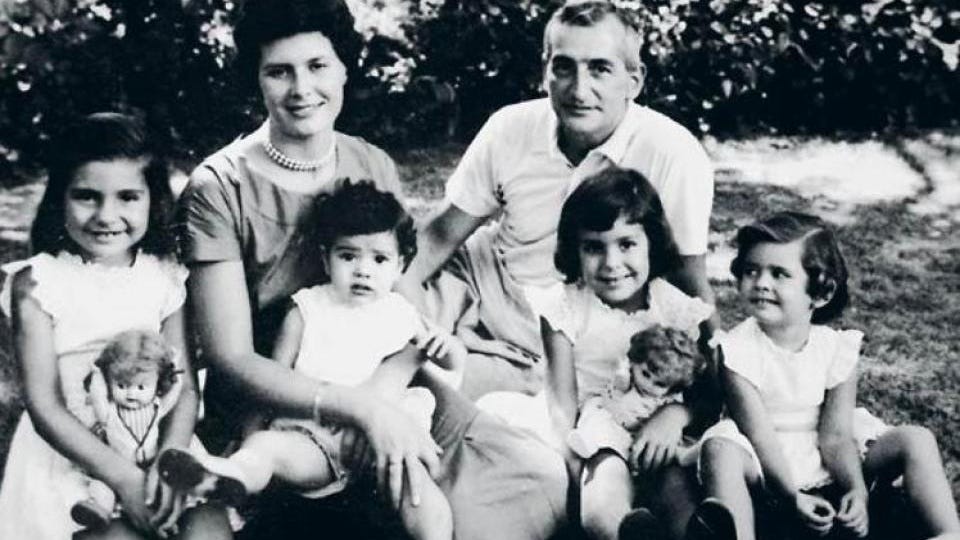
The strip was published in 1957, only two years after the military coup that overthrew Juan Perón, and was sometimes interpreted as an allegory of military rule. Oesterheld explained how he set out to create a kind of futuristic Robinson Crusoe, after imagining his own family ‘suddenly alone in the world, surrounded by death and by an unknown and unreachable enemy.’ This is a picture of Oesterheld and his wife Elsa, probably taken in the 1950s.

At that time, Oesterheld was a geologist and budding comic strip writer, who was sympathetic to the exiled Perón. By the end of the decade he was the father of four daughters, and El Eternauta had become one of the country’s most popular comic strips.
Throughout the sixties, Oesterheld continued to support the banned Peronist movement, even as he gained international recognition for comics that included biographies of Evita Perón and Che Guevara. In the early 1970s, he and his four daughters joined the leftwing Peronist revolutionary movement Montoneros. Like the crime novelist and investigative reporter Rodolfo Walsh, who followed a similar trajectory from writer-activist to middle-aged revolutionary, Oesterheld was his fifties when he joined Montoneros as a press officer.
The MaelstromOesterheld’s wife Elsa later recalled how she warned her ‘very disingenuous’ husband that he was making a ‘grave error’. Señora Oesterheld described her husband as ‘a philosopher who forgot the practical world. He gave in and adhered to violence because he thought that there was no other way to change things.’ After two decades of military rule, many young Argentinians felt the same. Even after Perón returned from exile in 1972, following an agreement with the military, Argentina was engulfed by a vicious cycle of revolutionary and counter-revolutionary violence.
Though Señora Oesterheld urged her husband to protect their daughters, their fate was out of his hands. In 1976, the Argentine armed forces overthrew the government of Perón’s widow Isobel, and began the program known as ‘el proceso’ - the Process of National Reorganization.
Blending the Nazi doctrine of ‘Night and Fog’ with counterinsurgency techniques borrowed from French military veterans of the Algerian War who advised the military high command in the 1960s, the military junta set out to exterminate Argentina’s revolutionary generation, through an unacknowledged campaign of kidnapping and murder.
In this so-called ‘dirty war’, revolutionaries, priests, nuns, social workers and high school children were kidnapped, tortured and shot, or drugged and thrown alive from airplanes and helicopters into the sea.
The Oesterhelds were quickly sucked into this maelstrom. In June 1976, Oesterheld’s nineteen-year-old daughter Beatriz was kidnapped, on the same day that she told her mother that she intended to leave Montoneros and dedicate herself to medicine, so that she could work ‘in the jungle, like Che, or in the barrios (poor neighbourhoods) where the people really needed her help.’
In August, the twenty-three-year-old Diana Oesterheld was kidnapped and taken into captivity while pregnant. Oesterheld evaded capture until April, 1977. In November that year, his pregnant daughter Marina was captured. And in December his daughter Estela and her partner were shot dead in a gunfight, leaving their three-year-old child Martín, who -unusually for those times - was handed over to the family.
Of the four daughters, only the body of Beatriz Oesterheld was returned to her mother. To this day, the fate of Oesterheld and his other three daughters remains unknown. Along with some 30,000 Argentinians, they were subject to the hideous strategy of ‘disappearance’ which enabled the Argentinian state to dispose of its victims with complete impunity, while publicly denying any responsibility for these events.
 Diana, Beatriz, Estela and Marina Oesterheld
These are Oesterfeld’s daughters. There are faces like these all over Argentina, on murals and other spaces of remembrance of men and women mostly in their late teens and early twenties, some of whom are even younger. These images were taken in happier times before they became ‘chupados’ - the sucked ones - when most of them were still living the lives of their generational peers.
The military did not photograph its victims. From the moment they were captured, they vanished from the world, and this is what happened to the creator of El Eternauta. A psychologist detained by the military later provided one of the few glimpses of the man who detainees called ‘el viejo’ - the old man, in captivity:
The guards gave us permission to take off our hoods and smoke a cigarette. They also allowed us to talk to each other for five minutes. Then Héctor said that as he was the oldest he wanted to shake hands with all the prisoners present, one by one. I will never forget that handshake. Héctor Oesterheld was sixty years old when this happened. His physical condition was very bad indeed. I don’t know what happened to him. I was freed in January 1978. He stayed in that place.
Despite calls from Amnesty International and other organisations for his release, Oesterheld was never seen alive again. Elsa Sánchez de Oesterheld survived the massacre of her family and joined the Mothers of the Plaza de Mayo. In an interview with La Nación before her death in 2015, she declared, ‘I don’t know who I am, nor how I am alive, because everything I have been has gone.’
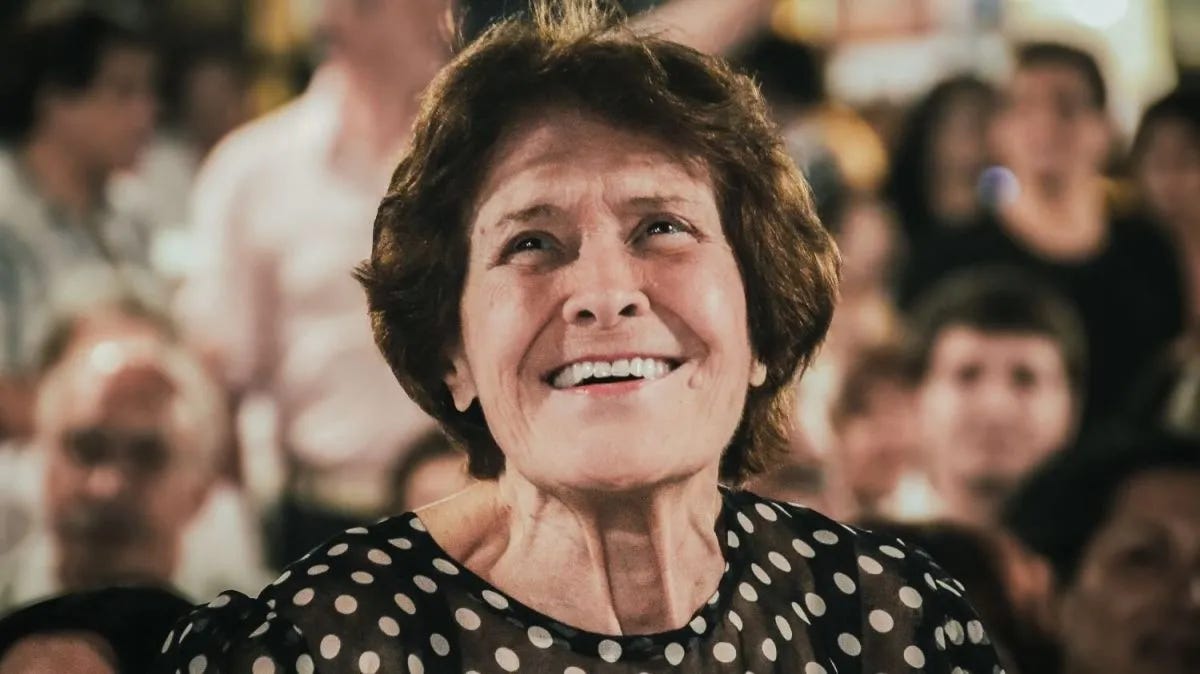
The regime that murdered the Oesterhelds claimed to be fighting a war on behalf of ‘Western civilization’ against an international communist conspiracy. Some army officers believed in ‘Plan Andinia’ - a crazed anti-Semitic conspiracy theory that Israel intended to establish a Jewish state in Patagonia. Fuelled by hatred and paranoia, these defenders of civilization tortured entire families in front of each other, and violated every principle of justice, morality and mercy. Most of them have have never been charged, and are now slipping quietly into the old age that they denied their victims.
Those who defend such actions - and there are many that do - argue that Montoneros were not victims, but members of a revolutionary organization that executed hostages, killed soldiers and police, and set off bombs. All these things are true, but nothing Montoneros did justifies what was done to them and to so many others who were not armed revolutionaries or even members of revolutionary organizations.
As Argentina’s National Commission on the Disappearance of Persons (CONADEP) observed, the violence unleashed by the regime was infinitely worse than the violence it was supposedly intended to eliminate. During the first trial of the military junta in post-dictatorship Argentina, one of the relatives of a ‘disappeared’ former guerrillero asked why her son had not been put on trial, and the same question can be asked of every single person murdered by the dictatorship.
Not for the first or the last time in history, ‘terrorism’ became the pretext for the abandonment of all legal norms, and enabled the Argentinian state to behave, effectively, like a serial killer.
Thanks for reading Matt Carr’s Infernal Machine! Subscribe for free to receive new posts and support my work.
In Argentina, the slogan adopted by CONADEP and proclaimed by the state prosecutor Julio César Strassera at the 1985 junta trial was ‘nunca mas’ - never again. Today, the government of Javier Milei and his dogmatic vice-president Victoria Villaruel - a longtime campaigner on behalf of the military officers she regards as unjustly imprisoned political prisoners - is actively undermining the policy of remembrance established by its predecessors, and reportedly seeking to place some of the imprisoned repressors under house arrest, and even free them.
These developments are unfolding at a time when military regimes and dictatorships across the world continue to inflict lawless violence and repression on their citizens, often using terrorism as the pretext. Even democratic governments are increasingly embracing authoritarian, autocratic and fascistic forms of governance.
In Gaza, Israel is inflicting genocidal levels of violence, mass starvation and ethnic cleansing on a defenceless population, with the complicity of liberal governments that proclaim a common commitment to human rights and international law.
Such commitments no longer apply even in principle in Trump’s America, where immigration police arrest toddlers and ship migrants to prison/concentration camps with no legal accountability. Only last week, Trump’s ghoul-like advisor Stephen Miller announced that the government might soon suspend habeas corpus - the cornerstone of any constitutional defence against unlawful detention, which the Argentinian dictatorship also abandoned.
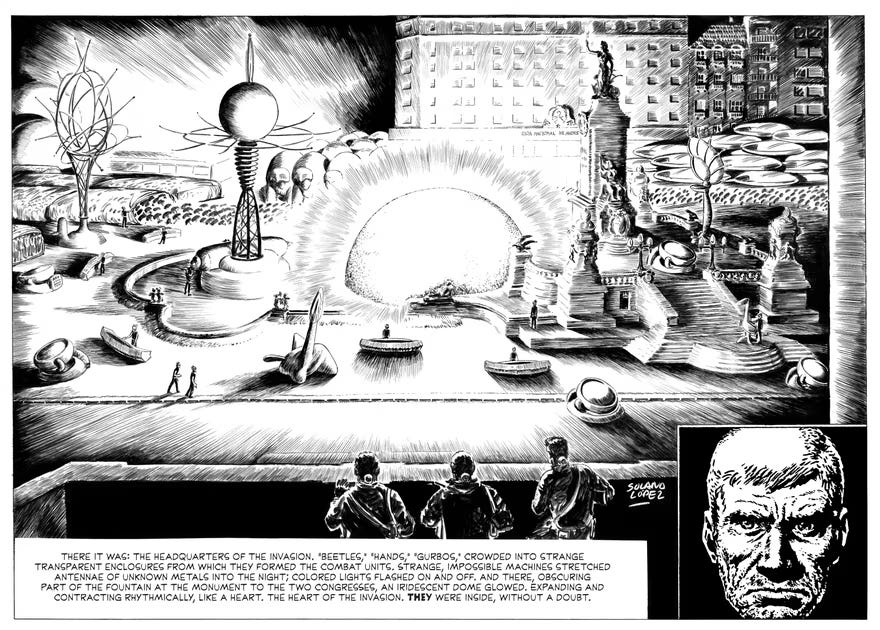
It is against this background that The Eternaut is now streaming - another testament to our seemingly insatiable appetite for visions of the worst possible future. And as viewers across the world contemplate director Bruno Stagnaro’s brilliantly-realised post-apocalyptic Buenos Aires snowscape, few remember the not-very-distant past, when the dreamy comic strip artist who loved westerns, aliens and war comics was murdered by his own government, along with his four daughters.
When Oesterfeld created his hero Juan Salvo and his companions who do battle with giant bugs and Invasion of the Bodysnatchers-style alien pods, he was already fascinated by questions of collective and individual heroism, resistance and solidarity.
We cannot know whether these same concerns transformed him into the middle-aged revolutionary who continued to write comics even in captivity. But the terrible fate of the Oesterhelds is a reminder that humans have the capacity to create dystopias that are far worse than the imagined futures we watch for entertainment. And in our new age of monsters, it is incumbent on men and women of good to resist the political forces that are once again threatening to plunge their countries into fanaticism, cruelty and fascistic madness.
May 6, 2025
Farage and Co
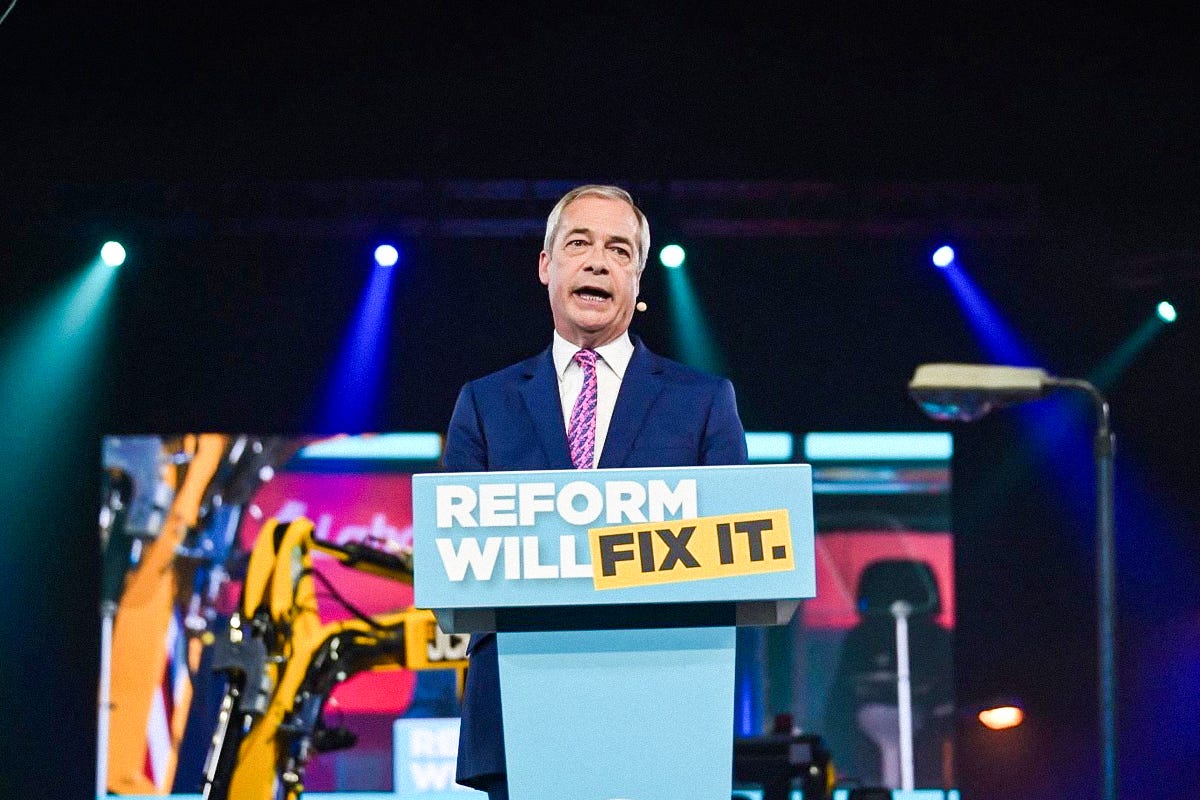
If insanity, according to the definition sometimes attributed to Albert Einstein, consists of doing the same thing over and over again in expectation of a different result, then the enduring popularity of Nigel Farage suggests that a significant section of the British electorate has lost its marbles.
Let’s not be polite or genteel about this.
Nine years after the referendum, not a single one of the promises that the Pied Piper of Brexit and his cronies made in 2016 has materialised; there are no tangible gains from a decision that a majority of the population now believes to have been a mistake. Yet none of this has had any negative repercussions whatsoever for the man who bears the principal responsibility for his outcome. In his world, others will always bear responsibility for whatever goes wrong or whatever doesn’t go at all. And if reality fails to meet his expectations, then that is reality’s fault.
It’s infantile, shameful and endlessly enraging. In a country with even a modicum of self-respect, a politician like this would be a national pariah. But nine years after the referendum, this frog-faced satyr remains a ubiquitous presence, with his petulant whining victimhood, his braying fake patriotism, his carefully-curated saloon bar racism, and his smug, lynx-eyed just-asking-questions cunning.
And now tens of thousands of voters have gifted this cloth-capped Mephistopheles, with a political triumph which threatens to collapse the country’s decaying two-party system and transform Farage into the nation’s would-be saviour.
For all those who would like to see the UK live up to its better instincts rather than its worst, last week’s elections were a slap in the face and a wake-up call. Because if Brexit anticipated the first Trump administration, then Trump II is a blueprint of what the UK might expect, should the British electorate be foolish enough to place its national future in the hands of Farage and Co.
Consider what Reform UK is offering on a local level. Promises to ‘Make Doncaster Great Again’ or ‘Make Lincolnshire Great Again’ might make you want to giggle at the sheer inanity of such propositions. But these slogans offer a package that draws directly from the MAGA playbook, contained in the Reform UK - Lincolnshire Facebook group’s pitch to the electorate:
A real agenda for bold reform. We restate our core values: We must return all our liberties to the people. We must preserve freedom of speech. We must control our borders properly. We must protect our proud heritage from the woke folk and celebrate our nation’s incredible successes.
At a pre-election mayoral hustings, the Tory defector Andrea Jenkyns promised to establish a ‘Lincolnshire Doge, just like they do in the US’ in order to ‘root out wasteful spending [and]ensure that every penny of taxpayers money is spent wisely’.
What does ‘wisely’ mean in this context? It means building on ‘Nigel’s relationship with [Donald] Trump’ in order to eliminate ‘woke wastage’ and push back on ‘this ridiculous climate emergency narrative, which is costing every taxpayer in the room.’
Of course, Jenkyns paid lip service to practical nuts and bolts politics, with promises to fix Lincolnshire’s roads and potholes. But no sooner had she won, than she called in her acceptance speech for ‘illegal migrants, people who come here illegally’ to be put in tents instead of hotels in order to bring an end to ‘soft touch Britain.’ If ‘Tents are good enough for France,’ she crowed, ‘they should be good enough for here in Britain.’
Migrants in tents? Is that all? Not quite:
I will keep your taxes low, I will work with you, with our industries, with our business, and with our young people. Together, it’s time to heal, we will deliver once in a generation change. I will lead with a sword of common sense and cut through wastage and bureaucracy….Now that Reform is in a place of power, we can start rebuilding Britain. Inch by inch, Reform will reset Britain to its glorious past.
This is desperate, reactionary, delusional drivel. There is no way that Reform or any other political party can ‘reset’ Britain to whatever glorious past Jenkyns thinks it once had. Nor can it realise like these:
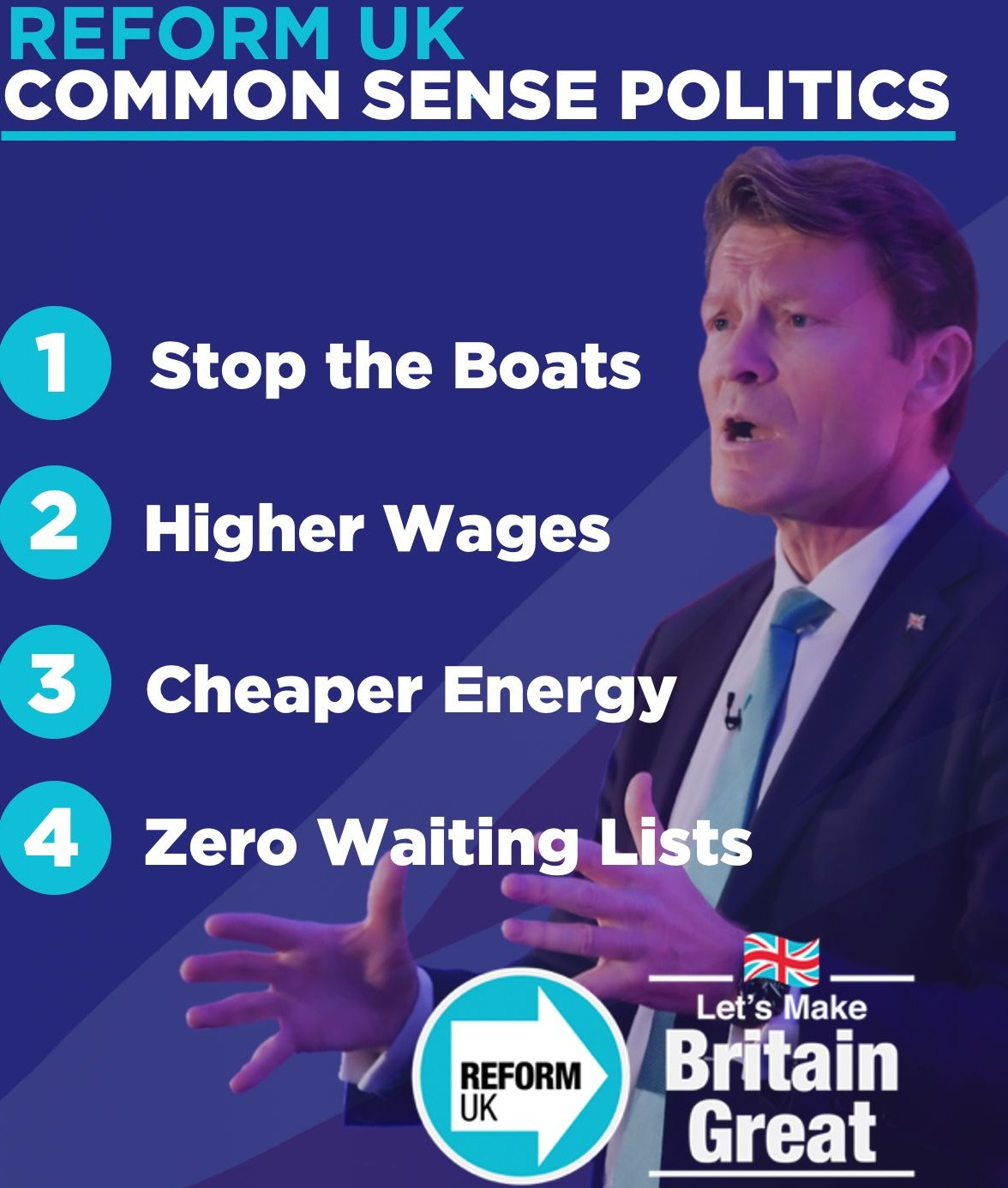
These are the same kind of unicorn farm fantasies that these charlatans dangled before the electorate in 2016. No net zero. Wars on the woke folk. Flags on every town hall. No home working and migrants in tents - what a world awaits us. Already, Farage has promised that a Reform government will create a Minister for Deportations and implement a ‘zero tolerance policy’ for illegal immigration.
Of course this policy will inevitably involve leaving the ECHR - completing the institutional destruction that his movement began in 2016 and with it, Britain’s transformation into a basketcase.
Last week, Farage and Jenkyns promised to sack all DEI officers from the now Reform-controlled Lincolnshire County Council, regardless of the fact that the council does not employ any DEI officers. As I said, reality is never an impediment to these people.
It’s easy to mock this Tweenies level mini-Musk culture warfare, but Trump and Musk have already demonstrated that idiocy, fantasy, fanaticism and ineptitude are no longer obstacles to political progress, and Reform has exactly the same agenda.
Moral RearmamentIn an interview with the Times (paywalled), Reform’s millionaire chairman Zia Yusuf has pledged to give British youth a ‘moral re-education’ if Farage becomes PM, that will oblige schools to ‘teach a love of Britain’ and address the ‘industrial-scale demoralisation, particularly of young people people in this country, who are basically being taught quite deliberately that they should hate their country.’
With evidence-free claptrap like this spouting from the presentable mainstream face of the party, it is not surprising to find Reform’s danker and less visible crevices crawling with even more insalubrious life forms. When Farage promised to create a Ministry of Deportation on his Facebook page, the comments were flooded with supportive messages, some of which came from people offering to be unpaid volunteers.
These are not people to be giving moral lessons to the youth or anybody else, and the fact that a party like this is now poised to become the main opposition is a bleak testament to a wider political and moral failure that goes beyond Reform itself.
The failure is first of all a failure of accountability. Despite Farage’s endless claims to be an anti-establishment rebel, few politicians have ever had an easier or smoother ride in the media. Even before Brexit, he found his way into public forums that other parties with far more members and MPs could only dream of.
Many voters would be challenged to know what Green Party or Liberal Democrat - or even Labour - MPs think about anything. Yet every stupid, ill-informed provocation and half baked proposal that leaves Farage’s mouth instantly finds its way into mainstream media outlets that treat him like an engaging political novelty, rather than the dangerous, blustering extremist that he is.
Thanks for reading Matt Carr’s Infernal Machine! Subscribe for free to receive new posts and support my work.
Bizarrely, Reform’s popularity is also partly due to Brexit. The Conservative Party is too compromised by its calamitous role in the referendum and its aftermath to recognise the damage Brexit has caused. Labour are too terrified of the right-wing press and their own voters to even attempt to repair the damage.
The result is a grotesque and almost unbelievable situation, in which the politician who has done more than any single individual to bring about his country’s greatest political failure cannot be attacked or criticised for it by his principal political opponents. Even worse, both parties have tried to fend off the threat that Reform poses to their party political interests, by aping his nativist posturing.
And that brings us to the Labour government itself: feeble, cack-handed and cowardly, and so willing to embrace policies that the right once considers its own, that it is also bleeding votes to the Greens and the Liberal Democrats. In the Runcorn and Helsby by-election, hundreds of voters could not even bring themselves to vote tactically to keep Reform out - as a result of which Reform won by only six votes.
Labour’s defenders will talk about fickle and immature voters, the complexities of government and how the world has changed. But no one voted for Labour to slash personal independence payments to the disabled, winter fuel payments to pensioners, or cut aid to millions of the world’s poor.
You know something has gone wrong when The Spectator (paywalled) hails Reform’s ‘left-wing turn’ as a ‘triumph’. Of course, Farage’s pitch to working-class voters is bogus, but these pretensions are only possible because of Labour’s timidity and its genuflection at the neo-liberal altar.
It’s not storming the Winter Palace to expect a social democratic government to use its formidable majority to address decades of inequality and the running down of public services, and to seek to build a progressive consensus around these goals. Yet all Labour has to offer are the same stale nostrums that have done so much damage over the last few decades: fiscal rules, discipline, sacrifice and - although the government denies it - austerity.
On immigration, there are only the same punitive policies, deportations, repression, and exclusion - performative displays of toughness which shake the government without translating into political gains.
In short, this is not a government that knows how to fight Farage and his friends with the ferocity and agility required, and is not clear whether it even wants to.
As a result, Starmer may find himself in the utterly invidious position of playing host this year to Donald Trump - a man who is far closer to Reform than he is to Labour, and who may be considering granting asylum to ‘free speech refugees’ from the UK.
Some Labour supporters may argue that last week’s results were just a snapshot of a particular moment in a longer political calendar. It’s true that these elections may not be the watershed moment that Farage and his friends are proclaiming. Reform’s gains may even prove to be counter-productive, as constituents witness these clown car wreckers attempt to actually run cities and councils, and agree on budgets, instead of persecuting migrants or clamping down on ‘transgender ideology’.
It’s also possible that Farage’s adulation of Trump may work against him, as Trumpism pushes the US deeper into chaos, crisis and recession.
But these are small crumbs of possible comfort. Because as things stand, Reform now has a political momentum that it did not have before. It has developed an effective local ground operation that will become more efficient, as big money flows into the party coffers from dubious sources. Its successes may attract Conservative and even Labour defectors.
All this may not be enough to put Farage into Downing Street. But the fact that this possibility is even being considered is a both an indication of how low British society has sunk since 2016, and the clearest possible evidence that it is still sinking.
April 22, 2025
Broken Reeds
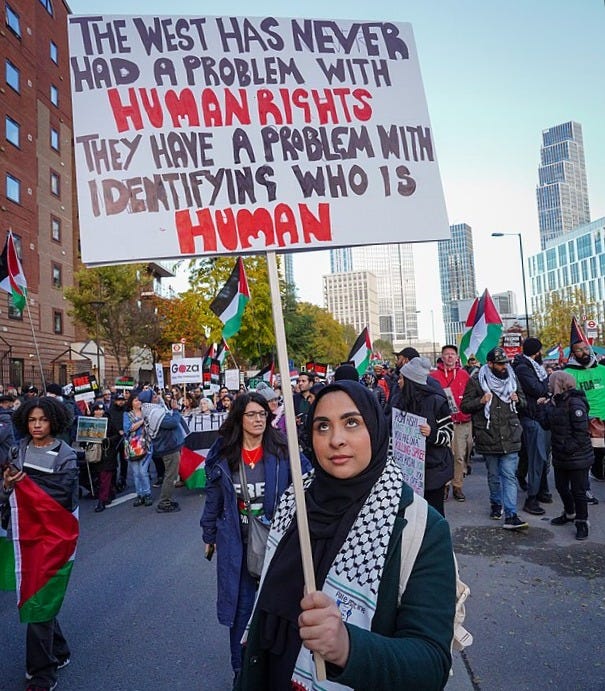 Alisdare Hickson: Creative Commons Attribution.
Last week 36 members of the Jewish Board of Deputies wrote a powerful open letter (paywalled) to the Financial Times, which condemned Israel’s ‘heartbreaking war’ in Gaza. The letter was significant for various reasons. The BoD is the UK’s largest Jewish advocacy group, and it is an unwavering supporter of the state of Israel. Yet here were 36 deputies criticizing Israel’s ongoing ‘Itamar offensive’ in the following terms:
Hundreds and hundreds more Palestinians have been killed; food, fuel and medical supplies have once again been blocked from entering Gaza; and we are back in a brutal war where the killing of 15 paramedics and their burial in a mass grave is again possible and risks being normal. Such incidents are too shocking and painful to take in, but we know in our hearts we cannot turn a blind eye or remain silent at this renewed loss of life and livelihoods, with hopes dwindling for a peaceful reconciliation and the return of the hostages.
The signatories attributed these developments to ‘this most extremist of Israeli governments [which] is openly encouraging violence against Palestinians in the West Bank, strangling the Palestinian economy and building more new settlements than ever.’ They also warned that:
This extremism also targets Israeli democracy, with the independence of the judicial system again under fierce attack, the police increasingly resembling a militia and repressive laws are being advanced as provocative partisan populism is bitterly dividing Israeli society. Israel’s soul is being ripped out and we, members of the Board of Deputies of British Jews, fear for the future of the Israel we love and have such close ties to.
The letter was not an official position; the BoD’s president immediately criticized the signatories for ‘barely’ mentioning Hamas, and for laying blame for the ongoing slaughter ‘squarely on the Israeli government.’ Yet the signatories had made their point. After eighteen months, Israeli barbarism in Gaza may have finally reached the point when even Israel’s most loyal supporters are no longer able to stomach it.
For some of Israel’s more extremist supporters, that point will never arrive. But the BoD is a liberal organization, committed to a ‘just and sustainable future in the UK and abroad’, opposed to anti-Semitism and other forms of extremism and hate crime directed against Muslims and Roma people. With regards to the ‘Israeli-Palestinian conflict’, the BodD favours ‘peace, prosperity, security and equality for Israel, Palestinians and the Middle East’ and calls on ‘countries like the UK to end the wanton slaughter of civilians and deliver humanitarian relief for suffering populations.’
It is not always easy to reconcile such positions with the actions of a Jewish state that does not recognize political, legal or moral limits to the violence and oppression it is prepared to heap on the Palestinians, and the same can be said of the liberal governments that have supported and armed Israel throughout the last eighteen months.
Since the end of the Cold War, the world has become accustomed to the ritual presentation by Western governments of the victims-who-must-be-saved, and the atrocity-that-the-world-cannot-turn-its-back on. Kuwaiti babies, Kosovar villagers, Afghan women, Iraqis, Syrians, Libyans, Ukrainians - again and again, moral horror and disgust at real or fabricated atrocities has become the lubricant through which liberal states justify wars, ‘interventions’ and regime changes which may have very little to do with morality.
In these moments, governments, media commentators and politicians will form a chorus of moral indignation, as Gladstone once attempted to do in response to the ‘Bulgarian horrors’ perpetrated by the Ottomans against the Bulgarians and southern Slavs in 1876. Our contemporary Gladstonians will stand up in Congress or Parliament to deliver heartfelt speeches calling for invasions or missile strikes. They will warn the world of the new Hitler, or ‘our Munich’, and evoke the watershed moment that ‘historians of the future’ will use to judge us.
The Palestinians have never been this kind of victim, and Israel has never been this kind of perpetrator. It’s true that Tony Blair once included the ‘slums of Gaza’ in his ‘kaleidoscope’ speech to a besotted Labour Party Conference in 2001, but this reference, as his actions proved again and again either as Prime Minister or the Quartet’s ‘Peace Envoy’, was for rhetorical purposes only.
Israel’s supporters often argue that Israel is singled out for unfair criticism, but at the level of governments, the opposite is true. Even the most indiscriminate, extreme and bloodthirsty acts of Israeli violence tend to be ignored, rationalised as mistakes and aberrations, or presented as tragic events forced upon Israel by the cunning deviance and cruelty of Israel’s enemies.
The war in Gaza has required an exceptional collective effort to maintain this position. The 1948 Palestinian Nakba took place, to some extent, behind the fog of war, which made it possible for successive Israeli governments to deny that what Chaim Weissman called ‘the miraculous simplification of Israel’s task’ was intentional - and which also made it easier for Israel’s supporters to make the same argument.
That alibi is not possible in Gaza. The facts are too well-known and too horrendous to ignore. In response to the October 7 attacks which killed 1,200 people, Israel has killed at least 50,000 Palestinians, more than half of whom are women, children and the elderly. Tens of thousands more have been maimed or wounded. In other countries, images of maimed and screaming children might precede the latest cruise missile strike or ‘hard liberal’ intervention, when ‘we’ cannot stand idly by.
In this case, the bombs that have destroyed Gaza’s schools, hospitals, universities, homes, cafes, and refugee camps, that have burned Palestinians to death in hospital beds, are liberal bombs provided by the governments of the United States, the UK, and members of the European Union.
Of course, these governments have expressed regret at the loss of Palestinian lives. Before Trump came to power, these governments occasionally called on Israel to show restraint, even when it was made clear, over and over again, that Israel had no interest in restraint. Long before Netanyahu announced that Israel was committed to Trump’s ‘different Gaza’ plan based on the ‘voluntary departure’ of the Palestinian population, it was obvious to anyone who wanted to look that Israel had set out to make Gaza uninhabitable.
Knowing But Not KnowingThere were those advocated this outcome, and not only in Israel. Others entered entered a state of knowing-but-not-knowing, which enabled them to periodically lament Palestinian suffering without denouncing the state responsible for it, or pointing out the very real strategic purpose behind the mayhem.
Long before the Deputy Speaker of the Knesset called on the IDF in February, to ‘separate the children and women and kill the adults in Gaza’, it was clear that this was already happening, even if the IDF did not necessarily bother to separate the children and women.
From time to time, Western diplomats politely called for an investigation or an inquiry, none of which has had the slightest impact on the remorseless machinery of destruction and killing that Israel has brought to bear on an essentially defenceless population. On those rare occasions when criticisms of Israeli policy did make national news, just the invocation of words like ‘Hamas’, ‘terror target’, or ‘anti-Semitism’ was usually enough to silence them.
In the UK, a British public that has become accustomed to thinking of Gaza as a ‘terror enclave’ might have benefitted from the powerful and affecting BBC documentary, in which Gazan children describe living under bombs. The fact that one of the children in the film was the son of a Hamas official was enough for the BBC not just to pull the film, but to grovel in public at the corporation’s ‘mistake.’
In a powerful Oscar Award speech last year, Jonathan Glazer, the director of The Zone of Interest, described his film as a critique of ‘dehumanization’ in the past and the present, declaring:
Right now we stand here as men who refute our Jewishness and the Holocaust being hijacked by an occupation which has led to conflict for so many innocent people.
In response, more than 1,000 Jewish actors, directors and other creatives accused Glazer of fuelling a ‘growing anti-Jewish hatred around the world.’ The signatories criticized ‘The use of words like ‘occupation’ to describe an indigenous Jewish people defending a homeland that dates back thousands of years,’ as a ‘modern blood libel.’
If you refuse to accept that Palestinian people are not ‘indigenous’, and regard the very notion of a military occupation a ‘blood libel’, you will not have too much trouble accepting the destruction that is taking place in Gaza as just retribution against an utterly evil enemy, or as a tragic consequence of the horrors of war - even ‘wars’ that burn hospital patients alive in their beds.
In a powerful essay in the New York Review of Books, the Israeli historian Omer Bartov compares Gaza to the ‘extermination order’ issued by General Lothar von Trotta that destroyed the Herero and Nama people of South West Africa. As Bartov puts it:
The Liberal GenocideIsrael saw the Hamas attack of October 7, 2023, in much the same way that the Germans saw the Herero attack [on German settlers] 119 years before: as confirmation that the militant group was utterly savage and barbaric, that resistance to Israeli occupation would always incline toward murder, and that Gaza’s Palestinian population as a whole should be removed from the moral universe of civilization.
As the response to Glazer’s speech shows, the dehumanization of the Gazan Palestinians is not limited to far-right politicians or troglodyte generals. Liberal politicians and journalists, novelists and humanist historians, B-list celebrities, movie stars, soap opera actresses and game show hosts - all these individuals are part of the consensus that has removed Palestinians ‘from the moral universe of civilization’ and contrived to make the destruction of Gaza a tragic inevitability, to be blamed on Hamas or the cruelty of war.
There are many problems with this position: the distortions and sheer ignorance of history that make it possible to imagine that the ‘Israeli-Palestinian conflict’ began on October 23, 2023; the misappropriation of the Holocaust to obfuscate political and military realities that are not comparable to the Holocaust; the complete refusal to understand that two million Palestinians cannot be encompassed within the word ‘Hamas’.
In his excoriating and searingly eloquent attack on Western hypocrisy in Gaza, One Day Everyone Will Have Always Been Against This, the Egyptian author Omar el Akkad laments the gulf between his own idealistic expectations of Western liberalism and its collusion with the slaughter in Gaza, in which:
The narrative – as enshrined in countless constitutions and declarations and charters which are so often held up as the differentiating marker of superiority of this world over the other – demands moral purity, opposition to injustice, adherence to the principle that all innocent lives are equal and deserving of dignity. The reality is that an ally of the west is killing civilians by the tens of thousands and it would be politically inconvenient to call this wrong now when for months, years, decades it has been deemed perfectly fine.
Faced with ‘so many liberal American politicians [who] slip an occasional reference of concern about Palestinian civilians into their statements of unconditional support for Israel,’ Akkad writes:
It’s almost refreshing, then, when one is faced with the ugliest and yet most honest face of western apathy, the face that knows full well the scale and severity of the horror but believes it to be absolutely justified, absolutely necessary.
This ‘face’ has now become the face of the Trump government, which is openly advocating the ethnic cleansing of Gaza as a ‘humanitarian’ outcome, and encouraging Israel to do whatever is necessary to achieve it. But Trump is essentially proclaiming, with all the vulgarity and inhumanity to be expected of him, an expulsion that the British, American, and German governments had already tacitly accepted.
The consequences of this silence, cowardice and collusion are not limited to the Palestinians themselves. Today, the moral pretensions of the ‘hard liberal’ interventionism of the first two post-Cold War decades are null and void. After Gaza, it will be difficult for any liberal government - assuming there are any left in a few years - to make a moral case for military action anywhere in the world We are now firmly back in the ‘realist’ school of international relations, in which powerful states do what they can, and weaker states suffer what they must, and right and wrong has nothing to do with it.
Western complicity with Israeli violence has also begun to have implications for domestic politics in the countries where such complicity has been most notable. In Germany, police have prohibited the speaking of Arabic at pro-Palestinian demonstrations, banned pro-Palestinian speakers, and shut down a conference organized by Jewish Voice for Peace and other civil rights groups.
Last month, Felix Klein, the German government’s Commissioner for Jewish Life in German and the Fight against Antisemitism, praised Trump’s ‘Gaza plan’ as ‘fundamentally positive’.
Doxxing and DeportationLet no one be surprised that a German government official should be supporting ethnic cleansing whilst his government cracks down on protesters opposing it. A similar process is unfolding in the United States, where an administration whose supporters include actual Nazis, led by a president who believes that Nazis ‘treated Jewish prisoners with love,’ has established a ‘Task Force to Combat Anti-Semitism’, which is now subjecting American universities to McCarthyite purges of Israel’s critics.
These purges also include the arrest and physical removal of foreign students and foreign nationals, using the brutal deportation machinery unleashed by the Trump administration against migrant ‘criminals.’ Prominent American liberals have rightly denounced the illegality, immorality and cruelty of the Trump administration’s deportations of undocumented migrants to El Salvador.
Galvanized by Trump’s promise to deport ‘homegrown’ American ‘criminals to Nayib Bukele’s rent-a-space gulag, some American politicians have come to see these deportations as part of a more general assault on the rule of law, which will ultimately affect Americans as well as foreign nationals.
Less fuss has been made of the arrests of Palestinians and foreign pro-Palestinian protesters from universities who have had their visas revoked or been deported for participating in campus protests. Rumeysa Ozturk, a doctoral student at Tufts University, was accused of having ‘engaged in activities in support of Hamas’, because of an op-ed she wrote for a student newspaper, calling on Tufts to ‘acknowledge the Palestinian genocide…disclose its investments and divest from companies with direct or indirect ties to Israel.’
The Syrian-born activist and graduate student Mahmoud Khalil was arrested in front of his pregnant wife, detained in Louisiana, and now faces the revocation of his green card because of his involvement in pro-Palestinian protests deemed to constitute ‘antisemitic support for Hamas.’ Badar Khan Suri is a visiting Indian scholar at Georgetown University, married to a Palestinian-American, accused of spreading ‘Hamas propaganda.’
These names are among the ‘lunatics’ accused by Secretary of State Mario Rubio of ‘destabilizing’ college campuses. Using a rarely used provision of the Immigration and Nationality Act, Rubio has claimed the authority to deport any noncitizens whose presence he has ‘reasonable ground to believe’ ‘would have potentially serious adverse foreign policy consequences.’
Some of these names have been plucked from Canary Mission - a doxxing website supposedly documenting ‘people and groups that promote hatred of the USA, Israel and Jews on North American college campuses. The site publishes names, photographs , and cherry-picked quotations of critics of Israel and their whereabouts - all of whom it accuses of anti-Semitism.
Ilhan Omar and Alexandria Ocasio-Ortez are among the names included on a website that also publishes grovelling faceless ‘apologies’ from previously-targeted ‘anti-Semitic’ penitents who proclaim the folly of their youthful ways in exchange for anonymity.
The purging of the ‘radical left and its Islamist allies’ from American campuses has long been a longterm goal of paleoconservatives and Israel-first organizations such as the David Horwitz Freedom Center, and the fact that the US government is relying on a site like Canary Mission to terrorize universities is an indication of how far the Trump administration has folded this objective into its authoritarian reshaping of American society.
The result is a grotesque situation, in which an extremist authoritarian American government is effectively condoning ethnic cleansing by an extremist authoritarian Israeli government, while deporting students who criticize the devastation, on the basis of hearsay, gossip, and the unchallenged assertions of a pro-Israel website
Perhaps debates such as the one that is now unfolding in the Board of Deputies may break down the deadly consensus that effectively legitimised the slaughter in Gaza long before Trump’s election. Perhaps America’s liberals will come to see that the deportations of students, like the deportations of migrant ‘criminals’, are both expressions of the same lawless authoritarianism.
Perhaps they will come to see, as the 36 deputies have, that the slaughter in Gaza has no justification. And perhaps even the likes of Simon Schama may come to realize that, in helping to dig the graves of the Palestinians and removing any possibility of a just solution to the ‘conflict’ - they have also helped to dig the grave of liberalism itself.
Thanks for reading Matt Carr’s Infernal Machine! Subscribe for free to receive new posts and support my work.
April 15, 2025
Planet of the Ape

There are periods when history just seems to be idling in neutral, the engine ticking over and not much to distinguish one year from another. We aren’t living through those times. Nowadays, historical processes that should take decades can unfold in weeks, and epochal events unravel like scenes from a film spooling off the reel in fast forward.
Take the madness that begin on 5 April, when the Trump ‘Liberation Day’ tariffs came into effect. Within hours, the financial system created since the end of the Cold War trembled on the brink of recession, as trillions of dollars vanished from the global economy, supply chains broke down and the stock market tumbled. Four days later, with bond markets screaming, Trump emerged from the golf course to announce a ninety-day pause - except for China and the 10 percent tariff that the rest of the world was still subject to. Then, after imposing 145 percent tariffs on Chinese imports, he abruptly excluded smartphones and computers in order to help his tech buddies- and donors - out.
Thanks for reading Matt Carr’s Infernal Machine! Subscribe for free to receive new posts and support my work.
Now, there are mutterings in what passes for his ‘administration’ that even these exemptions may be only temporary. But whatever happens next, last week represents a watershed moment, in which the country that has dominated world history since World War II became everything that it was not supposed to be. Like a bull in a geopolitical China shop (apologies), one man trashed his country’s reputation, and stripped it of the last dregs of prestige, trust and reliability that his government had not already destroyed.
Of course Trump’s sycophantic minions, grifters and untruth-tellers have sought to conceal or sugarcoat their leader’s lunacy, just as King George III’s courtiers once tried to do when His Majesty went off the rails. At her press conferences, the White House liar-in-chief Maga Goebbels tried to turn Trump’s sow’s ear into a silk purse with a brazen indifference that raises troubling questions about human nature - I mean, how can people lie so easily and so readily, without even a smidgeon of embarrassment at their shameless dishonesty?
On Fox News, where a succession of gushing commentators hailed Trump’s tariffs as the beginning of a new Golden Age, in which countries across the world would queue up to do the president’s bidding. At a cabinet meeting, Trump’s ministers grovelled before the Great Helmsman in a pantomime version of Stalin’s Great Terror. No need for the Gulag or the Lubyanka to make these craven miscreants crawl - just tickle their bellies with a feather and they do it anyway.
But the rest of the world can see what this rabble will never admit to: that Trump’s ‘America’ is a hollowed-out, diminished entity that is vanishing in front of their eyes.
It’s easy to see this startling transformation as a kind of body horror film, in which the alien bursts out of an astronaut’s stomach, or the nice teenager down the road turns into a slithering monster, but it’s entirely in keeping with the general pattern of 21st century national populism. Whether in Brexit Britain, Putin’s Russia, or the Trump clown show, movements that seek to make their countries ‘great again’ invariably make them smaller, as well as nastier.
In hearkening back to an idealised past, in which their former glories were taken away from them, usually due to the machinations of others: foreigners, immigrants, decadent liberals, feminists, and other enemies of the nation, these movements tend to ignore reality, or try to bypass it. Purveyors of political snake oil, their leaders offer magical instant solutions to both real and imagined problems. Need money for the NHS? Leave the European Union. Bring back American jobs to the rusty heartlands? Just crunch a few numbers through AI, slap tariffs on the whole world, including the bastard penguins, and - way to go! - they’ll be churning out smart phones, semiconductors, and Nike trainers in Detroit.
This, apparently, was the aim of Trump’s attempt to feed the entire global economic system into the wood chipper, as Elon Musk would put it, only to find that the machine jammed, overheated and very nearly exploded in his face.
That’s what happens when you try to replace the real world with a fantasy. In Britain, we know this very well, though knowing it hasn’t helped us much. Trump’s catastrophic and delusional pursuit of national greatness didn’t spring out of nowhere, however.
The Indispensable Nation?It was Ronald Reagan who coined the phrase ‘Let’s make America great again’ during his 1980 campaign. In 1996, Madeleine Albright called America the ‘indispensable nation’ - a phrase first coined by the political journalist Sidney Blumenthal. The Project for the New American Century (PNAC), picked up on the same theme, with a more belligerent tone, in its infamous 2000 ‘Rebuilding America’s Defenses’ foreign policy proposals. As the PNAC authors - some of whom are now critics of Trump - put it then:
The United States is the world’s only superpower, combining preeminent military power, global technological leadership, and the world’s largest economy. Moreover, America stands at the head of a system of alliances which includes the world’s other leading democratic powers. At present the United States faces no global rival. America’s grand strategy should aim to preserve and extend this advantageous position as far into the future as possible.
PNAC understood ‘preeminence’ primarily in military terms. It sought to extend America’s temporary technological advantage in the ‘Revolution in Military Affairs’ into the indefinite future, through a Reaganite program of massive rearmament that would make the US able to defeat any ‘challengers’ anywhere. Galvanized by the September 11 atrocities, the Bush administration launched America into a series of ruinous wars in an attempt to realise the Pentagon’s dreams of ‘Full Spectrum Dominance’.
Throughout the war on terror, a stream of defence and foreign policy intellectuals, from Niall Ferguson to Thomas Barnett, called on America to act as the guardian of globalization, as the world policeman, the new Rome, against what Barnett called the ‘non-integrating Gap’, or the ‘arc of instability’ that other analysts located in the Asia-Pacific region.
Within the US government, old Reagan hands like Rumsfeld, Wolfowitz, Feith, and Cheney were equally committed to maximising America’s unipolar moment. These were clever, cunning, calculating men - as dishonest and manipulative in their own way as their successors. Now - o tempora, or mores! - the clever schemers have gone, and even the veneer of geostrategic expertise has been obliterated by the felon-in-chief.
Trump’s America still retains its ‘preeminence’ and the financial and military power that goes with it. But today, it is no longer the only superpower, or the axis on which the West and the ‘free world’ turns. It is no longer the global policeman and the guardian of globalisation, or the guarantor of European security. The US may even lose its historic post-World War 2 role as the upholder of the global financial system.
Astonishingly, it may be China - the country that was once seen in Europe and America as little more than an offshore manufacturing centre and a source of cheap labour - that comes to play that role, even as the clown car posse in Washington continues to drop tariffs with all the finesse of hoodlums tossing molotov cocktails from a motorway bridge. China’s leaders, whatever you think of the Chinese political system, have a long-term strategic vision, coupled with an awareness of geopolitical reality, that has been mostly absent from the American ruling classes over the last few decades. Already, it has been negotiating new economic relationships and partnerships with the countries unjustly punished by Trump’s tariffs, who have no reason to trust the country that imposed them.
The VanishingMuch of the world knows this, even if the MAGA cultists won’t acknowledge it. In a speech on 5 March, on ‘the historic events under way that are disrupting the world order’, Emmanuel Macron told the French people:
The United States of America, our ally, has changed its position on this war, lessening its support for Ukraine and raising doubts about what is to come. At the same time, the United States intends to impose tariffs on products from Europe.
On 27 March, Canadian Prime Minister Mark Carney was even more explicit, declaring that Canada’s relationship with the United States, ‘based on deepening integration of our economies and tight security and military cooperation, is over.’ Even Niall Ferguson, who once called on the US to embrace its role as a 21st century liberal empire, and who only recently dropped in at Mar-a-Lago to show his support for Trump, has said that Trump’s tariffs represent ‘the End of American Empire.’
If you’ve lost France, Ferguson and Canada, you’re probably doing something wrong, but don’t expect Trump and his minions to take responsibility for their mistakes or even recognize that they’ve made any. Like the Brexiters, being MAGA means never having to say you’re sorry. But outside Trumplandia, the writing is on the wall, and it reads: ‘America has left the building.’
That America was always something of an illusion. Long before the Biden administration’s horrifying complicity in Israeli barbarism in Gaza, the ‘moral’ leadership that too many European leaders once took for granted had very different repercussions in the Global South. America might have supported democracy in Eastern Europe during the Cold War, but military coups, dictatorships, destabilisation, war and repression were the order of the day in the rest of the world, whenever the US encountered democratic governments and movements that it didn’t like.
Some countries have yet to recover from the Cold War that the ‘free world’ won, to some extent, at their expense. Even when the US acted in defence of Europe, it did so in its own interests as well as Europe’s. To point this out, does not mean that America is the root of all geopolitical evil, or that the ‘America’ the world once thought it knew was non-existent.
The dismantling of USAID is just one example of the more benevolent applications of US power. Trump’s overtly genocidal proposals for Gaza are a step closer to hell than the unforgiveable cowardice and collusion of his predecessor. His administration’s predatory, neo-colonial attitude towards Ukraine, Greenland, Panama and now, it seems, the Democratic Republic of Congo, represent a qualitative difference from his predecessors
This astonishing outcome is not a futuristic ‘black swan’ that came out of nowhere. It is the product of a longer-term systemic political failure that was already underway before anyone even thought that a reality tv star and crooked real estate magnate might become president. In 1959 Dwight Eisenhower told Congress:
We could be the wealthiest and the most mighty nation and still lose the battle of the world if we do not help our world neighbors protect their freedom and advance their social and economic progress.
Those aspirations could not be more distant from the America that the felon-in-chief and his monstrous movement are creating. Whether these efforts succeed or fail, they may have inadvertent positive consequences, even if they are not the consequences that Trump and his team imagine.
Too many countries have looked to American might for far too long, regardless of whether it advanced their social and economic progress. Too many countries have been throttled by the free market prescriptions of the Washington consensus. Too many have looked to America to provide security that they should have provided for themselves.
Perhaps now is the time to recognize that Trump’s incredible shrinking America is no longer their friend, and may even be their enemy. And perhaps this recognition can push the world to seek a new concept of international order, in which neither America nor any other country is the indispensable nation, in a fragile and interconnected multipolar world that requires collective solutions to collective problems.
The world is still a long way from that, and may not get there. As America continues its moral collapse and slides into incoherent authoritarianism, other ‘great powers’ may seek to take its place and play their own ‘great games’ in the competition for geopolitical dominance.
But for now, the country that the world thought it knew has gone, and whoever the 21st century belongs to, it will not be America’s.
Thanks for reading Matt Carr’s Infernal Machine! Subscribe for free to receive new posts and support my work.
April 8, 2025
My Blank Pages
I’m on holiday at the moment, and can’t post anything new. But writing about El Salvador two weeks ago, I was reminded of my travels as a journalist through Central America in the early 1990s, so here is another extract from my memoir My Blank Pages till I return to the maelstrom.
As some readers may remember, this (so far unpublished) manuscript was a written as a writer’s memoir. In these extracts, I trace the trajectory that took me from youthful rebel without a clue to a writer concerned with politics and history, and the relationship between the two.
The Book of RevolutionsIn 1968 my father sent me a book called The Book of Revolutions as a Christmas present, which I still have. It’s a large-format hardback, containing the histories of five revolutions, with a red outline of a man holding a rifle and a gun on the black cover. The text is sober and informative, but some of the images are dramatic and quite gruesome. There are prints of mass drownings in the Loire during the French Revolution, a photograph of scattering crowds outside the Winter Palace, an artist’s impression of the executions of Irish Republicans in Kilmainham Jail after the Easter Rising, waxworks of the guillotine and the murdered Marat in his bath, which I later saw in Madame Tussaud’s.
‘After the triumphant speeches, and the toasts, and the celebration banquets how does it end?’ the author asked, before concluding, ‘For most of the revolutionary leaders, as we have seen, it ends in death or dishonour: comrade turns against comrade, civil war breaks out, repression and injustice are greater than under the old regime.’
I don’t know whether my father sent me that book to inspire me or disabuse my thirteen-year-old self of any excessive youthful romanticism about revolution that he thought I had. At the time, I was vaguely aware that I lived in a revolutionary era myself. I saw photographs and tv footage of the Tet offensive in Vietnam, the tanks moving into Czechoslovakia, and the pitched battles unfolding in Paris. That year my granddad added Bernadette Devlin to his list of reasons to despise the Irish, and even though I had no idea who she was, I saw pictures of bloodied civil rights marchers in Derry and understood that something was unfolding there that had some connection to the 1916 ‘row in the town’ described in my book.
Revolutions seemed to be taking place everywhere, and they exercised a fascination over my imagination that has never entirely disappeared. In books and articles, I have written about revolutions, insurgencies, wars, and civil wars, and this interest was not confined to the writer’s study. Though I have never been a part of a revolutionary organisation, I have been instinctively, but not ideologically on the left for most of my life. In 1972 I was nearly arrested demonstrating against the Springboks hockey team at the Leys School in Cambridge – a fate I only avoided by lying full-length on the ground and clinging onto the ankle of one of the demonstrators as the police tried to drag me away. This was the first of many demonstrations, strikes, sit-ins, picket lines, protests, and campaigns that I have been part of in various countries.
In 1979 I was a squatter-activist with the Dutch squatter movement in Amsterdam for twelve months. During those twelve months, I opened up abandoned squats for myself,and for Moroccan migrants, and I also took part in various protests and actions with the very politicised and militant Dutch squatter underground. On one occasion I took part in a mass occupation of the Amsterdam Town Hall in protest at the council’s housing policy. I was given the task of setting off a smoke bomb to cover their retreat – a mission that nearly backfired when the bomb initially refused to ignite, leaving me stranded by myself with a roomful of very angry Dutch burghers, holding the smoking device in my hand. I managed to get away, and marched through the streets with the squatters, as they sang revolutionary songs in Dutch that I didn’t understand.
The Amsterdam squatters took direct action very seriously, and I was up for it. I joined in the occupation of ‘Der Grote Keizer’ – an empty building on the Keizersgracht that belonged to a Dutch multinational, which the squatters turned into a fortress, with metal sheets on the windows, trapdoors on the stairwells, and stockpiles of petrol bombs, rocks, bricks, rockets, and smoke bombs. I went to kickboxing classes organised by the squatters and prepared to do battle with the police.
And yet throughout those twelve months of actions, break ins and evictions, I still spent hours writing poetry, and other bits and pieces. And no matter how often I marched, protested, or demonstrated, I never ceased wanting to become a writer, and because of that I always felt an internal distance from the movements and causes I associated myself with. I was not like Victor Serge, the great Russian revolutionary writer and novelist, whose novels read like unfinished dispatches rushed off from the barricades. Serge later said that his revolutionary activity never gave him time to complete his novels. I always put aside time to write, and I often felt as if these two sides of myself – the writer and the activist – were pulling in different directions.
Only occasionally these two versions of myself came together. In the summer of 1978, I co-wrote and produced a newspaper with a very good friend of mine, which we called The Daily Vacuum. To call it a newspaper is to give this tabloid parody and political pamphlet a great deal of credit. We had read Marcuse, Eric Fromm, Wilhelm Reich, and the Situationist International. The Situationist critique of the banality of everyday life was stamped all over the Daily Vacuum, from the frontpage headline SLEEPERS AWAKE with its poor-quality accompanying photograph of slave-like workers wearing overalls and sunglasses to its nebulous call for arms:
Our politicians and bureaucrats, the watchdogs, and witchdoctors, our ‘experts’, are no more than jailors who we have allowed to keep us in slavery. How long are we going to continue living out their desires at the expense of our own? How long do we continue to live by their rules, which have so far brought us nothing but misery and the possibility of total extinction through nuclear holocaust or ecological breakdown?
The obvious answer to all these questions, had we thought them through, should have been ‘a very long time’, and yet the ‘Righteous Brothers’, as we mockingly called ourselves, insisted: ‘Either we try to build the new world right here and now, or we settle for no world at all.’
How was this new world to be achieved? We knew, or thought we did:
THINK ABOUT IT! A mass attack is the one thing power cannot resist, alone we struggle, together we win.
Exactly what this ‘mass attack’ consisted of was not defined, and I don’t think either of us had the remotest clue as to how to start it. The rest of the paper consisted of a scabrous punk-like assault on racism, the commodification of sex, whaling, police corruption, and Northern Ireland. The satire was crude and scattergun, and didn’t always land. A speech bubble superimposed on Mick Jagger borrows from the Situationist détournement and proclaims ‘Culture? Ugh! The ideal commodity – the one which helps sell all the others! No wonder you want us all to go for it!’. There is a fake horoscope (‘Taurus: Get up. Go to work. Come home. Watch TV. Go to sleep. No change’), and a sports page covering the ‘Copulation Cup’ and the ‘Suicide Games’.
It's not clear who this angry, despairing screed was aimed at. There was no obvious reason why British car workers should respond positively to our indictments of the ‘national death service’, or the Oxford ‘university machine’ that we accused of churning out ‘the new generation of mindless managers… indoctrinated with the values of a dying social order.’ And yet the two of us believed so much in its subversive potential that we cycled to the Blackbyrd Leys Estate – the home of many British Leyland car workers – in the dead of night and distributed the Vacuum in strategic places as if we were delivering samizdat leaflets.
I never found out what the workers of Blackbyrd Leys thought of my first attempt at ‘political’ writing, which was probably a good thing. Politics tended to infuse my writing more indirectly in those years. I fell under the spell of the American Beatnik-era poet Kenneth Patchen and longed, as he did, for some vaguely-imagined collective spiritual/moral awakening. Political writing was writing poems and songs, not essays and articles. Whenever I attempted to write more conventional political pieces, I tended to sound strident, hazy, and declamatory. In New York I was a member of the Committee in Solidarity with the People of El Salvador (CISPES), and I was given the task of writing a press release. A member of the committee patiently sifted through my earnest clichés and explained why phrases like ‘the suffering people of El Salvador’ were best left on the cutting room floor.
Within a few years such instructions were no longer necessary. By the time I began writing about the Palestinians and the Sicilian Mafia in the mid-1980s, I was no longer the sub-Situationist anarchist provocateur hazily extolling the poetry of everyday life. I no longer called for ‘mass attacks’, and I had learned how to write journalistic articles with reasonable clarity and precision. By that time the wellsprings of poetry had begun to dry up, and I had developed a calmer and less fervid prose style that seemed more appropriate for political and social issues.
I didn’t want to simply write about the world however. I didn’t want to ‘retreat into poetry’, as Camus once put it: I wanted to change the world by writing about it. Of course, I wasn’t naïve enough to think that books and articles could do that. Nor did I see myself as a revolutionary writer, but I did believe that writers could challenge the established order and contribute to the social and cultural transformation that the Daily Vacuum incoherently envisaged. I wanted to move and persuade other people , in the same way that so many writers had moved and persuaded me.
Politics and HistoryIn his essay Why I Write, George Orwell describes the ‘feeling of partisanship, a sense of injustice’ that impelled him to write a book. I have often felt that same urgency, and I have also written as Orwell did ‘to push the world in a certain direction, to alter other people’s idea of the kind of society that they should strive after.’ Such aspirations did not have to be prescriptive. In 1985 I saw the German Art in the Twentieth Century exhibition at the Royal Academy. I was moved by the courage and creativity with which German artists had responded to their country’s disastrous history.
Most of them had produced what Orwell called ‘political’ art in the broadest sense, but what gave their work its power was the individual sensibility behind it. I always felt that the same applied to writers, and that it was incumbent even on the most politicised writers to speak in their own voice, and make their own judgements and their own mistakes.
In 1987 I saw Francesco Rosi’s Tre Fratelli for the first time. Rosi combined a poetic meditation on love, family, and mortality with a humane exploration of Italy’s ‘years of lead’, which reinforced my conviction that novelists, as well as artists and filmmakers, could make powerful artistic and political statements that could move the heart as well as the intellect, and that this combination was part of what it meant to ‘write well.’ I have been reminded of these possibilities many times since.
When I travelled through El Salvador in 1993, I accompanied the Salvadoran theatre group Sol del Río into the former guerrilla-zones of Chalatenango and Morazán provinces to perform San Salvador despúes del eclipse (San Salvador After the Eclipse) as part of a peace and reconciliation project part-financed by the Danish government. The play was written by a former FMLN combatant and writer named Geovani Galeas, who I had interviewed in San Salvador.
In the town of Chalatenango, I watched it performed in the Maryknoll mission hall. This was a highly charged and emotional setting. In 1980 four nuns from the mission had been raped and killed by members of the Salvadoran security forces. I remembered that episode well, as I watched the play’s depiction of the bittersweet reunion of two couples from San Salvador who return to their country from exile. The drama describes their attempts to find common ground after the ‘eclipse’ of the civil war, despite their opposing political views. The audience watched this with rapt attention. In the final scene, one of the characters plays Dylan’s Blowing in the Wind on his record-player.
Many years ago, I had heard that song in the West Indies, as my alcoholic father sobbed drunkenly and played Joan Baez’s version. Now the song seemed to me to possess a power and universality that I had never heard in it before. Few members of the audience could speak English, yet everybody seemed to know the song and understand its meaning. Afterwards, there was a discussion between the actors and the audience, whose insightful responses to the play were steeped in the awful history it described. Most of the audience had lived through that history. I have never been, before or since, in a situation where writing felt so urgent and necessary, and if I ever have doubts that writing is worth doing, I only have to remember that night in the Maryknoll Mission to be reminded that it always is.
Not all the Sol del Río’s performances were so effective, in a region that was tired of war and politics. On the final day of the tour, in the village of Las Vueltas, the troupe decided to act out a short reading from the Persian epic The Conference of the Birds as a parable on the need to choose carefully when voting in the new post-civil war democracy. Until then I had helped the group move scenery back and forth. Now the actors gave me a minor part as a tree. I was covered in a sackcloth bag and palm leaves were attached to my hands for branches before the lead actor Saúl introduced ‘el árbol inglés’ – the English tree.
The parable was greeted with polite indifference. It was at that point that Saúl had the brilliant idea of performing his clown routine. From the moment he appeared on stage in his baggy trousers and floppy shoes, the audience began laughing hysterically. After twelve years of bombs, fear, and death, the people of Las Vueltas just wanted to laugh, and as I stood on stage pretending to be a tree and looking down at the sea of chortling faces, I realised that this was not just any laughter – it was a collective cathartic release. That night I sat under a tree talking to a young Basque volunteer who had come to fight with the FMLN, as Rick Astley’s Never Gonna Give You Up blared out from a makeshift disco in the village.
These were not experiences that could easily be contained in five-minute radio packages or 1,000-word articles. My main reading during these travels was War and Peace. I often reflected on Tolstoy’s epic depiction of the ebb and flow of history in nineteenth century Russia, and the overlap between the private lives of his characters and the wider life of the nation. When I interviewed people for journalistic purposes, I always felt that I could never do justice to the history that they had lived through. I was conscious that my interviewees had wider stories that deserved to be told.
What made the Belgian priest Father Rogelio Ponseele decide to remain for twelve years in a war zone on El Salvador where death was a constant possibility? How was the Guatemalan journalist Marco Tulio Barrios able to sleep peacefully at night, in a country where journalists like him were routinely killed? Why did the American volunteers in the International Peace Brigades come to Guatemala to accompany trade unionists and human rights activists to deter possible assassins? How could a Sandinista colonel and former revolutionary bring himself to order helicopter gunships to fire on a hospital in Estelí where anti-government rebels had taken shelter?
Thanks for reading Matt Carr’s Infernal Machine! Subscribe for free to receive new posts and support my work.
It was partly because I asked myself these questions that I wanted to write books, both fiction and non-fiction. On the one hand, I wrote as a journalist in response to contemporary events that moved and angered me. In writing politically about the present I inevitably found myself writing about the past. I wouldn’t have written a book about terrorism had it not been for 9/11. I wouldn’t have written about the Moriscos had I not observed the new construction of the ‘Muslim enemy’ that took place in the years that followed 2001.
Reporting on the treatment of migrants at Europe’s ‘hard borders’, I invariably found myself writing about the history of these borders, and the ways in which these histories contradicted or departed from the expectations placed upon them, as dividing lines and markers of national identity. I was drawn to revisit Sherman’s famous march through Georgia, because the American military seemed to be everywhere in the early twenty-first century, fighting new wars that still bore traces of their predecessors.
I saw myself, not as a historian, but as a writer who wrote about history, and viewed the present through a historical lens. have often marvelled at the ability of historians to tell complex stories about the distant past, based on facts and details scoured from documents and local or parish archives, and I could not have written many of my books without them. As a newcomer to many of these subjects, I relished the opportunity to enter a new world filled with people who were like me and yet entirely different. This is what fiction writers must do all the time, and to some extent non-fiction offers the same possibilities. While researching Blood and Faith, in the Spanish state archives at Simancas, I stumbled on a series of letters written by Spanish mayors to King Philip II at the end of the War of the Alpujarras in 1570.
These mayors pleaded with the King for assistance in looking after the expelled Moriscos who passed through Castilian towns and villages in a state of acute distress. No other historian that I knew of had used these sources in a book, and as I held these yellowed handwritten notes in my hands, I imagined the procession of half-starved, freezing women, old men and children who entered their towns and villages, and I sensed the horror and bewilderment of these lowly Hapsburg officials who inhabited an era so different from my own and yet who still expressed a humanity that is always present in every society, even when in societies when it is presumed not to exist.
Historians tend to be wary about drawing ‘lessons’ from the past, but I constantly saw precedents and warnings in the past, and I was always looking for moments when history seemed to come to life in a way that spoke directly to the present.
While researching Fortress Europe I was invited by the Polish Borderland Foundation to the 100th anniversary commemorations of the birth of the poet Czeslaw Milosz, near the town of Sejny on the Polish-Lithuanian border. One afternoon, I wandered through the old Jewish ghetto whose inhabitants had been annihilated during the Shoah. My guide was an elderly American named Arnold whose father had once fled the Russian Pale disguised as a woman before World War I and went on to become a painter and decorator in the United States. Arnold showed me a photograph of his father taken shortly after his arrival in America – a sign that he had made it in the New World. During my own travels across Europe’s borders, I had seen many twenty-first century migrants do the same with their mobile phones.
Again and again, I have immersed myself in the past to write about the present. At the same time, I often felt that the past doesn’t tell me all I want to know. And sometimes I felt that the archives didn’t tell me enough, and I found myself looking beyond the events and quotations that had been documented and recorded. I wondered what Philip II of Spain thought when he went to bed at night, or what he felt as he watched an auto-da-fe. What did Sofia Perovskaya, the assassin of Alexander II, say to her lover Andrei Zhelyabov when they lay in bed together at night? What did these two infamous terrorists feel about the near certainty of their own deaths? What did the slaves of Georgia say to each other when they heard that General Sherman’s army was coming?
The answers to these questions were not always found in the archives. They required an imaginative effort to enter the lives of men and women who had lived in different times to my own, but who were still recognisably human. And that effort inevitably led me away from reportage and writing about history, and back to fiction.
April 1, 2025
Silence of the Lambs
I dreamt about Elon Musk last night. I can’t remember what he was doing, and I don’t really care to think about it too much. I suspect I’m not the only one to find this smirking ghoul lodged in my subconscious. In these dystopian times, millions of us go to bed with the latest outrage perpetrated by the Trump/Musk folie a deux still fresh in our minds, or we wake up bleary-eyed and brace ourselves for the next one.
Thanks for reading Matt Carr’s Infernal Machine! Subscribe for free to receive new posts and support my work.
It might be the puppy-killing Homeland Security director Kristi Noem posing dopily in front of a cage in El Salvador filled with caged men. Or the Mexican dad arrested by armed ICE agents outside the school where he had just dropped off his eighth grade son, who suffers from Asperger’s. Or the Turkish doctoral student arrested by ICE officers because she had co-authored an op ed supporting the Palestinians. Or the announcement by Laura Loomer of an app where ‘patriotic’ US citizens can get paid in cryptocurrency for denouncing ‘illegal aliens and foreigners engaged in criminal activity.’
Perhaps you noticed Trump’s casual suggestion that his administration would be seeking financial compensation for the rioters who stormed the Capitol Building on January 6, 2020, who he pardoned. And last week, the venerable Smithsonian Institution - one of the pillars of the American scientific establishment - found itself in the crosshairs, when Trump issued an executive order accusing it of rewriting history, promoting social division and fostering a ‘sense of national shame, disregarding the progress America has made.’
Among other things, Mangolini objected to an exhibition at the Smithsonian American Art Museum on ‘The Shape of Power: Stories of Race and American Sculpture’ which attempted to show how: ‘the United States have used race to establish and maintain systems of power, privilege, and disenfranchisement.’ According to Trump:
The exhibit further claims that ‘sculpture has been a powerful tool in promoting scientific racism’ and promotes the view that race is not a biological reality but a social construct, stating ‘Race is a human invention.’
Wait, what? So race is not a ‘social construct’ or a ‘human invention’ now? Then what is it? Is it ‘science’ after all? Should we start measuring skulls again? Trump’s executive order doesn’t go into the nitty gritty, and it’s doubtful that he even understands the words that someone wrote for him. But the stench of white supremacism is all over this repellent executive order:
Museums in our Nation’s capital should be places where individuals go to learn — not to be subjected to ideological indoctrination or divisive narratives that distort our shared history.
To advance this policy, we will restore the Smithsonian Institution to its rightful place as a symbol of inspiration and American greatness –- igniting the imagination of young minds, honoring the richness of American history and innovation, and instilling pride in the hearts of all Americans.
Leaving aside the very unlikely possibility that Trump and his minions have ever visited a museum for any reason at all, this order is another indication that the apes have taken over the American zoo - if apes could wear jackboots. Or to put it another way, this is the kind of outcome you might except in a science fiction counterfactual in which the Confederacy won the Civil War.
Such daily episodes are now part of the nightmare that none of us can wake up from. Some may ignore it - for now. And who can blame them? Because this is grim, depressing, soul-sucking, real-life dystopianism that many people did not believe was previously possible.
Others may take consolation from Trump’s falling poll numbers or Tesla’s collapsing sales. Or laugh in slack-jawed astonishment at the staggering amateurism and incompetence of Signalgate, and the lies its participants used to cover their neanderthal footprints. Some may think that such an administration can’t possibly last.
If you are American, you might look around at Bernie Sanders and AOC’s huge rallies; at the angry town halls that are driving the likes of Lauren Boebert to restrict her interactions with her constituents to phone conversations - all of which goes against the crippling inertia of a Democratic leadership that cannot bring itself to think, let alone act, outside the box.
Canadians and Mexican might take comfort from the forthright rejections of Trump’s aggressive bullying by Mark Carney or Claudia Sheinbaum. Last week, Carney declared unequivocally that ‘the old relationship we had with the United States based on deepening integration of our economies and tight security and military cooperation is over,’ and insisted that regardless of any trade deals, there would be ‘no turning back.’
In the UK however, such consolations must be vicarious, because principled opposition and defiance are almost entirely non-existent in the ruling party, even though there is so much that Trump is doing that you would expect any self-respecting social democratic government to find fault with. Other leaders may call Trump out, but so far he has received almost nothing but praise and unctuous flattery from a Labour government that seems to believe it has discovered the magic formula that can tame the beast and bring him to its senses.
Starmer, Lammy, Kyle and others have fallen over themselves to avoid criticizing Trump or saying anything that might offend him. When Trump effectively abandoned Ukraine, and adopted a brazenly pro-Putin position that the British government opposes, Starmer somehow managed to praise the US president for having ‘created an opportunity for peace’. When Trump imposed tariffs on British steel and aluminium earlier this month, the government ruled out retaliation, and declared its intention to seek an exemption from the tariffs imposed on everyone else ie. the UK’s European allies.
Trump has even received the ‘unprecedented’ invitation from the king of a second state visit - handed to him by Starmer. Because that’s what you get when your billionaire pal attacks the British government, threatens to fund the far-right opposition, stokes race riots and calls one of your MPs an ‘evil witch.’
Over the last week, Labour have been desperately pleading with Trump not to impose tariffs on the UK. On Monday, Yvette Cooper expressed the government’s ‘disappointment’ that these efforts appear to have been in vain. In the same week that Rachel Reeves revealed benefit cuts that will put 250,00 of the poorest people in the country even deeper into poverty, UK negotiators were offering to remove the 2 percent tax levy on the online revenues of tech companies in the UK, in the hope that Mad King Don would give us a trade deal.
Reeves justified her cuts on the grounds that ‘the world has changed a lot since the Autumn Budget. People are watching that change happen before their eyes.’ Most people recognise that the main reason it has changed is because the UK’s once-trusted ally has turned into a lawless rogue state that has more in common with the state that the UK is indirectly fighting.
There are those who interpret Labour’s policy of appeasement as skilful realpolitik, or the bitter medicine that must be swallowed in the course of strategic diplomacy. This, apparently, is why our leaders have sent Peter Mandelson to Washington so that the Prince of Darkness can work his subtle magic.
Such guile is enough to put Cardinal Richelieu to shame - if Richelieu were a character in Yes, Minister. Because leaving aside the morality of abasing your country before a monstrosity like Trump, these charm offensives have brought the UK no tangible gains, not even from the narrowest conception of the ‘national interest’.
Greeks Bearing GiftsWhat explains this unseemly eagerness to please a leader who clearly has no interest in pleasing us? One reason is Labour’s commitment to the ‘special relationship’, which is firmly embedded across the entire British political class. During World War II Harold Macmillan told Richard Crossman, then Director of Psychological Warfare at Allied Forces HQ:
We, my dear Crossman, are Greeks in this American empire. You will find the Americans much as the Greeks found the Romans – great big vulgar, bustling people, more vigorous than we are and also more idle, with more unspoiled virtues, but also more corrupt. We must run A.F.H.Q. as the Greeks ran the operations of the Emperor Claudius.
Whether Macmillan actually said this or not, successive British governments have acted on this principle. During the Blair years, the UK fervently embraced the role of military junior partner, riding shotgun with the Bush posse and providing wise council - supposedly - to the neocon hotheads. ‘Get up the arse of the White House and stay there,’ Jonathan Powell told Blair’s ambassador Christopher Meyer in the lead up to the Iraq War.
Meyer did as he was told, and the rest is history, but not history that anyone in power on this side of the Atlantic wants to learn from. Both Conservative and Labour governments still tend to see the special relationship as some kind of sentimental attachment that allows Britain to follow in the slipstream of American military and financial power, and also to play a role on the ‘world stage’ that so many of our politicians believe is our national destiny.
Now, faced with an American leader who is closer to Caligula than Claudius, neither the Anglo-American relationship nor the ancestral British wisdom that supposedly sustained it are required, and it turns out that the junior partner is not a wise consigliere, but a supplicant. Starmer has tried to align himself with this new reality by avoiding any direct criticism of Trump, even when adopting a position that is objectively at odds with what the US is demanding.
This is clever, up to a point, but not as clever as admirers of Starmer’s diplomatic nuance seem to think. At times, Labour almost seems to be borrowing from the Trumpian playbook, in the hope that someone in America will be impressed by it. When DOGE decimates USAID, Starmer’s government slashes foreign aid to pay for rearmament. When ICE posts deportation-porn videos, the UK puts out its own videos of faceless men in chains. When Musk attacks the ‘wasteful’ federal government, attacks the ‘cottage industry of checkers and blockers’ in Whitehall who are ‘holding back Britain.’
As Starmer told his cabinet last month, the British government has to choose to be ‘the disruptors or the disrupted’ and cease ‘working away [while] the world is speeding up.’ Starmer’s team don’t appear to have read Timothy Snyder, Heather Cox Richardson, and so many others who have carefully analysed Trumpian authoritarianism, and the damage that Trump and his movement are doing to American democracy. And if they have consulted these sources, they’re clearly not willing to act on anything they’ve read.
I’m not suggesting that Starmerism=Trumpism. But this is a right-wing Labour government that effectively won power by not being the Tories, and was fully prepared to use antisemitism to gaslight and destroy the left that Starmer himself was once aligned with - a position that has segued seamlessly into the government’s mostly uncritical support of Israeli barbarism in Gaza.
Contemptuous of the left, and even of liberalism, Starmer’s government has often acted as if rightwing voters were the only ones worth paying any attention to. On Monday, he wrote an op-ed for the Daily Mail, written in his usual insipid bloodless prose, in which he professed to share that the ‘anger’ that Mail voters felt regarding ‘illegal immigration’, and declared his government’s intention to ‘roll up its sleeves’ and protect ‘working people’ through more deportations and policing.
It is difficult not to conclude that Starmer’s refusal to stand up to Trump is also intended to court these voters. But this self-abasement is not only a reflection of Labour’s political weakness - it’s also a product of our national predicament. Even before Trump’s second coming, Brexit had damaged the UK economically and politically, and left it dangerously exposed to precisely the kind of international realignment that is now occurring.
Having succumbed to a fit of post-imperial hubris, the UK is discovering that going it alone means you really are alone, and a medium-sized power is now at the mercy of an erstwhile ally that regards even a nominally left-of-centre government as its natural enemy, and understands international relations only in terms of what it can get for itself.
Unable to acknowledge, let alone address, the recklessness of its decision to cut itself off from Europe, the UK has been trapped in a political whirlpool of its own making for the last nine years. Despite its attempts to place itself at the centre of European security concerns, Labour cannot or will not re-configure its relationship with the EU, for fear of opening itself up to a tabloid/Reform onslaught.
Until this changes, the growth agenda on which Labour has pinned its political aspirations is unlikely to prosper, and the UK will also remain vulnerable to Trump’s transactional bullying that can push the British economy underwater with a few well-aimed tariffs.
Weakness doesn’t have to mean powerlessness or the absence of principle. Canada and Mexico are no less vulnerable than we are, yet their leaders have laid down red lines and stuck to them. Carney’s defiance has made him and his party popular, and the same might occur to a British government that was prepared to stand up to Trump and make common cause with other countries that are doing the same.
Because Labour needs to become more popular than it is if it is going to survive, and there will come a fork in the road, when this timid, mediocre government will have to decide who - realistically - are the UK’s friends and allies in this new world of superpower predators. Many will argue, watching the horrors unfolding in the US, and Trump’s contemptuous treatment of Canada, Ukraine and other British allies, that we should have already reached that point.
And if Labour doesn’t reach it soon, and act accordingly, many more people will begin to ask, what is the point of it?
Thanks for reading Matt Carr’s Infernal Machine! Subscribe for free to receive new posts and support my work.
March 25, 2025
Hotel Bukele
 La Prensa Gráfica Noticias de El Salvador
Many years ago, I interviewed two former leftist guerrillas in El Salvador who had recently become detectives in the national police force. It was an improbable transition, which followed the 1993 Chapultepec Peace Accords that brought the Central American civil wars to an end. As a consequence of this process, these dapper besuited ex-guerrilleros had become members of the security forces that they had spent their youth fighting.
The seeming turnaround was part of a reconciliation effort, supported by the United Nations, which aimed to wean El Salvador’s security forces away from a modus operandi that relied heavily on torture and executions.
My interviewees wanted to do things differently. They had received training from British and American law enforcement officers, and were fully-committed to the new civilian-based policing that they saw as essential to El Salvador’s democratic transition.
I was impressed by their idealism and dedication, but sceptical as to how all this would work out. Because even though the 12-year civil war was over, El Salvador was still a country where people were murdered every day in the course of robberies, or porque sí - for no reason at all.
With post-war demobilisation still underway, bank robberies were likely to be carried out by former combatants using rocket launchers and machine guns. And even then, there was the emerging problem of the maras - gangs - the most notorious of which was the Mara Salvatrucha 13 - a gang originally formed amongst Salvadoran migrants in Los Angeles, whose members had been deported back to El Salvador in 1992.
I’ve often wondered what happened to those two brave young detectives in the years that followed, as the gangs subjected El Salvador to levels of violence not seen since the civil war. Did they survive this maelstrom? Did they remain the good cops they wanted to be - protecting the community and conducting law enforcement according to democratic norms? Or did they succumb to the dark undertow of Salvadoran history, and slide into the brutality and violence of their predecessors?
After all, this was a country where a small oligarchical elite had always treated the rest of the population like serfs, and responded to any demand for change with extreme violence. In 1932, as many as 30,000 peasants were slaughtered by the security forces as punishment for rebellion - an event that Salvadorans remember as la matanza - the massacre. The dictator Maximiliano Hernández Martínez, who oversaw this bloodbath, was a theosophist and occultist, who held seances in his house, and once declared that it was ‘a greater crime to kill an ant than a man, for when a man dies he becomes reincarnated, while an ant dies forever.’
In the 1960s, one Salvadoran landowner had his workers shot because they had the temerity to complain that their lunches were served with rotten beans. In the early years of the Salvadoran civil war, the army, the National Guard, the Treasury Police, and an assortment of paramilitaries - most of whom were off-duty soldiers and police - killed and tortured tens of thousands of Salvadorans with complete impunity.
None of this seemed conducive to evidence-based detective work. And whatever happened to those two guerrilla-detectives, their country did not become the model of democratic governance that they hoped to build. By 2016, internecine gang violence had transformed El Salvador into the murder capital of the world. The violence reached a peak in March 2023, when 87 people were murdered in a single weekend.
That month, El Salvador’s president Nayib Bukele - the self-styled ‘world’s coolest dictator’, ushered in a state of exception in which 53,000 gang members and former gang members were arrested and locked up over a six-month period By 2024 the figure may have risen to 100,000, out of a population of just under six and a half million, and the murder capital of the world acquired a new reputation as the country with the highest rate of incarceration in the world.
Most of these prisoners held in the 40,000-capacity prison complex known as the CECOT - Centro de Confinamiento del Terrorismo (Terrorism Confinement Centre). As the name suggests, this was not a ‘prison’ in the sense that the term is generally understood. Though the CECOT’s detainees included some seriously violent men, many prisoners were simply arrested for ‘illicit association’, on the basis of their tattoos or their presence in a particular locality.
In theory, state prosecutors were expected to provide evidence justifying their arrest within four years, but in practice there were few formal charges, no determined length of sentence, and little or no possibility of rehabilitation. Prisoners were given identical shaven haircuts, white vests and boxer shorts, and slept on metal bunks, 100 to a room with two toilets, two sinks and no mattresses, under 24-hour surveillance with the lights permanently on. No family visits or contact with family members were permitted and exercise was restricted to half an hour a day in the prison corridors.
These prisoners included men - and some 7,000 women - who had once been gang members and left the gangs, and former gang members-turned-evangelical pastors who had been trying to persuade their former comrades to reject the gangs.
The Dumping GroundSuch distinctions were no longer relevant to a government that depicted criminals as terrorists, and used the prison system as a warehouse for whoever it wanted to put there. During a visit to ‘Latin America’s biggest prison’ in January this year, the CECOT prison director Belarmino García told journalists from the France 24 network that the inmates were ‘psychopaths who will be difficult to rehabilitate. That’s why they are here, in a maximum prison that they will never leave.’
Hundreds of CECOT prisoners will definitely never leave. According to the Anglican Church’s human rights organization Cristosal, 261 adults and four children have died in state custody since the introduction of the state of exception, as a result of ‘torture and cruel, inhuman and degrading treatment of people held in prisons…in conditions that sometimes caused death.’
In effect, the CECOT became the real life version of the Erewhon Prison in John Woo’s Face/Off, where the warden tells Sean Archer:
You are now the property of Erewhon Prison. A citizen of nowhere. The Geneva Convention is void here. Amnesty International doesn’t know we exist. When I say your ass belongs to me, I mean exactly that.
All this was popular with Salvadorans, as the murder rate fell and schools, streets and neighbourhoods became safe again. According to the International Crisis Group - a far more reliable source than the Salvadoran government - the drop in the murder rate was due not so much to the rate of incarceration, but to secret truce negotiations between Bukele and the leaders of the two major gangs - negotiations which Bukele has since denied ever took place.
Few Salvadorans were bothered about how this outcome came about. In February 2024, the world’s coolest dictator won a landslide electoral victory, and today Bukele’s state of exception is still in place, and looks set to be permanently extendable.
Under Bukele’s ‘No Idleness’ policy, El Salvador’s prisons have become forced labour camps, where inmates work for nothing in textiles, manufacturing and agriculture. And now, in a world where terms like ‘illegal immigrant’, ‘terrorist’ and ‘criminal’ have become increasingly synonymous, Bukele has transformed El Salvador’s prison system into a national asset that other countries can take advantage of.
Before his election, Donald Trump often expressed his admiration for Bukele’s system, and earlier this month, the US sent 238 Venezuelans rounded up in Texas to El Salvador to be incarcerated in the CECOT. The Time journalist Philip Holsinger described how these deportees were greeted by ‘an ocean of soldiers and police, an entire army assembled to apprehend them.’ Following their arrival at the prison complex, the following horrendous scene ensued:
The intake began with slaps. One young man sobbed when a guard pushed him to the floor. He said, “I’m not a gang member. I’m gay. I’m a barber.” I believed him. But maybe it’s only because he didn’t look like what I had expected—he wasn’t a tattooed monster.
The men were pulled from the buses so fast the guards couldn’t keep pace. Chained at their ankles and wrists, they stumbled and fell, some guards falling to the ground with them. With each fall came a kick, a slap, a shove. The guards grabbed necks and pushed bodies into the sides of the buses as they forced the detainees forward. There was no blood, but the violence had rhythm, like a theater of fear.
Inside the intake room, a sea of trustees descended on the men with electric shavers, stripping heads of hair with haste. The guy who claimed to be a barber began to whimper, folding his hands in prayer as his hair fell. He was slapped. The man asked for his mother, then buried his face in his chained hands and cried as he was slapped again.
The world’s coolest dictator celebrated these deportations with a typically gleeful video on X showing the deportees shackled and escorted by soldiers, accompanied a raucous musical soundtrack because, as I say, this is a cool dictator. Bukele boasted in his post:
The United States will pay a very low fee for them [the prisoners] but a high one for us. Over time, these actions, combined with the production already being generated by more than 40,000 inmates engaged in various workshops and labor under the Zero Idleness program, will help make our prison system self-sustainable. As of today, it costs $200 million per year…As always, we continue advancing in the fight against organized crime. But this time, we are also helping our allies, making our prison system self-sustainable, and obtaining vital intelligence to make our country an even safer place. All in a single action.
Naturally, Trump and his MAGA lackeys joined in the celebrations. The White House posted a mocking video showing shackled migrants being searched, accompanied by the Semisonic 1998 hit ‘Closing Time.’ Trump’s sinister press secretary Karoline Leavitt aka MAGA Goebbels - laughed in a press conference that this video was intended to encourage ‘illegal immigrants to actively self-deport, to maybe save themselves from being in one of those fun videos’.
Trump himself has now promised to give ‘Tesla vandals’ 20-year sentences for ‘what they are doing to Elon Musk and Tesla’ and jokes: ‘Perhaps they could serve them in the prisons of El Salvador, which have become so recently famous for such lovely conditions.’
Though the Trump administration has called these deportees ‘monsters’ and gangsters, it has not provided any evidence for the crimes they were accused of. It has since emerged that some of the deportees had already signed papers agreeing to return to Venezuela. Families and attorneys have recognized clients and relatives, who they insist were not gang members. The gay man described by the Time journalist may well be the anti-Maduro activist client of the attorney Lindsay Toczylowski, who told NBC News: ‘We have no idea if there is any legal process by which we can challenge this, either in El Salvador or the United States. This is the grossest human rights violation I have seen.’
There is terrible historical irony here, which is likely to be lost on the ghouls who authorized these procedures. The US infamously supported and funded the succession of military and pseudo-democratic regimes that terrorised the Salvadoran population in the late 1970s and 80s.
Thanks for reading Matt Carr’s Infernal Machine! Subscribe for free to receive new posts and support my work.
It was in the US that El Salvador’s most notorious gangs were founded, and then deported back to El Salvador. Now the Trump administration has sent unwanted immigrants from Venezuela to indefinite incarceration in El Salvador, and the world’s coolest dictator has accepted them in return for a few million dollars.
Guantanamo Bay was bad enough - and it should not be forgotten that many of those who now criticize Trump, supported detention without charge for the real or suspected terrorists who George W. Bush called the ‘worst of the worst.’ But at least Guantanamo was under US jurisdiction. As difficult as it was, lawyers could take up cases and fight for their clients.
There is no such possibility in the CECOT. The US are now removing foreign citizens from its national territory and delivering them to a country where there are no legal rights and no legal parameters, and no possibility of escape and where - according to the world’s coolest dictator - they will have to perform forced labour.
Bukele has also offered to incarcerate US citizens in El Salvador’s prison complex - an offer for which US Secretary of State Marco Rubio described himself ‘profoundly grateful…no country’s ever made an offer of friendship such as this.’
Indeed they haven’t, and the fact that the US is considering El Salvador as a destination for its own criminals is further evidence of the stunning descent of the world’s flagship democracy into the moral sewer.
The essential hallmark of fascism is institutionalised cruelty, but it takes time to make such cruelty acceptable to the populace. The abandonment of moral and legal standards may be slow and gradual - for a while - as the government or regime tests the waters and sees how much it can get away with. But there comes a point when the descent gathers speed, and previously unfathomable levels of cruelty can seem routine, normalised, and therefore limitless.
The El Salvador deportations show that the Trump regime has already reached this point. They are evidence of a collective moral collapse, from the top down, in which counter-terrorism, border enforcement, and militarized law enforcement have all converged.
Cristosal entitled its report on El Salvador’s prisons, ‘silence is not an option’. And silence cannot be an option in response to the thugs, bullies and cowards who are now running the US government, and who are leading their country into a new age of cruelty that echoes some of the darkest pages of twentieth century history.


