
Timothy Ferriss's Blog, page 90
January 3, 2016
Recommendations and Resolutions for 2016

(Image from Fanpop)
This episode is ~99% serious recommendations and resolutions for 2016. But I am joined by tech entrepreneur and investor, Kevin Rose, so it’s at least 1% shenanigans.
[Here is the Stakes resource/PDF I mention in this episode]
The conversation is also a new experiment for The Random Show. O-tanoshimi dane! Stream below, or you can listen in iTunes or right-click (“save as”) here for MP3. Enjoy…
For all previous episodes of The Random Show, including the infamous China Scam episode, click here.
###
If anyone would like to add show notes with links in the comments, I’ll choose the best 1-2 early submissions and thank you with a link back to your site.
QUESTION OF THE DAY: What would you like to hear in future episodes of The Random Show? Please let us know in the comments!
This episode is brought to you by Headspace, the world’s most popular meditation app (More than 4,000,000 users). It’s used in more than 150 countries, and many of my closest friends swear by it. Try Headspace’s free Take10 program — 10 minutes of guided meditation a day for 10 days. It’s like a warm bath for your mind. Meditation doesn’t need to be complicated or expensive, and it’s had a huge impact on my life. Try Headspace for free for a few days and see what I mean.
This podcast is also brought to you by Wealthfront. Wealthfront is a massively disruptive (in a good way) set-it-and-forget-it investing service, led by technologists from places like Apple and world-famous investors. It has exploded in popularity in the last 2 years and now has more than $2.5B under management. In fact, some of my good investor friends in Silicon Valley have millions of their own money in Wealthfront. Why? Because you can get services previously limited to the ultra-wealthy and only pay pennies on the dollar for them, and it’s all through smarter software instead of retail locations and bloated sales teams.
Check out wealthfront.com/tim, take their risk assessment quiz, which only takes 2-5 minutes, and they’ll show you—for free–exactly the portfolio they’d put you in. If you want to just take their advice and do it yourself, you can. Or, as I would, you can set it and forget it. Well worth a few minutes: wealthfront.com/tim.


December 28, 2015
Derek Sivers Reloaded – On Success Habits and Billionaires with Perfect Abs
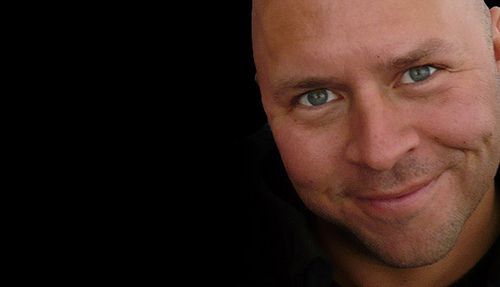
By popular demand, this is a follow-up with the amazing Derek Sivers (@sivers)!
This episode can be listened to independently of our first popular conversation, and he answers some of my (and your) favorite questions.
Originally a professional musician and circus clown, Derek created CD Baby in 1998. It became the largest seller of independent music online, with $100 million in sales for 150,000 musicians.
If you only listen to one answer from this episode, don’t miss his response to “What do you believe that other people think is insane?” It get progressively weirder and weirder and starts around 34:09 (stream below or save MP3 by right-clicking here):
Where are the links and show notes for this episode? Alas, I’m overseas with family and don’t have time to compile them!
Offer: To the first person to put good links and resources from this episode in the comments (no time stamps needed), I will gladly put your notes in this blog post, thank you, and link to your website/social handle, assuming not excessively scandalous. Deadline: Dec. 29, 5pm ET.
###
This podcast is brought to you by Mizzen + Main. These are the only “dress” shirts I now travel with — fancy enough for important dinners but made from athletic, sweat-wicking material. They are a personal favorite of NFL phenom J.J. Watt, alongside many professional athletes. Mizzen now also make chinos, which stretch in four directions, and are perfect for all climates. For all of their clothing: no more ironing, no more steaming, no more hassle. Click here for the exact shirts I wear most often. Just go to fourhourworkweek.com/shirts and find what you like.

December 23, 2015
How to Decrease E-mail Overwhelm in 2016–The First Step

“A man is rich in proportion to the number of things he can afford to let alone.”
– Henry David Thoreau
I’m often asked how to handle e-mail overwhelm.
While I do use some great apps to help stem the flood, the most important shield is still low-tech: a rock-solid e-mail autoresponder.
This unsexy tool allows you to ignore some or all correspondence.
Answering every inbound e-mail faster might seem like the cure-all, but it’s a Phyrric victory. Robert Scoble observed long ago what is now standard: for each e-mail he responds to, he gets ~1.75 in response! It’s an unwinnable game of whack-a-mole.
The only sustainable solutions involve selective ignorance. Step 1: Answer fewer e-mail (or “Ignore more e-mail”). Step 2: Give your e-mail address to fewer people (or “Use a decoy email that goes to your assistant”).
Below is my current autoresponse, which you might be able to adapt or borrow from. More examples follow. These things are highly personalized, of course:
Subject line: Tim is off of email — please read this
Hi All,
Thank you for reaching out. I’m currently on deadline.
We often receive 1,000+ e-mails per day, and it’s sadly impossible for us to respond to every message.
Please don’t take offense if you don’t hear back. This is true even for family and close friends.
PLEASE NOTE:
– I’m no longer doing startup investing or advising, so I will not be responding to anything startup-related (excluding current portfolio companies). AngelList is a great resource for finding the right investors, but I’m out of the game. Here’s the full(er) story.
– I never respond to cold e-mail intros. I am touchy about having my private email addresses shared. I much prefer people to ask before making intros. My inbox is otherwise unmanageable.
– I’m no longer doing book blurbs. I get sent 20+ books per week and have to turn away friends, so I’m saying no to everyone. It sucks. (But good news: Blurbs don’t do much for book sales anyway. These things have far greater impact.)
– Book marketing advice? All the advice I might give, and certainly enough to hit the NYT lists with a good book, can be found at this link.
– I’m taking a break from most unpaid speaking engagements. (Looking for speakers? Search “TEDx [insert nearby cities]” on YouTube to find good speakers.)
Thank you for your understanding!
If you genuinely need to reach me for an emergency (and emergencies only) — [Insert emergency email for yourself or assistant] with “Emergency” somewhere in the headline.
All the best to you and yours. May you live well outside of the inbox.
Tim
Before setting up such an autoresponse, I will separately email (BCC) my lawyers, accountants, team members, etc. to ask them to text/SMS or use Slack if they need my attention. I indicate that my inbox should be treated like a black hole, unless they SMS/Slack to ask me to see a specific email (e.g. “If it’s not in SMS or Slack with @Tim, it will not get read”). I reiterate this before vacations or extended travel.
My approach has evolved over time, and one my past templates may work better for you. Past examples:
Reader example from SXSW (2007)
Two real autoresponders that work (2014)
Good luck! Please share your own autoresponse or email strategies and tools in the comments. I’d love to see them.
May you live well outside of the inbox :)
Tim
P.S. If you want more inspiration for the new year, here is my favorite commencement speech (20 minutes) by the amazing Neil Gaiman.

December 22, 2015
Amelia Boone on Beating 99% of Men and Suffering for High Performance
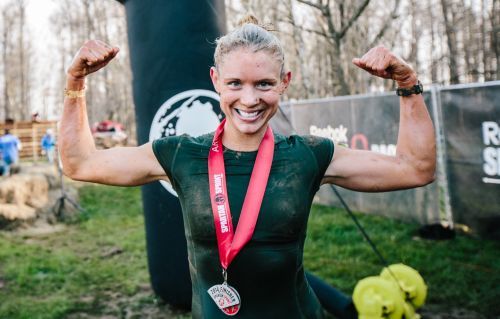
Amelia Boone (Photo credit: David Salafia)
“I’m not the strongest. I’m not the fastest. But I’m really good at suffering.” – Amelia Boone
Amelia Boone (@ameliaboone) has been called the Michael Jordan of obstacle course racing (OCR). This episode explores her training, nutrition, rehab, “pre-hab,” and more.
In a sense, Amelia is more impressive than MJ, as she conquered OCR while building a stellar full-time career in law.
Since the sport’s inception, she’s amassed more than 30 victories and 50 podiums. In the 2012 World’s Toughest Mudder competition, which lasted 24 hours, she finished 2nd OVERALL out of 1,000+ competitors. This was ahead of every male except the winner, who beat her by just 8 minutes.

Her major victories include the Spartan Race World Championship (2013), Spartan Race Series Point Champion (2013 and 2015), and she is the only three-time winner of the World’s Toughest Mudder (2012, 2014 and 2015). She won the 2014 WTM eight weeks after knee surgery. Amelia is also a three-time finisher of the Death Race, and dabbles in ultra-running in all of her spare time.
Phew… I’m exhausted just writing this intro, but Amelia can do it all while eating Pop-Tarts for breakfast (seriously).


Listen to it on iTunes.
Stream by clicking here.
Download as an MP3 by right-clicking here and choosing “save as.”
Love wrestling as much as Amelia Boone? You will probably enjoy my podcast with Triple H. — In this episode, we discuss pre-fight rituals, injury avoidance, and Floyd Mayweather, Jr. (stream below or right-click here to download):
Craving more OCR? Then you’ll want to check out my podcast with Joe De Sena, co-founder of the Death Race and Spartan Race. In this episode, we discuss grit, endurance, and building empires (stream below or right-click here to download):

This podcast is brought to you by 99Designs, the world’s largest marketplace of graphic designers. I have used them for years to create some amazing designs. When your business needs a logo, website design, business card, or anything you can imagine, check out 99Designs.
I used them to rapid prototype the cover for The 4-Hour Body, and I’ve also had them help with display advertising and illustrations. If you want a more personalized approach, I recommend their 1-on-1 service. You get original designs from designers around the world. The best part? You provide your feedback, and then you end up with a product that you’re happy with or your money back. Click this link and get a free $99 upgrade. Give it a test run.
This podcast is also brought to you by Wealthfront. Wealthfront is a massively disruptive (in a good way) set-it-and-forget-it investing service, led by technologists from places like Apple and world-famous investors. It has exploded in popularity in the last 2 years and now has more than $2.5B under management. In fact, some of my good investor friends in Silicon Valley have millions of their own money in Wealthfront. Why? Because you can get services previously limited to the ultra-wealthy and only pay pennies on the dollar for them, and it’s all through smarter software instead of retail locations and bloated sales teams.
Check out wealthfront.com/tim, take their risk assessment quiz, which only takes 2-5 minutes, and they’ll show you—for free–exactly the portfolio they’d put you in. If you want to just take their advice and do it yourself, you can. Or, as I would, you can set it and forget it. Well worth a few minutes: wealthfront.com/tim.
QUESTION(S) OF THE DAY: Who do you consider the most dominant athlete right now and why? Please let me know in the comments. Scroll below for links and show notes…
Enjoy!
Selected Links from the Episode
Check you AmeliaBooneRacing.com
Learn more about Scott Kenneally, our mutual friend in suffering
Learn more about electrical muscle stimulation
Learn more about Active Release Technique (A.R.T.)
Learn more about dry needling
Check out BeetElite, Amelia’s pre-workout supplement
In NYC this winter? Check out Brodo for delicious bone broth.
House of Leaves by Mark Danielewski
The Goonies
Learn more about a Tyrolean traverse
Connect with Amelia Boone on Twitter, Facebook, and Instagram
Show Notes
Defining obstacle course racing [6:19]
Origin stories and law school [10:09]
Pre-race routines [15:59]
Pre-race mobility work [18:09]
Post-race recovery habits [21:59]
Amelia Boone’s opinion on ice baths [22:59]
Discussing how she placed 1st for women and 2nd overall (of men and women) in the 2012 World’s Toughest Mudder [23:34]
On practicing hardship and training in less than ideal conditions [28:29]
The most challenging and the most dangerous obstacles of Amelia Boone’s career [30:14]
On knee surgery and her quick recovery [36:29]
Nutrition habits and superstitions [45:29]
The different gear for obstacle course races and ultra-marathons [50:24]
Daily supplements [54:29]
Injury prevention and average running miles per week [57:09]
Amelia Boone’s daily morning rituals [1:01:24]
What is your self-talk during races? [1:03:59]
Interesting coping approaches for long-distance obstacle racing [1:07:24]
Do you have a specific meditative practice? [1:08:14]
Why move back to California? [1:09:39]
How do you keep your body limber after ice or water immersion during a race? [1:10:49]
When you hear the word successful, who is the first person that comes to mind and why? [1:11:19]
Most gifted books [1:14:59]
Favorite documentaries or movies [1:16:34]
A purchase of less than $100 that has most positively affected your life in recent memory [1:17:09]
Important habits to staying connected in the ‘social media’ world [1:19:14]
If you could have a billboard anywhere, what would it say? [1:20:59]
Is dating a challenge? [1:23:14]
Advice to Amelia Boone’s 20- and 25-year-old self [1:24:49]
People Amelia Boone would like to meet [1:27:39]
Asks or requests of the audience [1:28:39]
People Mentioned
Charles Poliquin
Ronda Rousey
Sheryl Sandberg
December 19, 2015
25 Great Things I Learned from Podcast Guests in 2015

The Tim Ferriss Show has been selected as one of iTunes’ “Best of 2015.” Thanks for all the incredible feedback this year! It’s what makes the show fun for me.
To celebrate, this short episode (approximately 30 minutes) describes 25 of my favorite learnings from 2015: tips, gadgets, and quotes from podcast guests that I’ve incorporated into my own life. Enjoy!
I have one quick favor to ask — Two of my episodes from 2015 have been nominated for “best podcast of the year,” and I’d love your votes! It takes just 5 seconds. You can vote for both, if you like:
Jamie Foxx (click here)
Naval Ravikant (click here)
It’s not totally obvious where the “vote” button is on those pages. Here is a screenshot to help.
Thanks so much for listening! I’ll try and make 2016 my best year of content yet.
Happy holidays to you and yours,
Tim
Listen to it on iTunes.
Stream by clicking here.
Download as an MP3 by right-clicking here and choosing “save as.”
Want to hear a podcast about my rituals? — Listen to the episode where I share how to win each day. In it, I discuss my morning routine and habits that set me up for success. (Stream below or right click here to download):
This podcast is brought to you by Mizzen + Main. These are the only “dress” shirts I now travel with — fancy enough for important dinners but made from athletic, sweat-wicking material. They are a personal favorite of NFL phenom J.J. Watt, alongside many professional athletes. Mizzen now also make chinos, which stretch in four directions, and are perfect for all climates. For all of their clothing: no more ironing, no more steaming, no more hassle. Click here for the exact shirts I wear most often. Just go to fourhourworkweek.com/shirts and find what you like.
This podcast is also brought to you by Wealthfront. Wealthfront is a massively disruptive (in a good way) set-it-and-forget-it investing service, led by technologists from places like Apple and world-famous investors. It has exploded in popularity in the last 2 years and now has more than $2.5B under management. In fact, some of my good investor friends in Silicon Valley have millions of their own money in Wealthfront. Why? Because you can get services previously limited to the ultra-wealthy and only pay pennies on the dollar for them, and it’s all through smarter software instead of retail locations and bloated sales teams.
Check out wealthfront.com/tim, take their risk assessment quiz, which only takes 2-5 minutes, and they’ll show you—for free–exactly the portfolio they’d put you in. If you want to just take their advice and do it yourself, you can. Or, as I would, you can set it and forget it. Well worth a few minutes: wealthfront.com/tim.
QUESTION(S) OF THE DAY: Who was your favorite guest in 2015, and what was your favorite tip or lesson? Please let me know in the comments.
Enjoy!

December 14, 2015
Derek Sivers on Developing Confidence, Finding Happiness, and Saying “No” to Millions
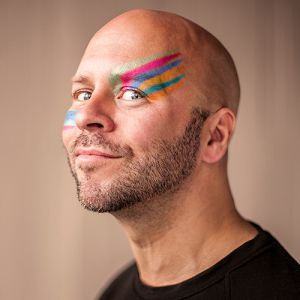
“To me, ‘busy’ implies that the person is out of control of their life.” – Derek Sivers
Derek Sivers(@sivers) is one of my favorite humans, and I call him often for advice. Think of him as a philosopher-king programmer, master teacher, and merry prankster.
Originally a professional musician and circus clown, Derek created CD Baby in 1998. It became the largest seller of independent music online, with $100 million in sales for 150,000 musicians.
In 2008, Derek sold CD Baby for $22 million, giving the proceeds to a charitable trust for music education. He is a frequent speaker at the TED Conference, with more than 5 million views of his talks. Since 2011, he has published 34 books, including “Anything You Want,” which I’ve personally read 10+ times.
Enjoy!
Listen to it on iTunes.
Stream by clicking here.
Download as an MP3 by right-clicking here and choosing “save as.”
Want to hear another podcast from a tech entrepreneur who built and sold a multi-million dollar company? — Listen to my conversation with Bryan Johnson. In this episode, we discuss his path to building a business worth $800 million (stream below or right-click here to download):
This podcast is brought to you by Wealthfront. Wealthfront is a massively disruptive (in a good way) set-it-and-forget-it investing service, led by technologists from places like Apple and world-famous investors. It has exploded in popularity in the last 2 years and now has more than $2.5B under management. In fact, some of my good investor friends in Silicon Valley have millions of their own money in Wealthfront. Why? Because you can get services previously limited to the ultra-wealthy and only pay pennies on the dollar for them, and it’s all through smarter software instead of retail locations and bloated sales teams.
Check out wealthfront.com/tim, take their risk assessment quiz, which only takes 2-5 minutes, and they’ll show you—for free–exactly the portfolio they’d put you in. If you want to just take their advice and do it yourself, you can. Or, as I would, you can set it and forget it. Well worth a few minutes: wealthfront.com/tim.
This podcast is also brought to you by MeUndies. Have you ever wanted to be as powerful as a mullet-wearing ninja from the 1980’s, or as sleek as a black panther in the Amazon? Of course you have, and that’s where MeUndies comes in. I’ve spent the last 2-3 weeks wearing underwear from these guys 24/7, and they are the most comfortable and colorful underwear I’ve ever owned. Their materials are 2x softer than cotton, as evaluated using the Kawabata method. Check out MeUndies.com/Tim to see my current faves (some are awesomely ridiculous) and, while you’re at it, don’t miss lots of hot ladies wearing MeUndies.
QUESTION(S) OF THE DAY: In this episode, Derek discusses how he deconstructs the ideas from books into useful “do this” style directives. If you were to write a directive based on lessons from this podcast, what would it be? Please let me know in the comments.
Scroll below for links and show notes…
Enjoy!
Selected Links from the Episode
Anything You Want by Derek Sivers
HELL YEAH! Or No. by Derek Sivers
Learn more about Now Now Now
The Most Successful E-mail I Ever Wrote
Watch Vanilla Sky, the movie that inspired Derek to automate CD Baby
Get Derek Sivers’s book notes
Seeking Wisdom by Peter Bevelin (Derek Sivers’s notes)
The Magic of Thinking Big by David Schwartz (Derek Sivers’s notes)
Stumbling on Happiness by Daniel Gilbert – (Derek Sivers’s notes)
The Omnivore’s Dilemma and Food Rules by Michael Pollan
Learn more about Derek Sivers’s directives project
Check out Weird or Just Different, Derek Sivers 3-minute TED Talk
A Guide to the Good Life by William Irvine (Derek Sivers’s notes)
Radical Acceptance by Tara Brach
A Geek in Japan by Hector Garcia
Au Contraire by Gilles Asselin and Ruth Mastron
Check out Chris Rock’s Top Five
What if You Didn’t Need Money or Attention?
Relax For The Same Result
Saying No To Everything Else
Want more from Derek? Check out his Twitter responses to your questions
Show Notes
Derek Sivers, the leader of the circus [8:56]
A framework for developing confidence [15:41]
How Derek Sivers graduated from the Berklee School of Music in two years [19:26]
Lessons learned from the Santa Monica bike path [28:31]
How CD Baby came to be [34:51]
The co-op business model [38:36]
How one e-mail helped make CD Baby a remarkable company [41:36]
How Derek Sivers responded to those seeking to invest in CD Baby during the dot-com bubble [46:01]
On his relationship with money and saying “no” to millions [49:06]
The origins of the HELL YEAH! Or No. [57:06]
Discussing the Now Now Now project [1:01:21]
What inspired the automation of CD Baby [1:03:41]
Derek Sivers’s book consumption habits and creating directives [1:12:36]
Most gifted books [1:46:36]
What purchase of $100 or less has most positively affected your life? [1:49:16]
What Derek Sivers listens to when working out [1:51:11]
If you could have one billboard anywhere, what would it say and why? [1:52:46]
Advice for your thirty-year-old self [1:54:36]
People Mentioned
Kimo Williams
Tony Robbins
Laird Hamilton
Gabby Reece
December 6, 2015
Jamie Foxx on Workout Routines, Success Habits, and Untold Hollywood Stories

This episode is easily one of my favorites I’ve ever done.
Jamie Foxx (@iamjamiefoxx) is an Academy Award-winning actor, a Grammy Award-winning musician, and a famous standup and improv comedian. He is, without a doubt, the most consummate performer and entertainer I have ever met. In the 2.5 hours we spent together in his home studio, he blew my mind.
We cover a TON in this wide-ranging episode, including many never-before-heard stories. Here’s just a tiny sample of what you’ll hear:
Jamie’s workout routine
Jamie’s origin stories — how he used $400 to match a $1,000,000 party thrown by Puff Daddy; building up his network with Kanye, Jay Z, and Pharrell; expanding his fan base; and bombing horribly at the beginning.
What he learned during the magic of In Living Color
Jamie playing live music throughout our interview
Impersonations (and lessons learned from many of the following) — Quincy Jones, Ed Sheeran, Ray Charles, Jimmy Carter, Richard Nixon, Ronald Reagan, Bill Cosby, Doc Rivers, Kermit the Frog, Sammy Davis, Jr., LeBron James, Bill Clinton, Tamara Rawitt, Shawn Wayans, Jim Carrey, Oprah Winfrey, Norman Lear, Mike Tyson, and others
The key skills Jamie learned from his grandmother
Jamie’s parenting style
Check out the show notes below for much, much more. Enjoy!
Listen to it on iTunes.
Stream by clicking here.
Download as an MP3 by right-clicking here and choosing “save as.”
Want to hear another podcast with a mega-successful Hollywood actor and director? — Listen to my conversation with Jon Favreau. In this episode, we discuss the movie Swingers, how to reinvent oneself, and how to create art that can be massively successful. (Stream below or right-click here to download):
This podcast is brought to you by TrunkClub. I hate shopping with a passion. And honestly I’m not good at it, which means I end up looking like I’m colorblind or homeless. Enter TrunkClub, which provides you with your own personal stylist and makes it easier than ever to shop for clothes that look great on your body. Just go to trunkclub.com/tim and answer a few questions, and then you’ll be sent a trunk full of awesome clothes. They base this on your sizes, preferences, etc. The trunk is then delivered free of charge both ways, so you only pay for clothes that you keep. If you keep none, it costs you nothing. To get started, check it out at trunkclub.com/tim.
This podcast is also brought to you by 99Designs, the worldís largest marketplace of graphic designers. I have used them for years to create some amazing designs. When your business needs a logo, website design, business card, or anything you can imagine, check out 99Designs.
I used them to rapid prototype the cover for The 4-Hour Body, and I’ve also had them help with display advertising and illustrations. If you want a more personalized approach, I recommend their 1-on-1 service, which is non-spec. You get original designs from designers around the world. The best part? You provide your feedback, and then you end up with a product that you’re happy with or your money back. Click this link and get a free $99 upgrade. Give it a test run.
QUESTION(S) OF THE DAY: In your opinion, who are the greatest living performers? What makes them impressive? Please let me know in the comments.
And please be sure to say hello to Jamie on Twitter at @iamjamiefoxx. He’s a good dude and was extremely generous with his time.
Scroll below for links and show notes…
Enjoy!
SELECTED LINKS FROM THE EPISODE
Jamie Foxx – Hollywood: A Story of a Dozen Roses
Twista ft. Kanye West and Jamie Foxx – Slow Jamz
Jamie Foxx ft. T-Pain – Blame It (On The Alcohol)
Terrell, Texas
Seattle during the Jazz Age
Ray
Ray Charles performing on The Dinah Shore Show, 1963
In Living Color
The Laugh Factory Hollywood
Black Lives Matter
The home of Martin Luther King, Jr.
Minority of One
The Pianist
Without Sanctuary: Lynching Photography in America by James Allen
The Harrison Narcotic Act
Giuseppe Zanotti shoes
Sleepless Night
Django Unchained
Connect with Jamie Foxx:
Periscope | Twitter | Instagram | Facebook
SHOW NOTES
Why does Jamie keep a grand piano in his home studio? [06:49]
What is automated dialogue replacement (ADR)? [08:13]
How did Jamie break into music? [09:32]
How did a then-unknown Jamie Foxx got into Puff Daddy’s parties? [09:57]
Jamie challenges Puff Daddy by throwing down the party gauntlet [10:55]
Before social media, Jamie had a unique way of staying connected with people, which involved comedy shows, cue cards, and text messages [11:59]
Why nobody leaves Jamie’s house without performing [16:56]
What makes Jamie’s studio magical [19:34]
How Jamie learned the nuances of performing on both sides of the tracks (literally and metaphorically) when he was a kid [23:59]
How young Jamie dealt with racially insensitive grown-ups at a Christmas party [28:31]
What convinced Jamie to leave Texas and head to California [30:42]
Life lessons Jamie learned from his grandma [33:38]
Why Jamie is always willing to help his family, but he’s no sucker [39:45]
Jamie’s parenting style [41:27]
How portraying Ray Charles in Ray gave Jamie the opportunity to bring all of his comedic, acting, and musical talents into play [42:00]
What Ray Charles told Jamie was possible if he could play the blues [43:15]
Lessons from Ray Charles [47:19]
What’s on the other side of fear? [50:42]
Jamie’s first impression? [54:07]
What Bill Cosby had to say to Jamie on the subject of booty calls [56:44]
How Jamie uses his musical background to help him do impressions [57:34]
How raising kids in Hollywood differs from Jamie’s own small-town Texas upbringing [59:52]
Jamie Foxx’s real name [01:03:06]
Could Prince or Michael Jackson find a career break in today’s “Age of Memes?” [01:08:11]
What happened when Jamie first bombed on stage [01:09:32]
Why do some standup comedians lose the ability to make people laugh? [01:17:15]
Where does Jamie get his best standup material? [01:20:34]
How did the In Living Color team assemble? [01:28:19]
Jamie talks about how social media has taken away the power to control our own narratives [01:34:51]
Is Quentin Tarantino a cop hater? [Short answer: No, and don’t believe the media spin] [01:41:32]
Jamie’s advice to new parents raising a child of color in modern America [01:48:00]
Jamie’s plans for his next comedy tour [01:52:43]
The first person who comes to Jamie’s mind when he hears the word “successful.” [01:54:34]
What historical figure does Jamie most identify with? [01:57:13]
Jamie’s take on documentaries [02:01:37]
What would Jamie’s billboard say? [02:06:08]
What would Jamie teach a class of 9th graders? [02:07:22]
Jamie’s morning routine (it doesn’t involve coffee) [02:12:07]
Advice Jamie would give to his younger self. [02:15:04]
The time Jamie told Mike Tyson jokes but didn’t realize Mike was in the audience. [02:23:55]
PEOPLE MENTIONED
Puff Daddy
Snoop Dogg
John B
Brian McKnight
Breyon Prescott
J. Lo
Jay Z
Missy Elliott
Pharrell
Kanye West
Natasha Bedingfield
Kelly Rowland
The Game
Ed Sheeran
Miranda Lambert
Stevie Wonder
Babyface
Ray Charles
Quincy Jones
Frank Sinatra
Dinah Shore
Mark Twain
Johnny Carson
David Brenner
Steve Allen
David Letterman
Franklyn Ajaye
Jay Leno
Richard Pryor
Rich Little
Jimmy Carter
Richard Nixon
Ronald Reagan
Doc Rivers
Kermit the Frog
Sammy Davis, Jr.
LeBron James
Redd Foxx
Prince
Michael Jackson
Latimore
Kevin Hart
Eddie Murphy
Chris Rock
Jim Carrey
Chris Tucker
Joe Piscopo
Bill Clinton
Arsenio Hall
George Lopez
Sarah Silverman
Amy Schumer
Whoopi Goldberg
TK Kirkland
Earthquake
Tony Roberts
Evan Goldberg
Seth Rogen
Jerrod Carmichael
Robert De Niro
Keenen Ivory Wayans
Damon Wayans
Yvette Wilson
Heavy D
Shawn Wayans
Caitlyn Jenner
Justin Bieber
Chris Brown
Jennifer Aniston
Quentin Tarantino
Barack Obama
Oprah Winfrey
Norman Lear
Magic Johnson
Kareem Abdul-Jabbar
Martin Luther King, Jr.
Harry Belafonte
Po Bronson
Colin Powell
Tyrin Turner
Nicole Scherzinger
Tank
Kid Ink
Mike Tyson
Terence Winter
Martin Scorsese
Drew Bundini Brown
Muhammad Ali
Will Smith

November 30, 2015
Rainn Wilson on Meditation, The Sexy Nostril Exercise, and Acting as Therapy

“Cynicism is a disease that robs people of the gift of life.” – Rainn Wilson
Rainn Wilson (@rainnwilson) is best known for playing “Dwight” on NBC’s Emmy-winning, “The Office.” He has also acted in “Super,” “Cooties,” “Juno,” “Monsters vs. Aliens,” and “The Rocker” among other movies. He co-founded SoulPancake, a media company that seeks to tackle “Life’s Big Questions.” He’s a board member of Mona Foundation and co-founded Lidè Haiti, an educational initiative in rural Haiti that empowers young, at-risk women through the arts. He is the author of the brand-new book, The Bassoon King, which is his laugh-out-loud memoir.
We cover a lot in this episode, including:
The value of “as if” exercises from drama school
Meditation practices, and what constitutes a “win” in a session
The origins of SoulPancake and the Kid President video mega-hit
Favorite books, documentaries, and movies
Acting as therapy (even for non-actors)
The basics of Bahá’í Faith and what Rainn would put on a billboard
The Sexy Nostril exercise
Listen to it on iTunes.
Stream by clicking here.
Download as an MP3 by right-clicking here and choosing “save as.”
Want to hear another podcast with a cast member from The Office? — Listen to my conversations with BJ Novak. In this episode, we discuss creative process, handling rejection, and good comedy (stream below or right-click here to download):
This podcast is brought to you by MeUndies. If I’m not going commando, then I’m wearing MeUndies. I’ve been testing out pairs for about 3 or 4 months now, and, as a result, I’ve thrown out my other underwear. They look good, feel good, have options for men and women, and their materials are 2x softer than cotton, as evaluated using the Kawabata method. Not only does MeUndies offer underwear, but they also have incredible lounge pants. I wear them when I record the podcast, and when I’m out and about grabbing coffee.
If by some chance you’re not happy with the first pair you try on, they’ll refund your purchase completely. Check out MeUndies.com/Tim to see my current faves (some are awesomely ridiculous) and, while you’re at it, don’t miss lots of hot ladies wearing MeUndies.
This podcast is also brought to you by Wealthfront. Wealthfront is a massively disruptive (in a good way) set-it-and-forget-it investing service, led by technologists from places like Apple and world-famous investors. It has exploded in popularity in the last 2 years and now has more than $2.5B under management. In fact, some of my good investor friends in Silicon Valley have millions of their own money in Wealthfront. Why? Because you can get services previously limited to the ultra-wealthy and only pay pennies on the dollar for them, and it’s all through smarter software instead of retail locations and bloated sales teams.
Check out wealthfront.com/tim, take their risk assessment quiz, which only takes 2-5 minutes, and they’ll show you—for free–exactly the portfolio they’d put you in. If you want to just take their advice and do it yourself, you can. Or, as I would, you can set it and forget it. Well worth a few minutes: wealthfront.com/tim.
Mandatory disclaimer: Wealthfront Inc. is an SEC registered Investment Advisor.
Investing in securities involves risks, and there is the possibility of losing money. Past performance is no guarantee of future results. Please visit Wealthfront dot com to read their full disclosure.
QUESTION(S) OF THE DAY: When it comes to setting and achieving goals, what systems have worked best for you? What have you tried that has or hasn’t worked? Please let me know in the comments.
Scroll below for links and show notes…
Enjoy!
Selected Links from the Episode
Explore SoulPancake:
Kid President | Subscribe on YouTube | What Makes Someone Truly Wealthy
Watch more of Rainn Wilson:
The Office | Hesher | Backstrom
Watch Amy, the documentary about Amy Winehouse
Learn more about Lidè Haiti
The Bassoon King by Rainn Wilson
The Family Virtues Guide by Linda Kavelin Popov, Dan Popov, and John Kavelin
Learn more about The Bahá’í Faith
Watch The Act of Killing on Vimeo
Apocalypse Now is another of Rainn’s favorite movies
Connect with Rainn Wilson:
Twitter | Instagram | Facebook
Show Notes
SoulPancake and long-term goals for the company [8:15]
What have been Rainn’s most challenging projects, and how has he prepared for them? [15:20]
Does getting deep into the mindset of a depressed character help you fight depression in real life? [19:20]
Rainn Wilson’s meditation practice [23:10]
Exercises that could benefit non-actors to get outside of their own head [29:00]
Rainn Wilson’s exercise habits [34:15]
When you think of the word successful, who is the first person that comes to mind and why? [36:20]
Most gifted books [42:30]
In recent memory, what purchase of $100 or less has most positively impacted your life? [46:35]
What is something that you believe that other people think is insane? [48:43]
Common misconceptions about Rainn Wilson [52:05]
What Rainn Wilson has in common with Dwight Schrute (his character in The Office) and which characteristics are completely different? [53:00]
Why Rainn Wilson decided to write The Bassoon King [53:55]
The core tenants of Bahá’í Faith [58:20]
If you could have one billboard anywhere, what would it say and why? [1:06:05]
Advice to a 30-year-old Rainn Wilson and what his life looked like at that point [1:06:55]
Favorite movies and documentaries [1:08:45]
An ask or request of the audience [1:10:55]
People Mentioned
Tara Brach
B.J. Fogg
November 29, 2015
The Magic of Mindfulness: Complain Less, Appreciate More, and Live a Better Life
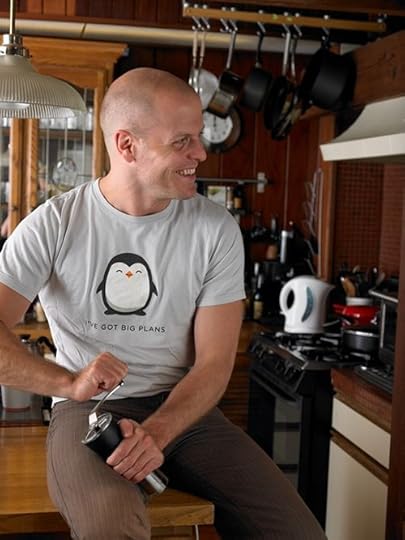
Photo: Susan Burdick
Mindfulness
a present state awareness that helps you to be non-reactive.
This is another special episode of The Tim Ferriss Show. Usually, when I talk about strategies for living a better life, I focus on effectiveness and efficiency. Both of these are important, but fine-tuning those traits comes naturally for me. Mindfulness is something that is difficult for me (and most Type-A personalities) and usually overlooked by most people.
So why is mindfulness essential? When it comes to achievement, most people just work harder. In reality, this is not only inefficient but also blinds focus and clarity. That’s why practicing mindfulness is important. Once you incorporate it into your life, you complain less, appreciate more, react less, and fill your life with what’s most important to you. More than anything, you’ll learn how to be present and live in the moment. In this episode, I share my personal experiences, apps and best practices, and the ways mindfulness might improve your life.
Listen to it on iTunes.
Stream by clicking here.
Download as an MP3 by right-clicking here and choosing “save as.”
Want to hear another podcast regarding morning rituals? — Listen to my conversations with Tony Robbins. In this episode, we discuss his morning routines, peak performance, and mastering money (stream below right click here for part 1 and here for part 2 to download):
This podcast is brought to you by 99Designs, the world’s largest marketplace of graphic designers. I have used them for years to create some amazing designs. When your business needs a logo, website design, business card, or anything you can imagine, check out 99Designs.
I used them to rapid prototype the cover for The 4-Hour Body, and I’ve also had them help with display advertising and illustrations. If you want a more personalized approach, I recommend their 1-on-1 service, which is non-spec. You get original designs from designers around the world. The best part? You provide your feedback, and then you end up with a product that you’re happy with or your money back. Click this link and get a free $99 upgrade. Give it a test run…
This podcast is also brought to you by Wealthfront. Wealthfront is a massively disruptive (in a good way) set-it-and-forget-it investing service, led by technologists from places like Apple and world-famous investors. It has exploded in popularity in the last 2 years and now has more than $2.5B under management. In fact, some of my good investor friends in Silicon Valley have millions of their own money in Wealthfront. Why? Because you can get services previously limited to the ultra-wealthy and only pay pennies on the dollar for them, and it’s all through smarter software instead of retail locations and bloated sales teams. Check out wealthfront.com/tim, take their risk assessment quiz, which only takes 2-5 minutes, and they’ll show you—for free–exactly the portfolio they’d put you in. If you want to just take their advice and do it yourself, you can. Or, as I would, you can set it and forget it. Well worth a few minutes: wealthfront.com/tim.
Mandatory disclaimer: Wealthfront Inc. is an SEC registered Investment Advisor.
Investing in securities involves risks, and there is the possibility of losing money. Past performance is no guarantee of future results. Please visit Wealthfront dot com to read their full disclosure.
QUESTION(S) OF THE DAY: What mindfulness practices have you implemented that made a significant impact on your happiness? Please let me know in the comments.
Scroll below for links and show notes…
Enjoy!
Selected Links from the Episode
A Complaint Free World by Will Bowen
Download mediation apps:
Check out the Five Minute Journal
21 Day No-Complaint Experiment
Practice Poverty
Morning Journaling
Gratefulness Prompts
An old relationship that helped a lot
An opportunity you have today
Something good/great that happened yesterday
Something simple near you
November 25, 2015
B.J. Novak of The Office on Creative Process, Handling Rejection, and Good Comedy
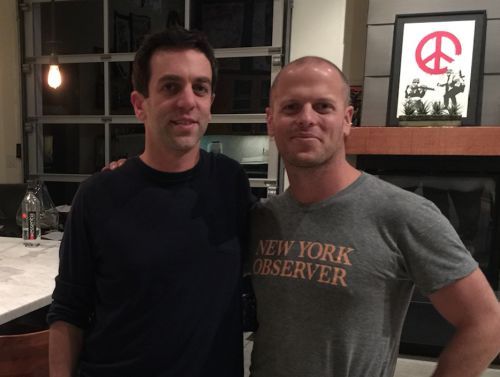
“I find that being in a good mood for creative work is worth the hours it takes to get in a good mood.” – B.J. Novak
This episode covers principles and tactics for creating amazing careers, comedy, writing, and much more. Hilarious stories weave it all together.
My guest is B.J. Novak (@bjnovak), best known for his work on NBC’s Emmy Award-winning comedy series “The Office” as an actor, writer, director, and executive producer. He has appeared in films such as Quentin Tarantino’s Inglorious Basterds and Disney’s Saving Mr. Banks. He is also the author of the acclaimed short story collection “One More Thing” and the #1 New York Times Best Seller “The Book With No Pictures” (great Christmas gift), which has more than one million copies in print. Last but not least, he is co-founder of The List App.
In other words, he does a lot and does it well. What are the habits, tools, and routines that help him to do this? That’s what we explore in this conversation.
Listen to it on iTunes.
Stream by clicking here.
Download as an MP3 by right-clicking here and choosing “save as.”
Want to hear another podcast from a comedian? — Listen to my conversation with Whitney Cummings. In this episode, we discuss turning pain into creativity (stream below or right-click here to download):
This podcast is brought to you by Vimeo Pro, which is the ideal video hosting platform for entrepreneurs. In fact, a bunch of my start-ups are already using Vimeo Pro. WealthFront uses it to explain how WealthFront works. TaskRabbit uses it to tell the company’s story. There are many other names who you would recognize among their customers (AirBnB, Etsy, etc.) Why do they use it? Vimeo Pro provides enterprise level video hosting for a fraction of the usual cost. Features include:
Gorgeous high-quality playback with no ads
Up to 20 GB of video storage every week
Unlimited plays and views
A fully customizable video player, which can include your company logo, custom outro, and more
You get all this for just $199 per year (that’s only $17 per/mo.). There are no complicated bandwidth calculations or hidden fees. Try it risk-free for 30 days. Just go to Vimeo.com/business to check it out. If you like it, you can use the promo code “Tim” to get 25% off. This is a special discount just for you guys.
This podcast is also brought to you by Wealthfront. Wealthfront is a massively disruptive (in a good way) set-it-and-forget-it investing service, led by technologists from places like Apple and world-famous investors. It has exploded in popularity in the last 2 years and now has more than $2.5B under management. In fact, some of my good investor friends in Silicon Valley have millions of their own money in Wealthfront. Why? Because you can get services previously limited to the ultra-wealthy and only pay pennies on the dollar for them, and it’s all through smarter software instead of retail locations and bloated sales teams.
Check out wealthfront.com/tim, take their risk assessment quiz, which only takes 2-5 minutes, and they’ll show you—for free–exactly the portfolio they’d put you in. If you want to just take their advice and do it yourself, you can. Or, as I would, you can set it and forget it. Well worth a few minutes: wealthfront.com/tim.
Mandatory disclaimer: Wealthfront Inc. is an SEC registered Investment Advisor.
Investing in securities involves risks, and there is the possibility of losing money. Past performance is no guarantee of future results. Please visit Wealthfront dot com to read their full disclosure.
QUESTION(S) OF THE DAY: In this episode, we discuss how a good mood impacts productivity. What situations do you find most difficult to overcome, and what techniques have you tried to reestablish a positive mindset? Please let me know in the comments.
Scroll below for links and show notes…
Enjoy!
Selected Links from the Episode
Download the li.st app and follow BJ Novak
B.J. Novak’s suggested podcasts:
The Great Debates | Intelligence Squared
Learn more about the Harvard Lampoon and The Princeton Tiger
Seeking contact information for celebrities in Los Angeles? Check out Creative Artist Agencies (CAA)
Easy Riders, Raging Bulls by Peter Biskind
Learn more about Dr. Katz, Professional Therapist
The Big Book of New American Humor by William Novak and Moshe Waldoks
The Big Book of Jewish Humor by William Novak and Moshe Waldoks
Daily Rituals by Mason Currey (Check the audio book)
“How Do People Get New Ideas?” by Isaac Asimov
Want to record ideas like B.J. Novak? Get the same pen and notebook he uses
Check out Scrivener for book writing
Watch the movie Memento
Two Toasters, the app development company
The Oxford Book of Aphorisms by John Gross
Make your bar fancy with big ice cubes via Tovolo Ice Cube Trays
Favorite documentaries from this episode:
Tim: Man on Wire | Project Nim
BJ: Catfish | To Be and To Have | The Overnighters
Examples of great comedy writing, The Grinder and Season 4 of Mr. Show
The Sandman by Neil Gaiman
Follow BJ Novak
Show Notes
Why do so many people migrate from Harvard to Hollywood? [6:42]
What happened the year after B.J. Novak graduated from Harvard [13:07]
How B.J. got Bob Saget booked for his event, and how it opened the door to Hollywood [14:12]
Stories and tips for getting started as a stand-up comedian [21:52]
On becoming a writer-actor [29:07]
The tipping point for when The Office became a success [31:12]
Lessons learned while working on The Office [33:37]
The experience of working with Steve Carell [35:47]
The writing process for The Office: Blue Sky Period [36:42]
How to maintain positivity and other creative productivity advice [40:15]
Note-keeping habits and the creative process [44:12]
What B.J. Novak’s freshman seminar at Harvard on comedy writing would look like [49:12]
What B.J. Novak’s freshman seminar at Harvard on screenwriting would look like [54:32]
Why B.J. wanted to create an app [58:42]
Describing the li.st app [1:02:12]
Top lists [1:08:22]
Rapid fire questions:
Who comes to mind when you think of the word successful? [1:13:32]
What was your senior thesis? [1:13:52]
Most gifted books [1:14:37]
If you could change one thing about yourself, what would it be? [1:15:37]
Do you have any bad habits that you’re working on? [1:16:22]
Are their words or phrases that you overuse? [1:17:05]
Best purchase that you’ve made in recent memory for less than $100 [1:18:52]
Favorite documentaries [1:19:36]
How to ‘power up’ in the morning [1:21:47]
Is there a particular time of day when you do your best writing? [1:24:00]
Examples of good comedy writing TV shows [1:24:42]
What historical figure do you most identify with? [1:25:15]
Advice to an aspiring comedy writer [1:27:02]
Advice to your 30-year-old self [1:29:47]
People Mentioned
Bob Saget
Jonathan Katz
Greg Daniels
Steve Carell
Blake Ross
P.J. O’Rourke
Zach Galifianakis
Demetri Martin
Matt Witheiler
James Franco
Benjamin Franklin


