
E.S. Lell's Blog, page 5
July 27, 2012
Even More Compelling Characters
So I recently wrote about how to make compelling characters by adding a little bit of crazy to them. I firmly believe that is something they need, but it is certainly not all they need. I also feel that characters need to be as complete as possible to make them believable to the reader. They need to have lives, histories, wants, needs, and desires. Without these things, what would motivate them? Why would they get out of bed in the morning?
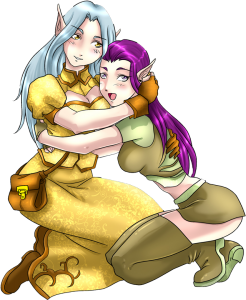 When I make new main characters, whether for my current story arc, or for some other project I am kicking around, I fill out a character sheet to keep track of their appearance, skills, abilities, equipment, alignment, general disposition, and so much more. Of course, this is all pretty easy for me, since I can use (mostly) the information in my own RPG to fill these out in a way that makes perfect sense to me. But I also don’t stop there.
I tend to go well beyond the basic game character sheet; conjuring complex, layered, and sordid histories for them. Information about how they did in school, what kinds of kids they hung out and grew up with, etc. I jot down things like what their favorite colors and flavors are, whether or not they are arachnophobic (and why), and so on. By the time I’m done, I know as much about my characters as I do about myself (sometimes more, I fear).
The idea here, is to make them so complete that you understand them on an intimate level that means you can write them in their own heads, or voices, or whatever term you want to use. When I’m done building a character, I can drop them into the world, present them with a problem, and then take up my usual role of game master, rather than putting them on rails and dictating where they will go. This is a concept I will talk about later, but the short version is that, when my characters and world are properly fleshed out, I don’t have to work too hard at the writing part of my job.
Just as the old adage professes, “An ounce of prevention is worth a pound of cure.” Only in this case it’s more to the tune of, “a few hours of detailed world and character building is worth days of labored writing pains.” Don’t get me wrong though; the writing is still laborious at times. It’s just… So much easier when you don’t have to stop and wonder what your character would do.
After you have a fully realized character, the next step is getting the reader to really empathize with them. I recently read a blog post by Jody Hedlund about ‘suturing’ the readers to your main characters. It sounds a bit gruesome, but the reality is that you really want that. You want your readers to be able to connect to your characters (or at least your main characters) so deeply that when they hurt, the reader feels the pain. When they are triumphant, the reader exults as if they have triumphed themselves!
There are a number of ways to ‘suture’ your readers to your characters, and Jody does a great job of describing how it’s done. I’m sure I’ll go on about it in some future rambling, but for now, I’ll just recommend you check out what she has to say and some of the great resources she has put forward to allow you to get even deeper into the matter.


July 25, 2012
What makes a Compelling Character?
 We’ve all read piles of information on how to make a believable character, right? Make them guy/girl next door. Give them foibles. Make sure they have flaws and strengths in equal measure, etc. There are dozens of schools of thought on the subject and no one method is right or wrong for everyone, or in every situation. But thinking about it the other day, and chatting with some friends about what sorts of things folks would be interested in hearing a writer talk about, the subject of making them compelling was raised.
You see, making them believable is only half of the battle. Most people don’t want to read a book about the average person next door unless there is something extraordinary about them, or their lives. And more often than not, having something extraordinary going on in your life, will bring out some extraordinary characteristic in yourself, just to cope with what life has thrown at you. Well, either that, or you get run over by whatever situation has arisen… But again, who wants to read about how Bill woke up one morning to find his kitchen counter levitating two feet above the floor, then was crushed to death by it when whatever magic caused it to behave so strangely suddenly gave out?
No, we want to hear about how Bill figured out what was causing such strange behavior in his kitchen furnishings, and harnessed it somehow. How he was changed by it. Maybe he has no idea and metaphysics (or just advanced physics, depending upon how we choose to explain the levitating counter) are not his bag. Then maybe some other person or agency who has a much keener interest in those disciplines shows up to take over the situation and Bill is suddenly forces to deal with being suspected of complicity with whatever force has latched onto his kitchen counter. How does he do that? What reserves, known to him or not, does Bill tap into in order to deal with this craziness?
In my first book, ‘The First Key of Kalijor’, there is a scene where the main characters engage in a high speed chase through a heavily populated archology on Mars. On the back of an ancient two-wheeled motorized vehicle, they weave through heavy pedestrian traffic while dodging (or not) their enemy’s gunfire and trying to escape with as little personal and collateral damage as possible. But why? Why didn’t they just call the authorities? Why not have professionals take care of the situation and go home to relax in front of the vid screen and catch a movie?
I submit to you that there is that one little nugget of crazy that a compelling character has to keep in the back of their otherwise every-person personality. There needs to be that ever so slight (or maybe much more significant, depending upon what your goals as a story teller are) unbalance to a good character that compels them to take up the yoke and forge ahead into the craziness that their lives are about to become with the beginning of any good story. Without that, they’d just call the cops and watch through the window as the trained professionals came around to sweep up the mess outside their front door.
Or, in the case of our friend Bill, he’d just disappear one day, kitchen counter and all, and nobody would ever hear the story of how his kitchen came down with a bad anti-graviton infection and Bill used it to learn how to dominate the niche market of roadside human tire-jack service…
There is, of course, more than just some crazy needed to make a compelling character, but that’s a discussion for another post…
What do you all think?
End of Line…
Paul
July 23, 2012
Science Fiction? Or Science Fact?
Another question I get asked a lot at conventions is something like, “How do you come up with the technology and gadgets in your books?”
Well, I read a lot, and I watch a few different programs on the science channel, and the learning channel that focus on physics, science, technology, and even philosophy. It’s pretty easy to just say, “Riana whipped out her super-duper-quantum-computing-mega-plasma-carbine” (okay, maybe not so easy, but I think you can divine my meaning here). But the thing to remember here is that even in science fiction (or maybe ~especially~ in science fiction) it is important to properly handle the suspension of the reader’s disbelief. If I can craft a world where the majority of the science is at the very least plausible, then it becomes much easier for me to pull off one major implausibility, like living beings in sub-space populating a virtual reality video game world.
How do I make my technology seem more plausible? Well, I stay abreast of what is going on in technology right now, and I read and listen to experts talk about what technology is going to look like in the next ten to fifty years. Knowing things like that, combined with an understanding of Moore’s law and some basics of human psychology allows me to sprinkle in a little bit of imagination and come up with some technology that is believable, and comprehensible to the reader.
To be fair, I think that last bit, comprehensible to the reader, is pretty significant. To make the story work right, these things need to be advanced, and they need to be amazing, but people still need to sort of ‘get’ them, at least on a basic level. It’s pretty easy for a writer who understands quantum computers to offer up fifty pages of exposition on how they function and what their benefits are, but what reader wants to sit through that? Is quantum computing the future of computers? Possibly, but most folks won’t care, unless the quantum computer is the focus of the story.
Similarly, it doesn’t really matter what kinds of engines my spaceships use, even though I know. What matters is that their use is understandable, and any technical details I use are adding to the story, not filling in space. It’s easier to say that a trip from Earth to Mars averaged about two weeks, which was a significant improvement over the six months it took in the early 21st century. I can even mention the technology and say the plasma drives on the Kestrel made the sleek new shuttle nearly twice as fast as the ion drives on most other private vessels. But I don’t necessarily need to go into details on how or why that might be.
The simple idea is to take something we already know about, say genetic engineering, which today is done mostly by selective breeding, but we are beginning to understand that a more direct control may be available to us. Then we look at what science is telling us may be possible in fifty or so years. Things like regrowing severed limbs, or ‘printing’ replacement organs. Then we take a little bit of a leap and say, in another three hundred years, it’s very possible that we could load a model of our DNA into a computer, tweak it to produce whatever end result we want by use of a simple graphical user interface, then step into a machine and have it replicate those changes through every strand of DNA in our bodies.
Nascent science that is on everyone’s minds, being pushed out to the extremes of believability, but left sitting right there on the edge where folks can still see it from where they’re standing now.
Thoughts? Comments? I’d love to hear from you, either way. 
End of Line…
Paul
July 20, 2012
World Building 101
As a writer of science fiction (or just fantasy/fiction in general), I am often asked, “How do you make the world of Kalijor/the future/corporate governments/whatever so rich and detailed?” The simple answer is actually pretty simple; history. Unfortunately, that rather simple answer is a sort of gateway drug to a life of world building and history writing.
Of course, calling it history writing is something I get the occasional flak for. Considering that most of my stories take place a thousand years in our future, or in an alternate (even virtual) world. How can I call it history, if it is in the future?
Well, it’s simple, really. It ~is~ history! To set the stage for my books, I had to explain how that stage came about. What led the people of Earth into the stars? How was that move financed? Did all of the world governments band together, shed their insecurities and differences of the past and collectively launch the human race into the next step of their evolution? Or did the world’s governments never quite figure things out, and suffer foreclosure at the hands of the dozens of banks and private corporations that had been supporting them for decades?
What happened after the corporations began taking over? How did the people of the world react? Did they roll over and accept it? Or did groups of them try and overthrow the yoke of corporate rule and reestablish some form of traditional government? If the latter, what kind of government would they choose? How would they go about usurping power from the massive, sprawling corporations that had slowly taken over control of the entire human race?
These are questions that I ask myself when I’m building new worlds. Without the answers, I don’t have a clear picture of what ‘present day’ in those worlds looks like; and without a clear picture of what the world looks like, how can I expect my characters to interact well with it? There needs to be, in my mind, at least, a reason why things are the way they are. Even if my readers never encounter those specific reasons, like the ‘laws’ of physics, they still need to be there, in the background, quietly working to hold the universe together. In many cases, my characters may not even know all of these details, but they are aware on some level of their effects.
For example: If you want a cup of decaffeinated coffee, what do you look for? How do you recognize that it is not regular coffee? Even many of you who don’t drink coffee likely know the answer to those questions, right? Why is that? How is it that we all know that an orange coffee pot or carafe means the liquid within is almost certainly lacking that thing that makes coffee the morning drink of choice for millions of people? Did you know that the particular shade of orange most often used for decaffeinated coffee pots is called Sanka Orange? Do you know why? Does it even, really, matter? Or is it just a part of your everyday world that you intuitively understand?
You see? Even in the real world, we are affected by history at almost every level of our lives. Even when we don’t know the history behind something, we are still affected by it, deal with it, live and breathe in it. Without it, how dull would our lives be?
Please let me know what you think, or if you have any thoughts or questions to share!
End of Line…
Paul
July 19, 2012
Kobo, at last!

So, I’m not sure how many folks actually ~have~ a Kobo eReader… But, for those of you who do, or know someone who does, I have great news!
Now that Borders has got themselves out of the way, authors/small presses are finally able to access the Kobo market. Case in point: after about twenty minutes of fiddling last night, we got all four Kalijor novels to post to the Kobo store! So, to all you Kobo readers out there, rejoice! You can now get Kalijor Press books on your devices without any time spent downloading from other sources and side-loading them onto your device. Just search up Kalijor on your Kobo book store (or use the handly links we’ve just installed on the books’ pages to go directly to each boot) and you’re there!
Also, here’s a link for those that want to jump over from here: Kalijor books on Kobo
In other news, the Fifth Key is still plugging along. I’m trying to increase my pace a bit so ther eis more time to get this one through editing and art, but I think it’s going to be big, so no telling how far from done it truly is at this point…
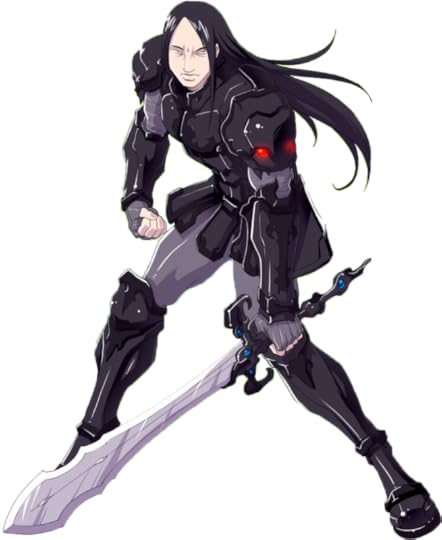 The RPG book is still creeping forward. Much to do yet, but my primary efforts are on the Fifth Key at this point. Playtesting is still on-going, and changes are made after every session at this point.
The art book…. We’re still going to try and have it for GenCon… No idea if we actually will or not… *shrug*
Other than that, just getting ready for GenCon and writing my tail off.
I hope you are all doing well, and I look forward to teh next time we can interact!
End of Line…
Paul
July 18, 2012
Writing 201
After my “I just do it” line, I can see the next round coming at me from a mile away! “Okay, so write every chance I get, accept criticism, and don’t do it for the money. Great advice, Paul. But seriously, how do you craft a story?”
My writing tends to be very organic. I start with world building, every time. I make an environment that is as complete as I can possibly make it. I establish history and politics, business practices, science and technology. Even the general psychology of the masses needs to be accounted for. Detail is everything, for me at least, because without a believable world, the characters and the story are pretty meaningless. After that I move on to character building. My characters tend to be as detailed as my world. I have huge piles of data about my characters that I doubt anyone else will ever see, just to make them as real as possible in my mind’s eye.
Once I have my world designed, and my characters fleshed out, I begin the story creation process with a problem. What is it that has everyone riled up? What are the potential dangers to the characters? Their friends/family? The world? Further, how do the characters get involved? What is it that pulls them into the quagmire of the story’s plot? Everyone needs motivation to act, and it is always helpful, from a storytelling standpoint, if our characters’ motivations are believable to the reader, and compelling enough to the character(s) that their involvement is as realistic as it can be.
Next, I try and establish a few key plot points that I think I want my story to go through on its winding path to conclusion. This is more often than not a mental map, and I try to keep it intentionally vague, because establishing fixed points makes me feel as if my stories become very forced as I try to manipulate the plot, and players, into meeting those ridged points. The dots I try and pin to the map are the start, the end, and two or three waypoints in the middle. But again, I try to keep these points as vague as possible, so it is easier for them to change and flow as the organic story begins to take shape.
Then, I toss my characters in at the starting point and let them go! I find that, for me, the story just flows, if I’ve done my job of world and character building properly. The characters will have motivations, desires, and goals, and those create personality, when combined with their history. Their personality dictates how they react to the world and deal with the problem of the plot.
To borrow an analogy from Stephen King’s ‘On Writing’ (an excellent book that I recommend to all writers), the process is much like sculpture, or the excavation of a buried dinosaur skeleton. Everything is in place and as detailed as I can make it. My job as the writer is to clear away the unnecessary bits of dirt or stone that obscure the final piece from view. Sometimes it’s easy going; sometimes not so much. But I cannot force the end result to be something it shouldn’t, unless I want to risk ruining it.
July 16, 2012
Writing 101
Hello, all!
As mentioned last week, today begins a new (hopefully) trend on the Kalijor Press blog. Actual, useful information (aside from sales)!
I will keep regular updates and such to days I am not posting these ‘educational’ tidbits, so keep your eyes peeled for that on the off days. In the meantime, and without further delay, I give you:
—————————————————————–
The most common question I am asked at conventions is easily, “how do you do it?”
For the longest time my answer was, “I just sit down and do it…”
Then I got to thinking about it. I did some reading and some investigation on the process of writing. I did a little soul searching and ‘dug deep’ as they say; and do you know what I discovered? I just sit down and do it!
So as not to appear trite, let me explain myself a bit better here. If you want to be a writer/author/novelist/whatever (they’re all pretty much the same thing in my mind), you need to write. Just as if you wanted to be an artist, you need to produce art of some kind, or if you want to be a baseball player, you need to play baseball. It comes down to motivation and practice, really. While I do believe there is a certain level of ‘inborn’ talent that can really push a person over the top in their chosen endeavor, I also believe that just about anyone can become just about anything they want, as long as they knuckle under and put forth the effort it takes to learn, practice, accept feedback (read: criticism), go back to the drawing board and occasionally reinvent themselves… In short, they need to commit themselves to the process of evolving into what they want to be.
To get back to the question, “how do I do it?” The more complete answer is, “I write every single chance I get. I write good stuff. I write bad stuff. I write terrible stuff (lots, and lots of terrible stuff). Occasionally, I may even write some great stuff. But I write, all the time. Even when I have nothing specific that I feel I need to produce, or a story to tell (which doesn’t happen very often, by the way). I have piles and piles of junk writing lying about my hard drive, filled to overflowing with writing that will likely never see the light of day.
I also throw away any pretentious thoughts that everything I write is gold and should immediately be published so the world can bask in the glory that is my crazy mind. I have no illusions about being the next [insert amazing author’s name here]. I just hope that somewhere, someday, somebody might enjoy one of my stories. I keep trying to refine my craft. I share work with people and ask for brutally honest feedback. Then I don’t cry once I’ve received it.
It is a rare bird indeed that can turn a love (or in some cases, a compulsion) for writing into a comfortable living. Much like teaching, one should never enter into the world of writing novels with the expectation or love of money as motivation. Rather, do it for the love of the craft. The difference you might make in the lives of yourself and, hopefully, a few other people.
Questions? Comments?
I would love to respond, so please leave them in the comments section below!
End of Line…
Paul
July 13, 2012
A couple things…
Hey, everyone!
So, I’ve decided to change the site around a little bit. I built a bit more difinitive of a landing page for the folks dropping by. Pulled off the sidebar and all of the sharing buttons, added some of David’s awesome art, and generally cleaned it up a bit. I also made a new blog page where all of these posts should (*crosses fingers and toes*) be going from now on. The side bar and sharing stuff should be on all of the other pages, site wide, just not the landing page. The hope is that things feel a bit more professional and less chaotic. Plus, with as much as I ramble, them seeing the last blog entry I spat out as their first glimpse of the site may not be an ideal first impression.
We’ll see how it goes.
Additionally, as part of this minor revamp, I am going to start posting some more…. useful? information on teh blog. I need to start practicing for panels and thigns, so I am going to begin sharing some of the things that I have learned, or figured out, as I’ve worked at tackling this beast that is writing and publishing books, and designing games. If you ahve specific questions, please ask them, either in comments, or emails to me directly. I have a half dozen written already, and I will make more (go ahead, crunch all you like!). I’m going to try to keem them bite-sized (in the neighborhood of 400-700 words), so they don’t take a ton of time to read. Again, let me know what you think and we can make adjustments from there. I’ll doubtless still post random stuff in between those (hopefully) insightful/helpful musings though, so keep that in mind! I’m going to shoot for three per week for now. That’s three helpful psots, not just three posts. Maybe I’ll get one-a-day, but I’m not promising that.
Also, had a great meeting with David from Full Spectrum Arts last night, about the art book. We’ve got a plan and we are under way, full steam ahead. The plan is still to have a book for GenCon, but it’s tight, so we’ll see how that goes. Here’s hoping we can pull it together in time!
Lastly, there is still a sale on books at the Kalijor Press Book Store. You cna save 18% on your purchases through the end of today, Friday the 13th of July (awesome date!!) by using cupon code: CAUGHT So, go! Take advantage! Get your set of Kalijor books in hardcover, or softcover at a great discount from retail that I can’t even offer at cons!
I think that’s about it. Look for useful blog entries to begin appearing next week, and let me know what you think!
Have a great weekend, everyone!
End of Line…
Paul
July 9, 2012
Book Sale!
Heyas, everyone!
Great news! I actually got some writing in this weekend! The weather was very condusive to staying inside, so I did. And I wrote. I got through anothe rtough bit int eh Fifth Key that was giving me trouble; not because it was tough to write, but because I wasn’t sure if I wanted that bit of story in the book. It’s done from a point of view I’ve never used before in the series, and I’m not sure if I want to keep it. But it sort of froze my writing for a week, so finally I just put it down on paper so I caould move on; and move on I did!
The group no whas the next key and is approaching the next artifact!
That said, there is a sale going on over at the Kalijor Press Bookstore. Pick out what you’d like and use cupon code: CAUGHT at checkout and you can save 18% on your total. Offer expires this Friday July 13th at midnight (Eastern time, I think). So, take advantage while you can. It’s a great opportunity to pick up hard cover books, which are a bit more expensive, or just get paperbacks at a cheaper price.
RPG work continues. I’m still waiting to hear back from GenCon about my sessions there to test it out with some gamers outside my usual circles.
I just sent a bunch of info to the folks putting together ‘Missing Pieces III’, which is the 2012 GenCon short story book. I’ve got a story going to print there, so con attendees can get a look into the world of Kalijor and maybe be inspired to swing by the table for more!
Also, I am prepping a package to send over to a gal who runs a writing blog. Her name is Megan and she’s in the UK. It may be a bit before any o fit sees the light of day, if ever, but it’s going none-the-less. In addition, I am setting up some ‘guest blog’ posts to send out to othe rwriting forums/blogs, as well as prepping for panels and table discussions at cons for fans and folks interested in the trade. It is my intention to become much more involved in conventions going forward and really start getting more word out for folks to come and see what Kalijor and Kalijor Press are all about!
Okay, I think that’s it for now. Back to work, and prepping for teh trip to GenCon next month.
I hope you’re all having a great week so far, and I look forward to chatting with you the next time we meet!
End of Line…
Paul
July 3, 2012
Convention Panels?
Heyas, everyone!
So, the house is being painted, and the evap cooler is dead. The car seems to be working, but the dealership isn’t… Although they said they would. The dog is awesome, the kids are doing great, and I love the wife more than ever. There are also a couple cats around here somewhere. The deck sanding project is slowing down, and I even find myself wondering id that concrete it is sitting on is in decent enough shape that I might just do away with the wood altogether….
With all of that going on, I also have several cons coming up the rest of this year (and more next year), and I have decided that it is high time (well past it, actually) to get involved in some panels and public discourse! I am fair sure that there are questions out there that I have answers to (or at the very least, opinions about). I am perfectly willing to take a few hours and chat with fans, and soon-to-be-fans alike. but I find myself wondering…
What is it you, as fans, fellow writers, and biased third parties, want to hear about from an author/writer/publisher?
Someone recently suggested talking about what makes characters work. I mean, they need to be very much like real people, right? With character flaws, strengths, foibles, those little idiosyncrasies that make us all so terribly unique and… well… unique, right? But they also need to have that little, undefinable (or maybe not so undefinable) trait that makes them someone that others are drawn to. I mean, to borrow the question from a friend/fan, what makes someone get on the back of a speeding motorcycle, with a sub-machine gun and have a high-speed shoot out in the middle of a populated arcology, rather than just calling the cops and then heading home?
Is that the sort of thing that you think readers would be interested in? What about world building? Or the process of writing? Maybe, something about publishing?
You see, I’ve never really had the opportunity to go and chat with/ask questions of authors that I’ve looked up to. So I’ve never given much thought to what sorts of things I’d want to talk to them about. Therefore, I find myself needing some direction in the matter; and for that, I have you!
So shout out folks! What should Kalijor Press and/or Paul Lell put on the agenda to chat with fans/readers about at conventions?
Also, writing is still progressing, albeit a little slowly at the moment…
End of Line…
Paul


