Raquel Stecher's Blog, page 5
November 18, 2022
So Proudly We Hail (1943)

Directed and produced by Mark Sandrich, So Proudly We Hail (1943) is a fictional depiction of the Angels of Bataan, a group of nurses during WWII who tended to wounded soldiers in Bataan and Corregidor. The film stars Claudette Colbert, Paulette Goddard and Veronica Lake as three nurses who are serve in Bataan. The story is told in a flashback sequence from the point in which some of the nurses have been rescued and brought to Australia. This tempers the story giving us a bit of hope at the beginning despite what we'll see throughout the movie.
Colbert plays Lt. Janet Davidson, affectionately known as Davey, a loyal and reliable nurse who cares deeply about her work and her fellow nurses. In present day she's in a catatonic state, unable to speak, and the story follows the series of events that led her to that point. Lt. Joan O'Doul (Paulette Goddard) is the life of the party mostly concerned with the social aspects of her job. Lt.d Olivia D'Arcy (Veronica Lake) is the total opposite; she's grown bitter having gone through the trauma of seeing her husband die during the bombing of Pearl Harbor. Out of all the characters, she's got the most interesting character development.
The film follows the particulars of their work and their relationships with each other and the men in their lives. While we don't ever meet Olivia's husband, we do see Joan fall for Kansas (Sonny Tufts), an aw-shucks football-player-turned-Marine, and Davey fall for Lt. John Summers (George Reeves), a headstrong medic with a tender heart.
So Proudly We Hail! is one of several movies about the Battle of Bataan and one of two released that same year about these nurses in particular. MGM released Cry 'Havoc' (1943) a couple of months after Paramount Pictures released So Proudly We Hail!. Cry 'Havoc' is a fine picture in its own right and boasts a stellar cast including Margaret Sullavan, Ann Sothern, Joan Blondell, Marsha Hunt and Ella Raines. While they both told similar stories, So Proudly We Hail! leans more on the dramatic elements, giving viewers more of a sense of the danger the troops and the nurses faced during the Battle of Bataan. The script was based on Lt. Colonel Juanita Hipps' best-selling memoir and adapted for the screen by writer Allan Scott. There are several storylines happening at once which makes the plot a little difficult to follow. However, that also speaks to the chaotic nature of the environment. When the film released in September 1943, many of the nurses were still imprisoned by the Japanese as POWs so this film must have been quite poignant for contemporary viewers.
According to TCM writer Jeremy Arnold, So Proudly We Hail! was a perfect combination of "the combat film and the woman's picture." You have the intense battle scenes with both visual and sound effects (the movie was nominated for an Academy Award in this category) juxtaposed with "a wedding, a honeymoon (in a foxhole, no less), a dance, childbirth, mother-son scenes, and even a negligee which figures prominently in the plot." The negligee plot line was tiresome and it seemed like it was thrown in there to give Goddard more to do. Otherwise, I felt the combination of elements really made this for an enjoyable mix of serious drama and more lighthearted moments.
TCM writer Rob Nixon notes that Chief Nelson Poynter of the Office of War Information "meddled in almost every aspect of the script." Some of these worked in the film's favor by softening the good vs. evil elements and focusing more on team effort and hope. The film begins with a thank you to various units and advisors and is followed by a written introduction providing the viewer context before the story begins. Poynter was also responsible for a monologue delivered by Walter Abel who plays a Marine chaplain. It is a very sentimental monologue but I quite enjoyed it. There is something quite comforting about the emotional aspects of these films released during WWII. There is a profound sense camaraderie and a willingness to work and make sacrifices for the greater good.
"We're a sentimental people, and I think we're proud of it. Despite the fact that our enemies deride us for it, it makes us the stronger... Have faith... Not a blind faith, but faith in those things in which we believe. We must have such faith in those things, such faith in ourselves, such faith in mankind that we are tough about the things we believe in, so tough that we will fight to the death to make those tender and sentimental beliefs like Christmas... a reality forever. Now, God bless us. Every one." - Chaplain (Walter Abel)
As far as the performances are concerned, Claudette Colbert and Paulette Goddard essentially play a variation of a character type they've been known to play. Goddard's role was expanded to give her more screen time. Sonny Tufts, in his film debut, serves as her romantic interest. While she was the one nominated for the Academy Award for Best Supporting Actress, I think, if anything, that nomination should have gone to Veronica Lake. She has a short but powerful role and her intensity really stands out amongst the other performances. Her character is by far the most interesting because she's an outlier and an example of how war changes people. Lake wrote about the film in her memoir. She spoke about how Colbert and Goddard did not get along on set. She was proud of the film, writing to her then husband John Detlie:
“So Proudly We Hail is more than just another Hollywood film, John. It’s a salute to the military. I’m proud to be in the film.”
The film includes several mentions of Superman which is fitting given that George Reeves would go on to play the role years later. It's said that Reeves was inspired by his performance in the film to join the Army Air Corps.

Amazon — Barnes and Noble — Deep Discount — Kino Lorber
So Proudly We Hail! (1943) is available on Blu-Ray from Kino Lorber Studio Classics. It's been restored from a brand new 2K master and looks as good as a black and white film can look. Extras include audio commentary by film historian Julie Kirgo, various Kino Lorber theatrical trailers and English language subtitles.
Thank you to Kino Lorber for sending me a copy of So Proudly We Hail (1943) for review!
All content is property of Out of the Past: A Classic Film Blog. Copyright © 2007-2022


November 16, 2022
Interview with John Stangeland, author of Aline MacMahon: Hollywood, the Blacklist, and the Birth of Method Acting
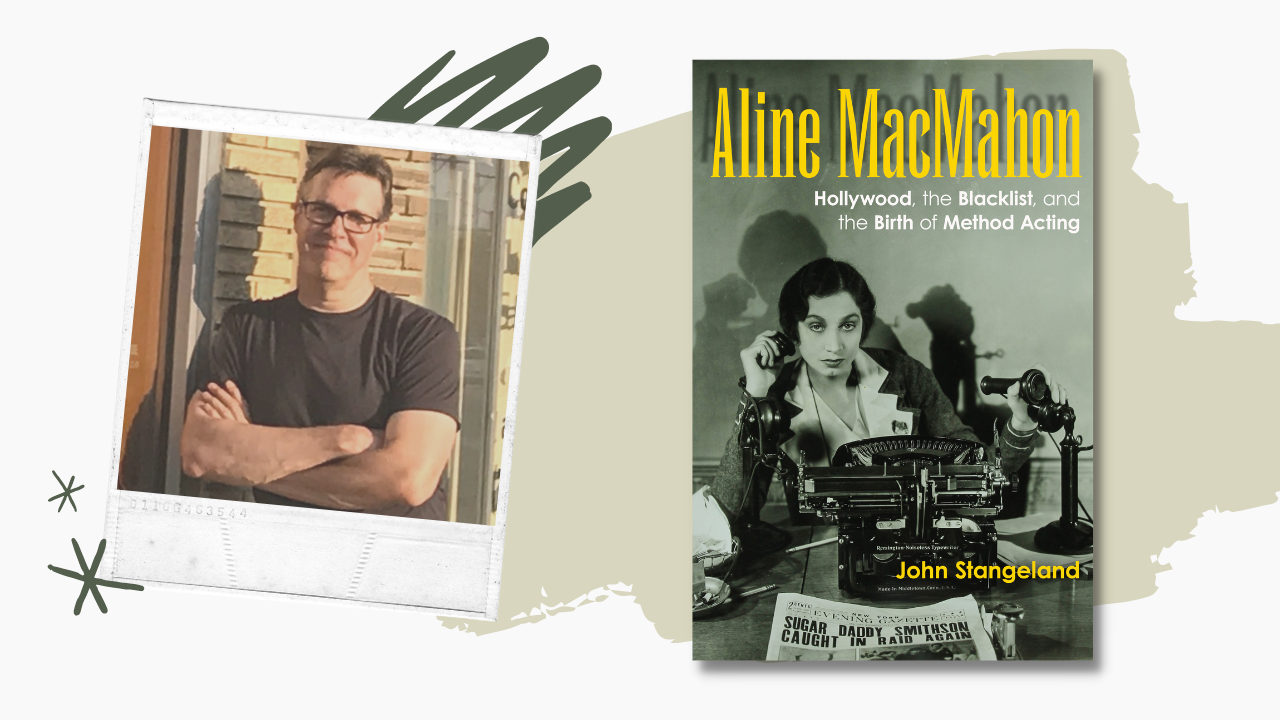
I'm thrilled to be joined by writer and biographer John Stangeland. We chatted over a decade ago about his Warren William biography (review here and interview here). Now he is back with an excellent new biography on the much-beloved character actress Aline MacMahon, out now from the University Press of Kentucky. I was honored to have contributed this blurb for the book's publication:
“Stangeland shines a much needed spotlight on one of the great actresses of stage and screen whose talent and versatility was admired by many. ... Absorbing and highly readable, this biography will rescue MacMahon from obscurity and give her the recognition she so greatly deserves.”— Raquel Stecher, film historian and critic
Now onto the interview!
Raquel Stecher: Congratulations on your new book! In 2010 you published your book Warren William: Magnificent Scoundrel of Pre-Code Hollywood. How did you chose Aline MacMahon as the subject of your next biography?
John Stangeland: I had been aware of Aline for quite a while. I probably saw Five Star Final—her first film—when I was about 12 or 13. I started looking closer at her while I was writing the Warren William book, since they share two films together. That was when I first noticed how different her acting style was in comparison to the other actors of the period. I mean very obviously different—almost as if she was pulled from the modern era and placed among that earlier style of acting. That intrigued me, so I started digging into her story.
Raquel: Aline MacMahon was best known for her work as a character actress but many don’t realize that she was one of the original Method actors. Can you tell us a bit about her approach to her craft?
John: Well, this is one of the things that made this project a book instead of an article. I discovered that in America the Method goes back much further than most people know, and that Aline is not just a devotee, but is the first popular actor to use the technique on both stage and screen here in the West. Aline's initial training dates all the way back to 1923—nearly 30 years before Marlon Brando made the Method a household word. This explained to me why in 1931 she looked so naturalistic in comparison to everyone else on screen. She was applying the method technique before anyone else: using emotional recall, creating a character history, dredging internal motivation. Her most succinct description about the effect of the Method on her technique was that the lessons "taught me how to concentrate."
.jpg) Aline as a Marseille prostitute in the Broadway production of Maya (1928).
Aline as a Marseille prostitute in the Broadway production of Maya (1928).Image courtesy of John Stangeland
Raquel: In your book you discuss Aline MacMahon’s rich inner life, her social conscience and activism. How did her politics affect her career?
John: Aline's maternal aunt Sophie Irene Loeb was a well-known activist and writer in New York City just after the turn of the century. Before Aline was even a teenager, Sophie would take her on inspection tours of the NYC slums so she could experience the dark side of poverty and immigrant life. From that seed Aline became a progressive liberal who believed in charity and government programs for the poor. Eventually that developed into a benign interest in Communism and issues of social justice. Unfortunately, the late 1940s and '50s was a dangerous time to be a Communist, or even Communist-curious. When the hysteria of McCarthyism spread out across America, Aline found herself blacklisted as a Communist (although she never joined the party) and largely unable to work on TV, films or stage for the greater part of a decade. Simultaneously, both she and her husband spent fifteen years under covert surveillance by the FBI. Fortunately Aline was philosophical about the situation, but as her exile lengthened she finally hit a wall. "Some dimming of the luck is to be expected," she said. "But by God, have we been condemned to purgatory forever? Life is for laughing, too...."
Raquel: In your biography you said that even though Aline McMahon wasn’t a big star it didn’t mean that her life story wasn’t interesting. What are some other facts that readers might not be aware of that may pique their interest in learning more about her?
John: There are quite a few doors into Aline's story. In the early 1920's she became a member of the Neighborhood Playhouse, where she developed close friendships within NYC's then-underground gay and trans subculture. She had a fascinating love affair of equals; in 1928 she married Clarence Stein, a New York based architect and city planner. Clarence, well-known and highly respected in his field (there are more than a few books about him), supported all of her endeavors, including liberal politics, and her career, which took her away from New York for six months a year. They both loved exotic travel, and during the era of the steamship they went to places rarely visited by polite Americans, including India, Siam (Thailand), Bali, Iran, and, in 1937 an around-the-world cruise where they lived for three months in China. The Steins also counted as their friends a who's-who of some of the 20th Century's great figures in the arts: Diego Rivera, Isamu Noguchi, Eugene O'Neill, Moss Hart, George Kaufman, E.E. Cummings, Thomas Wolfe, Aline Bernstein and many others. The Steins also endured some Dickensian setbacks which always reminded them how fortunate they really were. They never took their success for granted and always tried to help people who did not have as much as they did.
.jpg) Aline shooting a scene from Kind Lady (1935) with Basil Rathbone.
Aline shooting a scene from Kind Lady (1935) with Basil Rathbone.Image courtesy of John Stangeland
Raquel: What kind of research did you do for the book? Did you encounter anything surprising or revelatory that changed the course of your writing?
John: The research went from Los Angeles to New York and a bunch of places in between! It is always fun to visit the Warner Bros. archives in L.A., and the Shubert archives in New York—but the BIG revelation came when I visited Cornell University in Ithaca, New York. Aline donated some of her papers there, and her husband's papers went there after he died in 1975. Looking through her papers was wonderful, but limited. Many of her other effects were in New York and the archive there had some nice things but nothing noteworthy. However, when I got to the Clarence Stein papers I was shocked to find thousands of letters between Aline and Clarence, beginning the DAY she first left for Hollywood (January 1st, 1931) and stretching for decades. THAT was exciting, and a little daunting. It took months to go through those letters.
Raquel: Can you talk a bit about what those letters were like and what they revealed about her career?
John: On one hand they were a daily diary of her time in Hollywood, with unfiltered thoughts about her directors and co-stars. (Warren William? "A ham." Edward G. Robinson? "He's getting a big head." Paul Muni? "So warm and nice." Michael Curtiz? "A violent fool who never made a good picture." Mervyn LeRoy? "My dear Svengali.") More importantly, the letters give real insight into her character. Even in her private moments she was very thoughtful about social issues and usually worried about others more than herself. She didn't dwell on bad things, and even in the worst of times—her husband's mental breakdowns and her own blacklisting—she maintained a sense of perspective. The letters reveal a remarkably intelligent woman—she was one of the few college educated women of the old Hollywood—and a compassionate one as well.
Raquel: Do you have a favorite Aline MacMahon performance?
John: My favorite is probably Heat Lightning (1934), which was also her first starring role. For me it is a hidden gem of the pre-Code and a scorching proto-Noir. On the comedy side, she's hilarious as Trixie in Gold Diggers of 1933 and as May Daniels in Once in a Lifetime (1932), a role that she originated for the Broadway production. Lifetime is very rarely shown—I don't remember ever seeing it on TCM —but worth seeking out if you can find a better print than they have on YouTube!
.jpg) Aline during the readings of the Sean O'Casey memoir Pictures in the Hallway (1956).
Aline during the readings of the Sean O'Casey memoir Pictures in the Hallway (1956).Image courtesy of John Stangeland
Raquel: MacMahon worked as an actress for 55 years. What do you think drove her to work for as long as she did despite the difficulties she faced with the studio system and the blacklist?
John: Aline didn't just love acting, she once said "I must act to live." When she had a great role and was operating at the top edge of her capabilities, she felt completely fulfilled. It did not equate to money or fame—one of her favorite things she did was a series staged readings of the memoirs of Sean O'Casey, for which she was paid something like $5 a performance. If it was challenging and of high quality it made her feel alive. I think she was always chasing that next opportunity to feel satisfied in her art—to work with a Eugene O'Neill, or to be in the cast of Hamlet at Kronborg Castle in Denmark, which she did in 1948.
Raquel: What do you hope readers will take away from your book?
John: Of course I want the reader to be entertained, and hopefully learn something new about the movies, or about creative character. But ultimately I want people to get to know Aline MacMahon as more than just someone who entertains them on screen. I have developed a real soft spot for her; so intelligent, talented, thoughtful, curious, loyal and compassionate. A wonderful person to know.
Raquel: What are you working on next? Where can readers find you online?
John: The next project looks like it will be a novel. It begins in 1912 when a young man arrives in Chicago from Kansas looking to join the film industry and finds work at Essanay studios. From there we follow his path through the history of Hollywood into the early 1980s, during which he will encounter recurring characters in Charlie Chaplin, Wallace Beery, Karl Brown, George Spoor, Sam Zarkoff and others. It's early in the planning stages, but will be a bildungsroman combined with a peculiar history of the film industry.
I'm not super involved on social media, but on instagram you will find me at: #studioerahollywood and (for you comic book fans out there) #atlascomicschi. On Facebook the page is Warren William: Magnificent Scoundrel of Pre-Code Hollywood, which doubles as an Aline MacMahon / old Hollywood page.
----------------------------------------------------------------
 Aline MacMahon
Hollywood, the Blacklist, and the Birth of Method Acting
by John StangelandUniversity Press of KentuckyHardcover ISBN: 9780813196060416 pagesNovember 2022
Aline MacMahon
Hollywood, the Blacklist, and the Birth of Method Acting
by John StangelandUniversity Press of KentuckyHardcover ISBN: 9780813196060416 pagesNovember 2022Amazon — Barnes and Noble — Powell's
A big thank you to John Stangeland and the University Press of Kentucky for this opportunity!
All content is property of Out of the Past: A Classic Film Blog. Copyright © 2007-2022
November 10, 2022
Viva Hollywood by Luis I. Reyes
 Viva Hollywood
The Legacy of Latin and Hispanic Artists in American Film
by Luis I. ReyesTCM and Running PressHardcover ISBN: 9780762478484September 2022
Viva Hollywood
The Legacy of Latin and Hispanic Artists in American Film
by Luis I. ReyesTCM and Running PressHardcover ISBN: 9780762478484September 2022Amazon — Barnes and Noble — Larry Edmund's — Powell's
"Latinx artists both in front of and behind the cameras are committed to creating entertaining, compelling stories, unforgettable characters, and indelible images of humanity that will bring a greater understanding of the society and the world we live in. They have a long history in the evolving art of motion pictures since its inception and are taking a more prominent place in the present and future of Hollywood and the world’s cinematic landscape.” — Luis I. Reyes
Hispanic and Latino artists have been part of the fabric of Hollywood from the very beginning. Because we are such a diverse mix of races and ethnicities, these actors and actresses have been cast to play a variety of roles that ranged from the exotic to the stereotypical and everything in between. Stars like Rita Hayworth had to change their name and appearance to become more mainstream. While others like Anthony Quinn had a look that was ethnically ambiguous enough that they were cast in everything except for their own ethnicity. Some represented certain ethnic types like the Latin lover, the spitfire/señorita or the bandito. Unfortunately, when there were big Latin roles to play, like Maria in West Side Story (1961), Hollywood preferred to cast white actors in brownface rather than their equally talented Latino counterparts. When Hollywood wasn't ready to make room for Latino artists to be their authentic selves, they persisted, carving a path for themselves and for future talent to change perceptions and open up potential for better representation.
In his new book Viva Hollywood: The Legacy of Latin and Hispanic Artists in American Film, author Luis I. Reyes takes on the monumental task of sharing the stories of the many, many Hispanic and Latino artists, both in front of and behind the camera, who contributed to film history in their own unique ways. The majority of the book focuses on the classic film history but there is still plenty of information about artists working today.
The chapters are organized both chronologically and thematically. I was was most interested in the discussions on early matinee idols, how the Good Neighbor policy opened doors for Latino artists during WWII, problem/race pictures of the 1950s and 1960s, and the influx of Latino-focused movies during the 1980s and 1990s.
Each chapter includes individual biographies of key figures where relevant. Some of these individuals include: Gilbert Roland, Dolores Del Rio, Antonio Moreno, Ramon Novarro, Lupe Velez, Rita Hayworth. Carmen Miranda, Cesar Romero, Maria Montez, Olga San Juan, Ricardo Montalban, Anthony Quinn, Rita Moreno, Raquel Welch, etc.
 Interior spread courtesy of Running Press via Edelweiss
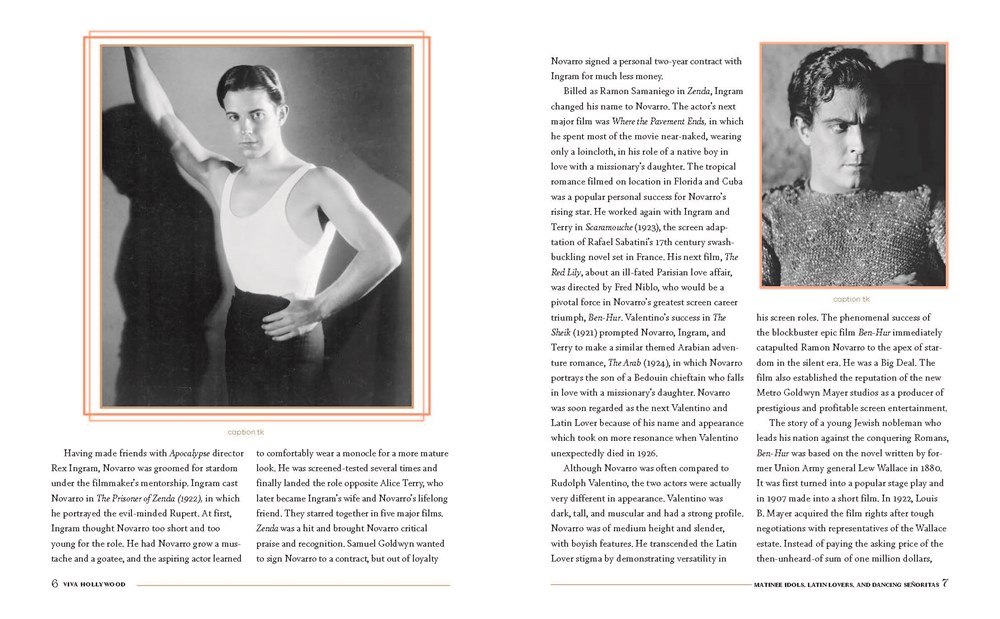 Interior spread courtesy of Running Press via Edelweiss
Here are some interesting facts from the book:
“When [Dolores Del Rio] was promoted in the press as Spanish or Castilian being white and European was considered superior to being Mexican, with its Indigenous pedigree, a discriminatory view that has not wholly disappeared today—she quickly insisted on being correctly described as Mexican.”“At the peak of her Hollywood career in 1945, Carmen Miranda was the highest-earning female performer in the United States.”“After the war, Romero and his good friend and fellow Fox star Tyrone Power took off on a two-month goodwill promotional tour of Latin America, sponsored by the studio and the US State Department. Power, who had served as a marine pilot during the war, flew a twin-engine Beech aircraft on the twenty-two-thousand- mile trip aided by a copilot. Romero, who spoke Spanish, acted as principal translator.”“[Xavier] Cugat decided to follow his musical calling, and inspired by the Afro- Cuban rhythms he was exposed to in his youth, he formed a Latin dance band with six musicians. This was a daring move in the 1920s, when Latin music was virtually unheard of in mainstream America except for the [Argentine] tango, which was labeled “gigolo music.”“In 1969, actors Ricardo Montalban, Val de Vargas, Rodolfo Hoyos Jr., Carlos Rivas, Henry Darrow, Gilbert Avila, Luis de Córdova, Robert Apodaca, and impresario Tony De Marco formed Nosotros (the Spanish word for “we, the people”), an actors’ advocacy organization dedicated to improving the image of Latino/Latina and Spanish-speaking peoples in Hollywood movies, television, theater, and radio.”“Stand and Deliver has become one of the most widely seen movies of any made in the United States through all media platforms, but also because it has been showcased in middle schools and high schools across the country as an inspirational and motivational teaching tool.”
As with many other TCM and Running Press books, Viva Hollywood is beautifully designed. I enjoyed the color palette (red, gold, orange, light purple and teal) as well as the recurring Art Deco style motifs.
With that said, I was mostly disappointed with the book, especially in how it presented its information. The themed chapters started with a few pages of history and context. These were interesting and I wish they were fleshed out essays. Instead they served like introductions to a series of Wikipedia style biographical portraits. There were so many of these that they became laborious to get through. I admire the author for cramming in as much information as he possibly could. There are so many artists covered from actors, actresses, directors, musicians, dancers, etc. You'll be hard pressed to find someone who was left out. However, this came at the cost of an enjoyable reading experience.
I would recommend Viva Hollywood as a reference guide to dip in and out of rather than a book to read from cover to cover.
Thank you to TCM and Running Press for sending me a copy of Viva Hollywood to review! Please check out my reviews of other titles from their imprint.
All content is property of Out of the Past: A Classic Film Blog. Copyright © 2007-2022
October 20, 2022
Desire (1936)

Car engineer Tom Bradley (Gary Cooper) is a Detroit transplant working at the Bronson 8 plant in Paris. He's dreamt of visiting Spain ever since he was a child and when he finally gets some time off for vacation, he takes a new Bronson 8 model car on a roadtrip to the Spanish countryside. There he meets Madeleine de Beaupre (Marlene Dietrich), a fake Countess and professional jewel thief who just successfully swindled a very expensive pearl necklace from jeweler Aristide Duvalle (Ernest Cossart). Unbeknownst to Tom, Madeleine is part of a network of thieves, including Carlos Margoli (John Halliday) and Aunt Olga (Zeffie Tilbury) who traipse across Europe preying on the wealthy elite. When Madeleine steals Tom's Bronson 8, and then wrecks it, he tracks her down. Both Madeleine and Tom develop an attraction to each other. But what will happen if Tom finally learns about Madeleine's criminal exploits?
Directed by Frank Borzage and produced by Ernst Lubitsch for Paramount, Desire (1936) is a dazzling romantic drama bolstered by its two magnetic leads. The film certainly has the Lubitsch Touch with plenty of wit, charm, humor and sophistication. There are plenty of very subtle sexual connotations which makes for enjoyable repeat viewings. While I don't feel like Cooper and Dietrich quite matched the chemistry they had in Morocco (1930), they still make for a captivating duo. Desire is perfect escapist fare offering viewers a highly romanticized vision of Europe and a tantalizing story of an all-American man falling in love with an exotic European woman. And as an added bonus, Akim Tamiroff, one of my favorite character actors, has a small role in the film as a Spanish police official.
Desire (1936) is available on Blu-ray from Kino Lorber. The quality is absolutely stunning. Marlene Dietrich sparkles, especially in her Travis Banton designed wardrobe, and overall the film feels so fresh and new. The Blu-ray edition is from a new 2K master and the disc includes English language subtitles and a variety of related Kino Lorber trailers. Also included are two audio commentaries. I'll be honest, I was frustrated listening to both of them. One track features two film historians and one of them continually talks over the other. The second one just has the one historian but the pronunciation of Frank Borzage's name (as well as Akim Tamiroff's) kept throwing me off. However, there are lots of great insights to take away from both commentaries and I do recommend listening to both of them. I was particularly interested in the discussion about John Gilbert, who was originally set to play the Carlos Margoli character. Dietrich, who was in a relationship with Gilbert at the time, helped get him the part. But poor health kept him away and John Halliday was cast instead. The observation was that had Gilbert been in the film the Madeleine—Tom—Carlos triangle would have been more sexually charged. Gilbert died in early 1936 before the film was released.
 Amazon — Barnes and Noble — Deep Discount — Kino Lorber
Thank you to Kino Lorber for sending me a copy of Desire (1936) for review.
All content is property of Out of the Past: A Classic Film Blog. Copyright © 2007-2022
September 20, 2022
Final Roundup: 2022 Classic Film Reading Challenge
.png)
The 2022 Classic Film Reading Challenge is officially over. I'm so proud of all the participants for tackling their stack of books and for everyone's continued enthusiasm for the challenge. Great work! I look forward to seeing what you all read next year.
This year 13 participants finished the challenge. Here is the list
Alejandro V.Andy W.Angela Chris M.Chuck P.Greg B.Jess I.John M.KarenRalph C.Raquel S.Robert B.Shawn H.
And this year I decided to select five winners for the giveaway. These winners will receive one Kino Lorber single-disc DVD or Blu-ray of their choosing. Congrats to:
AngelaChuck P.Jess I.KarenRalph C.
Now on to the reviews!
Alejandro on Goodreads
"Curtis delivers a worthy biography that so rich in detail that it will surely be a valuable resource for fans of Buster Keaton."
Buster Keaton: A Filmmaker's Life by James Curtis
Andy of Journeys in Darkness and Light
"I love big concept books and The Genius of the System is certainly that, taking a broad scope of the subject, frequently zooming in for a closer look then zooming out again for the big picture."
The Genius of the System: Hollywood Filmmaking in the Studio Era by Thomas Schatz
"What we get from this book is a detailed account of the production of the film... you'll gain a tremendous amount of knowledge and enjoyment from reading Vertigo: The Making of a Hitchcock Classic"
Vertigo: The Making of a Hitchcock Classic by Dan Auiler
Angela of The Hollywood Revue
"if you’re more in the mood for a in-depth character study about ambition, class, and the American dream, An American Tragedy holds up very well."
An American Tragedy by Theodore Dreiser (adapted into A Place in the Sun)
"If you’re a big fan of The Graduate, the book is worth checking out, if only for those smaller but interesting differences that come up throughout the book. It’s a fast but enjoyable read."The Graduate by Charles Webb
"I’m a big fan of Night of the Hunter, both as a book and a movie. The extra details we get in the book make John Harper a truly fascinating and compelling character."
The Night of the Hunter by Davis Grubb
Ari of Classic Movie Muse
"Robert Nathan’s lyrical prose is absorbing in its depth and detail. He draws the reader into his atmospheric mood piece with profound questions and statements on art, life, love, death, and time."
Portrait of Jennie by Robert Nathan
Carl on Instagram
"Whilst Blonde is admirably clearsighted on the unpleasant aspects of the American film industry, its speculative attempt to portray Marilyn Monroe’s psychology is not entirely successful."
Blonde by Joyce Carol Oates
Chris of Digging Star Wars
"Stevens achieves something rare: a sincere retelling of Keaton’s life and filmography, sandwiched into an interesting premise…or an overall dissertation."
Camera Man: Buster Keaton, The Dawn of Cinema, and the Invention of the Twentieth Century by Dana Stevens
Greg on Goodreads
"This is a fine, straightforward bio on Claude Rains that will be a treat to his biggest fans looking for a fairly in-depth look at the man's life and career. I feel like something was missing here, though."
Claude Rains: An Actor's Voice by David J. Skal
"Yes, you are given an exhaustive, detailed account of the making of one of the greatest Films in Cinema History from the very first conceptualizations of the original idea through to the first Theatrical screening and onto its legacy, but I think this book kind of transcends this format and becomes an epic tale in and of itself. "
Space Odyssey: Stanley Kubrick, Arthur C. Clarke, and the Making of a Masterpiece by Michael Benson
 Image courtesy of Jess of Box Office Poisons
Jess of Box Office Poisons
"The Brideson sisters are very engaging writers here, and punctuate their biography with contemporary sources to their subject. Gene's career is told as much through their lens as it is through what was being written about Gene in movie magazines or reviews."
He's Got Rhythm: The Life and Career of Gene Kelly by Cynthia and Sara Brideson
"Richard Zoglin's biography is more than just an examination of the comedian, it's an attempt to put him in context of how he once represented the best of Hollywood but then became a relic who might've overstayed his welcome..."
Hope: Entertainer of the Century by Richard Zoglin
John on Goodreads
"This is a well-researched, detail-laden, heavily illustrated, deep dive into the 100 years of making movies and film history in and about New York City."
Fun City Cinema: New York City and the Movies That Made It by Jason Bailey
"[The author] made clear that both she and Millicent had their share of struggles achieving successes through equality in the workplace - Millicent, so much in fact that her work on the "Creature From the Black Lagoon" was all but erased. It is great to see that she now has gotten the well-deserved acknowledgment."
The Lady from the Black Lagoon: Hollywood Monsters and the Lost Legacy of Milicent Patrick by Mallory O'Meara
"As a baseball fan, I have always thought that this was a "must-see" classic for baseball/film fans... It was great to read about it and be enlightened by the many factors that went into its production."
The Pride of the Yankees: Lou Gehrig, Gary Cooper, and the Making of a Classic by Richard Sandomir
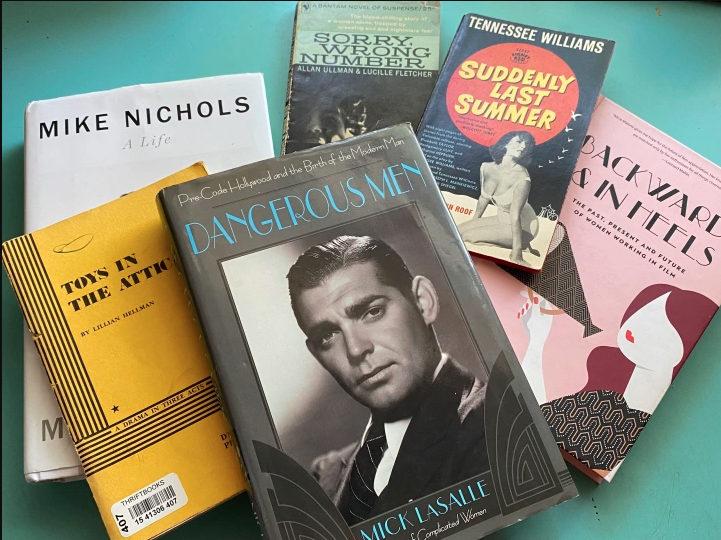 Image courtesy of Karen of Shadows and Satin
Karen of Shadows and Satin
"I can’t recommend this book enough – both interesting and informative, it has served to illuminate a significant facet of the entertainment industry and forever heighten my awareness about this important subject."Backwards & in Heels by Alicia Malone
"I’ve always been far more captivated by the women of pre-Code than the men, but LaSalle’s book has piqued my interest in these gents (especially Barthelmess!) and resulted in my adding more than 50 movies to my watchlist."
Dangerous Men: Pre-Code Hollywood and the Birth of the Modern Man by Mick LaSalle
"This was one of the best (if not THE best) biographies I’ve ever read... the book ends with Mike Nichols’s death, and I actually cried. I mean, like, SOBBED. It was as if I were experiencing the death of someone I knew – and that was because, after reading this bio, I felt like I did."
Mike Nichols: A Life by Mark Harris
"I knew the story, having seen the film numerous times, but that fact didn’t spoil my immense enjoyment of this novel. It was written in a “real time” format, with each chapter a different time, beginning at 9:30 pm, which added to the tension and suspense."
Sorry, Wrong Number by Allan Ullman and Lucille Fletcher
"it’s a bizarre tale that I didn’t quite grasp or appreciate on the silver screen and, frankly, didn’t much care for after having read the play."
Suddenly, Last Summer by Tennessee Williams
"I enjoyed the play just as much as I did the film – Hellman did a superb job bringing the characters to life..."
Toys in the Attic by Lillian Hellman
Peter of Let Yourself Go... To Old Hollywood
"I would not recommend this book for those seeking to learn more about Ida Lupino's life and career. As a biography of Lupino, it is completely lacking."
Ida Lupino By Jerry Vermilye
"This is an excellent first-hand look at a character who personified the image of the glamorous classic Hollywood movie star and played into that image with all her energy—highly recommended."
Lana: The Lady, the Legend, the Truth by Lana Turner
Ralph on LibraryThing
"Author Geoff Dyer revisits a favorite film Where Eagles Dare and proceeds to dismantle it with an affectionate eye and wry tone in "'Broadsword Calling Danny Boy' Watching Where Eagles Dare"."
'Broadsword Calling Danny Boy': Watching Where Eagles Dare by Geoff Dyer
"The Electric Hotel by Dominic Smith is an evocative richly detailed story of the earliest days of filmmaking featuring pivotal encounters with historic figures such as the Lumiere brothers and Thomas Edison while taking place in prominent historic film centers of yesterday and today..."
The Electric Hotel by Dominic Smith
"Maybe someday a revised, updated and expanded edition could be produced of this fantastic book. Just wish I had read it sooner!"
That's all folks!: The Art of Warner Bros. Animation by Steve Schneider
"One could not ask for a better tour guide than Steven Bingen who... is a former studio executive who spent the majority of his career working on the lot at Warner Bros. where he tells us he often acted as guide for visiting VIP guests. He puts that experience to good use welcoming readers on the tour... "
Warner Bros.: Hollywood's Ultimate Backlot by Steven Bingen
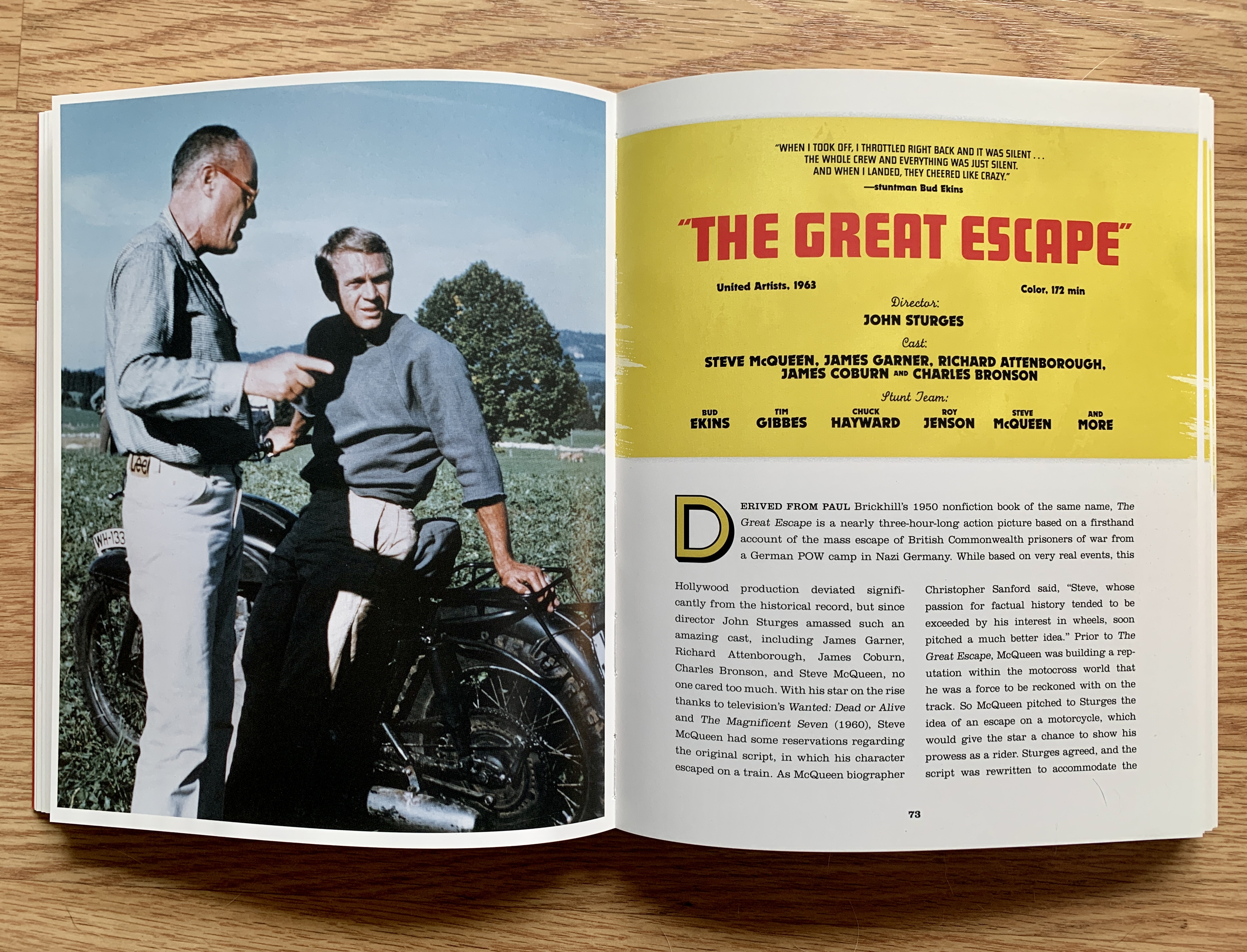
Raquel of Out of the Past
"Danger on the Silver Screen is as fascinating as the stunts described within its beautifully designed pages."
Danger on the Silver Screen: 50 Films Celebrating Cinema's Greatest Stunts by Scott McGee
"Hollywood Tiki has a lot to offer classic movie fans especially those who love movies with exotic settings or the beach movies of the 1960s. There is much to learn here about how Tiki cinema really spoke to audiences who were dealing with the aftermath of war and the changing times."Hollywood Tiki: Film in the Era of the Pineapple Cocktail by Adam Foshko and Jason Henderson
"If your love for music runs as deep as your love for film, Rock on Film: The Movies That Rocked the Big Screen deserves a spot in your book collection."
Rock on Film: The Movies That Rocked the Big Screen by Fred Goodman
Robert of Robert Bellissimo at the Movies
"a fantastic new book... this is a topic I've long been interested in."
The Hollywood Motion Picture Blacklist: Seventy-Five Years Later by Larry Ceplair
Sarah on Goodreads
"I loved it and would recommend to anyone! This was a great read that had me laughing out loud a few times and smiling even more often."
All about Me!: My Remarkable Life in Show Business by Mel Brooks
"This book covers a wider span of time than the film, and briefly touches on the similarities I listed earlier. I enjoy stories written in the '20s, and this one was a fun, quick read."
Gentlemen Prefer Blondes by Anita Loos
Shawn of The Everyday Cinephile
"For covering a century of history, this book is a compact, fun read even when behind-the-scene business decisions and box office numbers are discussed."
20th Century Fox by Scott Eyman
"Heritage of the Desert is a worthy entry into the Western genre and clearly had a lasting impact on the genre in novels and films."
The Heritage of the Desert by Zane Grey
"Hoyt, the manager of the wonderful online resource The Media History Digital Library, uses his extensive knowledge of early trade papers to provide readers context behind dozens of regional and national trade papers that document the film industry."
Ink-Stained Hollywood: The Triumph of American Cinema's Trade Press by Eric Hoyt
For more reviews check out:
First RoundupSecond Roundup
All content is property of Out of the Past: A Classic Film Blog. Copyright © 2007-2022
September 13, 2022
Rock on Film: The Movies That Rocked the Big Screen
 Rock on Film
The Movies That Rocked the Big Screen
by Fred Goodmanforeword by Sir Michael Lindsay-HoggTCM and Running PressHardcover ISBN: 9780762478439July 2022288 pages
Rock on Film
The Movies That Rocked the Big Screen
by Fred Goodmanforeword by Sir Michael Lindsay-HoggTCM and Running PressHardcover ISBN: 9780762478439July 2022288 pagesAmazon — Barnes and Noble — Powell's
“One of the beauties of rock movies is that sometimes they capture the time and sometimes, dangerously, they’re ahead of the time.” — Sir Michael Lindsay-Hogg
If your love for music runs as deep as your love for film, Rock on Film: The Movies That Rocked the Big Screen deserves a spot in your book collection. Written by former Rolling Stones editor Fred Goodman, Rock on Film features 50 must see movies that captured the heart of rock and roll. Each film is also paired with a viewing, making each recommendation a double bill and adding many more rock movies to the mix. The book also covers movies that feature hip hop, R&B, punk and other genres but primarily focuses on how rock and roll transformed popular culture as we know it.
Some notable films discussed include The Girl Can't Help It (1956), Jailhouse Rock (1957), The TAMI Show (1964), Viva Las Vegas (1964), A Hard Day's Night (1966), Don't Look Back (1967), Gimme Shelter (1970), Woodstock (1970), The Rocky Horror Picture Show (1975), La Bamba (1987), etc. And those are just some of the early films as dates range from the 1950s to the present day. Goodman does a great job connecting the present with the past and demonstrating the evolution of how film portrayed musicians on screen. A bounty of knowledge, Goodman's insights are both informative and illuminating. In his introduction Goodman writes,
"the fifty films profiled in this book... are intended to be illuminating rather than definitive. Since the intention is to showcase both crowd-pleasers and buried treasure, the compendium begins with appreciation for the films that most fans see as indispensable, and they constitute a context and yardstick for the films that follow... My aim is to mix the serendipity of new discoveries with an added appreciation for familiar favorites while guiding you through the history of rock as seen through the insightful lens of Hollywood and independent filmmakers."Each film is given its own 4 page chapter. There many color photographs throughout and the book is presented in a nice jacketed hardcover edition. It does have quite a potent "new book smell" but it's nothing that won't dissipate over time.
 Interior Spread courtesy of Running Press
Here are some of my favorite quotes from the book:
“When the prominent use of the song “Rock Around the Clock” by Bill Haley and His Comets provided a big box-office boost to 1955’s youth-gone-bad drama Blackboard Jungle, it marked the first time Hollywood took notice of rock’s growing appeal.” — Fred Goodman
“The industry responded with the first generation of rock and roll films: a raft of low-budget jukebox musicals whose shallow plots were jerry-built around nightclubs, talent searches or disk jockeys–setups that made dropping in performances simple.” — Fred Goodman
“There’s a striking difference between the way the Beatles and the Rolling Stones approached film projects: essentially every film the Beatles made during their career was directed by a commercial journeyman, while the directors selected by the Rolling Stones reads like an art house who’s who, including Jean-Luc Godard, Robert Frank, Martin Scorsese, Hal Ashby, Albert and David Maysles and Charlotte Zwerin.” — Fred Goodman
“The music became a character in my movie. It was really the narrator. In a way, music is how you write the story.” — John Waters
“The biggest piece of the puzzle is Ann-Margret. Viva Las Vegas is the only Elvis film with a strong leading lady who can match him for moves and sex appeal. She was also the only actress to receive co-star billing with Elvis.” — Fred Goodman
“A triumph of Gimme Shelter is that there is no mythology here. The Maysles brothers, part of the direct cinema movement that was the American doppelganger of France’s cinema verite, created their art by standing back and capture what developed.” — Fred Goodman
Rock on Film includes interviews with five filmmakers: Cameron Crowe, Jim Jarmusch, Penelope Spheeris, Taylor Hackford and John Waters. I've read and reviewed many TCM/Running Press books and this is the first one I've seen to featured extensive interviews.
I enjoyed how Goodman examines all the different ways films used rock and roll and was most intrigued by the documentaries featured. A couple of which I watched immediately upon reading the book. In order to really appreciate this book, you must be interested in both rock and roll and music history especially since there is a heavy focus on that element.
***GIVEAWAY***
Fill out the form below by September 25th for a chance to win a copy of Rock on Film!
Loading…
.png)
This is my sixth and final book review for this year's Classic Film Reading Challenge.
Thank you to Running Press for sending me a copy of Rock on Film to review!All content is property of Out of the Past: A Classic Film Blog. Copyright © 2007-2022
September 6, 2022
Danger on the Silver Screen: 50 Films Celebrating Cinema’s Greatest Stunts

Amazon — Barnes and Noble — Powell's — Larry Edmunds (signed copy)
“Stunt work taps into our brains, giving us pleasure by simply watching human beings do things we, the audience, cannot. Marvelous acts like jumping out of a window and surviving thrill us and remind us that while we are safe in our seats, others are capable of doing amazing things for the camera.” — Scott McGee
There's nothing quite like the thrill of watching an action movie. Stuntmen and stuntwomen brave great danger—fast speeds, hairpin turns, nerve-wracking heights and literal fire with often a scant margin of error—to give us, the audience, an experience that we can't duplicate in real life. If you've ever watched an action sequence and wondered "how did they do that?" then I have the book for you.
Danger on the Silver Screen: 50 Films Celebrating Cinema's Greatest Stunts by Scott McGee is your definitive guide to action movies and stunt techniques. While the book focuses specifically on a list of 50 action movies, you'll find many more mentioned throughout. The movies presented range from silent era classics to modern action thrillers beginning with Way Down East (1920) and ending with Baby Driver (2017).
This paperback book features French flaps and full color pages. Each chapter focuses on 1 action movie (or a pair of movies). Little time is spent on the plot and the majority of the text breaks down the stunt sequences, how they were executed and the masterminds behind them. The chapter starts with an image (still or poster), a quote from a reviewer or stuntman, a brief cast and crew list as well as a listing of the stunt team members. This last bit is important since stuntmen and stuntwomen often did not get on screen credit for their work. McGee does a fantastic job breaking down the particulars of the stunts, explaining them, giving the reader background on the stunt team as well as providing screenshots to help visualize. I recommend heading to YouTube where you'll find clips of many of the stunt sequences McGree writes about. This helps with really appreciating the work that went into making that stunt look effortless. The chapters also include other images and newspaper-style article about a related stunt from another movie or something relevant to the article.

For those of you more interested in the older movies, here are some of the early ones that the author writes about at length: Way Down East (1920), Robin Hood (1922), The Black Pirate (1926), Safety Last! (1923), Wings (1927), Hell's Angels (1930), Steamboat Bill Jr. (1928), Stagecoach (1939), Ben-Hur (1925 and 1959), How the West Was Won (1962), The Great Escape (196, It's a Mad, Mad, Mad, Mad World (1963), Bullitt (1965), Butch Cassidy and the Sundance Kid (1969) and more. James Bond fans will be delighted that many of the films in the series are featured here.
Some notable stuntmen and stuntwomen mentioned include: Richard Talmadge, Yakima Canutt, Bud Ekins, Charles H. Hickman, James W. Gavin, Hal Needham, Dar Robinson, Grant Page, Debbie Evans, etc. There is also much attention put on the actors who did the stunts themselves like Buster Keaton, Douglas Fairbanks and Harold Lloyd.
Here are some of my favorite quotes from the book:
“In epic adventures, fantasies and contemporary action pictures, it was [Douglas] Fairbanks who made the impossible seem easy.”
“The airplane has been a crucial vehicle for movie stunt work, almost since its invention. Things really took off after the end of WWI, when former fighter pilots, looking for paths to apply their skill set and a penchant for taking risks, landed in the movie business.”
On Steamboat Bill Jr. “When the wall started to move, and it landed perfectly with a tremendous thud, Keaton’s bravery and commitment was that much more impressive because he stayed completely in character.”
“In terms of sheer grandiosity and cinematic impact, the chariot race in the 1959 Best Picture winner Ben-Hur is among the greatest action scenes ever.”
“[It’s a Mad, Mad, Mad, Mad World] was one of the first major Hollywood productions to put stunt work front and center, not just as an element in the filmmaking, but as a selling point to the general audience.”
“Great stunt scenes throughout history depend on the collaborative nature of filmmaking, drawing upon cinematography, editing, acting, and direction. The Bullitt car chase was a textbook example…”
“The Bond stuntmen, mostly British, were among the best working in the world. They brought ingenuity, execution, and visual appeal to the films’ action, setting the template for what audiences worldwide expected from the rough and physically demanding world of 007... The attention to cinematography in capturing not just the visceral excitement of the stunt work and action but the beauty of the surroundings has remained a mark of the Bond films to this day.”
“The craftsmen and artists of taking the falls, crashing the planes, and enduring the flames suffer the ignominy of going unmentioned or, when they are credited in print, being misspelled.”
“Tom Cruise is a modern-day Hollywood star whose fearlessness makes him seem like a direct descendant from stuntmen-stars of the past. As a Fairbanksian star and producer, Cruise is his own boss when making the calls, whether he’s outside skyscrapers or helicopters or wherever a normal person would not go.”
Danger on the Silver Screen is as fascinating as the stunts described within its beautifully designed pages. McGee does an excellent job giving the reader context and background. Describing stunts is no small feat considering but its done quite well here. You don't have to have seen the movie discussed to appreciate the chapter but watching a trailer or clips online will definitely improve the reading experience. Stunt work has been a male dominated field since the beginning of the film industry. I appreciate that some attention was given to the work of stuntwomen (and actresses too). I wish there had been pictures of the stunt team members because that would have helped to put a face with the name.
I want to hear from you! What's your favorite movie stunt? How about your favorite action movie?
.png)
This is my 5th review for the Classic Film Reading Challenge.
Thank you to TCM and Running Press for sending me a copy of Danger on the Silver Screen for review!
All content is property of Out of the Past: A Classic Film Blog. Copyright © 2007-2022
August 29, 2022
Hollywood Tiki: Film in the Era of the Pineapple Cocktail
 Hollywood Tiki
Film in the Era of the Pineapple Cocktail
by Adam Foshko and Jason HendersonThe History PressPaperback ISBN: 9781467149907208 pagesAugust 2022
Hollywood Tiki
Film in the Era of the Pineapple Cocktail
by Adam Foshko and Jason HendersonThe History PressPaperback ISBN: 9781467149907208 pagesAugust 2022Amazon — Barnes and Noble — Powell's
“Tiki Culture was never about a real place but about the escape to imaginary places—not real Hawaii, but an idea of Hawaii; not any real island, but the idea of an island. A perfect idyllic getaway that was an escape from an industrial postwar life that was the opposite of that.”
A follow-up to their 2018 book California Tiki: A History of Polynesian Idols, Pineapple Cocktails and Coconut Palm Trees, authors Adam Foshko and Jason Henderson's new book explores Tiki culture in film and how this brand of escapism was born out of the trauma of WWII.
Hollywood Tiki: Film in the Era of the Pineapple Cocktail is both a viewing guide for a subgenre of classic movies as well as a cultural history book that extrapolates meaning and context for each of the movies highlighted.
The book begins with two lengthy introductions in which the authors explain their goals in writing this book as well as a background on Tiki cinema. The rest of the book is divided into four chapters:
Tiki Goes to War: South Pacific and the World II ExperienceCocktail Tiki: Bob Hope and Backyard Luau (Sophisticated Adult TIki Entertainment)Escape to the IslandsI Was a Teenage Tiki: Gidget and the World of Beach Parties
Each chapter highlights 10-12 different movies that fit within the theme. A cast and crew list and a movie poster is accompanied by 3 pages of text which include background, a movie summary (there are spoilers!) and an examination on how the movie fits within the theme of Tiki Cinema and within its era. The individual movies feature a black-and-white poster. Some of these are revisited in the book's full-color insert.
Tiki Cinema is about escapism. It's about rejecting modernity, dealing with the trauma of war and embracing the "idyllic fantasy" of the exotic. Not all of the films fit perfectly into this subgenre and the authors take the time to explain how each of the selected movies touches upon some aspect of Tiki culture.
Here are some of my favorite takeaways from the book:
South Pacific (1958) — “South Pacific does a wonderful job of expressing the idea that the Pacific theater was marked with moments of terrifying brutality separated by long periods of bucolic beauty.”
Miss Sadie Thompson (1953) — “The prevailing lesson of the film and one that is completely at home in Tiki culture: a brazen insistence that trauma can be sublimated into joy.”
Mysterious Island (1961) — “Like Tiki aficionados looking to escape, Nemo detests civilization and all of the ills that its modernity has brought. Especially war.”'
His Majesty O’Keefe (1954) — “A man is set to drift—very likely to die— but instead, he washes ashore on an exotic paradise. He is a ‘civilized’ in a different world and must therefore overcome the island, the elements, the natives and then ultimately himself in order to be ‘saved’—and then allowed to stay.”
Pagan Love Song (1950) — “Tahiti is the real star here. It’s one of the few pictures… from this period and in this category that really showcases the Polynesian scene”
From Here to Eternity (1953) — “What the film seems to be saying is that, despite all the jingoism in American culture, military surroundings and military duty will not clear a person of his weaknesses or his choices. The characters in the movie make decisions that condemn themselves, but they are ultimately victims of the vagaries of life.”
Gidget (1959) — “It is riddled with not just the culture of Tiki, exotica, and escape but a constant conversation about what it is to find and explore, to leave and return to one’s responsibilities.”
Ghost in the Invisible Bikini (1966) — “It was a strange time for movies and for Tiki themes. It wasn’t just that the ideas were tired (they often were), but the audiences were changing.”
Other notable movies include: Song of the Islands (1942), Mister Roberts (1955), Father Goose (1964), Bachelor in Paradise (1961), Blue Hawaii (1961), Beach Party (1963) (and the other Frankie and Annette movies), Where the Boys Are (1960) and others.
Hollywood Tiki has a lot to offer classic movie fans especially those who love movies with exotic settings or the beach movies of the 1960s. There is much to learn here about how Tiki cinema really spoke to audiences who were dealing with the aftermath of war and the changing times.
When I first saw this book, I immediately thought of my good friend Erin who is both a classic movie fan and a Tiki enthusiast. This book would be perfect for her!
I did have a few issues with the book. I didn't think that they made good use of the four color insert especially since it was just repeats of posters that were already presented. It would have been better used for publicity stills or some other type of image. Anyone seeing the book title and cover at first glance will think this is a lighthearted read which it's not. And there is not a cocktail recipe or even really any discussion of cocktails anywhere in the book which makes the reference in the book's subtitle a bit misleading. The movies within each chapter are not presented chronologically. They don't need to be but if you're a stickler for that kind of thing it may rub you the wrong way. Otherwise the book is very well laid out and the information is quite through.
.png) This is my fourth book review for this year's Classic Film Reading Challenge.
This is my fourth book review for this year's Classic Film Reading Challenge.Thank you to The History Press for sending me a copy of Hollywood Tiki for review.
All content is property of Out of the Past: A Classic Film Blog. Copyright © 2007-2022
August 25, 2022
Repeat Performance (1947)

"Stars look down on New Year's Eve in New York. They say that fate is in the stars. That each of our years is planned ahead. And nothing can change destiny. Is that true? How many times have you said 'I wish I could live this year over again?' This is the story of a woman who did relive one year of her life."
Directed by Alfred L. Werker and based on a novel by William O'Farrell, Repeat Performance (1947) is a time travel noir that imagines a protagonist being given a second chance to change the course of events that led to a terrible tragedy. Joan Leslie plays Sheila Page, a celebrated actress married to playwright Barney Page (Louis Hayward). While Sheila's career has gained momentum over recent months, Barney's career is spiralling out of control due to his alcoholism and the lingering resentment he feels towards his more successful wife. The film starts on New Year's Eve in 1946. As partygoers usher in 1947, Sheila is reeling from the fact that she has just shot and killed her abusive husband. She confides in her good friend William Williams (Richard Basehart in his screen debut), a poet and a member of Sheila's social scene, wishing she could relive 1946 and ultimately alter the timeline that led her to this moment. Mysteriously both Sheila and William are transported back to New Year's Eve 1945 and Sheila's given a second chance. Can she prevent that fatal night from reoccurring or is she bound by the chains of destiny.
 Joan Leslie and Richard Basehart in Repeat Performance (1947)
In the article I wrote for TCM, I wrote "Repeat Performance (1947) is a flimsy noir bolstered by an intriguing conceit." I'll add to this that I found the film quite gratifying for several reasons. We get to see Joan Leslie in a robust leading role (instead of a supporting ingenue part). She is dressed to the nines in costumes by Oleg Cassini and jewelry (pay attention to the broaches!) by Eugene Joseff. Leslie is able to maintain some of her wholesome image playing a character who is a genuinely good person stuck in a bad situation. As someone who loves all things New Year's, I love how the holiday is implemented in this story. It's the perfect setting since this is a prime moment when we think about the events of the past year and plot out what we'll do different in the next. I also really enjoy the fact that the way the plot plays out is not quite what you'd expect. I enjoyed the cast of characters including Tom Conway as John Friday, the smarmy theatrical producer, and Virginia Field as Paula Costello, a rival actress who tries to poison Barney's mind against Sheila. The film also examines the social politics of the theatre world and Basehart's character William Williams adds two interesting subthemes: literature and mental health.
There is one interaction between Leslie and Hayward that is blatantly sexist and a bit of a head scratcher. If you've watched the film, you'll know exactly what I mean. It's not strictly a noir but film noir expert Eddie Muller calls it a "noir fantasy" because of how the film blends noir with supernatural elements.
Repeat Performance was produced by Aubrey Schenck for Eagle-Lion Films Inc. Joan Leslie had just had a tumultuous falling out with her home studio Warner Bros. and was working as a free agent. Here is some more background on the film from my article:
"Now as a free agent, the star went to work for Eagle-Lion. Actress Constance Dowling had just left Eagle-Lion because of her own dissatisfaction with her roles and Leslie replaced her as the lead in Repeat Performance. Eagle-Lion was eager to showcase their new star and they elevated what would have been a low-budget film to a big budget production....
Repeat Performance didn't make a splash back in 1947 but it continues to linger in the minds of generations of viewers who have seen it since. At the 2013 Seattle Noir City premiere of the film, Eddie Muller called the film a "film noir version of It's a Wonderful Life (1946)." He went on to say that "over the years [many people] have told me about seeing Repeat Performance when they were young and it stuck in their mind. There is something about the premise of this film..." The introductory voiceover read by John Ireland and the conceit is also a memorable precursor to Rod Serling's hit TV show The Twilight Zone. Repeat Performance has since been remade as the TV film Turn Back the Clock (1989) with Joan Leslie in a cameo role. Leslie was a featured guest at a 2011 Noir City event and by sheer luck a 16mm print purchased by a private collector was made available just in time for the screening. Bad prints of the film have circulated over the years and this newly discovered 16mm print was in much better condition."
Repeat Performance (1947) is available in a deluxe DVD/Blu-ray set from Flicker Alley. The film was preserved by the UCLA Film and Television Archive in conjunction with The Film Noir Foundation and funded by The Packard Humanities Institute. The restoration is a sight to behold. I had only ever seen bad copies of the film and the Blu-ray edition was a sight for sore eyes.

Amazon — Barnes and Noble — Deep Discount — Flicker Alley
Flicker Alley's release has a robust offering of extras. The jewel case includes two discs, a reversible cover and a booklet with photos and the article Repeat Performance: A Book-to-Film Comparison by Brian Light. The disc extras include an introduction by Eddie Muller, a promotional pressbook and audio commentary by Nora Fiore. My favorite extras by far were two vignettes: Farran Smith Nehme's profile on Joan Leslie and Alan K. Rode and Steven C. Smith's Eagle-Lion: A Noir Stained Legacy.
Thank you to Flicker Alley for sending me a copy for review!
All content is property of Out of the Past: A Classic Film Blog. Copyright © 2007-2022
August 22, 2022
Second Roundup: 2022 Classic Film Reading Challenge
.png)
There's just under a month left in this year's classic film reading challenge! You have until September 15th to read and review so there is still plenty of time. And if you can't finish all 6 don't sweat it! Read as many as you can. And more importantly: have fun.
Congratulations to Chris and Chuck who have already completed the challenge! Robert, Andy, Greg, Jess and Alejandro are our current leaders.
We currently have over 60 reviews submitted. The first round-up of reviews went up last month and this current round-up features all reviews submitted since then.
Now onto the reviews:
Aimee on Goodreads
"This teen nonfiction title describes how in 1947 the government committee, The House Un-American Activities Committee (HUAC), questioned 19 men working in Hollywood about their involvement with Communism... Photographs and other documents from the time add interest."
Blacklisted!: Hollywood, the Cold War, and the First Amendment by Larry Dane Brimner
Alejandro on Goodreads
"Fernández’s life is worthy of a biography studying all aspects of his successful, tragic life. That work doesn’t exist. But I’m hoping short works such as this one continue to shed light on the need for one."
Emilio Fernández: Pictures in the Margins by Dolores Tierney
"Wilson covers a lot of ground in her writing and one can sense the huge amount of research and work she put into the book."
A Life of Barbara Stanwyck: Steel-True 1907-1940 by Victoria Wilson
Andy of Journeys in Darkness and Light
"An amazing work of crime fiction... There's nothing slick or flashy about the novel. But it all feels authentic."
The Friends of Eddie Coyle by George V. Higgins
Angela of The Hollywood Revue
"On the whole, the book — like the movie — is light and pure fun; often laugh-out-loud funny. Gentlemen Prefer Blondes by Anita Loos
"I’d been wanting to read the novel version of Now, Voyager for a long time and I couldn’t be happier that I finally did so. It’s been a real pleasure to spend so much time with such a thoughtful, beautifully told story."
Now, Voyager by Olive Higgins Prouty
"For those in the camp of having seen the movie many times, the differences between the book at the movie are enough to make things interesting without deterring too much from the core story. And for those who have either never seen the movie, it’s simply a very solid and engaging story."
What Ever Happened to Baby Jane? by Henry Farrell
Brittaney of The Story Enthusiast
"Sadly, Gavin Lambert’s biography is one of two written about Norma Shearer. It’s not tragic because it lacks in any way, but because Shearer deserves much more attention than she has received."
Norma Shearer by Gavin Lambert
Carl of The Movie Palace Podcast on Instagram
"the book is incredibly successful at bringing Elvis to life by placing him within his proper cultural context."
Last Train to Memphis: The Rise of Elvis Presley by Peter Guralnick
"Taken together, Guralnick’s books on Elvis are a monumental achievement that capture the nuances and contradictions of a man who is too frequently subsumed by the larger-than-life aspects of his own image."
Careless Love: The Unmaking of Elvis Presley by Peter Guralnick
"a fictionalised account of the making of Billy Wilder’s Fedora (1978), which was the veteran director’s penultimate film... this is a delightful book that I can’t recommend highly enough."
Mr. Wilder & Me by Jonathan Coe
Chris of Digging Star Wars
"lovingly written by a knowledgeable classic film aficionado."
Memorable Supporting Actors and Actresses from the 1930s to 1950s: Book 1 - A Through I by Gary Koka
"If your faith is important to you and you love movies, too - this book is for you."
Reel Spirituality by Robert K. Johnston
Chuck on Goodreads
"There are definitely other books that may delve more deeply and critically into Hitchcock's life. However, this book provides an entertaining and informative overview on Hitchcock that is sure to delight many who are fans of his films."
Alfred HITCHCOCK: Master of Suspense by Noël Simsolo and illustrated by Dominique Hé
"Anyone who likes digging into the details of film noir or classic films from this era will want to read this book. I enjoyed taking a stroll through the galleries of this virtual art museum."
The Dark Galleries: A Museum Guide to Painted Portraits in Film Noir, Gothic Melodramas, and Ghost Stories of the 1940s and 1950s by Steven Jacobs, Lisa Colpaert
"One of the best things about the book is how Macor puts the reader virtually on the set as the movie is being made. It is one of the most detailed accounts of the actual filming of a classic film that I have read."
Making The Best Years of Our Lives by Alison Macor
Greg on Goodreads
"what you get in this book is the life story of a brilliant and very complex artist, narrated by a master storyteller. It is such a unique autobiography, as it is written and structured so similarly to the best of his screenplays..."
The Magic Lantern: An Autobiography by Ingmar Bergman
"Such a unique and fun angle on the final years of one of the funniest men that ever lived. The author certainly had a front row seat for the period of Groucho’s life that hasn’t made it into other books."
Raised Eyebrows: My Years Inside Groucho's House by Steve Stoliar
Jess of Box Office Poisons: A Classic Movie Blog
"More than just a thorough story of her career, this truly captures the full life story of Doris Day."
Doris Day: Her Own Story by A.E. Hotchner
 Image Source: Box Office Poisons
"Every last sentence is written with that characteristic everywoman sensibility that she carried with her on screen and on stage."
Ginger: My Story by Ginger Rogers
John on Goodreads
"A concise well-written story - like so many other of his books on Hollywood by Scott Eyman"
20th Century-Fox: The Complete History of Hollywood's Maverick Studio by Scott Eyman
"Despite those plot stretches (it is a "suspense thriller" after all), it is a short, brisk, action-filled novel..."
The 39 Steps by John Buchan
"it's a time capsule and look into the days of an early industry and how it fit into the urban landscape of a time long ago."
Silent Visions: Discovering Early Hollywood and New York Through the Films of Harold Lloyd by John Bengtson
Letícia from Cine Suffragette
 Image source: Cine Suffragette
"Showing a deep understanding of what was going on in the world, Robeson took the stand and stood for his beliefs in this book."
Here I Stand by Paul Robeson
Molly of Classic Mollywood
 Image source: Classic Mollywood
"The way Finler goes through stills history (which also includes glamour shots done in studios) is fascinating. He breaks down the book by different eras and by different types of stills work. The pictures he uses to help get across his points are STUNNING!!
Hollywood Movie Stills: Art and Technique in the Golden Age of the Studios by Jeff Finler
Raquel of Out of the Past
"The Savvy Sphinx is richly rewarding. I came away from the book feeling like I just graduated with a degree in all things Greta Garbo. Reading this book cover to cover will take a while as there is quite a lot to take in and absorb. But it's well worth your time."
The Savvy Sphinx: How Garbo Conquered Hollywood by Robert Dance
Robert of Robert Bellissimo at the Movies
"This is an incredible book. I devoured it."
FUN CITY CINEMA: New York City And The Movies That Made It by Jason Bailey
"I had a fun time reading this book... it's a really enriching experience."
Rebecca: BFI Film Classics by Patricia White
"This is one of the best "Making Of" Film books I've ever read and I highly recommend it. It's not just for film fans or fans of the film but for anyone because it's a highly engaging story full of struggles, conflicts, humour and much more!"
Ryan's Daughter: The Making of an Irish Epic by Paul Benedict Rowan
Sarah on Goodreads
"I really like Old Hollywood biographies that give a nice balance of personal life and information on the making of each of their films, and this biography fit that bill perfectly."
Mean...Moody...Magnificent!: Jane Russell and the Marketing of a Hollywood Legend by Christina Rice
Shawn of The Every Cinephile
"Tracy Goessel’s meticulously researched biography The First King of Hollywood gets to the heart of how Fairbanks built his effusive screen image and in turn played a pivotal role in establishing Hollywood as the pristine moviemaking capital of the world."
The First King of Hollywood: The Life of Douglas Fairbanks by Tracey Goessel
"Golden in her biography does a good job contradicting these myths while also highlighting Gilbert’s unique talents and exceptional on screen performances."
John Gilbert: The Last of the Silent Film Stars by Eve Golden
"Wynne relies heavily on oral history accounts and stories to recapture how it was to work on aerial stunts during the classic era. Even if it’s not always clear how reliable these firsthand accounts given by stuntmen decades later are, these anecdotes are easily the most entertaining part of the book."
The Motion Picture Stunt Pilots and Hollywood's Classic Aviation Movies by H. Hugh Wynne
All content is property of Out of the Past: A Classic Film Blog. Copyright © 2007-2022