Raquel Stecher's Blog, page 4
April 18, 2023
2023 TCM Classic Film Festival: Day #2 Recap

My festival experience this year was scaled back immensely due to unforeseen circumstances, both good and bad. For the rest of the festival I was able to attend two events each day while also building in some time with friends.
On the first full day of the festival, I sat down with documentarian Daniel Raim whose films Harold and Lillian: A Hollywood Love Story , Image Makers: The Adventures of America's Pioneer Cinematographers and Fiddler's Journey to the Big Screen I have reviewed on here. He has some exciting projects coming up and I look forward to checking them out!
Then I got in line for Blood on the Moon (1948), Robert Wise's noir western starring Robert Mitchum. I'm a huge Robert Mitchum fan and have been disappointed to attend every year and not see a Mitchum film on the line-up. A few were shown the first year I went and I attended River of No Return (1954) which was life-changing. I looked at the schedule every year I attended and couldn't find another Mitchum film (unless I missed one!). So I was particularly thrilled for this opportunity.

Blood on the Moon was a hot ticket at TCMFF and it quickly sold out. Introducing the film was Alan K. Rode who recently wrote and published a book exclusive about the film with the University of New Mexico Press.

I had a new appreciation for this film seeing it up on the big screen with a crowd. The noir elements, Wise's direction and Mitchum's charisma really enhance what might have been just a standard Western.
After Blood on the Moon, I headed over the pool at the Hollywood Roosevelt hotel for a special screening of Beach Party (1963). A lot of us got there early. In fact I was there two hours in advance to get a good spot to see the screen and to catch a glimpse of special guest Frankie Avalon.
 Photo courtesy of TCM
TCM host Dave Karger introduced Frankie Avalon before the screening and Frankie still has that youthful spirit you see in the movies. He talked about working with Annette Funicello, how he only had to take one pie in the face, how he thinks the dancing hasn't aged well and more. There was a shooting (!!!) that happened nearby so a news helicopter was hovering over us which made it a little difficult to listen to. But we were all safely tucked away and thrilled to see Frankie Avalon and Beach Party. The true fans stayed afterwards to watch the whole movie.
During the introduction, a photographer was literally in the pool getting shots of the main stage. He got some cool ones like this photo which makes it look like Dave Karger and Frankie Avalon are hovering over an abyss!
 Photo courtesy of TCM
All content is property of Out of the Past: A Classic Film Blog. Copyright © 2007-2023


April 14, 2023
2023 TCM Classic Film Festival: Day #1 Recap
 Greetings from rainy Los Angeles! The 2023 TCM Classic Film Festival kicked off on Thursday April 13th but the festivities have been going on all week.
On Tuesday I met up with some classic film friends for dinner at Smoke House, a Burbank steak house that's been operating since 1946.

Before dinner, I met up with my friends Aurora, Laura and Doug at the Forest Lawn Cemetery: Hollywood Hills. Many of our beloved classic movie stars and directors are laid to rest there. It's a huge cemetery so you have to come with a game plan and ready access to Find a Grave. We had limited time but we were able to pay our respects to some of my favorite people including Bette Davis, Telly Savalas, Sandra Dee, Ernest Borgnine, Buster Keaton, Stan Laurel and Charles Laughton. I'm a huge fan of The Mills Brothers and I found Donald Mills in the Columbarium of Radiant Dawn.
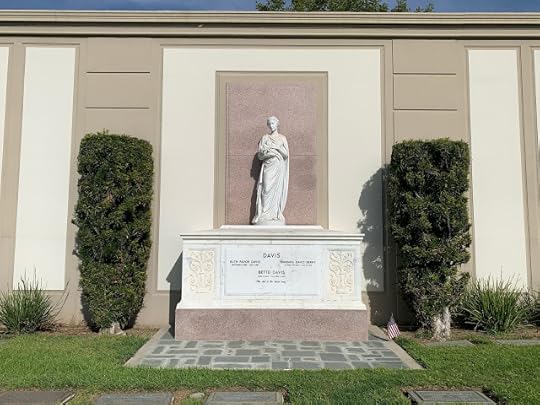
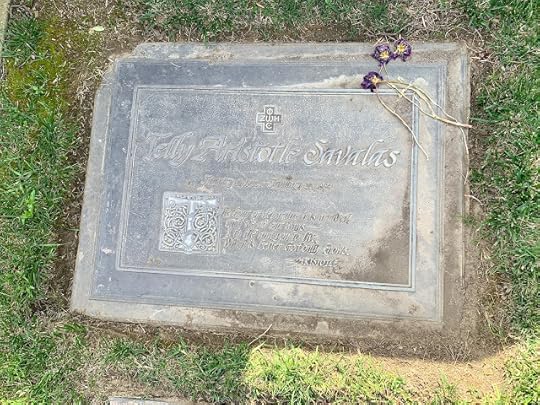
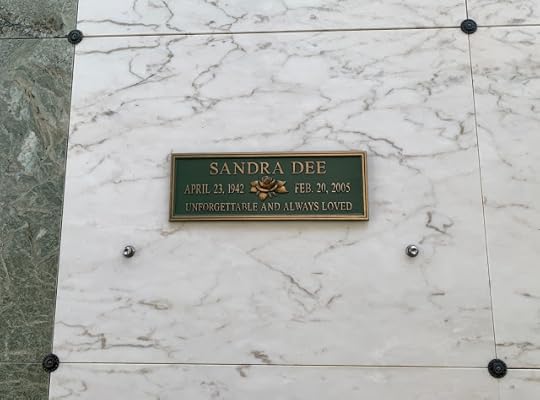
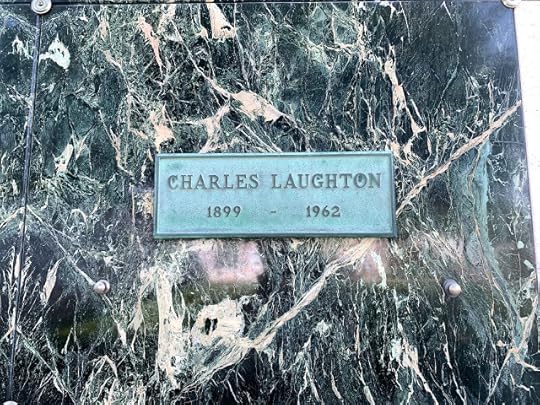
On Wednesday I picked up my media badge and received a book themed tote bag (But Have You Read the Book by Kristen Lopez) as well as a copy of Mark Vieira's new book Warner Bros. 100 Years of Storytelling.

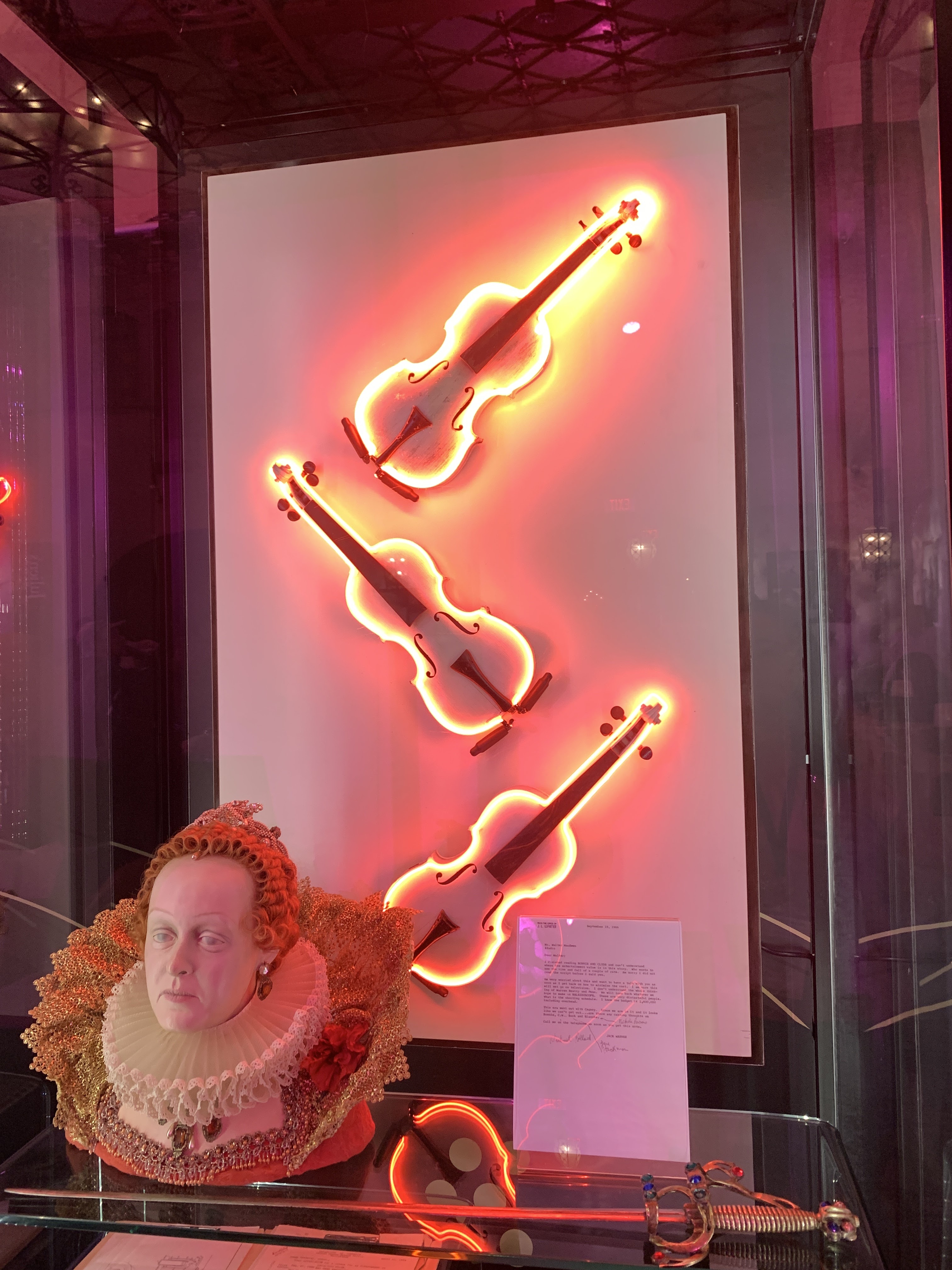
Later in the afternoon I attended the Media Welcome Event in the Blossom Room at the historic Hollywood Roosevelt hotel. TCM transforms the Blossom Room into Club TCM for the festival. The space includes a mini museum of props as well as a bar. There are events happening at Club TCM throughout the festival and it becomes the central hub for the long weekend. This year they had a really cool display of Warner Bros. memorabilia for the 100th anniversary. I was particularly taken with the three remaining intact violins from one of Busby Berkeley's numbers in the Gold Diggers of 1933. They also had Berkeley's large leather scrapbook on display too! Both were very cool to see.
There wasn't a big announcement this year at the Media Welcome Event. Last year it was announced that Pam Grier was the special guest for The Plot Thickens podcast. No such announcement this year. But we did get to mingle with the hosts. I got this Oscars-style selfie with some friends and TCM host Alicia Malone. She's as kind and gracious in person as you'd expect her to be!


The festival kicked off in earnest on Thursday afternoon. Every year I conduct interviews on the red carpet but this year I decided to scale back a bit. This allowed me the opportunity to attend So You Think You Know the Movies, Bruce Goldstein's trivia event that has opened pretty much every festival to date. The event started with a musical number from Good News (1930) which is by far my favorite musical rarity. It's based on a Broadway musical and was remade in 1947 with June Allyson and Peter Lawford. I love both versions but the 1930 has a special place in my heart especially when I get to see Dorothy McNulty's crazy dance moves (she later became known as Penny Singleton). The first question in the contest was about her and of course I had to help my team out with that one.

I'm not terribly good at trivia but I was able to help with another question about the Nicholas Brothers. The question was about the youngest brother and which silent film star he was named after. I knew it was Harold Lloyd from having read Donald Bogle's biography on Dorothy Dandridge who was briefly married to Harold Nicholas. It's funny because Donald Bogle was standing right behind me during the trivia game. What a delight! Things like this only happen at the TCM Classic Film Festival.

Later that evening I met up with my friend Jessica and my editor at DVD Netflix Annie for dinner at Musso and Frank's Grill. I've always wanted to go especially because of the restaurants history of famous classic movie stars and writers dining there over decades. Orson Welles, Charlie Chaplin. Marilyn Monroe, the Rat Pack, were all regulars there.
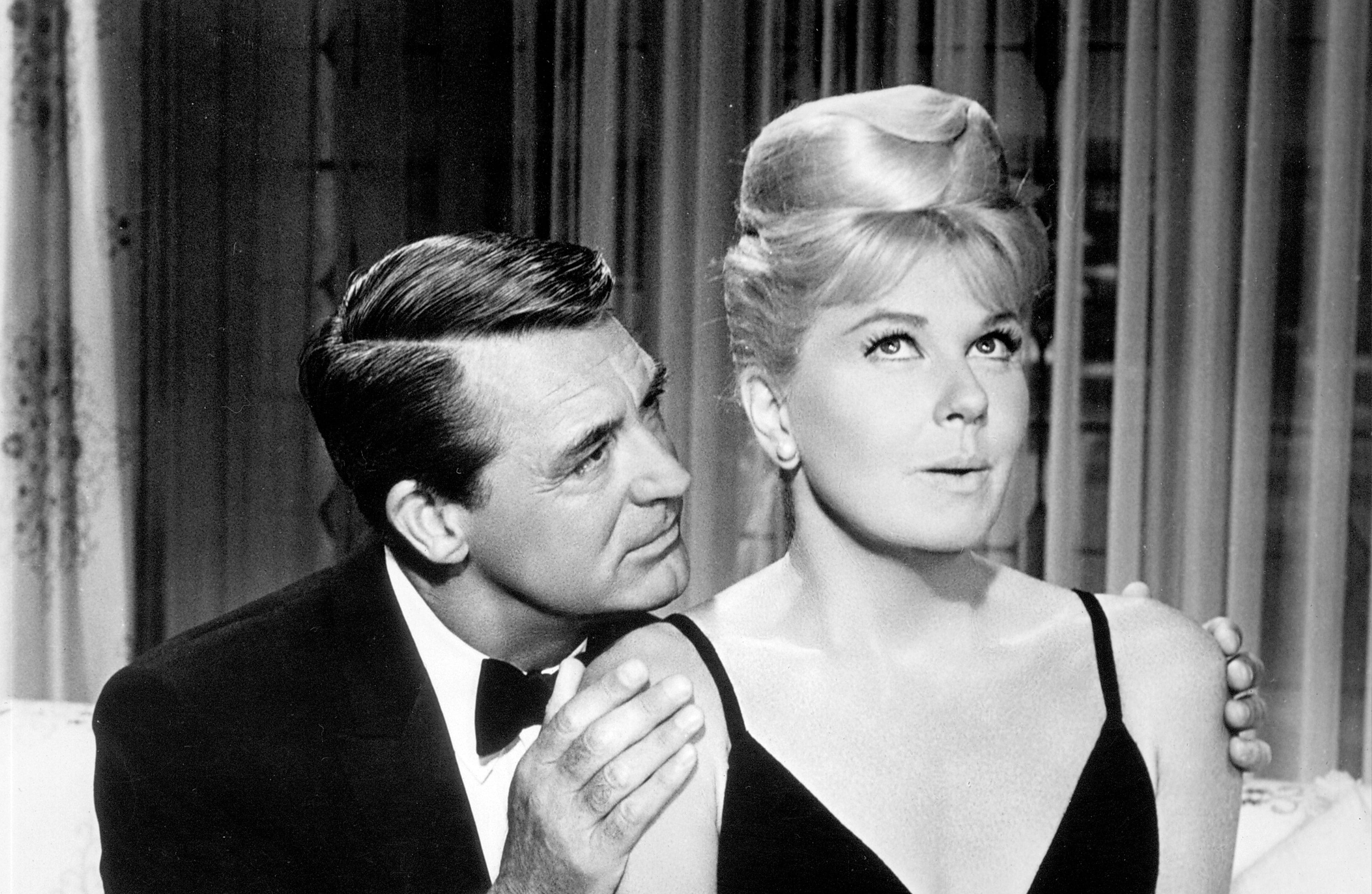
After dinner we headed over to the Chinese Multiplex to line-up for the Doris Day and Cary Grant sex comedy That Touch of Mink (1962). Alicia Malone gave a great introduction before the film and it was so much fun to see this film with an audience. I've seen this film several times before but have a new appreciation for the film including the supporting players Audrey Meadows and John Astin.
Stay tuned for more updates from the TCM Classic Film Festival! All content is property of Out of the Past: A Classic Film Blog. Copyright © 2007-2023
April 2, 2023
The Classic Film Collective: The Lady from the Black Lagoon
This was originally published in the former The Classic Film Collective Patreon.

The Lady from the Black LagoonHollywood Monsters and the Lost Legacy of Milicent Patrickby Mallory O'MearaPaperback ISBN: 9781335010131Hanover Square Press336 pages
Amazon — Barnes and Noble — Larry Edmund's — Powell's
If you're looking for a good read for October, look no further than Mallory O'Meara's book on Milicent Patrick, the artist who designed the creature in the Creature from the Black Lagoon (1954). For many years Bud Westmore, one of the famous Westmore brothers who dominated the makeup scene in Hollywood, took credit for designing the creature. However, movie monsters were often the work of several artists including makeup designers, makeup artists, sculptors, etc. With Creature from the Black Lagoon, Universal was dipping a toe into the world of science fiction and the creature had to be just right. Westmore, impressed with Patrick's artistic eye, hired her as part of his team. And when it came time to promote the final film, Universal sent Milicent Patrick on a nationwide tour. Westmore was furious that she was getting all of the attention. Wielding the power he had in Hollywood thanks to his name and the deeply entrenched patriarchy, he fired Milicent Patrick upon her return, essentially ending her special effects career. O'Meara takes the charge to undo this terrible wrong with her excellent book, revealing Westmore's pettiness and Milicent Patrick's genius while shedding light on an industry that has thrived on suppressing female talent behind the scenes.
“What matters is that Milicent was bringing art and monsters to life on-screen and that she was one of the first women to do so. She was blazing trails in a male-dominated industry, an industry that is still dominated by men.” — Mallory O'Meara
O'Meara's book is part biography, part memoir and part feminist manifesto. Not only are we taken on a journey through Milicent Patrick's life and career but we also see the lengths O'Meara had to go to uncover information about this little known artist from Hollywood history and what her research revealed about what women have to deal with while working in genre film. Patrick, who was born Mildred Rossi, was the daughter of an architect who helped design Hearst Castle and the surrounding estate. In fact, she later changed her name to Milicent as a nod to one of her earliest inspirations, Milicent Hearst. Patrick inherited her father's artistic eye and attended art school to hone her craft. She was one of the first female animators working at Disney. There she animated sequences in Dumbo and Fantasia, specializing in color techniques, before moving on to a long but relatively unsuccessful career as an actress. As a proud card carrying SAG member, Milicent Patrick was a background actress in many B-movies. She would often draw on set, catching the eye of fellow actors and of Bud Westmore. When Westmore hired her as a makeup designer (different from a makeup artists), she created looks for the pirate film Against All Flags (1952) and the barbarian makeup for Sign of the Pagan (1954). Working in genre film, she helped design the Xenomorph from It Came from Outer Space (1953), the Metaluna Mutant in This Island Earth (1955), and masks for Abbott and Costello spoofs. Her greatest and best known work would be the design for the Creature from the Black Lagoon which is still considered one of the best monster movies of all time.

As the reader learns about Milicent Patrick's extraordinary yet short lived career as a makeup designer and monster creator, O'Meara offers a rightfully scathing look at an industry that continues to mistreat women. The narrative shifts back and forth between Milicent Patrick's story, the author's own journey as a producer in the horror film industry and her work researching for the book. O'Meara's a fantastic storyteller but sometimes great moments are revealed a bit too early before they can really pack a punch. Yet O'Meara's voice is still strong. She's not afraid to tell you what she thinks, to question the research and to really dig for the truth. It's a powerful read.
All content is property of Out of the Past: A Classic Film Blog. Copyright © 2007-2023
March 19, 2023
SXSW: Being Mary Tyler Moore

Directed by James Adolphus and co-produced by Lena Waithe, Being Mary Tyler Moore is a new documentary that shines a spotlight on one of the most influential and iconic women of the 20th Century. The impact of Mary Tyler Moore on the entertainment industry cannot be understated. She really molded the image of the modern American woman with her performances in The Dick Van Dyke Show and The Mary Tyler Moore Show. She became a household name and a role model for independent working women. Behind the scenes, she struggled with the tragic deaths of her sister and her son, a miscarriage and diabetes. She maintained a sense of optimism despite her struggles and found much joy in her later years with her third husband Dr. Robert Levine and her animals that she tended to on her sprawling estate in Greenwich, Connecticut.


I had the pleasure of attending the world premiere of Being Mary Tyler Moore at the 2023 SXSW Film and TV Festival. This documentary was the third I had seen at the festival in which the entire film is comprised of archival footage. The other two were The Lady Bird Diaries (my review) and Love to Love You, Donna Summer (my review). In Being Mary Tyler Moore, the viewer is treated to clips from Moore’s television shows and movies, home video and one particular long-form interview she did in which she discussed her career and personal struggles. The documentary also features audio of interviews with her husband Robert Levine as well as Rob Reiner, Ed Asner and several of her friends and colleagues who knew her well. I think it would have been nice to have talking heads and to actually see the interview subjects discuss Mary Tyler Moore. There was a bit of a disconnect seeing so many visual elements but not actually putting faces to names. From the post-film discussion, it was said that the decision was made to lean into the archival footage, much of which showcases Moore's unique personality and talents while also more intimate moments. Because Mary Tyler Moore is no longer with us, the footage was a way for her to tell her own story.
All three archival documentaries I watched had several things in common—one in particular was that the respective families was involved in the making of the films. While this will ultimately lead to some bias in the other two documentaries, I didn’t feel it affected Being Mary Tyler Moore. The film really didn’t shy away from the darker elements of Moore’s life. It also felt more celebratory than protective. For those who are interested in Moore’s work outside television, her films Thoroughly Modern Millie (1967), What’s So Bad About Feeling Good? (1968), and Ordinary People (1980) were all discussed to some extent. The documentary also covers her stage work and her early career as a dancer.
Being Mary Tyler Moore is an intimate tribute to a legend. A must-watch for Mary Tyler Moore fans as well as anyone who enjoys biographical documentaries about interesting women.
The film is distributed by HBO and will be released later this year. You can find more information about on HBO's official website.

A big thank you to SXSW for the opportunity to attend the world premiere!
All content is property of Out of the Past: A Classic Film Blog. Copyright © 2007-2023
The Classic Film Collective: Olivia de Havilland: Lady Triumphant
This was originally published in the former The Classic Film Collective Patreon.

Olivia de Havilland: Lady Triumphant by Victoria AmadorUniversity Press of KentuckyPaperback ISBN: 9780813154657404 pages
Amazon — Barnes and Noble
Olivia de Havilland lived 104 glorious years and was the last of the great movie stars from the golden age of Hollywood to shuffle off their mortal coil. There’s something quite romantic about De Havilland’s life story. She lived gracefully, embracing age and change while remaining true to herself.
De Havilland starred in one of the most celebrated and most controversial films of all time, Gone With the Wind, fought Warner Bros. for her freedom, earned 5 Academy Award nominations including 2 wins, evolved as an actress, raised two children and lived out the majority of her final decades in her adopted country of France. De Havilland had a penchant for champagne, flowers, and pups and would often be seen in a flowy caftan and with her hair in an elegant chignon. She had her share of adversity. She was the child of divorce, divorced twice herself, saw her son battle Hodgkin's Lymphoma and had a long feud with her actress sister Joan Fontaine. De Havilland had maintained an air of mystery throughout most of her life. She was fiercely private and independent. She made decisions that best suited her even if it meant her legacy would not equal her acting peers. She was her own person through and through. With all of her achievements and the strife that came with living, Olivia de Havilland proved to be a “lady triumphant.”
This is the nickname author Victoria Amador gives to Olivia de Havilland in her biography on the late great star. Olivia de Havilland: Lady Triumphant is now available in paperback from the University Press of Kentucky, updated to acknowledge de Havilland’s death in 2020. It’s a critical look specifically at de Havilland’s acting career but also goes into depth about her early years in Japan, life with her parents Walter and Lilian, her step-father, her fraught relationship with her sister Joan, her many romances, her living legacy as a star and her transition to a quiet life in France. The book begins with what I think is one of the best introductions I’ve ever read. Victoria Amador recounts her 40+ year correspondence with the star which began when the author was a young and curious fan in the late 1960s and eventually led to their meeting several times in Paris. It’s a thrilling story and the highlight of the book.
Amador references de Havilland’s letters, which she kept over the decades, throughout the book as source material. There are also references to many sources including other biographical texts, DVD commentaries, information from de Havilland’s bestie TCM’s Robert Osborne and de Havilland’s own memoir Every Frenchman Has One. In the last four decades of de Havilland’s life, she had been chipping away at her own autobiography. Her memoir only captures a bit of her story and this would be more encompassing. It wasn’t published in her lifetime but maybe someone will be able to cobble together a book worthy of the star in the future. In the meantime, this biography is as close as we’ll get for now.
The biography follows de Havilland’s journey as an actress from her debut in A Midsummer Night’s Dream, to her contract with Warner Bros., her triumph as Melanie in Gone With the Wind, being subsequently miscast in many films at her studio, breaking free and venturing out as an independent player. The author discusses each film at length demonstrating how she fared in her performance and what significance the film had both personally and professionally. I do recommend going into this book having seen the majority of de Havilland’s films. There are spoilers galore and I found myself skipping a few sections so I can watch those films later. Some films discussed at length include her eight films with Errol Flynn, Gone with the Wind, Hold Back the Dawn, In This Our Life, Government Girl, The Dark Mirror, The Snake Pit, Light in the Piazza, Hush... Hush, Sweet Charlotte and more.
As far as personal matters go, the book does clarify details about her romantic relationship with frequent co-star Errol Flynn and with other beaus including John Huston, Howard Hughes, Jimmy Stewart and more. The author does go into depth about her sibling rivalry with Joan Fontaine, which was more like sibling ambivalence. A whole chapter is devoted to that subject. I was particularly interested to learn more about de Havilland’s later years. I was thrilled to learn that Oscar, her pug puppy, gave her so much joy that he may have extended her life. She was a great lover of books and at the end she was having classic film biographies read to her.
This is a wonderful book. If you don’t mind spoilers, a bit of repetition and some inherent bias, it truly is a gem of a biography.
Here are some of my favorite quotes from the book. Enjoy!
“Olivia’s contract with Warner was the pathway to everything she desired–an intelligent career, an opportunity to learn, exposure to the wider artistic community, financial security, and self-determination.” — Victoria Amador
“For her part, Olivia was through having her career controlled by men. In fact, “on discovering that studio policy required that a script designated for production be first sent to makeup where the department head estimated the number of makeup people required for the project . . . [Olivia] would casually enter the department and sneak out a script or two at a time. She would read them overnight and surreptitiously return them the next morning.” — Victoria Amador
“It was the character of Melanie that attracted me most, because of her admirable qualities and the values that meant so much to her and meant so much to me. I wanted to perpetuate these values. And the perfect way to do that of course would be to play the part of Melanie.” — Olivia de Havilland
“I was not really interested in playing either in French films or in the French theatre, because doing so would have changed the strictly personal life I had made here, one for which I had a profound need.”— Olivia de Havilland
“‘Motion picture acting is a marvelous way for women to have careers. Without understanding what they were doing, they stood as a kind of symbol of women’s liberation, I suppose. They were totally self-reliant, self-sustaining women." — Olivia de Havilland
All content is property of Out of the Past: A Classic Film Blog. Copyright © 2007-2023
March 5, 2023
The Classic Film Collective: Laura by Vera Caspary

Lauraby Vera CasparyThe Feminist PressPaperback ISBN: 9781558615052256 pages
Amazon — Barnes and Noble — Powell's
“You have so many friends, your life is so full, you’re always surrounded by people.” – Mark McPherson
Laura: “It’s when you have friends that you can afford to be lonely. When you know a lot of people, loneliness becomes a luxury. It’s only when you’re forced to be lonely that it’s bad.” – Laura Hunt
Any film noir enthusiast will attest that Laura (1944), is one of the finest noirs of the era. It offers viewers an engrossing story, an air of sophistication, a couple of delicious plot twists and plenty of wit. Then there is the quartet of main players: Waldo Lydecker (Clifton Webb), the bored aristocrat, Mark McPherson (Dana Andrews), the sensitive police detective, Shelby Carpenter (Vincent Price), the spoiled Southern gigolo, and caught in the middle is the least femme fatale of all the femme fatale: Laura Hunt (Gene Tierney). Laura is the murder victim until she’s not and through both her absence and her presence we learn a lot about her as an individual and the men who want to possess her.
The story was born out of the imagination of Vera Caspary, a writer who was no stranger to Hollywood. In her lifetime she wrote 19 books and out of her novels, original screenplays, theatrical plays and other writing contributions, 24 film adaptations were made. Some of these include: Working Girls (1931), Letter to Three Wives (1949), The Blue Gardenia (1953), and Les Girls (1957). Caspary was particularly interested in writing about working women, like herself, and her stories dealt with themes of identity, romantic relationships, personal independence and crime. She didn’t consider herself a mystery writer and preferred to focus on character development and plot structure than genre form. According to writer A.B. Emrys, “Her novels revolve around women who are menaced, but who turn out to be neither mere victimized dames nor rescued damsels. Independence is the key to survival of such protagonists as Laura…”
Laura was written during WWII but its decidedly not at all influenced by the war. In fact, Caspary had spent much time exploring her political beliefs (she dappled in Communism which led her to be graylisted during the red scare), and decided she wanted a break from politics in order to return to writing. Laura started as a theatrical play and an original screenplay. When neither of those sold, Caspary wrote Laura as a novel. It was serialized in seven parts in Collier magazine and then published by Houghton Mifflin. Otto Preminger learned about the novel and presented it to Darryl F. Zanuck, with whom he had a long time feud, in order to get 20th Century Fox to acquire the film rights, which they did.
Caspary’s novel is divided into five parts, each giving the perspective of one of the four main characters before returning back to the police detective’s investigation:
Part 1 - Waldo Lydecker’s POVPart 2 - Mark McPherson’s POVPart 3 - Shelby Carpetner’s POV - as told through a police interrogation.Part 4 - Laura’s POVPart 5 - Mark McPherson’s POV
The film adaptation follows the book quite closely with some key differences. Lydecker is described as a middle-aged man who is overweight, pale and has lost his appetite due to the stress of the criminal investigation. He’s decidedly more biting with his remarks in the book than in the film. Clifton Webb really steals the show with his performance as Lydecker. Laird Cregar, who would have fit the novel’s characterization of Lydecker more closely, was considered for the role but Preminger thought his ominous presence would give away a key plot point.
Gene Tierney is as exactly as Caspary has Lydecker describe her in the book: “She was a slender thing, timid as a fawn and fawn-like, too, in her young uncertain grace. She had a tiny head, delicate for even that thin body, and the tilt of it along with the bright shyness of her slightly oblique dark eyes further contributed to the sense that Bambi had escaped from the forest and galloped up the eighteen flights to this apartment.” Her POV is strong and definitely the highlight of the book.
Mark McPherson isn’t much different than Dana Andrews’ role except that he’s more imaginative and his investment in Laura comes more from his thought process than his actions. The biggest different in characterization can be seen with Shelby Carpenter, who they indeed softened in order to give Vincent Price a much more friendly on-screen part. The novel’s Shelby is an insufferable cad. In fact, when I got to his POV I groaned loudly but lucky his part is reduced to a single chapter. Diane Redfern, the story’s true femme fatale and ultimate victim, plays a stronger part in the novel but like in the film, is never actually seen.
Caspary does a wonderful job exploring the male-female dynamic. She tackles misogyny, gender roles and obsession with clarity and confidence. It’s clear that each of the men sees Laura as an extension of themselves and their individual quests to gain complete control of her all fail in some respect. At several points in the novel, Caspary explores how a woman evolves into herself by her relationship with others, particularly men. But this also happens to men too. Laura is being molded by the men in her life but she is also molding them. It’s as though it takes group effort to blossom into the person you’re going to become. And because these characters are so dependent on each other for personal growth, there is a possessiveness that comes from that.
Laura by Vera Caspary is currently available as a stand-alone book from The Feminist Press or part of the Library of America’s Women Crime Writers anthology. You can borrow the stand-alone book from your local library through Overdrive. It’s a fantastic read and I highly recommend you check it out if you can.
I leave you know with a few of my favorite quotes from the book:
“Her flatter was never shallow. She found the real qualities and made them important. Surface faults and affections fell away like false friends at the approach of adversity.” – Waldo Lydecker
“I thought of my mother and how she had talked of a girl’s giving herself too easily. Never give yourself, Laura, she’d say, never give yourself to a man… That is why I have given so much of everything else; myself I have always withheld.” – Laura Hunt
“You are not dead, Laura; you are a violent, living, bloodthirsty woman.” – Waldo Lydecker
All content is property of Out of the Past: A Classic Film Blog. Copyright © 2007-2023
February 20, 2023
The Classic Film Collective: 7 Amazing Facts from Sidney Poitier’s Memoir The Measure of a Man
This was originally published in the former The Classic Film Collective Patreon.

The Measure of a Man: A Spiritual Autobiography by Sidney PoitierHarperOnePaperback ISBN: 9780061357909272 pages
Amazon — Barnes and Noble — Powell's
“You don't have to become something you're not to be better than you were.” — Sidney Poitier
We lost a bright shining light when Sidney Poitier passed away last year He left behind a legacy of amazing acting work. Films like The Defiant Ones (1958), A Raisin in the Sun (1959), Lilies of the Field (1963), which earned him an Oscar, the first ever awarded to a black male actor, A Patch of Blue (1965), To Sir, With Love (1967), In the Heat of the Night (1967), Guess Who’s Coming to Dinner? (1967) defined his career, challenged our notions of race and opened doors for many actors to come. In addition to his accomplishments as an actor, he was also a terrific writer. He published a handful of memoirs including This Life in 1980 and two more recent memoirs Life Beyond Measure: Letters to My Great-Granddaughter and The Measure of a Man: A Spiritual Autobiography. His last book, published in 2013, was a science fiction novel entitled Montaro Caine.
In the 240+ pages of The Measure of a Man, Poitier does a lot of self-reflection. He contemplates growing up on Cat Island in the Bahamas, his treacherous journey to the United States, becoming an actor in New York City, his tumultuous love life, the many obstacles he faced as a black man and of course his amazing movie career. Let’s take a look at 7 amazing facts from this incredible memoir.
Fact #1 Sidney Poitier didn’t see his own reflection until he was 11 years old.
Growing up poor on Cat Island in the Bahamas, young Poitier didn’t have access to mirrors or any type of glass. Poitier recalls, there were “No glass windows, no glass doors, no stores with glass fronts…” Any reflection came from ocean or pond water, the sheen from metallic objects. Little did he know that the image of himself that he could not see would go on to have a major impact on the world around him. When he and his family moved to Nassau, Poitier finally saw his reflection. But it would still be years before he would be exposed to the effects of racism. He wrote, “I didn’t think about the color of my skin. Not any more than I would have bothered to wonder why the sand was white or the sky was blue.”
Fact #2 Poitier almost died by drowning on two separate occasions.
Poitier recounts that as a child in the village of Arthur’s Town on Cat Island, there was a “ditch one hundred feet long, six feet deep, dug from the sea to an inland salt pond.” This was known among the locals as a death trap and the young Poitier felt determined to conquer it. He made a perilous attempt at opening a trap door through a tunnel but was not able to. It was high tide and if he had unlatched the door he would have surely drowned.
Decades later, while on a trip to Acapulco with his friend and agent Marty Baum went for a swim while their wives stayed behind on the shore. They swam out and didn’t realize that the ocean floor would drop off so quickly. They got caught up in a dangerous current. Poitier remembered, “then the ocean rose up beneath us. It wasn’t a wave on the surface of the water. It was a raging, thundering swell… The momentum of that angry wave yanked us free from the undercurrents that were pulling at our legs and flung us violently into the shallows of the beach.”
Fact #3 A bus station attendant convinced Poitier to move to New York.
Well, sort of. Poitier had a rough time of it when he moved to Miami. Poitier wrote “I knew that Miami wasn’t for me, because Miami designated me, by law and social custom, as being undeserving of human consideration.” He wanted to get as far away from the city as possible. He asked the bus station attendant how far each destination was and what the cost of each ticket was. Two trip options, Chattanooga and Birmingham, were just too close for comfort. He needed to be as far away as possible. The attendant said that “the next bus is going to New York” and that it would be “eleven dollars and thirty-five cents.” Poitier bought a one way ticket and never looked back.
Fact #4 A waiter helped Poitier learn to read proficiently.
Tired of working as a dishwasher in New York City, Poitier decided to give acting a go. In his memoir he writes, “I had no training in acting. I could barely read! And to top it off I had a thick, singsong Bahamian accent.” After approaching a casting agent at the American Negro Theatre, he was told in not so nice terms that he didn’t have what it took to become an actor. Poitier was too proud to listen to the man’s hurtful rejection. “Whatever it was, I knew I had to change it, or life was going to be mighty grim.” Poitier recounts that an older Jewish waiter at the restaurant where he worked offered to help him during breaks. “He became my tutor, as well as my guardian angel of the moment. Each night we sat in the same booth in that quiet area of the restaurant and he helped me learn to read."
Fact #5 Poitier softened his accent by listening to the radio.
Next he had to work on his thick Bahamian accent. Poitier had a disastrous start at the American Negro Theatre after he covered for fellow Caribbean actor Harry Belafonte. He knew that if this acting gig was going anywhere he had to improve on all fronts. Every night while practicing his reading skills, he would sound out syllables of difficult words to get better at enunciating them. He would also listen to radio shows, mimicking how the announcers spoke in order soften his accent. Poitier didn’t give up and strove to become a better actor. When he heard 20th Century Fox was casting for No Way Out (1950) he jumped at the chance. He got the part and a star was born…
Fact #6 Poitier had to be smuggled into South Africa to make Cry, the Beloved Country (1951).
No Way Out director Joseph Mankiewicz put Poitier in touch with Zoltán Korda who was then casting for Cry, the Beloved Country (1951). Korda flew Poitier out to London for an audition and he got the part. Poitier and Canada Lee, in his final role, play two priests in South Africa during the early years of apartheid. In order for Korda to get Poitier and Lee into the country, he had to tell immigration offers that the actors were actually indentured servants. While Poitier doesn’t go into detail about this, he does reflect on the experience of making Cry, the Beloved Country by saying “It was heady stuff, and I couldn’t escape the feeling that, not only was I one lucky youngster, but something more had to be at play here.” Some time after Poitier was asked to publicly denounce co-star Canada Lee because of his political beliefs and Poitier refused.
Fact #7 Poitier believed he was a catalyst for change even when others criticized his complacency.
In the memoir Poitier writes, “Social movement doesn’t come all at once, just as it doesn’t come out of nowhere.” He reflected on a New York Times article entitled “Why Do White Folks Love Sidney Poitier So?” Poitier was criticized for playing gentle characters rather than ones who chose force or to a greater extreme violence to make change. He writes “In essence, I was being taken to task for playing exemplary human beings.” These characters include those in To Sir, With Love, In the Heat of the Night and Guess Who’s Coming to Dinner?, all of whom in the face of conflict remain steadfast. Poitier’s subversiveness was more subtle. He found strength in positivity. It was his form of self-preservation but it was also his way of making change. He went on to say, “simply put, I’ve learned that I must find positive outlets for anger or it will destroy me.”
The Measure of a Man: A Spiritual Autobiography by Sidney Poitier is available through a variety of book retailers and can also be borrowed from your local library through Overdrive.
All content is property of Out of the Past: A Classic Film Blog. Copyright © 2007-2023January 22, 2023
The Classic Film Collective: Career Women in Love: Ex-Lady (1933), The First Hundred Years (1938) and Woman of the Year (1942)
This was originally published in the former The Classic Film Collective Patreon.

As someone who appreciates classic movies while also watching them through a contemporary lens, I look for the subtle or not so subtle signs of feminism in early films. I want to see how the role of women evolved over the 20th century and how Hollywood packaged these portrayals for mass consumption. Woman of the Year (1942), George Stevens’ delightful comedy starring Katharine Hepburn and Spencer Tracy, is one of those films that has an interesting feminist angle which is then canceled out by the ending. And yes you can love a movie even though you hate how it ends. Hepburn plays Tess Harding, a successful newspaper correspondent specializing in international affairs. Tracy is the sports writer with whom she falls in love. Their marriage can’t withstand Tess’ hectic schedule and their impasse is resolved in just the sort of way you would expect of a 1940s Hollywood film. I’ve watched this film many times over the years, sometimes skipping the ending and imagining another outcome for Tess. Compromise is a key element to relationships, on screen and off, but usually it’s the women who have to sacrifice something. And for a working woman it’s giving up her career to raise a family. The ending is never a surprise. Hollywood liked to keep the status quo. However, the joy in watching these early films about career women in love are those moments where the woman stands her ground, planting seeds of dissent in an otherwise male dominated world.

“I don’t want to be like my mother, the yes-woman for some man. I want to be a person of my own.” Bette Davis as Helen in Ex-Lady (1933)
There are two 1930s films that broach the same subject matter and face the same dilemma. Ex-Lady (1933), a Pre-Code directed by Robert Florey for Warner Bros., stars Bette Davis as Helen Bauer, a talented illustrator who is at the top of her game. She’s in a relationship with Don (Gene Raymond) but refuses to marry him. Instead they live “in sin”. When keeping up this lifestyle becomes too much, Helen agrees to marry Don and that’s when everything goes haywire. Don’s talent agency takes a nosedive and the two begin to see other people. The story is partly inspired by the real life relationship of writers Edith Fitzgerald and Robert Riskin, who were also in a long-term relationship in which they lived together but remained unmarried (Riskin went on to marry actress Fay Wray). Bette Davis has some great lines in this film questioning the institution of marriage. She finds it dull and fears that it will strip away both their independence and individuality. There are two key scenes early on in the film when Davis and Raymond contemplate their relationship. Davis declares ”no one has any rights about me except me.” At the time, Davis was fighting Warner Bros. for better parts and eventually faced the studio in court. According to film historian Sloan De Forest, Davis accused “the studio of ‘slavery’ by forcing her into ‘mediocre pictures.’ Bette lost the court case, but she won Warners’ eventual respect…” Even though Davis looked poorly upon Ex-Lady, in many ways she was playing herself.: a successful woman who craved the independence that a studio contract/marriage would deprive her of.

“Can I love you and still be interested in something else?” - Virginia Bruce as Lyn in The First Hundred Years (1938)
When I was shopping the Warner Archive Collection’s final 4 for $44 sale (you can watch my haul here) I discovered a film I had never heard of: The First Hundred Years (1938). It’s an MGM film directed by Richard Thorpe and starring two of my favorite actors of that era: Robert Montgomery, Virginia Bruce and Warren William. Reading the synopsis the film immediately reminded me of Ex-Lady and I quickly added it to my shopping cart. Virginia Bruce plays Lynn Conway, a top talent agency at a big New York City firm. She is highly sought after by authors, actors and directors to land theatrical gigs and regularly travels to Hollywood to book movie deals. Robert Montgomery plays her husband David, a shipbuilder who receives word that there is a job waiting for him in New Bedford, Massachusetts. Neither of them want to give up their jobs or the marriage but something here has to give. Because we’re now in the era of the strictly enforced Hays Code, The First Hundred Years is stripped of any of the sexual chemistry and innuendos that you’ll find in Ex-Lady. Where Raymond and Davis lust for each other in the Pre-Code film, Montgomery and Bruce have a sweet and tender romance. Any lust is relegated to secondary characters like Warren William who plays the hard-drinking talent agent and Binnie Barnes who plays a socialite trying to steal Montgomery’s David away from his wife. And yes The First Hundred Years has just the sort of ending you would expect. However, it doesn’t quite feel like a disappointment. Perhaps because the film does a good job at slowly distancing the female protagonist from her job so she can be more consumed with the social aspects of her life.
As a married career woman myself I find this sub-genre of classic movies endlessly fascinating and I’ll always be on the lookout for more. Even if I know exactly how they’ll end.
All content is property of Out of the Past: A Classic Film Blog. Copyright © 2007-2023January 8, 2023
The Classic Film Collective: 7 Life Lessons from Cicely Tyson’s Memoir
This was originally published in the former The Classic Film Collective Patreon.

Just as I Am by Cicely TysonHarperCollinsPaperback ISBN: 9780062931078432 pages
Amazon — Barnes and Noble — Larry Edmund's— Powell's
On January 26th, 2021, HarperCollins published Cicely Tyson’s memoir Just as I Am. Two days later, the great screen legend passed away, just as she was gearing up to promote her new book. Just before her passing, Tyson left us a precious gift. Just as I Am offers us mere mortals a look inside the mind of a screen queen. Tyson broke the mold of what black actresses should look like and what parts they should play. Generations of women after her benefited from Tyson’s defiance. Her work included notable performances in The Autobiography of Miss Jane Pittman, Roots, The Heart is a Lonely Hunter and Sounder, all of which she discusses at length in her book. Tyson also shares stories of growing up in the West Indian community of Harlem, becoming a teen mother, her transition from modeling to acting, her tumultuous relationship with musician Miles Davis and the many friendships she formed. Reading Tyson’s memoir was like drinking an elixir that offered me clarity and wisdom beyond my years. Here are some of my favorite life lessons that I extrapolated from reading Just as I Am.
(Note: Tyson’s memoir was co-written by Michelle Burford so quotes are most likely written by Burford but true to Tyson’s voice.)
Life lesson #1: Trust your gut
“I know instantly whether I should take a role. If my skin tingles as I read the script, then it is absolutely something I must do.”
At one point in her life, Tyson developed ESP and claimed that she could make predictions about major life events shortly before they happened. I personally believe these visions were a result of how in tune she was to her gut instincts. She knew when to take on a role and when to turn one down. Trusting her instincts benefited her throughout her career.
Life lesson #2: Know thyself
“The human desire to know where we’ve come from, and who our fore-parents were, is a universal longing that transcends ethnicity.”
Tyson had “misgivings about portraying domestics” and often turned down those roles, with a couple exceptions. Instead, she focused on characters she could connect to even if it meant dressing down or portraying someone much older. Tyson had this innate sense of self that guided her throughout her life making her the sole master of her fate.
Life lesson #3: Personal connections matters most in life
“We’d laugh and carry on for hours, talking about everything and everyone. That conversation went on for sixty years.”
Tyson had an incredible memory and it’s astonishing to see the level of detail she remembered from her childhood and her formative years. She clearly cherished personal connections above all else. This was most apparent while reading stories about her lifelong friendship with dancer Arthur Mitchell. When she accepted her honorary Oscar in 2018, she took the opportunity to pay special tribute to her dear friend. Years ago, he had promised to take her to the Oscar ceremony if she were ever to win. However, he passed away a few days before he got the chance. Make sure you have a tissue handy when you watch Tyson’s acceptance speech!
Life lesson #4: Do what you love
“I suppose to be truly successful at any pursuit, you have to fall in love with it, surrender to its gravitational pull, allow it to carry you off to that world of giddy sleepiness.”
At first Cicely Tyson balked at the idea of becoming an actress. The acting profession was looked down upon, especially among certain communities, and good opportunities for black actresses were still difficult to come by. However, Tyson found her stride with acting and she felt that she could really tap into a reserve of natural talent within her. At first her mother rejected Tyson’s newfound profession and it put a strain on their relationship. Seeing her daughter’s success, she warmed up to the idea. I really admire Tyson’s devotion to her craft and willingness to overcome obstacles in order to pursue her dreams.
Life lesson #5: Don’t be afraid of being successful
“I have never been shy about making money. The most potent antidote to reticence is survival.”
Years before she ever became an actress, Cicely Tyson started adult life as a fiercely independent career woman and was unapologetic about being so. She worked hard to send her daughter “Joan” to the best schools and to make it on her own as a single mother. She worked as a secretary, hairstylist and model before she was discovered by producer Warren Coleman. As women, we’re often made to feel ashamed for wanted money and/or success. Tyson knew that money could offer her opportunities that were otherwise hard to come by. She was careful about taking on new opportunities, studying and analyzing scripts closely to make sure the role suited her sensibilities. In the memoir she wrote, “as ambitious as I was to earn money, I had no interest in making a public spectacle of myself.”
Life lesson #6: Defy beauty standards, do your own thing
“I never set out to start a natural hair craze.”
In 1962, Tyson had been playing the role of an African immigrant on the TV show East Side/West Side. She put a lot of thought into her character and came to the conclusion that “so adamant was this woman about embracing her native culture, there was no way she would have chemically processed hair. It didn’t feel right to me.” She went to her local barbershop and told the barber she wanted to get rid of all her relaxed hair and started afresh. She was the first black actress to wear her hair natural on TV and by doing so upended a strict standard of beauty. Tyson and women like her have inspired me to wear my hair natural and to embrace my own differences.

Life lesson #7: Hydrate and drink your greens
“I’d begin the day with a cup of fresh celery juice (before any solid food, as a way to cleanse my system)…”
In 1976, Tyson went to a health spa where she was put on a diet of organic fruits, vegetables and grains. She came out of the experienced a changed woman. In her memoir she wrote, “when I left there after a week of following that program, the world looked different to me. My head was clear. Colors, smells, and sounds felt more pronounced. My memory improved. I felt energized. So on my own at home, I continued eating that way.” For the next 40+ years, Tyson was a dedicated vegetarian (and sometimes pescatarian). She started her day with 4 glasses of water, eight ounces of fresh celery juice and would eat vegetables and limited fruits throughout the day. At the time of writing her book she said, “the change has agreed with me, it seems. At age ninety-six, I’m still kicking.”
After reading this I immediately started juicing again. I was a bit weary of drinking celery juice straight so instead I make a green juice that includes celery with a bunch of other good stuff mixed in. Here is the recipe if you’d like to try it out. Enjoy!
4 stalks of celery
1 large handful of baby spinach
2 large cucumbers peeled (or unpeeled English cucumbers)
1-inch nub of ginger
1 lime peeled ( it's easier to cut off rind with a serrated knife)
2 apples cored
4 sprigs of mint
Add ingredients to a juicer on the highest setting. Makes about 24 oz of juice.
All content is property of Out of the Past: A Classic Film Blog. Copyright © 2007-2023November 21, 2022
The Automat (2021)
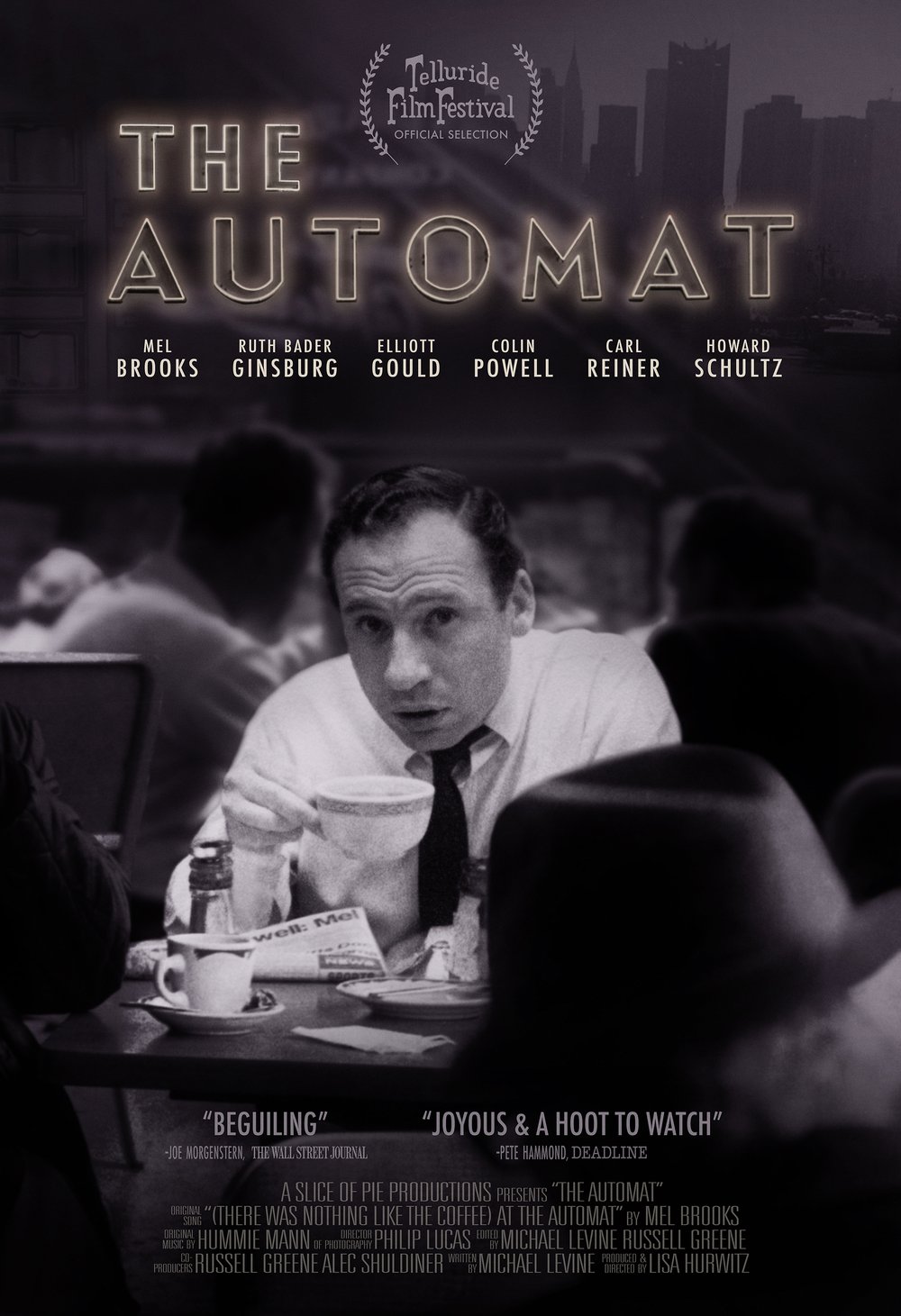
Even if you've never set foot inside of an Automat, chances are seeing one in an old movie will fill you with a sense of nostalgia. There's something magical about that place. They only existed in New York City and Philadelphia but their reputation spread far beyond those city limits. Horn & Hardart Automats were cafes where you essentially served yourself through an automated service. Little glass cubicles lined the walls. You put nickels in the slot, turn the brass handle and a delicious treat would be waiting for you on the other side. Before Doordash and online ordering, the Automat was the most technologically advanced way to get inexpensive and delicious food quickly. The cafe had an air of sophistication. Coffee was poured from their signature dolphin head spouts, elegant tables made up the main dining room and signage offering Pies, Hot Dishes and Salads lined the walls. The Automat offered a magical combination of quality food and atmosphere at a low cost. It's not something that exists anymore—the last Automat closed in the 1990s—but it's something we all so desperately wish could come back. In a time of hyperinflation, being able to access a bit of elegance and quality food for not a lot of money seems like a dream.
I was thrilled to write a piece for Turner Classic Movies to accompany their new programming line-up for November 22nd: The Automat. Ben Mankiewicz will be interviewing Lisa Hurwitz, the filmmaker behind the excellent new documentary on the history of the Automat. The line-up includes screenings of The Automat (2021), That Touch of Mink (1962), an encore of the documentary, Easy Living (1937), Thirty Day Princess (1934) and Sadie McKee (1934). What all of the feature films have in common is that they each feature a working woman in dire financial straits who seeks out an Automat for some solace and nourishment.
Here is a snippet from my TCM article about the new documentary:
"Directed by Lisa Hurwitz, The Automat (2021) explores the history behind Horn & Hardart as well as the Automat’s cultural influence. It playfully starts with comedian Mel Brooks pondering the significance of making this documentary and his own personal memories of Automats being “one of the greatest inventions and insane centers of paradise.” The film is bookmarked with Brooks’ performance of his original song, a sweet tribute to the Automat. In between we hear from well-known names including Elliott Gould, Carl Reiner, Colin Powell and Ruth Bader Ginsburg who all share their personal memories of what the Automat meant to them. Hurwitz interviews experts including Automat historian Alec Shuldiner and Lorraine B. Diel and Marianne Hardart, authors of “The Automat: The History, Recipes, and Allure of Horn & Hardart’s Masterpiece”. Then there are the interview subjects with intimate knowledge of the business side of Horn & Hardart. The most fascinating of these was John Romas, the former Vice President of Engineering who had many stories to tell, as well as a treasure trove of gadgets stashed away from when the final Automat closed. What The Automat documentary excels at is offering viewers a contextual history of how this business was born, how it thrived and how it became part of the social fabric of New York City and Philadelphia. It was a 20th century phenomenon that was truly of its era."
The Automat (2021) is available on DVD from Kino Lorber as well as on digital from Kino Now. The DVD includes an extended video interview with Mel Brooks, commentary by director Lisa Hurwitz, archival footage Horn & Hardart, a theatrical trailer and English language subtitles.
I highly recommend watching all 53 minutes of the extended Mel Brooks interview because he has some great stories and goes off on some interesting tangents. I enjoyed hearing him talk about how his brother helped him with homework, how he secretly would eat ham and cheese sandwiches at the Automat and not tell his mom and hearing him give Hurwitz advice on how to make and promote the documentary (which she didn't need but is charming nonetheless!).
Amazon — Barnes and Noble — Deep Discount — Kino Lorber — Official Website
Thank you to Kino Lorber for sending me a copy of The Automat (2021) for review.
All content is property of Out of the Past: A Classic Film Blog. Copyright © 2007-2022