
Hannah Byron's Blog, page 4
April 18, 2024
Read the First Chapters of “The Resistance Girls Revisited”
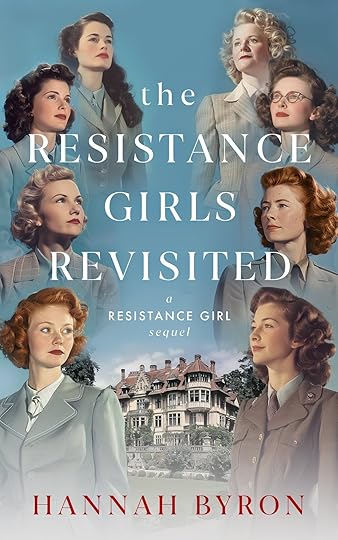
Greetings, readers and fans of The Resistance Girl Series! Exciting news awaits as I announce the arrival of the much-anticipated final book in the series, The Resistance Girls Revisited: A Reunion of Courage and Bond.
Prepare to immerse yourself once again in the extraordinary lives of Lili, Océane, Esther, Sable, Edda, and Anna as they reunite at the picturesque Swiss finishing school where their paths first intertwined before World War II.
Set partly in Le Manoir, Switzerland, in 1948, three years after the tumultuous end of the war, our six heroines, alongside mothers Agnès and Madeleine, gather to honor their enigmatic headmistress, Madame Paul, on her 40th year of leadership. Amidst the breathtaking backdrop of the Swiss Alps, they come together to reminisce and celebrate their shared experiences, braving the trials of war and forging unbreakable bonds of friendship.
In this emotional reunion, the women share their gripping tales of wartime bravery, from the chaos of battlefields to the secrecy of covert operations. Their stories, inspired by real events, weave a rich tapestry of courage, sacrifice, and resilience, showcasing the indomitable spirit of the female heart in the days of peril.
As a teaser, I offer an exclusive sneak peek into The Resistance Girls Revisited. Click the link below to read the first three unedited chapters of the girls’ captivating journey through their past and into the future.
Don’t miss the thrilling conclusion to The Resistance Girl Series. Join all the girls, now mature married mothers, as they embark on their final adventure, rediscovering the true meaning of courage, love, and the enduring power of friendship.
On 16 July 2024 we will celebrate the ultimate closure to The Resistance Girl Series. After that, I truly hope you will embark with me on a new series about female resistance fighters: The Timeless Spies Series.
But first things first, as we revisit the remarkable journey of our cherished heroines.
Read first chapters here Preorder here

April 4, 2024
Unveiling “The London Spymaker”: Book 7 in The Resistance Girl Series

The moment has arrived! I’m so happy to announce the release of my newest book, “The London Spymaker,” the 7th book in “The Resistance Girl Series”. Set against the backdrop of World War II, this gripping tale of espionage, betrayal, and passion promises to captivate your imagination and tug at your heartstrings.
In “The London Spymaker,” we delve into the tumultuous world of Anna Adams, the indomitable spymistress of Baker Street Headquarters. Anna’s duty is to recruit female secret agents to be sent behind enemy lines in France, navigating a web of secrecy, love, and duty in wartime London.
However, Anna’s world is turned upside down when her former boyfriend, the Polish fighter pilot Major Henryk “Hubal” Pilecki, reenters her life. Torn between her undeniable feelings for Hubal and her duty to marry the British Count Roderick Macalister to erase all traces of her past, Anna is faced with an impossible choice.
As the war rages on, Anna’s decisions lead to catastrophic consequences, with her female agents disappearing without a trace. In the aftermath of the war, Anna embarks on a quest to uncover the fates of the women she sent to their deaths, while confronting her own troubled past and mysterious protector.
But don’t just take my word for it! Here’s what some early reviewers had to say:
1. “A really wonderful book! WWII Historical that is intriguing and heartbreaking. Lots of twists and turns and tragic events in this unpredictable haunting story make this a real page-turner and a must-read.”
2. “Highly Recommend This Series. Another riveting, well-researched resistance story by Hannah Byron. It shows a different side to the WW2 story, especially events immediately after the end of the war. Highly recommend this series, this is book 7.”
3. “This book by Hannah Byron is the best out of the whole series, so detailed descriptions, something just connected with me in this read to keep it one of my top 5 books this year. A KEEPER!”
4. “I Suggest You Read the whole Series and Be Swept Away. This is a story that will have you captivated from the very first page. Honestly, I never knew I could get into historical stories but this series has really captured my heart.”
And the best news yet? “The London Spymaker” is currently available at the low price of $4.99 for just a few more days before it goes up to $6.99. Whether you prefer ebook, paperback, or Kindle Unlimited, now is the perfect time to dive into this enthralling tale of courage, sacrifice, and redemption.
Don’t miss out on the latest book in “The Resistance Girl Series”. Grab your copy of “The London Spymaker” today and embark on an unforgettable journey through the shadows of wartime London and post-war Germany.
Click here to order The London SpymakerDive into The London Spymaker, a Thrilling Tale of Espionage and Intrigue!
March 20, 2024
Celebrate Women's History Month with My Inspiring YouTube Series!
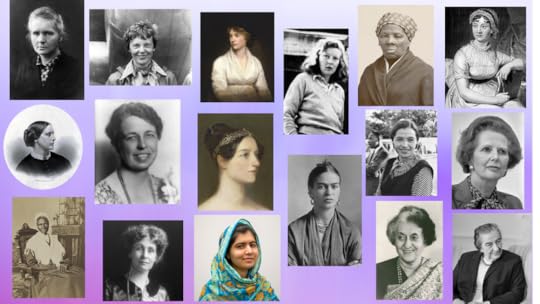
March is Women's History Month, a time to honour the incredible contributions and achievements of women throughout history. To commemorate this special occasion, I’ve launched a Women's History Month playlist series on YouTube!
I’d love for you to watch as I shine a spotlight on the remarkable stories of trailblazing women from all walks of life. From pioneers in science and technology to leaders in activism and the arts, each video in this series gives a short overview of the lives and legacies of extraordinary women who have shaped our present-day world in profound ways.
Whether you're familiar with their names or discovering them for the first time, these inspiring stories will lift a tip of the veil of their enduring impact.
Please watch and subscribe to my YouTube channel. After Women's History Month, I’ll return to my own heroines of the WW2 Resistance to tell you more about remarkable women in history who continue to inspire with their legacies.
Let's celebrate the past, empower the present, and inspire the future. Don't miss out on this empowering journey through Women's History Month but be part of it.
Subscribe hereMarch 2, 2024
Unraveling the Enigma of Herschel Grynszpan: A Tale of Controversy and Intrigue
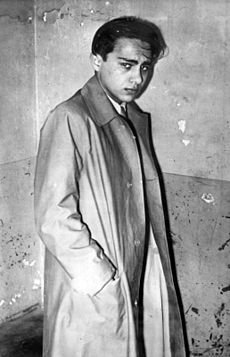
Herschel Grynszpan after his arrest in Paris in 1938
In the annals of history, certain figures emerge whose stories are shrouded in controversy and intrigue. Herschel Grynszpan, a name perhaps unfamiliar to many, stands as one such enigmatic figure. His life, marked by a fateful act of defiance against the Nazi regime, has sparked debates, theories, and even conspiracy theories surrounding his fate. In this exploration, we delve into the life of Herschel Grynszpan, the controversy surrounding his death, and the tantalizing possibility of his survival.
Herschel Grynszpan was born in Hanover, Germany, in 1921, to a Polish-Jewish family. His life took a dramatic turn on November 7, 1938, when he shot and killed Ernst vom Rath, a German diplomat in Paris. This act of political assassination was Grynszpan's response to the escalating persecution of Jews in Germany, culminating in the violent events of Kristallnacht, also known as the Night of Broken Glass. The repercussions of Grynszpan's actions reverberated far beyond the streets of Paris, igniting a firestorm of Nazi propaganda and providing Adolf Hitler with the pretext for further anti-Semitic measures.
However, it is not Grynszpan's act itself that has captured the imagination of historians and conspiracy theorists alike, but rather the circumstances surrounding his subsequent fate. Official records indicate that Grynszpan was arrested by French authorities shortly after the assassination and was later extradited to Germany. Yet, what transpired after his extradition remains a matter of speculation.

However, it is not Grynszpan's act itself that has captured the imagination of historians and conspiracy theorists alike, but rather the circumstances surrounding his subsequent fate. Official records indicate that Grynszpan was arrested by French authorities shortly after the assassination and was later extradited to Germany. Yet, what transpired after his extradition remains a matter of speculation.
Some historians argue that Grynszpan was executed by the Nazis, his fate sealed in the shadows of a Gestapo prison. However, others contend that he may have survived, his death staged to conceal his true whereabouts. This theory is fueled by a lack of concrete evidence regarding Grynszpan's demise, as well as the clandestine nature of Nazi operations during that period.
Adding another layer to this intricate tapestry of history and mystery is the portrayal of Herschel Grynszpan in "The London Spymaker," my new historical fiction novel. In this gripping tale, Grynszpan's story is interwoven with that of a fictitious character, Anna Adams, his cousin, who finds herself ensnared in a web of danger and suspense as she and her family are pursued by Nazi agents seeking retribution.
Through the lens of fiction, "The London Spymaker" explores the untold possibilities surrounding Grynszpan's fate, inviting readers to ponder the enigma of his disappearance and the potential ramifications of his survival. As Anna Adams navigates a world fraught with peril and deception, the specter of Herschel Grynszpan looms large, a symbol of resistance against tyranny and a reminder of the enduring quest for truth amidst the shadows of history.
In conclusion, Herschel Grynszpan remains an enigmatic figure whose legacy continues to captivate and intrigue. Whether he met his demise at the hands of the Nazis or managed to evade their grasp and disappear into obscurity may never be definitively known. Yet, his story serves as a poignant reminder of the power of individual defiance in the face of oppression, and the enduring quest to unravel the mysteries of the past.


Left to right.
Detailed view of crystal structure of Grynszpan’s face with hammer blow glass breakage. Art work by Johannes Angerbauer-Goldhoff to remember the Kristallnacht and Herschel Grynszpan’s unintended roll in it.
German citizens walk past destroyed Jewish shops and houses on 10 November 1938, the day after Kristallnacht.
Börnerplatz synagogue in Frankfurt am Main was set on fire by a Nazi mob during Kristallnacht. The photograph was taken the next day when the synagogue was still burning.
Interior view of the destroyed Fasanenstrasse Synagogue, Berlin.

My new book The London Spymaker offers a tantalizing glimpse into the world of Herschel Grynszpan, blending fact with fiction to craft a narrative that is as thrilling as it is thought-provoking. As the debate over Grynszpan's fate rages on, one thing remains certain: his legacy will continue to inspire and intrigue for generations to come. it stand out
February 17, 2024
Reflecting on the Legacy of the Nuremberg Trials
The Nuremberg Trials stand as a watershed moment in human history, representing the first international effort to hold individuals accountable for crimes against humanity. Convened in the aftermath of World War II, these trials sought to bring justice to those responsible for the atrocities committed during the war, including genocide, crimes against peace, and war crimes. As we reflect on the legacy of the Nuremberg Trials, it becomes clear that they not only established crucial principles of international law but also shaped the course of modern justice and human rights.

Nuremberg Trials - the defendants dock
The Nuremberg Trials, held from 1945 to 1946, marked a radical departure from previous approaches to addressing war crimes. Instead of merely punishing the defeated, the trials aimed to provide a fair and transparent legal process that would serve as a model for future efforts to uphold human rights and prevent impunity. This ground-breaking approach was enshrined in the Nuremberg Principles, which laid the foundation for modern international criminal law.
Central to the Nuremberg Trials was the concept of individual responsibility for crimes against humanity. For the first time, political and military leaders were held personally accountable for their actions, regardless of official orders or directives. This principle, articulated in the famous Nuremberg Charter, established a precedent that has since been applied in numerous international tribunals, including the International Criminal Court.
Moreover, the trials played a crucial role in defining the legal framework for prosecuting genocide. The indictment of Nazi leaders for their role in the Holocaust set a precedent for recognising genocide as a distinct crime under international law. This recognition paved the way for subsequent efforts to prevent and punish genocide, including the establishment of the Genocide Convention in 1948.
Beyond their legal significance, the Nuremberg Trials also served as a catalyst for broader conversations about justice, accountability, and reconciliation. By bringing perpetrators of war crimes to trial in a public forum, the trials provided a platform for survivors to share their stories and seek closure. They also helped to foster a collective reckoning with the horrors of the Holocaust and the need to confront the legacy of anti-Semitism and xenophobia.
However, the legacy of the Nuremberg Trials is not without its complexities and controversies. Critics have pointed to issues such as the selective prosecution of war crimes and the influence of political considerations on the judicial process. Moreover, the trials were limited in scope, focusing primarily on Nazi leaders while largely overlooking the complicity of other actors, including collaborators and bystanders.
Despite these challenges, the Nuremberg Trials remain a landmark moment in the quest for justice and human rights. They remind us of the importance of holding perpetrators accountable for their actions, regardless of their status or position of power. They also underscore the enduring relevance of international law as a tool for promoting peace, justice, and reconciliation in a world scarred by conflict and injustice.
As we look back on the legacy of the Nuremberg Trials, let us reaffirm our commitment to upholding the principles of justice, accountability, and human rights that they helped to establish. By learning from the past and building on its lessons, we can strive to create a more just and peaceful world for future generations.

Prosecutors and Deputies on Staff of Brig. Gen. Telford Taylor, subsequent Nuremberg Trials
A Critical Perspective on the Gender and Race Disparity
Beneath the veneer of justice to hold individuals accountable for crimes against humanity lies a stark reality: the trials were an all-white, male affair, with women and people of color relegated to non-decision-making roles such as reporters and secretaries. This gender disparity is not just a footnote in history but a glaring example of the systemic exclusion of women and people of color from positions of power and influence, even in matters of justice and accountability. Despite the gravity of the crimes being prosecuted, the composition of those involved in the trials reflected the deeply entrenched gender biases of the time.

Judges of the Nuremberg Military Tribunals
At the heart of the Nuremberg Trials were the prosecutors, judges, and defense attorneys – all of whom were white men. While the supportive female contributions as typists, secretaries and reporters were undoubtedly valuable, they were confined to positions that lacked decision-making authority.
This gender disparity is particularly striking when considering the magnitude of the crimes being addressed, including genocide and crimes against humanity. Yet, the absence of women from positions of power meant that their perspectives and experiences were largely overlooked in the pursuit of justice.
Moreover, the exclusion of women from decision-making roles in the Nuremberg Trials sends a troubling message about who holds the authority to shape narratives of history and memory. By relegating women to the sidelines, the trials reinforced the notion that matters of justice and accountability were the domain of men – a narrative that persists in many spheres of society to this day.

Only one woman in the pressroom
It's important to recognize that the gender and race disparity in the Nuremberg Trials was not simply a product of the times, but a reflection of deeper inequalities that continue to persist. Even as we commemorate the legacy of the trials and celebrate their role in establishing principles of international law, we must also acknowledge the voices that were silenced and marginalized in the process.
Moving forward, it is imperative that efforts to promote justice and accountability are inclusive and representative of all voices, regardless of gender or race. This means actively working to dismantle the systemic barriers that exclude all minorities from positions of power and ensuring that their perspectives are central to the pursuit of justice.
In revisiting the history of the Nuremberg Trials, let us not only honor the memory of those who were lost but also commit to creating a more just and equitable future – one in which all voices are heard, and all individuals are given the opportunity to participate fully in the pursuit of justice.
Inside the Nuremberg Trials: A Glimpse into History
February 10, 2024
From Ruins to Rivalry: The Division of Post-War Germany in 1945
The timeline in The London Spymaker
The release date for my upcoming book, the 7th book in The Resistance Girl Series titled The London Spymaker, is set for April 2nd and is currently available for preorder. The story starts in 1945 after the German surrender, delving into Anna Adams' life before and during the war in later parts of the book.
Beginning with a Prologue set in 1937, the start of the book follows the Allies' pursuit of justice against Nazi war criminals while safeguarding Europe from another German conflict by dividing the country. Squadron Officer Anna Adams embarks on a mission to locate her secret agents who failed to return to Britain after the war's end.
In the weeks ahead, I'll be releasing several blogs pertaining to the themes explored in the new book. This initial blog focuses on the Allies' partitioning of Germany following its capitulation.

Why divide post-war Germany in 4 occupational zones?
In this blogpost we’ll take a closer look at the reasons for dividing Germany into occupational zones monitored by Great Britain, the United States, France and the Soviet Union.
In the wake of World War II, as the dust settled and the echoes of battle faded away, the world found itself facing a new challenge: the division of Germany. The year 1945 marked the end of Nazi Germany, but it also signaled the beginning of a new chapter in German history – a chapter characterized by division, rivalry, and the eventual Cold War confrontation between the Western Allies and the Soviet Union. Let’s explore the events that led to the division of post-war Germany and the consequences that followed.

Yalta Conference (Churchill, Roosevelt, Stalin)
The Yalta and Potsdam Conferences
The seeds of division were sown during the Yalta Conference in February 1945, where Allied leaders Winston Churchill, Franklin D. Roosevelt, and Joseph Stalin gathered to discuss the future of Europe after the defeat of Nazi Germany. It was here that the groundwork for the division of Germany was established. The Allies agreed to divide Germany into four occupation zones, with each of the major Allied powers – the United States, Great Britain, France, and the Soviet Union – administering one zone.

Potsdam Conference July 1945 (Attlee, Truman, Stalin)
The division was further solidified during the Potsdam Conference in July and August 1945, where the Allied leaders revisited the issue. The conference confirmed the division of Germany into occupation zones, with the city of Berlin, located deep within the Soviet zone, also being divided into four sectors. This division was intended to be temporary, with the goal of demilitarizing and denazifying Germany, as well as holding war criminals accountable.
The Emergence of Ideological Rifts
While the division of Germany was initially seen as a temporary measure, it quickly became apparent that the Allies had different visions for the post-war future of the country. The ideological differences between the Western Allies and the Soviet Union began to crystallize, setting the stage for the Cold War.
In the Western zones, efforts were made to establish democracy and a free-market economy. The introduction of the Marshall Plan in 1948 provided significant financial aid to Western Europe, including West Germany, aimed at promoting economic recovery and preventing the spread of communism. Meanwhile, in the Soviet zone, the focus was on establishing a socialist system under Soviet influence.

Marshall Plan poster

East (red) and West (blue) Germany October 1949 - July 1952
The Berlin Blockade and the Formation of Separate German States
One of the key turning points in the division of post-war Germany was the Berlin Blockade, which began in June 1948. In response to Western efforts to consolidate their zones and create a separate West German state, the Soviet Union blockaded access to West Berlin, attempting to starve the city into submission. In response, the Western Allies launched the Berlin Airlift, providing essential supplies to West Berlin via air.

Children in East and West Berlin
This standoff solidified the division between East and West. In May 1949, the Federal Republic of Germany, commonly known as West Germany, was officially established in the Western zones, while the German Democratic Republic, or East Germany, emerged in the Soviet zone in October 1949.
Conclusion
The division of post-war Germany in 1945 was a complex and multifaceted process that resulted from a combination of geopolitical considerations, ideological differences, and the legacy of World War II. What was initially intended as a temporary occupation soon became the defining feature of Germany's post-war landscape, setting the stage for decades of Cold War rivalry between East and West. The division of Germany would not be resolved until the fall of the Berlin Wall in 1989, but its impact on the course of history remains significant, serving as a stark reminder of the consequences of war and the challenges of post-conflict reconstruction.

West and East Germans at the Brandenburg Gate in 1989
February 3, 2024
The Partisan Fighter: A Tale of Courage and Liberation
Introduction
In the midst of the chaos and darkness that engulfs Europe during World War II an unlikely heroine emerges: a young French couture designer named Daphne de Dragoncourt. Her journey from a privileged life in Paris and Picardy to the heart of the resistance movement is a story of courage, transformation, and the fight for freedom. Join this thrilling adventure by diving into The Partisan Fighter, a story that is not for sale but exclusively available to subscribers of the Hannah Byron newsletter.

The Rainbow Couturier
Daphne de Dragoncourt is anything but the epitome of traditional French sophistication. With a penchant for risqué combinations and bold patterns inspired by the vibrant colors of her pet macaw, Liberté, she is a breath of fresh air in the world of couture dominated by black-and-white Chanel. Daphne’s dream is to leave behind her complicated family life and shine brightly on the catwalks of French fashion.
Hitler’s Invasion
However, Daphne’s dreams are shattered when Hitler’s forces invade Northern France in May 1940. The Dragoncourt family’s Château is overrun by German boots, and to make matters worse, her beloved macaw, Liberté, escapes during the chaos. Daphne finds herself fleeing into the fields of Picardy, stranded and alone.
A Chance Encounter
In the midst of her despair, Daphne stumbles upon a wounded resistance fighter named Paul Bâh, a Congolese-born merchant from Paris with a fierce appetite for warfare. Instead of fashioning garments with a needle and thread, Paul hands Daphne a German-snatched MP 40 gun and begins teaching her to wield it effectively.
Becoming Simone
With Paul by her side Daphne adopts the code name ‘Simone Charlet.’ Together with their motley crew of partisan fighters, they engage in daring clashes with the Nazi forces from Paris to Picardy. As Simone, the once capricious and starry-eyed teenager Daphne, transforms into a fearless resistance leader, ready to risk it all for her country and her castle.
Liberation and Reunion
As the war rages on, the Partisan movement is eventually reinforced by the D-Day landings, and together with the Allies, they bring an end to four years of German terror. Through determination and sheer willpower, Simone and her comrades fight valiantly to liberate their homeland.
The Triumph of Liberté
The Partisan Fighter is a remarkable tale of transformation, resilience, and the indomitable spirit of those who fought for freedom during World War II. Daphne de Dragoncourt’s journey from a couturier to a resistance fighter is a testament to the human capacity for bravery and adaptability in the face of adversity. As we follow Simone’s path, we are reminded that even in the darkest of times, the pursuit of liberty can lead to extraordinary heroism.

The Partisan Fighter is the free companion novella to the 7 books of The Resistance Girl Series.
Join my newsletter to exclusively experience this captivating story of courage and liberation.
But The Partisan Fighter is not just a historical account; it’s a tribute to the unwavering spirit of those who dared to cast off their jewels, their blueblood, and their privileges, all in the name of freedom. It is loosely based on the story of the real Partisan fighter Simone Segouin.
Subscribe hereDecember 23, 2023
The Miracle of Empel: An Unconventional Christmas Tale
Introduction
For the exceptional tale of The Miracle of Empel (Milagro de Empel in Spanish) we’re – for once - not talking about the Second World War but about the Eighty Years’ War which raged between Spain and Holland in the 16th century.
The Miracle of Empel happened in my backyard here in the Netherlands, so let me share this amazing Spanish victory over the Dutch on 8 December 1585. The miracle is still celebrated every year by Spaniards flocking to the shores of the river Meuse. This year, on 8 December 2023, I experienced the first part of this remarkable ceremony down by the river.
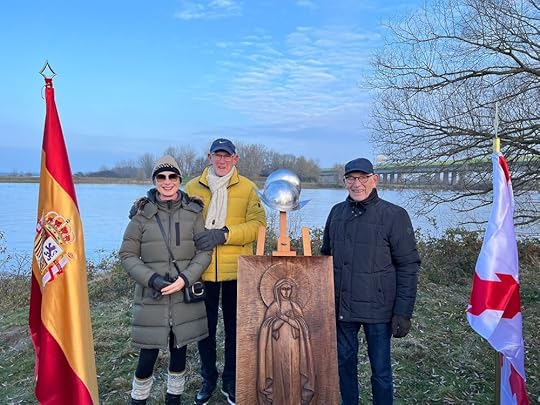
Visiting the Event on 8 December
Background
How did the Immaculate Conception become the Patroness saint of Spain and of the Spanish Armed Forces?
In December 1585, the Spanish soldiers of the Tercio Viejo de Zamora found themselves surrounded in Empel, a town on the river Meuse in the Netherlands, after the Dutch rebels opened the dikes and water flooded the entire area.
When all seemed lost, a Spanish soldier found a panel with the image of the Immaculate Conception, surely hidden by local Catholics to keep it safe from the image destruction campaign unleashed by the Calvinists.
Spanish soldiers, seeking the Immaculate Conception's protection, witnessed a miraculous event: a sudden icy wind descended upon the river Meuse, freezing the water. This enabled the Tercio Viejo of Zamora to break the siege and triumph over the terrified rebels, a moment now known as the Miracle of Empel.
From that day forward, the Immaculate Conception became the guardian of the Spanish Tercios. In 1892, she was officially declared the Patroness of the Spanish Infantry, a title she had held unofficially for centuries. Additionally, the Immaculate Conception holds various other patronages within the Spanish Army.
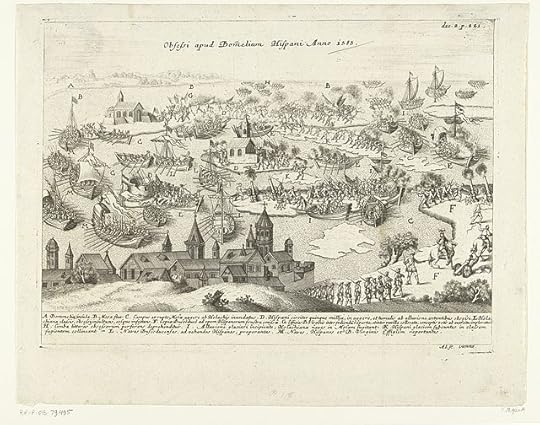
Obsessi apud Bommeliam Hispani Anno 1585 - The Spaniards were driven out of the Bommelerwaard by breaking the dikes 1585
Since 2004, the Spanish Army has made it a custom to pay tribute to its patron saint in that Dutch town where the miracle occurred. The soldiers taking part are stationed at the Allied Joint Force Headquarters in Brunssum in the Netherlands.
Hundreds of Spanish citizens from all over Europe flock to the, now tiny, village of Empel on this Holy Day of The Immaculate Conception to celebrate their patron and their historic victory.

The Empel Maria

The Empel Chapel
On 8 December 2000 a small chapel was erased in Empel on the place where all earlier Empel Catholic churches stood. The last church was bombed in WW2. From the ceremony on the river, the Spaniards paid tribute to the chapel and then went to a communal Mass in New Empel.
On YouTube you can watch more on this ceremony (in Spanish). Below is a short explanation of the videos.
Video 1: Speech by Army Infantry Commander Javier Pontijas on the banks of the Meuse River, held in the place where the miracle of Empel occurred.
Video 2: Lieutenant General Luis Lanchares Dávila, second chief of HQ JFC Brunssum, addressing a few words to those attending the event, after which the facts of the Miracle of Empel are explained.
Video 3: Speech by the Military Bishop General of the Netherlands, Monsignor Everard de Jong, accompanied by the Episcopal Vicar of the Ministry of Defense of Spain, Francisco Javier de la Vega Fernández.
Video 4: The beautiful singing of the Spanish Infantry Hymn and the "Salve Regina", a hymn dedicated to the Virgin Mary, in front of the Empel chapel.
The Miracle of Empel seen with my own eyes
December 2, 2023
Saving Chartres Cathedral
Introduction
In the free WW2 Novella, The Partisan Fighter (read the first two chapters here), that comes out in January, I let the main character Daphne de Dragoncourt save Chartres Cathedral in France from American bombings. The Allies thought Germans were hiding in the cathedral’s bell tower.
The cathedral miraculously escaped destruction, but not by a fictional character. This is the actual story.

Click on cover to read first 2 chapters
The magnificent 12th-century Catholic cathedral was at risk of destruction by American forces in August 1944. They believed the cathedral was being used as a sniper post by German forces. Until Colonel Welborn Barton Griffith, Jr., an American Army officer from Texas, stepped in and saved the century-old marvel. Colonel Griffith’s heroic act took place on 16 August 1944, on the same day he tragically lost his life in France while fighting to liberate the French people from German occupation.

Welborn Barton Griffith Jr. (1901–1944)
Who was Colonel Griffith?
Colonel Welborn Barton Griffith, Jr. was born on 10 November 1901, in Quanah, Texas. He attended Texas A&M University and the United States Military Academy at West Point. At West Point, he excelled in various sports, including football, and displayed exceptional skills in horsemanship, rifle shooting, and pistol marksmanship. He also took part in activities like boxing, wrestling, and lacrosse before graduating in 1925. In 1929, Griffith married Alice Torrey, the daughter of an army officer, and they had a daughter named Alice in 1931.
During the 1930s, Griffith was stationed in the Philippine Islands and then in Shanghai, China, as an observer with the Chinese Army. His adventures even took him to Japan, where he explored the country and took photographs. His activities raised suspicions, and Japanese authorities briefly detained him. After a divorce from his first marriage, Griffith married Nell Humphrey of Brooklyn, New York, in 1940.
World War 2 Activities
With the United States entering World War II in late 1941, Colonel Griffith dedicated his life to preparing soldiers for combat. He served as an instructor at the Command and General Staff School in Fort Leavenworth, Kansas, and later as the operations officer (G-3) at the IV Armored Corps Headquarters at the Desert Training Center in California in 1943. Here, he played a crucial role in training troops for desert warfare in North Africa. The Corps later transformed into the XX Corps and shifted its focus to the invasion of Western Europe.
In February 1944, the XX Corps departed for England, where they trained extensively for the D-Day invasion. They landed on the beaches of Utah Beach in Normandy in July 1944, and by August, they were attached to General George S. Patton, Jr.’s Third Army. It was during their advance towards Chartres, France, that Colonel Griffith’s heroic act took place.

12th-century Catholic cathedral Chartres
Saving Chartres Cathedral
On the morning of 16 August 1944, Colonel Griffith, along with General Walton Walker and other officers, learned about German machine gun and mortar positions in Chartres. During this briefing, they were informed orders had been issued to destroy the historic Chartres Cathedral, fearing it was occupied by German forces.
Colonel Griffith, determined to verify if German troops were indeed inside the cathedral, drove to Chartres with his jeep driver. Upon arrival, he witnessed American soldiers firing at the cathedral but observed no return fire. Unconvinced, he entered the cathedral, combed its compartments, and climbed to the top of the bell tower. To signal that the cathedral was free from enemy occupation, he rang the bell and hung an American flag from the belfry. Afterward, he sent an order to the artillery unit to spare the cathedral from destruction.
His Death
Colonel Griffith headed to the village of Lèves, where he encountered a German patrol. A firefight ensued, during which Griffith ordered his driver to return to Chartres, where they met a tank from the Seventh Armored Division. Griffith joined the tank crew, armed with a pistol and rifle. As they traversed the streets of Lèves, they came under heavy fire, and tragically, Colonel Griffith was struck in the back and killed instantly.
Eyewitnesses saw two French boys move Griffith's body to the sidewalk, where villagers placed a blanket, flowers, and an American flag. The villagers held a vigil until American forces arrived the following day and removed his body. Colonel Griffith was buried with full military honors at the Brittany American Cemetery and Memorial near the village of St. James.
His Legacy
Colonel Griffith’s valor on 16 August 1944 earned him several prestigious awards, including the Distinguished Service Cross, the Silver Star, the Purple Heart, the French Croix de Guerre avec Palm, the Legion of Merit, and the Legion of Honor.
His legacy lives on in France, where a plaque was placed in 1961 to honor his sacrifice. On the 51st anniversary of his heroic act, a new plaque was dedicated in his honor in Lèves. Griffith’s daughter, Alice, and other family members attended the memorial service held at Chartres Cathedral. During the ceremony, the Dean of the Cathedral acknowledged Griffith's actions, stating that the veritable tomb of a hero resides in the hearts of the living. A park was also established in Lèves to commemorate Colonel Griffith’s memory.
Colonel Welborn Barton Griffith Jr. will always remain a remarkable American hero of WW2.
November 18, 2023
Simone Segouin: The French Resistance Heroine Who Stood Strong
My soon-to-be released FREE introductory book to The Resistance Girl Series, The Partisan Fighter (read the first two chapters here) is loosely based on the heroic actions of the 18-year-old French girl, Simone Segouin, who has become a symbol of French female resisters since the liberation. High time to put this incredible lady in the spotlight.
Click on cover to read first two chapters for free
Introduction
In the annals of history, there are individuals who rise to the occasion when their countries face the darkest of times. Simone Segouin, also known by her code name Nicole Minet, was one such remarkable individual. She was a fearless young woman who played a pivotal role in the French Resistance during World War II. Her story is a testament to the bravery, determination, and resilience of those who fought against the Nazi occupation of France. In this blog post, we will delve into the life and heroic actions of Simone Segouin, a symbol of resistance and hope during one of the most trying periods in modern history.
Photos of Simone holding her German-confiscated MP-40 gun, popped up in newspapers in August 1944, leading to the assumption the photos were staged. To some extent this was true. Simone posed on the stairs for photographers after the liberation of Chartres, but not because the automatic gun wasn’t hers, or because she didn’t know how to wield it.

Simone Segouin, code name Nicole Minet, captured 25 Nazis while liberating Chartres
Generally, though, Simone Segouin was a French WW2 heroine and remained relatively unknown to the rest of the world. The French newspaper Independent Eure-et-Loir in its 26 August 1944 issue described her as “one of the purest fighters of heroic French Resistance who prepared the way for the Liberation”.
Early Life and the Call to Resistance
Simone Segouin was born on October 3, 1925, in Thivars, a small town south-west of Paris. Growing up in a modest family, she enjoyed a relatively ordinary childhood until the outbreak of World War II. The occupation of France by Nazi Germany in 1940 marked the beginning of a tumultuous period that would change her life forever. Witnessing the atrocities committed by the Nazis and the Vichy government, Simone felt a growing sense of outrage and a deep desire to take action. Her father had been a decorated soldier of the Great War.
Simone Joins the Resistance
In 1944, at the age of 18, Simone Segouin made the courageous decision to join the French Resistance. She adopted the nom de guerre “Nicole Minet” to protect her identity. Under the guidance of her older brother and other resistance fighters, she began her journey into the clandestine world of sabotage and espionage.
Simone’s Role in the Resistance
Simone Segouin’s role in the French Resistance was multifaceted and invaluable. She was involved in a range of activities that hindered the Nazi occupiers and their collaborators. For example:
Sabotage: She participated in acts of sabotage, targeting German military installations, communication lines, and transportation networks. These acts disrupted the Nazi war effort and helped slow their advance.
Espionage: With her youthful appearance, she could easily move through occupied areas without arousing suspicion. This made her an ideal courier for the resistance, relaying critical information between different cells and resistance leaders.
Participation in Liberation: As the Allied forces advanced through France in 1944, Simone was actively involved in the liberation of Chartres and Paris. In Chartres she captured 25 Nazis. In Paris she liquidated several Germans and actively helped to reclaim the capital from the clutches of the Nazis.
Iconic Photographs and Legacy
Simone Segouin’s fearless commitment to the resistance captured the imagination of many. Iconic photographs of her, brandishing weapons and sporting shorts and resistance emblems, remain etched in history. Especially her German-confiscated MP-40 gun, which she could wield as the best, made her a force to reckon with.
These images symbolize the strength and determination of the French people during their struggle against oppression.

Simone Segouin sporting shorts and an MP-40 gun
Simone’s legacy goes beyond her wartime actions. After the war, she continued to lead a life dedicated to preserving the memory of the resistance and the sacrifices made by her comrades. She served as a reminder that even in the darkest of times, ordinary individuals can rise to extraordinary heights when they choose to resist tyranny.
Simone was promoted to lieutenant and awarded the Croix de Guerre. A street in Courville-sur-Eure is named after her.
Later years
After the war Simone became a pediatric nurse in Chartres, where her wartime exploits made her hugely popular. While she had six children with her husband, she never took his name.
Despite her active participation in the resistance, Simone acknowledged the difficulty for women to be taken seriously. Only 10 percent of partisans were women and hardly any of those had combat roles.
Her proudest moment was going to Paris with General De Gaulle.
Simone died at age 97 in Courville-sur-Eure on 21 February 2023.
Conclusion
Simone Segouin’s life and actions serve as a powerful reminder of the indomitable spirit of those who fought against the Nazi occupation of France during World War II. Her courage, resourcefulness, and unwavering commitment to the resistance make her a genuine hero and an inspiration to generations to come. Simone Segouin’s story is a testament to the strength of the human spirit in the face of adversity and remains a beacon of hope for all who believe in the power of resistance and resilience.


