
Brian Fies's Blog, page 41
March 23, 2020
Sixty-Second Sticky Doodle 6: Hands
By viewer request, here's a Sixty-Second Sticky Doodle about drawing hands! If you don't like this one, come back tomorrow. Spoiler Alert: you won't like tomorrow's, either.
Warning: do not take anatomical advice from cartoonists, unless they also happen to be MDs or RNs or something like that. I am not.
Warning: do not take anatomical advice from cartoonists, unless they also happen to be MDs or RNs or something like that. I am not.


March 20, 2020
Sixty-Second Sticky Doodle 5: More of My Dog Riley
One more one-minute distracting doodle before the weekend, this one a light-hearted precis on canine osteology (that'll draw a crowd!).
March 19, 2020
Sixty-Second Sticky Doodle 4: My Dog Riley
Y'know, I'm burning through sticky notes like crazy. Each of these doodles consumes 15 or 20 Post-Its--you just don't see the outtakes. It's hard to draw and talk at the same time, make a drawing I'm not ashamed of, and finish in exactly a minute!
Luckily, sticky notes are a lot easier to find than toilet paper. HEY...!!
Luckily, sticky notes are a lot easier to find than toilet paper. HEY...!!
March 18, 2020
Sixty-Second Sticky Doodle 3: The Inventor
"Again?!" I hear you sigh. "What is wrong with this guy?" Evidently I had a minute to kill so I did another doodle. I may not be hooked up right in the head.
March 17, 2020
Sixty-Second Sticky Doodle 2: The Cosmic Kid
Another day, another 60 seconds of pointless distraction, with love from me to you.
March 16, 2020
Sixty-Second Sticky Doodle 1: Self-Portrait
I can't solve any of your problems, but I can take your mind off of them for exactly 60 seconds. There may be more of these coming.
February 24, 2020
Shooting Stars

A Facebook friend messaged to ask more about my experience pitching stories to Star Trek and why I never write about it. First, I did write about it--14 years ago! Whatayawant from me?! Mostly, I don't think about it much because it was a long time ago and I failed. I never sold Star Trek a story. But I learned a lot that's stayed with me in all my subsequent work, and that's what's got me revisiting it now.
Backstory: Star Trek was unique among TV shows in that it accepted story ideas from the public. Nobody else did or does that. Producer Michael Piller started the policy and it opened the door for a few writers who went on to great careers. In the sixth season of Star Trek: The Next Generation, I wanted to be one of them. I wrote two scripts, filled out the release forms, and sent them off. A few months later, I got a call: Star Trek couldn't use either of my stories, but they showed enough promise that they invited me to come in and pitch more.
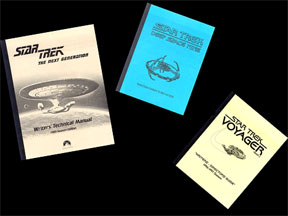 As part of the pitch process, Paramount sent me packets
full of tech manuals, scripts, character breakdowns, and
all kinds of cool stuff.I pitched a couple of times to TNG, but by that time it was winding down after seven seasons and Paramount was starting a new series called Star Trek: Deep Space Nine. In my last pitch to TNG, I asked the TNG producer if he thought I might be able to pitch to DS9 as well. "Why would you want to pitch to those guys?" he asked, but he set it up and I spent the next seven years unsuccessfully pitching stories to them. About the time DS9 was wrapping up and Paramount was starting a new series called Star Trek: Voyager, I asked the DS9 producer if I might be able to pitch to Voyager as well. "Why would you want to pitch to those guys?" he asked, but he set it up and I did that for a couple of years until it became evident to both Star Trek and me that we were done.
Over the years I pitched probably 40 or 50 stories to a half dozen different writer-producers. Most couldn't have been kinder or more sympathetic. They were all young and remembered being in my shoes. There was only one who I thought was kind of a dunderhead, but maybe that was me. I was a bad pitcher. I took too long to get to the point. A pitch should grab the listener in the first sentence; I spent the first two minutes winding up.
I wish I knew then what I know now, because I would have crushed it. The paradox is that I wouldn't know what I know now if I hadn't made those mistakes then.
I only remember one of the stories that piqued their interest and got me in the door. This was in the early '90s, when the dissolution of the Soviet Union was still fresh. One thing that intrigued me about the USSR's break-up was that not everybody wanted to leave. I'm thinking of little countries like Estonia, in which (as I remember it) a significant portion of the population said, "No, we're good, thanks!" I thought that was fascinating.
So in my story, for reasons I don't recall, the Klingon Empire is giving up control of a planet it had conquered 200 years earlier. Klingons being Klingons, they'd strip-mined the world of anything valuable and left it a polluted wasteland. Captain Picard and the Enterprise show up to help the natives transition to their new freedom and are surprised to find themselves fighting an underground movement that doesn't want it. They've been part of the Empire a long time; though not biologically Klingons, they are socially and culturally. It's all they know.
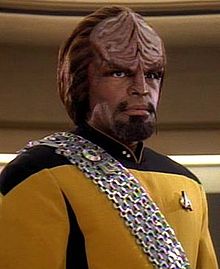
My story was very Worf-centric. He was the bridge to help these folks see that you could keep what you liked about being a Klingon, rediscover your own forgotten heritage, and still be welcome in the Federation. At the same time, the situation brought up a lot of conflict within Worf, who (as I'm sure you all know) was adopted by humans and never really felt like a full-fledged Klingon himself. So it was a look at his Imposter Syndrome against this political allegory that Star Trek always did so well.
The producers said they liked it because it focused on Worf, and they always wanted to find more for him to do. They liked the allegory. A flaw in the story is that, although I did try to develop Worf's character, it was still about the Enterprise showing up and solving a planet's problems, which everybody was tired of at that point.
What I didn't realize until later was that it also would have been impossibly expensive to shoot. My story would have required several new sets and probably some alien world exteriors as well. As I got more experienced, I tried to offer more "bottle shows" that took place entirely on the Enterprise and used existing sets. Those are money savers that always made them happy.
I think the closest I came to a sale was with Deep Space Nine. DS9 was a space station on the rough frontier of Federation space commanded by Ben Sisko, who had been an officer on the starship Saratoga until it was shot out from under him by the evil Borg in a battle that killed his wife Jennifer.
 The tough little battleship Defiant.
In my story, it's a few years later and Sisko is hosting a reunion of some of his Saratoga crew on DS9. The story's about veterans returning home from war, transitioning to civilian life, dealing with PTSD. One of Sisko's best buddies arrives with an ulterior motive: hijack the station's tough little battleship, the Defiant, and go back in time to stop the Borg from destroying the Saratoga. Sisko's duty-bound to stop him but deeply conflicted. This isn't like killing Hitler and changing centuries of history in unpredictable ways. The Borg battle just happened a few years ago. Surely a chance to save thousands of lives is worth rearranging the recent past? The story ends as it must, with Sisko and company sitting in the cloaked Defiant watching the Borg cube fly by on its way to kill Edith Keeler--I mean, Sisko's wife--and blow up their beloved Saratoga.
The producer liked it a lot. He said, "I'm going to hold onto this one. We're working on another story that's similar, but if we don't do that one we might do yours."
Months later, DS9 aired the episode "Trials and Tribble-ations," in which a disgraced Klingon spy hijacks the tough little battleship Defiant and goes back in time to stop Captain James T. Kirk from uncovering his plot to poison a grain shipment that millions of tribbles gorged themselves on. Combining the modern DS9 cast with old footage of the 1960's cast, it was a love letter to the original series on its 30th anniversary and one of Star Trek's best-received episodes.
As a minor footnote, it also ensured that no one would ever hijack the tough little battleship Defiant to go back in time and try to change the past again.
Lessons Learned
Even as a failure, my experience pitching stories to Star Trek made me a better writer. I realized that the stories they quickly rejected focused on some science-fiction high-tech premise or plot twist, while the stories they liked focused on the characters. If I said something like, "Captain Picard faces a crisis that takes him through an arc from A to B," I had their attention. I had to be hit over the head several times to realize that a good story isn't about spaceships or aliens or ripples in the fabric of space-time, but about people.
Audiences care about characters.
That sounds obvious, but I realized how unobvious it was as I talked to friends and family who couldn't wait to share their story ideas. And literally without exception, every idea I heard from someone else was about a spaceship, alien, or ripple in the fabric of space-time. Not one that I recall even mentioned a character, how they'd react to the situation, or how they might be changed by it. Once I learned to see it, it was striking.
Another lesson learned: ideas are common. What matters is execution.
I can't tell you how many times I got two sentences into a pitch and had a producer stop me: "We started filming an episode like that this week." And sure enough, months later I'd see the episode and think, "That's my story!" except I never had a chance to tell them my story and no one ever heard it but me. No matter how outlandish the idea, even in a fantastic sci-fi universe where almost anything can happen, it's probably not as original as you think. What makes your idea different is what you do with it. How you express it. The unique twist or flavor you bring to it.
I learned that the stories most worth telling are the ones that nobody but you could tell.
I learned that stories are often not about what they seem to be about. Good stories have subtext that strikes a deeper chord with an audience even if they don't quite know why.
These were lessons I internalized as best I could and took into my future writing. I often fall short but they're always in the back of my mind. They're also qualities I look for in other people's writing.
I think readers and viewers like to see a writer's mind working. They enjoy making connections and solving puzzles that a writer leaves for them to find. They respond powerfully to authenticity: an audience can tell when a writer is telling the truth or making stuff up. When people tell me, "I like the part in your book where . . ." it's always a part where I took a little risk and tried to be as honest as I could.
I'm pretty sure those lessons are correct. Failing to write for Star Trek helped me learn them.
February 23, 2020
OK, Boomer
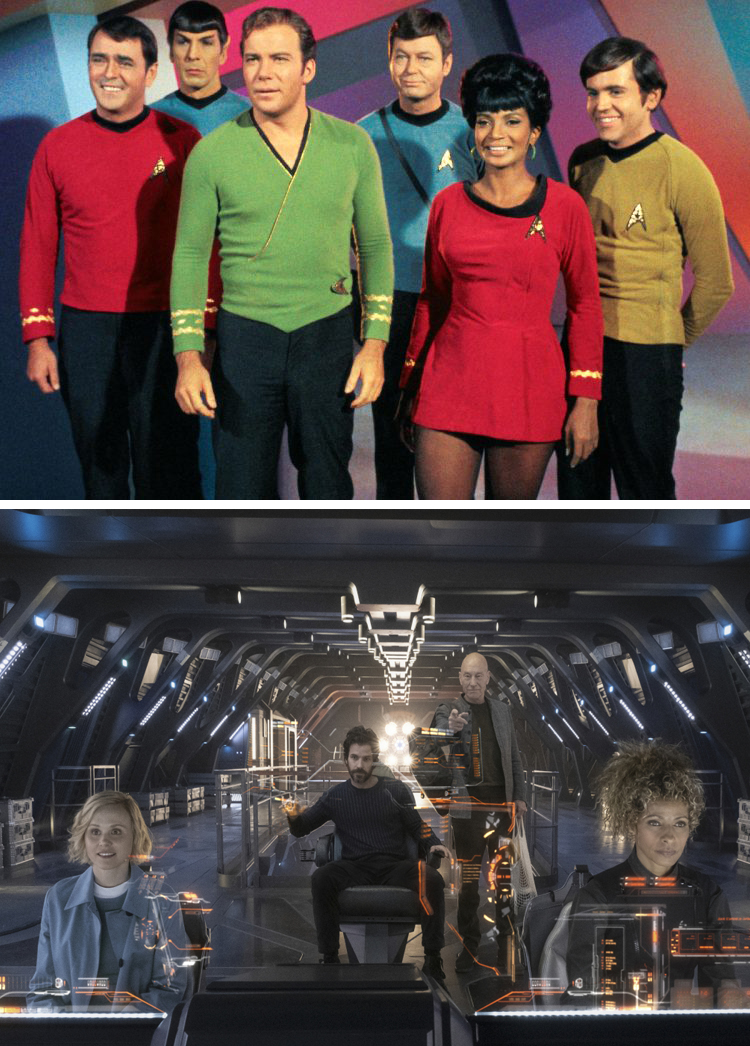 Then and Now.
Keep in mind that I've only seen the first episode of the new Star Trek "Picard" series and don't plan to pay to see the rest. But I read the synopses and reviews, and see the reactions of my friends who seem pretty evenly split about it. Also, I've been a fan of "Star Trek" as long as there's been "Star Trek."
And I'm sad to say that it's lost me.
At its core, "Star Trek" was aspirational. It said that people could get smarter and better, and build a tomorrow that's better than today. Oh, we had to go through a Third World War to get there, but when we finally set aside prejudice and hate we could make Earth a paradise. "Star Trek" argued that humanity was perfectible.
For at least the last 10 or 20 years, "Star Trek" hasn't believed that. From what I read and hear, "Picard" certainly doesn't.
That optimism made "Star Trek" unique in mainstream science fiction. Take it away, and it's just another gray and gritty "Blade Runner" "Planet of the Apes" "Firefly" "Battlestar Galactica" "Expanse" "Dark Matter" Et Cetera Et Cetera dystopia in which humanity is awful and the future is terrible. Some of those are excellent stories. But they're not "Star Trek."
As a writer, I understand why dystopia makes an attractive storytelling sandbox. I get why actors would be interested in playing in it. It's probably even more honest; I don't actually think we can make Earth a paradise within 200 or 300 years.
But wouldn't it be lovely to try? To imagine it might be possible?
Strip away "Star Trek's" optimism and it becomes ordinary--indistinguishable from all the other TV shows and movies about people in clanky spaceships eking out miserable lives and little Pyrrhic victories against the overwhelming forces of oppressive darkness. And much, much less interesting to me.
I'm tired of cynicism. It's laziness disguised as sophistication. These days, I think the bold, daring, groundbreaking choice is sincerity and hope. That'll set you apart! It used to set "Star Trek" apart.
December 24, 2019
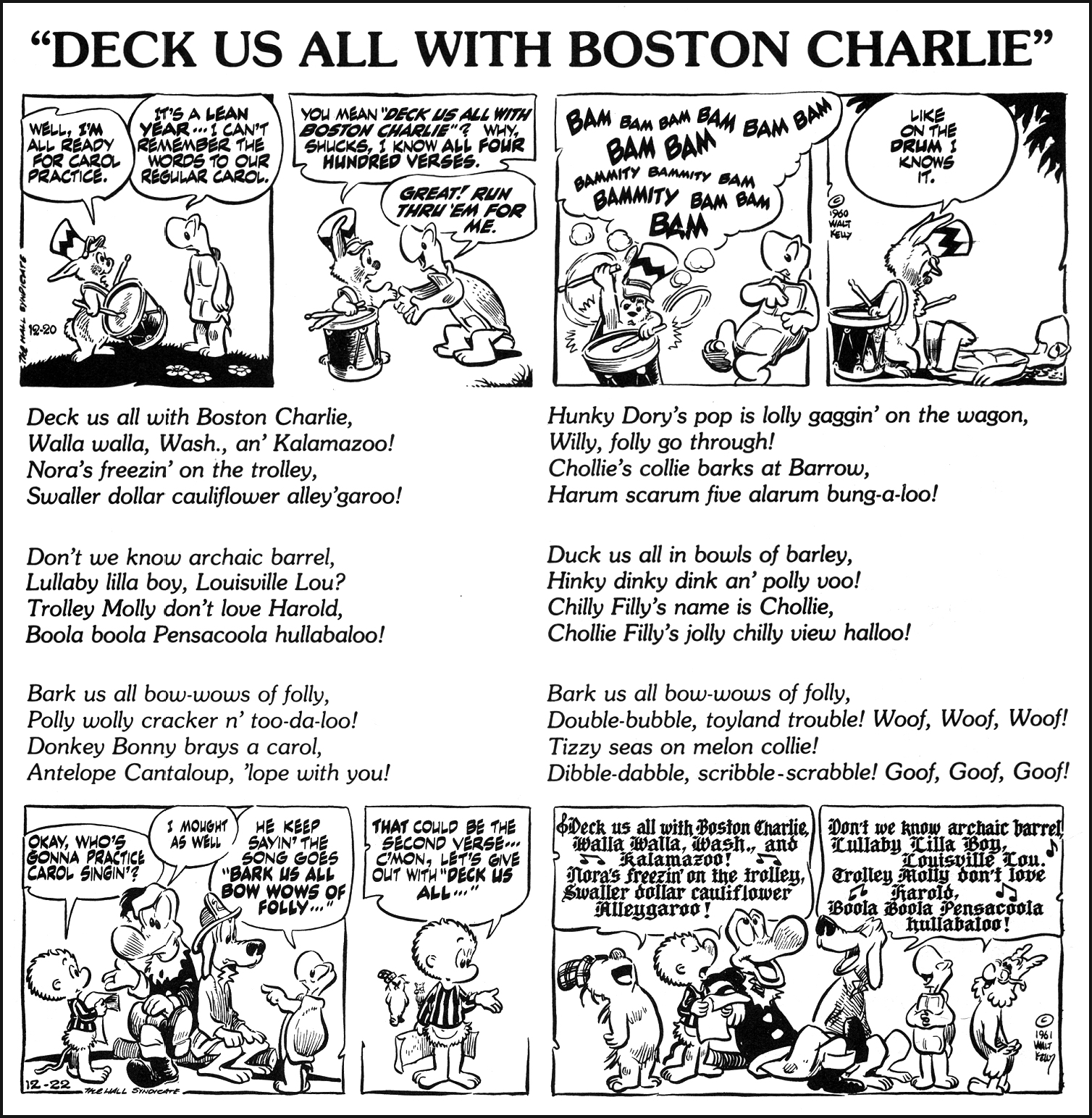
Deck Us All!
I've been posting my favorite bit of musical doggerel by "Pogo" cartoonist Walt Kelly on Christmas Eve as long as I've been online, and see no reason to stop now. Whether anyone reads it is nearly irrelevant. If I've learned anything the past few years, it's the importance of tradition.
All my best wishes.
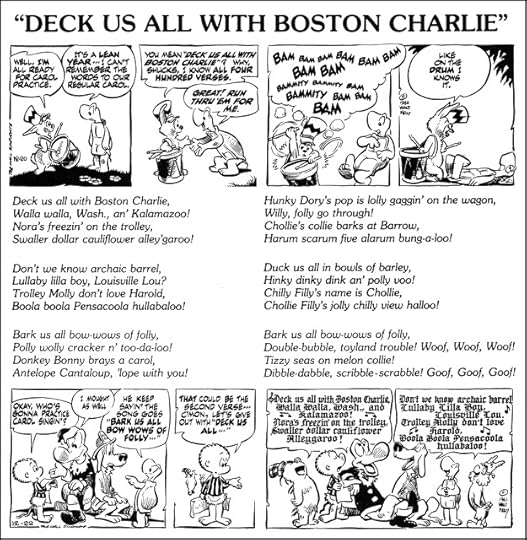
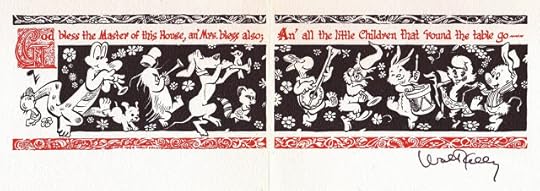
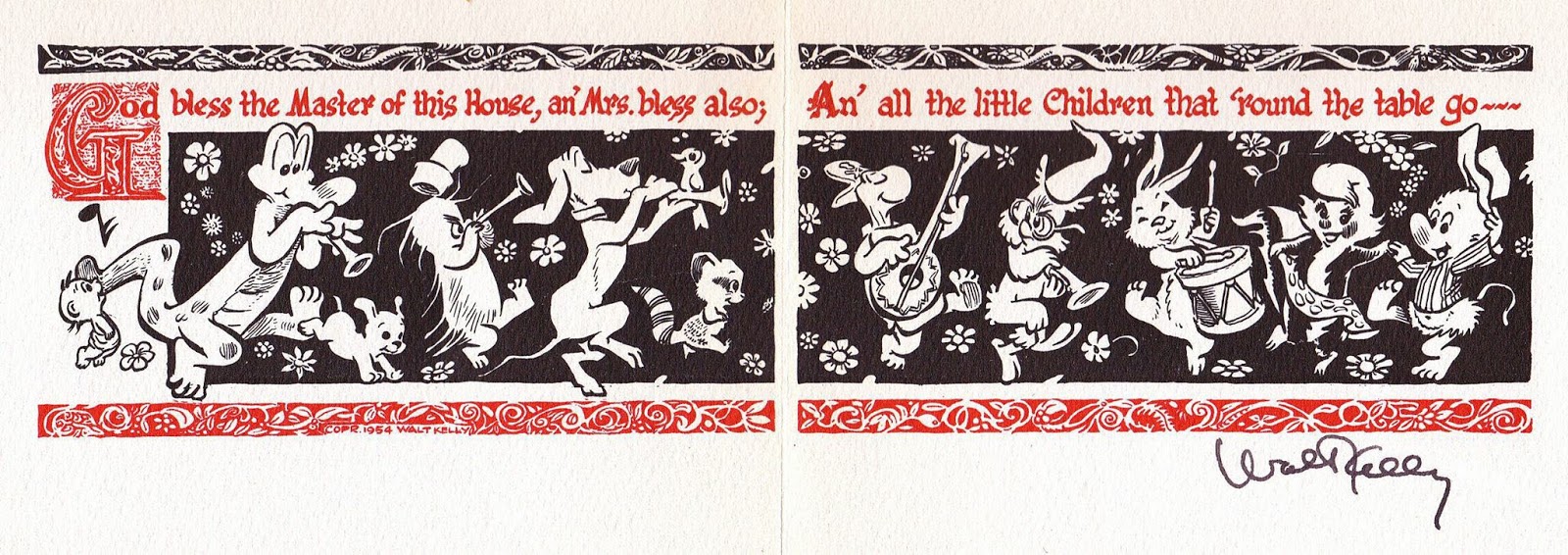
Bonus Post: Walt Kelly's Christmas Card in 1954!
All my best wishes.
Bonus Post: Walt Kelly's Christmas Card in 1954!
November 26, 2019
Miami Book Fair

Home from the Miami Book Fair, the largest of its type of thing in the country--bigger than the L.A. Times Festival of Books, which I attended in April and is set up very similarly. This was my second time at the Miami fair; my first was 10 years ago promoting Whatever Happened to the World of Tomorrow. I've gotten smarter in the intervening decade--primarily realizing that the purpose of going to the Miami Book Fair is to promote my book (duh!)--and think I made the most of it. Plus I had a blast!
I was invited to the fair to be on a panel titled "Comics! The Memory Hole: Your Life in Pictures." Moderated by Kristen Radtke with Hevin Huizenga, David Heatley, and writer Cecil Castellucci, the panel drew about three dozen people. I loved the theme. We talked about how memory and memoir work, how accurate memory really is, how you decide whose and which stories to tell, and how comics may be the ideal medium for stories like memoirs. Afterward, we all signed books, and also had opportunities to sign stock at booksellers' tents set up on the street.
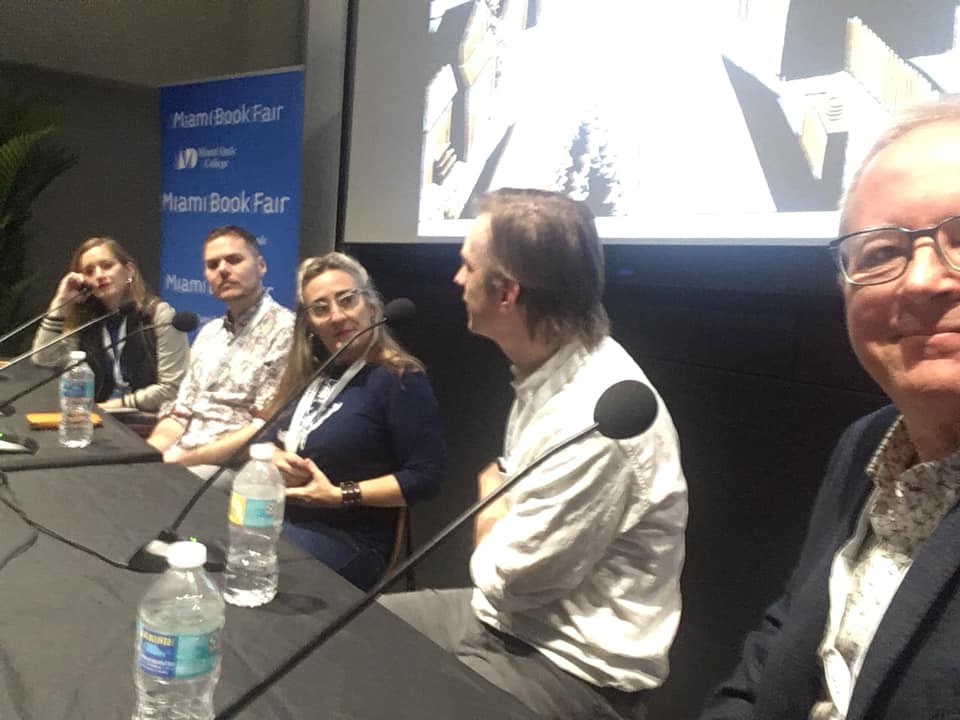 A sneaky selfie of (L to R) Radtke, Heatley, Castellucci, Huizenga and me during our panel.
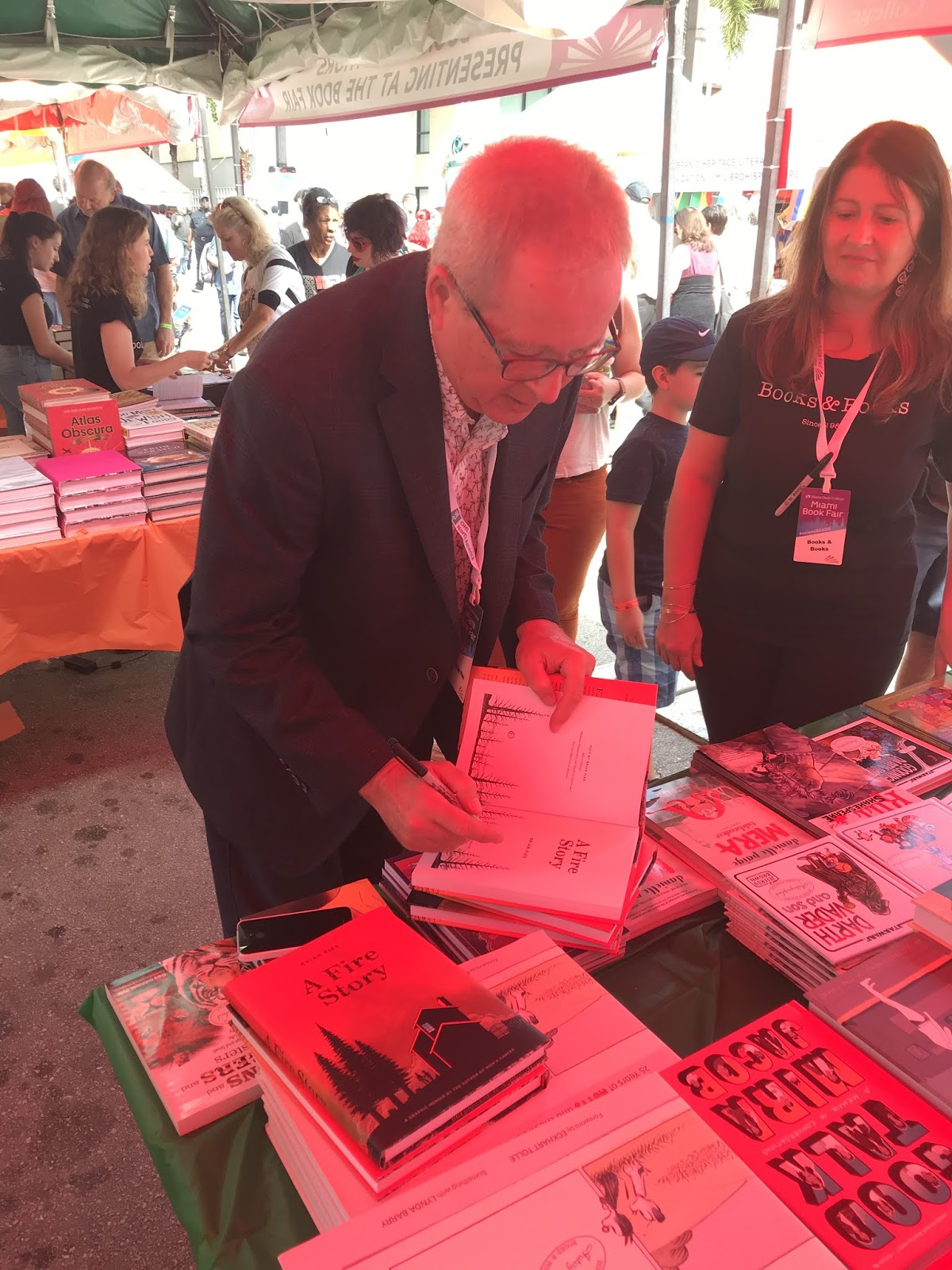 Signing books under a red canopy filtering Miami sunshine.
Miami Book Fair Highlights: spending enough time with cartooning greats Diane Noomin, Bill Griffith (Diane's husband), Patrick McDonnell and his wife Karen that I think I get to call them friends. Meeting cartoonist Chris Ware. Breathing the same air as Joyce Carol Oates. Wandering aimlessly among a couple hundred booksellers' booths. Spending time with cool cartoonists/book people like Jim Ottaviani, Leland Myrick, Paul Pope, Erin Williams, Joan Hilty, Andrea Beaty (Ada Twist, Scientist), too many others to mention. Pontificating on my panel. Enjoying an exclusive author's party overlooking still bay waters on a languid Miami night. Most of all, getting some quiet time with my friend and editor, Charlie Kochman, just to talk about life and stuff.
The great value of events like the Miami Book Fair is never the panels you do or the books you sell, which by themselves don't come close to making the trip worthwhile. It's what happens in the times and spaces between.
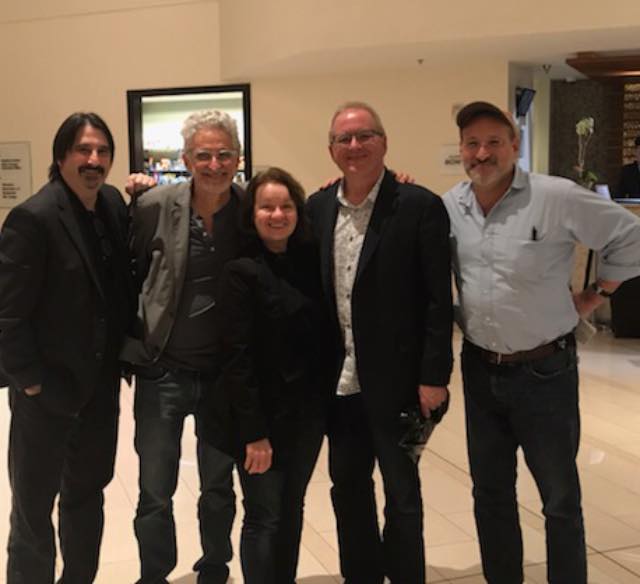 A fuzzy hotel lobby photo of Editor Charlie, Patrick McDonnell, Patrick's wife Karen, me, and writer/editor/designer Chip Kidd.
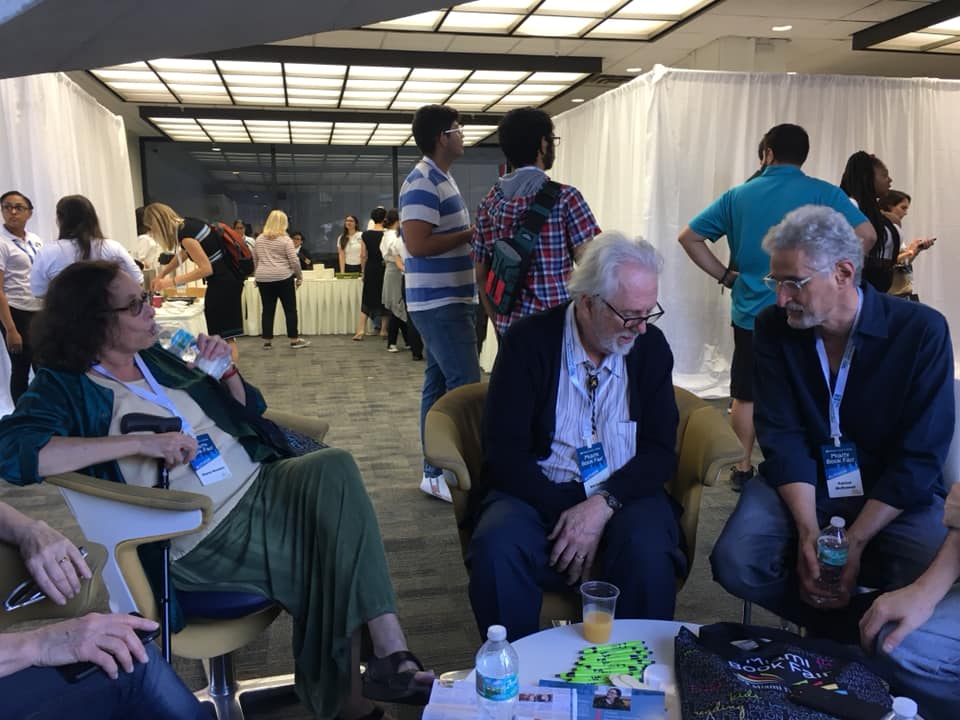 Enjoying a break the next day in the Author's Lounge with cartoonists Diane Noomin, Bill Griffith, and Patrick McDonnell.
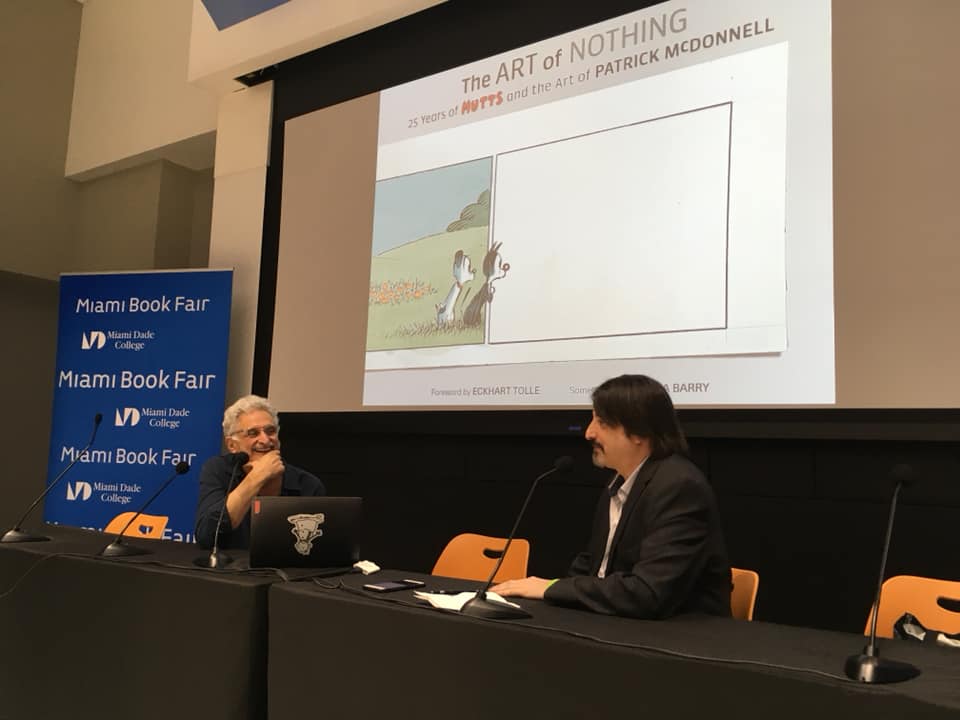 Patrick interview by Editor Charlie on the occasion of the 25th anniversary of Patrick's comic strip "Mutts," and a new Abrams book celebrating his art.
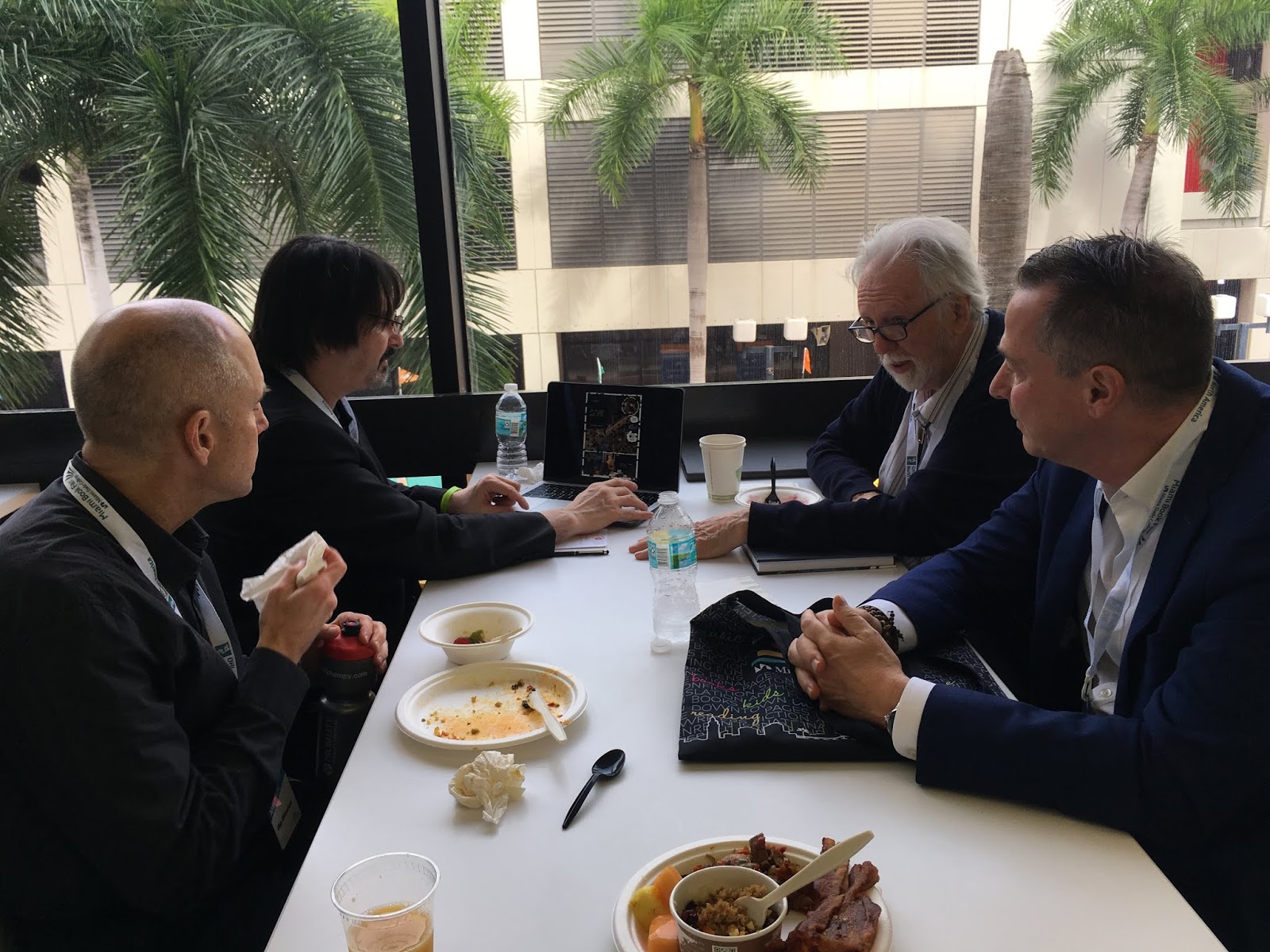 Sunday morning breakfast I stumbled upon (and joined) writer Jim Ottaviani, Editor Charlie, Bill Griffith, and artist Leland Myrick strategizing for their upcoming panel titled "Biography: Mind Over Body."
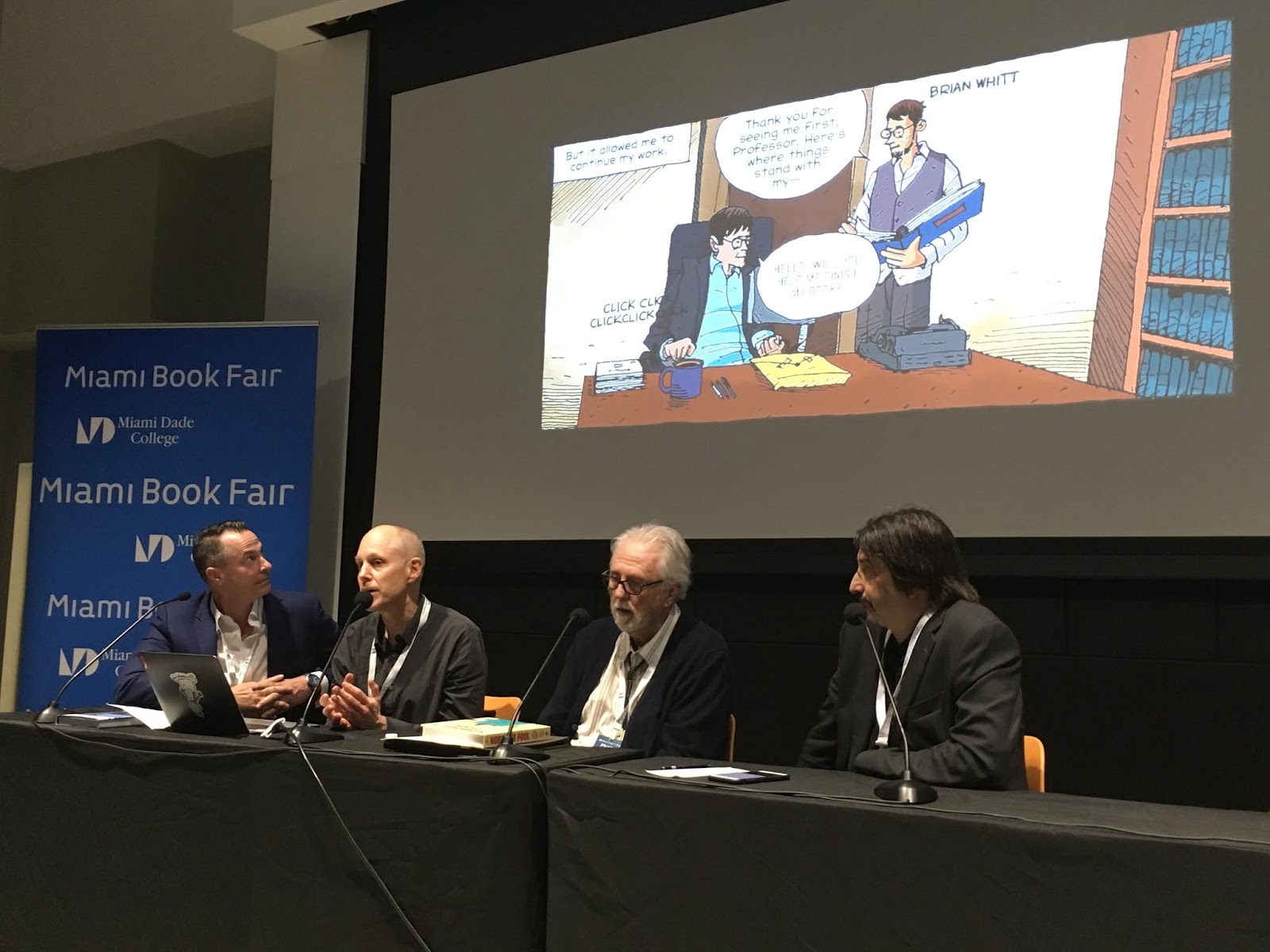 And here they are doing that panel! Jim and Leland have a new book on Stephen Hawking, while Bill did a book on circus sideshow performer Schlitzie, on whom his comic strip character "Zippy the Pinhead" was based. I have both books--very different but both great.
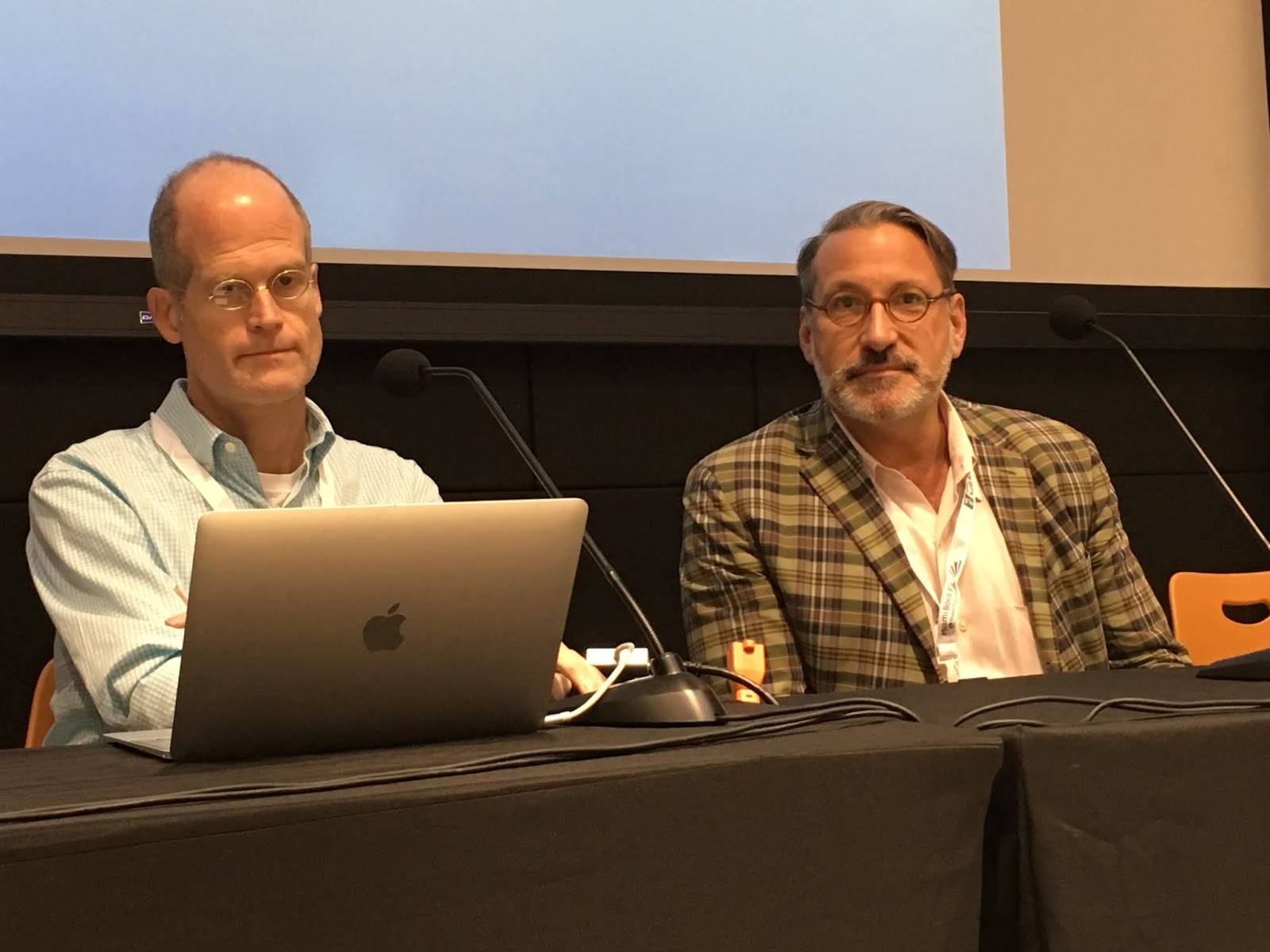 Chip Kidd (right) interviewing cartoonist Chris Ware. If you don't know who Chris Ware is, I can't explain him to you; if you do know, I don't have to explain him to you. I asked Chip to introduce me to Chris after the talk, and Chris and I had a very nice, brief conversation.
Also, why is everyone so afraid of sitting in the front row? This isn't grade school anymore, and you came here specifically to see these people. Sit in the front row!
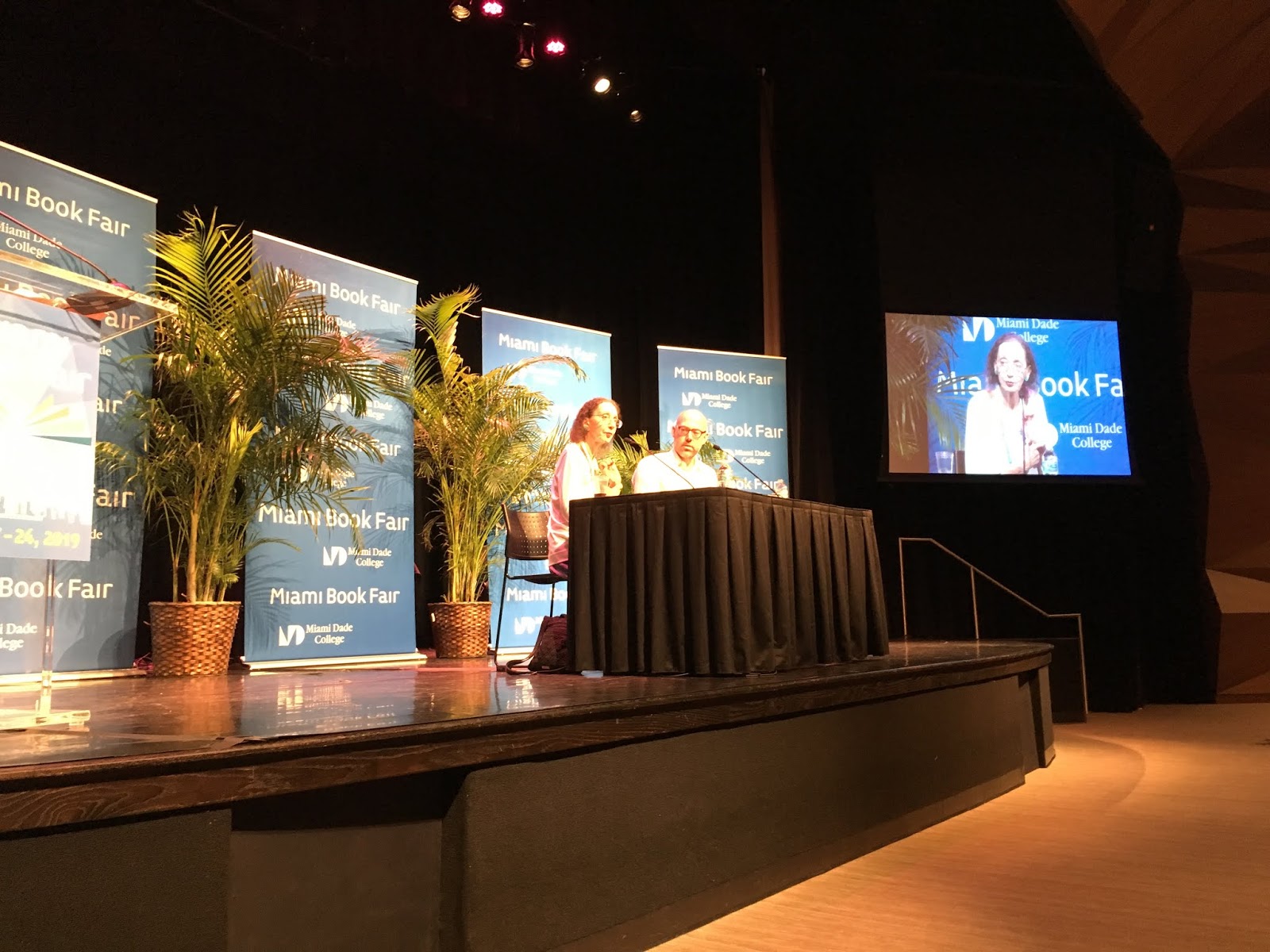 Saturday morning I watched author Joyce Carol Oates be interviewed by writer/editor Chris Beha. She was brilliant and said some things that'll stick with me.
See? Sit in the front row!
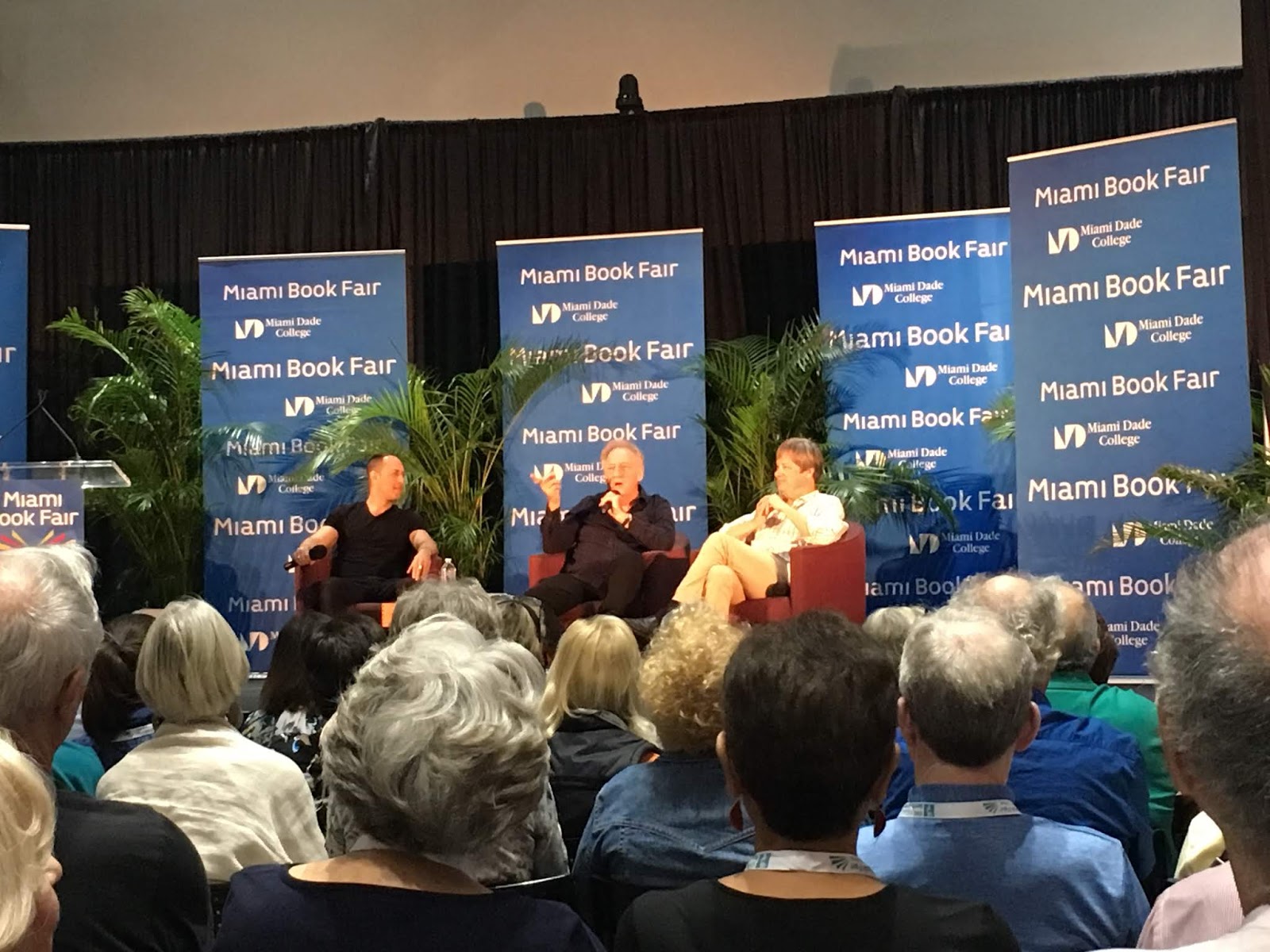 I couldn't get to the front row for Sunday morning's talk by comedy writers Adam Mansbach, Alan Zweibel and Dave Barry, who discussed and read from their new book "A Field Guide to the Jewish People." Very funny.
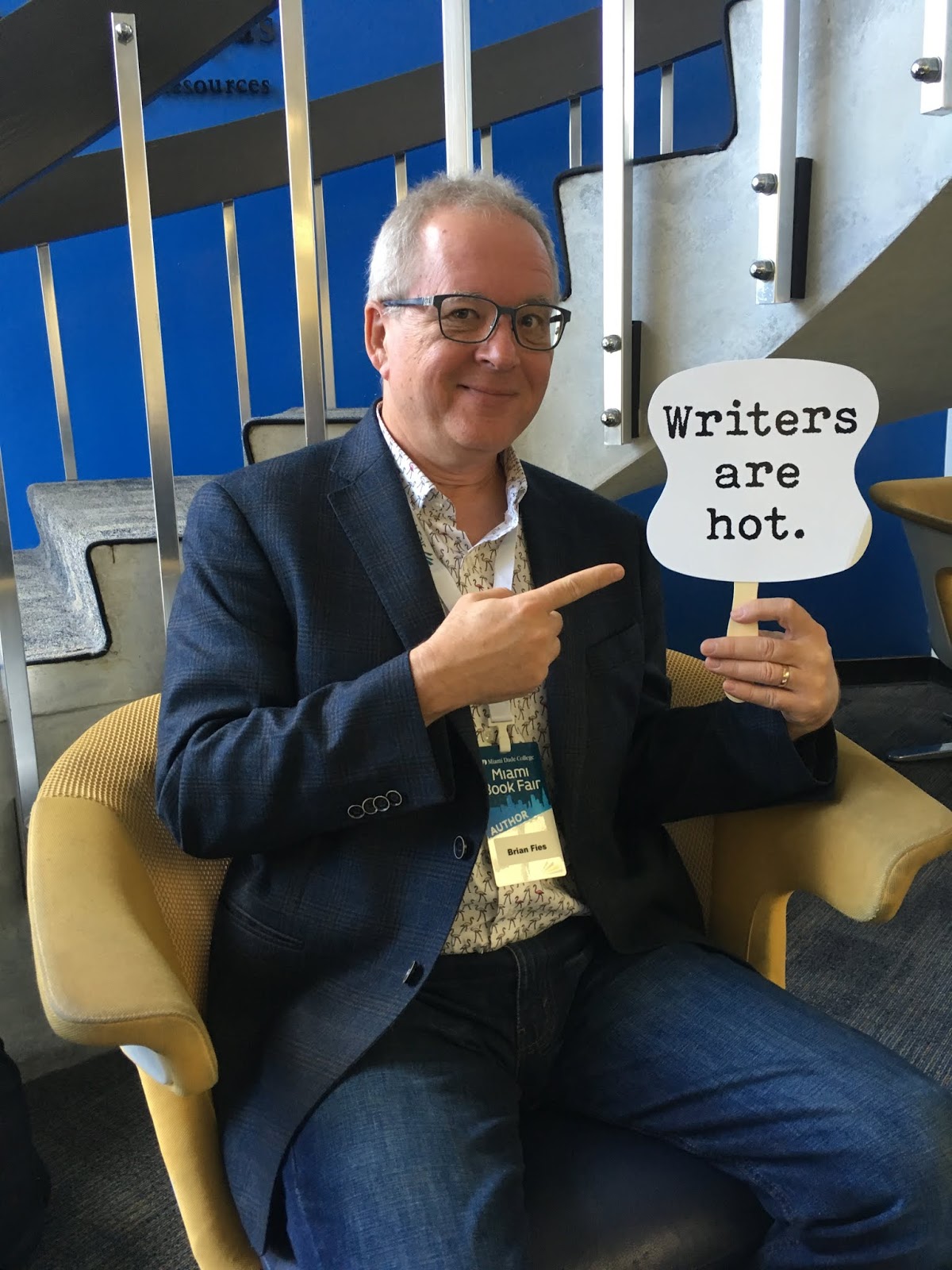 You know it's true.
The Great Ape
Editor Charlie brought me a gift that requires explanation.
Waaay back in 2006, Mom's Cancer was nominated for a Quill Award. Never heard of it? The Quills were a short-lived attempt to create a fancy high-profile televised awards show for books. So I flew to New York City, and Charlie and I black-tied our way to the Museum of Natural History where we enjoyed an enormous banquet in an auditorium with a full-scale blue whale hanging from the ceiling.
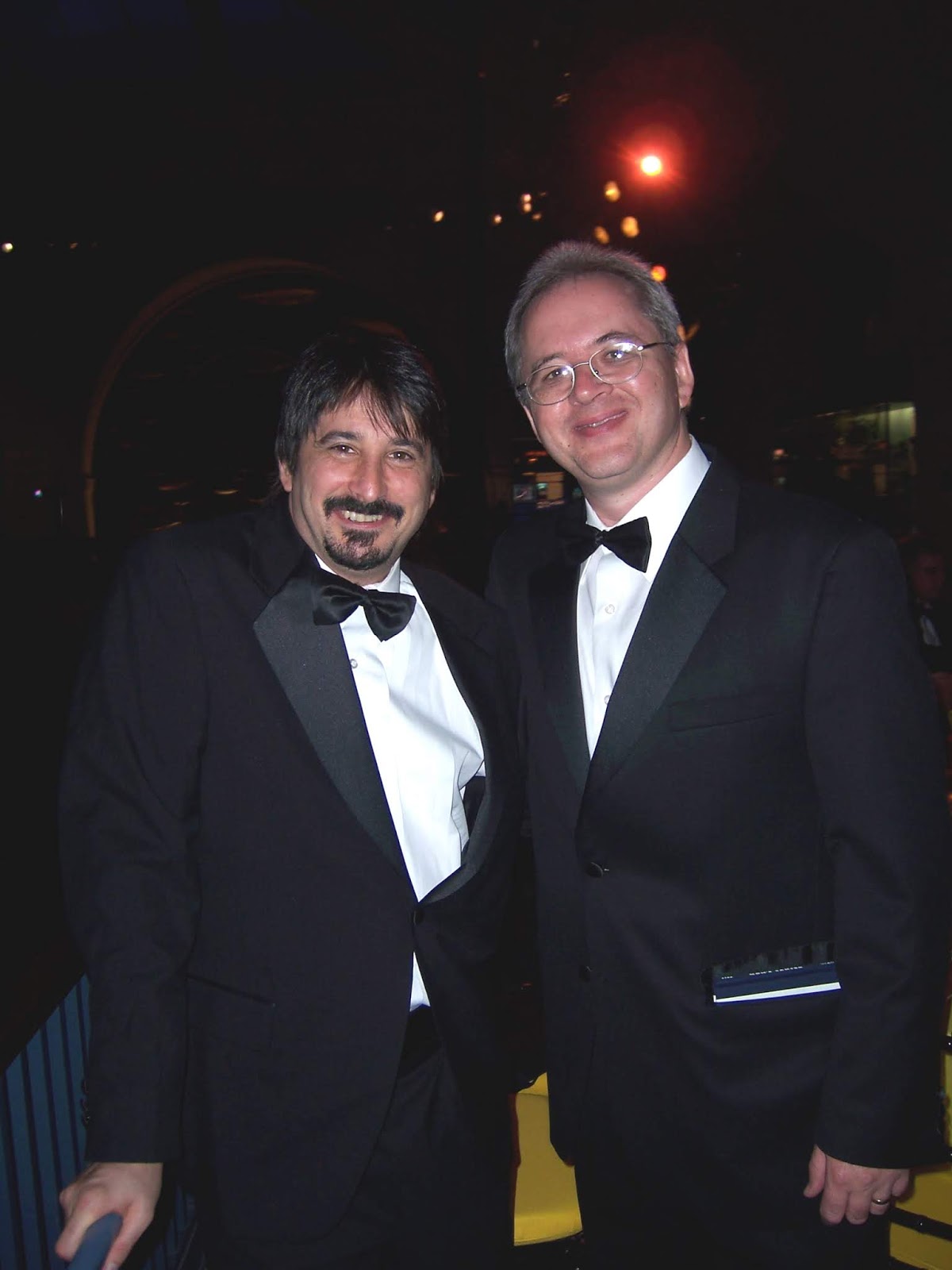 We cleaned up good.
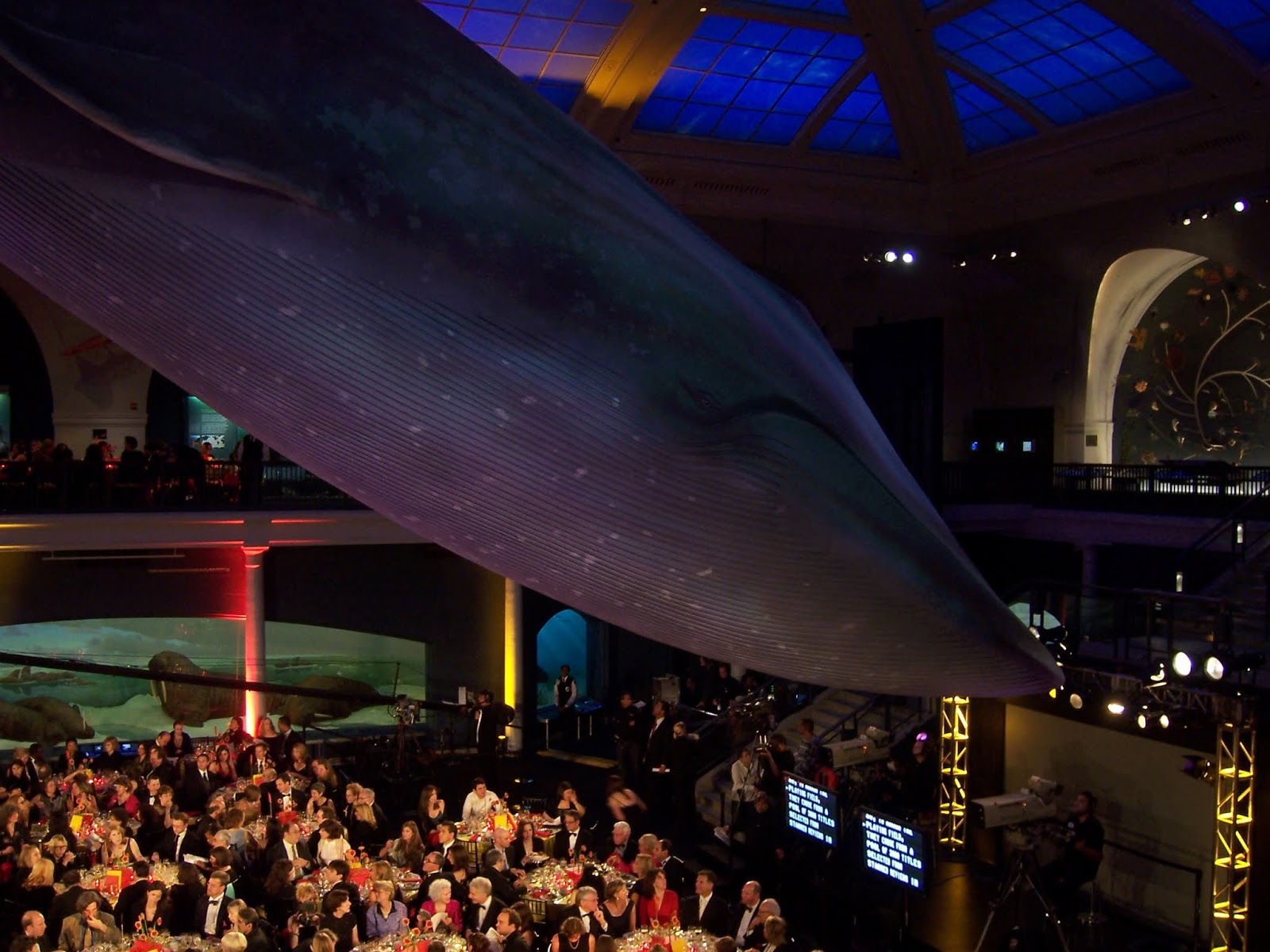 I wasn't kidding about the whale. Comics journalist Heidi MacDonald was there and said it was the perfect time for a supervillain to smash through the roof to threaten the pampered, overdressed elite of Gotham City. She was right.
 One of the Quills' fatal flaws, in my opinion, was letting the public vote on the winners. The public has terrible taste. In a year in which people like Doris Kearns Goodwin, E.L. Doctorow, Maya Angelou, Joan Didion, and the Dalai Lama all published books, the Quill Book of the Year Award went to Tyler Perry's Madea character for Don't Make a Black Woman Take Off Her Earrings. That's my sour-grapes way of explaining why Mom's Cancer didn't win.
This is where I formulated Brian's First Law of Award Shows, which is that if the organizers seat you such that there's a huge staircase between you and the stage, you aren't winning an award.
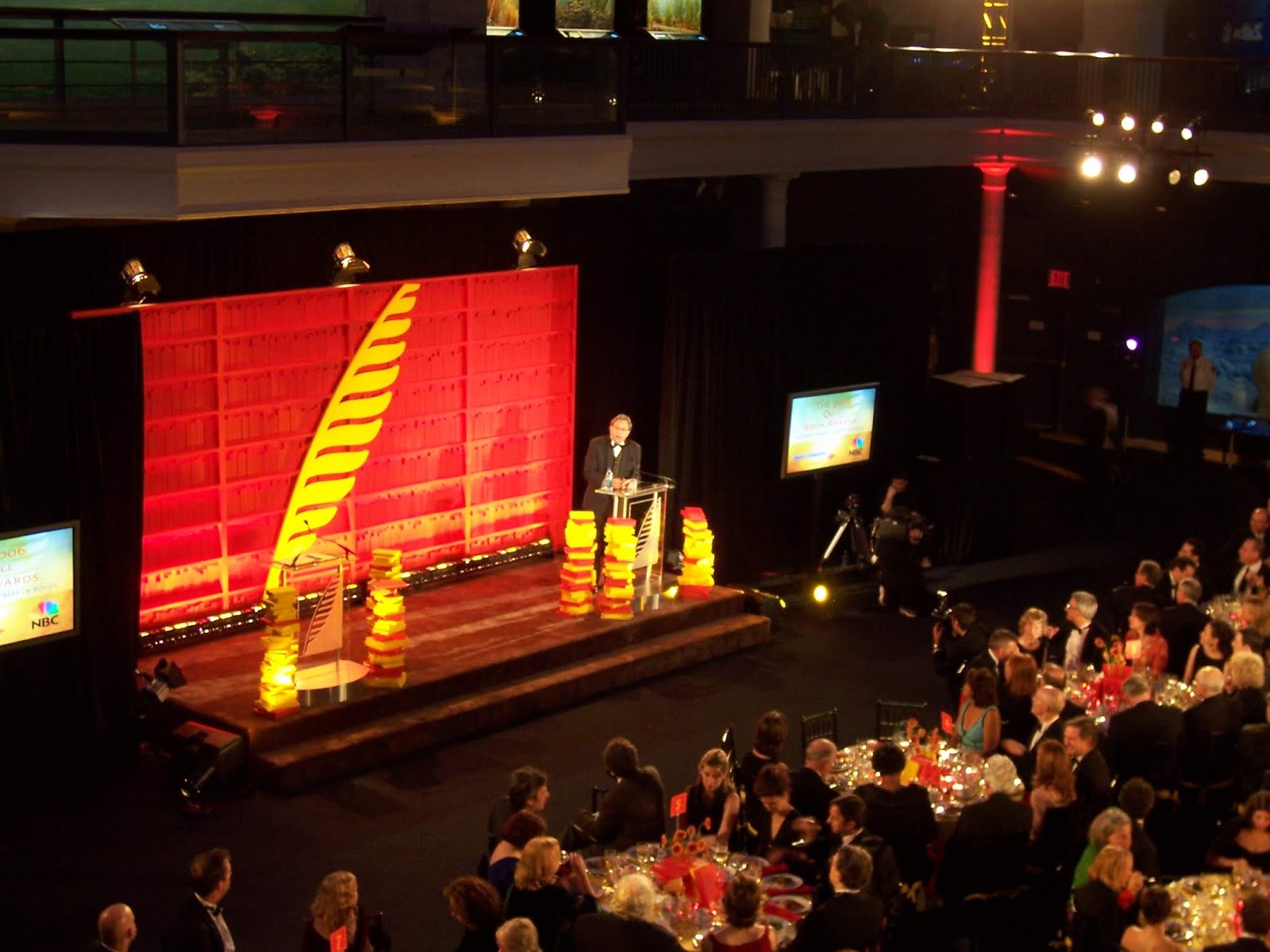 Our view of the Quill Awards stage with, I believe, Lewis Black presenting. Note how far we are from the stage and reflect on Brian's First Rule of Award Shows.
Anyway, to make a long story short (too late), Charlie and I soothed our hurt feelings by stealing the plaster centerpieces. I took one, he took one, eleven years later mine burned up, and last night Charlie gave me his.
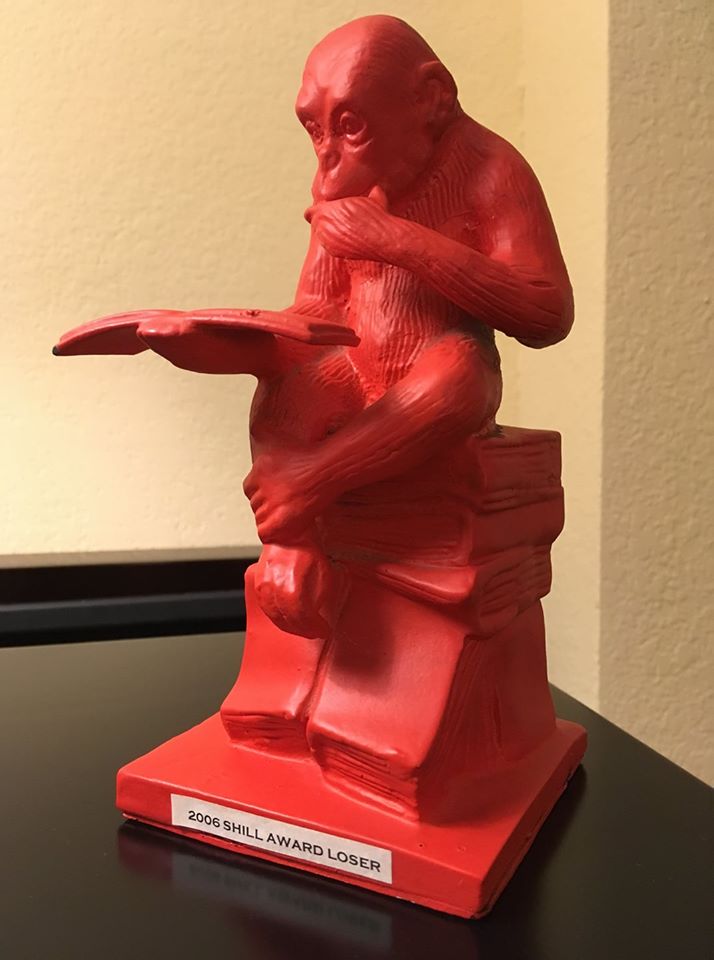
Despite losing the Quill, the night turned out to be one of the most memorable of my life. That was the night Charlie introduced me to Quill presenter Chip Kidd and his partner Sandy McClatchy, and we went back to Chip's astonishing apartment to sip brandy while sitting on his balcony overlooking the lights of Manhattan, planning a Batman opera that never got made.
BTW, that was also the night I passed Donald Trump going up a long marble staircase while I was going down, and I could have prevented this whole mess and made it look like an accident if I'd only known. Such is a world without time machines.
So Charlie's gift is a reminder of a night I lost an award and ended up not caring at all, and having a friend who understands how much a stupid red plaster chimp can mean.
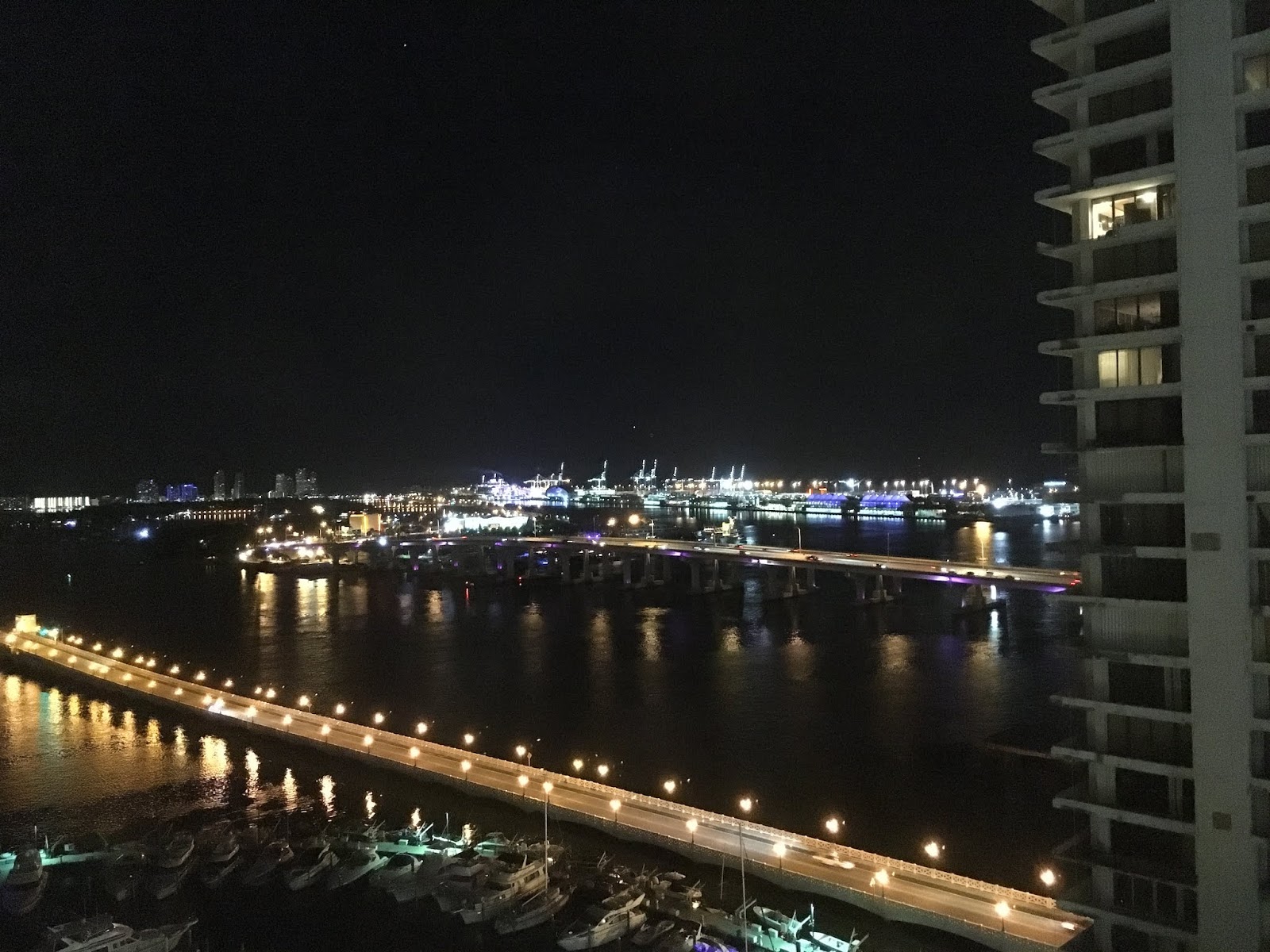 The view from my Miami hotel room. Nice work if you can get it.
Brian Fies's Blog

- Brian Fies's profile
- 64 followers
Brian Fies isn't a Goodreads Author
(yet),
but they
do have a blog,
so here are some recent posts imported from
their feed.

