
Discover new books on Goodreads
See if your friends have read any of Karen Chaboyer's books
Karen Chaboyer’s Followers (116)


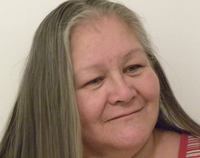
Karen Chaboyer
Goodreads Author
Website
Twitter
Genre
Member Since
July 2021
To ask
Karen Chaboyer
questions,
please sign up.


|
They Called Me 33: Reclaiming Ingo-Waabigwan
|
|
* Note: these are all the books on Goodreads for this author. To add more, click here.


“When I left residential school, I became confused and saw life from a different perspective. I was not aware of society. I was now living in the world, seeing people other than priests and nuns. I was ashamed of who I was. After nine years of having negative messages drilled into my head at residential school, my mind was tattered by the time I was released. I had been taught that to be Native meant I had no value: that I was not human. I felt defective and did not know how to change this. I was overflowing with shame. When my relatives staggered down the streets, I would pretend I did not know them. I felt embarrassed seeing them drunk. When people saw them staggering down the street, they were not just calling them down, they were also including me. I took this so personally. I often wondered why they were like this. I did not realize they had the same pain I had, maybe more, and that was their way of coping.”
― They Called Me 33: Reclaiming Ingo-Waabigwan
― They Called Me 33: Reclaiming Ingo-Waabigwan
“I had a lot of resentment against my brothers for what they did to me. I carried this anger around with me, and it was actually making me sick. There is a saying in AA that if you have resentments it keeps you away from the joy of sobriety, and this was true. I was carrying a load on my shoulders. One day we talked about the abuse in counselling, and my counsellor asked me if it was happening today. I said, “No.” She suggested living for today and leaving yesterday in the past. I did not know what she meant until I got thinking about it. If I dwelled on the past it would rob me of today. That made a lot of sense. I was stuck in the past. To get past it, I had to accept that yes I was a victim of sexual abuse and yes, I was a victim of residential school, but that was in the past. This is very hard to do because the result of these events changed my views on everything I do today. I have to learn how to keep myself in the present, instead of the past. It is a continuous battle within me. It is like I have dual personalities, and one wants to overtake the other. One still wants to be Karen the victim, who wants the attention and pity. The other, Karen the Survivor, wants to be independent and strong and wants to help others.”
― They Called Me 33: Reclaiming Ingo-Waabigwan
― They Called Me 33: Reclaiming Ingo-Waabigwan
“I do not think I was capable of understanding, as I was only six. My mother became distant and shut her feelings as she left me. How could she explain to me—a six-year-old—what was going to happen to me? This was a hopeless situation for both of us. A mother giving up her child to strangers is one of the hardest things to do, and I would soon know what alone meant.”
― They Called Me 33: Reclaiming Ingo-Waabigwan
― They Called Me 33: Reclaiming Ingo-Waabigwan
“I do not think I was capable of understanding, as I was only six. My mother became distant and shut her feelings as she left me. How could she explain to me—a six-year-old—what was going to happen to me? This was a hopeless situation for both of us. A mother giving up her child to strangers is one of the hardest things to do, and I would soon know what alone meant.”
― They Called Me 33: Reclaiming Ingo-Waabigwan
― They Called Me 33: Reclaiming Ingo-Waabigwan
“When I left residential school, I became confused and saw life from a different perspective. I was not aware of society. I was now living in the world, seeing people other than priests and nuns. I was ashamed of who I was. After nine years of having negative messages drilled into my head at residential school, my mind was tattered by the time I was released. I had been taught that to be Native meant I had no value: that I was not human. I felt defective and did not know how to change this. I was overflowing with shame. When my relatives staggered down the streets, I would pretend I did not know them. I felt embarrassed seeing them drunk. When people saw them staggering down the street, they were not just calling them down, they were also including me. I took this so personally. I often wondered why they were like this. I did not realize they had the same pain I had, maybe more, and that was their way of coping.”
― They Called Me 33: Reclaiming Ingo-Waabigwan
― They Called Me 33: Reclaiming Ingo-Waabigwan
“I had a lot of resentment against my brothers for what they did to me. I carried this anger around with me, and it was actually making me sick. There is a saying in AA that if you have resentments it keeps you away from the joy of sobriety, and this was true. I was carrying a load on my shoulders. One day we talked about the abuse in counselling, and my counsellor asked me if it was happening today. I said, “No.” She suggested living for today and leaving yesterday in the past. I did not know what she meant until I got thinking about it. If I dwelled on the past it would rob me of today. That made a lot of sense. I was stuck in the past. To get past it, I had to accept that yes I was a victim of sexual abuse and yes, I was a victim of residential school, but that was in the past. This is very hard to do because the result of these events changed my views on everything I do today. I have to learn how to keep myself in the present, instead of the past. It is a continuous battle within me. It is like I have dual personalities, and one wants to overtake the other. One still wants to be Karen the victim, who wants the attention and pity. The other, Karen the Survivor, wants to be independent and strong and wants to help others.”
― They Called Me 33: Reclaiming Ingo-Waabigwan
― They Called Me 33: Reclaiming Ingo-Waabigwan
 Read Women
— 6276 members
— last activity 3 hours, 33 min ago
Read Women
— 6276 members
— last activity 3 hours, 33 min ago
A group for readers of all genders to discover and share their passion for books by women authors. We enjoy monthly book discussions, challenges, budd ...more
 Support for Indie Authors
— 16776 members
— last activity 16 hours, 6 min ago
Support for Indie Authors
— 16776 members
— last activity 16 hours, 6 min ago
Officially 15k Members Strong & Climbing!! Building and supporting a community of self-published authors dedicated to both sharing experiences and le ...more
 Oprah's Book Club (Official)
— 88218 members
— last activity 1 hour, 10 min ago
Oprah's Book Club (Official)
— 88218 members
— last activity 1 hour, 10 min ago
Welcome to the official Oprah's Book Club group. OBC is the interactive, multi-platform reading club bringing passionate readers together to discuss i ...more
 Goodreads Authors/Readers
— 57761 members
— last activity 19 minutes ago
Goodreads Authors/Readers
— 57761 members
— last activity 19 minutes ago
This group is dedicated to connecting readers with Goodreads authors. It is divided by genres, and includes folders for writing resources, book websit ...more