
Alisa Childers's Blog, page 9
August 16, 2020
Jen Hatmaker: Fierce and Free or Full of the Feels? —The Alisa Childers Podcast #77
 Subscribe: iTunes | RSSThe Alisa Childers Podcast · #77 Jen Hatmaker: Fierce and Free or Full of the Feels? With Hillary Ferrer and Teasi Cannon
Hillary Ferrer and Teasi Cannon join me on today's video to discuss Jen Hatmaker's latest book, Fierce, Free, and Full of Fire. We analyze the worldview of the book and how it interacts with biblical Christianity. We also discuss the recent podcast episode Hatmaker recorded with her daughter about LGBT inclusion.
Watch on YouTube:
Become a Patron!


August 2, 2020
Glennon Doyle and the Idol of Self—The Alisa Childers Podcast #76
 Subscribe: iTunes | RSSThe Alisa Childers Podcast · #76 Glennon Doyle and the Idol of Self
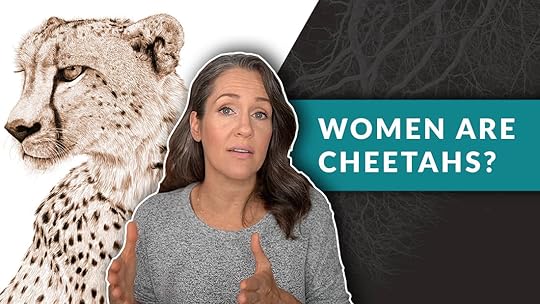
Untamed, by Glennon Doyle is one of the most popular books of the past year. Many women are buying into the idea that they need to realize their inner "Cheetah," find their "Knowing," and put themselves first. But are these ideas biblical? In today's podcast I analyze the worldview of the book, Untamed, and offer a more biblical way forward for women who feel "tamed" by their life situations.
Watch on YouTube:
Become a Patron!
August 1, 2020
Jen Hatmaker and the Made to Order Gospel
 A. W. Tozer once wrote about the problems he saw in the Christianity of his day. To counteract the “phrases and mottos that on the surface look great but are not rooted in Scripture or that mostly bolster one’s self-image,” he suggested that Christians demand scriptural proof from every teacher for their teachings. Nearly 60 years after his death, Tozer’s words couldn’t be more relevant. Today, we find many resources—many of which are marketed to women—making dazzling promises to lead the Christian out of discontent and into ultimate satisfaction. But do they pass Tozer’s scriptural-proof test?
In Fierce, Free, and Full of Fire: The Guide to Being Glorious You, Jen Hatmaker seeks to guide women out of the passenger seat and into the driver seat of their most fulfilled lives. She writes, “[T]hat question you are asking, that dream, that need, that buried anger, that delicious desire, it can all live in the open, and its unveiling be your liberation song. Come get your life!”
The book is the product of the resources, tools, teachers, and leaders that instructed and guided her own life over the past few years. “I gathered it all . . . it’s all in here,” she reveals in a Facebook video. Spanning 12 chapters exploring statements like, “Who I Am,” and “What I Need,” and “What I Want,” and “What I Believe,” and “How I Connect,” Hatmaker’s signature writing style mixes wit with wisdom, sarcasm with hilarity, and whimsy with heartfelt emotion. Her fluid storytelling draws the reader in with ease, offering a comfy front-row seat to her most amusing anecdotes and embarrassing moments. She’s engaging and casts a wide net for a broad audience.
Published by Thomas Nelson, and marketed in both Christian and mainstream spaces, Fierce will appeal to women who may feel dissatisfied with their lives, or with their experiences of church and religion. Her affirmation of same-sex marriage and relationships in 2016 resulted in a falling out with the evangelical church, much of which she chronicles bitterly.
Hatmaker’s heart to help women trapped in destructive patterns and dysfunctional mindsets is both evident and commendable. One highlight of the book is when she exposes the chronic unhappiness that results from pursuing the unrealistic goals media holds out for women. While encouraging women to drop the fad diets, extreme beauty procedures, and toxic pursuits of perfection, Hatmaker’s vulnerability is as helpful as it is disarming. “Something in me maintains that pulling on a tiny pair of ‘junior jeans’ will usher me into not just contentment but outright joy. The rot has set,” she writes, in a candid admission of her continued battle in this area. As a woman, this confession is refreshing as I navigate my own journey in undoing some of these poisonous ideas in my thinking.
Served up with equal parts self-help, psychology, storytelling, and spirituality, Fierce contains some advice that will no doubt be helpful on a practical level. Yet while Hatmaker self-identifies as a Christian leader, her interpretations of Scripture, statistics, and studies seem rooted in a worldview that opposes biblical Christianity.
Who Am I?
According to Hatmaker, I’m “exactly enough.” I just need to learn my personal “wiring” by determining my Enneagram number, which she credits with helping her to finally see God as “the best of all our qualities, not the worst.” By paying attention to the “deepest parts” of who I am, and uncovering my “inmost being,” I will find “a great and glorious good for the world.” The main thesis of the book is, “Do the work to find out what your best looks like.” Offering diagnostic tools, books to read, thought leaders to follow, Facebook groups to join, studies to consider, statistics to analyze and apply, there is no end to the work a woman can do to uncover the best version of herself.
Describing herself as a “Hippie-dippy, Big Love Jesus Type,” Hatmaker describes how God loves us, “like a crazed, obsessed parent who will never shut up about us.” The impression is that I need to look inside myself and realize how adorable I am, rather than deny myself and pick up my cross and follow Jesus.
Hatmaker assures me that “I deserve goodness. Full stop.” She continues, “Because you are a cherished human being created by a God who loves you. Because you bear the imprint of heaven. You are worthy of honor; every person is.”
I agree that because we’re made in God’s image, every person has inherent worth and dignity. This is a glorious truth! Yet Hatmaker omits the part about how we’ve managed to distort that image with our sinful choices. Though she acknowledges human evil, her answer isn’t repentance. Rather, it’s to realize that even the worst evildoers still “have something precious at their core.” Readers are encouraged to practice “self-compassion,” not self-denial.
Where’s the Bible’s message that we’ve sinned against God, which causes us to be separated from him? Where’s the truth that though we deserve death, we can be justified by faith in Jesus and reconciled to God, who then adopts us into his family? The saddest part of getting our condition misdiagnosed is that we lose the beauty of gospel’s cure.
What Is Love?
Love, according to Hatmaker, should be defined by observing the effects an action has on a person’s feelings. Rather than appealing to an objective standard to define love, she writes:
I lack all objectivity. I evaluate the merit of every idea based on how it bears upon actual people. [W]hen “loving God” results in pain, exclusion, harm, or trauma to people, then we are absolutely doing the first part wrong. It is not God in error but us.
This is a fundamental pillar of her worldview, which she credits as being paramount in helping change her mind on issues related to same-sex marriage.
Such logic gives unequivocal permission to judge every biblical position and worldview question through the lens of emotion. This is a dangerous way to define love because Jesus taught that all manner of evil resides in my heart and emotions. Scripture teaches that I can only discern the will of God once my mind is transformed and renewed in Christ (Rom. 12:2).
According to the Bible, love is patient and kind—absolutely. But love also refuses to delight in evil; instead it rejoices with the truth (1 Cor. 13:6). It is a defining characteristic of God himself (1 John 4:16). And God’s love can’t affirm or celebrate anything that contradicts his holiness. When love is plucked from it’s biblical context, and morality defined by personal desires, one is left with a gospel made in her own image. The only thing left is to “do the work” of self-discovery and improvement.
What Is Truth?
It’s no surprise, then, that Hatmaker redefines “truth” to be a relative catch-all word for what makes someone feel good. She writes, “[Truth] is super-pumped about what we love.” After connecting Jesus with truth, she adds that in Jesus, “everyone belongs . . . until everyone belongs, we’ve replaced truth with a lie.” This, she says, is the world Jesus envisioned.
I read this book with a friend who happened to also be reading through the Gospels at the same time. She mentioned how radically different Hatmaker’s description of how Jesus envisioned the world is from what Jesus actually taught. She noted the shocking nature of his words: “Unless you repent, you too will all perish” (Luke 13:3). Sadly, when contrasted with Hatmaker’s description, Jesus is almost unrecognizable.
Jesus’s vision for the world isn’t that “everyone belongs.” He was clear that many will not only be excluded but will be separated from him for eternity. To enter his kingdom, we must be “born again” (John 3:3), be “born of the water and of the Spirit (John 3:5), and “do the will of my Father” (Matt. 7:21). Jesus describes a “narrow way” that only “few will find” (Matt. 7:13–14). Who will not inherit his kingdom? To “workers of lawlessness” who reject his free gift of salvation, Jesus will say, “Depart from me.” This might sound a bit jarring, but these are Jesus’s words. Not mine.
Consequences of Following a Fallen Heart
As already noted, Hatmaker offers some helpful advice. Unfortunately, though, she spends a good bit of time bashing the church, diminishing the clarity of Scripture, and downplaying the necessity of obedience to Jesus’s teachings. Instead of embracing the beauty of grace, she teaches a gospel of works. “Do the work” is the takeaway. Reminiscent of the Osteenian promise of “your best life now,” Fierce will leave the reader with nothing but herself to deal with the consequences of following her fallen heart.
Hatmaker seems sincere in her desire to encourage women to follow their dreams. She asks, “Dear reader, YOU ONLY HAVE ONE LIFE TO LIVE. What if you die tomorrow having never given your dream a shot?” This is a good and sobering question. But for the Christian, the promise of eternal life shifts our focus from the very short and temporary phase that happens on earth to the everlasting joy of heaven. To quote Jesus again: “Do not lay up for yourselves treasures on earth, where moth and rust destroy and where thieves break in and steal, but lay up for yourselves treasures in heaven” (Matt. 6:19).
At the end of the day, Fierce doesn’t pass the scriptural proof test and should be read with utmost discernment. After all, if you die having never started that business, achieved that career goal, written that book, or created that great work of art, you possess the promise of eternity—life with your Creator who loves you and rescued you from your sin. And once you’ve died to yourself, confessed your sin, and given all the pieces of your life to Christ, he will give you a much better dream to follow. This not only awards you the hope of eternity; it offers you a much more viable path to finding real strength and freedom in this life.
*Originally published on The Gospel Coalition*
July 19, 2020
How to Talk to Progressive Christians (Part 2) With Greg Koukl — The Alisa Childers Podcast #75
 Subscribe: iTunes | RSSThe Alisa Childers Podcast · #75 How to Talk to Progressive Christians (Part 2) With Greg Koukl
Here's part 2 of my discussion with Greg Koukl, who joins me to discuss some practical ways we can navigate emotionally charged conversations, especially when those discussions involve our progressive Christian friends.
Watch on YouTube:
Purchase Tactics:
[image error] [image error]Become a Patron!
July 13, 2020
What is Historic Christianity? (Video)
 Alisa unpacks why she uses the term "Historic Christianity" to designate the opposite of "Progressive Christianity."
 Become a Patron!
July 5, 2020
Navigating Conversations with Progressive Christians (Part 1), with Greg Koukl— The Alisa Childers Podcast #74
 Subscribe: iTunes | RSSThe Alisa Childers Podcast · #74 Navigating Conversations With Progressive Christians (Part 1), with Greg Koukl
Greg Koukl joins me to discuss some practical ways we can navigate emotionally charged conversations, especially when those discussions involve our progressive Christian friends.
Watch on YouTube:
Purchase Tactics: [image error] [image error]Become a Patron!
June 23, 2020
A Progressive Christian's Reconstruction, with Ian Harber—The Alisa Childers Podcast #73
 Subscribe: iTunes | RSSThe Alisa Childers Podcast · #73 A Progressive Christian's Reconstruction, With Ian Harber
We've got another deconstruction/reconstruction story for you! On this episode, Ian Harber tells us about growing up in the Evangelical church only to deconstruct into progressive Christianity. After years of following progressive authors and podcasts like The Liturgists, Ian found progressive Christianity to be more shallow than the faith he walked away from, and eventually reconstructed to a vibrant historic Christian faith.
Listen oniTunes
Watch on YouTube:
Become a Patron!
June 9, 2020
Race, Injustice, and the Gospel of Critical Theory, With Monique Duson—The Alisa Childers Podcast #72
Subscribe: iTunes | RSSThe Alisa Childers Podcast · #72 Race, Injustice, and The Gospel of Critical Theory, With Monique DusonMonique Duson, founder of the Center for Biblical Unity joins me on todays podcast to discuss racism, biblical justice, and some of the words and phrases we're seeing in our social media newsfeeds like "white fragility," "whiteness," and "social justice."
Listen on iTunes
Watch on YouTube: Become a Patron!
June 6, 2020
Untamed: The Gospel of Glennon Doyle
 ***This article originally published on The Gospel Coalition***
Glennon Doyle’s Untamed has captured the hearts and minds of American women, hovering around the #1 spot on The New York Times bestseller list since its release. From her roots as a Christian mommy blogger to her rise to fame as a successful author, speaker, and activist, Doyle made headlines in 2016 when she announced she was leaving her husband of 14 years for soccer star Abby Wambauch. The book opens: “Four years ago, married to the father of my three children, I fell in love with a woman.” From there, the memoir documents what Doyle believes was her own untaming—the process of unlearning everything she was taught about family, gender, sex, love, motherhood, God, and Christianity—and forging her own path to find happiness.
Untamed begins with a family trip to the zoo to see the main event, the Cheetah Run. Doyle’s clan watches a trained cheetah chase a stuffed pink bunny attached to the back of a jeep. As the carnivore is rewarded with a piece of meat, the crowd applauds, but Doyle becomes queasy. The taming of the cheetah feels familiar. She realizes that she has lived her entire life like a caged animal, settling for store-bought steaks and the approval of strangers.
This is the metaphor that drives the book. Women: You. Are. A. Cheetah.You are wild. You’re a bit scary. You need to break free from the conventions, expectations, and cultural conditioning of your environment and become . . . untamed.
In a culture that often conflates womanhood with a wallflower-y and opinion-less existence, it’s easy to grasp why this book has struck a chord. For women in empty marriages or who feel dissatisfied with motherhood and their careers, it can feel exciting and freeing to be told to embrace your inner cheetah.
There are some moments of depth and wisdom to ponder. For example, Doyle teaches that we shouldn’t shield our kids from suffering. She encourages women that “we can do hard things,” and advises that porn is bad for boys. Although she rightly identifies some common problems women encounter, many of Doyle’s solutions will only lead them into deeper bondage. By accepting half-truths and falsehoods about reality, many women may free themselves from one cage only to be trapped inside another.
Reversing the Biblical Narrative
A consistent theme throughout Untamed is that women should put themselves and their desires first. Doyle asserts that to be good mothers, we must do whatever it takes to make ourselves happy. She quotes Swiss psychologist Carl Jung: “There is no greater burden on a child than the unlived life of a parent.” This realization was the nudge she needed to leave her husband.
Doyle brings the Adam and Eve narrative into focus and blames the Bible for helping construct a culture built on the control of women. She writes, “When a woman wants more . . . she destroys the world.” Later, she boldly states that women shouldn’t think of Eve’s appetite as wrong. She suggests, “Maybe Eve was never meant to be our warning. Maybe she was meant to be our model. Own your wanting. Eat the apple.”
By reversing the biblical narrative, she turns the Christian worldview on its head. Sin is no longer what’s wrong with the world, but unrealized ambitions. Like placing a band-aid on a gunshot wound, this idea will no doubt send many women on a lifelong journey to find happiness in temporary fixes and impotent solutions.
This is where the beauty of the Christian story shines. Although Jesus promised trials, suffering, and persecution in this world, he also said, “My kingdom is not of this world.” The Christian has a deep and settled peace amid unfulfilled longing because she knows that every tear will one day be wiped away. She doesn’t put her hope in the things of this world but considers that “the sufferings of this present time are not worth comparing with the glory that is going to be revealed to us” (Rom. 8:18).
God of the Morally Relative Self
Doyle quotes Psalm 46:10: “Be still and know.” She credits this verse with inspiring her to take 10 minutes a day to meditate. She “drops lower” with each session, finally finding a new level inside herself she identifies as “a Knowing.” Doyle converses with and consults the “Knowing” whenever she has to make a decision. She then explains:
If what I’ve found in the deep is just my self—if what I’ve learned is not how to commune with
God but how to commune with myself—if who I have learned to trust is not God but myself--
and if, for the rest of my life, no matter how lost I get, I know exactly where and how to find
myself again—well, then. That is certainly enough of a miracle for me.
Doyle writes, “I now take orders only from my own Knowing.” Alluding to Exodus 3, she references God identifying himself as “I am.” She turns the question on herself, asking, “What are you, Glennon?” After a series of queries, she finally answers: “I am. I am. I am.” She regularly conflates the self with God.
Doyle contends that right and wrong, good and bad, and should and shouldn’t are not real concepts, but culturally constructed cages. She instructs women to ignore their minds—which are clouded by indoctrination—and obey their inner voices and deepest desires.
Aside from the obvious anti-intellectual bias, one can’t miss the irony of casting off categories of right and wrong in a book that is basically 300 pages of breathtakingly specific instructions about what women shouldand shouldn’t do regarding everything from sexuality to religion to social activism.
As tempting as it may be to obey our desires, the Bible describes the human heart as “deceitful” and “desperately sick” (Jer. 17:9; cf. Heb. 3:13). It tells us not to lean on our own understanding (Prov. 3:4). Jesus taught that out of the heart come “evil thoughts—murder, adultery, sexual immorality, theft, false testimony, slander” (Mark 7:21). The Christian understands that following Jesus means denying herself, not discovering the god inside. Not untaming her sinful nature but being conformed to Christ’s image. She knows that obedience to Jesus is far better than the temporary high of a better job or a movie-worthy romance because in his presence—not her own—there is fullness of joy (Ps. 16:11).
You’re Not a Cheetah
The thesis of Doyle’s book correctly identifies a problem: Many women live in metaphorical cages because they don’t understand who and what they really are.
Doyle’s analogy of the cheetah contains some truth. The domesticated feline thinks that running after plushie toys for a superstore ribeye is what life is about because she has never tasted the freedom of her natural habitat. She stalks the perimeter of her enclosure with discontent because she knows she was made for more—she just doesn’t know what.
The problem with Doyle’s argument, however, is that women aren’t cheetahs. If women view themselves as untamed animals, they’ll be chasing an ideal that’ll never bring satisfaction. They will end up on their own type of “Cheetah Run” that left the wild beast pacing in her cage with unrealized longings in the first place. Of this longing, Doyle writes: “I felt an electric restlessness buzzing inside me. It was like constant thunder rolling right there beneath my skin—a thunder made of joy and pain and rage and longing and love too deep, scalding, and tender for this world.”
I feel that, too. We all do. It reminds me of C. S. Lewis’s famous observation: “If I find in myself a desire which no experience in this world can satisfy, the most probable explanation is that I was made for another world.” In this, Lewis touches on a much better solution. Instead of comparing ourselves to animals in captivity, the answer to the deep, unrealized yearning we all feel is to recognize that we were created in the image of a holy God with a purpose—to glorify him. Our natural habitat is a kingdom that is here—but not yet. Until all things are made new, we will live in that tension. Obeying our desires might temporarily distract with flashes of transitory happiness and plastic joy, but it won’t deliver freedom.
Doyle offers a counterfeit freedom that emancipates readers from right and wrong, objective truth, the Bible, and Christianity. But it’ll only enslave them to another master—sin. For the Christian, true freedom isn’t apprehended by relying on your inner voice which can misguide you or change on a dime. It’s found by looking deep inside yourself, dying to the sinner you meet there, and turning to Christ. Freedom means trusting in the saving work of Jesus on the cross. It doesn’t justify you to indulge in sin, but liberates you from its power. You realize that to be freed from slavery to sin is to become a slave of God. One master leads to death; the other to eternal life (Rom. 6).
True Christianity Truly Frees Women
Despite her allusions to Jesus, faith, and the Bible, Doyle’s central message cannot be reconciled with Christianity. In fact, it’s the exact opposite.
With the saccharine promise of discovering your best life now, Untamed is recycled New Age dogma—a prosperity gospel for desperate housewives. But for a woman to find true contentment, she must resist the cultural trend toward living for the here and now. Real bravery means trading your cage for a cross. That’s the only way to cast off the prison bars of self-worship and become . . . not untamed . . . but truly free.
Alisa Childers's Blog

- Alisa Childers's profile
- 407 followers
Alisa Childers isn't a Goodreads Author
(yet),
but they
do have a blog,
so here are some recent posts imported from
their feed.

