
Alisa Childers's Blog, page 7
December 20, 2020
Answering Progressive Christian Memes 2: Is it a Sin to Smoke & Drink? Do we Worship the Bible? With Mike Winger—The Alisa Childers Podcast #89
 Subscribe: iTunes | RSSThe Alisa Childers Podcast · #89 Answering progressive Christian memes 2: Is it a sin to smoke & drink? Do we Worship the Bible?Recently, a progressive Christian meme made the rounds that stated 22 beliefs about God, Christians, the nature of heaven and hell, and the exclusivity of Christianity. I asked Mike Winger to join me to help us think through these statements and analyze them through a biblical lens. Here's part 2!
Watch on YouTube:
Read Alisa's new book to learn more about answering progressive Christianity:
[image error] [image error]


December 13, 2020
Answering Progressive Christian Memes: Is it a Sin to Cuss, Be Gay, Have an Abortion? With Mike Winger — The Alisa Childers Podcast #88
 Subscribe: iTunes | RSSThe Alisa Childers Podcast · #88 Answering Progressive Christian Memes: Is it a Sin to Cuss, Be Gay, Have an Abortion?
Recently, a progressive Christian meme made the rounds that stated 22 beliefs about God, Christians, the nature of heaven and hell, and the exclusivity of Christianity. I asked Mike Winger to join me to help us think through these statements and analyze them through a biblical lens.
Watch on YouTube:
Get Alisa's book, Another Gospel:
[image error] [image error]
December 6, 2020
Is Your Church Teaching New Age Ideas? With Melissa Dougherty — The Alisa Childers Podcast #87
 Subscribe: iTunes | RSSThe Alisa Childers Podcast · #87 Is your church teaching New Age Ideas? With Melissa Dougherty
Ex-New Ager Melissa Dougherty joins me to discuss certain New Age ideas that are being marketed to the church as "Christian." What are the buzzwords, catch phrases, and teachings that are coming to a church near you?
Watch on YouTube:
Click to purchase Alisa's book, Another Gospel:
[image error] [image error]
November 23, 2020
Here's Why Christians Should Avoid the Teachings of Richard Rohr
Tracy grew up in the church, but when her identification as queer contradicted her Evangelical upbringing, she decided she no longer fit within that tradition. Through the teachings of Richard Rohr, she found a spiritual home with the practice of contemplative spirituality. Tracy’s experience mirrors that of many millennial ex-Evangelicals who have discovered a spiritual mentor and teacher in the Franciscan priest, author, and founder of the Center for Action and Contemplation (CAC), Richard Rohr.
The CAC website describes Rohr as “a globally recognized ecumenical teacher bearing witness to the universal awakening within Christian mysticism and the Perennial Tradition.” Rohr’s teachings are gaining influence, especially among millennials who grew up in the Evangelical church. He is particularly influential in the progressive Christian movement and is referred to as a spiritual father, hero, and mentor by well-known progressive voices. He is endorsed by progressive leaders like Rob Bell, Jen Hatmaker, William Paul Young, Michael Gungor, and Brian McLaren, to name just a few. As Rohr gains popularity, it becomes increasingly more important for church leaders to be aware of his teachings and their widespread influence. In this article, I’ll take a look at Rohr’s view of the Bible, the cross, and the gospel.
Richard Rohr’s view of the Bible
Historically, Christians have believed that the Bible is the inspired and authoritative Word of God. Following Jesus’ own example, Christians have affirmed over the centuries that the Scriptures are internally coherent, without error, and infallible. However, Rohr holds a much different view of the Bible:
The Jewish Scriptures, which are full of anecdotes of destiny, failure, sin and grace, offer almost no self-evident philosophical or theological conclusions that are always true. . . . We even have four, often conflicting versions of the life of Jesus in Matthew, Mark, Luke, and John. There is no one clear theology of God, Jesus, or history presented, despite our attempt to pretend there is.
Rohr interprets the Scriptures using what he calls the “Jesus Hermeneutic.” He writes:
…The text moves inexorably toward inclusivity, mercy, unconditional love, and forgiveness. I call it the “Jesus Hermeneutic.” Just interpret Scripture the way Jesus did! He ignores, denies, or openly opposes his own Scriptures whenever they are imperialistic, punitive, exclusionary, or tribal.
Contrary to what Rohr teaches, Jesus never ignored, denied, or openly opposed the Old Testament Scriptures. In fact, as I argue in this paper, Richard Rohr’s “Jesus Hermeneutic” not only fails to offer any legitimate Scriptural support, but taken as a whole, the biblical data gives us an entirely opposite view of how Jesus handled the Scriptures. The truth is Jesus never once declared or implied that the Scriptures were anything but fully truthful and to be obeyed. Jesus affirmed the Old Testament to be the inspired, authoritative, historically reliable, inerrant, infallible, imperishable Word of God—and that it was all about himself.
Richard Rohr’s view of the cross
Historically, Christians have believed Jesus died on the cross for our sins, taking our deserved punishment upon himself. This is not only affirmed in Scripture, and taught by Jesus himself, but it goes back to the earliest creed in Christianity, which pre-dates the New Testament by about twenty years. However, according to Rohr, the idea of a God who would require the blood sacrifice of his son is “problem-oriented.” Of the atonement, Rohr writes:
I believe that Jesus’ death on the cross is a revelation of the infinite and participatory love of God, not some bloody payment required by God’s offended justice to rectify the problem of sin. Such a story line is way too small and problem-oriented.
According to Rohr, Jesus didn’t need to die on the cross. It’s your “false self” that needs to die, not someone else. He refers to substitutionary atonement as a “strange idea” that leads to a “transactional” theology. Contrary to Rohr, Scripture teaches substitutionary atonement, Jesus affirmed it, along with early Christians.
Richard Rohr’s view of the gospel
Historically, the Christian gospel is the proclamation of the good news of salvation. This has been understood through the lens of God’s redemptive acts throughout history. It began with the creation of the universe and mankind. After sin was introduced into the world by the rebellion of Adam and Eve, God provided a means of redemption and reconciliation through the atoning work of Jesus on the cross. Those who accept this provision of salvation will be given eternal life with God. But for those who reject this gift of grace, the Bible describes their eternal punishment separated from God's love and goodness.
However, according to Rohr, the idea of a God who “doles out punishment” is unhealthy, cheap, and toxic. He does believe Jesus died, was buried, and was resurrected. However, he separates Jesus and Christ into two separate entities, with Jesus nothing more than a “model and exemplar” of the human and divine united in one human body. And in Rohr’s view, Christ is a cosmic reality that is found “whenever the material and the divine co-exist—which is always and everywhere.” He implicitly denies the deity of Jesus. He writes: “We spent a great deal of time worshiping the messenger and trying to get other people to do the same. . . . [Jesus] did ask us several times to follow him, and never once to worship him.” This “Cosmic Christ” is a New Age idea that Rohr is promoting as “Christian.”
Rohr also believes all religions share the same core truth and are all paths to truth (perennialism). He openly affirms panentheism, a view of the nature of God that teaches God is in all, all is in God, but God also transcends the world. He denies original sin, the atonement, the exclusivity of Christianity, and he has an unorthodox understanding of heaven and hell, and the literal second coming of Christ. Rohr's views stand in stark contrast to the historic Christian view of the gospel.
Through his books and his highly popular teachings on the Enneagram, Richard Rohr is rapidly gaining influence in the Christian church. But church leaders would do well to be aware of what Rohr actually teaches about the Bible, the cross, and the gospel. Faithful Christians should avoid his teachings at all costs.
November 22, 2020
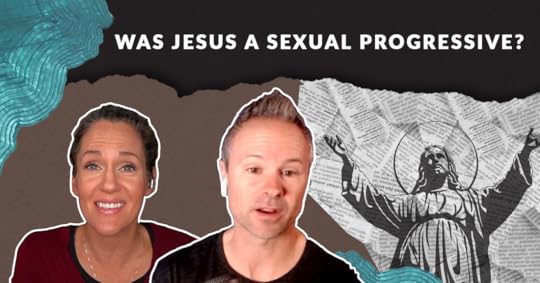
Sex, Purity Culture, Marriage, and Singleness: Is the Church Getting it Wrong? With Sean McDowell—The Alisa Childers Podcast #86
 Subscribe: iTunes | RSSThe Alisa Childers Podcast · #86 Sex, Purity Culture, Marriage, and Singleness, with Sean McDowell
Sean MCDowell joins us again on the podcast to discuss his new book, "Chasing Love: Sex, Love, and Relationships in a Confused Culture." We have an honest conversation about the history of purity culture in the '80s, '90s, and early 2000s. Sean refutes the progressive Christian sexual ethic, as articulated by progressive leaders like Nadia Bolz-Weber, and addresses the rampant pornography problem in our culture.
Watch on YouTube:
Get Sean's book: Get Alisa's book: [image error] [image error] [image error] [image error]
November 15, 2020
How to Escape the Toxic Cult of Self-Affirmation, with Allie Stuckey—The Alisa Childers Podcast #85
 Subscribe: iTunes | RSSThe Alisa Childers Podcast · #85 How to Escape the Toxic Cult of Self-Affirmation, with Allie Beth Stuckey
In this podcast, Allie Beth Stuckey joins us to analyze the popular ideas promoted by self-help gurus like Jen Hatmaker, Glennon Doyle, Rachel Hollis, and Brene Brown. We discuss questions like, am I enough? Do I have to love myself before I can love others? What is the cult of self-affirmation? What is "meology," and why is it such a popular way to interpret the Bible? Allie also tells us about her new book, You're Not Enough and That's Okay, and its message that runs contrary to some of these other popular teachers.
Watch on YouTube:
Buy Allie's book: Buy Alisa's book:
[image error] [image error] [image error] [image error]
November 8, 2020
The Deconstruction of Christian Celebrities and What We’re Missing, with Shelby Abbott — The Alisa Childers Podcast #84
 Subscribe: iTunes | RSSThe Alisa Childers Podcast · #84 The Deconstruction of Christian Celebrities and What We’re Missing, with Shelby Abbott
Former Cru colleague of Rhett and Link, Shelby Abbott joins me on today's podcast to talk about the phenomena of Christian celebrity deconstruction and what key factors we might be missing in the conversation.
Watch on YouTube:
Buy Shelby's book: Buy Alisa's book:
[image error] [image error] [image error] [image error]
November 1, 2020
An Astrophysicist Tells How Science Led Him to Jesus, With Hugh Ross—The Alisa Childers Podcast #83
 Subscribe: iTunes | RSSThe Alisa Childers Podcast · #83 An Astrophysicist Tells How Science led Him to Jesus, With Hugh Ross
Hugh Ross is an astrophysicist who first came to faith in Christ after studying physics. He tells his fascinating story of realizing that God exists and that the Bible is more reliable than the second law of thermodynamics.
Watch on YouTube:
Order Dr. Ross's books we discussed in the podcast: Order Alisa's book:
[image error] [image error] [image error] [image error] [image error] [image error]
October 18, 2020
Controversial Questions: Is it Divisive to Call Out False Teachers? Should Christians Decolonize our Theology? — The Alisa Childers Podcast #82
 Subscribe: iTunes | RSSThe Alisa Childers Podcast · #82 Controversial questions: Should we call out false teachers? Decolonize our theology?
On today's podcast, we tackle some difficult questions surrounding false teaching, critical race theory, and how critical theory intersects with progressive Christianity. Krista Bontrager, Monique Duson, and Neil Shenvi join me to address these controversial topics.
Order my new book, Another Gospel? A Lifelong Christian Seeks Truth in Response to Progressive Christianity ⤵️
[image error] [image error]
October 15, 2020
Drowning in Doubt While Singing for Jesus: When a Zoegirl Doubts Her Faith
 The following is an excerpt from my book, Another Gospel?
The curve of the rocking chair arm dug into my hip as I held my restless toddler, singing a hymn into the darkness— darkness so thick it felt as if it were made of physical matter, choking the cries right out of my throat as I prayed to a God I wasn’t sure was even there. “God, I know you’re real,” I whispered. “Please let me feel your presence. Please.”
Nothing.
I didn’t feel even the slightest goose bump or the familiar warmth that used to signify his presence to me. Swollen in breast and belly, my pregnant body ached as my little girl scampered around my lap trying to find a place to settle. Though the words seemed stuck behind my lips, I found a way to sing them out:
Before the throne of God above;
I have a strong and perfect plea . . .
Everything hurt. But I didn’t protest. I remembered the promise I’d made while in the deepest pains of labor before my daughter was born. I will never again complain about being miserably uncomfortable, I’d declared to myself. When you’re enduring pain that profound, you would give anything to simply be miserably uncomfortable.
After eighteen hours of back labor and five hours of pushing, Dyllan was born in distress. She was welcomed into the world by being swept out of my arms, laid on a cold metal table, and held down as tubes were stuck down her trachea. Those tubes saved her life. But it was a vexing cure. Her birth had traumatized us both.
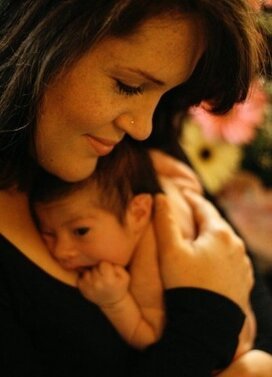
Even so, God’s peace overwhelmed me, and when they finally laid her back in my arms, I took one look at her and I knew. I knew with the kind of knowing that emerges from a place so deep inside, you don’t even realize it’s there until you need it. I knew there was nothing I wouldn’t do for her now. No mountain so towering I wouldn’t climb it for her. No ocean so deep I wouldn’t swim it for her. No battle so formidable I wouldn’t fight it for her.
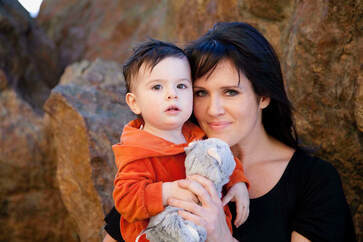
But I had no idea this would be tested so soon. As I rocked my toddler that night, I was in labor again, but this time it wasn’t physical. The labor was spiritual. And it wasn’t a battle I had to fight just for myself. Two souls would depend on the outcome of this particular conflict of faith.


A great High Priest whose name is love;
Who ever lives and pleads for me.
But does he?
Is God really on a mystical throne somewhere out beyond the expanses of space?
Is he even aware of me?
Is everything I’ve ever believed about him a lie?
What happens when we die?
My name is graven on his hands;
My name is written on his heart . . .
But is it?
Is the Bible really God’s Word?
Is the only identity I’ve ever known a complete sham?
What am I supposed to tell my children?
Is religion really just the opiate of the masses?
Does God even exist at all?
“Remember, God, when Dyllan was born? Remember the peace that came over me in a wave I couldn’t control? I remember. Your peace.
“Remember New York, God? Remember that day? I needed you. I remember. I remember you cradling me with your presence as I lay in my bed, feeling like I would die.”
Or was it something else? Had those just been synapses in my brain firing in response to stress or excitement, sending a cocktail of endorphins and adrenaline through my body? Is that all it ever was? Every worship service, camp meeting, and Bible study?
I believe. Help my unbelief.
It felt like I’d been plunged into a stormy ocean with waves crashing over my head. No lifeboat. No rescue in sight. In the 2000 film The Perfect Storm, one of the last images (spoiler alert) is of the giant ship being capsized and pushed underwater by a wave the size of a skyscraper. The tiniest form of a human head peeks above the water for a split second before disappearing into the depths.
That was me.
What on earth would cause a strong and devout Christian to doubt her faith? Why would a member of the popular Christian music group ZOEgirl, which toured the world giving altar calls and inspiring many young teens to proclaim their faith and “shout it from the mountain,” suddenly have doubts?

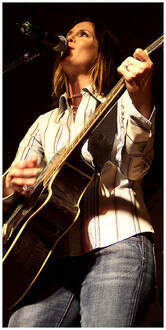
We’ll get to that in a bit. But first, a little background. I was that kid. You know the one. The one who asked Jesus into her heart when she was five. The one who began studying the Bible as soon as she learned to read. The one who got up early to walk around her school and pray for revival among her peers. The one who led worship in chapel at her Christian high school and moved to New York at twenty-one to do inner city work with underprivileged kids. The one who went on every mission trip she could and who evangelized on the streets of Los Angeles and New York during the summer.


The one you would never worry about. The one you just knew would be fine. The one who would never doubt her faith. When I was about ten years old, my mom was a volunteer at the Fred Jordan Mission in Los Angeles. She would take us with her to work the soup lines on weekends, and it was there that I watched her hug prostitutes and wrap blankets around smelly homeless guys. It was there I watched my dad, a Christian recording artist, lead worship for crowds of cold and hungry souls as they sang “Amazing Grace” at the top of their lungs.
Feeding the hungry. Clothing the naked. Loving the outcast. This is what was modeled to me as genuine Christianity. It’s just what Christians did. They prayed, they read their Bibles, and they served. It wasn’t perfect, but it was the real thing.


So I can’t say I grew up with a blind faith. My faith was informed by witnessing the gospel in action. But it was intellectually weak and untested. I had no frame of reference or toolbox to draw from when every belief I had been so sure of was called into question. And it wasn’t an atheist, secular humanist, Hindu, or Buddhist who facilitated my eventual faith crisis—it was a Christian. More specifically, it was a progressive Christian pastor.
Continue reading in my new book, Another Gospel? A Lifelong Christian Seeks Truth in Response to Progressive Christianity ⤵️
[image error] [image error]
Alisa Childers's Blog

- Alisa Childers's profile
- 407 followers
Alisa Childers isn't a Goodreads Author
(yet),
but they
do have a blog,
so here are some recent posts imported from
their feed.

