
Alisa Childers's Blog, page 8
October 14, 2020
5 Counterfeit Truths of Progressive Christianity

Original article published at Bible Study Tools
I’m convinced that one of the greatest achievements in the history of mankind is the discovery of all things dairy. Cream-top milk, full-fat cheese, grass-fed butter, rich gelato, and whipped heavy cream are some of my favorite indulgences. Can you imagine the bitter existence of having to drink your coffee black—or even worse, lightened with nut milk? Give me half-and-half or give me death.
Unfortunately, my sister has been allergic to the stuff for as long as I can remember. One Christmas, she splurged on some really expensive non-dairy brie “cheese,” and exclaimed, “This is SO good. It tastes just like the real thing!” Her excitement was palpable, so I gave it a taste. As the gray clotted mass made its way toward my face, I got a whiff of what smelled like moldy mushrooms, leather, and pennies. Forcing a small bite between my grimaced lips I mustered a polite, “Mmmm. That is . . . uh . . . interesting.” I paused before asking, “Is that what you think brie tastes like?” We burst out laughing as she realized she had never even tasted it.
My sister thought the imposter cheese tasted right because she wasn’t familiar with the real thing. It’s wasn’t her fault. She’d never sampled the double-cream goodness melting over a cracker and topped with fig jam. But I could never be tricked because I eat the real thing regularly. And. I. Love. It.
It’s the same with the gospel. There are all kinds of false ideas about God floating around that seem right at first. And if we don’t know the real thing, we might even feel satisfied with their half-truths and misrepresentations. One of these false ideas is the modern trend of progressive Christianity. Christianpost.com gives a warning against the misguided values of "progressive Christianity" saying,
"The counterfeit gospel is under the guise of Progressive Christianity. Yet, if you hold this doctrine up to the light it will be missing the watermarked face of God. This doctrine is worthless and void of truth and robs the soul of true joy in Christ, do not be deceived. Some of the core ideas spread by this relatively new sect are fragmenting through the body of Christ like shrapnel. We must guard our hearts and minds with the armor of God and strike back with the sword of Truth."
What Is Progressive Christianity?
The movement called progressive Christianity seeks to redefine what it means to be a Christian. Although it is marketed as “the real thing,” core essential doctrines are abandoned or radically redefined. Progressive Christianity utilizes Scripture, employs Christian vocabulary, and claims to follow the teachings of Jesus. Although it looks, smells, and sounds like the real thing, it ends up being more like fake brie than the historic Christian gospel. At the end of the day, the unifying beliefs of their movement add up to counterfeit truths.
1st Counterfeit Truth of Progressive Christianity: You Are Perfect Just as You Are
In progressive Christianity, the doctrine of original sin is abandoned and replaced with “original blessing” or “original goodness.” In their comprehensive survey of progressive Christianity, progressive authors David Felten and Jeff Procter-Murphy write, “Far from being fallen creatures trying to return to a mythical Eden, human beings are emerging as a species from more primal and baser instincts to become more responsible and mature beings.” Although most progressive Christians will acknowledge that humans are “broken,” they typically avoid identifying that brokenness with sin, but rather, attribute it to immaturity. CONTINUE READING AT BIBLE STUDY TOOLS
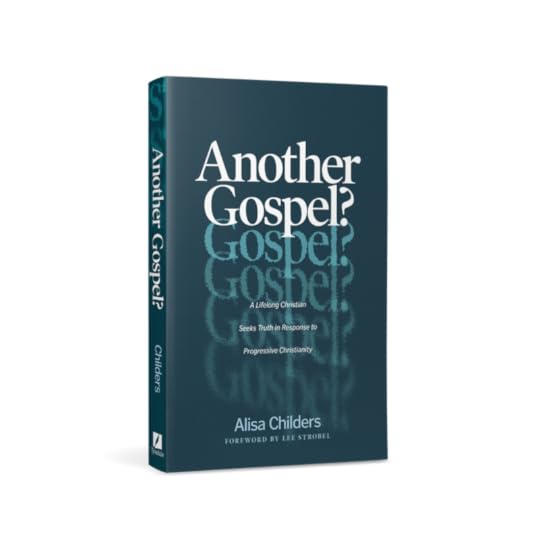
Learn more about progressive Christianity in my book, Another Gospel?:
[image error] [image error]


October 13, 2020
How to Teach Your Kids to Spot a False Gospel

Original article published at Risen Motherhood
When my daughter was young, I would make quinoa, oatmeal, and flax seed “waffles,” and she loved them. It wasn’t until we were visiting family in California that she experienced the hotel breakfast bar and loudly exclaimed, “Mom, these waffles are so much BETTER THAN YOURS.” The jig was up. The dry and grainy imposter waffles would no longer be tolerated. Now she had tasted the real thing and would never again be fooled by a counterfeit.
Likewise, one of the most effective ways to teach our kids to detect a false gospel is to be sure they are well acquainted with the real thing. That way, when they come across a false version of Christianity, they will recognize it immediately. Here are some ways we can teach our kids to spot a false gospel:
Teach Them to Love Truth
One of the most common ways Christian young people are tricked into bad ideas is through the vehicle of relativism. Relativism is the belief that absolute truth doesn’t exist or can’t be known. “What’s true for you is true for you” or “There is no truth” are common expressions lobbed at Christians to shut down their ideas and make them feel judgmental for simply claiming to know the truth.
However, Christianity is a belief system that stands or falls based on truth being absolute. God either exists or he doesn’t. Jesus was resurrected or he wasn’t. Jesus actually claimed to be Truth itself: “I am the way, the truth, and the life” (John 14:6). The stakes are that high!
Teaching our kids to base their beliefs in what is true, rather than what feels right, will help keep them from walking away when their faith no longer “gives them the feels.”
CONTINUE READING AT RISEN MOTHERHOOD
Learn more in my new book, Another Gospel?
[image error] [image error]
October 8, 2020
Is My Favorite Author, Speaker, or Pastor a Progressive Christian?

Have you ever been listening to your favorite Christian podcast, only to be stopped in your tracks by a confusing statement the speaker makes about the Bible? Have you uncomfortably shifted in your pew as your pastor preaches a sermon that seems to cast a negative light on the atoning work of Jesus on the cross? Have you sat down to read the latest Christian book only to have a red flag when your eyes fall on an unfamiliar definition of the gospel? There’s a good chance you might be listening to or reading something published by a progressive Christian.
Progressive Christianity is a movement that is infiltrating and influencing the Evangelical church. Some of the most high-profile Christian leaders are a part of it. This movement seeks to re-interpret the Bible, re-assess historic doctrines, and re-define core tenets of the faith. While claiming the title “Christian,” and boasting a high view of the Bible, it is sweeping up many unsuspecting Christians into a false view of who God is and how he saves people.
But it can be very difficult to spot. It’s not like progressive Christians typically introduce themselves like, “Hi! I am your friendly neighborhood progressive Christian, and I’m here to preach a different gospel!” The slow slide into progressive Christianity is so subtle it is almost imperceptible. Unless you know some basics.
The following lists are not comprehensive, and they aren’t a catch-all for every progressive Christian. However, progressive Christians will typically deny one or more of the doctrines in the first list, and affirm one or more in the second. So if you suspect your favorite Christian thought leader is progressive, check out these lists.
They might be progressive if they deny:
The atonement
Often, progressive Christians will refer to Jesus' sacrifice on the cross as horrific or unnecessary. The idea that God the Father would require the blood sacrifice of his Son is perceived to be an indictment on God's character, turning him into a divine abuser. This is sometimes referred to as "Cosmic Child Abuse."
Biblical authority or inspiration
In the progressive church, the Bible is viewed more like an ancient spiritual travel journal than the inspired, inerrant, and authoritative Word of God. The Biblical writers are viewed as well-meaning ancient people who were doing their best to understand God in the times and places in which they lived, but they were not necessarily speaking for God. Scripture is also seen as contradictory, not internally coherent, and not authoritative for Christians.
That we have a sin nature
The doctrine of Original Sin is roundly rejected in progressive Christianity, with the idea of Original Blessing put in its place. Progressive Christians don't typically deny that sin exists or that it is a bad thing. But they often deny the idea that we have some sort of a sin nature that was passed down to us from Adam and Eve.
That sin separates us from God
With no concept of original sin or a sin nature passed down, progressive Christians will often teach that sin isn't what separates us from God, but our own self-imposed shame. In the progressive view, it's often taught that we simply need to realize that we were never separated in the first place...that we are beloved and accepted by God just as we are.
The deity of Jesus
Certainly not all progressive Christians will deny Jesus' deity, but this doctrine tends to be downplayed. The concept of "Cosmic Christ" is sometimes presented as our ultimate goal...that Jesus is a model and exemplar of someone who was christened as both human and divine, and we can follow his example by finding the divine within ourselves.
The physical resurrection of Jesus
Again, not every progressive denies the physical resurrection, but the idea that Jesus was bodily raised back to life is often deemed less important or significant than the meaning we can draw from the idea of resurrection.
The virgin birth
In the progressive church, the virgin birth and other miraculous events can be downplayed, ignored—or like the resurrection—viewed as less important than the life-lessons we can learn from these stories.
The Trinity
A denial of the deity of Jesus would naturally be a denial of the Trinity. But some progressive Christians take it further and affirm the view of pantheism, which states that the universe is God. Others will affirm a slightly less radical view called panentheism, which is the belief that God and the world are inter-related. God is in all and all is in God. This implies that God is somehow dependent upon creation, which casts serious aspersions on the nature of the Trinity.
The sinlessness of Jesus
You probably won't find many progressive Christians who outright declare that Jesus was a sinner. However, Jesus' humanity tends to be emphasized. For example, in Matthew 15, Jesus tells the Syrophoenician woman, "It's not good to take children's bread and throw it to the dogs." This is viewed as Jesus' having racial biases that were recognized and corrected during this exchange.
They might be progressive if they openly affirm:
LGBTQ relationships and marriage
One of the hallmarks of progressive Christianity is the shift on issues of sexuality and gender. There is an almost universal acceptance of same-sex relationships and marriage, a belief in the validity of transgenderism, and a rejection of cisgender norms.
Universalism/Universal Reconciliation
The primary view of heaven and hell in the progressive church is Universalism, which is the idea that no one will be punished in hell, and everyone will eventually be saved and restored to right relationship with God. Some progressive Christians will still say that Jesus is the only way, but believe he will save everyone.
Critical theory (Social justice gospel)
In progressive Christianity, the gospel is not seen primarily as the good news of God saving sinners and reconciling them to Himself. Instead, social justice issues become the heart of the gospel message, with what one does being viewed as more important than what one believes. Often, the secular framework of critical theory is embraced, where the world is viewed through the lens of oppressed vs. oppressor.
Pluralism
Religious pluralism is the idea that all roads lead to God, and no one religion holds ultimate truth when it comes to who God is and how he reveals himself to the world. Often, progressive Christians will tout the mantra, "Everyone has a seat at the table," meaning all creeds and religions are true in their own way and the people who embrace them are equally accepted by God.
Pantheism, Panentheism, or Perennialism
As stated above, many progressive Christians affirm pantheism or panentheism. Another view that is promoted in the progressive church is perennialism, the idea that although different religions look different on the outside, at their core they share the same truth. In other words, they share the same source and come from the same ultimate or divine reality. This divine reality can be discovered through mysticism and contemplative practices.
---
So the next time you are reading a book, listening to a podcast or sermon, or scrolling through social media, put the writer or speaker who claims to be Christian to the test. Do they deny one or more doctrines in the first list? Do they affirm one or more in the second list? That is a good indication that you are indeed following a progressive Christian leader.
To learn more, get my new book about progressive Christianity, Another Gospel? :
[image error] [image error]
Progressive Christianity 101: What you Need to Know

I had the privilege of writing a 5-part series about progressive Christianity for Impact 360. I wanted to link them all in one place, so here are the links with excerpts:
Post #1: How We Got Here: A History of Progressive Christianity
There is a growing movement in the church that seeks to re-interpret the Bible, re-assess historic doctrines, and re-define core tenets of the faith. All the while, this movement identifies itself as “Christian,” claims to follow Jesus, and boasts a high view of Scripture. But as we’ll see in this series, they are leading many unsuspecting Christians astray, and confusing the body of Christ about what the Bible is, what Jesus accomplished on the cross, and what the good news of the gospel proclaims.
But we shouldn’t be surprised by any of this. From as early as the New Testament was being written, heresies and false doctrines began finding their way into the church. After all, Jesus was the one who told us this would happen. “Watch out for false prophets. They come to you in sheep’s clothing, but inwardly they are ferocious wolves,” Jesus warned. Jesus not only predicted that Christians would be tempted by these false doctrines but pointed out that these teachings would be peddled by people who claim to be Christians. They would look like sheep, walk like sheep, and talk like sheep. But they would not be sheep—they would be predators looking to feast on the sheep. CONTINUE READING
Post #2: What are the Cultural Signs of Progressive Christianity?
Have you ever picked up a popular book at your local Christian bookstore, only to be confused when you read statements like, “The Bible is primarily a human book”? Or perhaps you’ve listened to a prominent Christian speaker only to be stopped in your tracks by their ambiguity regarding biblical sexuality and same-sex relationships. Maybe you’ve read a blog post written by a Christian pastor who portrayed the doctrine of substitutionary atonement as immoral and abusive. Maybe you’ve come across a tweet that claimed we need to “decolonize” our interpretations of Scripture. These are common ideas promoted within progressive Christianity.
Progressive Christianity can be a bit difficult to spot because typically speaking, progressive Christians aren’t united around an official creed or set of beliefs. In fact, progressive Christianity emphasizes action over belief; what you do over who you place your faith in. They use much of the same vocabulary as historic Christians, practice many of the same sacraments—like baptism and communion—and may even sing hymns and recite ancient creeds and liturgies. However, for progressive Christians, these words, phrases, sacraments, and traditions take on a whole new meaning. This is why it can be confusing and frustrating to identify their ideas in popular books, blogs, podcasts, and sermons. However, there are some very concrete beliefs and assumptions that undergird this growing movement, even if they aren’t recorded in an official creed. Moreover, there are certain warning signs to look for that can be cultural or theological in nature. In this post, we’ll look at the cultural signs. CONTINUE READING
Post #3: How to Recognize Progressive Christianity Through the Theology
Theology matters because beliefs are connected with behavior. In addition to this fact, one’s theology also reveals the true source of authority serving as the ultimate foundation. Am I going to be faithful to Scripture or conform to what is culturally comfortable? A recent example of this is the book, Untamed, by Glennon Doyle, which is #1 on Amazon’s “Christian self-help” category and currently #1 on the New York Times best-seller list. It is written from a loosely Christian perspective, utilizes Scripture, and speaks about God, faith, Christianity, and morality. It also teaches that you can find God within yourself, promotes moral relativism, teaches that sexuality and gender are fluid, and blames the Bible for creating a culture that oppresses women.
My hunch is that the average Christian might read that first paragraph with a bit of surprise and shock. How can someone who is accepted within a “Christian” paradigm believe and teach these things? The answer to that question can be found by understanding progressive Christianity. Progressives are not just a group of Christians who are changing their minds on social issues and politics. According to their most prominent thought leaders, authors, and speakers, they often deny core essential doctrines of the faith, which leads them to preach an entirely different gospel. As I have researched their books, blogs, and podcasts, I have discovered some theological signs to look for when trying to identify this movement. CONTINUE READING
Post #4: Original Sin or Original Blessing?
Recently, Michael Gungor of the Liturgists Podcast tweeted, “Heaven is not a place where you are made perfect after you die. Heaven is the realization that you’re already perfect as you are now.” With over 63 thousand followers on twitter, many of whom are current and former evangelical Christians, it’s not a stretch to say this idea has become mainstreamed. But there seems to be a major disconnect between this sentiment and the evil and suffering we see all around us every day.
For example, at the time I’m writing this article, the news cycle is inundated with images surrounding racism, rioting, looting, arson and brutality. We see humans enacting evil against other humans every time we turn on the news or check our twitter feeds. We can look around us and rightly recognize that there is something wrong with the world—something wrong with us.
In the wake of the civil unrest in our nation right now, it’s important to acknowledge an ancient core belief of Christianity—the doctrine of Original Sin. Original Sin teaches that because of Adam’s rebellion against God in the garden of Eden, every human is born with sinful desires. As our first parents, Adam and Eve have passed that sin nature on to us. CONTINUE READING
Post #5: How to Reach our Progressive Friends
Several years ago, I went through an intense time of doubt after my faith was rocked in a class led by a pastor who admitted he was an agnostic, and who would later identify himself as a “progressive Christian.” At the time, I had never heard of progressive Christianity. Our class was just a dozen or so sincere Christians who wanted to think deeper about our faith. But as the class progressed, my discomfort with what was being taught grew deeper. Historic doctrines were picked apart and discarded while biblical teachings were discredited. New doctrines and beliefs were put in their place. I watched with sadness as many of my classmates became beguiled by this new kind of Christianity.
These were smart and earnest people. They invested countless hours each week reading, studying, and preparing for the next class discussion. They were deeply persuaded that the church had gotten Christianity wrong and that it needed to be re-framed for a modern context. Many of them began to share the reasons they were changing their minds about key defining factors of Christianity.
One classmate expressed that despite the fervent prayers of his family and church community, his wife’s chronic and painful physical ailments had never improved. Another classmate shared that he had visited a Buddhist temple in Thailand and observed the sincerity of the monks’ prayers as they lie prostrate. He expressed that he could not believe that God would reject their worship. Still another articulated that he had grown up in a hyper-legalistic sect of Christianity that vilified other denominations and taught that everyone except for their small circle was going to hell. Another explained that she abandoned her beliefs after reading difficult passages in Scripture that challenged her view of God’s character. Others abandoned their prior beliefs because they had come to disagree with the sexual ethics taught in the Bible. Since then, I’ve met people who embraced progressive Christianity after witnessing hypocrisy, surviving abuse, or being taught caricatured versions of core doctrines in their given church settings. CONTINUE READING
To learn more about progressive Christianity, purchase Alisa's book, Another Gospel? A Lifelong Christian Seeks Truth in Response to Progressive Christianity:
[image error] [image error]
Biblical Judgment in a "Don't Judge Me" World

I'm over all Well Watered Women today with a post I've been wanting write for a while. Check it out:
"YOU SHOULDN'T JUDGE."
Once upon a couple of years ago, there was a wildly popular book written by a self-professed Christian author. It was released by a Christian publishing house and marketed on Christian platforms and websites. It was a fairy tale come true. Crushing it at the top of The New York Times Best Seller list and winning the hearts and minds of millions of women, it was featured in countless small group Bible studies and conferences nationwide.
The only problem is that the core message of the book is the exact opposite of the biblical Gospel. So, I decided to write a little review of it and post it on my blog. I didn’t anticipate this “little review” going viral, nor did I predict the boatloads of hate mail that would sail into my inbox in the following weeks.
Some of the emails cannot be repeated in polite company. But the bulk of the pushback can be distilled down to three fateful words: “You. Shouldn’t. Judge.”
The message I received loud and clear was that it was wrong of me to criticize unbiblical ideas in a popular book. After all, Jesus would never be such a “McJudgypants.” With love redefined to mean the affirmation of a desire or an idea, it’s easy to see how “judging” has become the unforgivable sin in our culture.
But Christians live by a different standard than the world. When someone says, “You shouldn’t judge,” they are actually contradicting real love, the Bible, and plain common sense. So, the next time someone pulls out this particular conversation-stopper, remember these three things:
SAYING “DON’T JUDGE” IS NOT BIBLICAL.
It seems like everyone’s favorite Bible verse (at least when they’re trying to keep someone from telling them they’re wrong) is Matthew 7:1. The words, “Judge not, that you be not judged,” come from the lips of Jesus himself.
Mic drop. End of conversation—right?
Well, that only works if you scribble out the next six verses, along with some other things Jesus said, and a good portion of the New Testament. CONTINUE READING AT WELL WATERED WOMEN
[image error] [image error]Become a Patron!
Biblical Judgement in a "Don't Judge Me" World
I'm over all Well Watered Women today with a post I've been wanting write for a while. Check it out:
"YOU SHOULDN'T JUDGE."
Once upon a couple of years ago, there was a wildly popular book written by a self-professed Christian author. It was released by a Christian publishing house and marketed on Christian platforms and websites. It was a fairy tale come true. Crushing it at the top of The New York Times Best Seller list and winning the hearts and minds of millions of women, it was featured in countless small group Bible studies and conferences nationwide.
The only problem is that the core message of the book is the exact opposite of the biblical Gospel. So, I decided to write a little review of it and post it on my blog. I didn’t anticipate this “little review” going viral, nor did I predict the boatloads of hate mail that would sail into my inbox in the following weeks.
Some of the emails cannot be repeated in polite company. But the bulk of the pushback can be distilled down to three fateful words: “You. Shouldn’t. Judge.”
The message I received loud and clear was that it was wrong of me to criticize unbiblical ideas in a popular book. After all, Jesus would never be such a “McJudgypants.” With love redefined to mean the affirmation of a desire or an idea, it’s easy to see how “judging” has become the unforgivable sin in our culture.
But Christians live by a different standard than the world. When someone says, “You shouldn’t judge,” they are actually contradicting real love, the Bible, and plain common sense. So, the next time someone pulls out this particular conversation-stopper, remember these three things:
SAYING “DON’T JUDGE” IS NOT BIBLICAL.
It seems like everyone’s favorite Bible verse (at least when they’re trying to keep someone from telling them they’re wrong) is Matthew 7:1. The words, “Judge not, that you be not judged,” come from the lips of Jesus himself.
Mic drop. End of conversation—right?
Well, that only works if you scribble out the next six verses, along with some other things Jesus said, and a good portion of the New Testament. CONTINUE READING AT WELL WATERED WOMEN
October 4, 2020
Is the Enneagram a Trojan Horse in the Church? With Marcia Montenegro—The Alisa Childers Podcast #81
 Subscribe: iTunes | RSSThe Alisa Childers Podcast · #81 Is the Enneagram a Trojan Horse in the Church? With Marcia Montenegro
Is the Enneagram a harmless personality test or is it something that could be spiritually harmful to Christians who use it? On today's video I talk with ex-Atstrologer Marcia Montenegro, who is now a committed Christian about the New Age influence of the Enneagram and it's rapid growth within the church.
Watch on YouTube:
Get Marcia's book: Get Alisa's book:
[image error] [image error] [image error] [image error]Become a Patron!
September 20, 2020
What's With all the Deconstruction Stories? With Sean McDowell — The Alisa Childers Podcast #80
 Subscribe: iTunes | RSSThe Alisa Childers Podcast · #80 What's With all the Deconstruction Stories? With Sean McDowell
It seems like every time we turn around there is another high-profile Christian who announces they've lost their faith. Why does this seem to be happening now? Sean McDowell joins me to talk about his conversations with deconstructed Christians, the nature and pressure of being a public Christian, and what role that might play in all the deconstruction stories we are seeing.
Watch on YouTube:
Pre-order Alisa's new book
Watch Sean's discussions with Jon Steingard:
Part 1
Part 2
*** Since Sean and I recorded this podcast, I was invited to have a conversation with Jon Steingard as well, which we did on the Southern Evangelical Seminary Facebook livestream. You can watch that conversation here:
Become a Patron!
September 6, 2020
William Lane Craig Reacts to the Progressive Christian View of the Atonement —The Alisa Childers Podcast #79
 Subscribe: iTunes | RSSThe Alisa Childers Podcast · #79 William Lane Craig Reacts to the Progressive Christian View of the Atonement
William Lane Craig joins me to respond to progressive Christians like Brian Zhand, Richard Rohr, William Paul Young, Steve Chalke, and Rob Bell about the atonement.
Watch on YouTube:
Purchase Dr. Craig's book and pre-order Alisa's upcoming book:
[image error] [image error]
 Become a Patron!
August 30, 2020
Clay Jones Says We are Going to Die. How Should We Respond? The Alisa Childers Podcast #78
 Subscribe: iTunes | RSS
The Alisa Childers Podcast · #78 Clay Jones Says We're Going to Die. How Should We Respond?
Clay Jones joins me to tackle the topic many Christians are afraid to face: death. We talk about his new book, Immortal: How the Fear of Death Drives us and What we can do About it. If we have the hope of eternal life, why are so many Christians afraid of death?
Watch on YouTube:
Get the book:
[image error] [image error] [image error] [image error]Become a Patron!
Alisa Childers's Blog

- Alisa Childers's profile
- 407 followers
Alisa Childers isn't a Goodreads Author
(yet),
but they
do have a blog,
so here are some recent posts imported from
their feed.

