
Mark Anthony Neal's Blog, page 1034
January 4, 2012
Book Trailer: The Black Arts Enterprise by Howard Rambsy II
The outpouring of creative expression known as the Black Arts Movement of the 1960s and 1970s spawned a burgeoning number of black-owned cultural outlets, including publishing houses, performance spaces, and galleries. Central to the movement were its poets, who in concert with editors, visual artists, critics, and fellow writers published a wide range of black verse and advanced new theories and critical approaches for understanding African American literary art.
The Black Arts Enterprise and the Production of African American Poetry offers a close examination of the literary culture in which BAM's poets (including Amiri Baraka, Nikki Giovanni, Sonia Sanchez, Larry Neal, Haki Madhubuti, Carolyn Rodgers, and others) operated and of the small presses and literary anthologies that first published the movement's authors. The book also describes the role of the Black Arts Movement in reintroducing readers to poets such as Langston Hughes, Robert Hayden, Margaret Walker, and Phillis Wheatley.
Focusing on the material production of Black Arts poetry, the book combines genetic criticism with cultural history to shed new light on the period, its publishing culture, and the writing and editing practices of its participants. Howard Rambsy II demonstrates how significant circulation and format of black poetic texts—not simply their content—were to the formation of an artistic movement. The book goes on to examine other significant influences on the formation of Black Arts discourse, including such factors as an emerging nationalist ideology and figures such as John Coltrane and Malcolm X.
"Rambsy's book takes up in closer detail the central issues of the Black Arts Movement, and its approach will be a model for subsequent scholarship. Reverberations from the Black Arts era are still demonstrably at work in the literature of this moment, and this rereading of the BAM era brings with it a reconfiguration of our understandings of previous eras."
—Aldon Nielsen, Penn State University
"Rambsy's sharp analysis of the material production of Black Arts poetry, supported by an extraordinarily sensitive attention to significant historical and textual detail, greatly advances our knowledge of the Black Arts Movement."
—James Smethurst, University of Massachusetts Amherst
"The Black Arts Enterprise and the Production of African American Poetry is the first serious study to concentrate on the creative and critical role of Black poets, their poetry, their publishers, and the cultural, economic, and political activity their work generated in the nation . . . essential reading for students of the Black Arts Movement and African American studies."
—Haki R. Madhubuti, Founder and Publisher of Third World Press
"As a hip, deeply versed young scholar, Rambsy applies verve to a model-building examination of BAM versifiers. Fellow scholars, librarians, poetry lovers, 'transmitters' of culture, spoken word-music collaborators, and BAM comrades, in particular, will find welcoming embraces in The Black Arts Enterprise and the Production of African American Poetry."
—Eugene B. Redmond, author of Drumvoices: The Mission of Afro-American Poetry (A Critical History)
Howard Rambsy II is Associate Professor in the Department of English Language and Literature at Southern Illinois University, Edwardsville.


Thabiti Lewis: Ballers of the New School [video]
from Projection HBW
Professor Thabiti Lewis came to the University of Kansas on October 24 and discussed his book Ballers of the New School. In his lecture he urged the audience to consider the role of race in the sweaty as well as the sweat-free zones of sport. He argues that American sport culture performs and propagates rituals, symbols and expressions of fear and difference that sustain racism and notions of racial supremacy. He explains the continuation of these symbols and notions blocks bridges to racial progress.
Video Design Credit: Brandon Hill--University Kansas Student of Film and Media Studies

Occupy the Academy (#OTA)

Occupy the Academy (#OTA) by James Braxton Peterson | HuffPost BlackVoices
"Writers write; teachers teach; activists act . . . Good scholars do all of the above"
Universities have had a tough year in terms of public relations. Over the course of 2011 there were multiple full-blown scandals. The Penn State and Syracuse University-coach-as-pedophile/predator scandals rocked the media sphere. The 'exceptional brutality' pepper-sprayed at UC Davis students shocked any of us who were previously unaware of just how brutal unchecked police forces can be. One of the most storied Historically Black Universities, Florida A&M University, with the premier HBCU marching band, is in danger of losing its accreditation as a result of an alleged hazing-related death. In early April, Yale University students filed a formal Title IX complaint against the university for its failure to address the kind of systemic misogyny that is all too common on college campuses and more often than not, too readily ignored. Throw in "a study released by the Pew Research Center," that suggests that 57 percent of college customers -- um, I mean students -- do not feel that they are getting their money's worth and I think most University PR officers will concede that 2011 has been a collective disaster for the University brand -- broadly conceived.
These are just a handful of the most publicly covered University issues. And they cannot be cast as mere PR disasters; each of the aforementioned cases represents deep-rooted challenges that the University (or more to my point -- the Academy) must address on multiple fronts immediately. Pedophilia, rape, violence, and misogyny are terrorizing our 'society'. When any or all of these crimes against humanity become manifest in the Academy -- scholars of the academic disciplines (especially in the humanities) must assume the charge of addressing pedophilia, rape, violence, and misogyny directly and diligently. Otherwise the Academy is a bastion of artifice, fear, and contradiction. Aren't we supposed to be preparing young folk to be sensible (and sensitive) citizens? Maybe we are, but the results are confusing. Consider the riots at PSU in the immediate aftermath of the firing of Head Coach Joe Paterno; or the courage under fire exhibited by those students pepper-sprayed at UC Davis; or the mentality of the band members who allegedly beat their colleague to death; or the frat boys at Yale who circulated a "pre-season scouting report" on first-year women students; or the Yale undergrads who filed the Title IX complaint.
And then there's the Occupy movement. In late December 2011, Stanford University professor, H. Samy Alim posed an ill question -- "What if We Occupied Language?" Alim accomplishes some swift academic and political work in the piece. But the centerpiece resides in the shifting meaning of the word, "occupy," itself: "[i]t's no longer primarily about force of military power; instead it signifies standing up to injustice, inequality and abuse of power. It's no longer about simply occupying a space; it's about transforming that space." For me, this is the kind of work that the Academy, (that academics), must do -- not instead of, but in addition to the traditional activist work that must be done. We have to Occupy the Academy -- transform the ivory tower from its traditional gothic structure -- featuring racism, sexism, classism, and ism-ism -- into a more malleable structure, where ideas can live and breath. The Academy must be a place where respect for peace, equality and humanity is an absolute given. #Occupy the Academy.
I admit that neither Alim's essay or the Occupy movement itself is the sole impetus for the #OTA movement. And for those who will ask about #OTA's direction and directives; what is #OTA's purpose; how does it work; who are its leaders; what are #OTA's list of demands -- I can only say to you that this movement has been in the making for some time now. This year's disastrous news narratives point to some of the ways in which the civic principles of the Academy have been taken for granted or worse, obscured in the tyranny of tradition. As we have become more aware of gender, rape and violence in society and in the Academy, the challenge is for academics to use the tools at our disposal to join the battle, to make the world safer for children, for women; to make this country fair for undocumented workers, for disenfranchised voters, and so on and so on.
In the last several years a handful of organic scholars have decided to come back to school for graduate degrees in the Humanities. Rosa Clemente, Joan Morgan, and Scott Poulson-Bryant are at UMASS, NYU, and Harvard respectively. Each of them enjoyed full-blown careers as a political leader, a journalist, and a novelist (respectively) and each of them are currently working on Ph.D.'s in the humanities. Byron Hurt, Stephanie Renee, (and too many others to name here) are likewise, established (Hurt is an award winning documentary filmmaker, Renee is media mogul/poet) and currently considering their own forays into the Academy for graduate degrees in the Humanities (no pressure, folks). Belinda Peterson - yes I am name checking my wife - is a registered nurse and she is also currently working on her Ph.D. in English (Lehigh). For me, this group of non-traditional graduate students, represent what's best to come for the Academy and they are the inspiration for the movement to Occupy the Academy.
That is not at all to say that the Academy doesn't already have its share of progressive, communally focused folk, or its own share of activists. Jared Ball (U of M) and Salamishah Tillet (UPENN) come immediately to mind. But in order to transform the academic space we will need more soldiers for social justice. In an academy populated by folk of the ilk mentioned above disasters like those mentioned earlier will be less likely to happen. Moreover, as we Occupy the Academy, we will establish a more robust sustained effort to challenge misogyny, gender inequality, rape, and violence, social ills that plague us in and outside of the ivory tower.
#OTA
***
JamesBraxton Peterson is Director ofAfricana Studies and Associate Professor of English at Lehigh University and the author of theforthcoming Major Figures: Critical Essays on Hip Hop Music(Mississippi University Press). Follow him at @DrJamesPeterson.

Black Athletes and the Racial Politics of Sickle Cell

Black Athletes and the Racial Politicsof Sickle Cell by David J. Leonard | NewBlackMan
With the Raiders losing onSunday, the Denver Broncos backpedaled their way into the 2012 NFLplayoffs. Although guaranteeingone more week of conversations about Tim Tebow, a fact that no one should wishfor, their playoff birth is dramatically impacting the Pittsburgh Steelers andmore specifically their safety Ryan Clark. On Monday, Tomlin announced that Clark would be unableto play with the team because he has a sickle-cell trait,which can cause problems in high altitude situations. During a 2007 game in Denver, Clark became terriblyill. Doctors had to remove hisspleen and gallbladder; as a result of his organs being deprived of oxygen,Clark lost an astounding 30 pounds.
While the threat to his lifeis significant, and the decision to skip the game would seem to be ano-brainer, Clark had planned to play. "I mean, everybody knows I want to play and I would have played," Clarktold ESPN. "I talked to my doctors and we actually had a plan in place forme to play. All things pointed to me going until (Tomlin) told me I can't. Hesaid he wouldn't have let his son play and so I'm not playing either." It would be easy to dismiss Clark'scomments, assuming that his plans to play were never realistic orpossible. Yet, it is not hard toimagine an NFL player risking life and limb to play "on any given Sunday."
In an AssociatedPress story on San Diego Charges offensive Lineman, Kris Dielman, acknowledgeda willingness to risk his health in his pursuit to win a Super Bowl title. Dielman, who missed 10 games as aresult of a concussion, had a seizure during a post-game team flight, resultingin him being rushed to the hospital. "This was definitely a scare. Waking up in the hospital with my wife standing over me, that was prettyscary. I don't scare easy, but that was something different." Neither thisscare nor his 2 kids at home changed his approach to the game. He is not alone. Two weeks ago, theAssociated Press reported that half of the players (23/44) of the playersthey interviewed admitted that, "they would try to conceal a possibleconcussion rather than pull themselves out of a game." So it should surprise no one that Clarkwants to play.
In a sport and a culturethat defines masculinity through toughness, invincibility, and competitivefire. In a world of sports that values "winning at all costs" and "a never quitattitude," Clark's response reflects the masculinist orientation of sportsculture. This is why Coach MikeTomlin's decision to hold Clark out of the game, and his unwillingness to askhis players to do anything he wouldn't feel comfortable asking his children todo, is one worth celebrating. Itchallenges the culture of masculinity and the ways in which a football cultureputs victories and a particular vision of masculinity ahead of everything else.
What has also been strikingin the media coverage of Clark's situation is the absence of any discussion ofsickle cell/sickle cell trait in relationship to African Americans. There is a missed opportunity here todifferentiate between the trait and disease; Clark has the trait and not thedisease. While some articlesdiscussed the medical science related to sickle-cell and how it put him at riskin high altitude settings, with most treating his inability to play as anothersports-related "injury story," there is bigger story here as it relates to sicklecell and African Americans.
This erasure fits with alarger history whereupon the health issues faced by people of color arerendered invisible. Writingabout the Black Panther Party and its efforts "to raise public consciousnessabout sickle cell anemia," Alondra Nelson states in Body and Soul: The Black Panther Party andthe Fight against Medical Discrimination . "The condition became arallying cry for other representatives of the black community." The media missed an opportunity to highlight how this diseasedisproportionately impacts African Americans. In the United States, 1 in 12 African Americans carries thesickle cell trait (1 in 500 have the disease).
The missed opportunity reflectsan overall failure to acknowledge the ways in which sickle cell disproportionatelyimpacts African Americans. While race is a socialconstruction, with zero biological imperative, this disease effects AfricanAmericans in devastating ways. In "Dyingin the City of the Blues: Sickle Cell Anemia and the Politics of Race andHealth," Keith Wailoo argues that "history of sickle cell anemia in the UnitedStates," is a story of "transformation from an 'invisible' malady to apowerful, yet contested, cultural symbol of African American pain andsuffering."
Ryan Clark's situation wasan opportunity to highlight and encourage public awareness in an effort toaddress this inequality. Likewise,it provided an opportunity to illustrate the ways in which race is a social andpolitical construction while elucidating the relationship between sickle celland African Americans. As with the1970s that saw not only an increased awareness regarding the impact of sicklecell on African Americans but financial support for targeted treatment ofhealth disparities, instances like Ryan Clark highlight such opportunities.
According to James Braxton Peterson,associate professor and director of Africana Studies at Lehigh University:
Clark's presentation of the sickle cell trait is apainful reminder of the ways in which genetic predisposition to disease (andbroader distinctions in health and health care along racial lines) continue toremain absent from health care discourses. The subject has become taboo becauseit runs counter to post-racial fantasies of colorblindness or what I like tocall - just plain old blindness. That Clark's condition is manifest on the"level" playing field of a football stadium puts into bold relief theways in which blindness in health care - whether its the gender lag thatattaches to breast cancer research resources or the racial/class lag ofdiseases like sickle cell anemia -- results in the same diminished care as adirect result of social ignorance and the biased distribution of health careresources.
The NFL should take a lessonfrom Tomlin and Clark, putting the health of the PEOPLE who play the game aheadof anything else. Likewise, thenation should take a lesson from Tomlin and Clark, putting the health of PEOPLEahead of anything else, addressing the issue of sickle cell with greaterconcern and attention.
***
David J. Leonard is Associate Professor in the Department of CriticalCulture, Gender and Race Studies at Washington State University, Pullman. Hehas written on sport, video games, film, and social movements, appearing inboth popular and academic mediums. His work explores the political economy ofpopular culture, examining the interplay between racism, state violence, andpopular representations through contextual, textual, and subtextual analysis. Leonard's latest book After Artest: Race and the Assault on Blackness will bepublished by SUNY Press in May of 2012.

January 3, 2012
The Baltimore Mixtape Project
From The Wire, to the Limit – The Story of the Baltimore Mixtape Project
That Baltimore's poor have been plagued by social problems will come as no surprise to most, as these problems have been chronicled in detail on the HBO series The Wire. Now, almost five years after the end of The Wire, these social problems not only persist, but have been exacerbated by chronic budget deficits and Black Baltimore being disproportionately hit by a great recession which, according to some estimates, has wiped out 50% of the accumulated Blacks nationwide, nearly 40 years of progress washed away in a little over 40 months.
Unfortunately, the increase in the visibility of Baltimore's problems never materialized into an outpouring of material support, and thus one of Baltimore's most needy populations, it's Black youth, continues to languish in broken neighborhoods, overcrowded and dangerous jails where 85% of inmates are African American, and schools, as segregated as the prisons, remain light on constructive activities and heavy on leaded water pipes.
Many watched, but few did anything to help after the credits rolled, and Baltimore's youth, already push into a corner, were pushed to the limit.
But a funny thing happened on the road to this story's seemingly inevitable tragic ending; Baltimore's youth began to push back. In basements and one mic concert halls, Baltimore's youth have used hip-hop in an attempt to articulate the conditions of their reality, to put their pain on paper, and thus, maybe, find strength to bear that reality.
The Baltimore Mixtape Project (BMP) is an attempt to build and channel this energy, creating a structure which incentives youth to use hip-hop as a tool to raise the social consciousness of themselves and their communities. A unique collection of
academics (Lester Spence- Johns Hopkins, Jared Ball, Morgan State) ,
community organizers (The Intersection),
political activist (Leaders of a Beautiful Struggle),
and nonprofit service organizations (The Baltimore Urban Debate League),
it seeks to create a space where individual youth can feel that their creative efforts are value by sponsoring contests where youth produce hip-hop and spoken word pieces around specific local political issues, and then compete for cash prizes at concerts which serve as a community showcases for youth artistic talent. After the concert, the work collected by the BMP will then we transferred to CDs and disseminated, for free, around the city as a political education tool, harkening back to classic cassette mixtape as a tool not only of artistic expression, but grassroots journalism.
The BMP operates under the assumption that, as opposed to demanding intellectual conformity and docility from youth, fostering creative and constitutive expression can allow youth to be the architects of their own education and liberation. The BMP is using kickstarter to ask you to support our efforts, specifically, to show Baltimore's youth that there are those out their who value their work enough to pay for it, as this kickstarter was created for the express purpose of raise the prize money for our first contest, asking students to produce work critiquing the "School-to-Prison-Pipeline".
To find out more about the Baltimore Mixtape Project
To Donate to the Baltimore Mixtape Project

Just in Time for the MLK Holiday: "Black Moses" Barbie (part 3)
This mock commercial for a Black Moses Barbie toy is the third and final in a series of three celebrating the legacy of Harriet Tubman. It is part of Pierre Bennu's larger series of paintings and films deconstructing and re-envisioning images of people of color in commercial and pop culture. [image error]
Jason Whitlock's Ideal America?
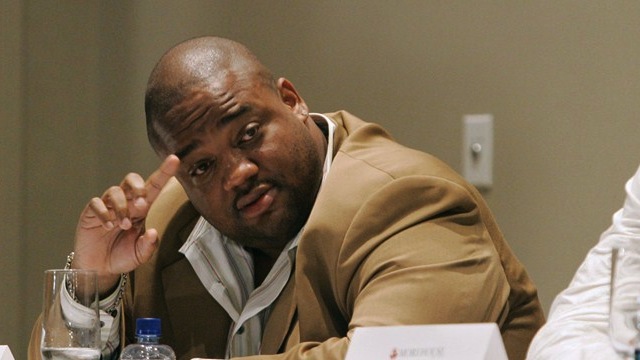
Jason Whitlock's Ideal America? byDavid J. Leonard | NewBlackMan
Oneof the common arguments offered during the NBA lockout was that David Stern andthe owners had to initiate the lockout in an effort to make the leaguebetter. Citing the success of theNFL, these advocates predicted that the NBA would be more successfuleconomically, more important culturally, and just a better game if it adoptedthe rules and policies of the NFL. Such arguments have not died down with the end of the lockout or withthe start of the NBA season.
Embodyingthis logic is Jason Whitlock's recent column, "NFL is model for Americansuccess." Whitlock argues that NFLis a model of success not just for the NBA, but the nation. With a salary cap, revenue sharing, a requirementthat players attend at least three years of colleges, its amateur draft design,its "emphasis on teams over individuals while making room for superstars" and "afree-agent system that allows franchises to retain their marquee players", theNFL offers "the perfect blend of capitalism and socialism." He remarks further:
One hundred years from now, when scholars analyze therise and fall of our dynasty, the NFL might be considered America's greatestinvention, the cultural and economic force that should've been our guide to 200more years of global domination.
If only Pete Rozelle had been our president ratherthan the architect of the modern-day national pastime, Americans wouldunderstand the value of restraints on capitalism, revenue sharing and a systemthat strengthens the poor.
Thereis so much wrong with the argument and the analysis that it is hard to knowwhere to start. The idea that theNFL's age restriction leads to a better or more successful system, even inabsence of any sort of evidence, is reflective of Whitlock's propensity to sellmyths as fact. The ample successof NBA players, whether those who skipped college or those who were "one-and-done"ballers, runs counter to the rhetoric offered by Whitlock.
Likewise,the premise that NFL is superior because it emphasizes teams over individuals,which has led to increased fan interest, erases the overall popularity of NBAstars throughout the world. WhereasLeBron James, Kobe Bryant, and Michael Jordan are transnational icons, whosetalents generated profits for the NBA and its corporate partners, the samecannot be said for the NFL. Thinkabout it, can you name an NFL player that captures the global imagination?
WhenMichael Jordan was playing, he was one of the most recognizable people in theworld; Kobe Bryant's visits to Asia lead to mass hysteria. Would any NFL player – past or present –elicit such reactions? Despite thefact that the NBA erases these global realities from its economic picture, theNBA global success is very much a result of its emphasis on individual starsover teams.
Likewise,the ascendance of dynasties within the NBA – Bulls, Lakers, Spurs, Celtics –,which has certainly enhanced the NBA's brand, is reflective of the structure ofthe NBA. In many regards, the NBAsystem is superior even though David Stern and the owners seem intent on slowlyundermining what has been successful for the league in so many ways.
Whatis most striking, however, is Whitlock's celebration of the NFL as an idealmodel for the entire nation. Shouldthe NBA and the nation at large emulate the model provided by the NFL giventhat: 21 former NFL players recently sued the NFL for not protecting playersagainst the harms of concussions. Inthe lawsuit, they "accuse the NFL of deliberately omitting or concealingyears of evidence linking concussions to long-term neurological problems."
Isthe NFL the ideal business and social model, given that: according to a 2006Study in the St. Petersburg Times,for every year an NFL player spends it the league, it takes 3 years off hislife expectancy. In other words,given that the average career of an NFL player is 4 years, his life expectancywill be 55 (as opposed to 75, the national average for American males). Putsuccinctly by Greg Doyle, "The NFL is killing its players, literallyleading them to an early grave -- and now the NFL is trying to kill them evenfaster. That's a fact, people." While some may call this rhetoric incendiaryand hyperbolic, consider that in 2010, almost 280 players spent time on injuredreserve, with 14 suffering head injuries, 13 experiencing neck injuries, andone dealing with spine injury.
Hey,Jason, is this the model of success you are speaking of? Or are you writingabout the poverty, joblessness and despair facing former players. Accordingto studies, "78 percent of former NFL players, two years after their lastgame are either bankrupt, divorced, or unemployed." Given thatrecent NFL players see poverty rates twice as high as those comparablenon-athletes (with similar college education), it is hard to imaginesomeone advocating replicating this system. Yet, we get this piece. Evident in the heightened levels ofpoverty, unemployment, and inequality throughout the United States, Whitlockmay get his wish as all industries seem to mirror the organization of the NFL.
Whitlockalso regurgitates the often-cited claim about NFL "strengthening the poor." Given the above statistics, the NFLclearly doesn't "strengthen the poor," but rather profits off the labor of notonly the players but also the many near minimum-wage workers that fill the manyjobs in stadiums across the United States. Beyond the inequalities between owners and all other workerswithin professional sports, the sports-media-industrial complex thrives becauseof government subsidies and public investment. NFL owners, and not America's poor, have benefited from asystem build upon public support, tax-breaks and other financial incentives forstadium construction.
Asnoted by Dave Zirin, "The building of publicly funded stadiums has become asubstitute for anything resembling an urban policy." The promise ofjobs and redevelopment has been a fairytale, told over and over again as theowners increase their profit margin. One has to wonder if Jason Whitlock really wants to see the NFL style ofgovernance transcend the gridiron into all walks of life, because one can onlyimagine our society going from one ruled by the 1% to one ruled, owned, and controlledby the .1%.
***
David J. Leonard is Associate Professor in the Department of CriticalCulture, Gender and Race Studies at Washington State University, Pullman. Hehas written on sport, video games, film, and social movements, appearing inboth popular and academic mediums. His work explores the political economy ofpopular culture, examining the interplay between racism, state violence, andpopular representations through contextual, textual, and subtextual analysis. Leonard's latest book After Artest: Race and the Assault on Blackness will bepublished by SUNY Press in May of 2012.[image error]
Mark Anthony Neal on GLOBAL VILLAGE VOICE with Peter E. Matthews

GLOBAL VILLAGE VOICE with Peter E. Matthews
January 2, 2012
GUEST: Mark Anthony Neal, Duke University Professor of African and African American Studies.

January 2, 2012
Trailer: The Loving Story (dir. Nancy Buirski)

The Loving Story , a documentary film, tells the story of Richard and Mildred Loving to examine the drama, the history, and the current state of interracial marriage and tolerance in the United States.
The documentary was filmed in High Definition video and 16mm film. It is intended for a wide audience through theatrical release, festival screenings, community screenings, national television broadcast, web-based broadcast, and DVD and educational distribution.
The film has enjoyed sold-out screenings at festivals and special events since its World Premiere at the Full Frame Documentary Film Festival in April 2011.
The Loving Story is an Augusta Films Production. It was directed by Nancy Buirski, produced by Nancy Buirski and Elisabeth Haviland James, and edited by James. The documentary is fiscally sponsored by Living Archives, a 501 (c) (3) non-profit organization, created by legendary documentarian DA Pennebaker, and by the Southern Documentary Fund.
The Loving Story is co-produced by HBO Documentary Films and will be broadcast on HBO in February, 2012. The film has been made possible in part by a major grant from the National Endowment for the Humanities: Because democracy demands wisdom.
The Loving Story is among the 15 films shortlisted for the Academy Awards in Documentary Film.

The Digital Crate: "In the Full Moon of Sonia"
 courtesy Jill Brazel
Fromthe Digital Crate: The Full Moon of Sonia by Mark Anthony Neal| NewBlackMan
"Black people'sreality is controlled by alien forces. This is why Sonia Sanchez is sobeautiful & needed; this is also why she is so dangerous."—HakiMadhubuti (Don L. Lee)
For thosewho've heard ever Sonia Sanchez perform, you know that she possesses a spiritthat seemingly gains energy with each word that she offers to the world.Indeed, I can still hear her poly-syllabic chants in my head as if I was 19year-old again watching her weave her poetic magic the first time I saw herperform in 1985.
Sonia Sanchezwas born more than seventy-years ago in Birmingham (Bombingham), Alabama. Dr.Sanchez is more likely though, to claim herself as a native of New York, thecity that she moved to as a nine-year old and the place where she began tocultivate her poetic skills after graduating from Hunter College in 1955.Sanchez's poetry workshops in the 1960s at places like the Downtown CommunitySchool proved politically challenging to her employers. According to Sanchez,she was "white-balled" in New York and eventually left New York taking teachingpositions as various schools until she landed at Temple University in 1977. Sheretired from Temple in 1999.
Notsurprisingly, Sanchez's legacy is being recovered by the hip-hop generation,particularly among spoken word poets. Danny Simmons, executive producer of Def Poetry, refers to Sanchez as the"spiritual mother" of spoken word. And indeed Ms. Sanchez gives love backciting the late Tupac Shakur (who she pays tribute to on Full Moon of Sonia), Rakim, and Ursula Rucker (who bears a strikingresemblance to Sanchez) as exemplars of hip-hop generation wordsmiths. More thananything Full Moon of Sonia is anattempt to speak more directly to the hip-hop generation.
Recordedduring the National Black Arts Festival in 2003, where Ms. Sanchez wascelebrated as a "living legend," FullMoon of Sonia is Sanchez's first solo recording after more than thirty-fiveyears as a published poet. Backed by a stream of R&B, Funk, Jazz, Soul,Blues and Gospel, Sanchez brings to musical life a range of poetry thatcaptures the demons and passions of African-American life. Poems such as "Bubba"(which first appeared in Home Girls andHand Grenades), "Tupac" and "For Langston/I've Known Rivers" (for thelegendary poet) recalls figures from Sanchez's past, allowing her memories ofthem to speak to the humanity of black men in the midst of on-goingdemonization.
Earlier in hercareer, Sanchez was often lock-step with the most fiery expressions of 1960sstyled black nationalism. Though Sanchez remains fiery, Sanchez's blacknationalist politics are muted some what these days, in part because of her embrace of feministpolitics. So a piece like "Poem for Some Women" performed to the gospel track"There's a Leak in this Old Building" gives light to a women who leaves herbaby in a crack-house, indicting the men who take advantage of both the womanand her child, as well as a society that offers little support for poor singlemothers. Even more powerful is a track like "He/She" which examines the uttertragedy of domestic abuse. And still Sanchez takes time to have fun as she doeswith "Good Morning Sex."
Full Moon of Sonia, representsSonia Sanchez as a poet women at her peak. At once she embodies the power andpromise of African-American expression and a clarion example of longevity andvitality for a hip-hop generation in dire need of artistic role models.
### Mark Anthony Neal is the author of five books including the forthcoming Looking For Leroy: (Il)Legible BlackMasculinities (New York University Press). He is professor of Black PopularCulture in the Department of African & African-American Studies at Duke Universityand the host of the weekly video webcast Leftof Black . Follow him on Twitter @NewBlackMan.

Mark Anthony Neal's Blog

- Mark Anthony Neal's profile
- 30 followers
Mark Anthony Neal isn't a Goodreads Author
(yet),
but they
do have a blog,
so here are some recent posts imported from
their feed.

